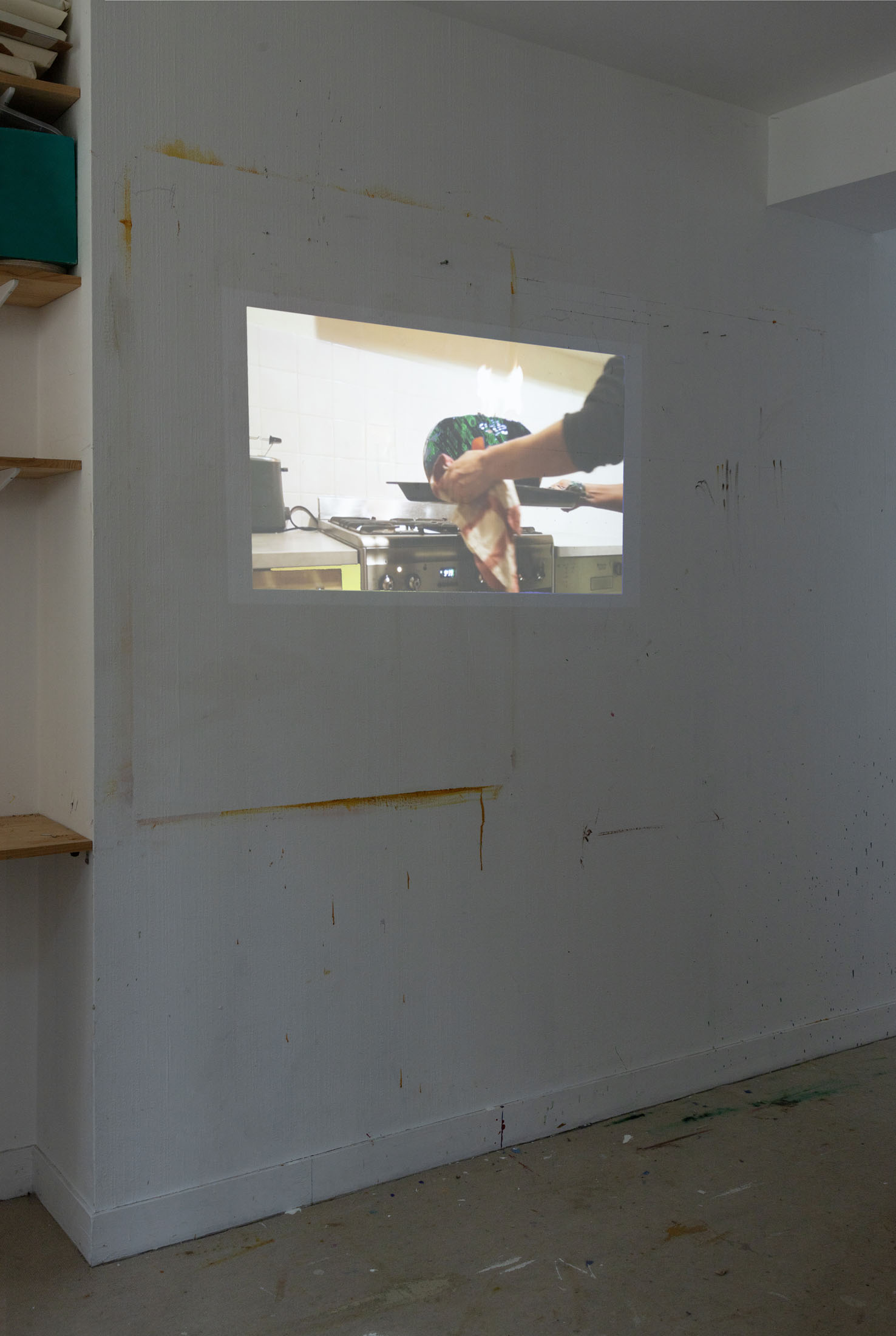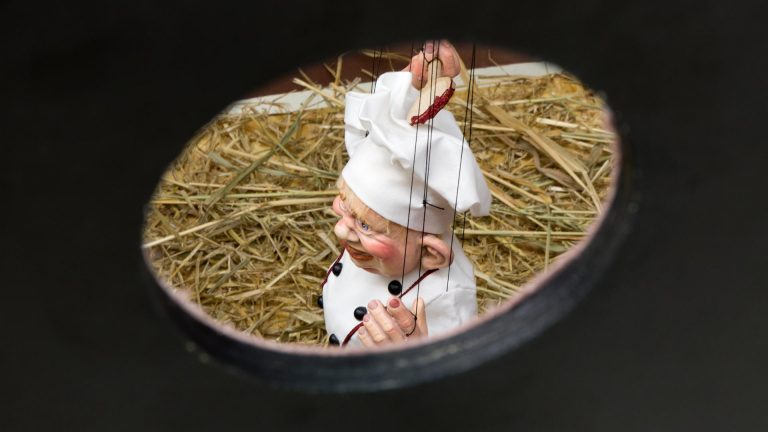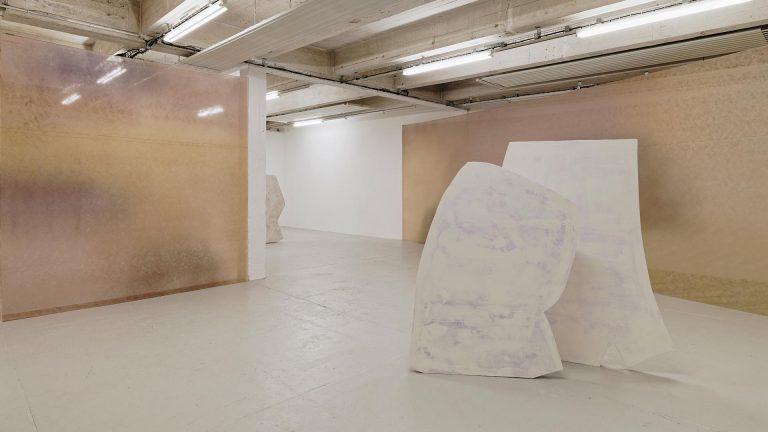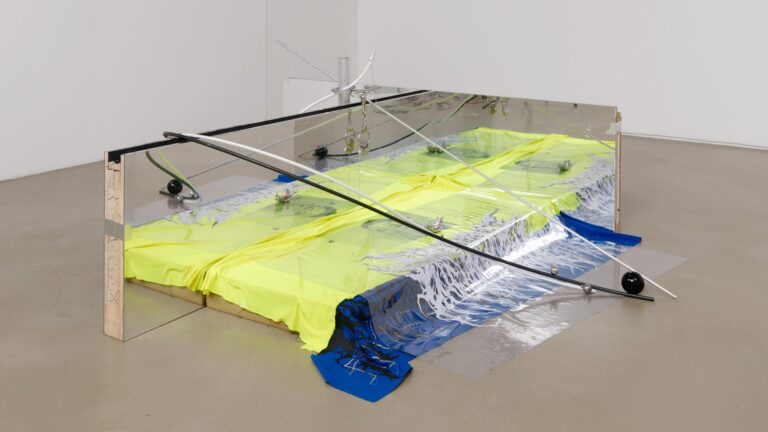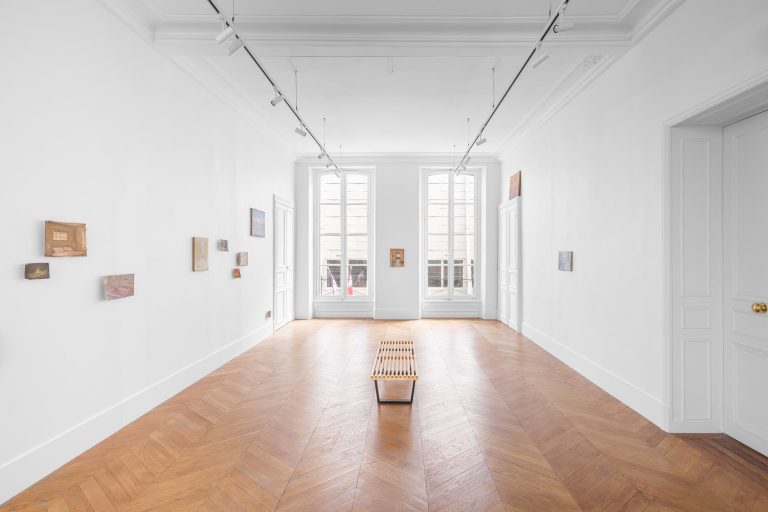
Hollywood Baby, Alone by Mathilde Ganancia
Act I of an acid flash opera
Text by Géraldine Gourbe
I hate the Tee-shirt
But I love the songs
And the music is liquid.1
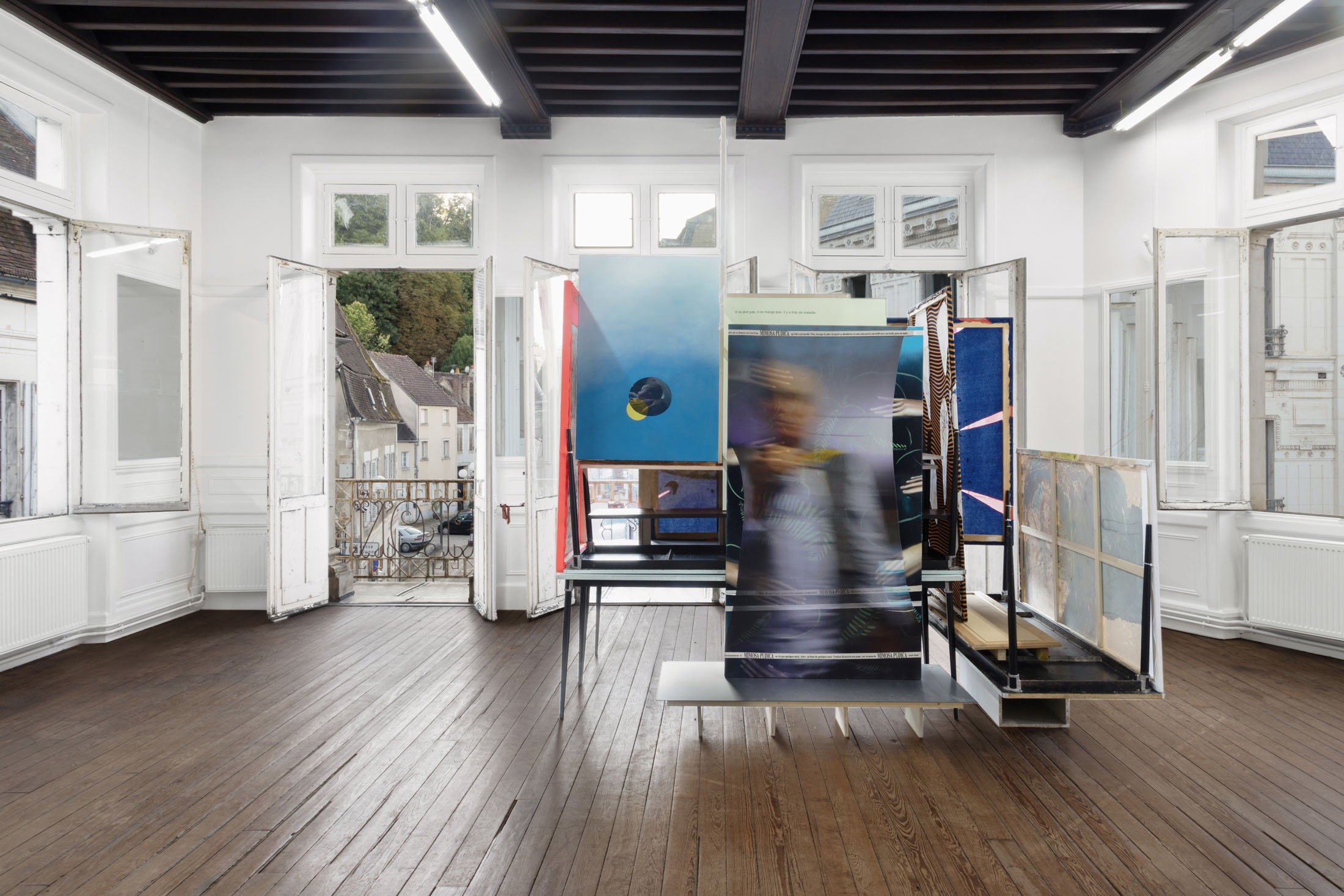
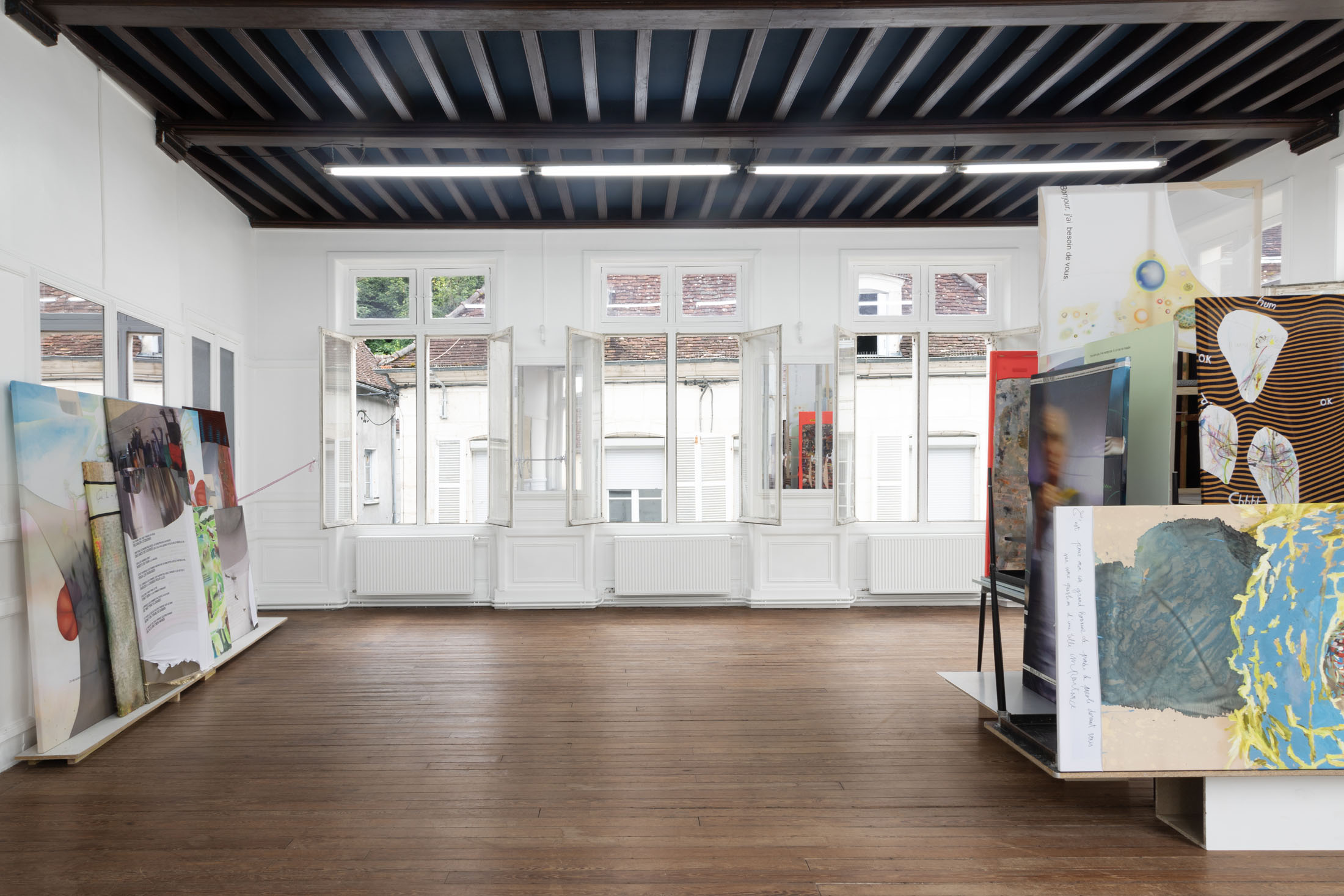
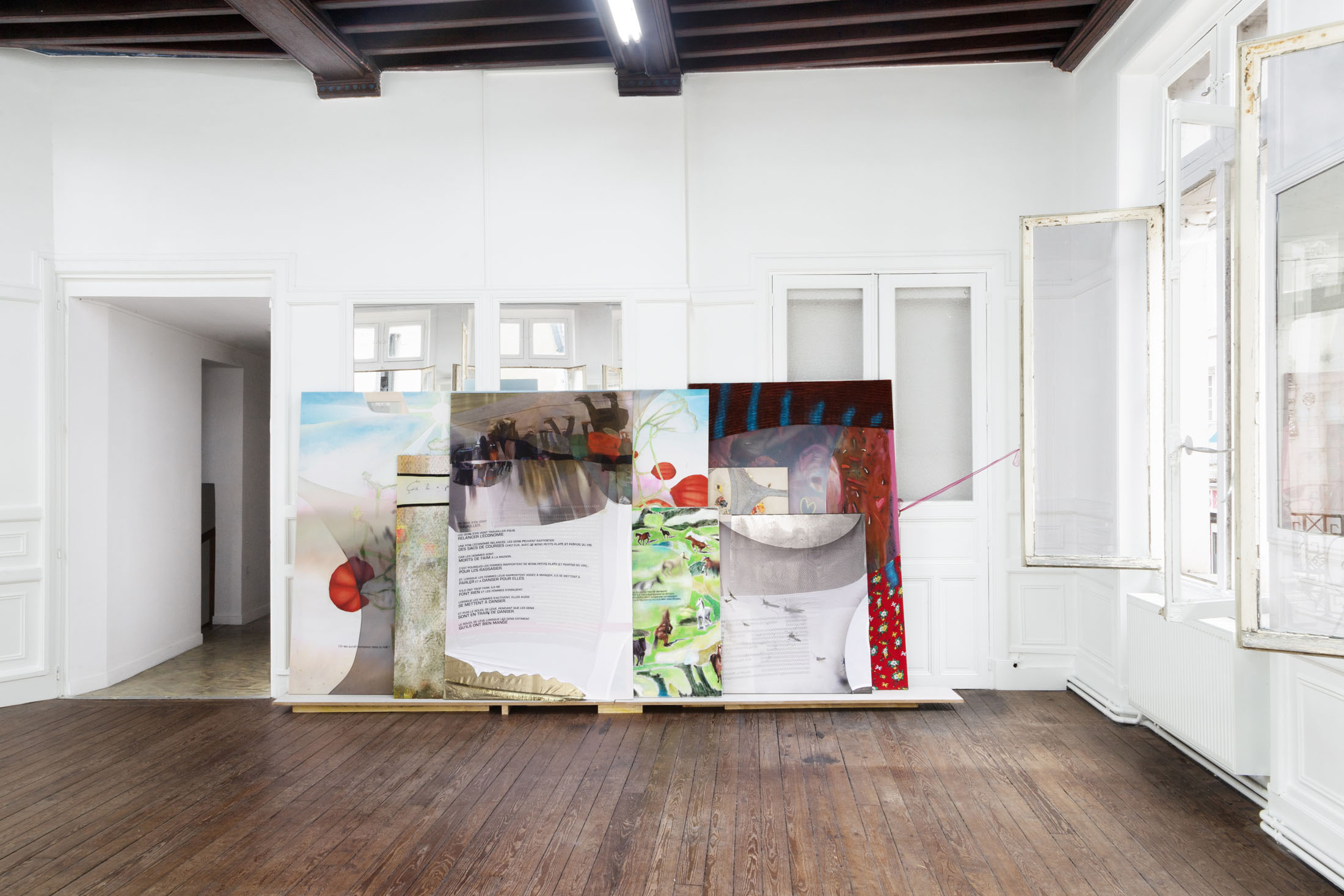
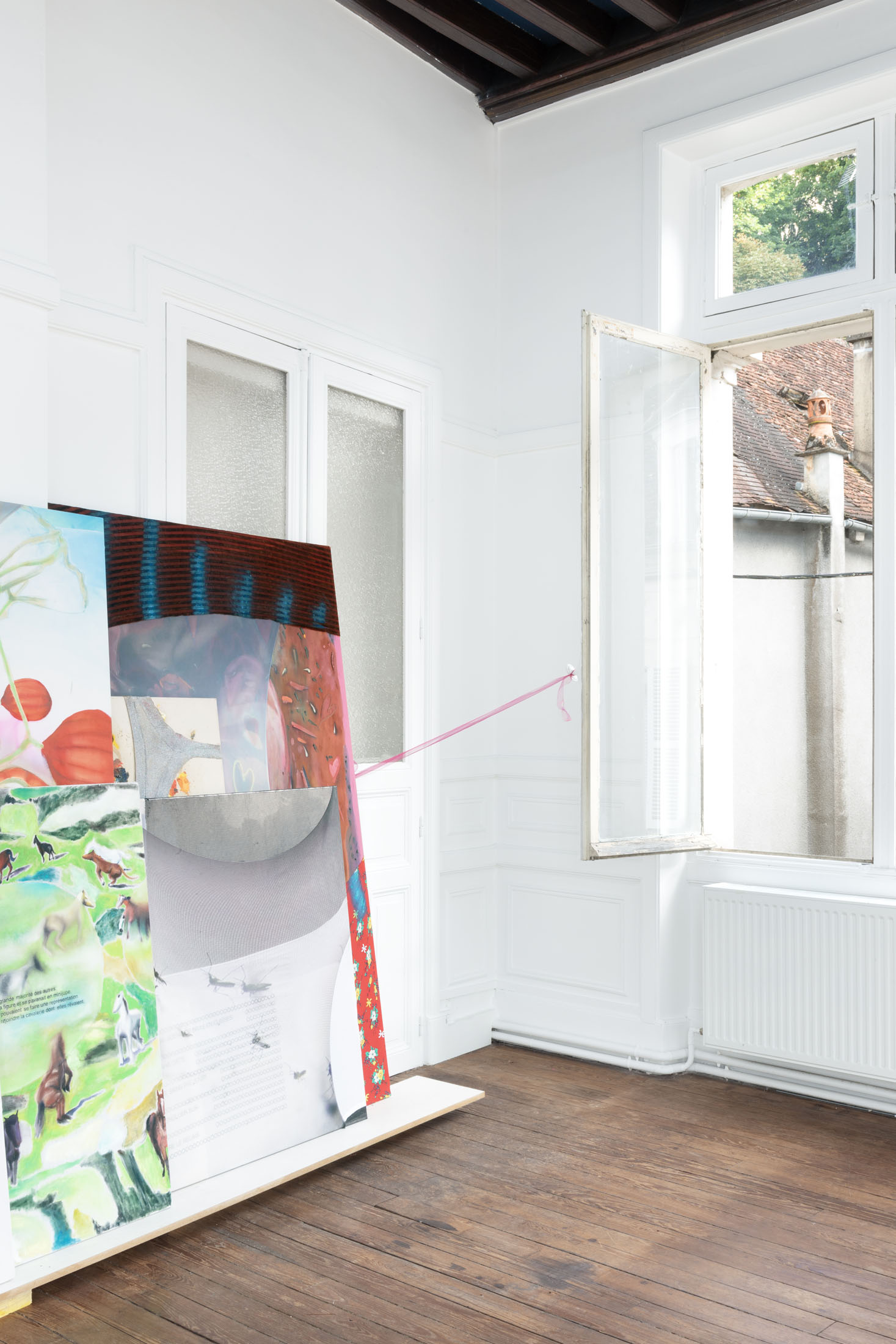
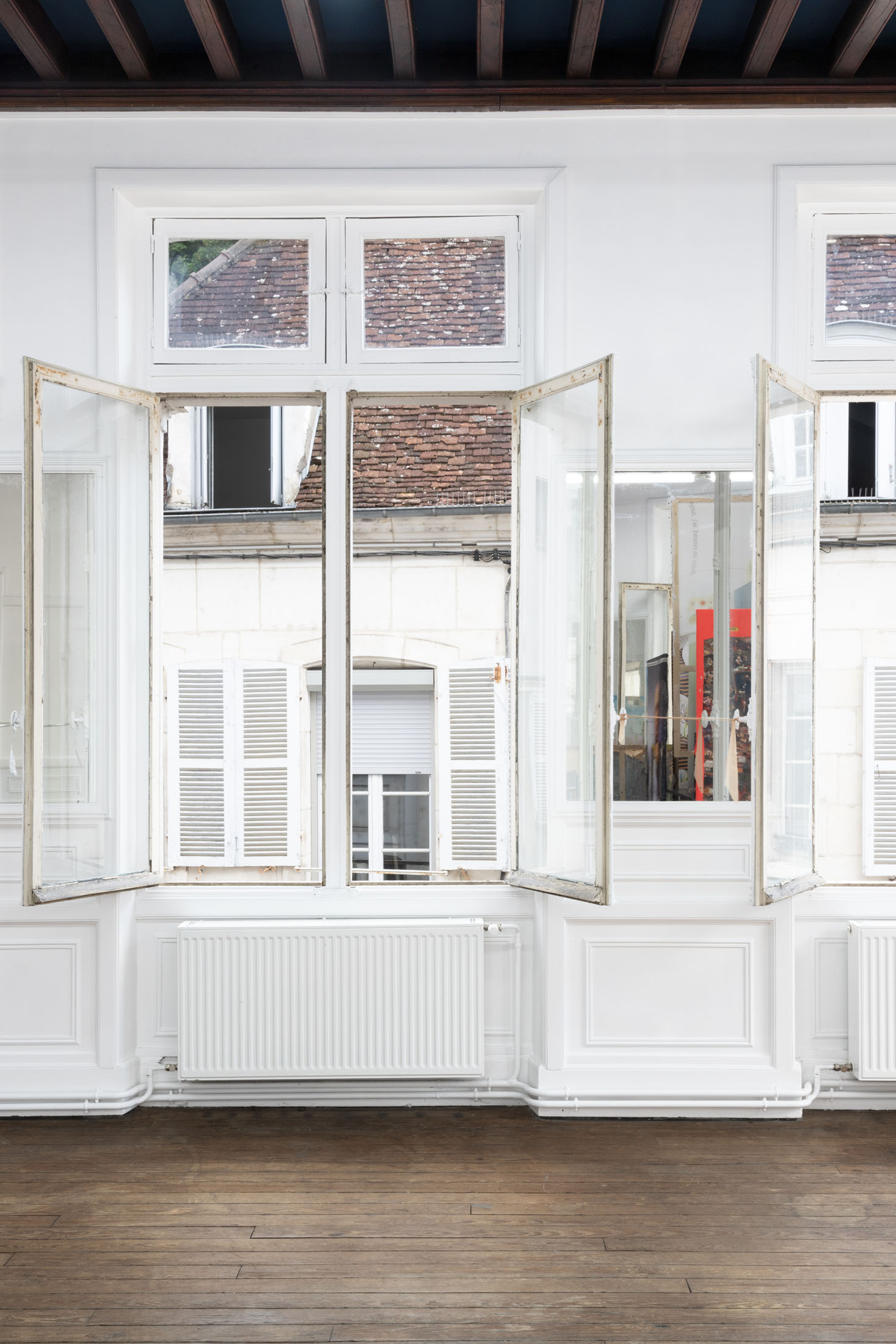
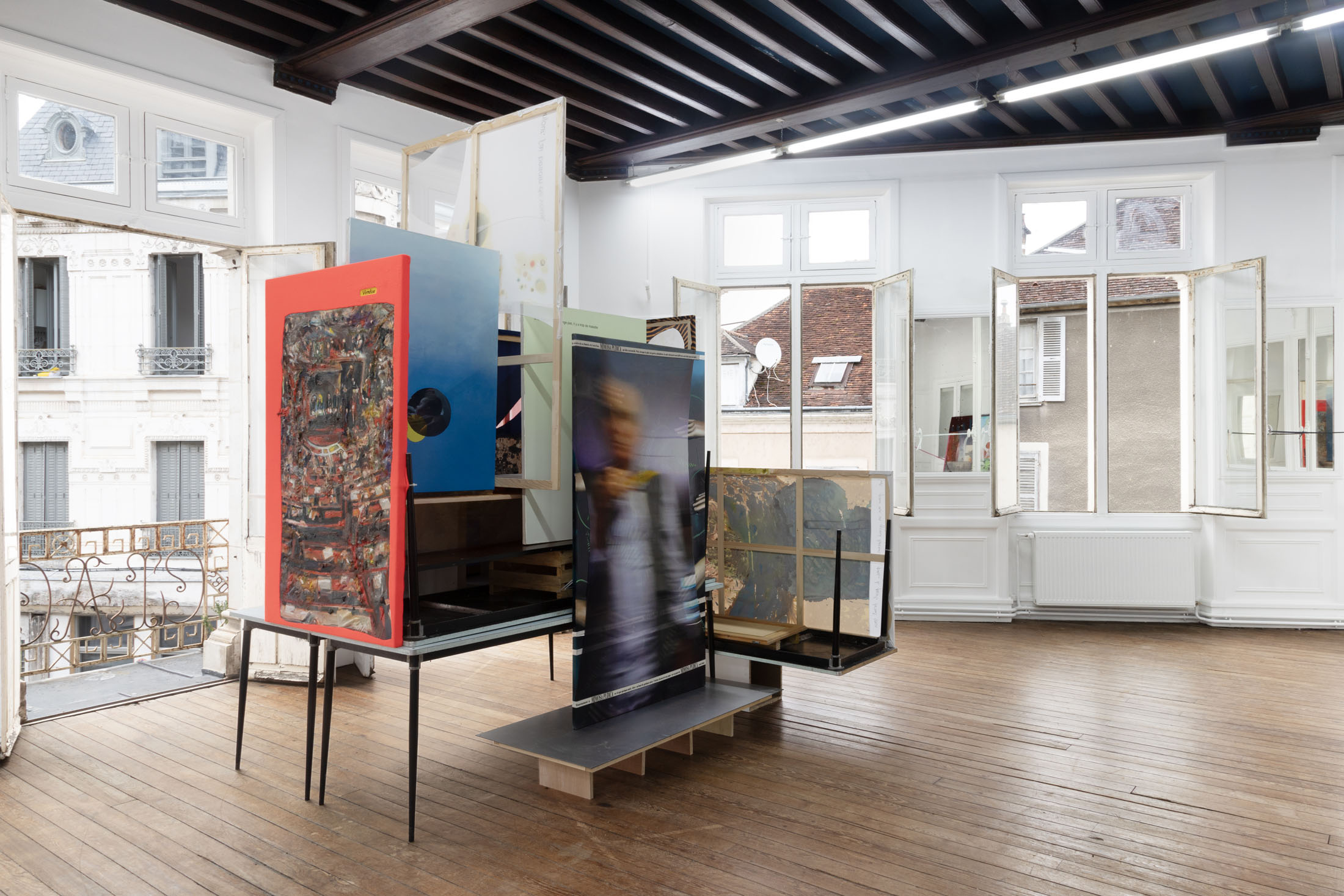
It’s sticky, it’s hot. It seeps, it drips. We’re dripping, unraveling. The umpteenth story of a heatwave more real than dystopian—or dystopically real? The return of our overheated bodies, topped by our minds numbed by a tragically cartoonish news cycle? Absolutely not. Behind every reflection in Mathilde Ganancia’s exhibition at Café des Glaces, behind each droplet of condensation, one catches sight of old skins. Wrinkled skins pulled taut by a facelift or plumped up by a peeling… skins that once belonged to former stars. An expression, seemingly “modest,” that conceals a terrible violence and isolation, stemming from an essentializing form of punishment.
This scene, upstairs at the art center, that unfolds before our eyes could well be the resurfacing of Norma Desmond’s face—played by Gloria Swanson in Billy Wilder’s Sunset Boulevard. A monstrous and fascinating story—one among many in Kenneth Anger’s Hollywood Babylon—of a silent film diva, locked away in her villa, forced to buy both her love and her possible comeback from a young screenwriter, himself caught in the trap of an egocentric madness, speaking in the many voices of all her characters. Mathilde Ganancia, in her own writing and in her many texts, plays with the same device—a kind of schizophrenia of screaming, muffled, intrusive voices, steeped in a crude misogyny. It could just as well be a painting, alias old idol Fedora, played by the sublime Marthe Keller, embodying a shadow of herself, violently dissociated from her own personality. Reduced to her own silhouette, she has become an extra in her own life, hiding away on a Greek island, held captive by those closest to her. Billy Wilder, a queer genius of cinema, mastered the art of staging these narcissistic demonesses; Mathilde Ganancia, in turn, develops the dramaturgy of an opera libretto with manic intensity.
Much like what happens backstage in Elizabeth Taylor’s dressing rooms—Kleenex queen of the endlessly over-serialized silkscreens by Andy Warhol—layers of foundation, eyeshadow, and lipstick are piled on as much as necessary to rewind the years. To regain a flash seduction that rhymes with pulp and the oval of the face, flirting with the risk of a self-image that is loud, overdone—in other words, vulgar.
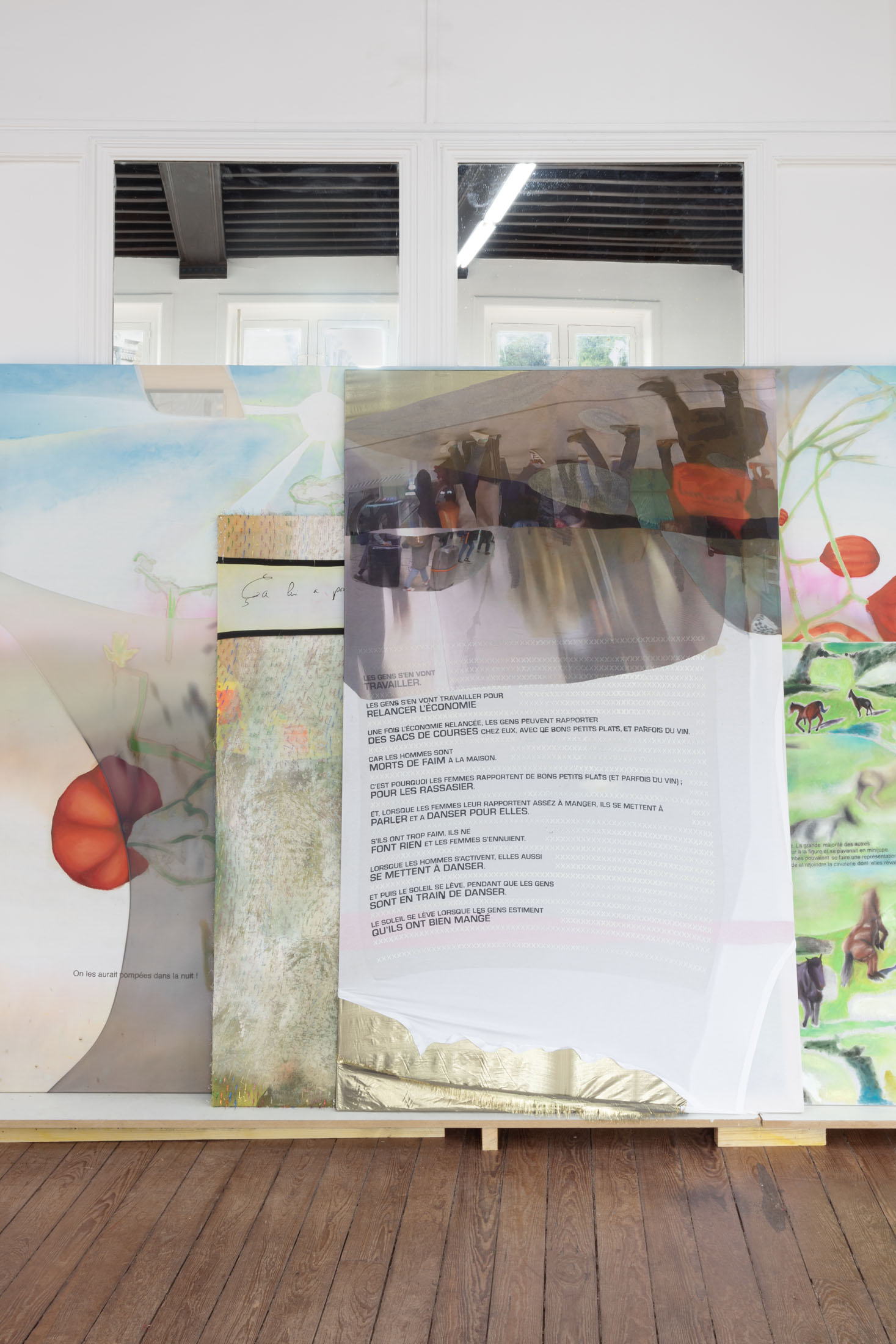
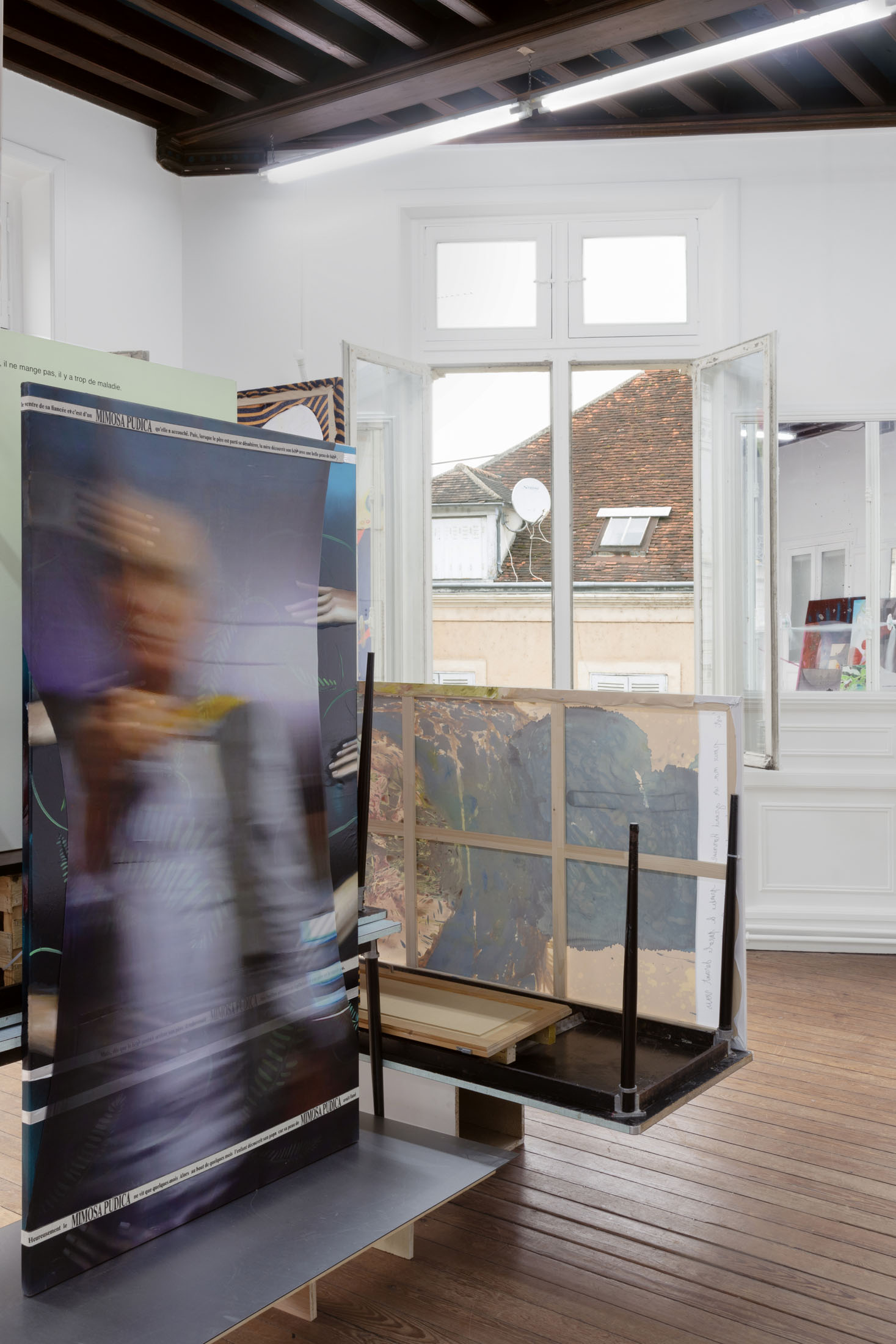
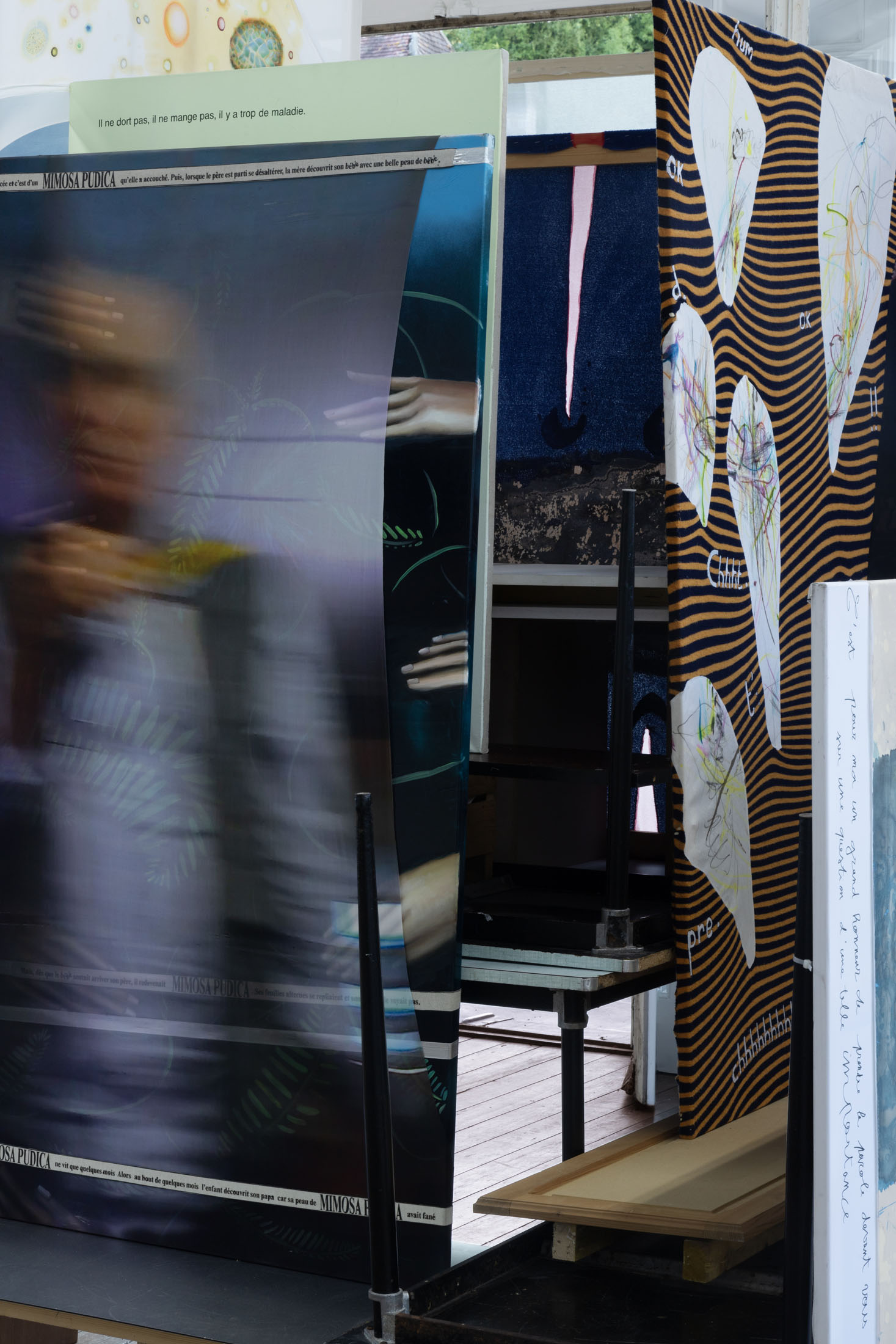
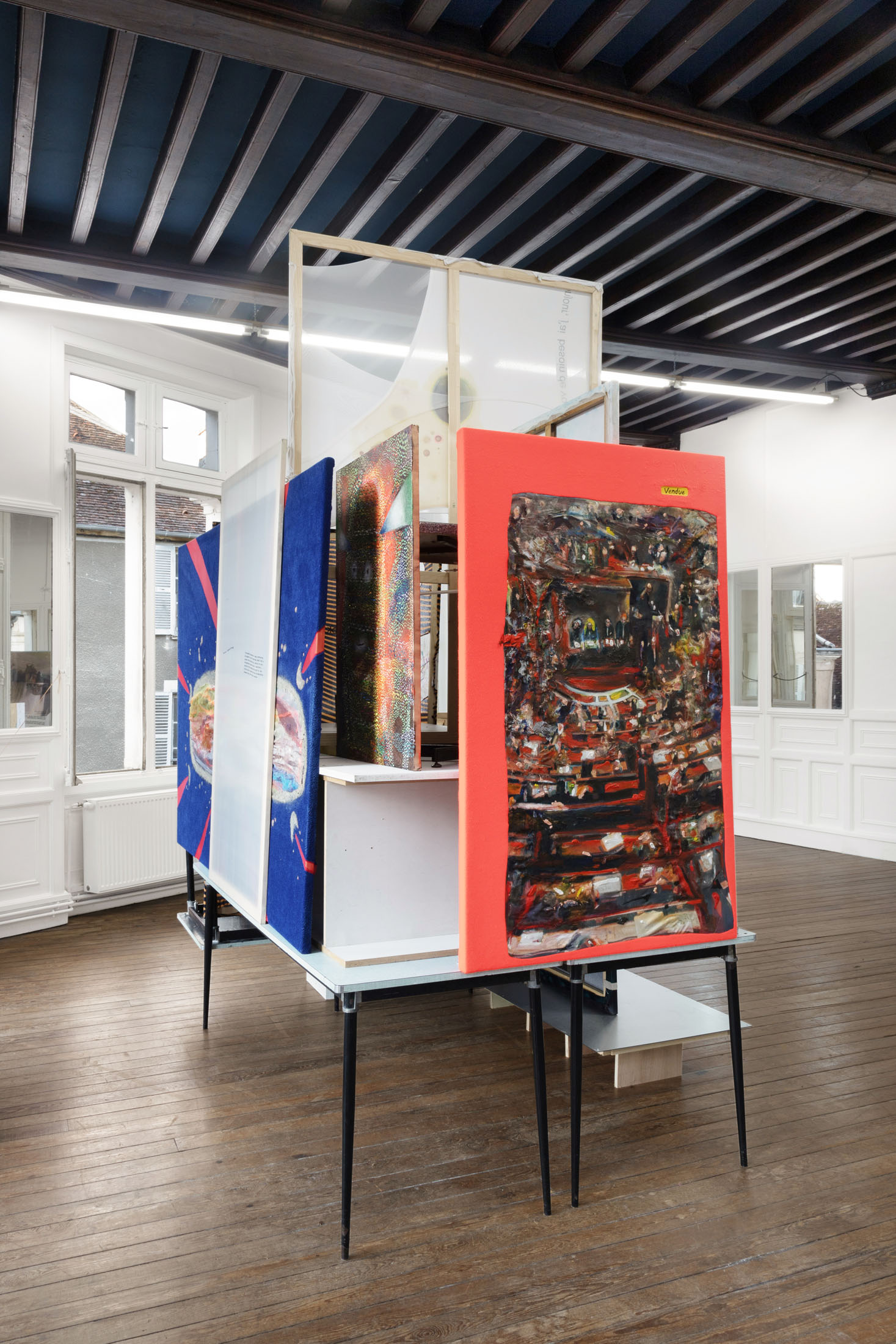
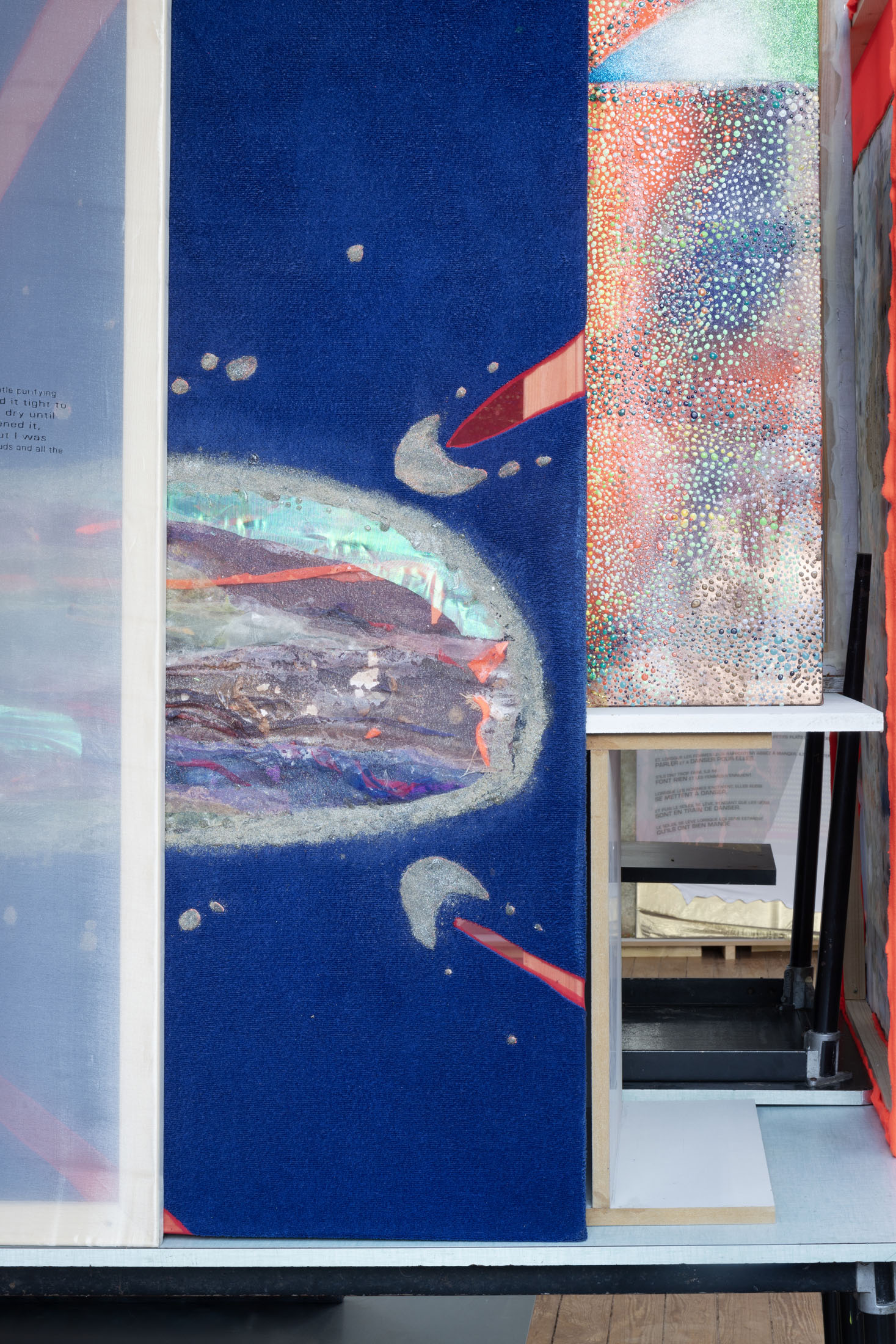
This, I believe, is precisely the pop metamorphosis that Mathilde Ganancia reinvests as a feminist manifesto, an ode to the slackness of skins, of canvases. Lycra stretched to the point of becoming transparent in places, revealing the shoulders of the stretcher bars like a bra strap slipping down. A movement that embraces its lack of control, offering itself, tipping involuntarily into sensuality. In the yawns of the T-shirt, the shorts, one glimpses an armpit, a crease of the groin, body hair. Slackness is warm, sexual, vibrant: saliva and vulval juices entwine. The implicit codes of the clean young girl, of the restrained adolescent woman—sung by the tired refrains of boomer paternalism—fade away. Then words reappear, outside of an androcentric register (Luce Irigaray), as onomatopoeia or as tattoos on the canvases. Blurred faces in the middle of a crowd at the National Assembly—or one emerging from a landscape seen under an acid trip—reconfigure like a grand finale at the Bastille Day fireworks. It’s noisy, deafening, popular, and marvelous, like a lightning opera between two devastating rumors about our idols. Hollywood baby, alone.