Venezuela has been narrated to the point of exhaustion through concepts such as oil, crisis, violence, polarization, and migration.
Each of these words contains a story, but none can contain an entire country.
Perhaps, in the attempt to speak about Venezuela from afar, there is a certain chimera: to restore a sense of proximity that distance has made impossible. An affective and political undertaking that nevertheless risks transforming what it seeks to recover into an image of itself that is too fixed.
From my position as a Venezuelan and as a gallery director in Barcelona, this tension inevitably informs the way I think about an exhibition such as this one. How can we give visibility to artistic practices emerging from a geography marked by a particularly complex political history without turning that complexity into an exotic premise? How can we speak about a territory without reducing it to the circumstances that have shaped its present? And, perhaps more importantly, how can we create a form of closeness to a place where we can no longer be present in the same way?
This exhibition does not seek to answer these questions. Rather, it attempts to remain within them.
María Elena Pombo and Miguel Braceli are two Venezuelan artists whose practices engage collaboration as a means of producing knowledge and approaching territory. In their work, what we call the “artwork” ceases to be exclusively the result of an individual will and becomes a space of negotiation among people, bodies, materials, memory, and the present, between what is imagined and what ultimately takes place.
Collaboration thus appears less as a method than as a way of positioning oneself in relation to the world.
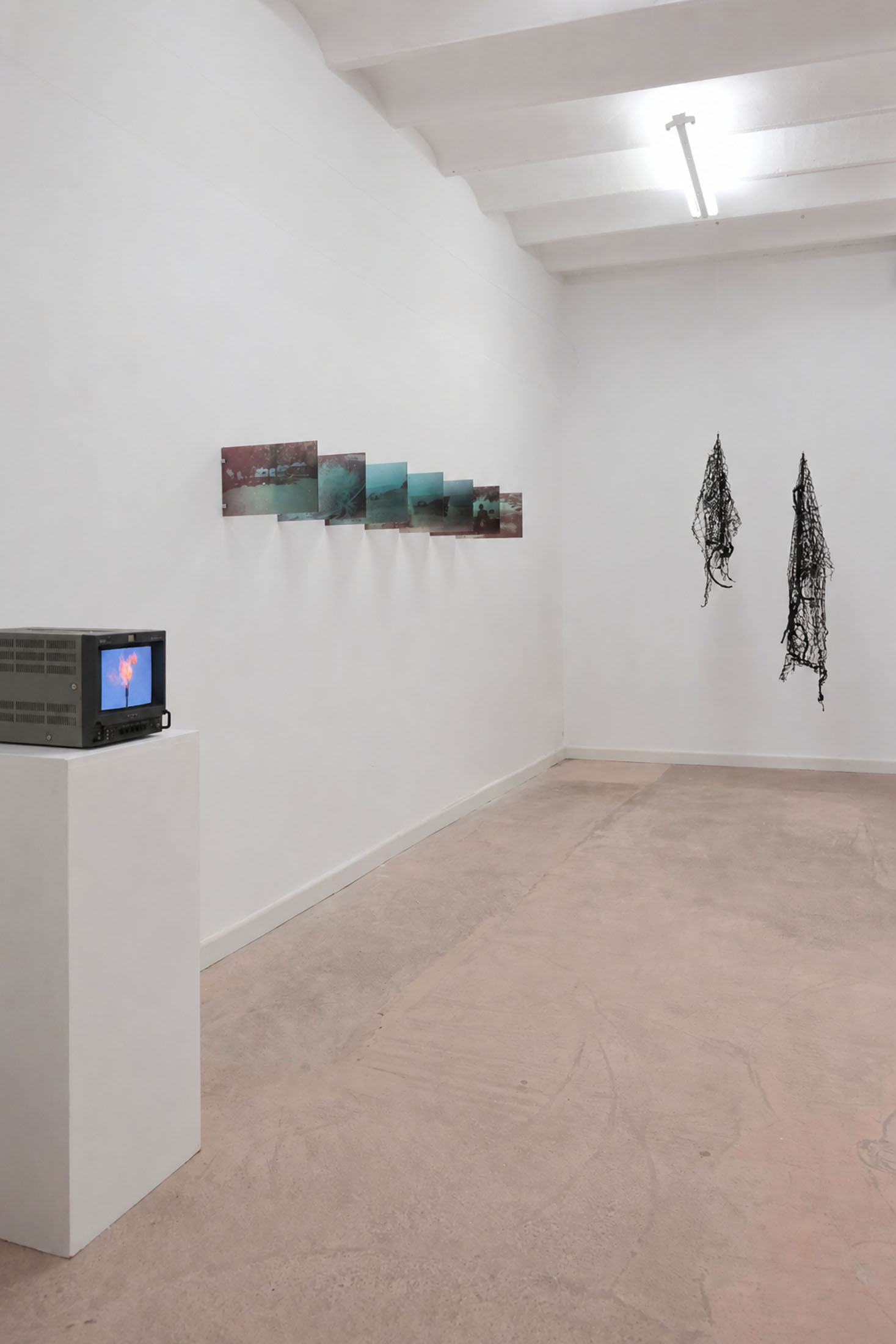
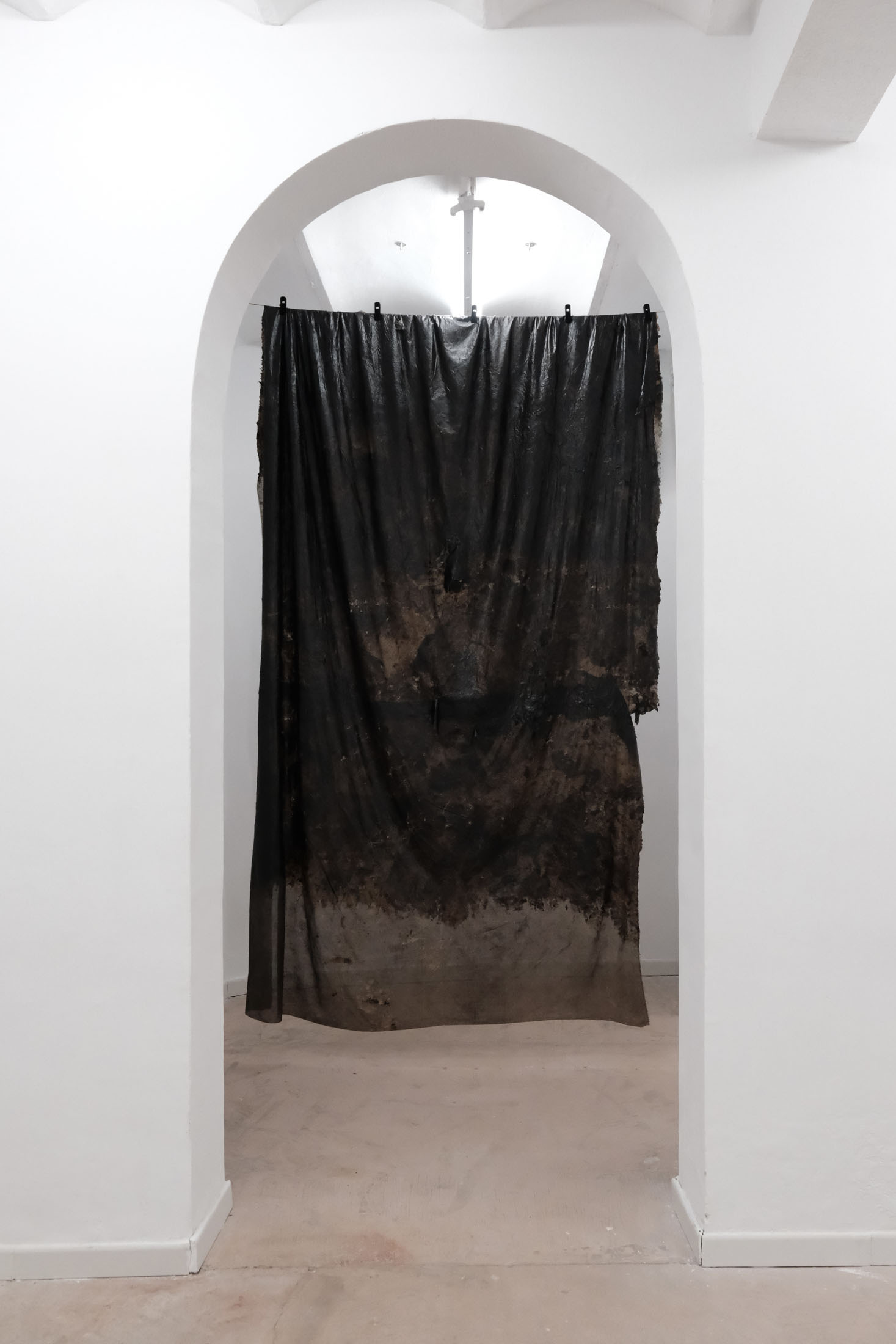
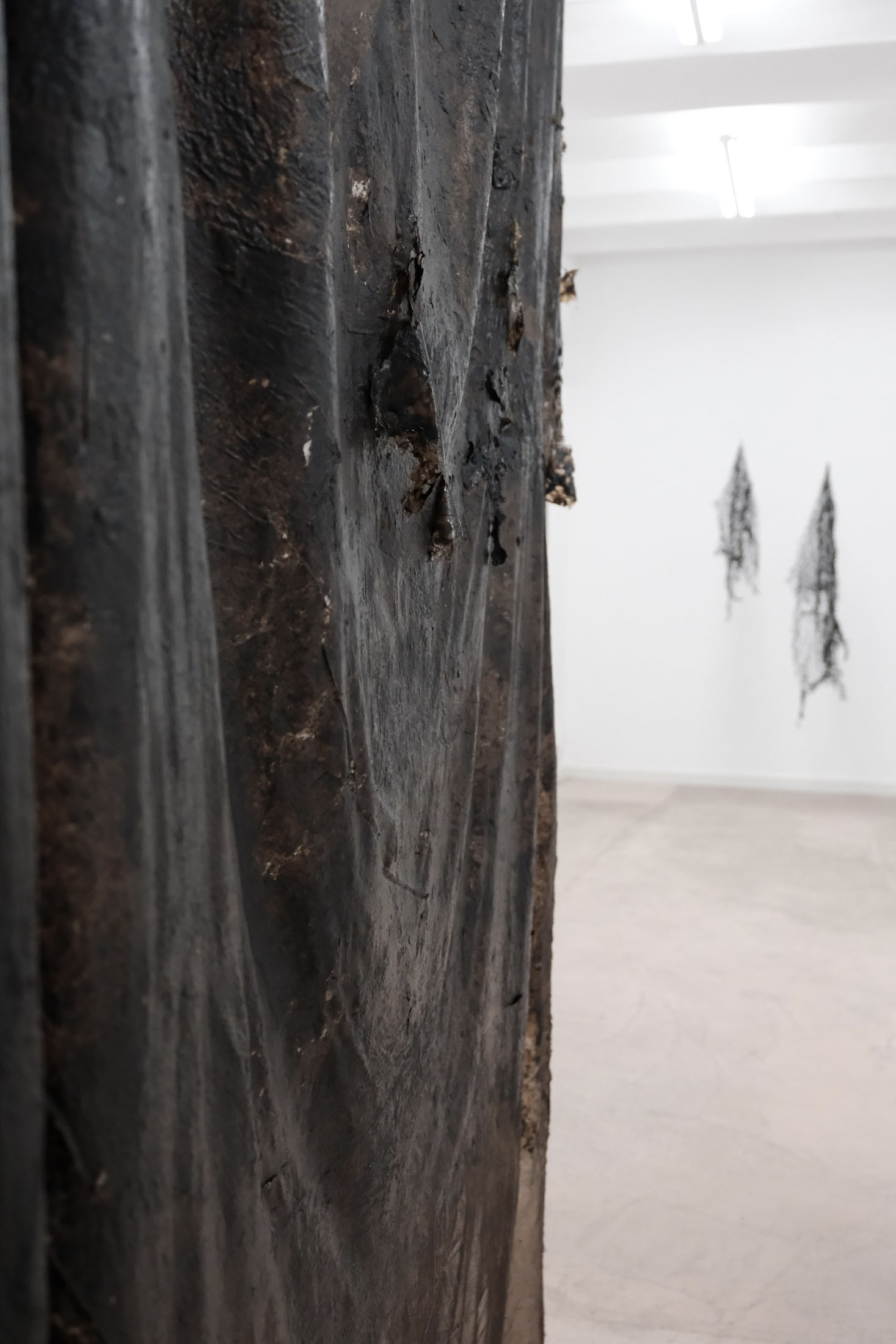
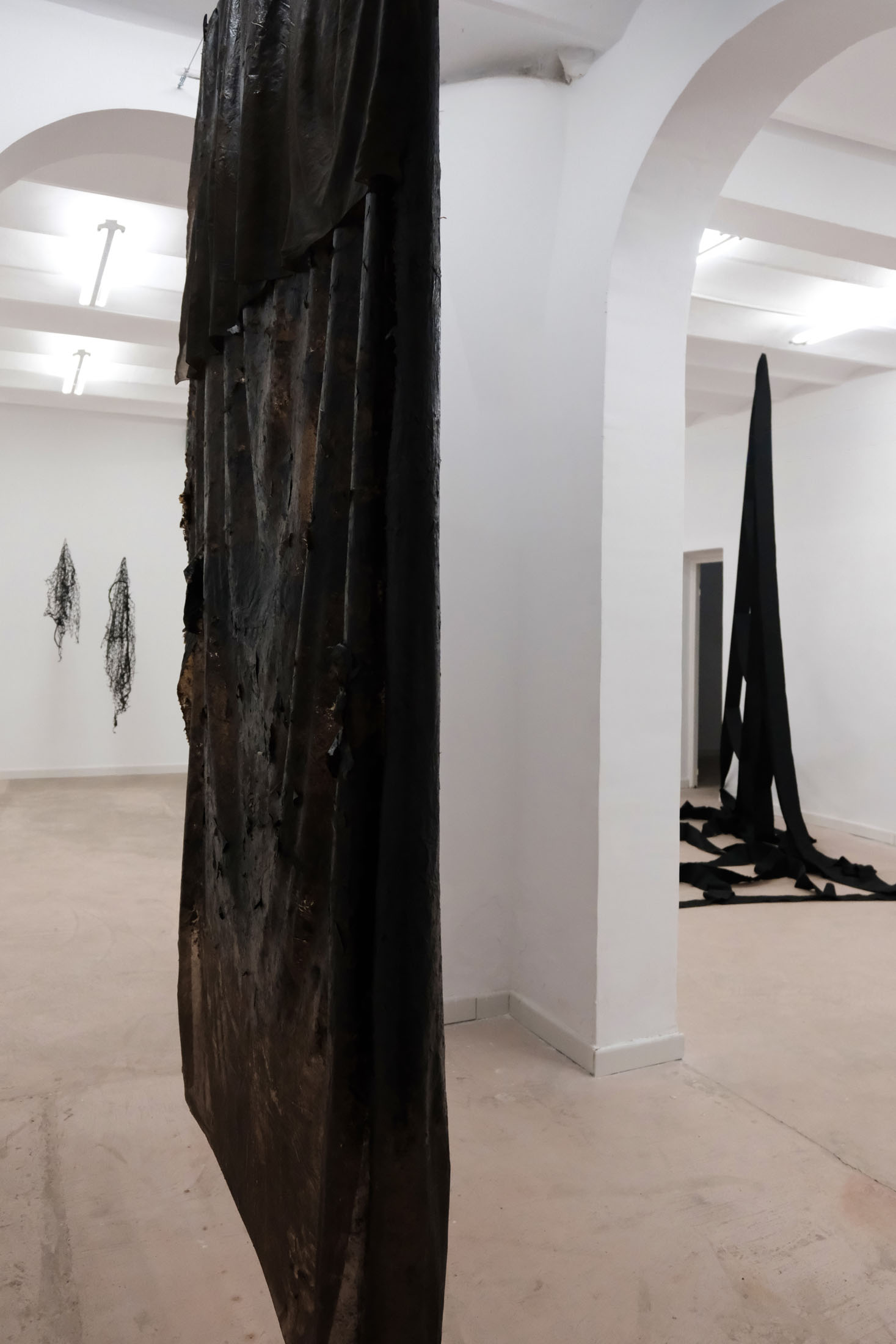
In Pombo’s work, this position becomes particularly visible in They Called It Mena’, a research project that explores the relationship between oil and humanity through stories excluded from dominant narratives. The term Mena’, used by the Wayuu people to refer to the black, viscous substance that emerged from the ground in their territory, returns oil to a dimension predating its transformation into a commodity, an industry, and the foundation of a national economy.
Pombo’s research, however, does not take place from a documentary distance. It begins in Cabimas, in conversations with her uncle Régulo, in her return to Venezuela after an eight-year absence, and, progressively, in a series of encounters with family and friends that alter the course of the work.
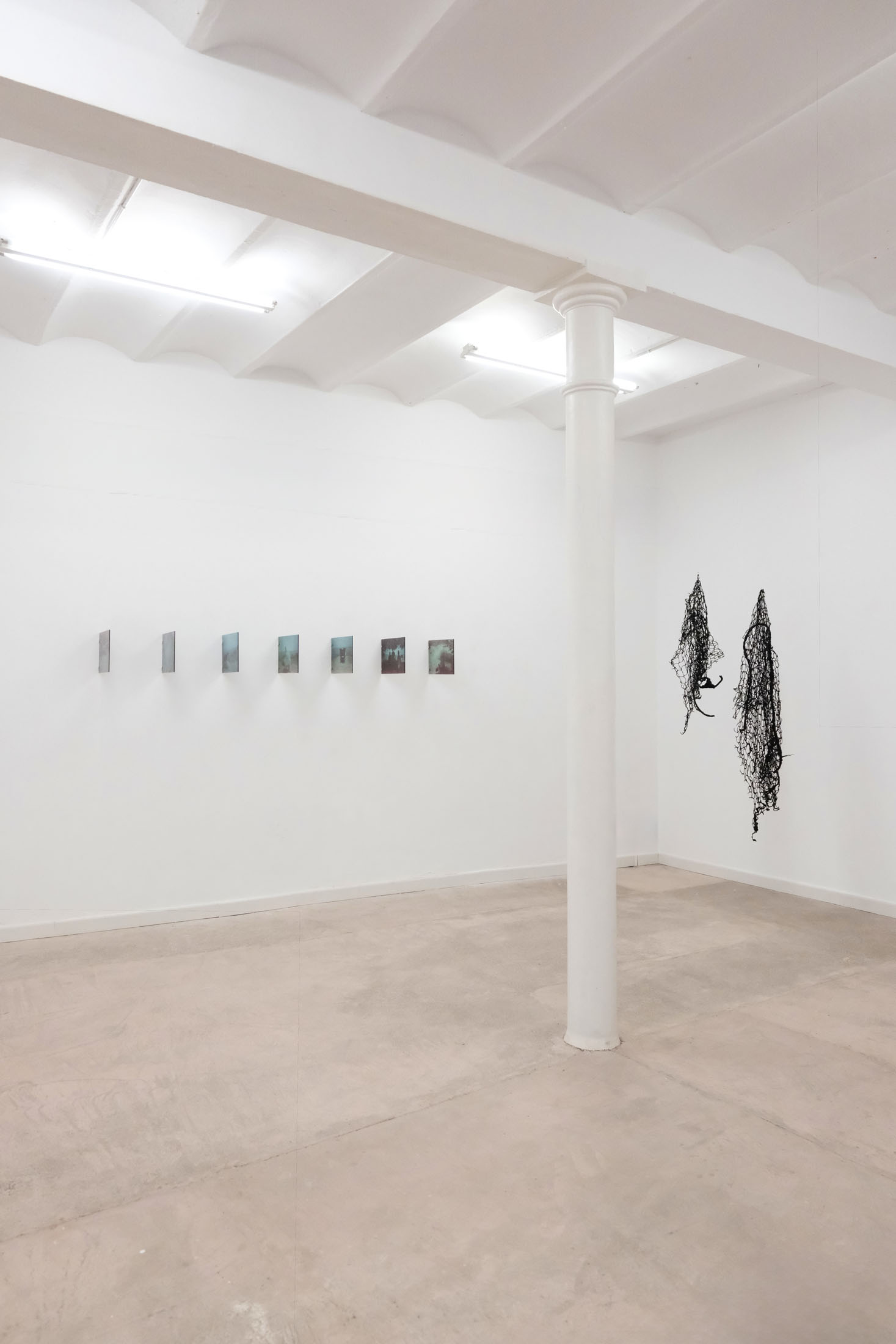
During her stays at her grandmother’s house, the work follows a kind of rhythm similar to a sort domestic art residency: waking, eating, talking, working, taking photographs. Family members participate, neighbors stop by, and fishermen offer materials. Gifts, archives, and photographs emerge, their origins belonging to a history that predates the work itself.
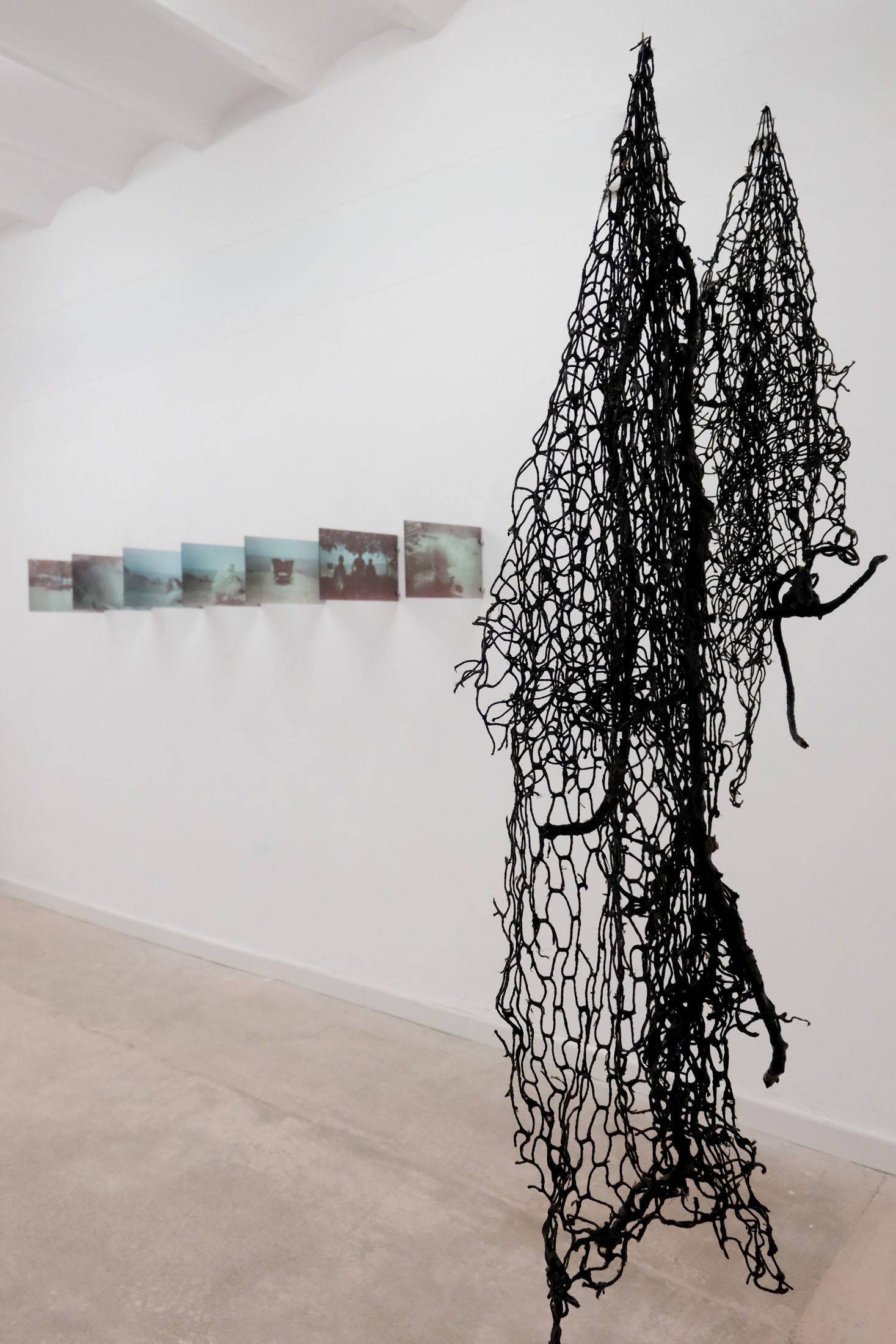
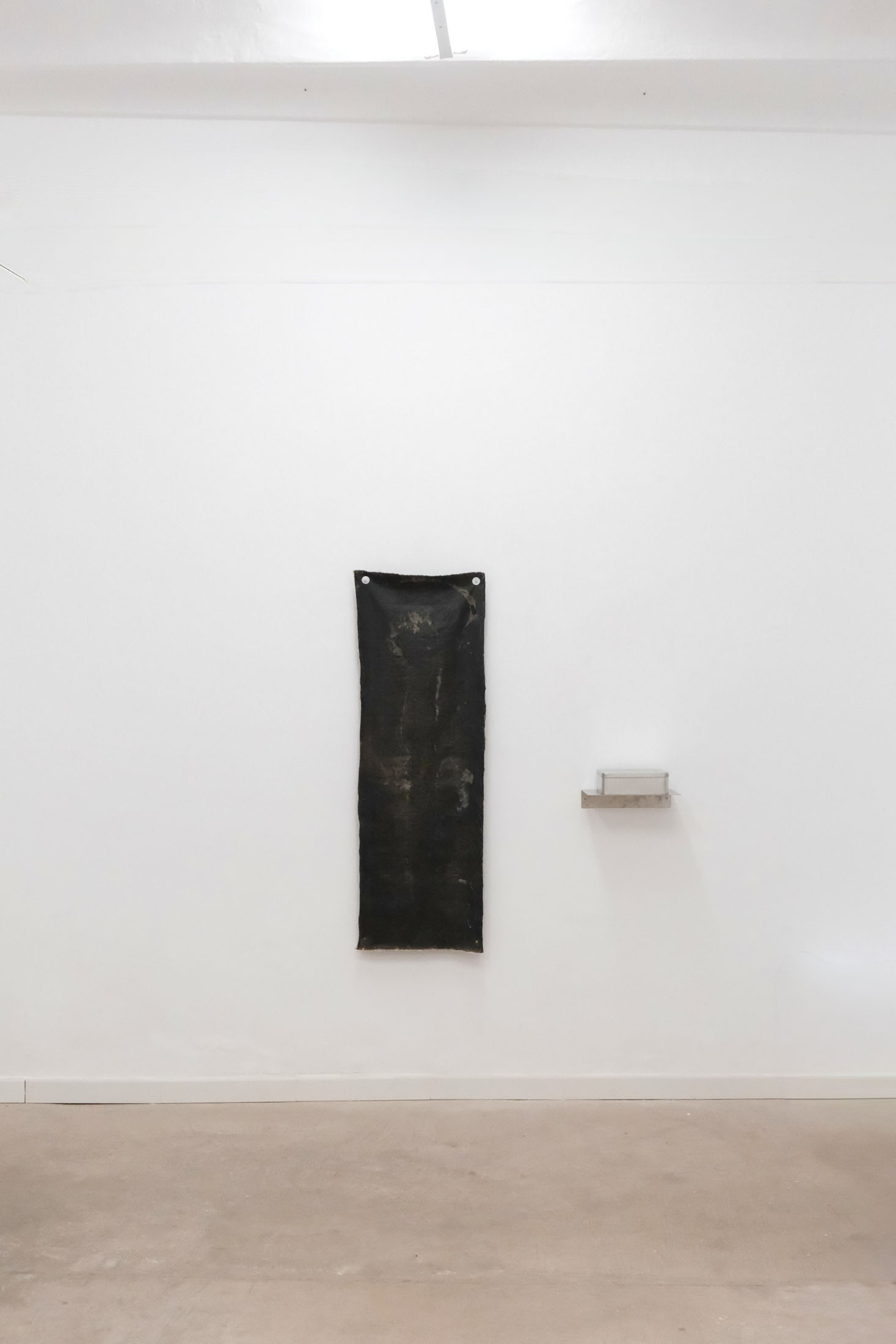
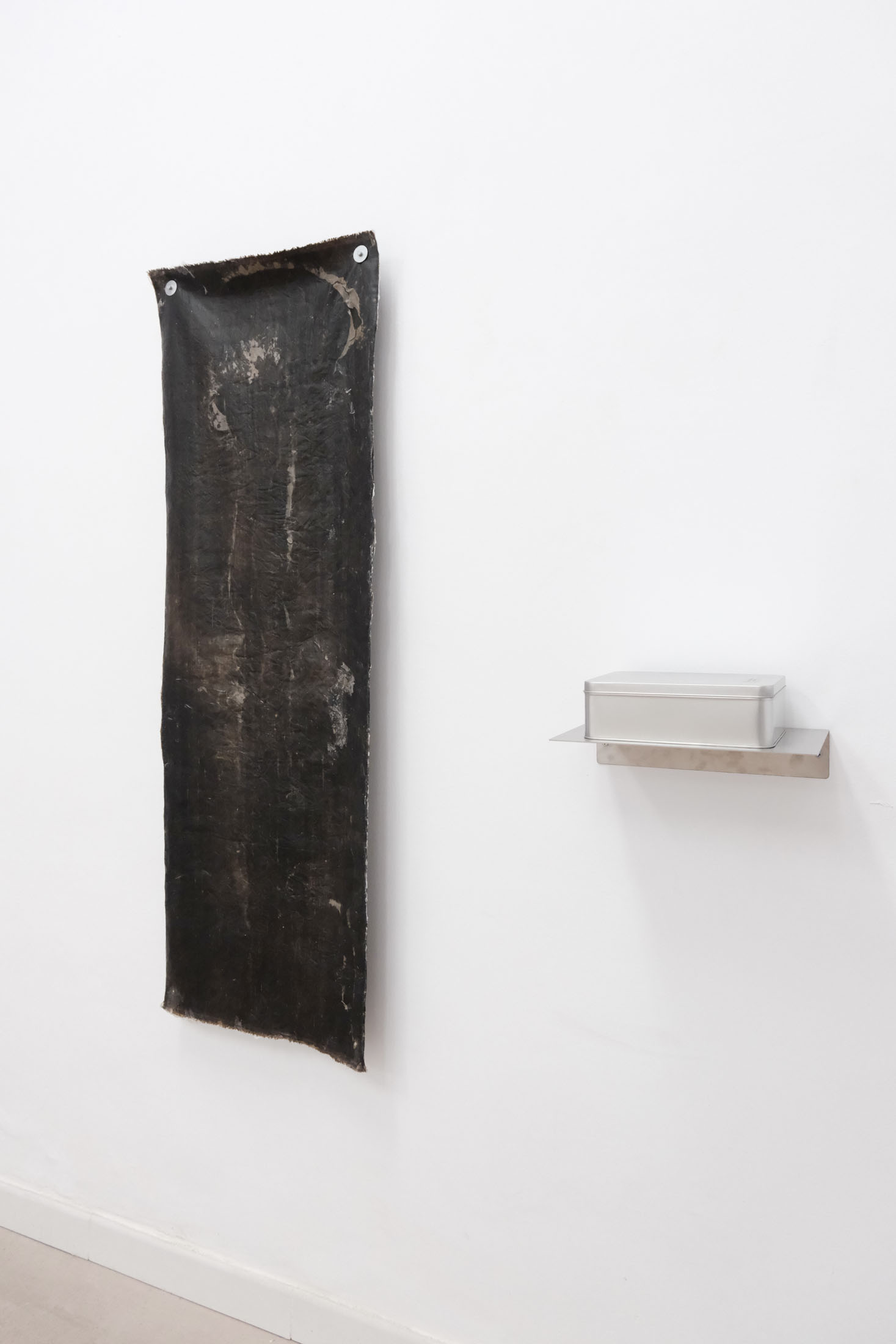
Oil, historically associated with an extractive economy, is inscribed here within another kind of economy: one of gift-giving, transmission, and reciprocity. A camera passed from a childhood friend to an uncle; fishing nets offered by fishermen; shirts dyed with oil by Régulo; photographs circulating across generations. The substance ceases to be a resource and becomes a form of relation.
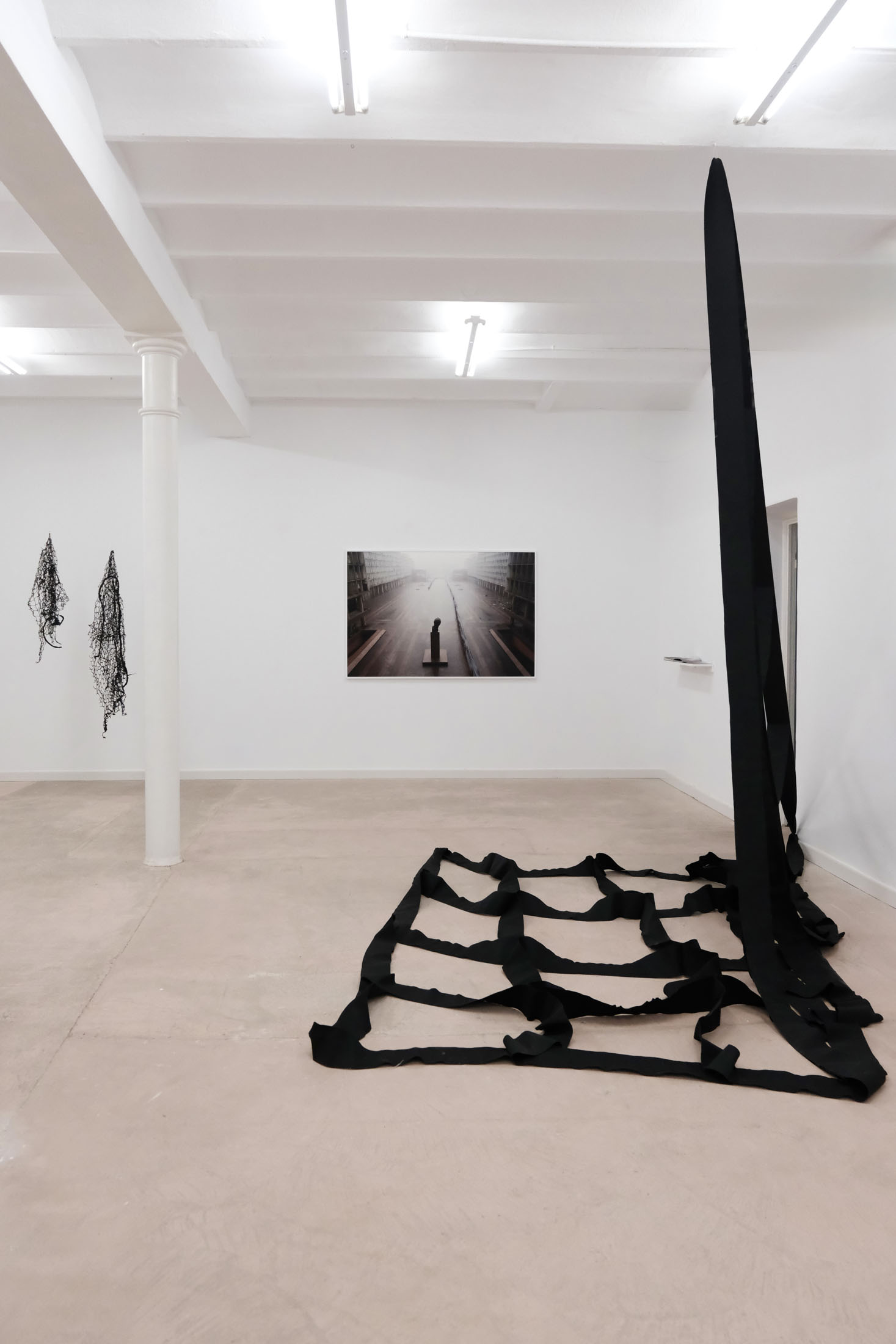
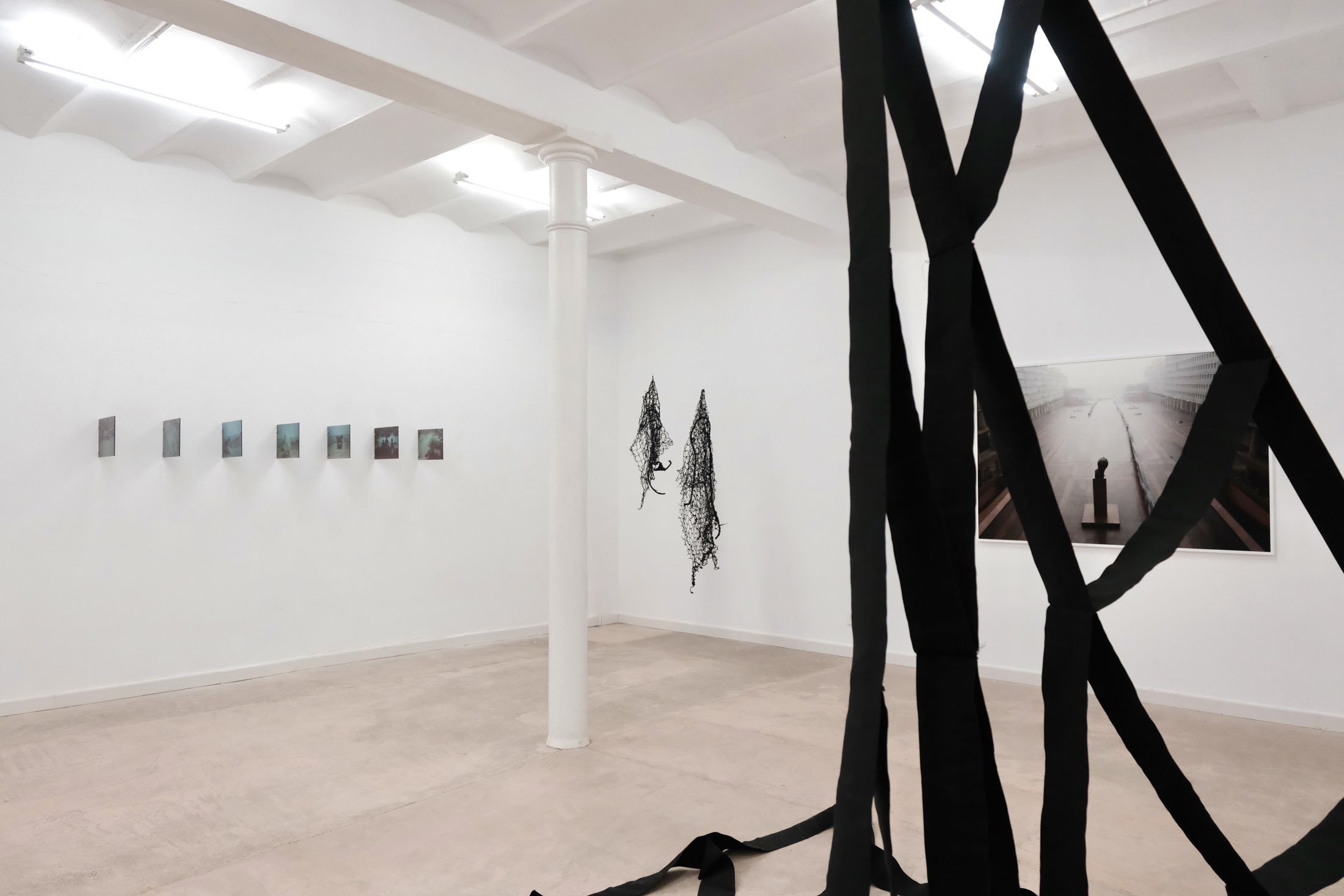
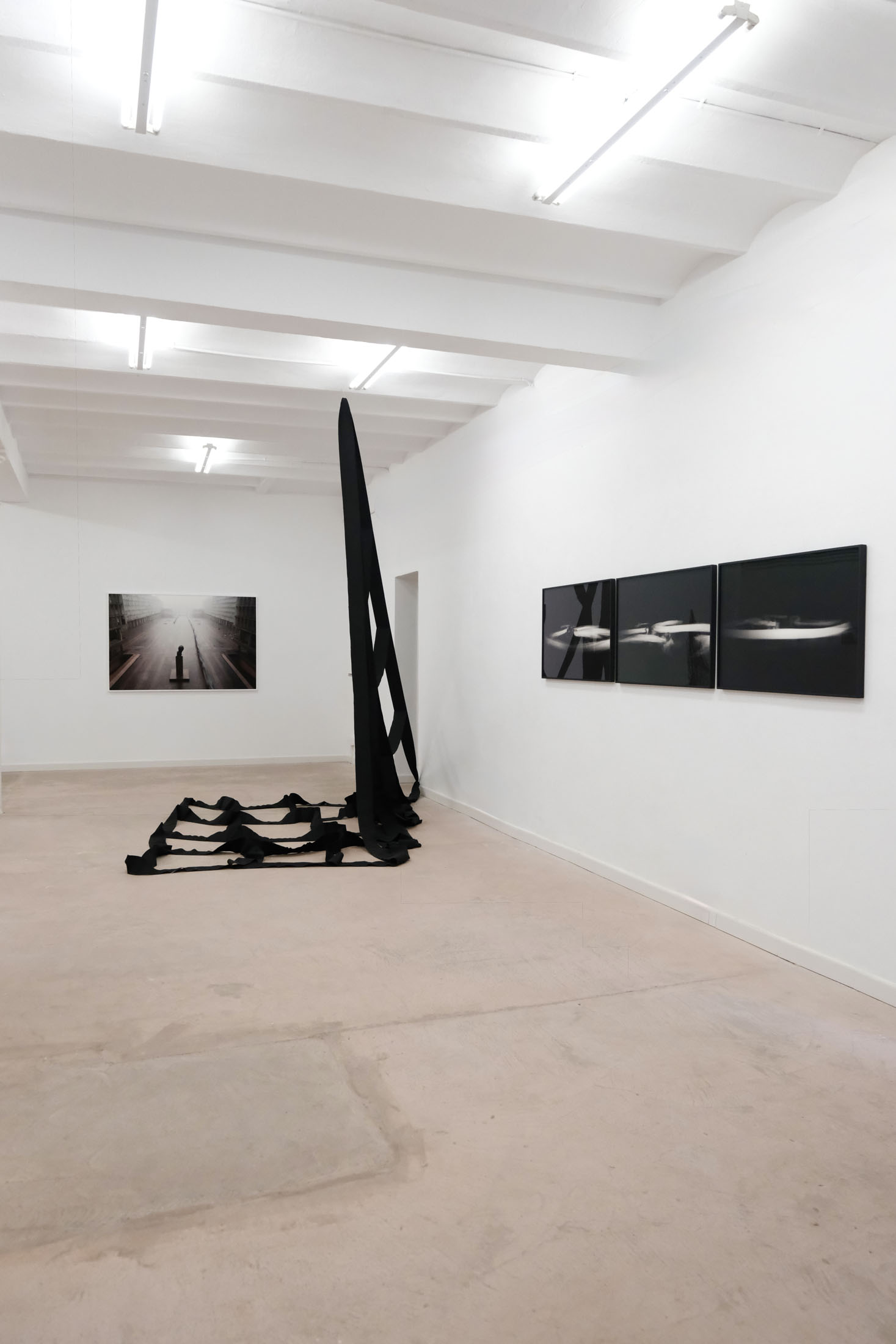
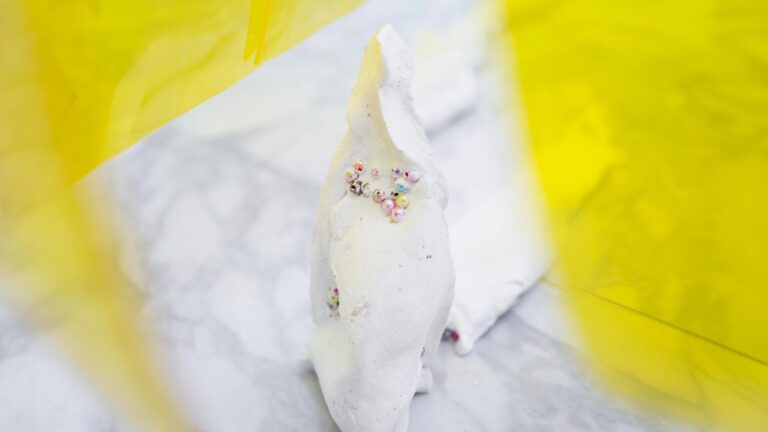
In Tejiendo el Petróleo (Weaving Oil), Pombo transforms oil into thread using brown algae extract, glycerin, and water, through processes derived from molecular gastronomy. Yet the work is also transformed through the intervention of others. The artist wanted to weave the oil; her uncles suggested using fishing nets. Accepting their proposal meant partially relinquishing control and allowing a story beyond her original intention to reshape what would ultimately be constructed.
Collaboration occurs precisely there: at the moment when an idea ceases to belong entirely to us.
This operation finds a different echo in Miguel Braceli’s practice. If, in Pombo’s work, collaboration emerges through the intimacy of family, territory, and the circulation of materials, in Braceli’s it appears as a means of collectively constructing space.
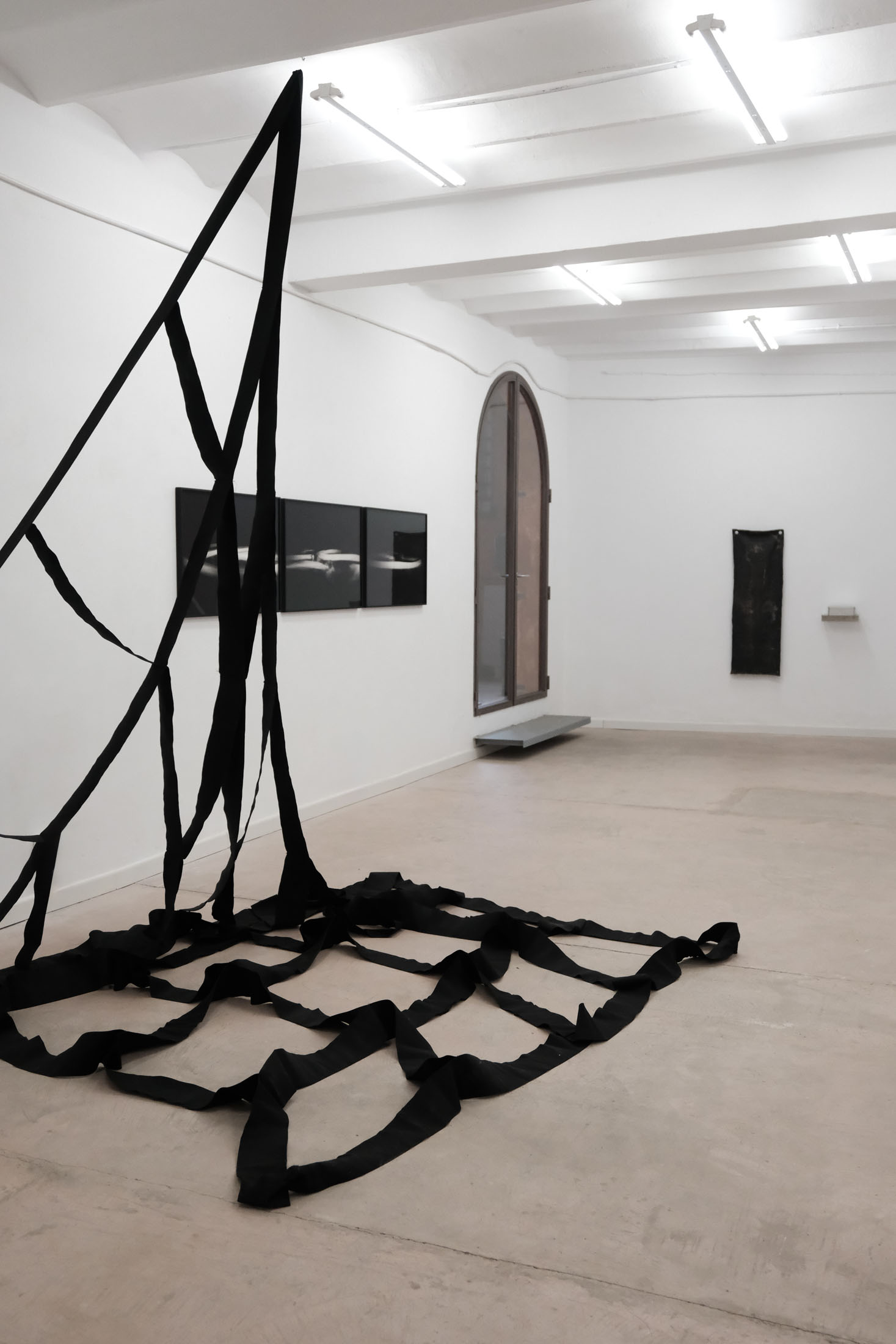
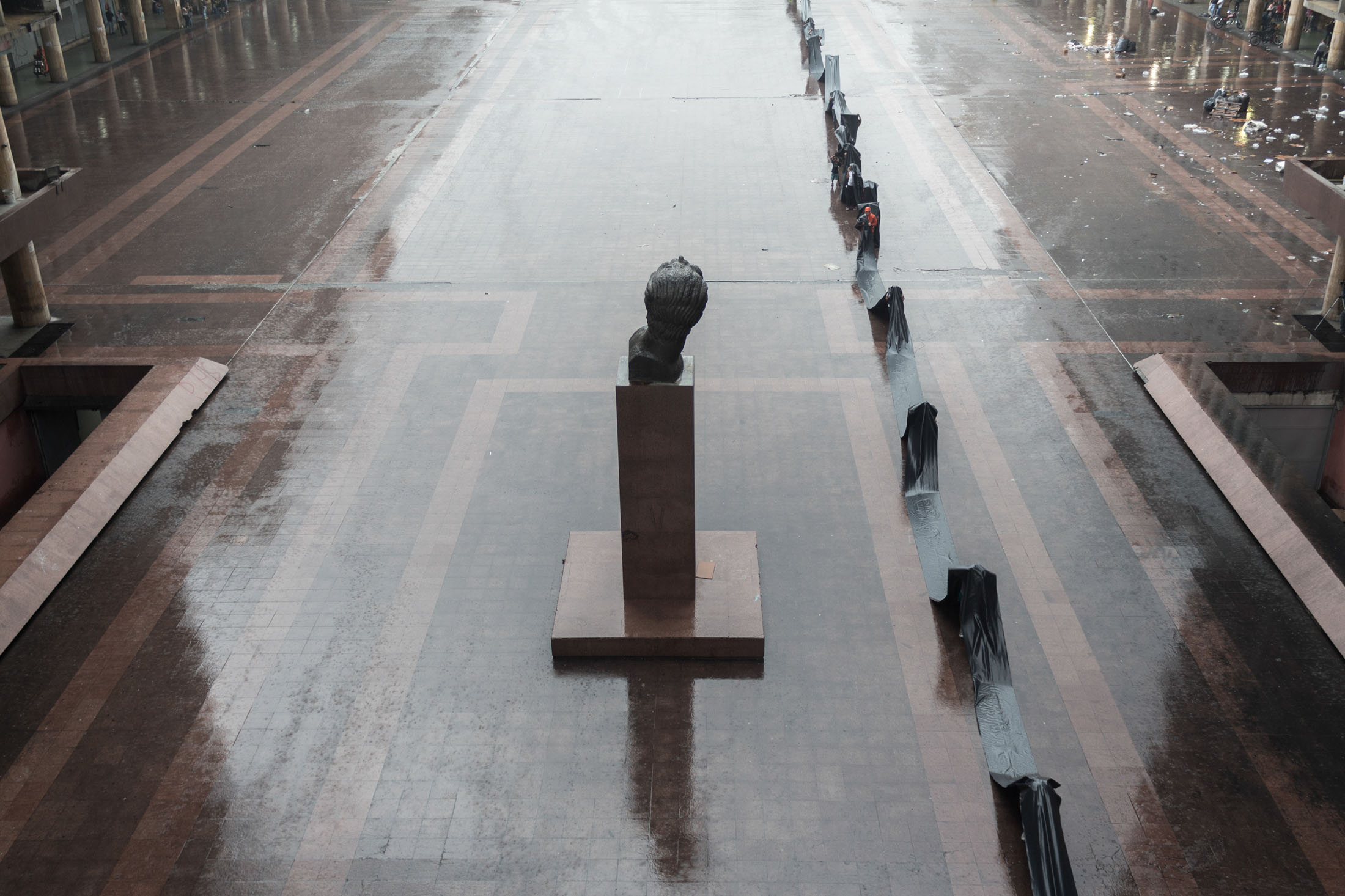
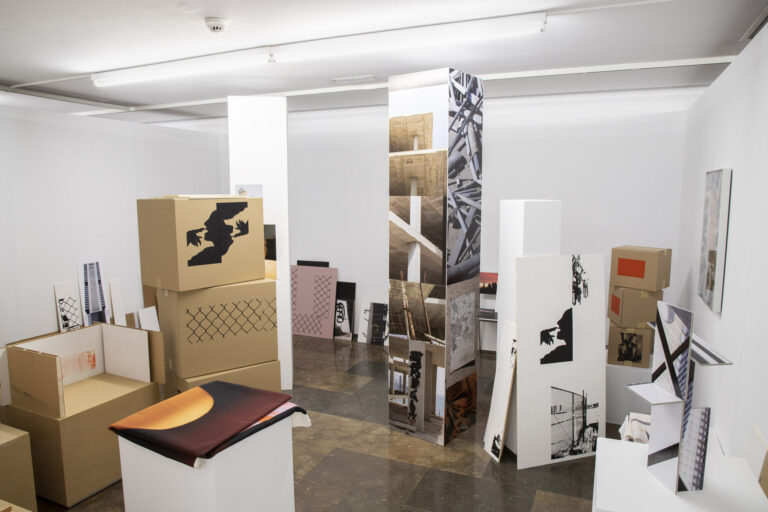
Area, carried out in 2014 in Plaza Caracas, begins with a seemingly elementary operation: measuring the void within one of the most emblematic public spaces in the Venezuelan capital’s government district. Yet the measurement does not seek to quantify space in strictly physical terms. Area functions as a conceptual device: a quantitative magnitude that renders visible what cannot be measured in the same way, the social, political, and cultural forces contained within a public space.
Plaza Caracas is not an empty space. It is occupied by the marks and fractures of a society, but also by the strategies that turned polarization into a political catalyst. Braceli intervenes in this space not by representing polarization, but by temporarily constructing a common ground that challenges polarizing narratives as a political strategy of totalitarian governments. Seventy participants and four hundred linear meters produce a new area in the heart of the government district. In this way, the work seeks to blur the boundaries separating two cities imagined as irreconcilable, countering the discourse of division with collective action.
Confronted with a power structure founded on the production of divisions, a group of people decides to occupy a space and collectively construct something that did not previously exist. The work thus becomes a political gesture because it produces, however provisionally, a shared form shaped by the resistance and resilience of people building a space of their own.
To build with others is to build a space that belongs entirely to no one. It is a form of displaced authorship, in which the work takes shape precisely through what the artist cannot fully control. Braceli’s works unfold in public space and in real time, navigating contingency and incorporating it into their poetic processes. The encounter, movement, conditions of the site, and presence of others are not elements external to the work, but forces that participate in its construction.
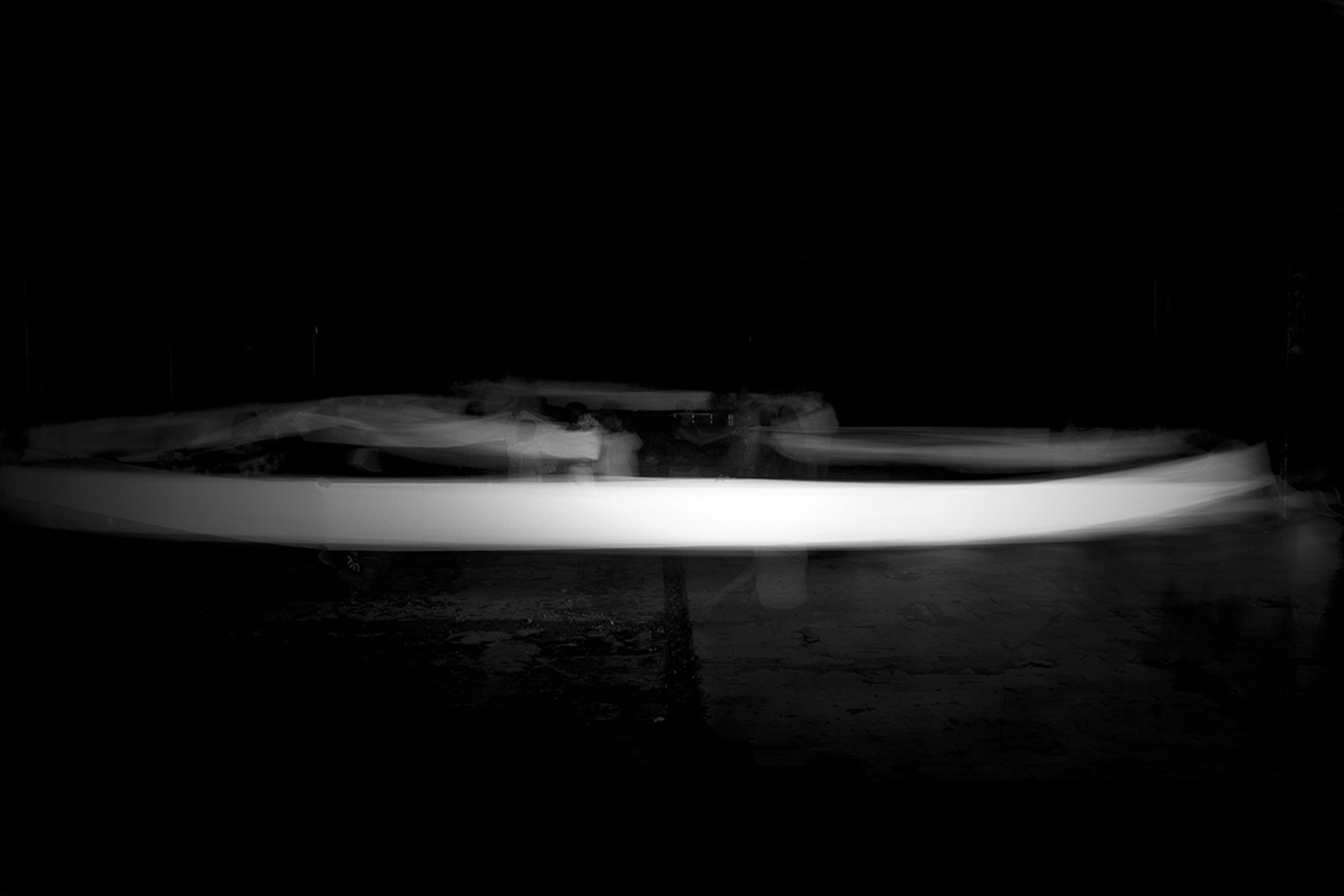
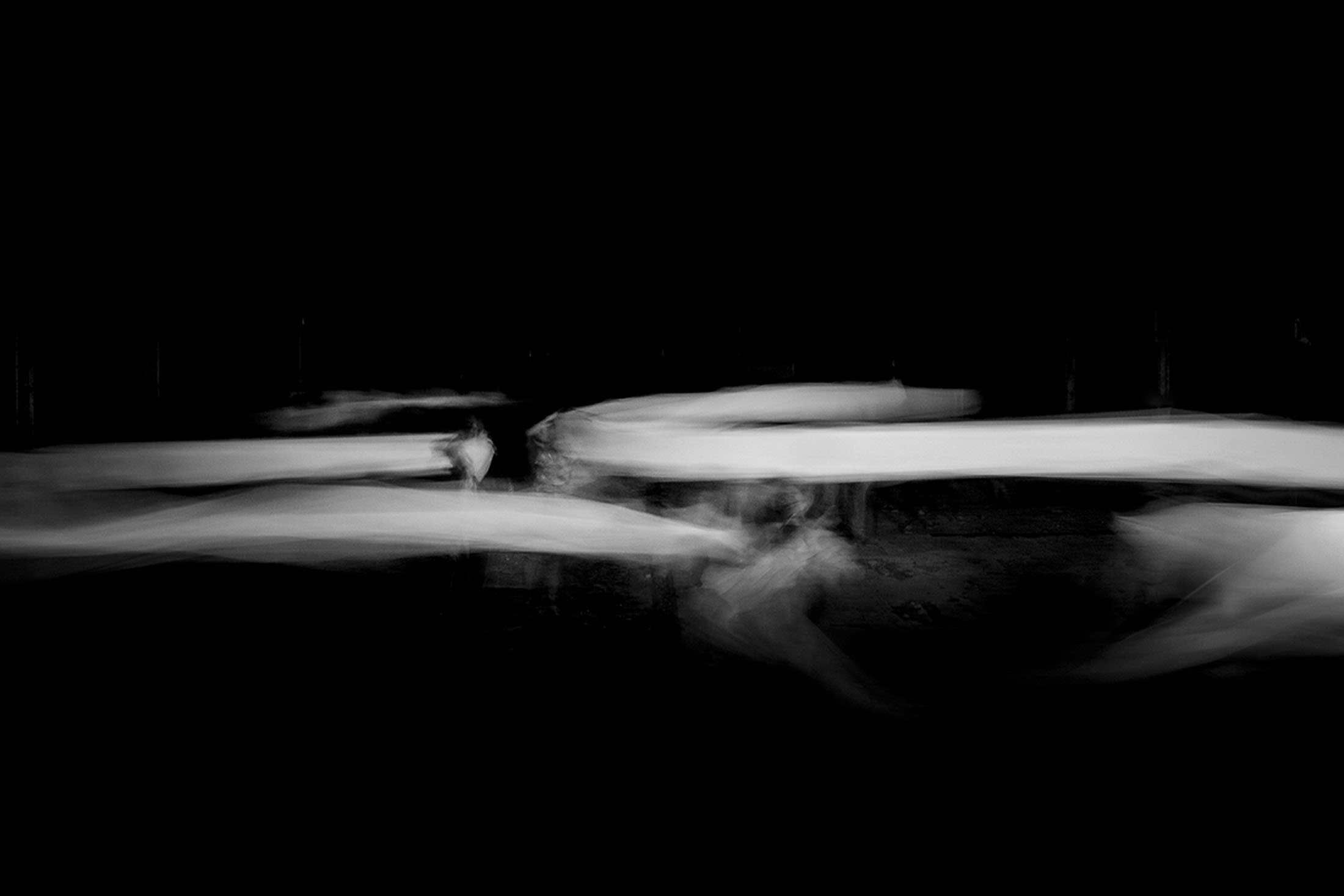
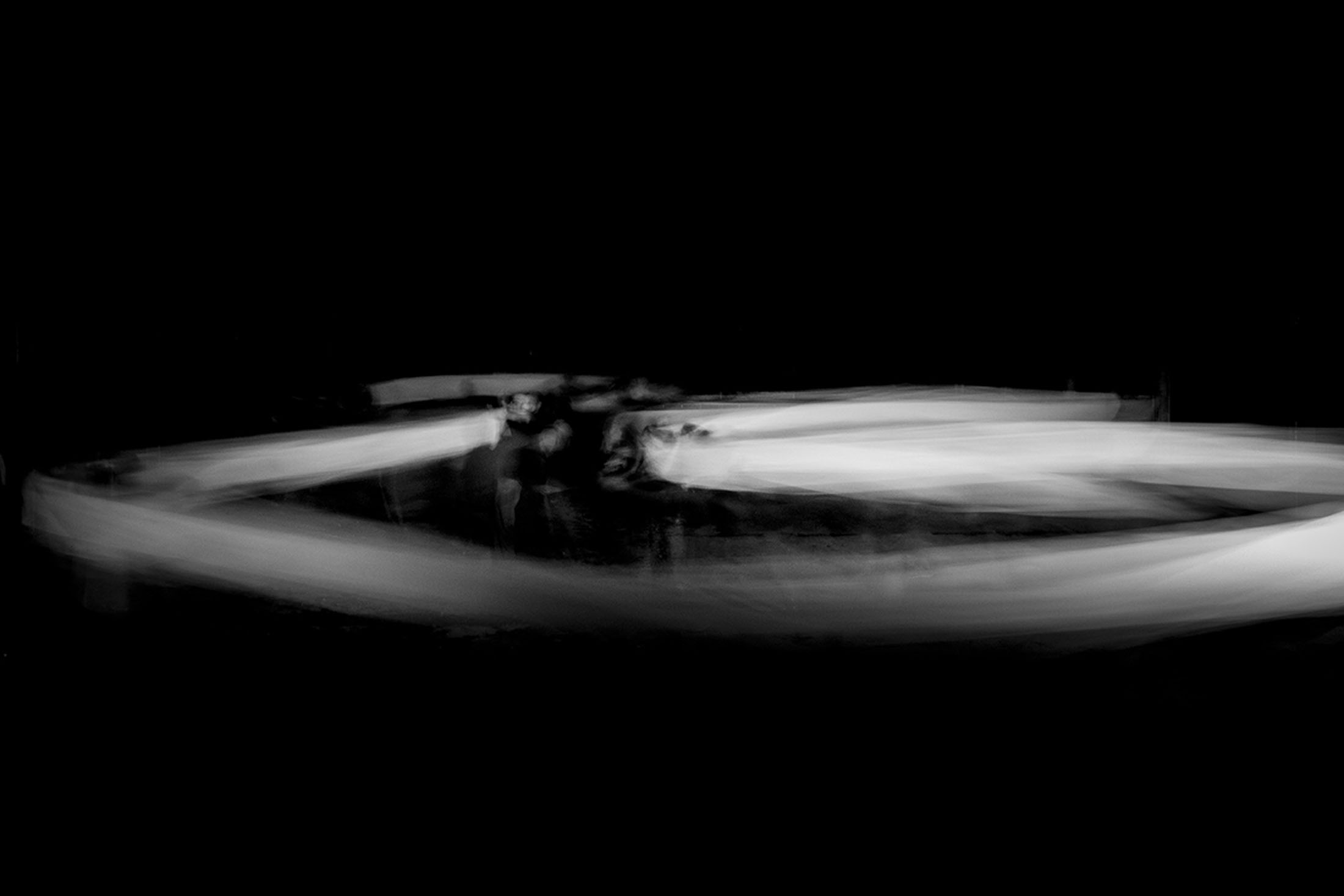
Ficcionados, also developed in 2014 with architecture students from Simón Bolívar University, offers another perspective from which to understand this approach. The participants construct and deconstruct architectures without material substance, using their bodies and imaginations to temporarily alter the dimensions of a possible space. Architecture ceases to be a stable structure and becomes a mobile, collective experience.
The project belongs to a broader body of work in which Braceli approaches educational spaces and architecture as sites of experimentation. Working with students introduces a pedagogical dimension, but also acknowledges that teaching and learning can constitute reciprocal forms of production.
For this reason, documentation also occupies a place in his work that extends beyond the function of recording. Photography and video do not appear solely to preserve what will disappear once the action is over. They are devices of construction: the event is transformed by being photographed; the collective body is reorganized within the image through its symbolic charge; and what occurred acquires a second existence through its visual inscription.
Documentation does not come after the work. It participates in its construction.
Perhaps it is precisely here that Pombo’s and Braceli’s practices acquire a process-based resonance that extends beyond the regular artist’s production. In both cases there is an initial intention, an idea that precedes the work, but also a willingness to allow that idea to be traversed by what comes from outside: another body, another form of knowledge, another material, another experience, an unforeseen contingency. The work comes into being not despite this deviation, but because of it.
There is something in this partial relinquishment of a singular will that resembles the experience of migration.
Migration also means setting out with an idea of how things should be, only to discover, in the process of becoming, that nothing will remain exactly as imagined. Perhaps migration consists, in part, of learning to accept this contingency, not as resignation, but as an acknowledgment that our will alone does not constitute the terrain of our experience. What we receive, what we encounter, and what others place in our path also participate in the construction of our identity.
Through displacement, we cease to be only what we once were, yet neither do we simply become what the new place invites us to be. We remain in an in-between zone, necessarily unstable, where different memories, languages, affections, forms of belonging, and ways of seeing begin to coexist. Identity then ceases to appear as a self-contained unity and becomes a plural composition, always provisional and open to being transformed by the other.
In this sense, Pombo’s and Braceli’s practice also speak to a way of approaching becoming: the capacity to accept that a work, a territory, or even an identity never fully coincides with what we had imagined for it.
From a distance, Venezuela remains, then, not as a fixed image to which one must return, but as one of the materials that continues to form part of this construction, a material that can be transformed, mixed, woven, displaced, and looked at anew.
Perhaps returning does not always mean going back.
Perhaps returning means accepting that we, too, have become something else, and that, through this transformation, belonging does not disappear but takes on new forms.
Perhaps, for those of us who have learned to live far away, being close is no longer a matter of distance, but of openness: an openness to allowing the other, place, and the process of becoming to transform what we believed ourselves to be.
And perhaps it is there, in relinquishing a singular identity and embracing what is yet to come, that collaboration ceases to be merely an artistic practice and becomes an exercise on permanence.