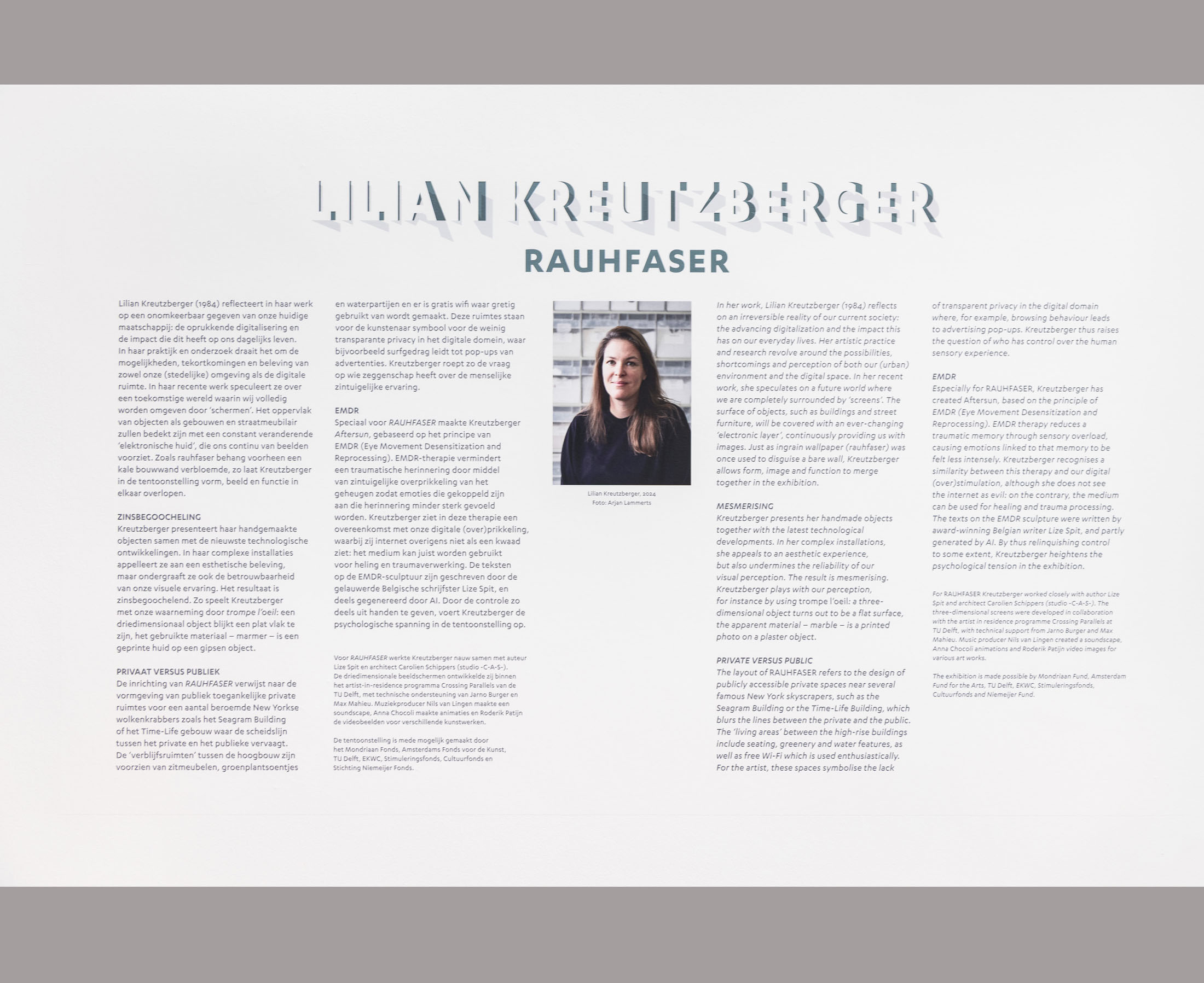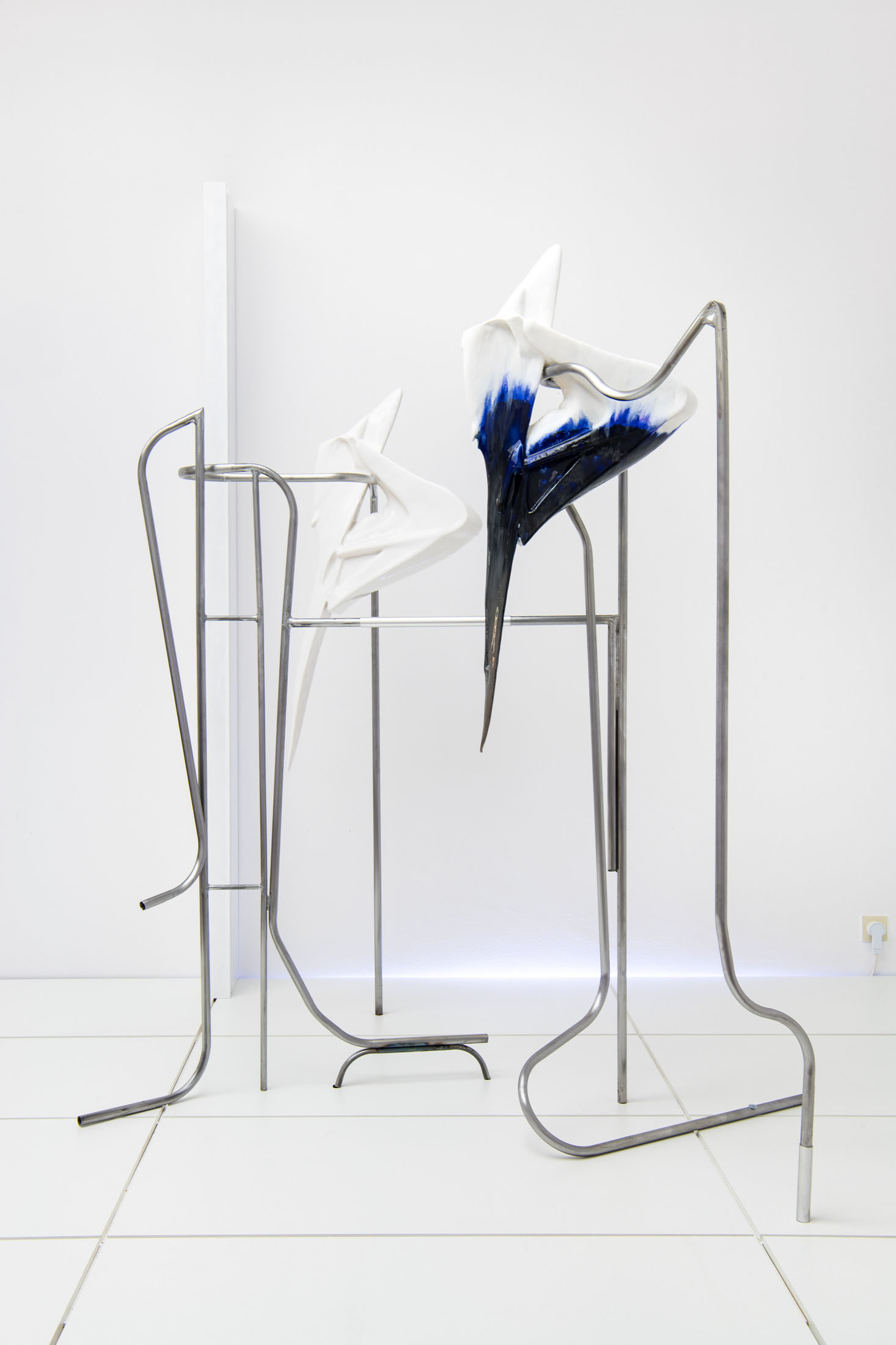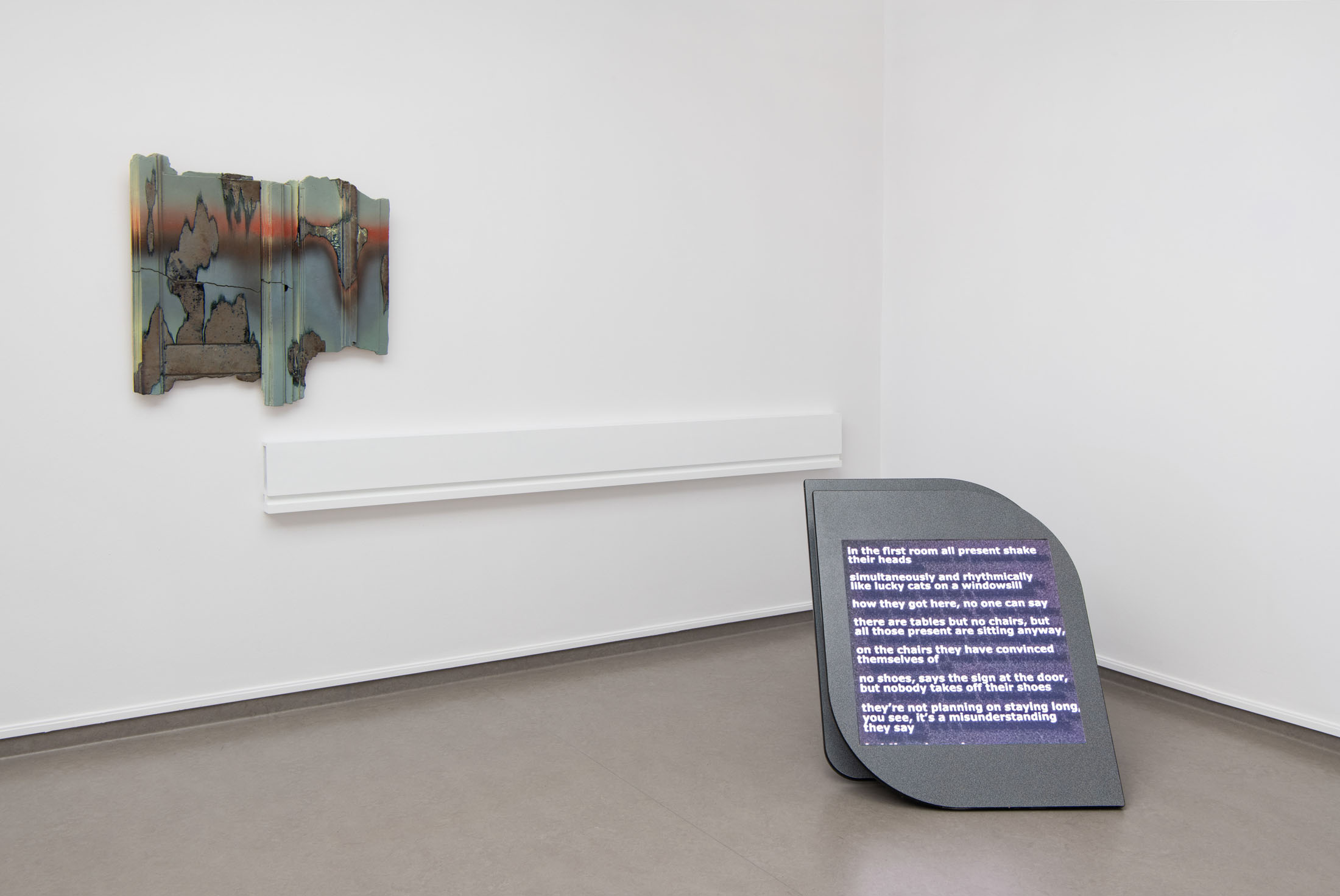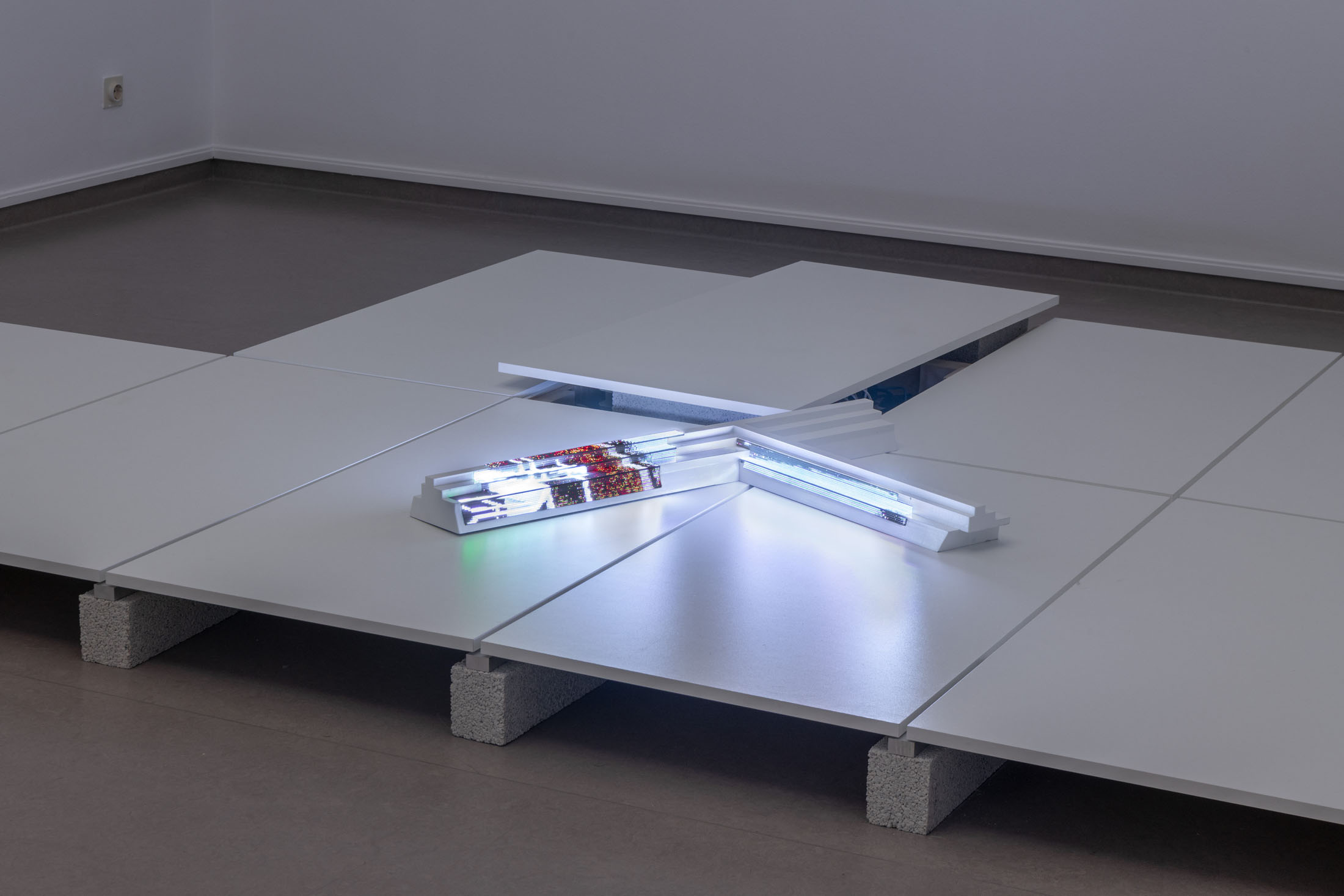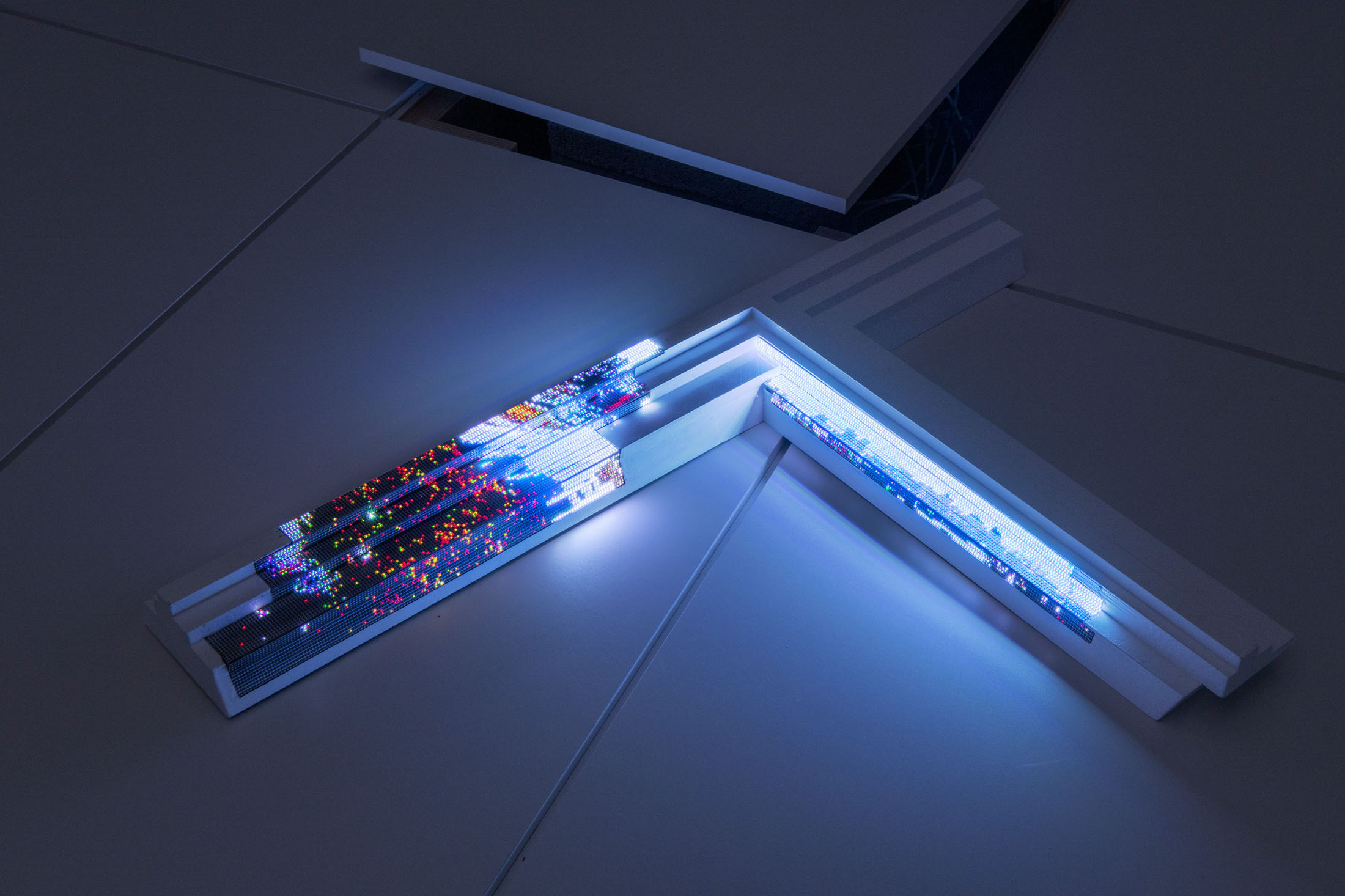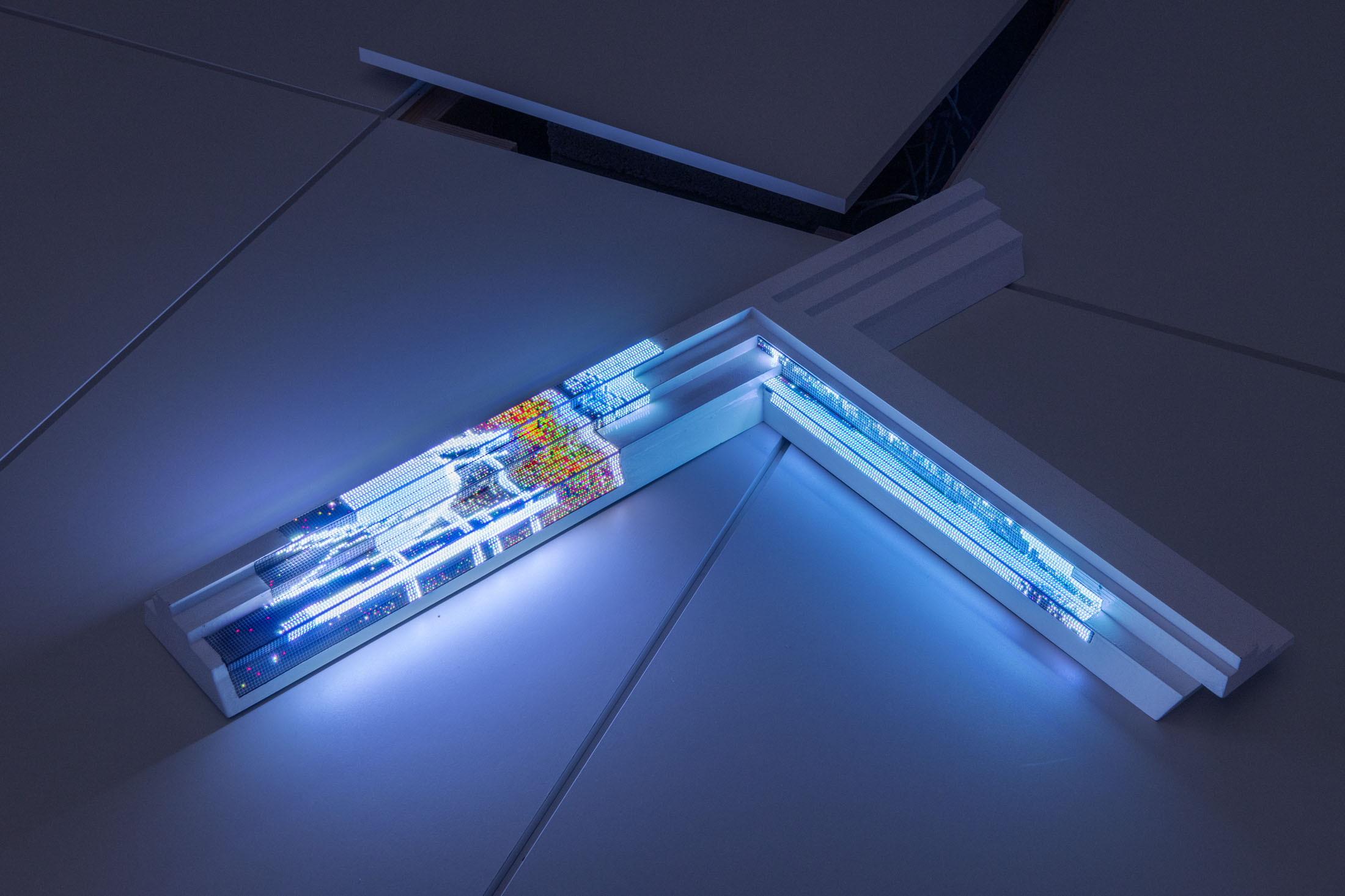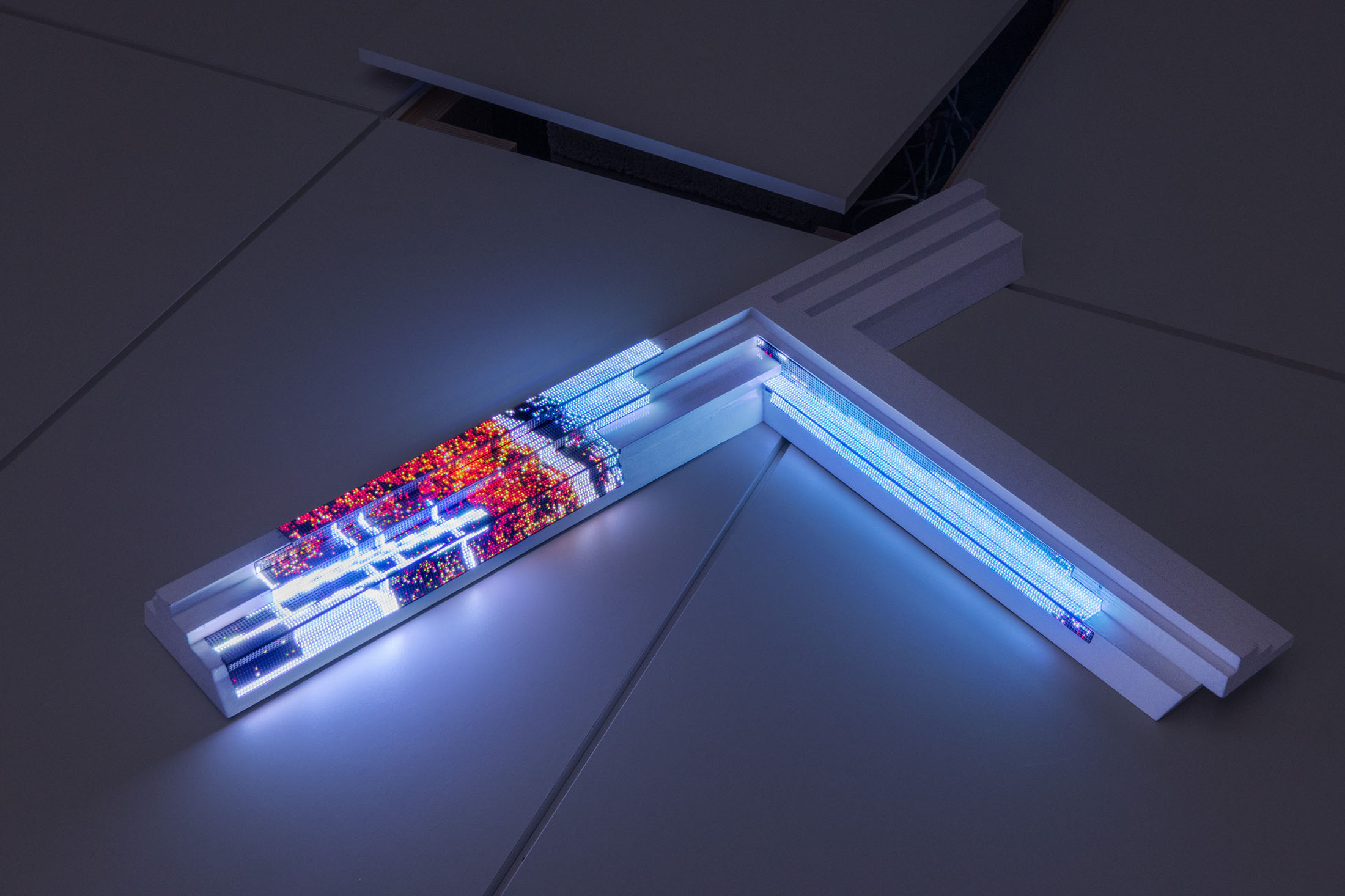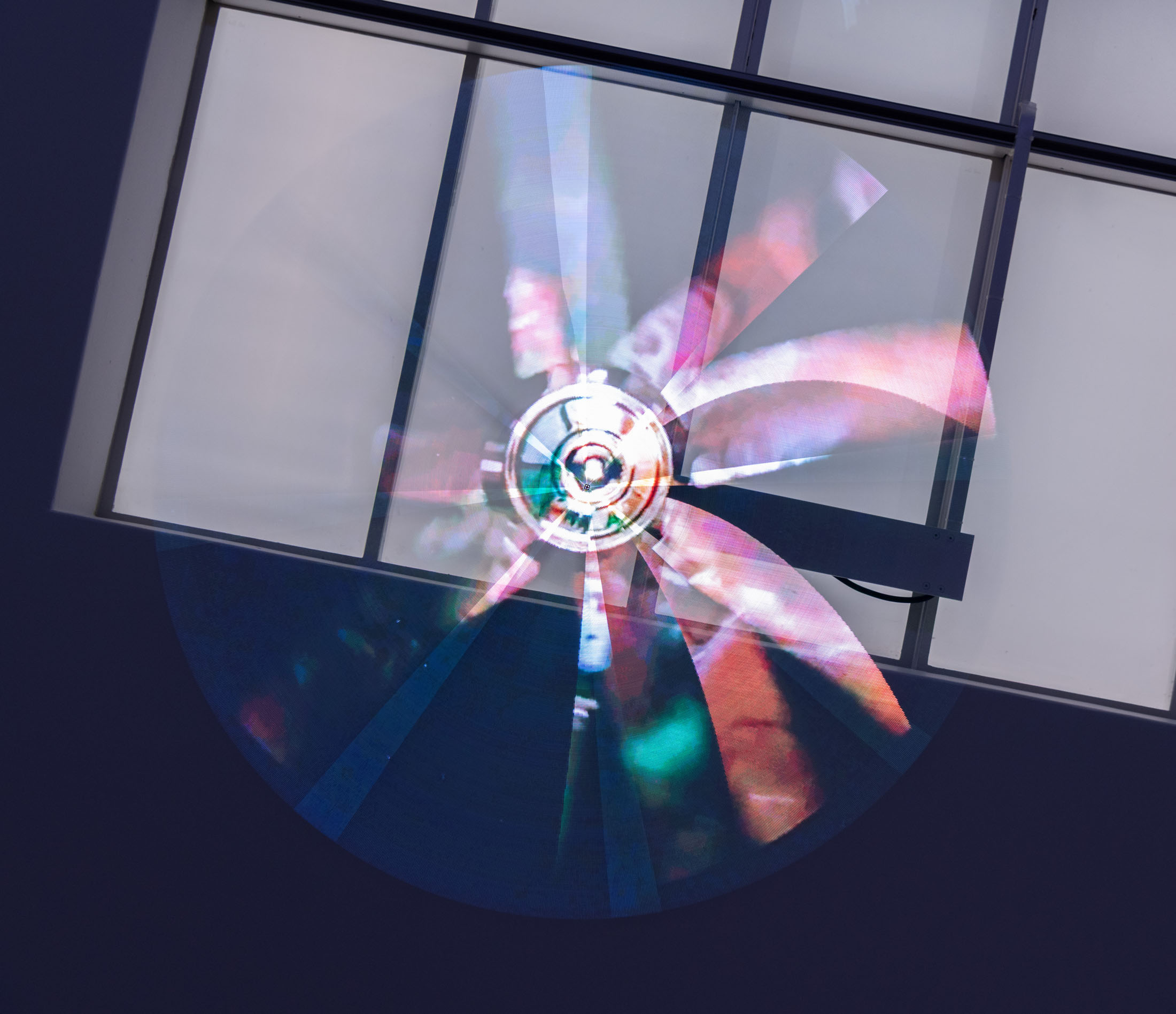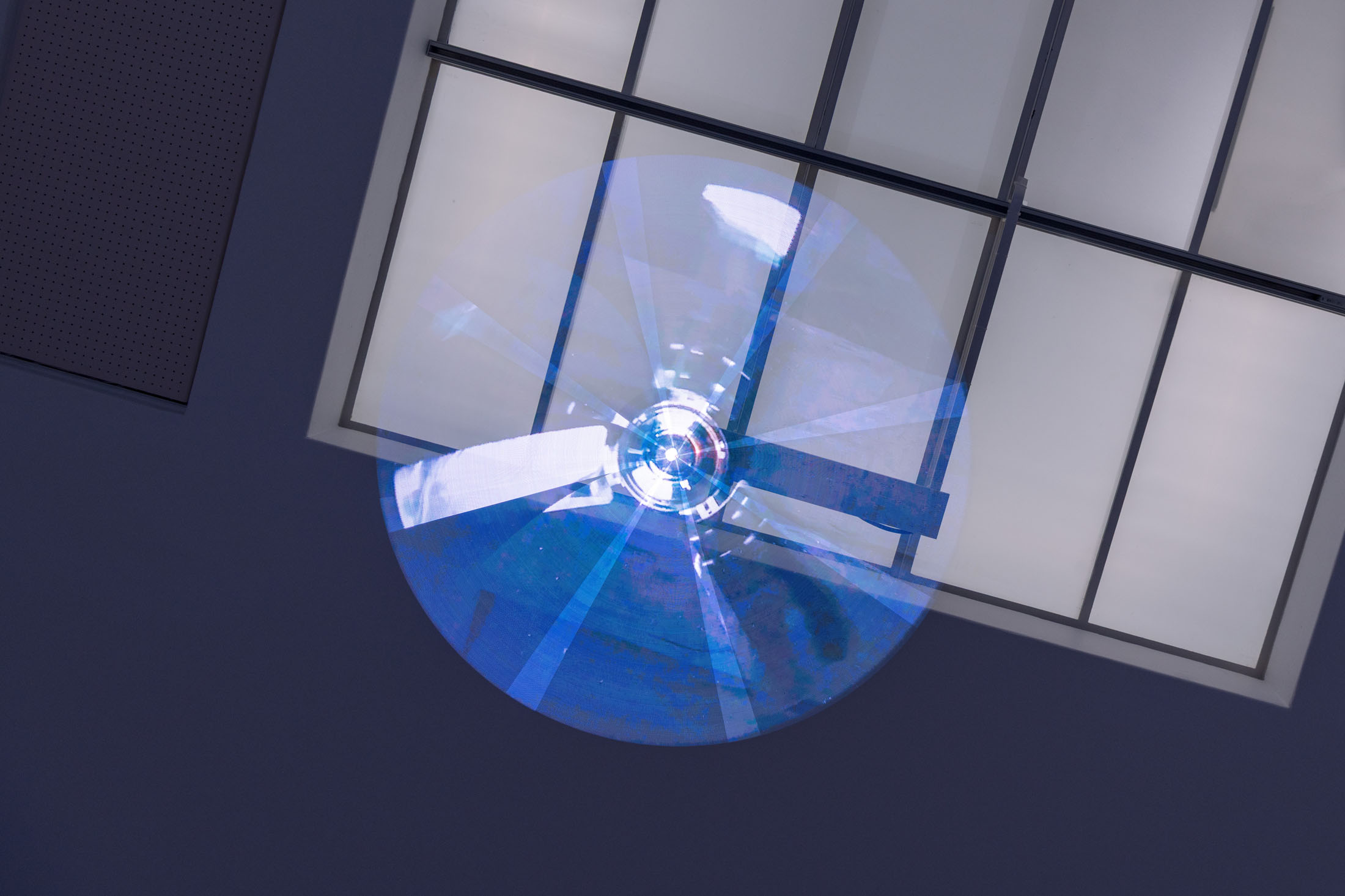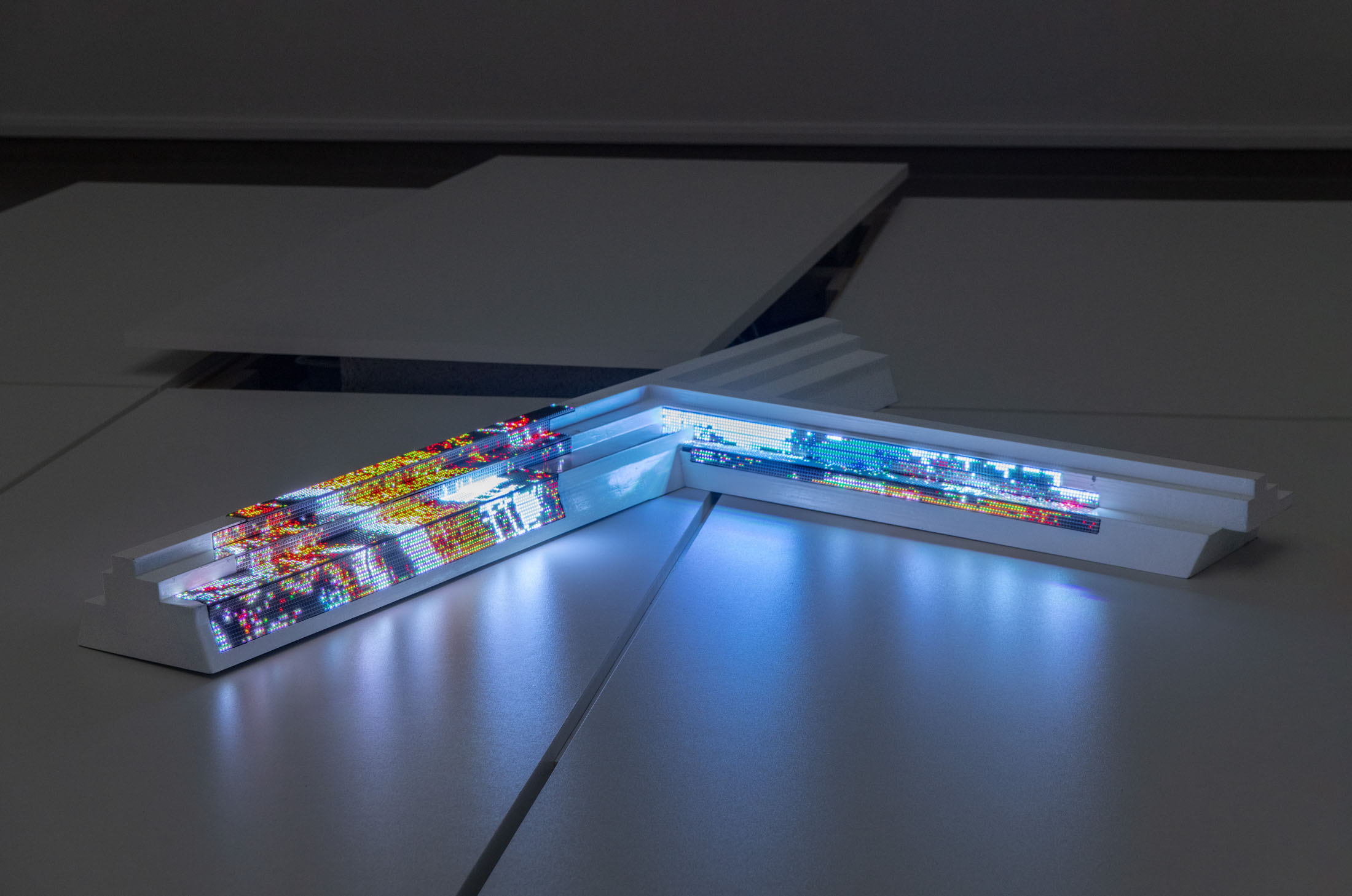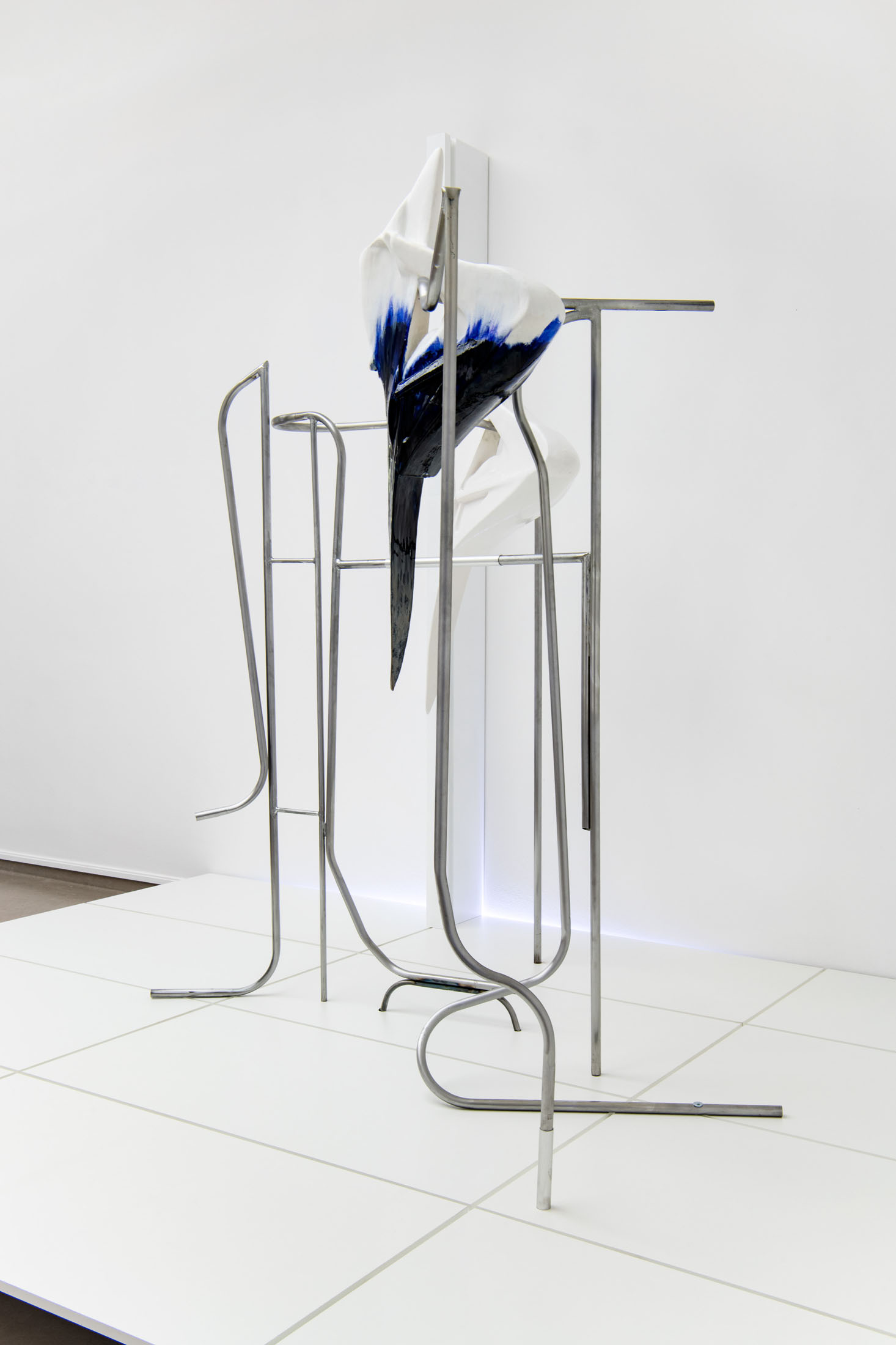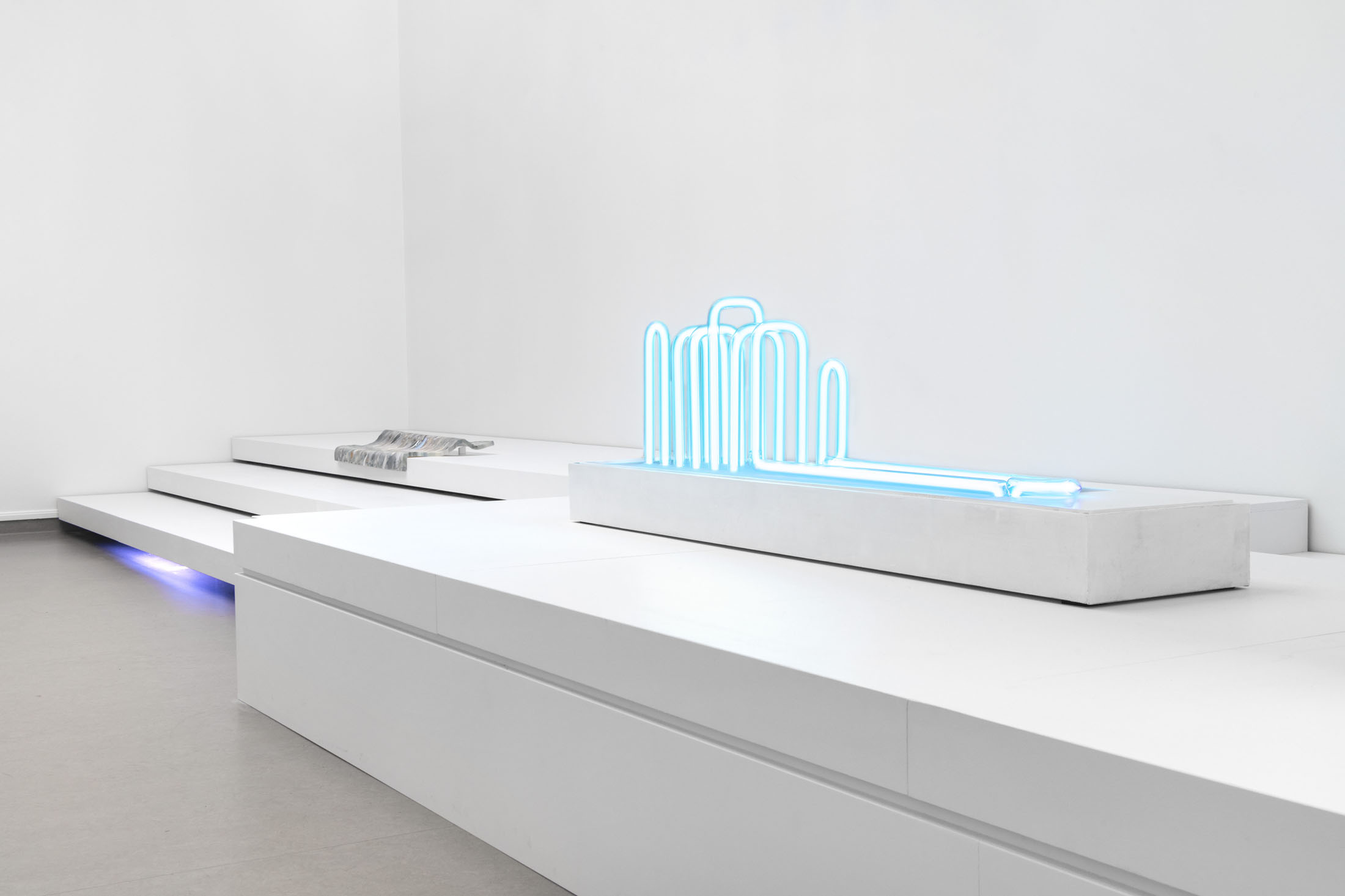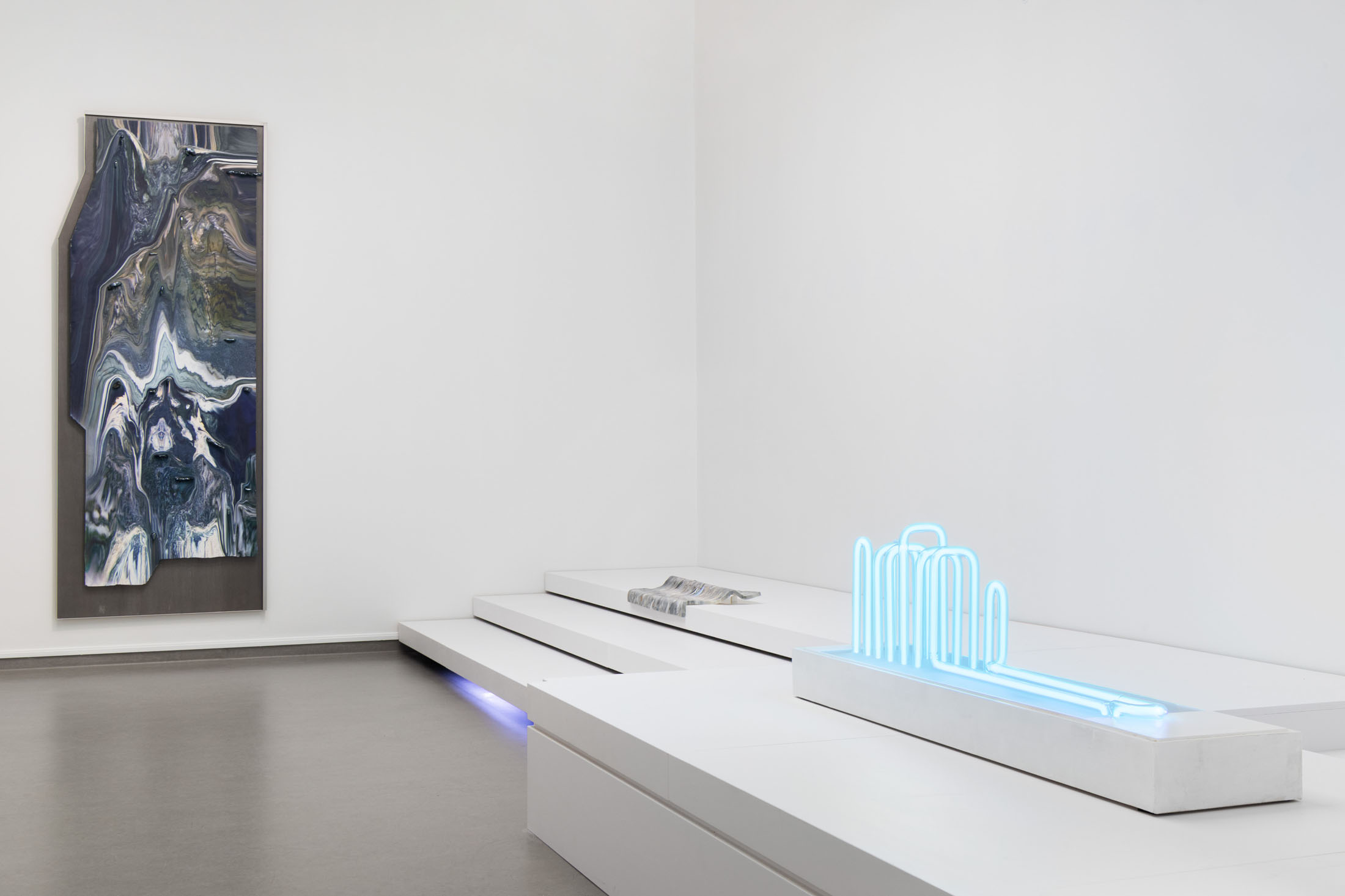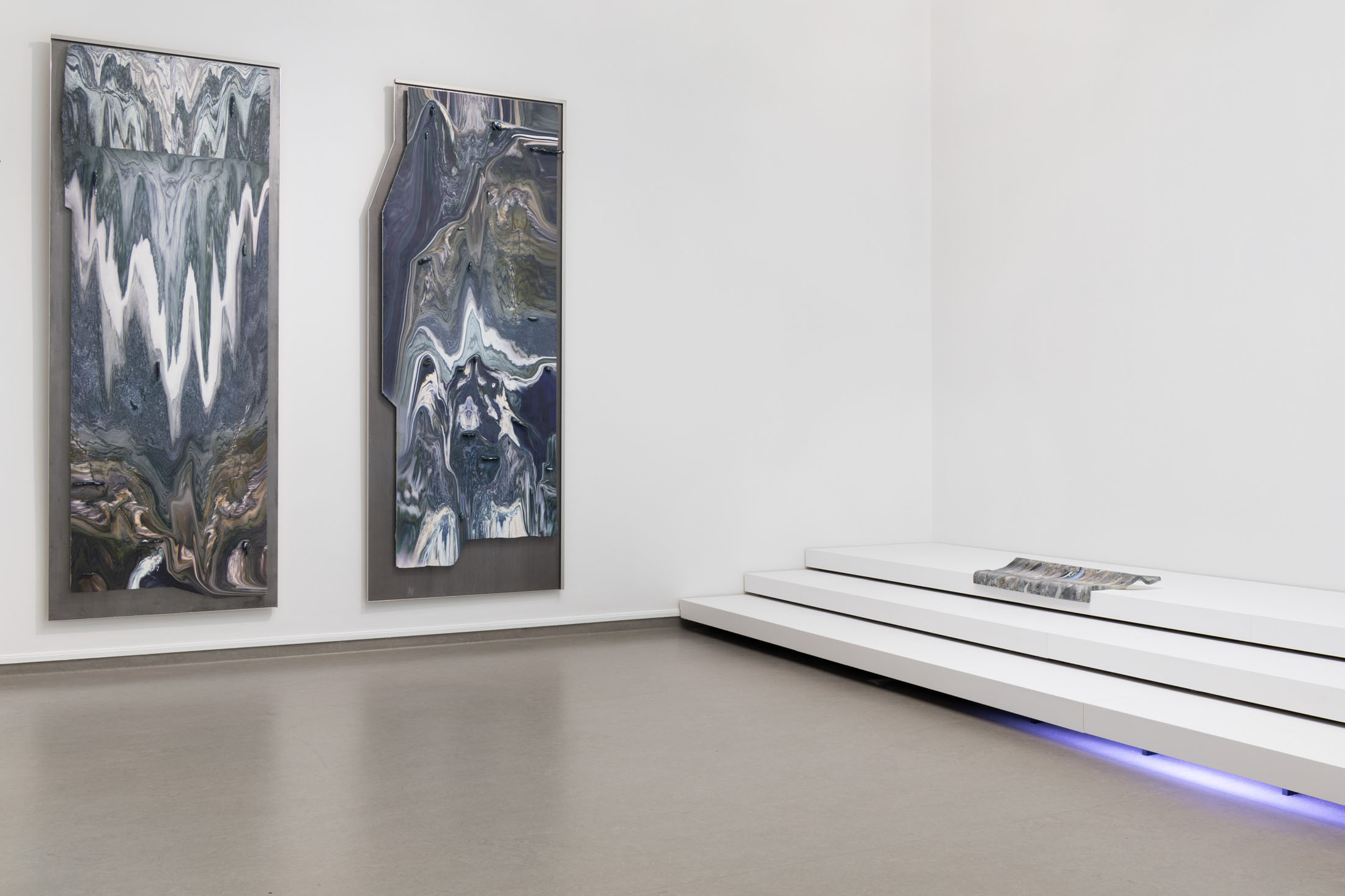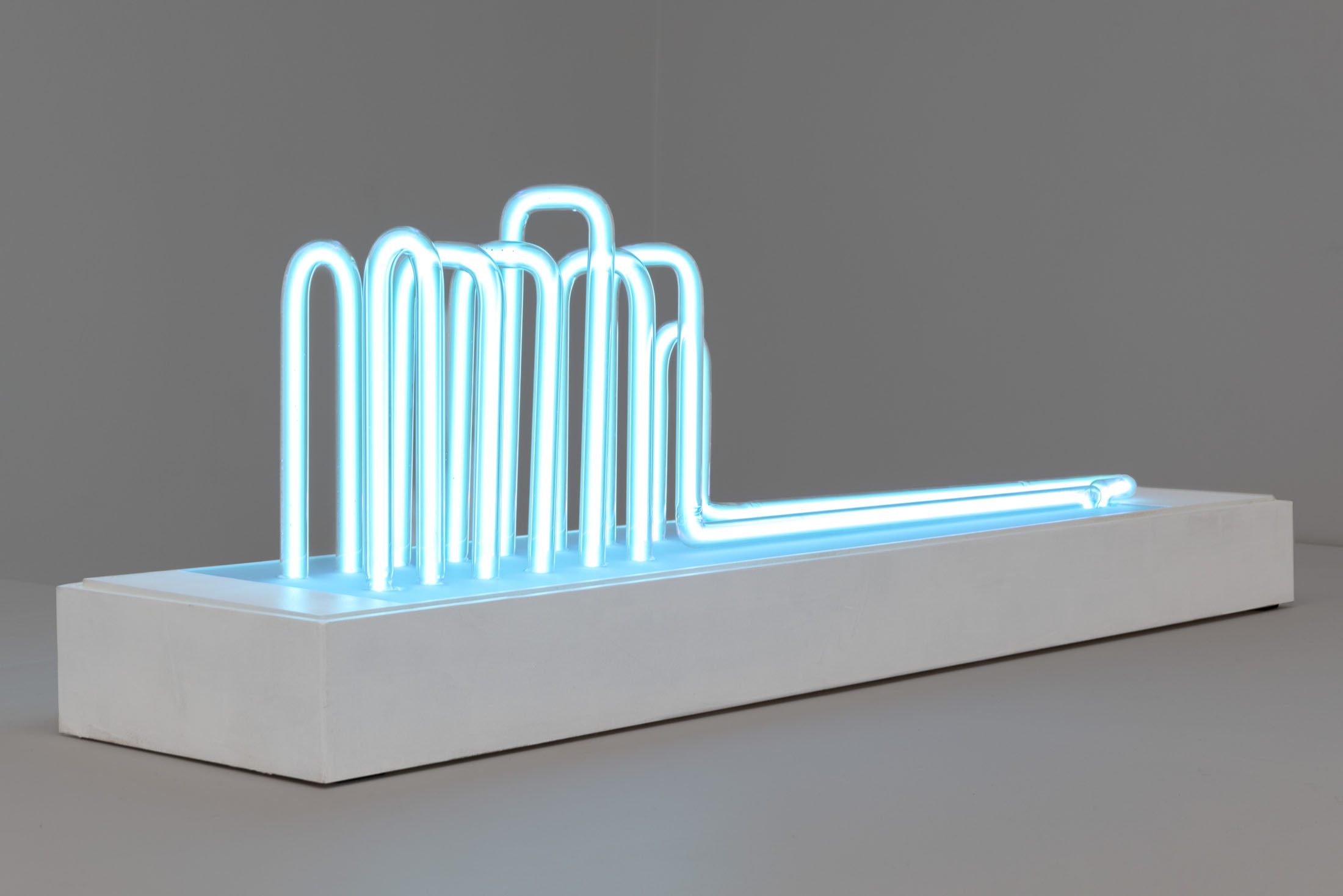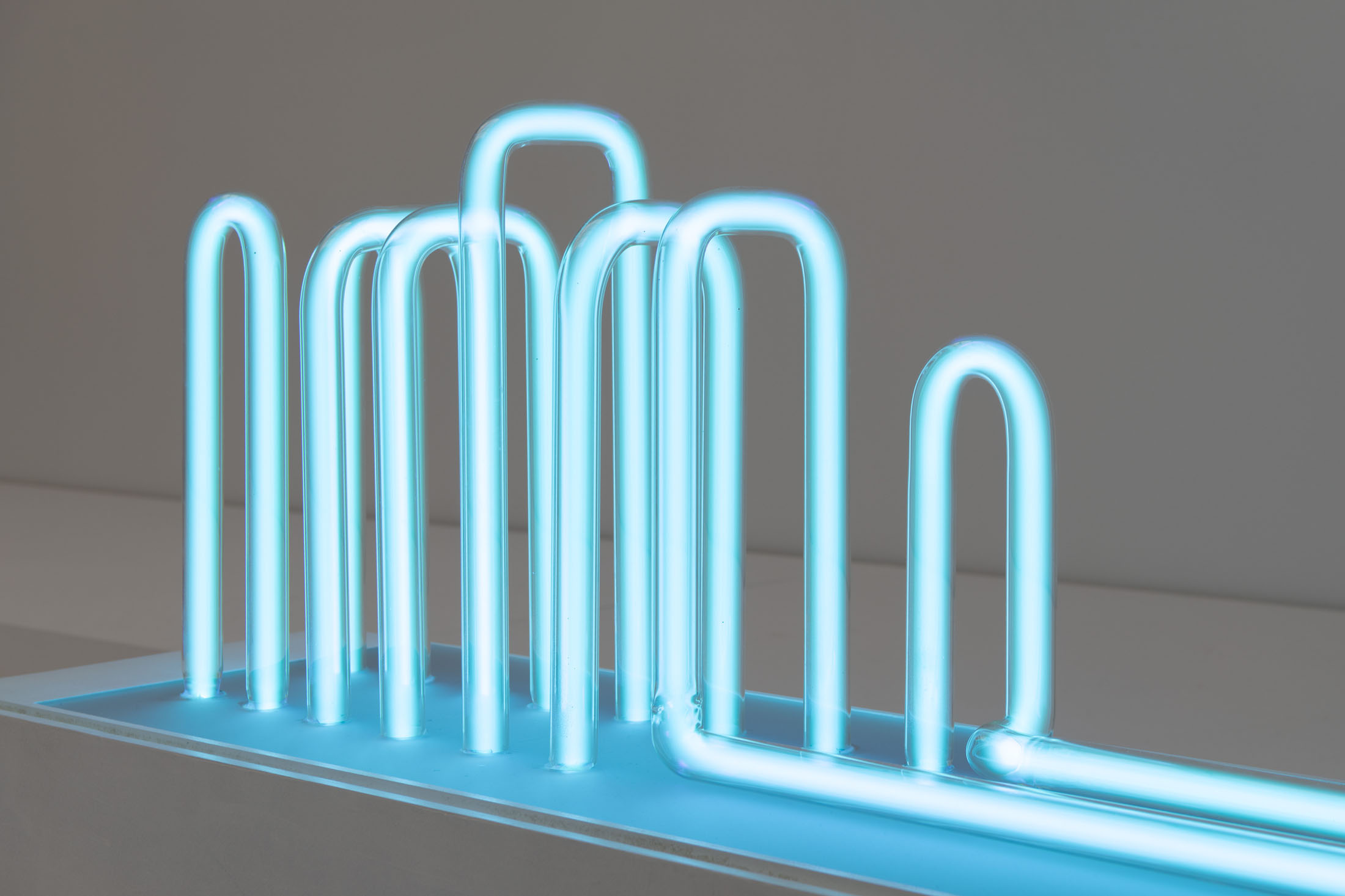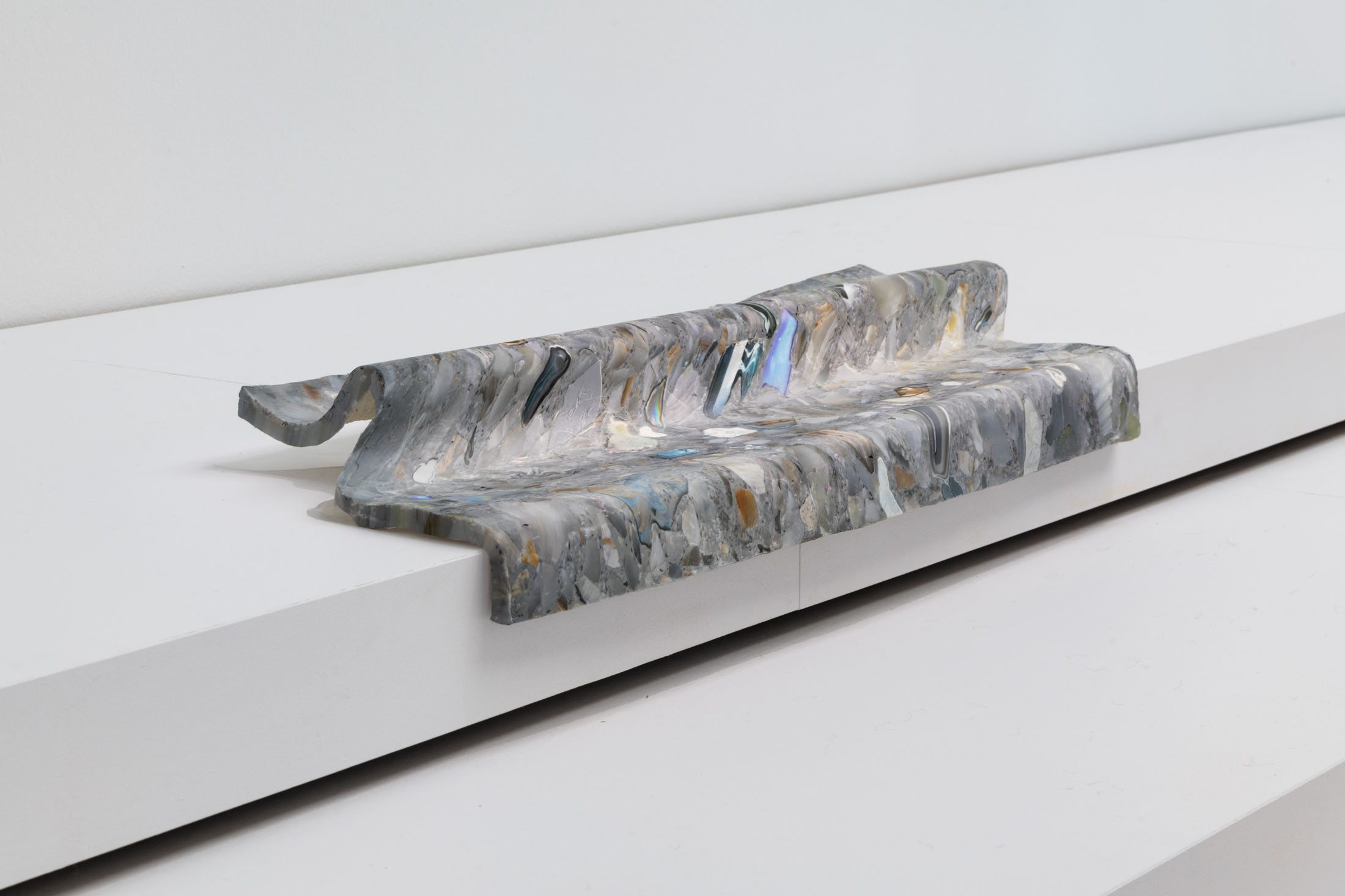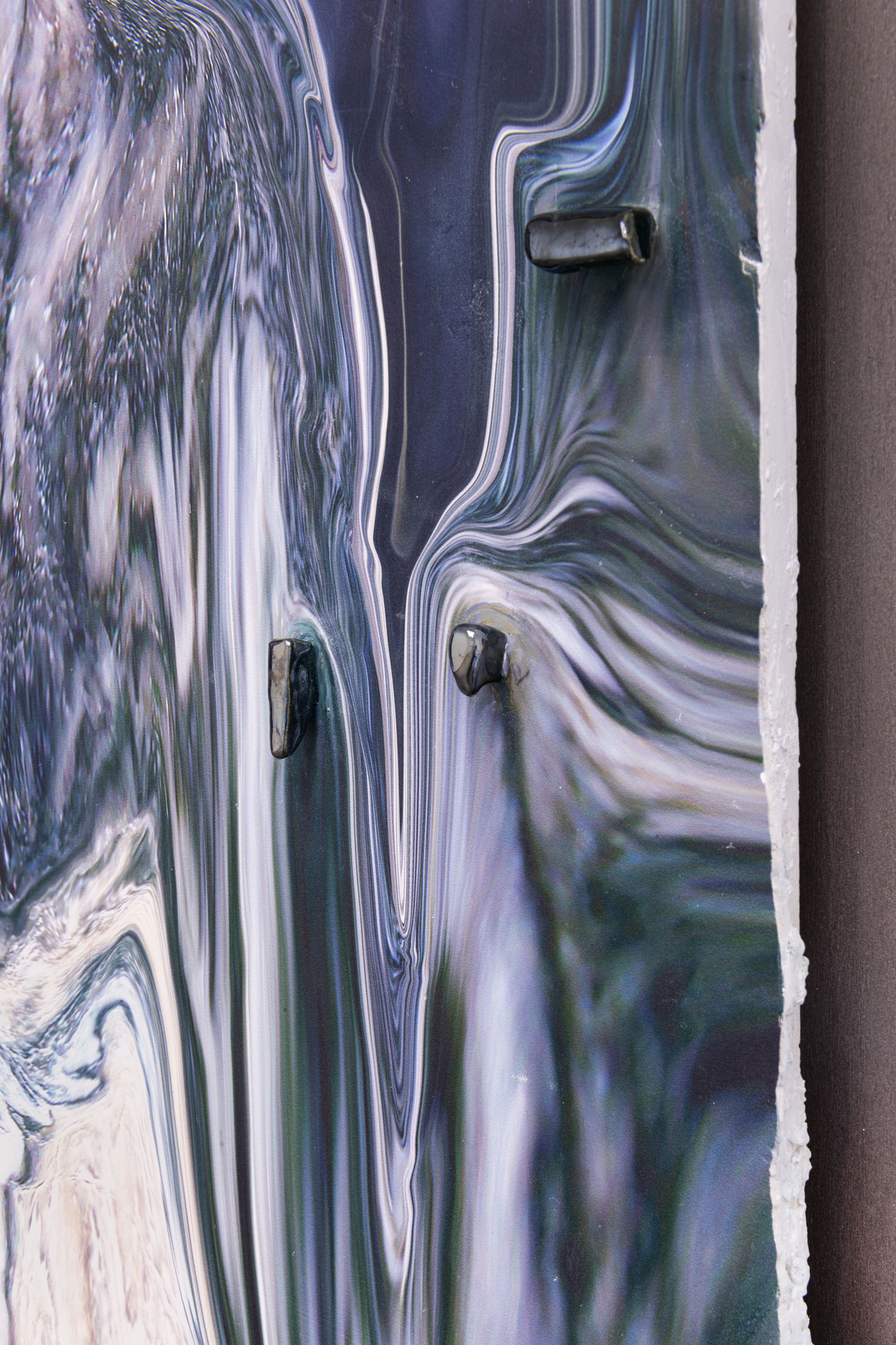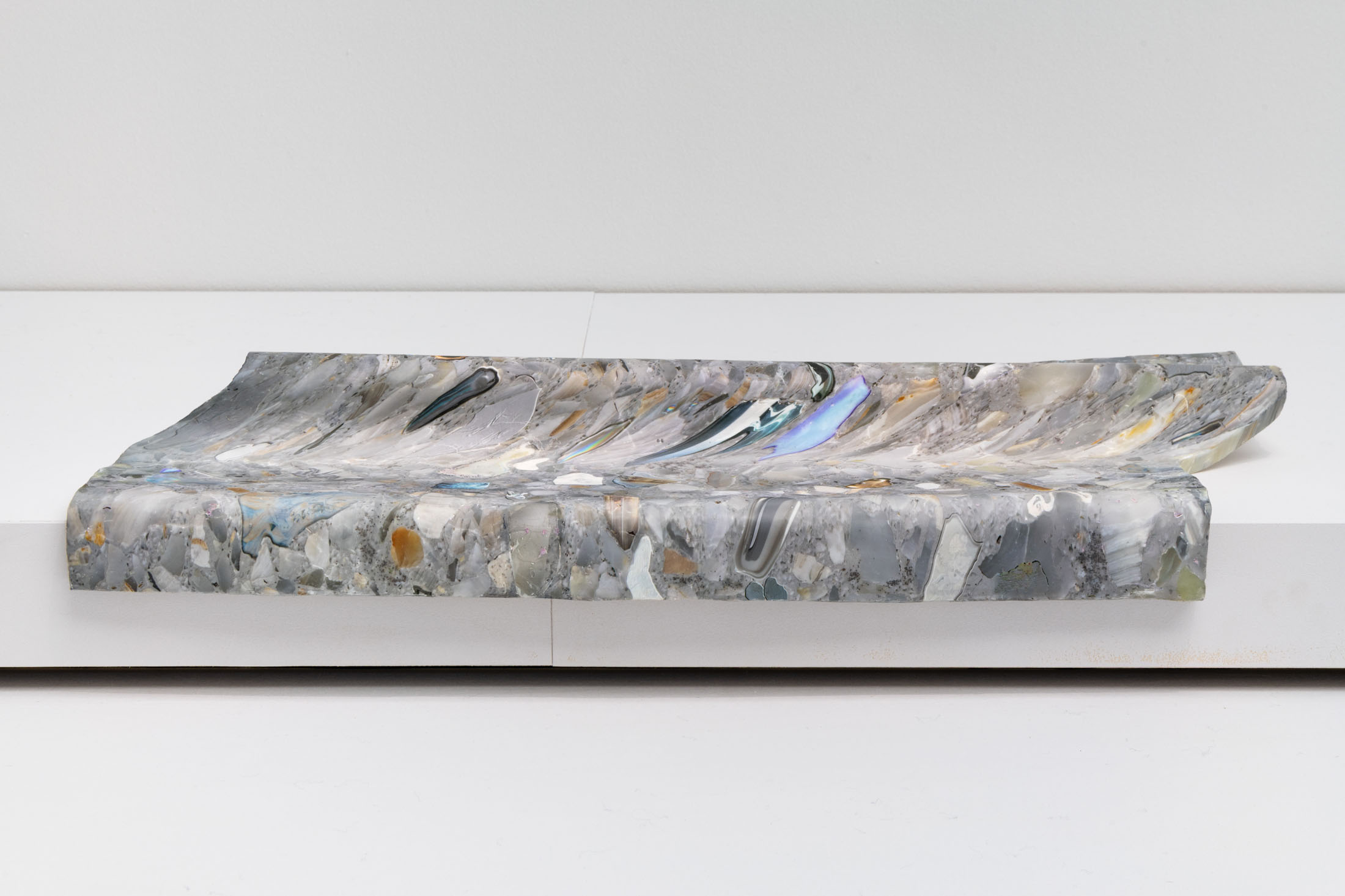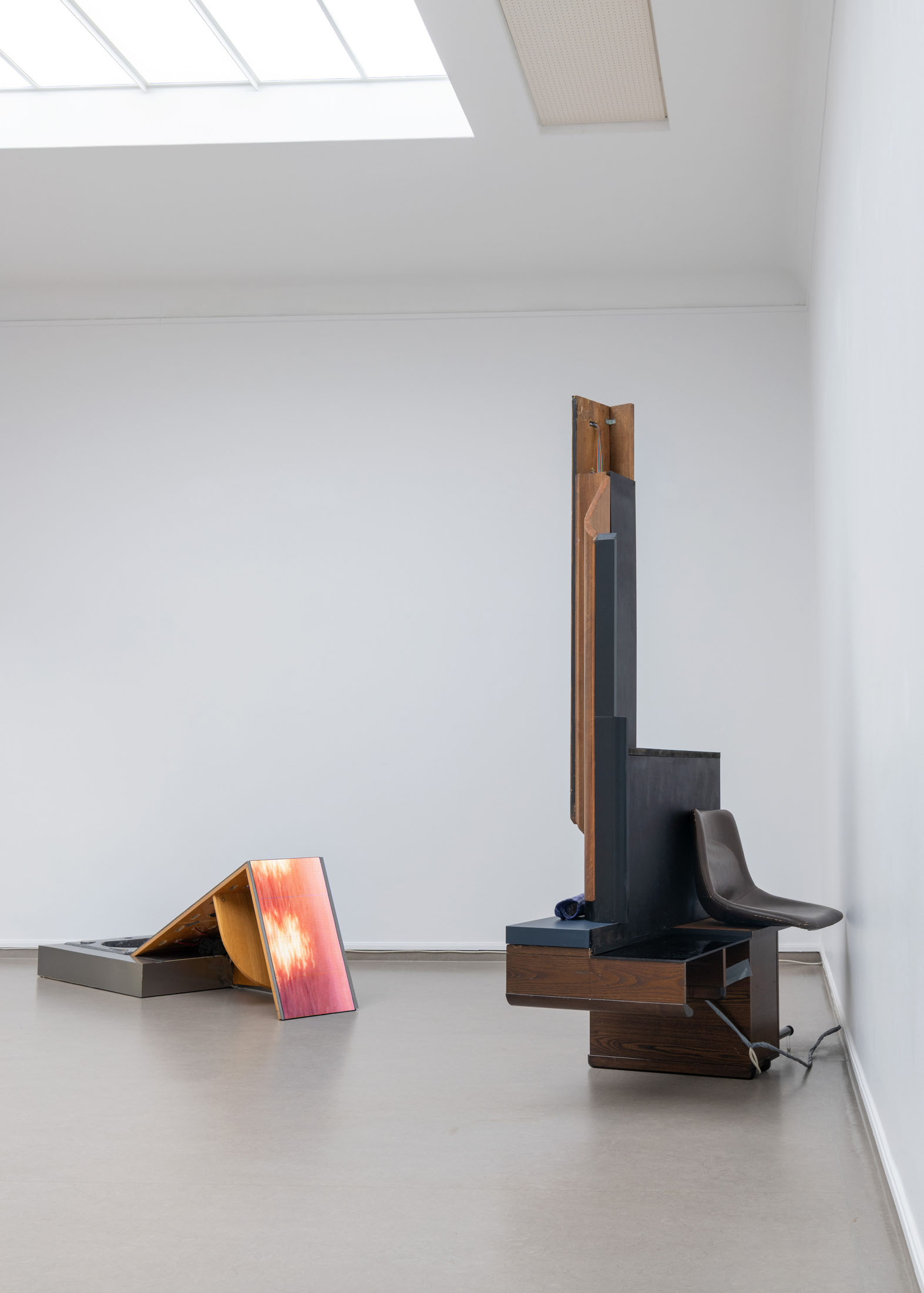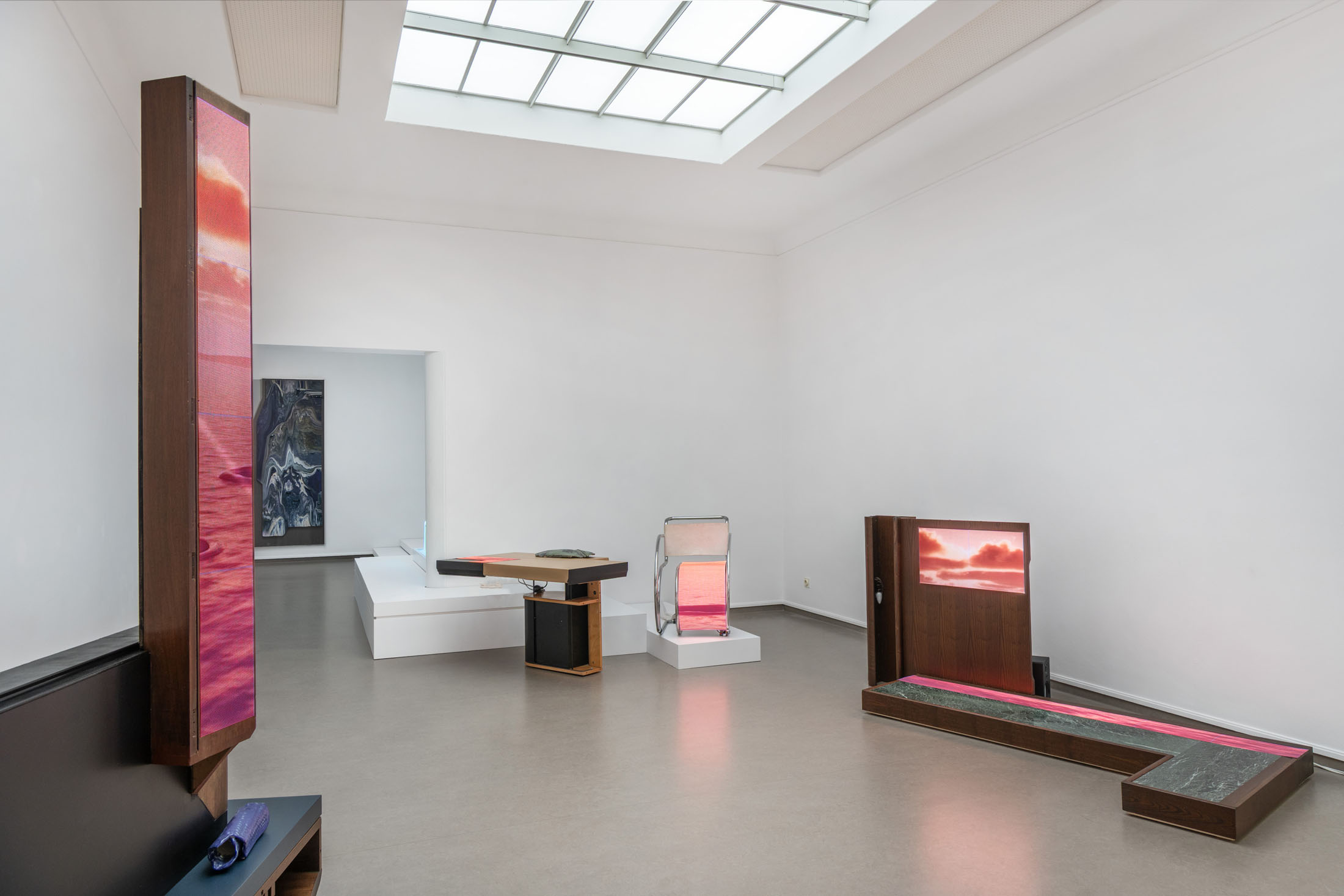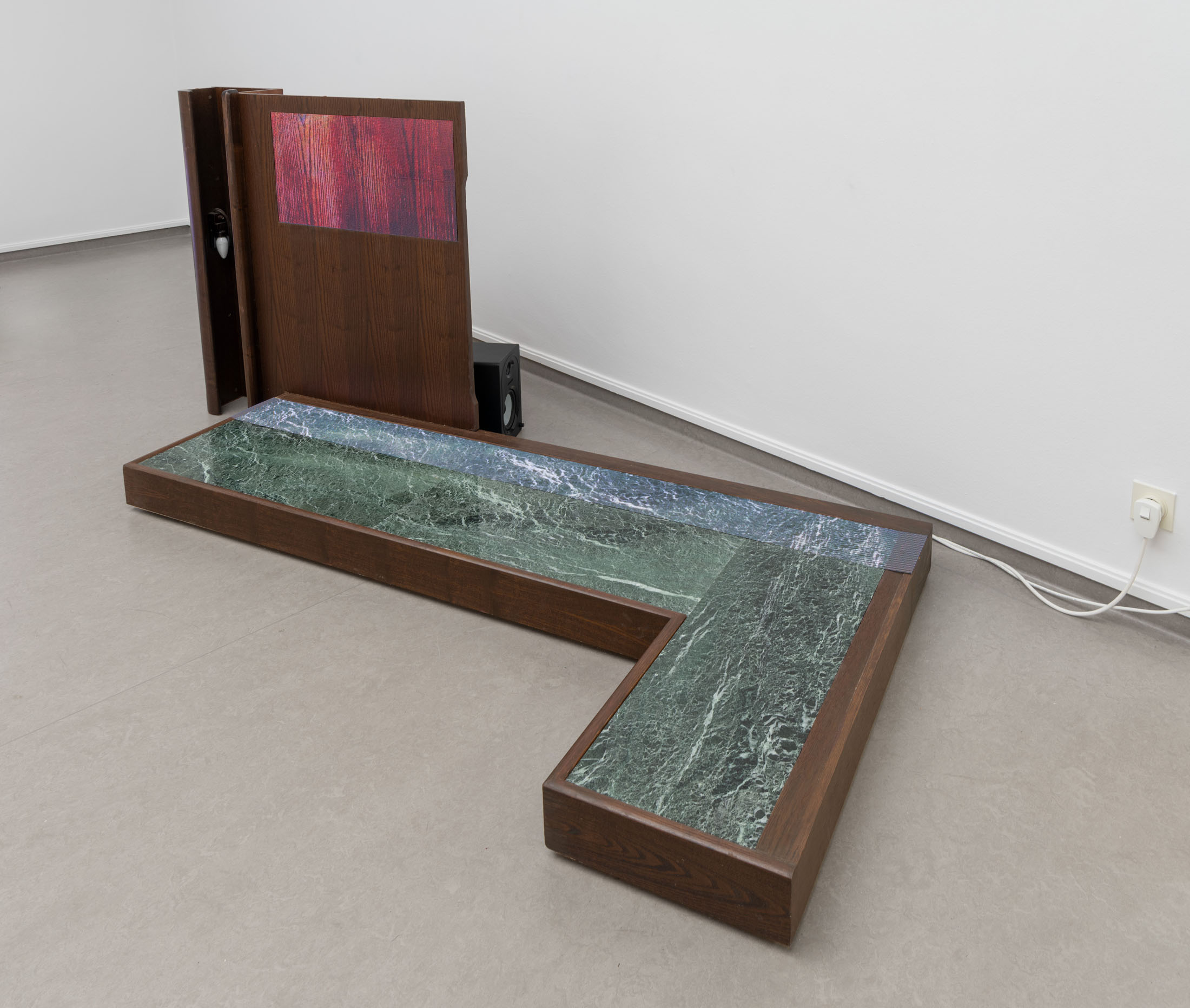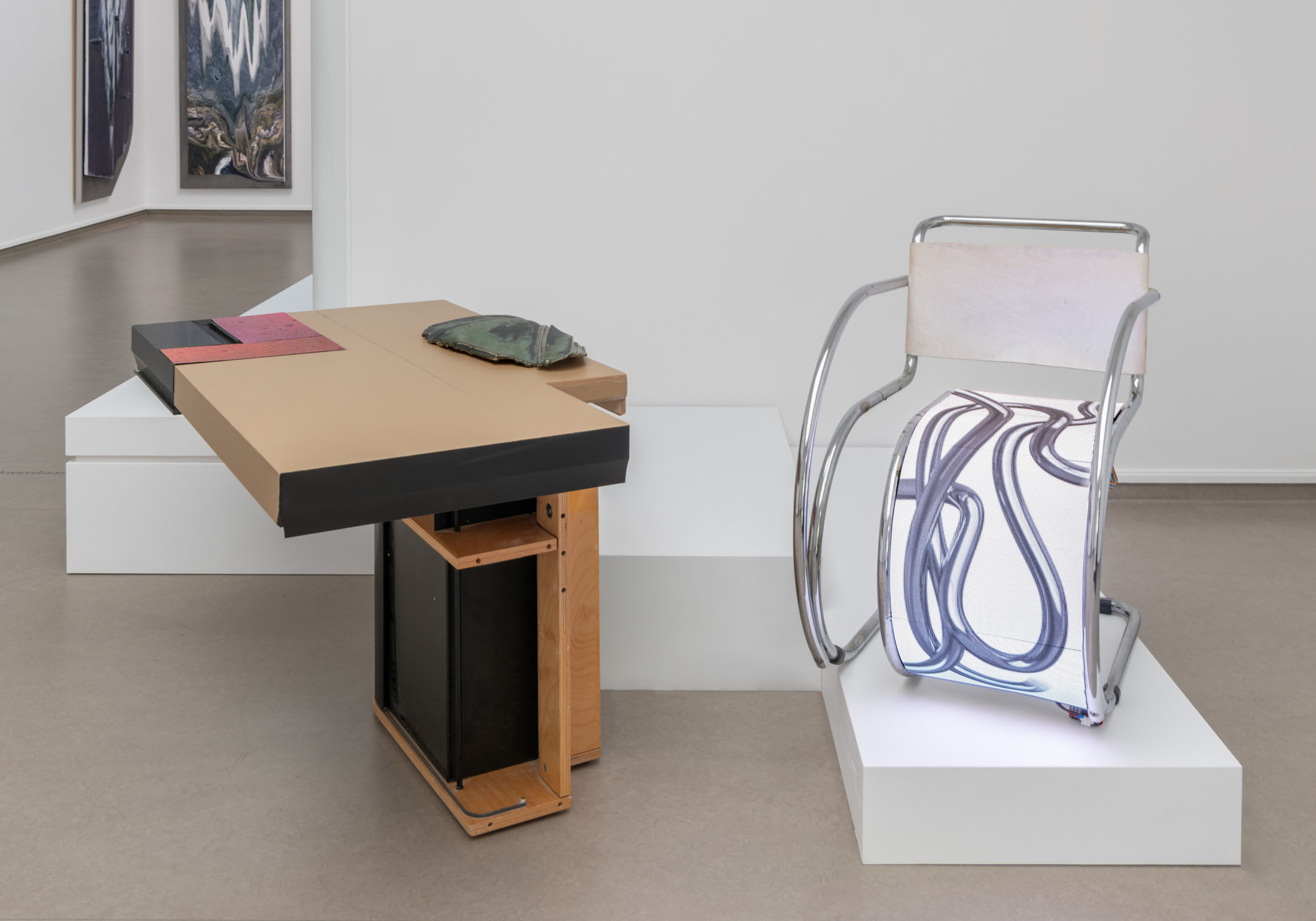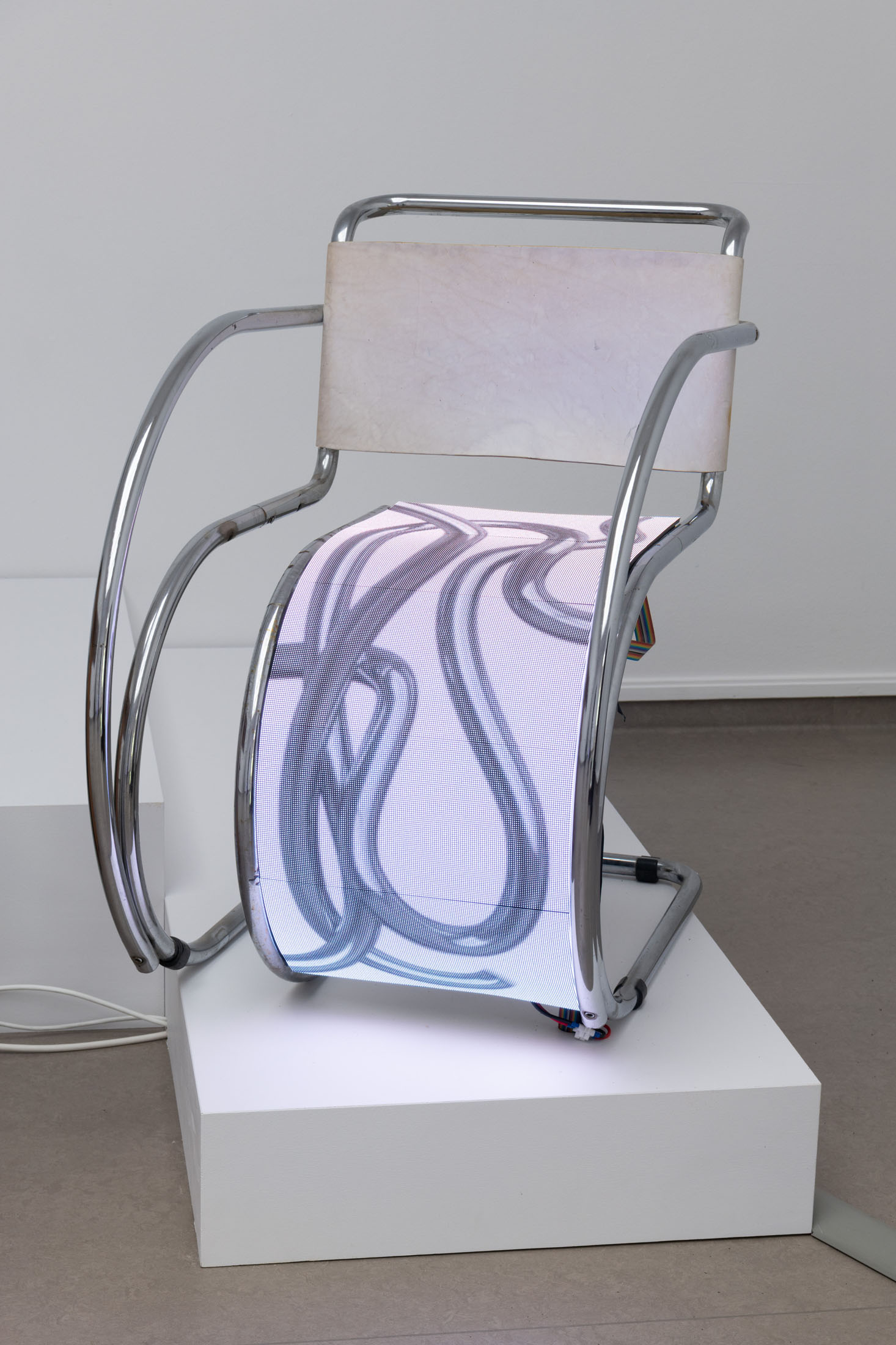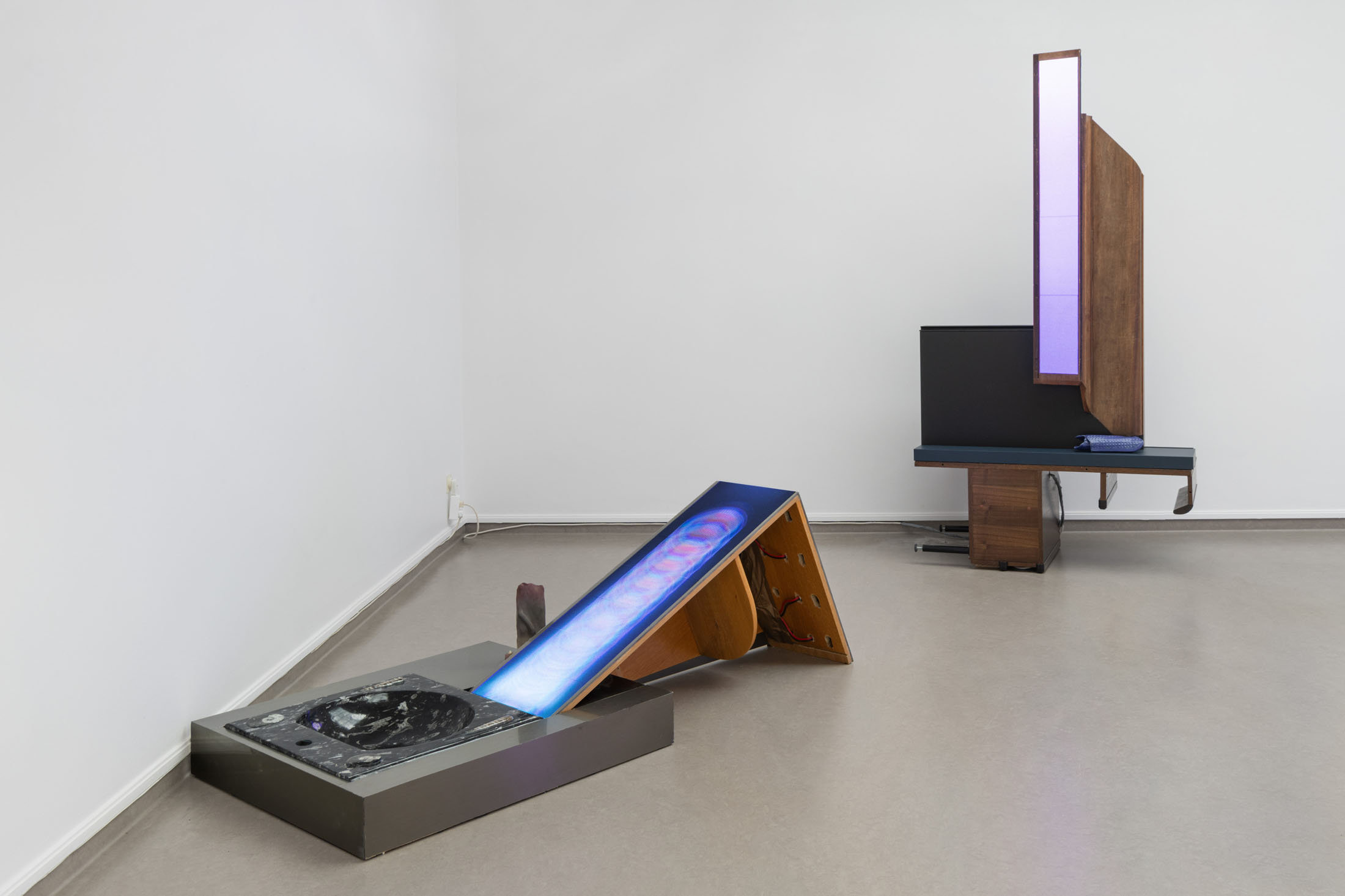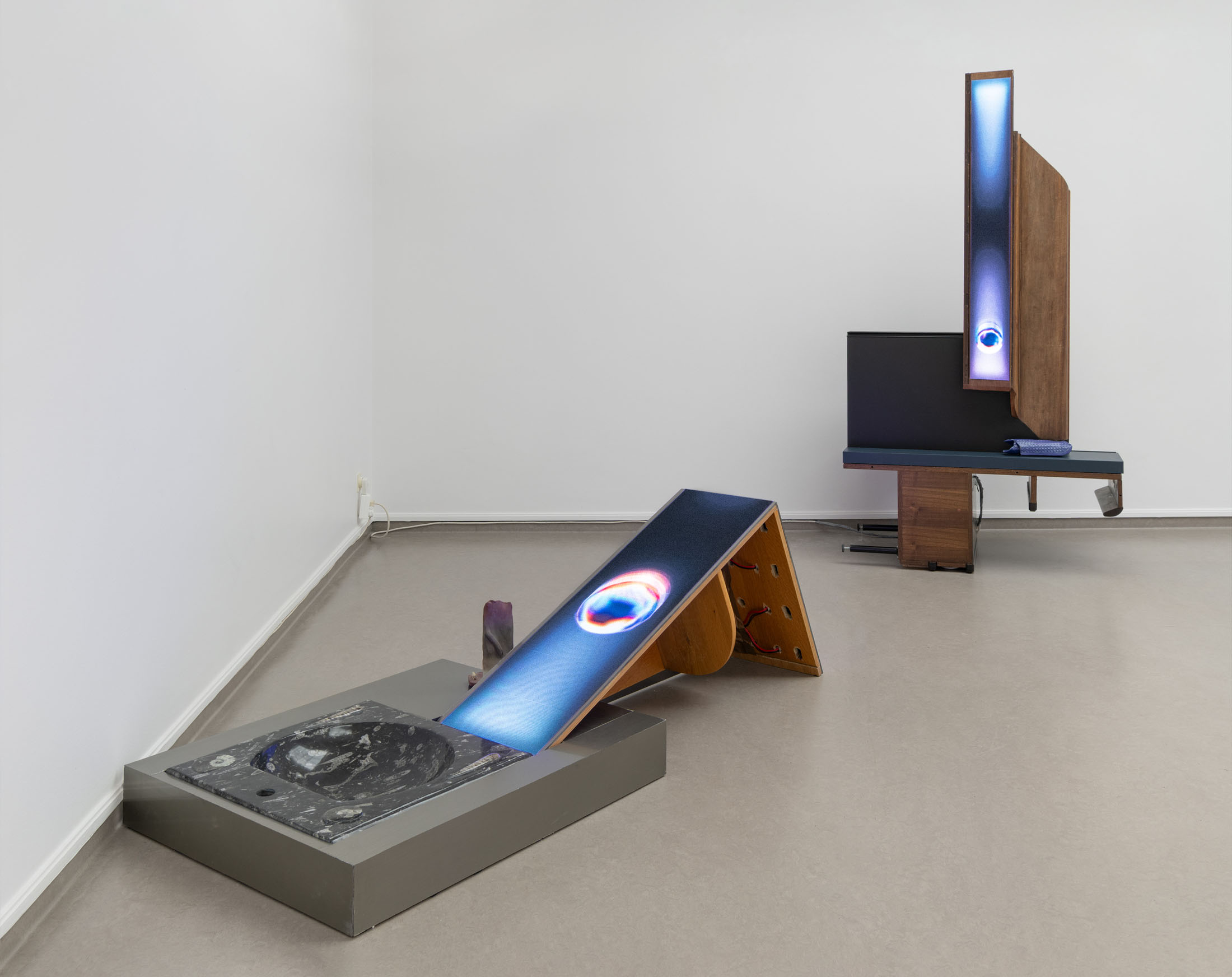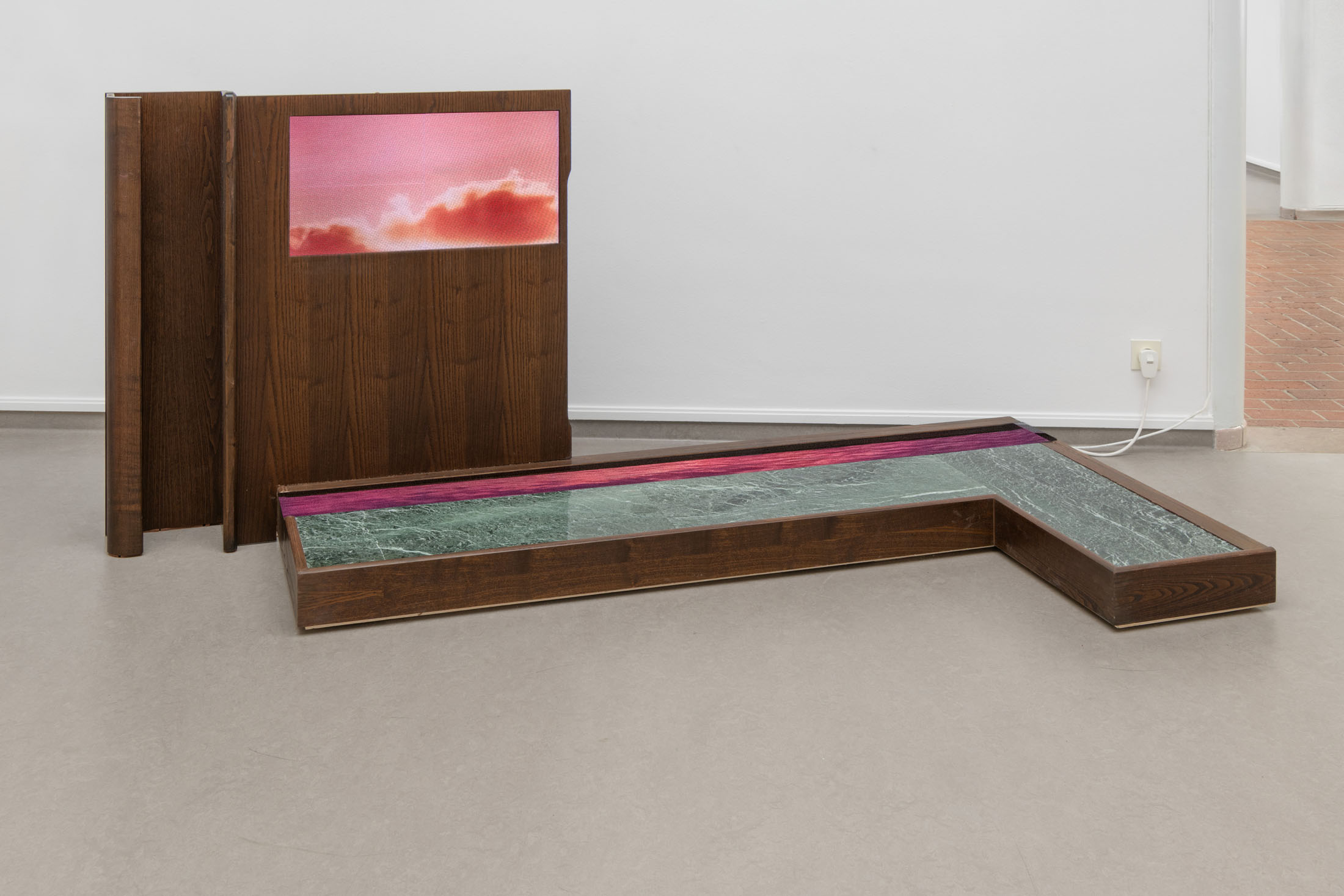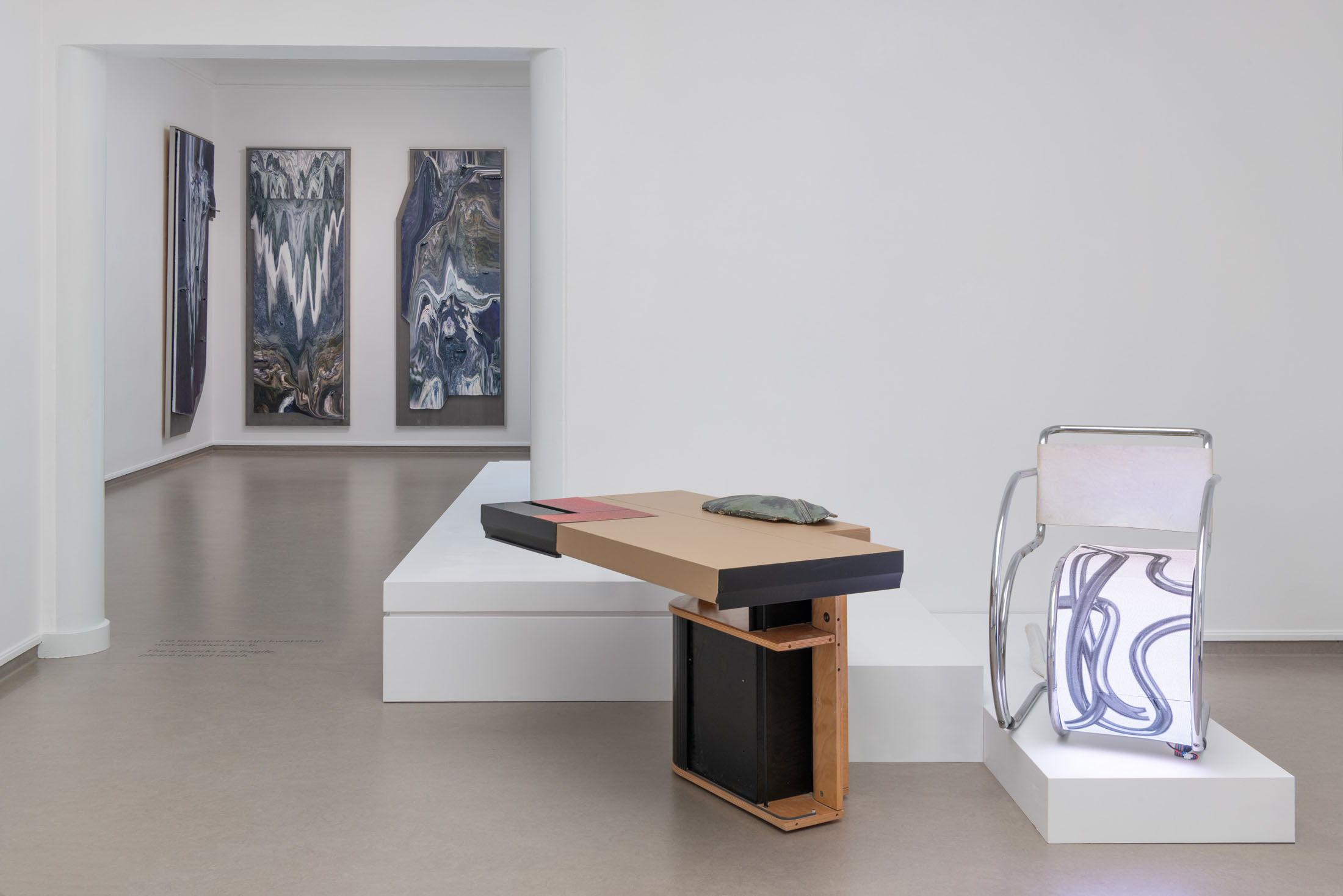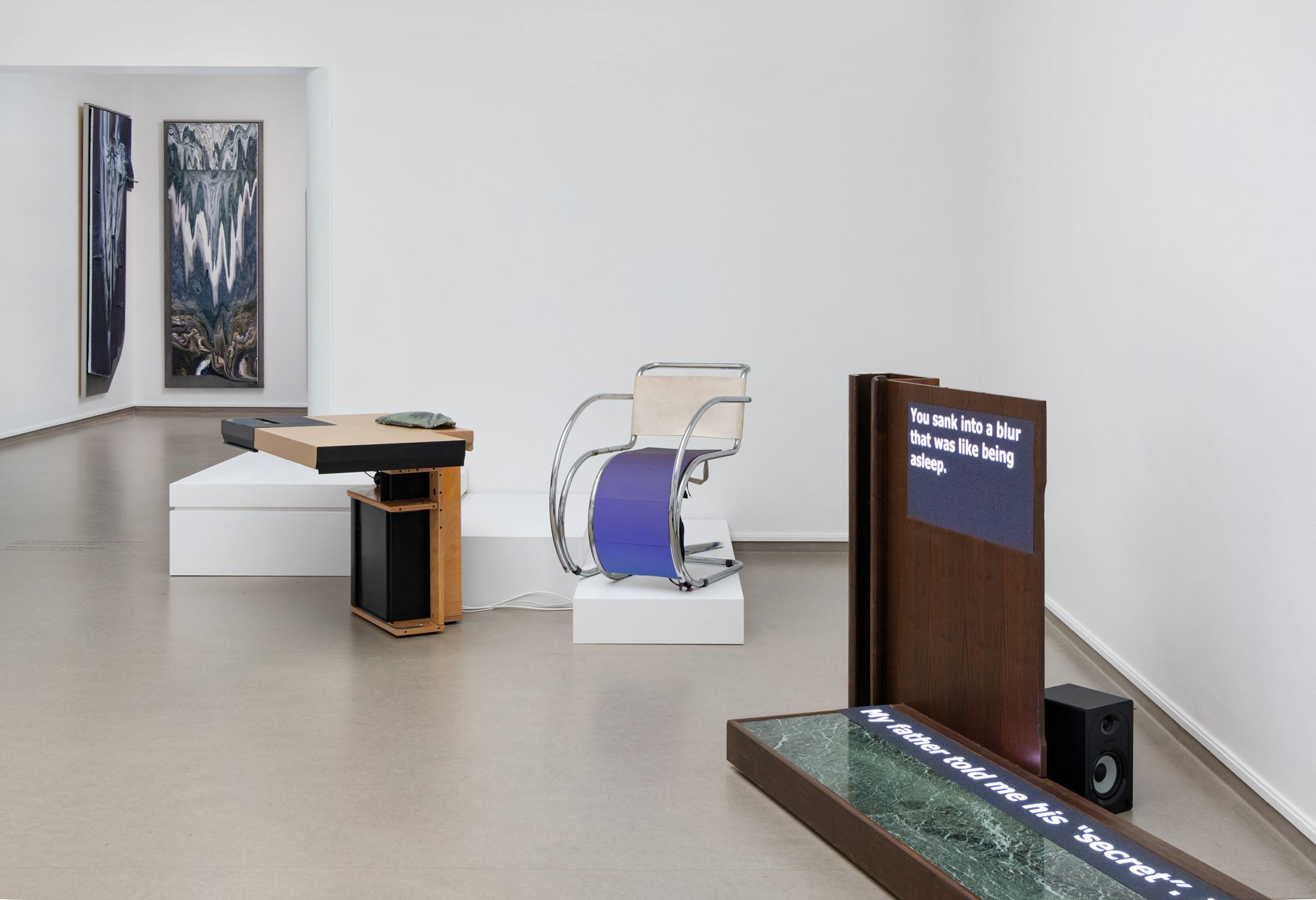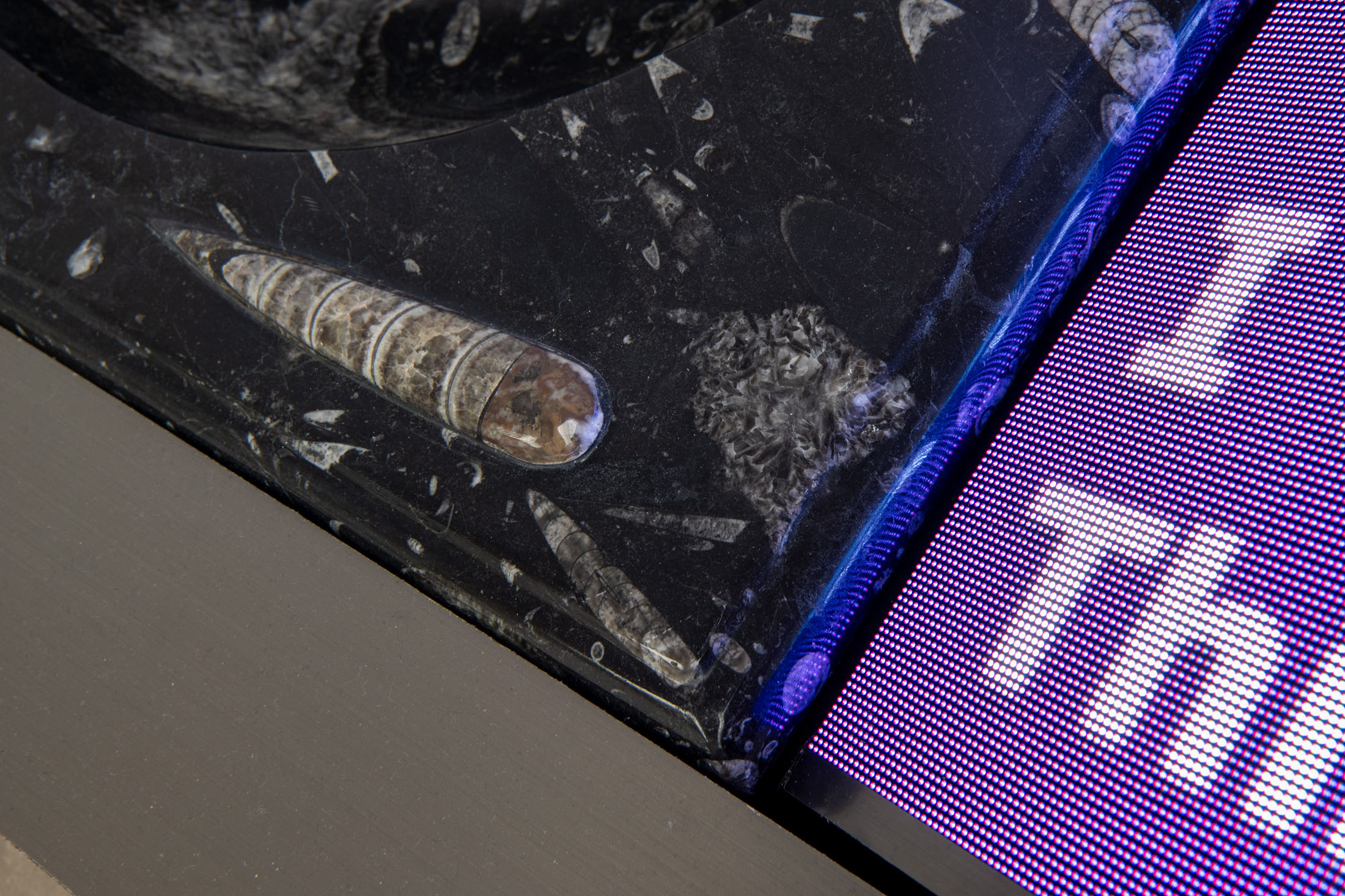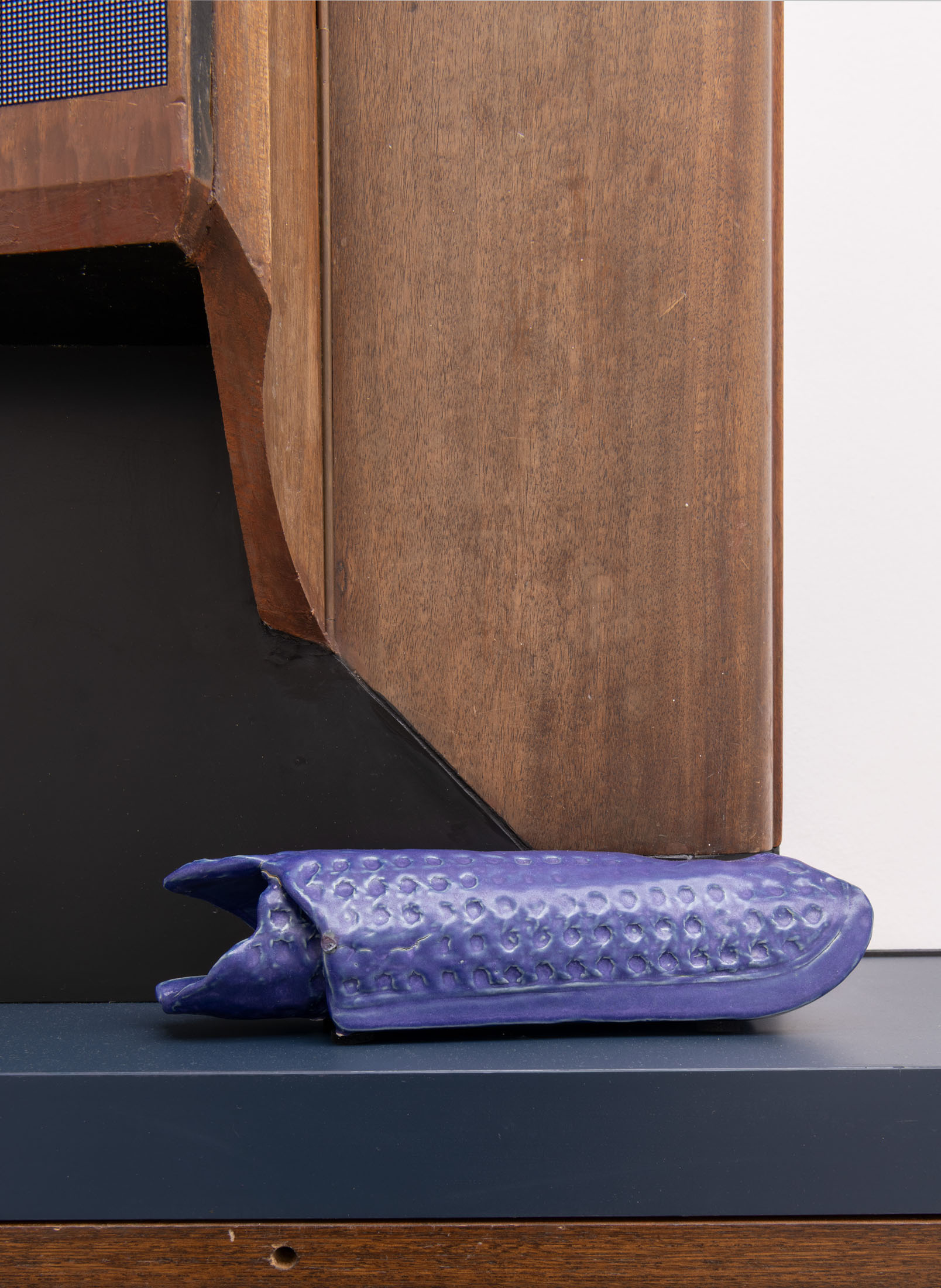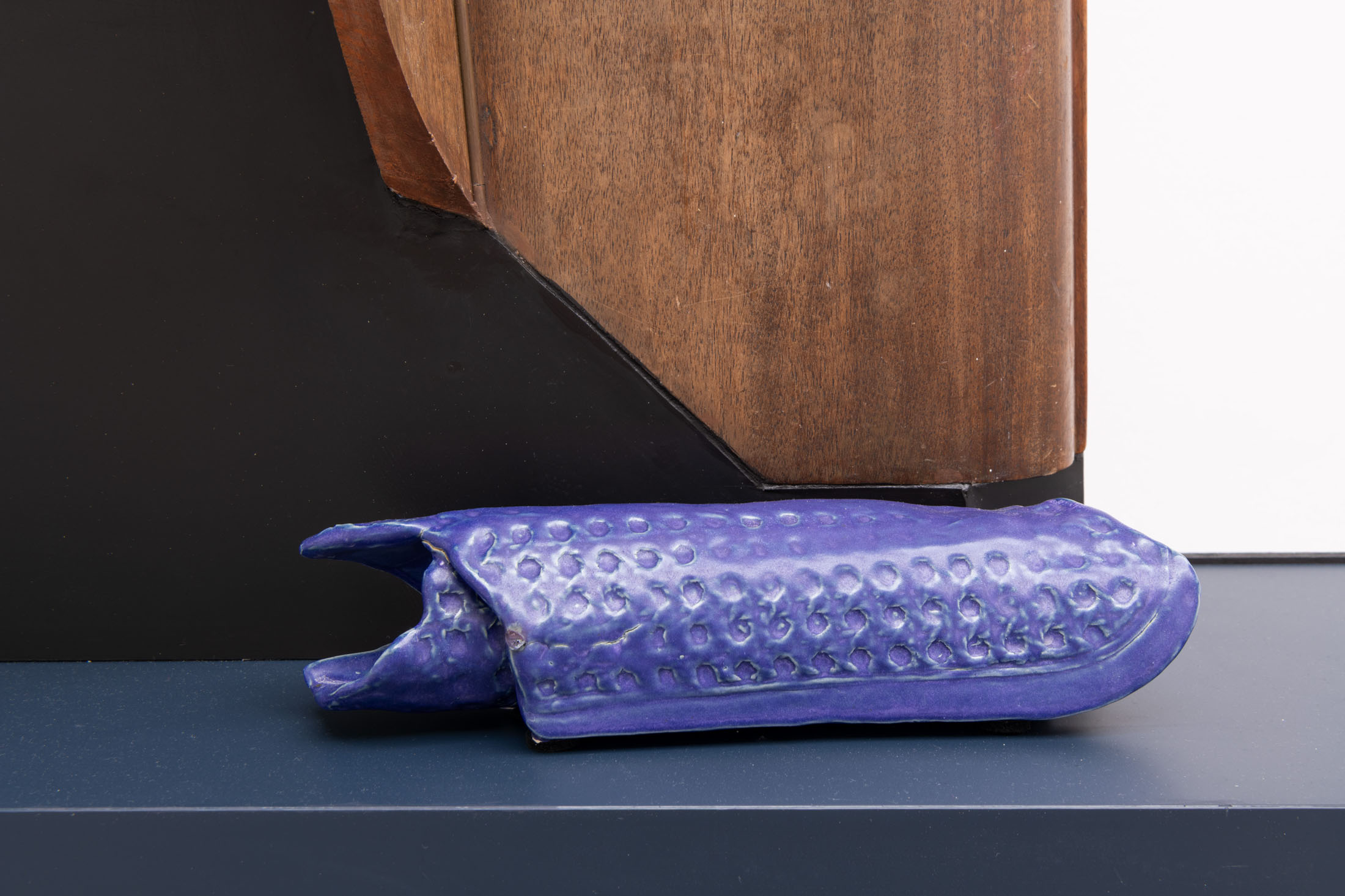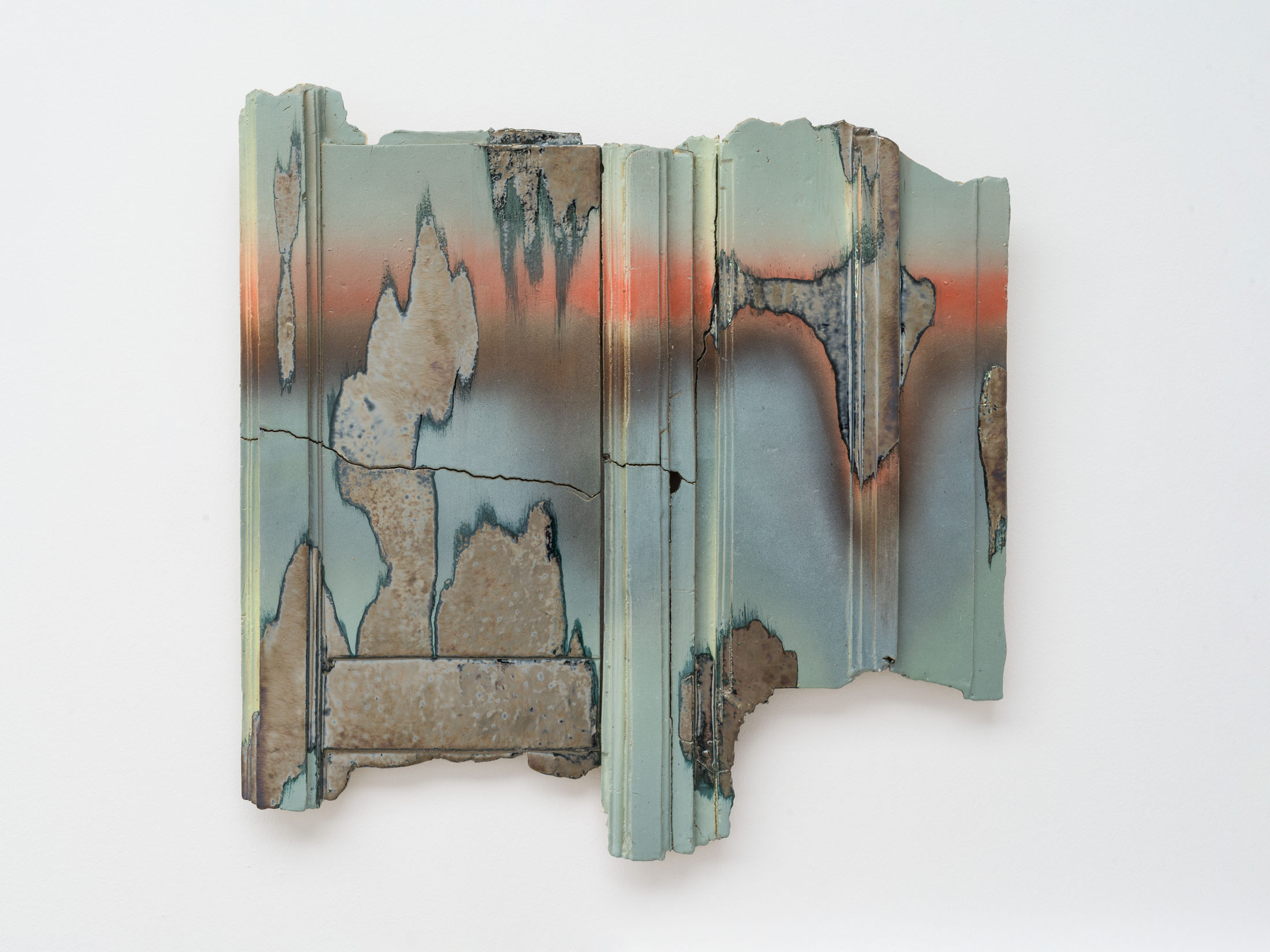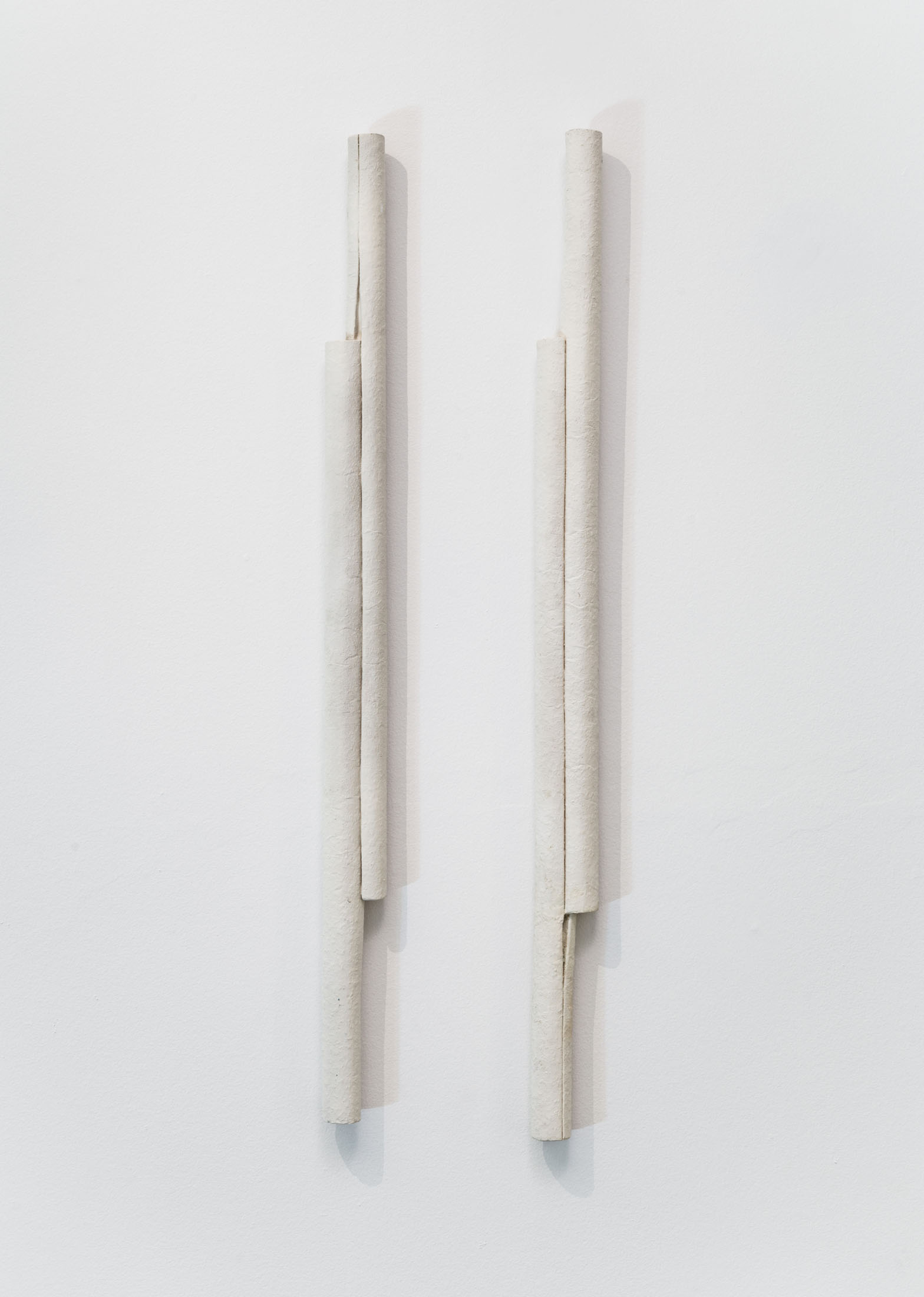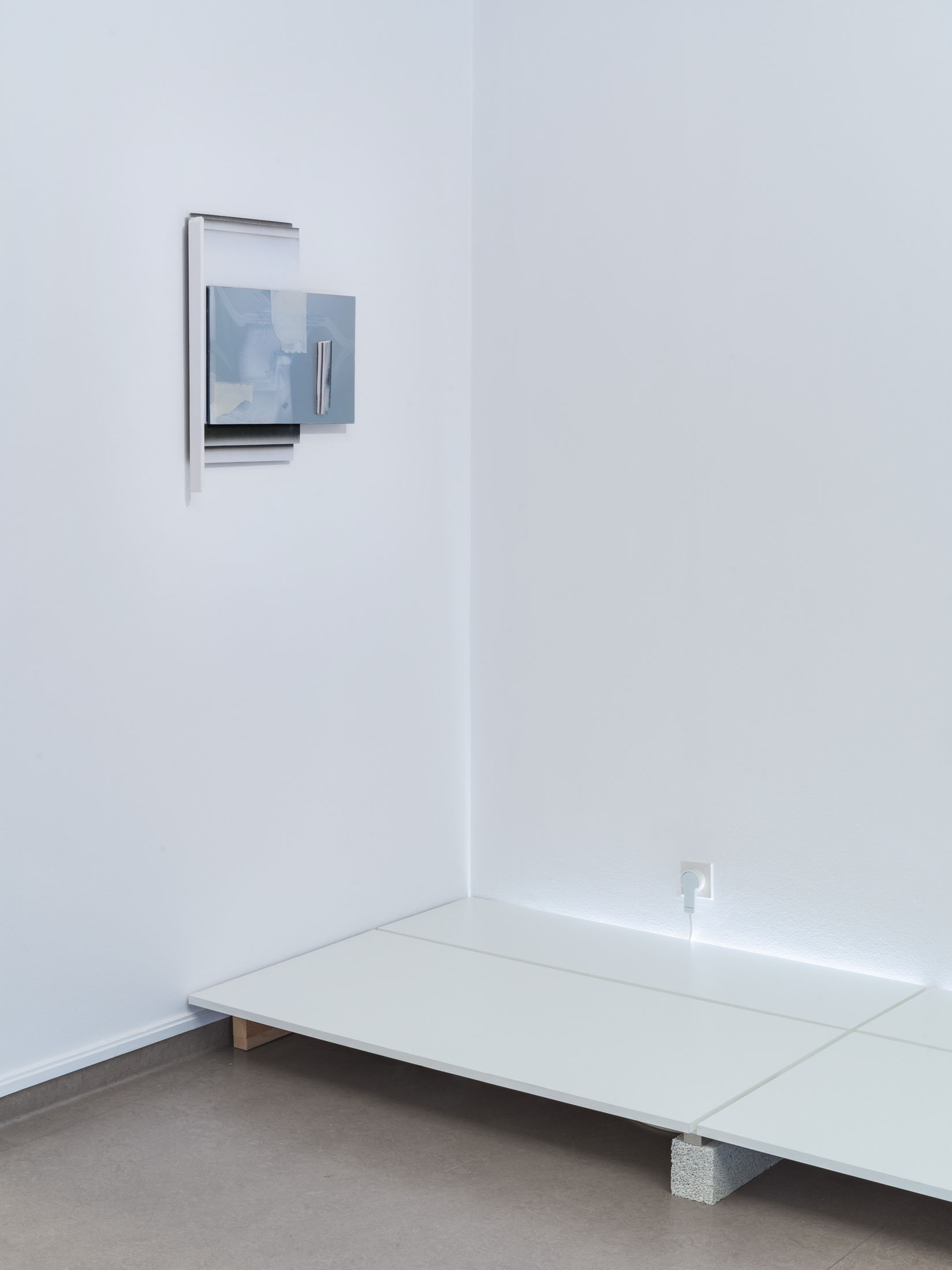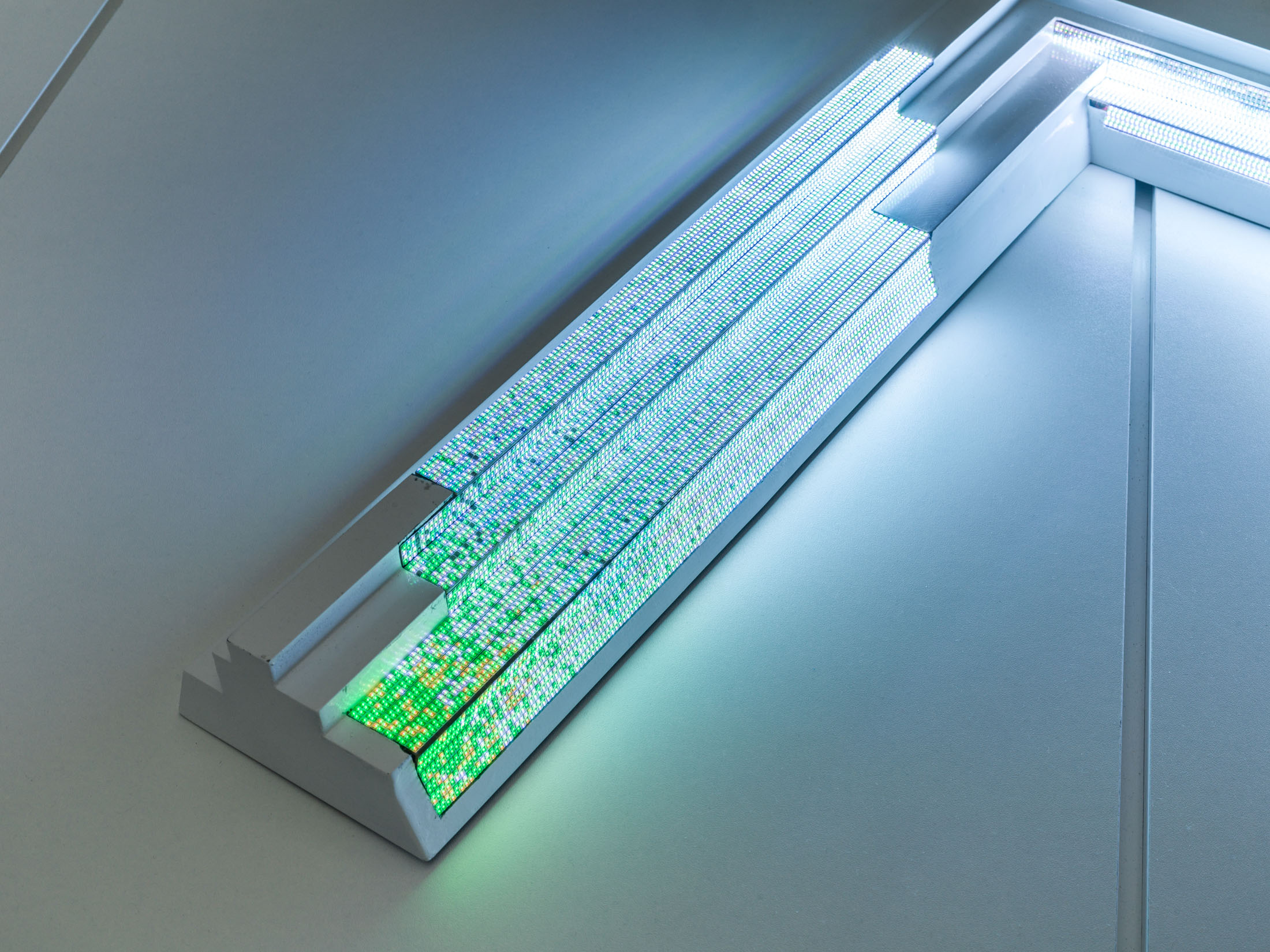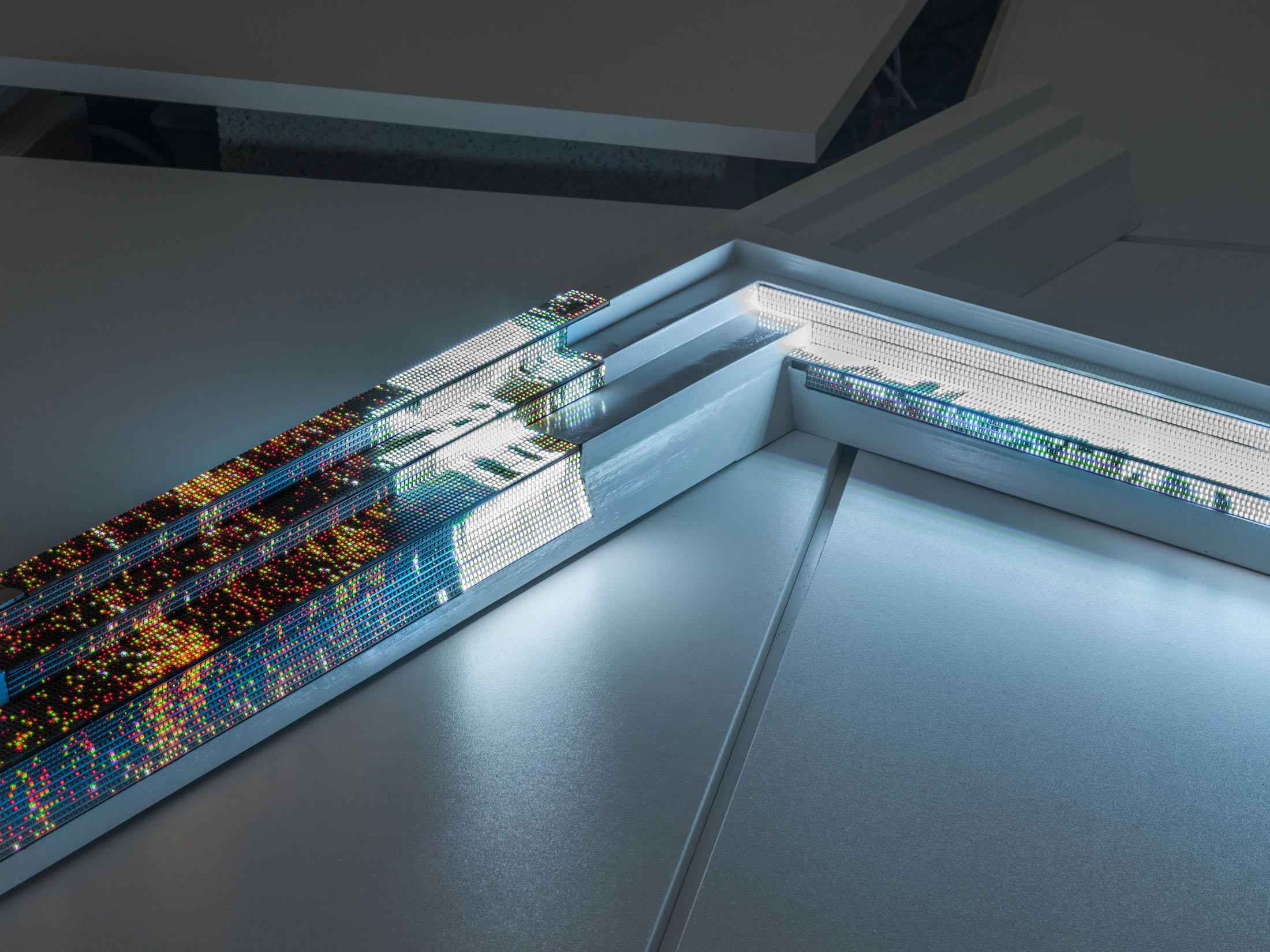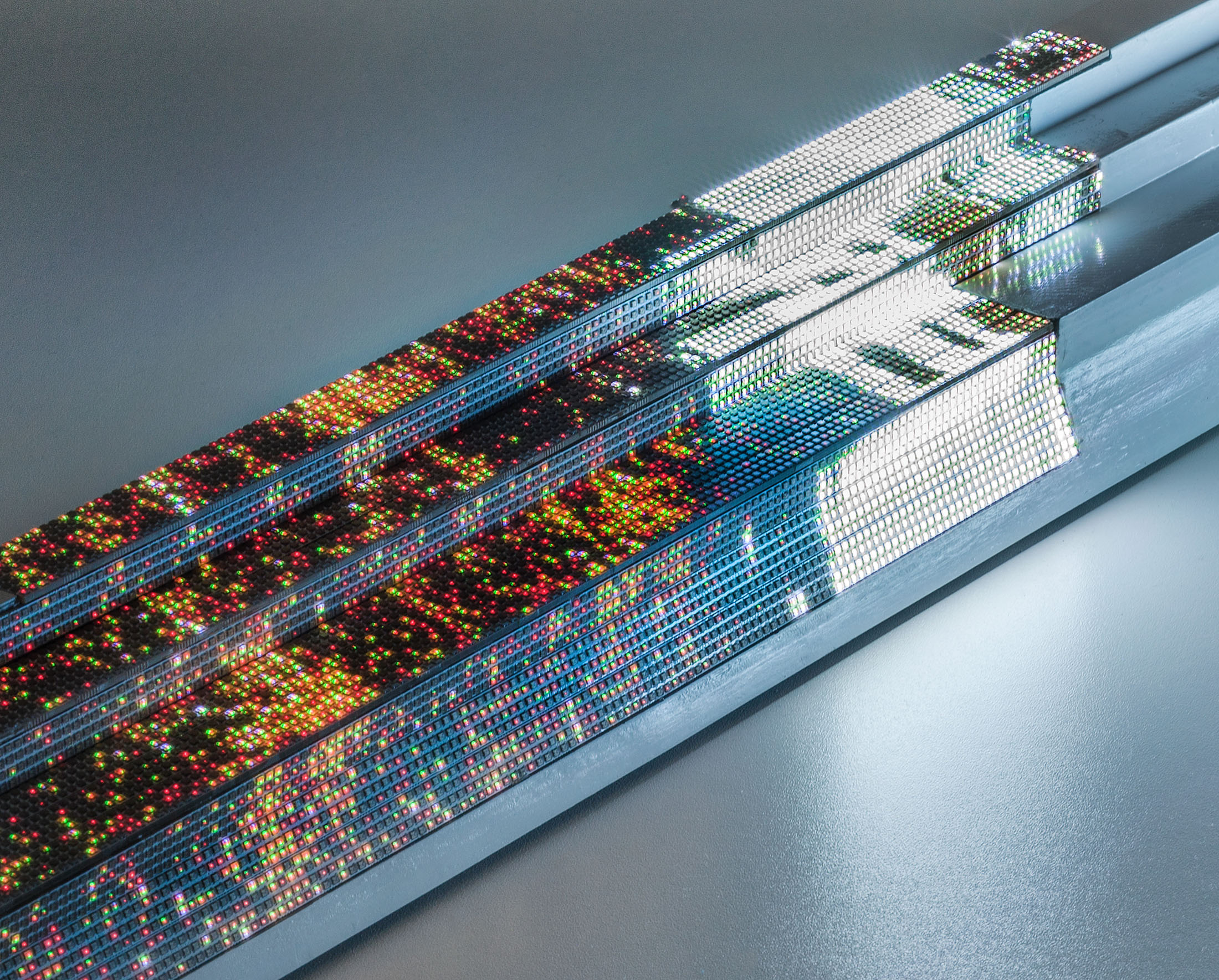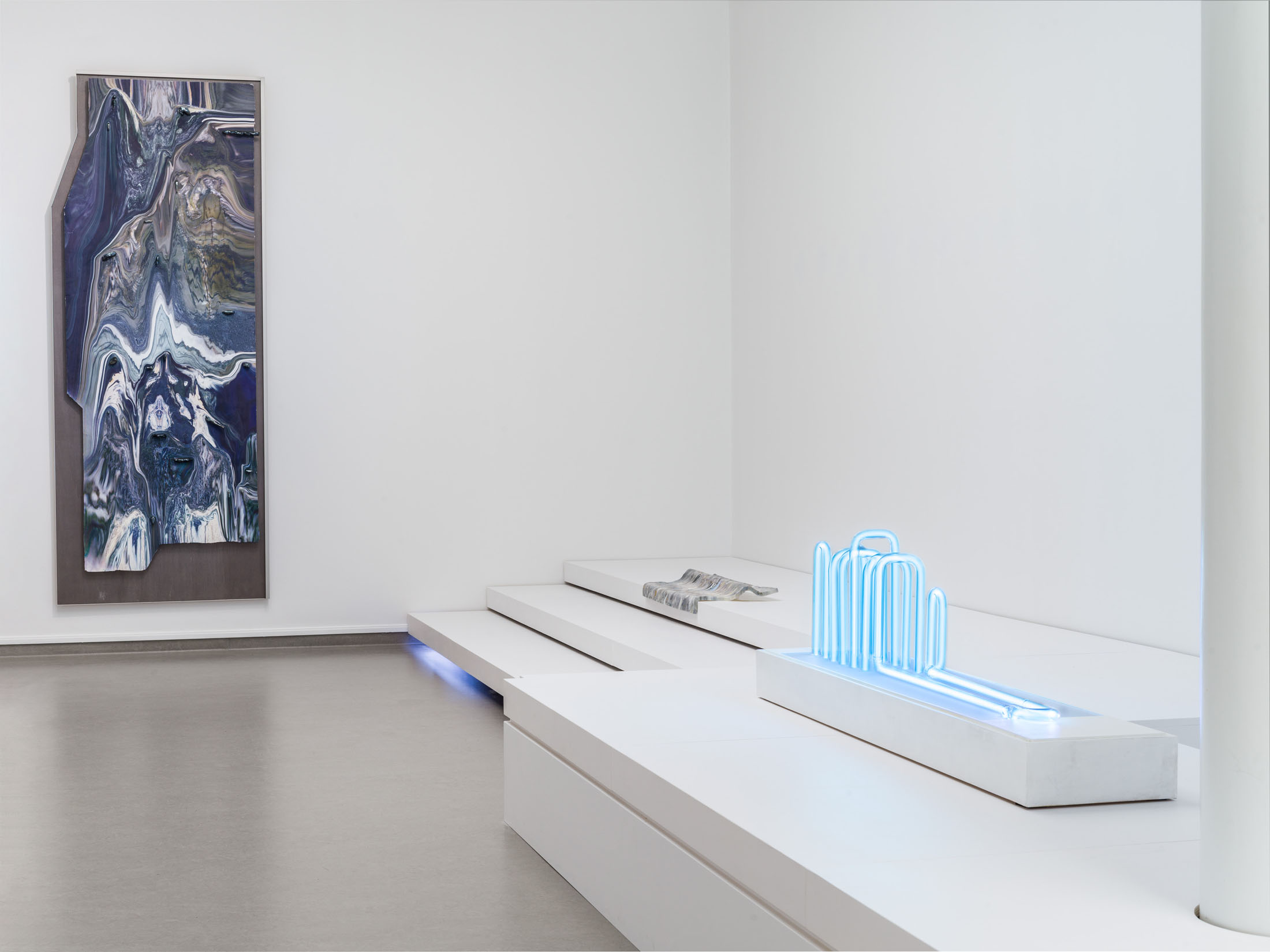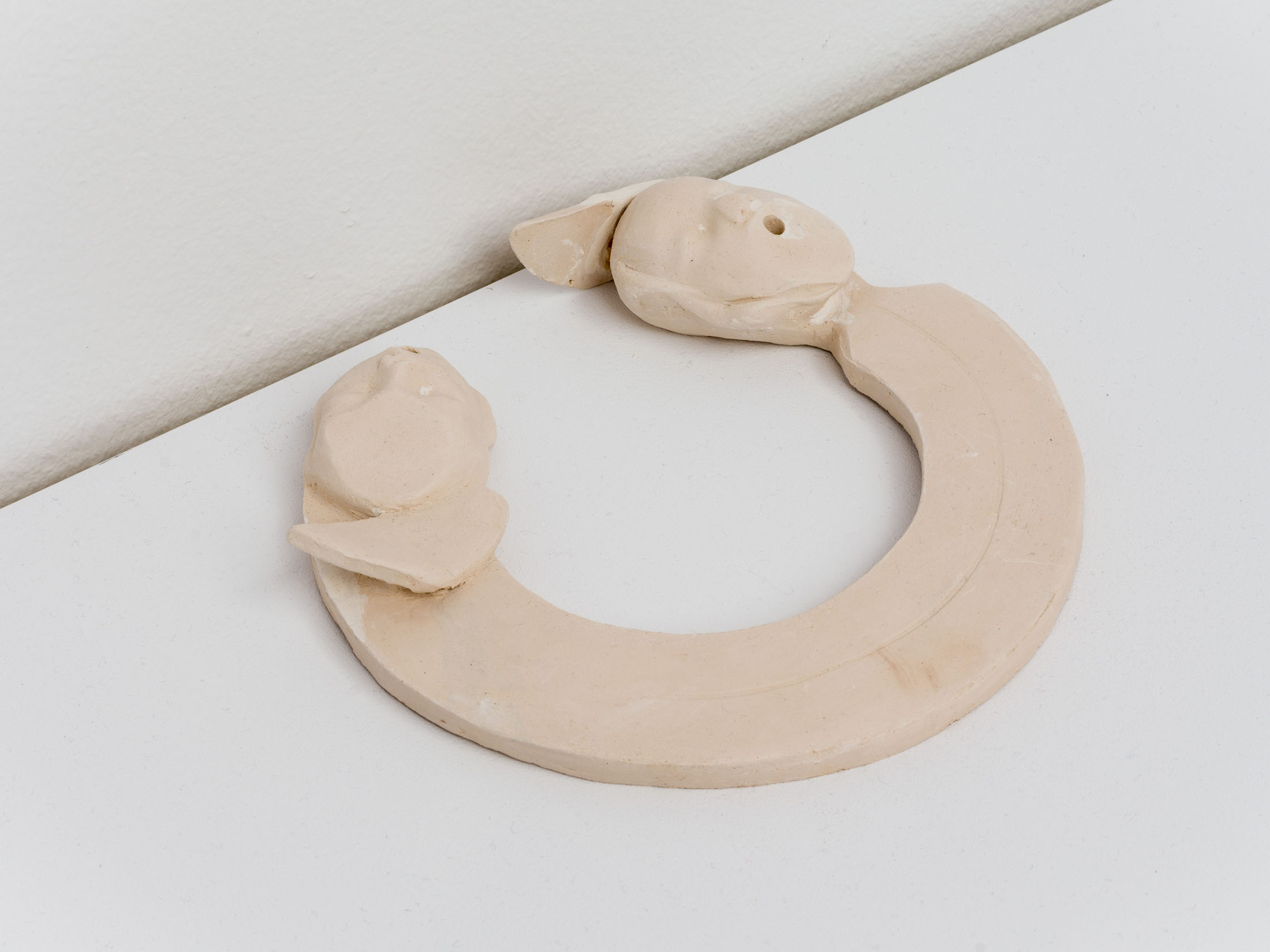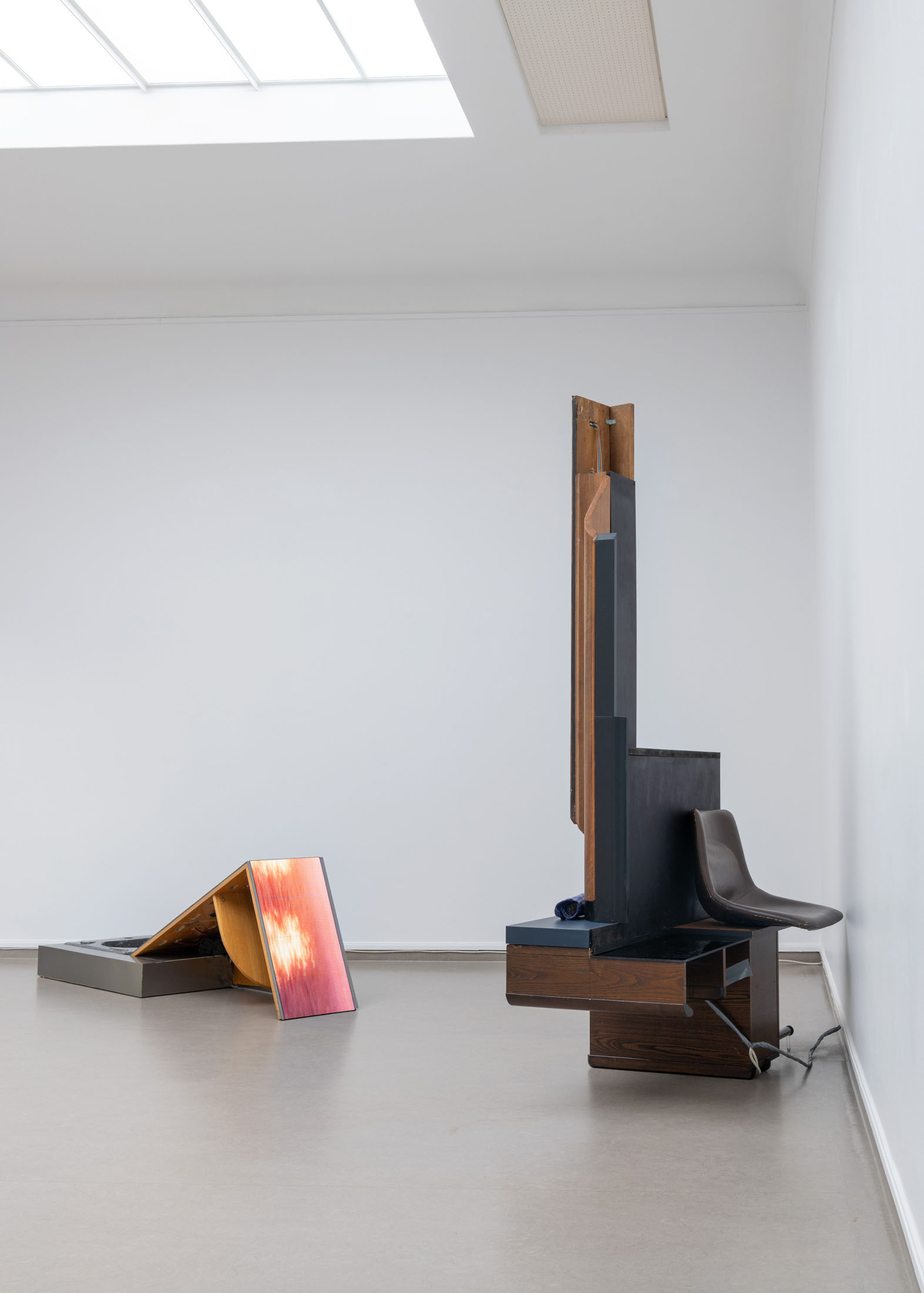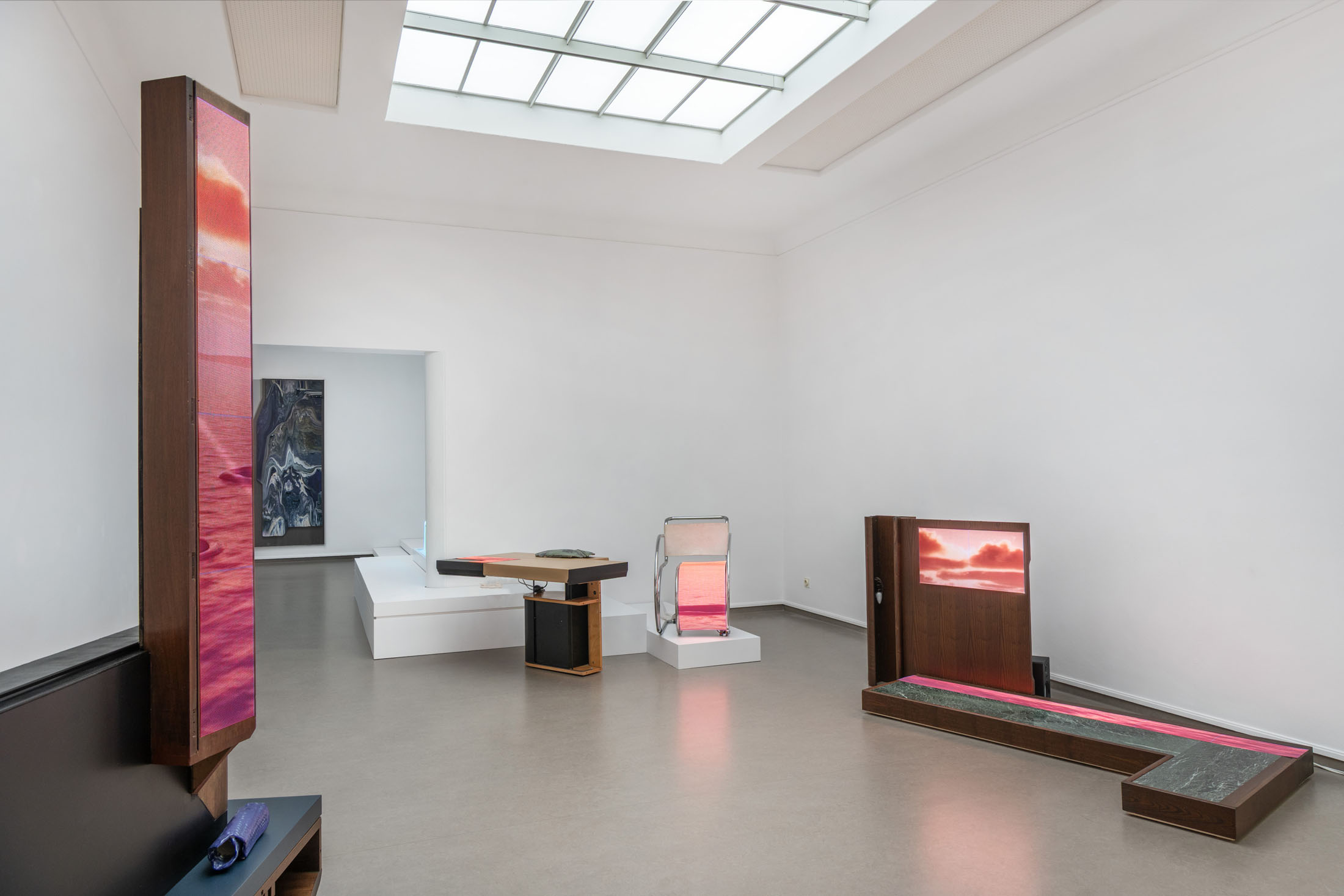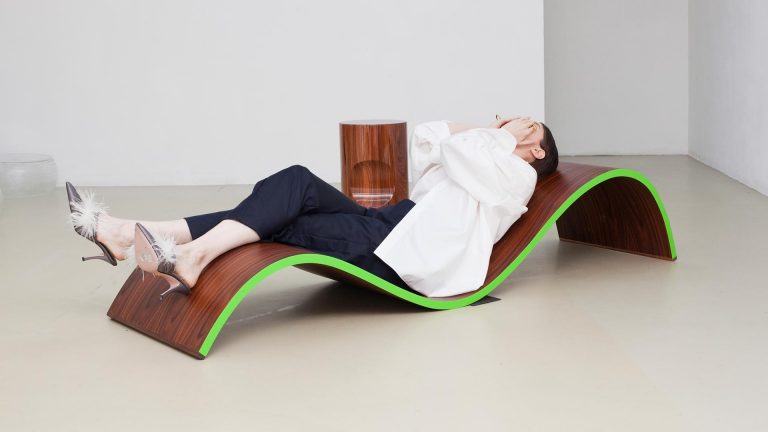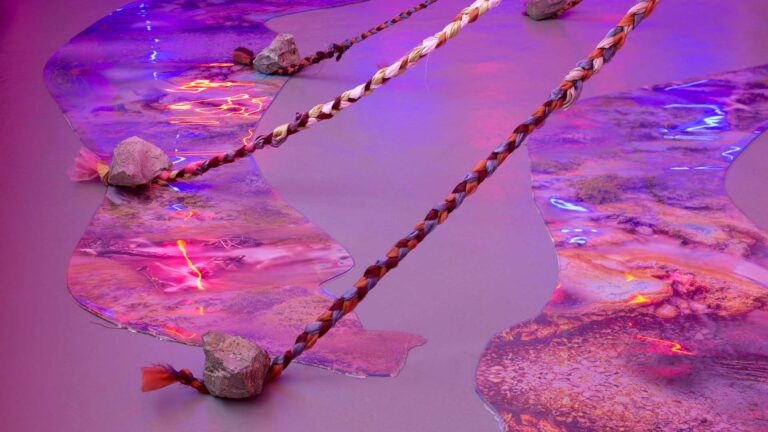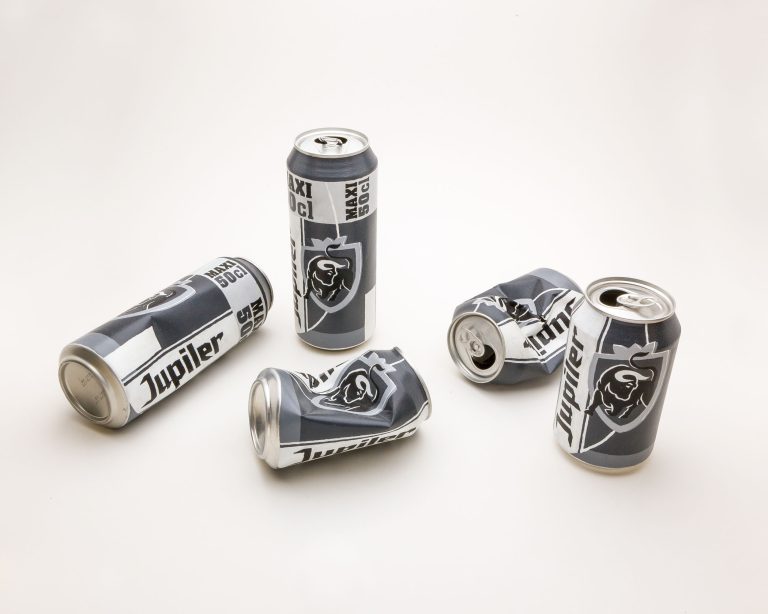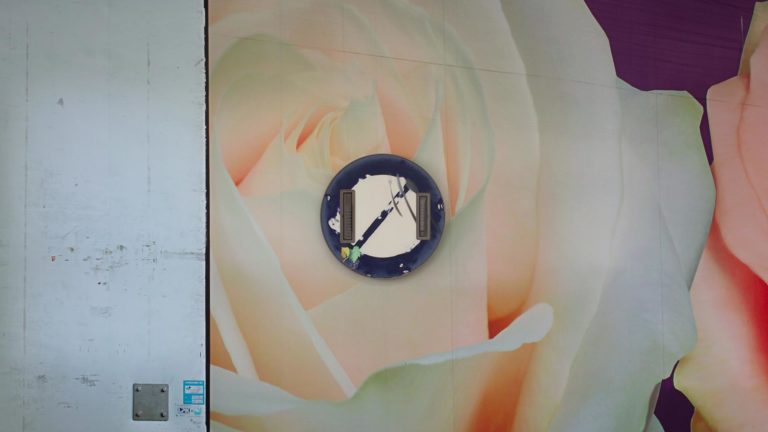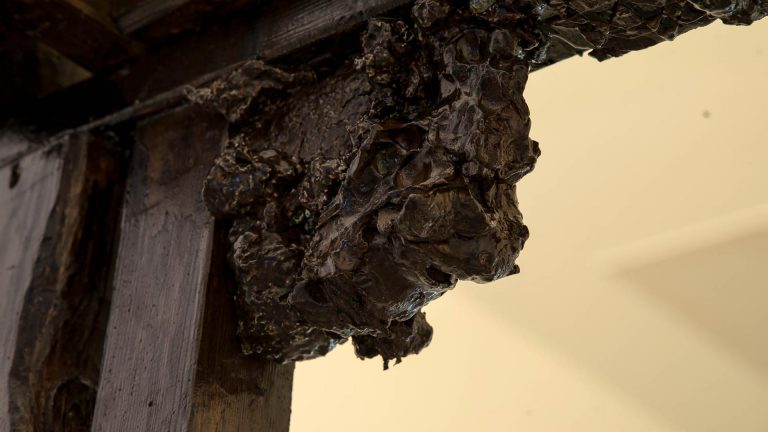
In her work, Lilian Kreutzberger (1984) reflects on an irreversible reality of our current society: the advancing digitalization and the impact this has on our everyday lives. Her artistic practice and research revolve around the possibilities, shortcomings and perception of both our (urban) environment and the digital space. In her recent work, she speculates on a future world where we are completely surrounded by ‘screens’. The surface of objects, such as buildings and street furniture, will be covered with an ever-changing ‘electronic layer’, continuously providing us with images. Just as ingrain wallpaper (rauhfaser) was once used to disguise a bare wall, Kreutzberger allows form, image and function to merge together in the exhibition.
MESMERISING
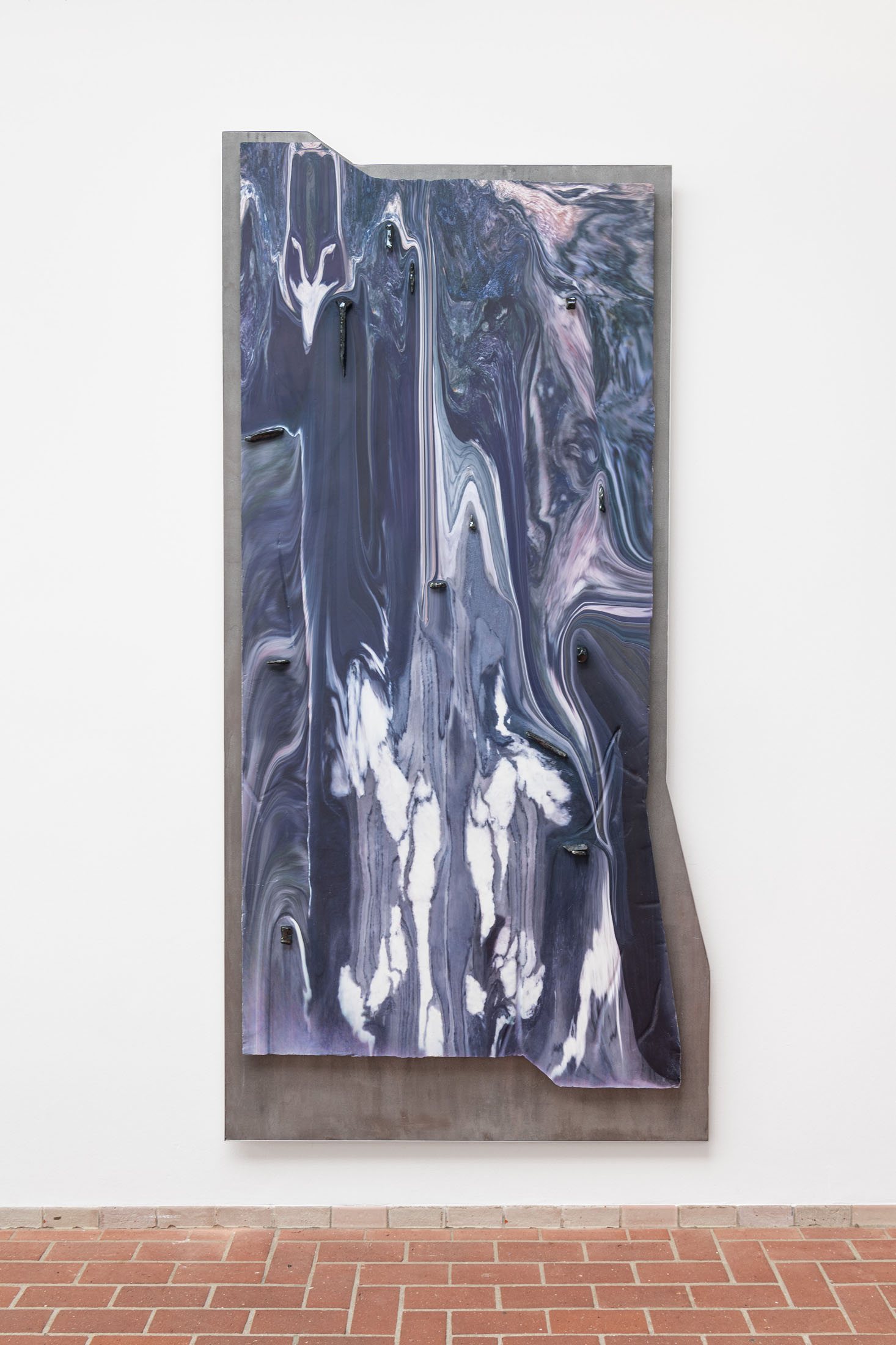
Kreutzberger presents her handmade objects together with the latest technological developments. In her complex installations, she appeals to an aesthetic experience, but also undermines the reliability of our visual perception. The result is mesmerising. Kreutzberger plays with our perception, for instance by using trompe l’oeil: a three-dimensional object turns out to be a flat surface, the apparent material – marble – is a printed photo on a plaster object.
PRIVATE VERSUS PUBLIC
The layout of RAUHFASER refers to the design of publicly accessible private spaces near several famous New York skyscrapers, such as the Seagram Building or the Time-Life Building, which blurs the lines between the private and the public. The ‘living areas’ between the high-rise buildings include seating, greenery and water features, as well as free Wi-Fi which is used enthusiastically. For the artist, these spaces symbolise the lack of transparent privacy in the digital domain where, for example, browsing behaviour leads to advertising pop-ups. Kreutzberger thus raises the question of who has control over the human sensory experience.
EMDR
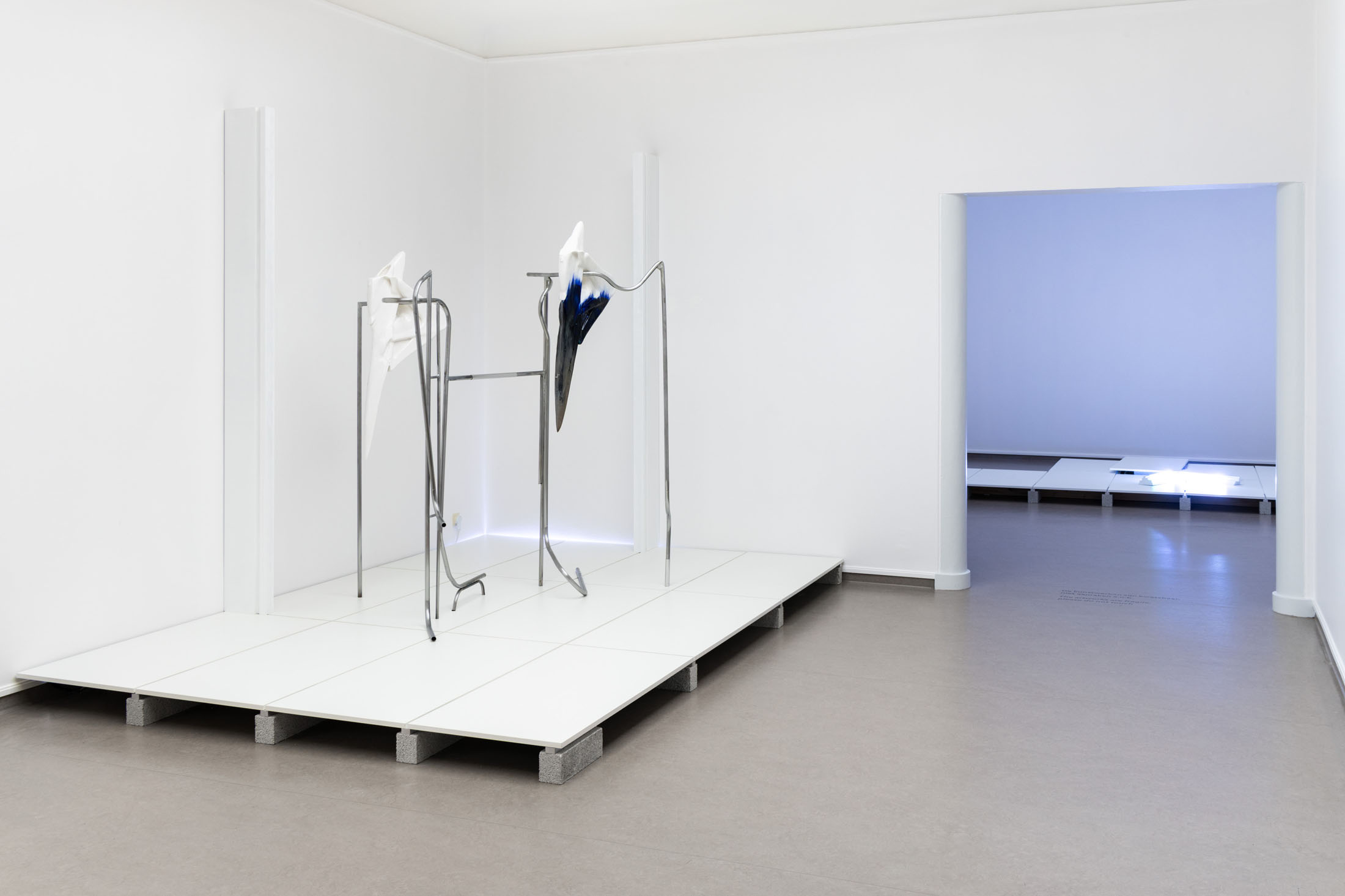
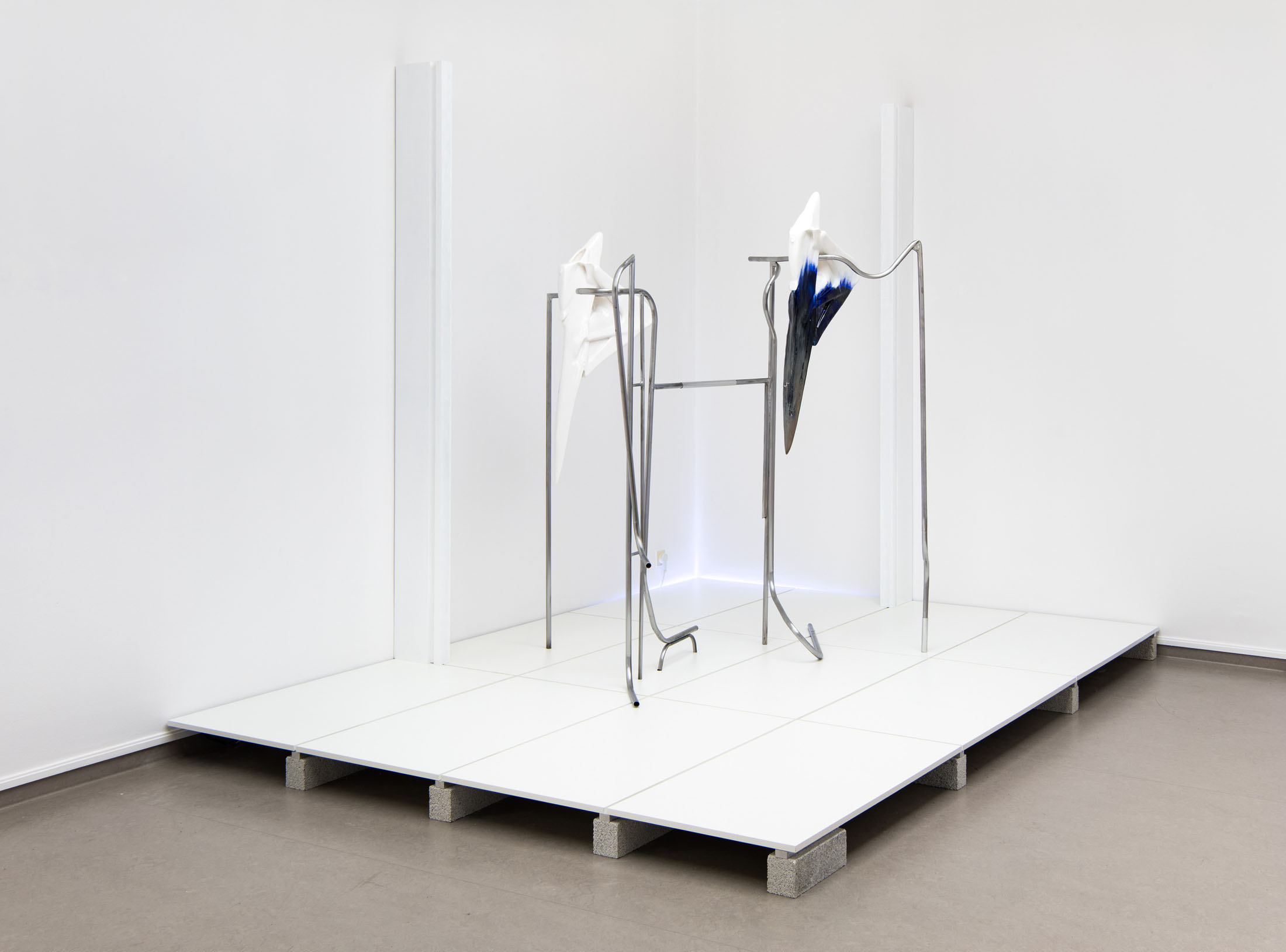
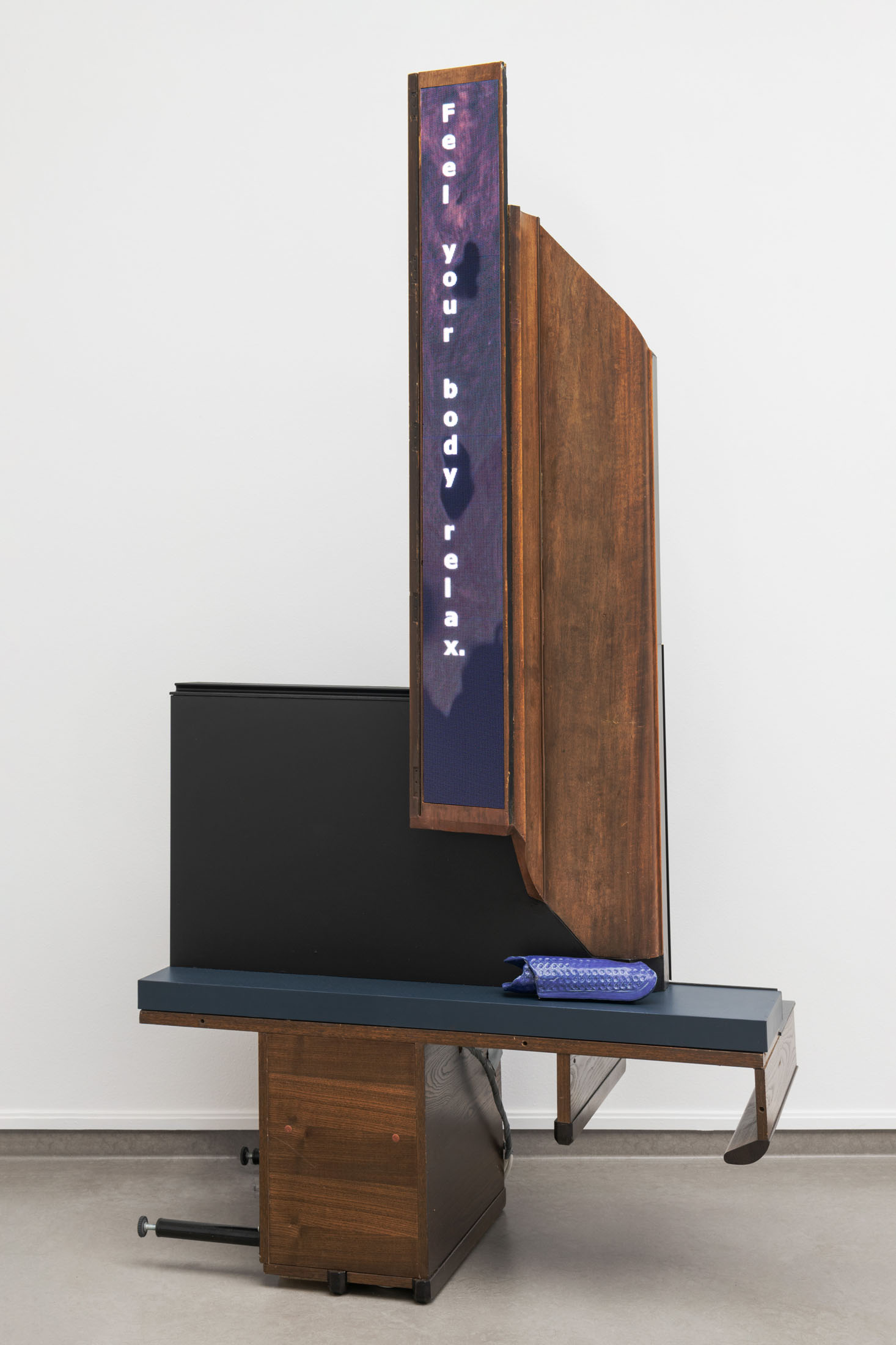
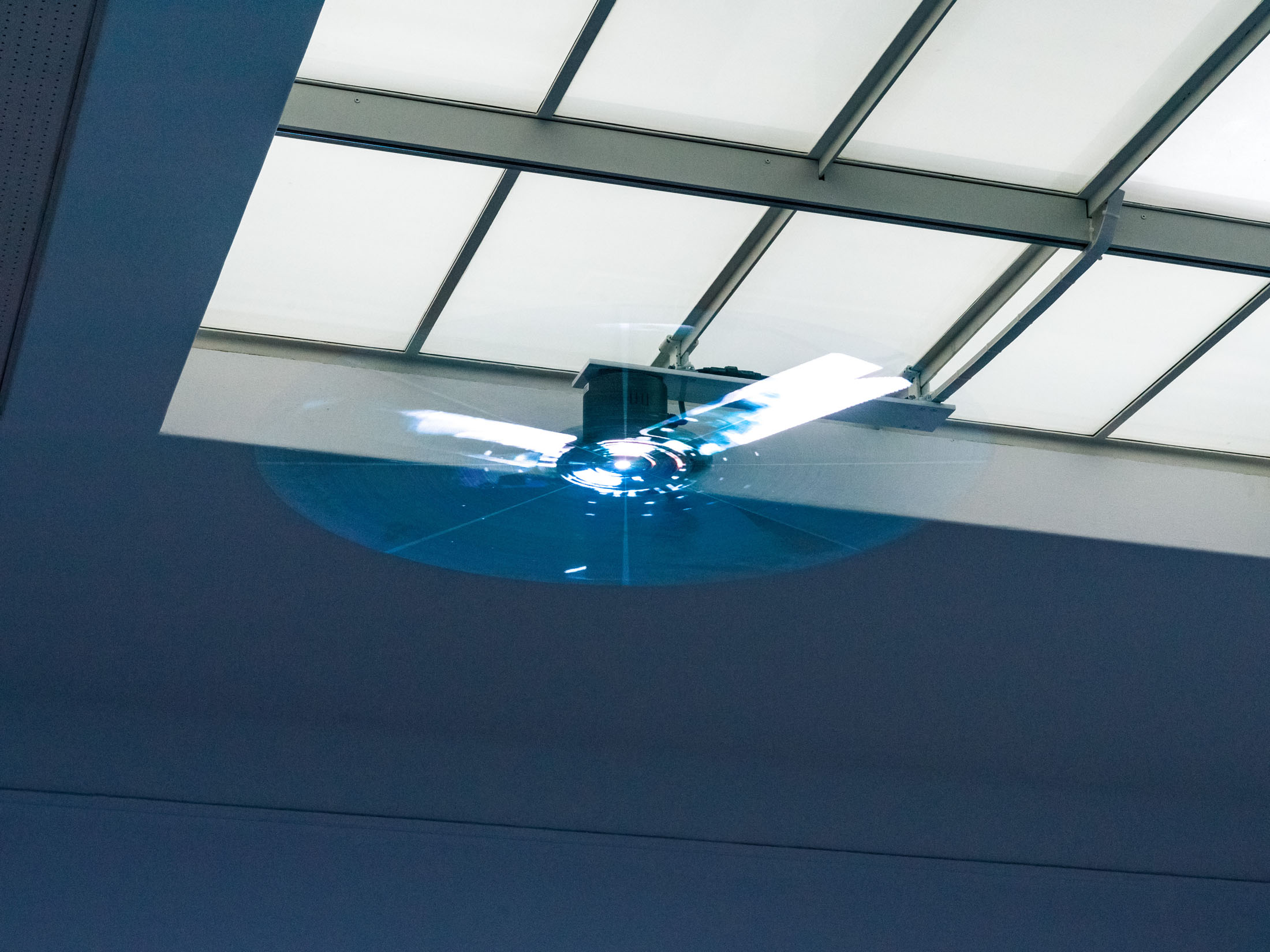
Especially for RAUHFASER, Kreutzberger has created Aftersun, based on the principle of EMDR (Eye Movement Desensitization and Reprocessing). EMDR therapy reduces a traumatic memory through sensory overload, causing emotions linked to that memory to be felt less intensely. Kreutzberger recognises a similarity between this therapy and our digital (over)stimulation, although she does not see the internet as evil: on the contrary, the medium can be used for healing and trauma processing. The texts on the EMDR sculpture were written by award-winning Belgian writer Lize Spit, and partly generated by AI. By thus relinquishing control to some extent, Kreutzberger heightens the psychological tension in the exhibition.
For RAUHFASER Kreutzberger worked closely with author Lize Spit and architect Carolien Schippers (studio -C-A-S-). The three-dimensional screens were developed in collaboration with the artist in residence programme Crossing Parallels at TU Delft, with technical support from Jarno Burger and Max Mahieu. Music producer Nils van Lingen created a soundscape, Anna Chocoli animations and Roderik Patijn video images for various art works.
The exhibition is made possible by Mondriaan Fund, Amsterdam Fund for the Arts, TU Delft, EKWC, Stimuleringsfonds, Cultuurfonds and Niemeijer Fund.