DECEPTION AND MEMORY
Deception and memory. These are the two central themes that Leonora Prugger explores in her new body of work. But the two do not stand apart; they permeate each other in the paintings and installations. Deception and memory are closely intertwined. It is about deception in nature – exemplified by a particular genus from the orchid family, the bee orchids (Ophrys). And about the deception of memory, which blurs over the years, takes its own paths – until the deception becomes truth. This especially concerns events that lie far in the past. Thus, in the exhibition Leonora Prugger repeatedly alludes to things and experiences from her own childhood in her native South Tyrol. This blurring and layering is also reflected in the title in quiet, unseen hours. It refers to moments such as the phase just before falling asleep. We are no longer fully awake, slipping across. Reality and dream begin to blur, deceiving us.
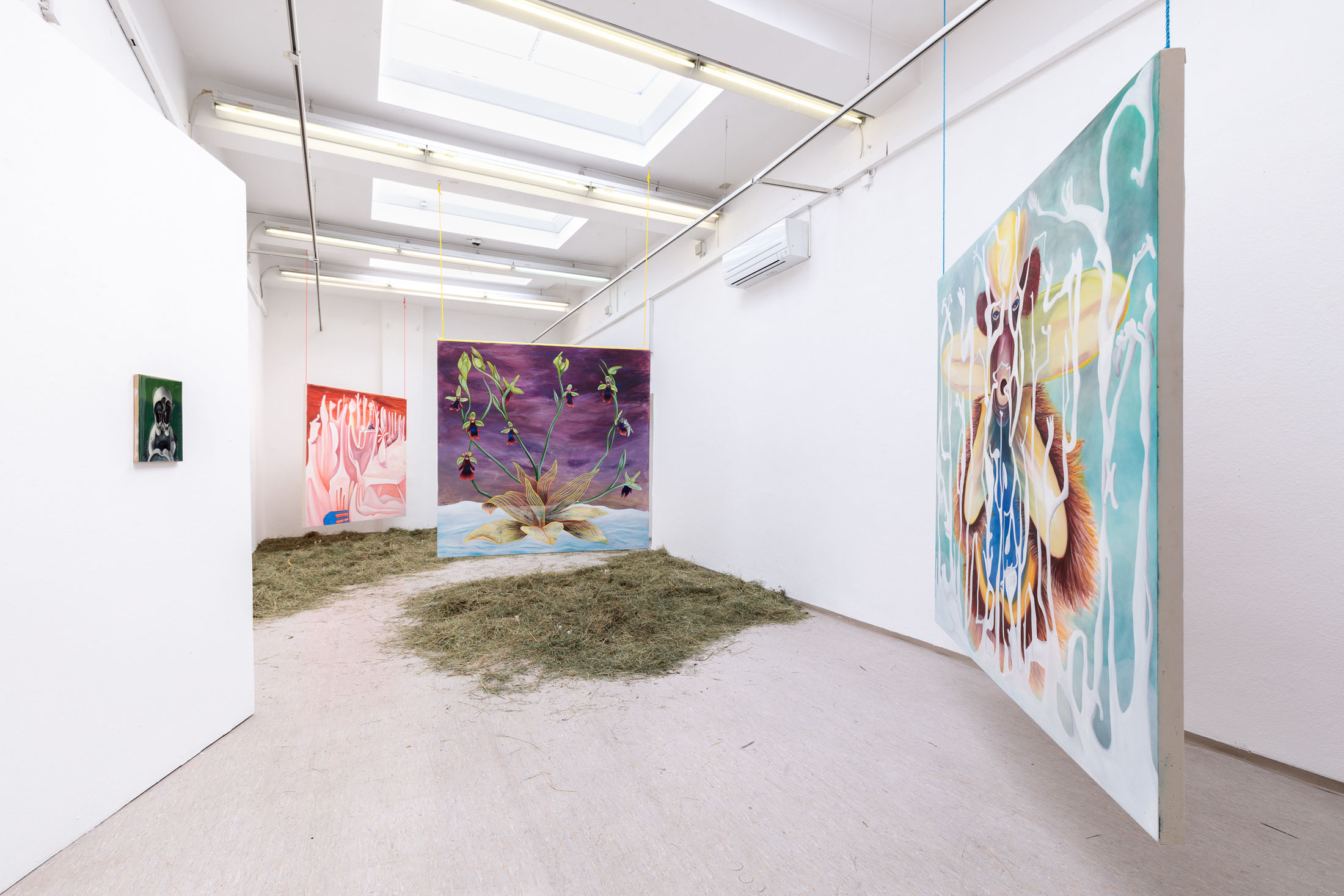
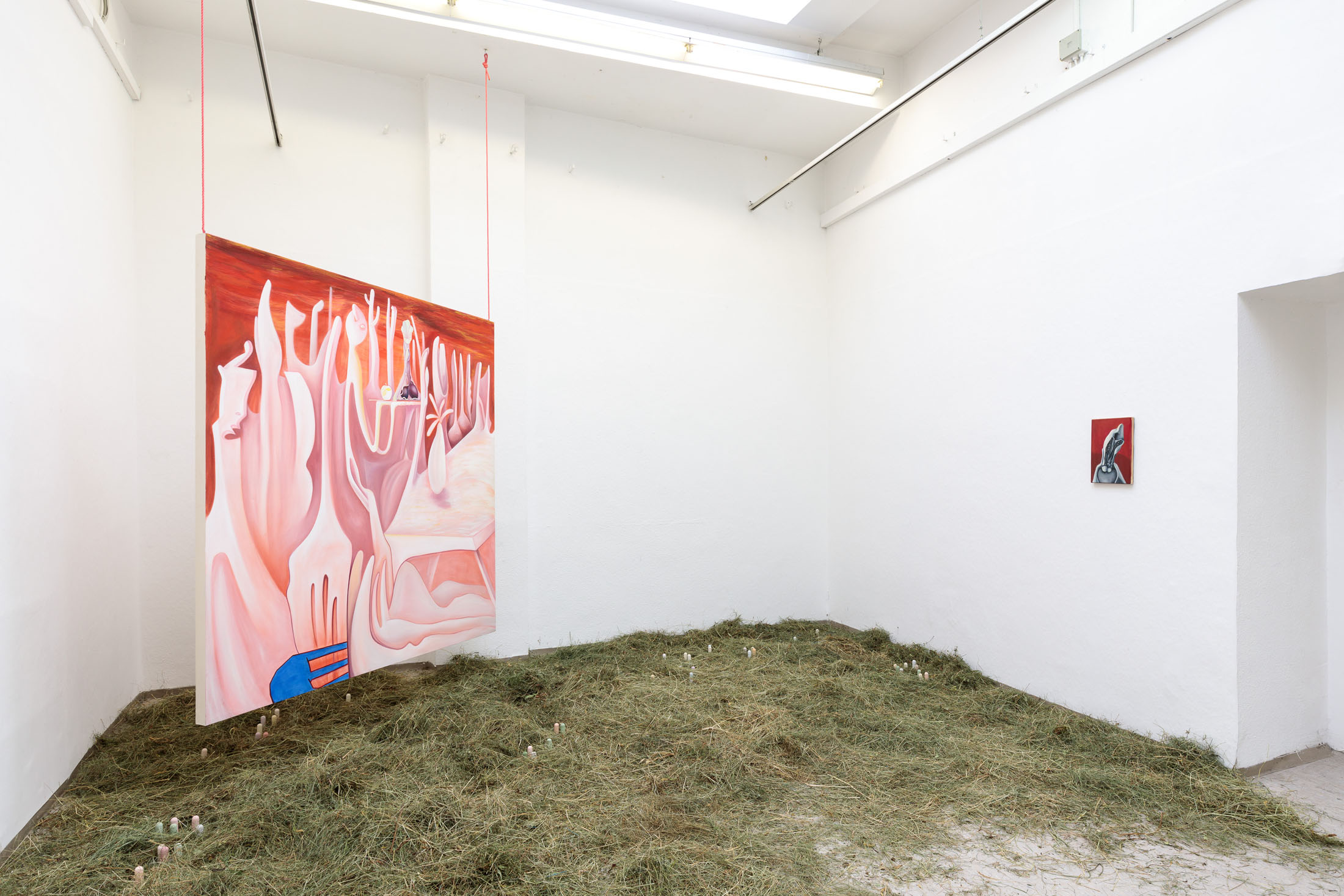
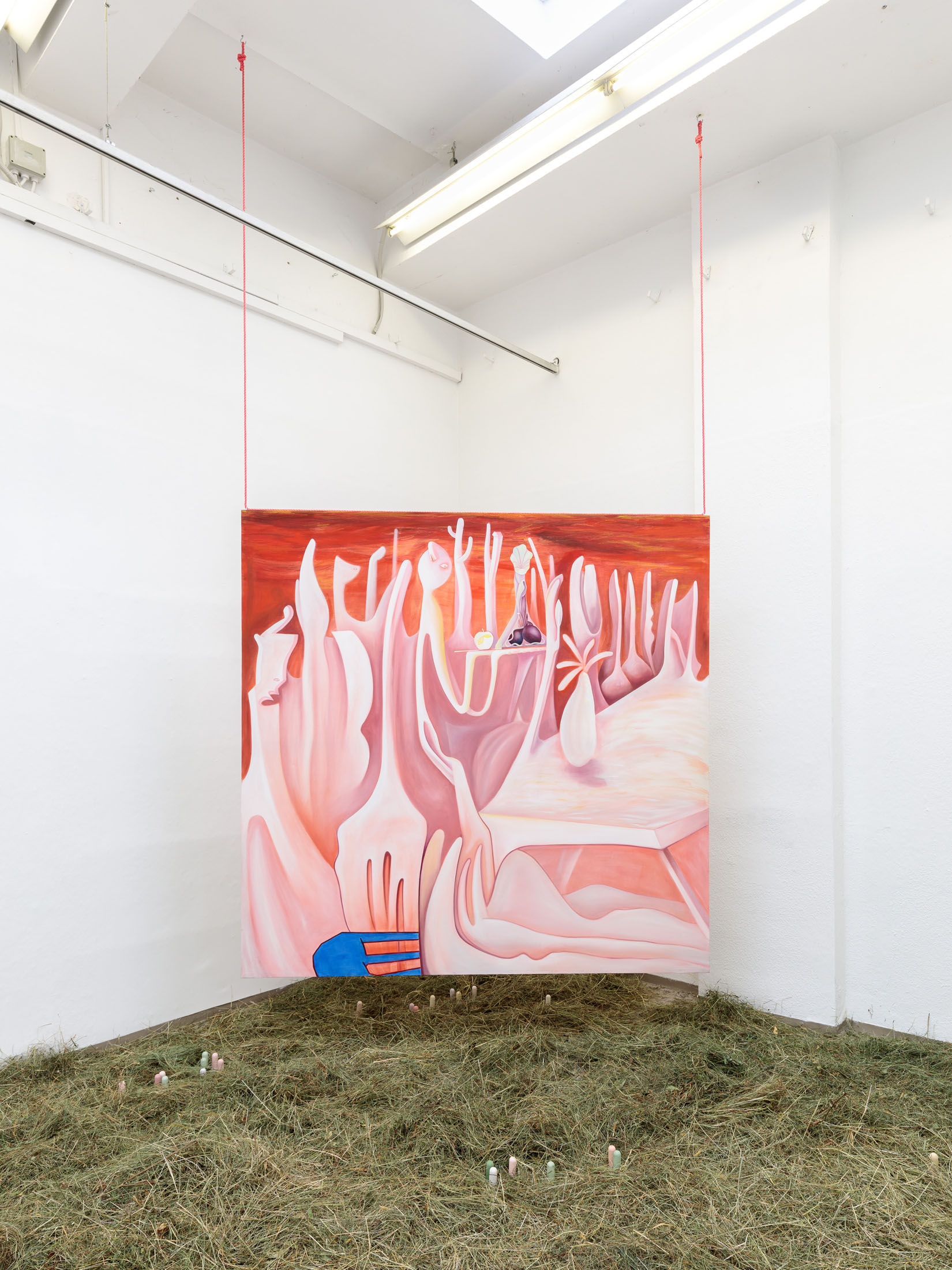
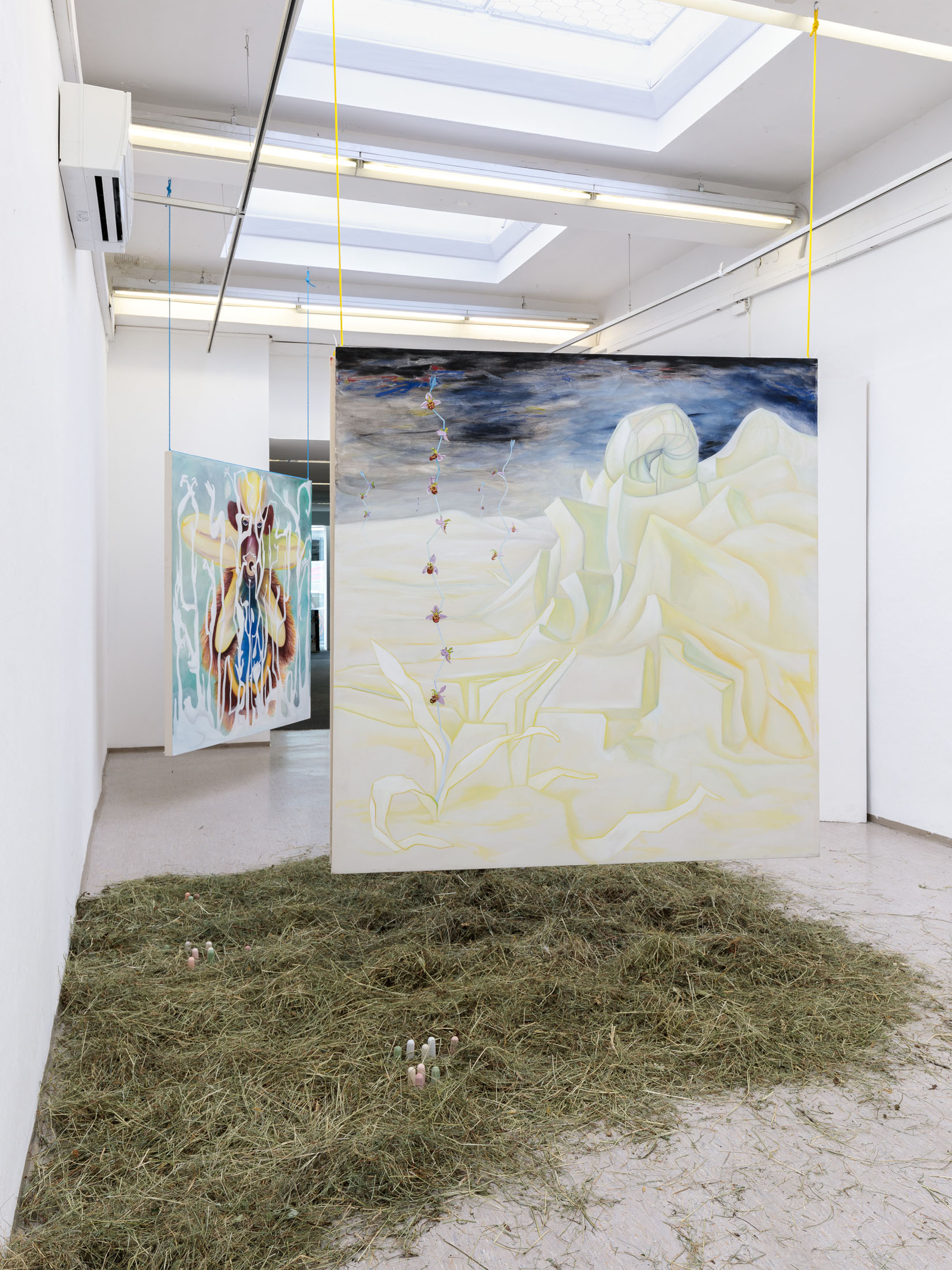
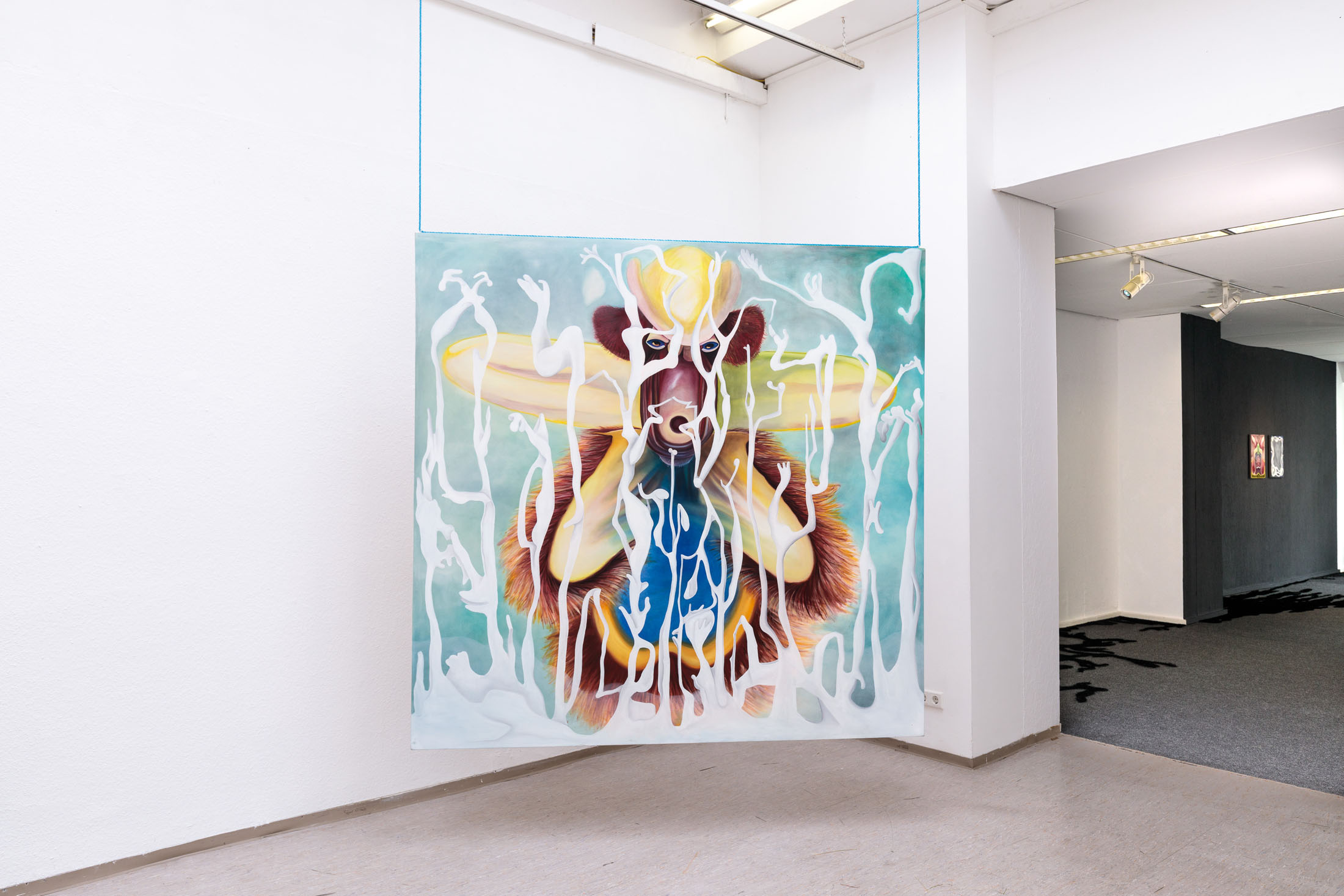
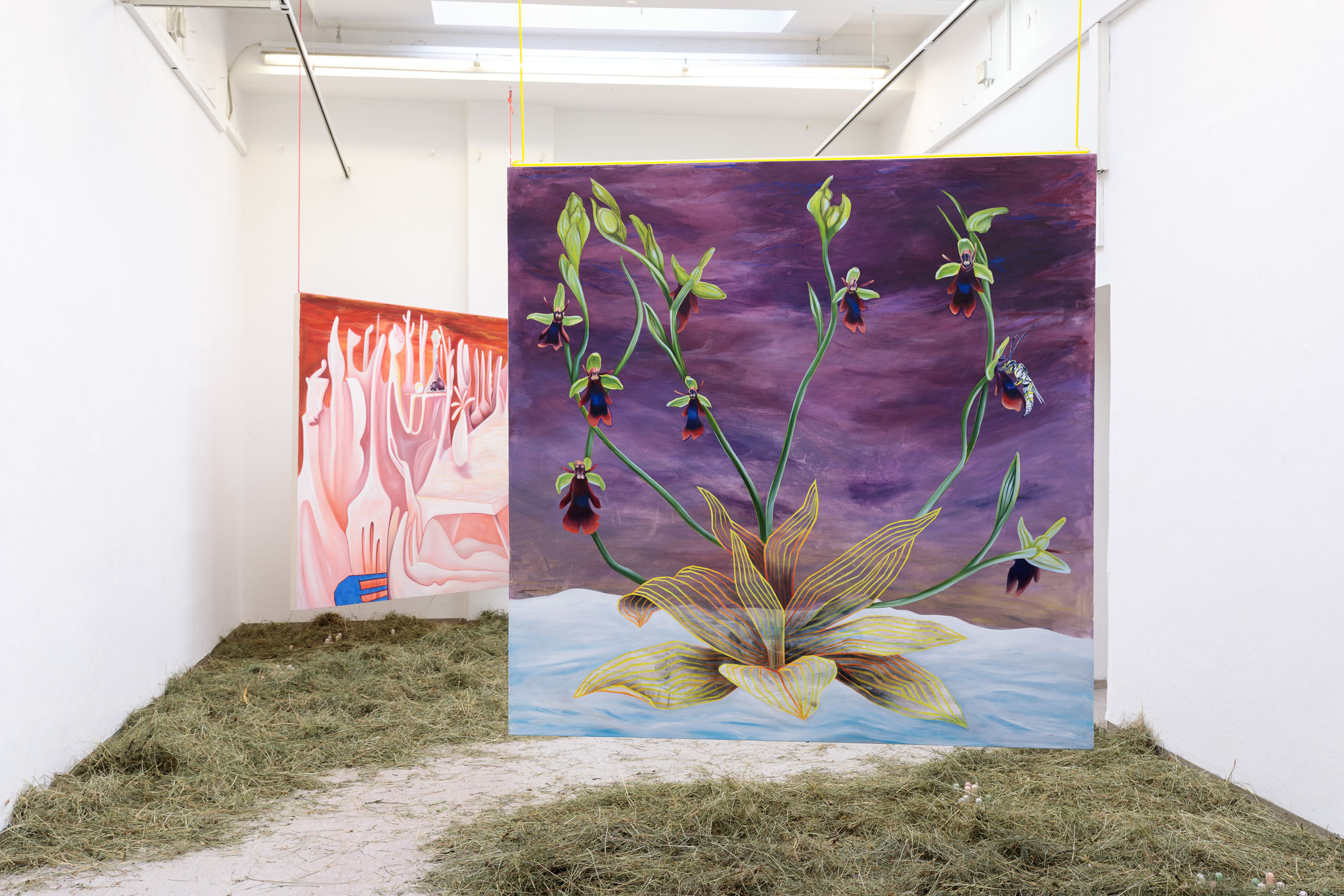
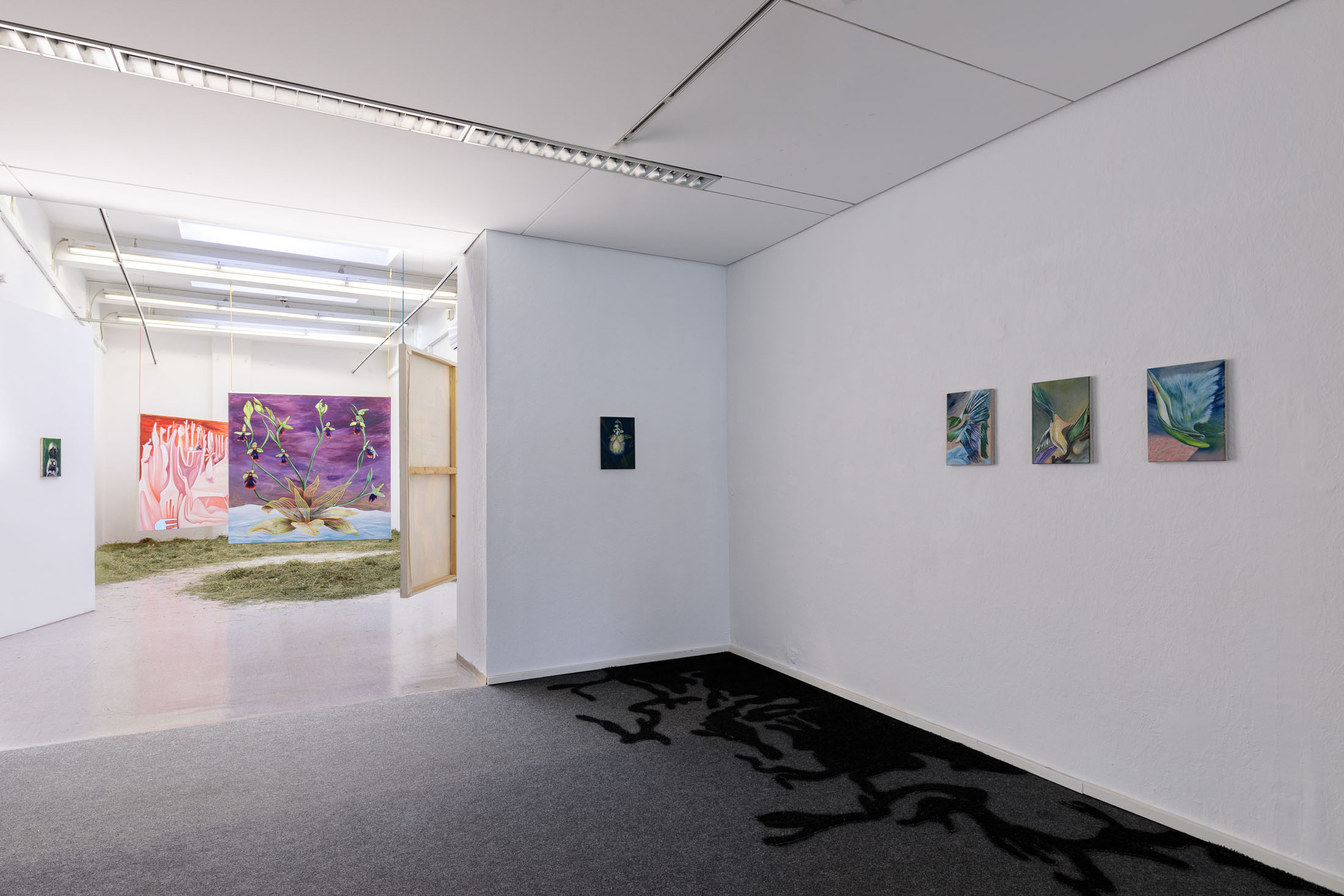
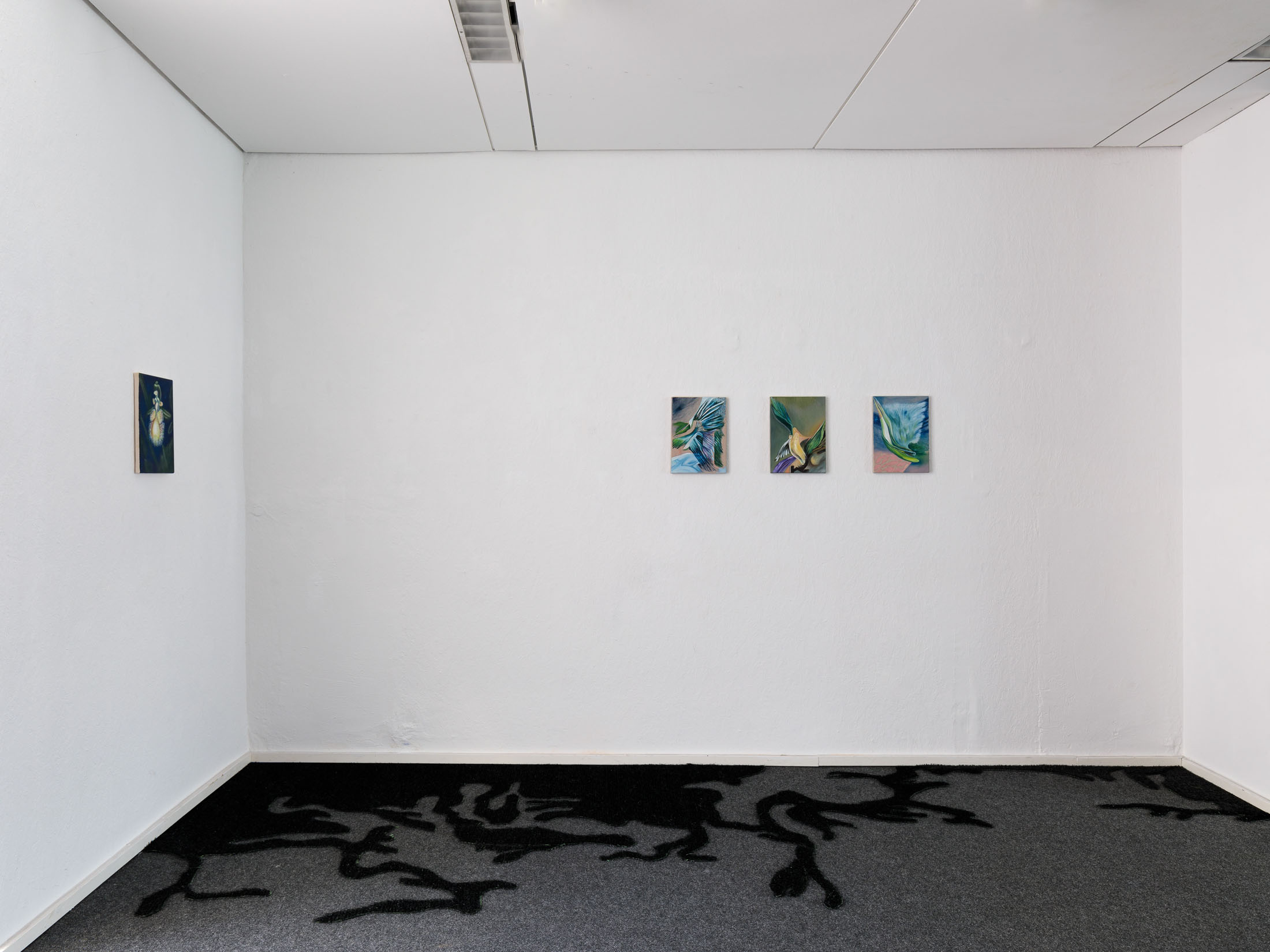
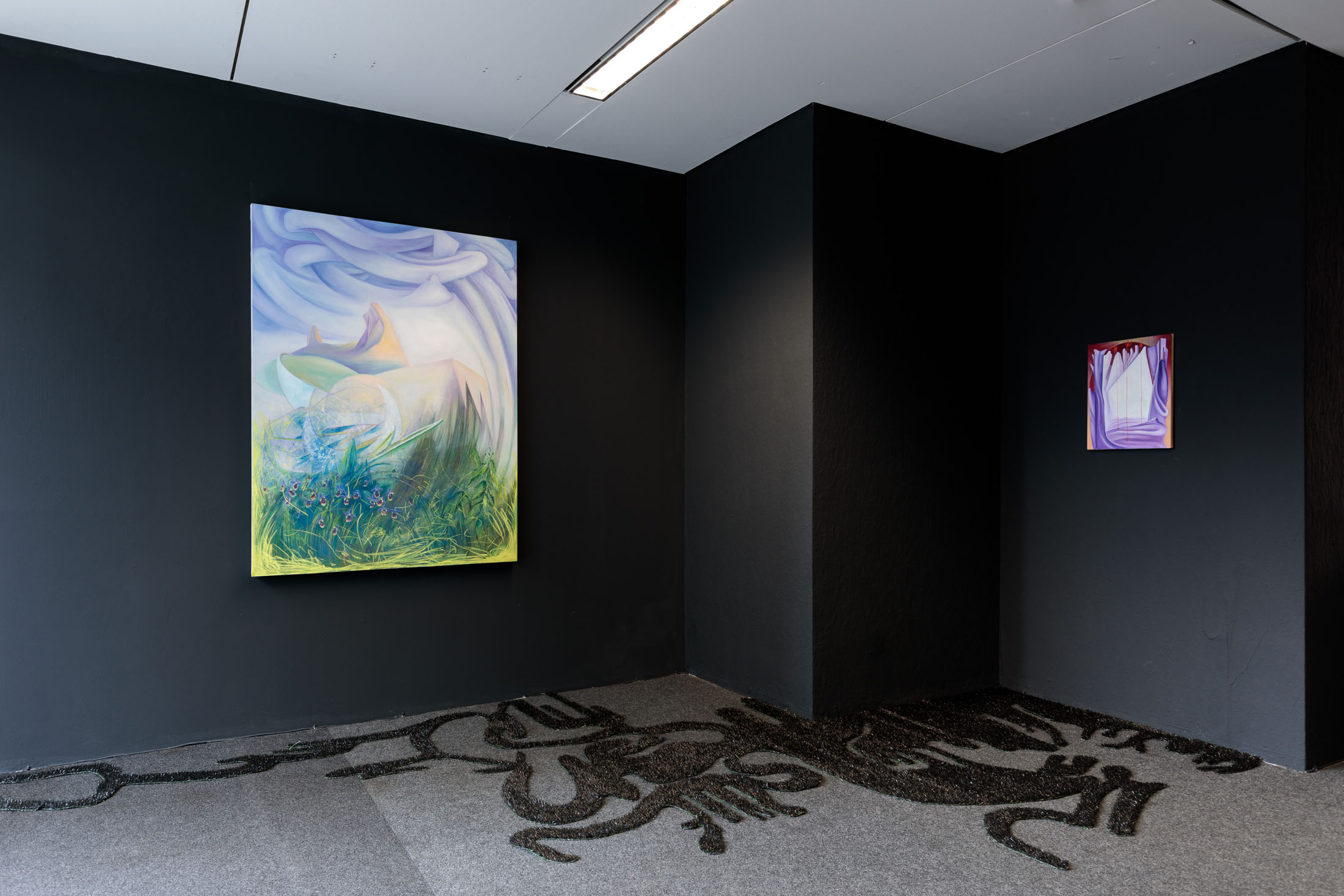
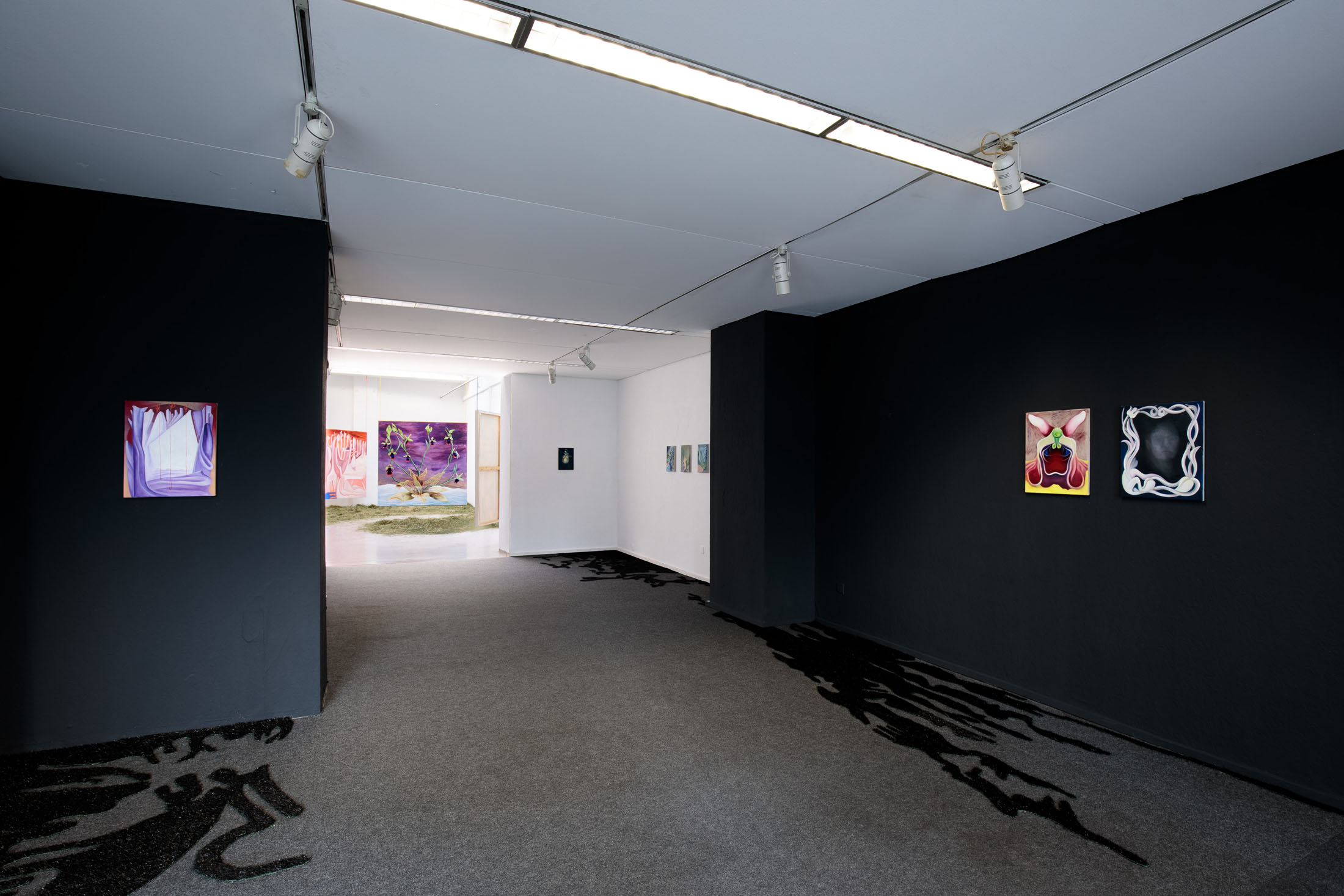
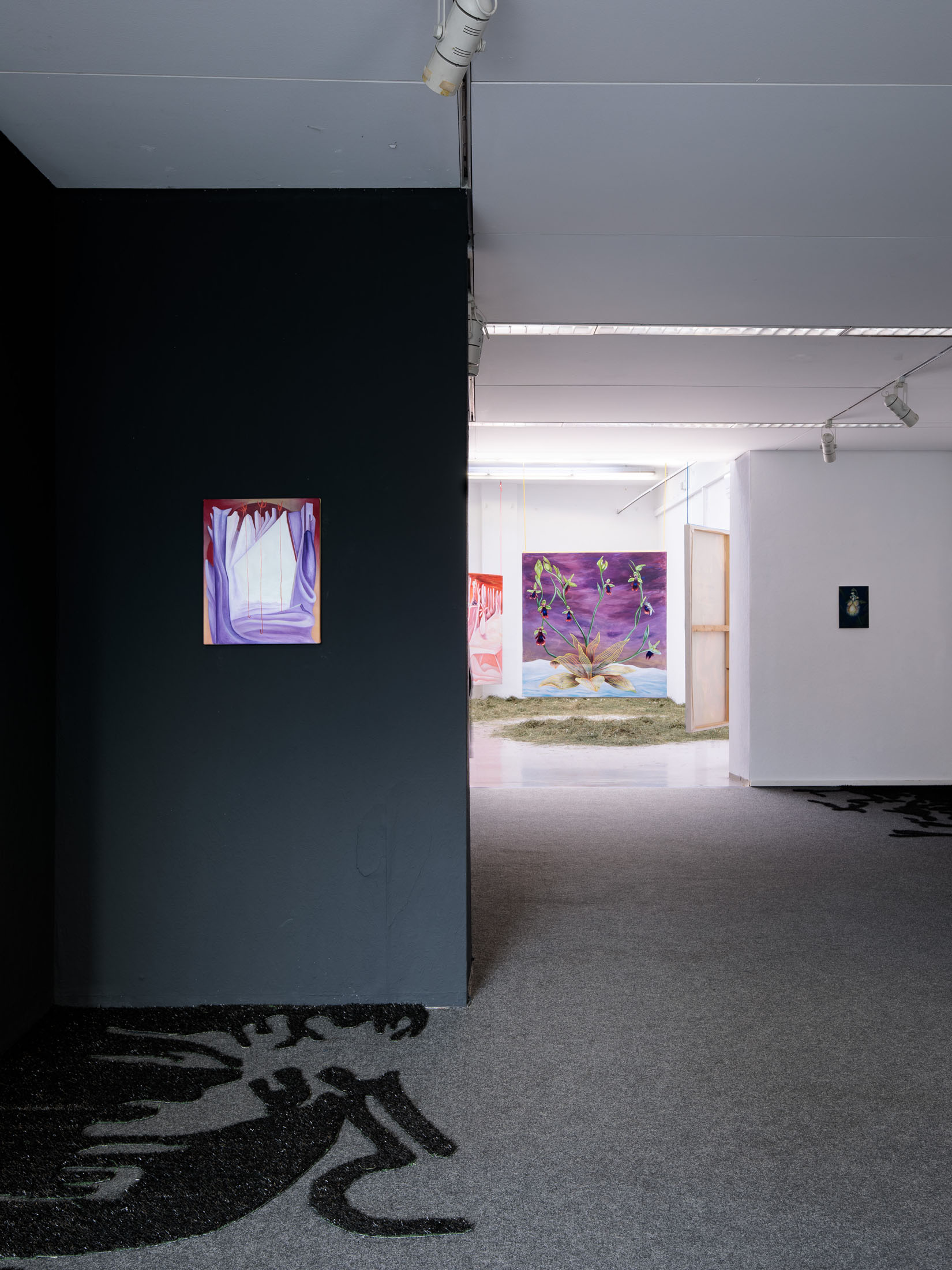
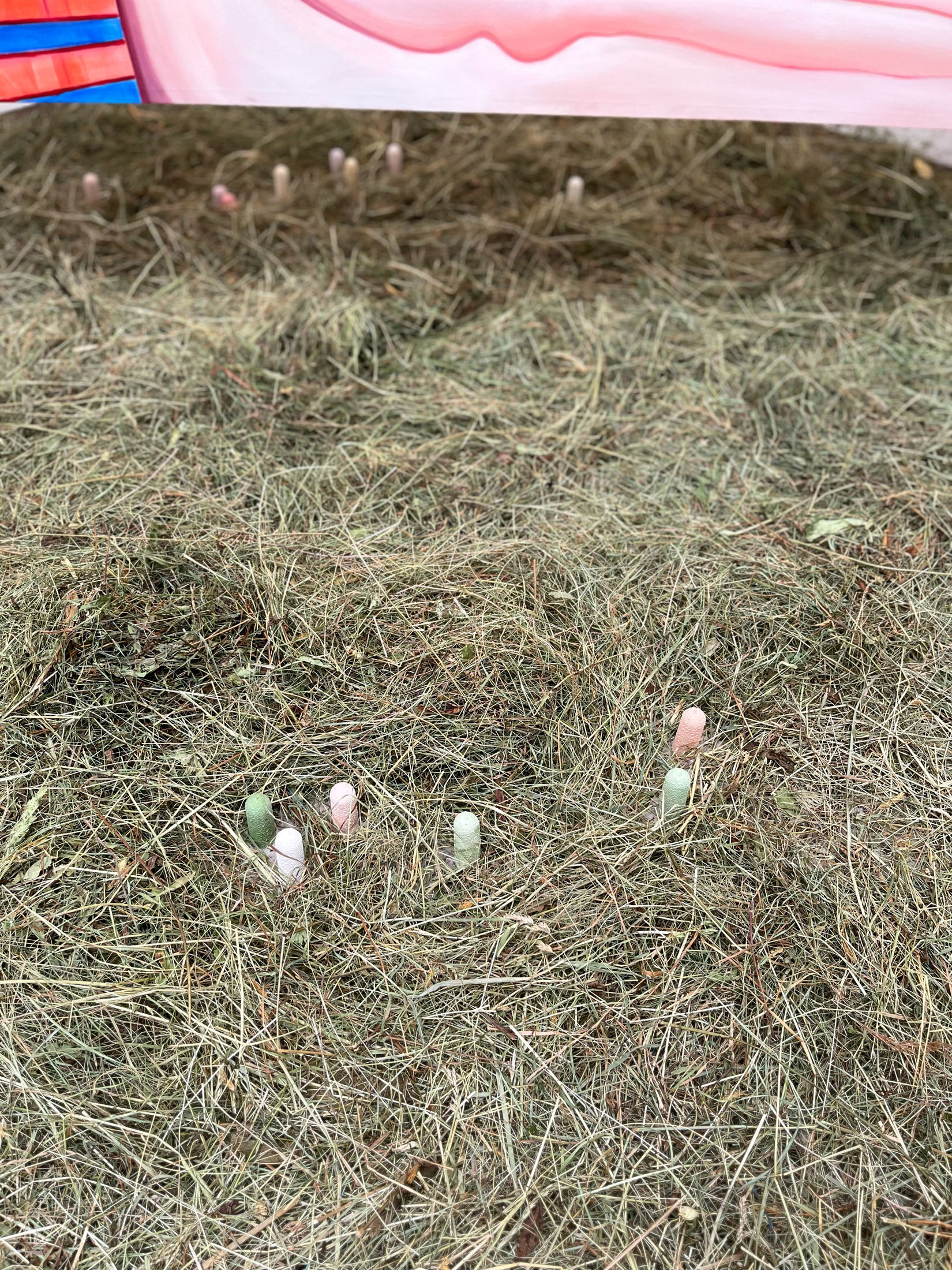
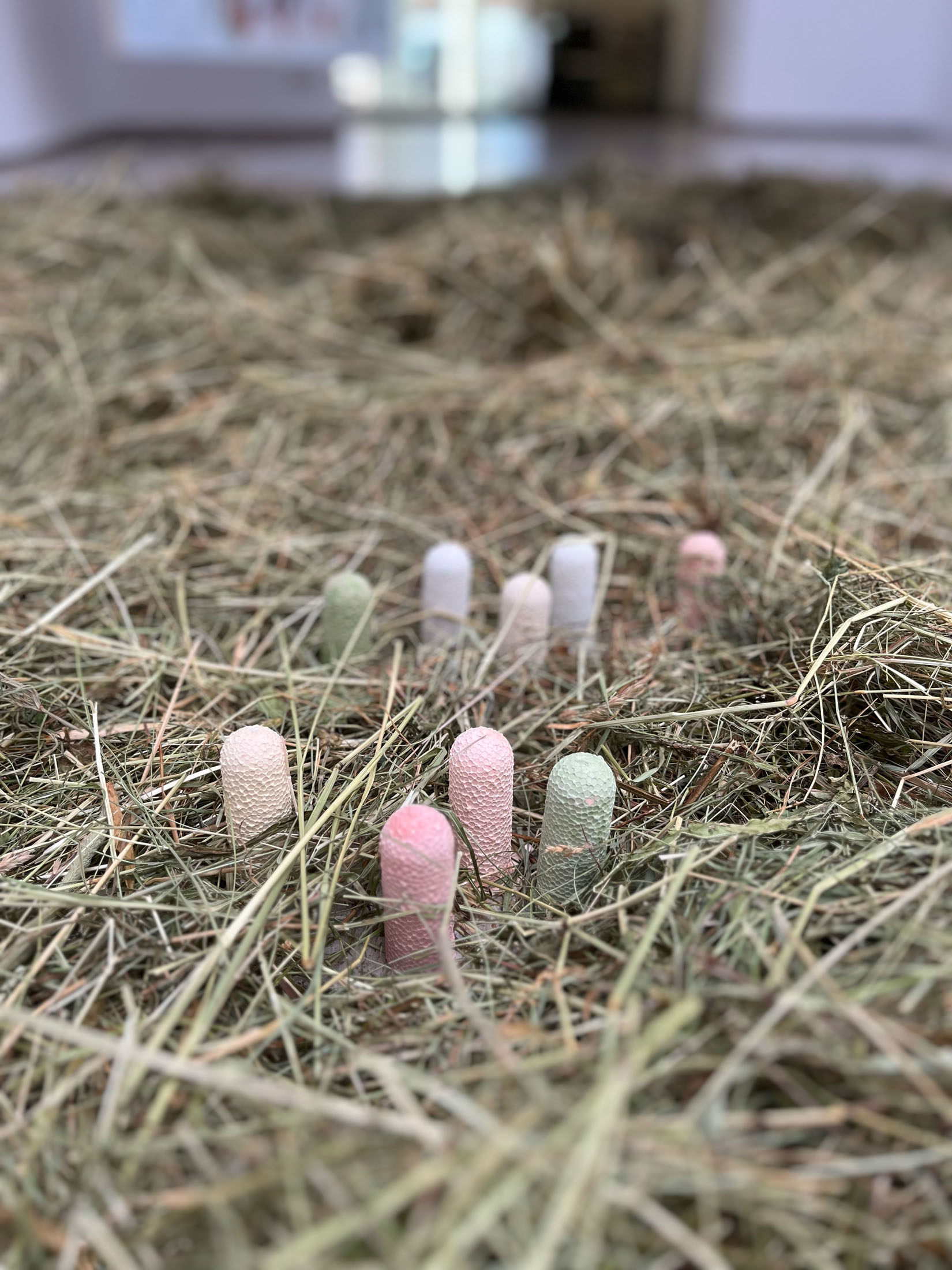
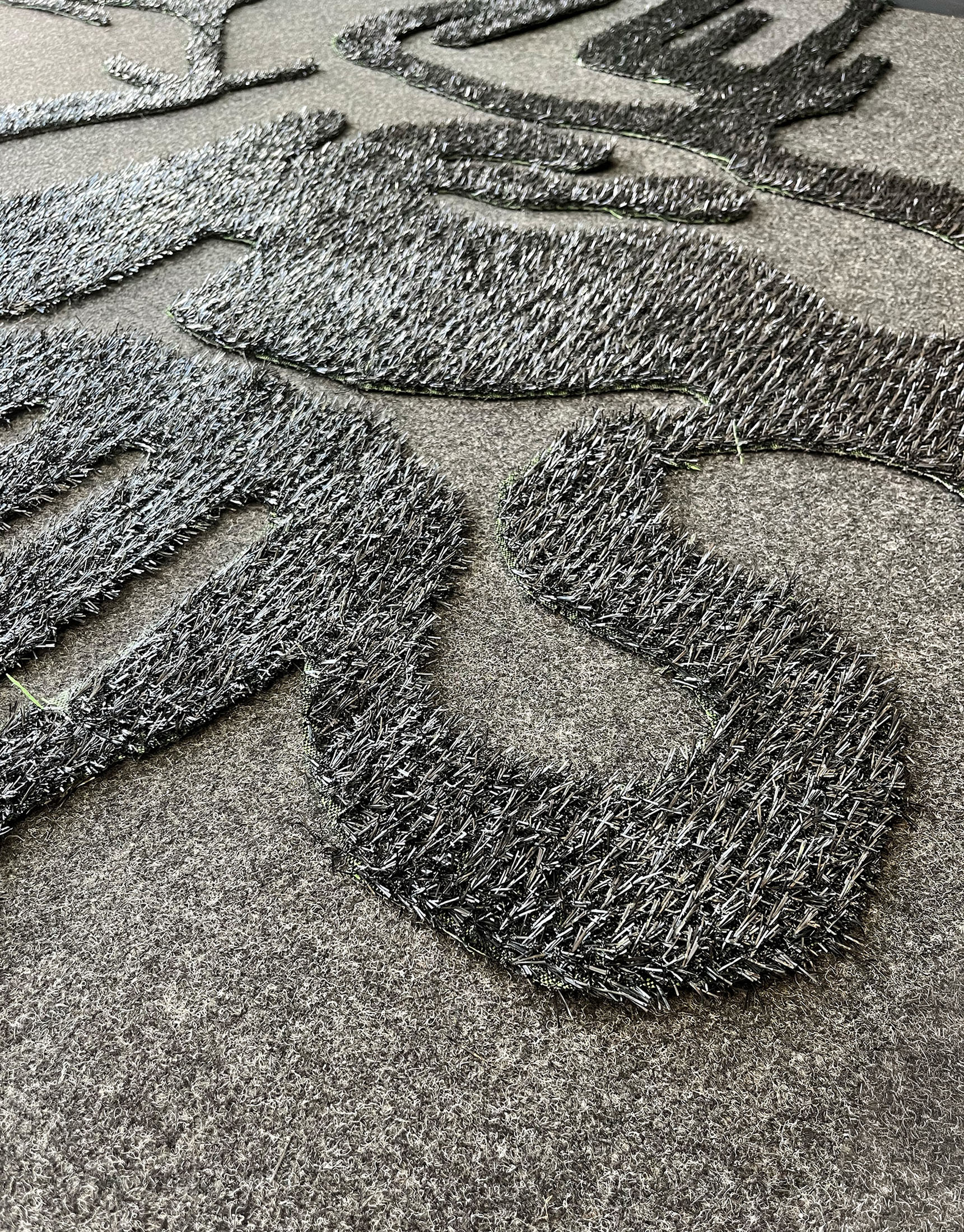
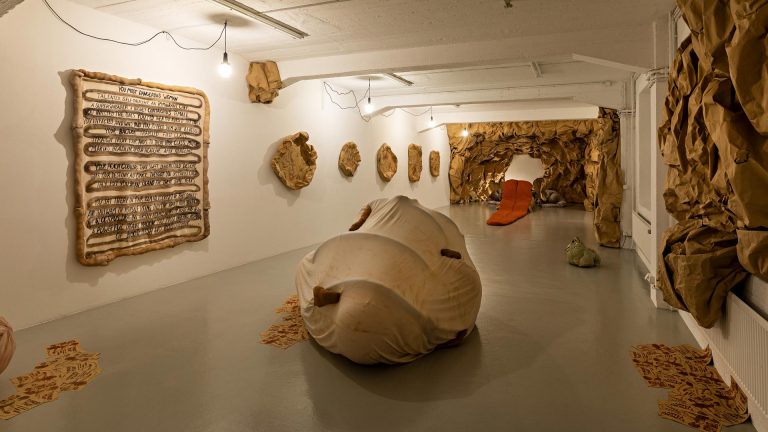
Deception in nature and the deception of memory are interwoven in the exhibition as Leonora Prugger transcends the boundaries of painting: by suspending the large-format canvases in the back gallery room, hanging crosswise from the ceiling. One must walk around the paintings in order to grasp them. Additionally, the installation extends into the space: in the back room, fragrant hay lies on the floor, transporting us in thought directly to the alpine pasture. For Leonora Prugger, it is a symbol of her childhood memories. The artist’s parents brought the hay especially from their farm in Val Gardena. At the front, black-glittering artificial turf stretches into the space. Like shadows, its shapes reflect details of the paintings. Painting and installation complement one another, merging into one.
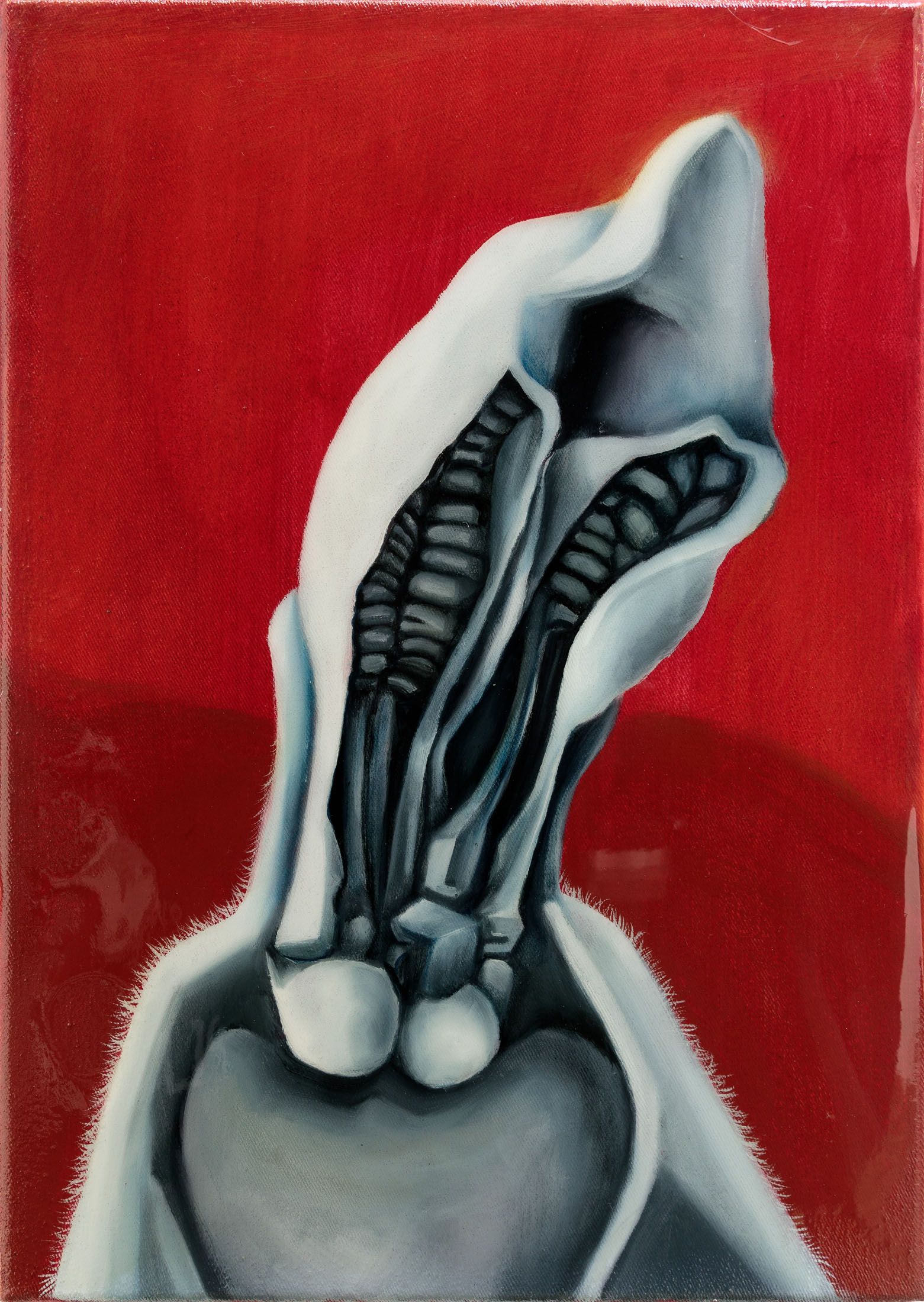
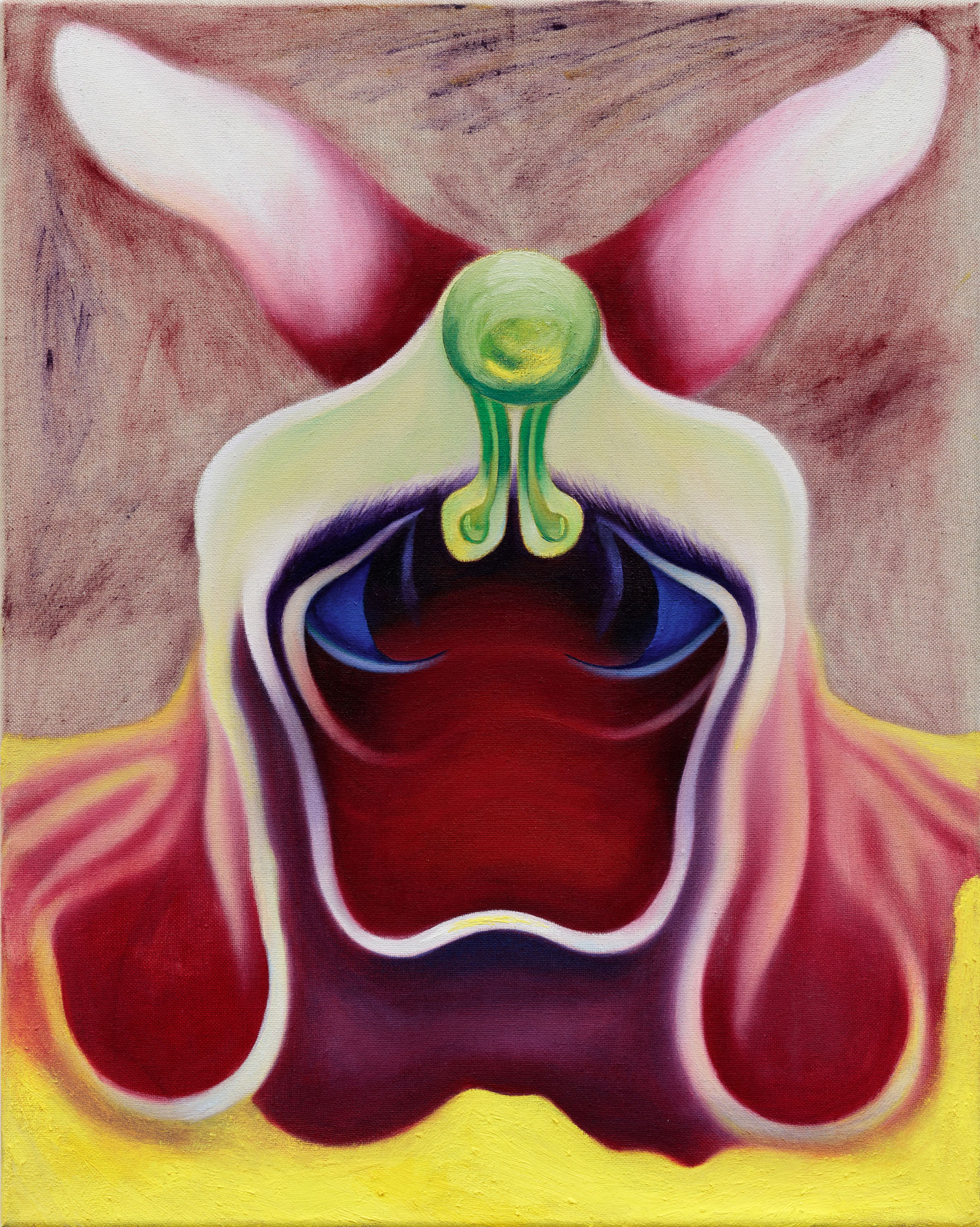
For the theme of deception in nature, Leonora Prugger engaged with the so-called Ophrys. These bee orchids are the queens of deception, a phenomenon known as mimicry. Their aim is not protection – such as deterring predators – but the opposite: they attract insects so that these will assist in their reproduction and ensure their survival. There are various types of bee orchids: bee orchid, bumblebee orchid, fly orchid, and others. Each manages to lure male insects by specifically imitating a female insect in form and coloration, by emitting scent compounds, and even by producing a furry-like texture. The bee orchid is one of the so-called “sexual deception flowers.” The male settles on the blossom to mate with the supposed female, picks up the pollen in the process, and carries it onward for pollination. Double deception: the male insect receives neither the female nor nectar as reward.
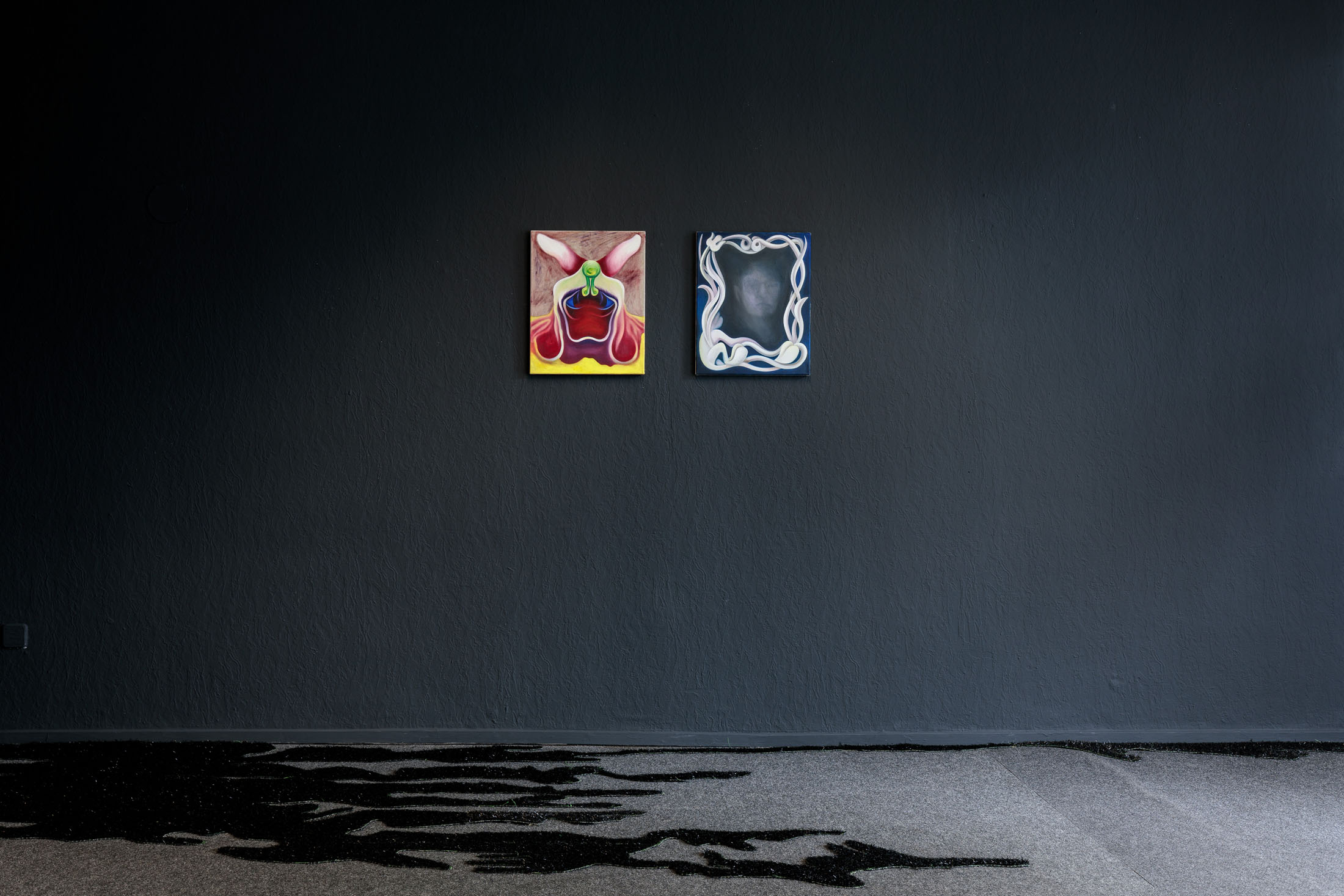
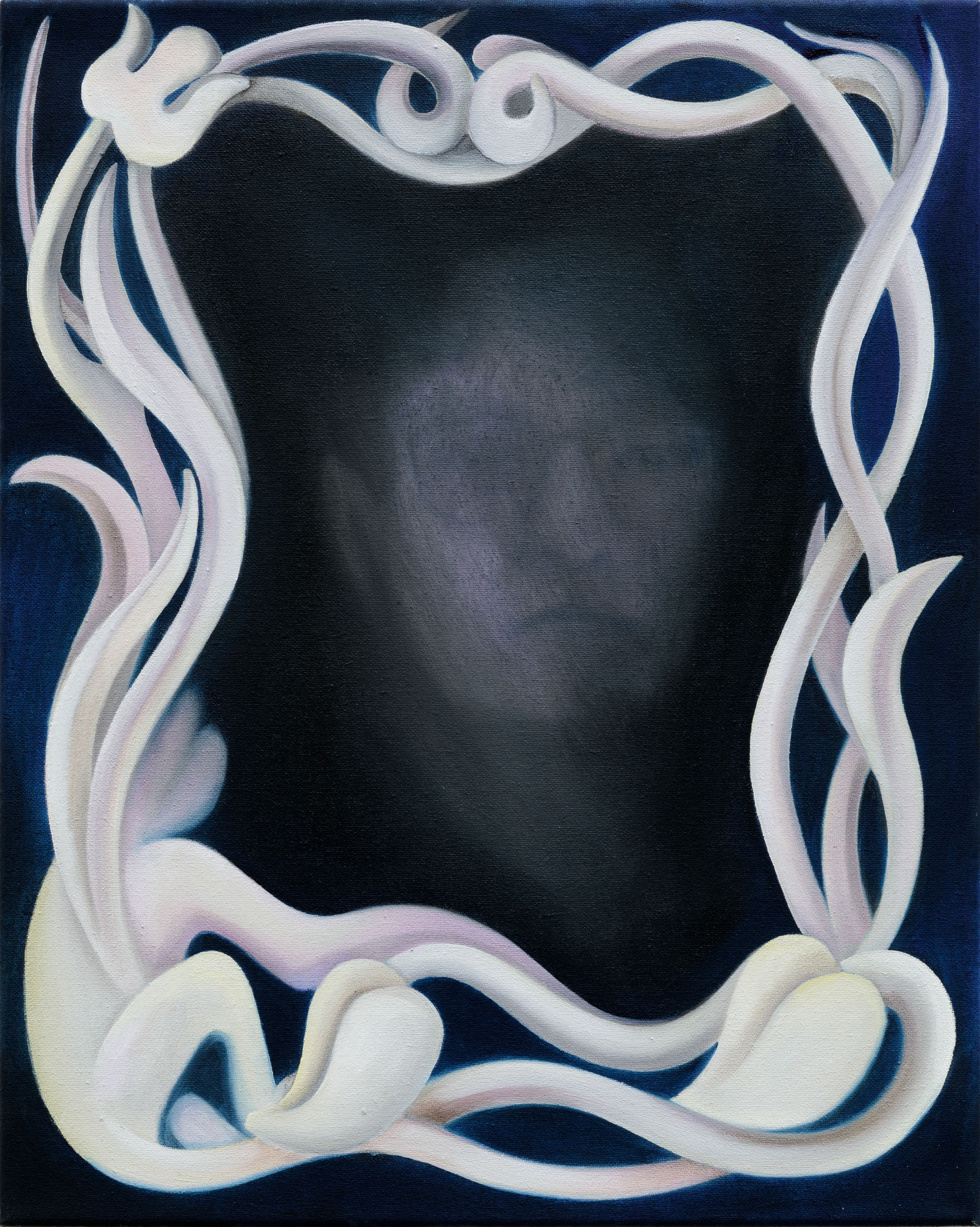
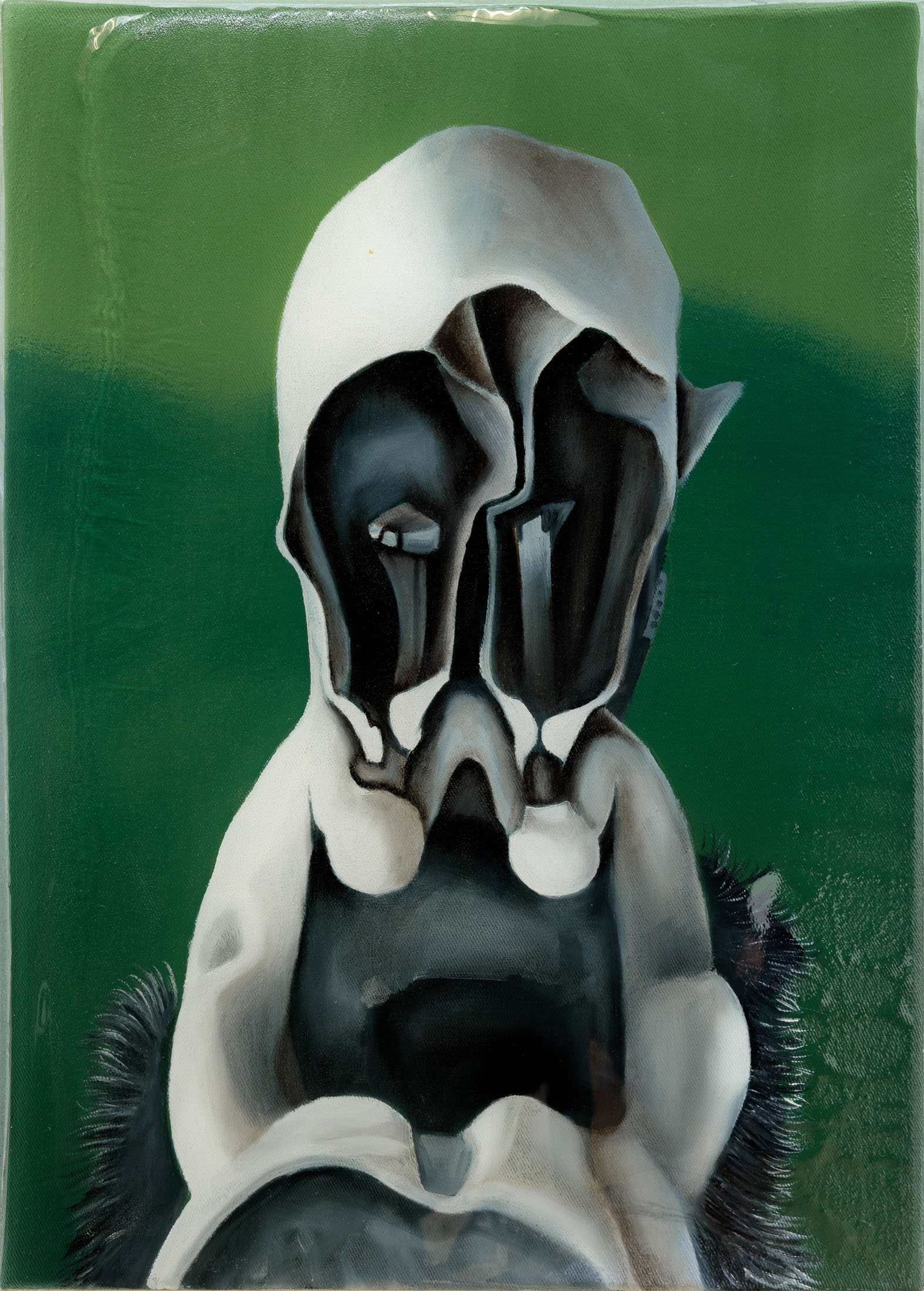
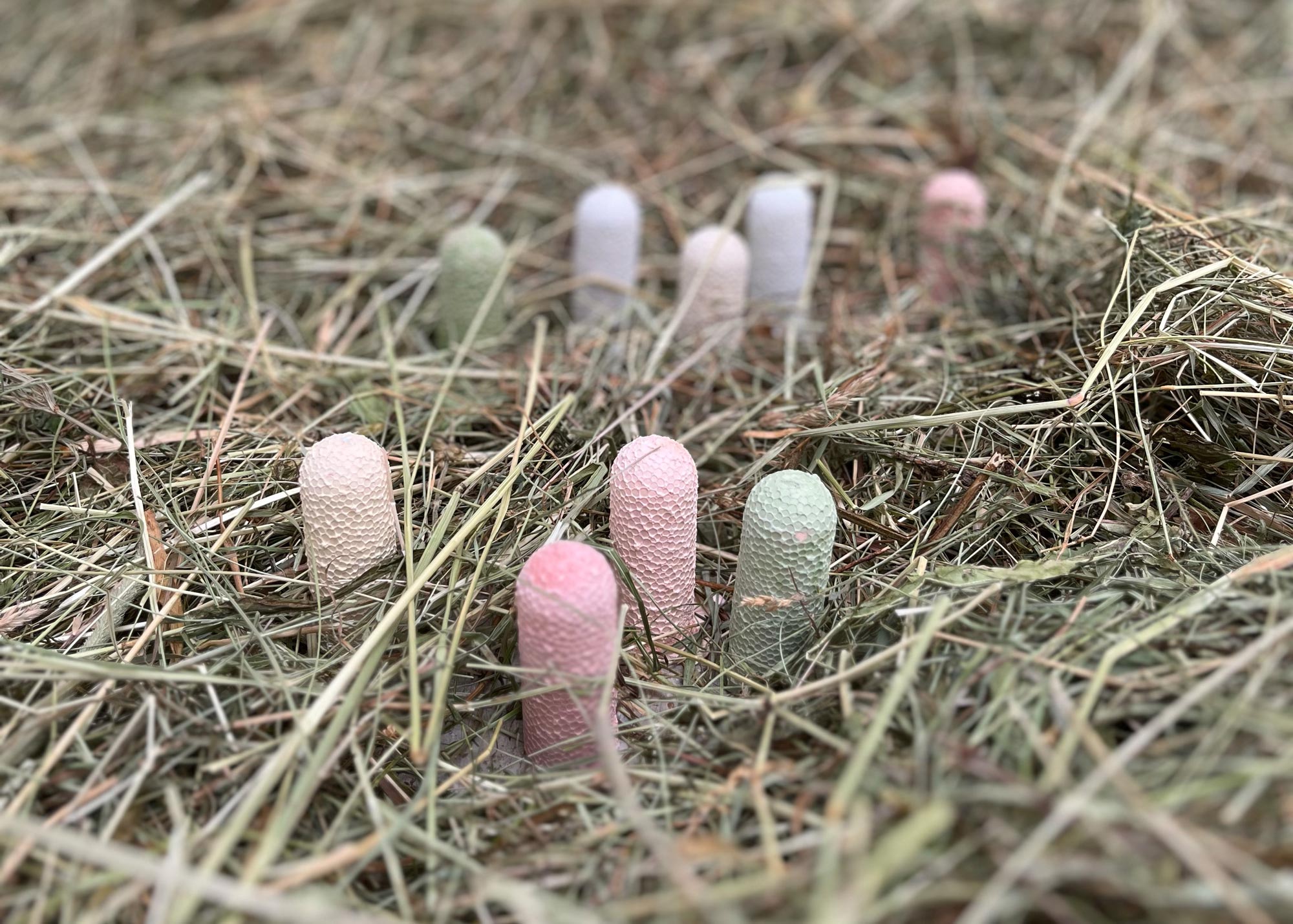
But the Ophrys do not only deceive. They also cooperate: the bee orchids enter into a symbiosis with certain fungi, without which they could not survive. Leonora Prugger represents these fungi with small, colorful plaster forms standing in the hay. The hay piled up in the back room stands for the memory of childhood games with her twin brother. She has added two resin-coated “portraits” of bee orchids, titled Lisa and Mimi – named after the stuffed animals she and her brother once played with. Memory. The twin brother is immortalized by Leonora Prugger in another painting: within a bright, ornamental frame, a face emerges from the blue ground – an intimation, a trace. It is a mirror in the artist’s home, in which she sometimes, almost by chance – passing by – sees her twin’s face overlaid with her own.
Deception. In blossoms. In skies. In meadows. In mountains. We recognize it because we remember it. A truth as though through half-closed eyes. Enchanting, intoxicating with color. Thank you, Leonora.