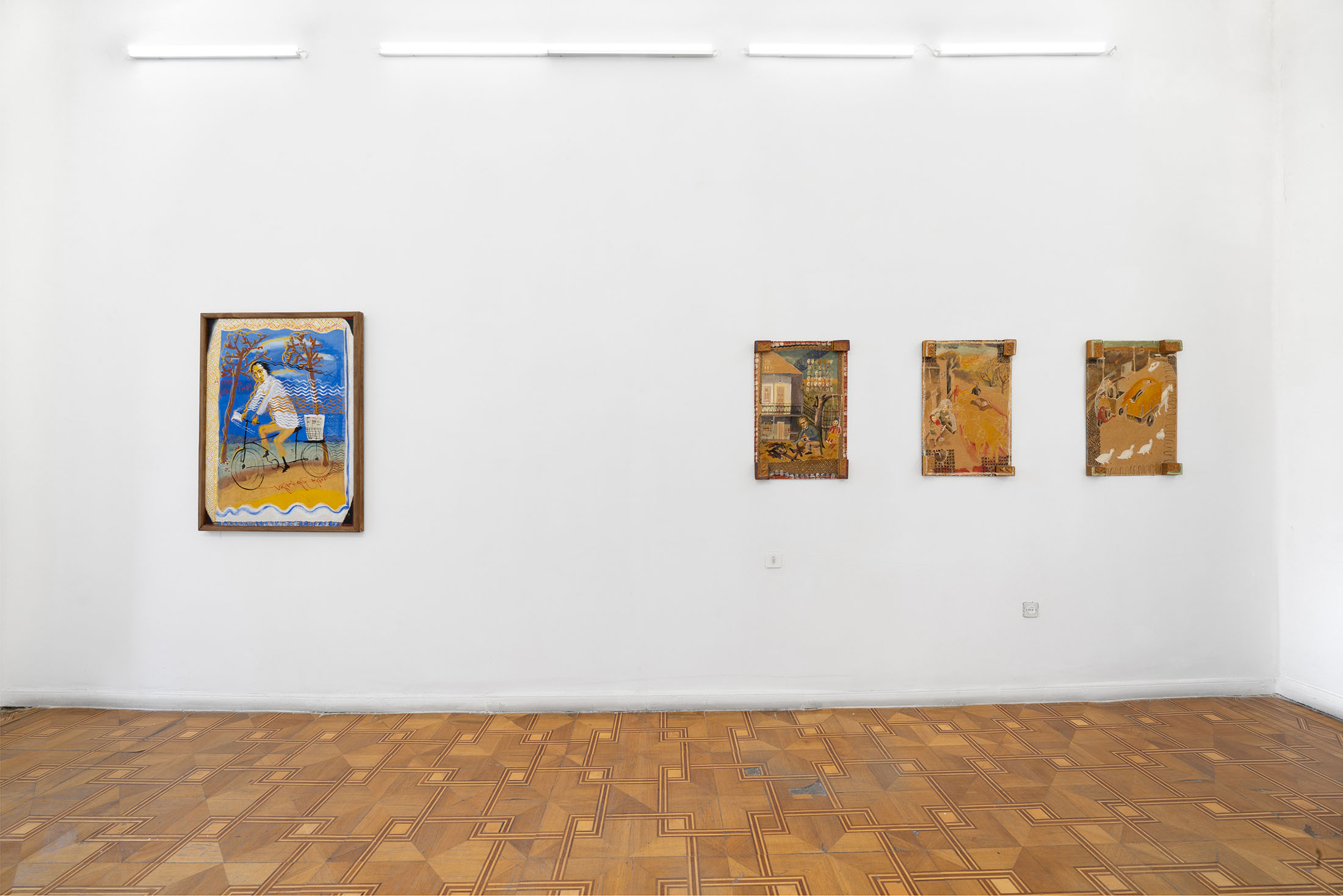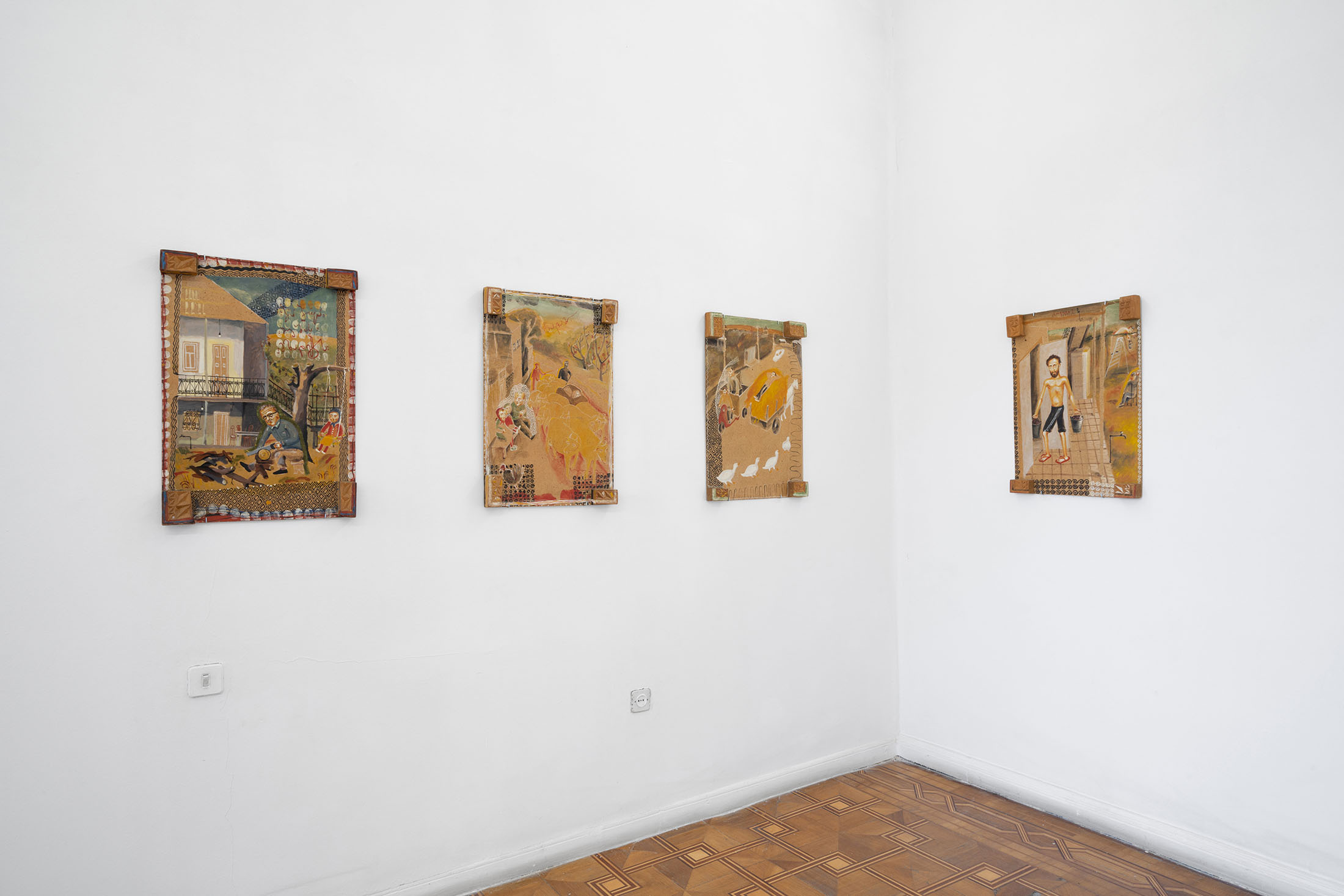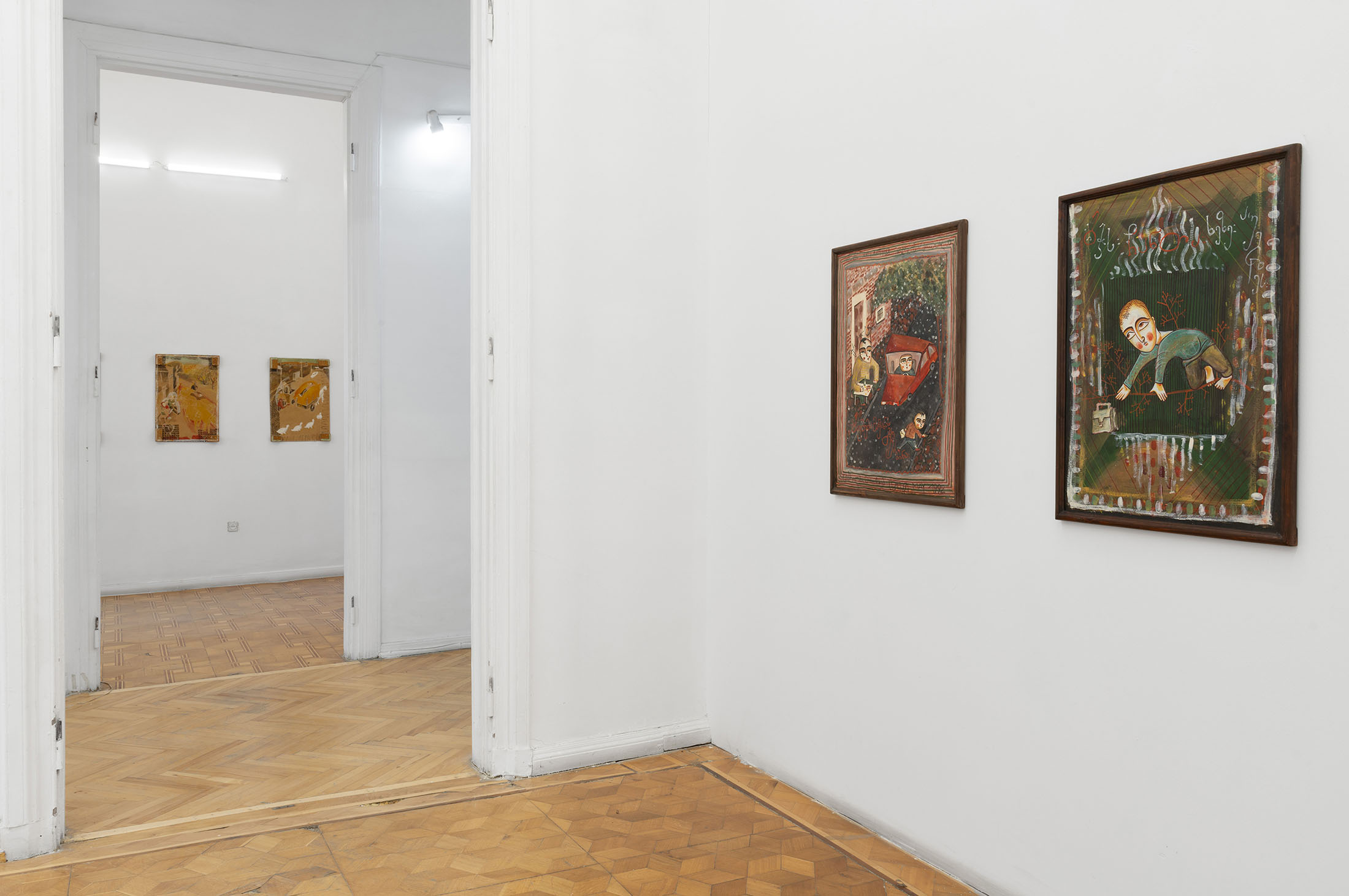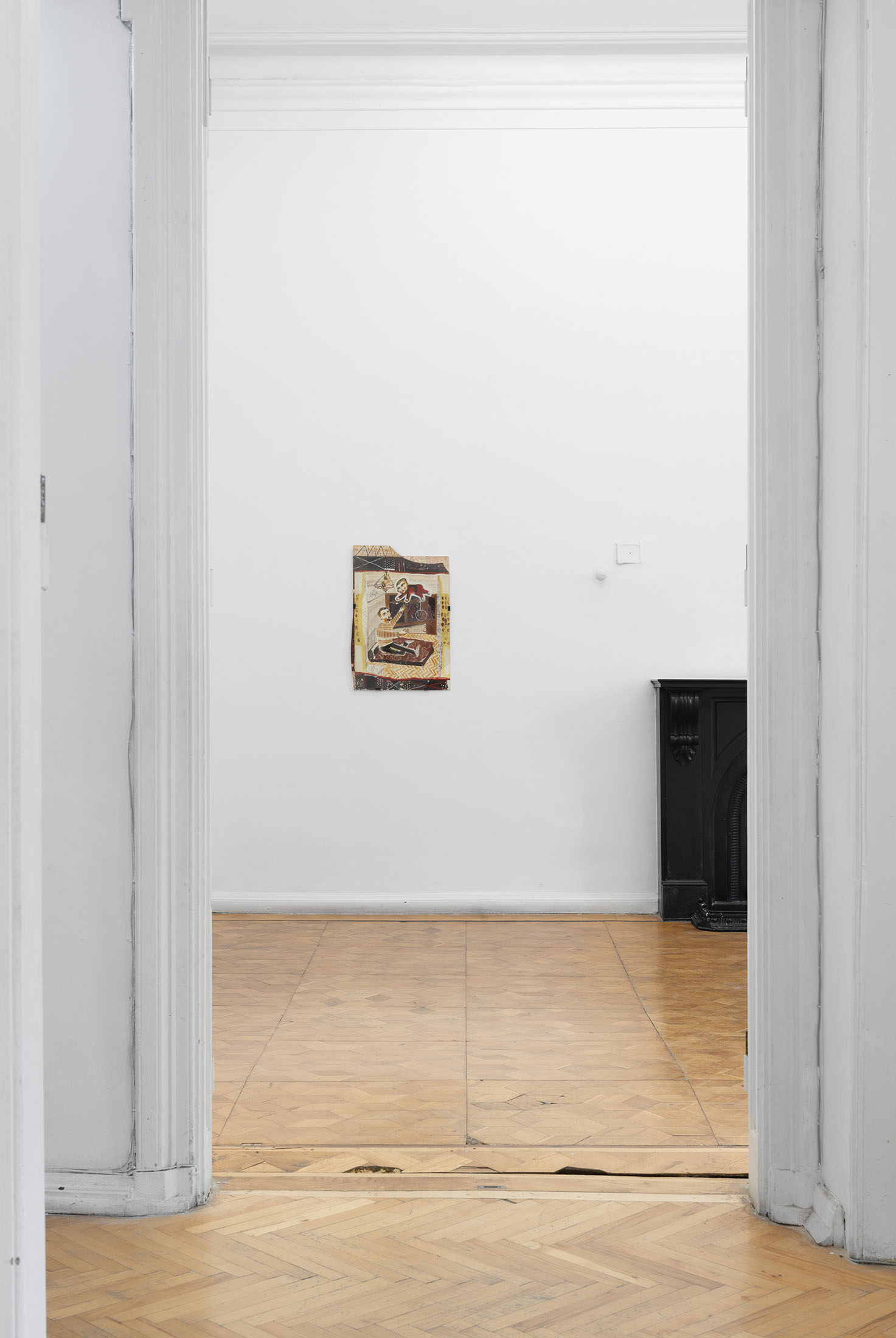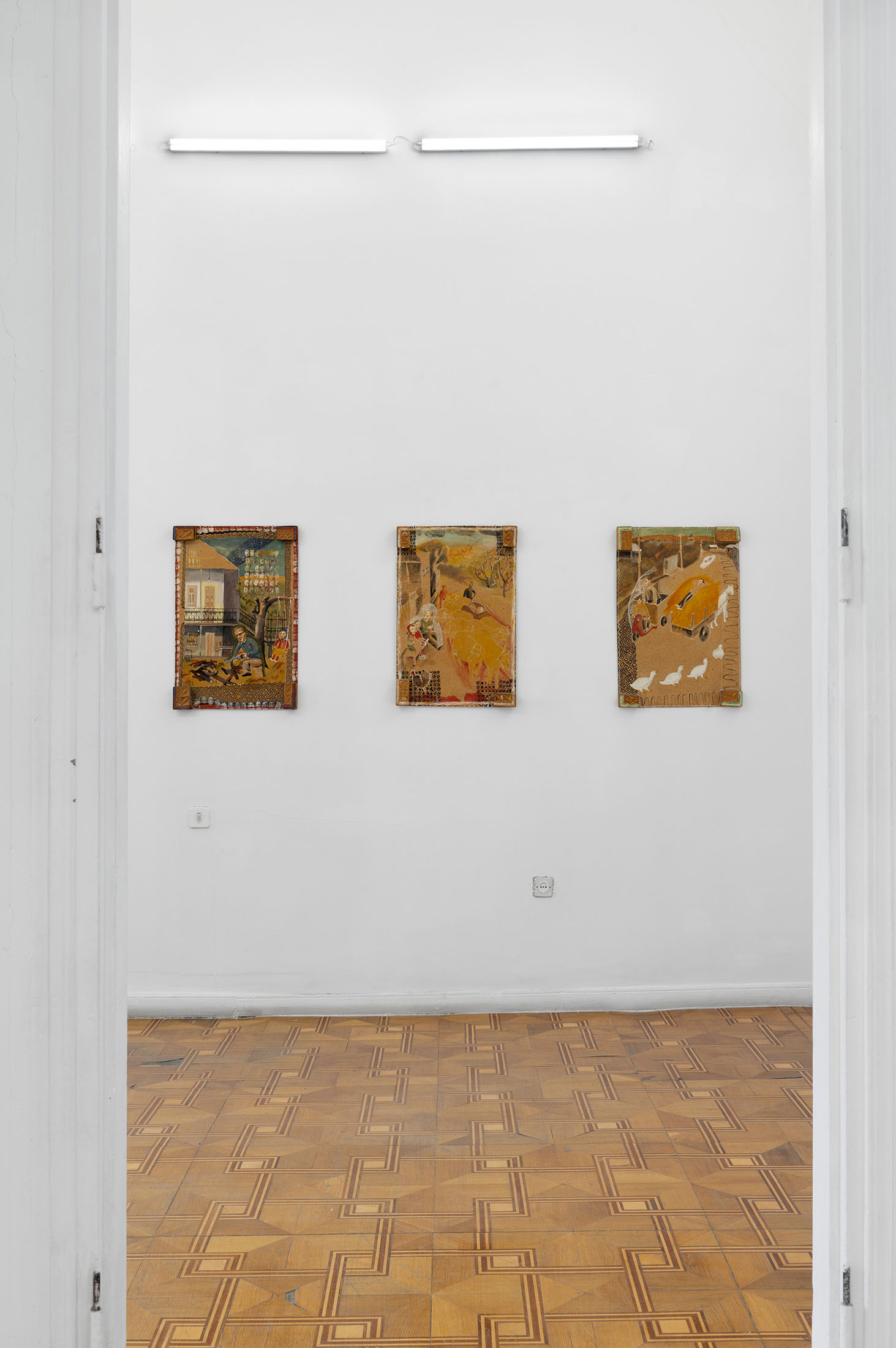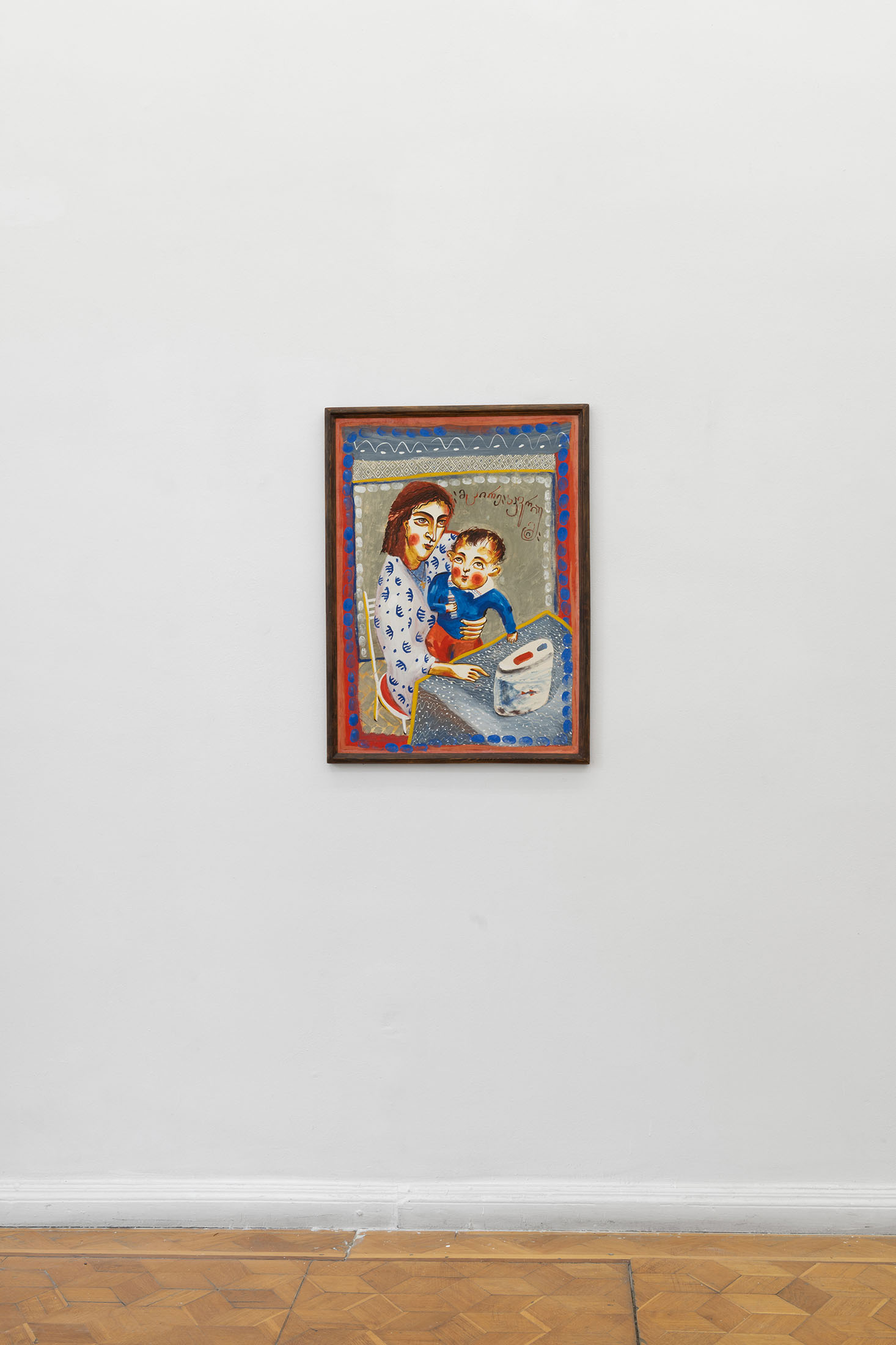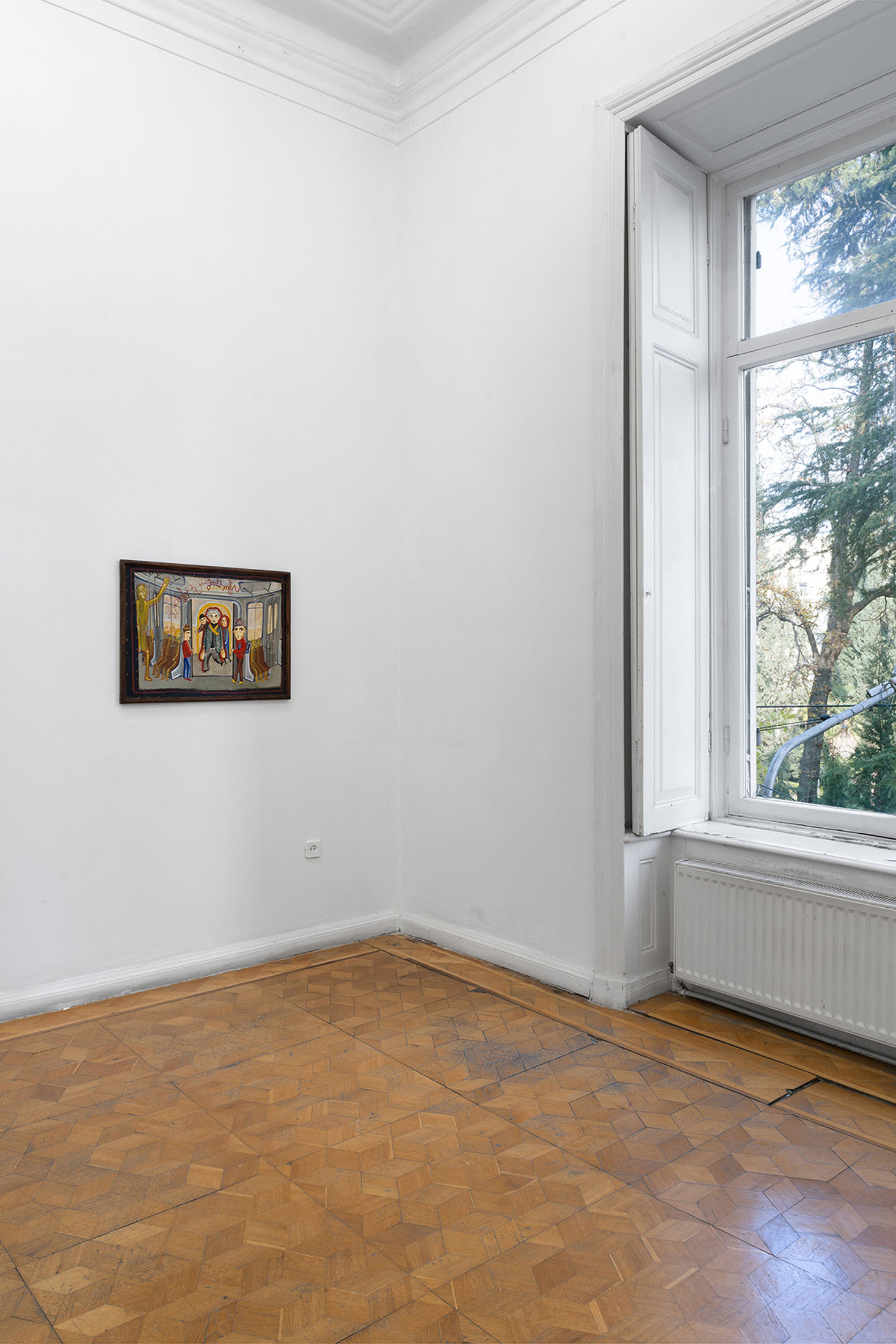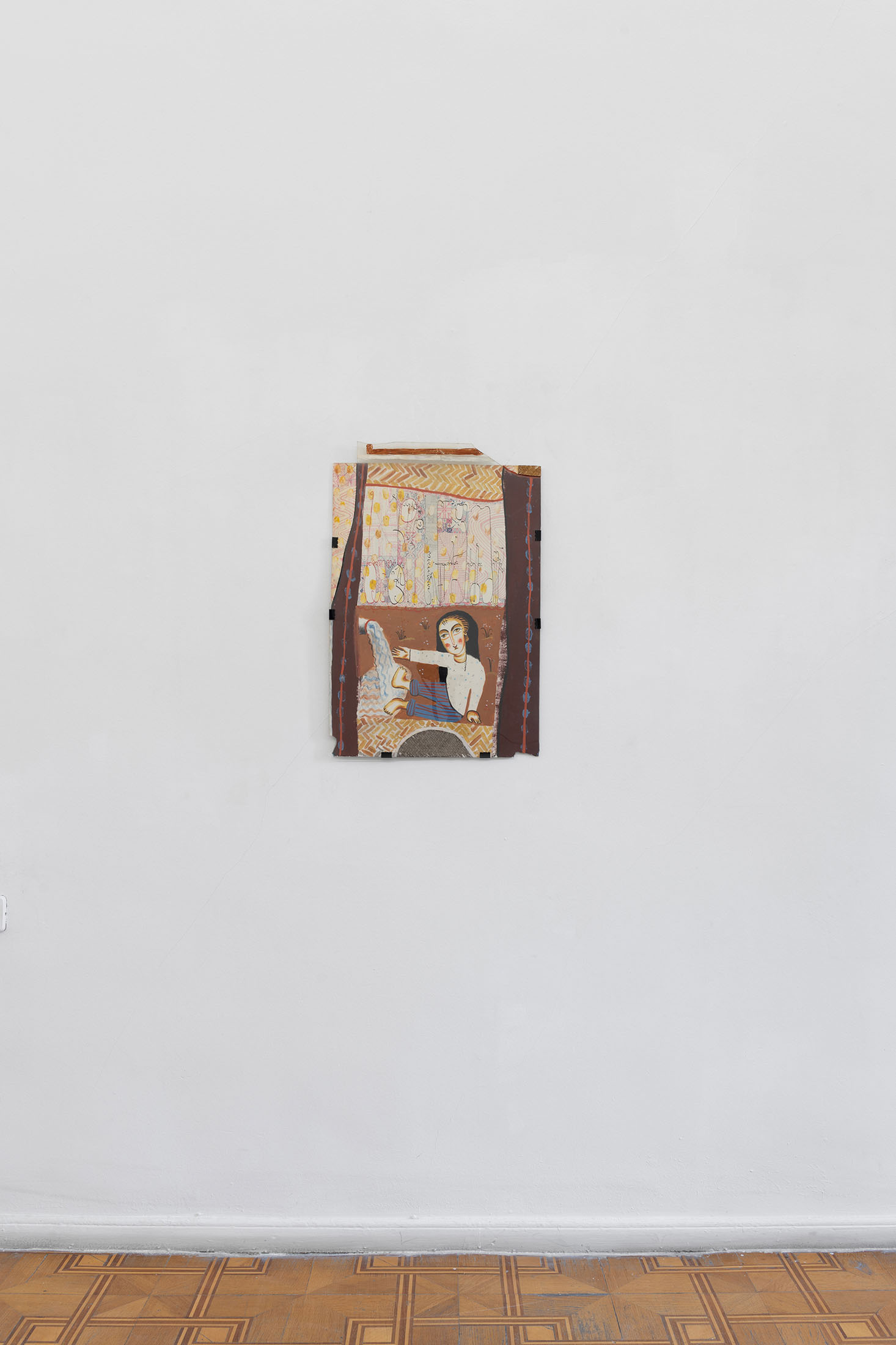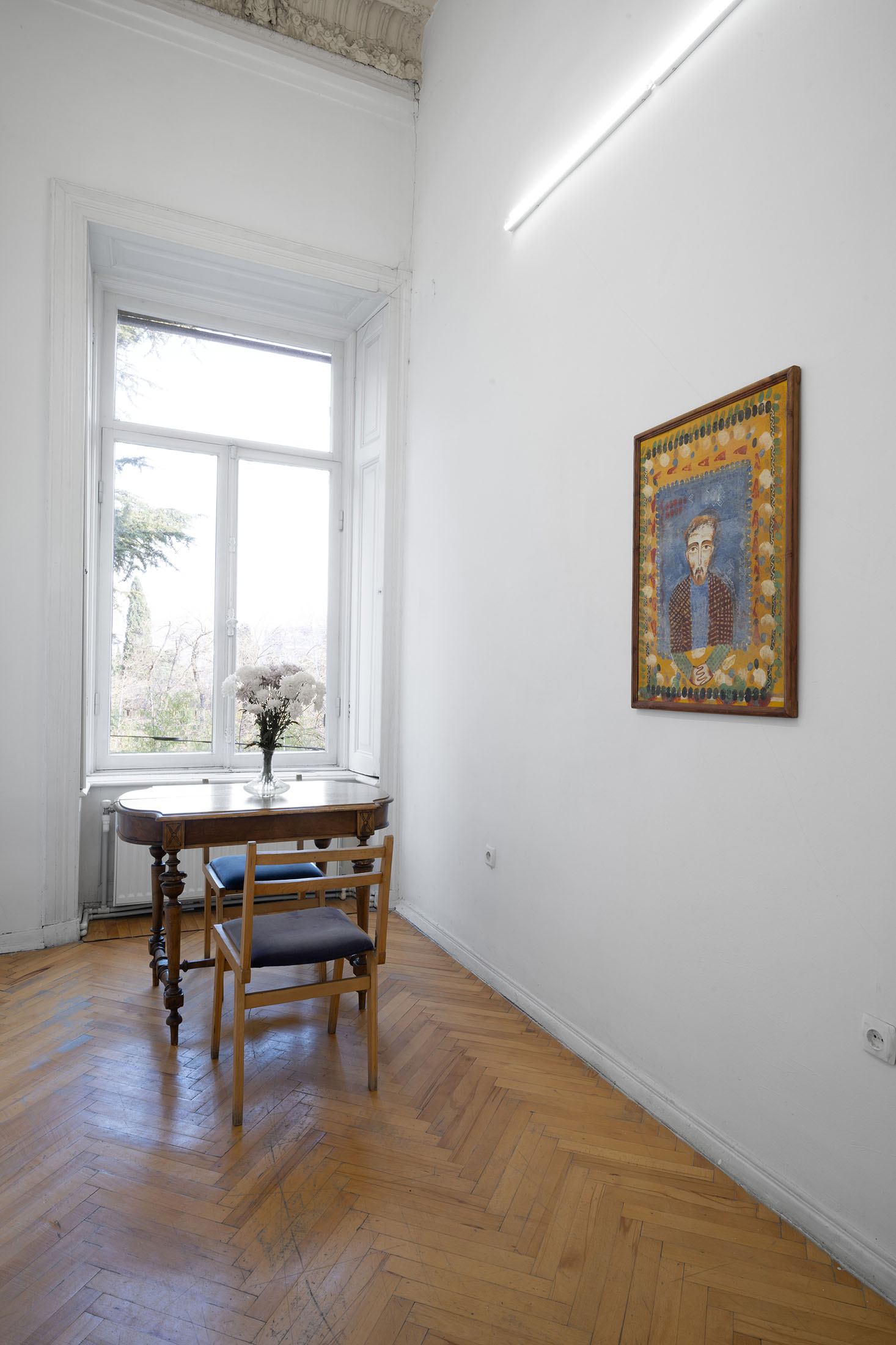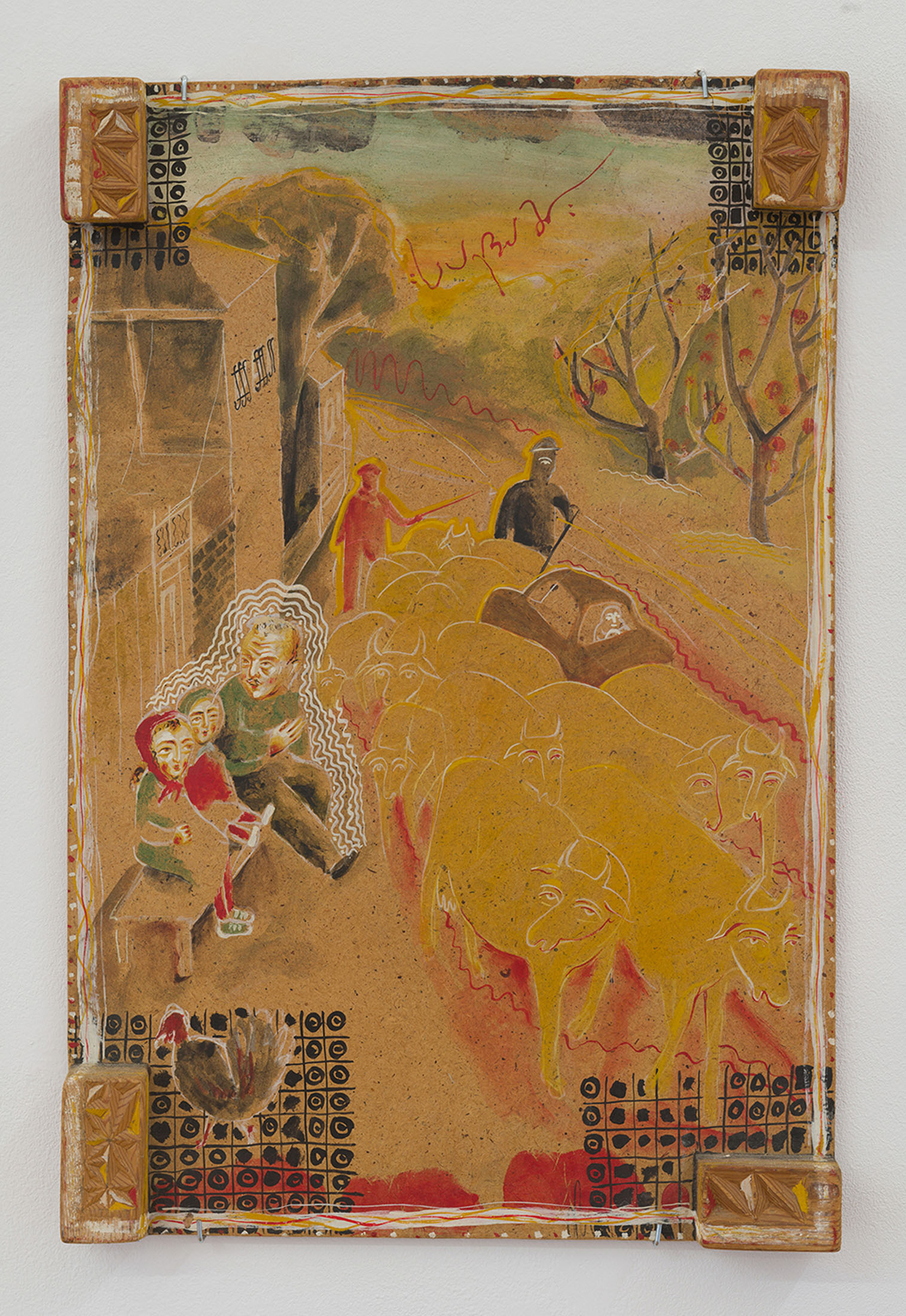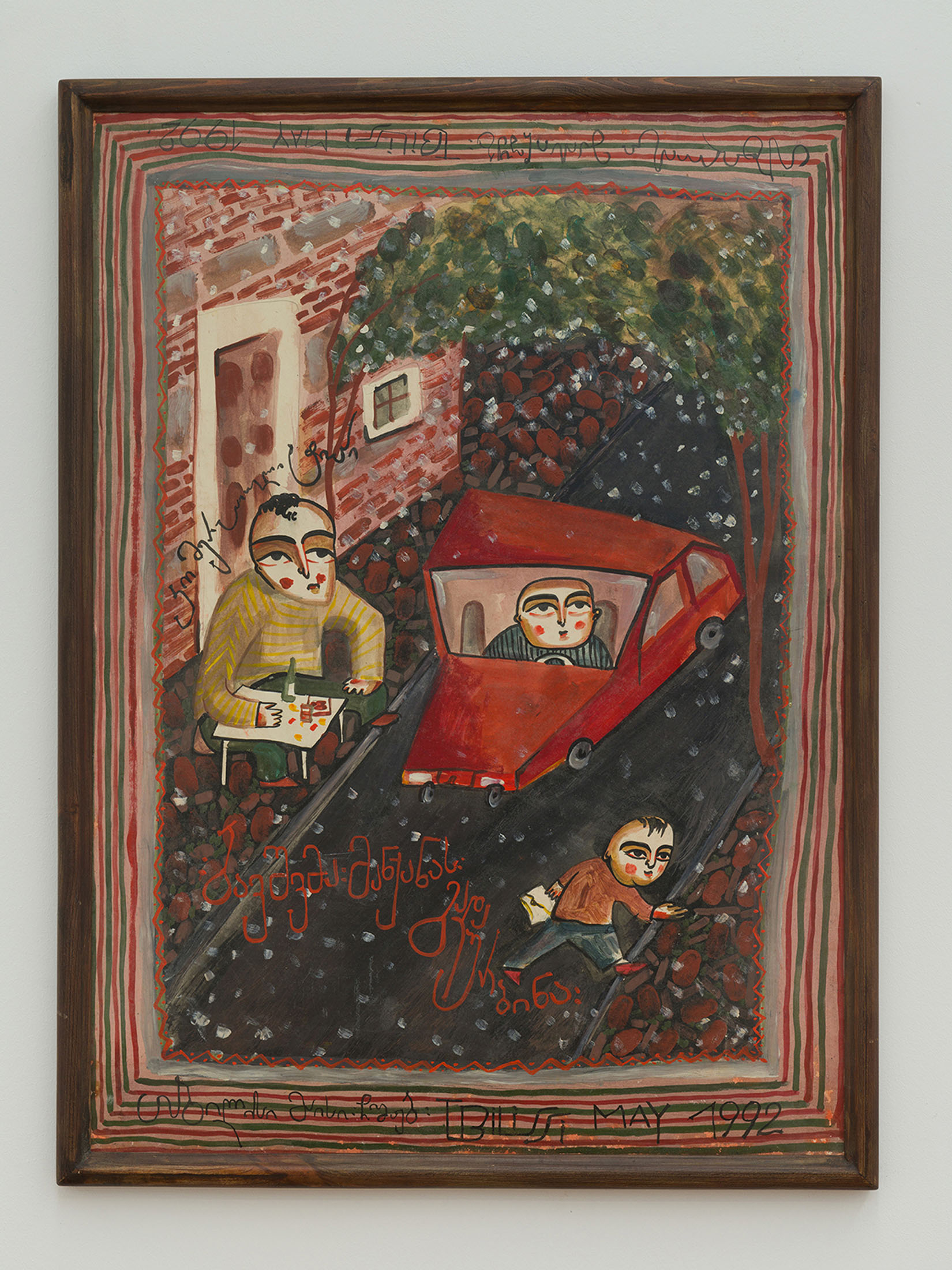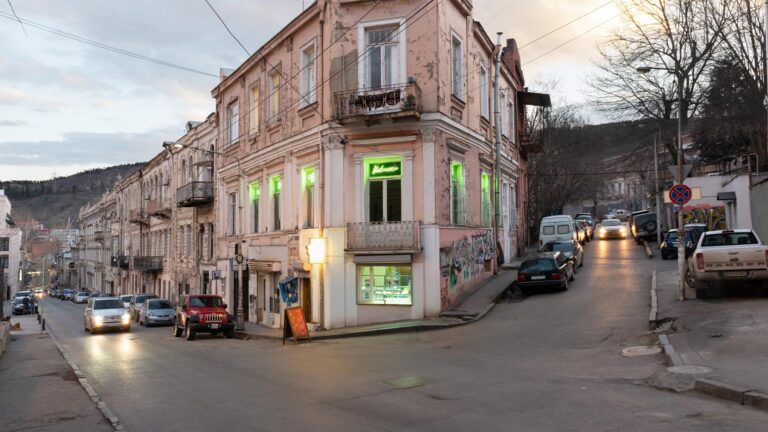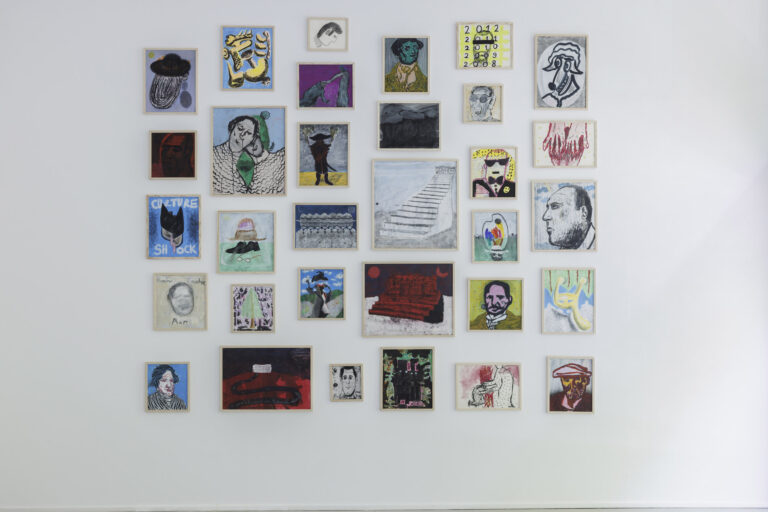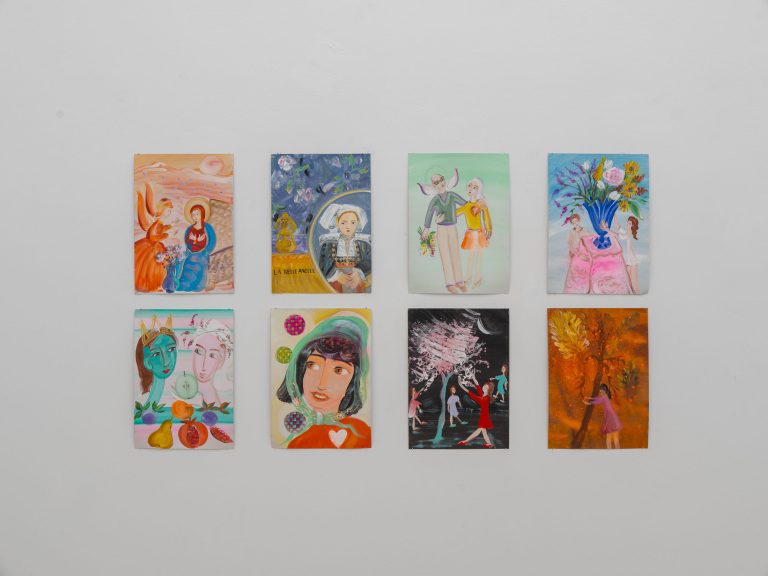
Gallery Artbeat presents Georgian artist Lasha Kintsurashvili’s first solo exhibition with the gallery, which brings together a selection of his paintings from the 1990s. The exhibition unfolds along two thematic layers: the urban landscape of Tbilisi and the everyday life of the village of Ruisi—two distinct spatial experiences that, together, reveal the complexities of Georgia’s transitional era.
Georgian artist Lasha Kintsurashvili, working in Georgia in a context marred by invasion, intervention, war, and an ongoing quest for sovereignty, has made work that spans almost four decades and includes paintings, icons, calligraphy books, and dozens of church frescoes across different regions of the country.
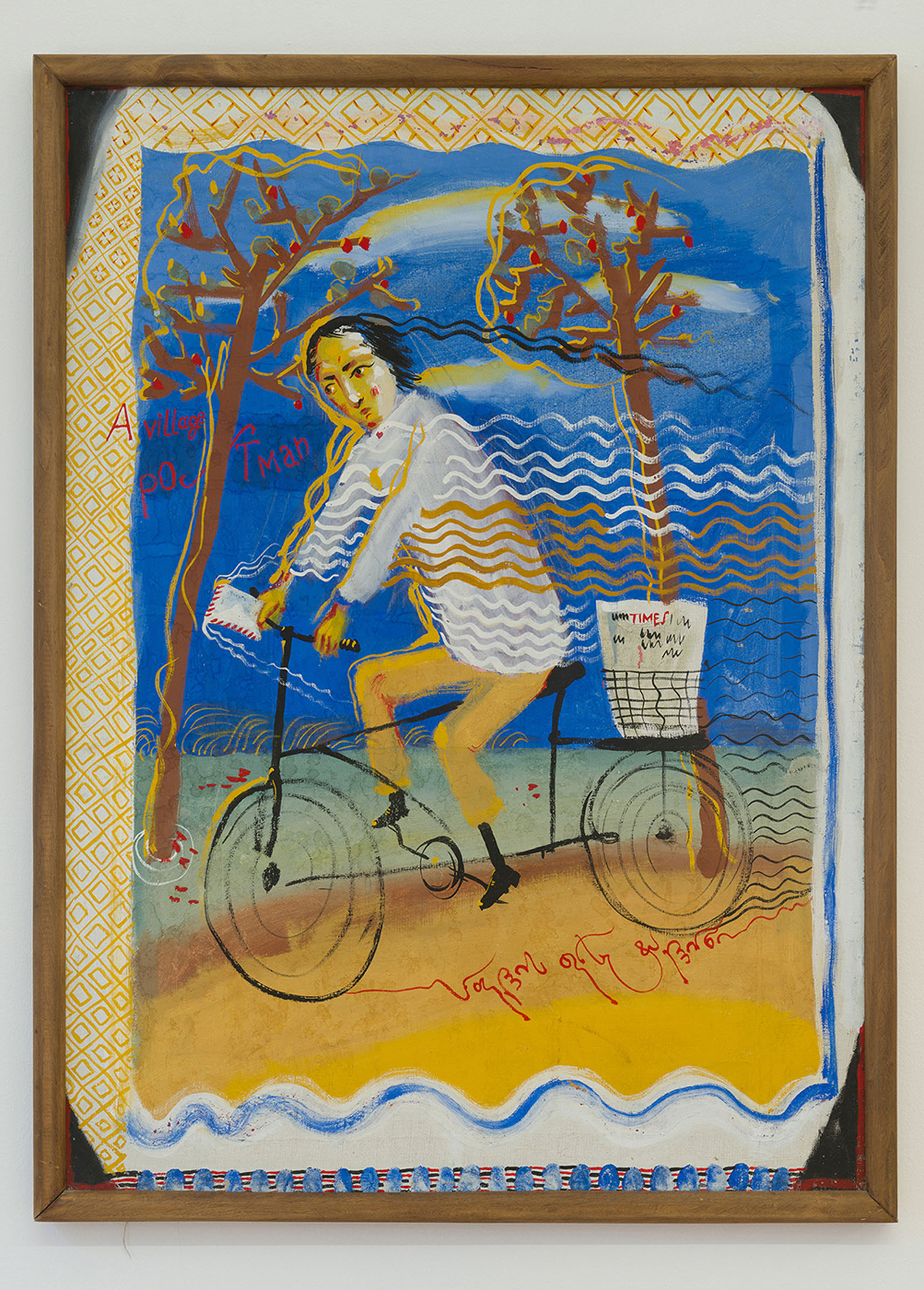
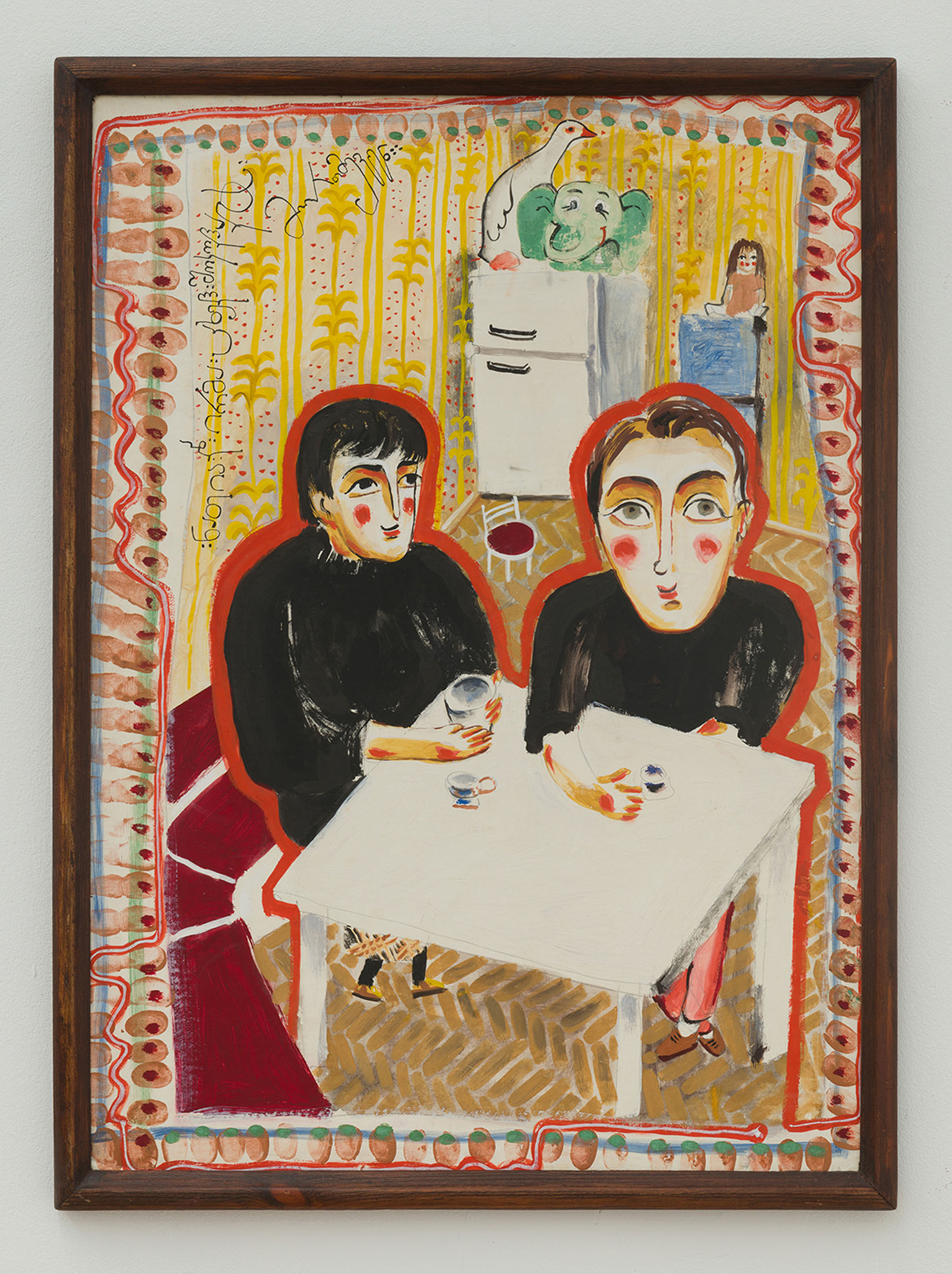
Here, in contrast to the grandiose scale of frescoes, we see intimate egg tempera paintings depicting scenes from 1990s Tbilisi, as well as from Kintsurashvili’s native village of Ruisi. Created against the backdrop of the Georgian civil war, during a time of political, economic, and social turmoil, Kintsurashvili’s work, by contrast, is saturated with humor, empathy, and a fascination with uninterrupted quotidian scenes, family rituals, and rural life. His unique painterly language draws from the Svanetian iconographic tradition, with its rich use of ground pigments, naïve forms, precise lines, reverse perspective, and integrated calligraphy text often functioning as a caption to describe an encounter or to reveal the identity of the person depicted. This tradition has historically been part of both the Georgian and Byzantine iconographic schools, in which painting and text worked together to create more democratic images intended to be understood by all, regardless of literacy levels.
By organically merging the traditions of the Svanetian school of icon painting with modes of contemporary image-making, Kintsurashvili depicts everyday subjects such as a village postman, a flower vendor, or a street seller in an idealized, almost saint ike manner, examining the presence of goodness in humanity during times of despair brought on by major political and economic changes in recent Georgian history.
The exhibition is defined by the tension between the restoration of erased histories and the desire for and freedom to imagine new futures. In the spaces in between, new forms emerge, carrying the radical potential for reinvention. Like a fresco breaking along the contours of stone, the works here do not merely contain history they are defined by it.
Lasha Kintsurashvili (b.1968) is a Georgian painter, iconographer, fresco conservator and calligrapher. In 1985 he graduated from Physical Mathematical School named after V. M. Komarov. At the same time he attended an art specialized school of the Georgia Ministry of Education, in the field of Fine Arts. Lasha continued his studies in the same year at Georgian Technical University, at the architectural department in which he graduated in 1991. After the collapse of the Soviet Union in 1991 and since gaining the Georgian Independence, Lasha has been involved in reviving the Georgian school of icon painting. In the 90s a small group of icon painters including Lasha Kintsurashvili started traveling around Georgia, especially in remote mountain regions such as Svaneti, copying and re-learning the lost tradition of fresco painting. In 1989-90 he participated in restoration of medieval murals in Svaneti. In 2025, a duo exhibition “Desert” featuring Lasha Kintsurashvili and Nina Kitsnurashvili took place in Stockholm, at Sweden’s Konsthall C exhibition space.