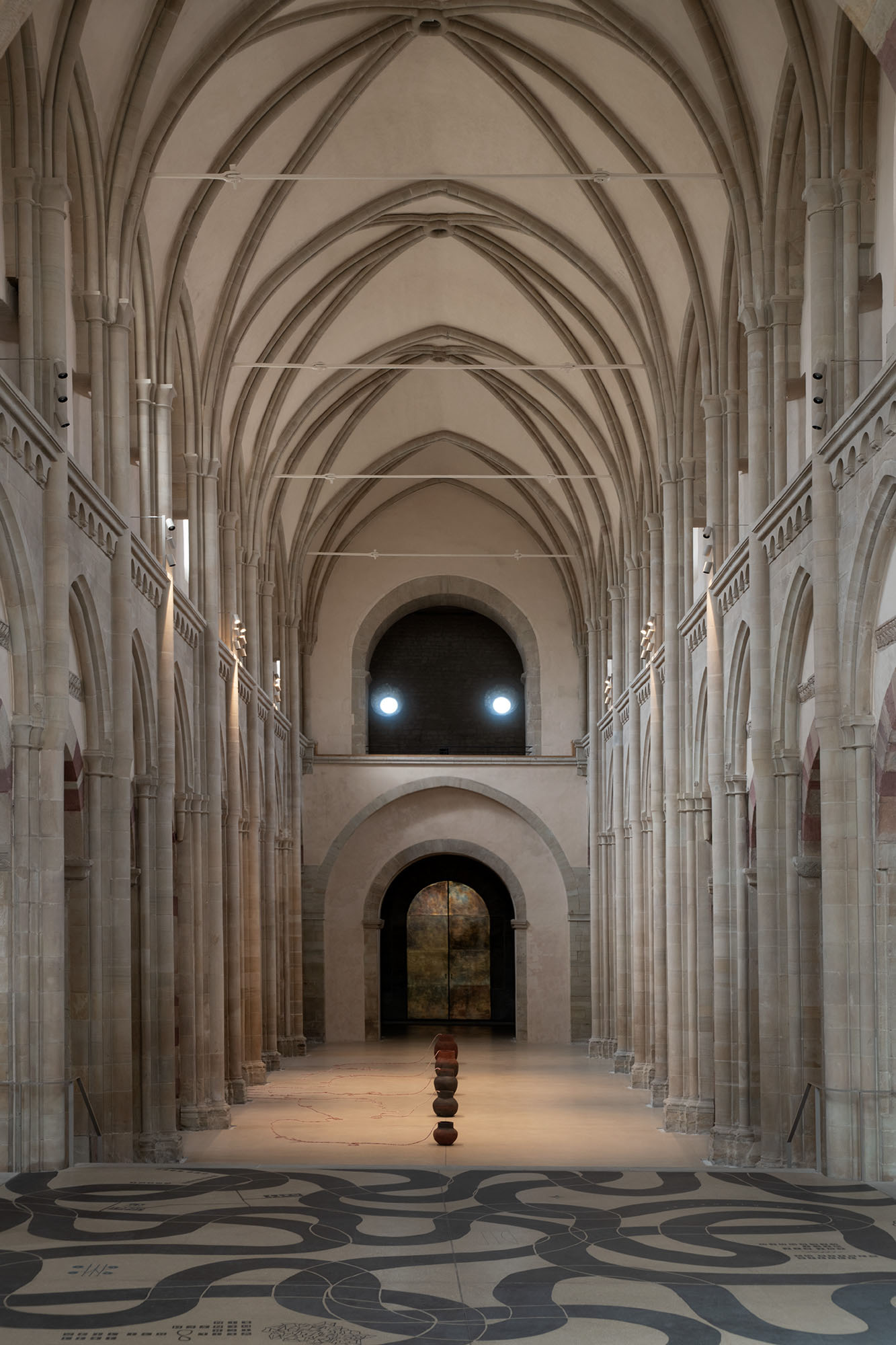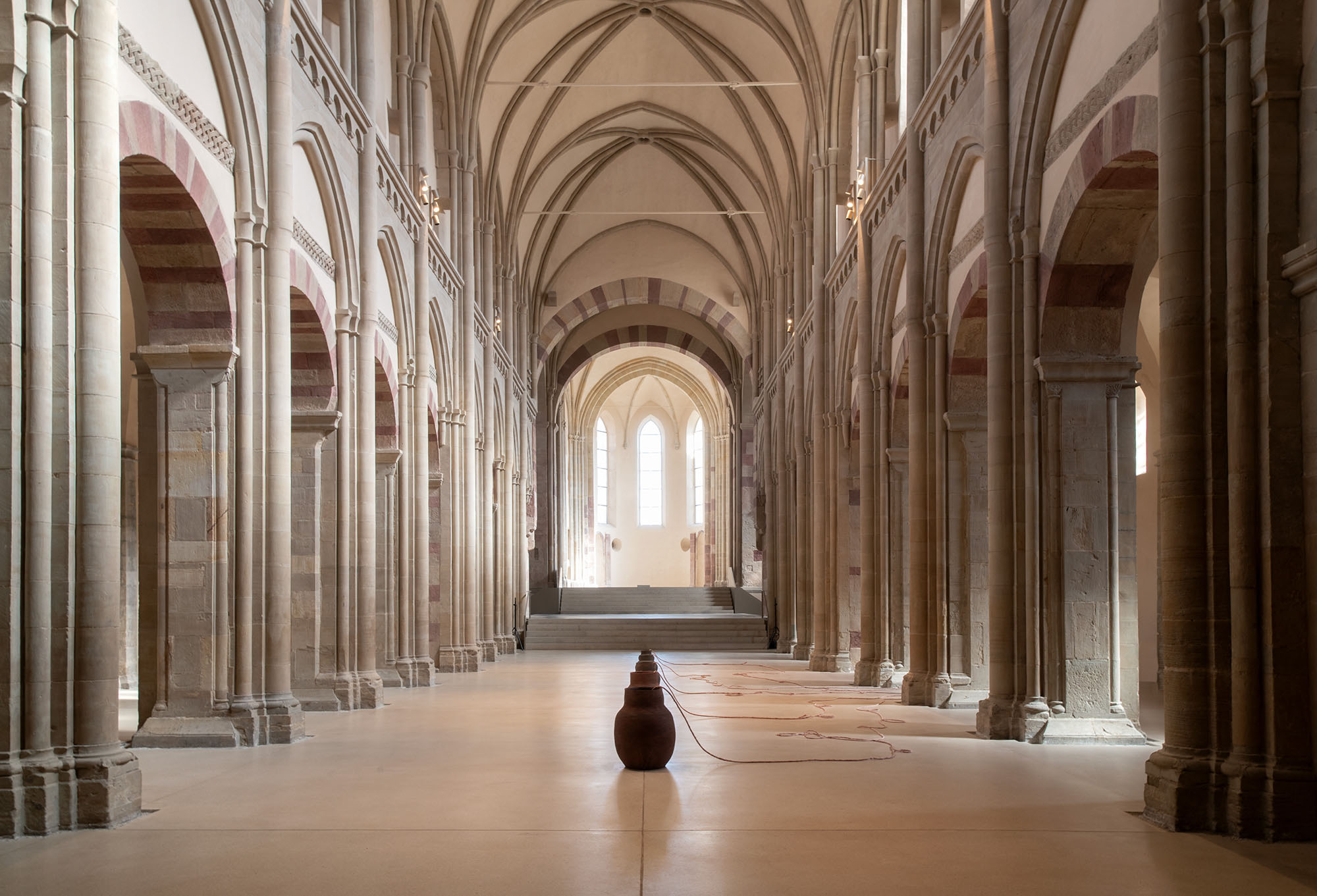
Our bodies are crossed by multiple voices that, exceeding the limits of flesh, tend to lose their individuality and claim space. In her exhibition For Our Flowing Voices; I Amphorae, at the Kunstmuseum Magdeburg, Lara Dâmaso sets aside her physicality, allowing the work to exist without her presence.
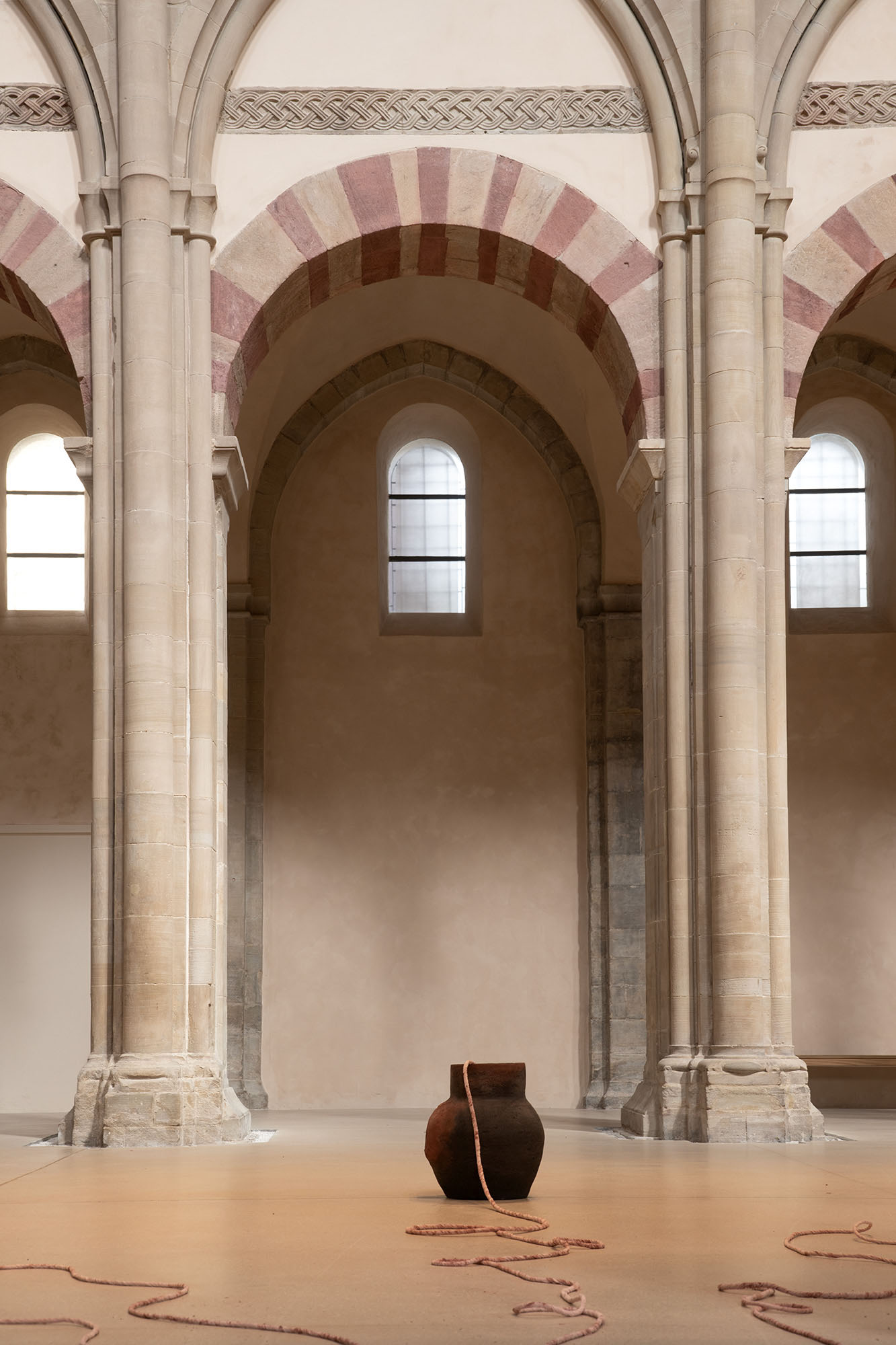
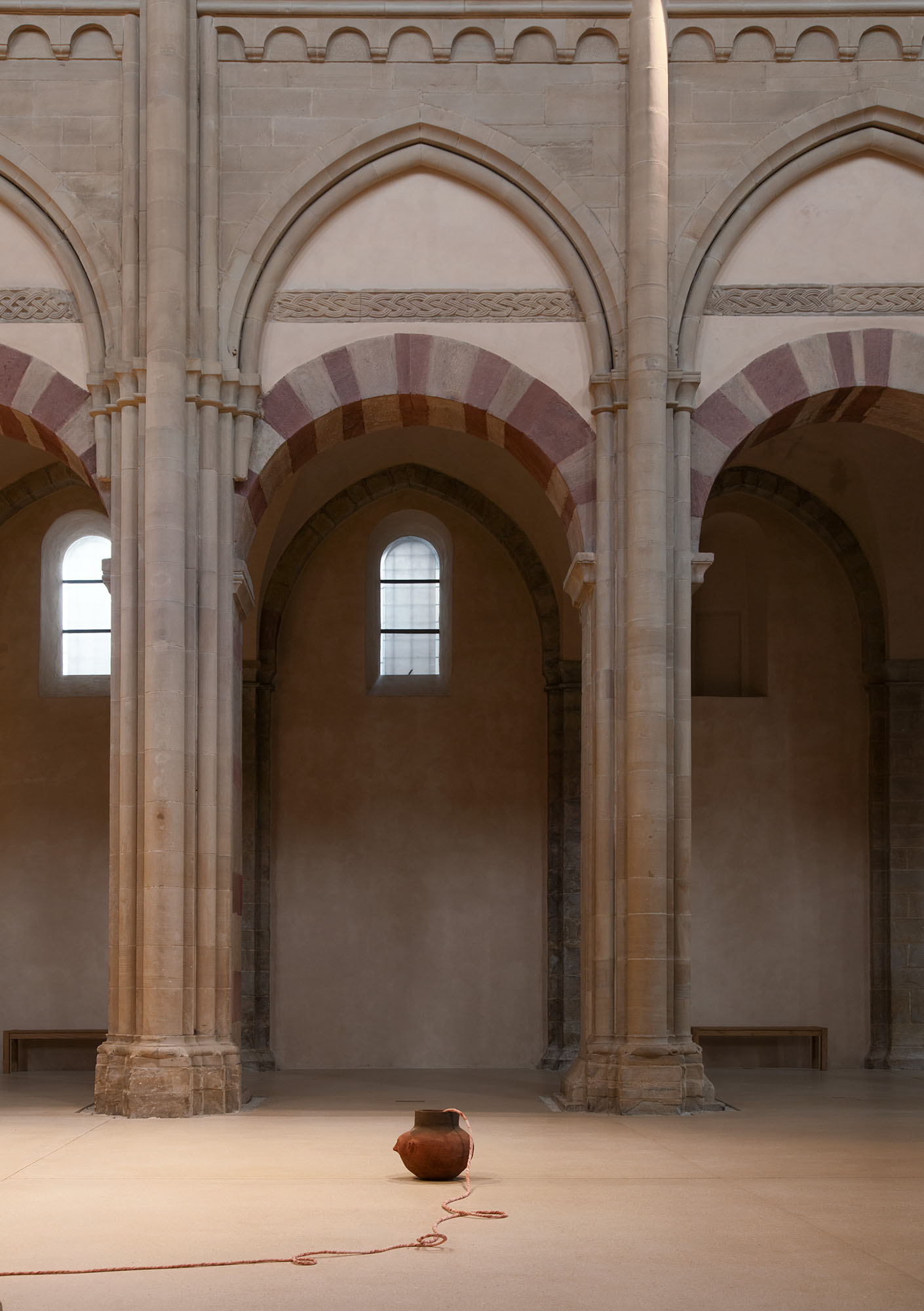
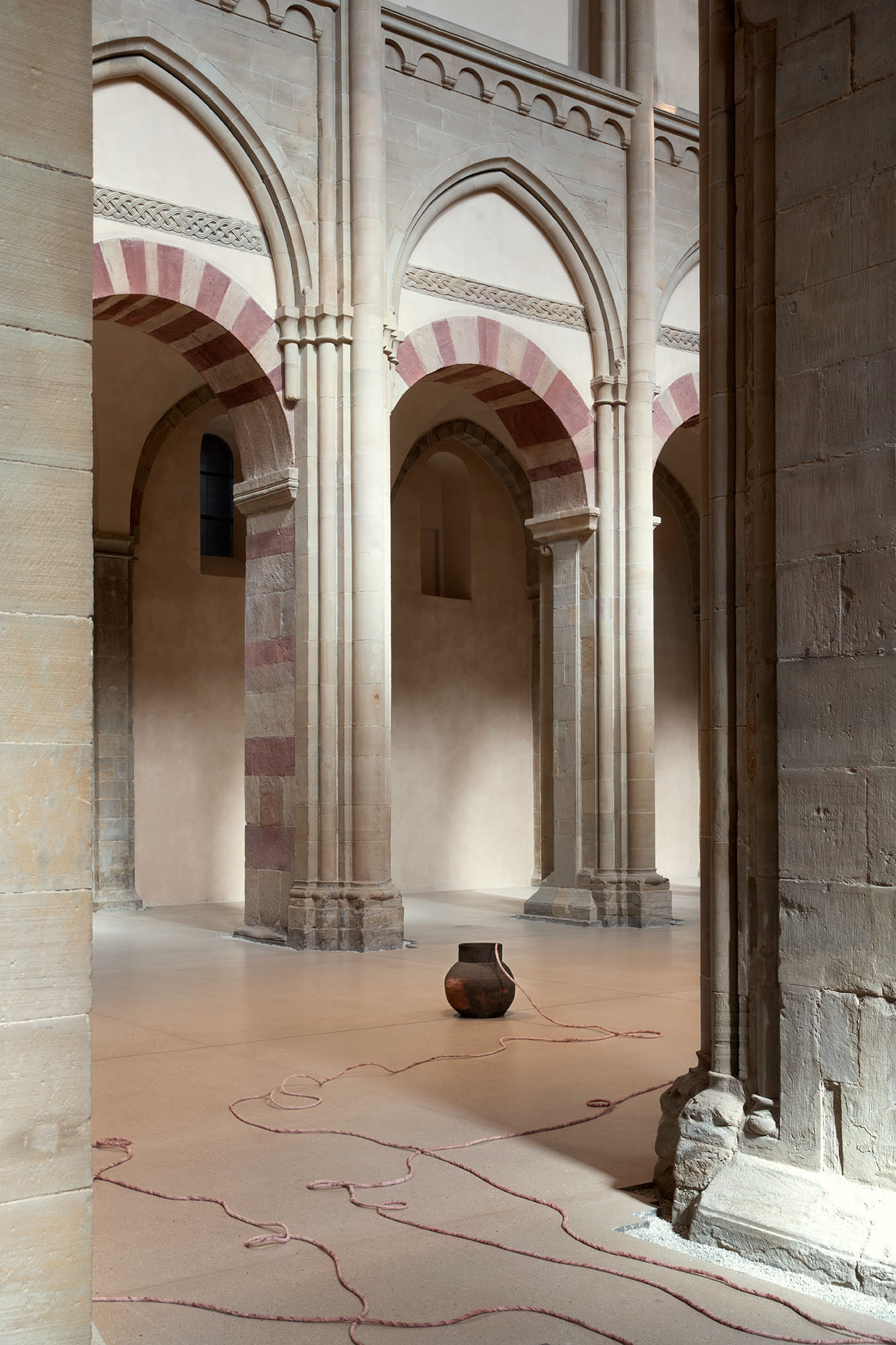
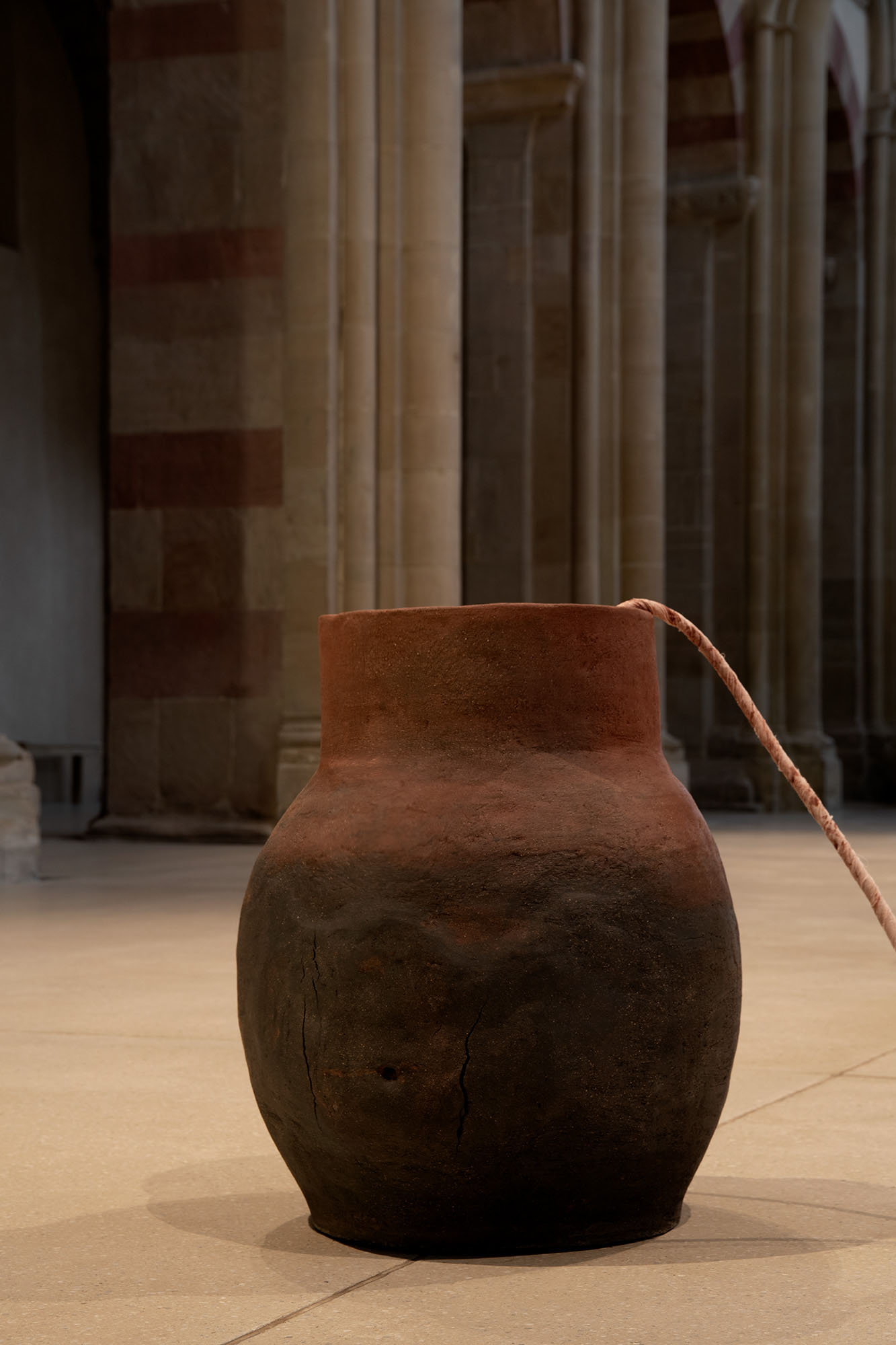
In the church of the Monastery of Our Lady in Magdeburg, dating back to the eleventh century, her body dissolves to make room for breath, opening itself to actively intensify its reception, becoming the channel that allows its passage and makes it audible.
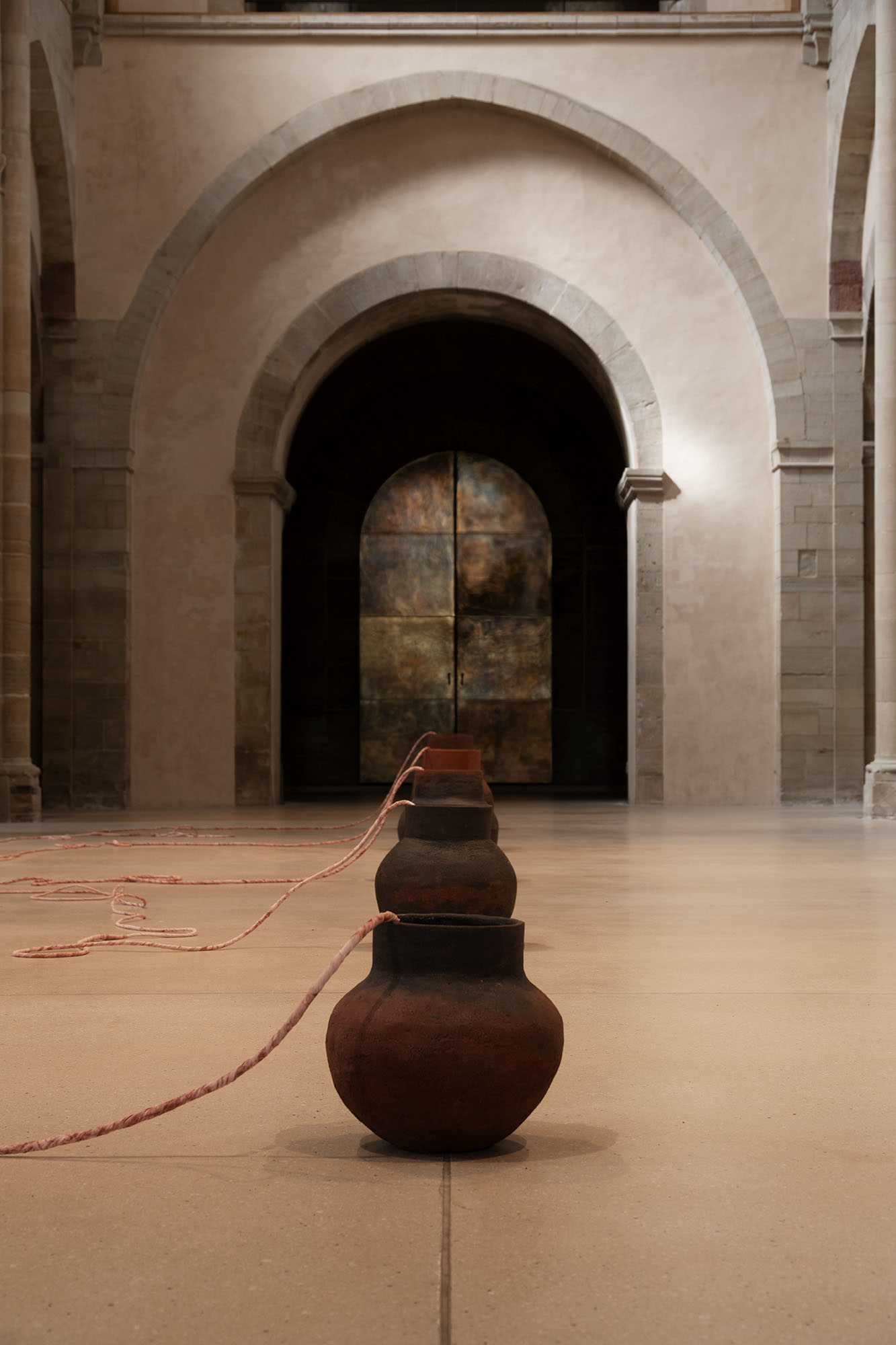
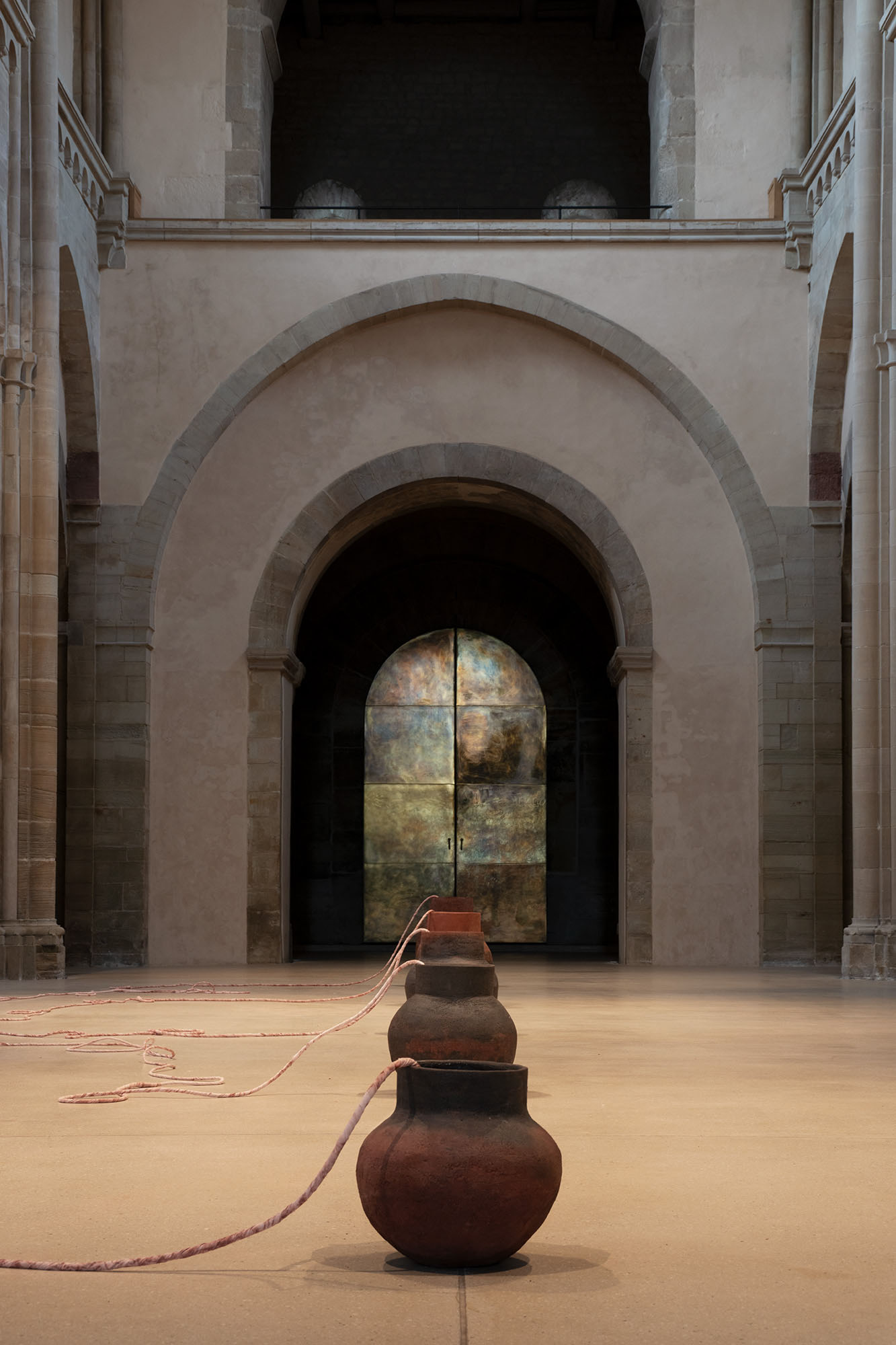
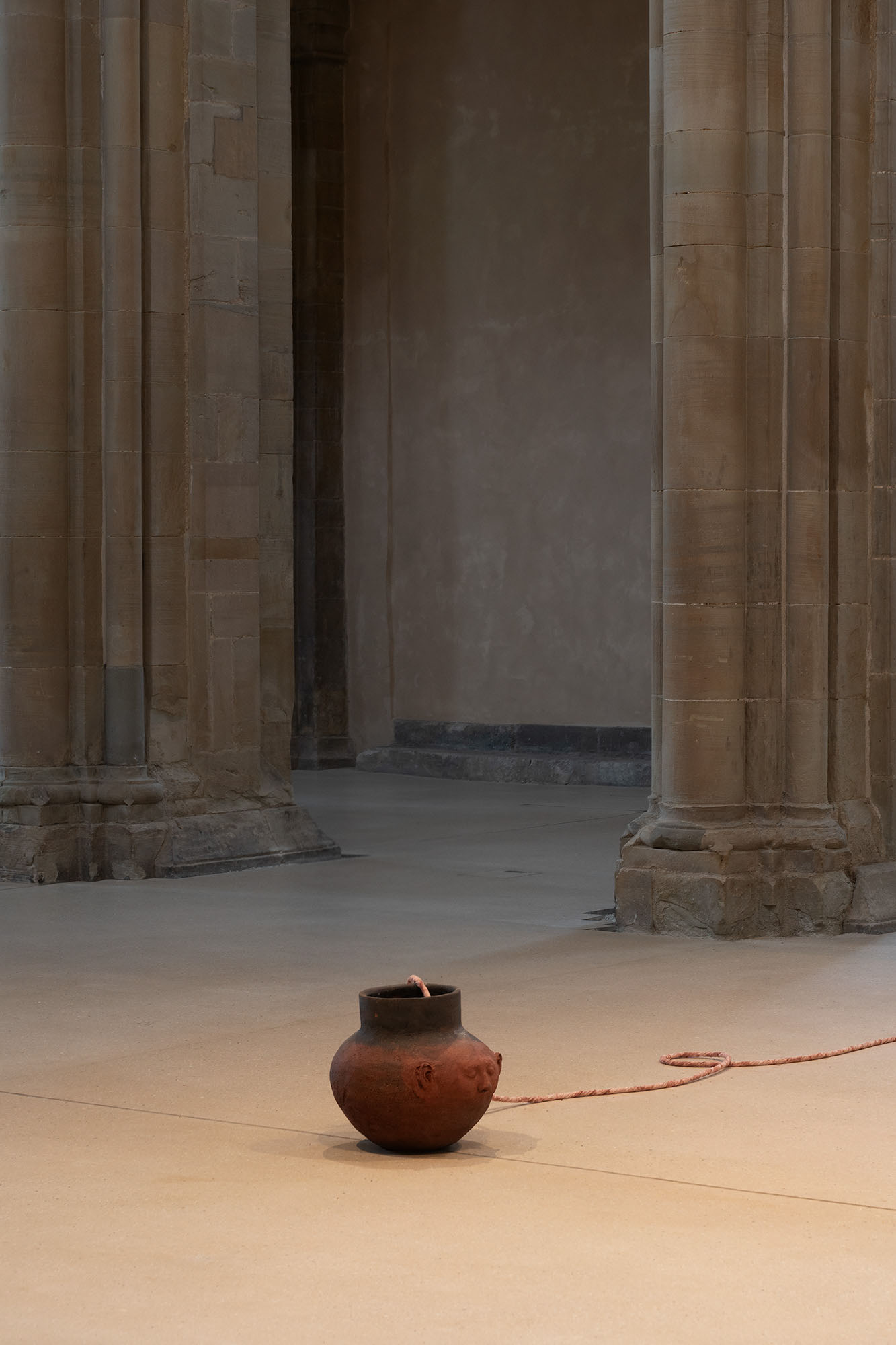
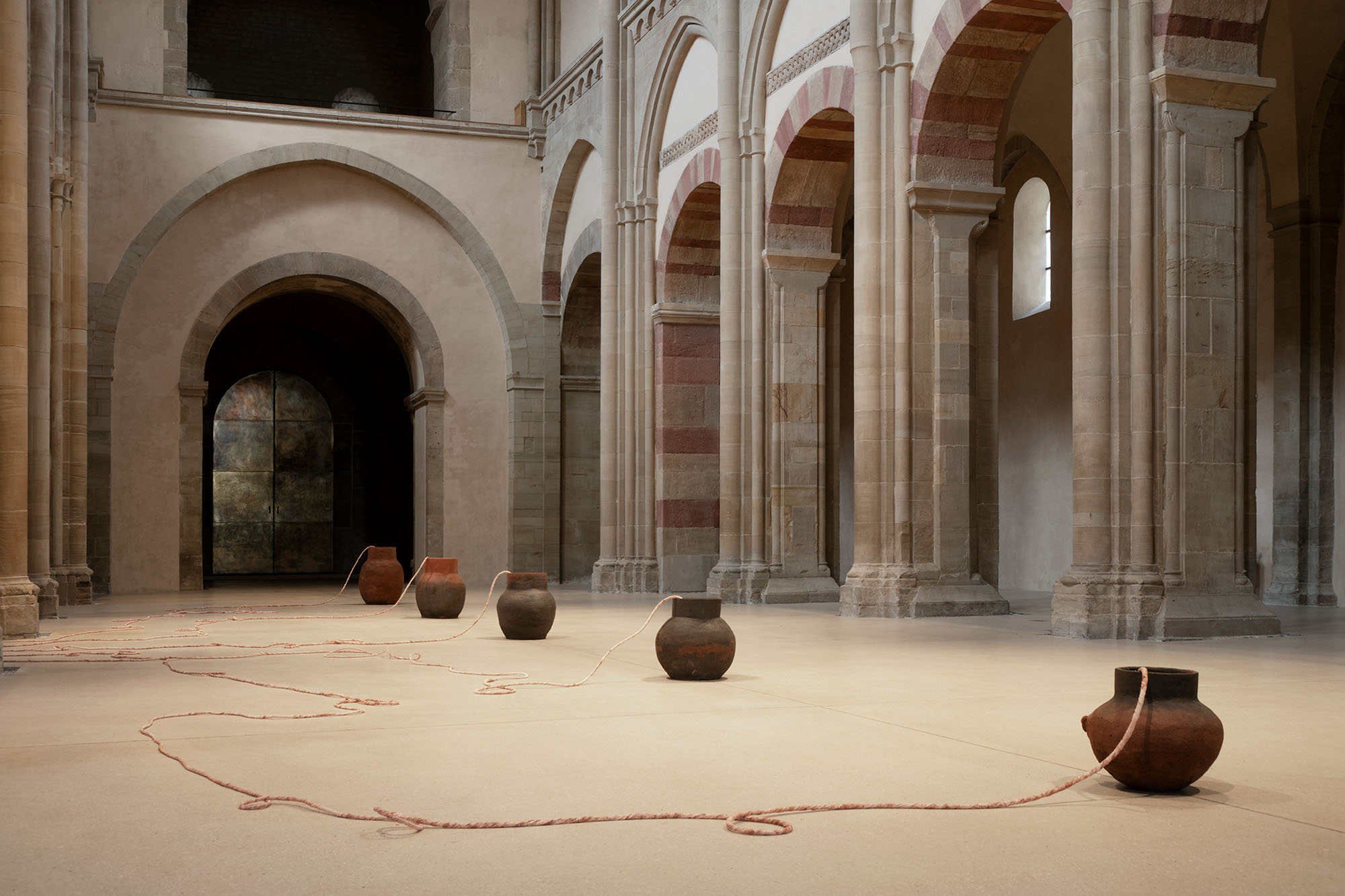
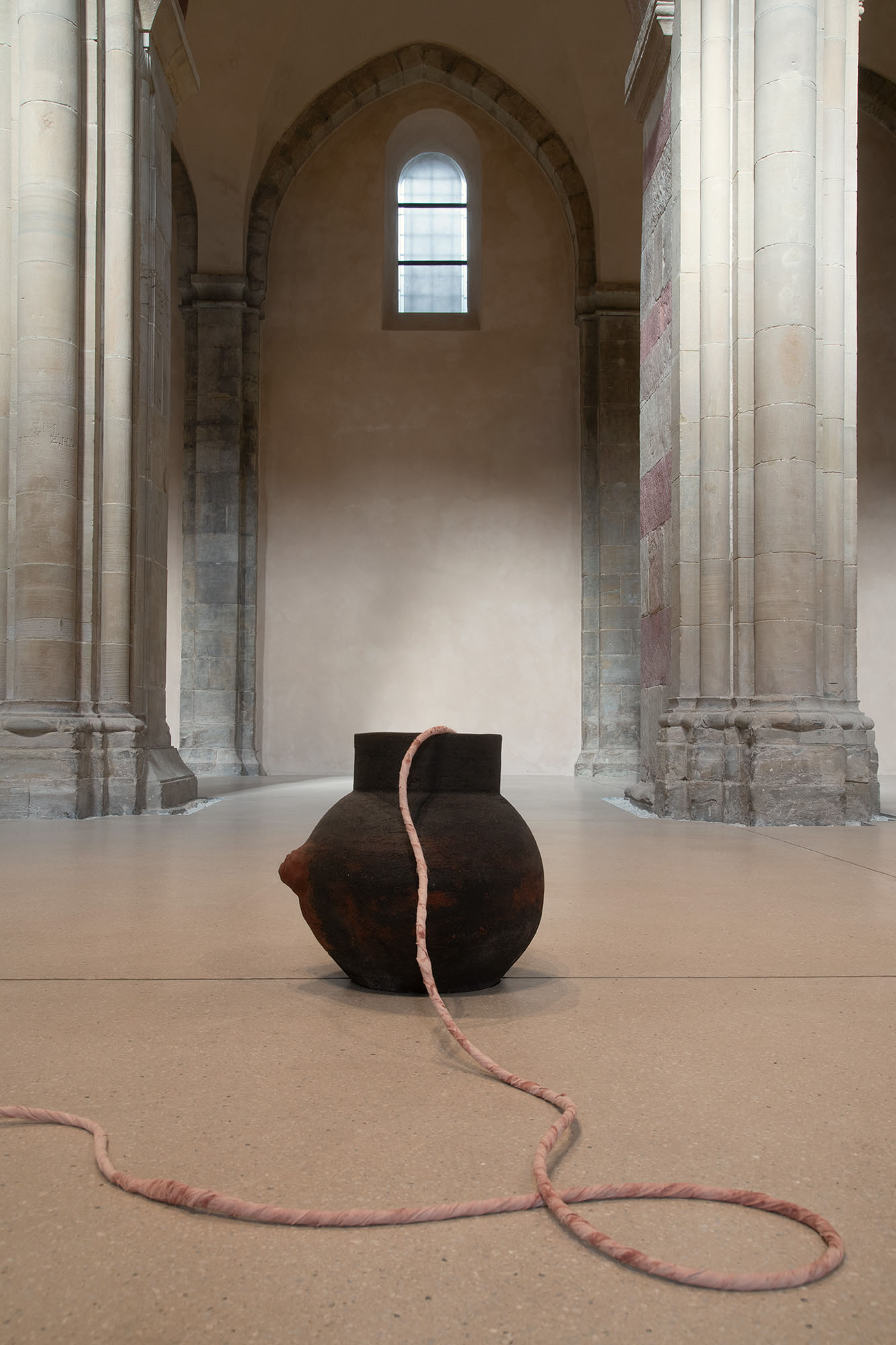
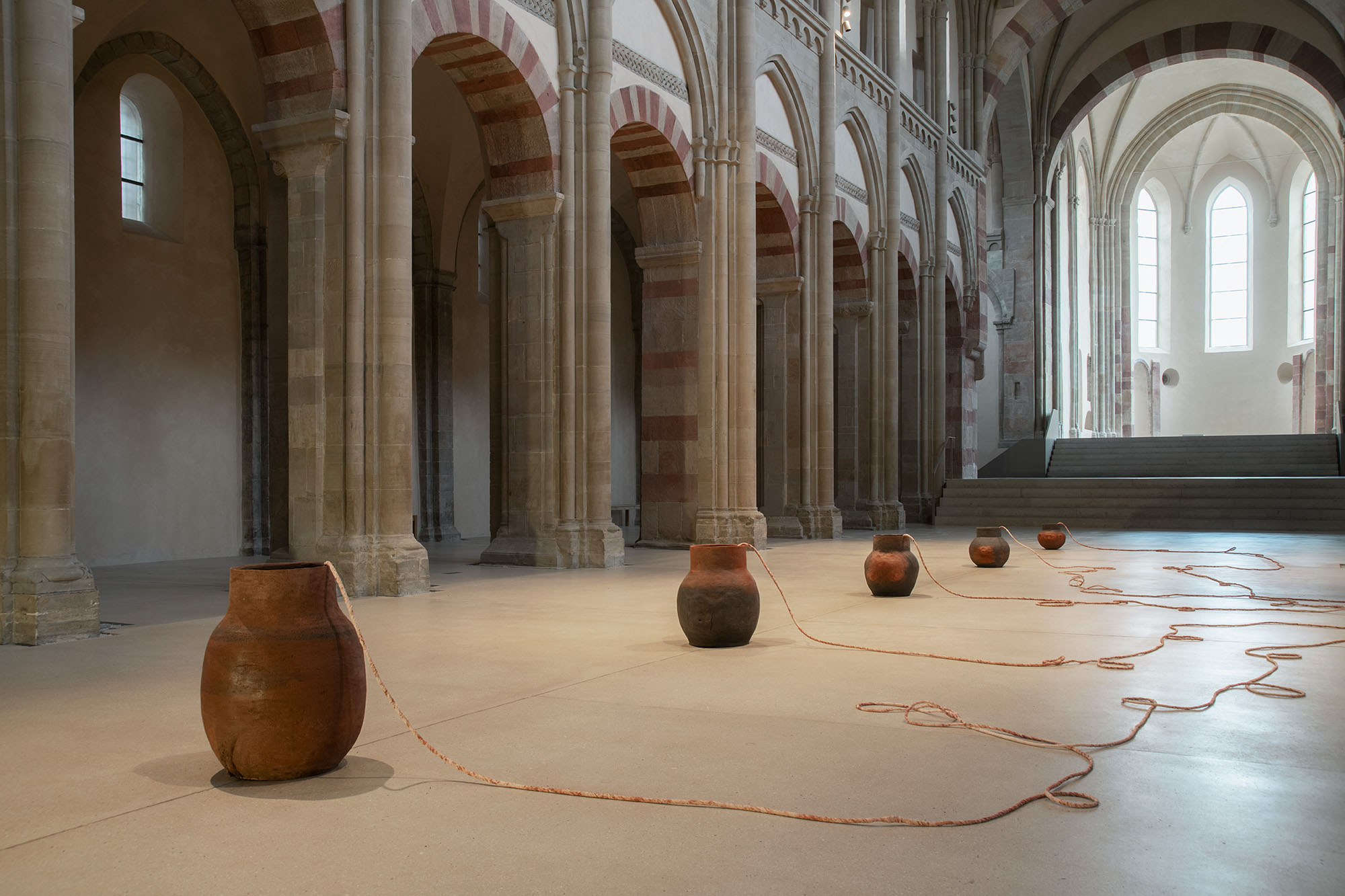
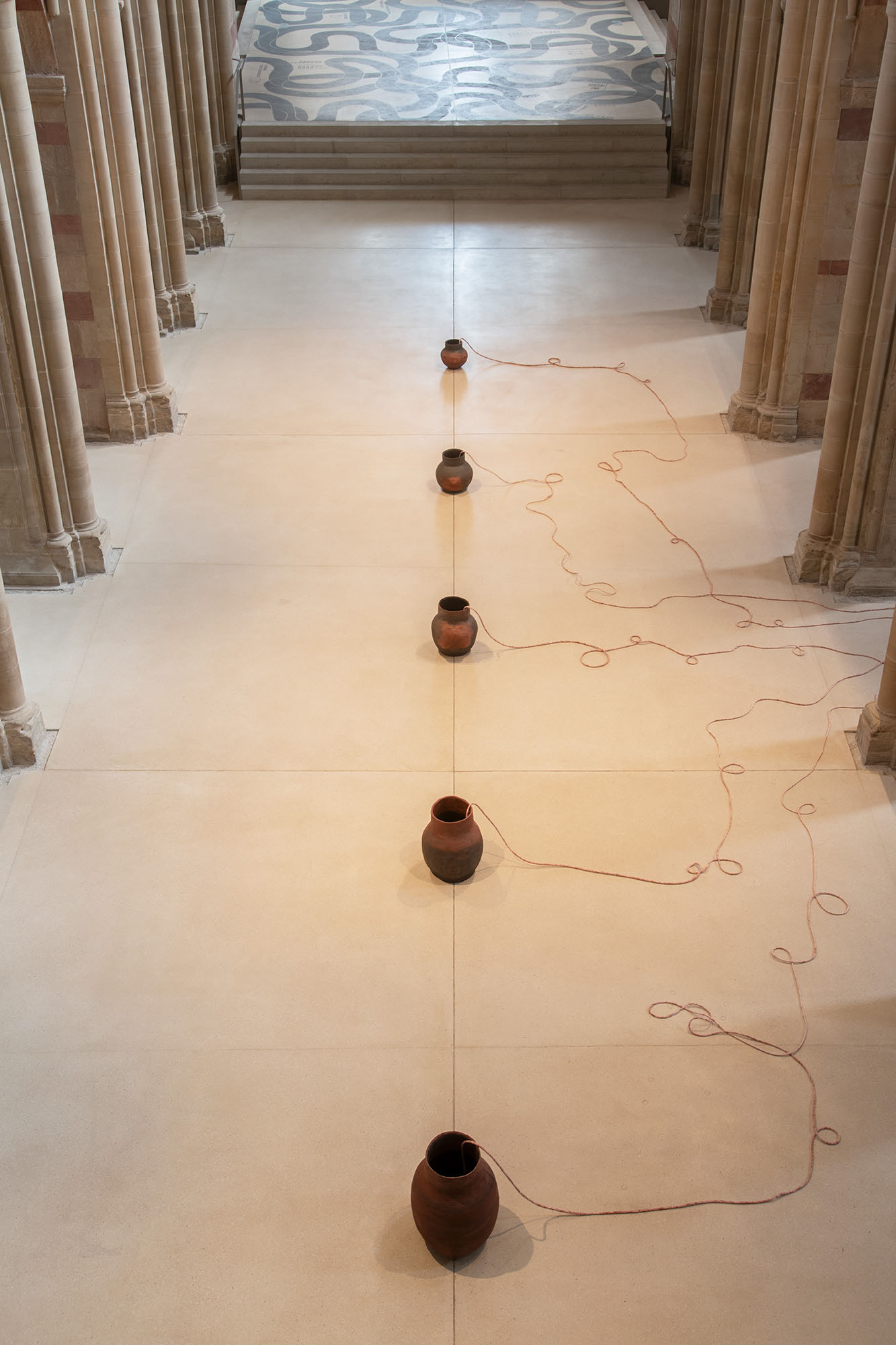
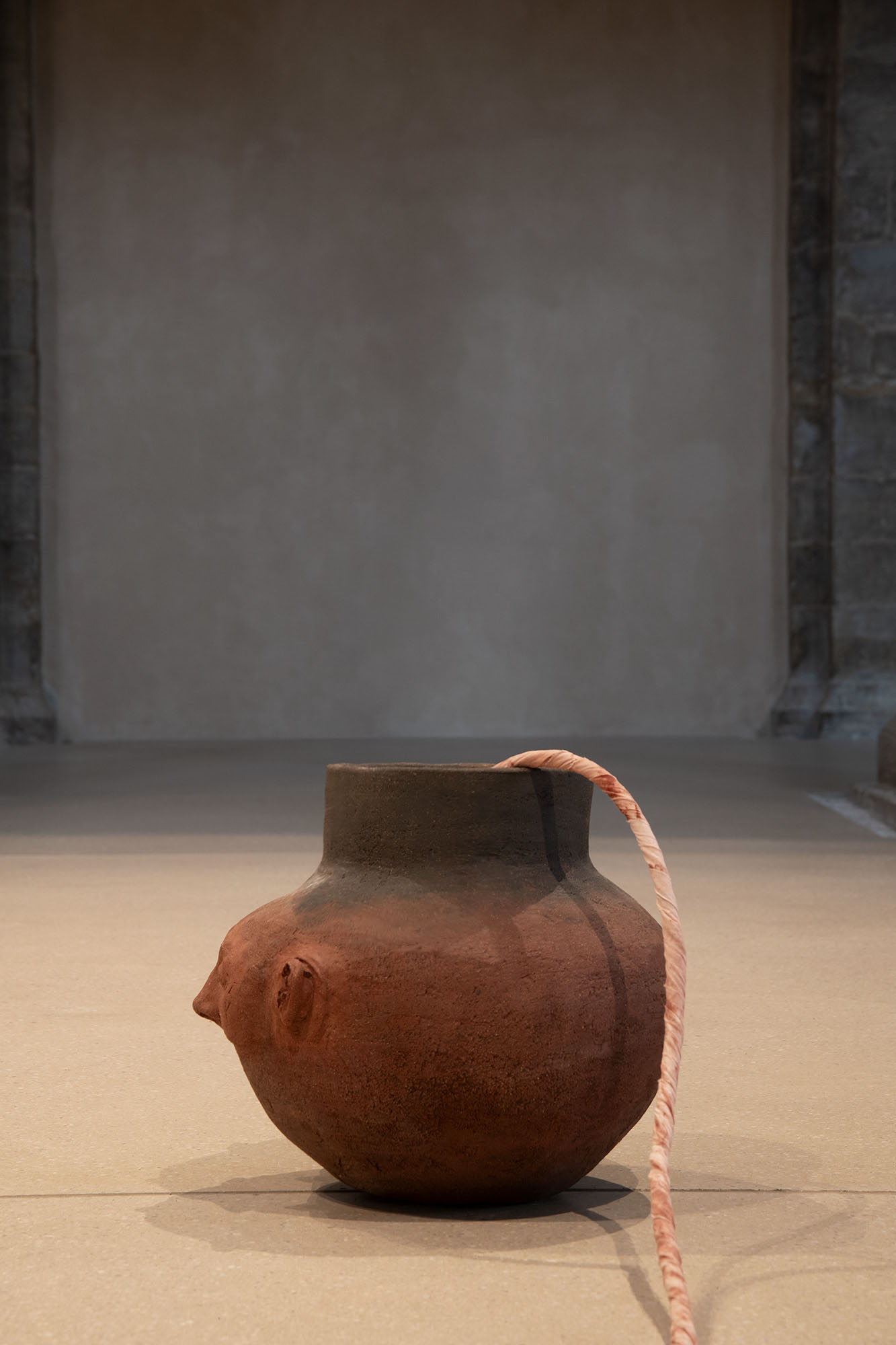
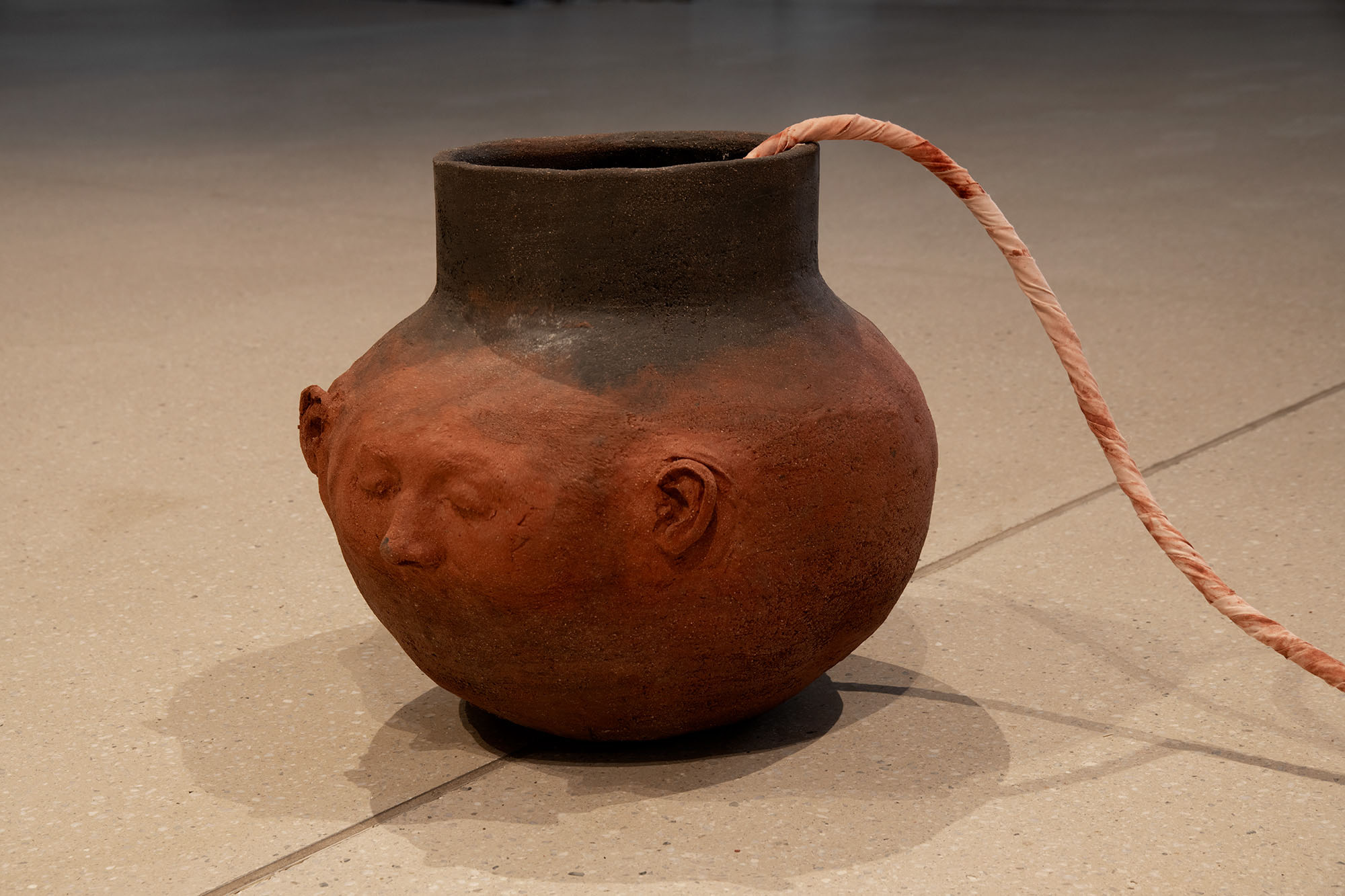
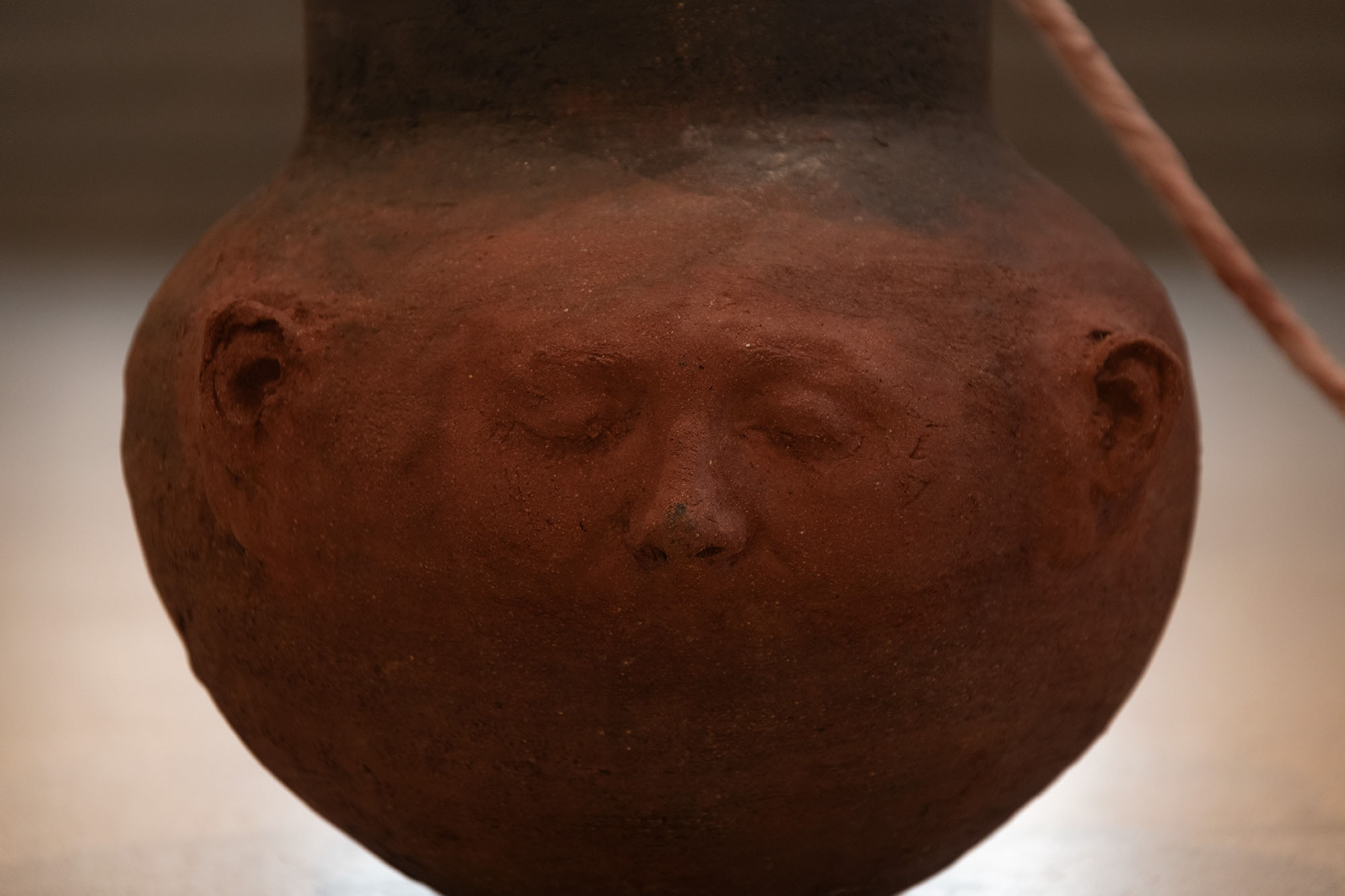
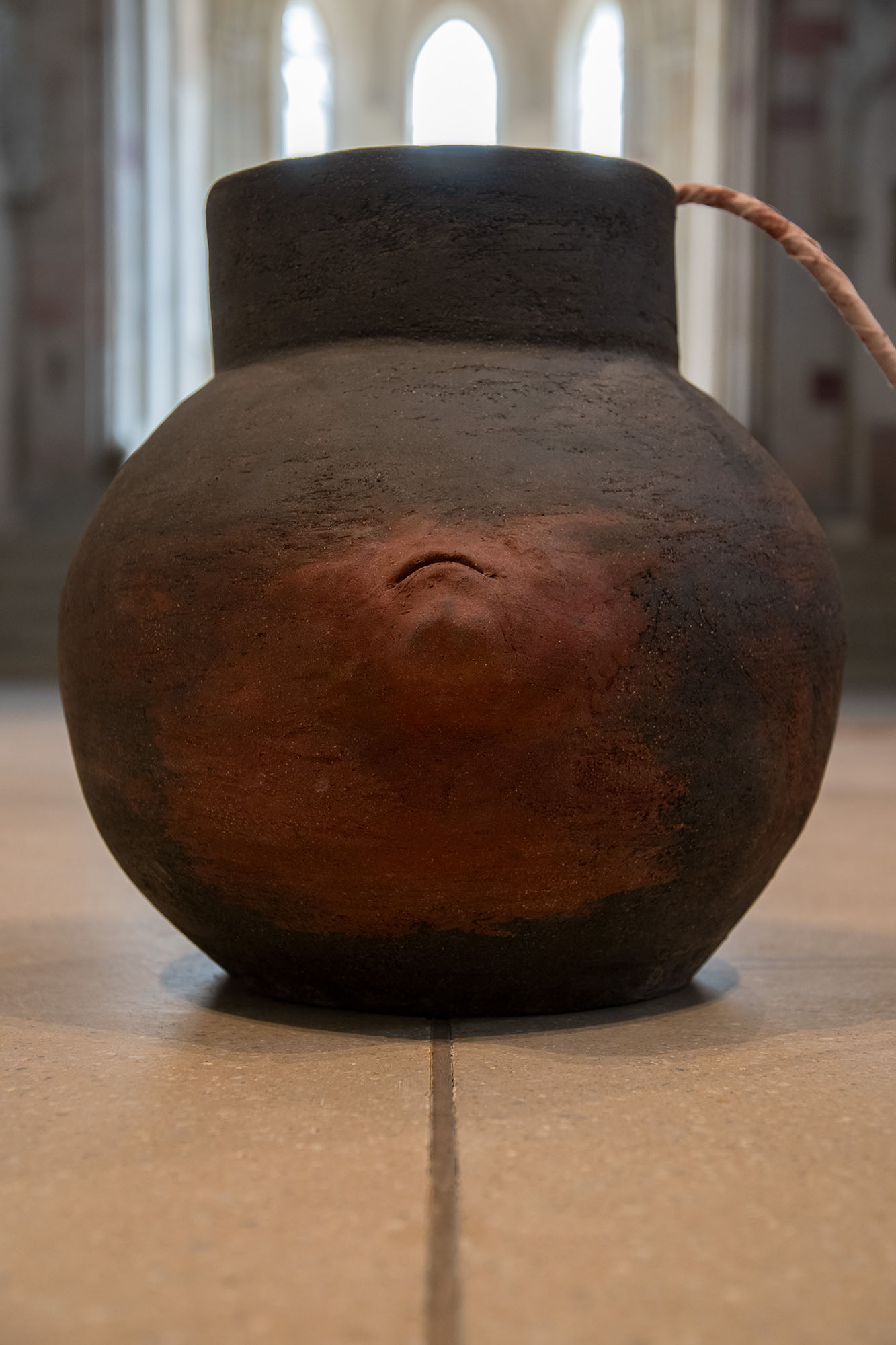
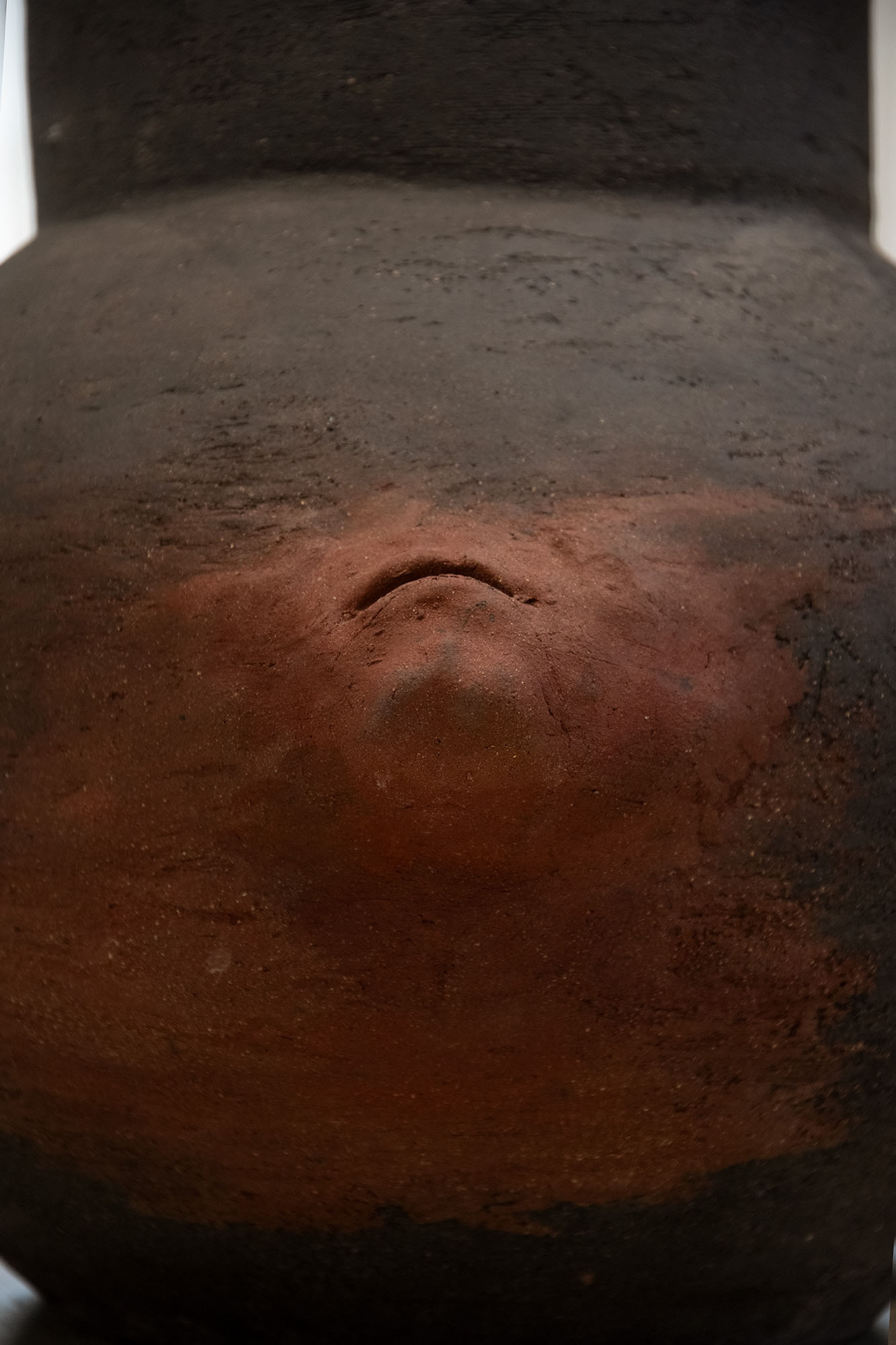
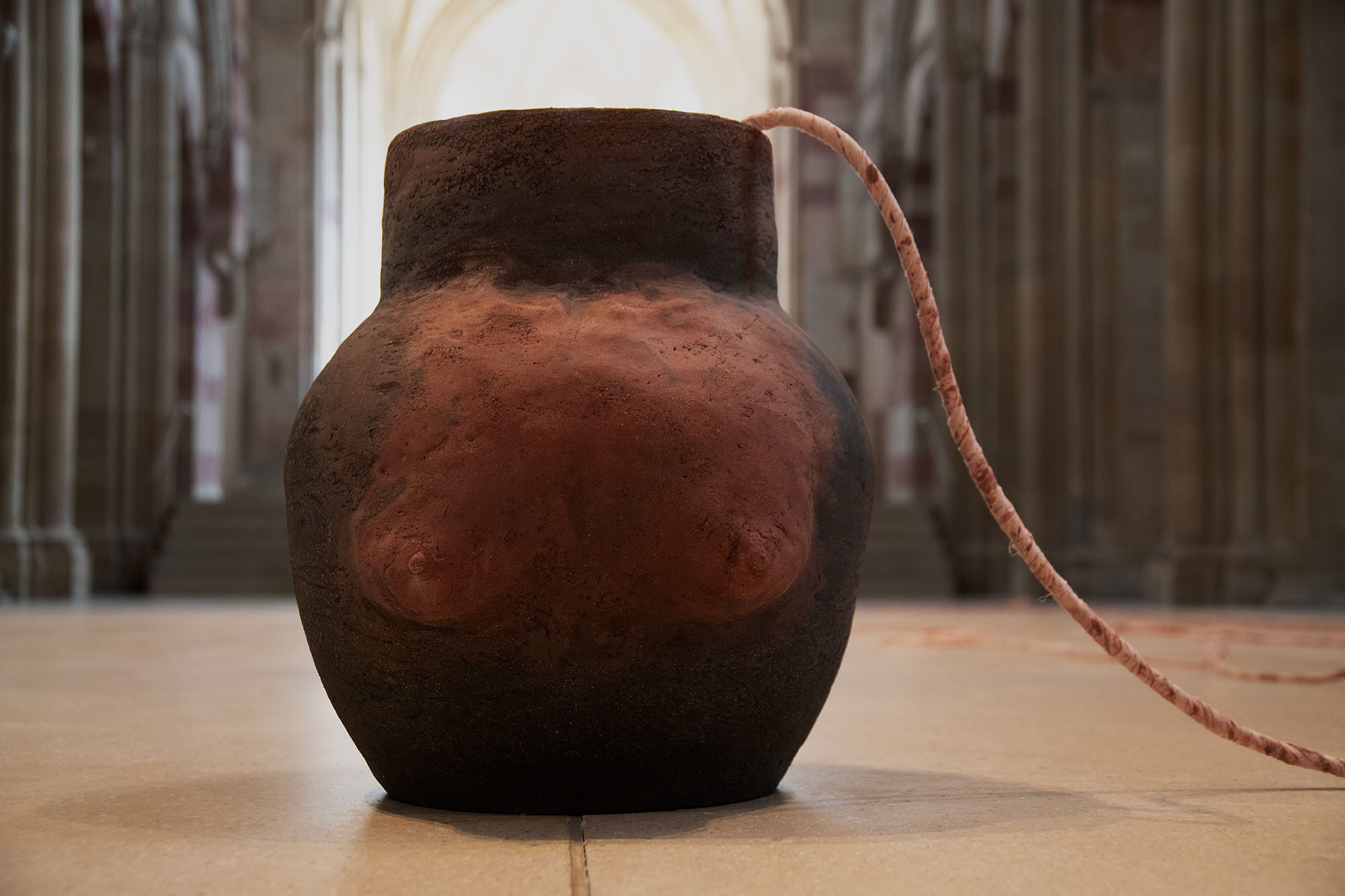
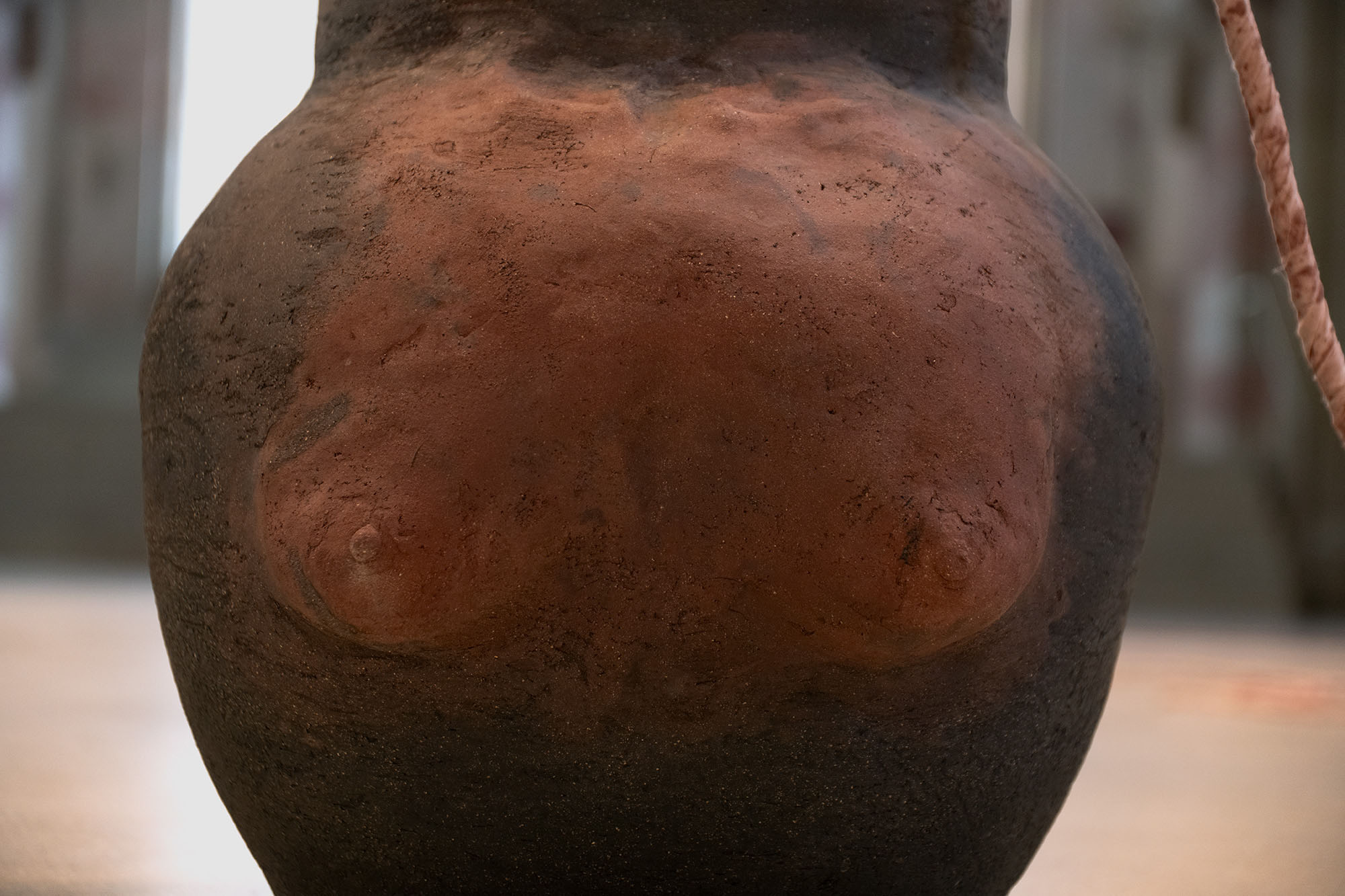
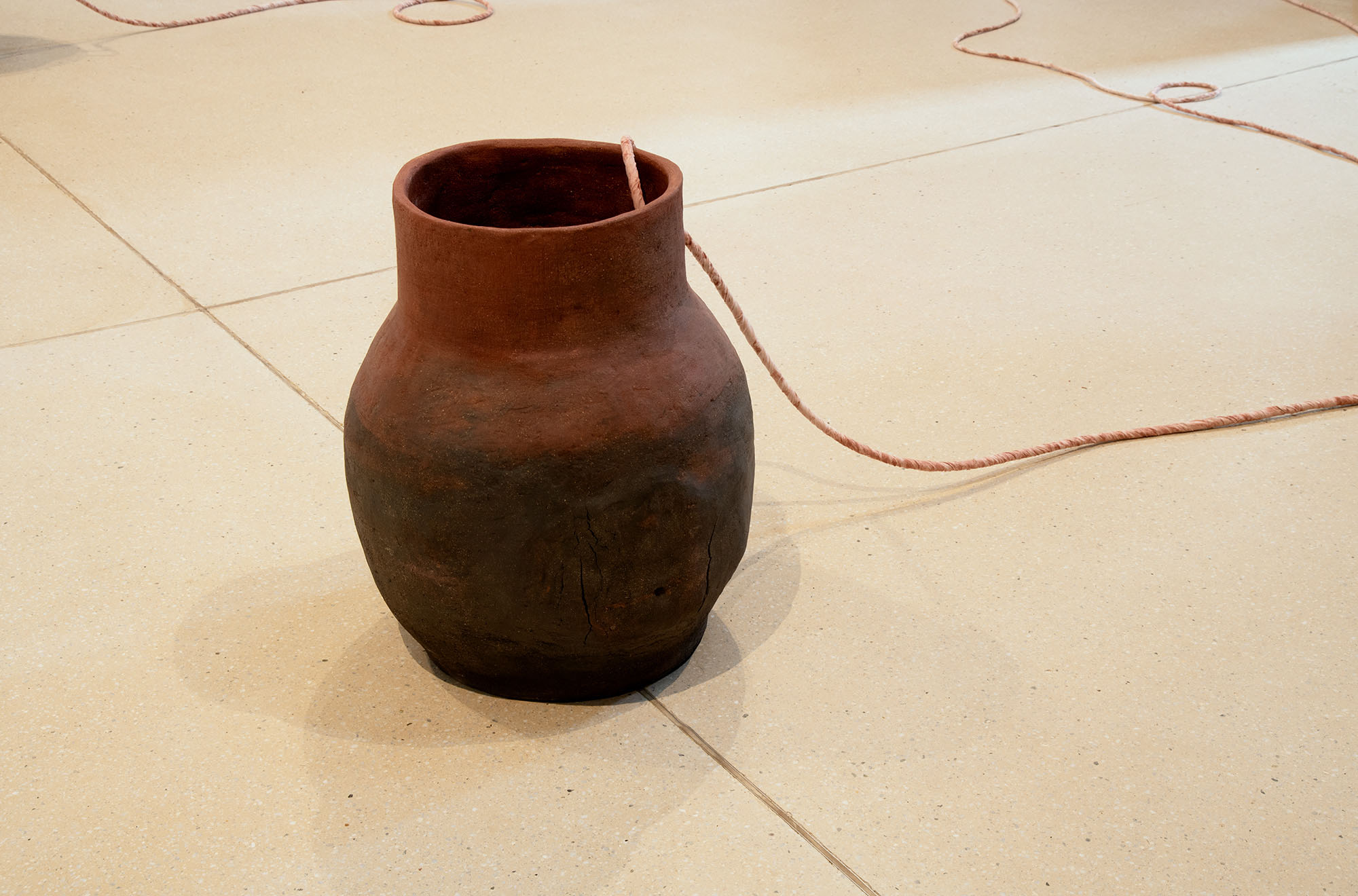
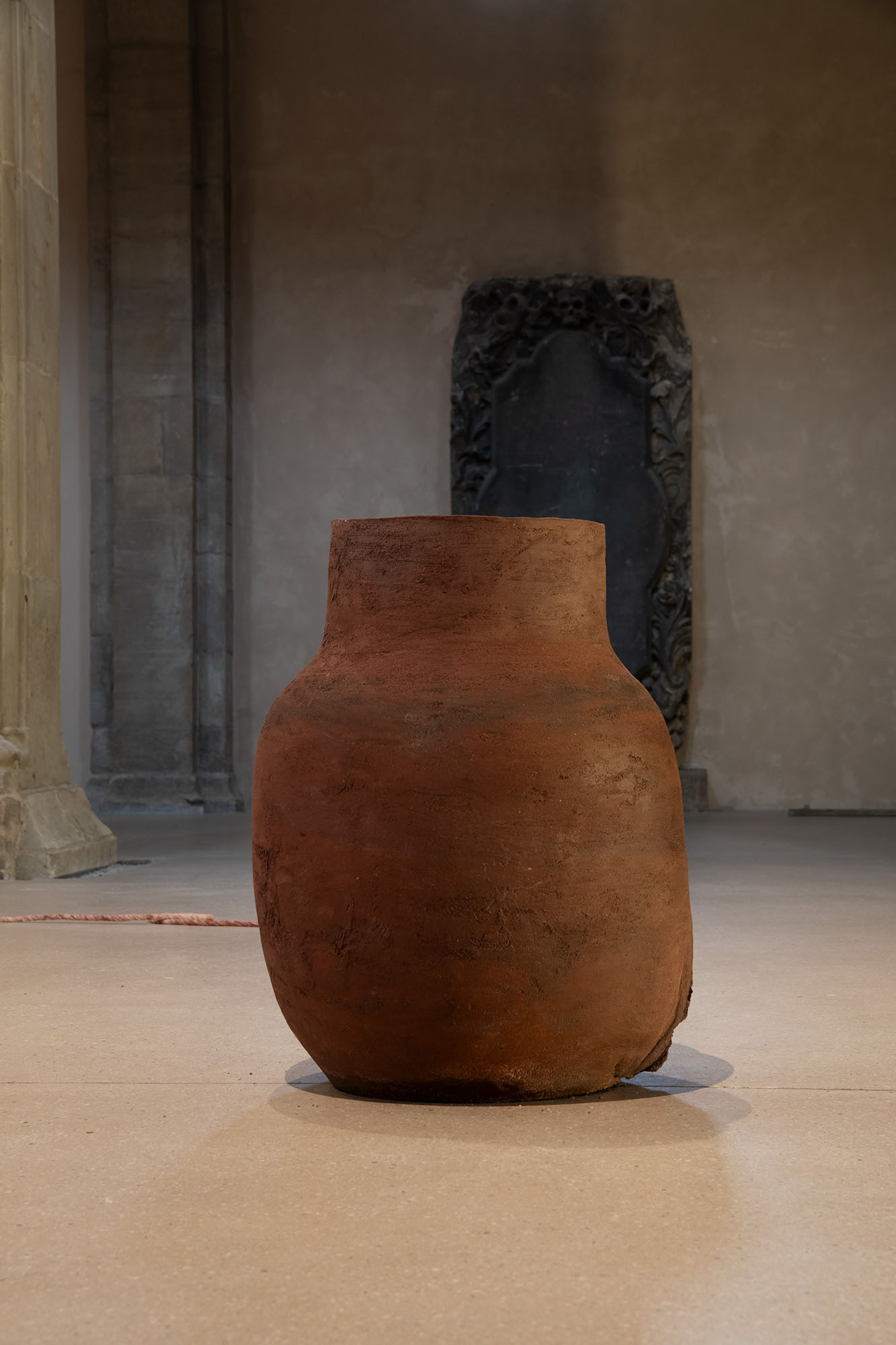
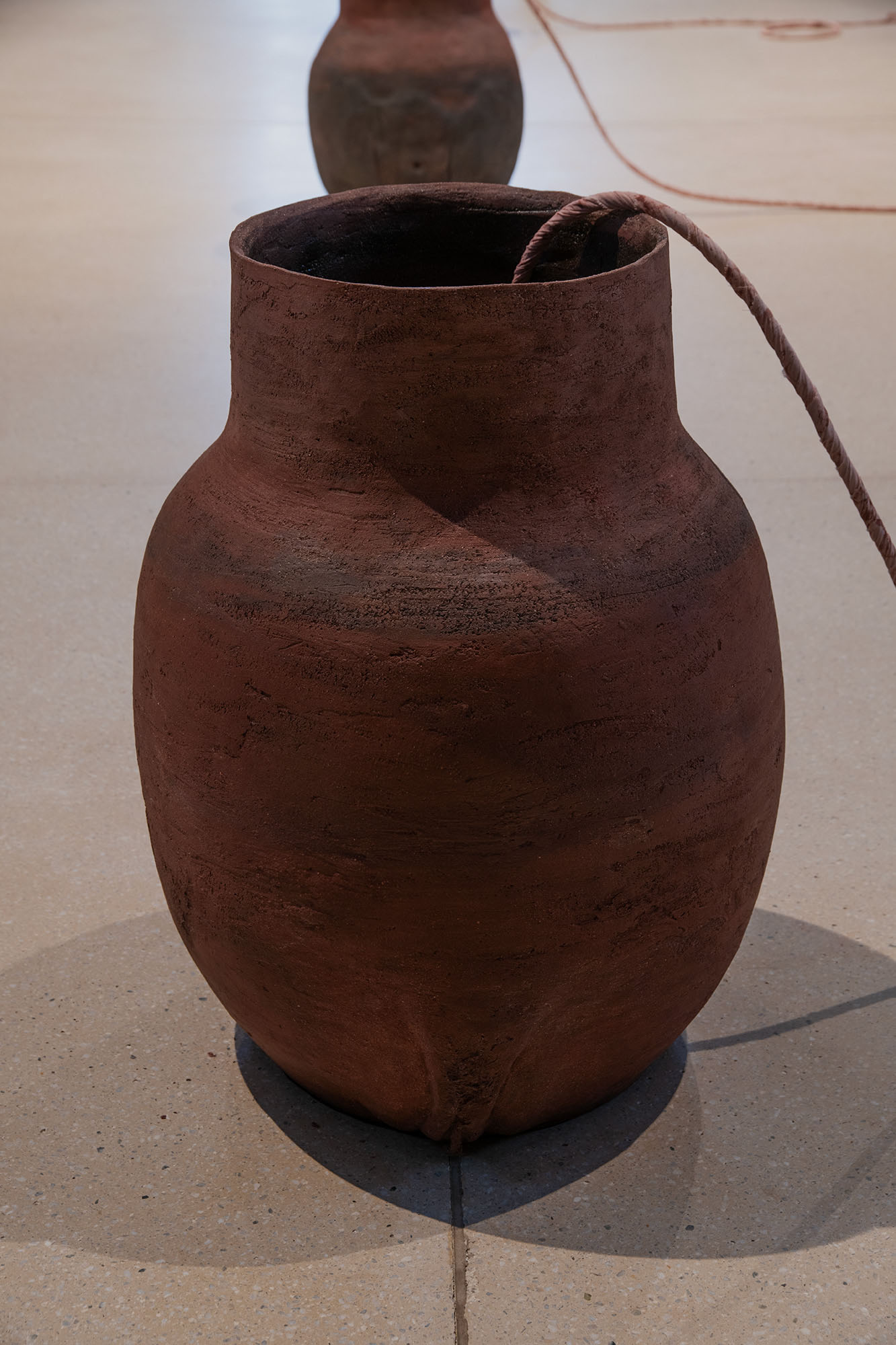
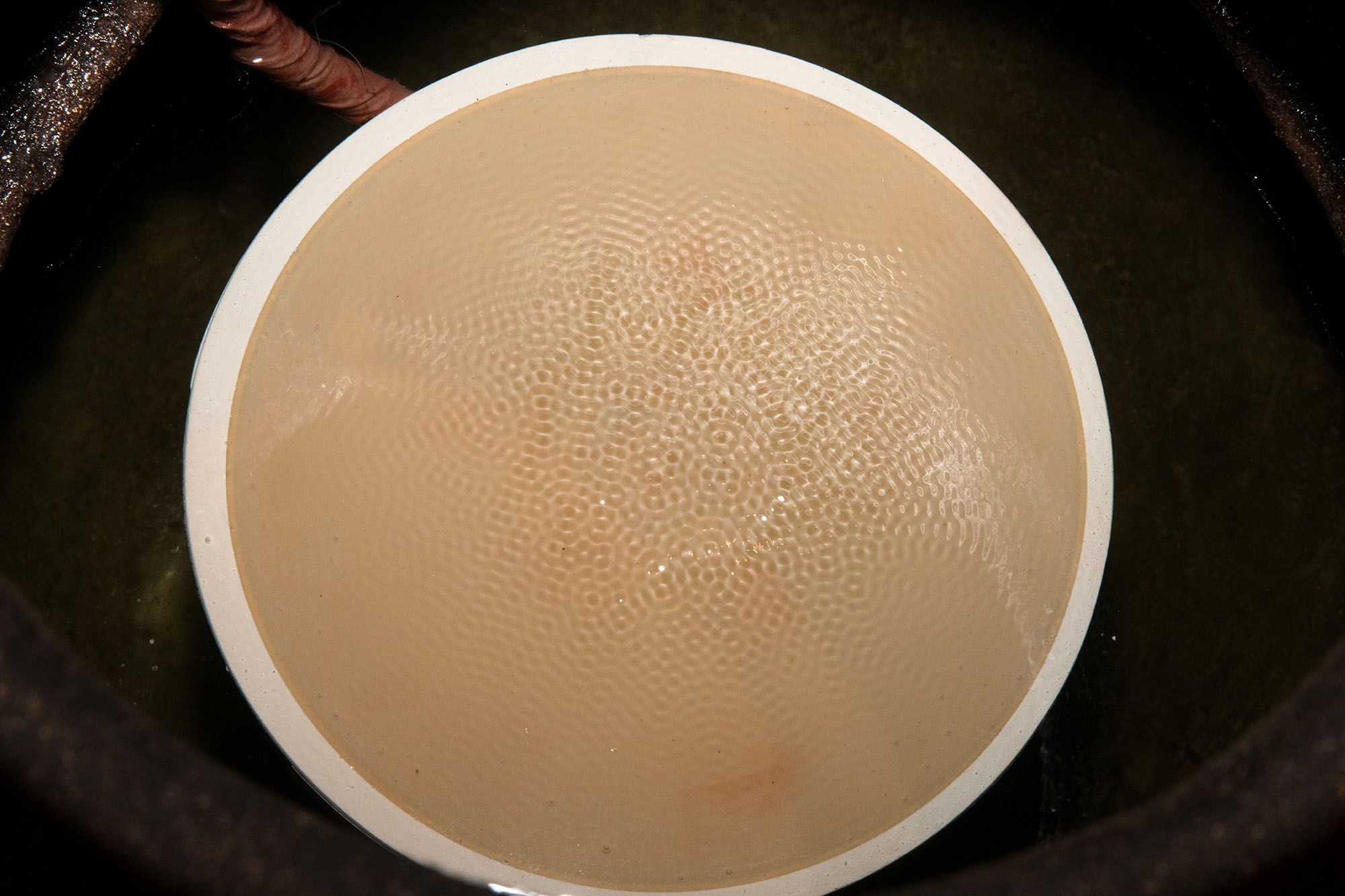
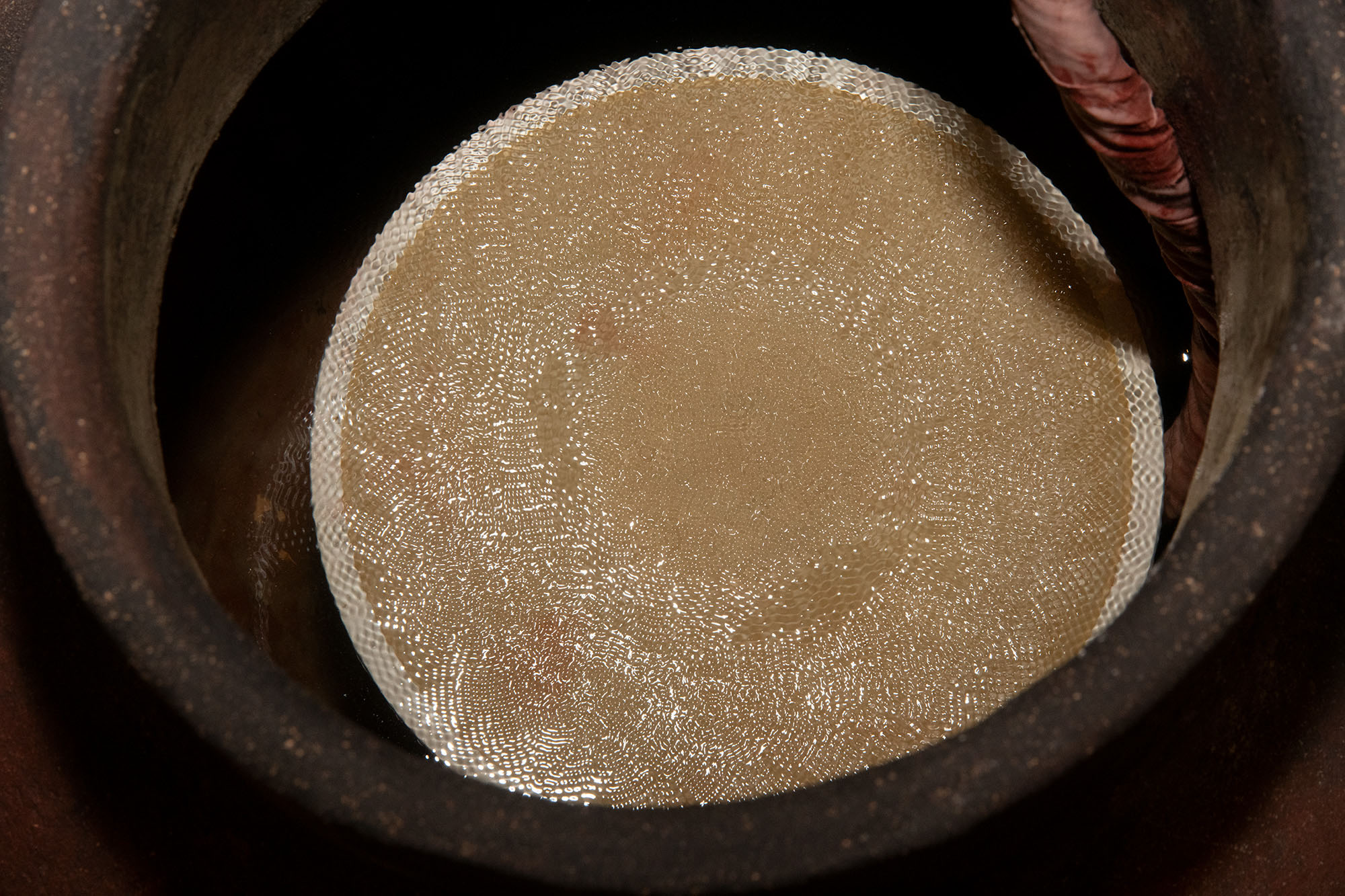
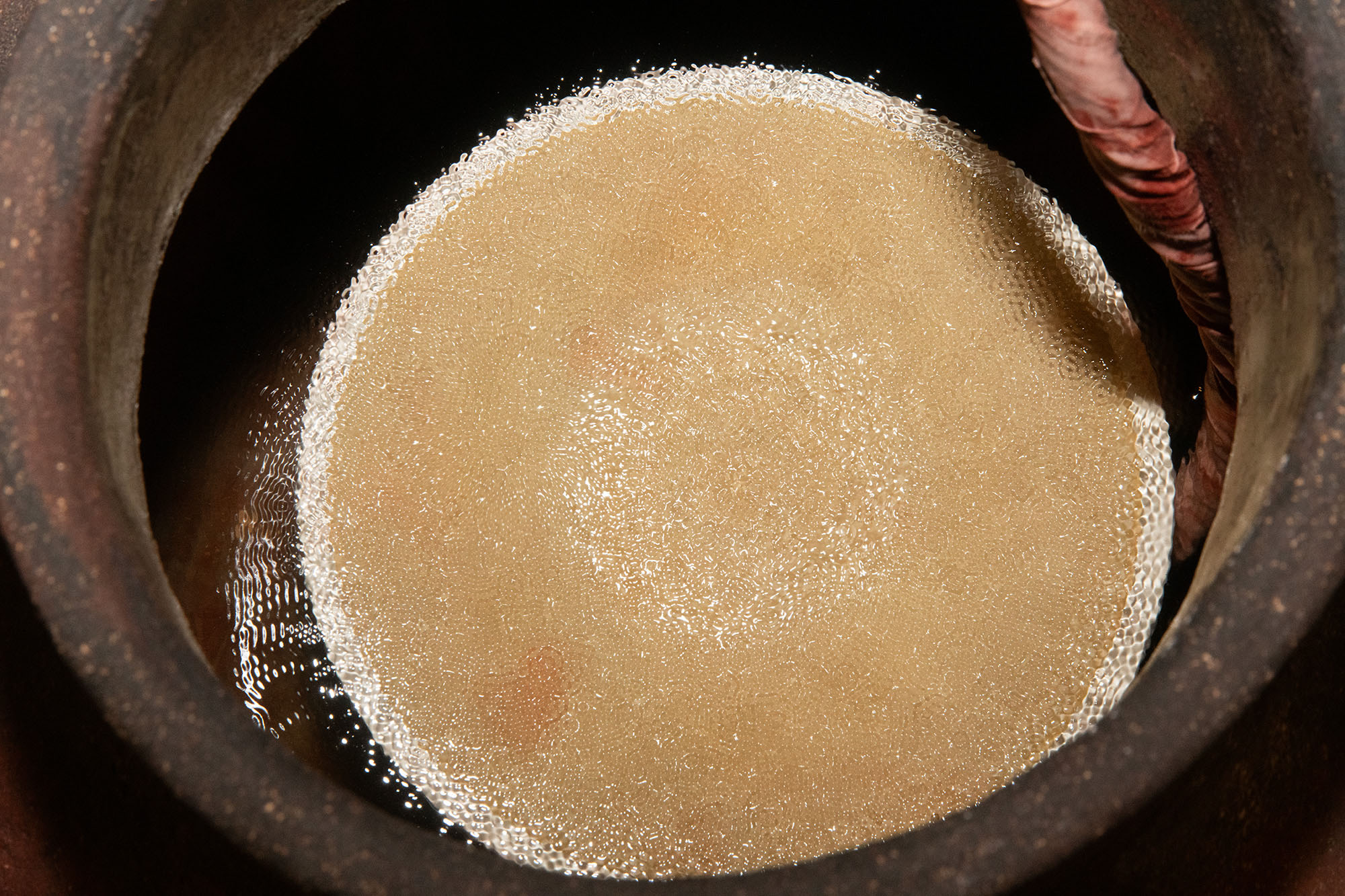
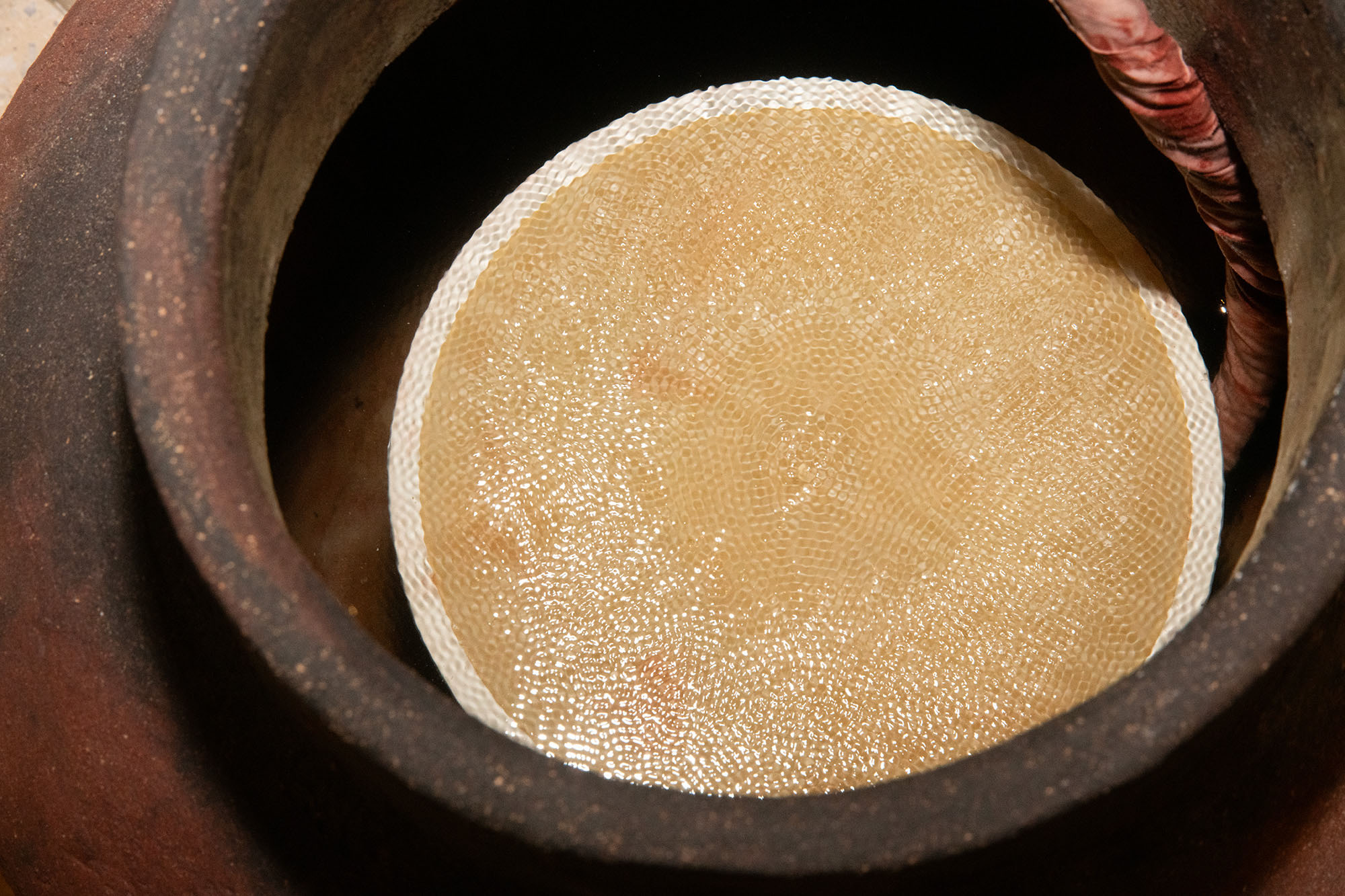
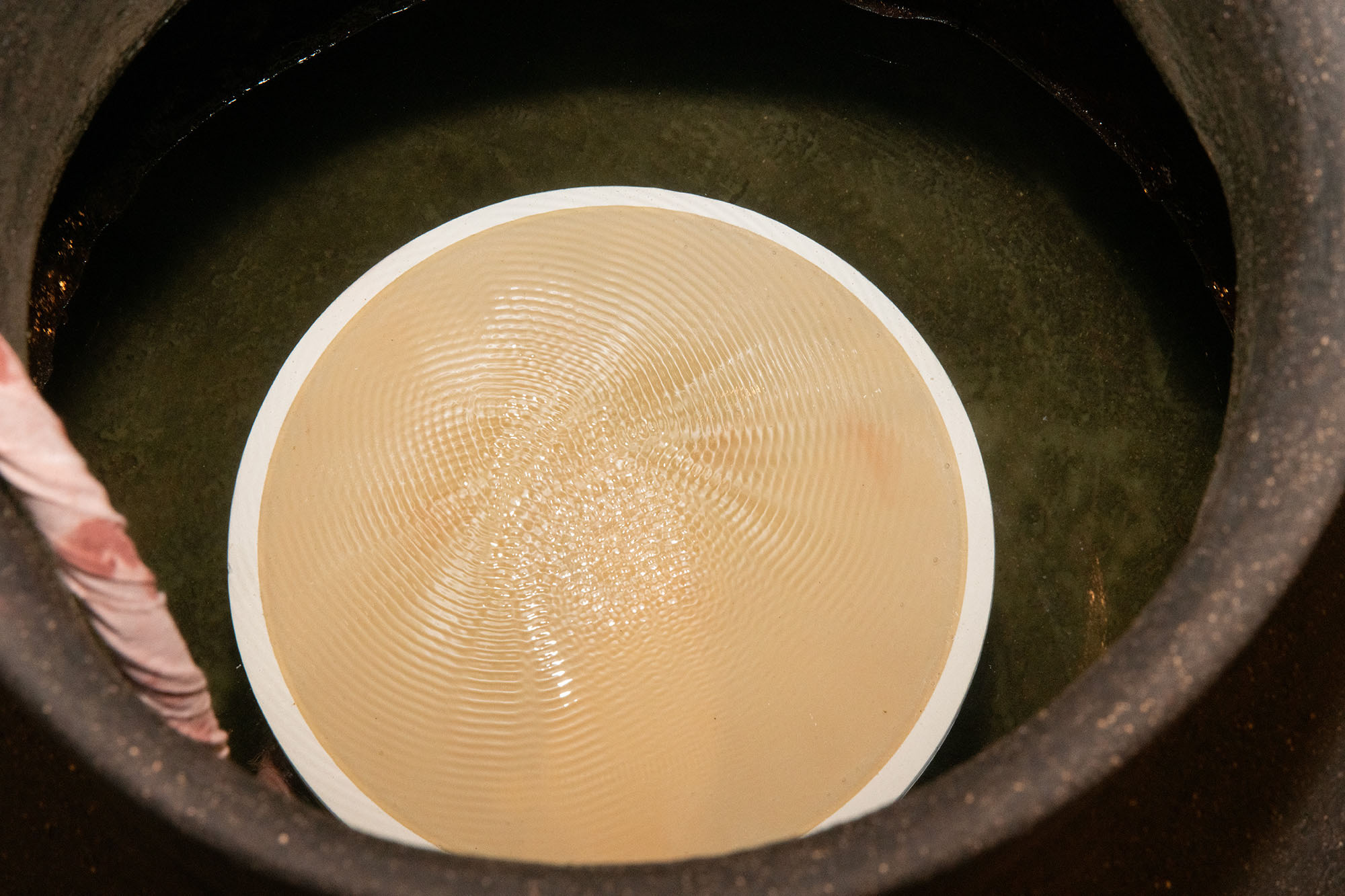
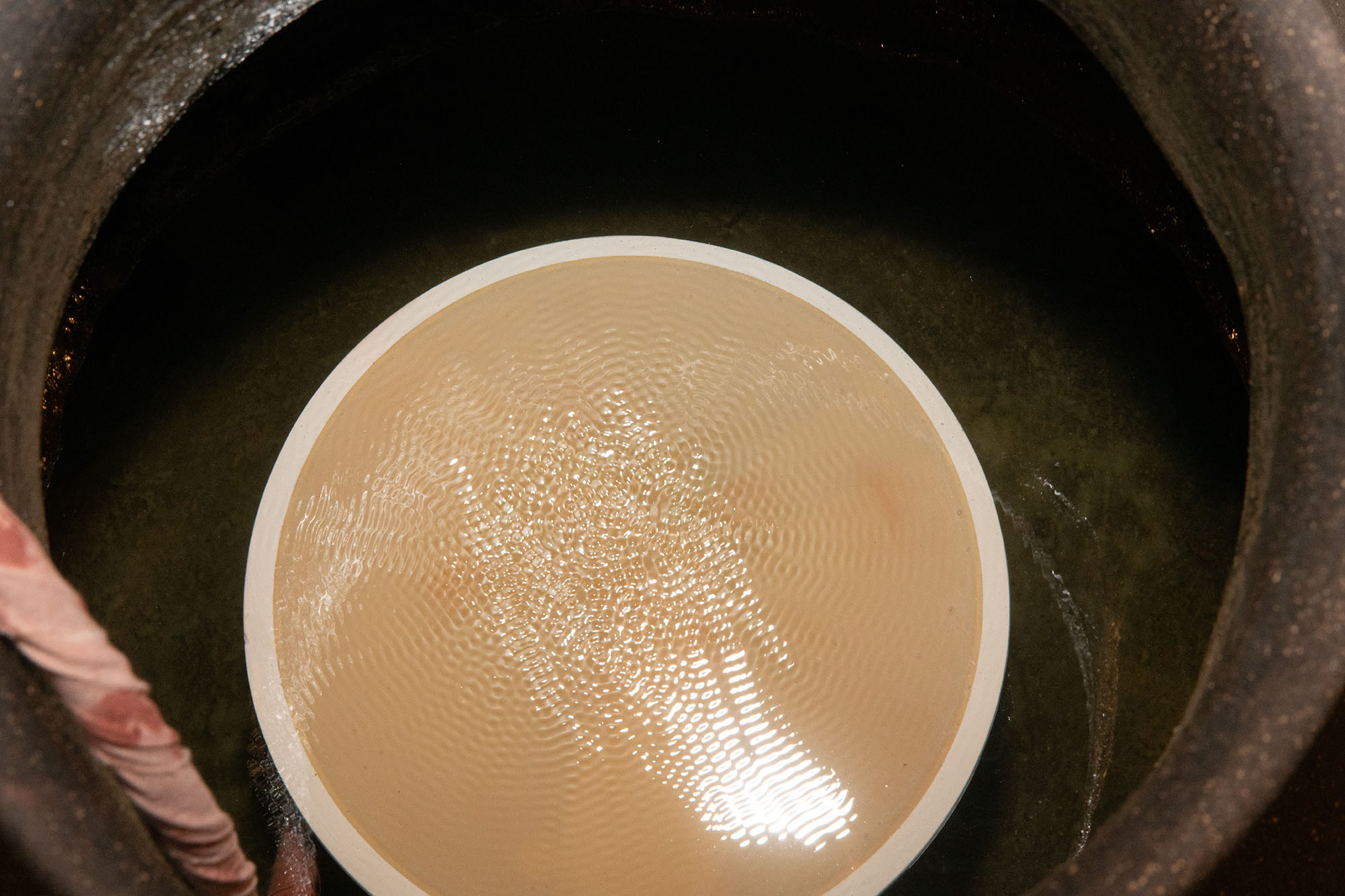
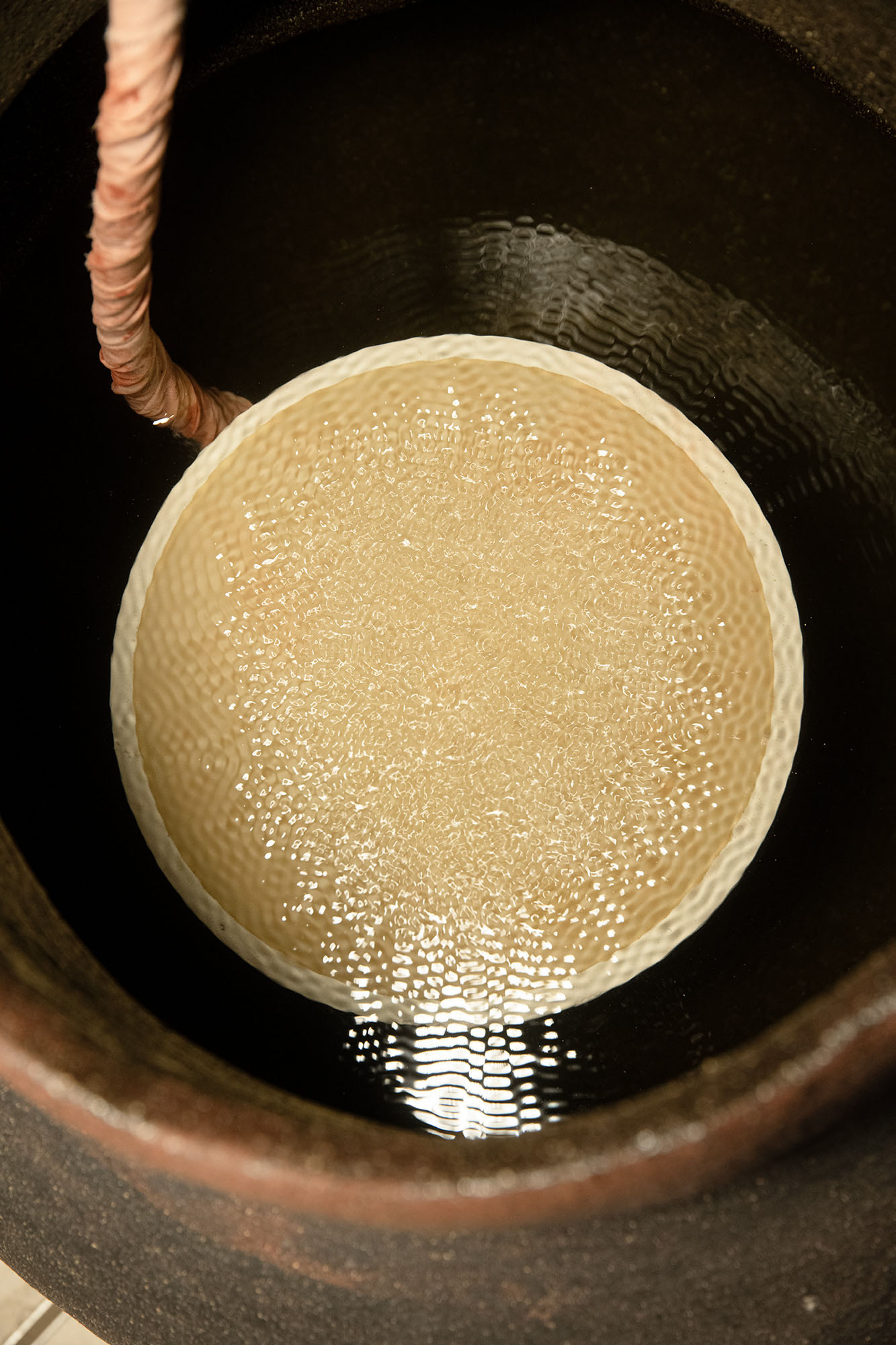
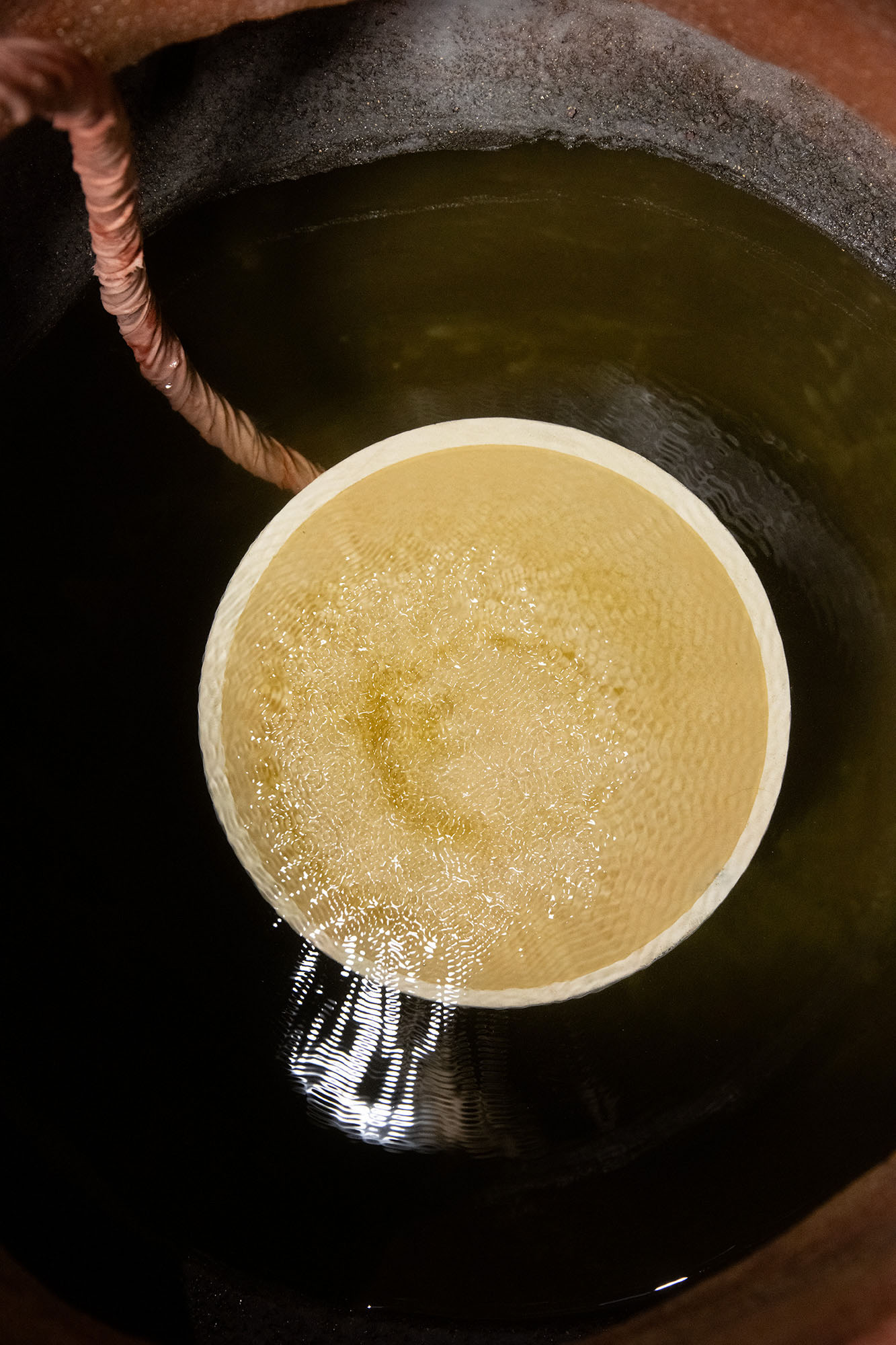
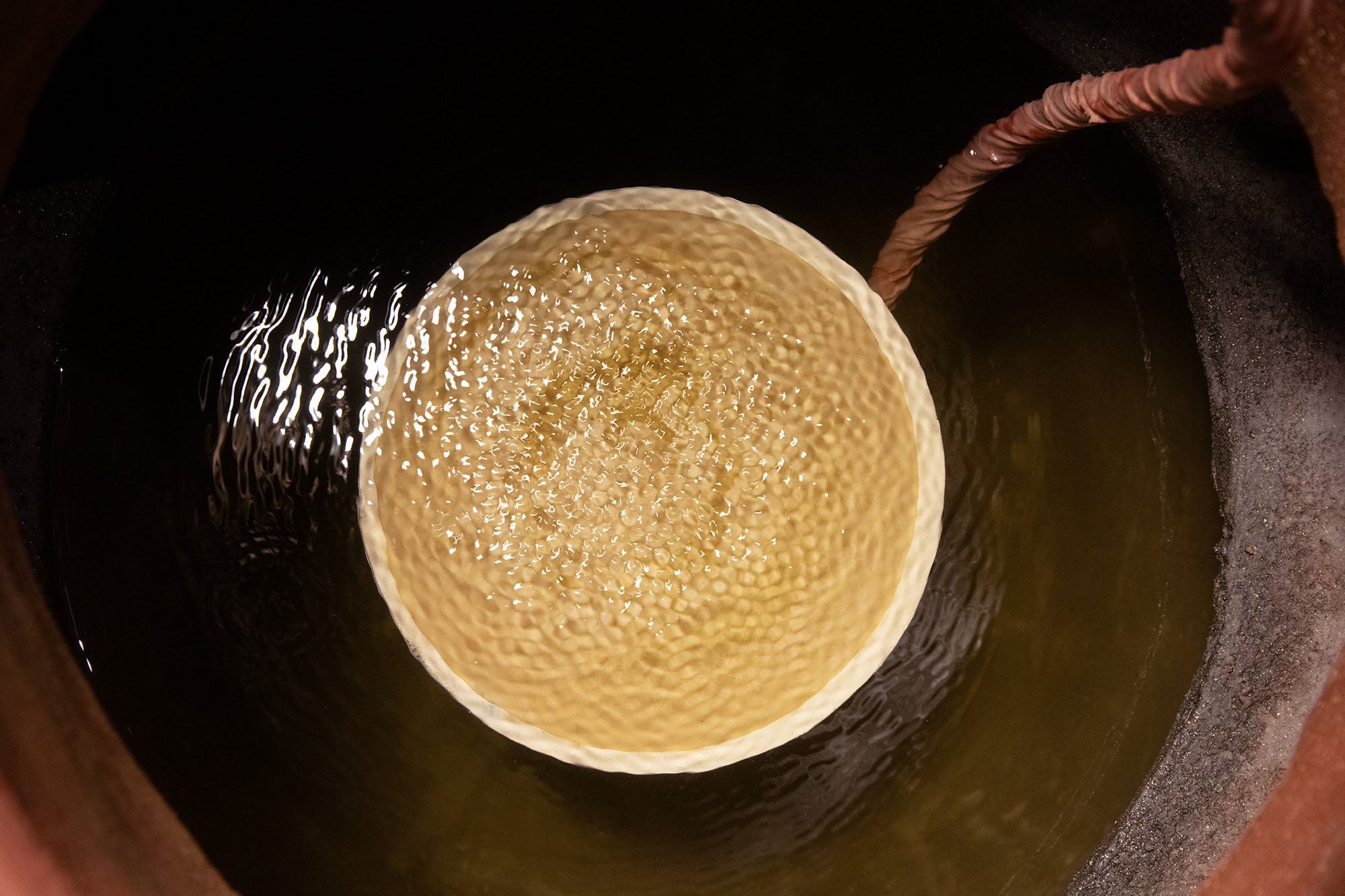
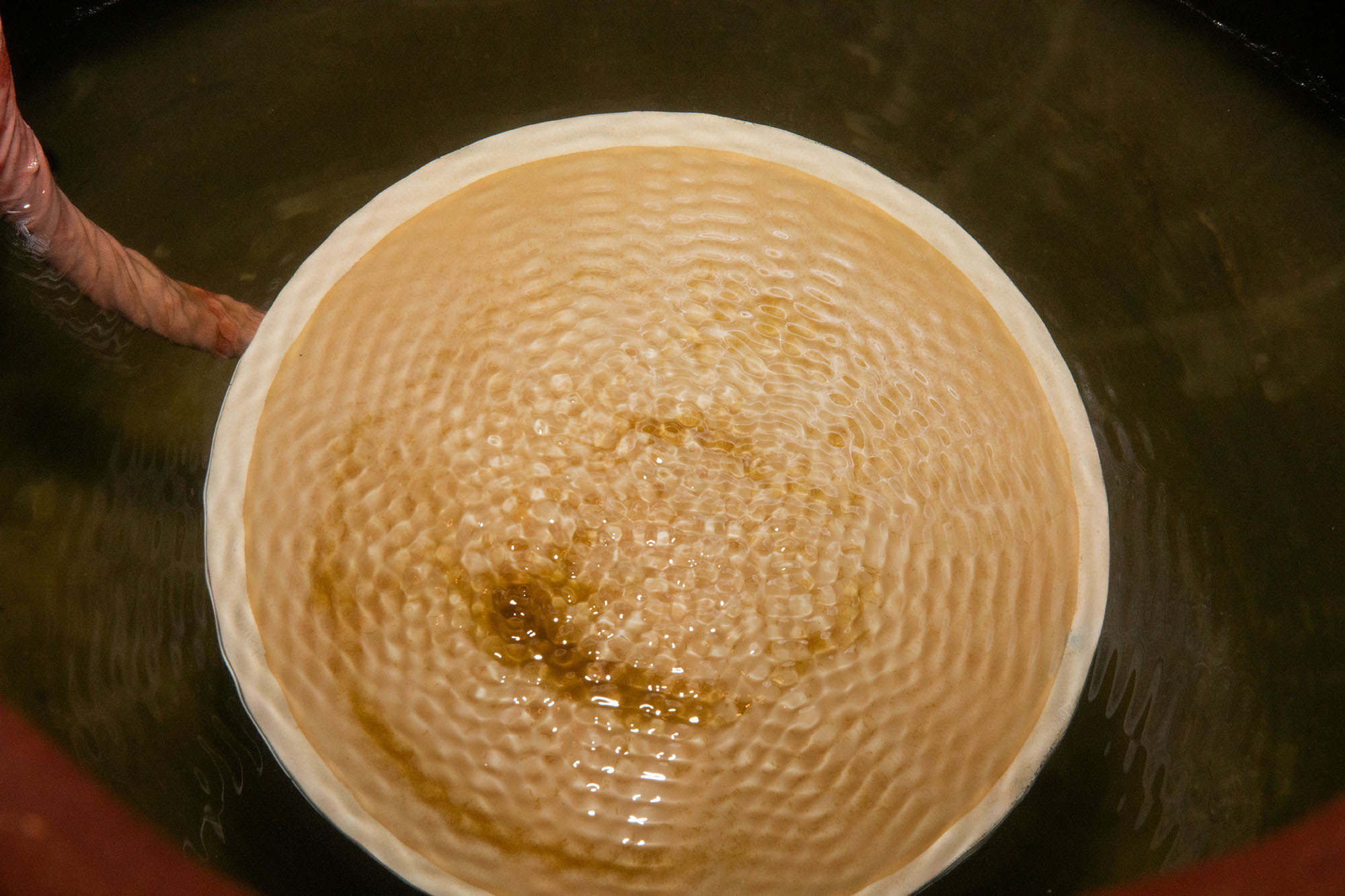
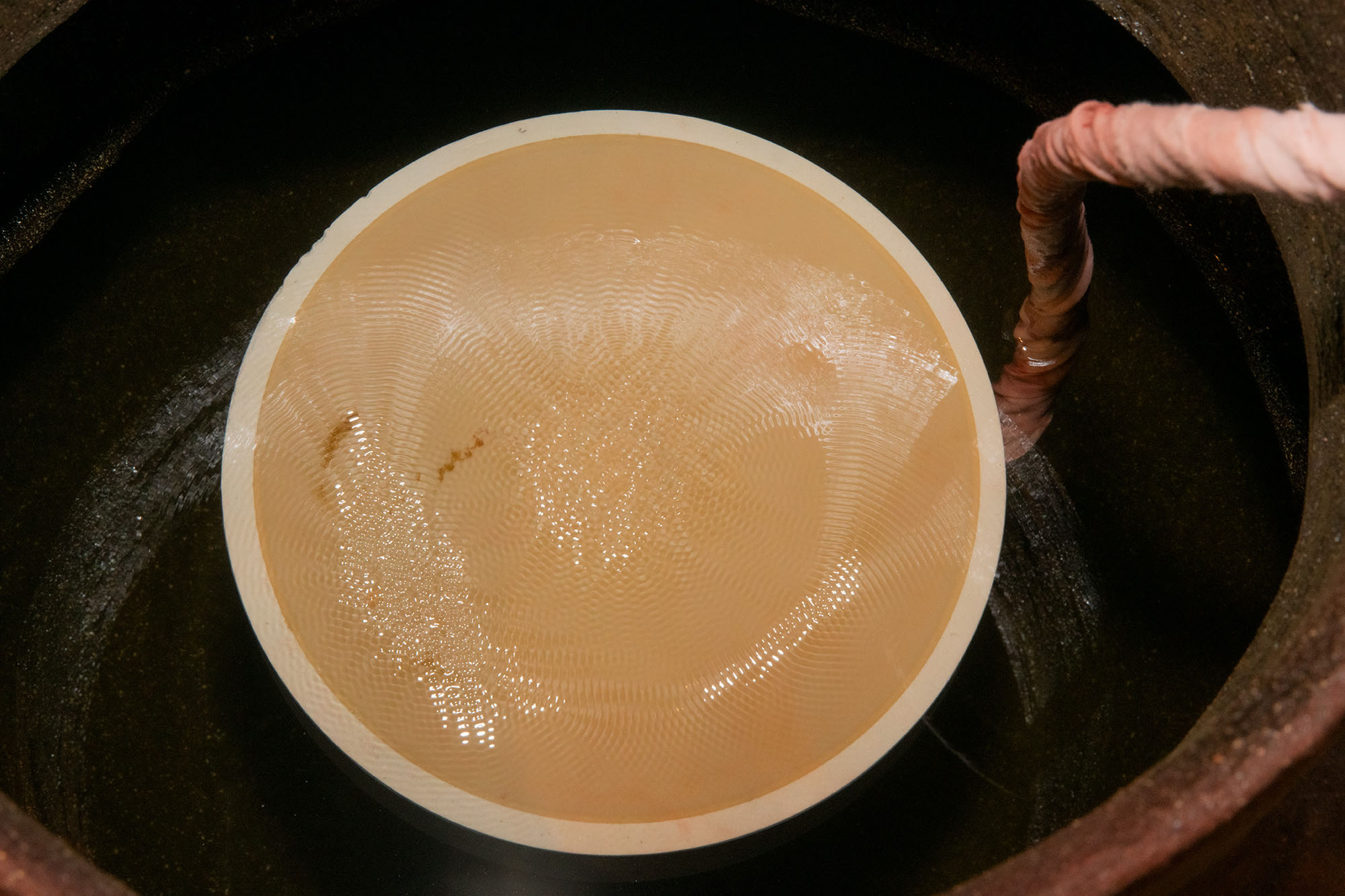
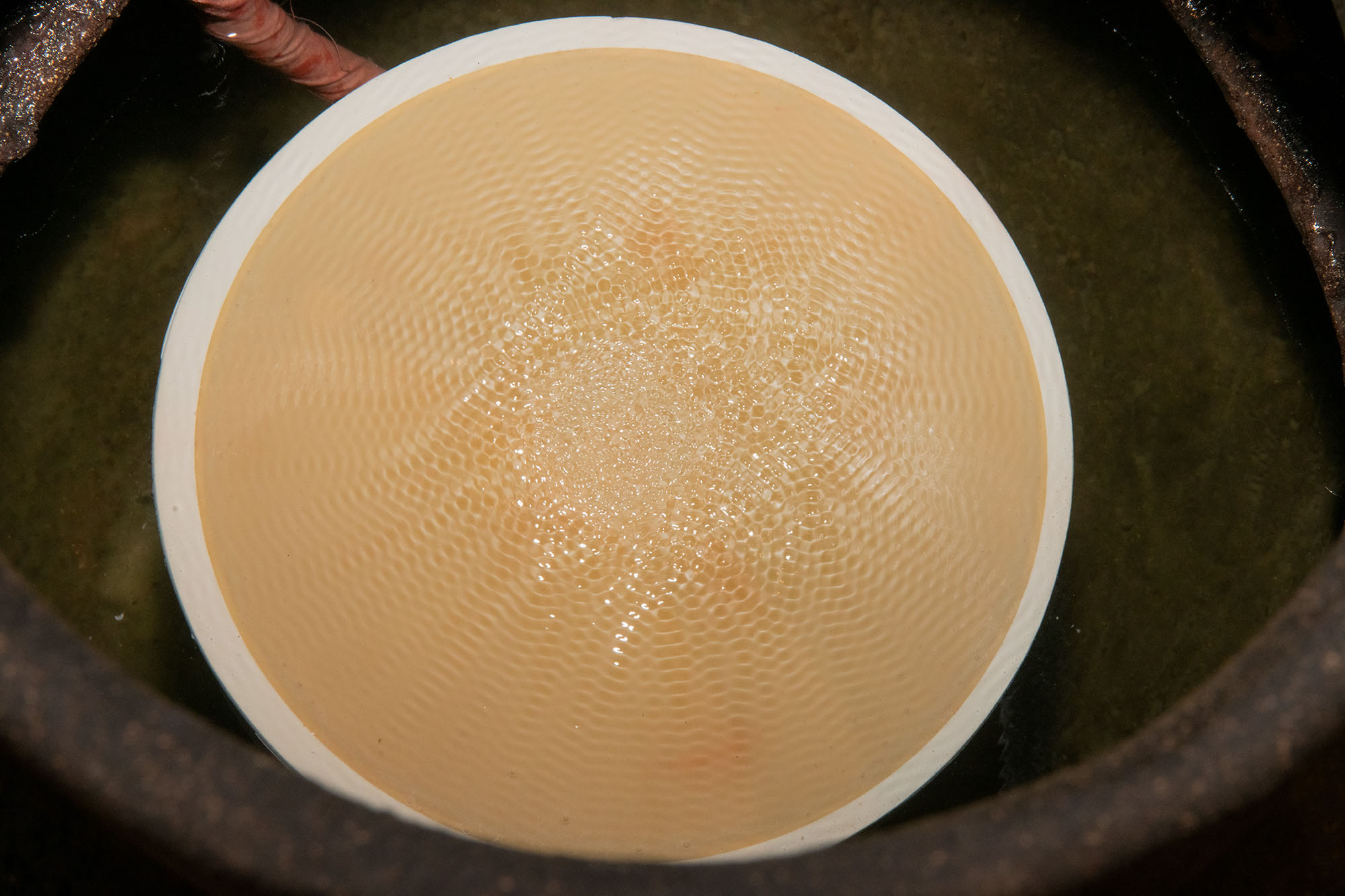
She dissects itself into five ceramic amphorae containing water, whose shapes and sizes are molded by the flow of her voice, shaped by passing through five corresponding bodily spaces: the pelvic floor, the abdomen, the chest, throat and mouth, and the skull.
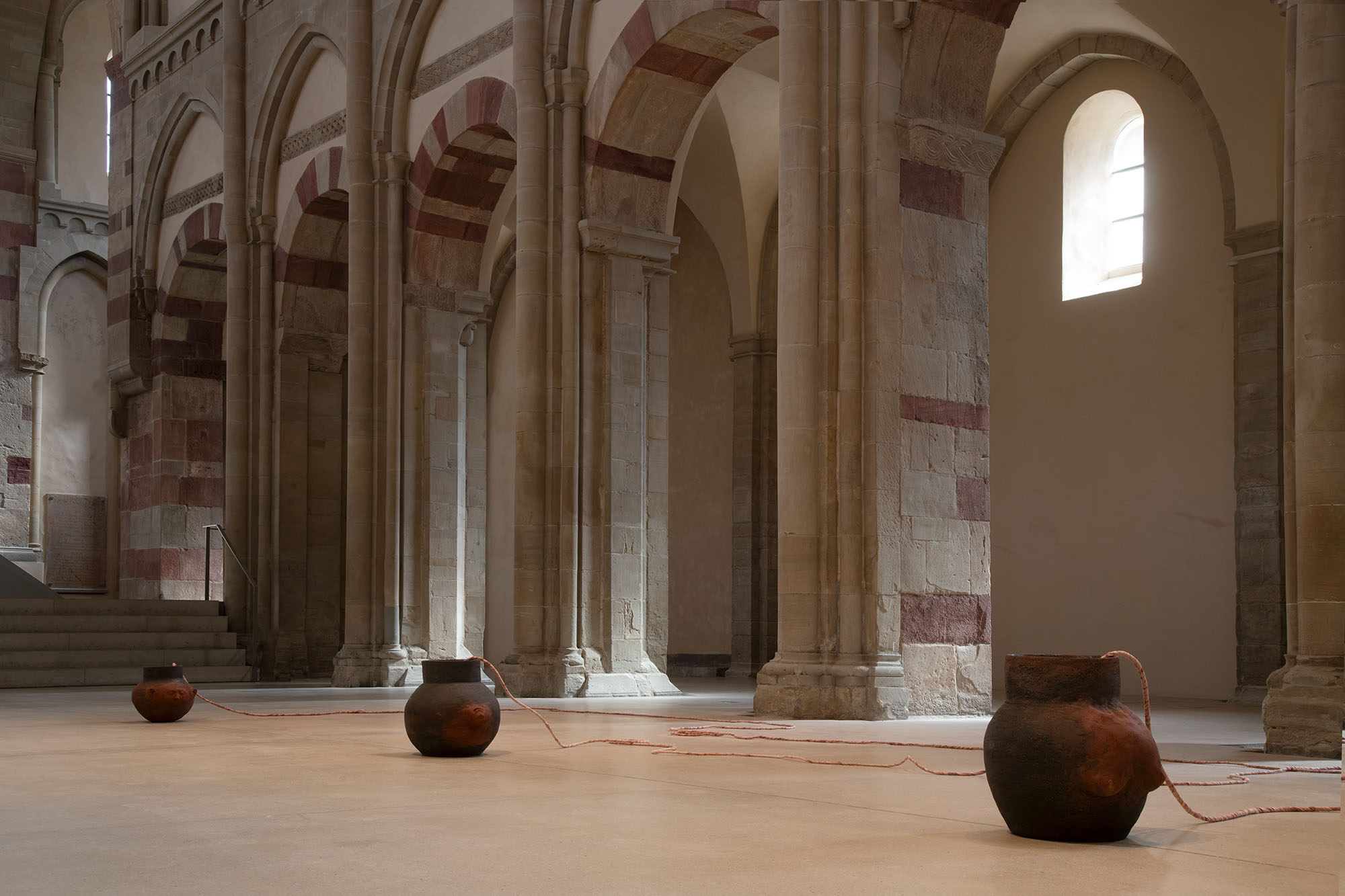
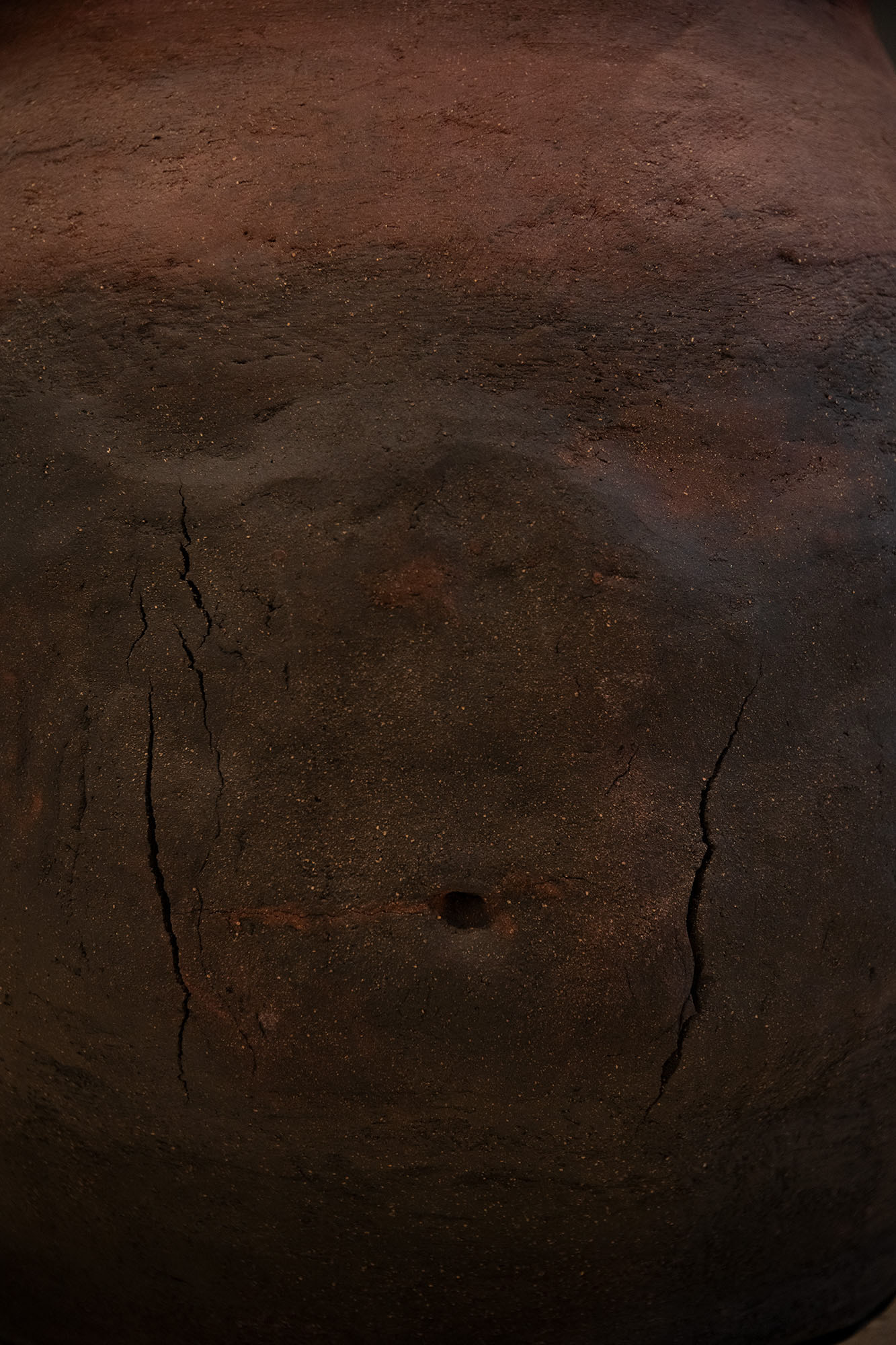
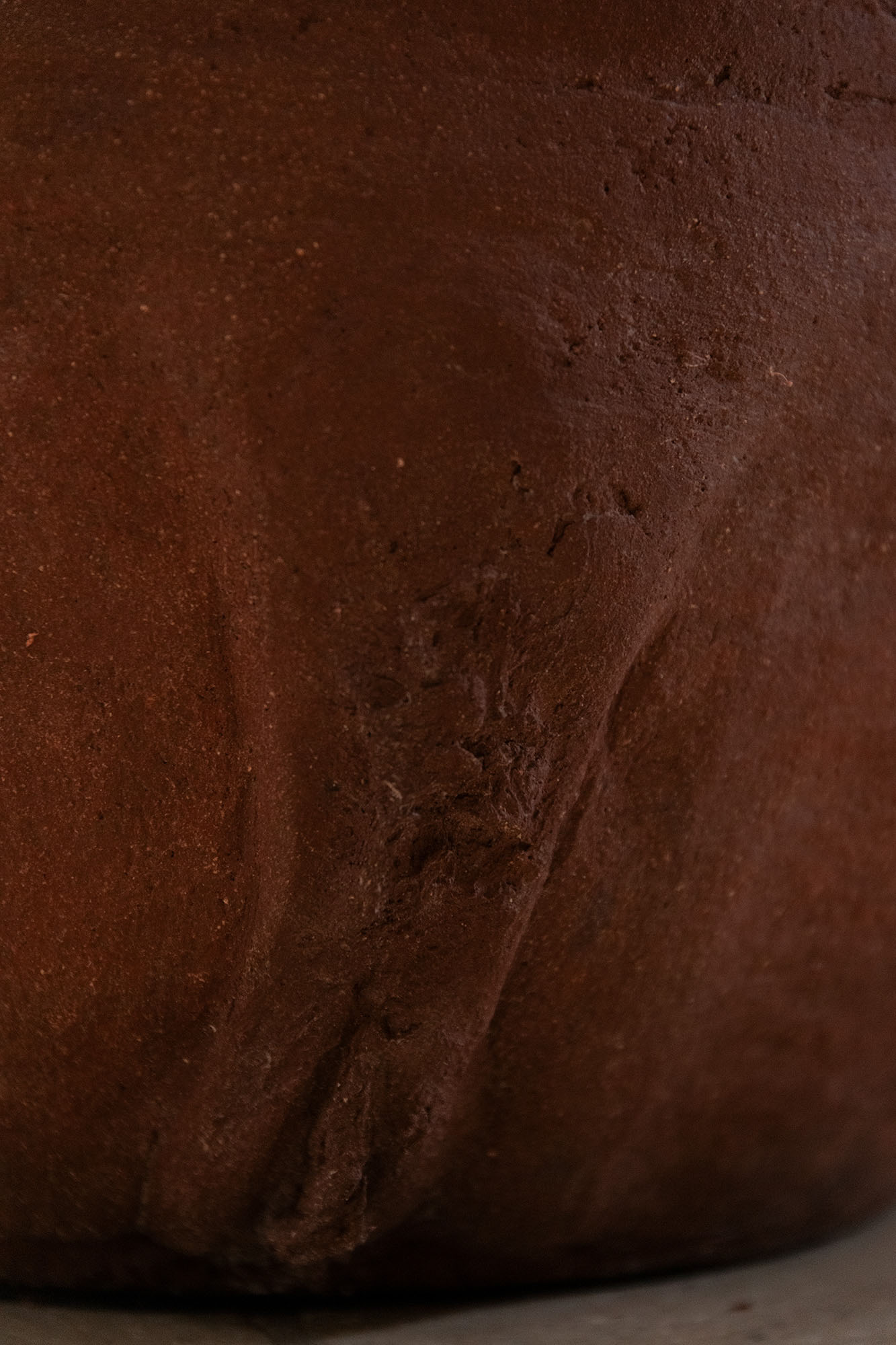
The sculptures thus become spaces of resonance, generating a scale that ranges from the deep tones of the pelvic diaphragm to the high tones of the head. By merging form and function in the excess of the voice, they force the limits of the body parts from which the casts are taken, bringing them to the surface of the vessels that come to life.
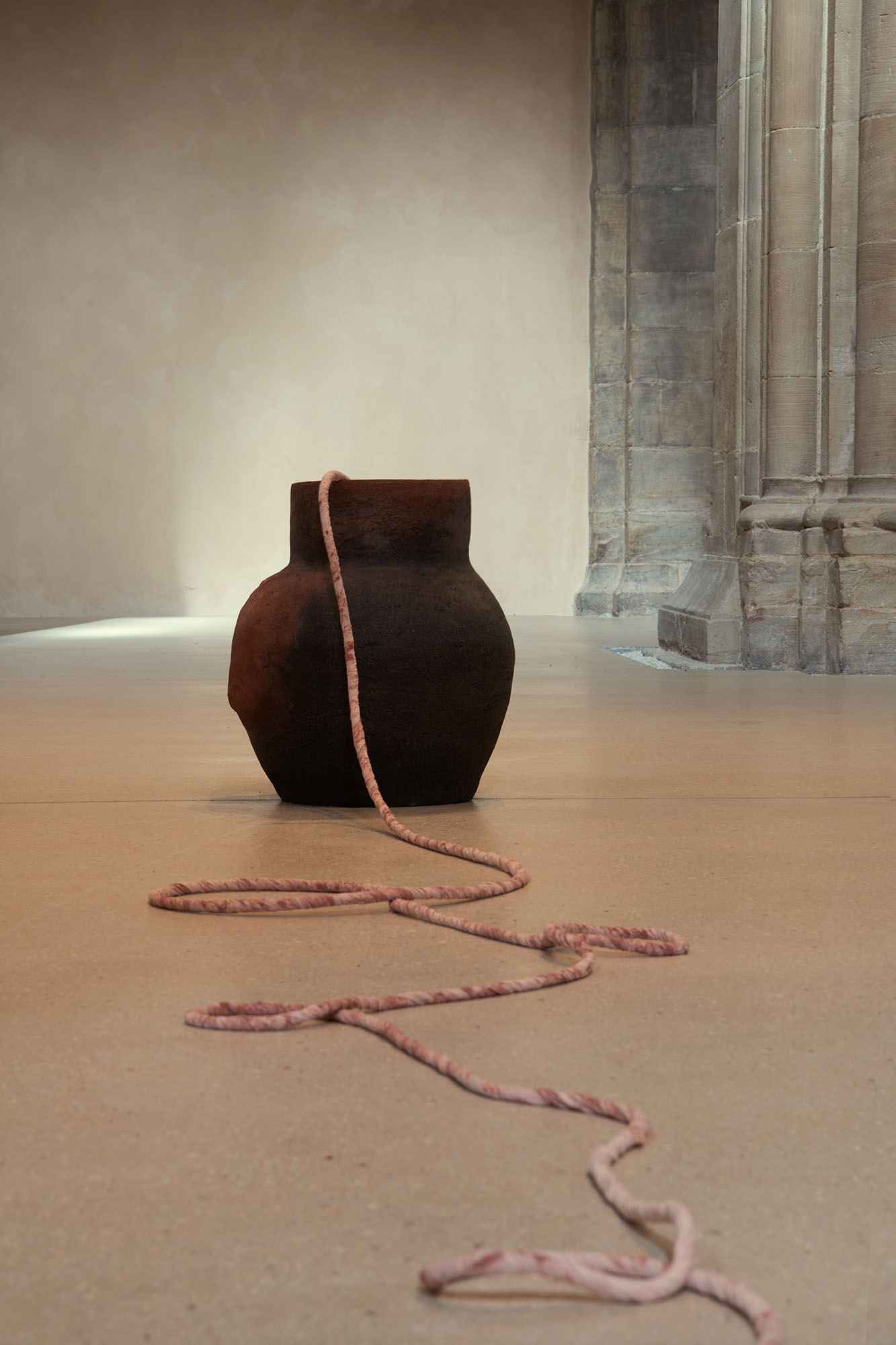
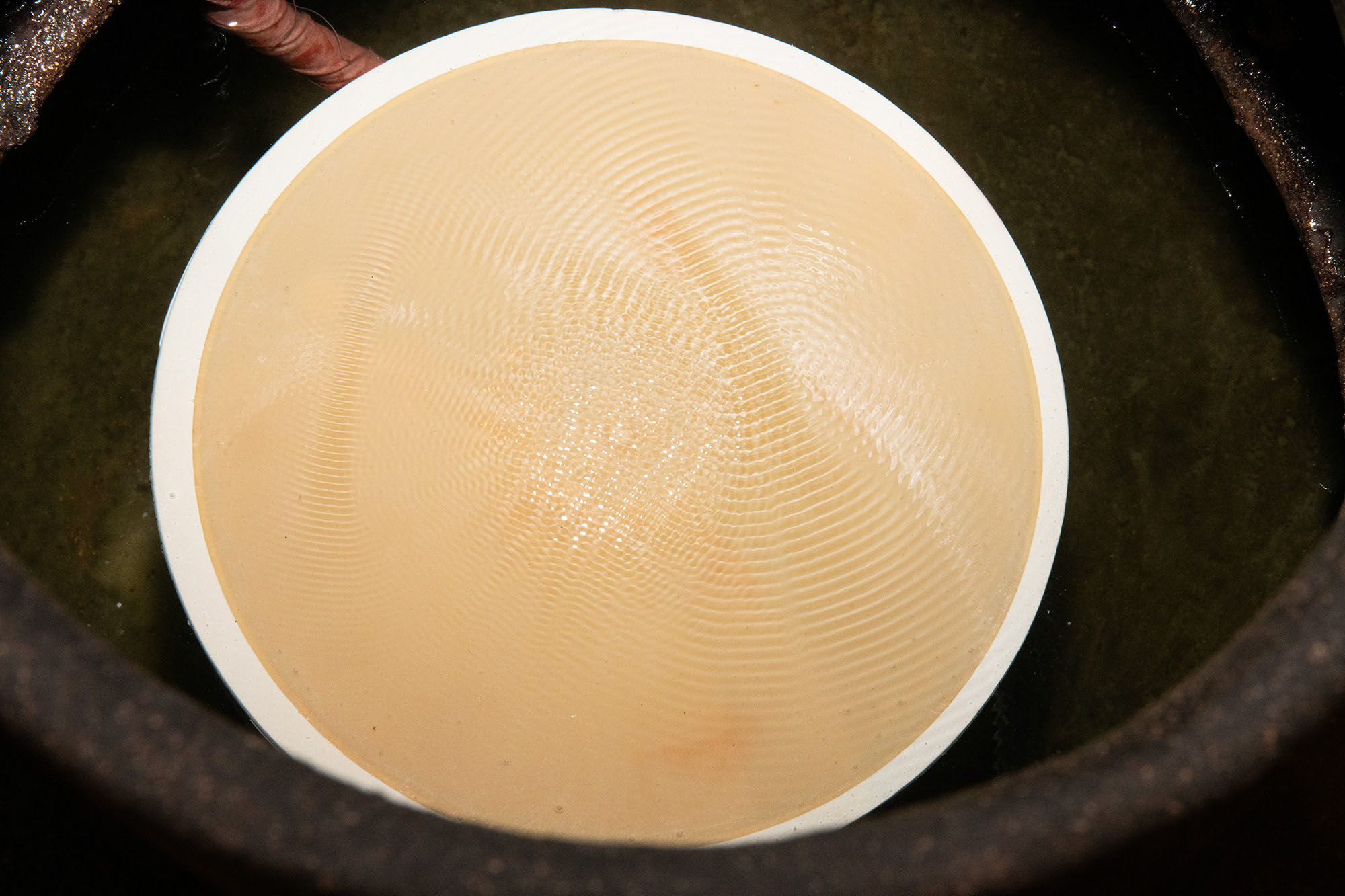
Through underwater speakers, recorded voices flow into the bodies of the amphorae, revealing sound waves on the surface of the water taken from the Elbe. These liquid choreographies culminate in a polyphonic vocal composition, blending the visible ripples with the resonance of the medieval church. The sculptures thus embody breath, which translates from the inside into external vibration, sublimating the distinction between the personal dimension and the architectural space.
The interdependent vessels run through the plan of the church like a spine, allowing ascension from the pelvic floor/entrance to the skull/altar, and creating an organism connected by sound cables. permeated with the same clay, like an umbilical cord. Revealing itself, the body flows into the naves through the immaterial gaze of the sound.
The voices regress over time, unfolding their spectrum in Romanesque and Gothic architecture. Hesitant and grave, they traverse different emotional and evolutionary states. The breath of pre-human verses multiplies in polyphony, transcending adolescent laments and spectral screams, the gravity of sonic obscenities, and the lightness of suspirations.
The subtracted, dissected, and sublimated body expands, spatializing polyphony through multichannel sound. Undergoing this series of operations, eviscerating matter in order to offer oneself, is not painless. Opened from within, the flesh is no longer protected by skin, accessing a renewed vulnerability.
To receive, it is necessary to renounce defenses, as in the poetic verses of the thirteenth century mystic and writer Mechthild von Magdeburg, Wouldst thou know my meaning? Lie down in the Fire. Once shaped, the sculptures are fired through a reduction process, deprived of oxygen. Death dwells in the void that opens between exhalation and inhalation. The voice penetrates the depths of emotions, transforming them and allowing them to pass through us. Vehicles of breath, amphorae ritually replace flesh that returns to clay, animating the ceramic body parts and denying their cold rigidity.
The significance of what we experience is only determined at the moment of death, because until the very end, we may learn something that corrupts or perverts our memories, revealing misinterpretations or illusions.
But the divisions within the subject contradict the fixed nature of beliefs, making it possible for conflicting realities to coexist, nullifying the univocality of discourse and tempting us to let our assertions fall to the ground, into silence.
Through the vibration of the voice, however, it is possible to alter the motion of bodies, overcoming the impossibility of expression through the illimited sound that precedes meaning, thus affirming its absolute indeterminacy.
Lara Dâmaso (*1996 in Biel/Bienne, based in Milan und Zurich), trained in ballet and contemporary dance, studied art and media at the Leipzig Hochschule für Grafik und Buchkunst, obtained a Bachelor of Fine Arts from Zurich University of the Arts
–Niccolò Gravina