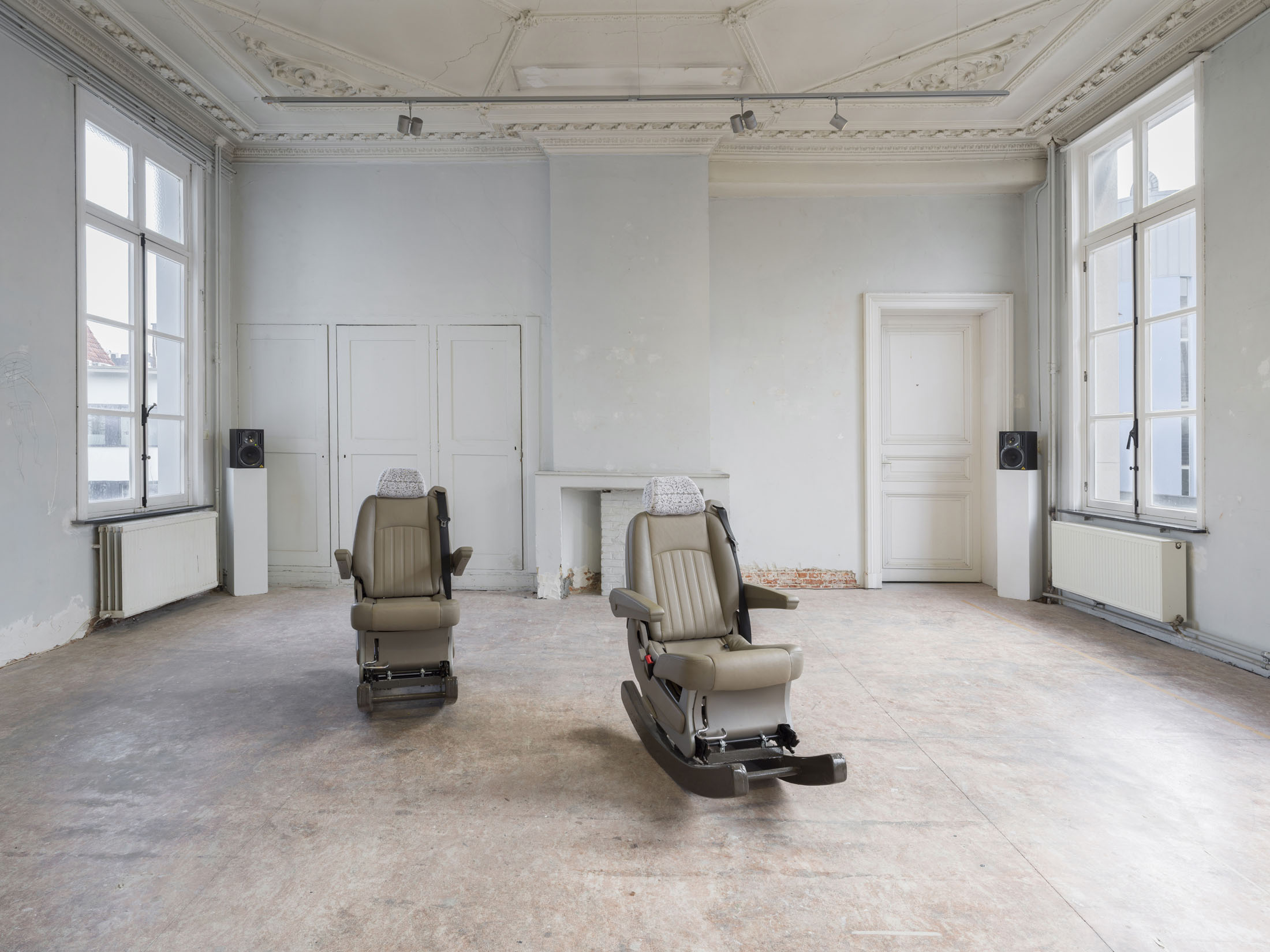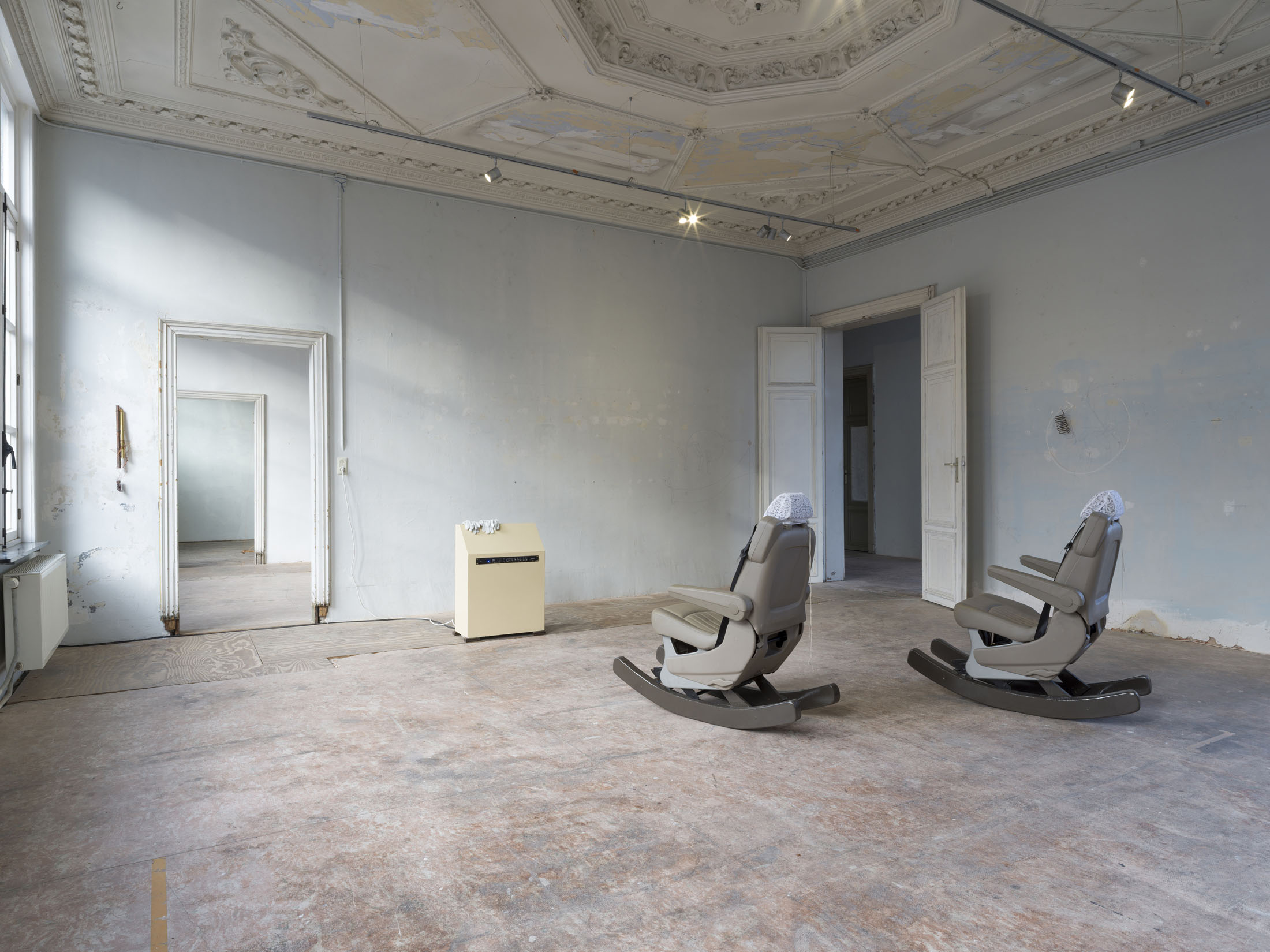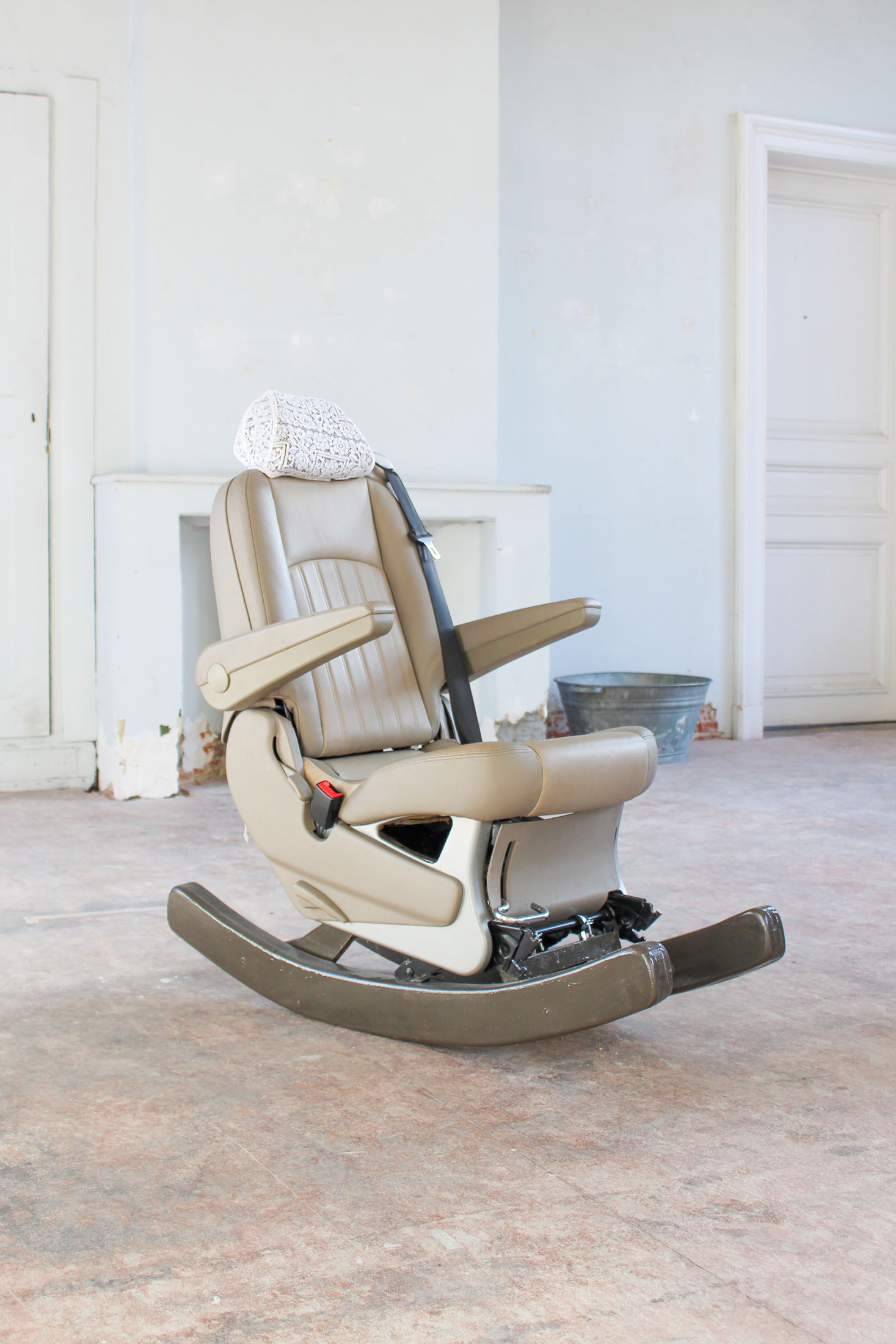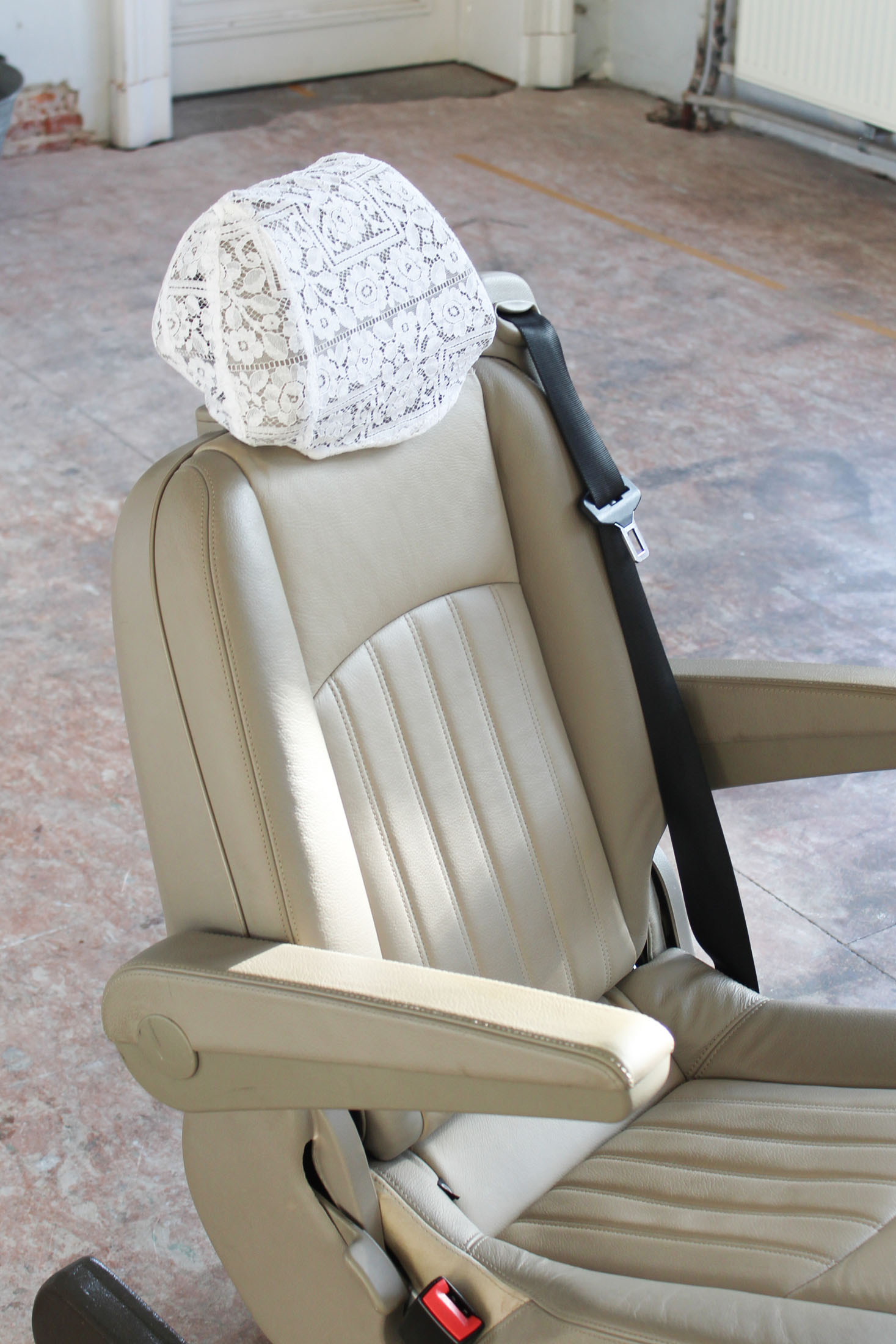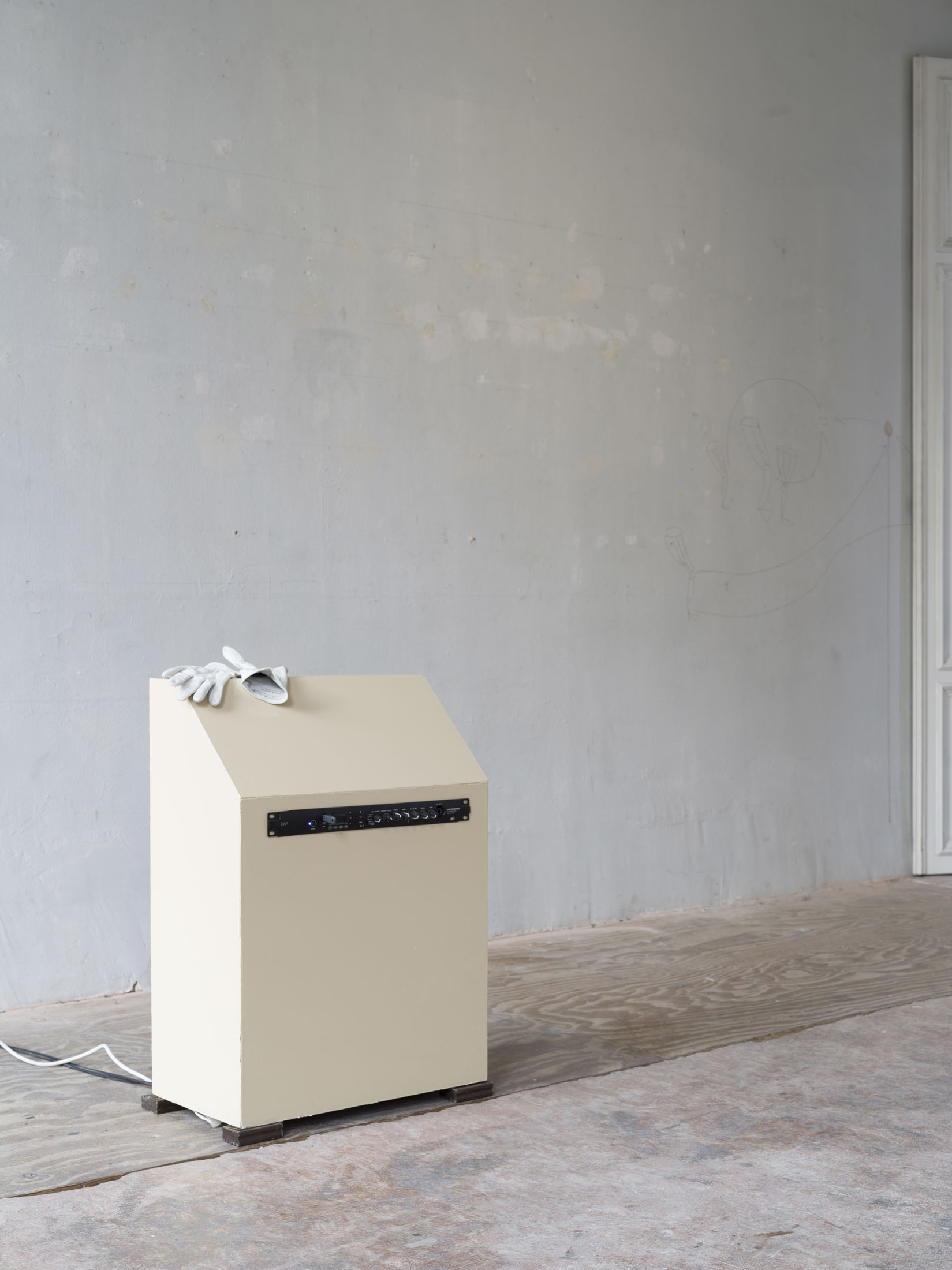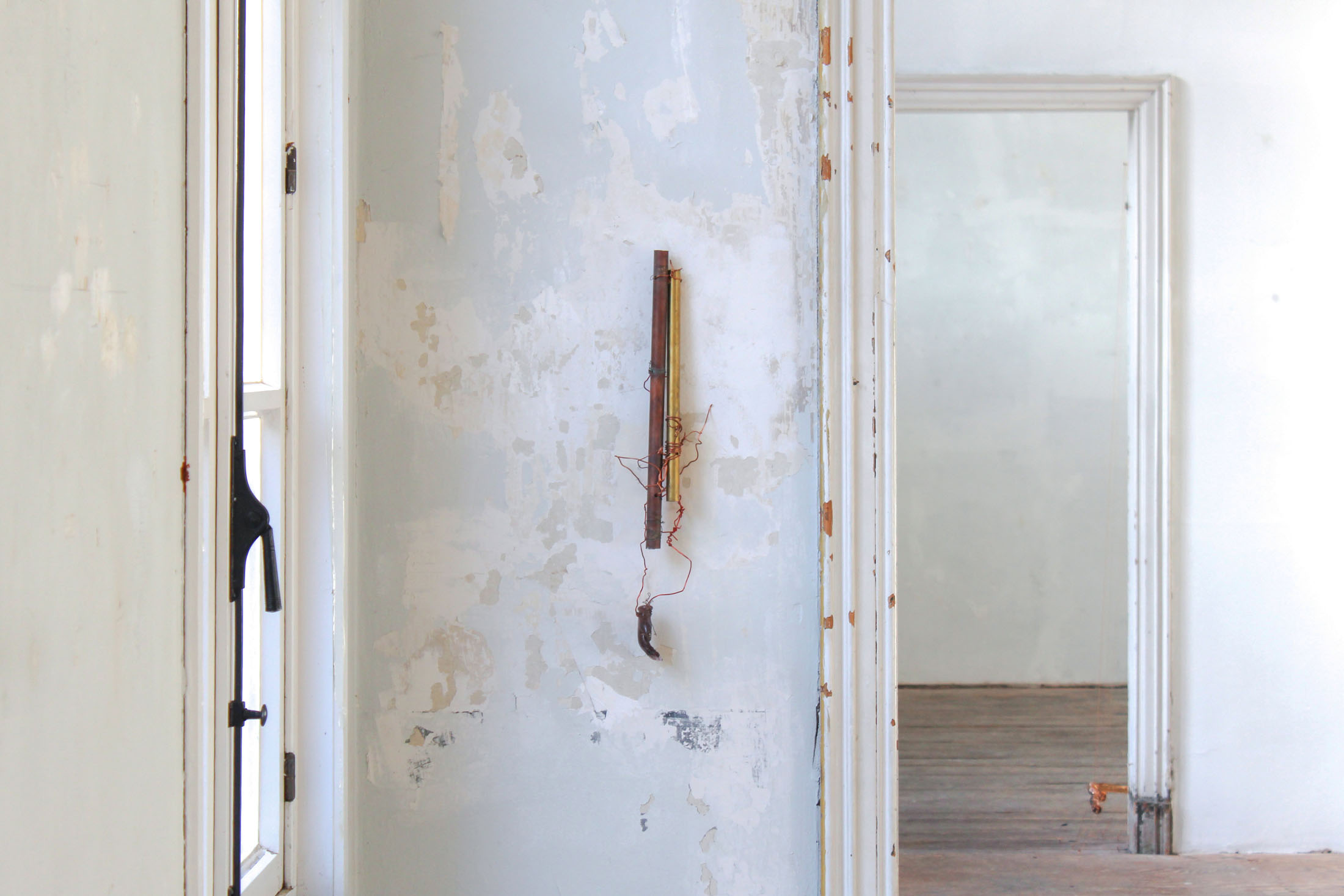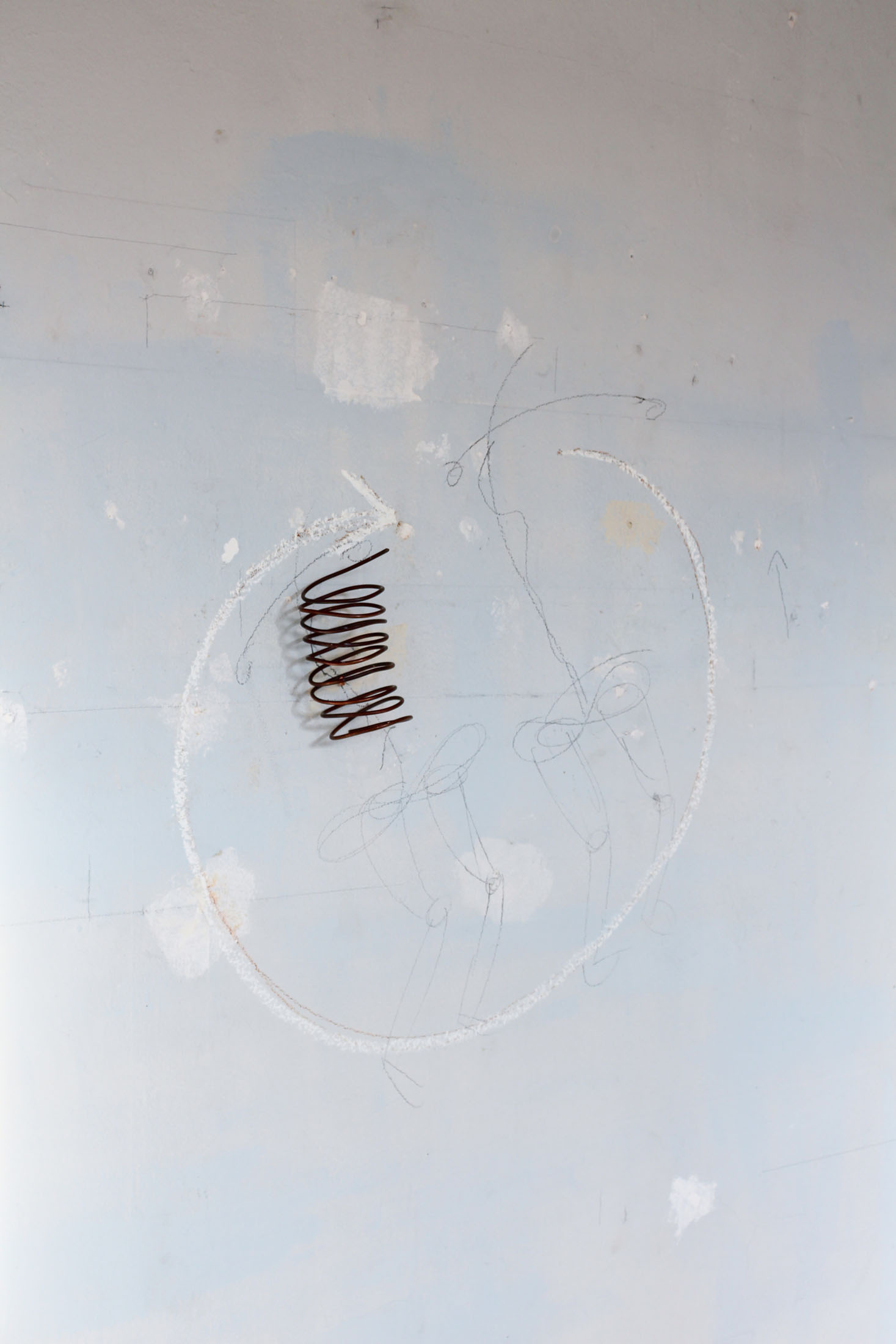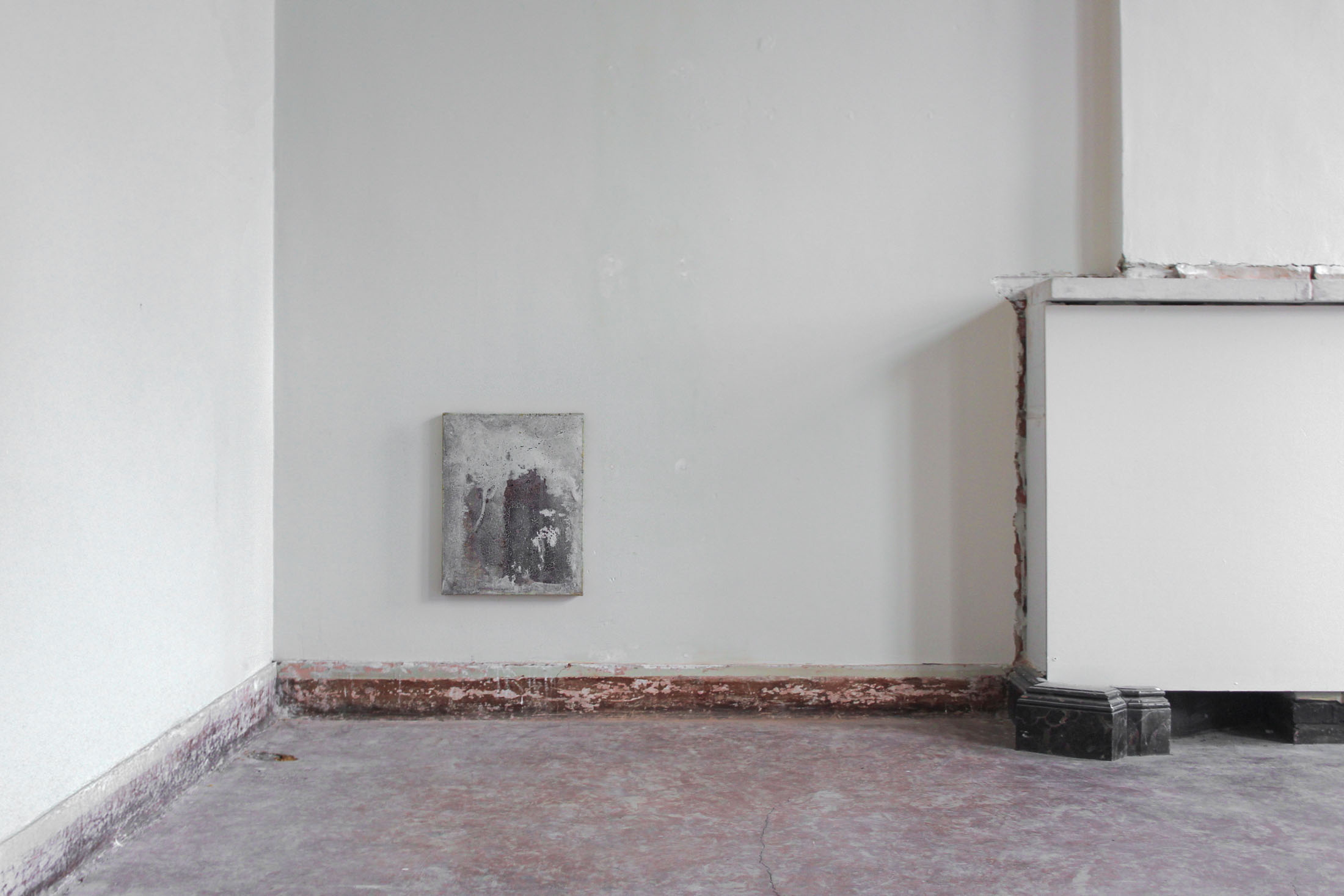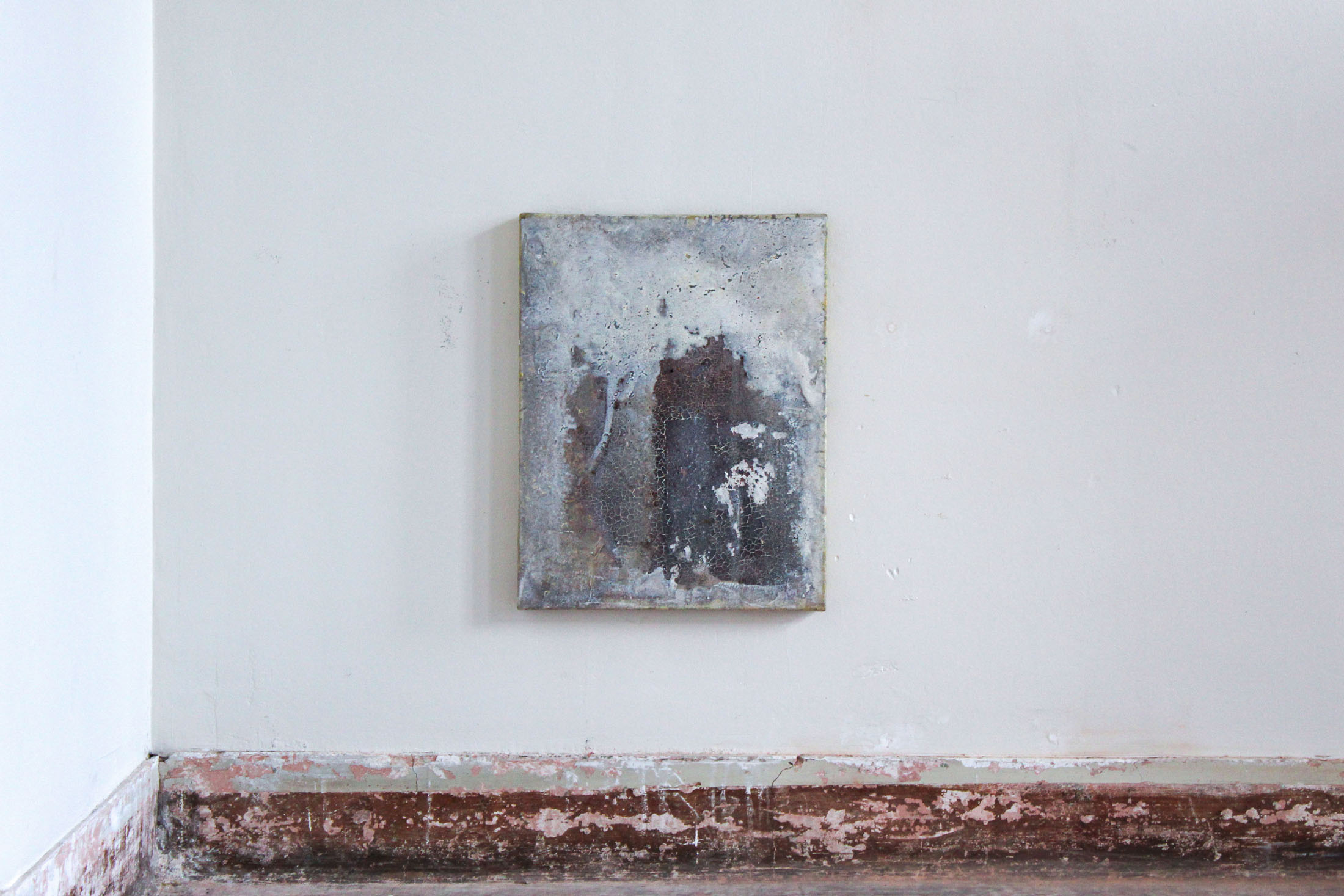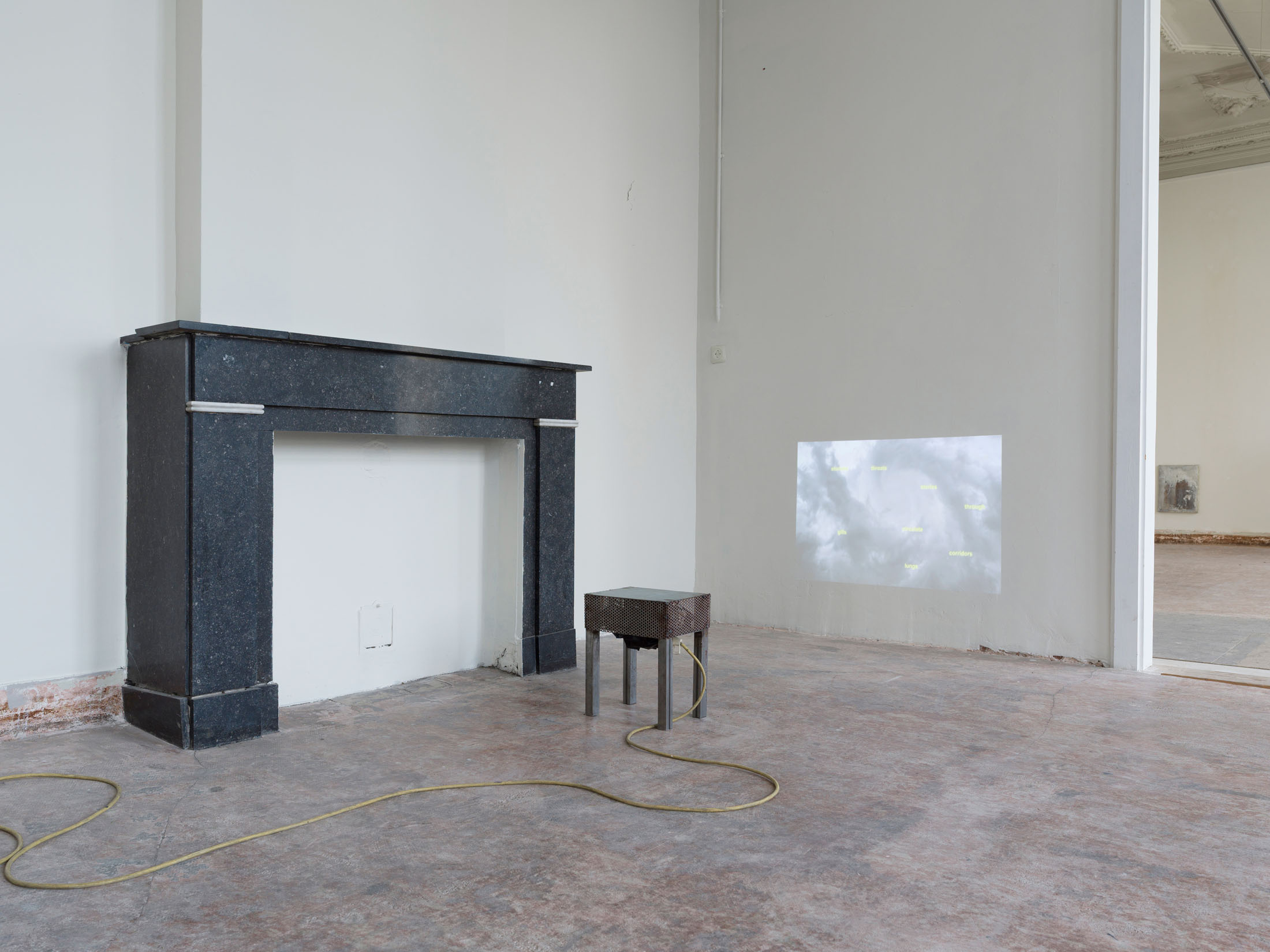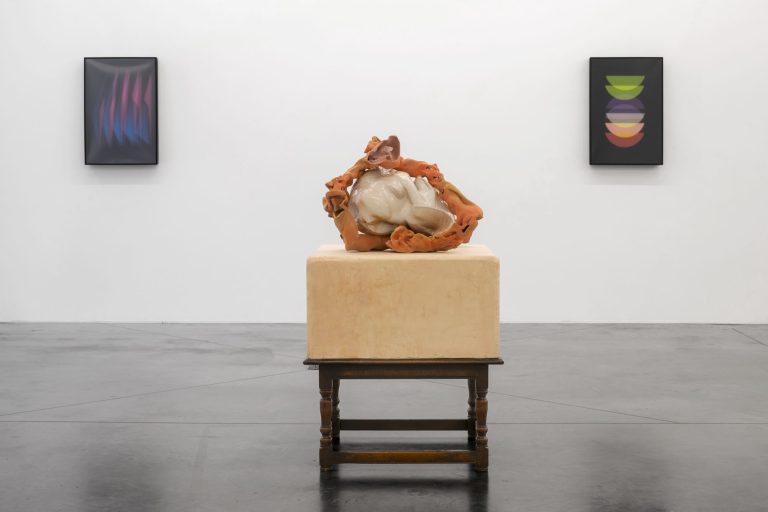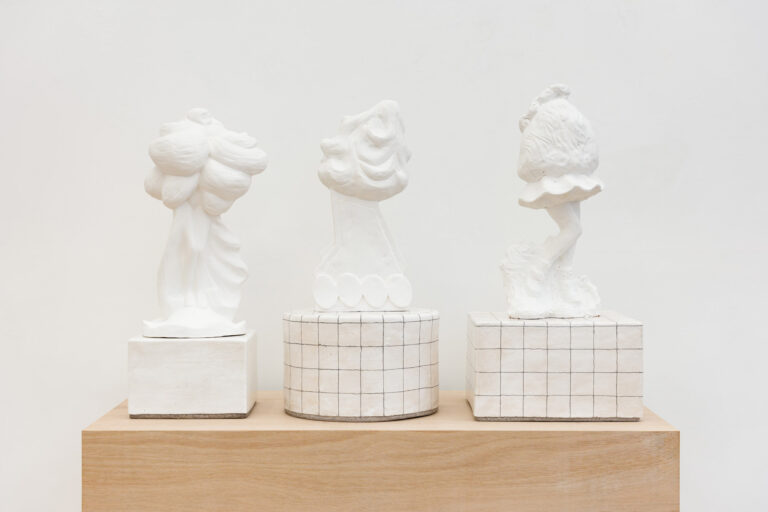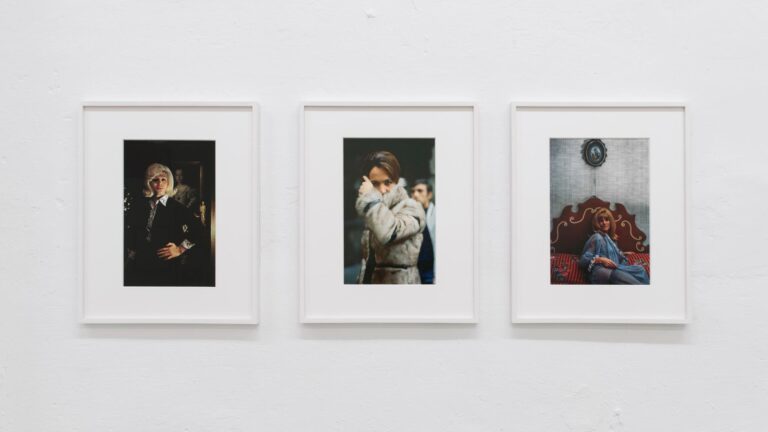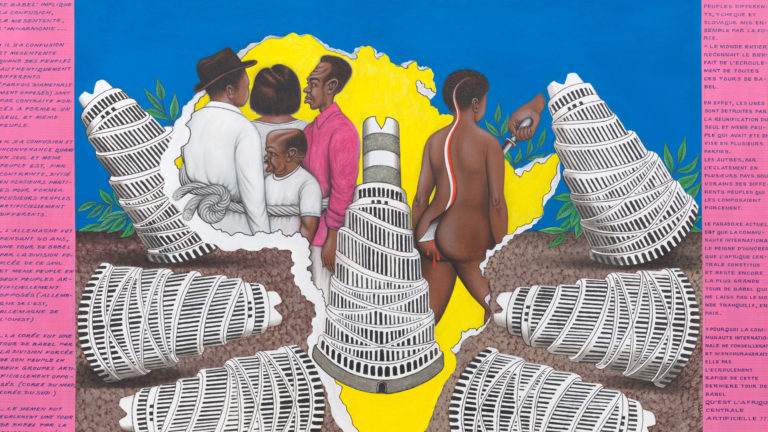
Kunsthal Mechelen and CASTOR are proud to present Becoming Otherwise, joining the practices of Antwerp-based artist Juli Bierich and Brussels-based artist collective mountaincutters. The exhibition runs from January 24 until March 22 and is presented at IKA Mechelen.
Becoming Otherwise examines the material, social, and cultural dimensions of decay and repair. By inhabiting moments of rupture, Bierich and mountaincutters approach vulnerability as a condition through which new forms of existence can emerge. What happens when the unshakeable begins to falter? When the structures we took for granted—political, social, or even the ground beneath our feet—fall apart?
In this context, language functions as a material in its own right, one that has the capacity to connect, misalign, translate, or reconfigure. The exhibition functions as a site of mutual trust, where the artists have allowed their processes to overlap, deliberately unsettling the boundaries of their respective disciplines.
The title of the exhibition draws from the work of anthropologist and philosopher Elizabeth Povinelli, specifically her concept of ‘The Otherwise.’ For Povinelli, ‘becoming otherwise’ refers to the persistent, often quiet ways that life endures within the cracks of failing systems.
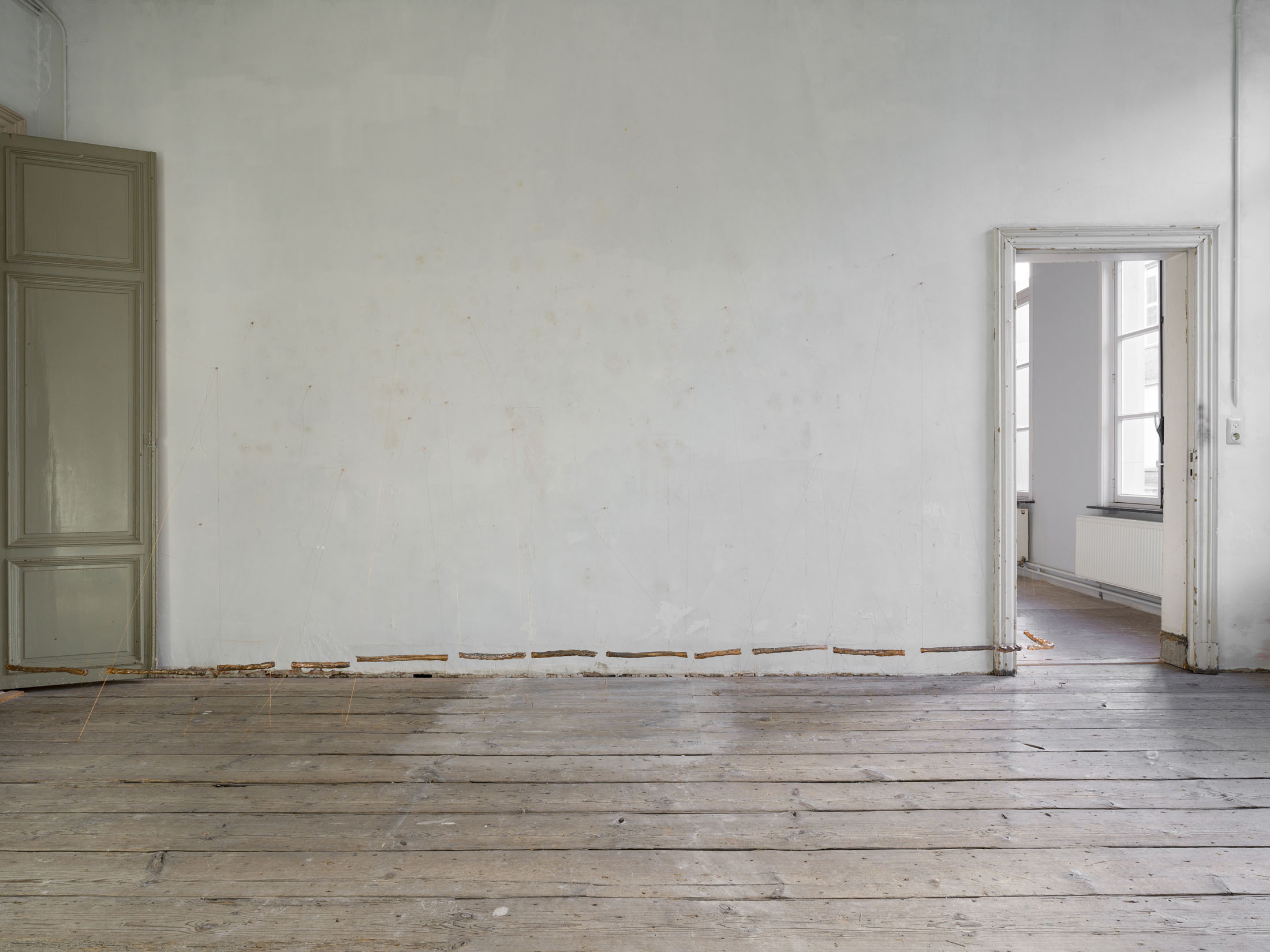
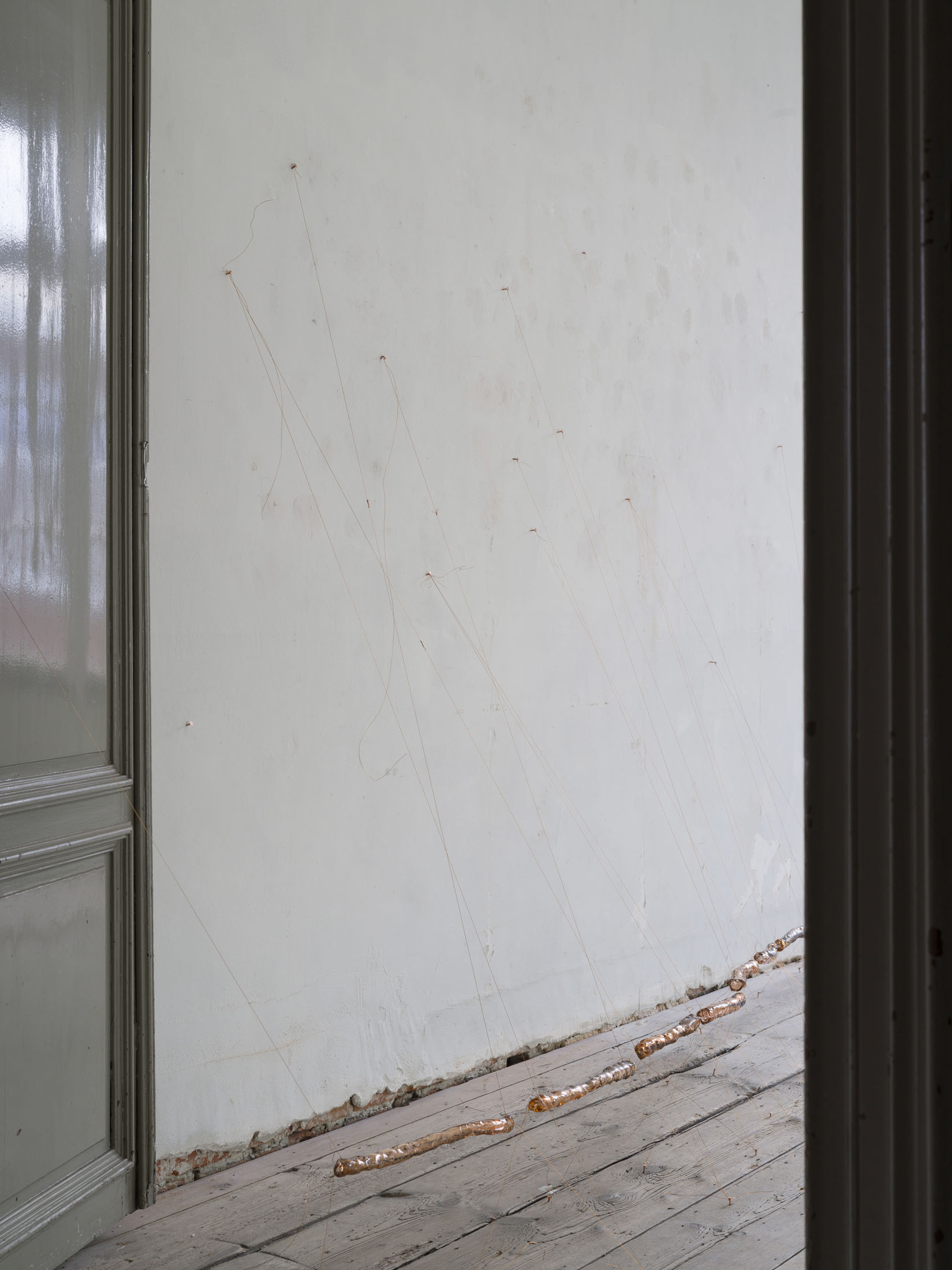
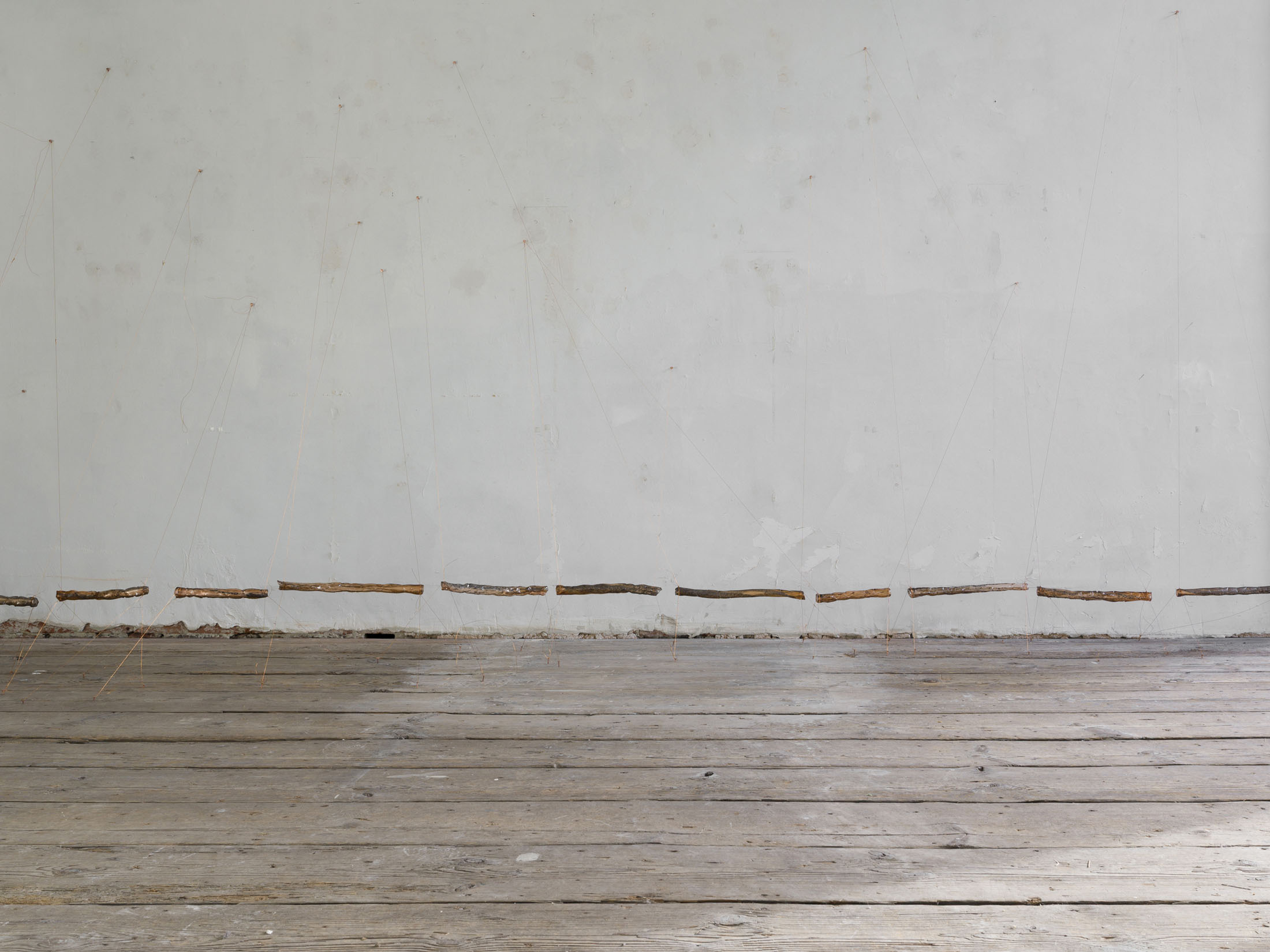
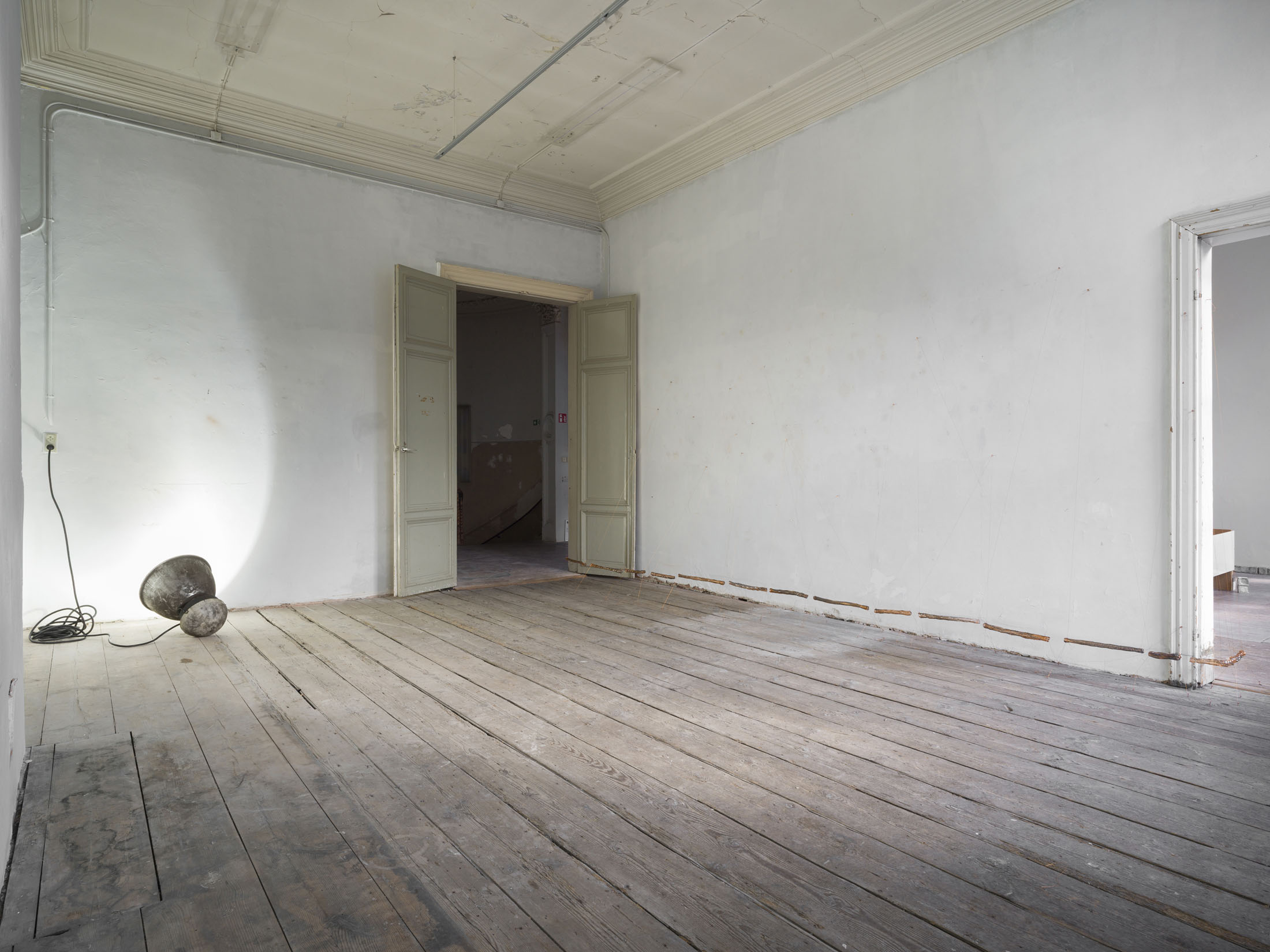
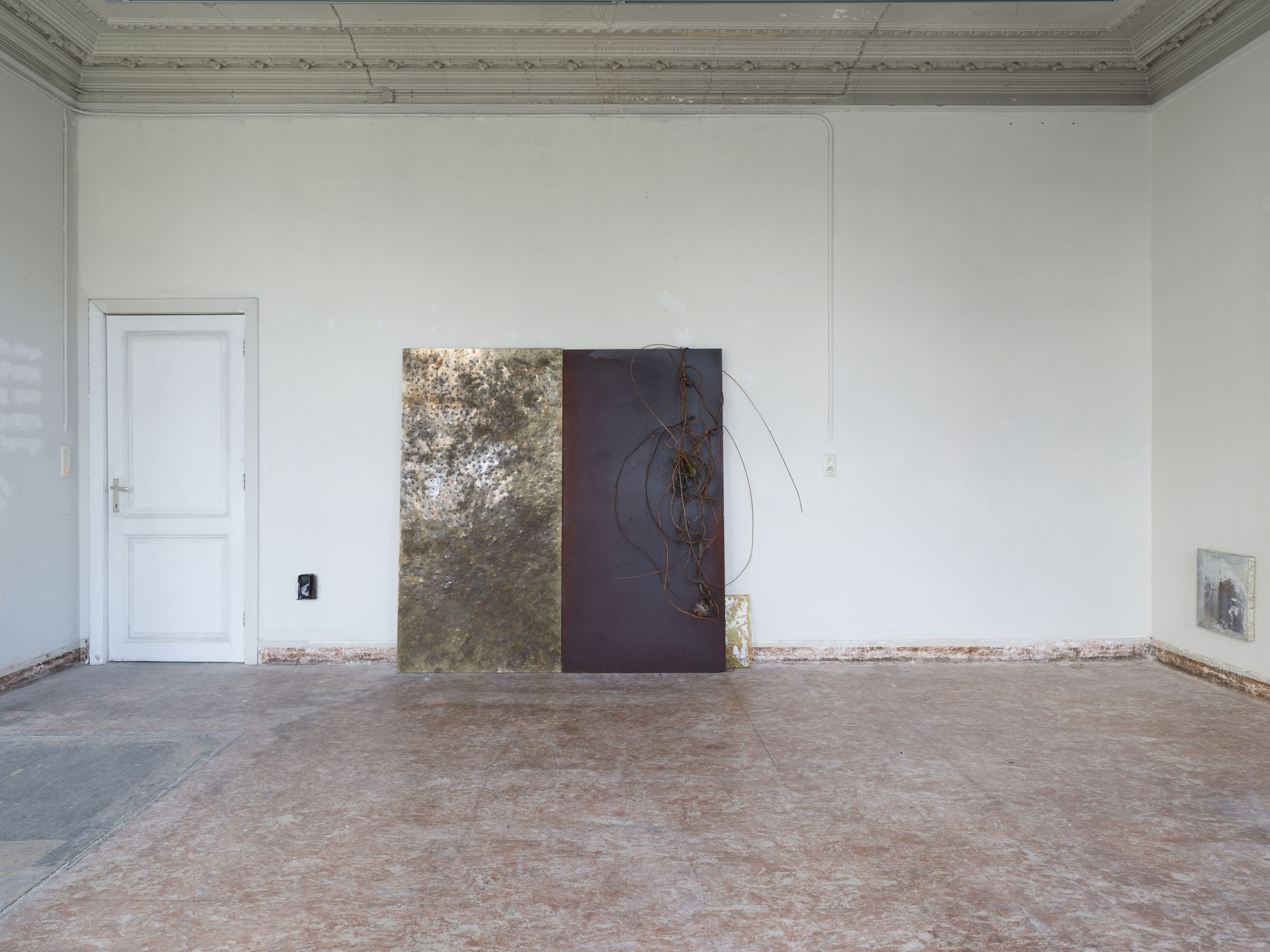
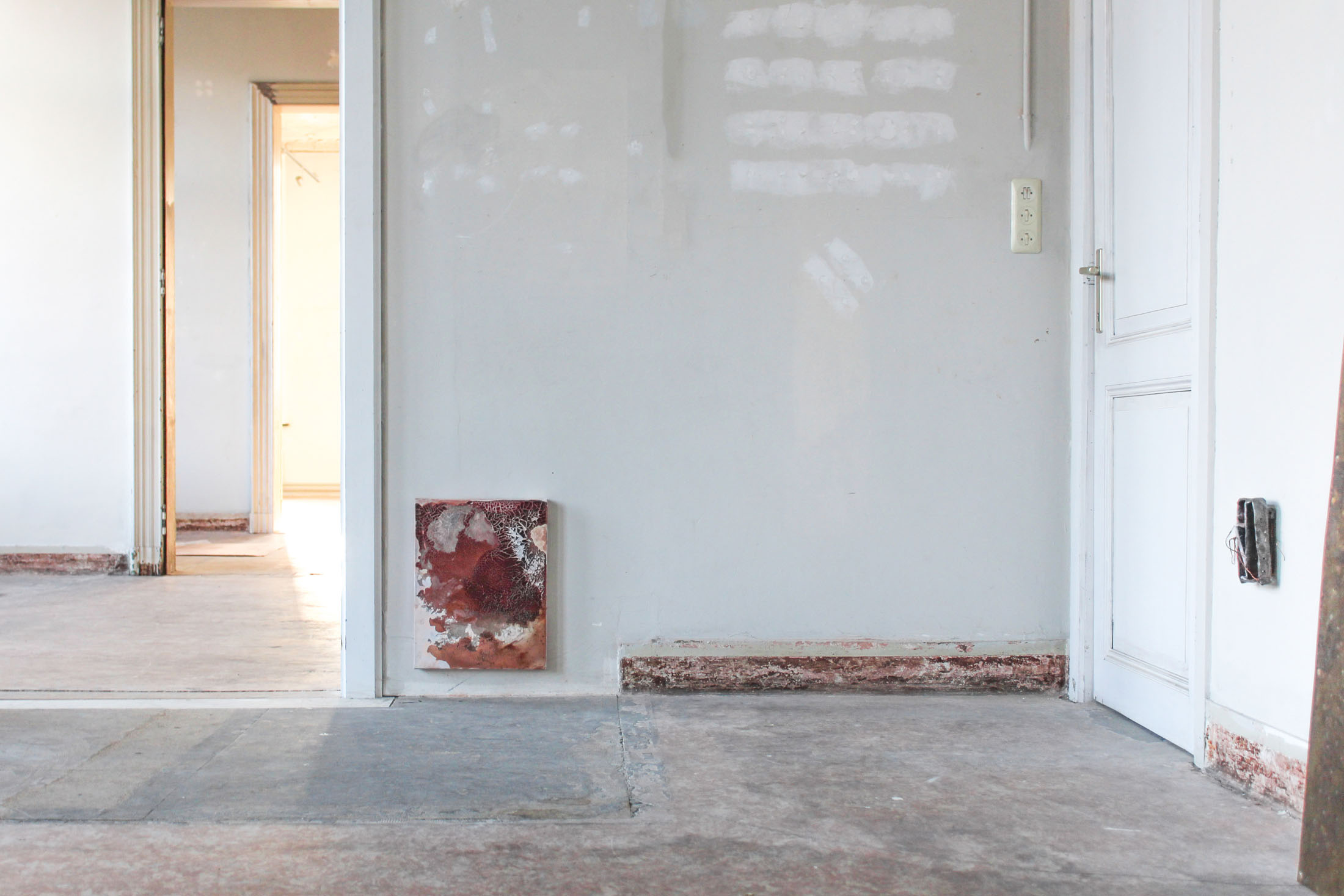
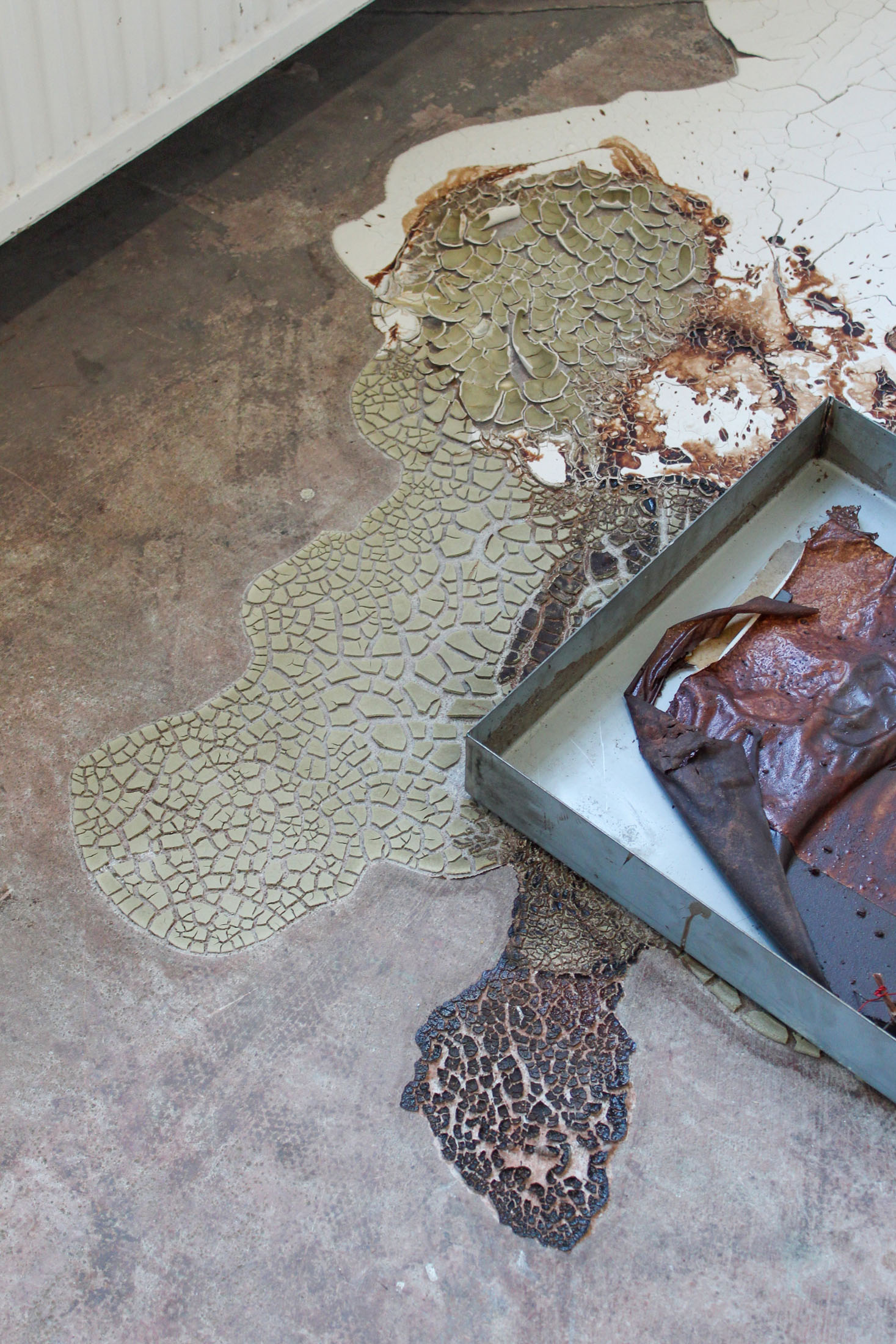
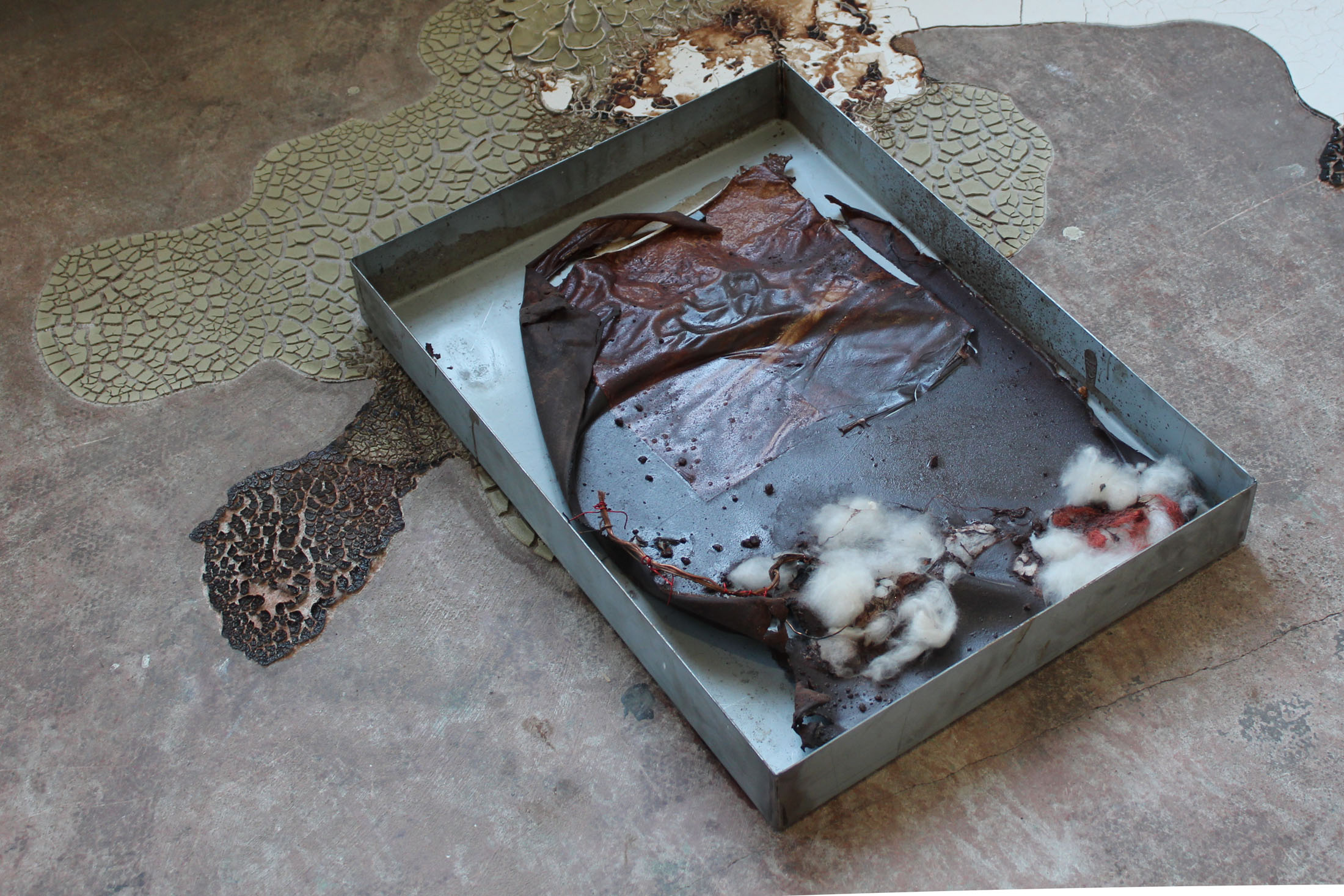
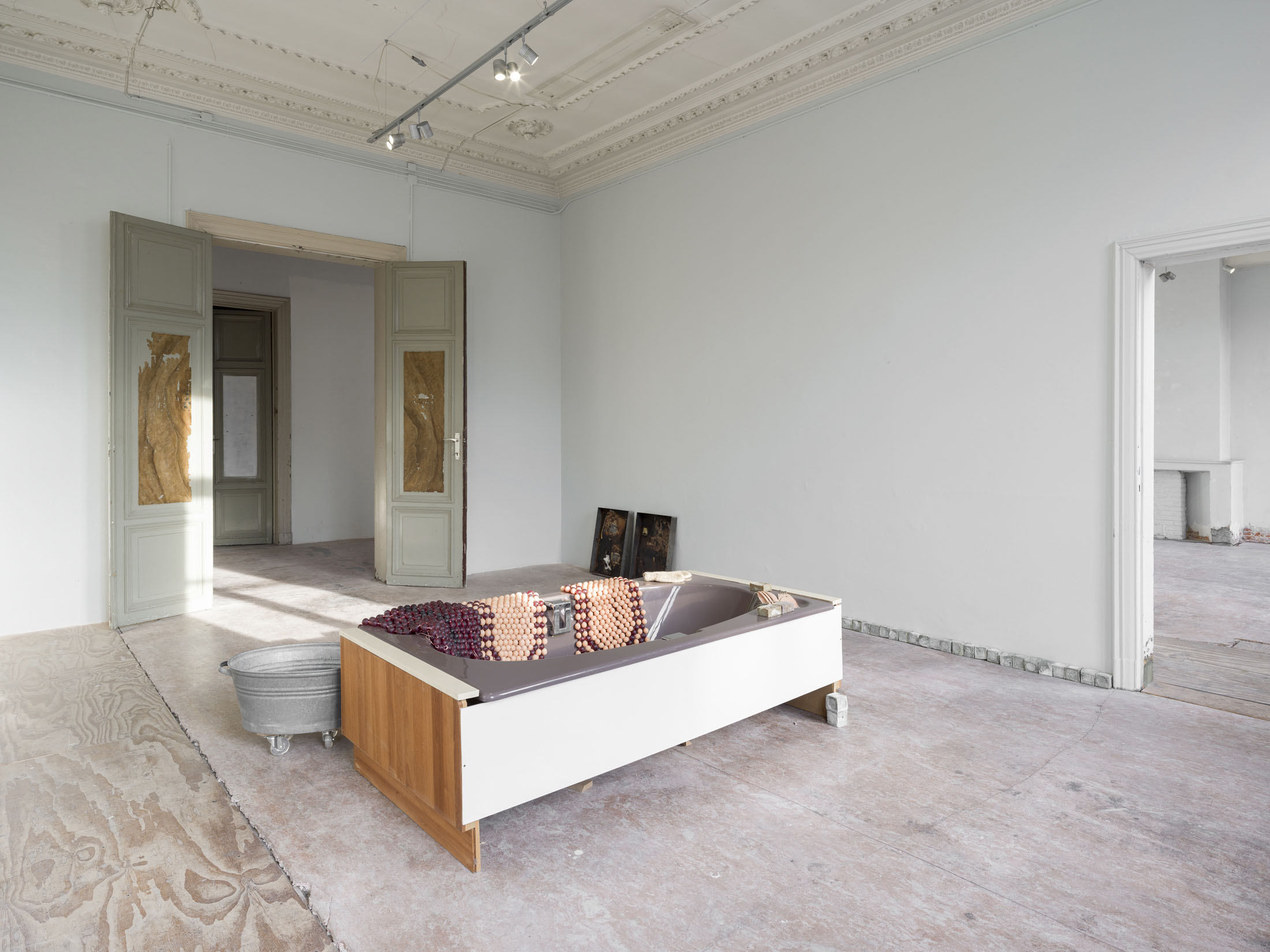
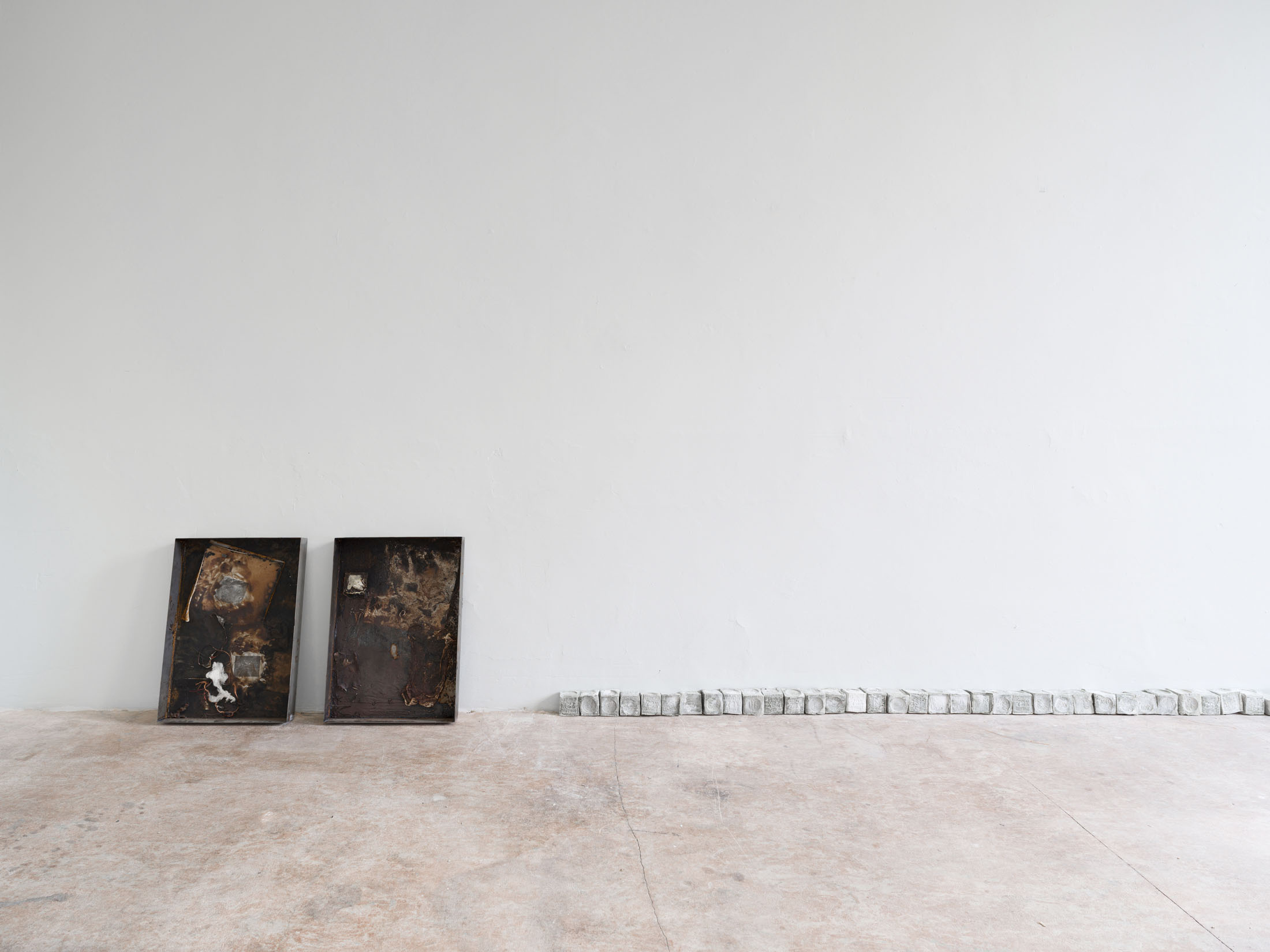
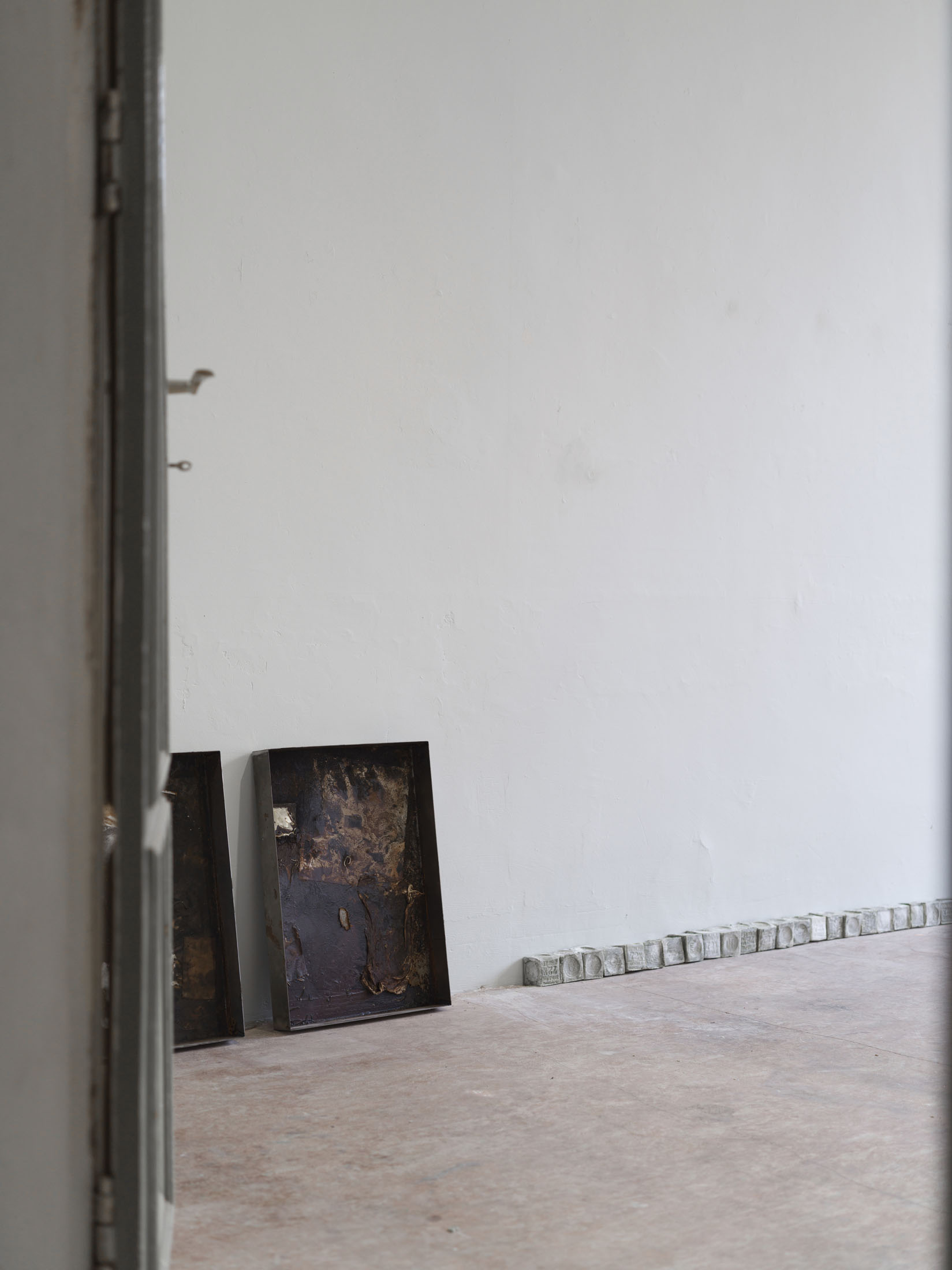
mountaincutters (°1990) establishes the material and spatial conditions through which the exhibition unfolds. Their installations operate as provisional architectures that neither stabilise the room nor define it conclusively. Instead, they introduce a state of tension that shapes how bodies move through the space and how attention is allocated.
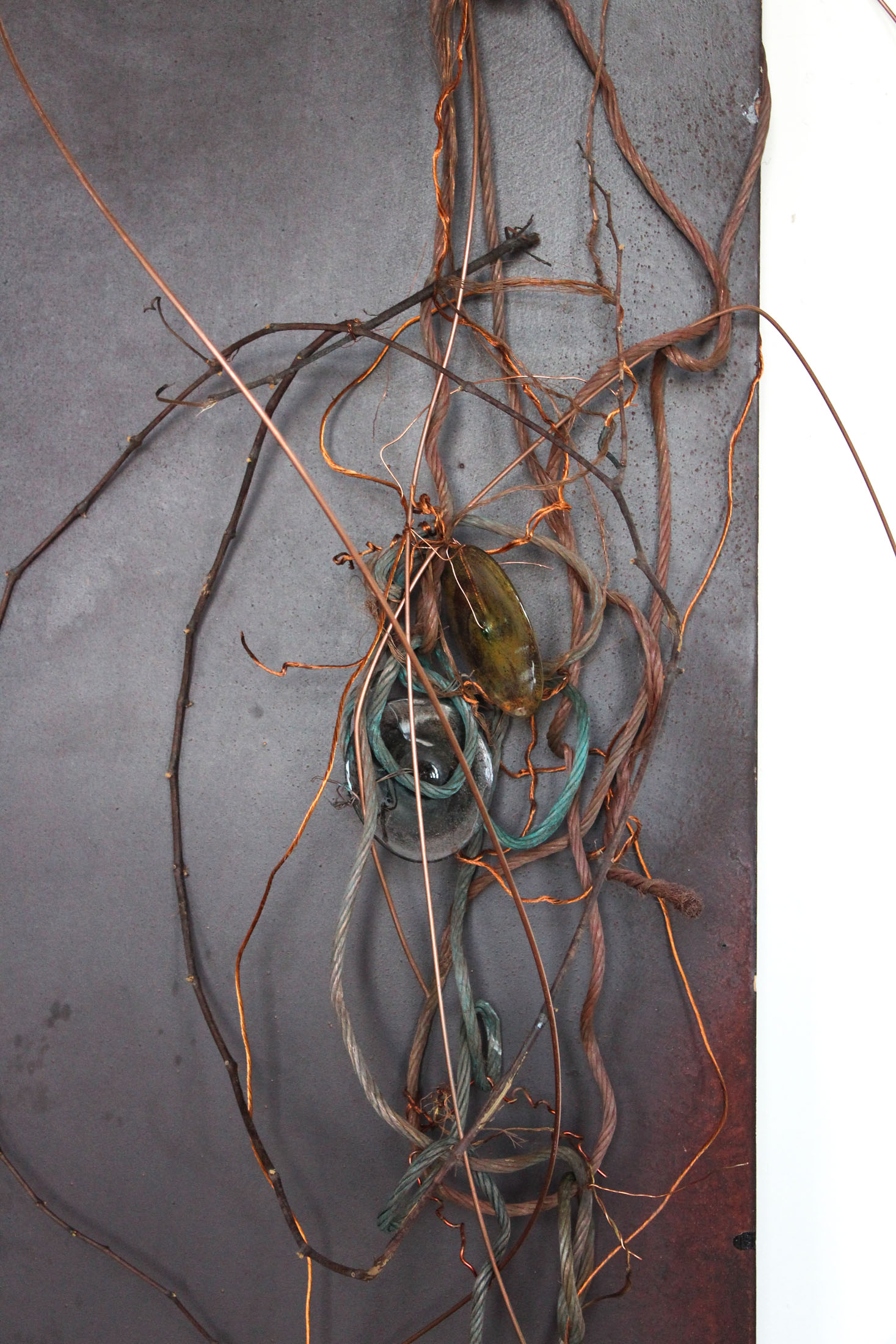
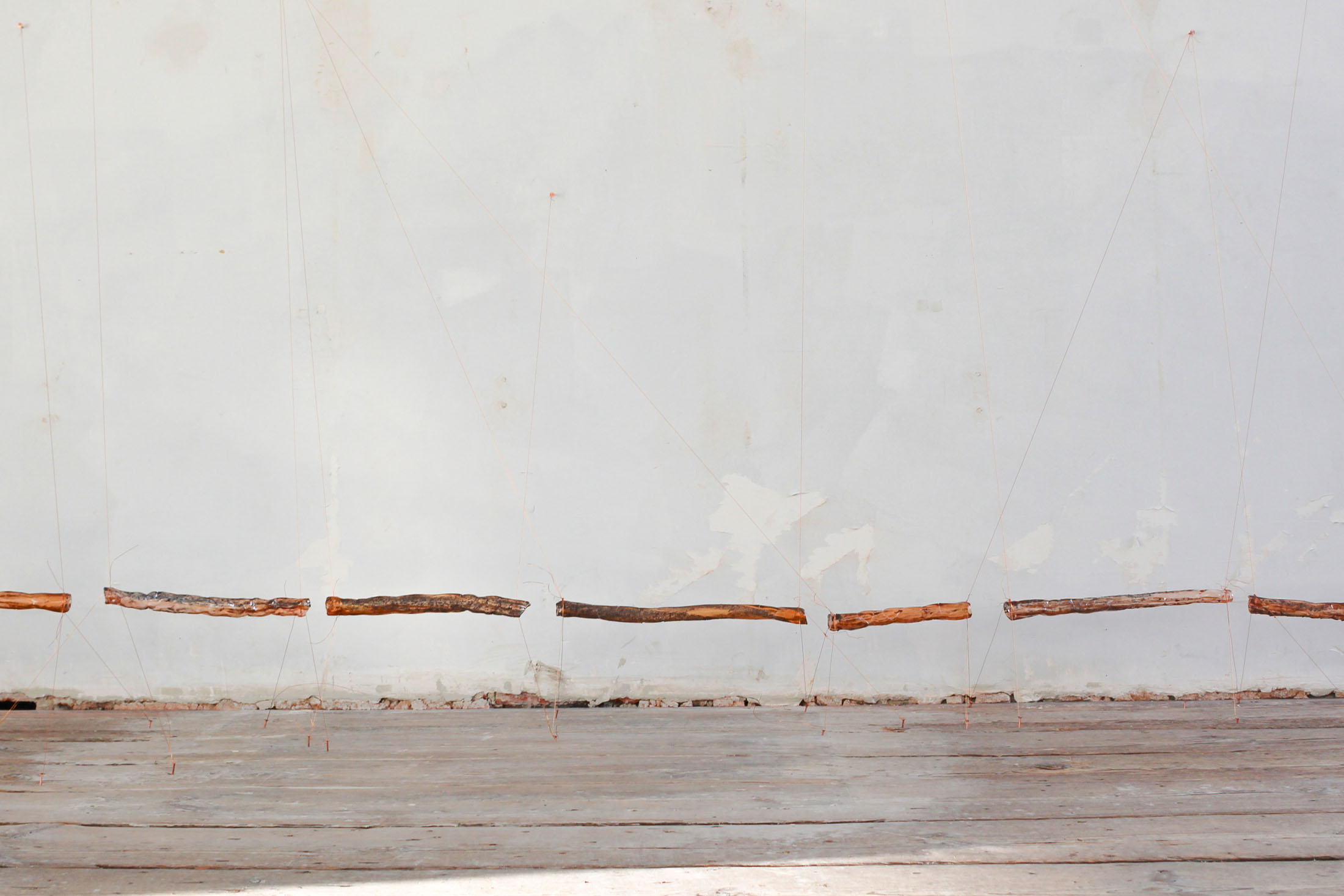
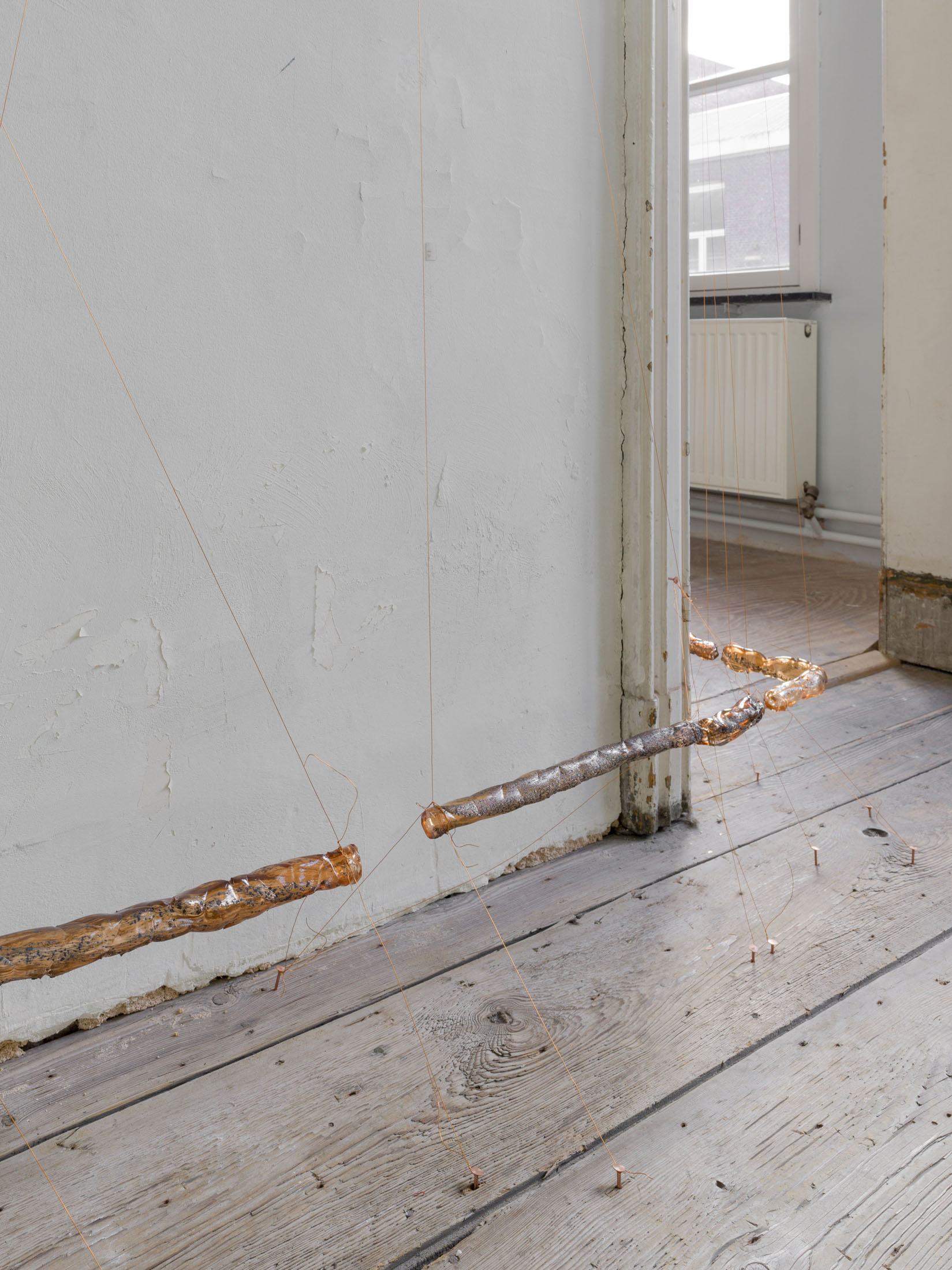
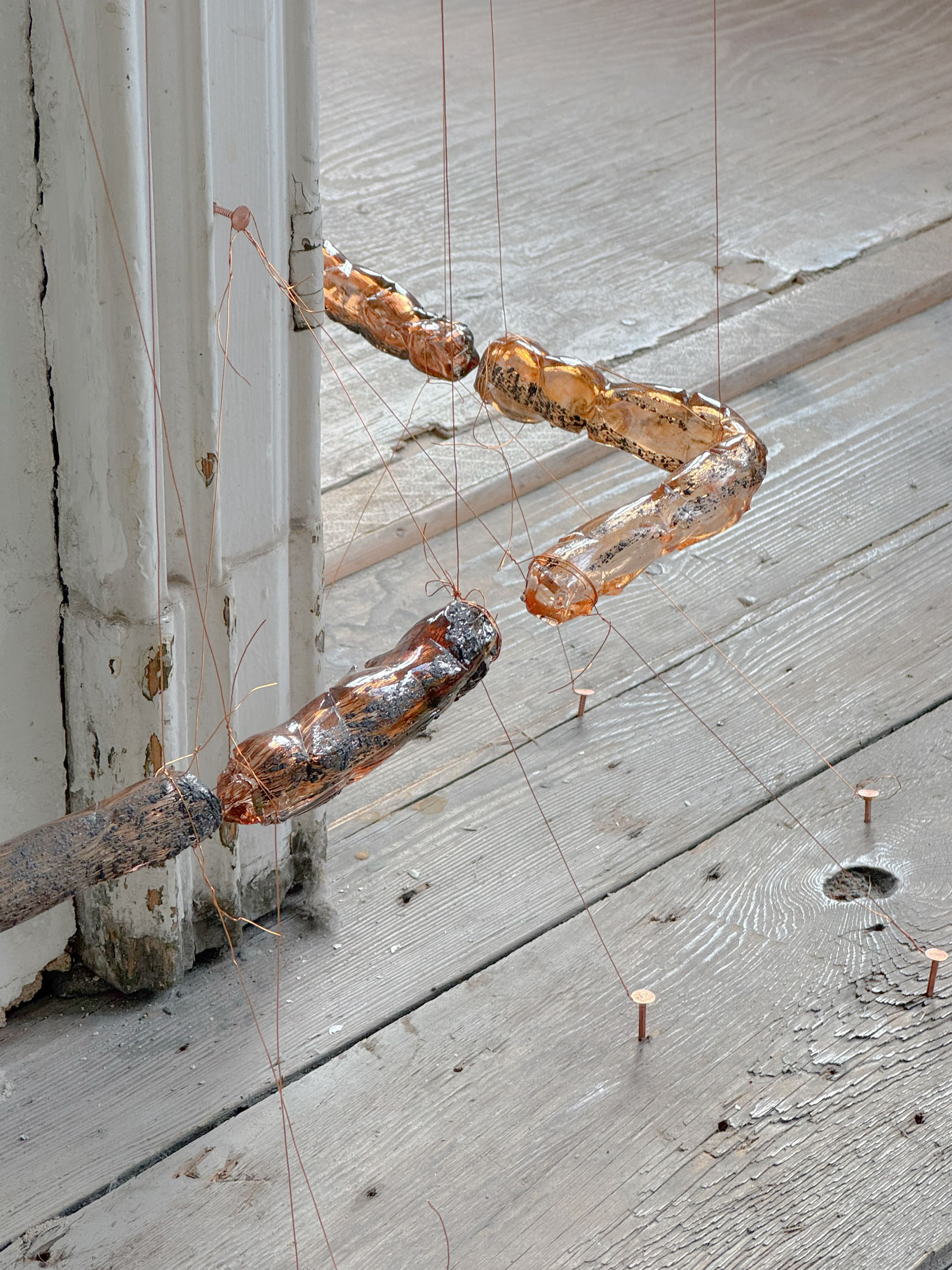
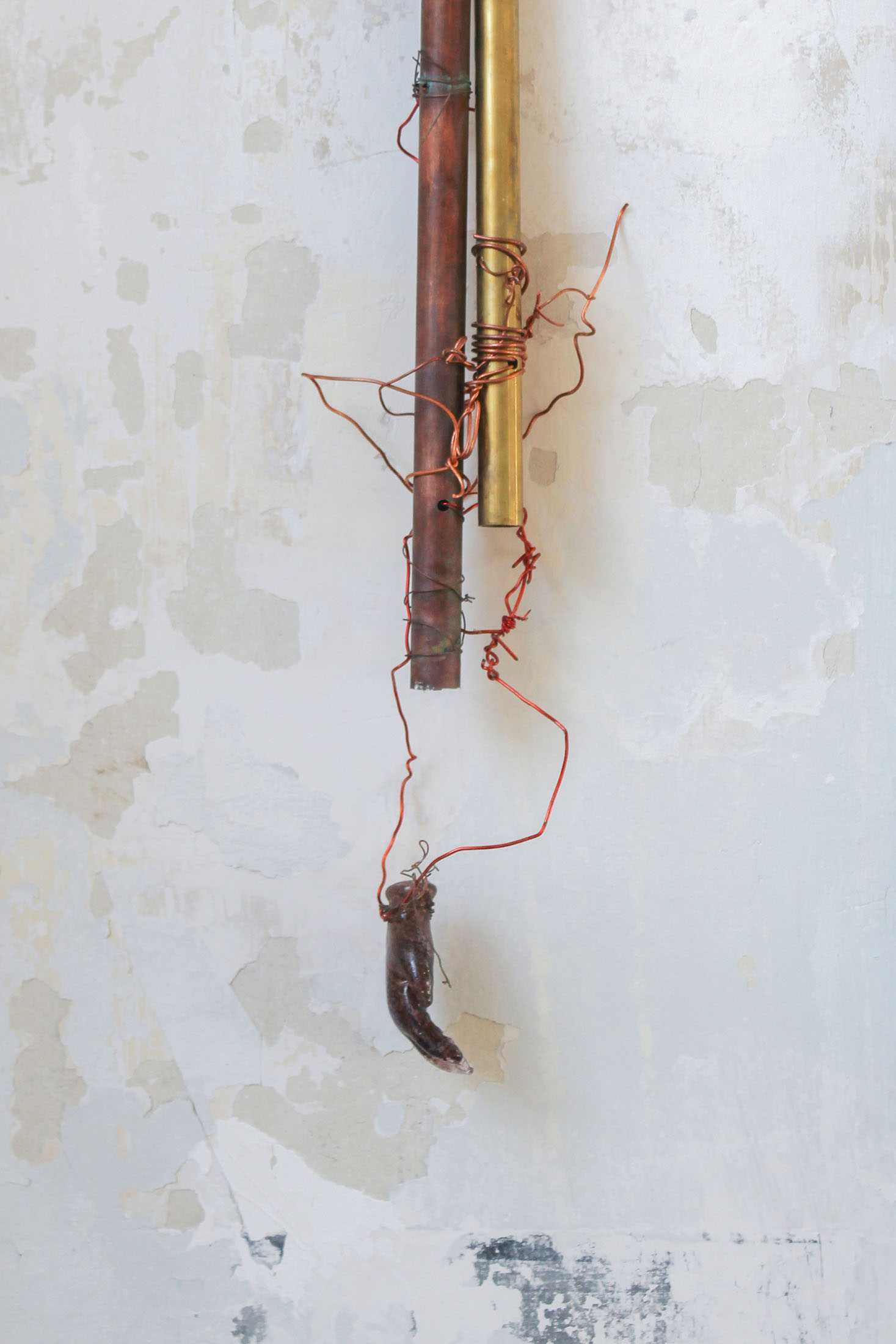
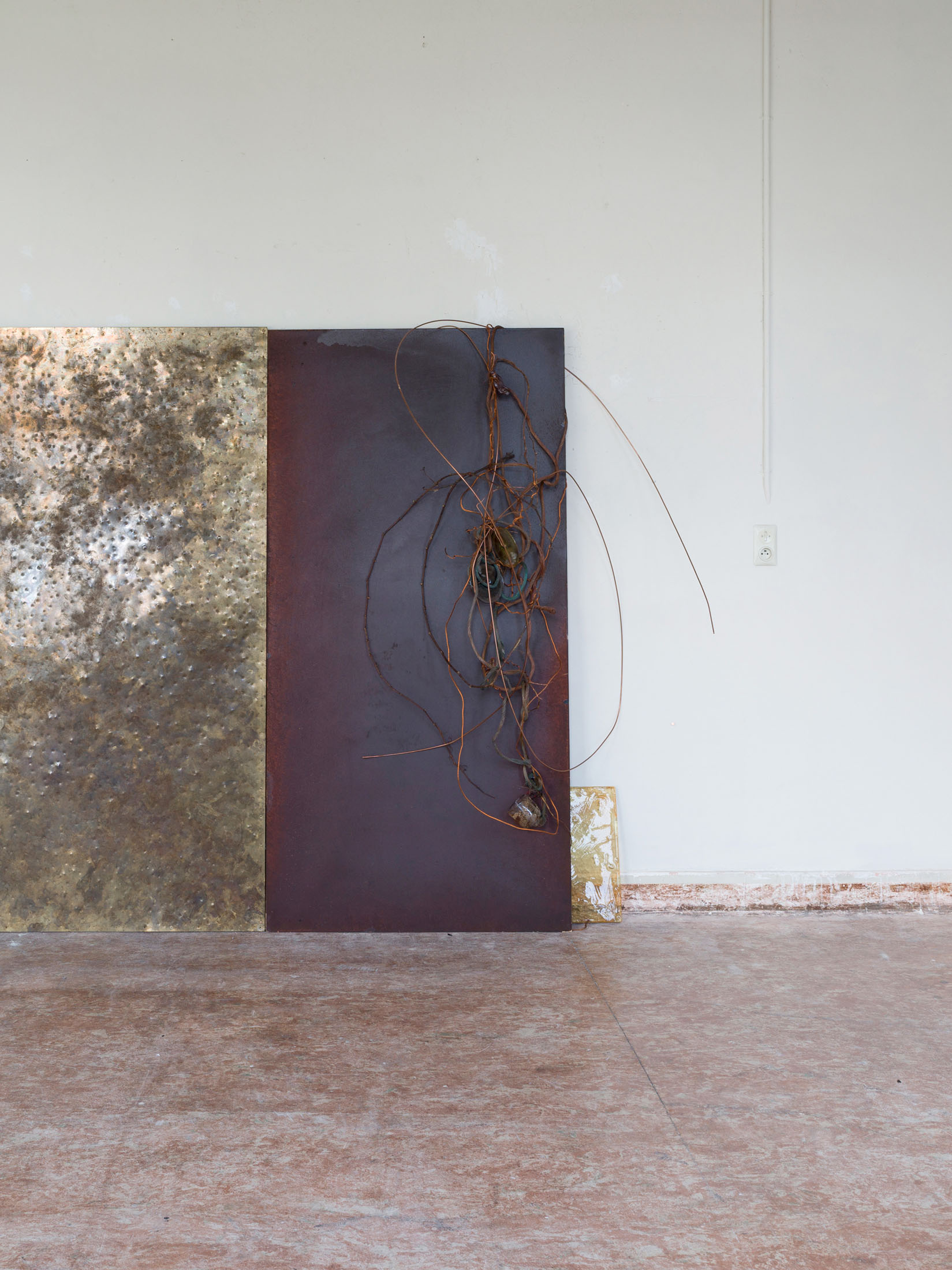
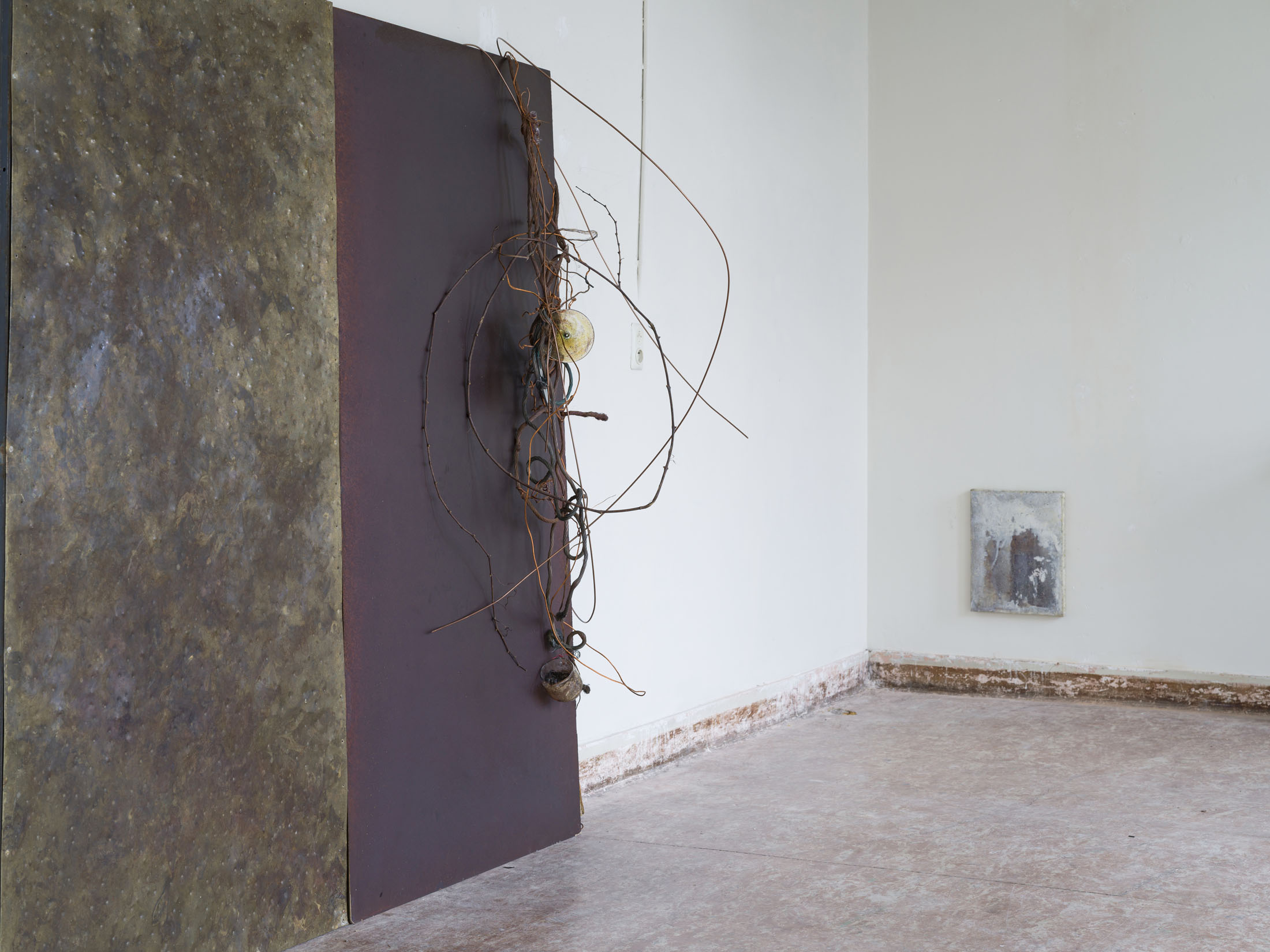
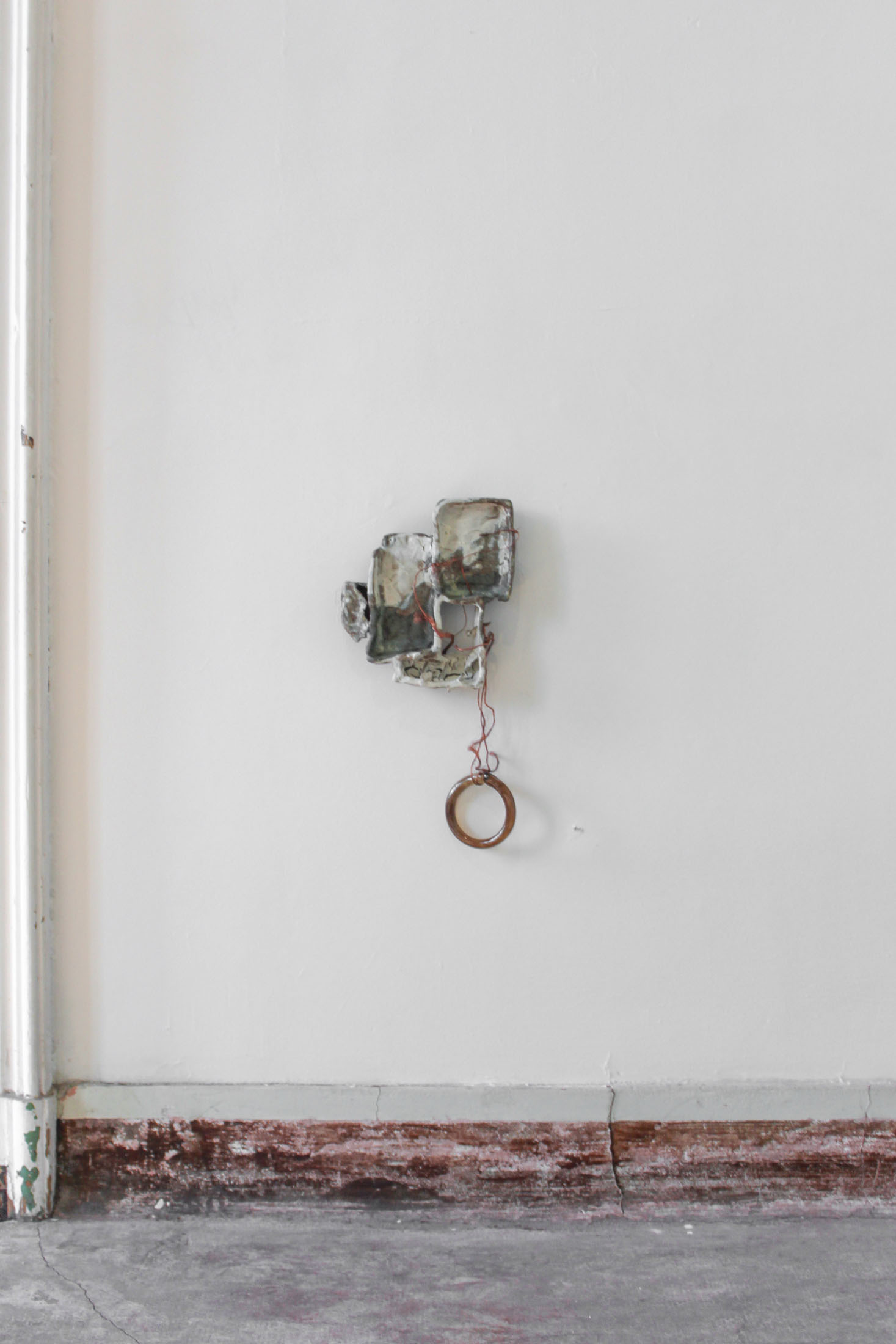
The assemblages are composed of steel, glass, copper, clay, and organic residues. These materials are assembled in ways that foreground their physical behaviour: weight-bearing, bending, oxidising, leaking, or resting against one another without a clear hierarchy. The resulting structures resemble an archaeological site of infrastructural fragments or internal systems, suggesting frameworks that continue to function while remaining visibly contingent.
A central work within this constellation is [Title (year)], a glass sculptural installation referencing an elongated umbilical cord. The cord introduces a biological register into mountaincutters’ material vocabulary, situating questions of dependence and connection. Its presence draws attention to the conditions under which support is given, received, and eventually interrupted.
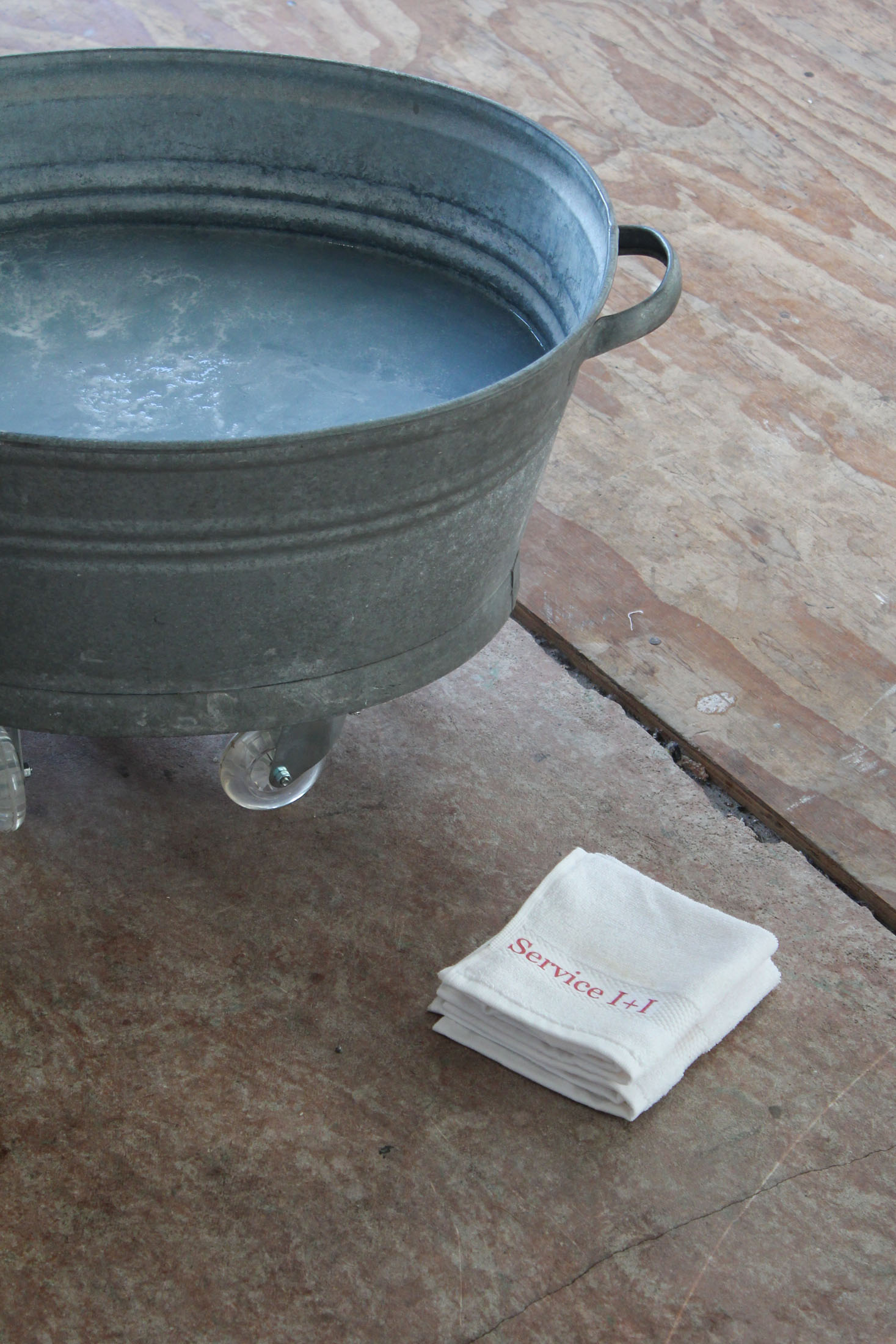
Juli Bierich (°1999) intervenes through (body)language, gesture, and performance. Her practice considers how bodies relate to one another under conditions that are structured rather than chosen: moments of being together in waiting rooms, vehicles, corridors, or other transitional spaces where intimacy is produced through proximity rather than familiarity. In Becoming Otherwise, this investigation takes form in [Title (Year)], a performance in which Bierich ‘washes’ the works presented by mountaincutters. The action is quiet, repetitive, and deliberate—an act of maintenance that places one practice in the care of another.
Through her intervention, Bierich foregrounds forms of relational labour that often remain unnoticed: cleaning, waiting, attending, remaining. These actions resist spectacle, instead shaping an environment in which presence itself becomes a form of work. Within the exhibition, her practice frames intimacy as something produced through duration and care, rather than through immediacy.