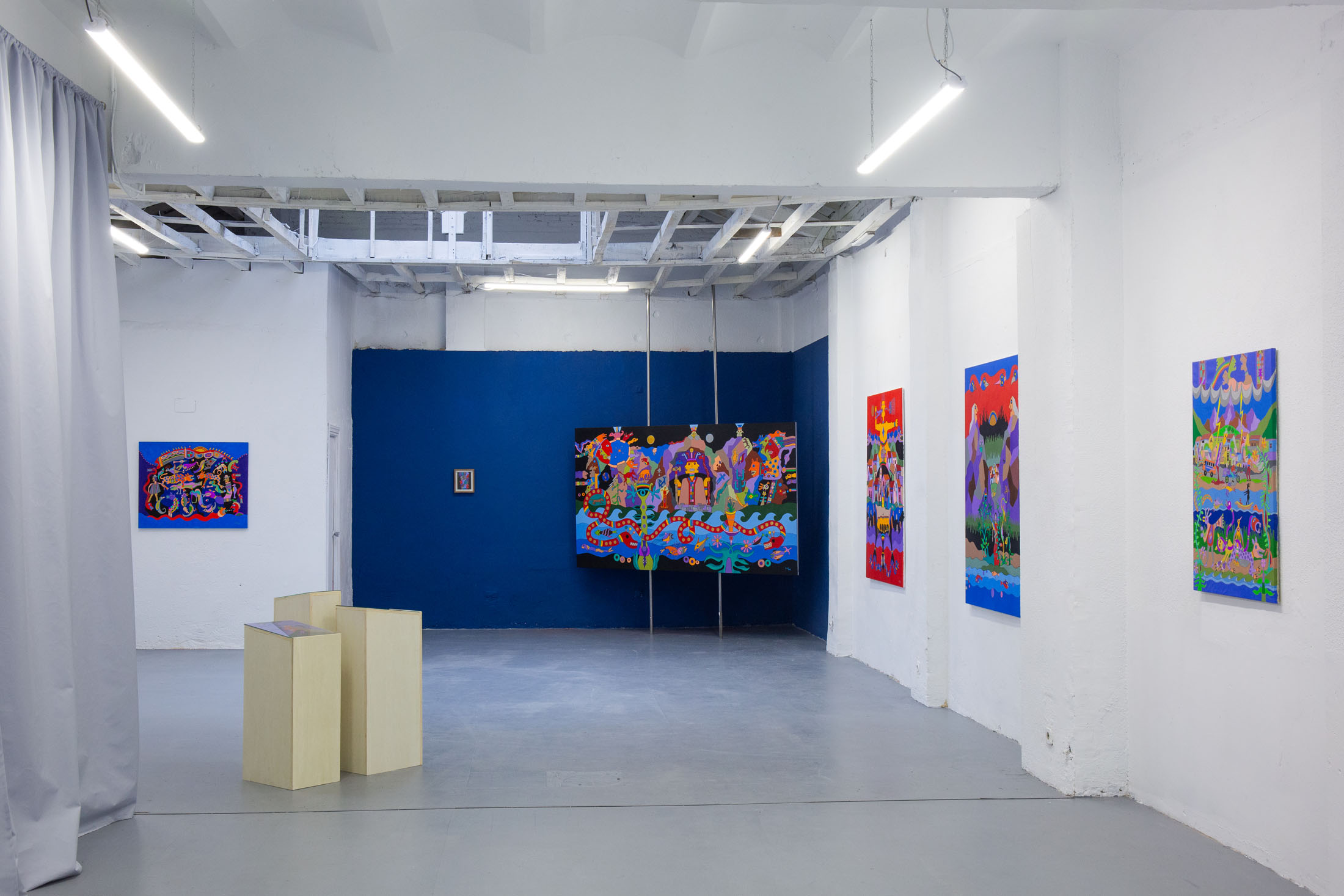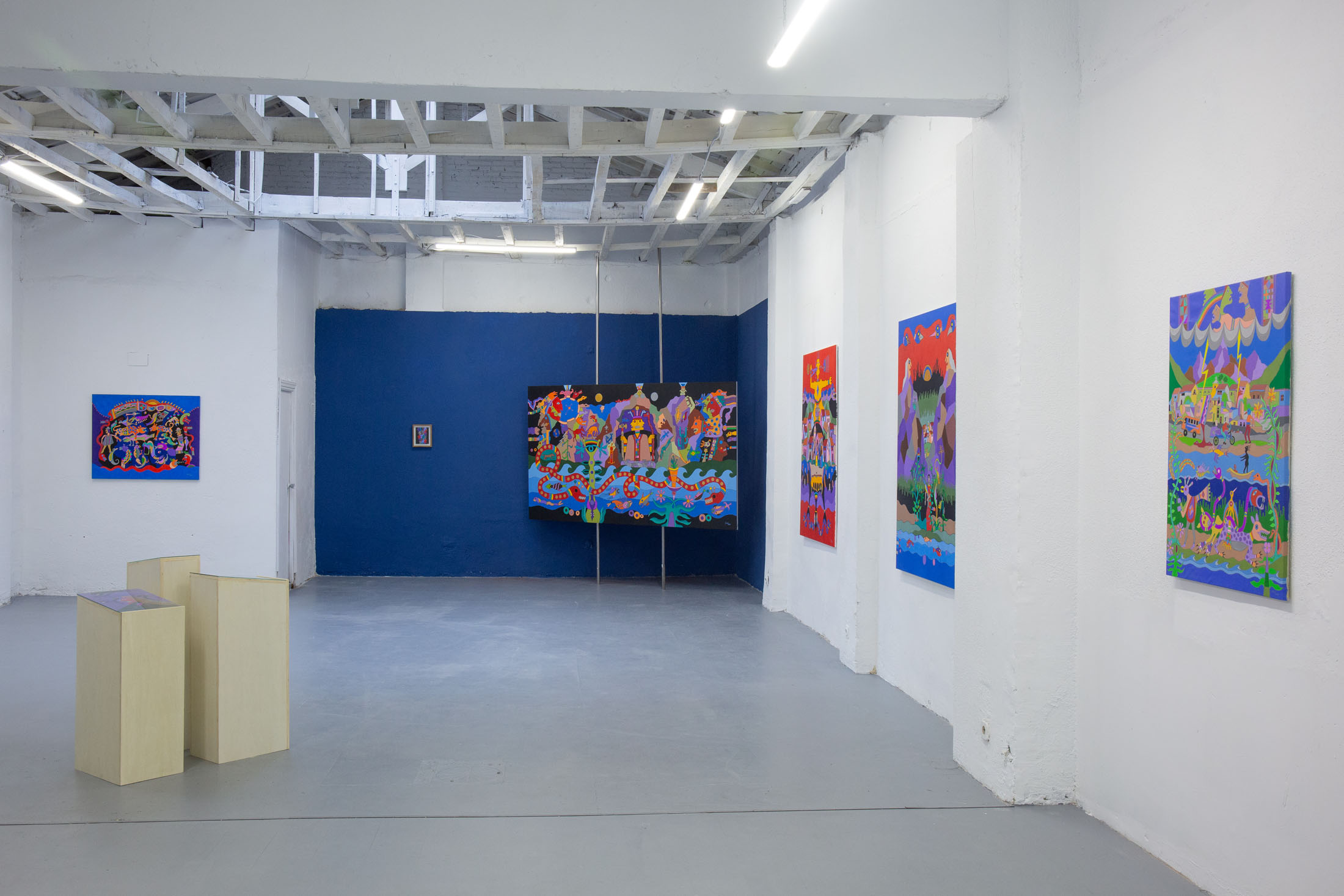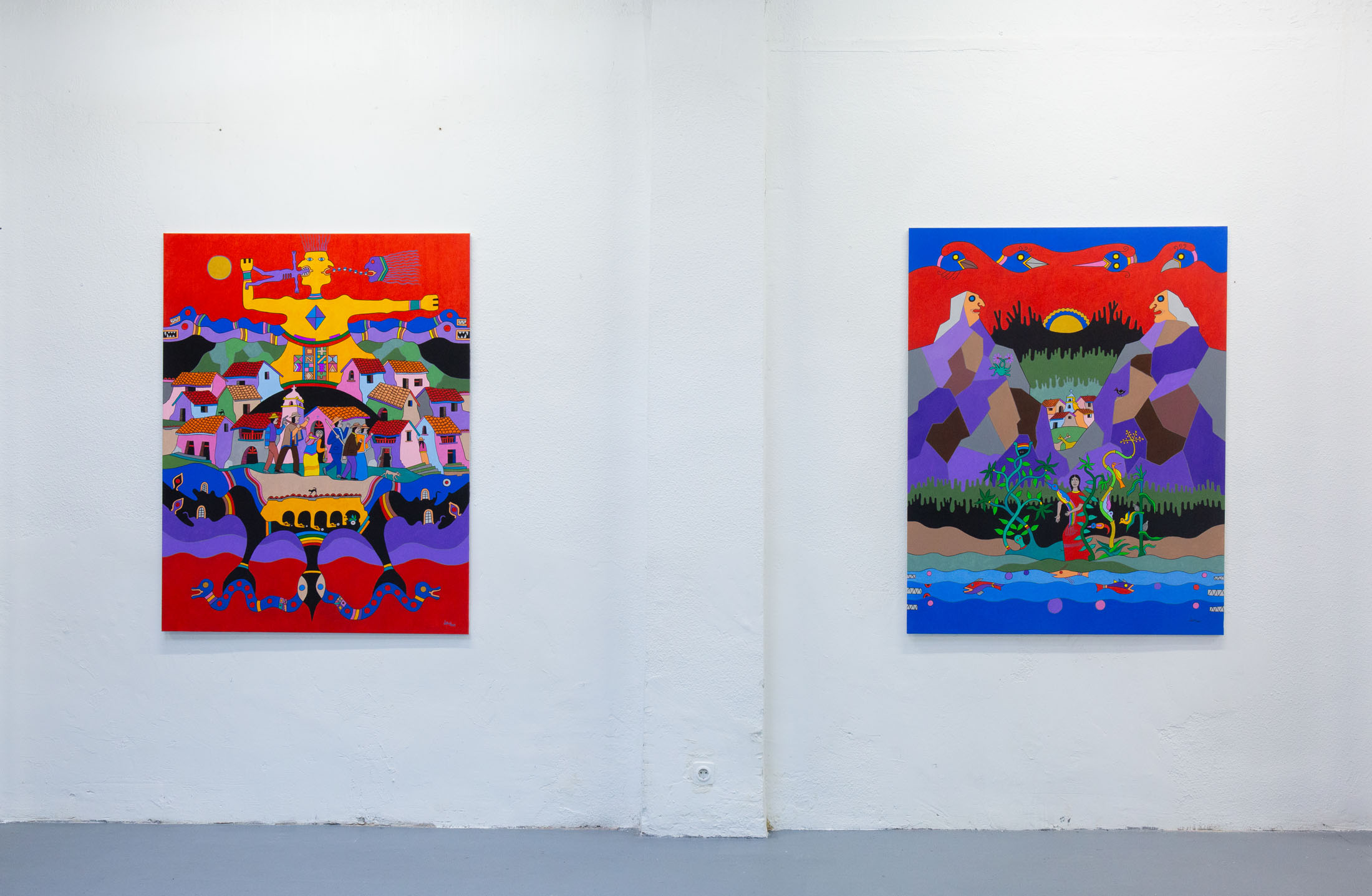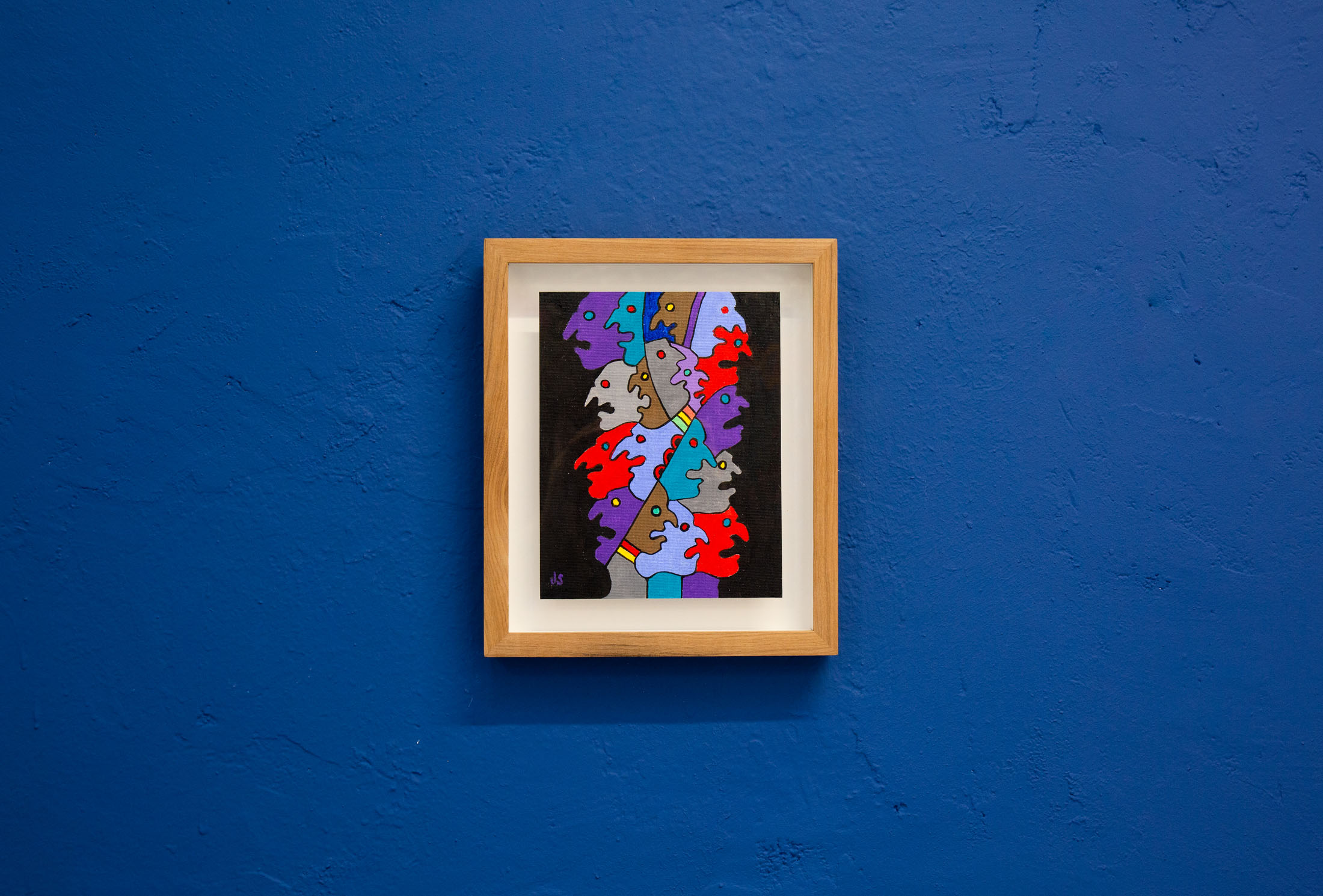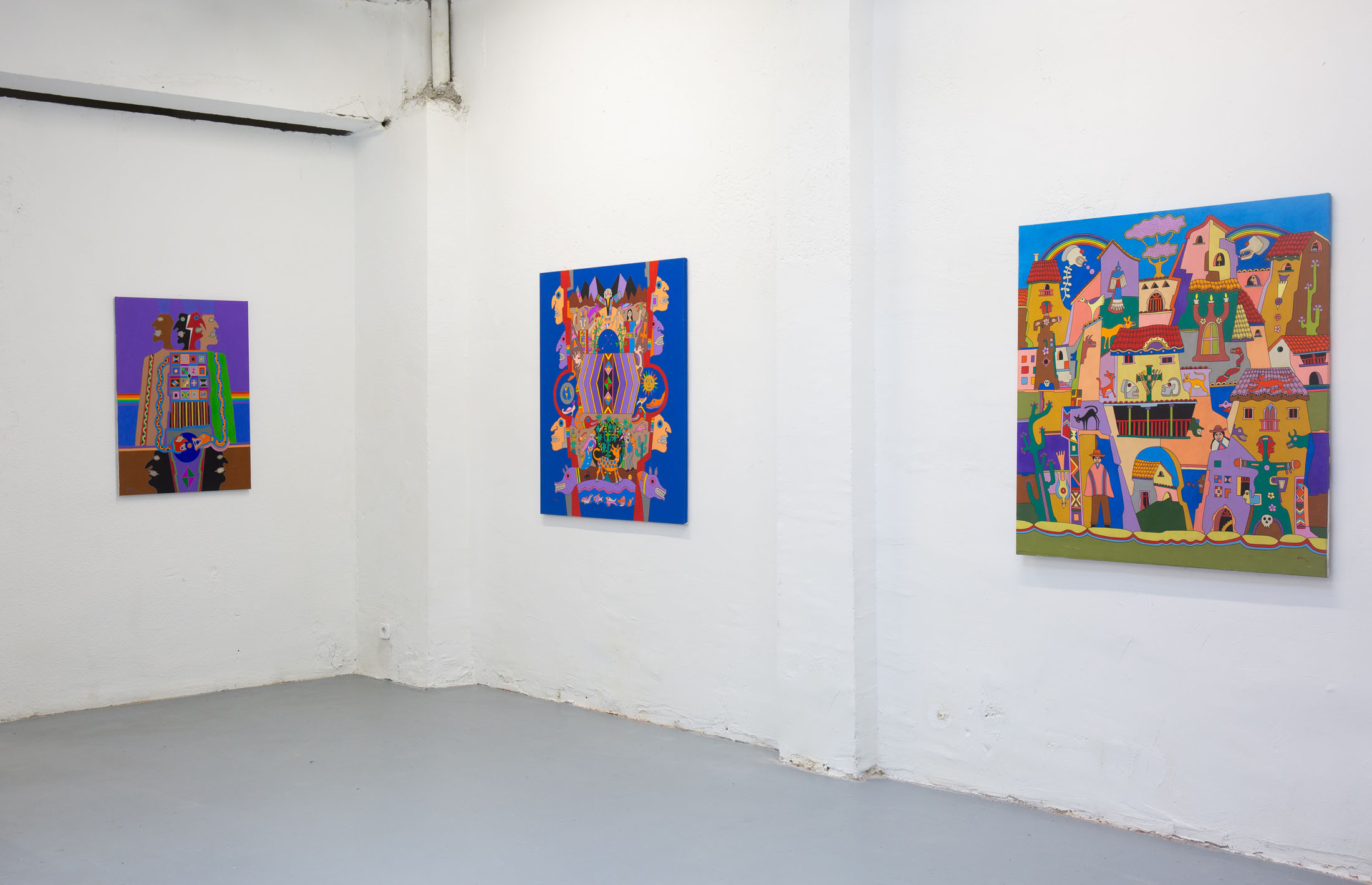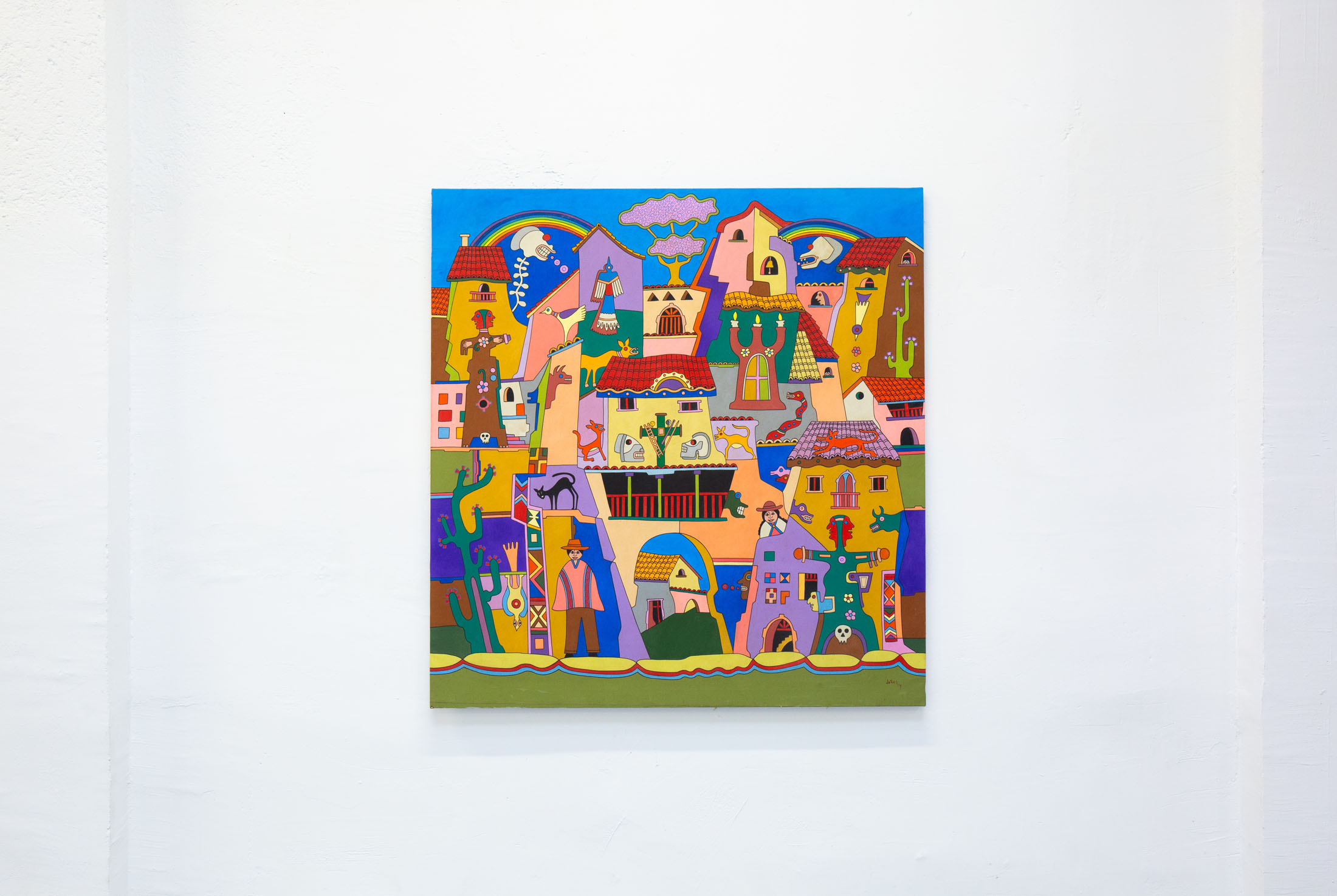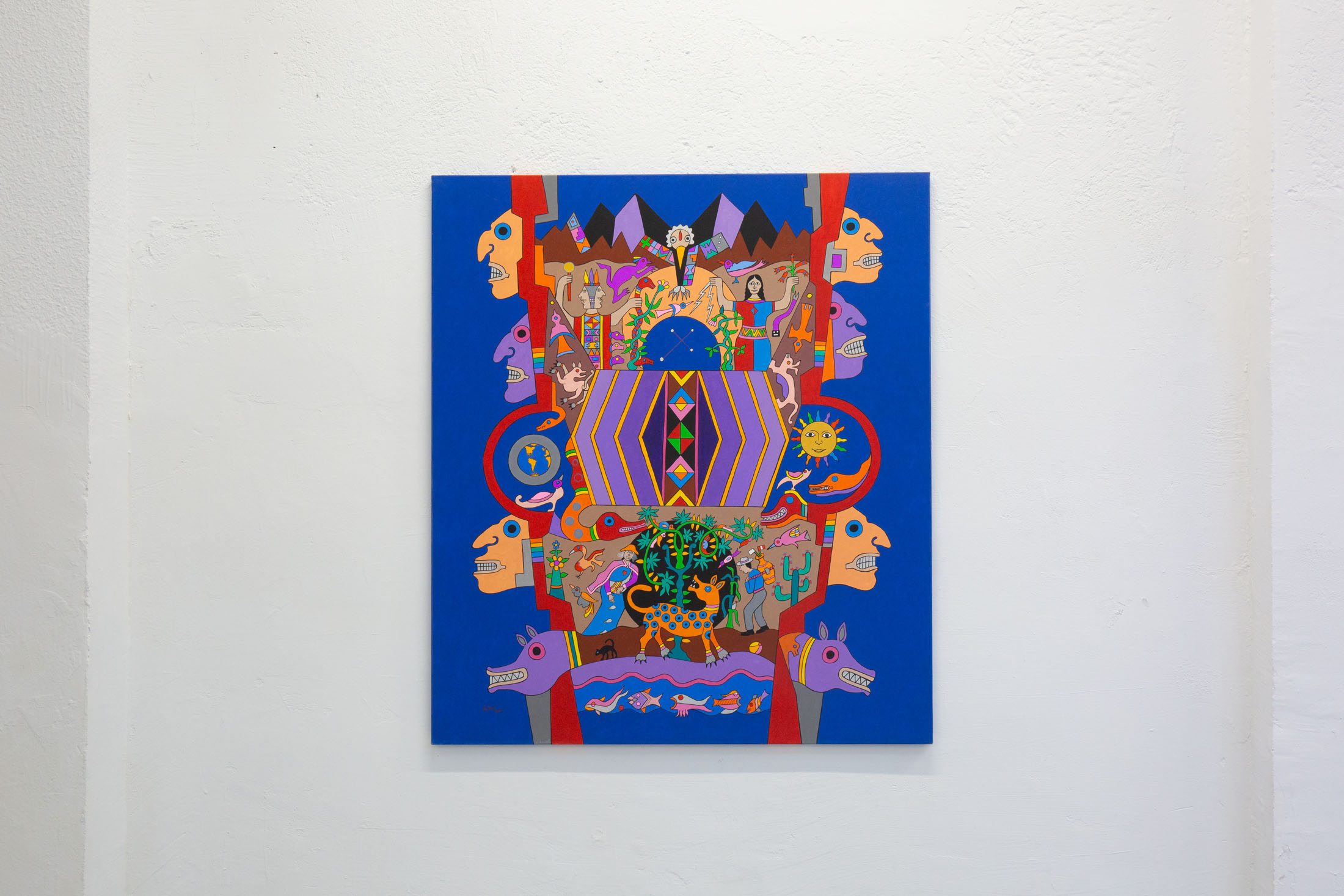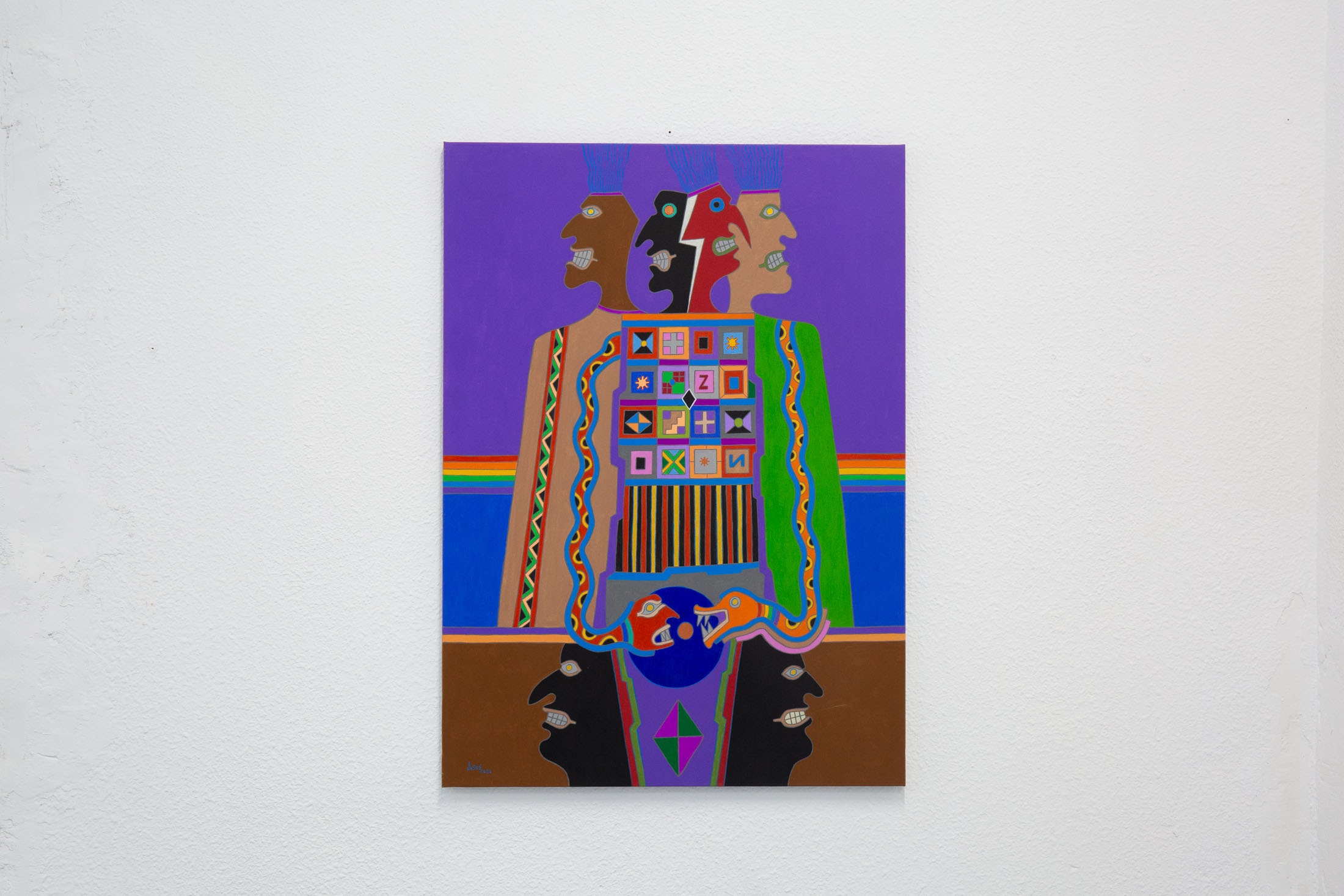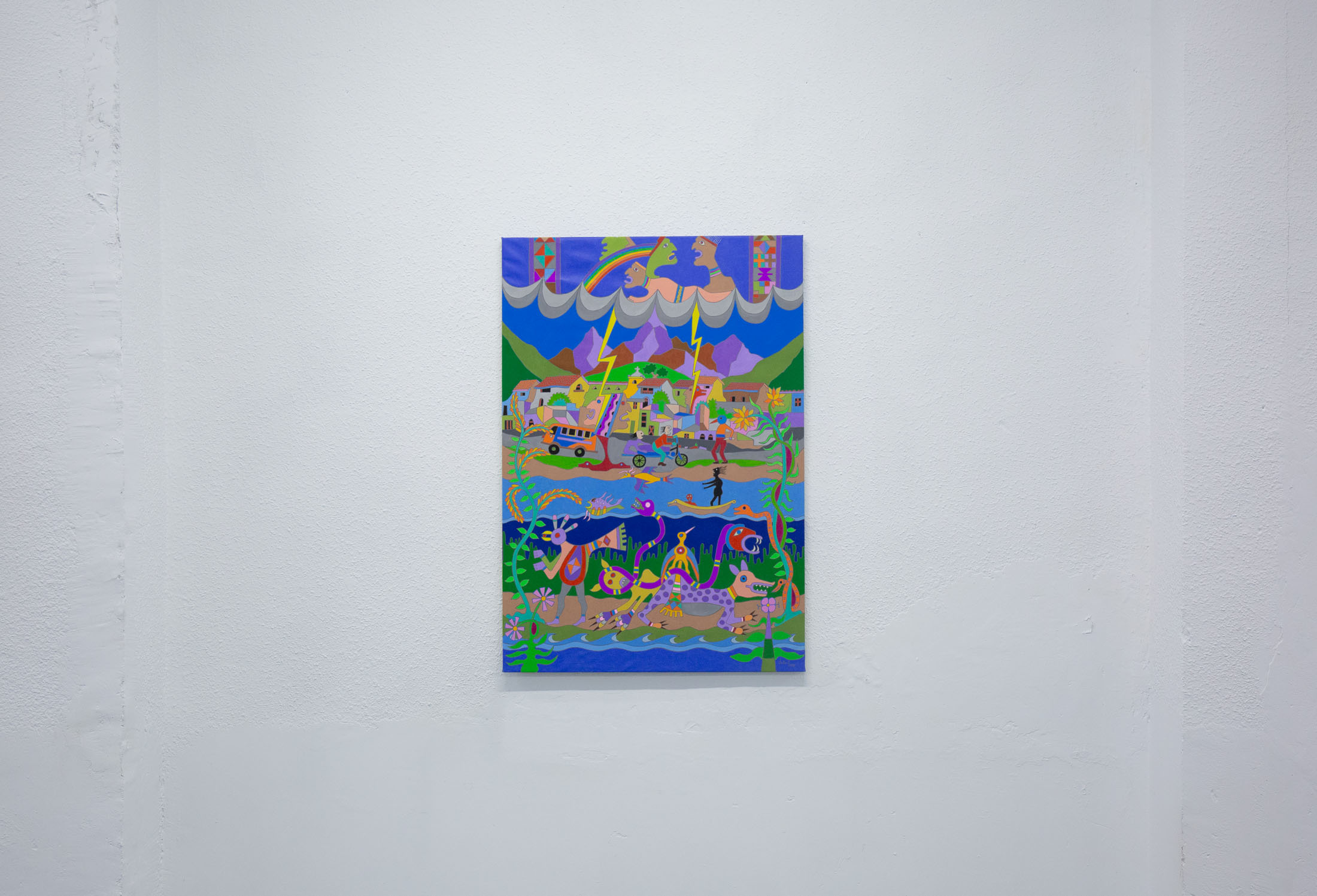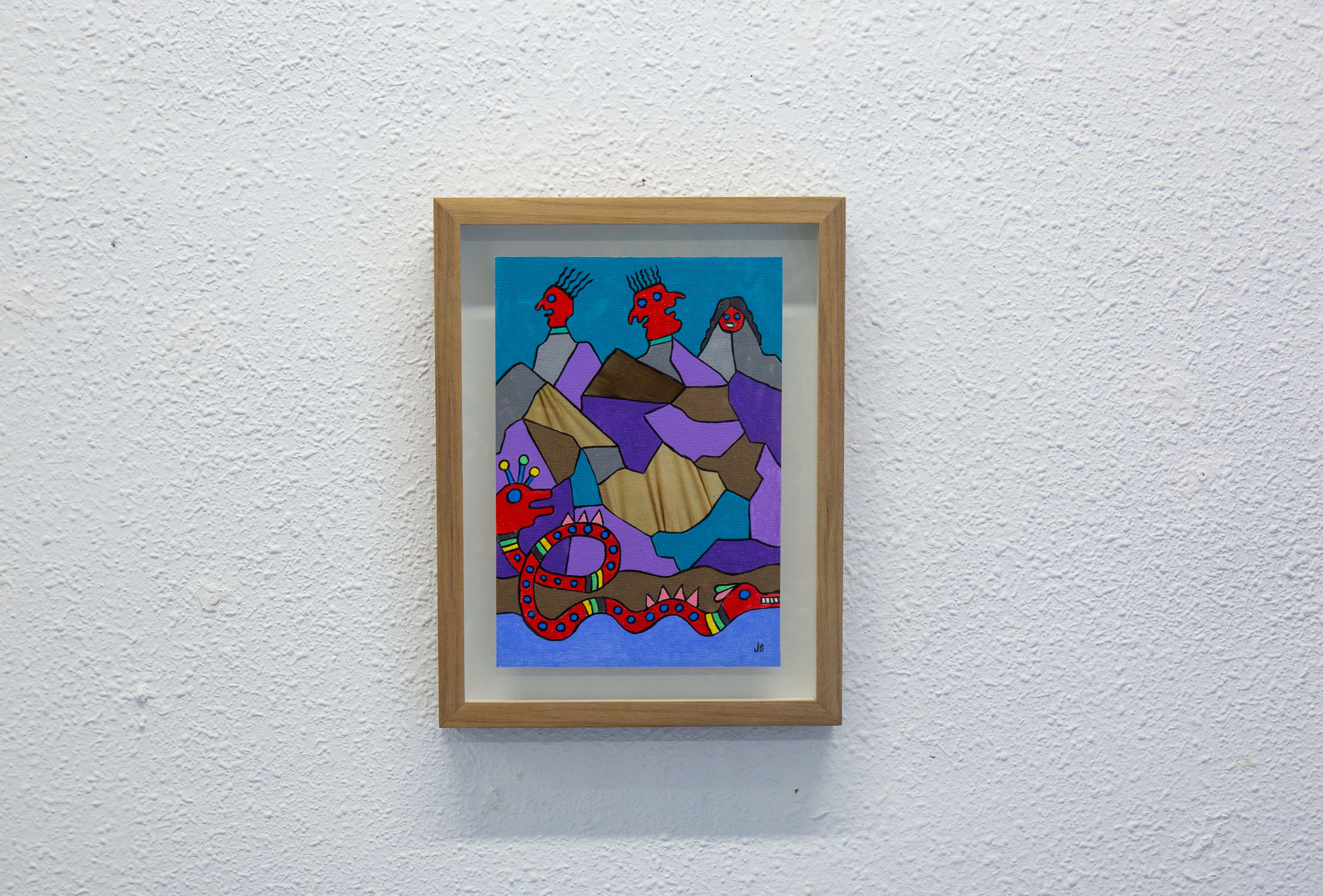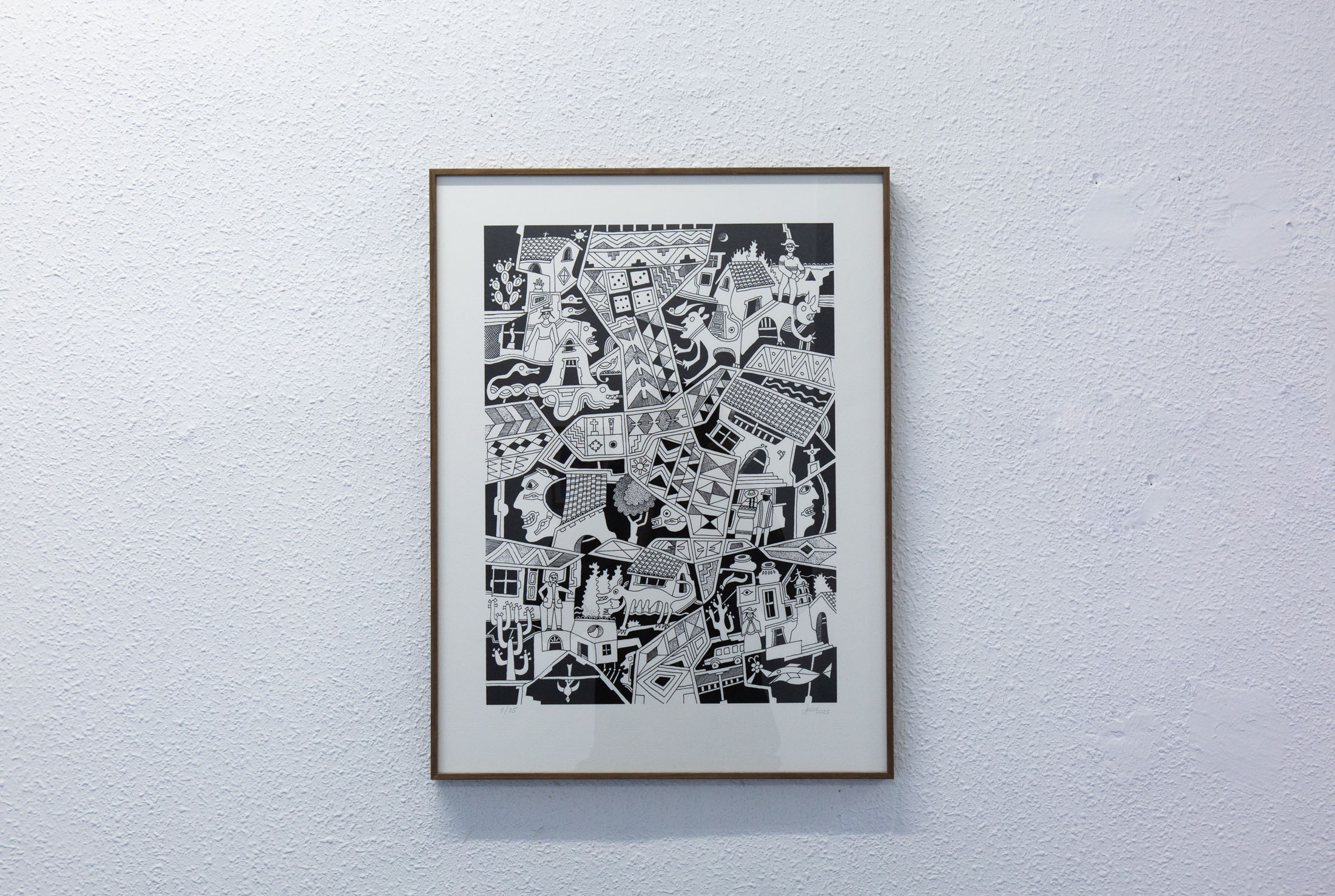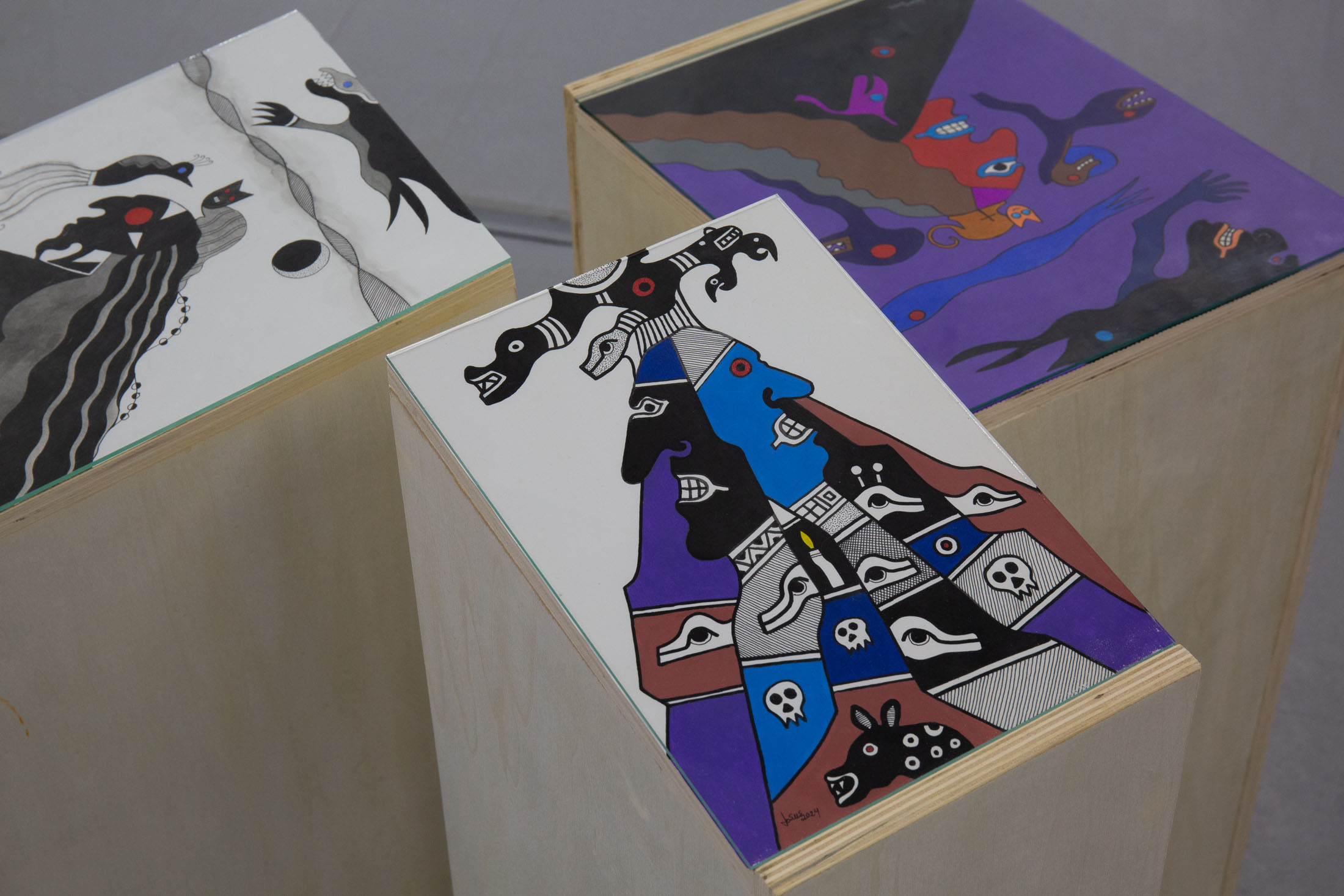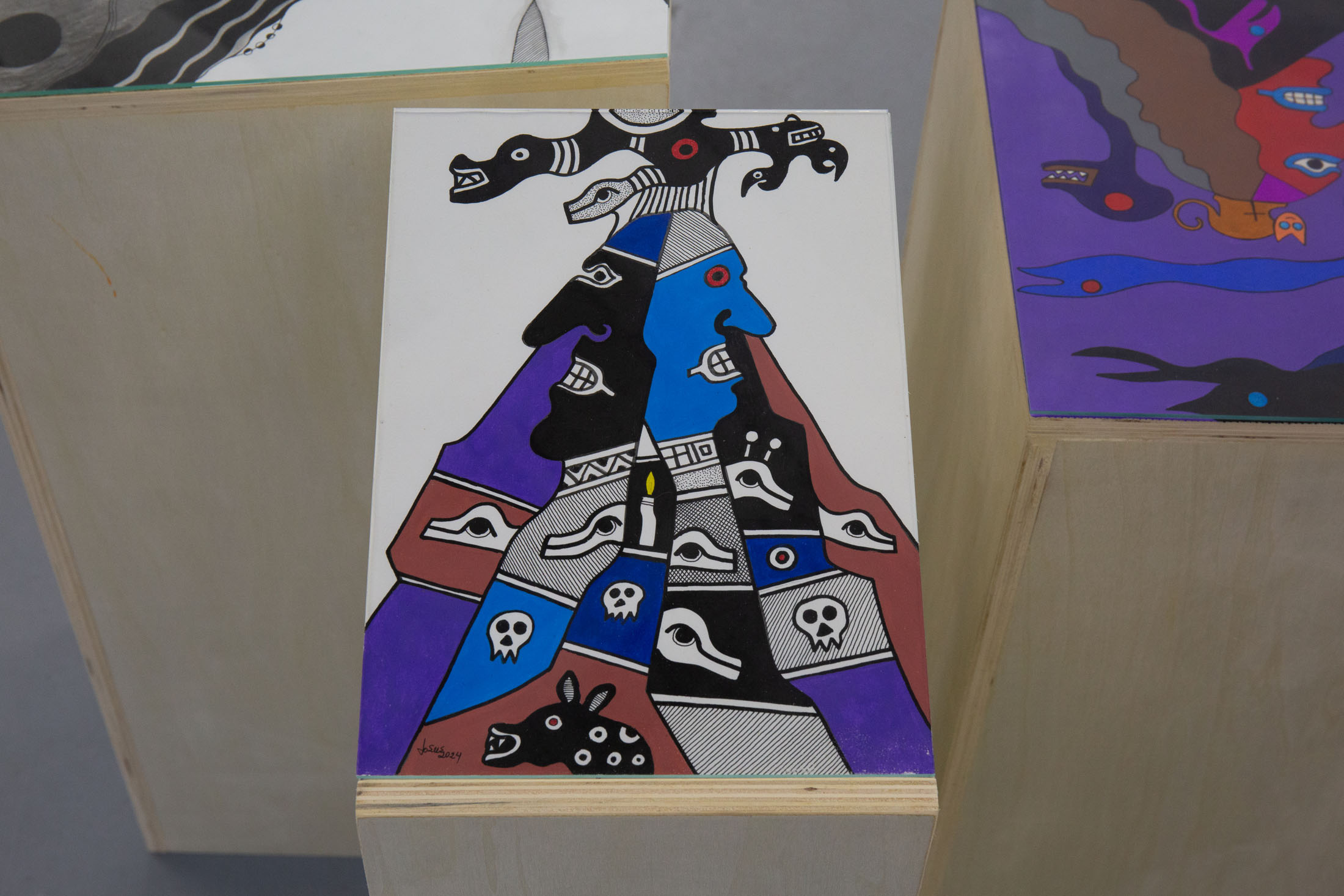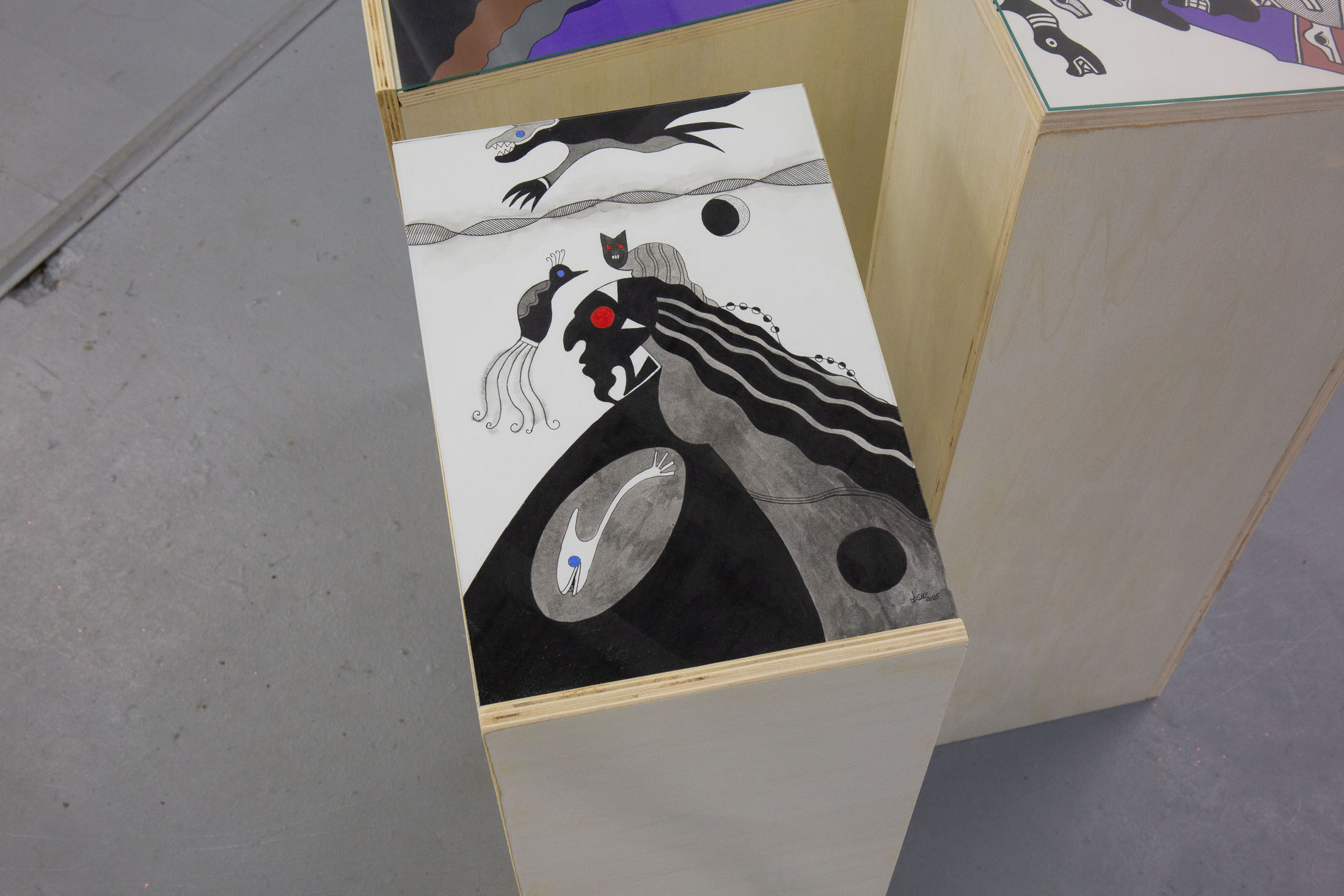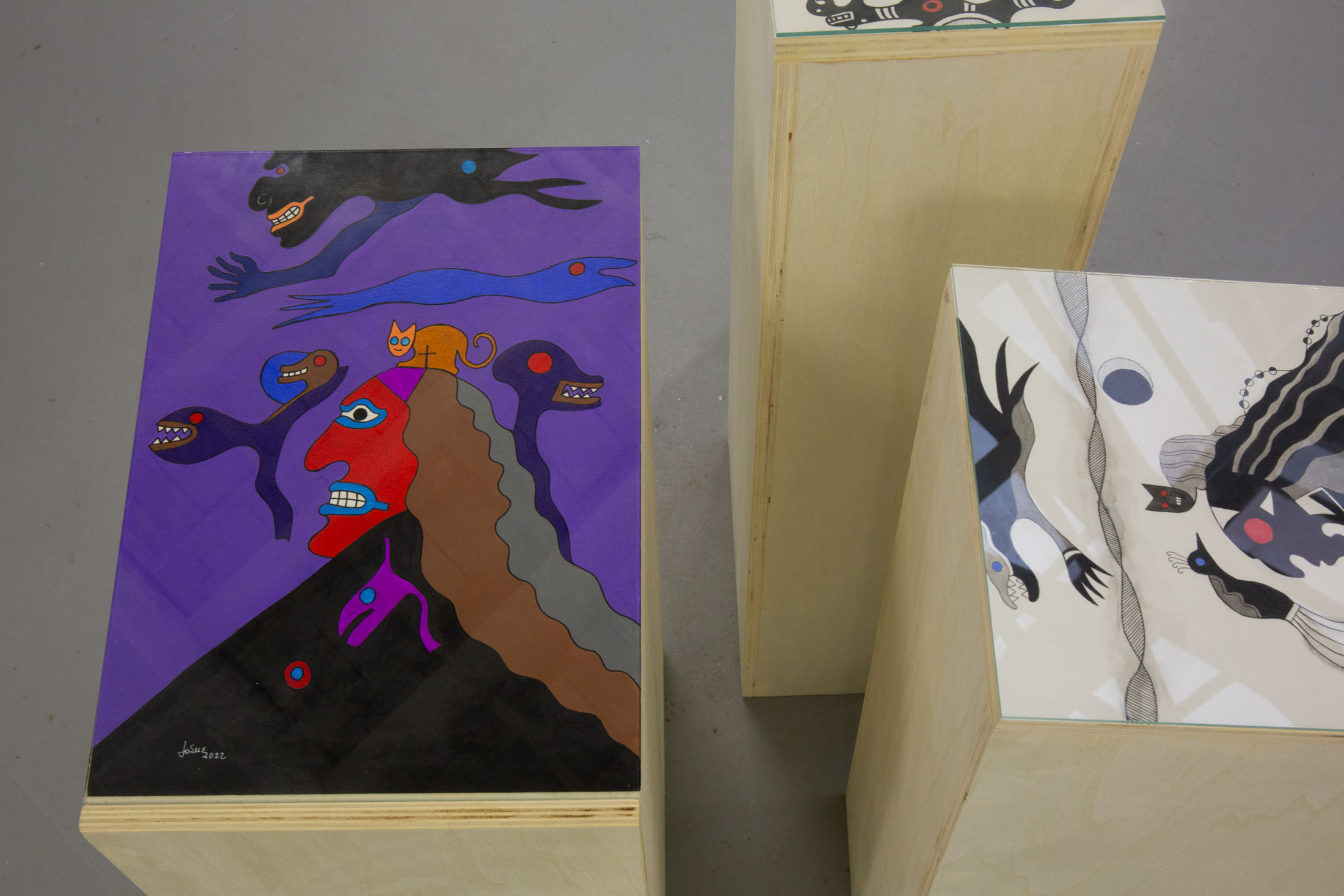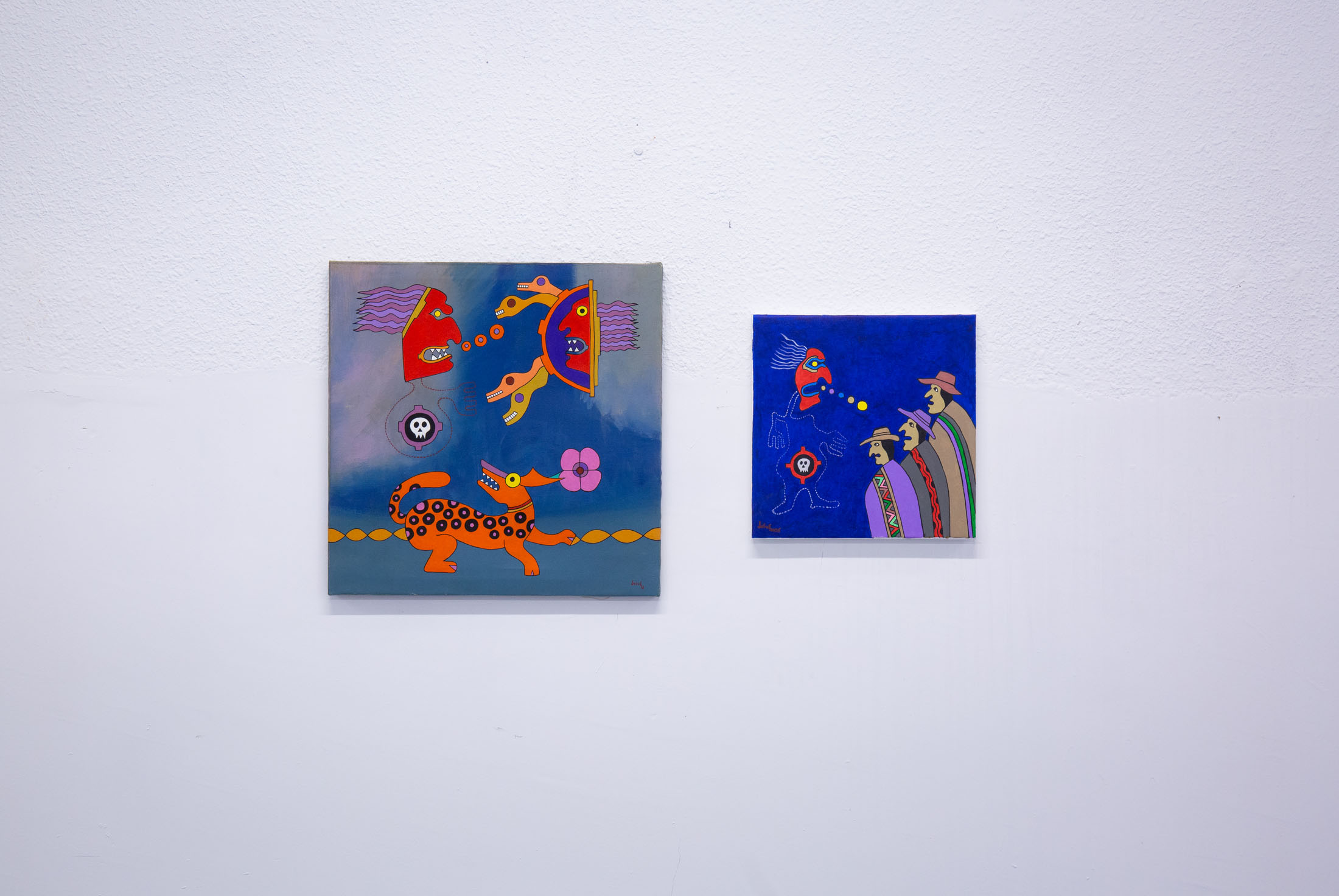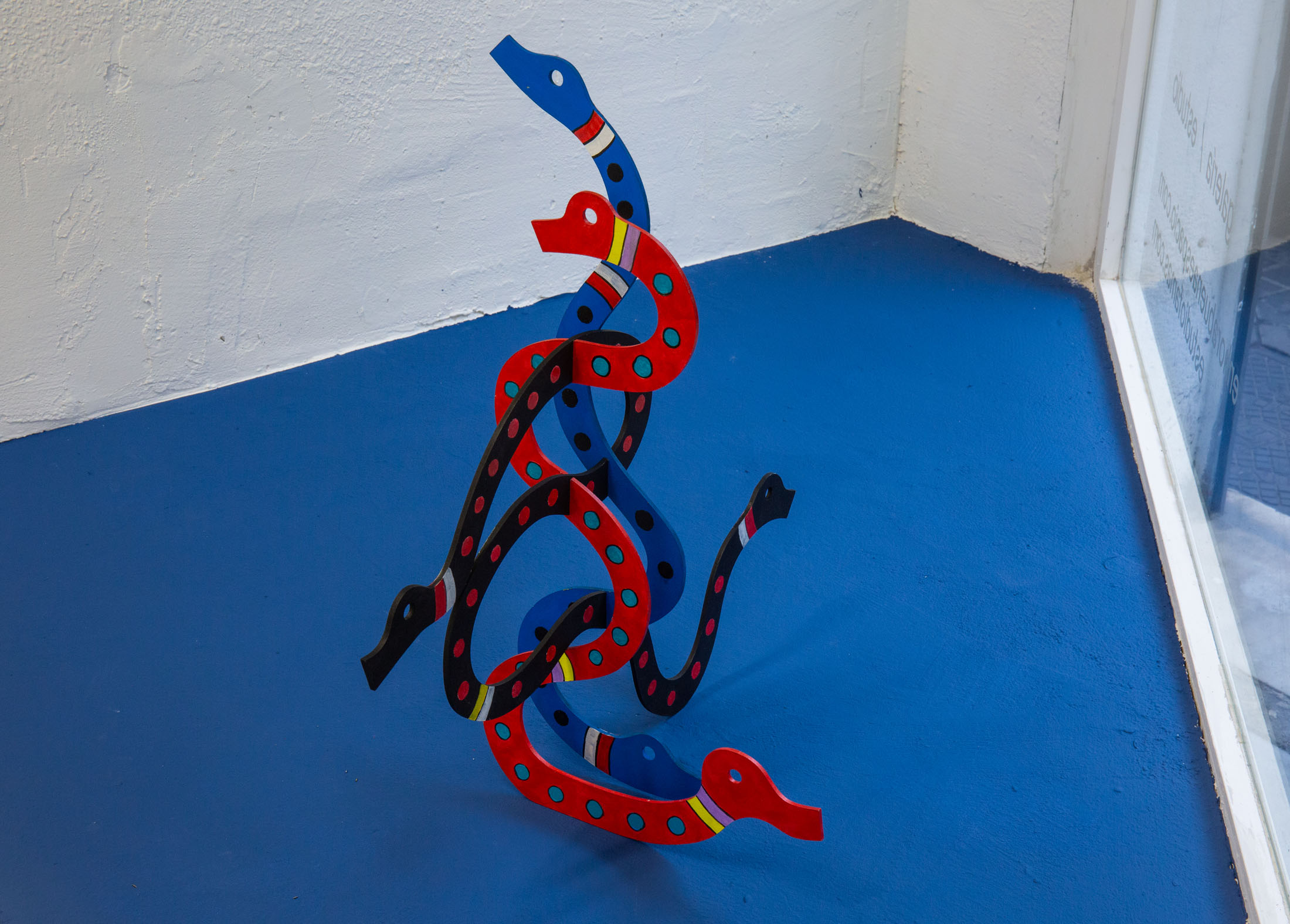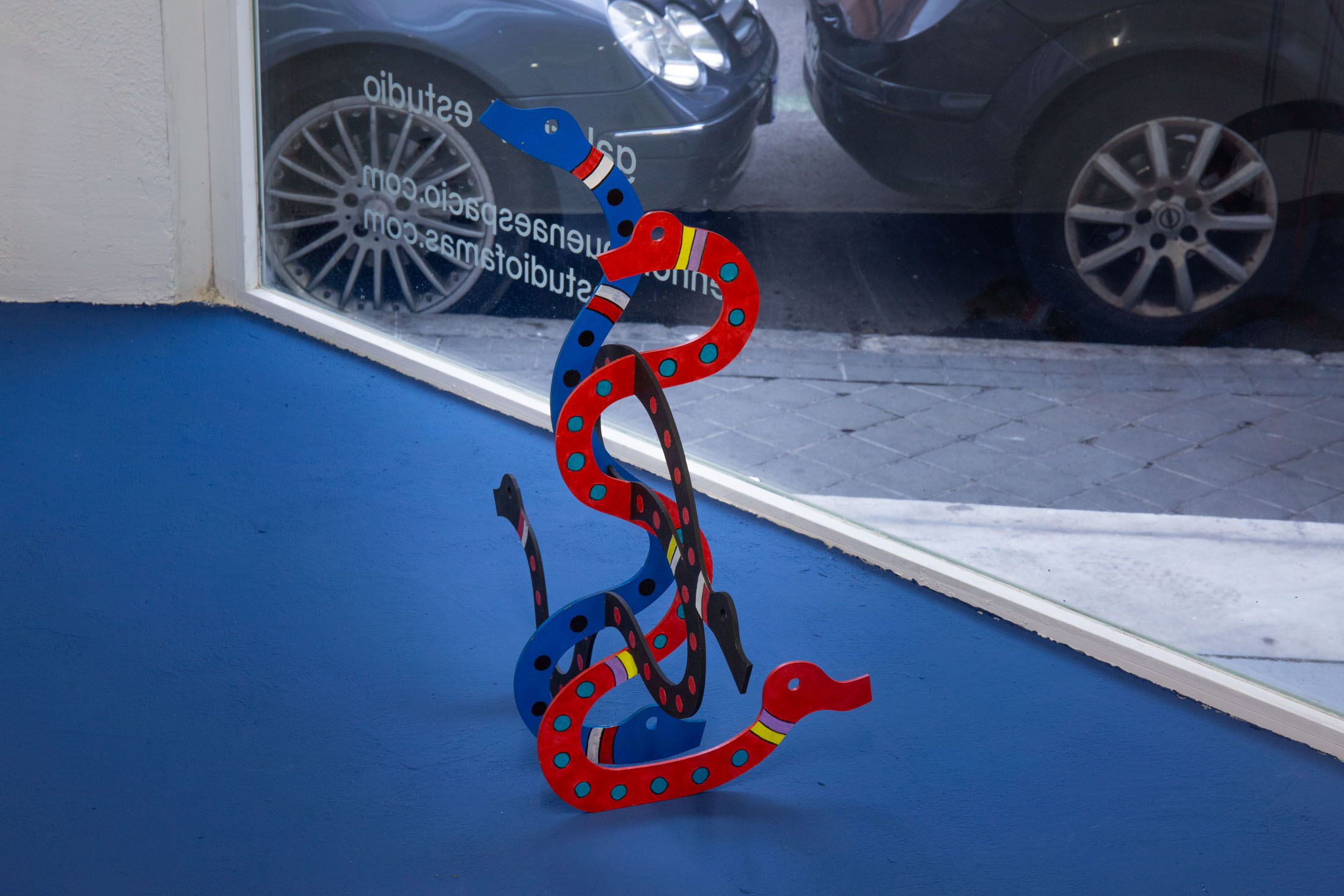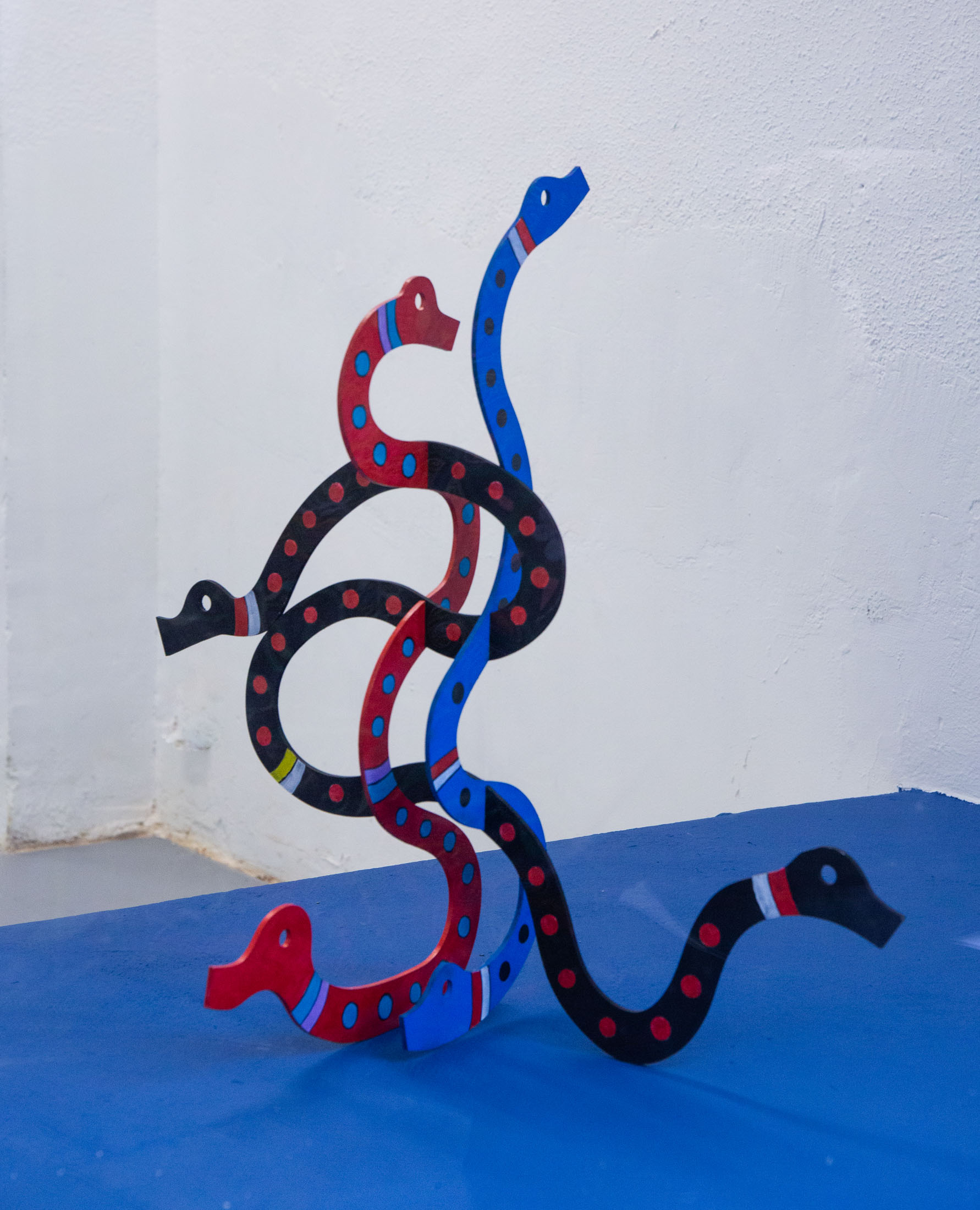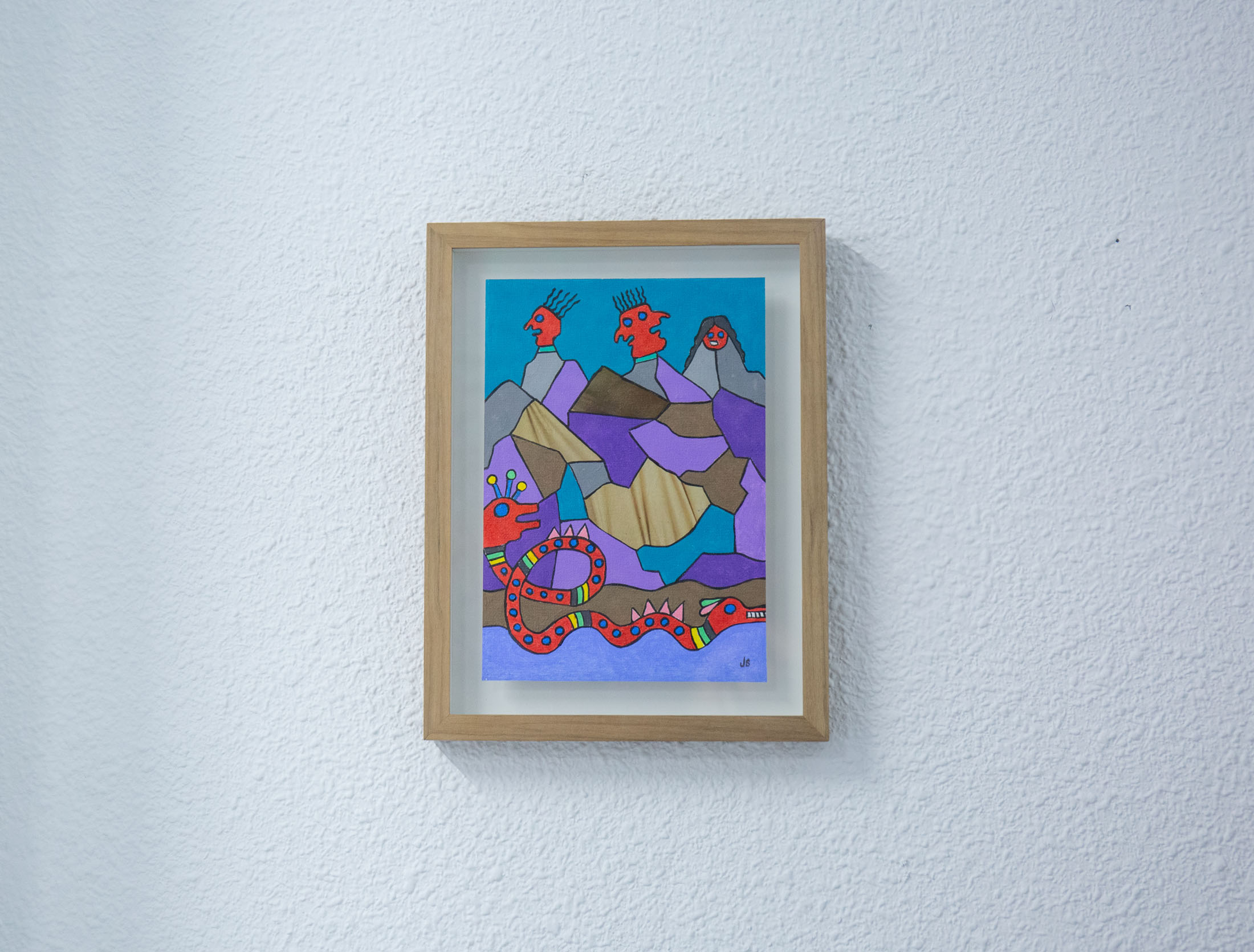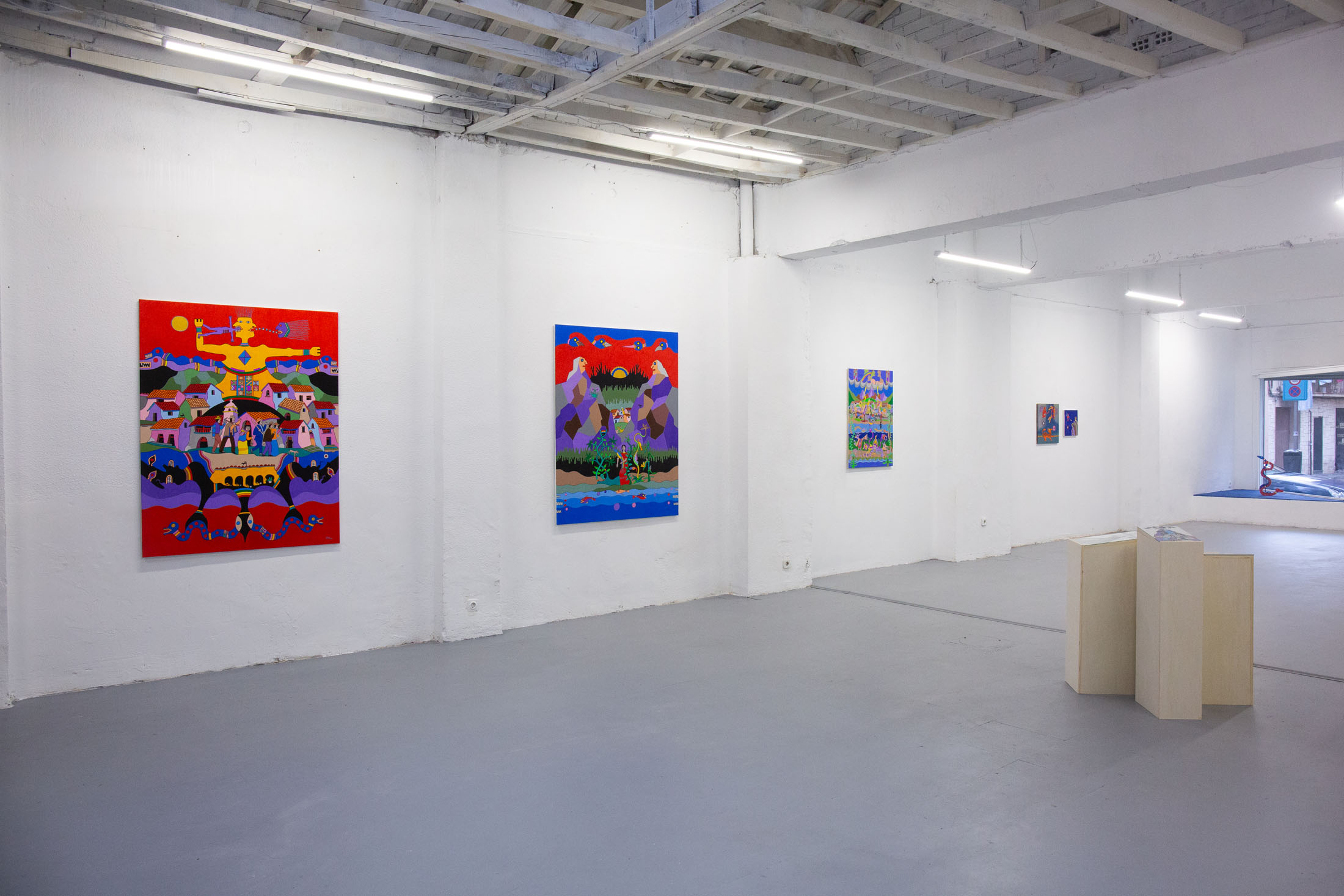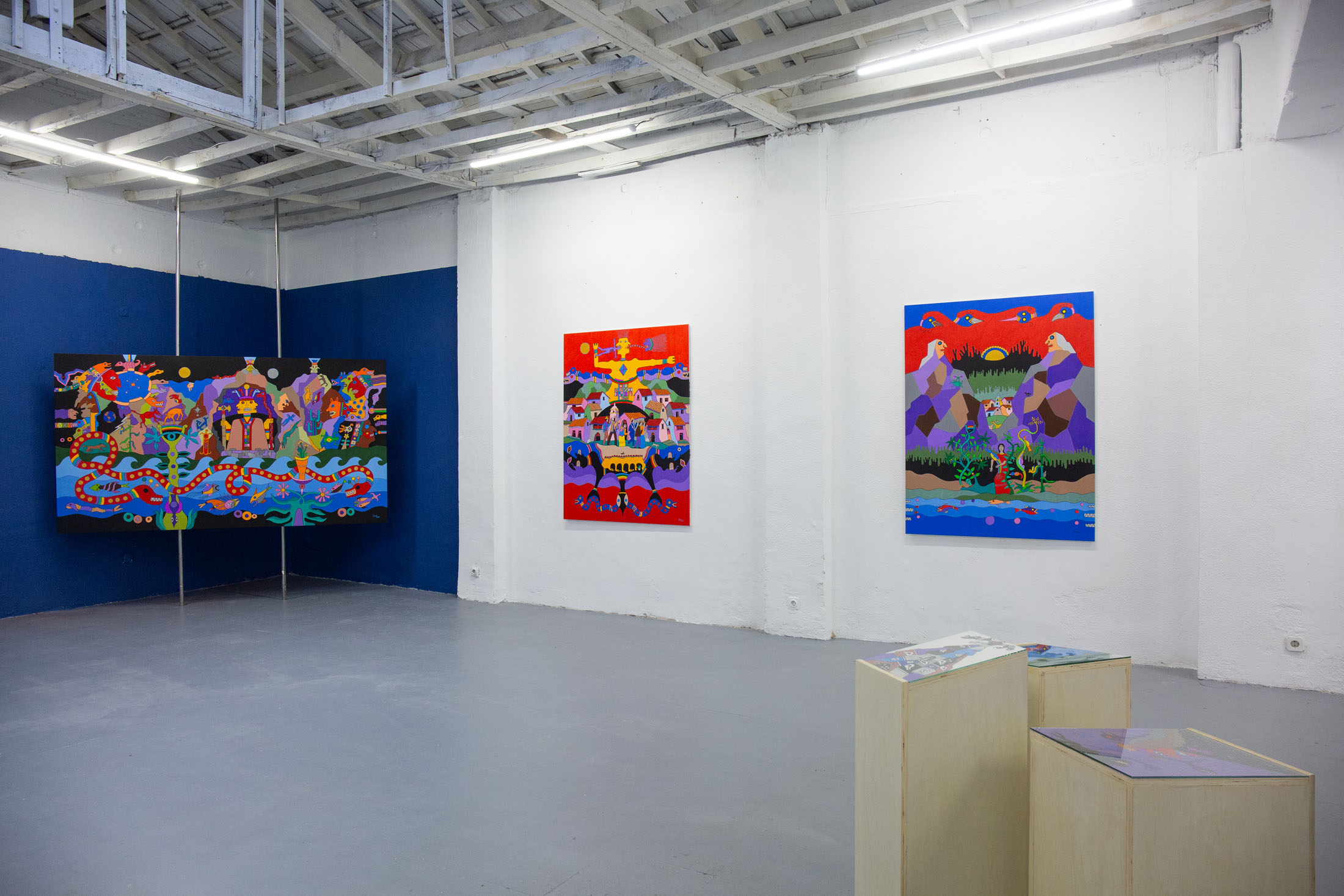
The black wings of the condor are a darkened sky that anticipates dusk. The puma is the eye of the earth. The amaru, the mythical serpent, traces the cycles of life and death that envelop fish, birds, felines, insects, and humans. In the paintings, sculptures, prints, and collages of Josué Sánchez (Huancayo, Peru, 1945), beings and times coincide in worlds unfolded between the iconography of Andean textiles, architecture, and the apus—the sacred mountains.
“The Breath of Time” summons the ancestral wisdoms of the past: dualities in conflict, yet sources of sustenance, fertility, and transcendence. The time of myth becomes a response to contemporary crises—a breath that nurtures reflection on the present moment, its conflicts and violences. This fleeting yet constant exhalation sustains chaos even as it aspires toward order, harmony, and solidarity—an imagination that dreams of recovering the means for continuity and the reconstruction of possible futures.
Josué Sánchez is a Peruvian artist with a career spanning more than five decades and with emblematic contributions to the history of Peruvian art, such as his murals in the Convent of Santa Rosa de Ocopa, the Church of Chongos Alto, and his works referencing twentieth-century Peruvian literature. He has contributed to ongoing debates about the history and painting of the Peruvian Andes, about identity and universality in artistic expression, and about Andean modernity.
His extensive research explores the iconography of textiles, Andean art and literature, rural architecture, and the knowledge of plants and spiritual beings. His most recent paintings arise amid Peru’s severe political crisis—decades of corruption, discrimination, and inequality— but his works echo far beyond the local, speaking to shared global concerns that can be approached through the recognition of Andean mythic knowledge and creative expressions.
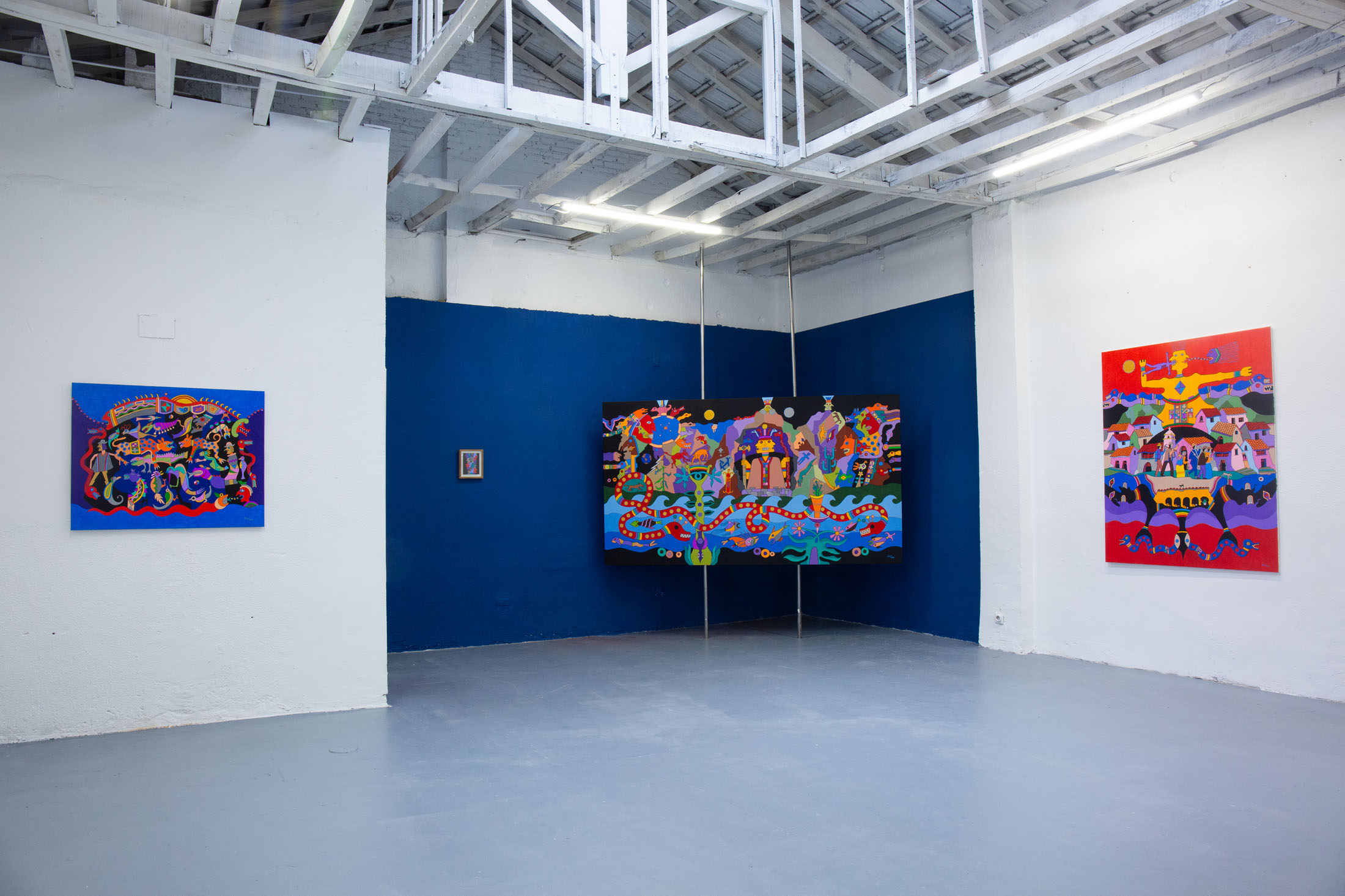
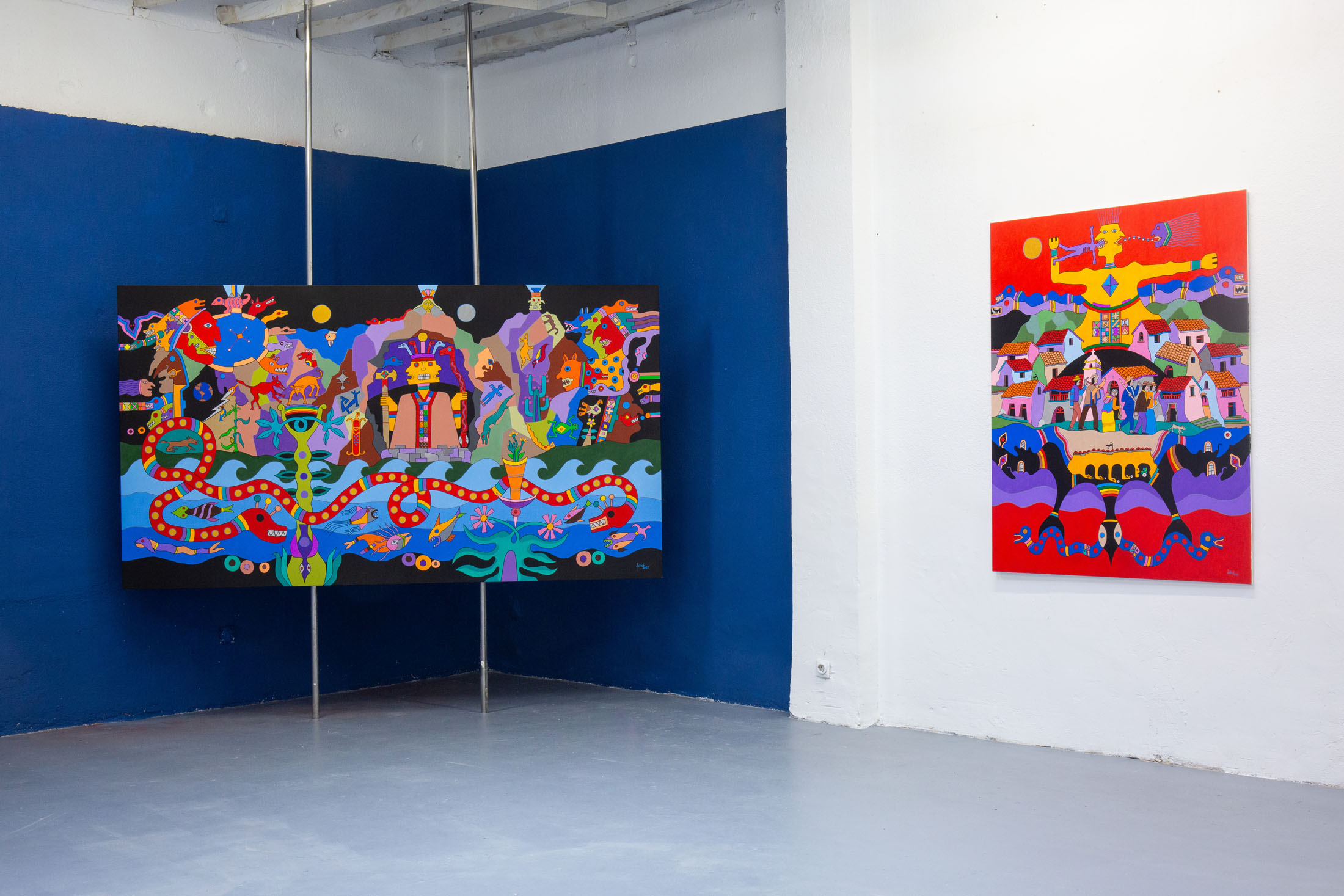
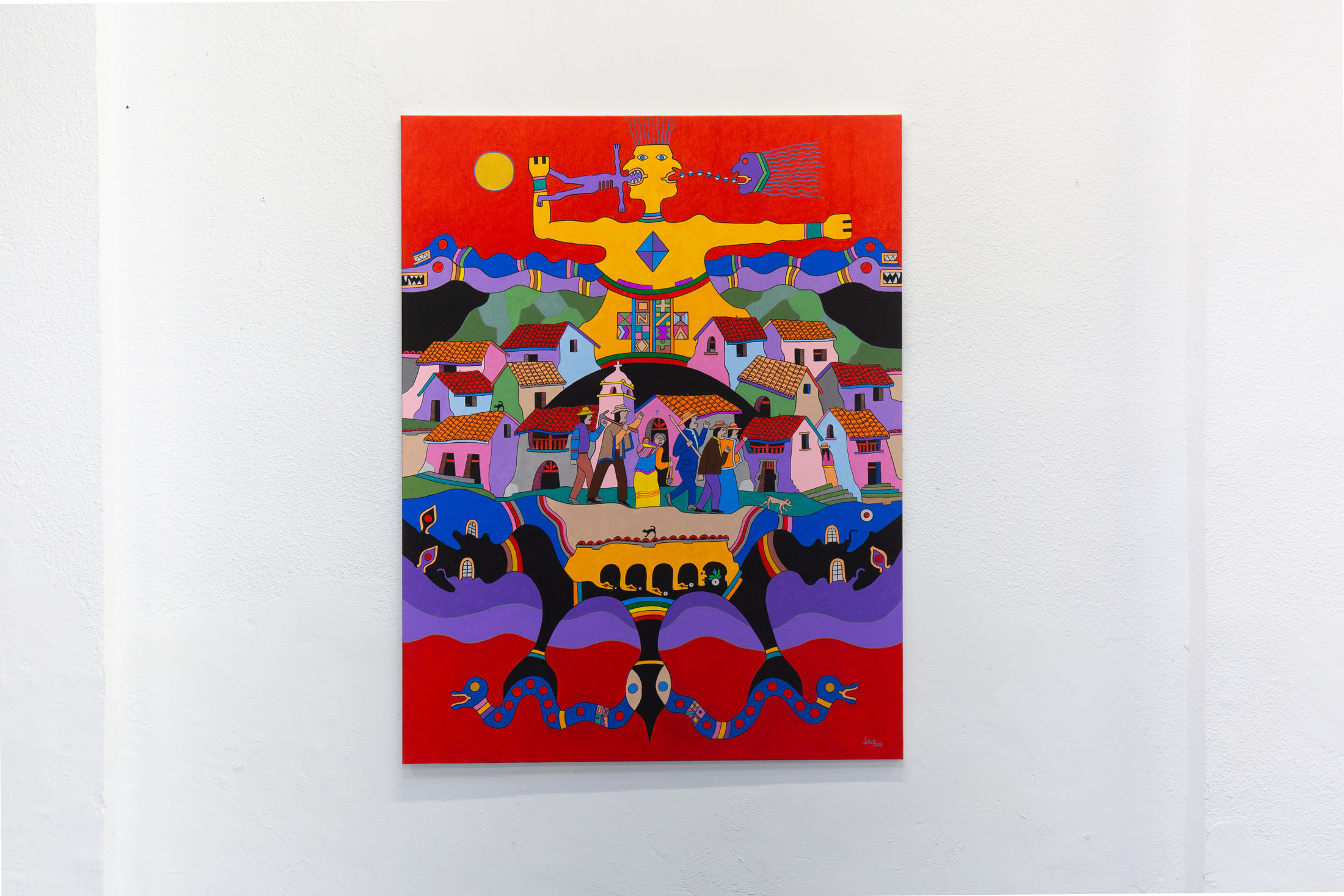
In “The Breath of Time”, deities confront one another, people protest, empty houses bear witness to death and violence. Yet the gods also sow and bear fruit, chicha is shared, and stars, animals, humans, and plants persist—bound by the same vital force.
Josué affirms a tenacious hope in the possibility of reconstruction. His works carry the certainty of an integrative vision—one that summons, invents, and conceives.
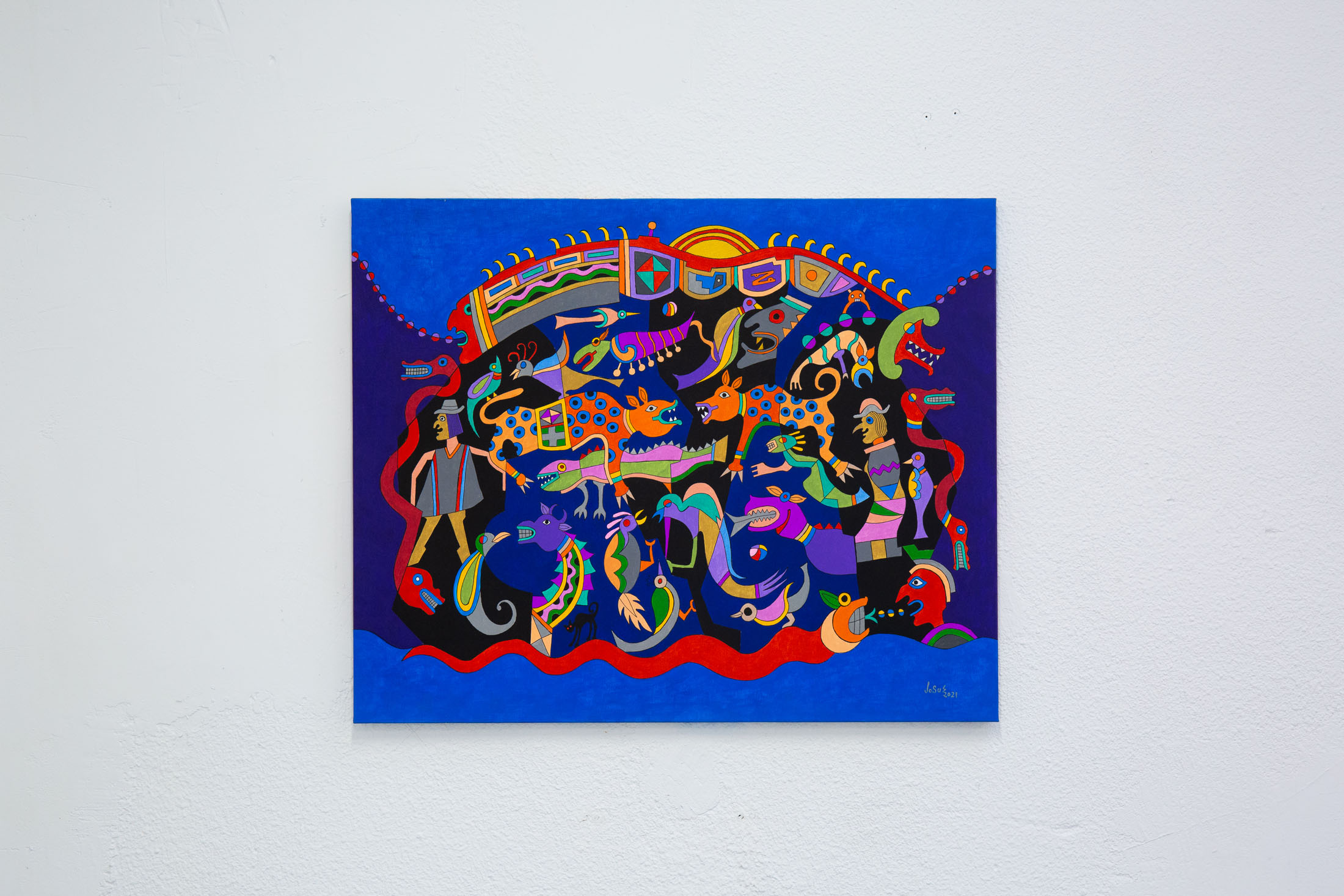
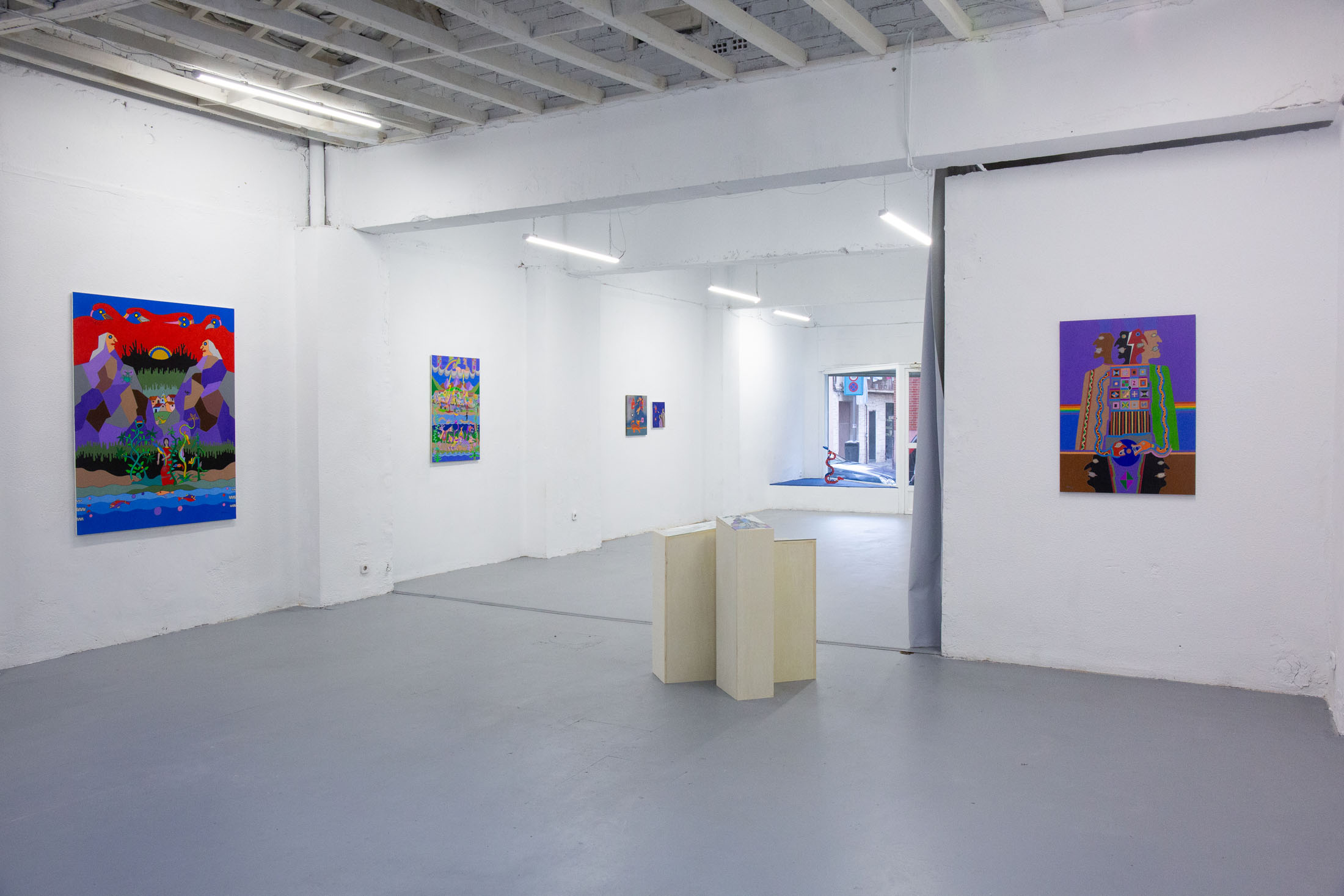
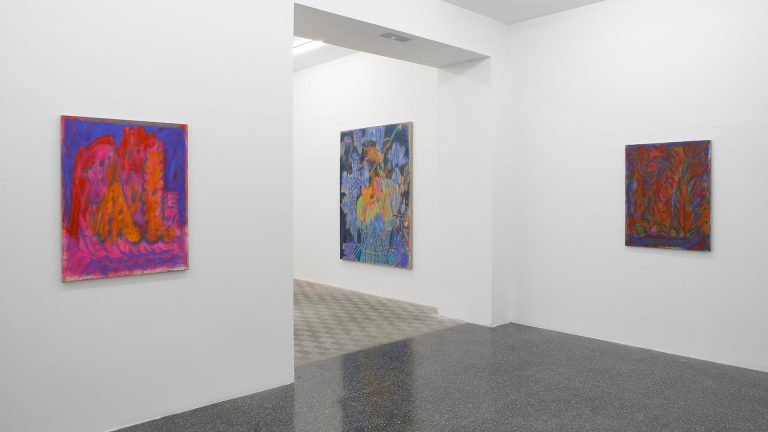
Josué’s paintings are distinguished by their defined planes and vibrant colors, as well as by the vitality of their geometric compositions, which emphasize the connections between elements drawn from textile patterns, rural architectural structures, the bodies of the apus, and the Andean deities alongside constellations and celestial bodies.
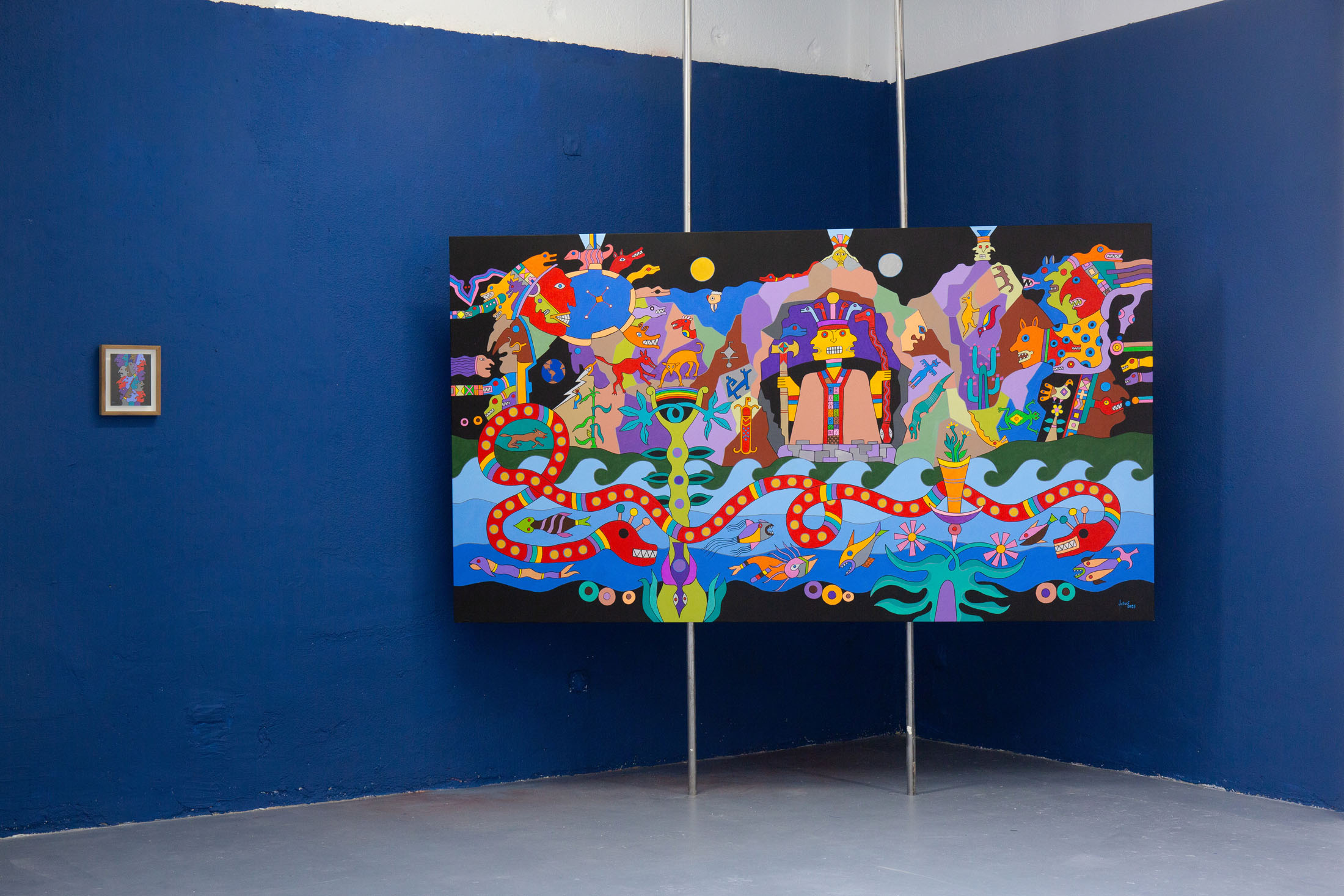
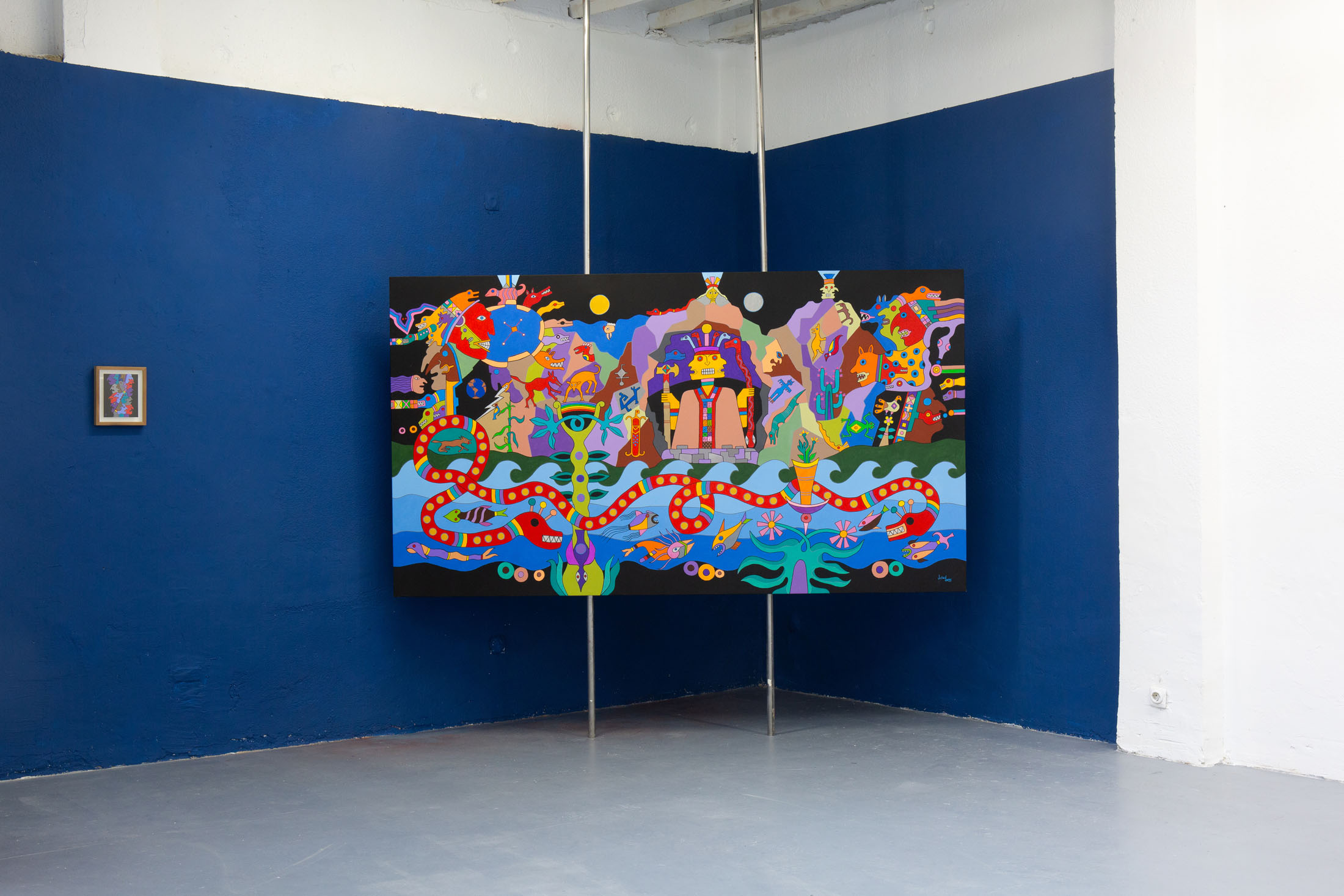
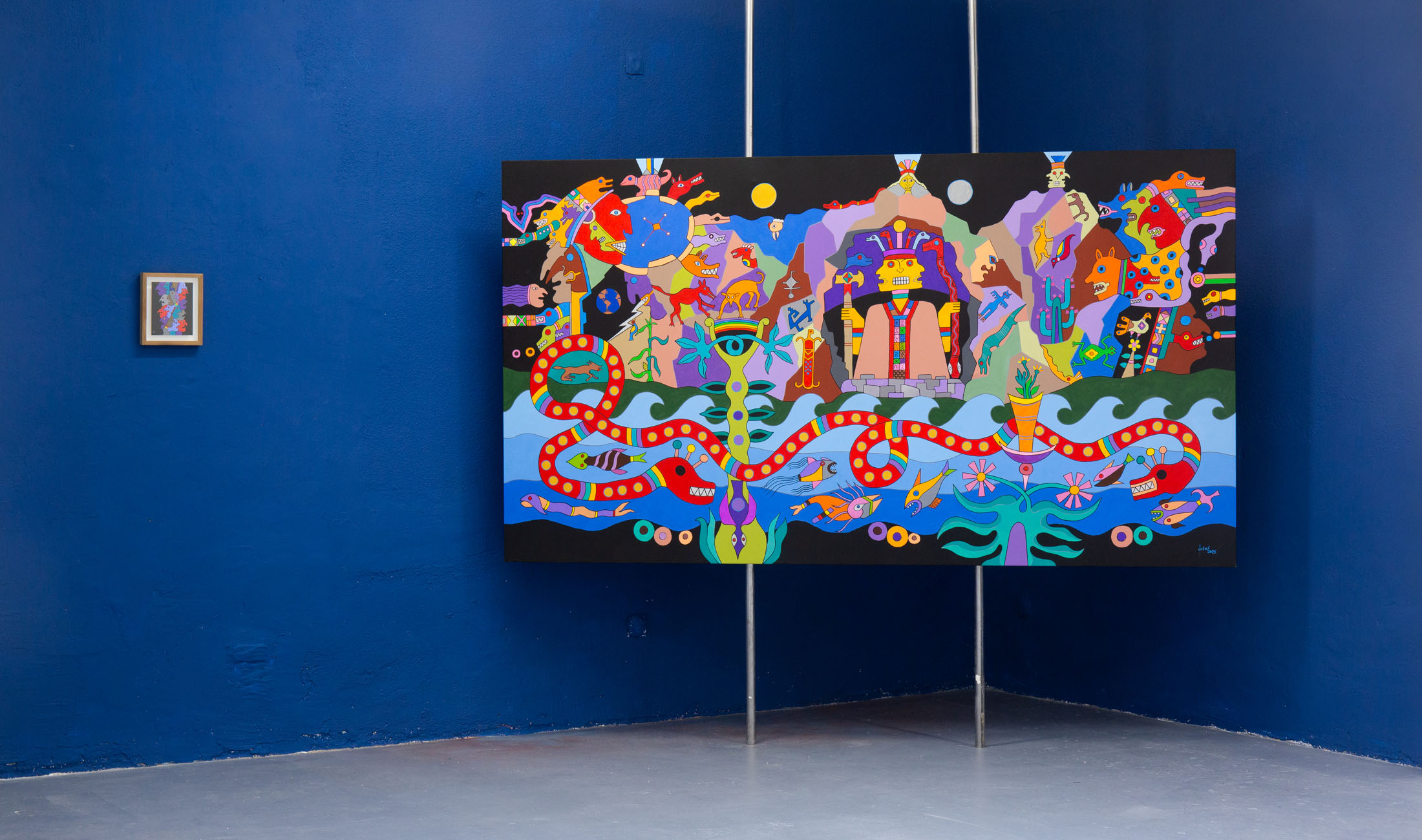
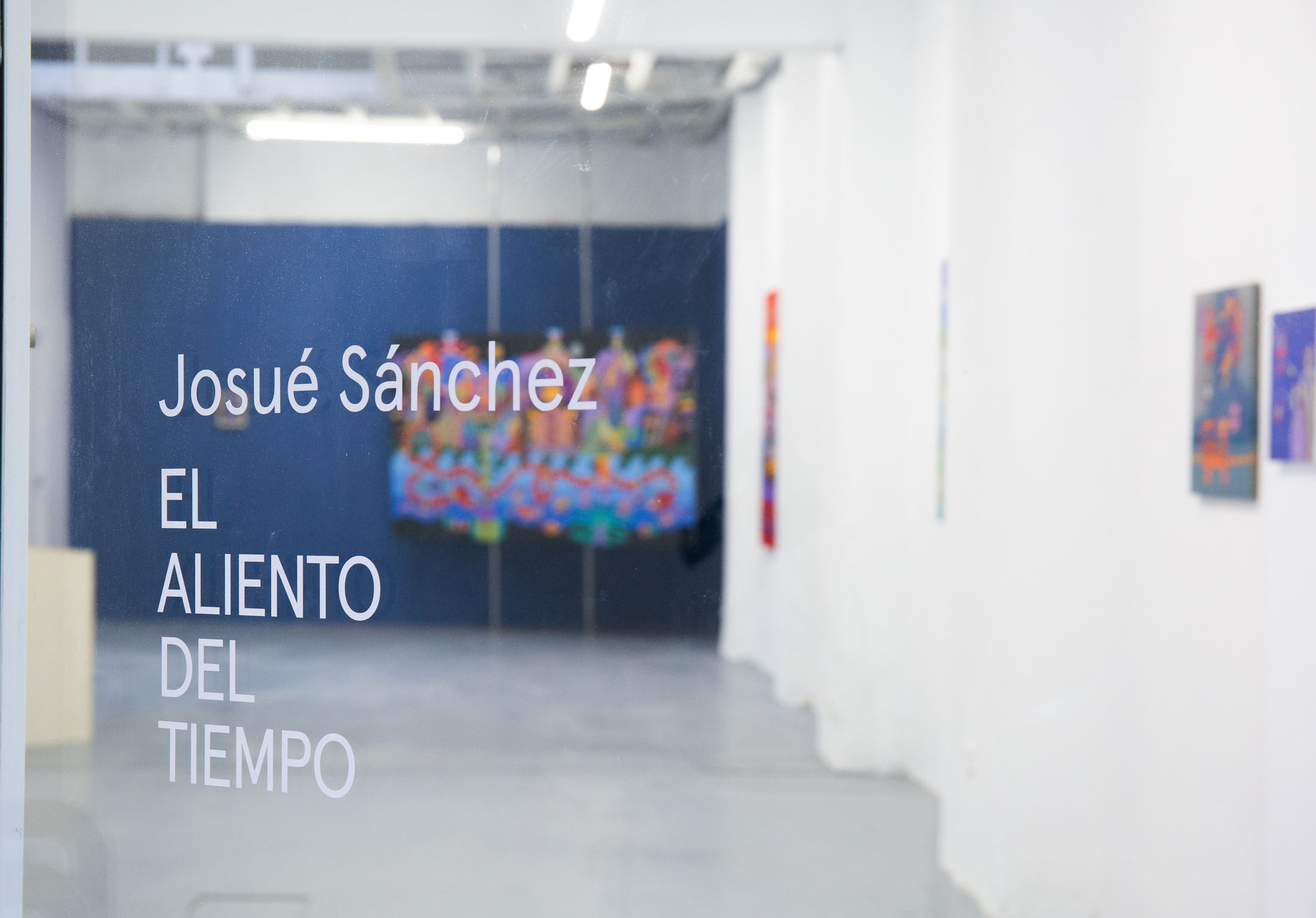
His first solo exhibition at Enhorabuena Espacio in Madrid takes its title from his work “The Breath of Time (2025)”. In it, Josué represents a network of coexistence among beings within the Uku Pacha (the underworld), the Kay Pacha (the world of the here and now), and the Hanan Pacha (the upper world). Mythology, as the breath of times past, calls forth a plural vision. There are divine beings such as Wiracocha, the creator of the universe—the axis that inhabits and sustains all things—as well as female deities, like Mama Huaco, whose presence and light extend toward the sky.
Animals—foxes, felines, birds—move through the mountains and, at the same time, become the mountain in their own skin, in the incisions of the petroglyphs. The Earth, the Southern Cross, the Sun, and the Moon are all borne upon the condor’s flight—wings that embrace multiple existences and scales.
It is a mythic time, inhabited by encounters and also by conflicts: with the amaru, with the branches and roots of trees, and with stone walls that weave the spaces together. Josué invites us to recognize the continuities between this mythic thought and the current cycle—to imagine ways of living that restore solidarity among beings and aspire to the reconstruction of a balanced coexistence, through this breath of the ancient that becomes present again, reminding us of hope and the possibility of rebirth.
–Giuliana Vidarte
Josué Sánchez (Huancayo, Junín, 1945), trained at the School of Fine Arts of the National University of the Center of Peru, is recognized for his neo-figurative pictorial language and for a career spanning more than five decades of creation, muralism, and teaching. His work weaves together Andean mythology, memory, and spirituality, exploring the relationship between tutelary deities, nature, and everyday life.
His murals and paintings—held in institutions such as the Museo de Arte de Lima (MALI), the Museo de Arte Contemporáneo de Lima (MAC Lima), and the MISSIO Sanctuary in Aachen, Germany—consolidate a body of work where the ancestral and the contemporary coexist within the same symbolic rhythm.
“The Breath of Time” brings together a selection of recent works in which the artist reflects on the persistence of myth and the ongoing dialogue between the human and the divine.