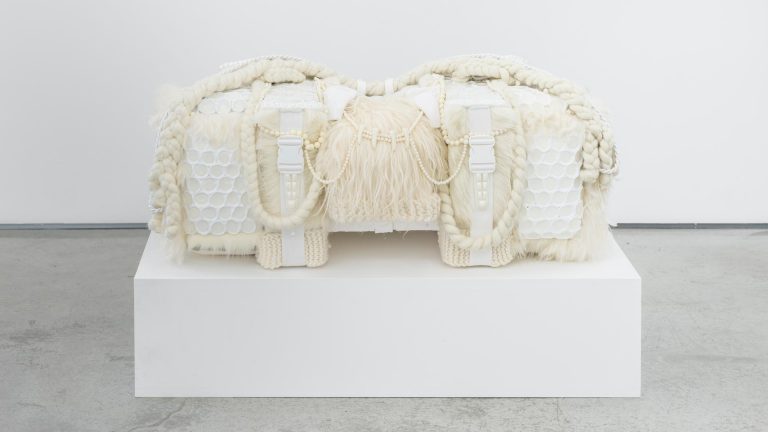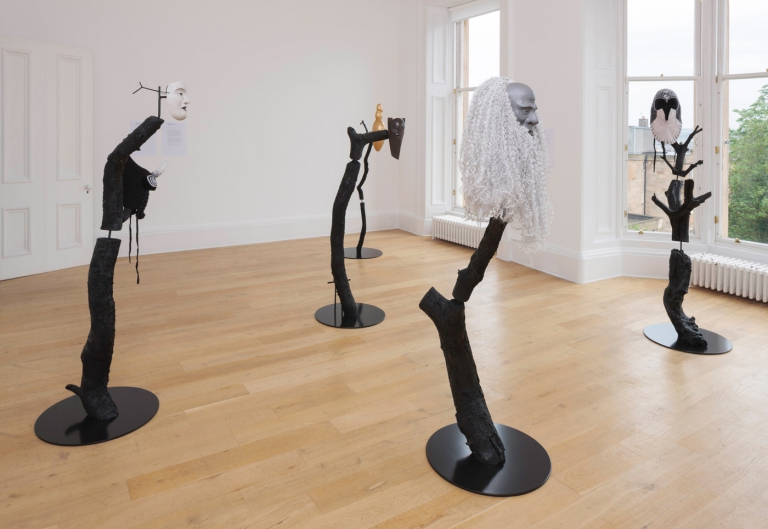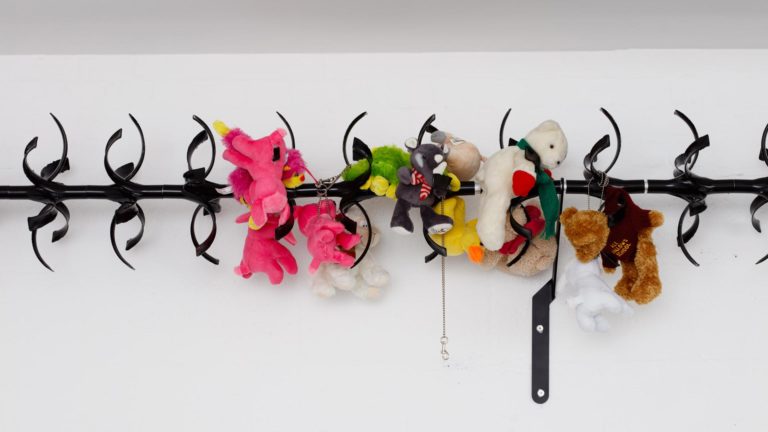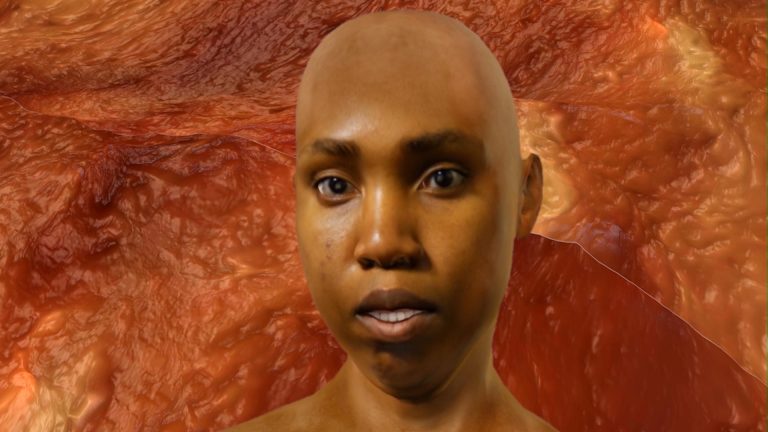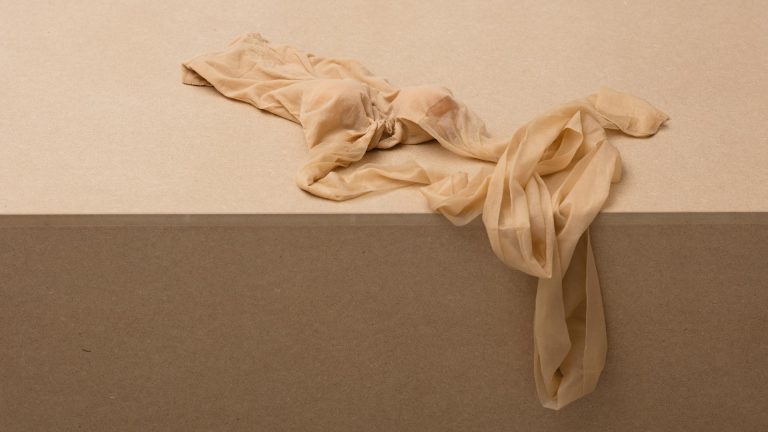
In 1952, Christopher Strachey wrote an algorithm for the Manchester Mark 1 computer that generated love letters through a probabilistic process. This early experiment was significant in the history of computing while also being a tender and naïve gesture. Teaching a computer to write a love letter suggests a desire to encode affection into an algorithmic system, to project reciprocity onto a machine, or to express gratitude towards it. When programming a love letter, it is unclear who the letter is for: the algorithm, the viewer, or someone else. It is also unclear who writes it: the artist or the computer? Through her work, Isabel Merchante asks us to participate in this exercise of openness, to appreciate different forms of knowledge, affection, and seeing.
Programming a Love Letter marks Merchante’s first solo exhibition with Purist Gallery, bringing together three of her most significant projects, developed over the past three years. The works presented trace the evolution of her thinking about the relationship between art and computation, from Drawings of the Latent Crust (2023), a series of large-scale land art installations, to her most recent projects, Constellation Creatures (2026) and PCBS (Poetic Cartography of Branching Significances) (2026), across which programming and robotics are used to generate affect and meaning beyond efficiency.
In her practice, Isabel designs systems within which a process can develop. Once the system is defined, what unfolds can lead to unexpected results. From an interest in site-specificity, she adopted a materialist position on technology, creating works that can be physically experienced. This involves thinking through material translations of abstract or intangible concepts, for example, how to translate the latent space of AI. Translating intangible processes, such as an algorithm, into physical form can reconfigure technical objects and expand their connotations, bringing them into the user’s sensory experience. Through this process of reconfiguration, a divergent route opens up, challenging pre-established notions of language, communication, and what a networked system can be. This is not proposed as a distant possibility, but emerges from the natural world and from intuitive observation.
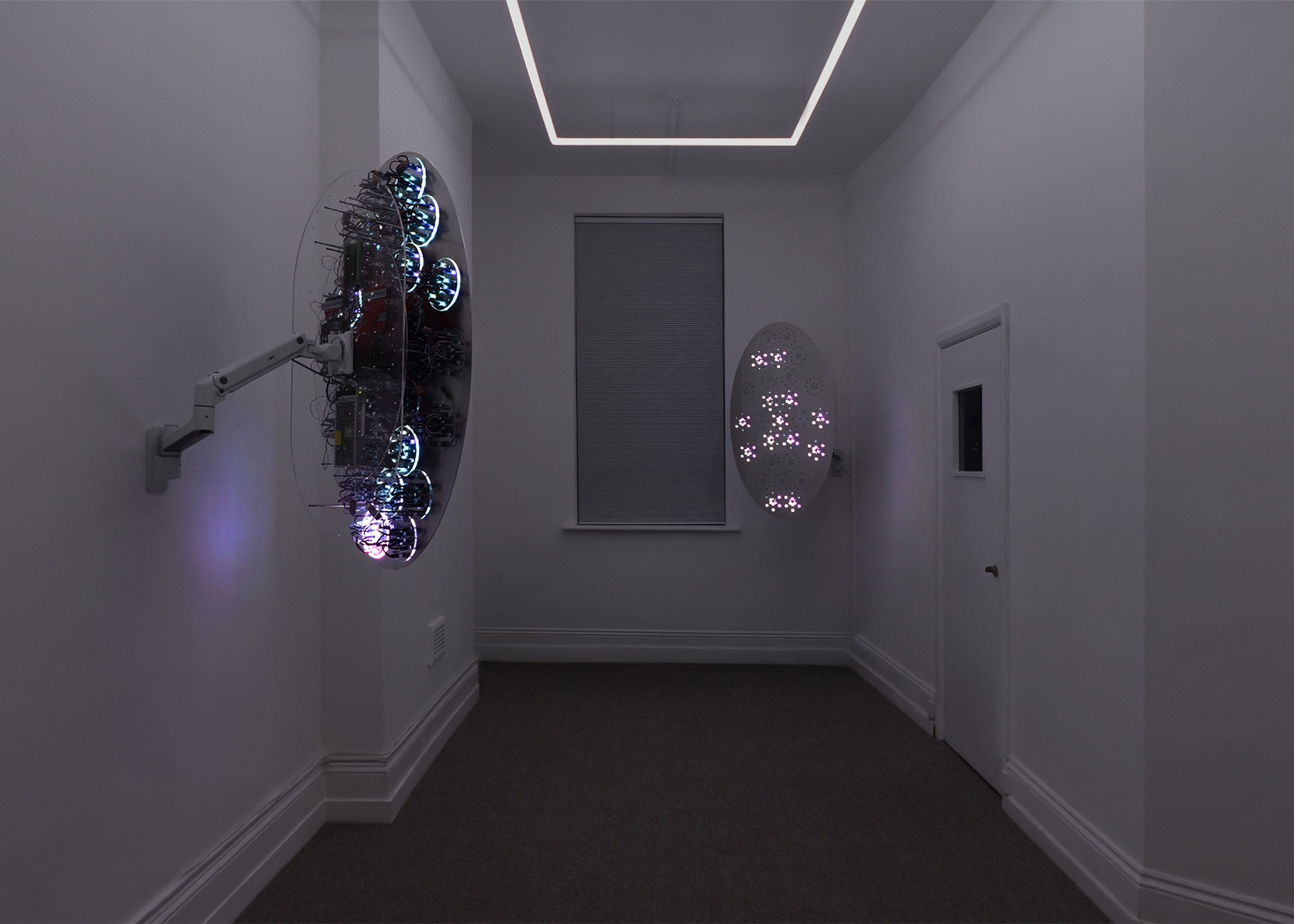
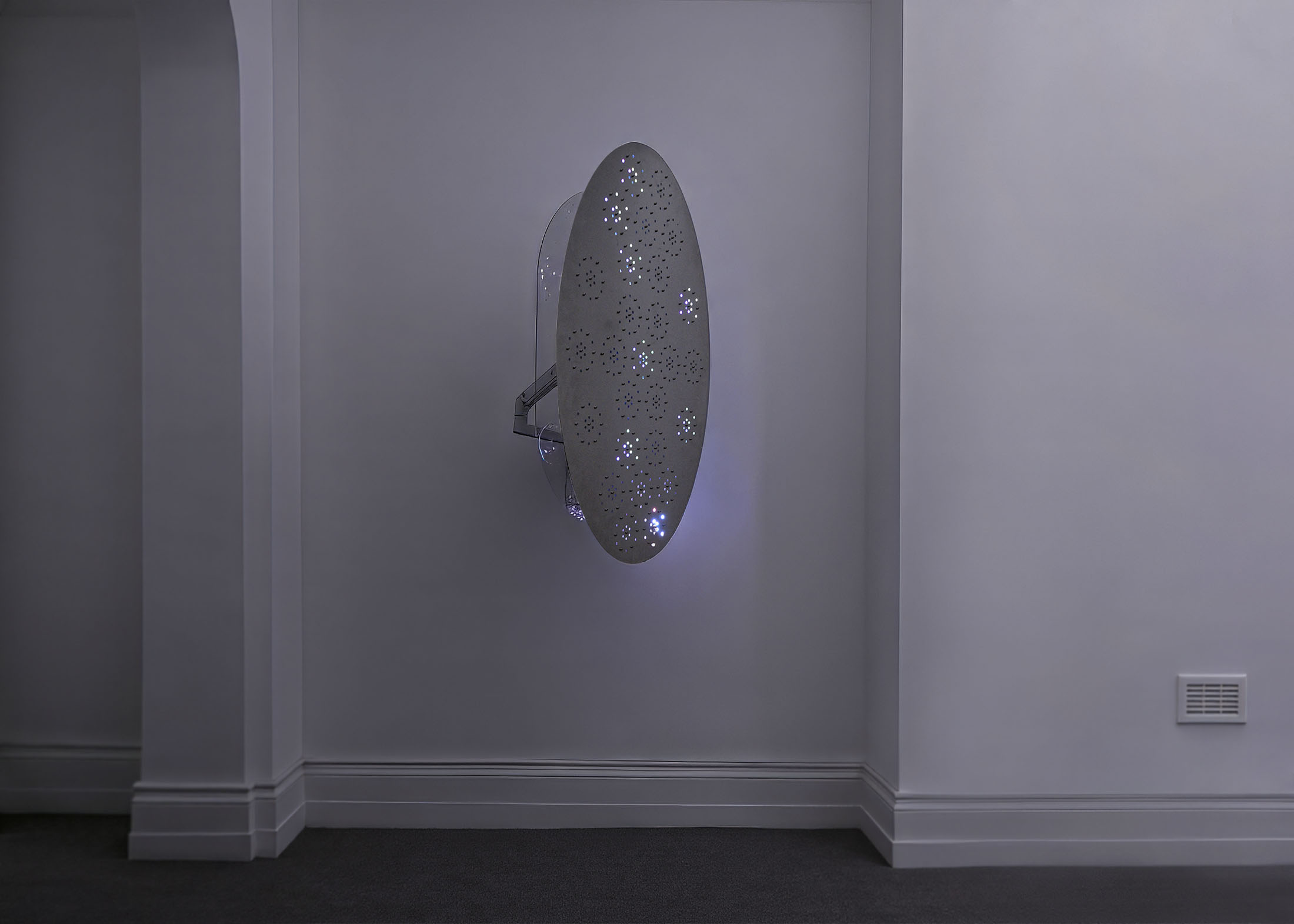
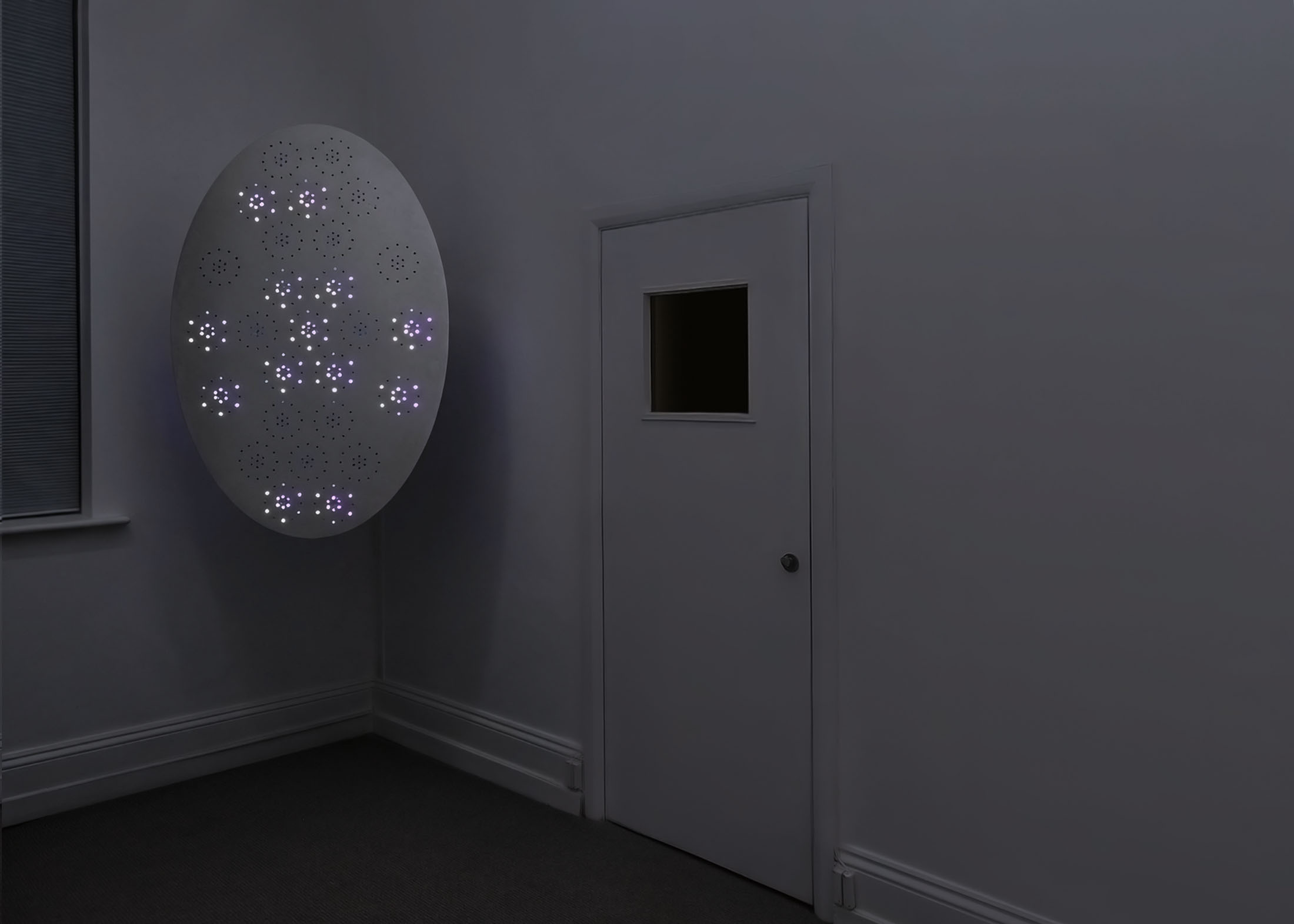
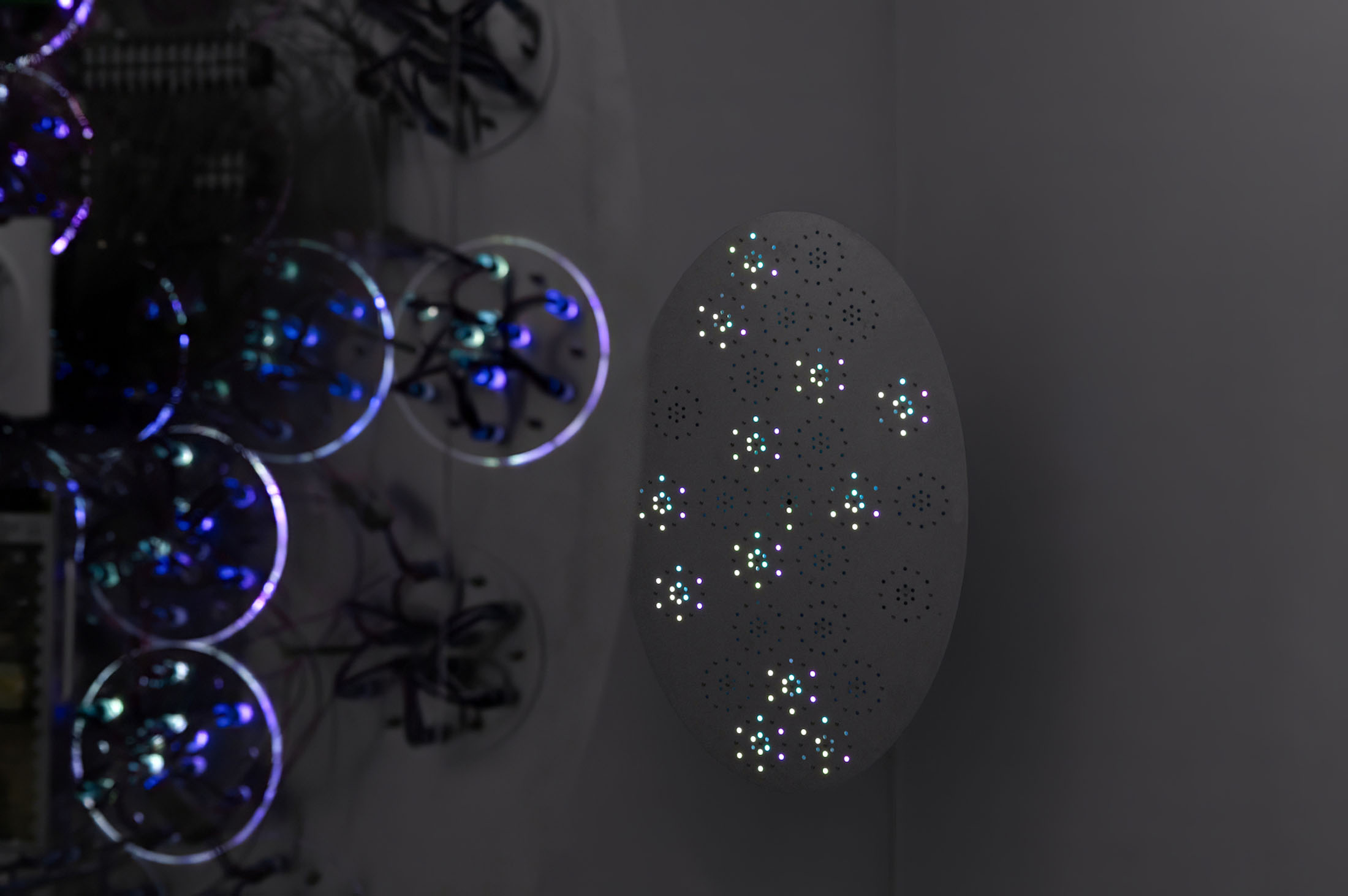
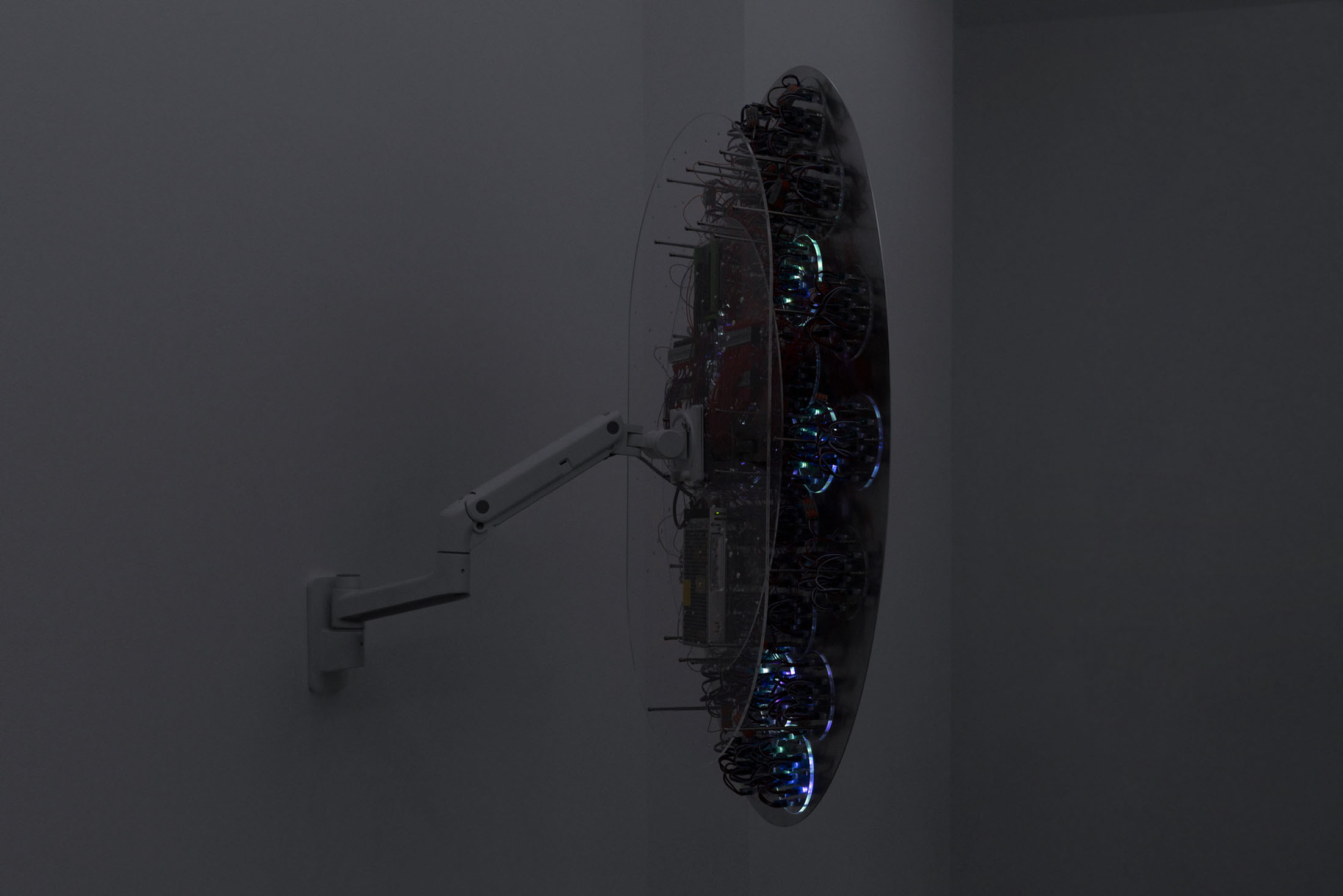
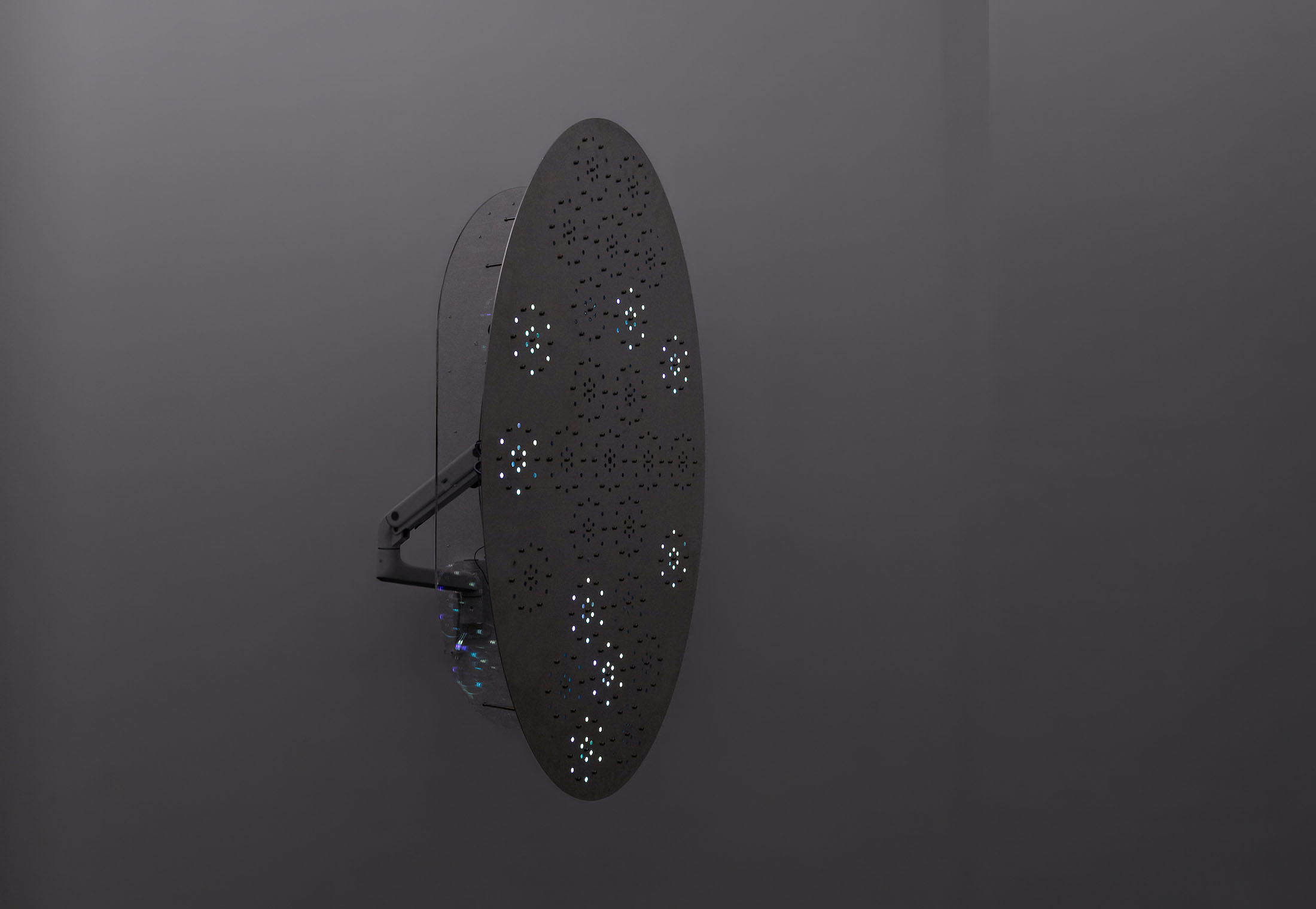
The central piece of the exhibition, Constellation Creatures, explores non-human forms of communication and the possibility of artificial systems developing their own modes of expression, not designed for human understanding. Inspired by the distributed visual expression of octopus skin, each creature communicates through combinations of light, colour, rhythm, and spatial position across its surface rather than through text or sound. The creatures’ skin is composed of integrated LEDs that express states and messages. Machine-learning techniques are used to develop a language that translates states or sentiments into visual patterns, distributed across the creatures’ bodies. Our senses determine the ways we communicate, and what machines sense determines their language. The work proposes a different body for an agent, suggesting that different bodies produce different forms of communication.
Embodied experience becomes a way of holding ambiguity and sensory intensity. Experience is a form of knowledge that cannot be fully translated into logic alone. Works such as Constellation Creatures, occupying a shared space with the viewer, invite us to perceive other forms of being in relation to our own bodies.
By allowing algorithms to generate a non-human-centred language, the artist opens a space where technology can be experienced outside the dominant logic of optimisation. This does not mean rejecting technology, but changing the relation we establish with it: thinking beyond what is useful or predefined by Cartesian logic, and resisting a tendency towards homogenisation. At the heart of Isabel’s practice there is a desire to reverse the fact that machines are often integrated into life through systems that make us more extractable, more distracted, and more alienated from our own senses.
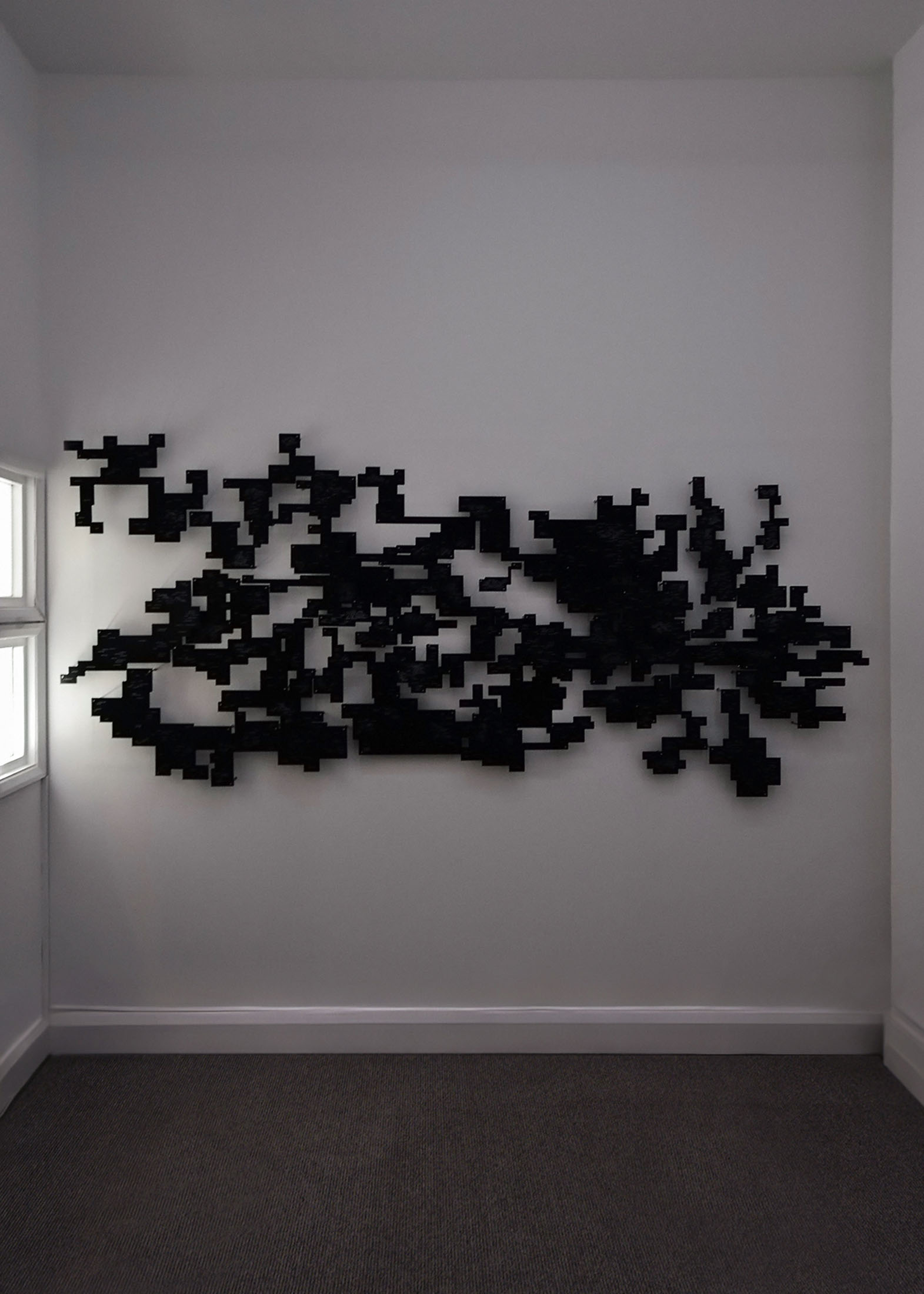
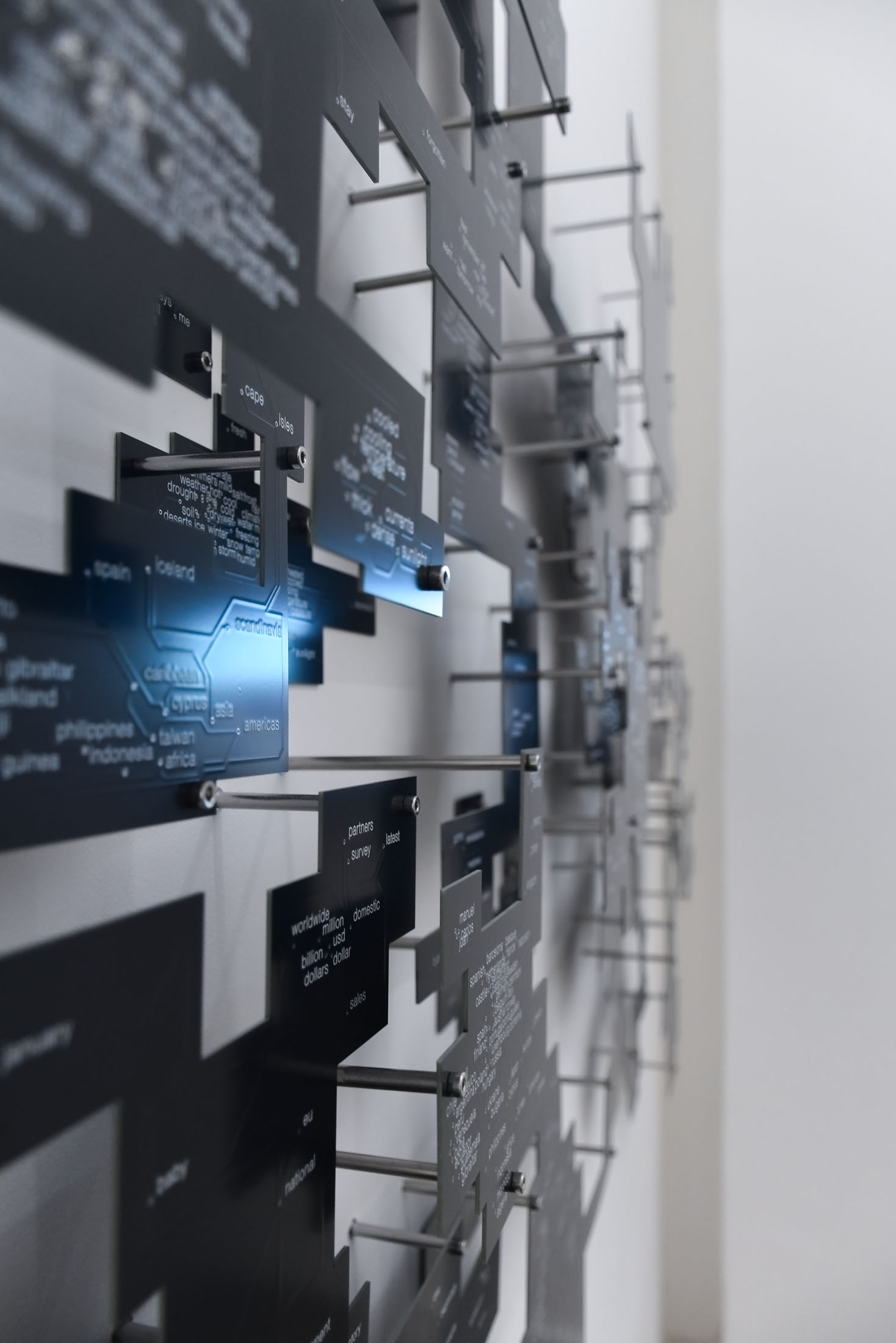
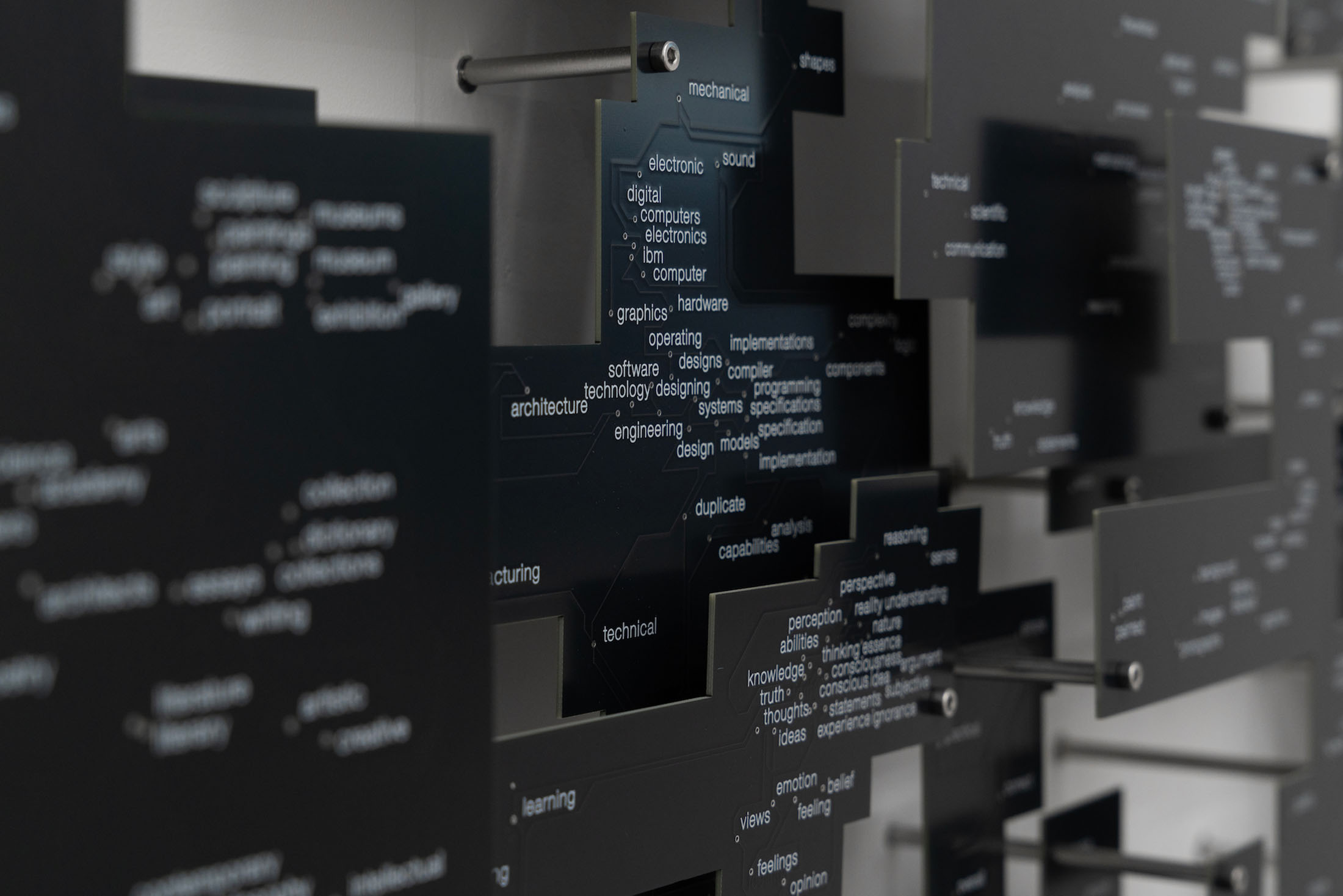
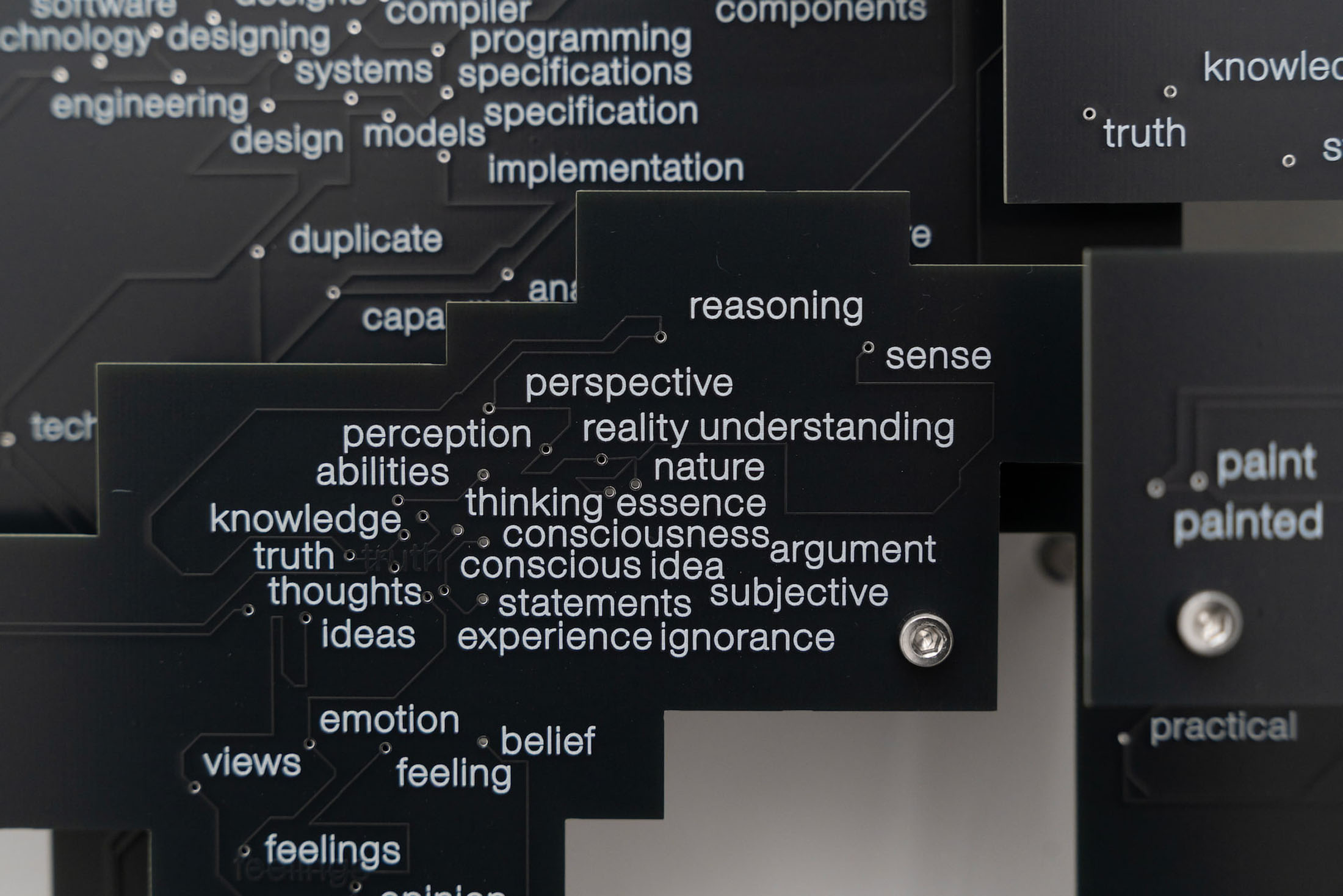
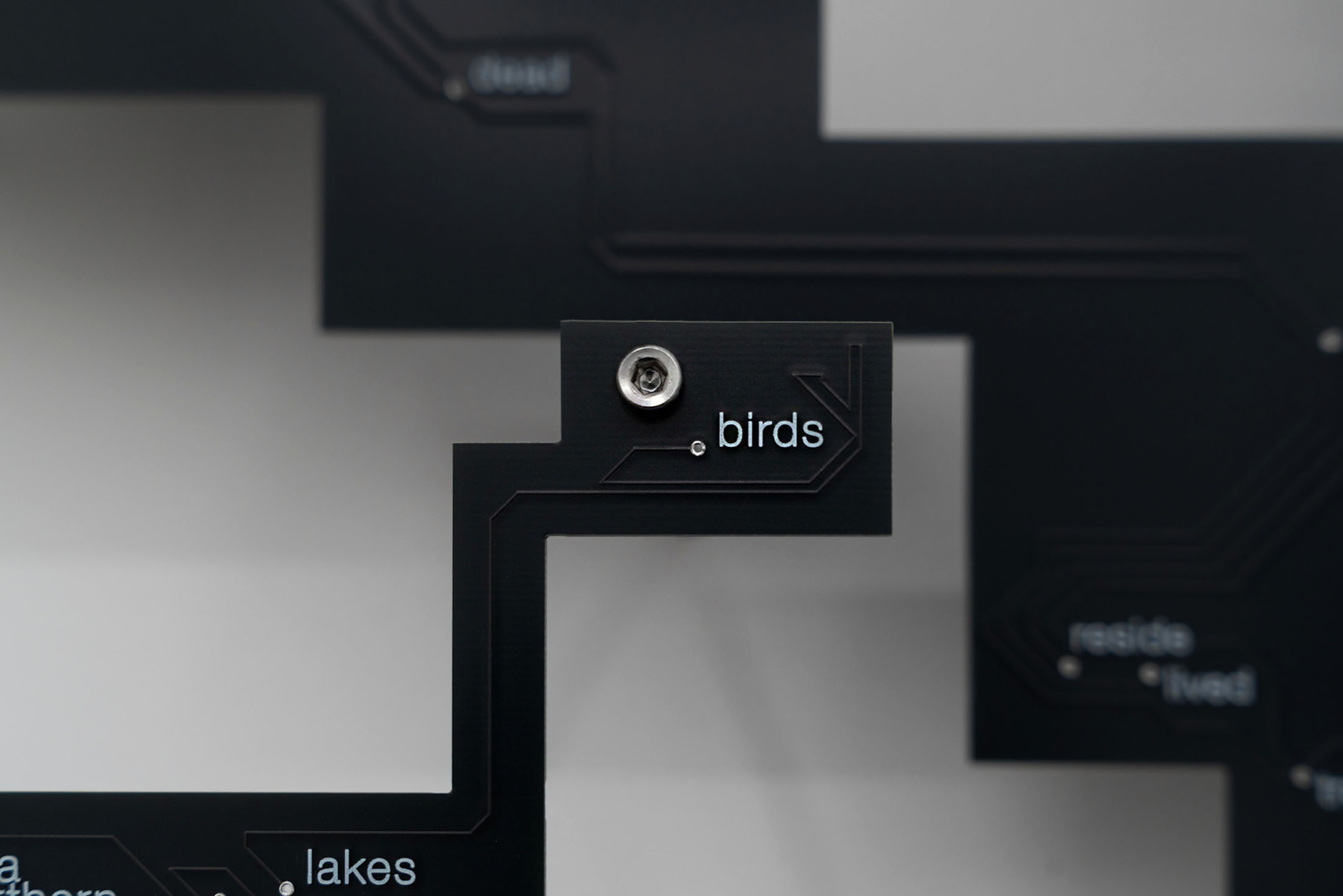
PCBS (Poetic Cartography of Branching Significances), presented to the public for the first time in this exhibition, offers a material translation of the latent space of a contemporary neural network (LLMs). These kinds of embedding spaces are vectorial and multidimensional, organised by the algorithms themselves during the process of machine learning. Within it, words exist as vectors that acquire meaning for the model through their proximity to other vectors. It is, therefore, a geometric dimension in which each word occupies a point in space. For the model, meaning is configured through these connections: what it can relate, interpret, or produce is conditioned by the positions words occupy within it. Language appears as something spatially mapped.
The material support of the project consists of printed circuit boards (PCBs), electronic components that usually remain hidden inside devices. The connotations of this material connect with those of latent space, as both are sites where the machine’s internal workings reside, normally invisible or unknown to the user.
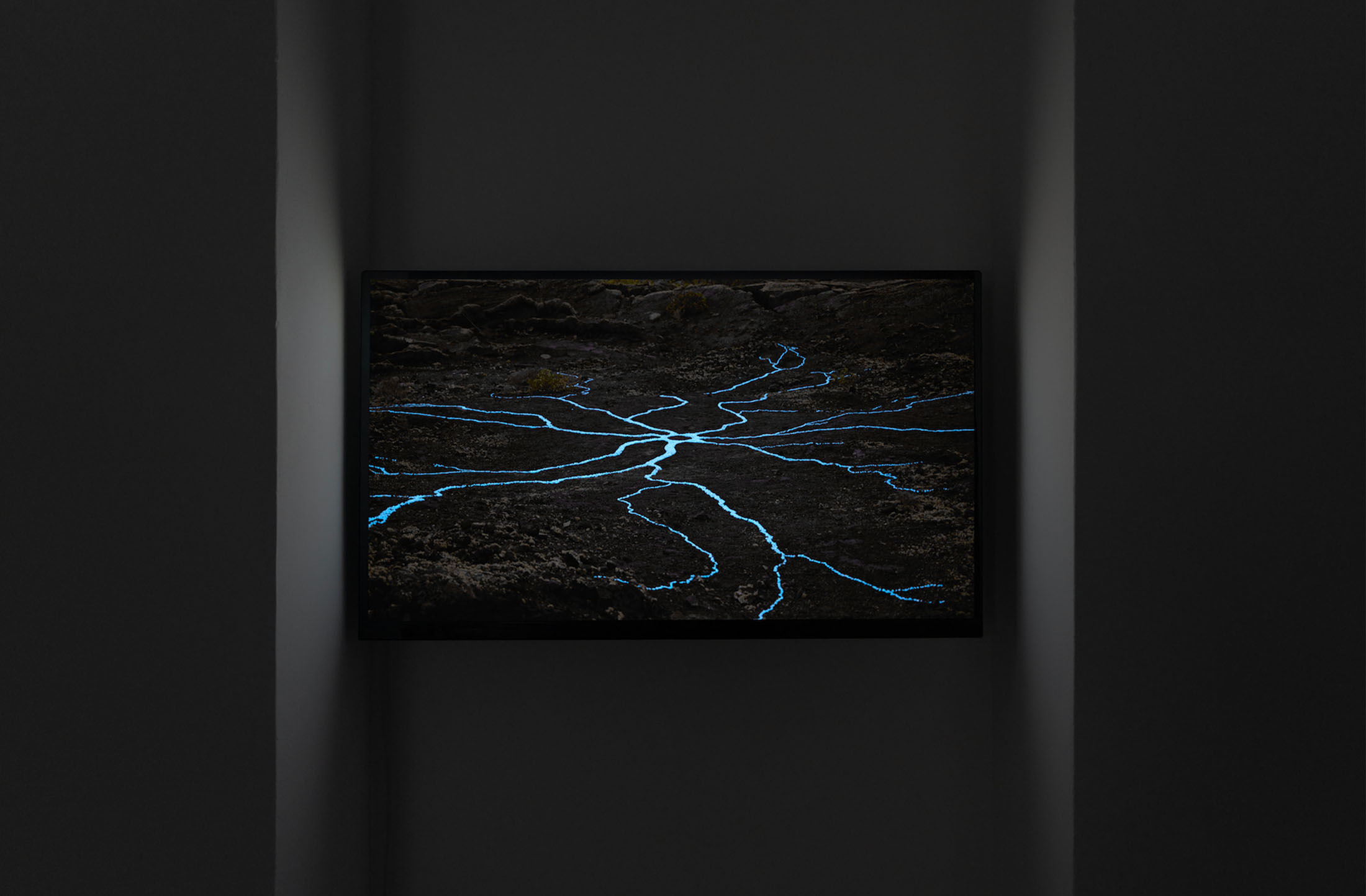
This search for liminal spaces and connections between realities is a constant in Isabel’s work. In her earlier work, Drawings of the Latent Crust, we see networks formed by photoluminescent stones in the middle of the desert. In active alliance with natural forces, the installations are open containers materialising underground or hidden flows. The series consists of large-scale ephemeral installations, up to 30 metres long, traced with photoluminescent stones in remote places. Throughout the day, they absorb sunlight and, at dusk, glow for a few hours, revealing shapes that may resemble extraordinary phenomena or extraterrestrial traces.
The latent crust is an imaginary or fictional layer: an in-between dimension that connects the visible with the intuitive, and the symbolic with the material. The work also opens a speculative space around the question of intelligence: whether intelligence might be found in the patterns of the universe, or whether geological phenomena might be understood as a form of intelligence belonging to the Earth itself. In this sense, Drawings of the Latent Crust anticipates questions that reappear in Constellation Creatures, as well as the entire exhibition, where expression is considered beyond human perception.
Isabel Merchante (Madrid, 1999) is a visual artist based between London and Madrid, with a background in design and computation. Her work explores AI, computation, sculpture, and installation, and has been presen-ted at institutions including CentroCentro, La Casa Encendida and Círculo de Bellas Artes, Madrid; Tate Mo-dern and Camden Art Centre, London; MARCO, Vigo; Cidade da Cultura de Galicia, Santiago de Compostela; and Fondazione Pastificio Cerere, Rome. Merchante holds an MA in Contemporary Art Practice from the Royal College of Art and is currently completing an MFA in Computational Arts at Goldsmiths, University of London.