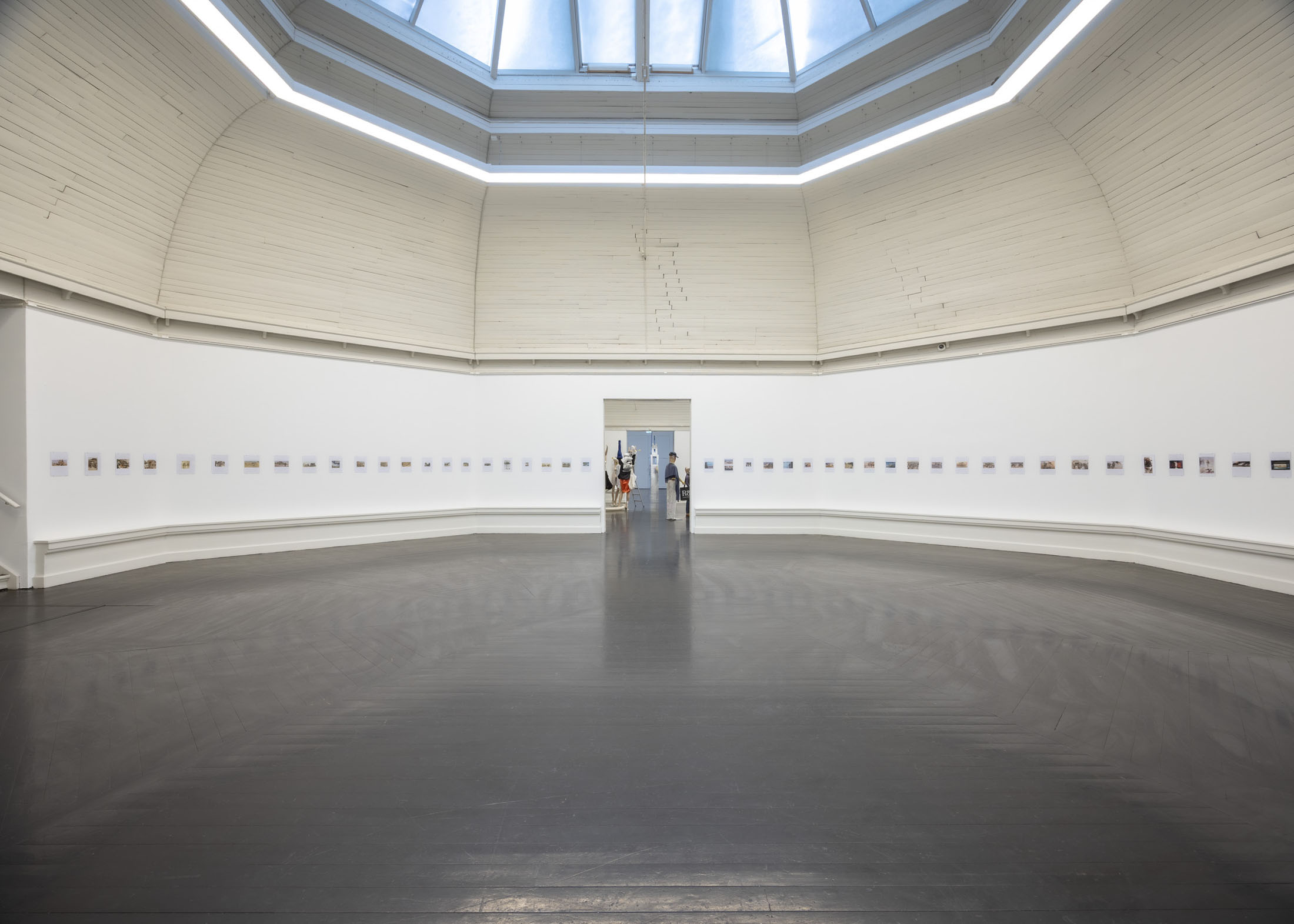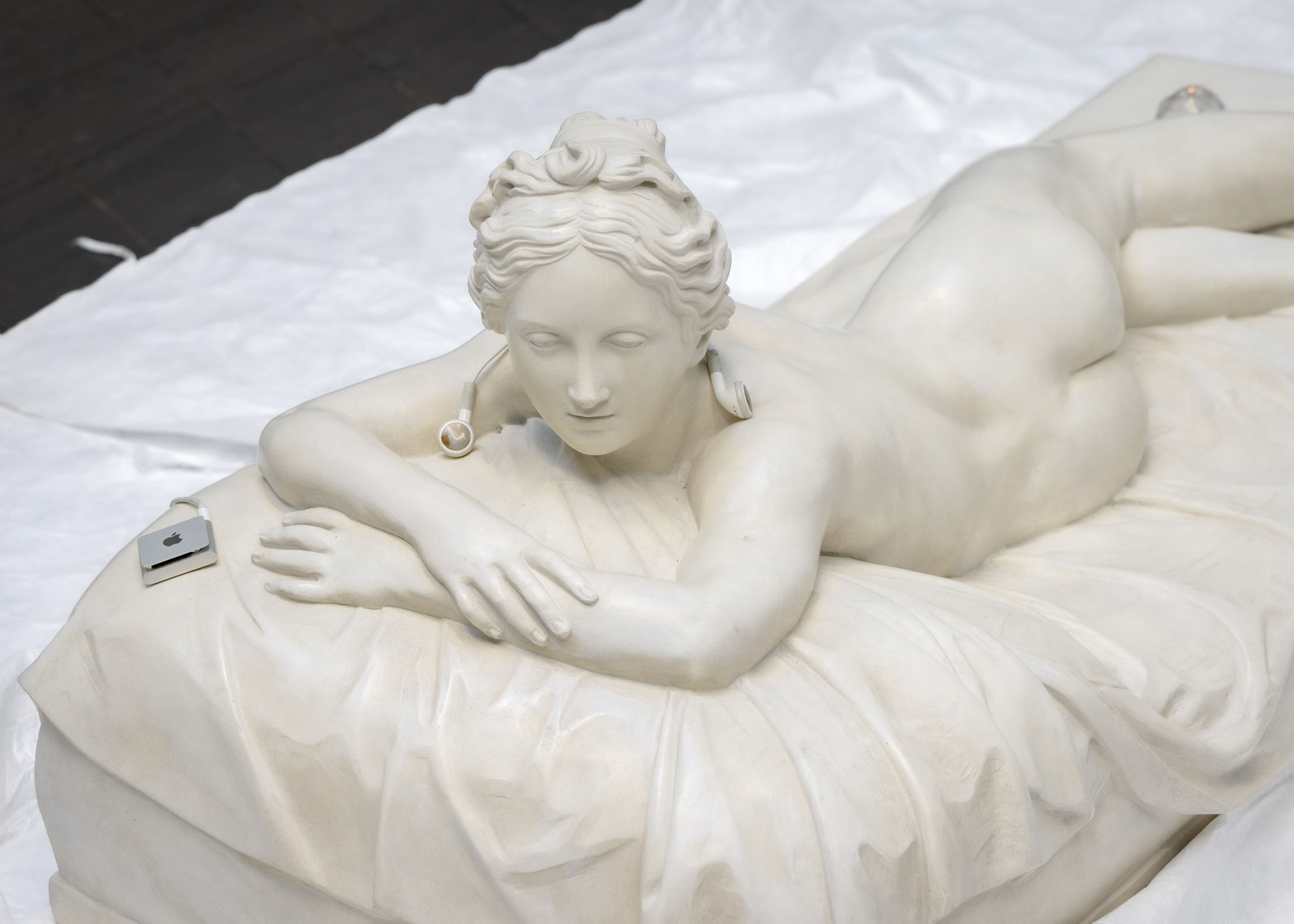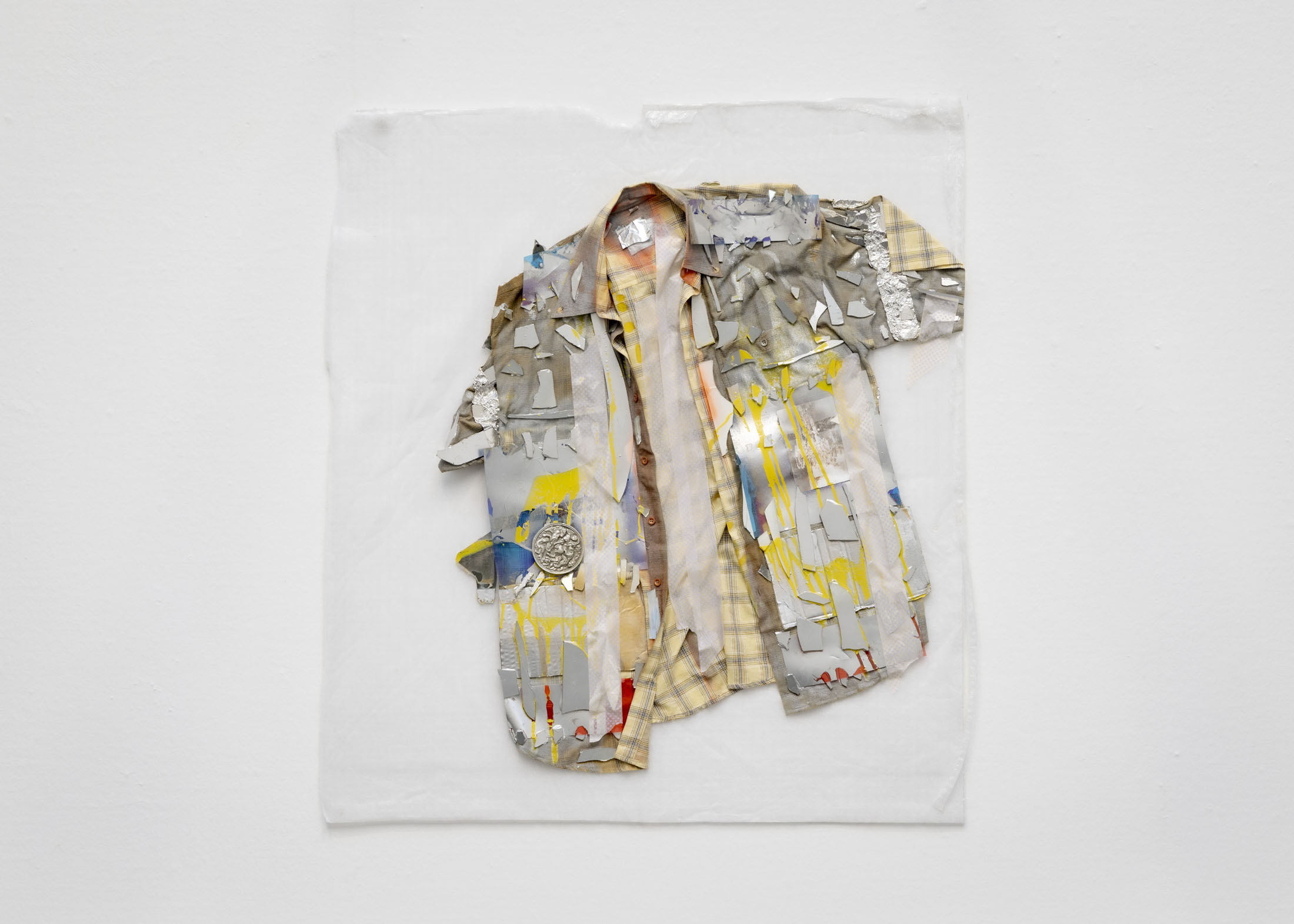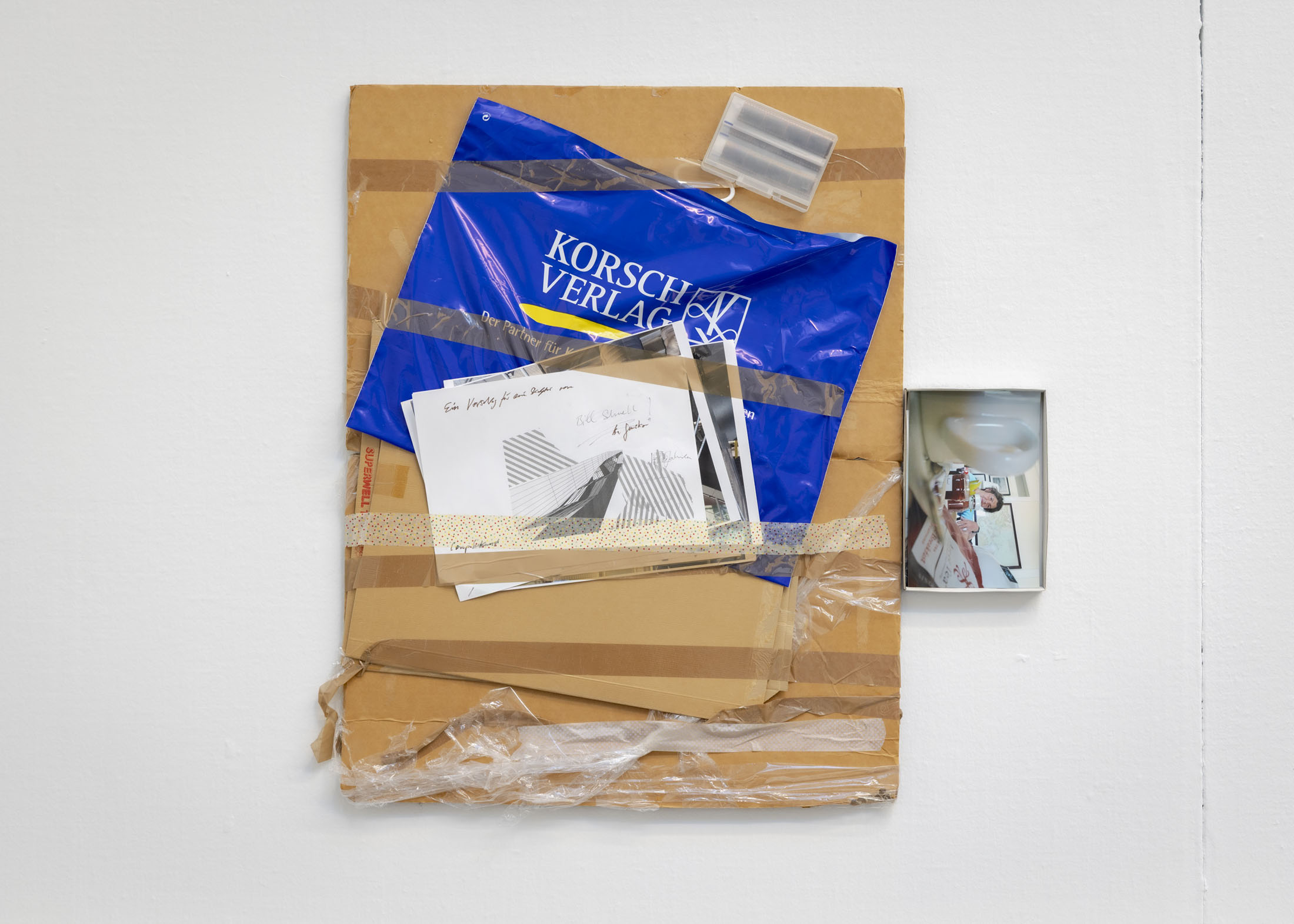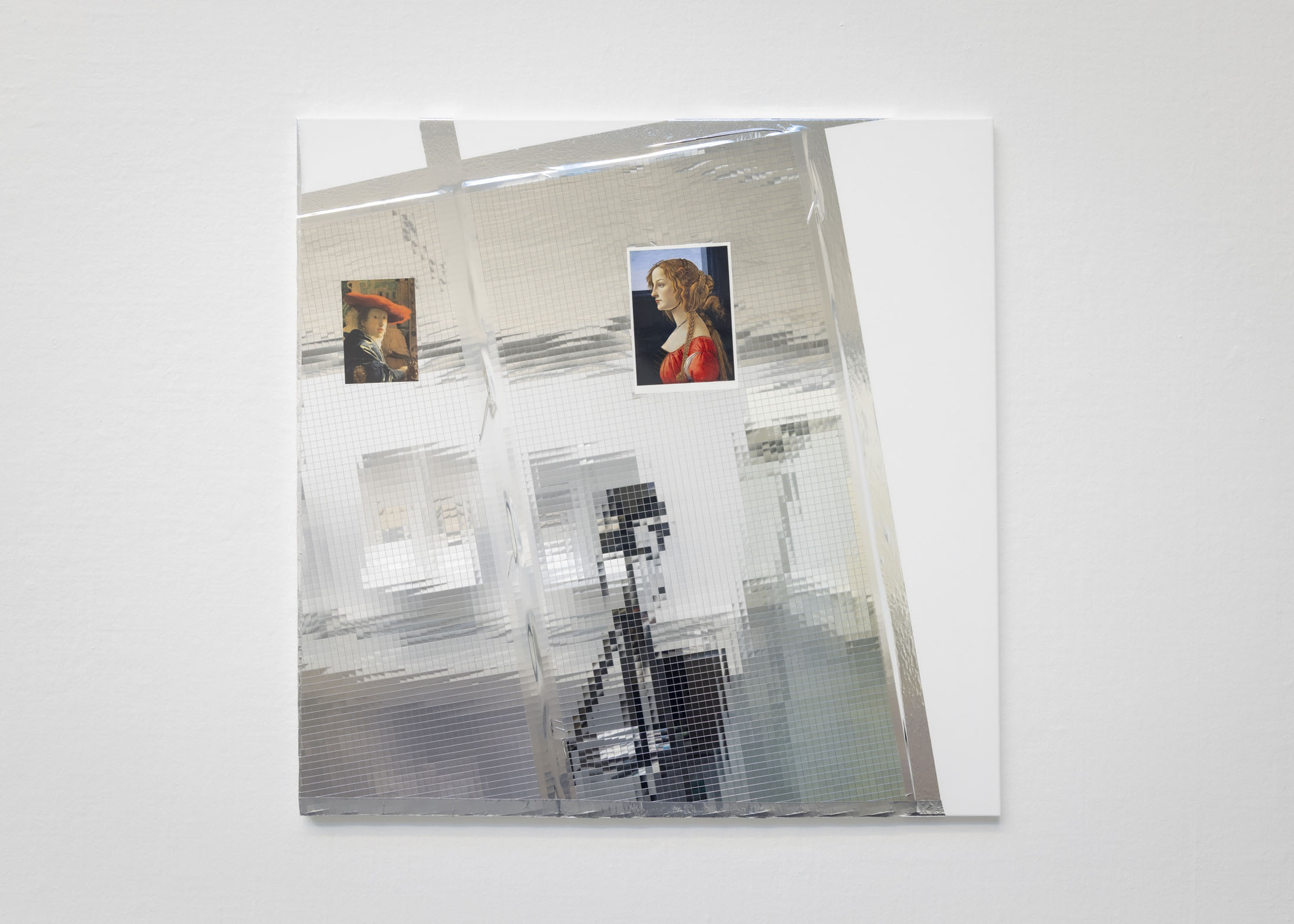
Isa Genzken’s 16-meter-tall sculpture Vollmond has been standing in front of Den Frie for nearly a year as an inscrutable moon antenna, receiving the energies of the city. The exhibition World Receiver brings together further landmark works from the German artist’s production over the past decades, foregrounding a consistently world-facing practice whose formal and material inventiveness has positioned Genzken as one of the most influential artists of her generation. World Receiver is her first institutional solo exhibition in Scandinavia.
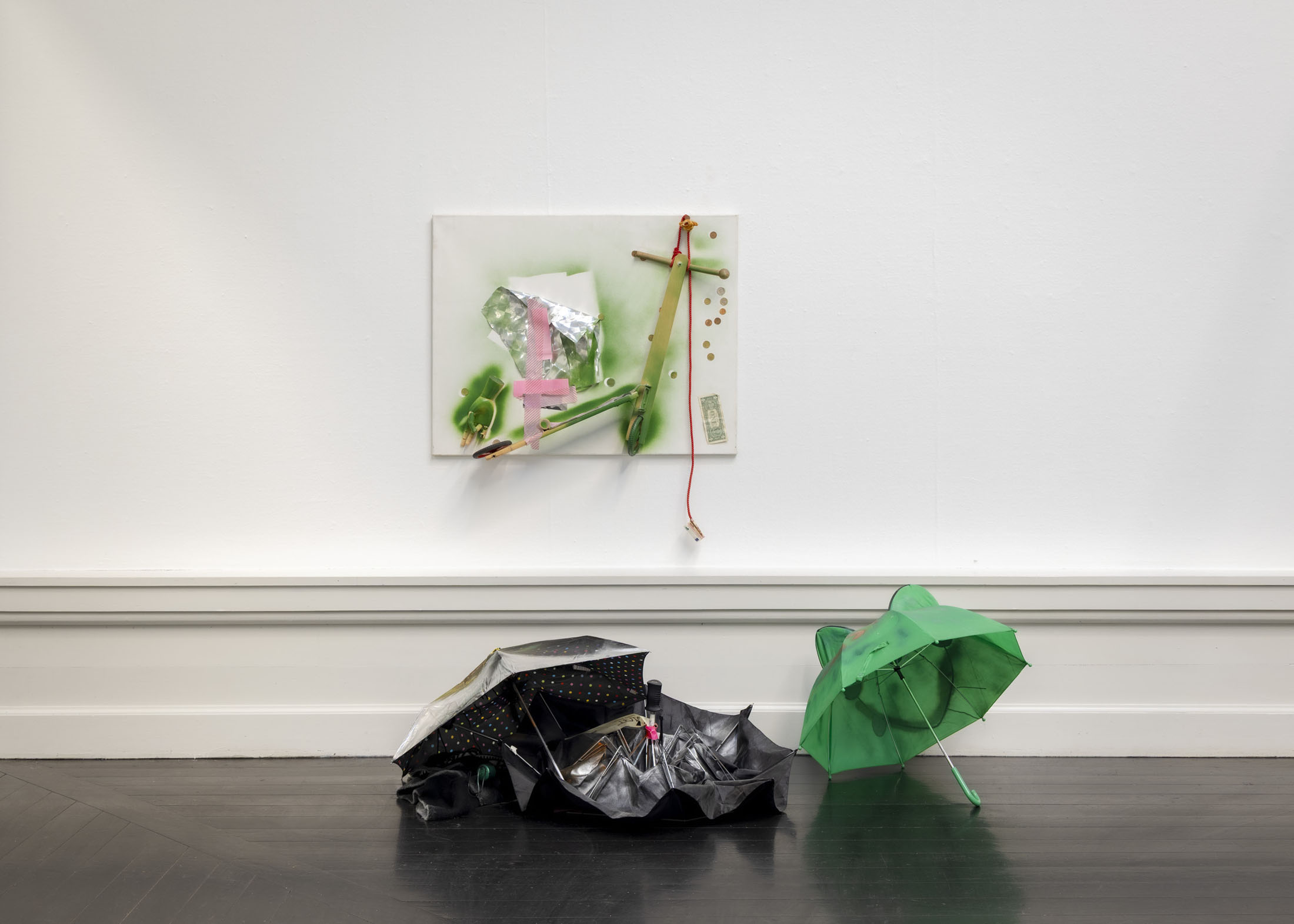
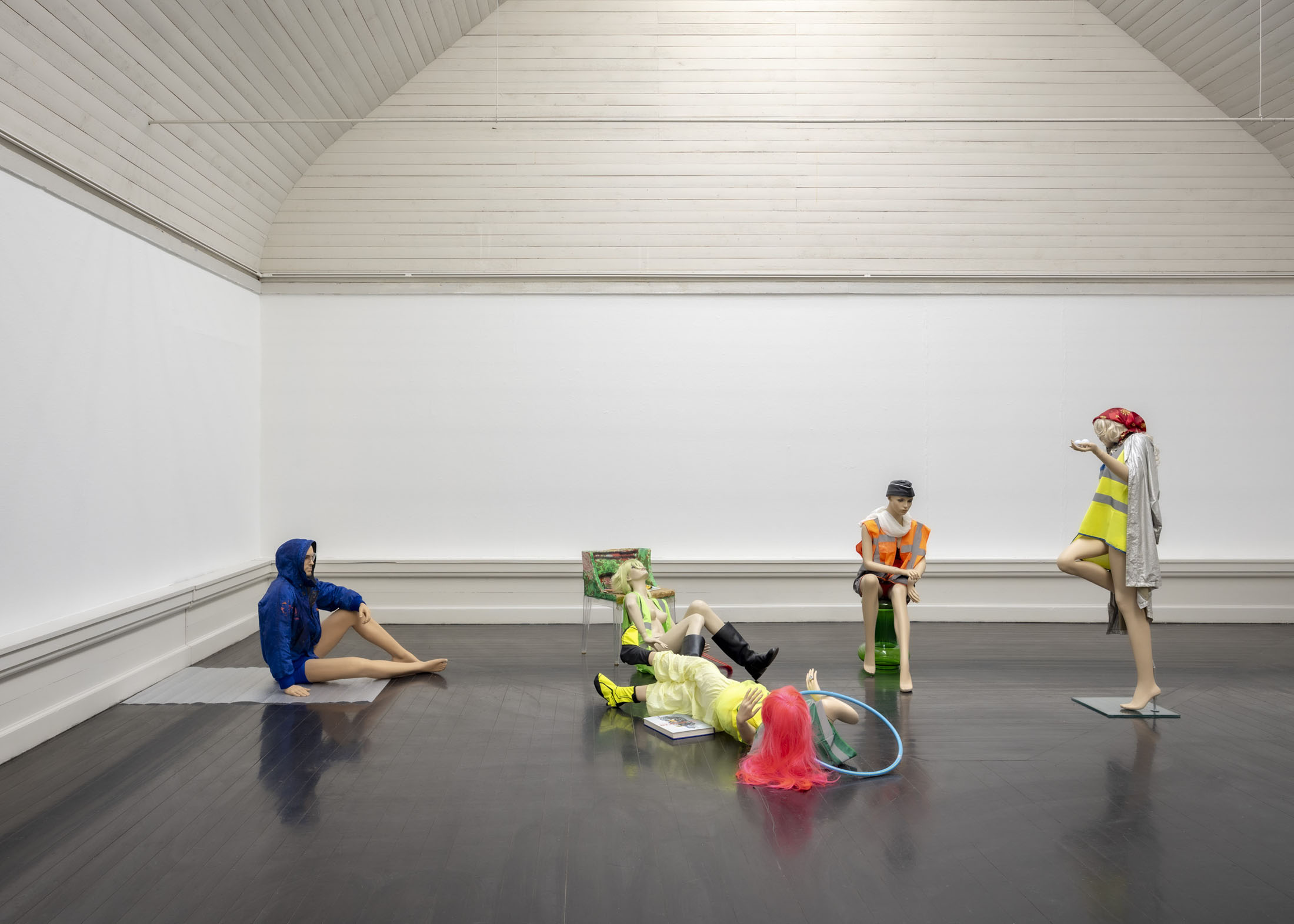
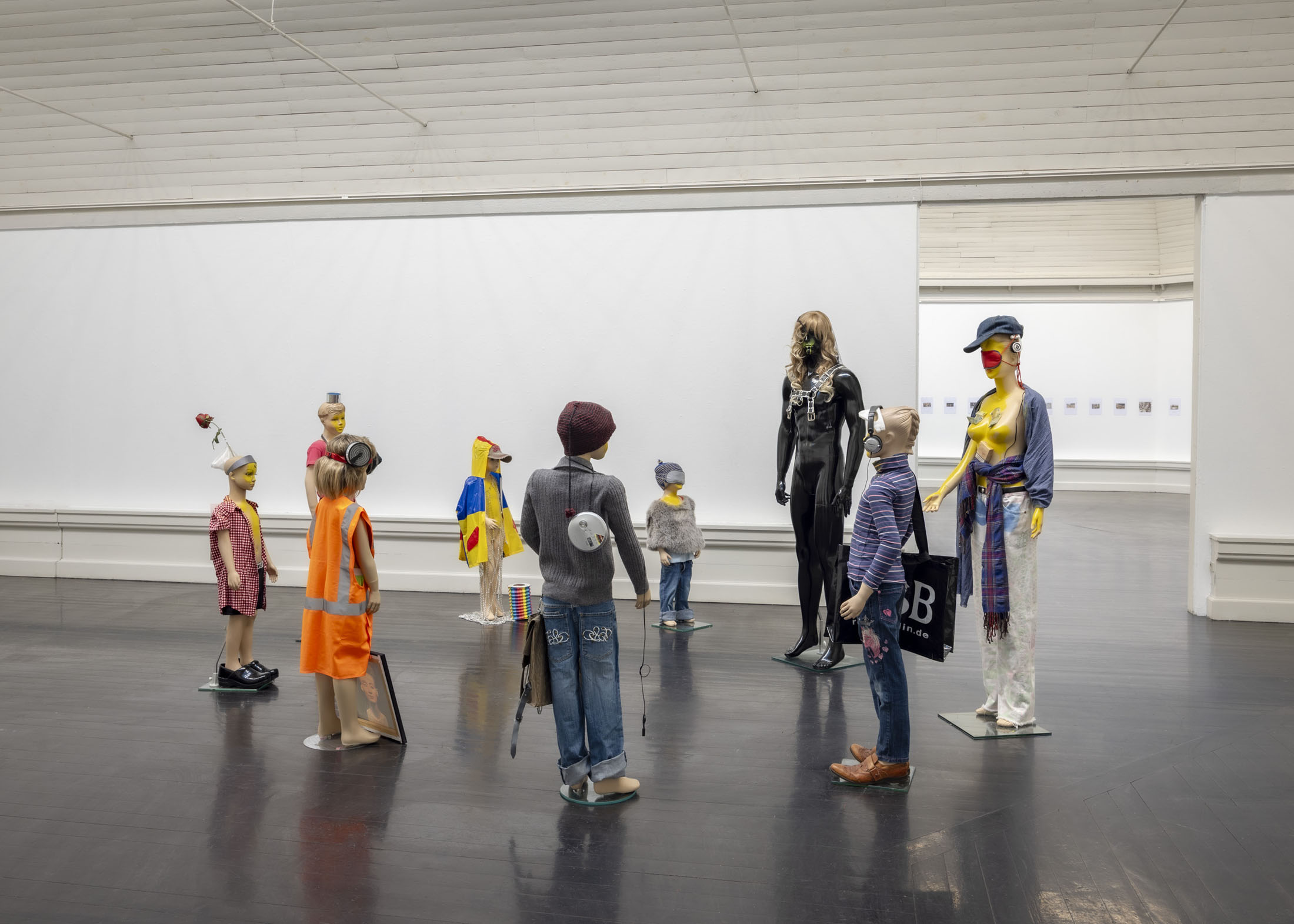
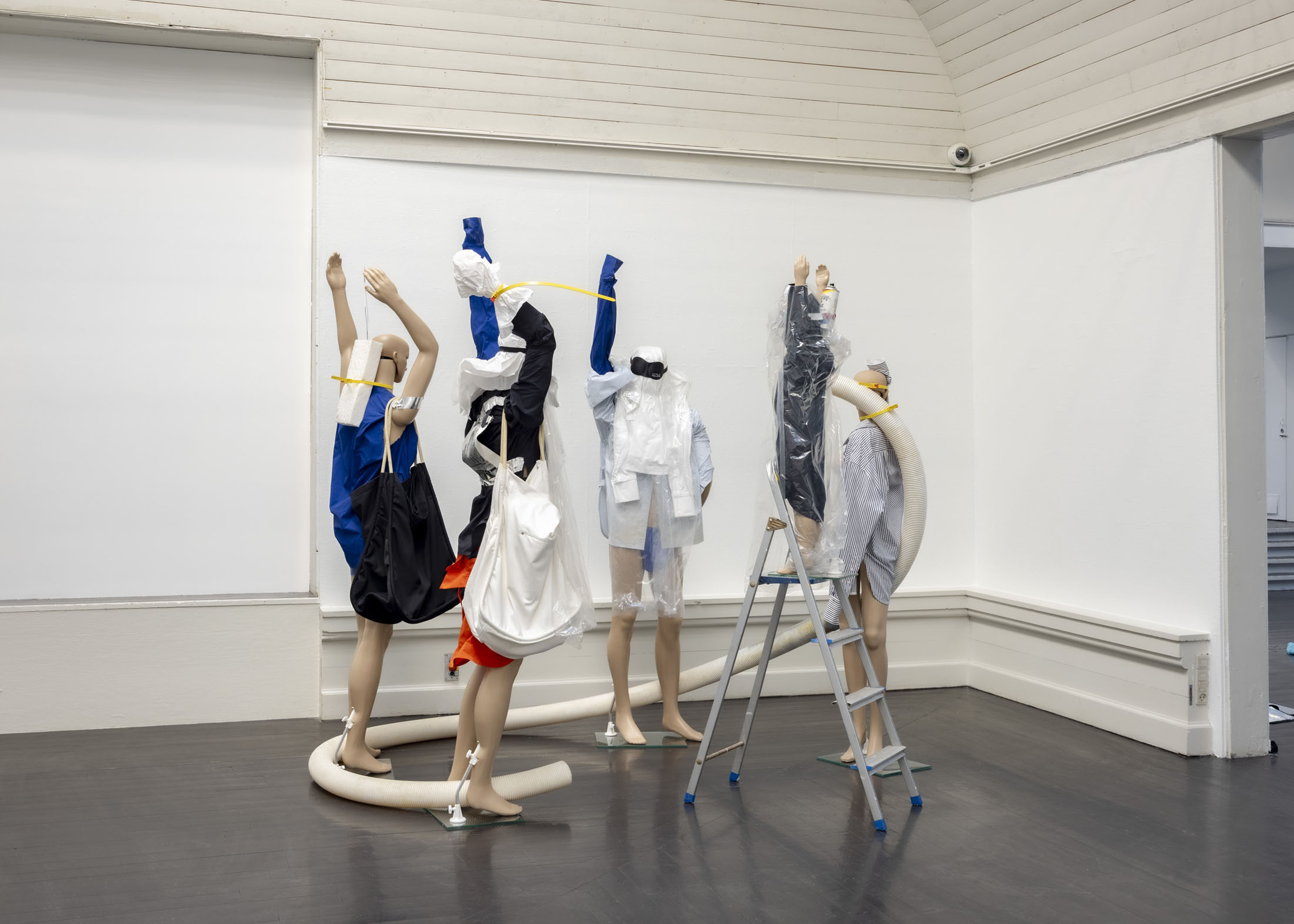
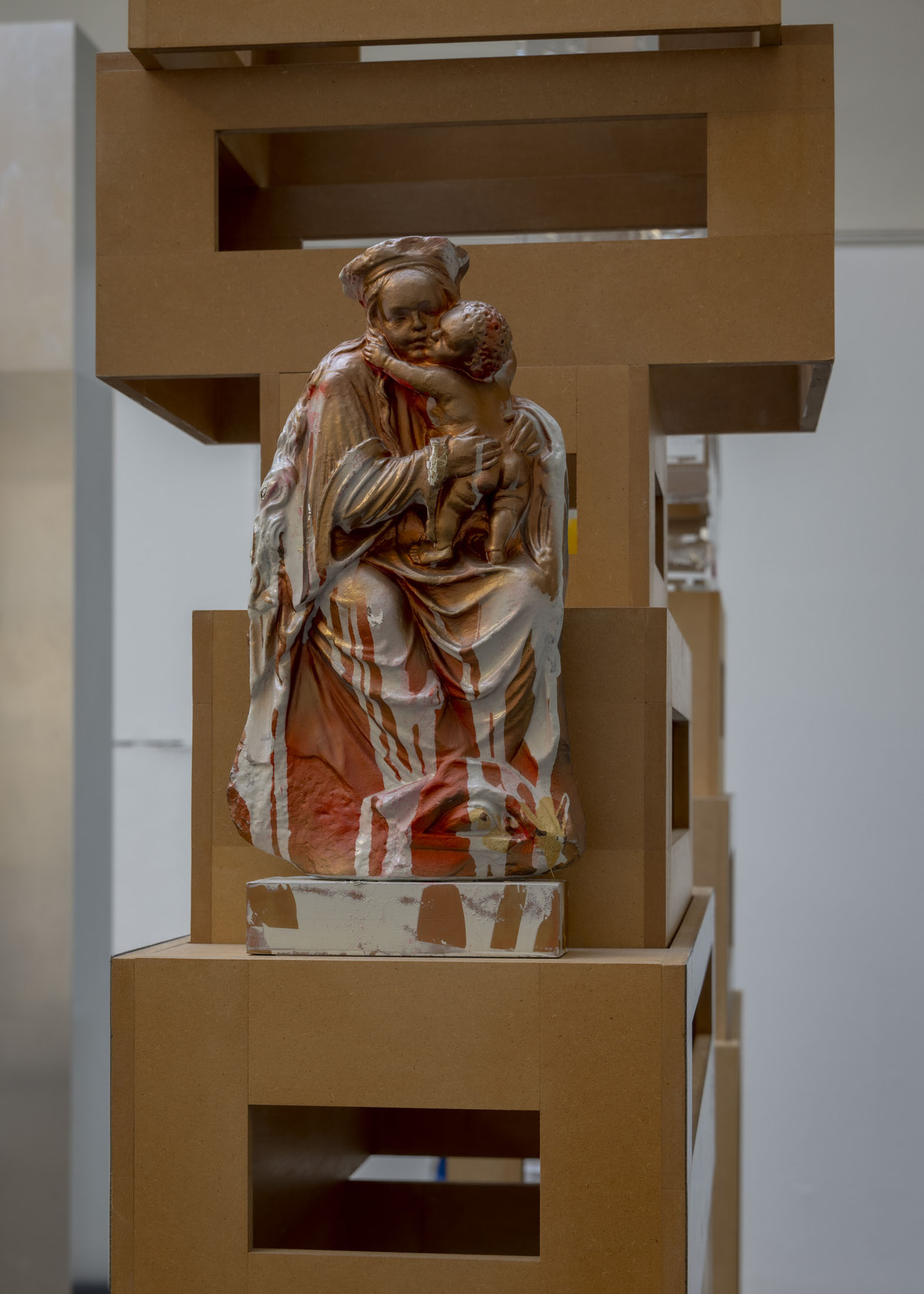
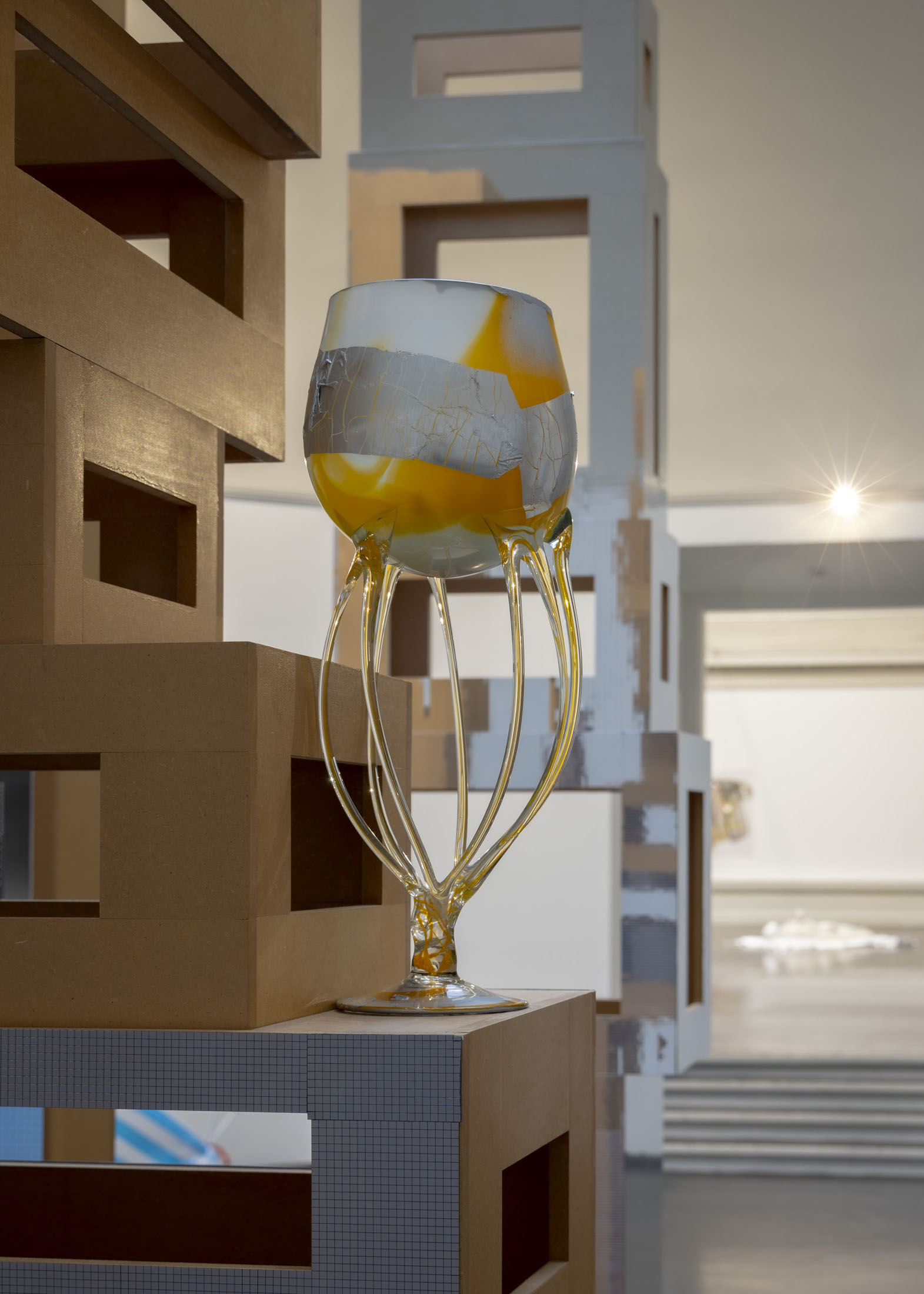
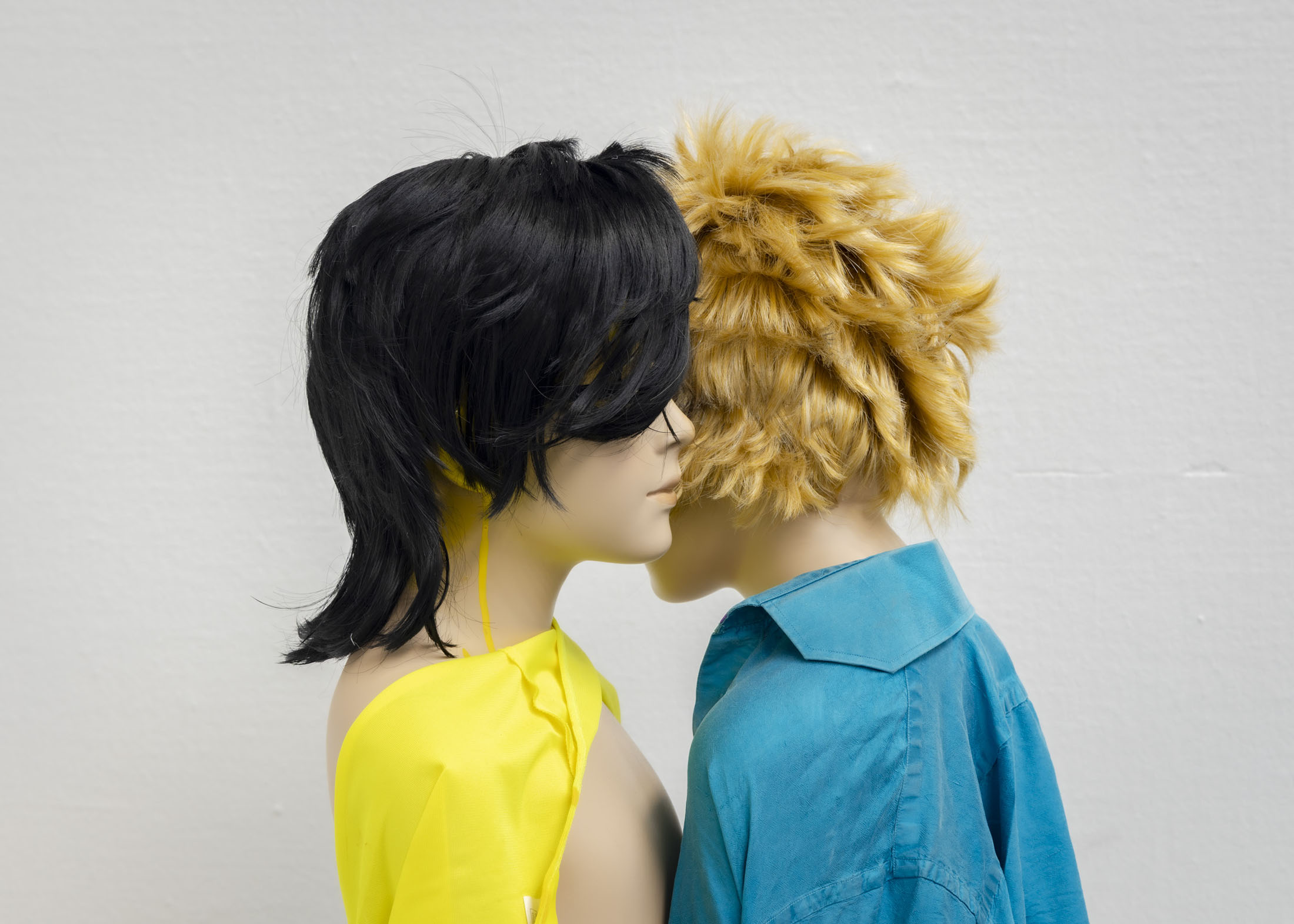
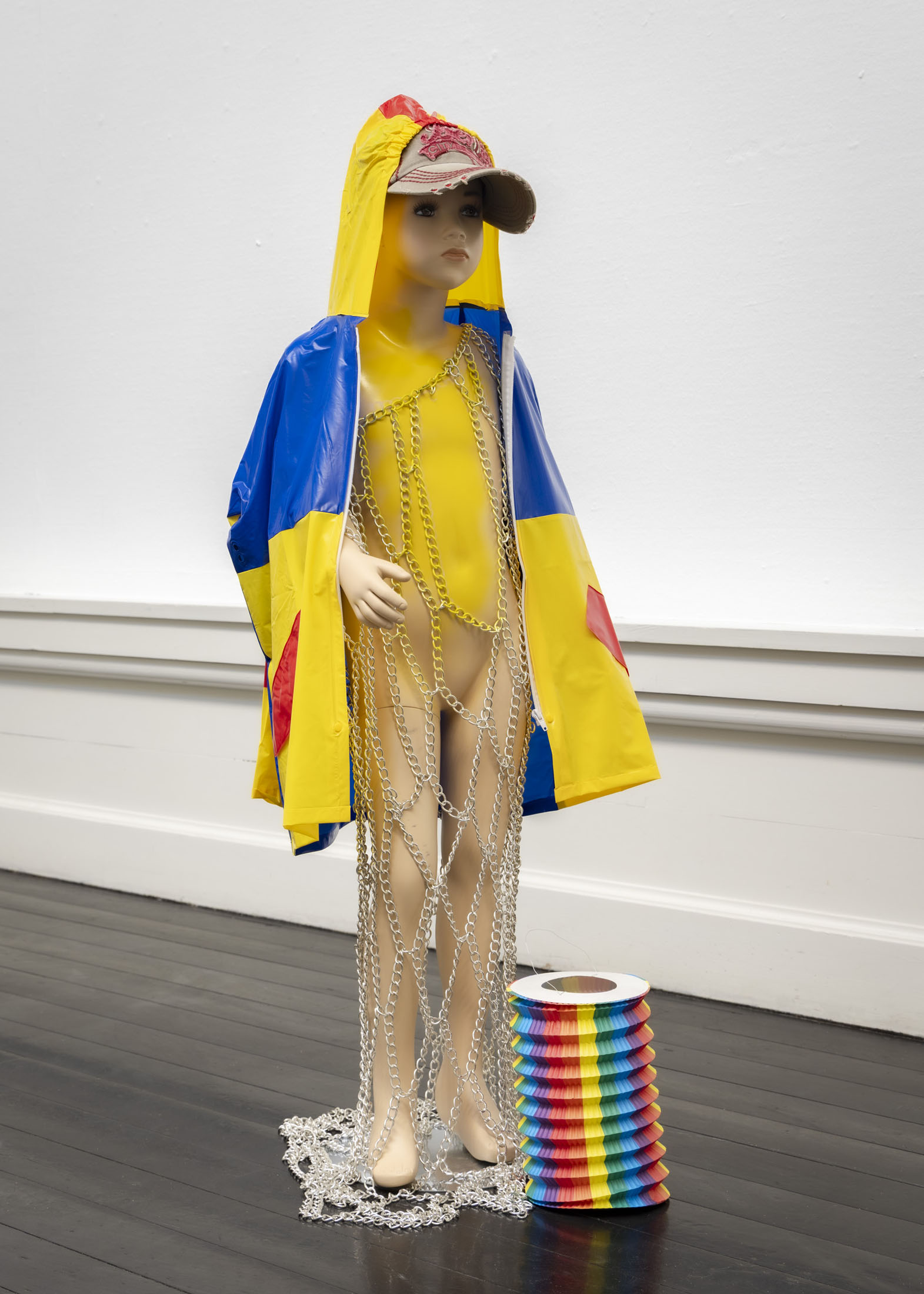
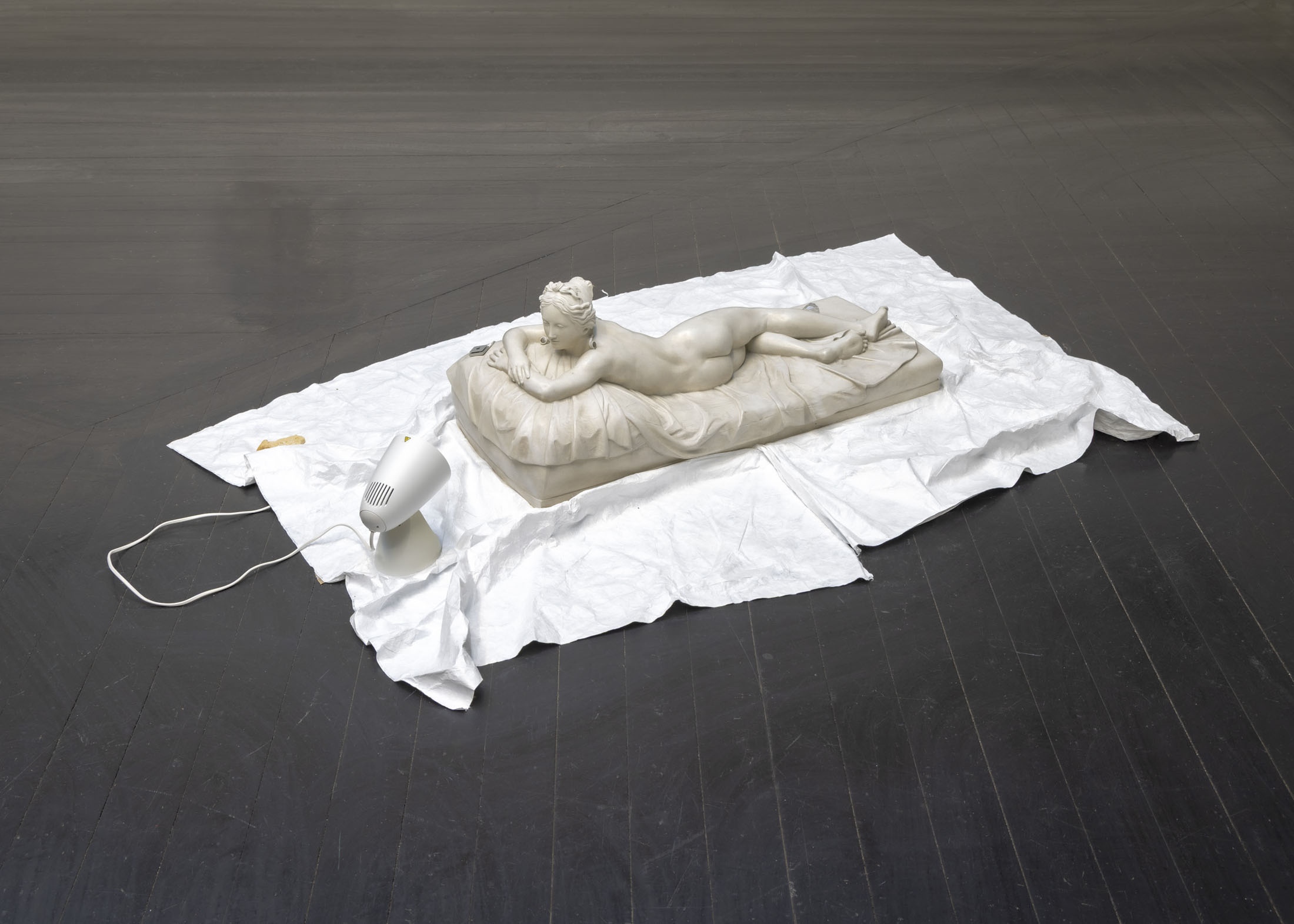
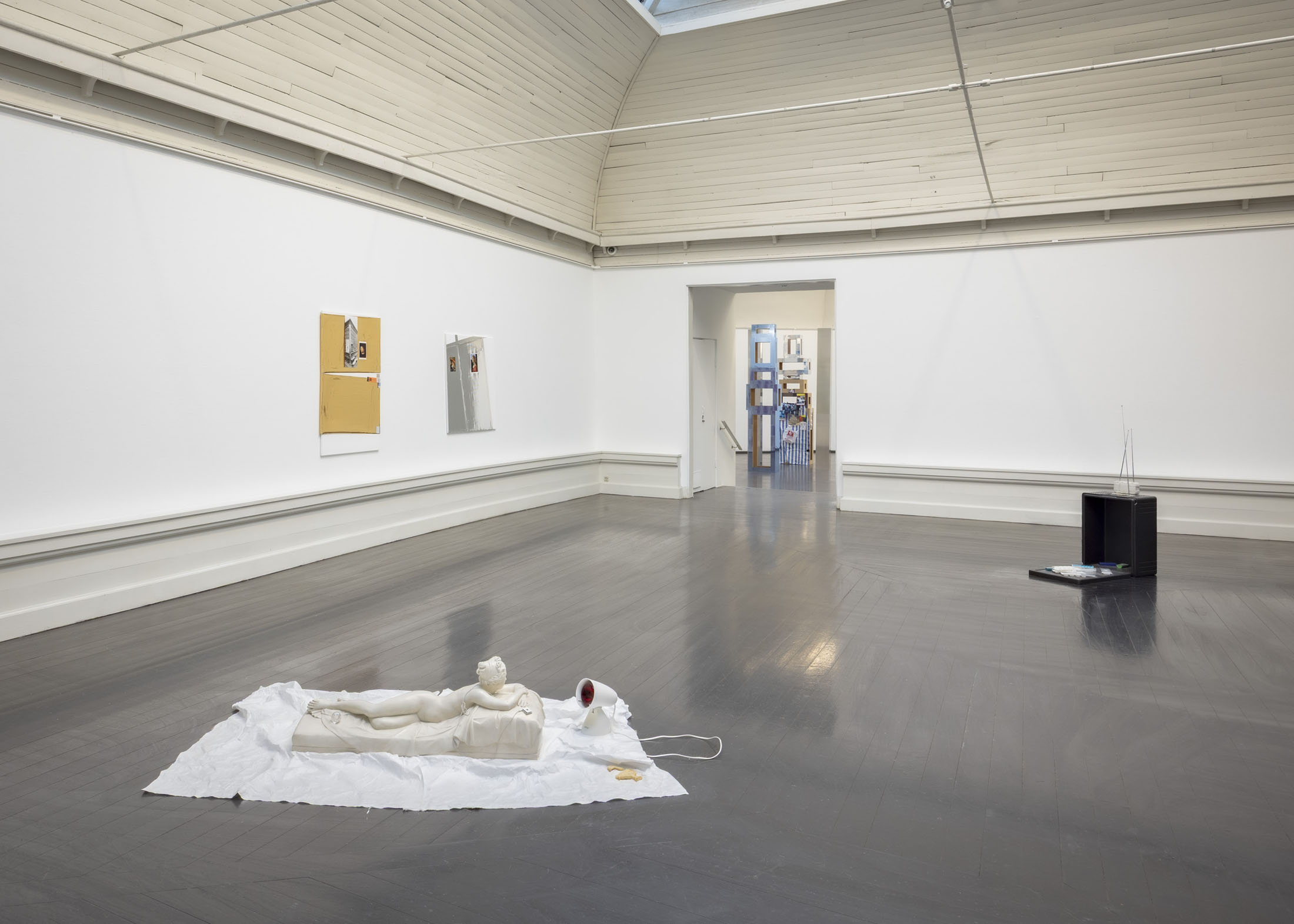
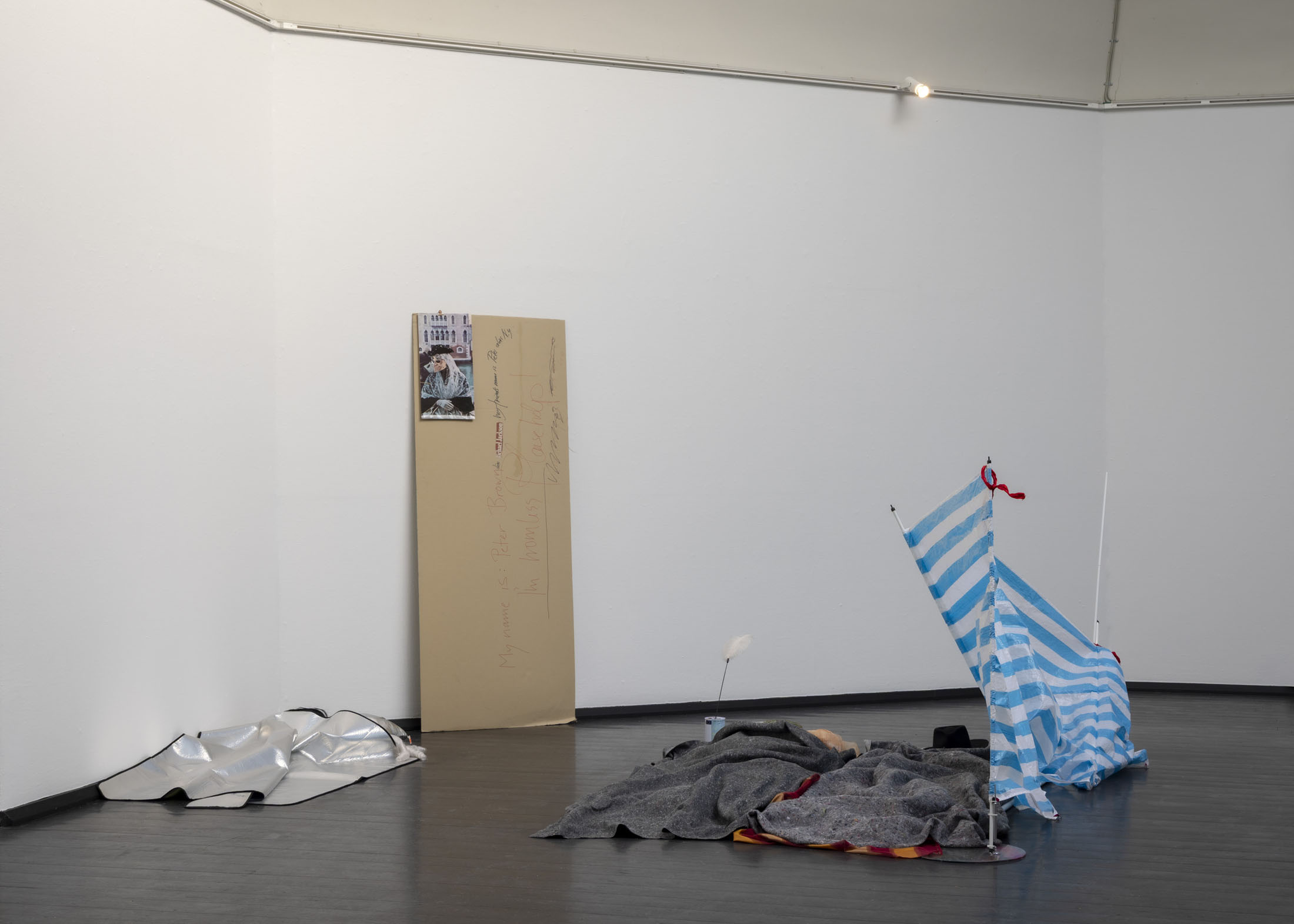
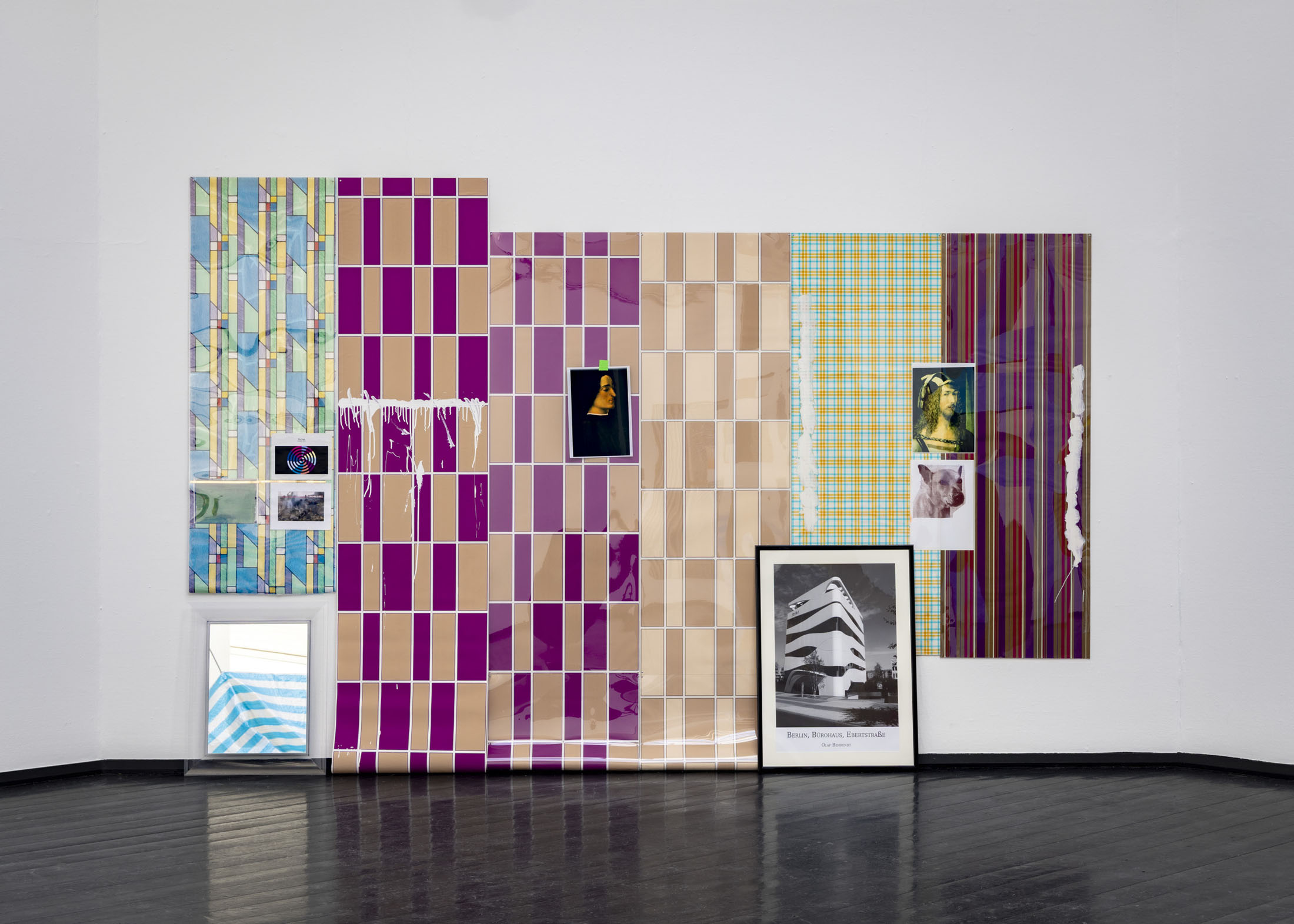
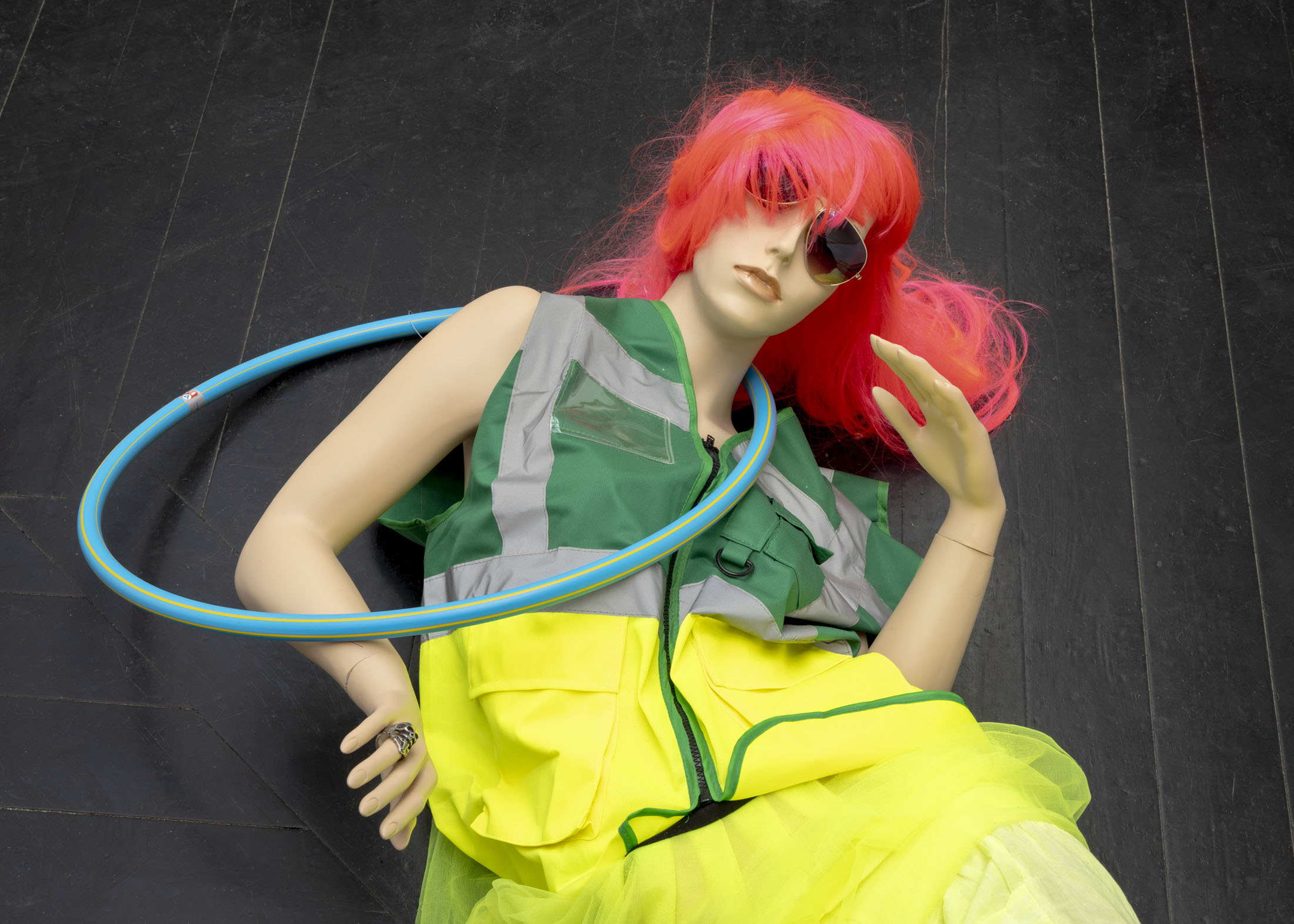
The exhibition is anchored in Genzken’s work with assemblage, in which she playfully yet inci- sively combines everyday materials and utilitarian objects—from plastic toys to flamboyant wigs—with luxury products, photographs, and text fragments. Appearing improvisational and saturated with colour and attitude, the works draw on modernist and avant-garde art and architectural movements of the twentieth century while offering an incisive reading of the present in all its chaos.
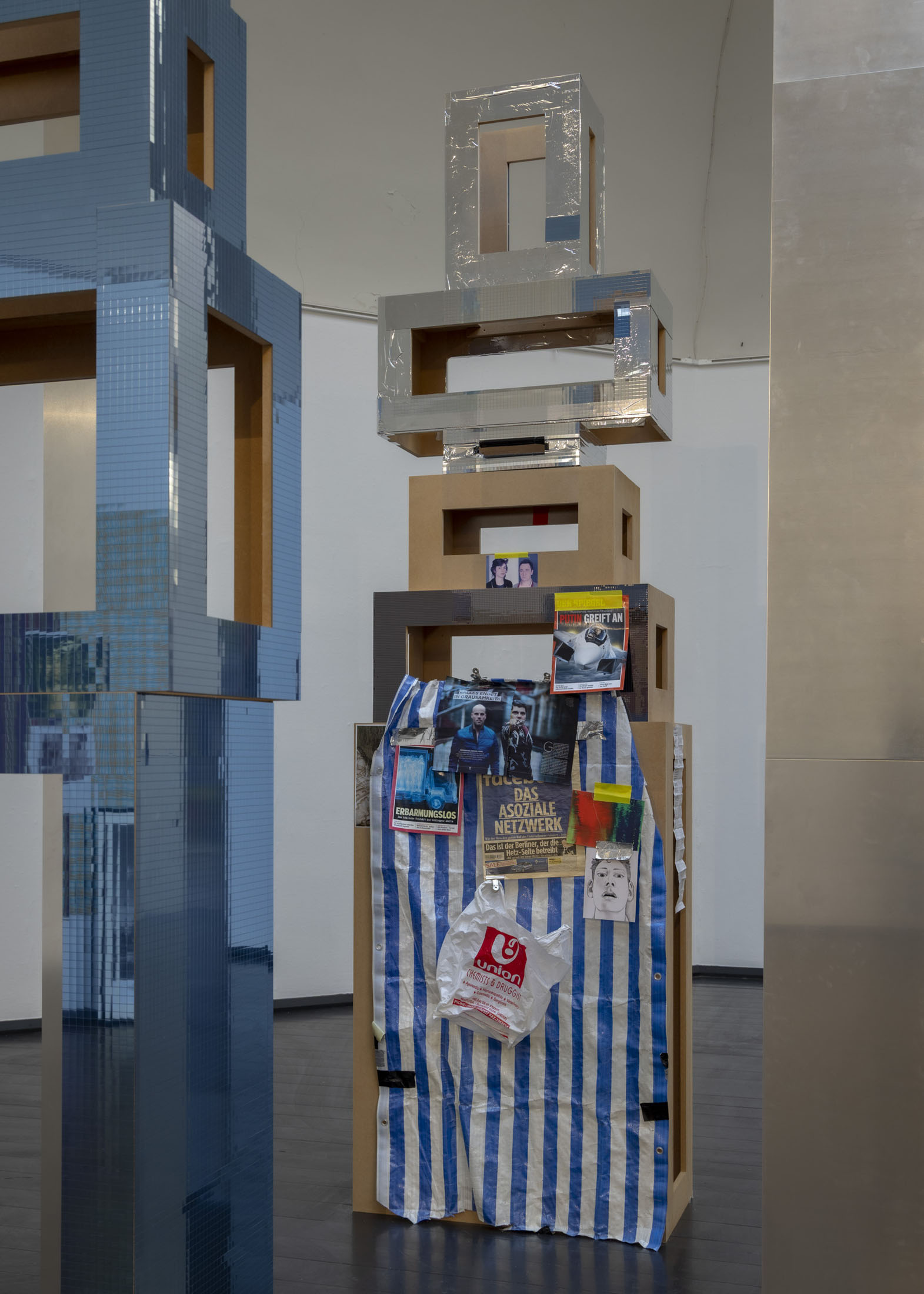
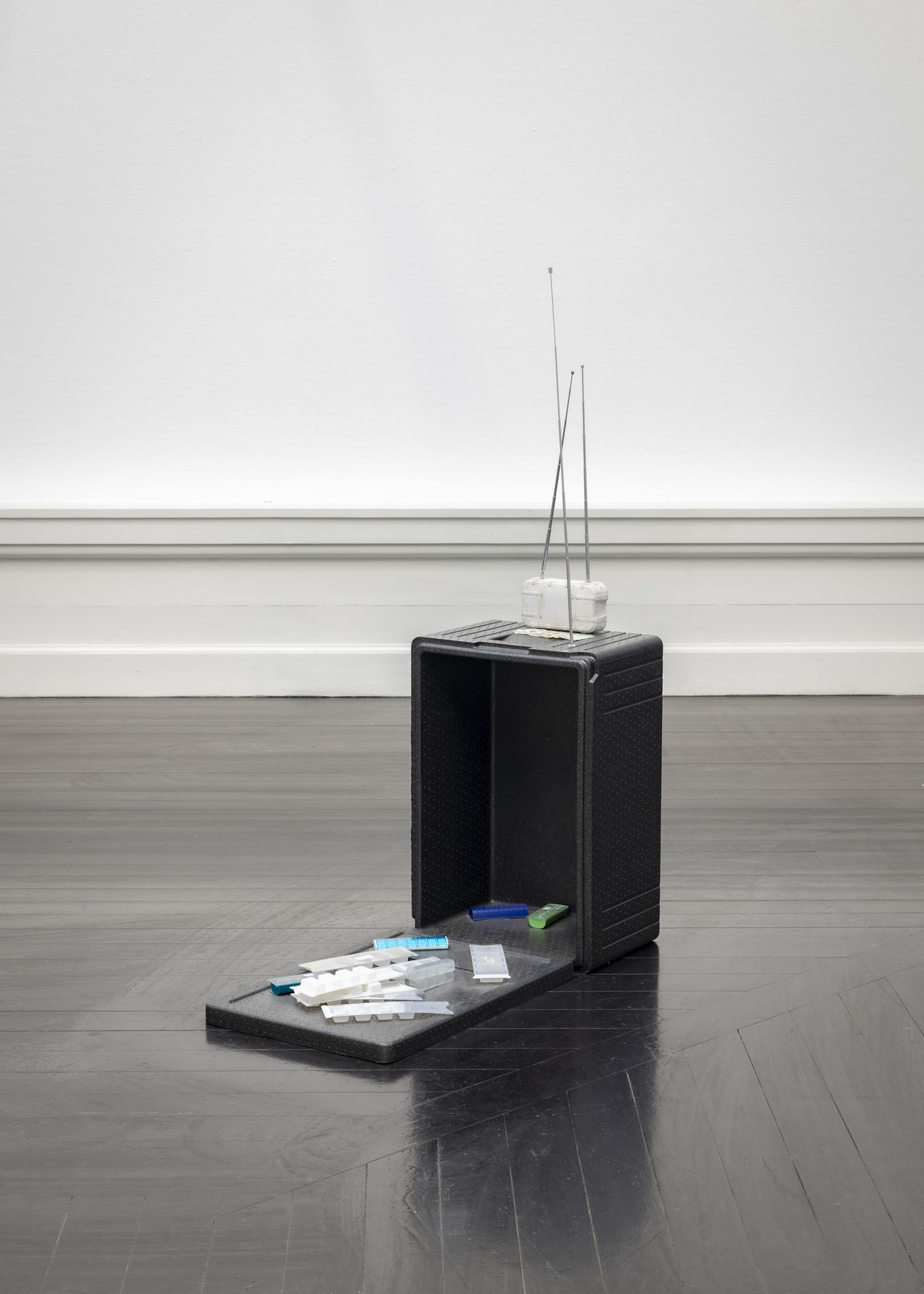
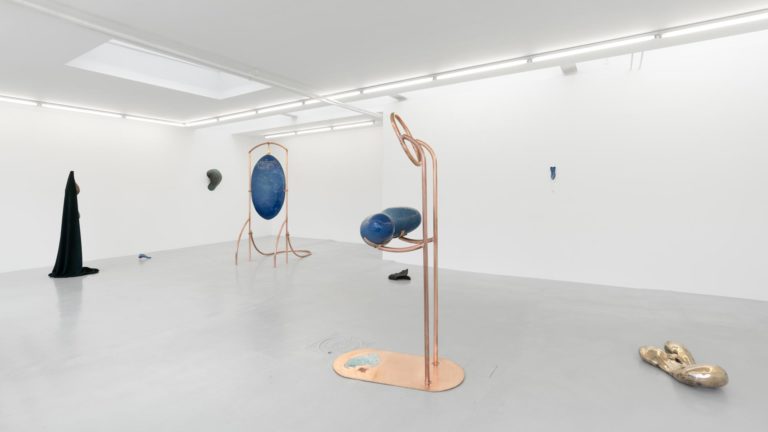
World Receiver is a term Genzken has repeatedly used for a series of small concrete sculptures fitted with antennas. In the exhibition, a small World Receiver is incorporated into the assem- blage sculpture Untitled (2016). They resemble radios without a clear function; yet, like all of Genzken’s works, they exist within an open and receptive relationship to the world.
For Genzken, sculpture is not a closed object but an open medium in a sustained relationship with its surroundings. Sculpture thus becomes a receiver of the world—an antenna attuned to the universe of images, phenomena, meaning, and noise that surrounds us, rendering it perceptible and possible to absorb. In this way, her works function as seismographs, registering and reacting to cultural displacements.
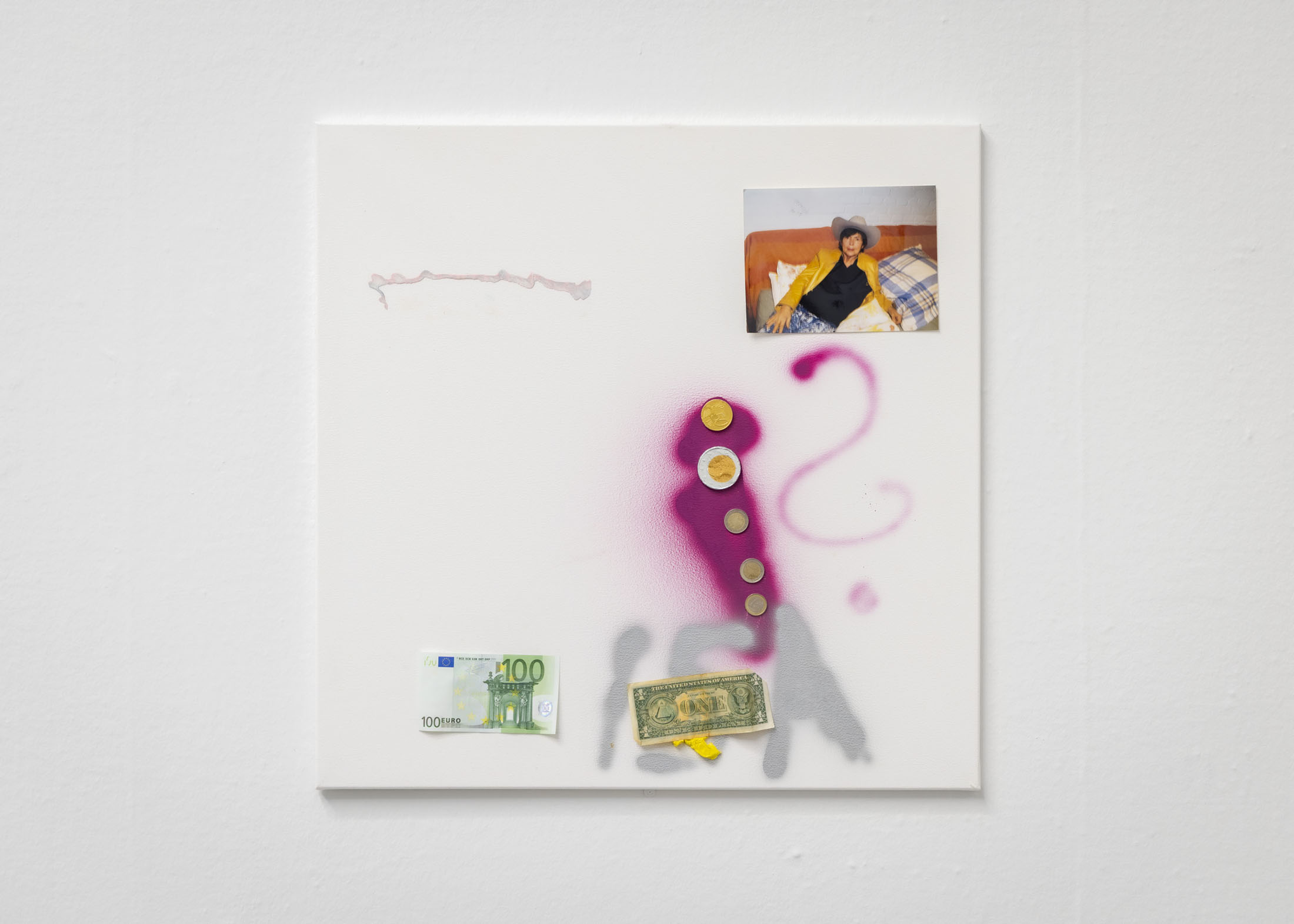
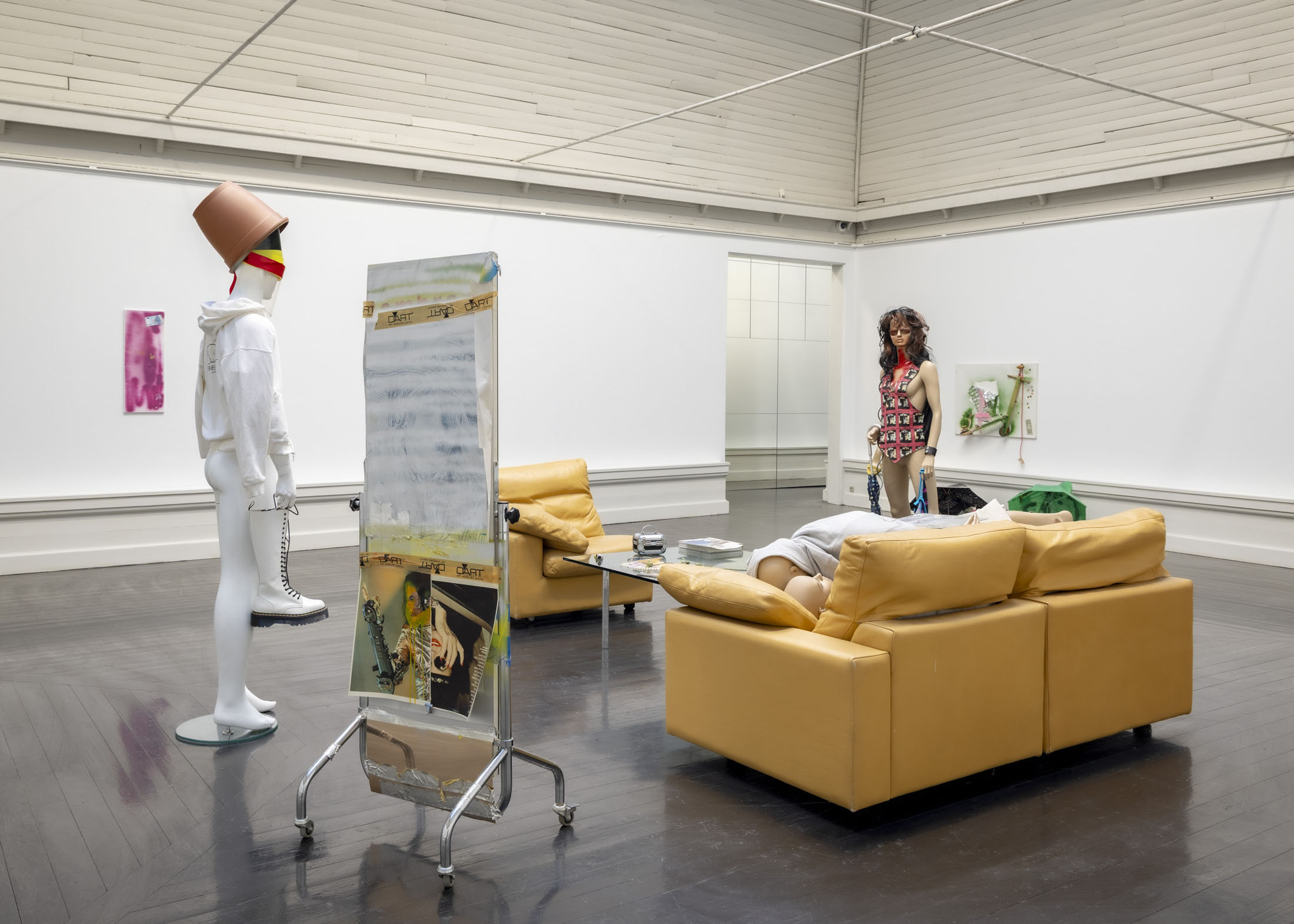
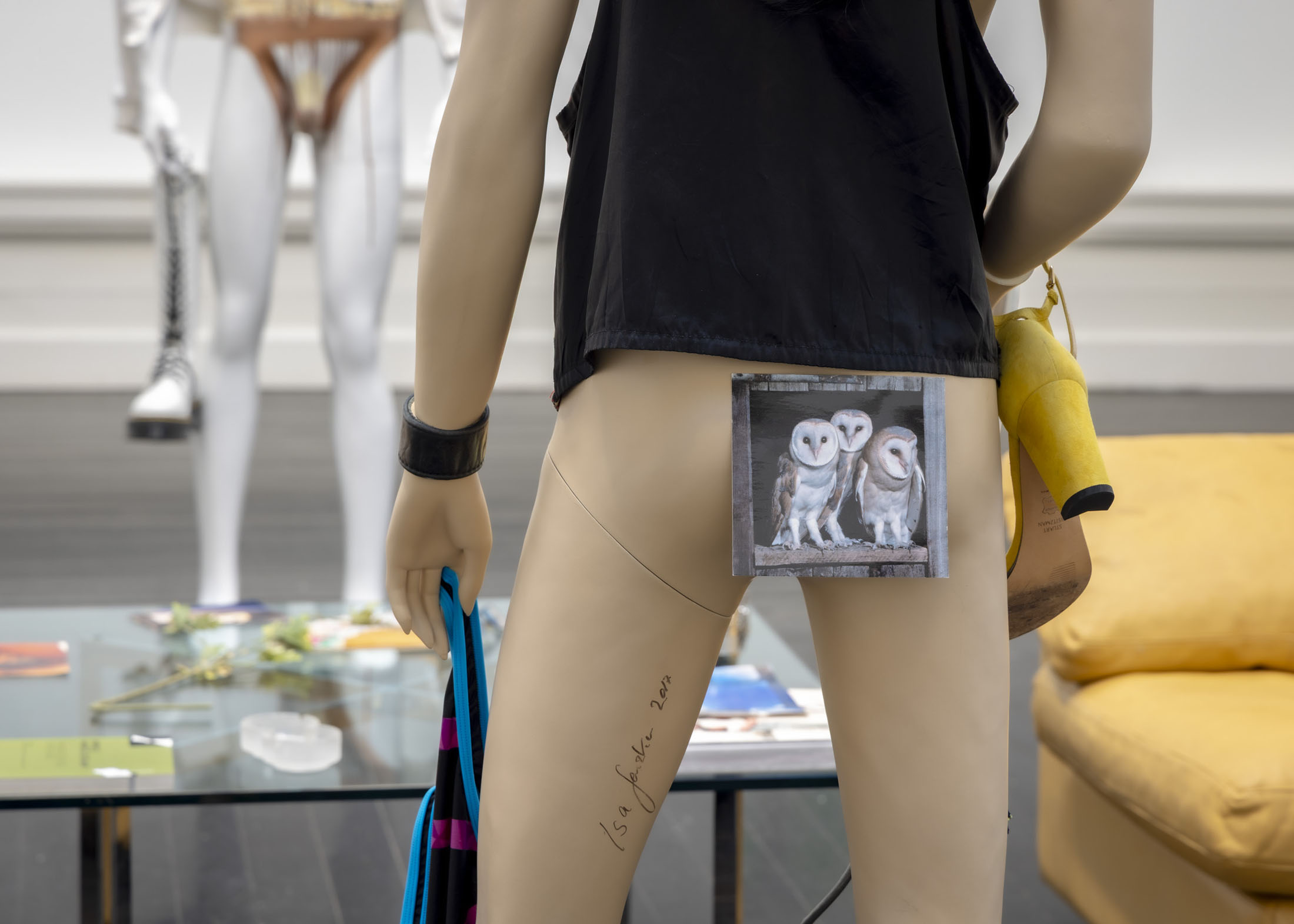
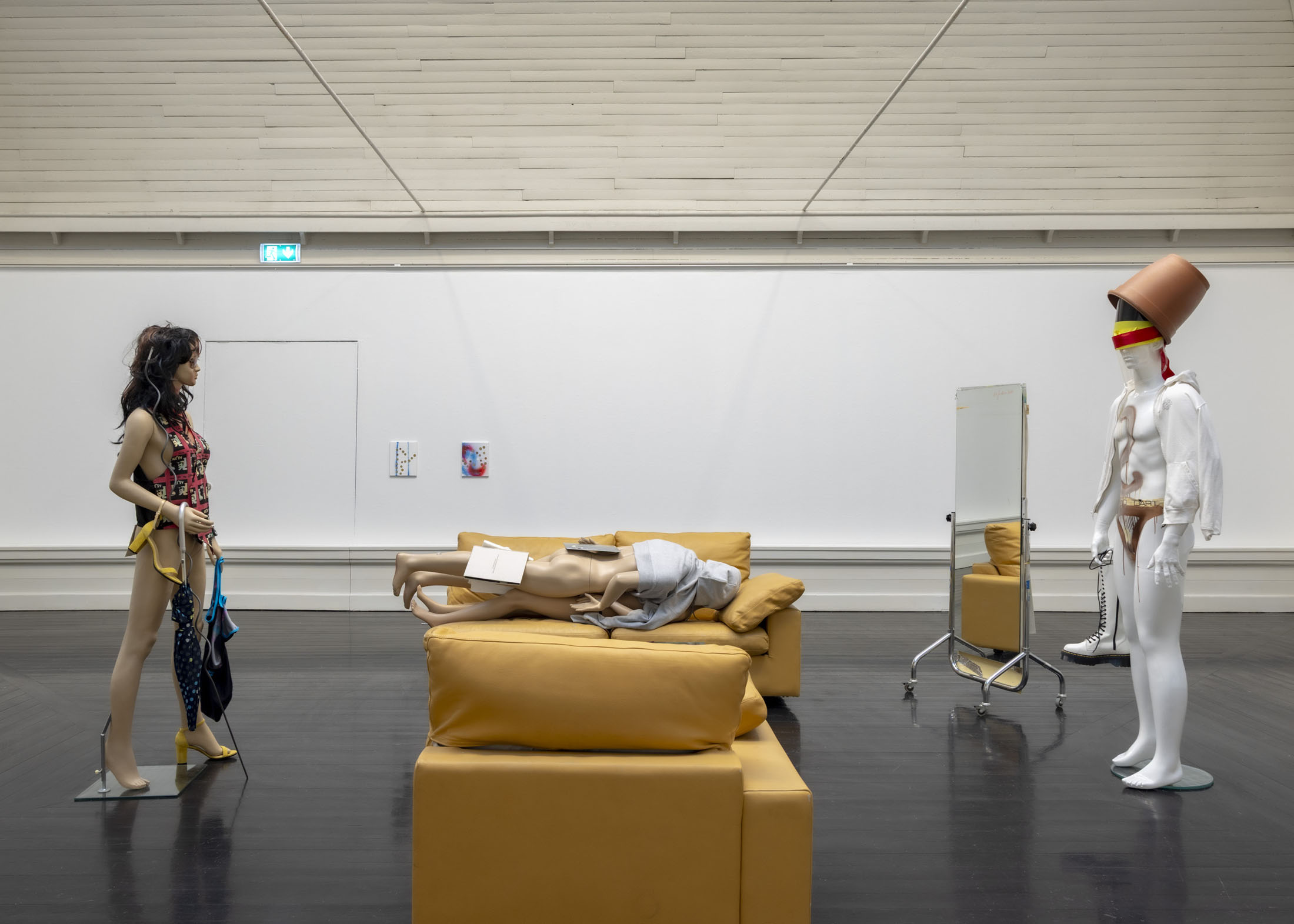
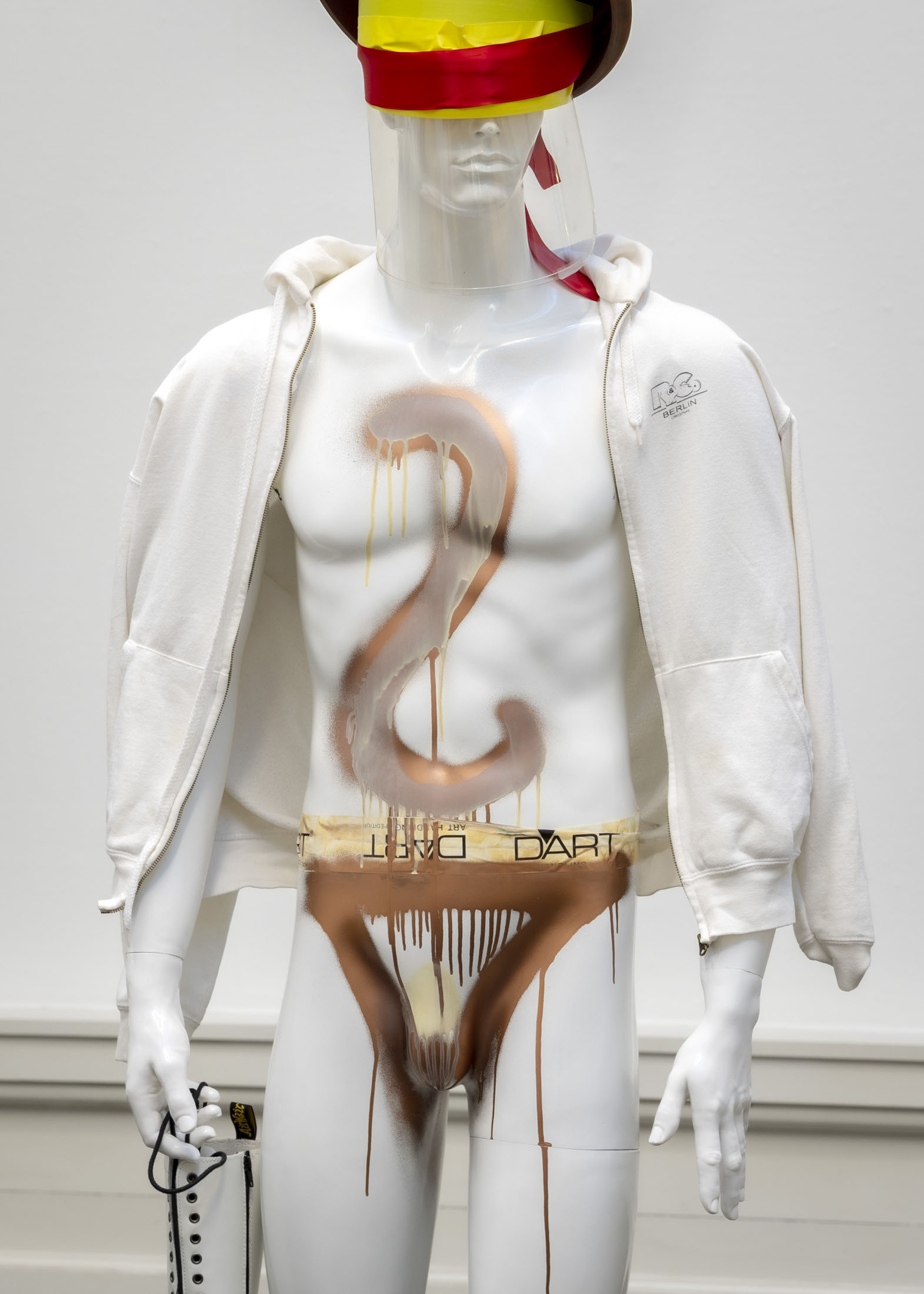
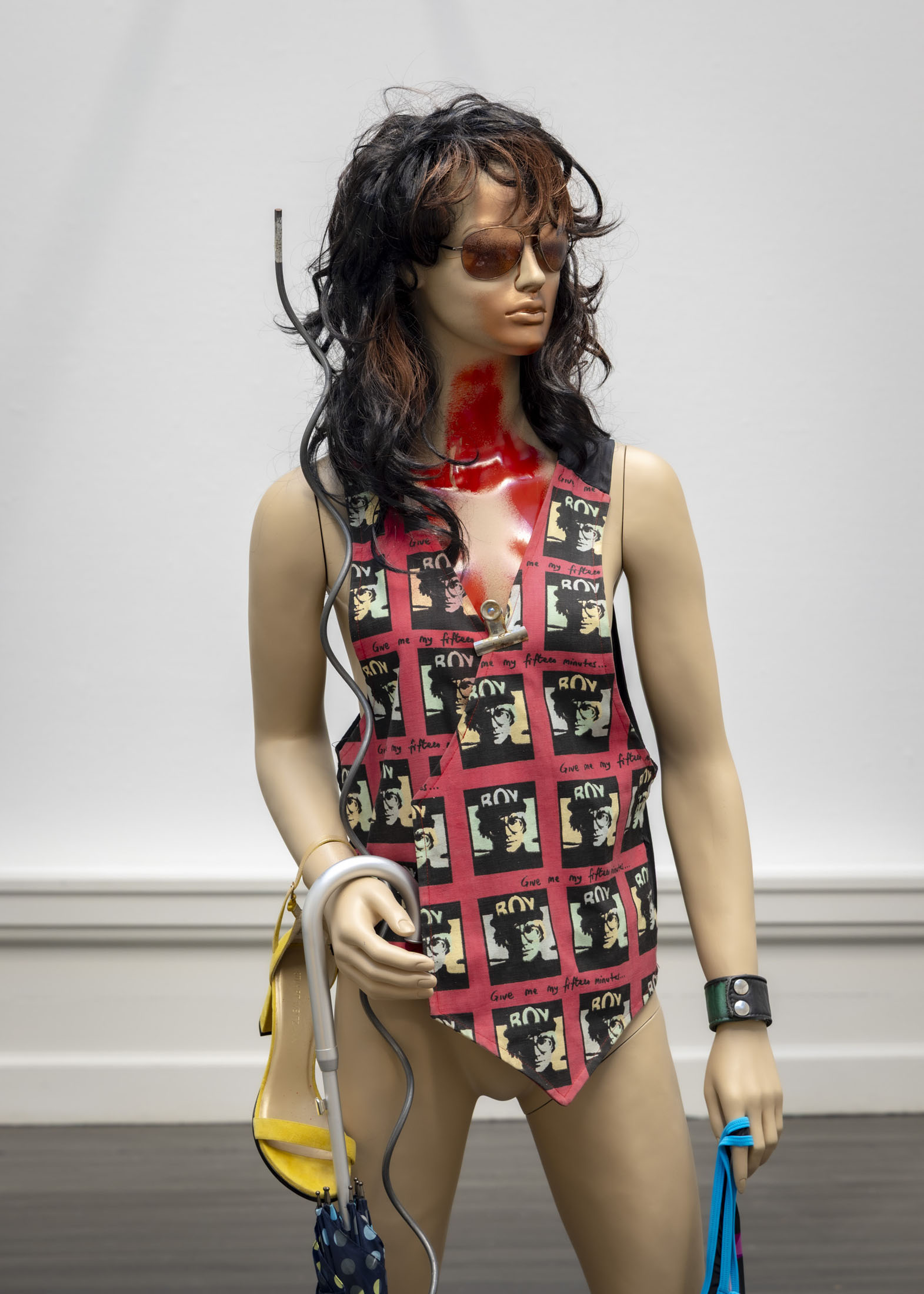
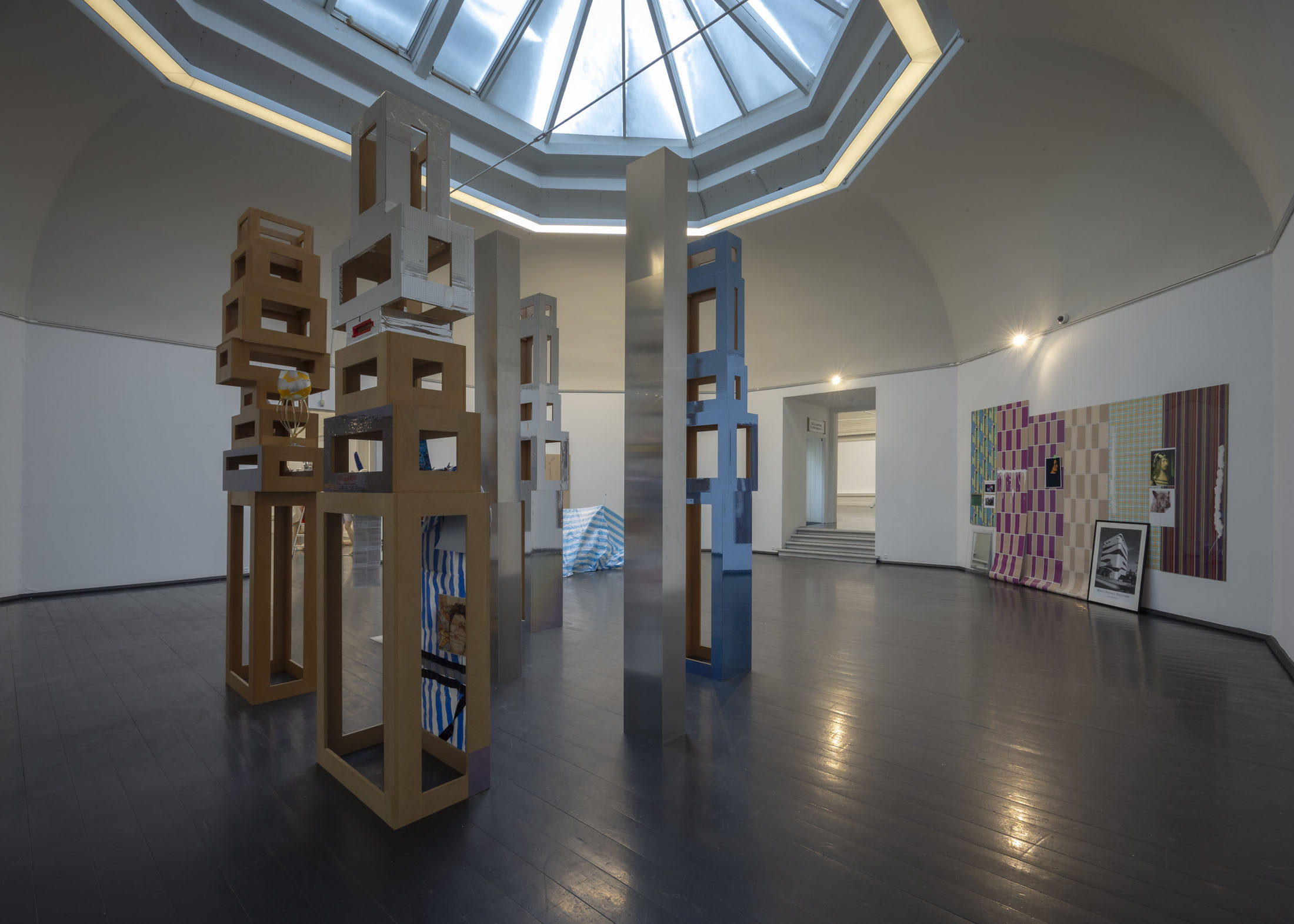
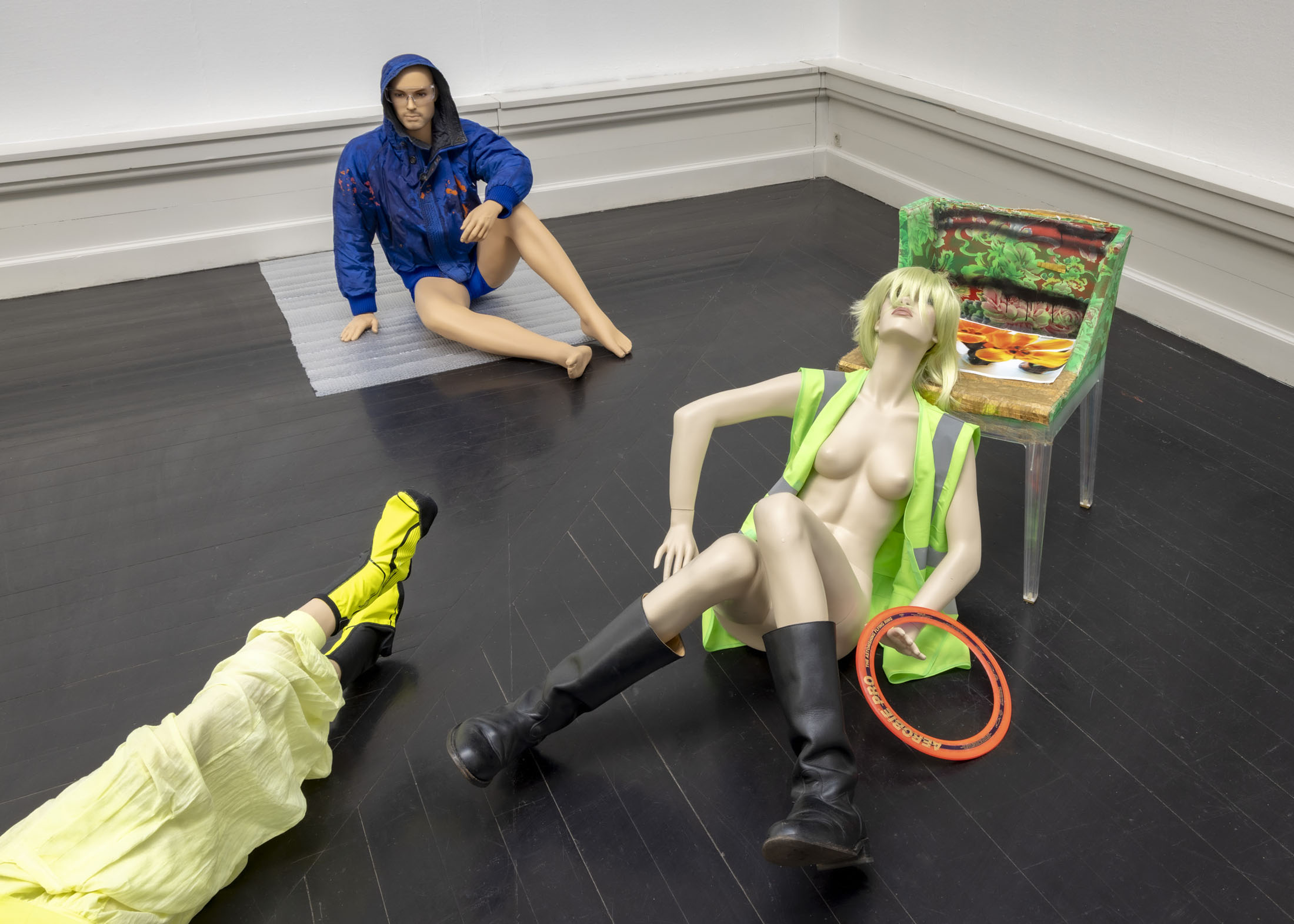
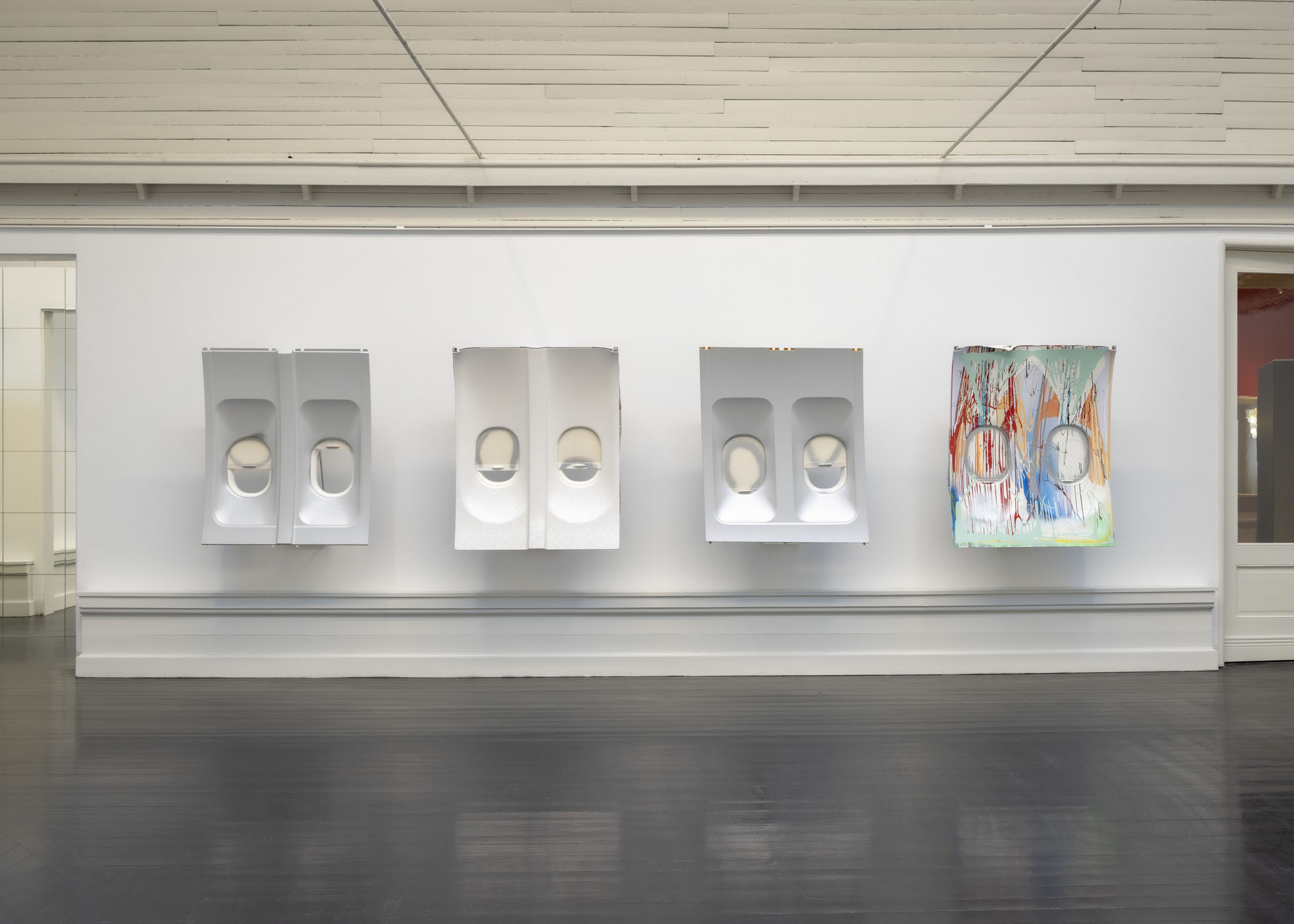
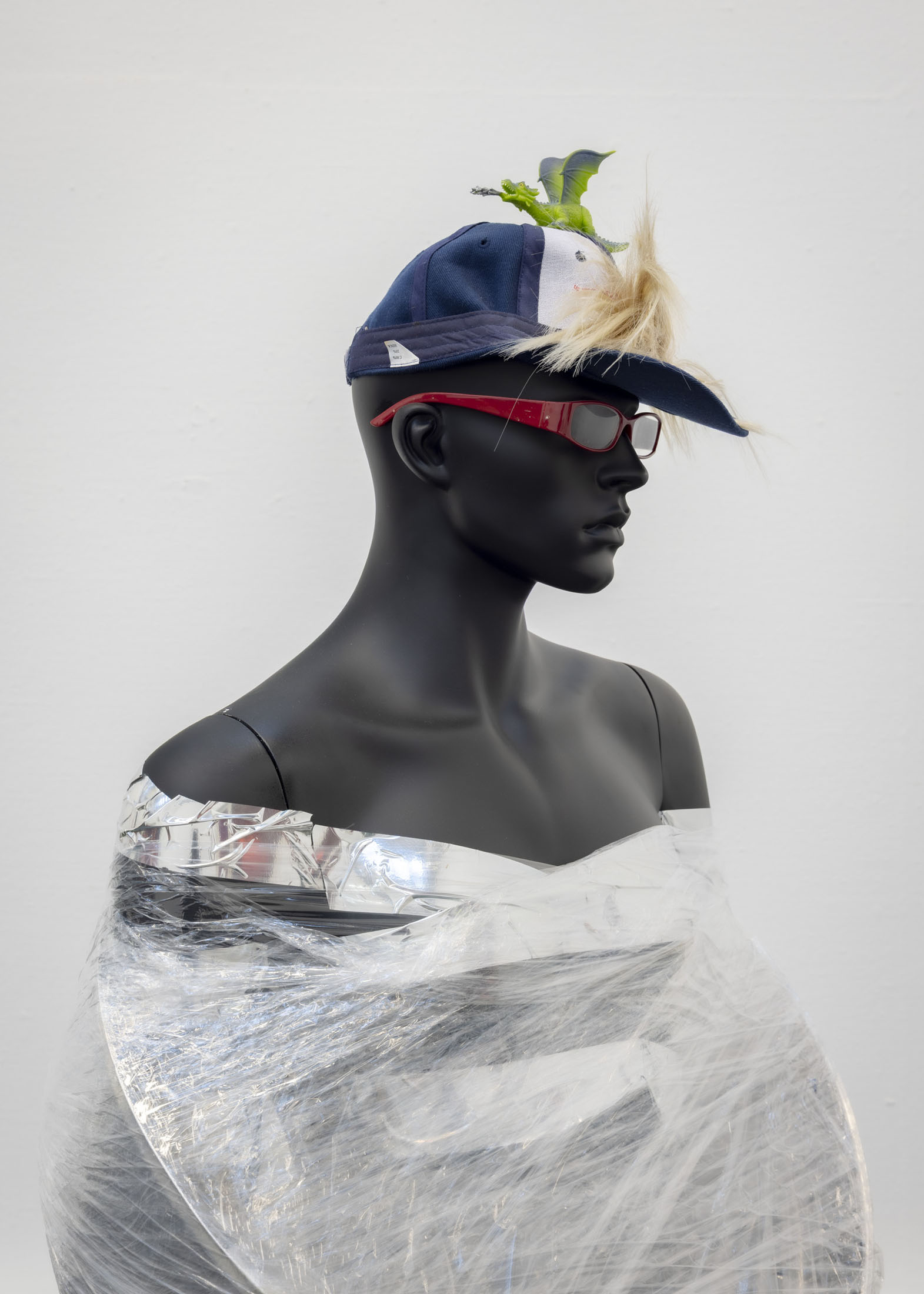
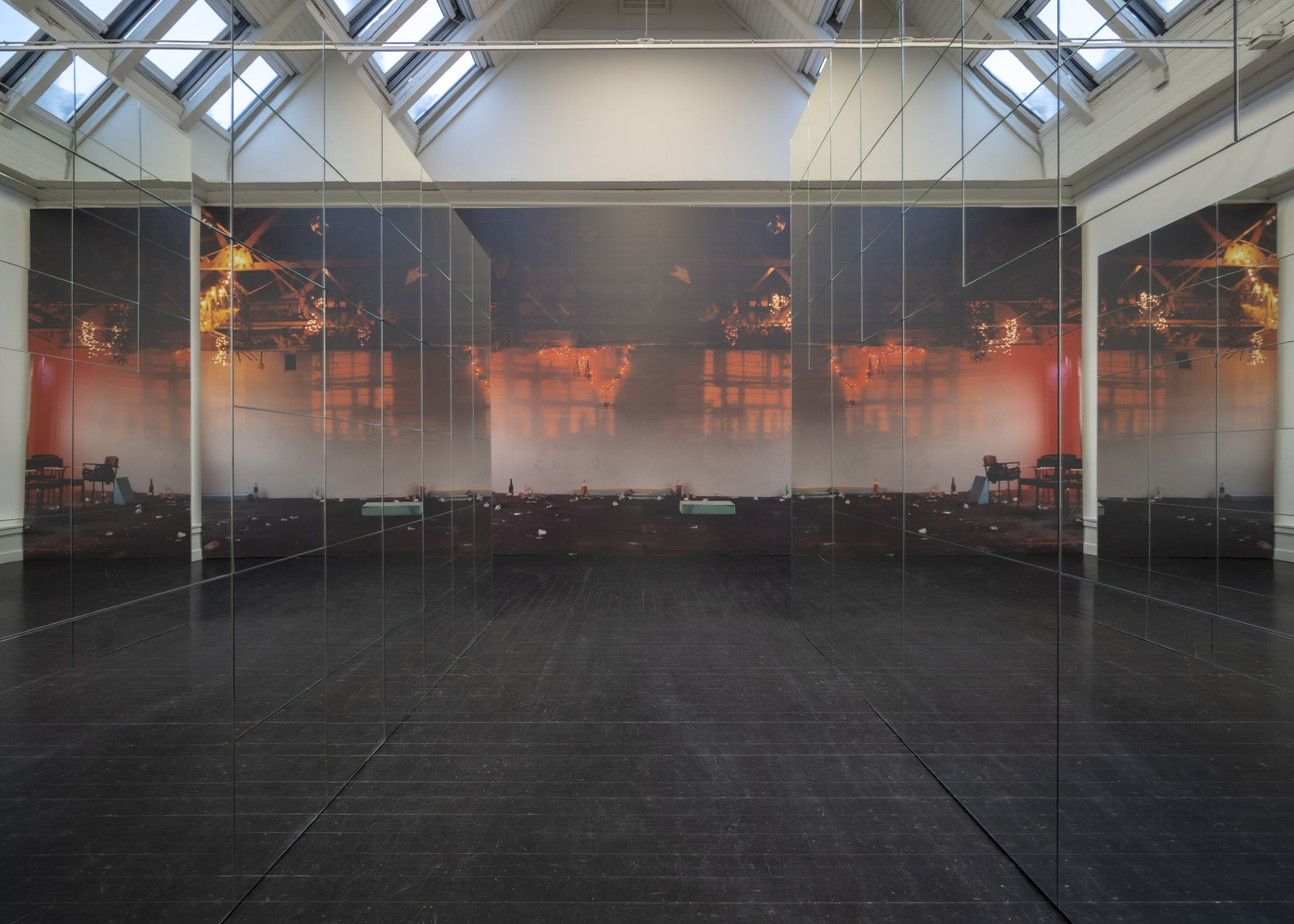
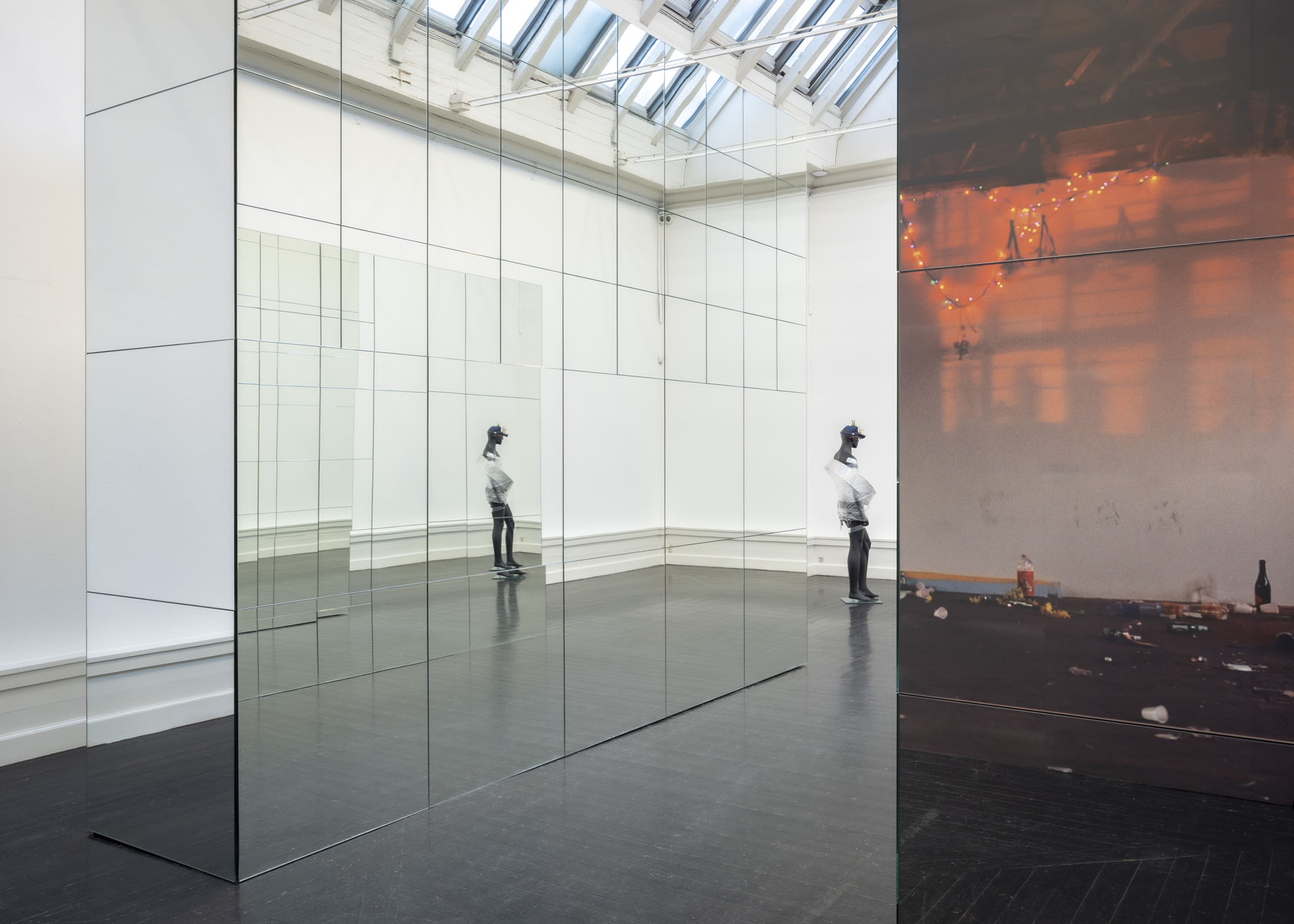
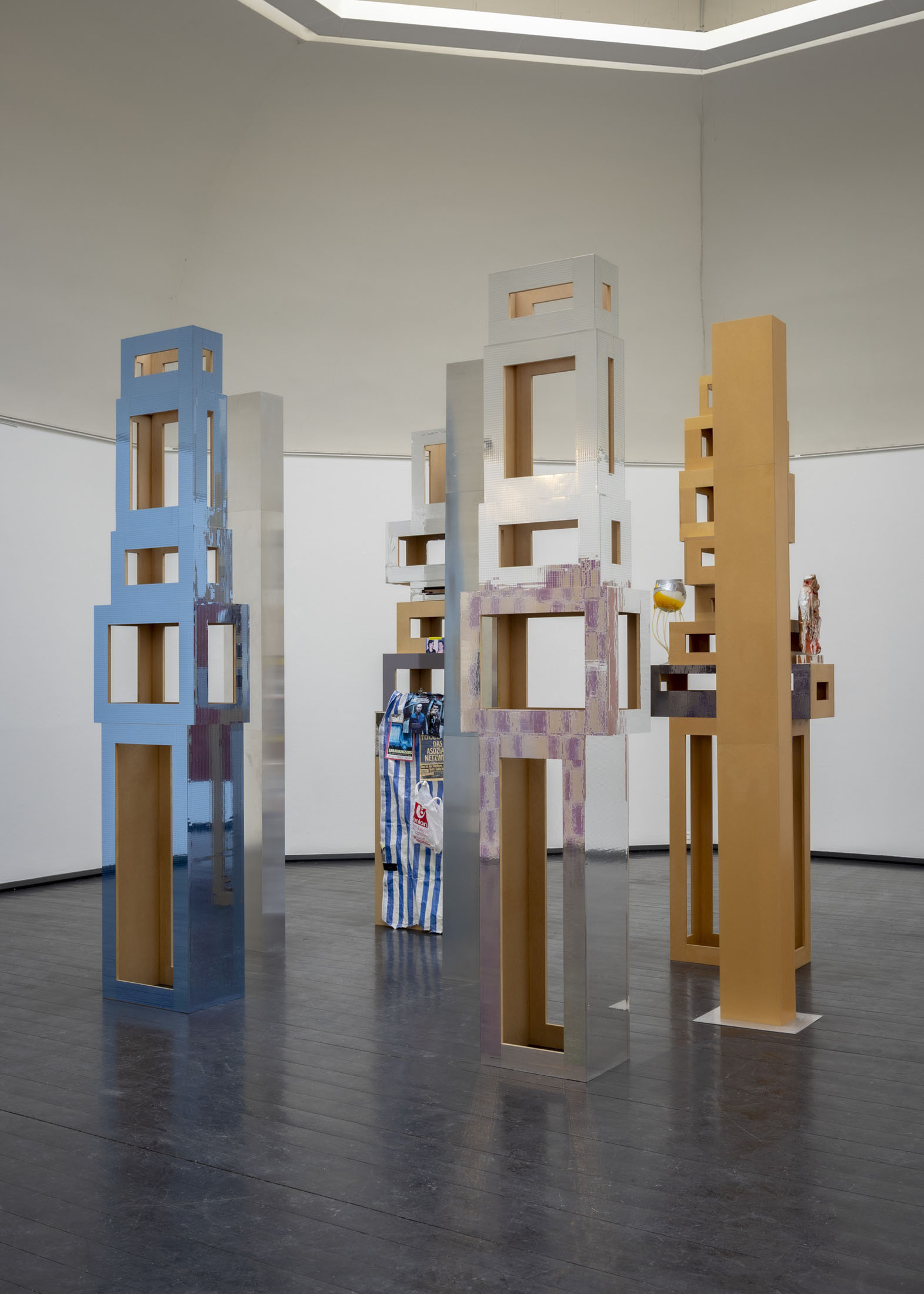
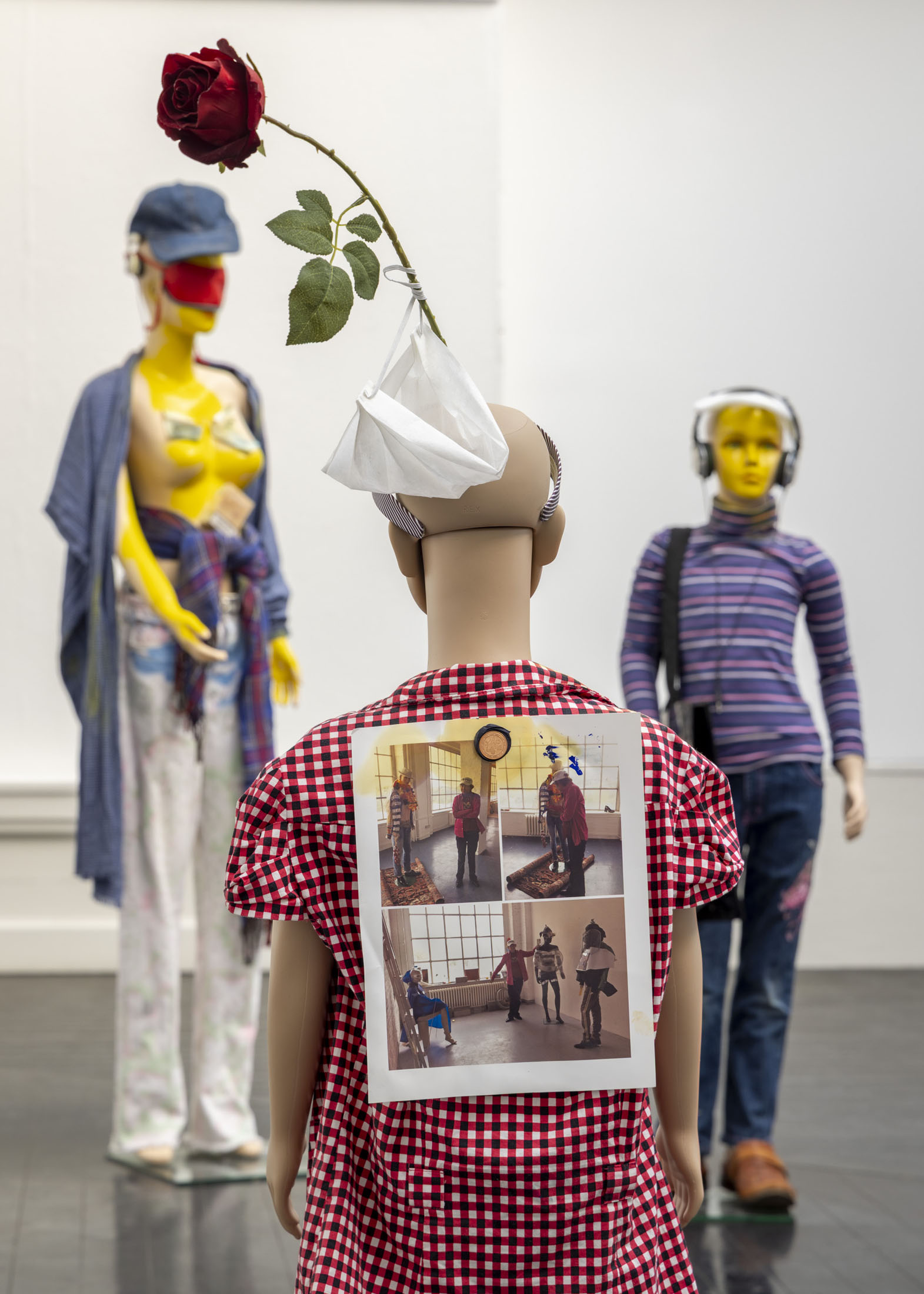
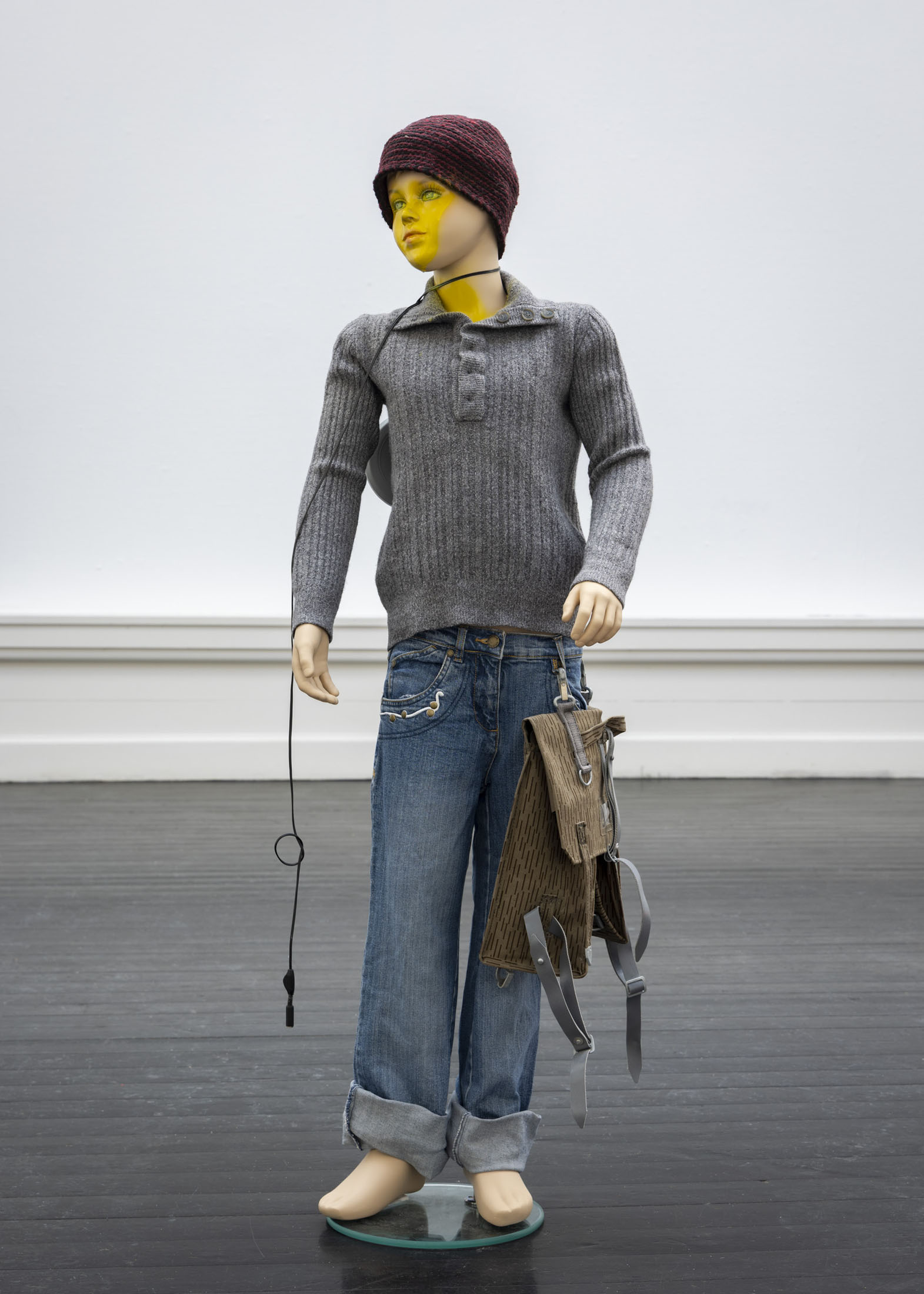
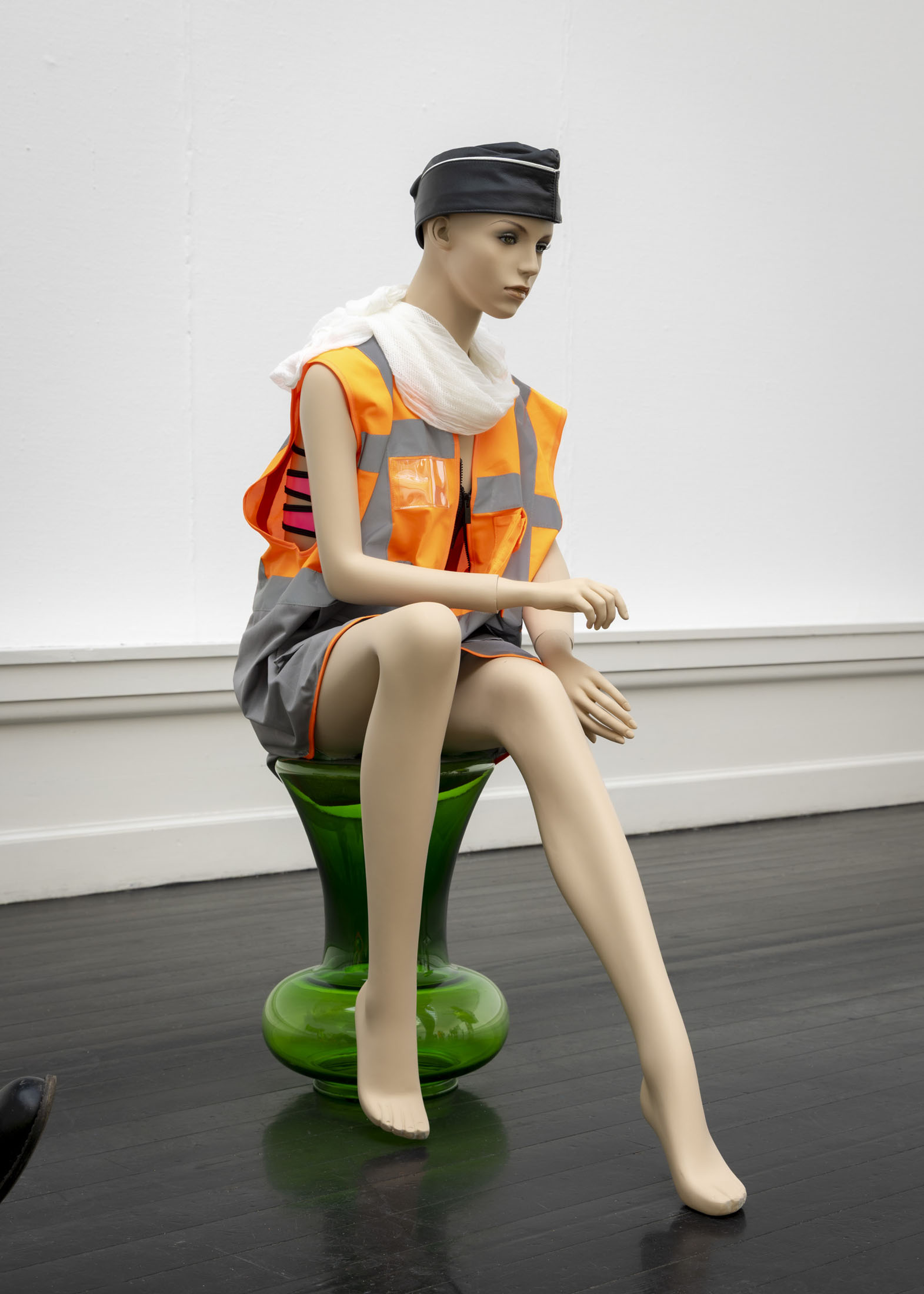
The exhibition further features the installation Science Fiction (To Be Content Here and Now) (2001), created in collaboration with Wolfgang Tillmans, as well as the sculpture Da Vinci (2003), composed of a series of airplane windows and produced in the aftermath of the terrorist attacks of 11 September 2001. Among the works are also Genzken’s characteristic mannequin installations from the 2010s, including Schauspieler III, 3 (2015), in which shop mannequins are staged as actors in a filmic scene that shift their status from idealised consumers toward more open, fictional, and future-oriented subjects. The sculpture Untitled (4 Türme, 3 Stelen) (2015) brings together seven tower-like structures that mimic both the skyscrapers of the modern metropolis and stacks of products in a supermarket or warehouse. In the painting series Geldbilder (2014–16), Genzken explores, with precision and irony, the relationship between painting and economics.
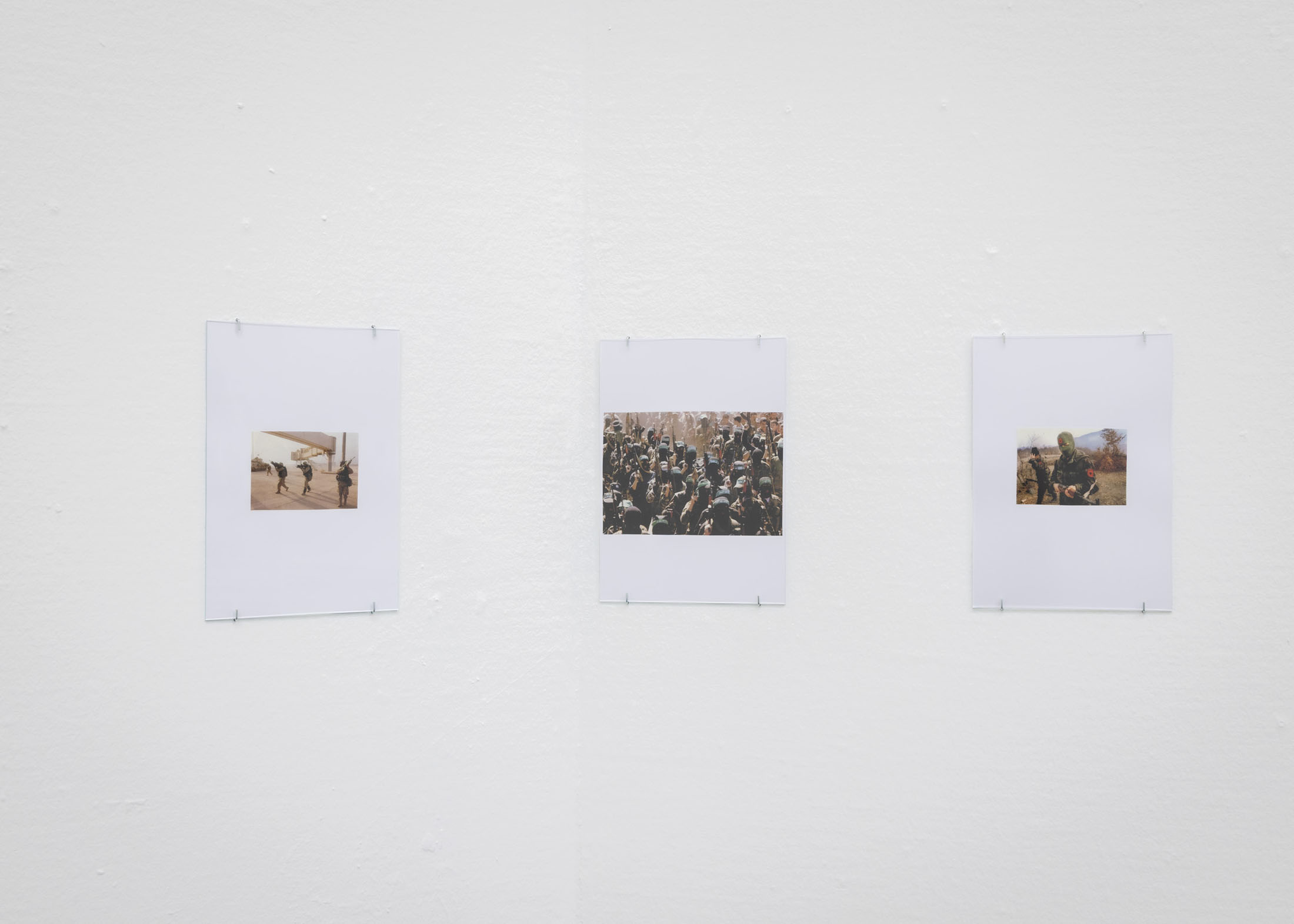
With Genzken, punk and posh meet in a gaze that is both critical and filled with love for the com- mercialised and mediated reality that shapes our present. According to art historian Hal Foster, Genzken’s works expose the dystopian underside of the era’s utopian dreams, while this destruc- tion simultaneously smoulders with a paradoxical vitality—an “energy in disaster.” Beneath the bright colours and glittering surfaces lurk some of these destructive forces—consumer culture, war, and inequality—and keep the works balanced on the edge of an inescapable collapse. Yet, Isa Genzken’s ambiguous and often humorous works ultimately remain open and hopeful in their orientation toward the future, no matter how strange it may become.