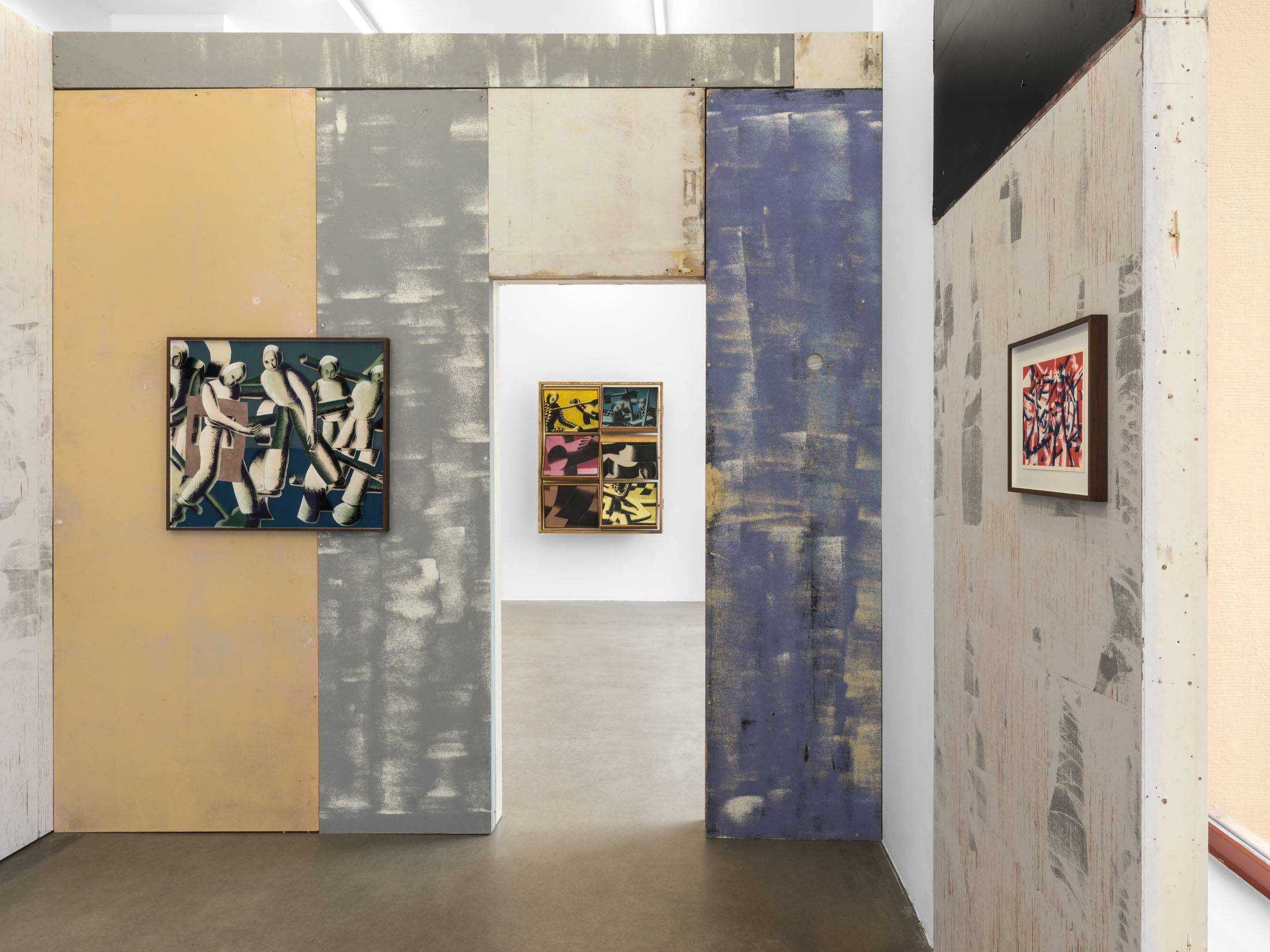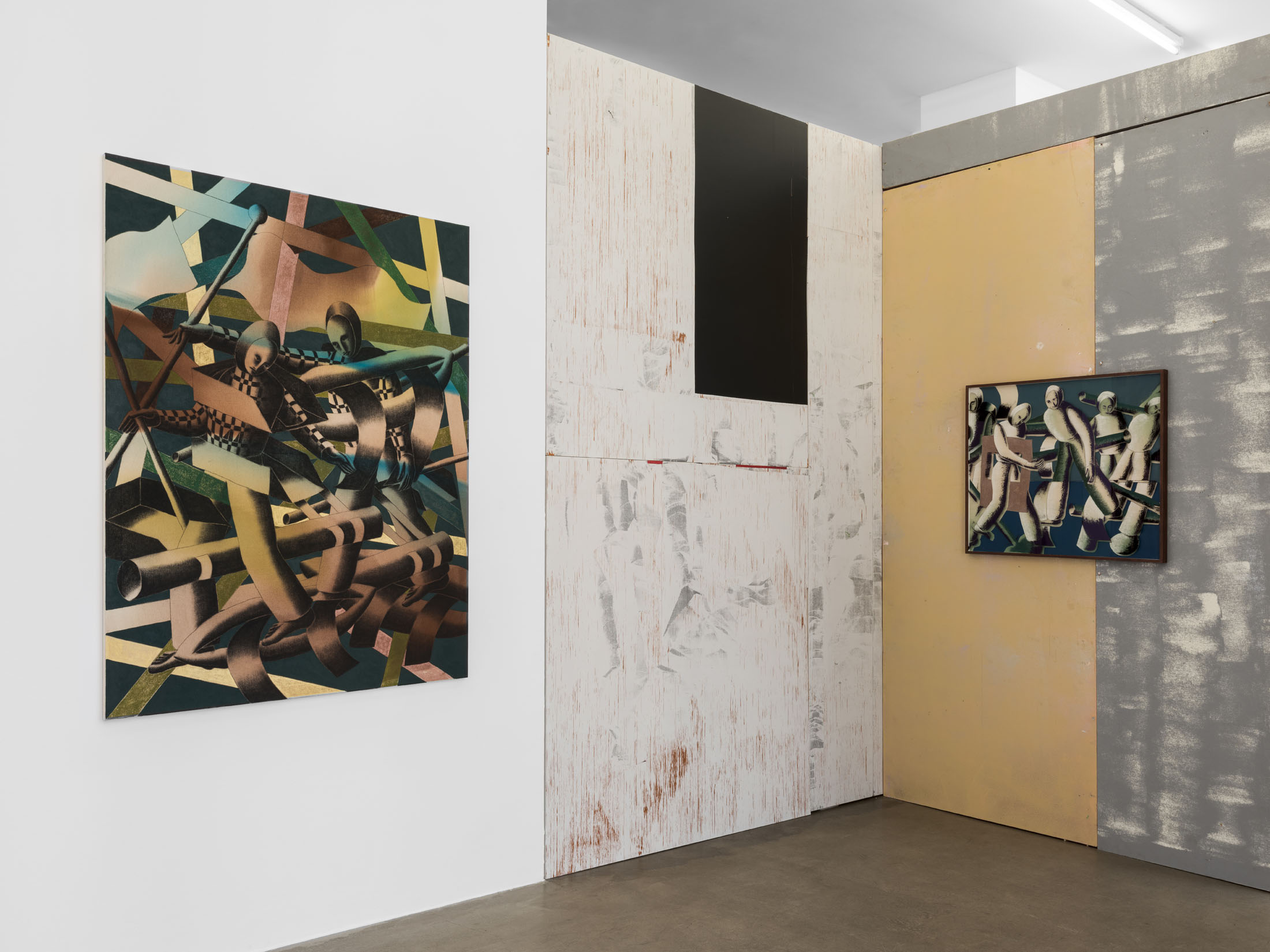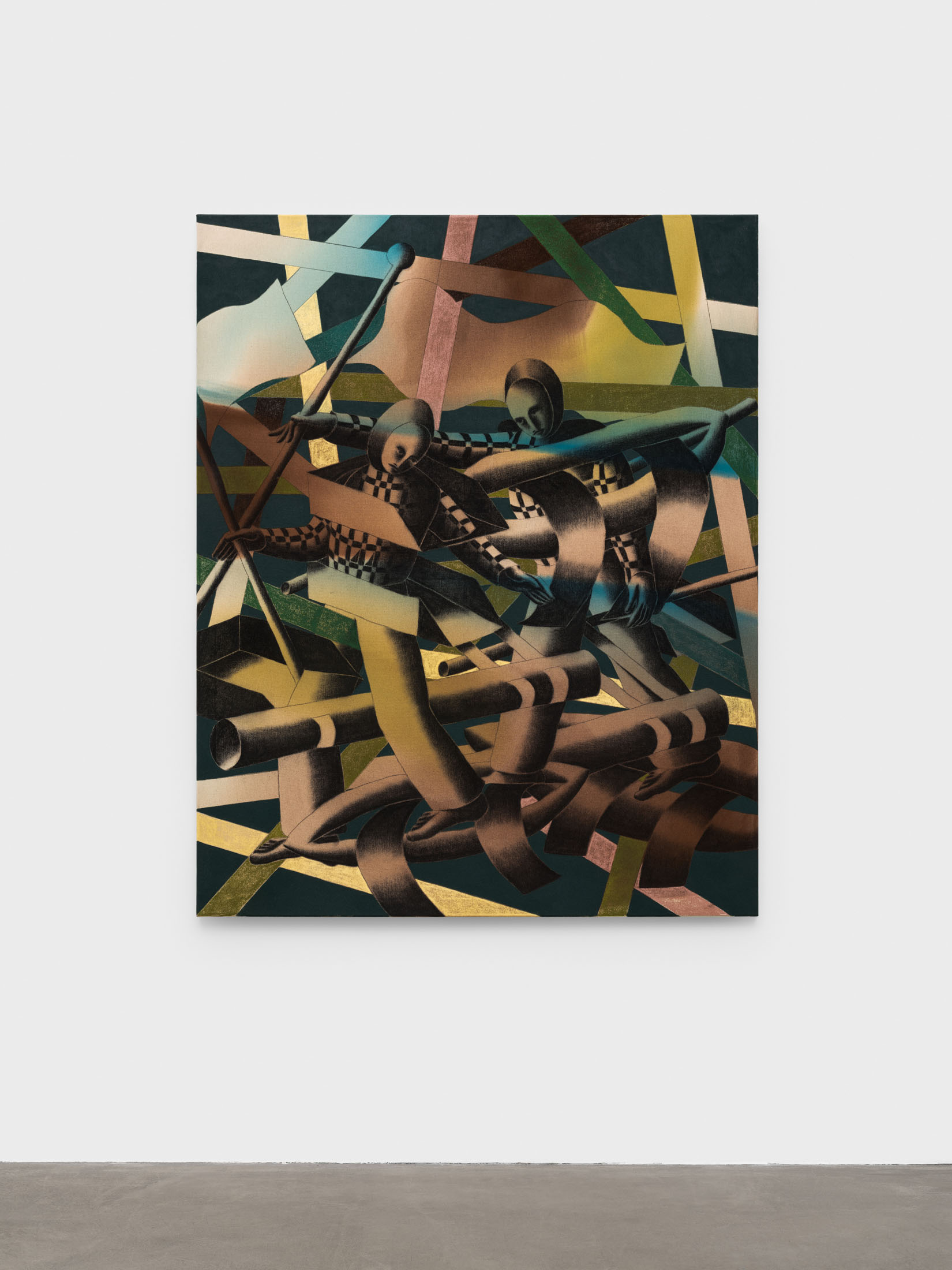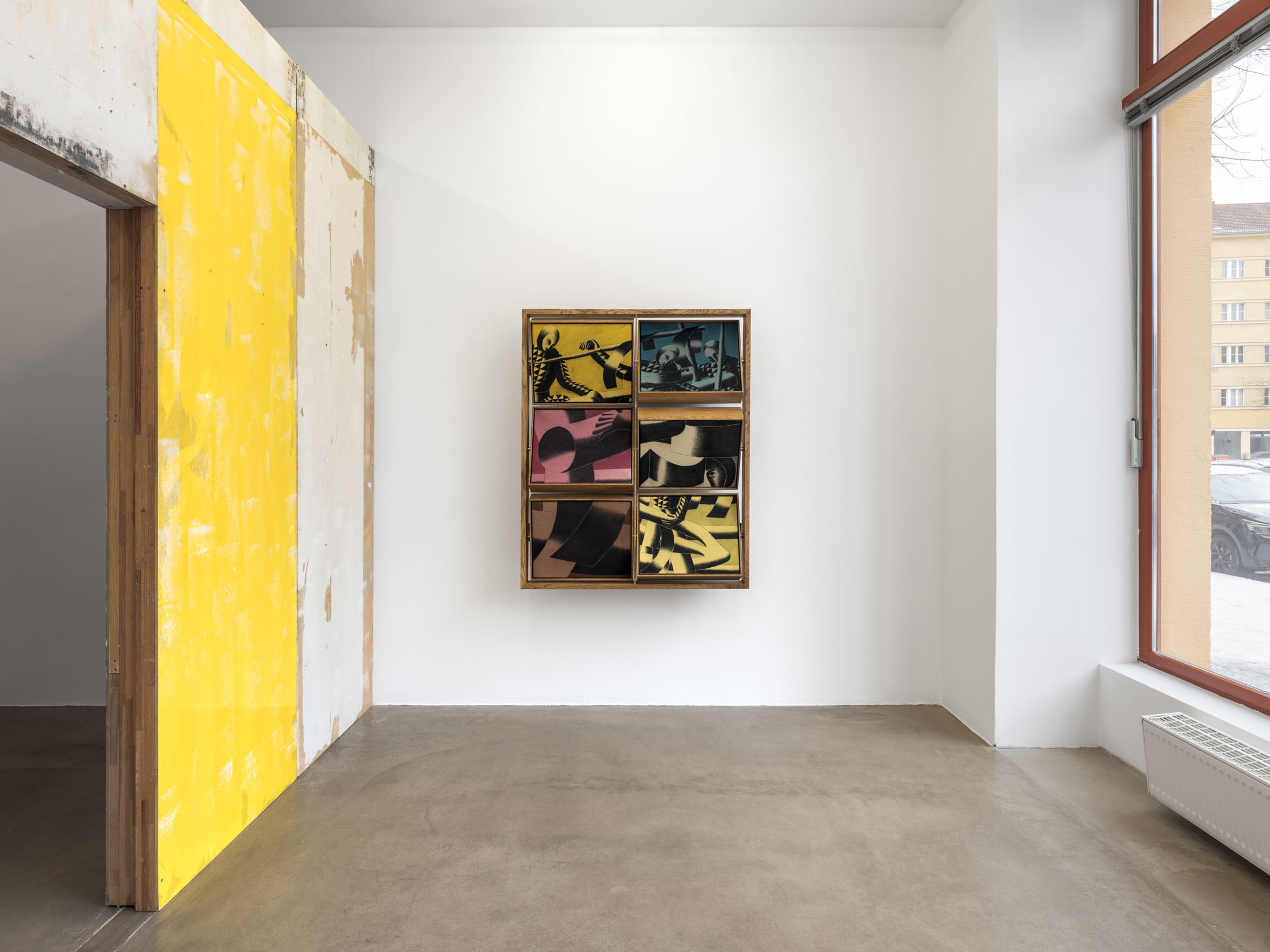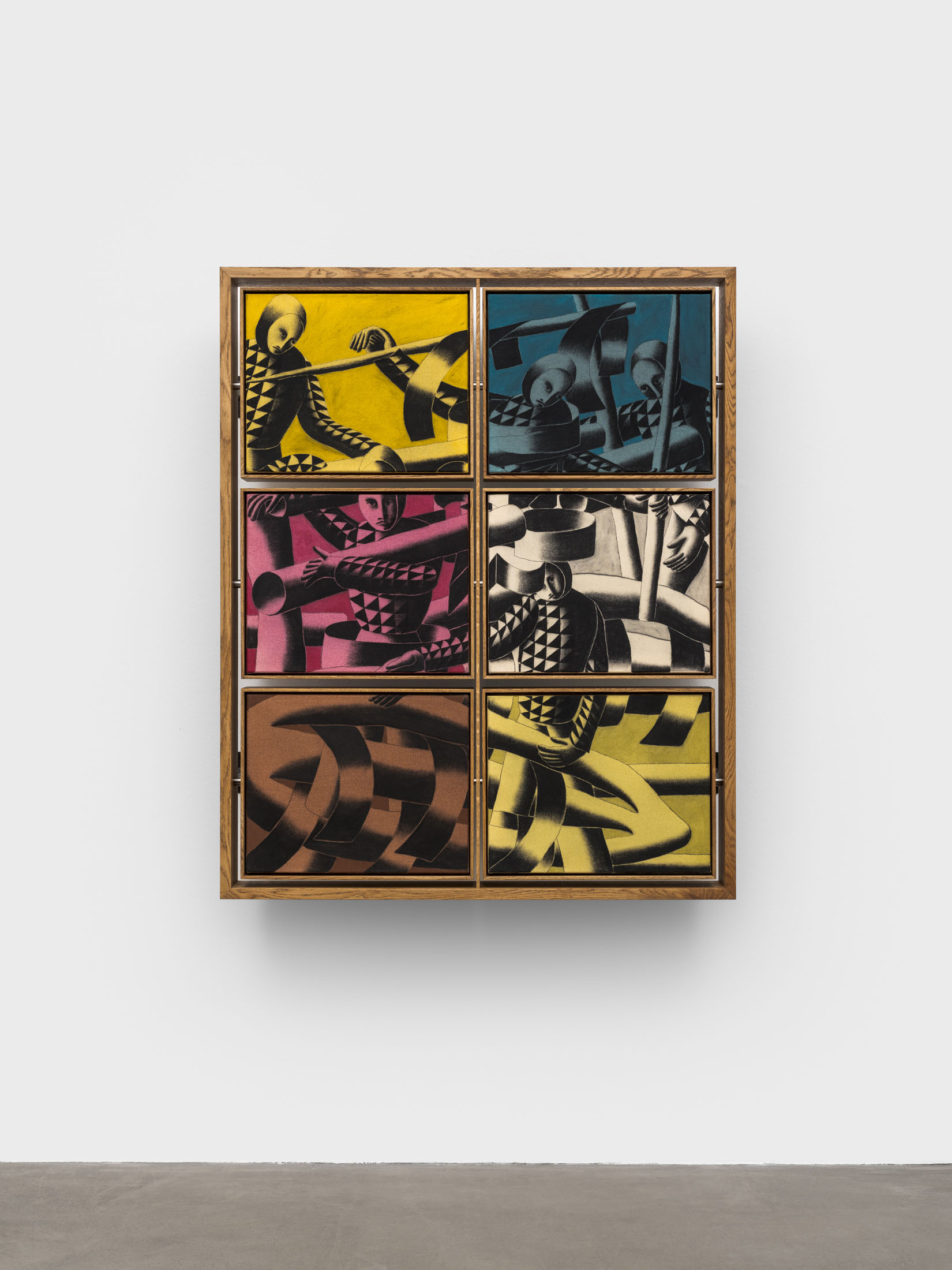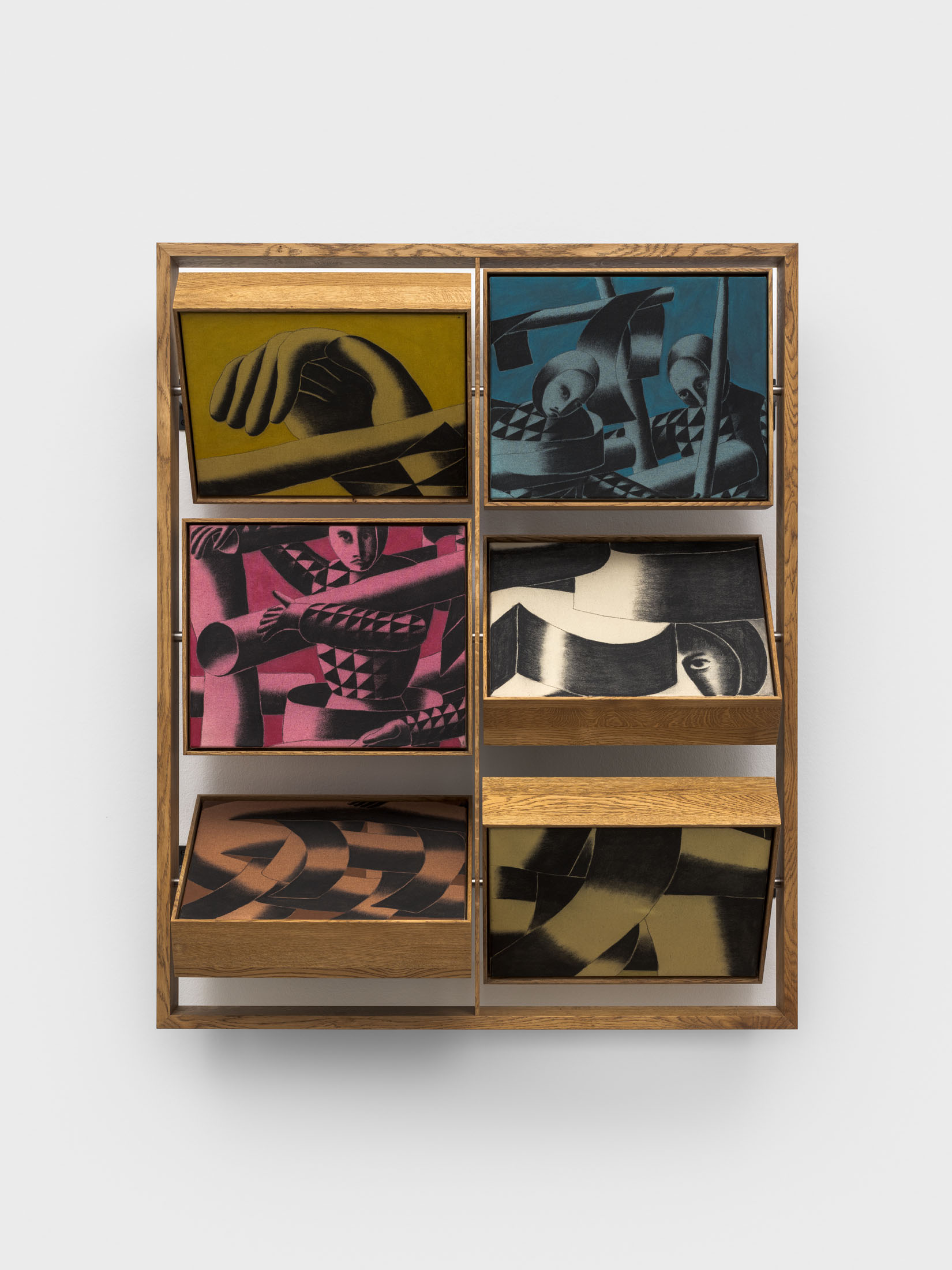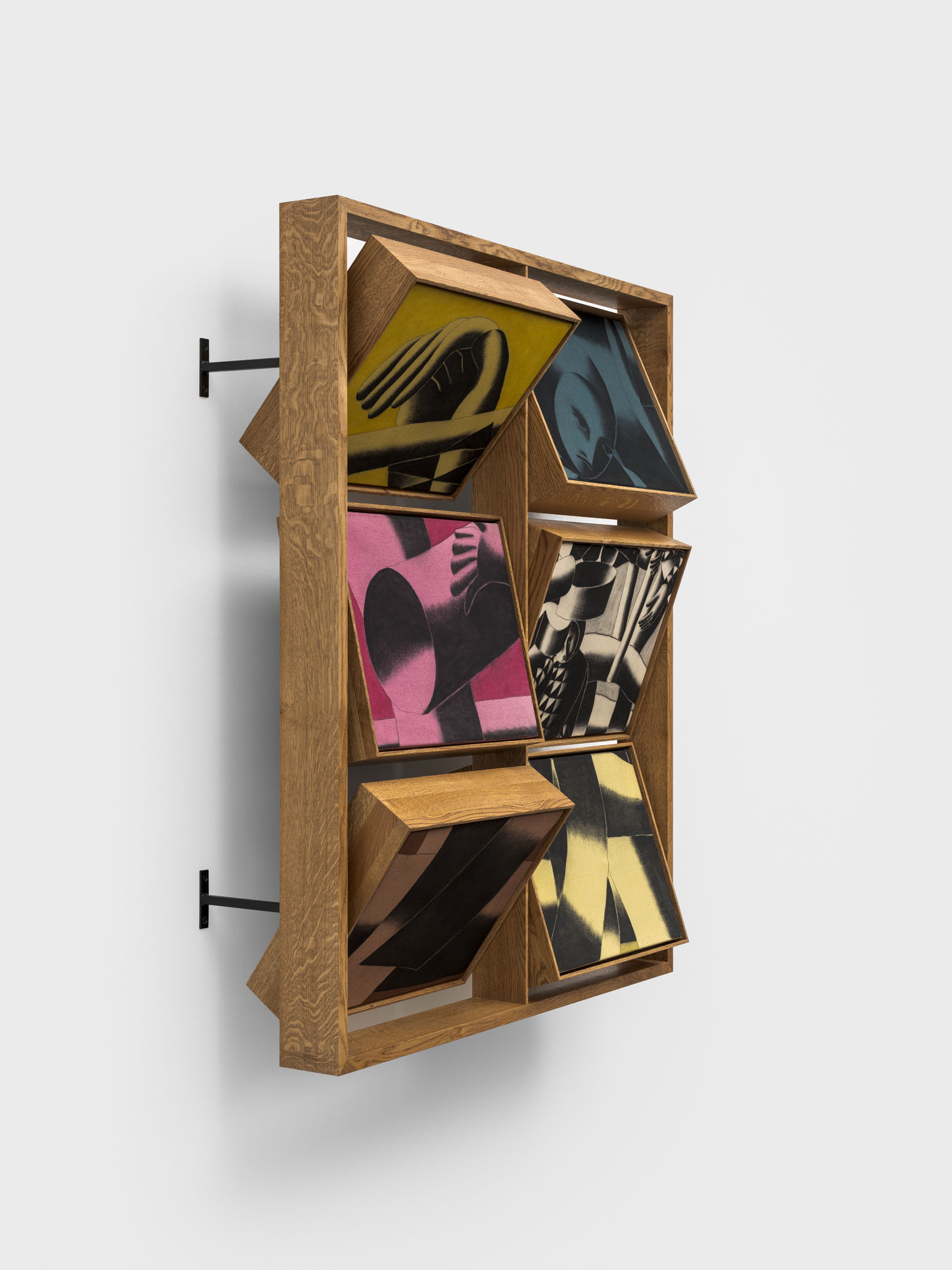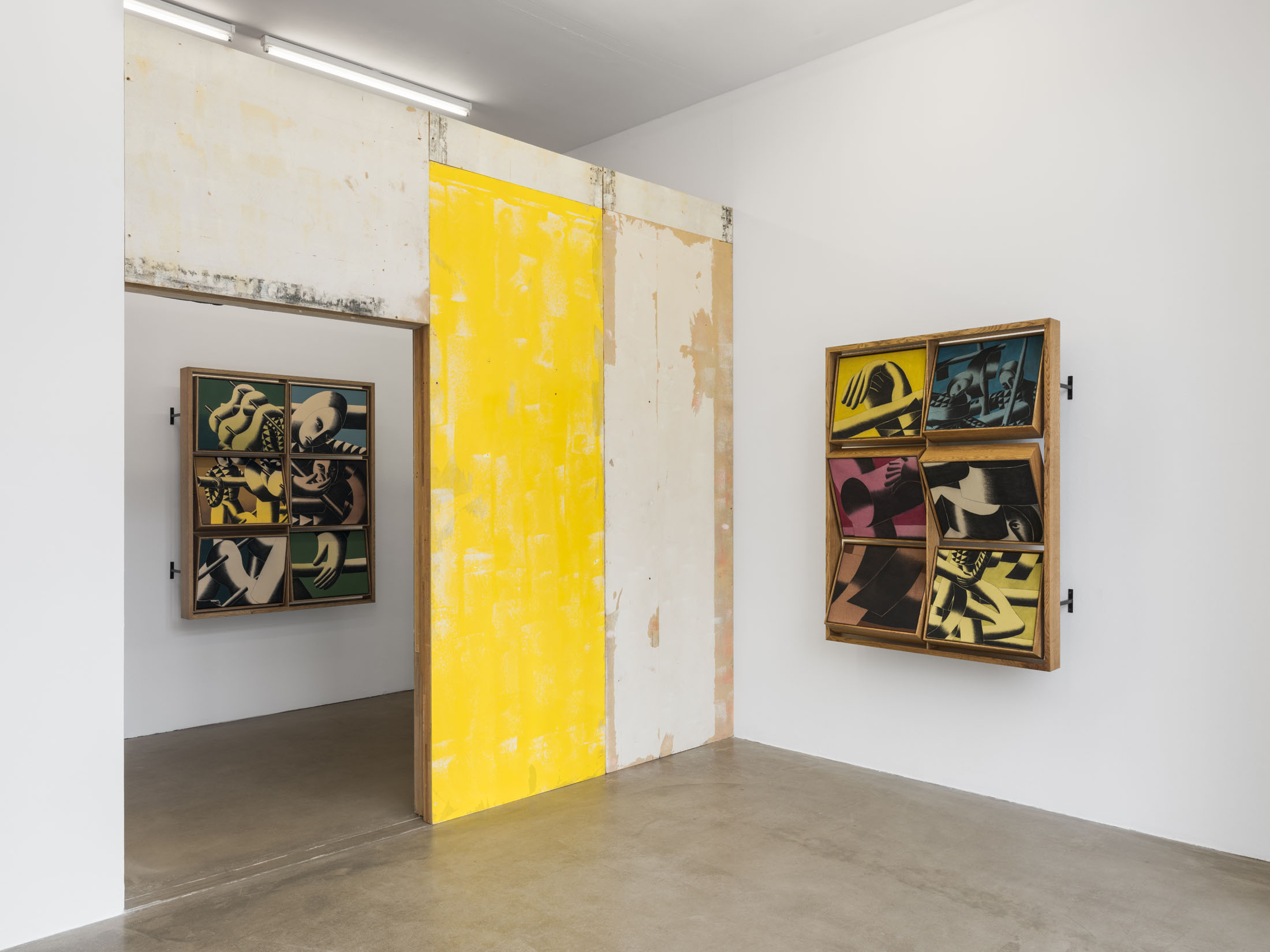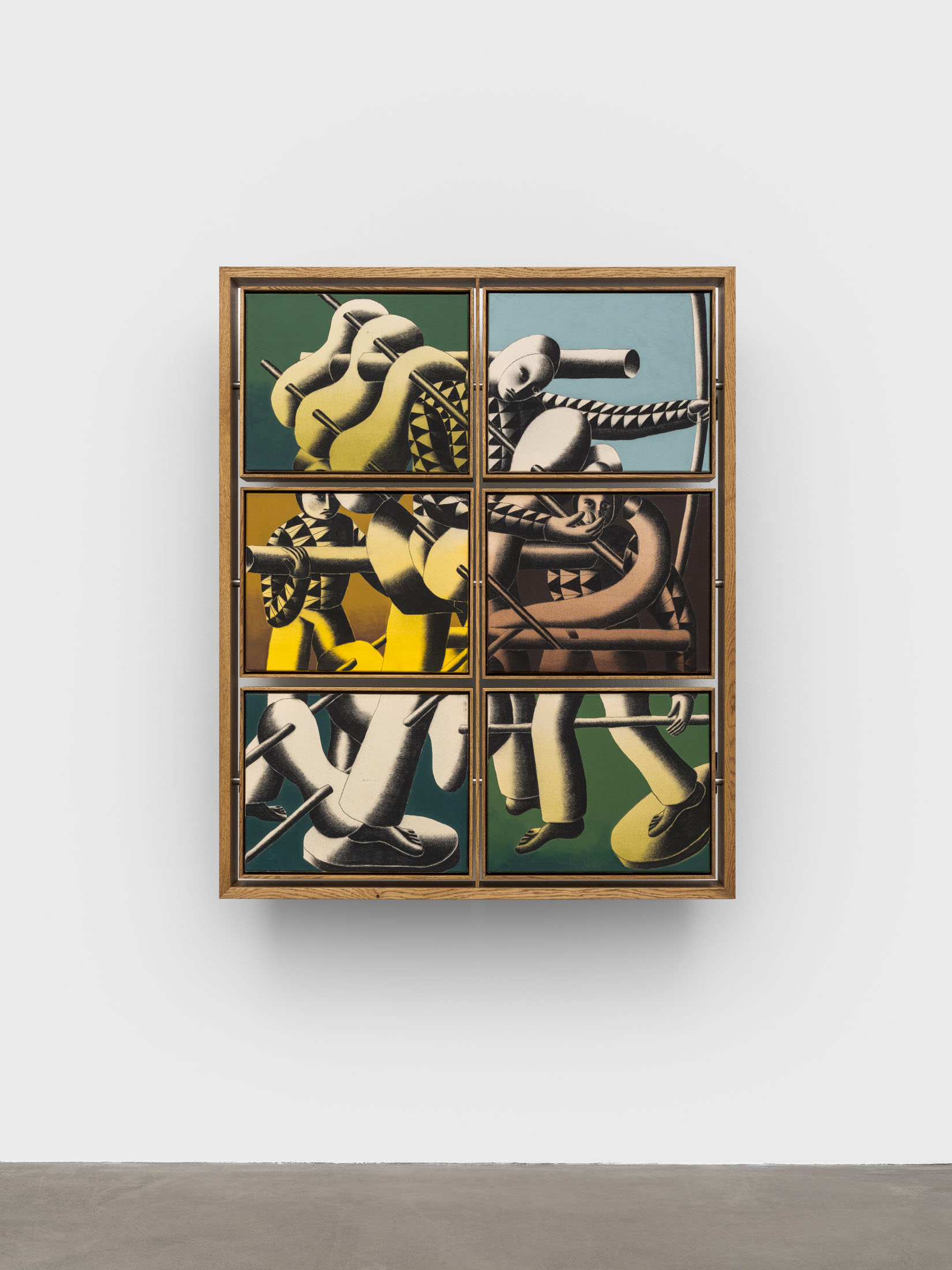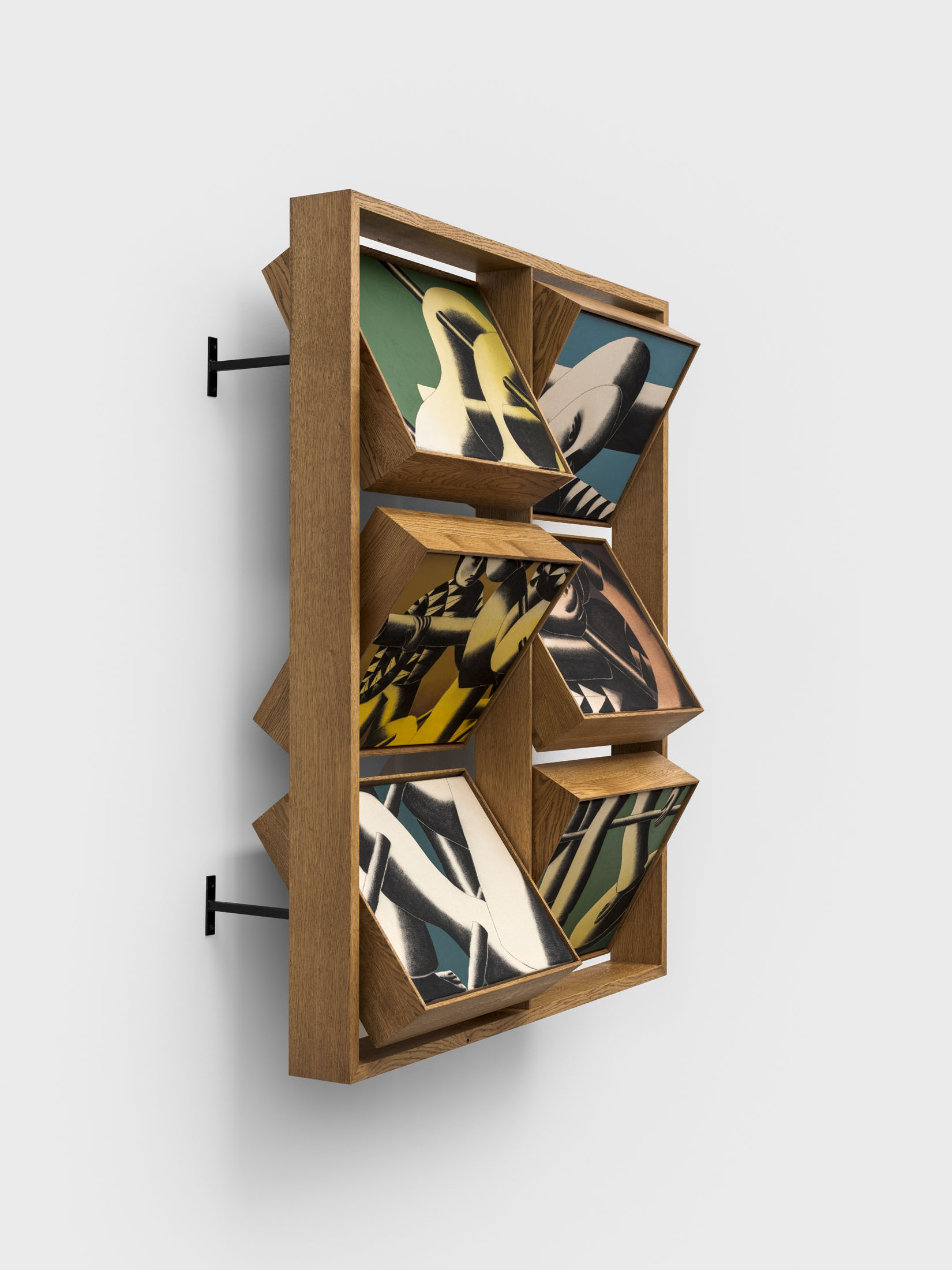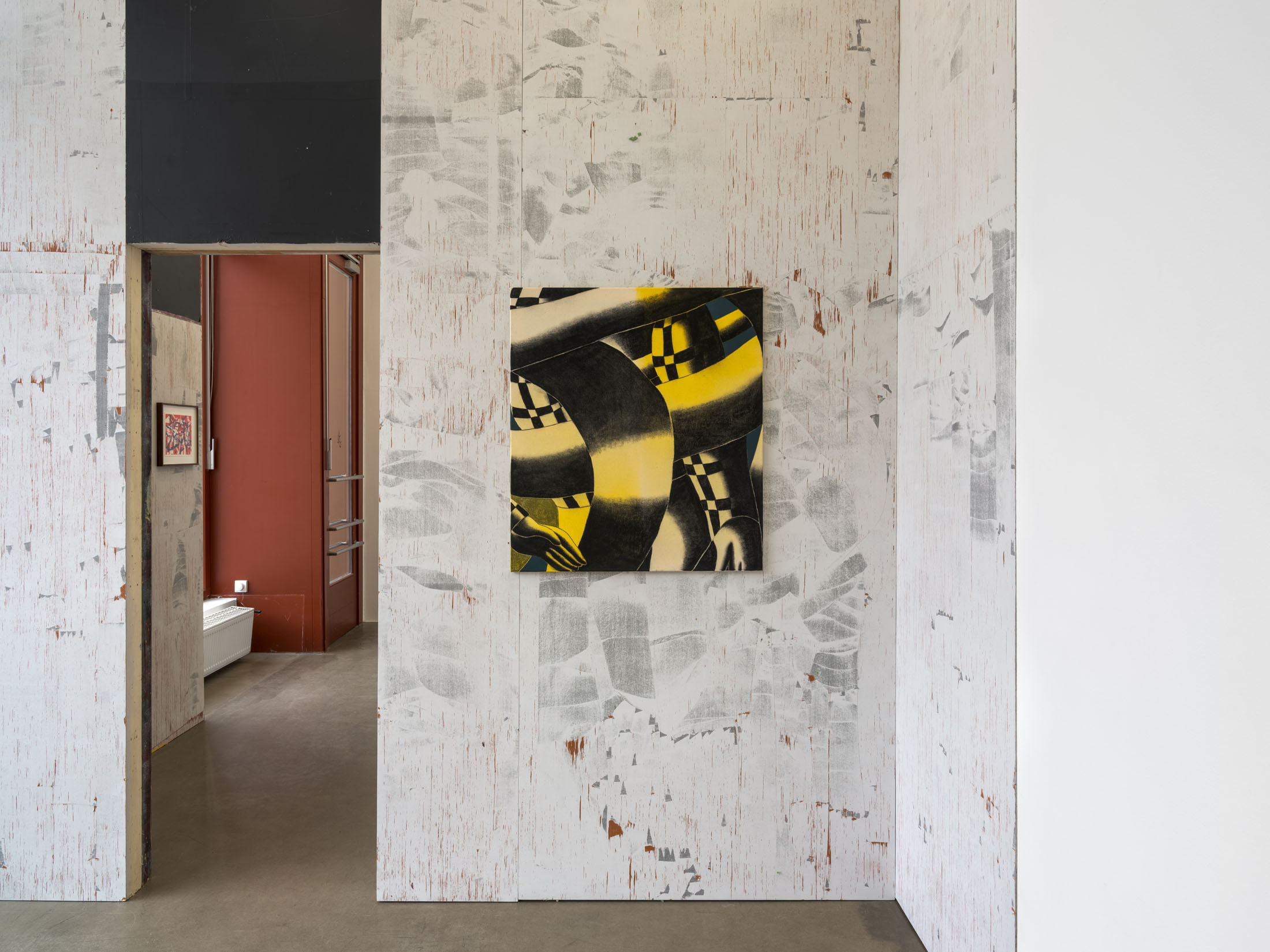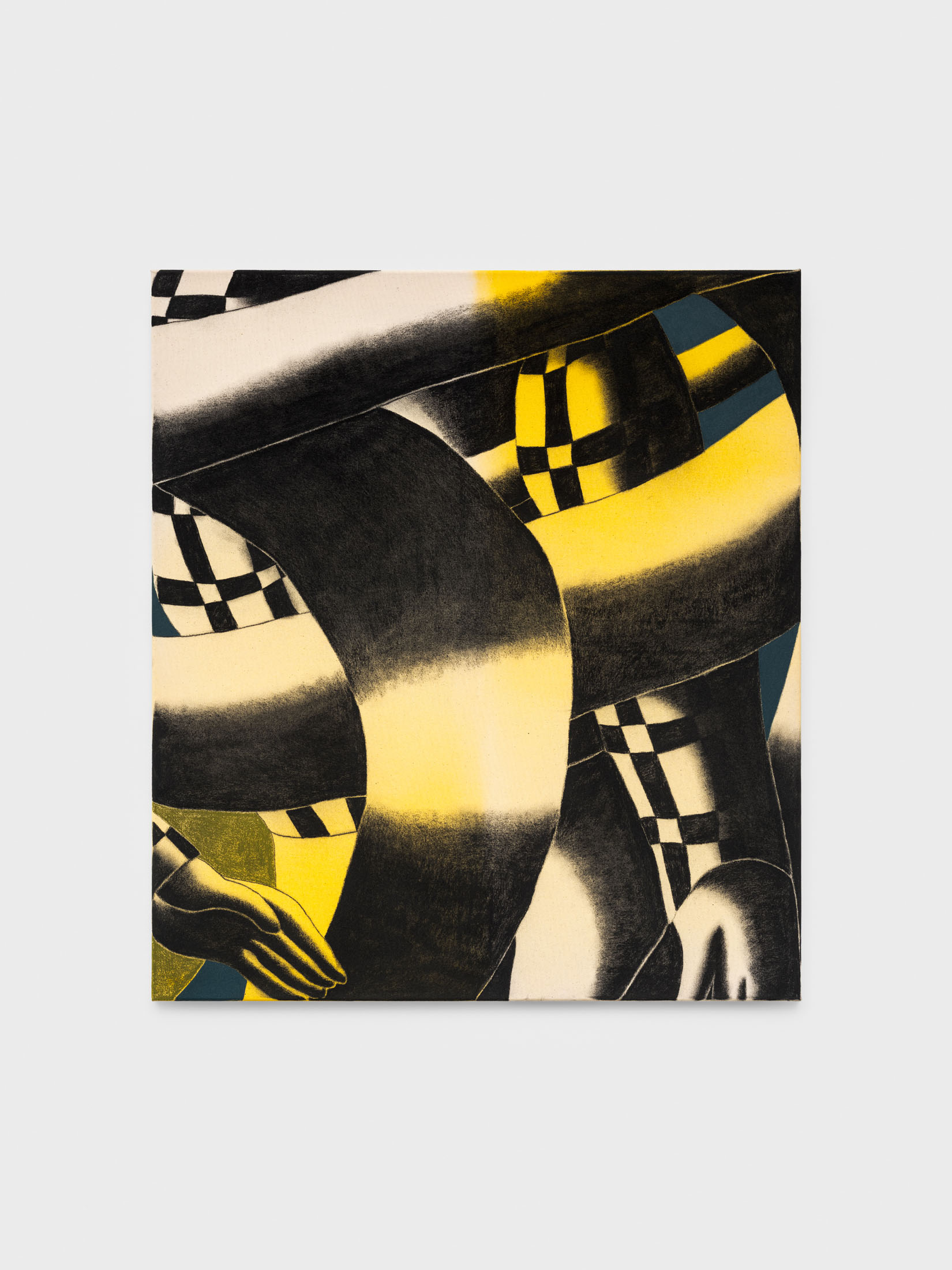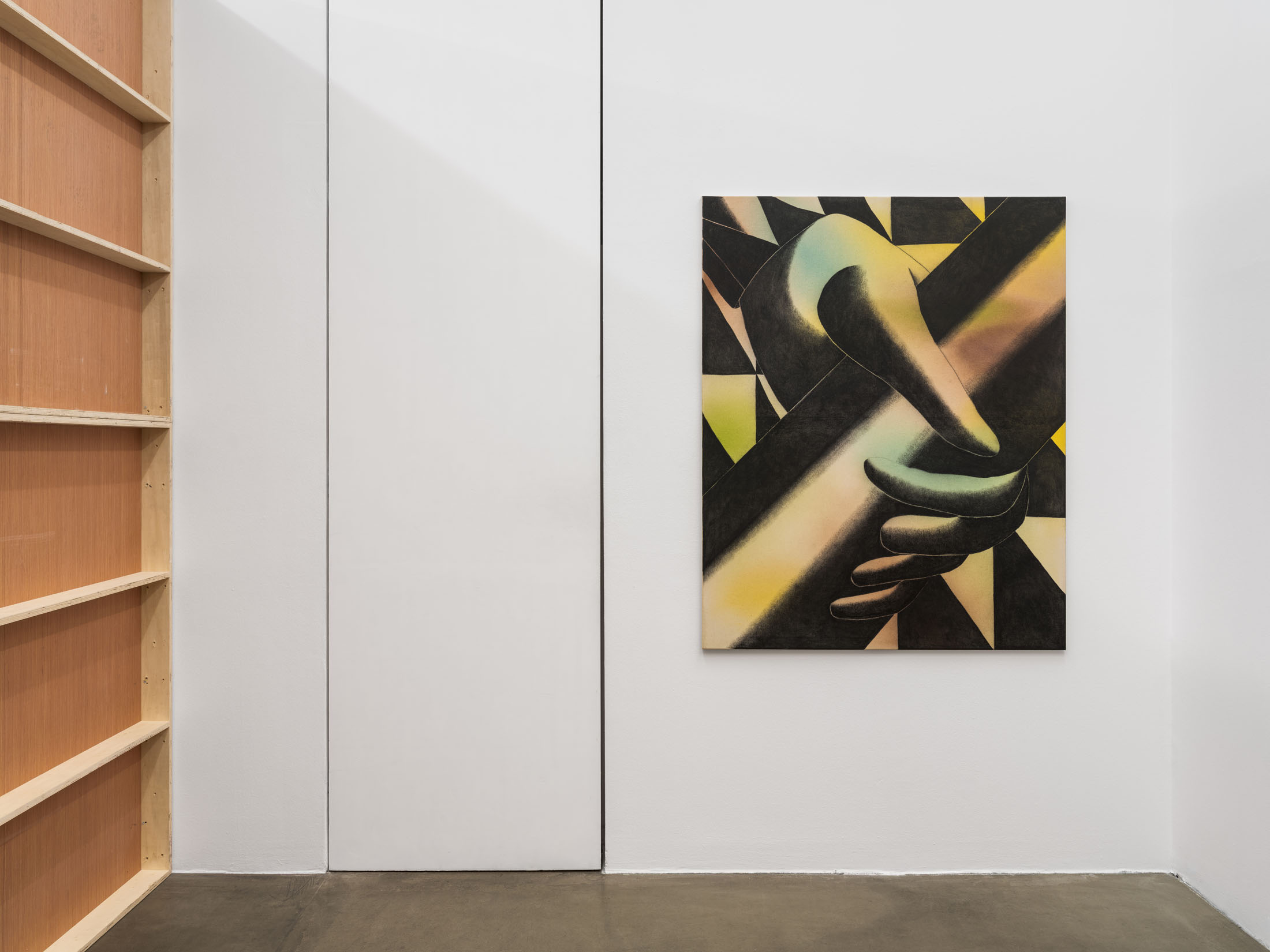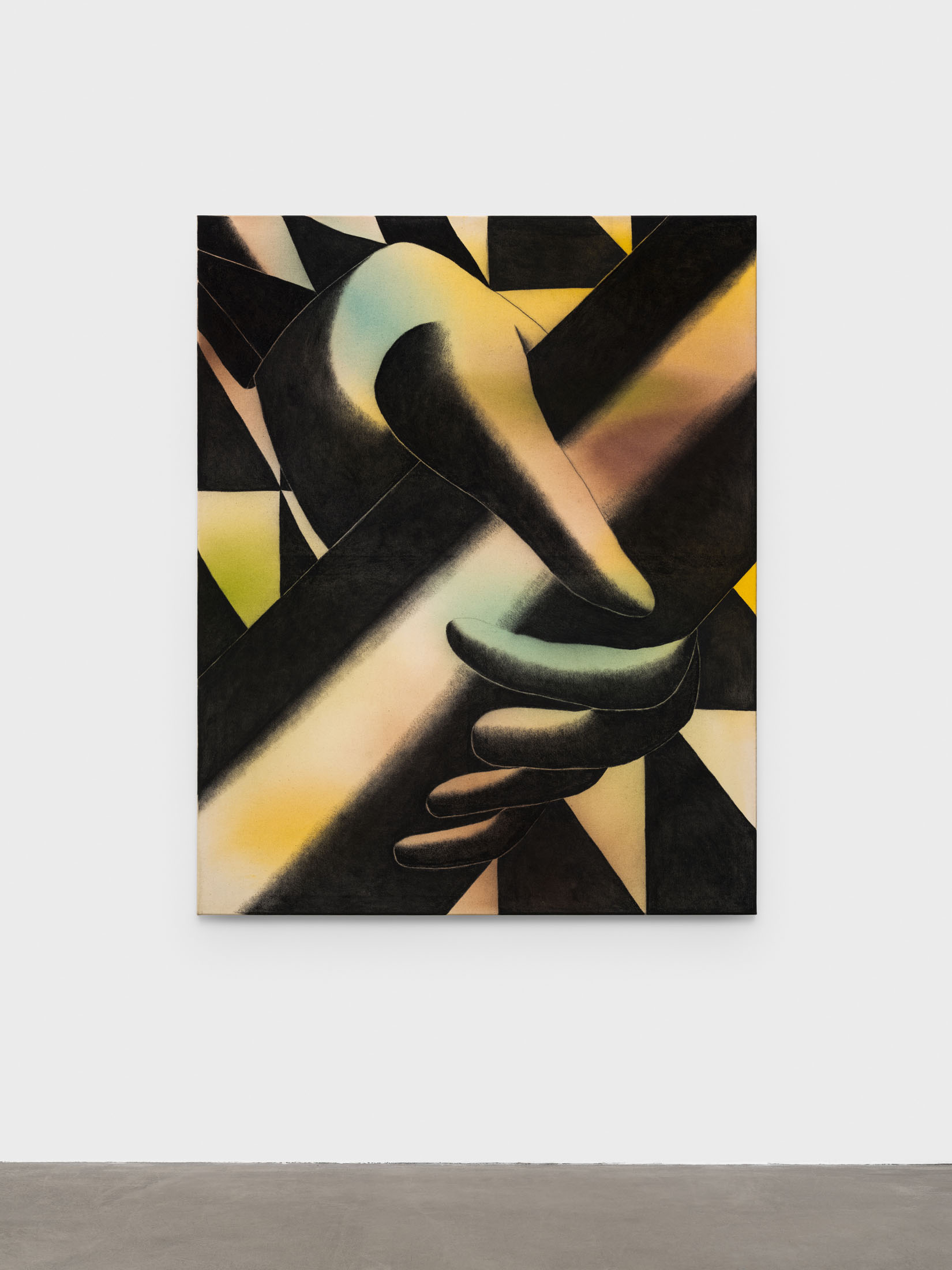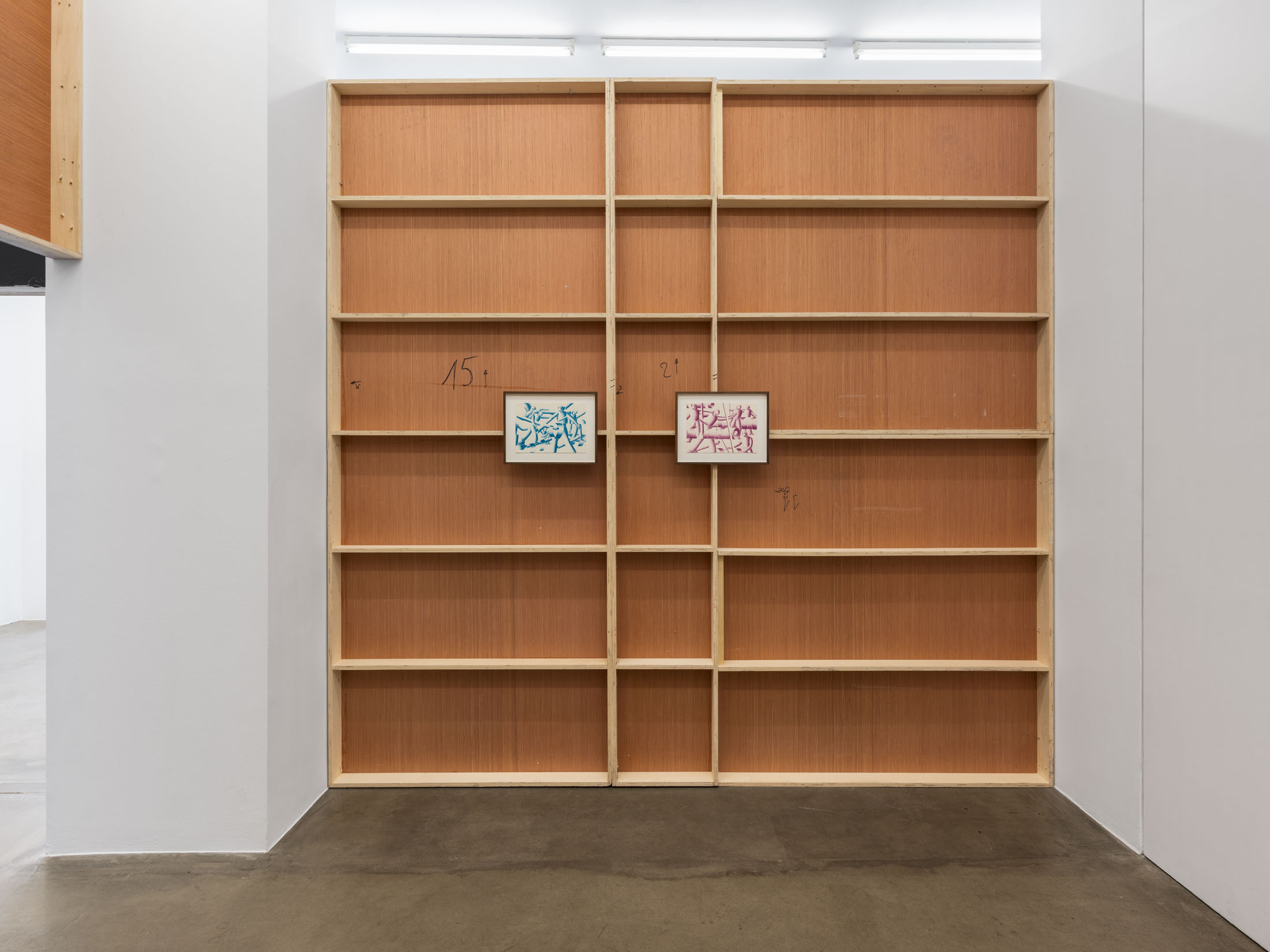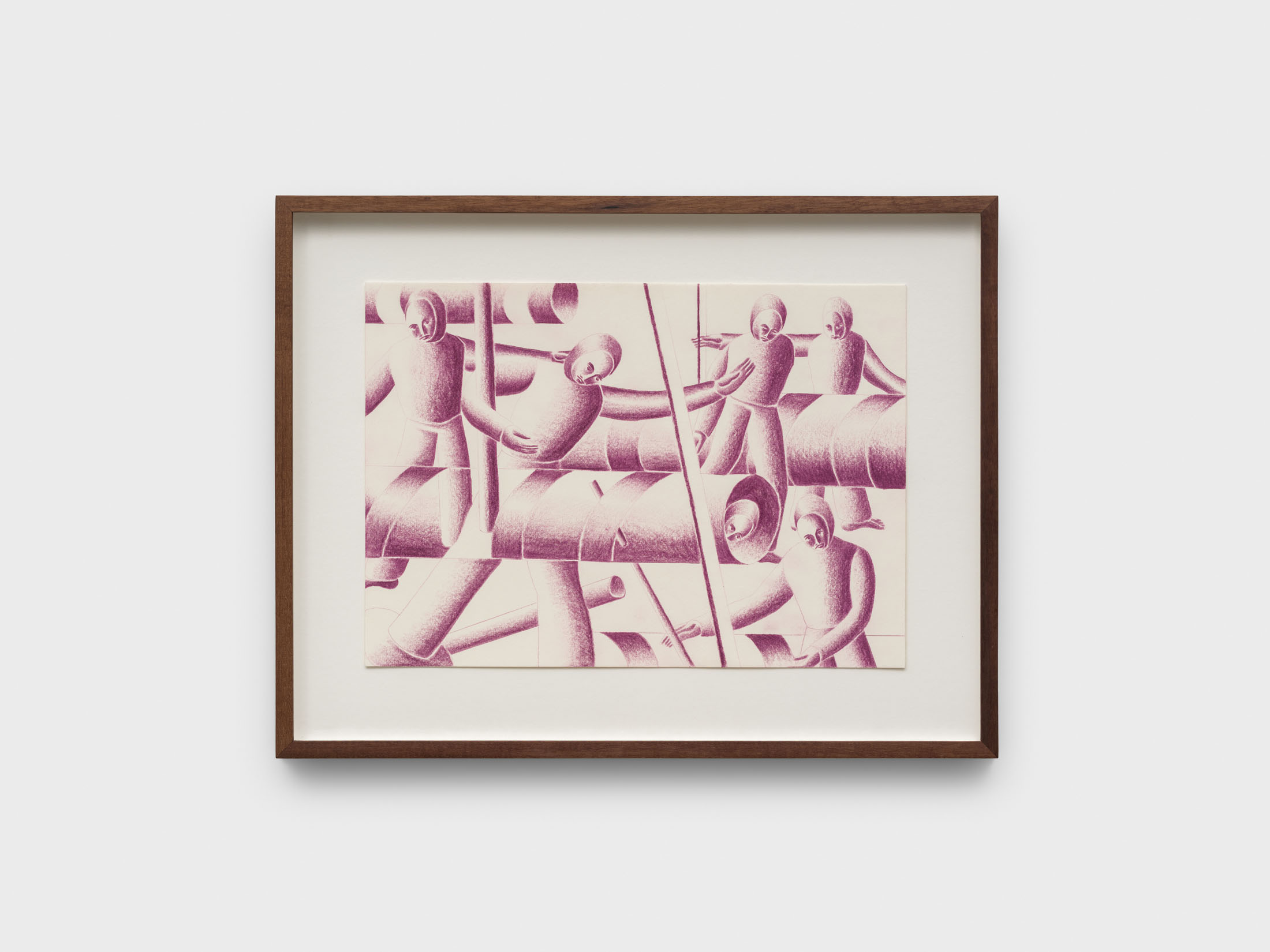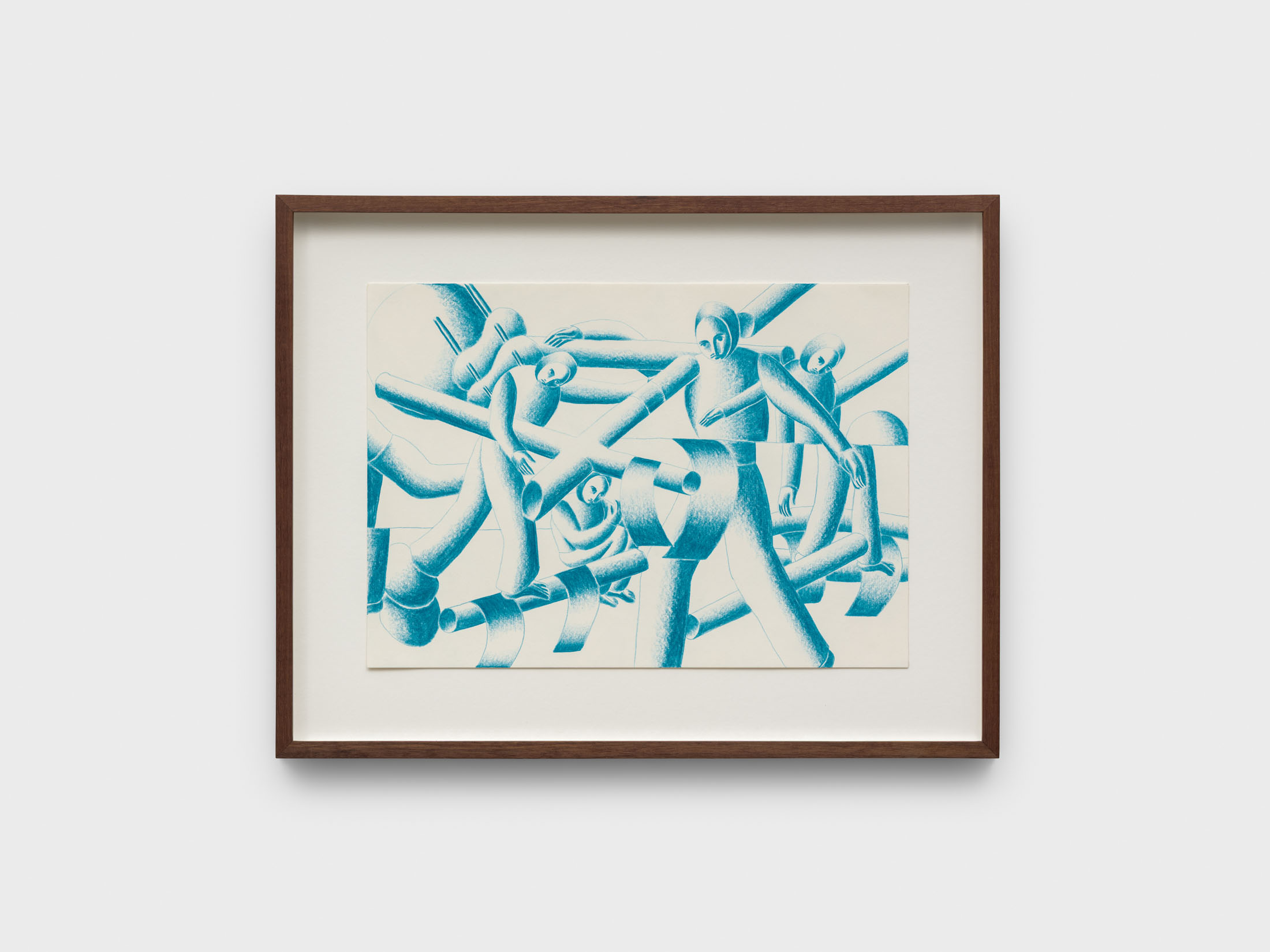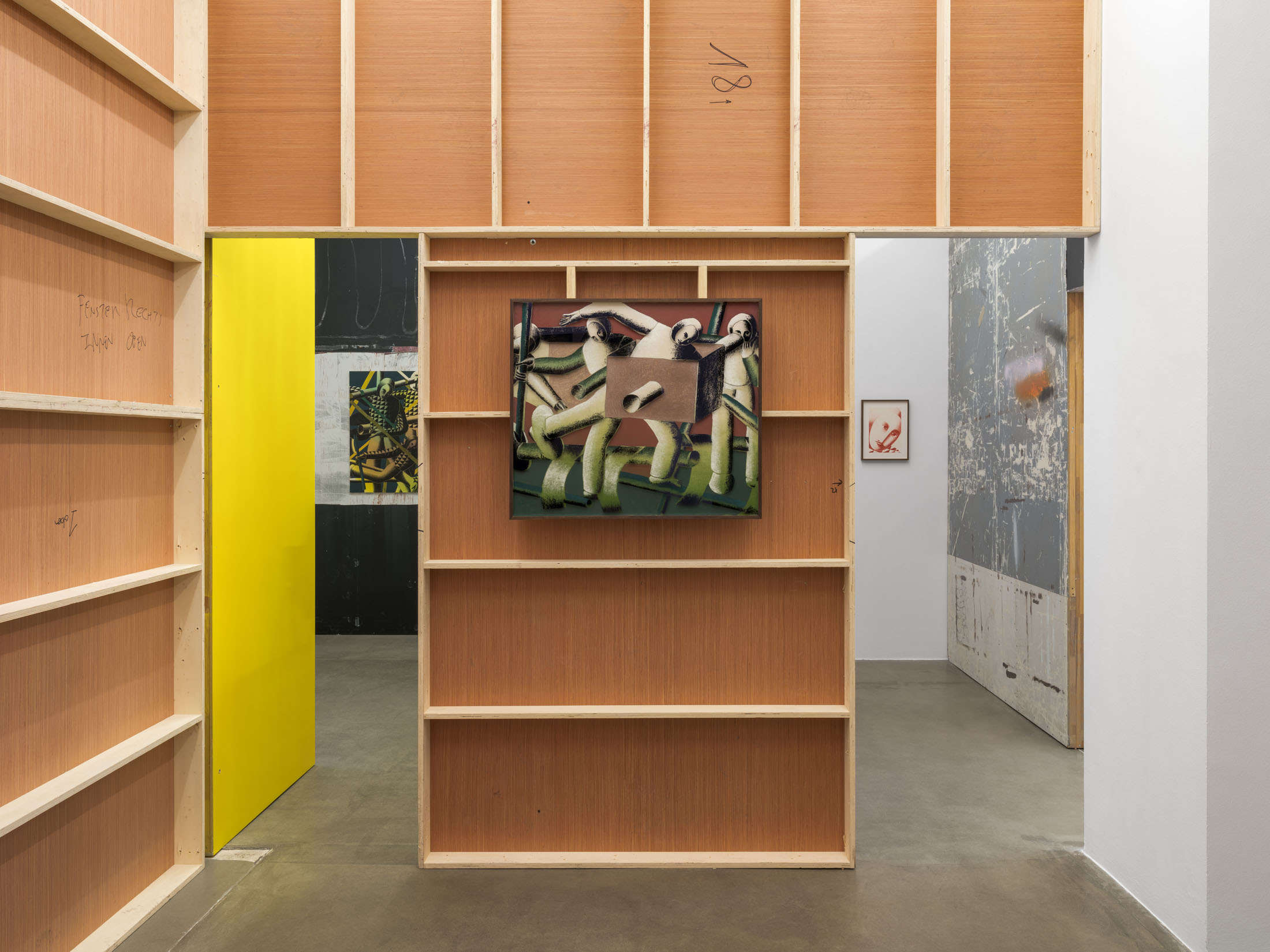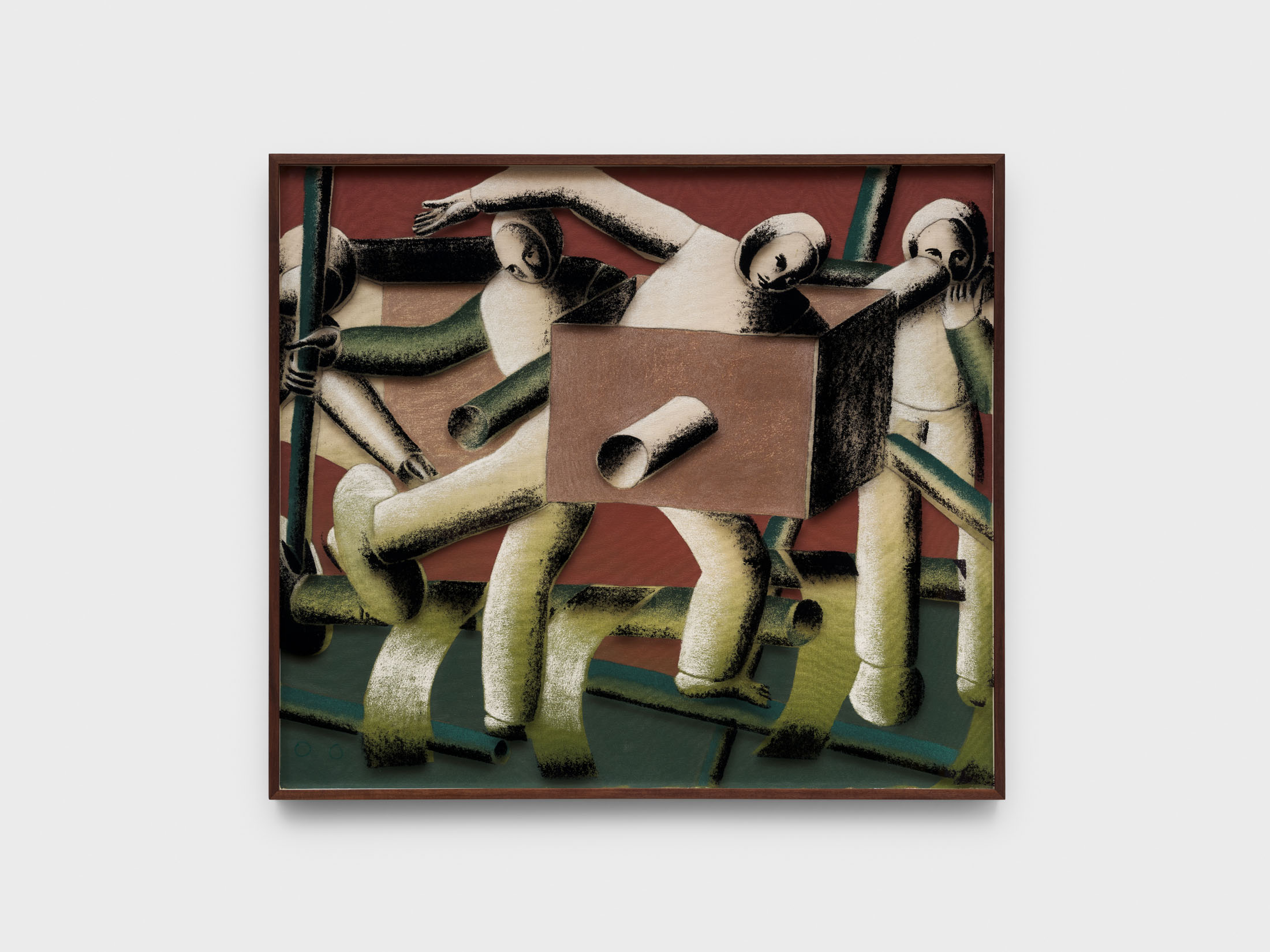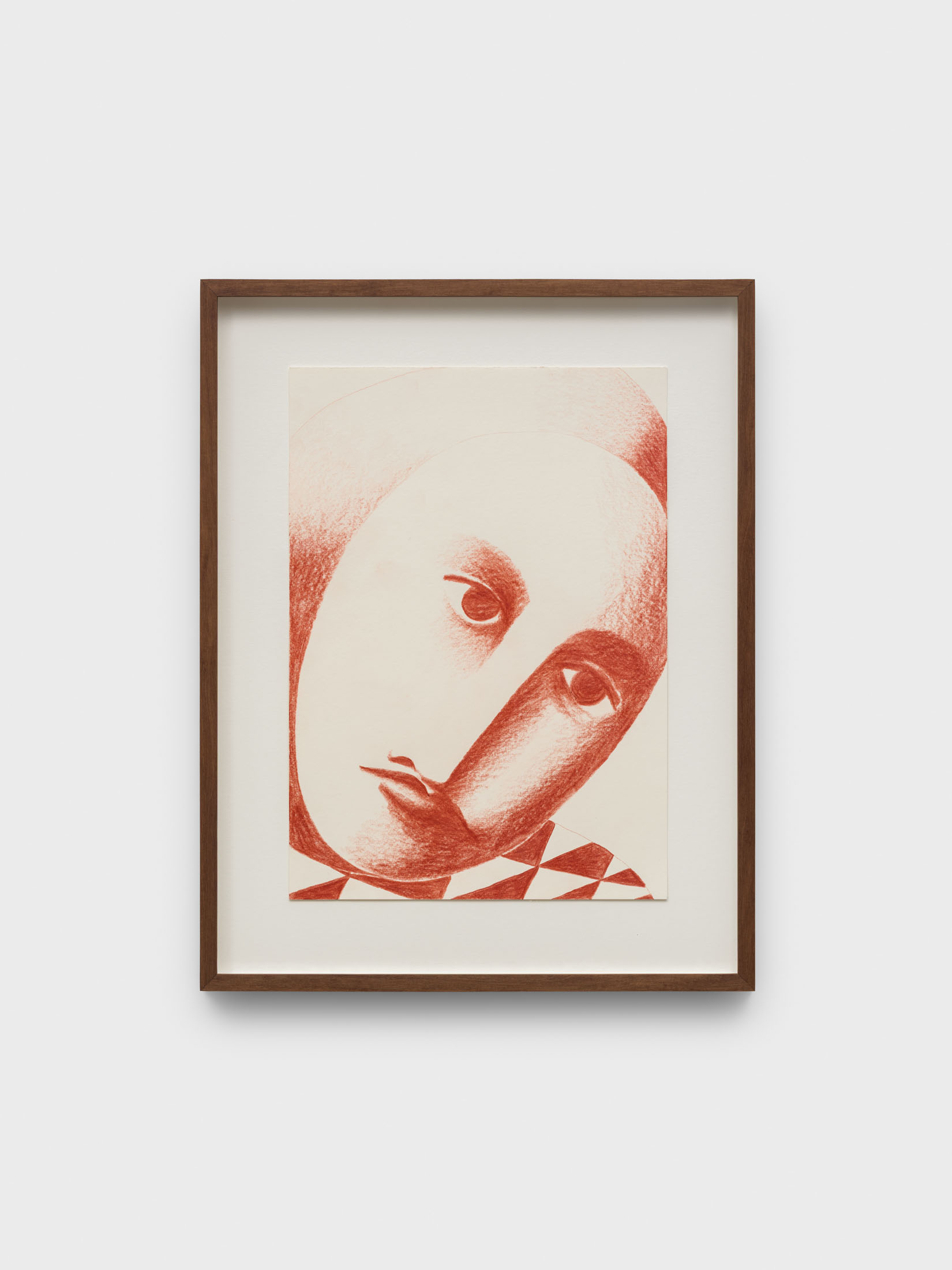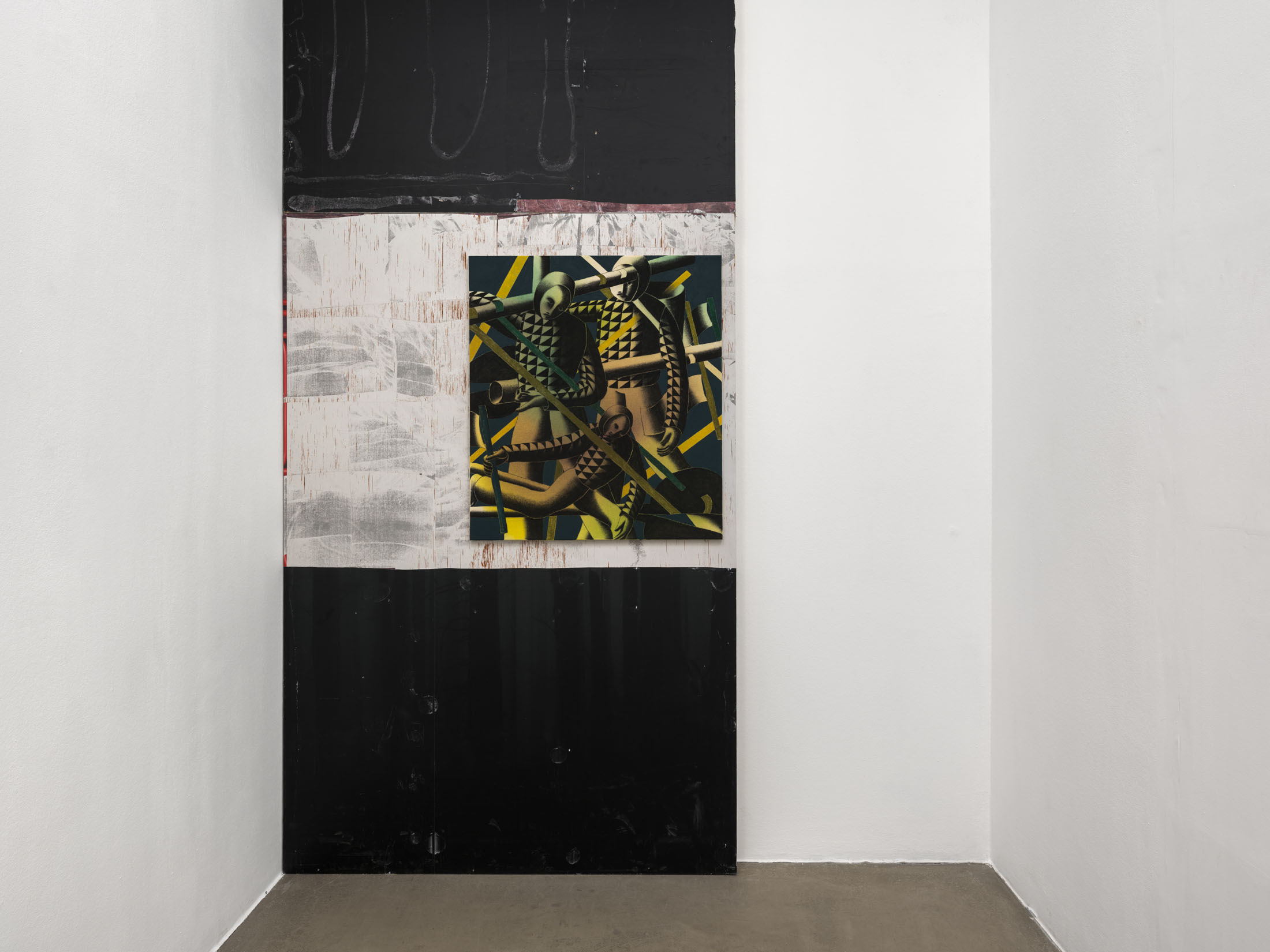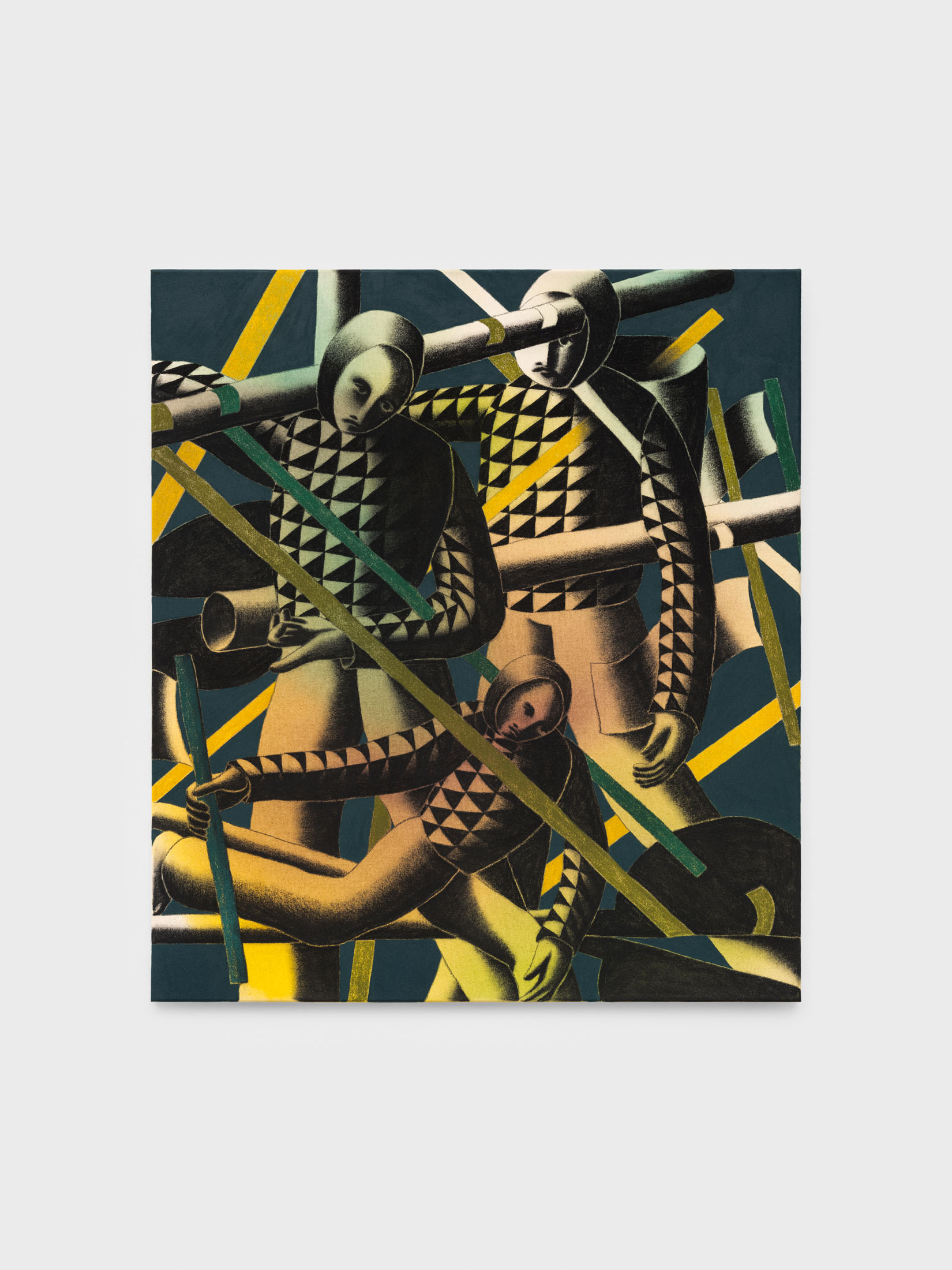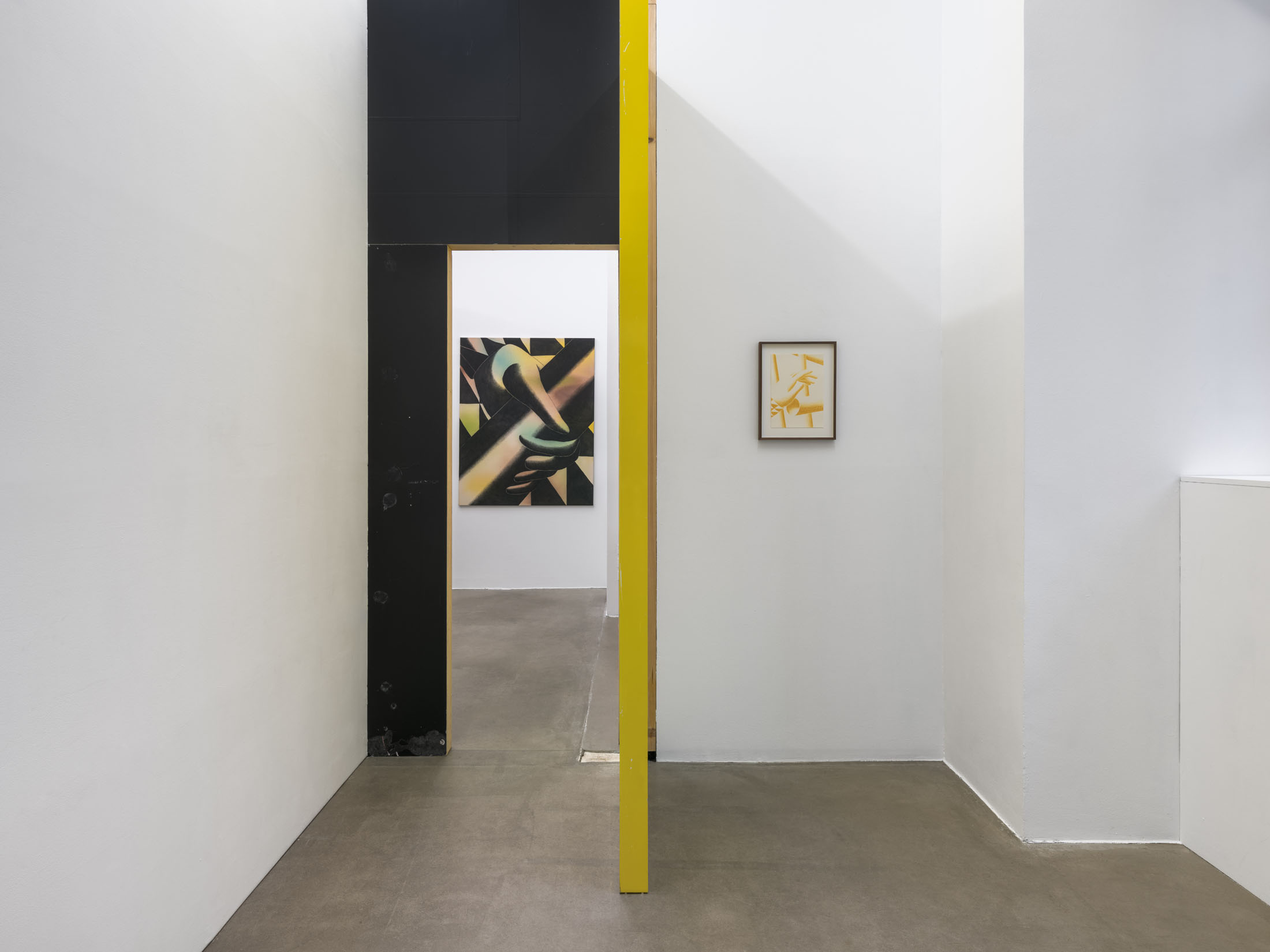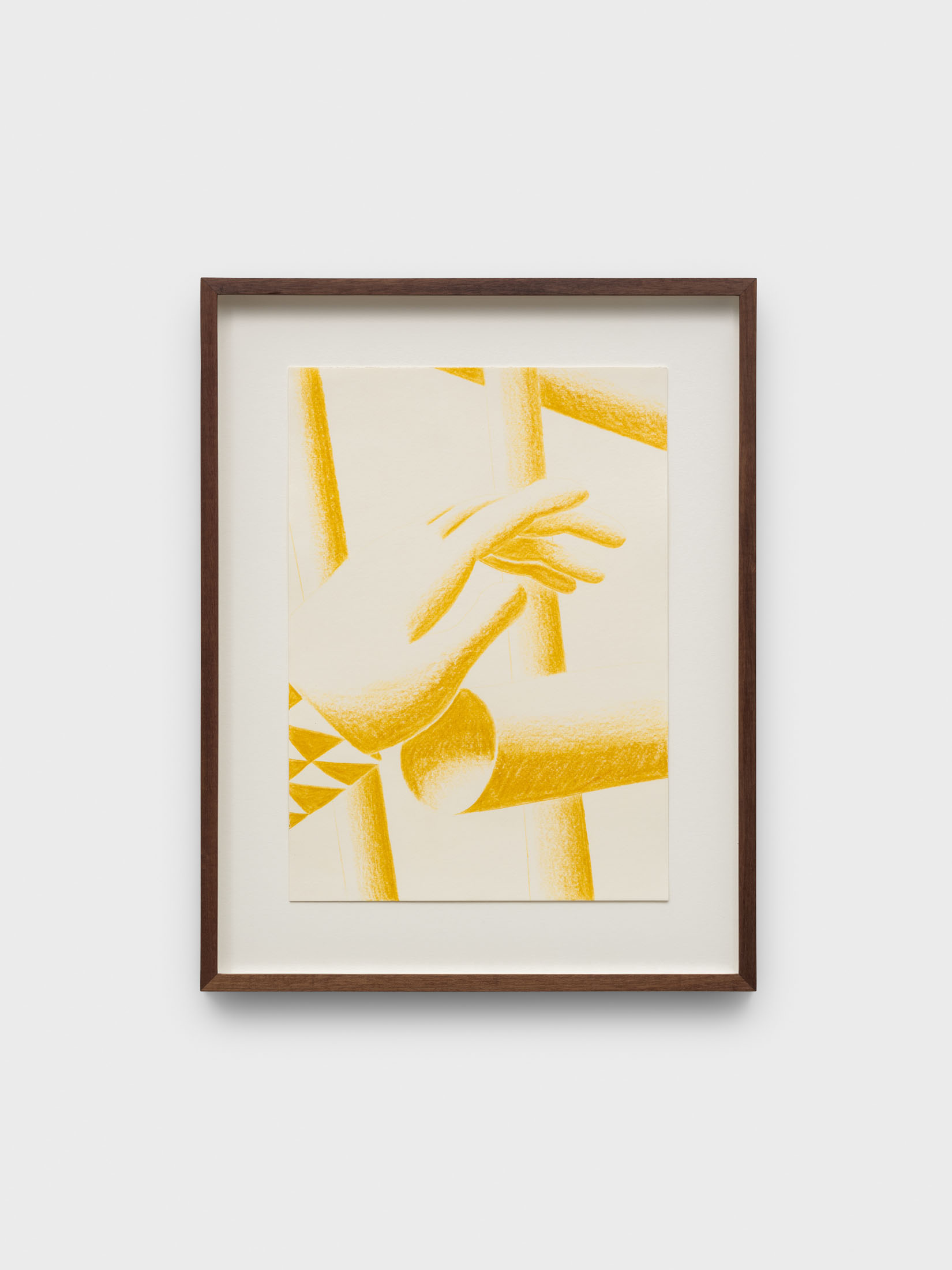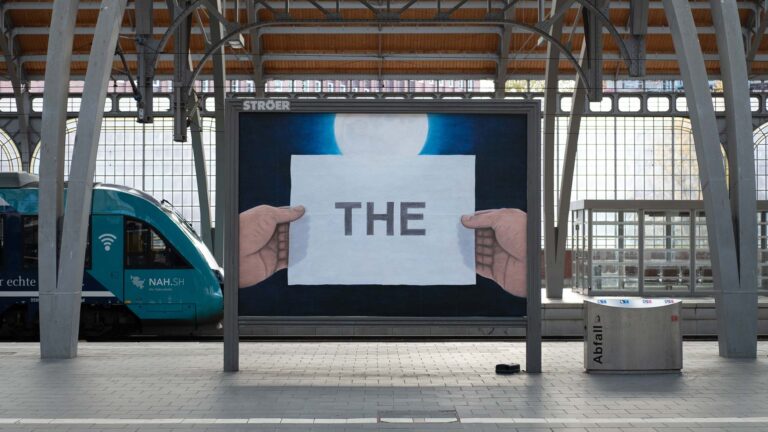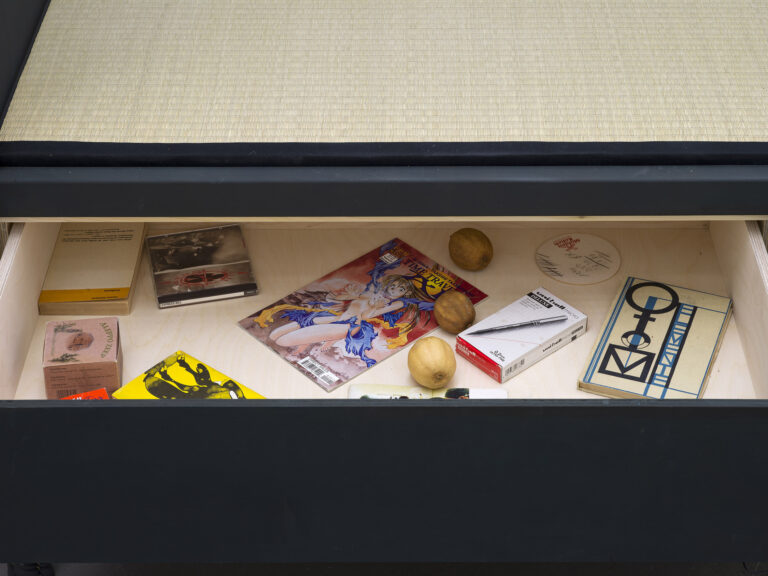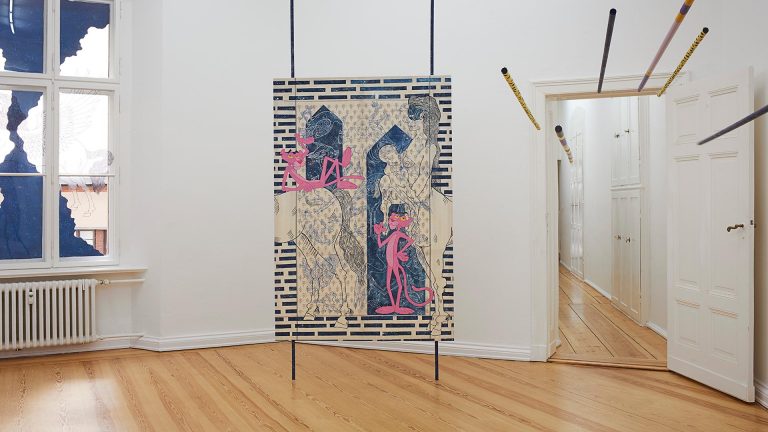
In his new body of work, the artist Ferdinand Dölberg explores the internal dialogue and the innermost thoughts we all have. This is not the first time the painter has used movable panels, but it is the first time they spin. The flip side of each module shows a detail of the other, and they are complemented by drawings. He presents the pieces in five cabinets, receptacles that mirror the monadic nature of our consciousness. The cabinets are connected by narrow gaps that allow viewers to hear and see details in the adjacent space. I examine every object like a thought is the title of one of his 2026 paintings, that shows details, hands and ribbons. One might turn thatideaaroundtoo: oncea thought is expressed,it becomes real—whatif we couldhear and see the innermost thoughts of others? Wings of Desire, Wim Wenders’s 1987 film, figures as a likely inspiration behind Dölberg’s latest work. The film stages the internal dialogues of its protagonists and makes them audible, at least to the viewers and the angels in the movie. Others can never join, and neithercan the angels interact with humans. Dölbergre creates this monadicsentimentin his exhibitionby placingthe paintingsin cabinets. Viewers can enter these receptacles. In doing so, the painter elaborates on the idea of sharing another person’s thoughts, but also goes well beyond it. He says something fundamental about the conditions of seeing and of viewing art: can we share not only a space but also an aesthetic experience? The cabinets create a mild claustrophobia, a feelingof not beingableto interact.Dölberg undertakes an analysis of sociality and consciousness, but he also pushes painting to its limits by staging it in the space.
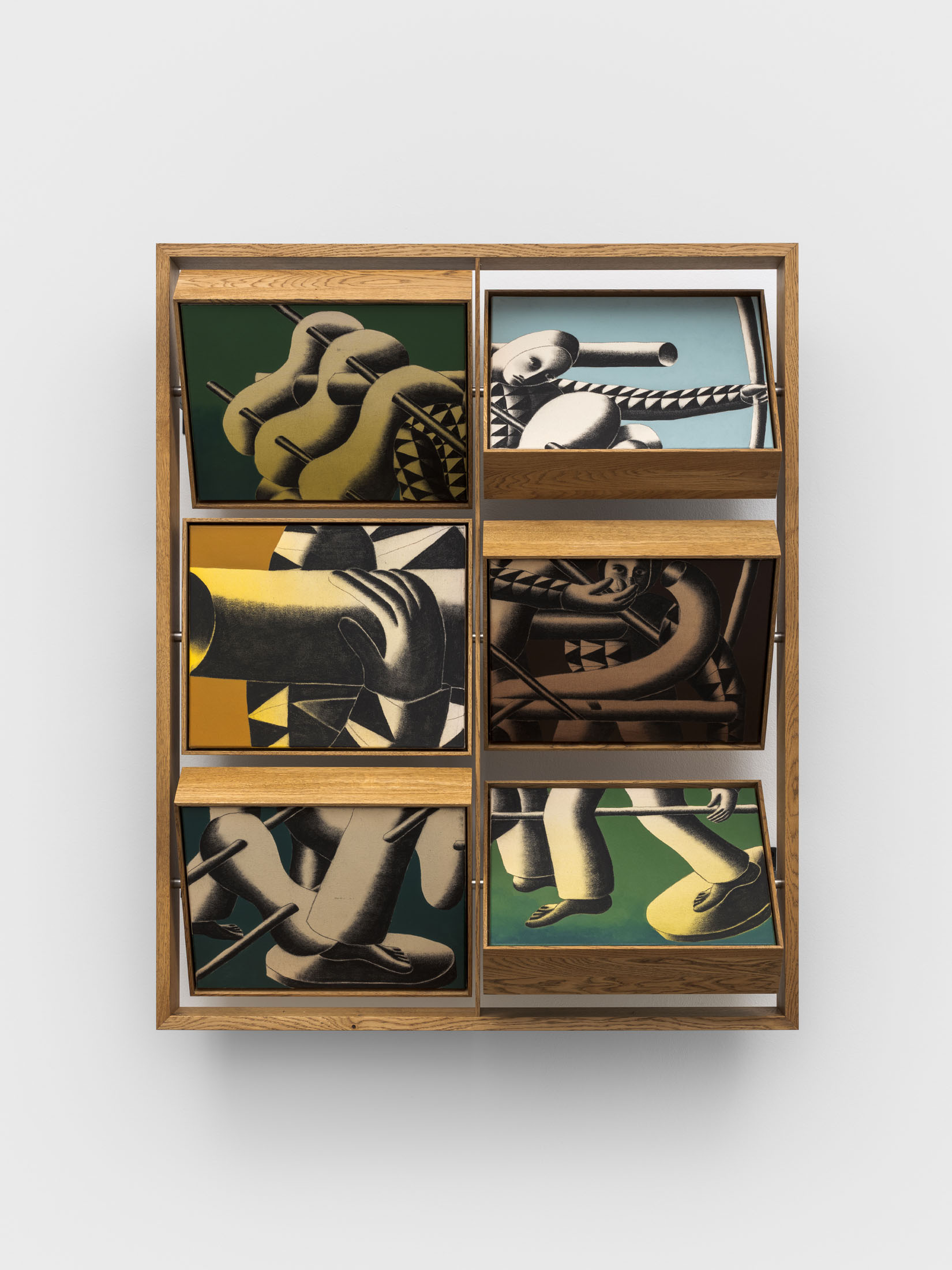
Two paintings are subdivided into six individual modules that turn, and the flipside shows a zoomed-inversion of the primary side. This is not the first time the artist has used movable—kinetic—elements in his work. Previous works featured parts that moved horizontally andvertically, like large-scale puzzles. The new ones turn on a pivot. The zoom they effect recalls cinematic techniques, and flipping a module does not reveal an entirelynew image, but an enlarged version of the previous one, almostlike a fever dream or a trivialmatter that becomes outsized in one’s mind—an intensification:a handor a face, a detail,pipes,limbs in a triangle-patterneduniform,reaching as if they were grappling for human contact.It is impossible to see bothat the same time.
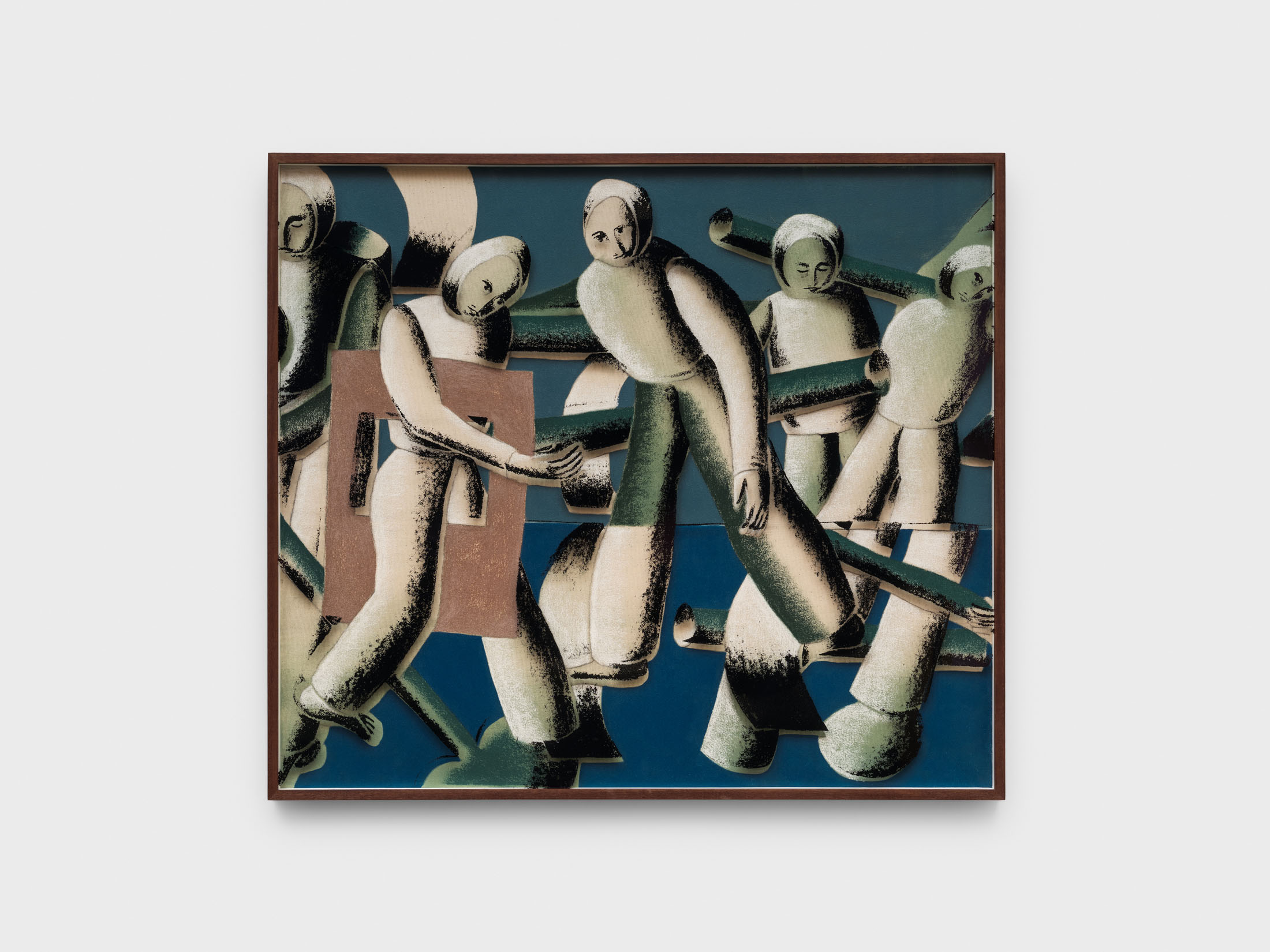
His new images stage their scenes in formally reduced spaces.The elements are reduced as well: pipes, people,and costumes appear puppet-like, too austere to truly reference New Objectivity, though the comparison comes to mind easily. Pictorial space is ambivalent, its extent unclear. In the movable panels it is monochrome, in the drawings it is white, and they don’t signifytranscendent space. Rather, they convey a feeling of entrapment.These images are colorful, in a way, but color is autonomous, while the shapes do not seem to correlate with the hues that playa cross them like light.The painterprimes his canvasesand uses pigmenteven beforethe composition is laid out. The process results in colored areas, and any white sections of the paintingsturn into gradients.
The paintings and prints refine familiar motifs from Dölberg’s earlier work: pipes as a metaphor for communication; masks and the estrangement they symbolize; work and the ambivalenceof joy and constraintthathis charactersexperiencewithinthe systems he creates for them, like in the entangled abstract stripes,pipe sand limbs of We listened to our own voices but said nothing (2026). Some of the charactersbearprotuberanceson theirbacksthatmight be an- gel wings, in Ich rede mir zu, um nicht stumm zu bleiben (2026). But they do not seem aptfor flying;rather,they conveya sense of heaviness. All of the characters wear a pattern made of triangles, like a stylized harlequin costume. Yet they are uniforms, like the overalls of factoryworkers. Uniformityis a theme in Dölberg’spictures,highlighted by the mute masks all figures wear. There is no individuali- ty to them; they are interchangeable parts of a system. But what if there is a quiet serenity to the masks? This is open to interpretation, just as their relationships remain ambiguous. Do they work against one anotheror with each other? Perhapsthe monadicnatureof the show riffs on the idea of loneliness,but in a very particularand paradoxicalway, Dölberg’sexhibitiontransformsthatidea into a poly- phonicand communalexperience.
–Philipp Hindahl