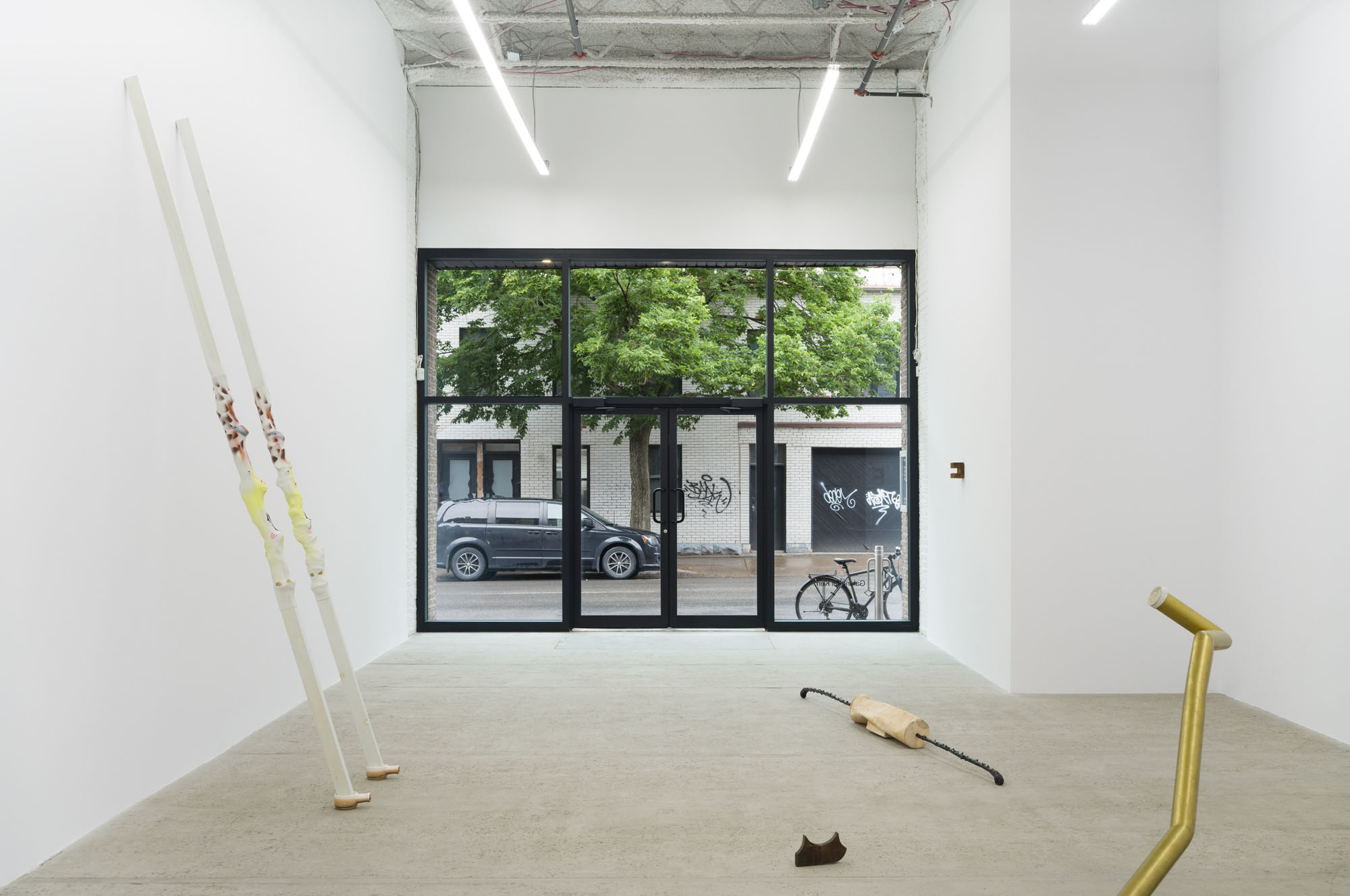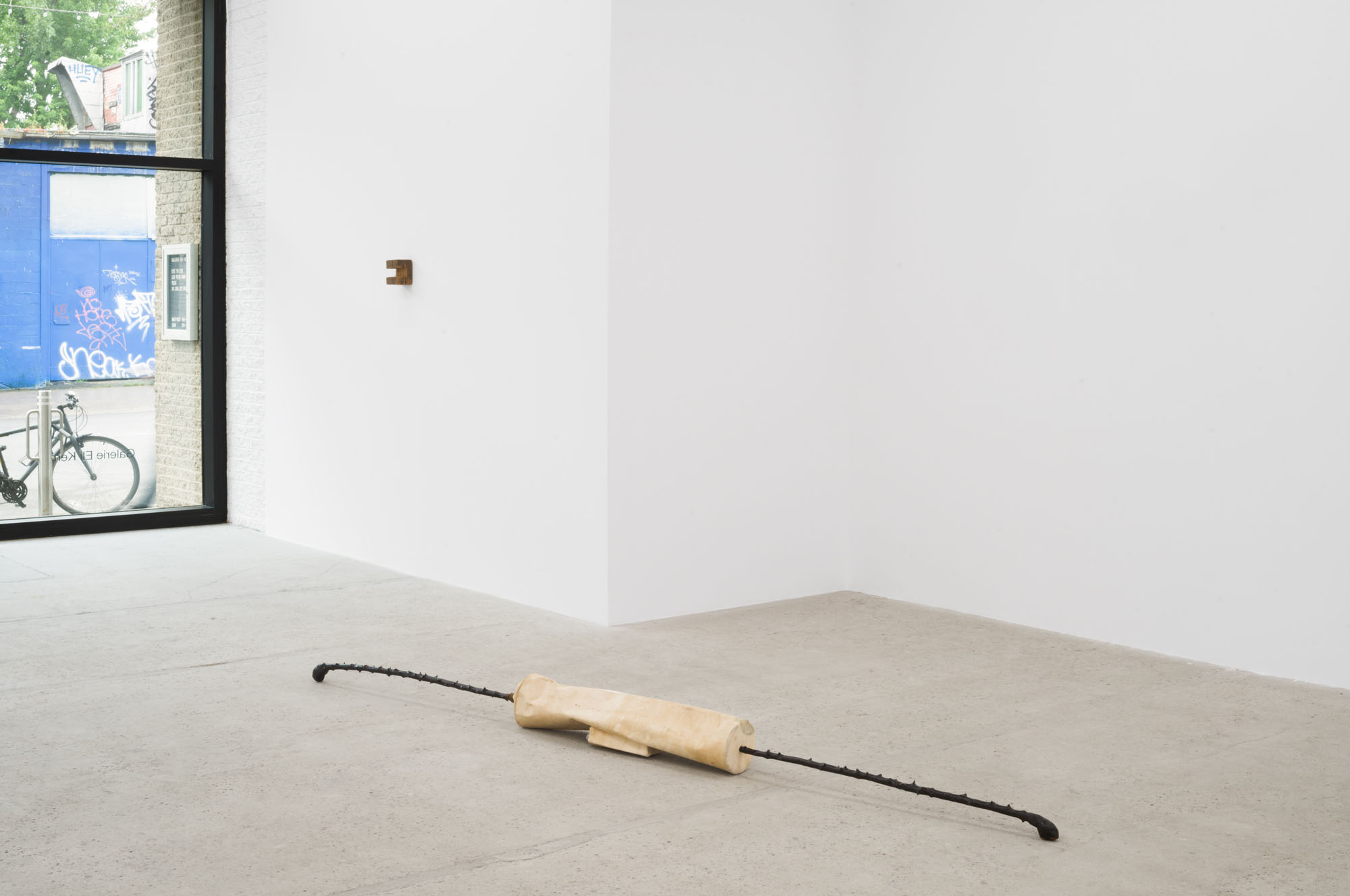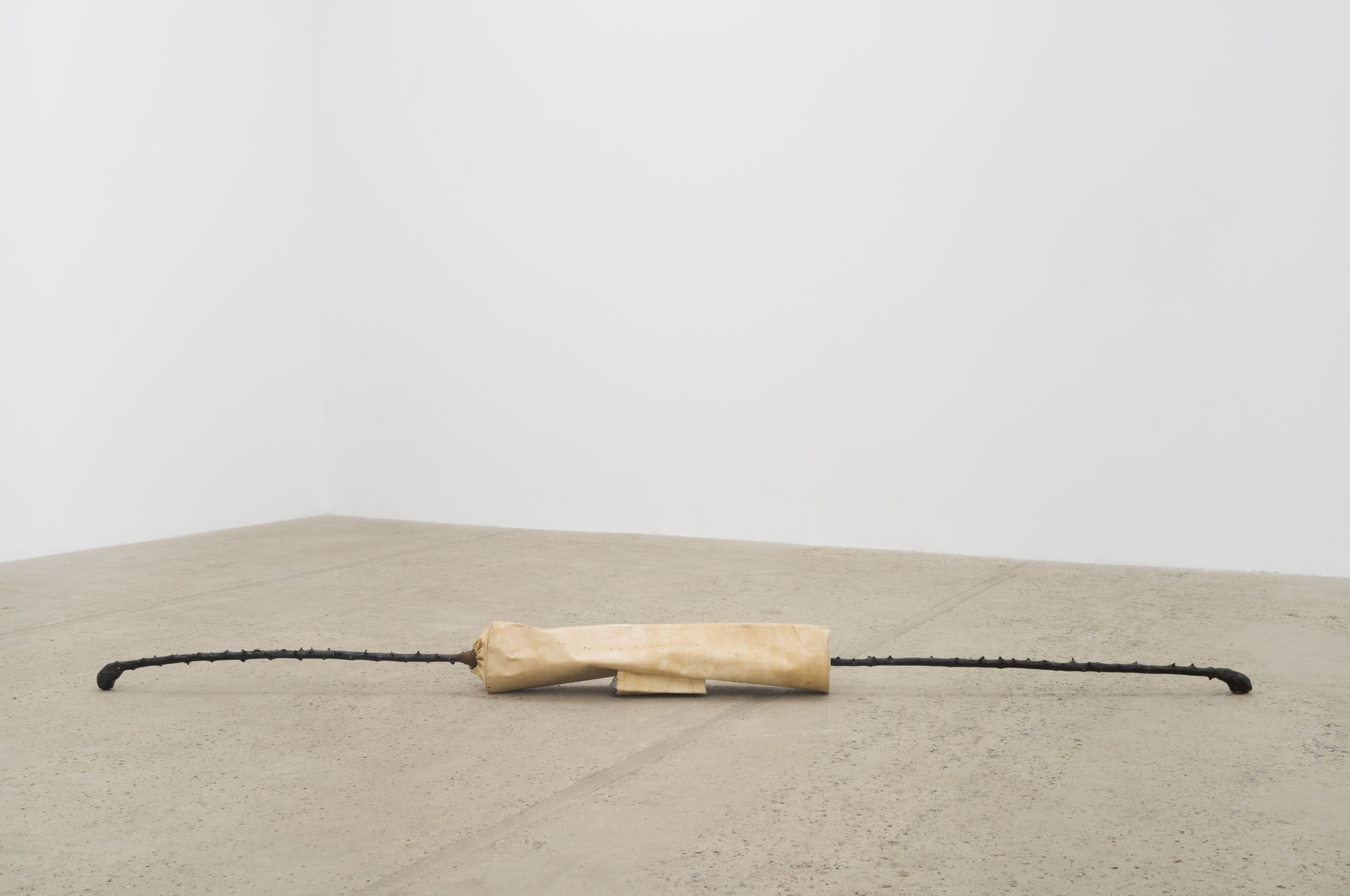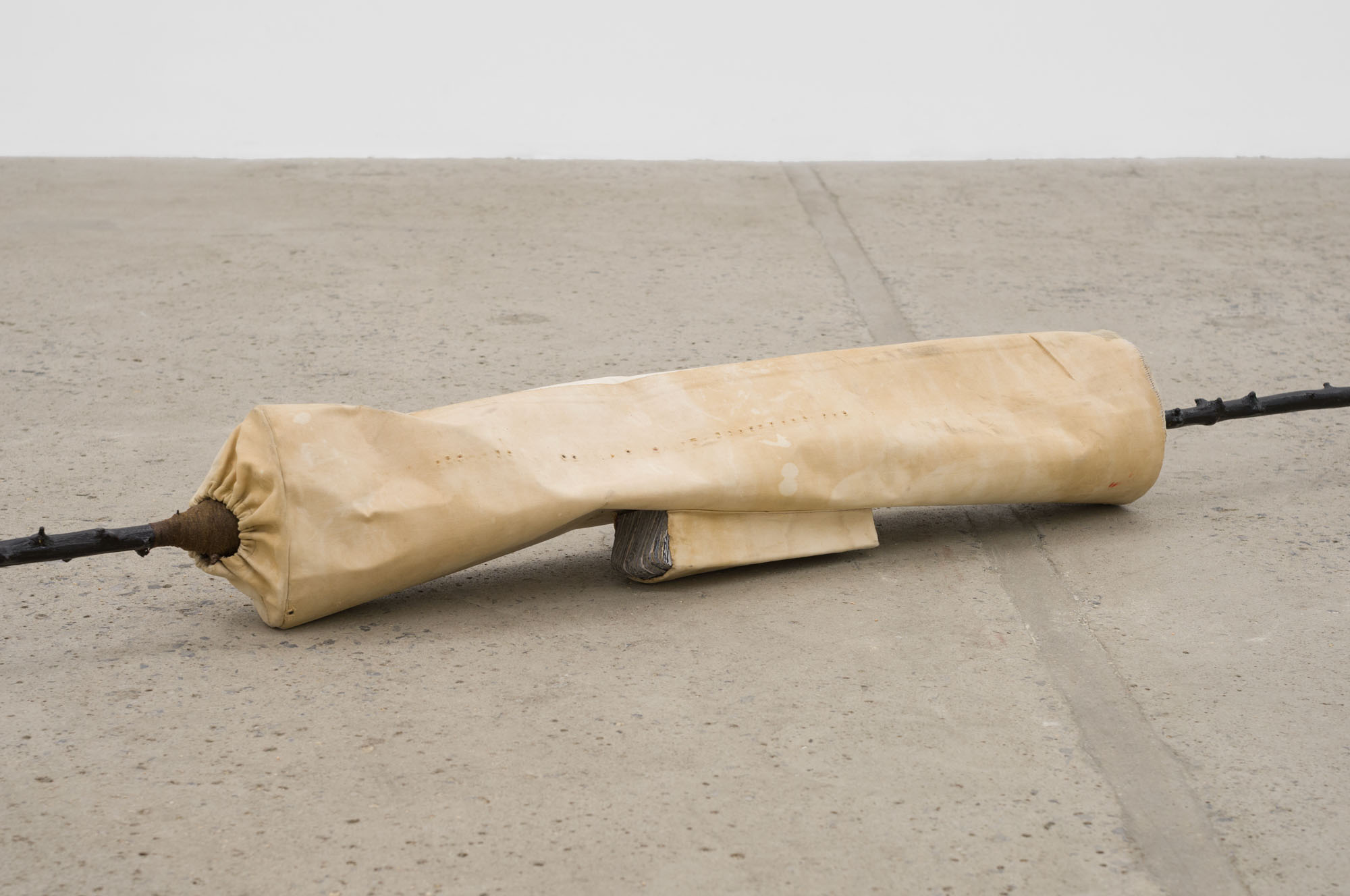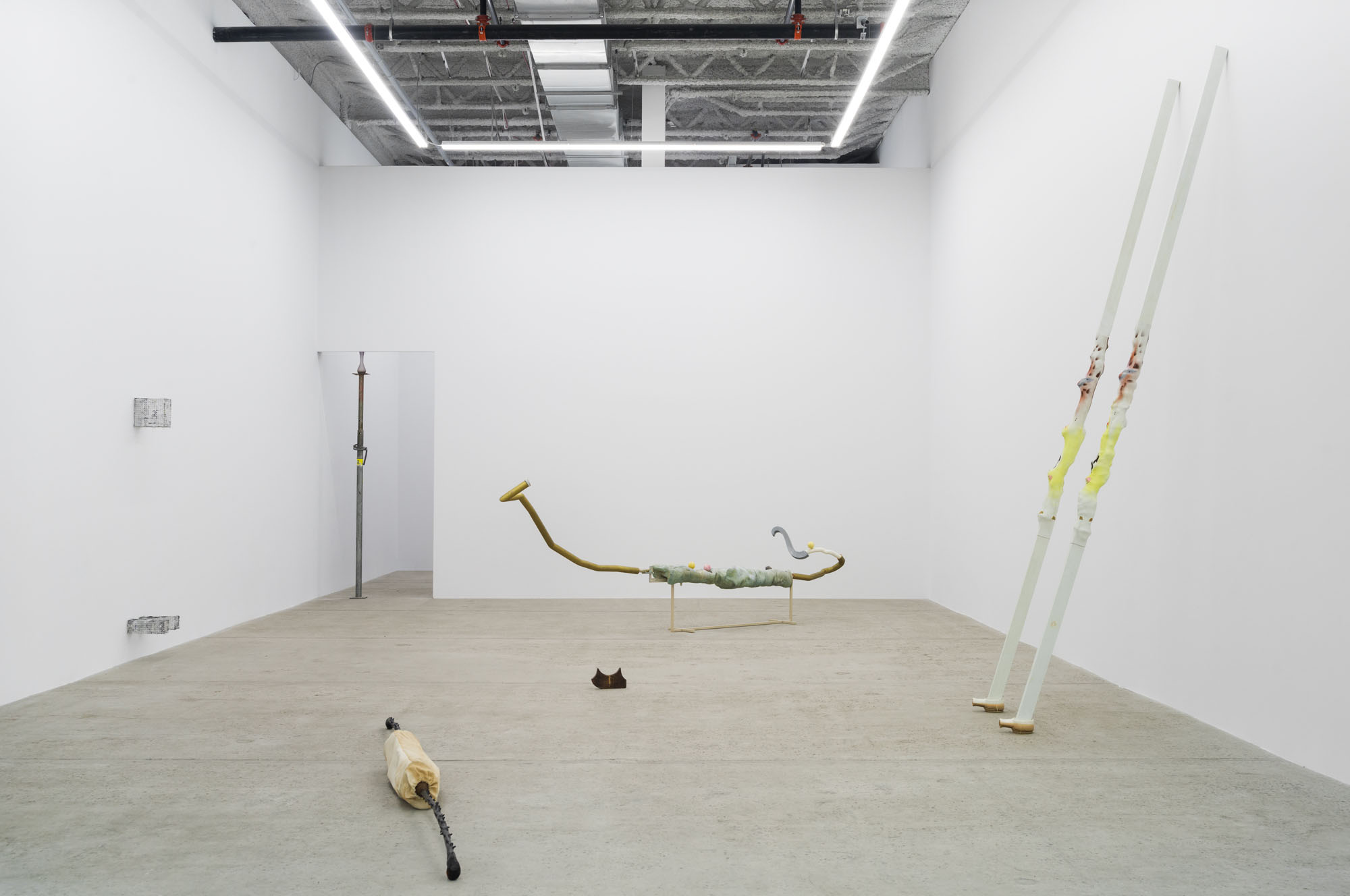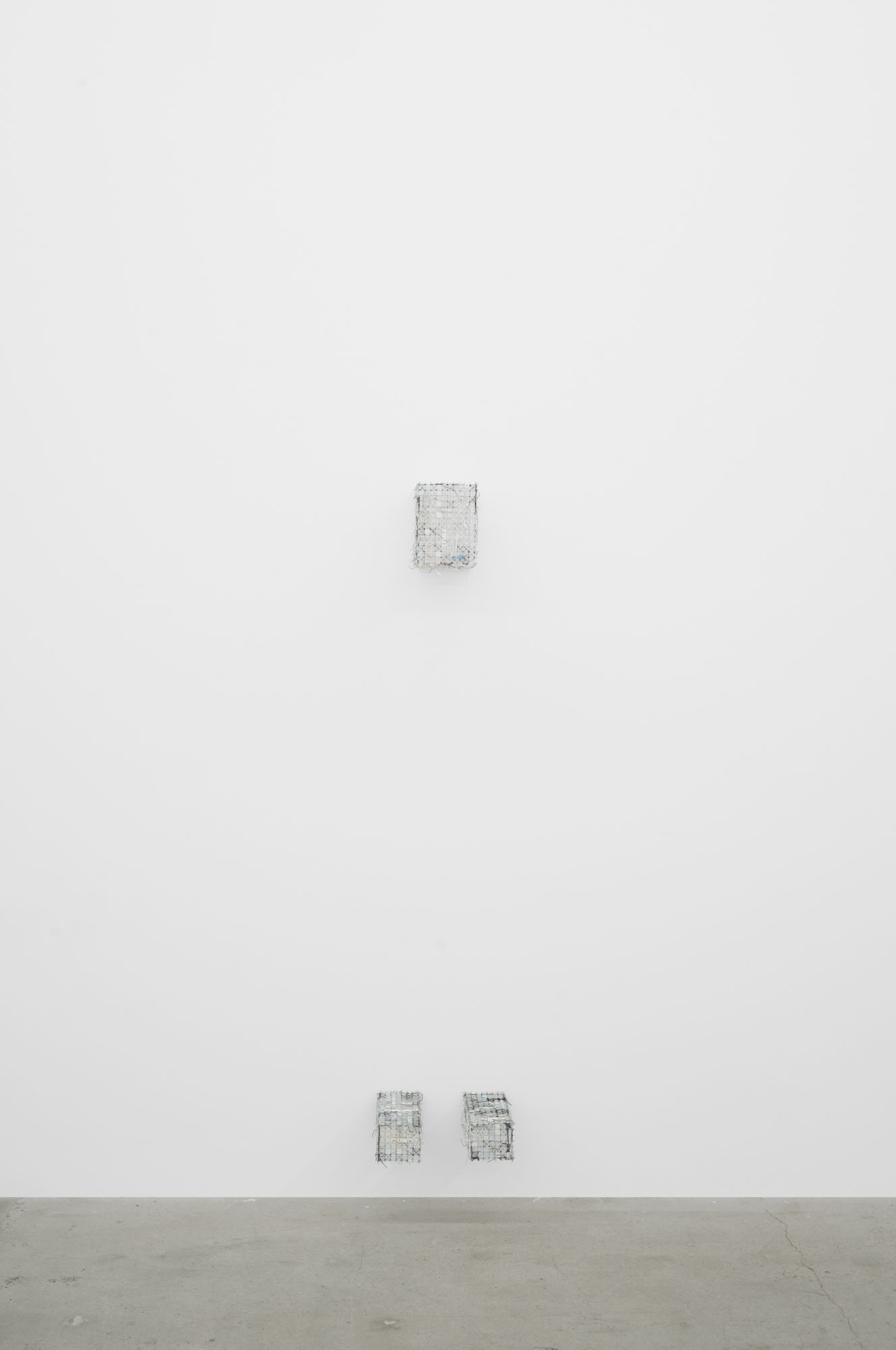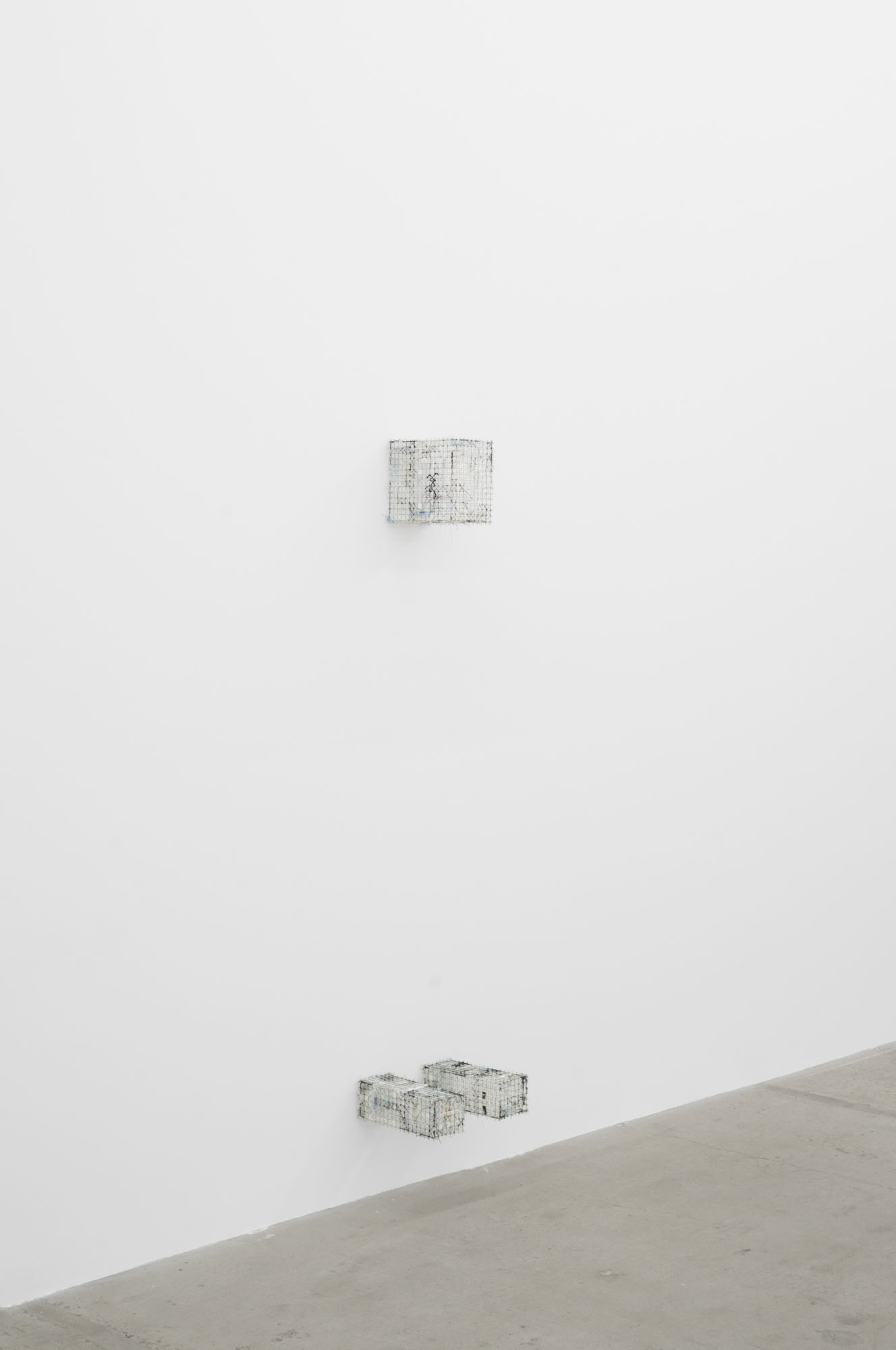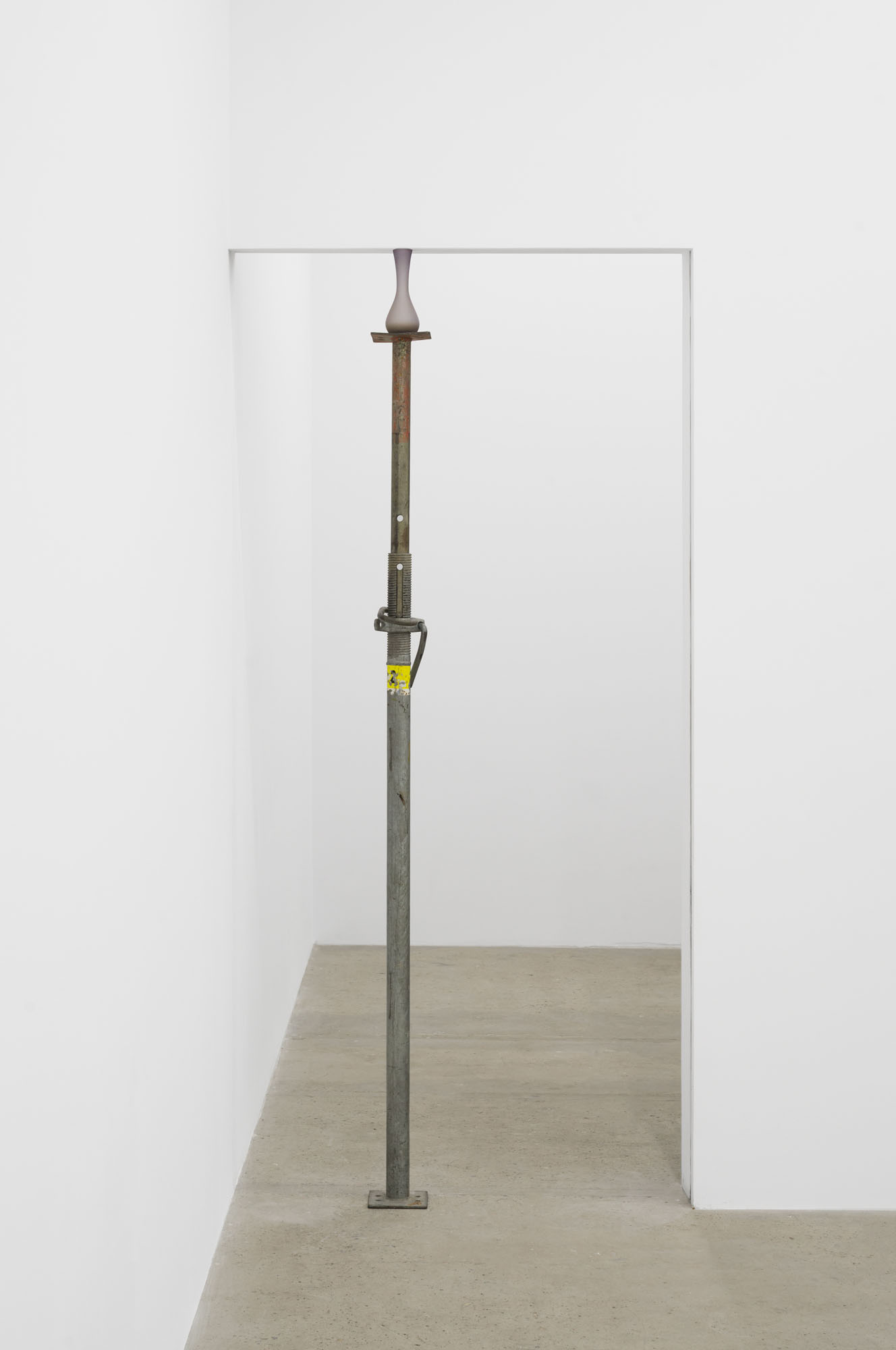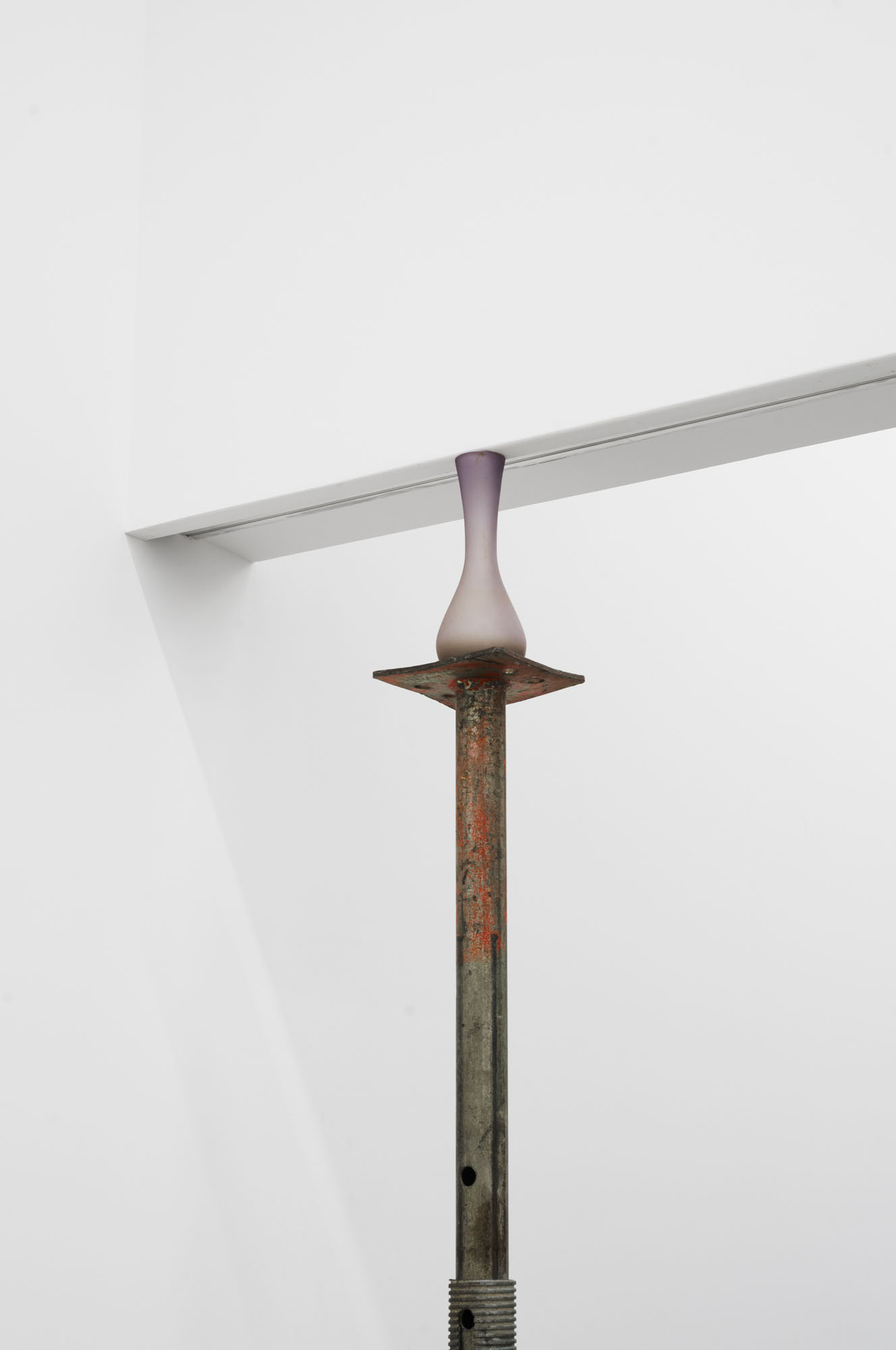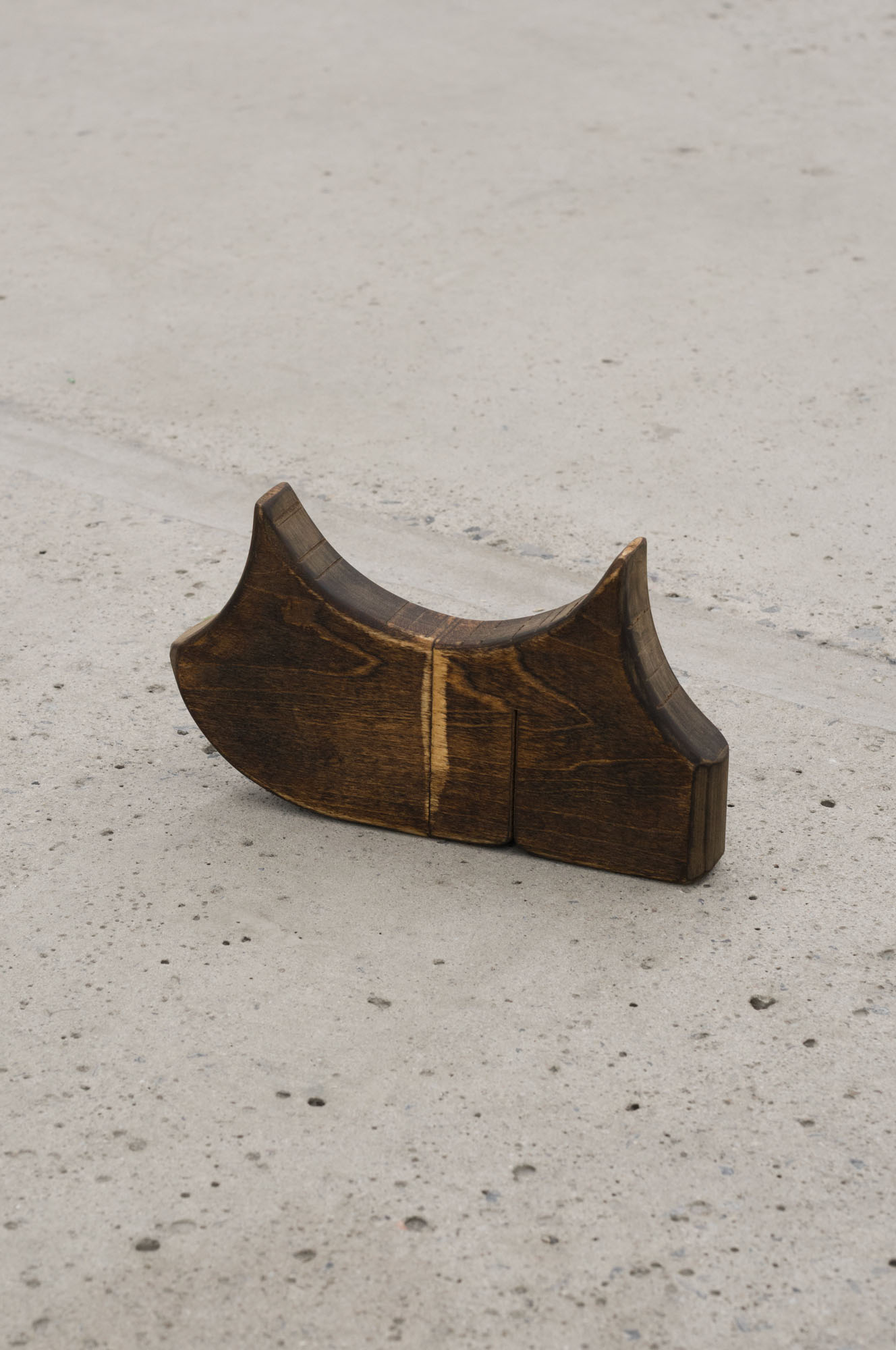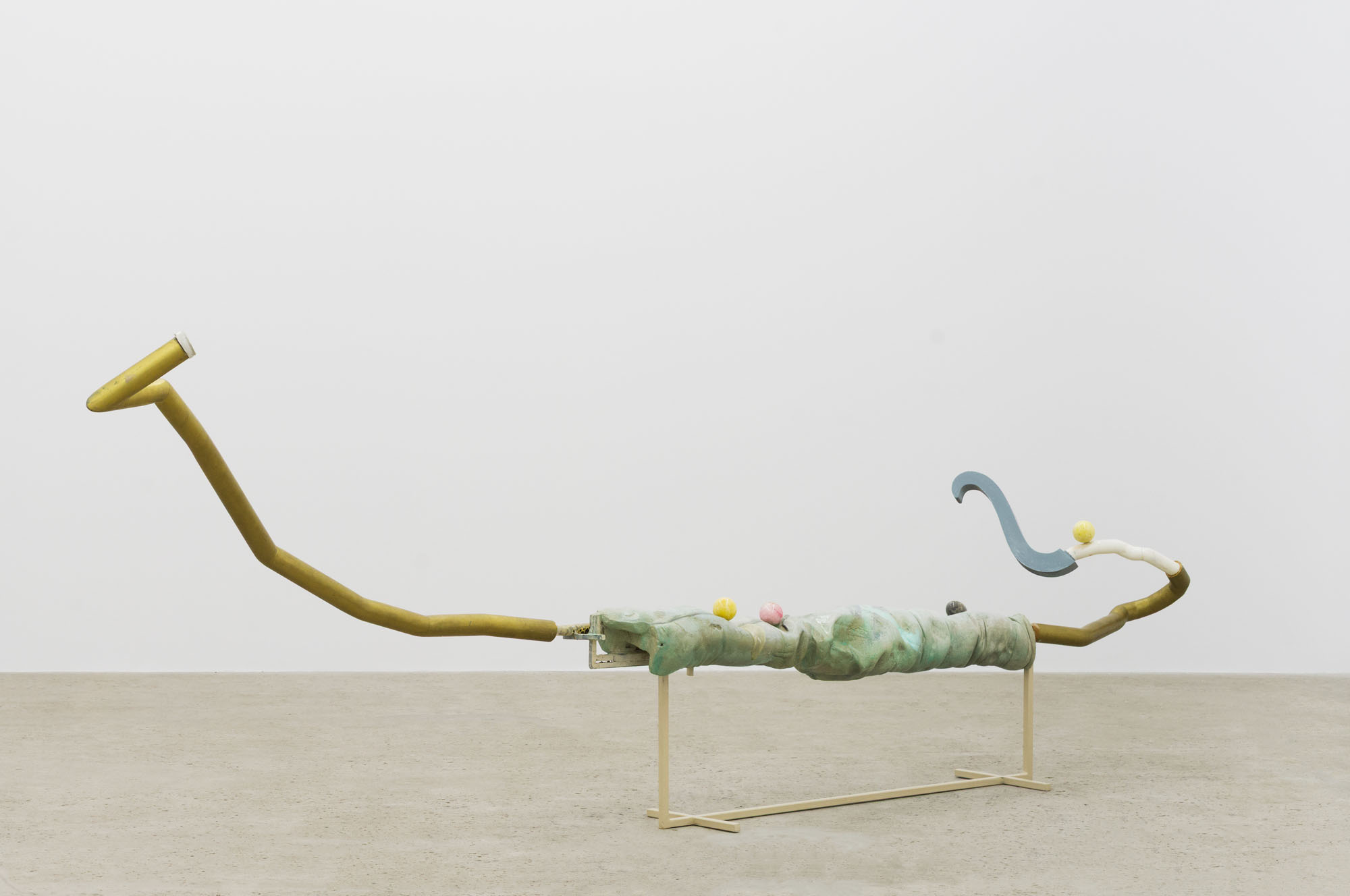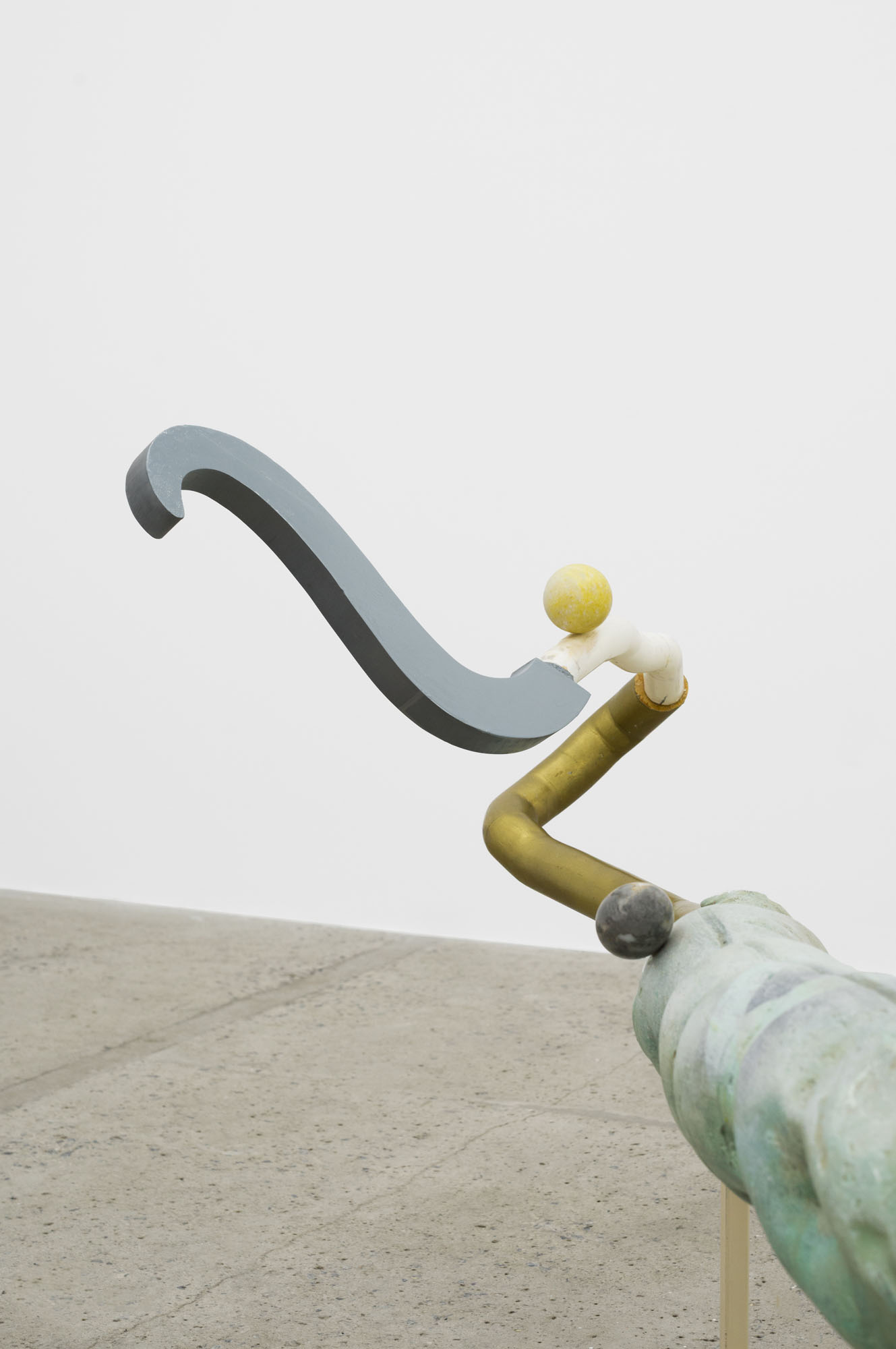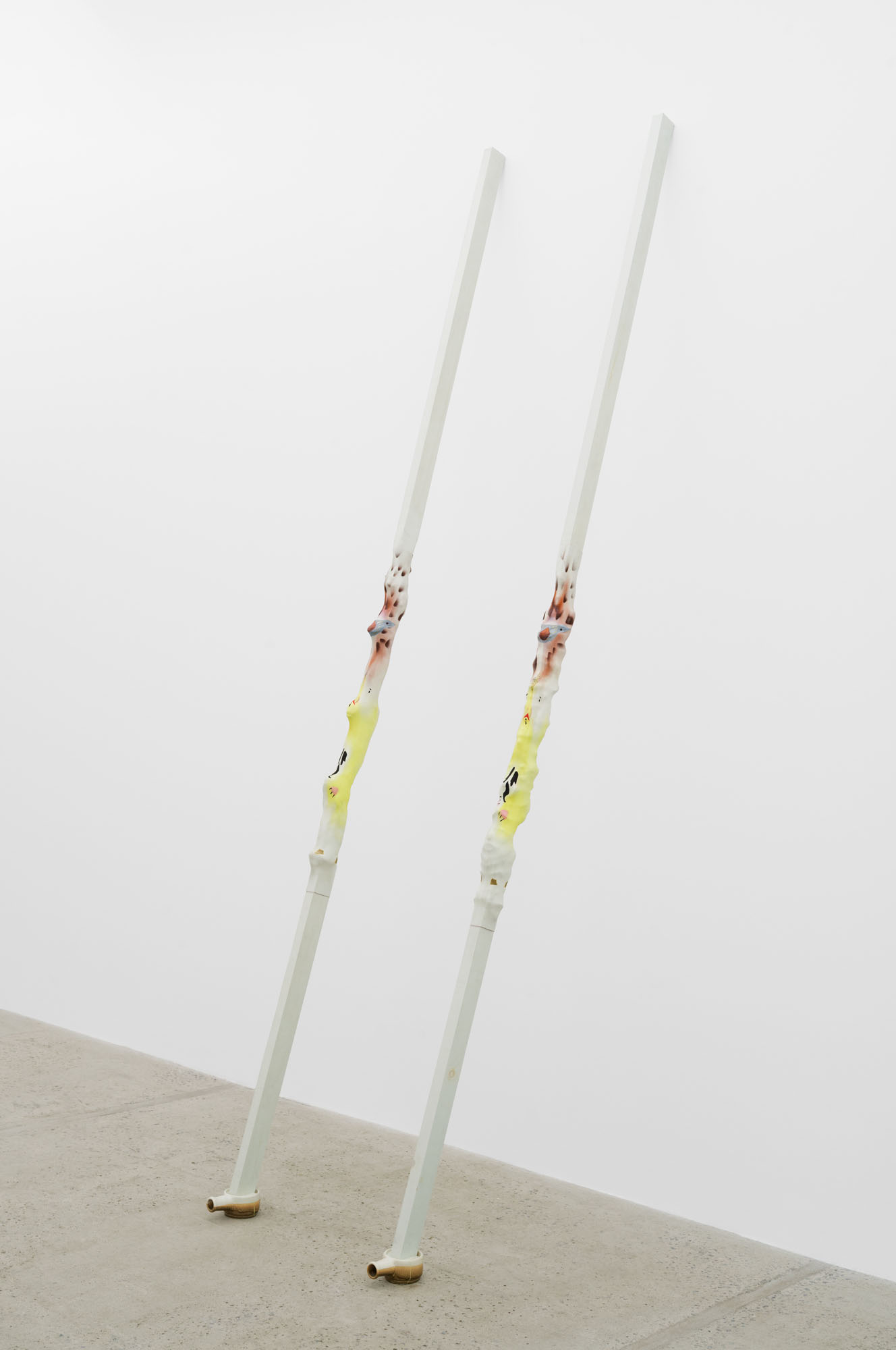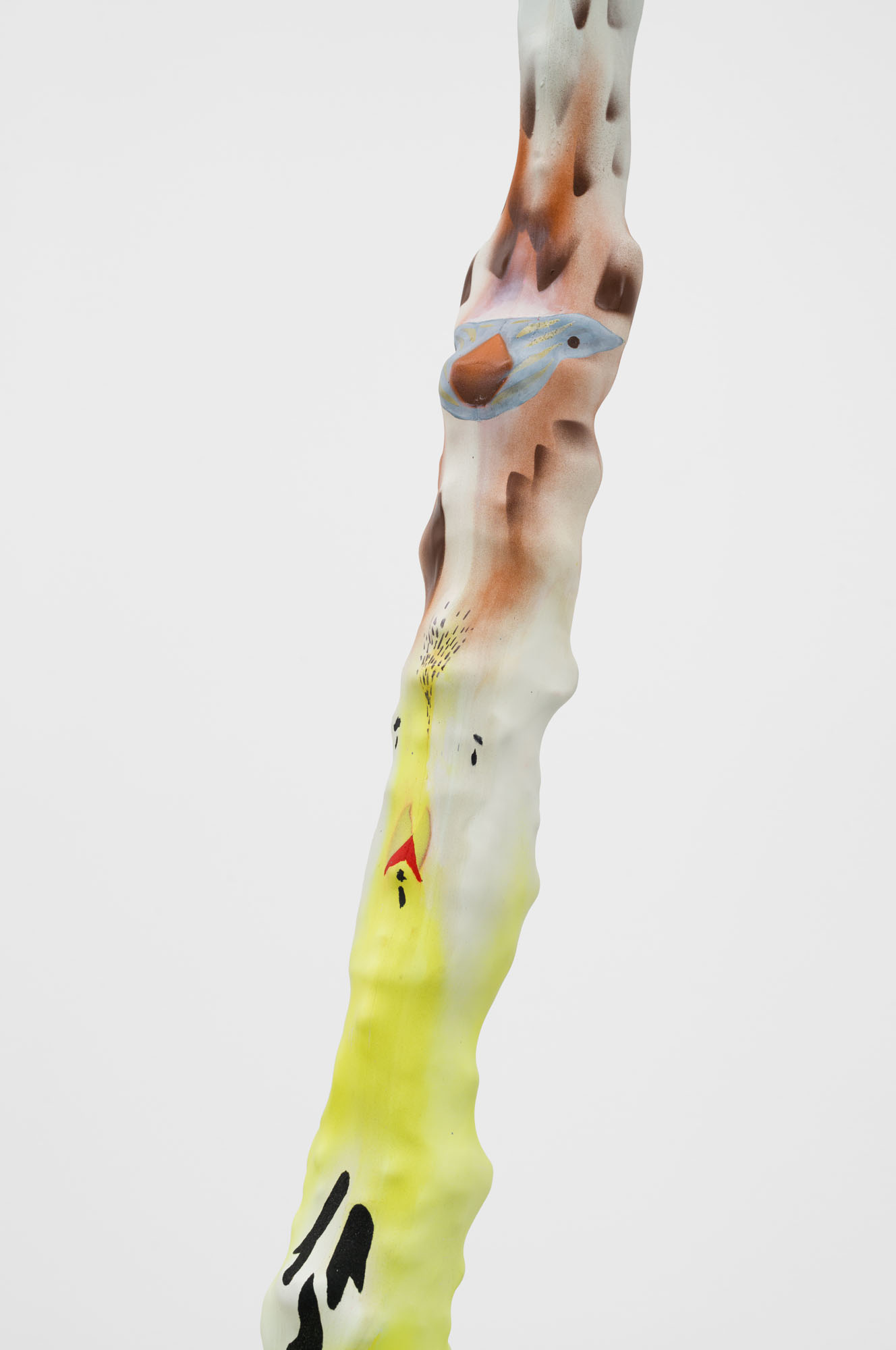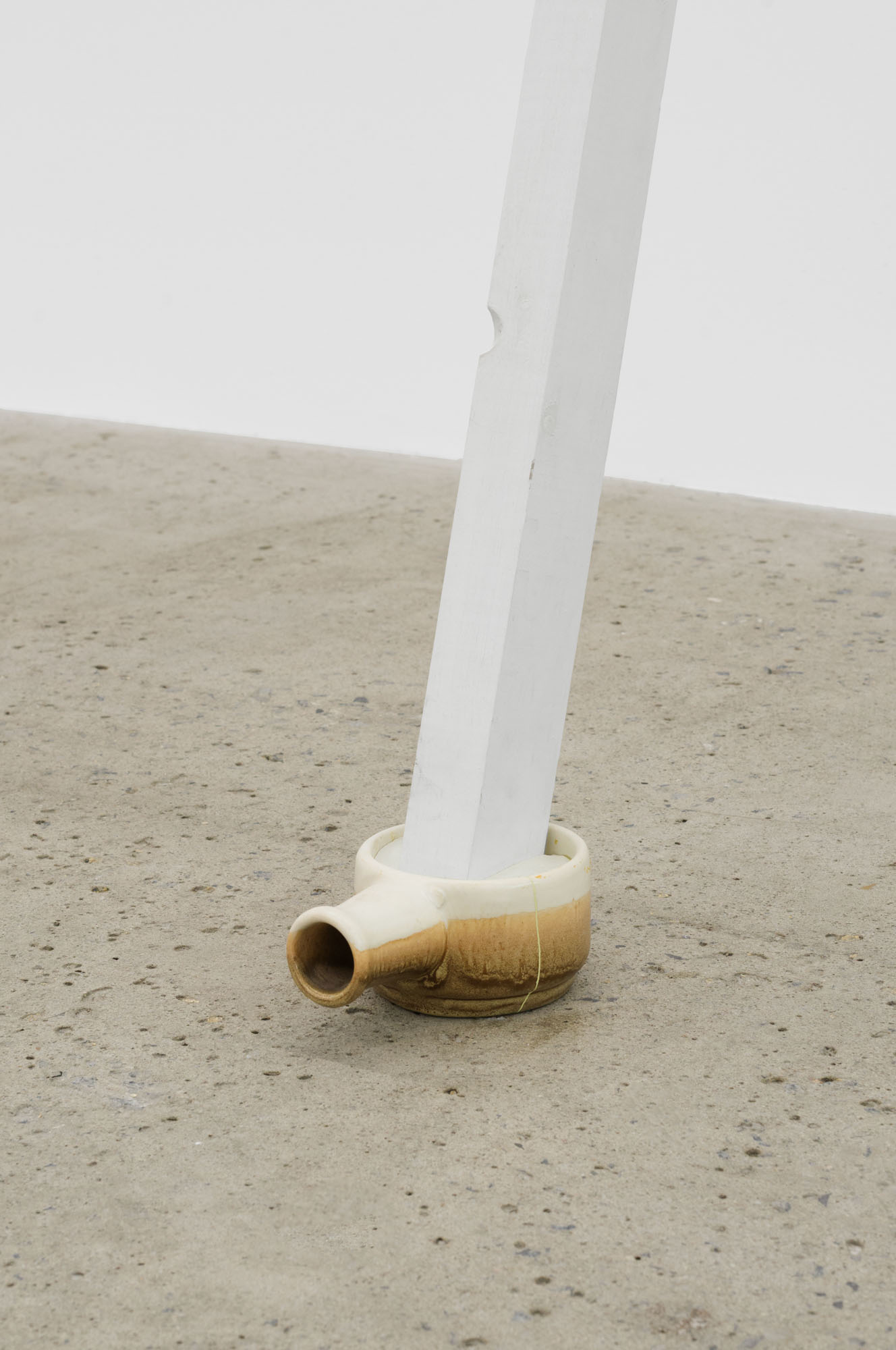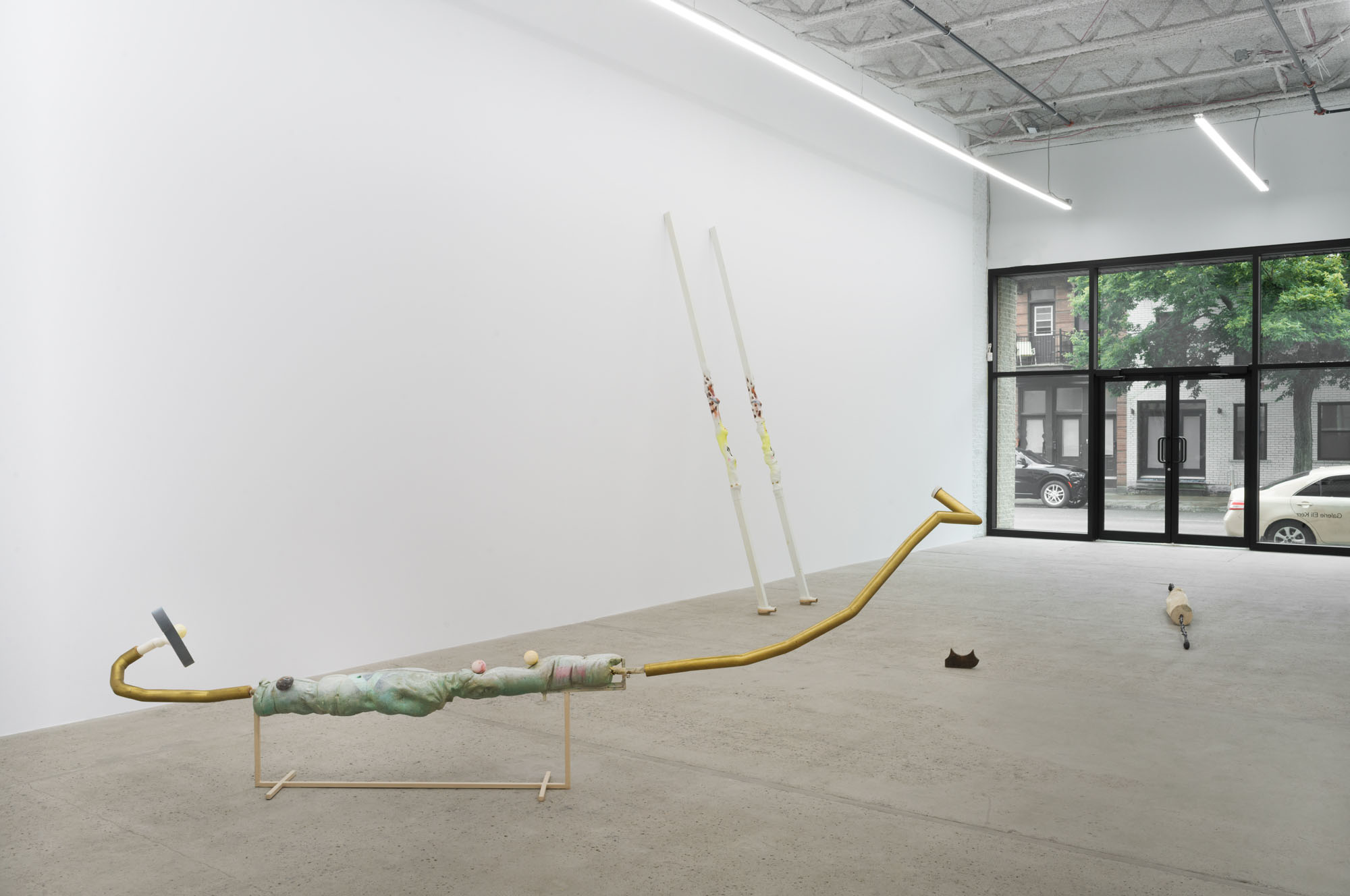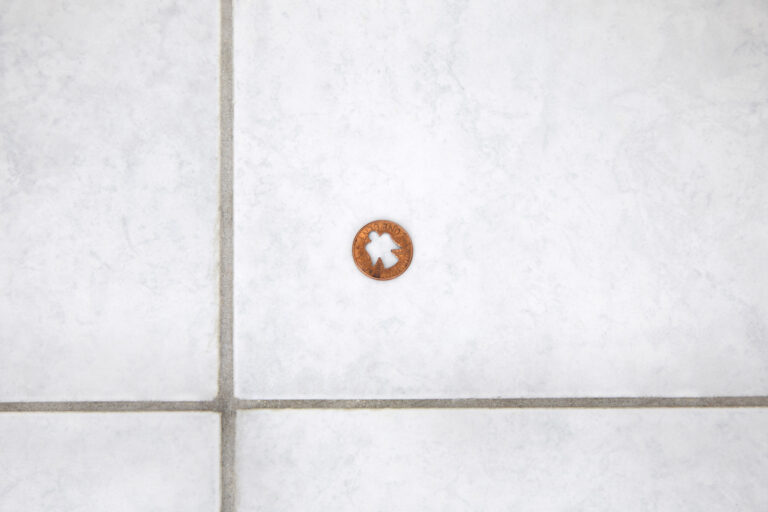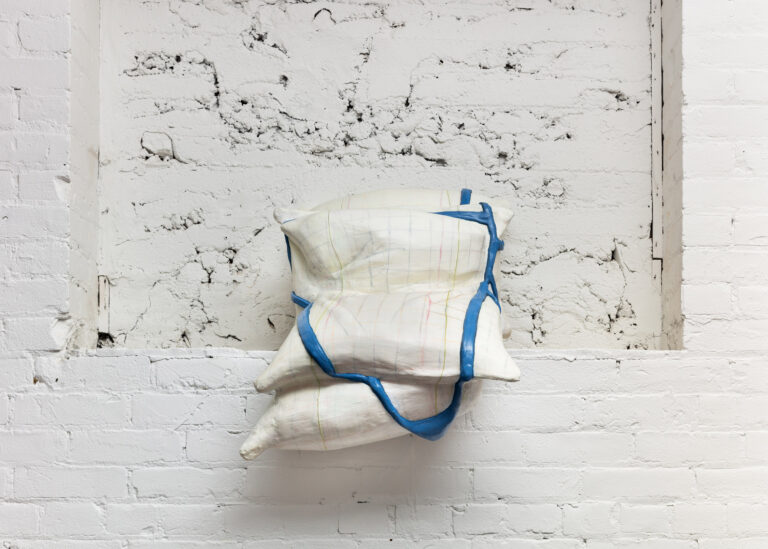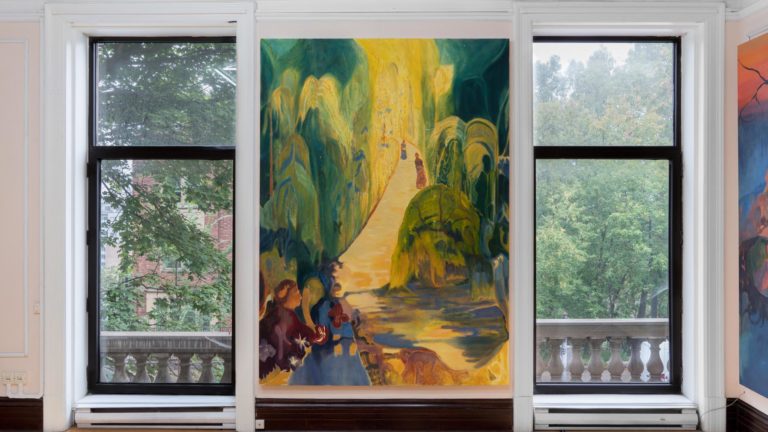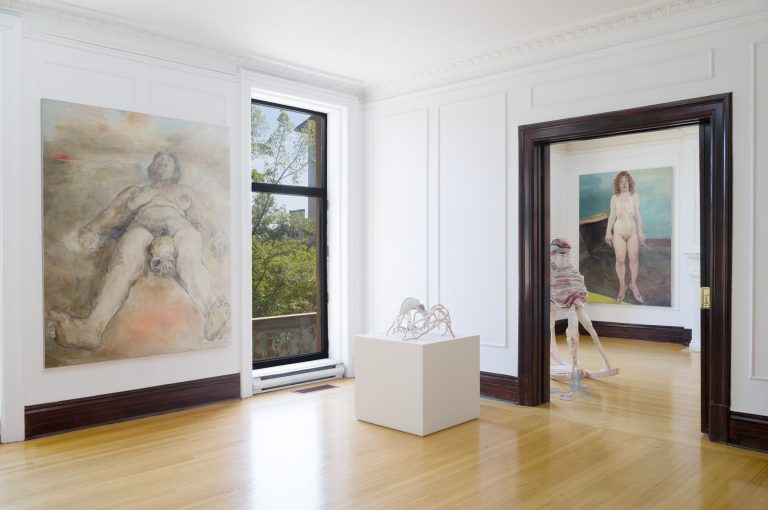
Galerie Eli Kerr is pleased to present (eye to eye) (les yeux dans les yeux) a group exhibition comprised of sculpture by David Armstrong Six, Valérie Blass, Maggy Hamel-Metsos, Sylvie Hayes-Wallace, Kai Jenrette, Jacob Lepp and Richard Nonas.
On a recent visit to the Museum of Modern Art I spent a considerable amount of time looking at an Isa Genzken Ellipsoid work, thinking about the points of non-contact where the sculpture hovers above the floor. There was a dimension to these works that I could not touch with my eye. When looking at the Genzken, what came to mind was a comment by founding director of the MoMA Alfred H. Barr, cited in a recent public talk in Montreal. Barr described the vision for the museum collection as a “torpedo moving through time.” Piercing into the present day, this provocation gives way to thinking about how the work of artists traverses through history and into the field at large. Some through nonlinear paths making asynchronous impacts, some making impacts yet unknown. Produced between 1976 and 1982, Benjamin H. D. Buchloh argues that Genzken’s Ellipsoid and Hyperbolos works occupy a singular position within postwar art and shifted the trajectory of sculpture without fully belonging to any established movement. He describes her work as a herculean response to American minimalism made with computer modelling software some twenty years before Richard Serra discovered Frank Gehry’s tool kit.1
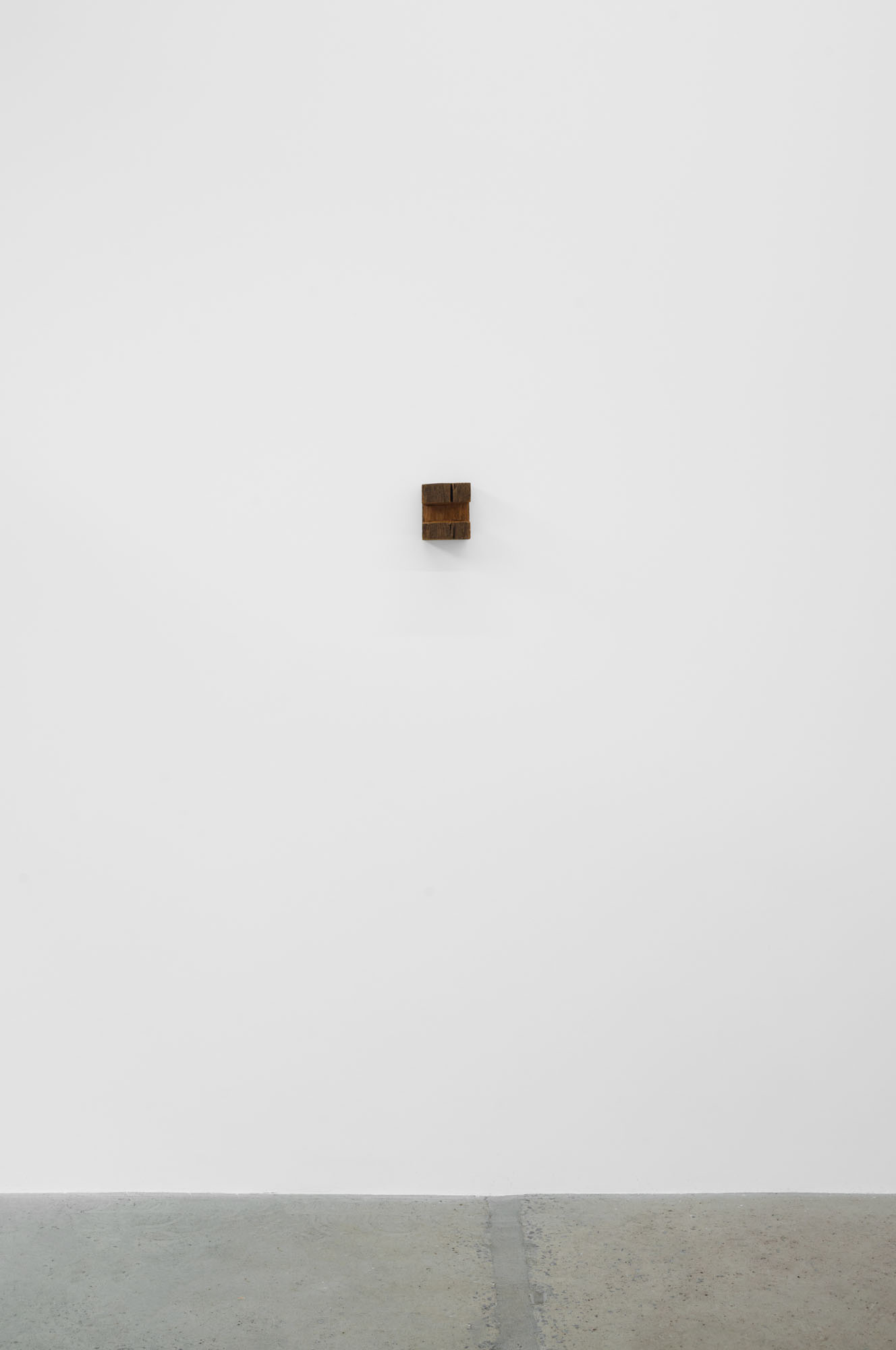
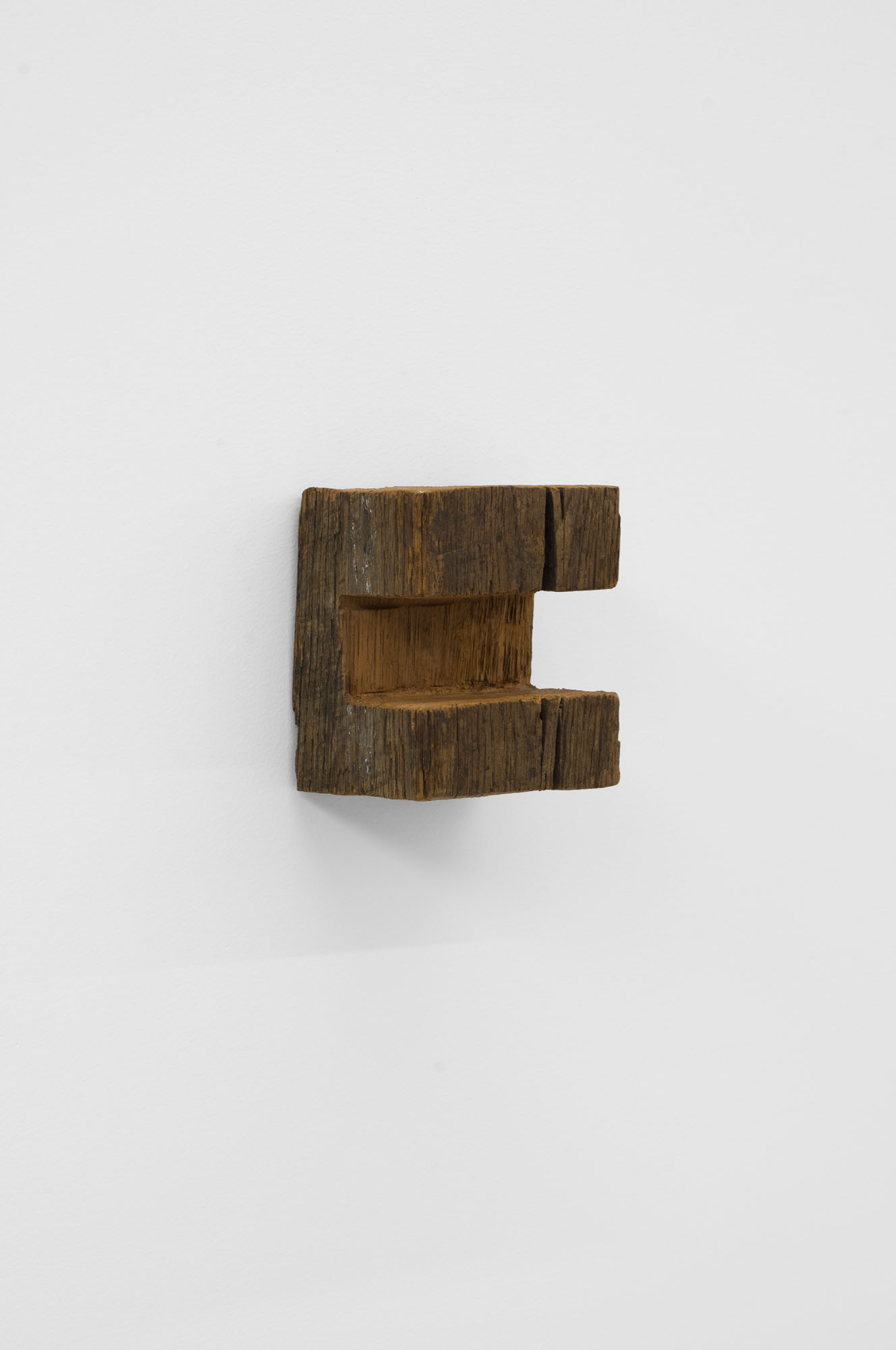
In this exhibition, height, width and depth, as descriptive properties, serve as a prompt for thinking about sculpture. Elongated and condensed forms emerge to notch out a syntax for organizing artworks in space. An important departure point is the work of Richard Nonas, the first work encountered in the exhibition, which, like a pair of brackets, is also the last you see upon leaving. Nonas, who began producing artworks in the late 1960s, belongs to the generation that followed the first wave of Minimalism. He accepted Minimalism’s reduction of form but rejected its detachment, introducing uncertainty, emotion, and phenomenological experience back into sculpture. A somewhat reluctant sculptor, Nonas was more interested in the space around the work; how objects shifted perception and experience of space. I think he, too, would have appreciated the gap between Genzken’s work and the floor. Like rustic debris breaking off the project of modernism, the Nonas work, which was produced circa 1994, stands in as an attitudinal marker that sculpture need not resolve itself into a singular meaning. Instead, it can remain open, slightly resistant, slightly ambiguous, holding multiple readings in suspension.
David Armstrong Six (b. 1968, Belleville, Canada) lives and works in Montreal, Canada. Solo exhibitions have been presented at the Museum of Contemporary Art Toronto, the Darling Foundry (Montreal), the Künstlerhaus Bethanien (Berlin), and Bradley Ertaskiran (Montreal). Notable group exhibitions have been staged at Night Gallery (Los Angeles), Nikolaj Kunsthal Gallery (Copenhagen), the Musée d’art contemporain de Montréal, and at White Columns (New York). Armstrong Six has also been commissioned for various public art projects across Montreal and his work can be found in the permanent collections of the National Gallery of Canada (Ottawa), the Musée national des beaux-arts du Québec, the Musée d’art contemporain de Montréal, the McMichael Canadian Art Collection (Kleinburg), and the Art Gallery of Ontario (Toronto).
Valérie Blass (born in 1967, Montréal; lives/works : Montréal), studied at the Université du Québec à Montréal, where she earned a B.F.A. in 1998 and M.F.A. in 2006. She was the 2017 recipient of the Gershon Iskowitz prize, presented by the Art Gallery of Ontario, culminating in an exhibition in 2019. She has produced notable solo exhibitions at Catriona Jeffries, Vancouver (2020); Oakville Galleries, Canada (2019) ; Galerie Douglas Hyde, Dublin (2019) ; Artspeak, Vancouver (2015); Musée d’art contemporain de Montréal (2012); and MOCA Toronto (2009). In 2013, she received a public art commission from the New York Public Art Fund. Valérie Blass’s work has been included in numerous group exhibitions, notably at the Musée Zadkine, Paris (2021) ; Berkeley Art Museum and Pacific Film Archive, University of California (2021) ; Centre d’art contemporain d’Ivry – le Crédac, France (2019) ; National Gallery of Canada, Ottawa (2017, 2011); La Biennale de Montréal (2016); Vancouver Art Gallery (2016); Museum of Contemporary Art Cleveland (2016) ; Musée national des beaux-arts du Québec, Québec (2016, 2011); Montréal Museum of Fine-Arts (2014, 2010).
Maggy Hamel-Metsos is an artist based in Montreal working across installation, film, sound, drawing and sculpture. Her practice is concerned with the human psyche and experience as conditioned across ancient and contemporary times. Through the experimental mise en relation of diverse interpretative systems and aesthetic economies, such as mechanical time (productivity) and astral time (ritual), her work reflects upon the specific sets of values and ideologies these systems serve. Shifting from micro to macro, her perspectives reveal an inherent strangeness between the self and the world.
Caretakers, her first solo exhibition at Eli Kerr, was followed by a second solo show entitled Whole Wide World. Recent exhibitions include The Etymologist at Galerie Tschudi (Switzerland), Simile Aria at Fonderie Darling (Montreal), Vues de la plaine at La Galerie du Nouvel-Ontario (Sudbury) and O.W.M.B/ Shell 1 at Joe Project (Montreal). Her work is in the collection of Montreal Museum of Fine Arts and the National Gallery of Canada. She is a recipient of the Saunderson Prize, the BMO 1st Art Award and the Darling Foundry’s Montreal Studio Program 2023-2026.
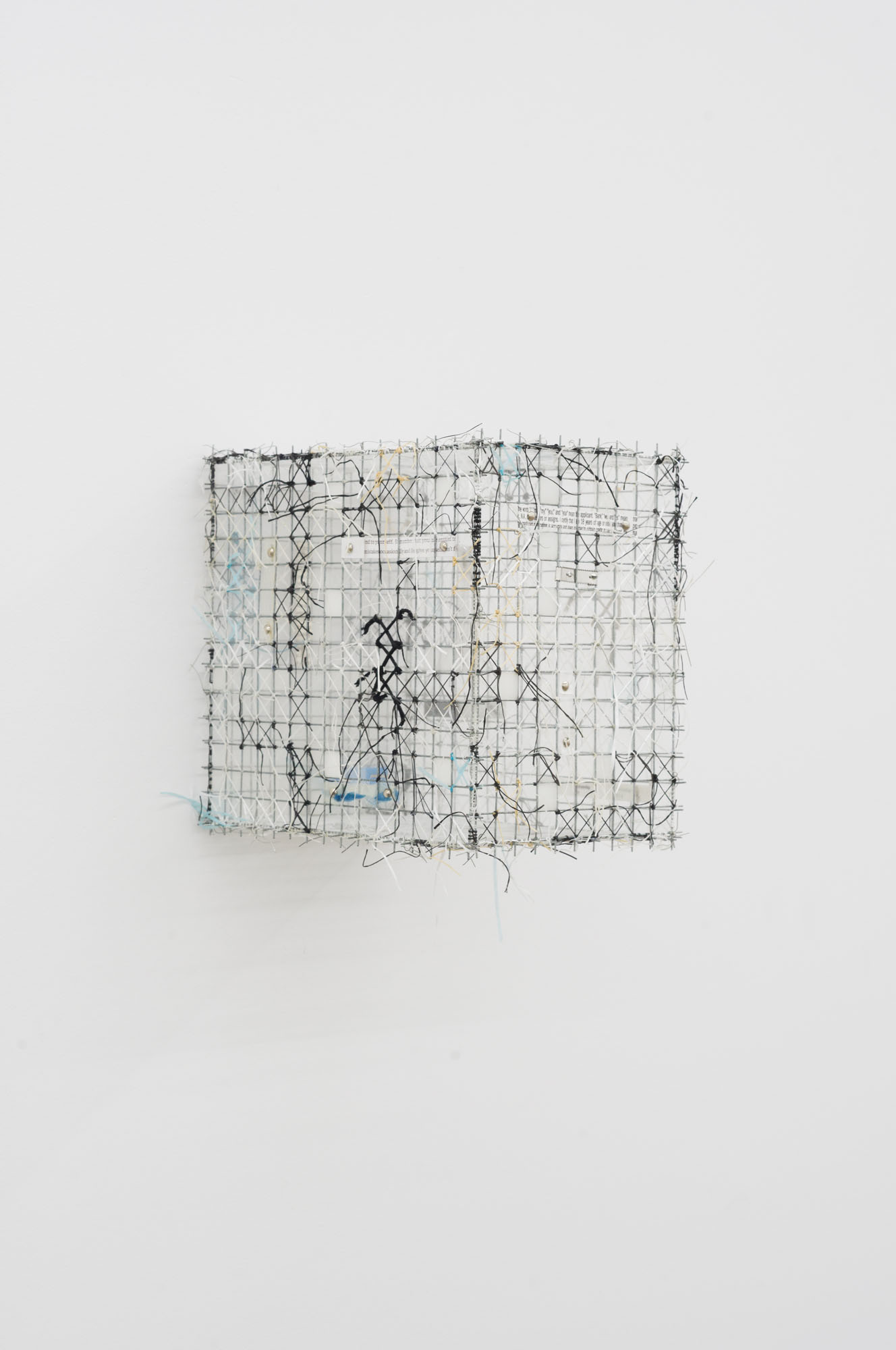
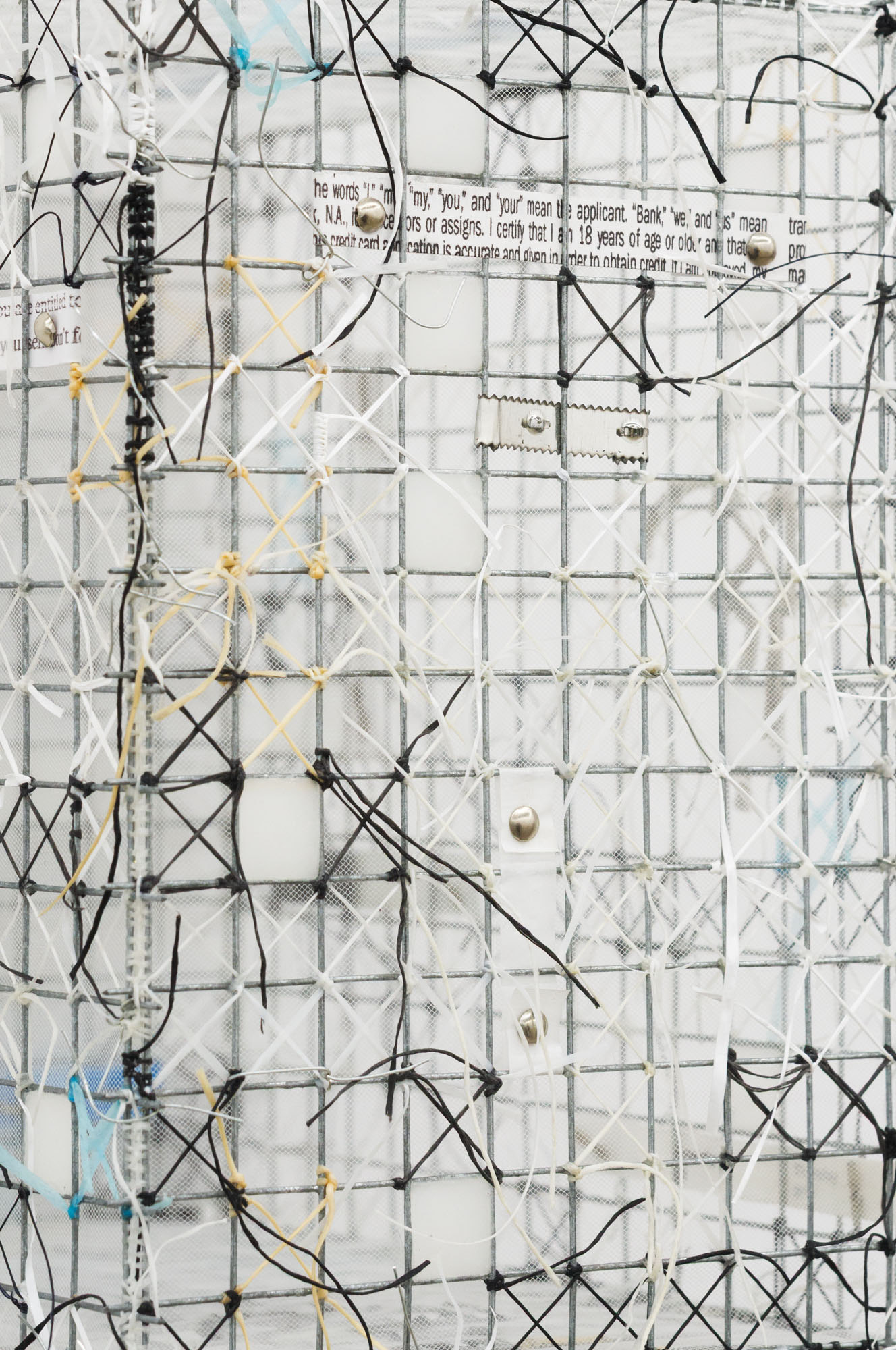
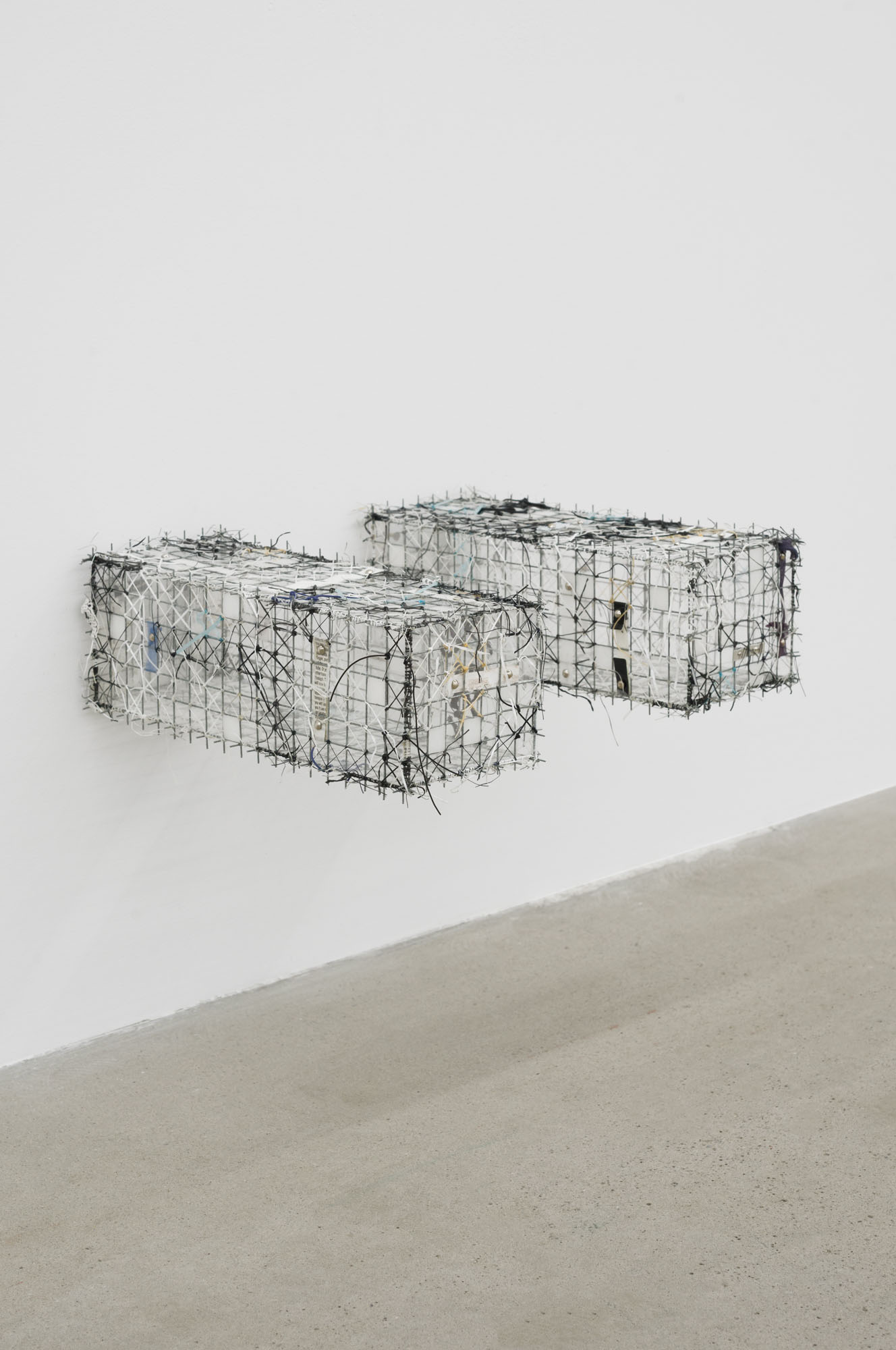
Sylvie Hayes-Wallace’s sculptural practice explores the confinements of the self in its thoughts, feelings, and the body as a barrier between the inner self and exterior world. Mapping out interior and outer existence, she pulls from an ever-evolving personal archive of markers of time, belongings, notes, and ephemera. Guided by the measurements of her own body, she incorporates these archives into wire and glass cages, curtains, columns, and collages that create a complex self-portrait without being representational. By taking inventory of the self, Hayes-Wallace attempts to understand, organize, and contain the chaos of the mind by mirroring the precarious constructs of our interior world and exterior surroundings. Sylvie Hayes-Wallace (b. 1994, Cincinnati, Ohio) lives and works in New York. She received her BFA from The School of the Art Institute of Chicago in 2017. She has had solo and two-person exhibitions at Silke Lindner, New York, NY (2024); Chapter NY, New York, NY (2024); In Extenso, Clermont-Ferrand, France (2023); A.D. Gallery, New York, NY (2022); Bad Water, Knoxville, TN (2022); Interstate Projects, Brooklyn, NY (2021); and New Works, Chicago, IL (2019), among others. Her work has been included in group exhibitions at Rose Easton, London (2024); Cob Gallery, London (2024); Chapter NY, New York, NY (2023); Simone Subal Gallery, New York, NY (2022); King’s Leap, New York, NY (2021); Annex de Odelon, Ridgewood, NY (2021); and Frontera 115, Mexico City (2018), among others.
Kai Jenrette (b. 2001) lives and works in New York, USA. Jenrette received a BFA from The Cooper Union for the Advancement of Science and Art. In 2024, he participated in the Haystack Open Studio Residency in Maine. Jenrette’s work uses the language of craft and design to explore how we construct identity through making. The pieces strive to become themselves—just as people do—navigating constraints, surroundings, and ideals of appearance. They are drawings trying to live their lives as drawings, with the same confusion, effort, and hope that comes with being human. Recent exhibitions include Sprocket at LVL3, Chicago (2025); To Be Seen By Heavy Eyes at Silke Lindner, New York (2025); Muffler at April April, Pittsburgh (2024); Benefit Show at White Columns, New York (2024); real bad at The Cooper Union, New York (2023); exy ilence at The Cooper Union, New York (2023), among others. Jenrette’s work has been featured in LVL3 Chicago, i-D Magazine, Common Discourse, and Are.na. In 2024, Jenrette was awarded the Pietro and Alfrieda Montana Prize for Excellence in Drawing from The Cooper Union. Jenrette’s publications KENNY + PENNY (2023) and I’m Perfect Life’s Perfect… (2024) have been acquired by the National Gallery of Art Library.
Jacob Lepp is an artist working primarily in sculpture, drawing, and installation. Lepp uses a variety of materials to create works that incorporate quilting and patchwork techniques, drawing inspiration and techniques from the three generations of quilters in his family. Functioning as sites of memory and physical contact, his sculptures are informed by craft techniques—specifically quilting, dyeing, and felting—and often take the form of dense pieced quilts made from wool scraps. His work attempts to challenge the assumed objecthood of materials and considers their gesture and intention as they interact with each other and with us. Lepp studied weaving and sculpture at The Bauhaus in Weimar and holds a BFA from Concordia University. He is a recipient of the artch Emerging Artist Grant, the Lise-Helene Larin Scholarship in Drawing (2021-2022) and the 400 Level Sculpture Award (2023). Lepp has exhibited work in Canada and Germany, as well as at Nicolas Robert, Montreal (2025), and Bonny Poon/Conditions, Toronto (2026). He lives and works in Tiohtià:ke/Mooniyang/Montréal.
Richard Nonas was born in New York in 1936. He studied literature and then social anthropology at the University of Michigan, Lafayette College, Columbia University and the University of North Carolina. Following his education, Nonas worked as an anthropologist for 10 years, doing field-work on Indigenous peoples in Northern Ontario, Canada, and in Northern Mexico and Southern Arizona. He turned to sculpture in the mid-1960s at age 30. His anthropological work left a deep imprint that affected his sculptural practice and his engagement with the perception of space. Through a Minimalist vocabulary, Nonas developed a body of sculpture that engaged with the issue of place.
In the 1970s, Nonas was a part of an intrepid group of artists and curators who found alternative places to show. His work involved the alteration of the environment and repeated geometric forms, and he came to see sculpture and space as interdependent carriers of deep philosophical and emotional meanings. Many of his works – made of such materials as timbers, linear beams, granite curbstones, and steel planes – rest directly on the ground and function less as formal aesthetic objects, and more as spatial markers. His forms serve to interrupt the space, calling attention to the non-specificity of the forms on the one hand, while creating a charged sense of space on the other. Nonas has exhibited extensively in the U.S. and abroad, making small and very large works both indoors and out, and has written extensively on the culturally dependent intellectual and emotional meanings of sculpture, space and place. He has been the subject of several museum and institutional exhibitions, most recently including: FiveMyles, Brooklyn (2020–21); MAMCO Geneve, Switzerland (2019); ‘T’ Space, Rhinebeck, New York (2018); the Art Institute of Chicago (2017); MoMA PS1, New York (2016); MASS MoCA, North Adams, Massachusetts (2016), among others. Richard Nonas died at 85 years old, in May 2021 in New York.