I had a music teacher who insisted we exercise breathing in such a way that we could hear our lungs touching our ribcage. He held his hands in the air, signaling that we should keep opening and opening our chests to gain a sense of all the organs implicated in singing. “Two tubes are connecting your insides now with the windows to the exterior world!” — he meant the esophagus and the trachea, while the windows were the nose and the mouth. Singing, he thought, was meant both for our inner organs and the outer world.
I never thought much about it until one day — during the pandemic — I saw an interview given by a Buddhist nun talking about the importance of getting to know our inner organs. She said, rightfully, that Western culture talks non-stop about the body and yet has no interest in gaining proper knowledge about what is inside us. She implied that because we can’t see our inner organs, they remain abstract — and this is very misleading. Our organs are far from abstract, and they determine so much in our lives that it seems foolish, if not entirely unreasonable, not to know “who” they are. She said that to look inside is not a matter of looking into an empty vessel or a simplified idea of a head, but to precisely look into each and every organ that composes who we are — like bricks compose a building.
I came to realize that in ancient Chinese and other Eastern medicines, there are very precise indications on how certain spots on our skin and external body parts connect to the inner organs. Clearly, where we see “in” and “out,” other, more knowledgeable cultures established — already very early — a non-binary system of communication and visualization between the visible and the more difficult-to-see dimensions of the body.
Lately, I have also realized that not a single day passes without the word“inflammation” crossing my path. Inflammation seems to be the state to avoid and, paradoxically, is a condition that particularly affects our inner organs. It is as if, all of a sudden, Western culture has become aware of centuries — more, millennia — of oblivion toward the organs, and now is the time to find a way to secure their well-being. Violent as we are, as a culture, we assume that our organs are revolting — that inflammation is the name of a silent revolution happening inside all of us and putting all of us at risk.
The words and wisdom of my music teacher were perhaps a way to anticipate the solution before the problem appeared. Since, if you conceive singing and the history of singing as a method to appraise the stomach, the intestines, the lungs, the liver, and the heart — not to mention the brain and the skin — then you shouldn’t fear any organic insurrection.
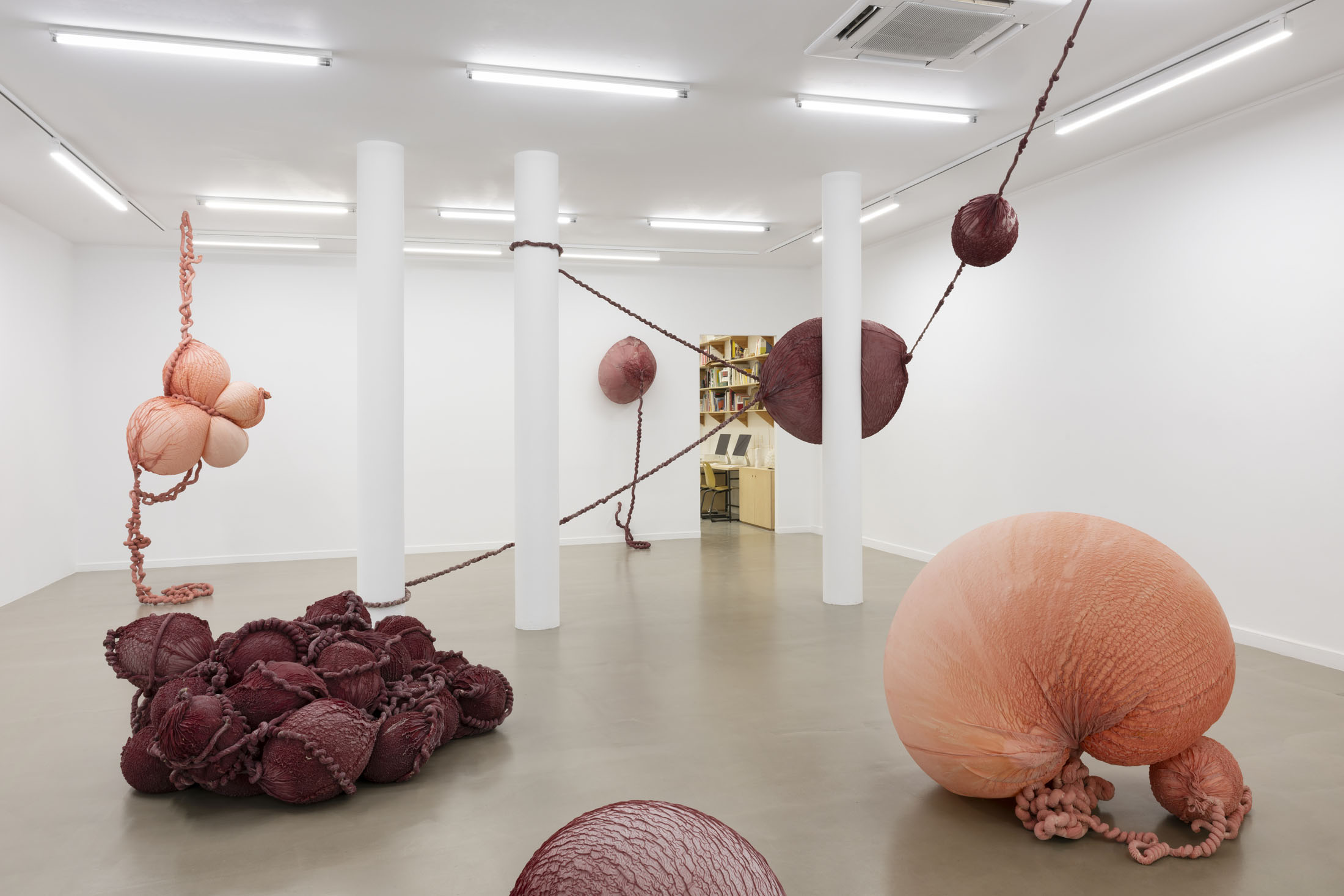
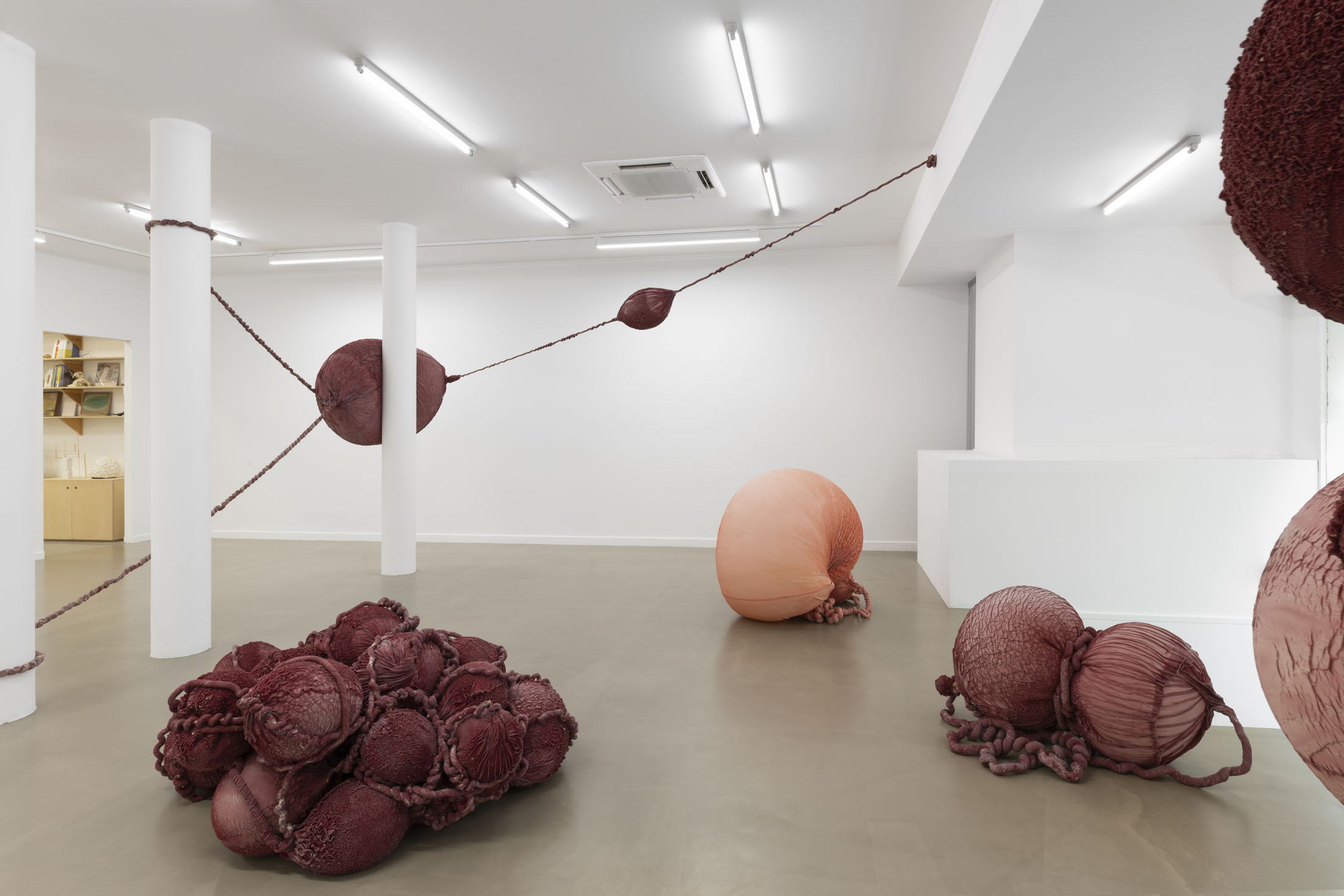
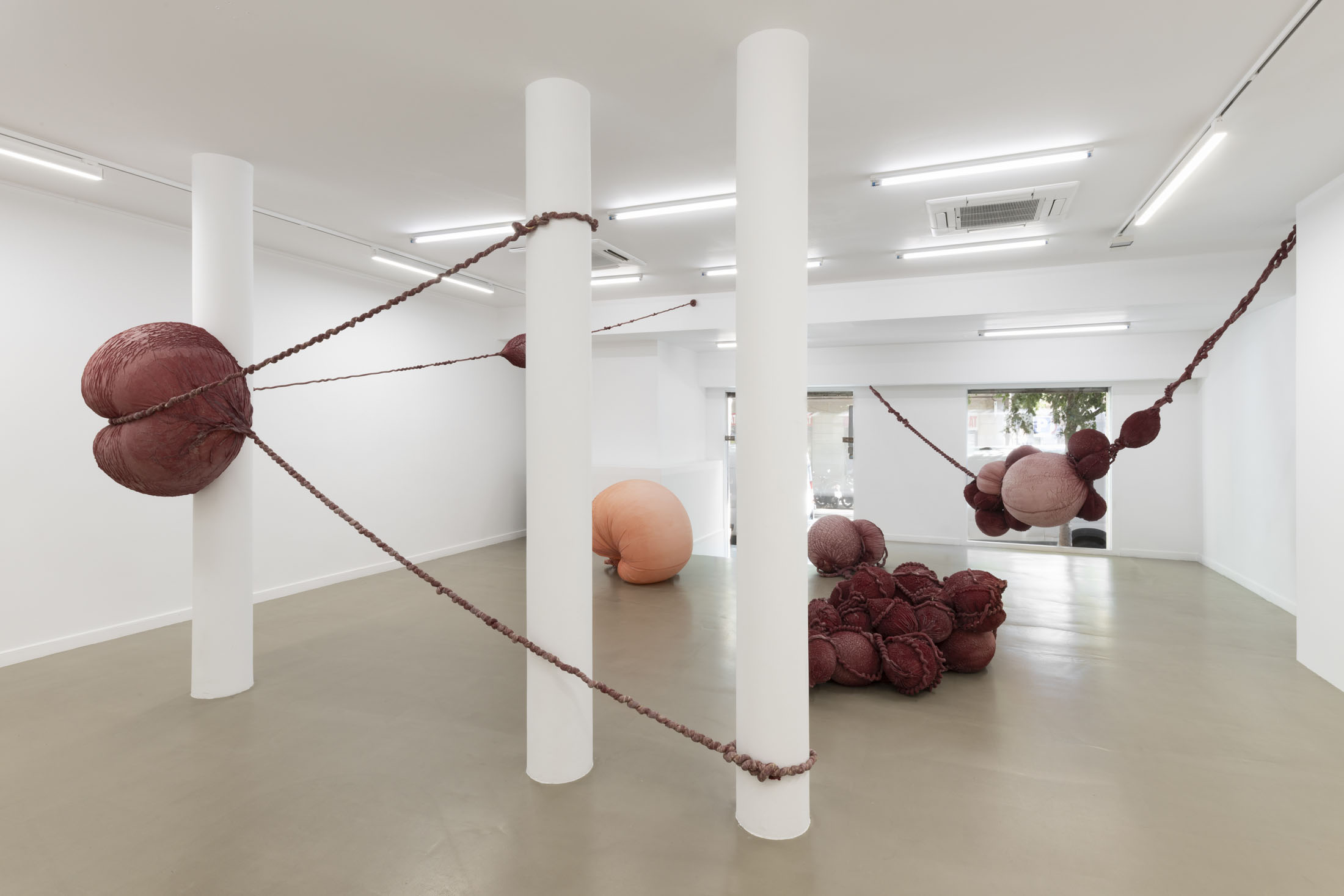
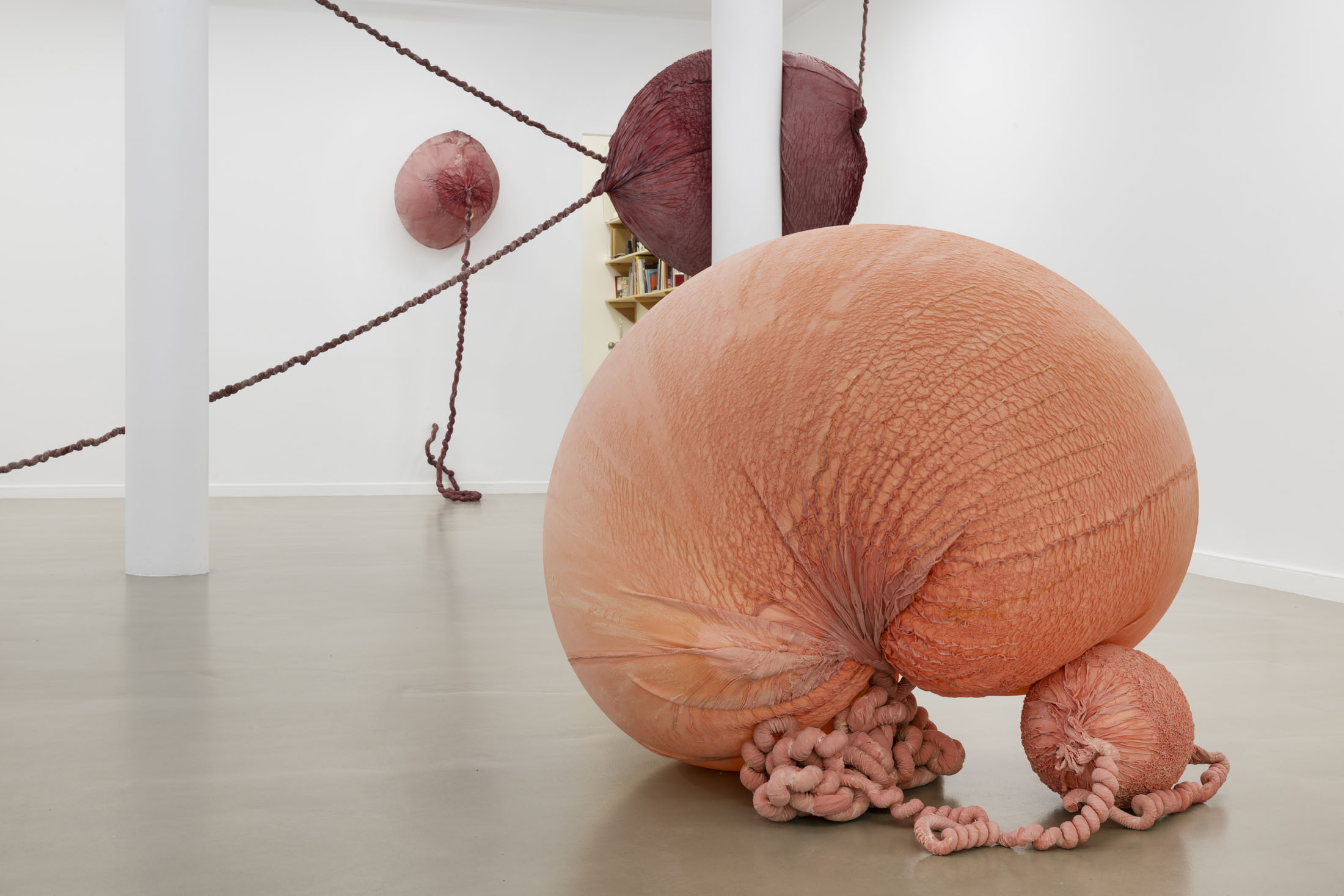
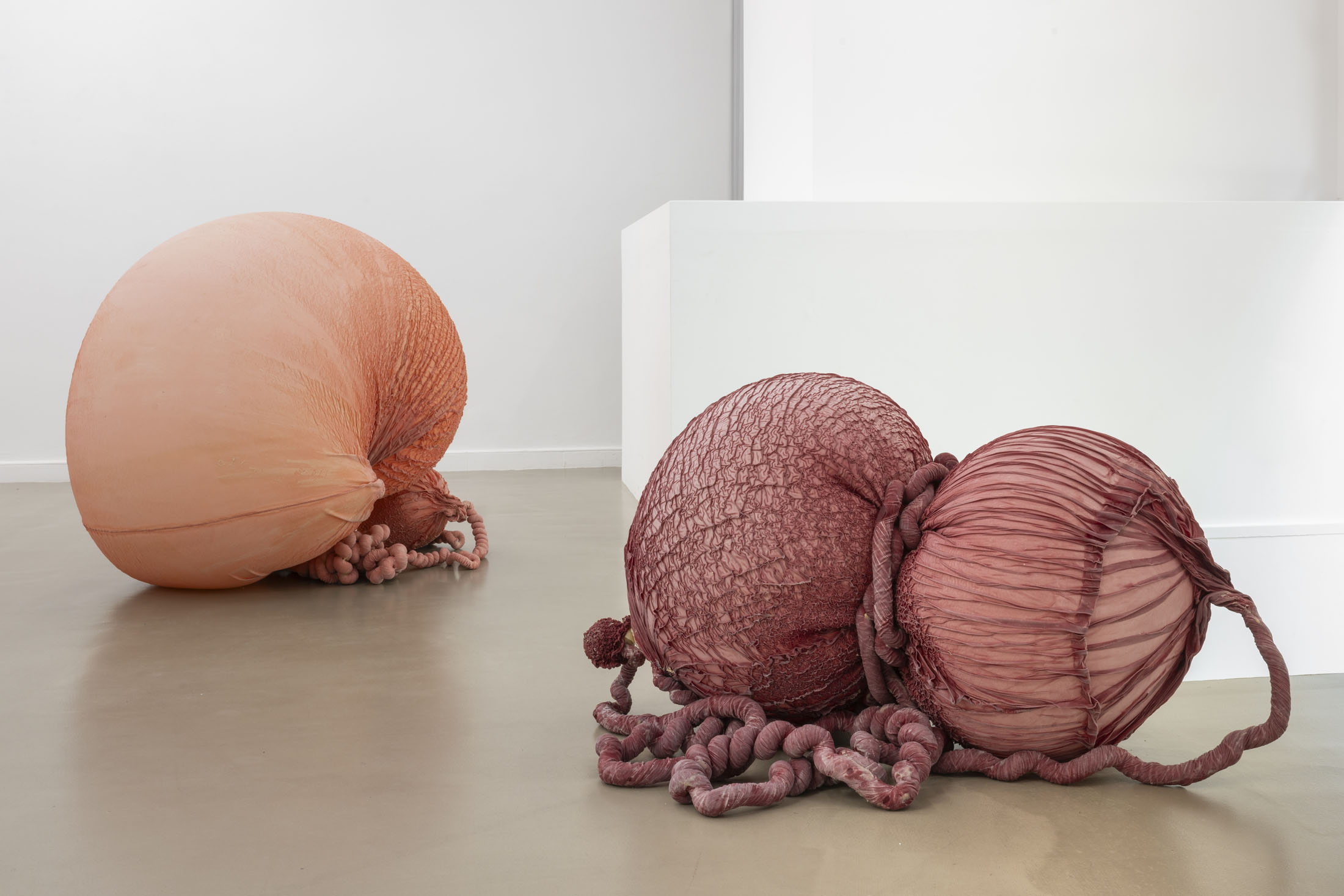
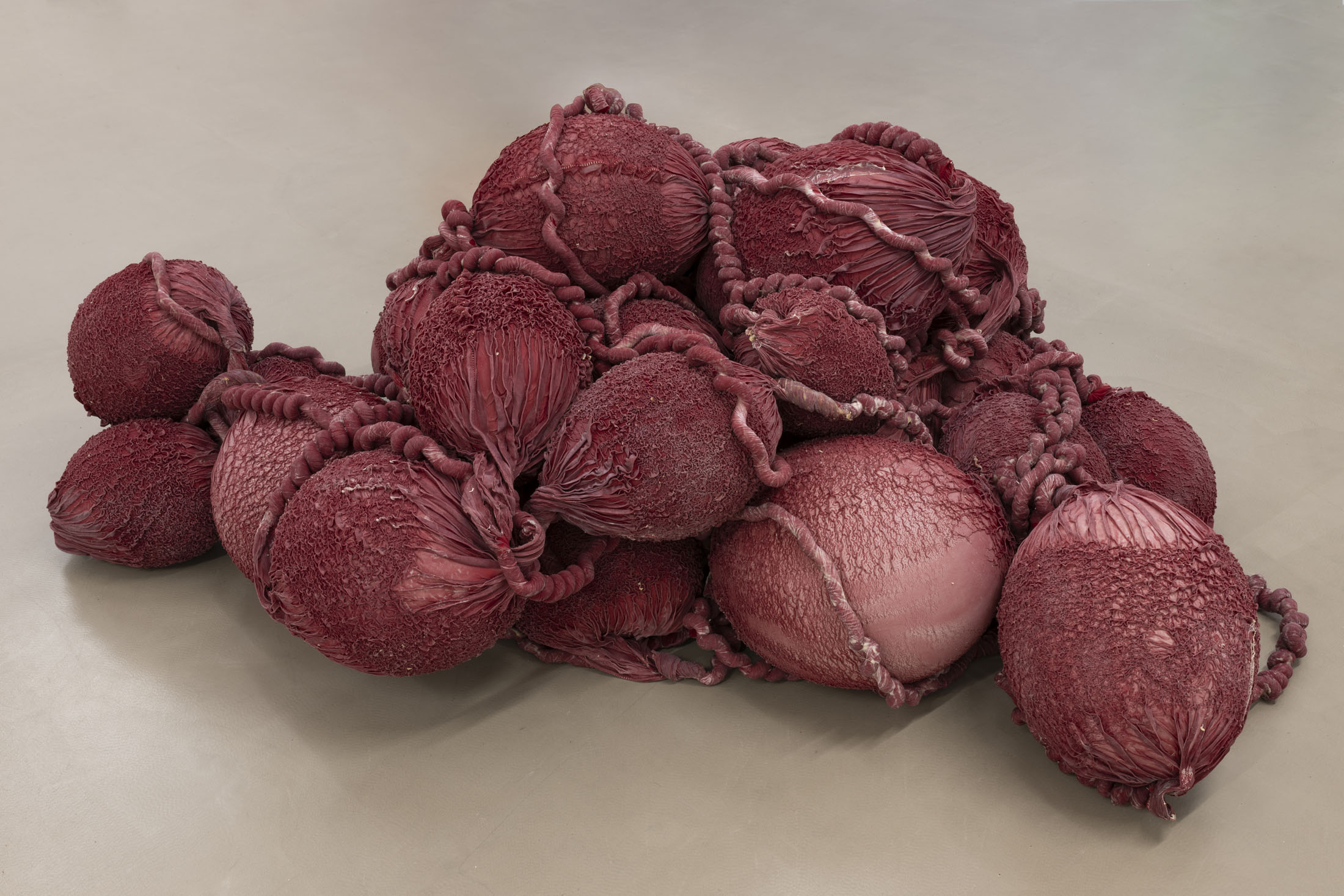
When I first came across the works of Eva Fàbregas — more than a decade ago — her major preoccupation was to make the pieces breathe and their skins sense. This preoccupation never left her work, but her knowledge of the question of the “organs” has grown. The works always emerge from deep research into how primordial elements of life do not possess a particularly easy-to-compose form. Life, in certain circumstances, embraces forms that are difficult to describe and even more difficult to stabilize.
By now, technology has allowed us to see, for example, tiny channels that connect the kidneys with the bladder or small twists that form in our intestines at times. Many of us love those medical series where a super-intelligent doctor is capable of visualizing a problem happening inside the body and immediately sends the machines in that direction to confirm what he already saw in his mind. It is also almost “sweet” how these almost divine powers are always given to male doctors — but to dismantle the politics of the writers’ rooms is not my mission here.
But — you see? — there has been a growing interest in seeing the organs in ways that surpass modern medicine.
Art, however, has shown little interest in both the organs and the organic. Organic matter has gained importance in the development of an entanglement between art and nature, but the organs remain a non-subject in contemporary art, with a few beautiful exceptions.
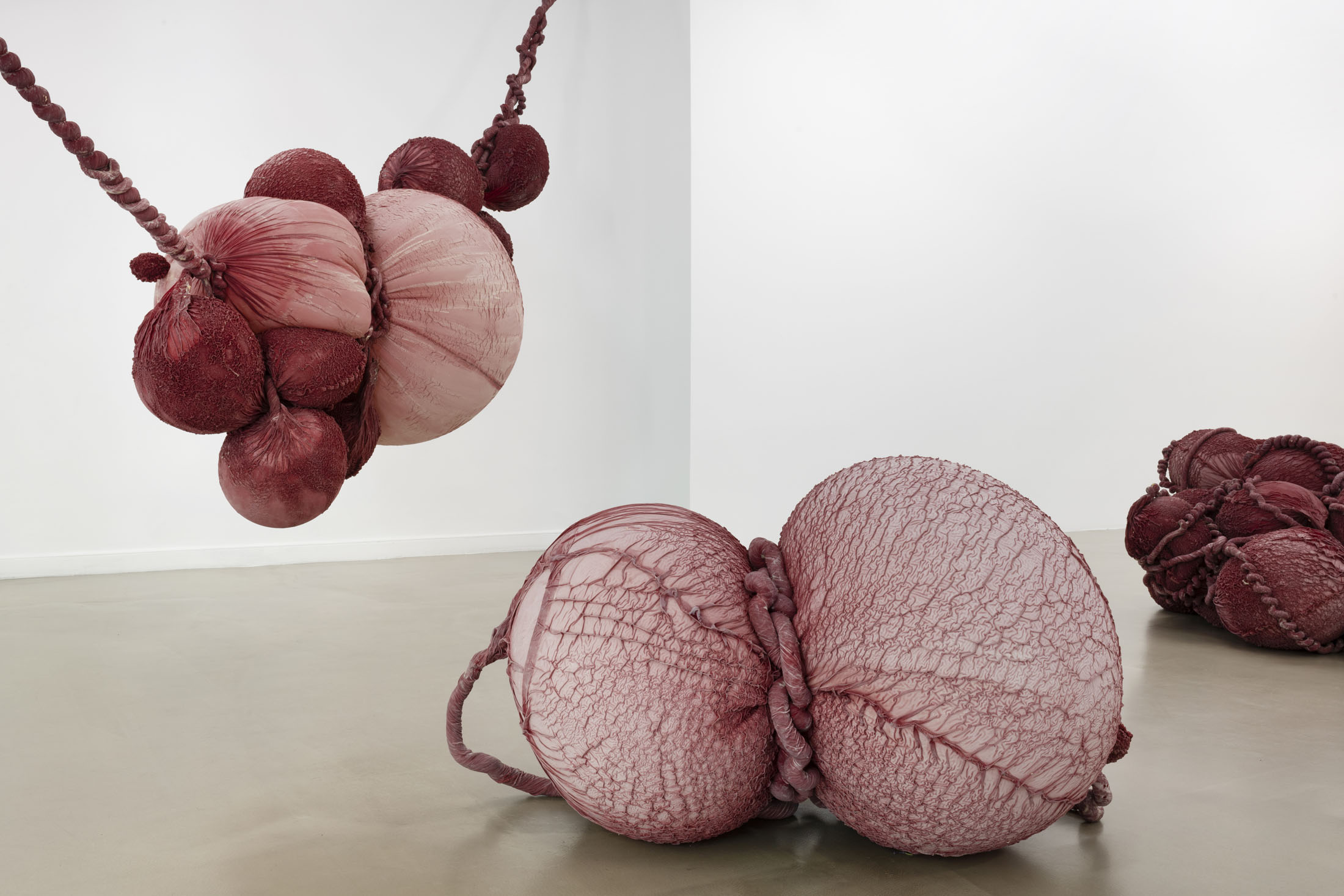
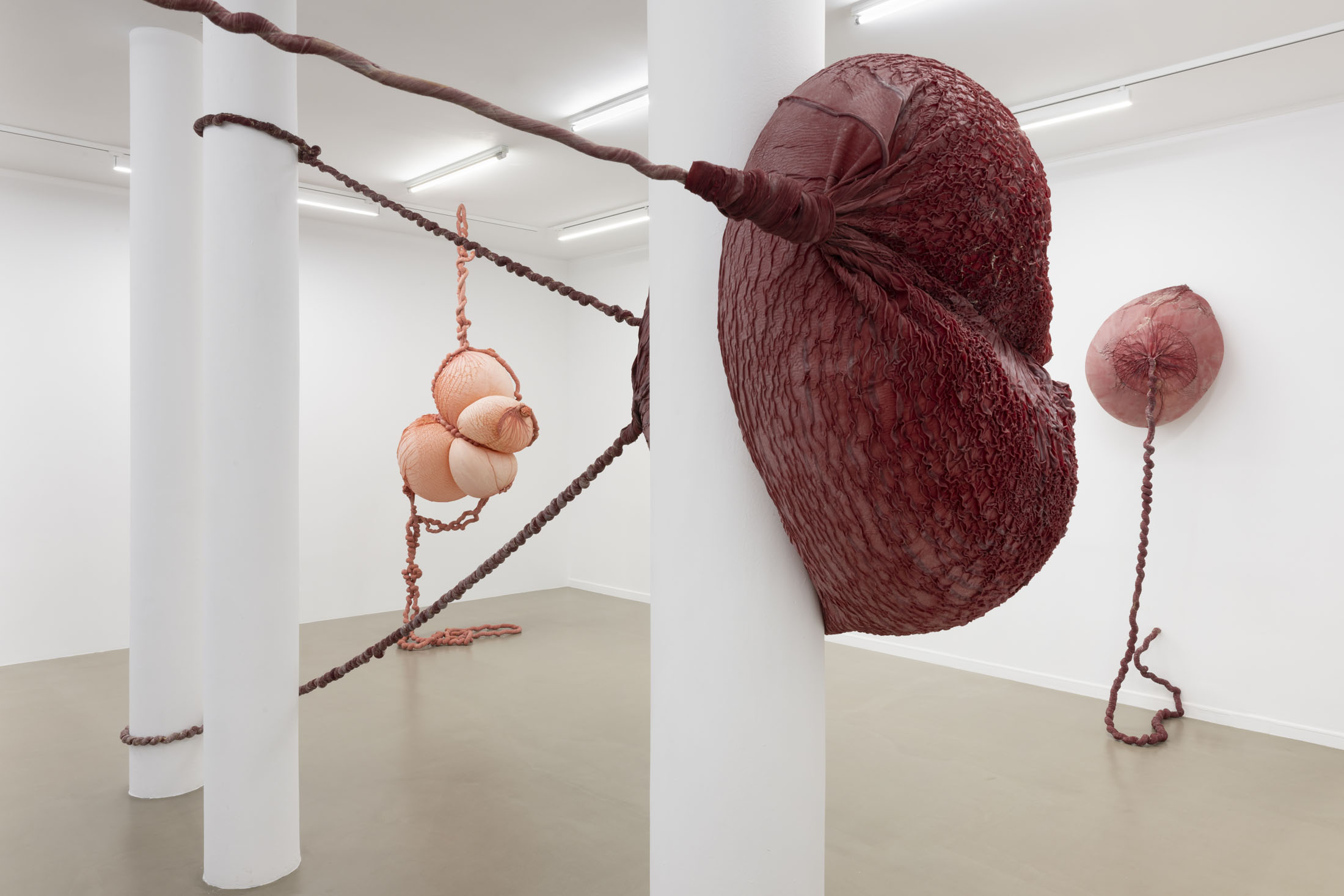
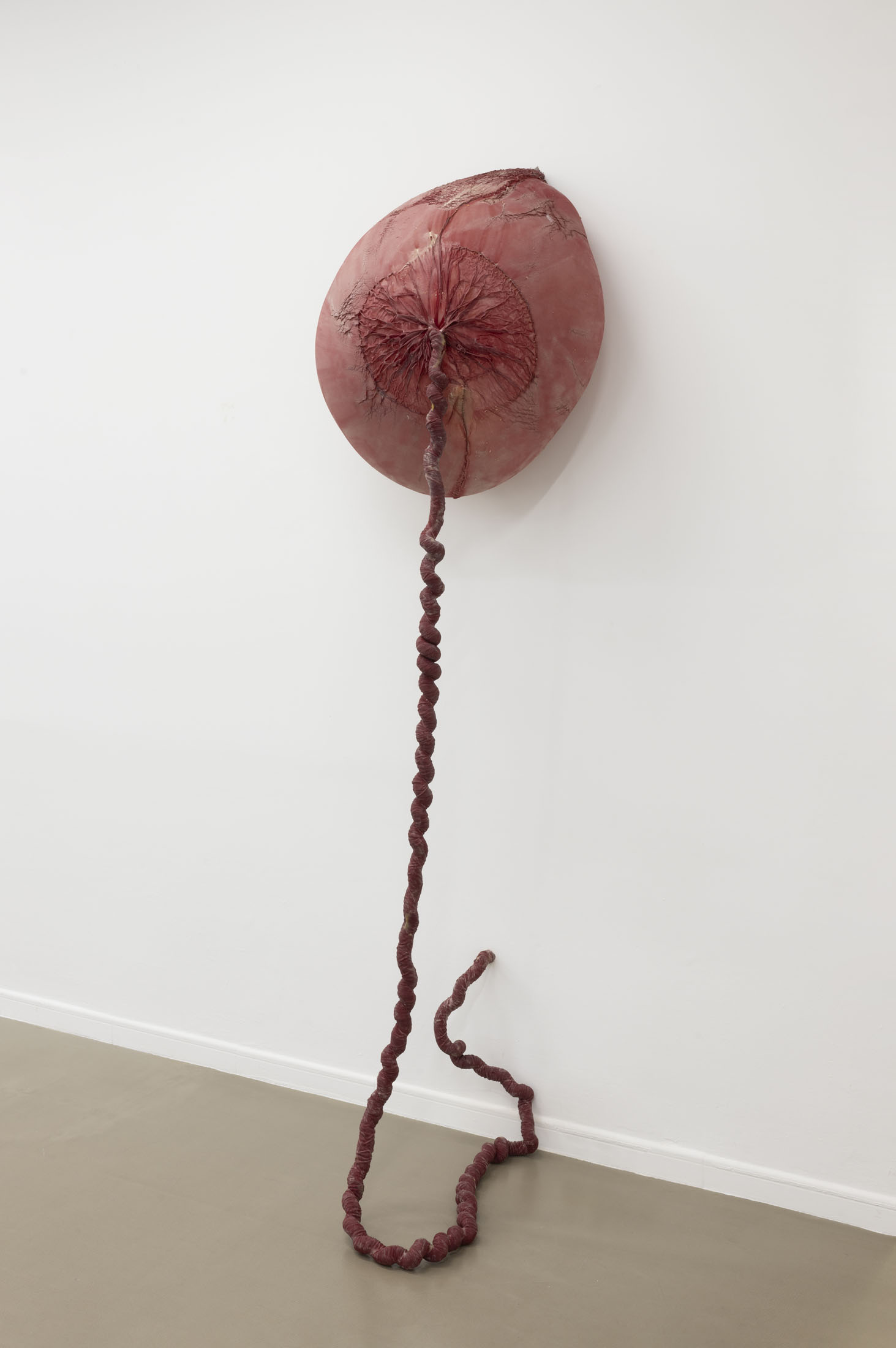
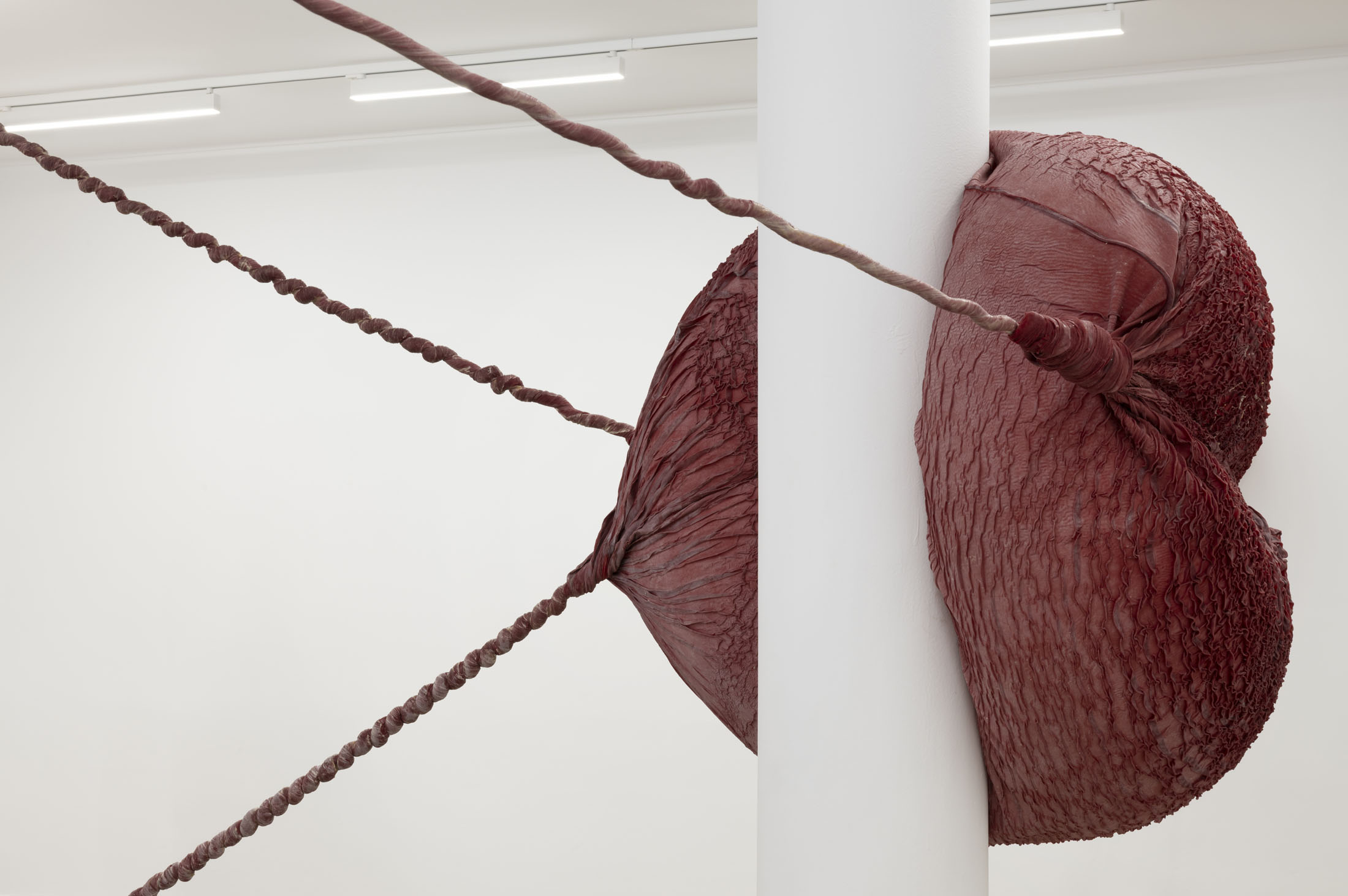
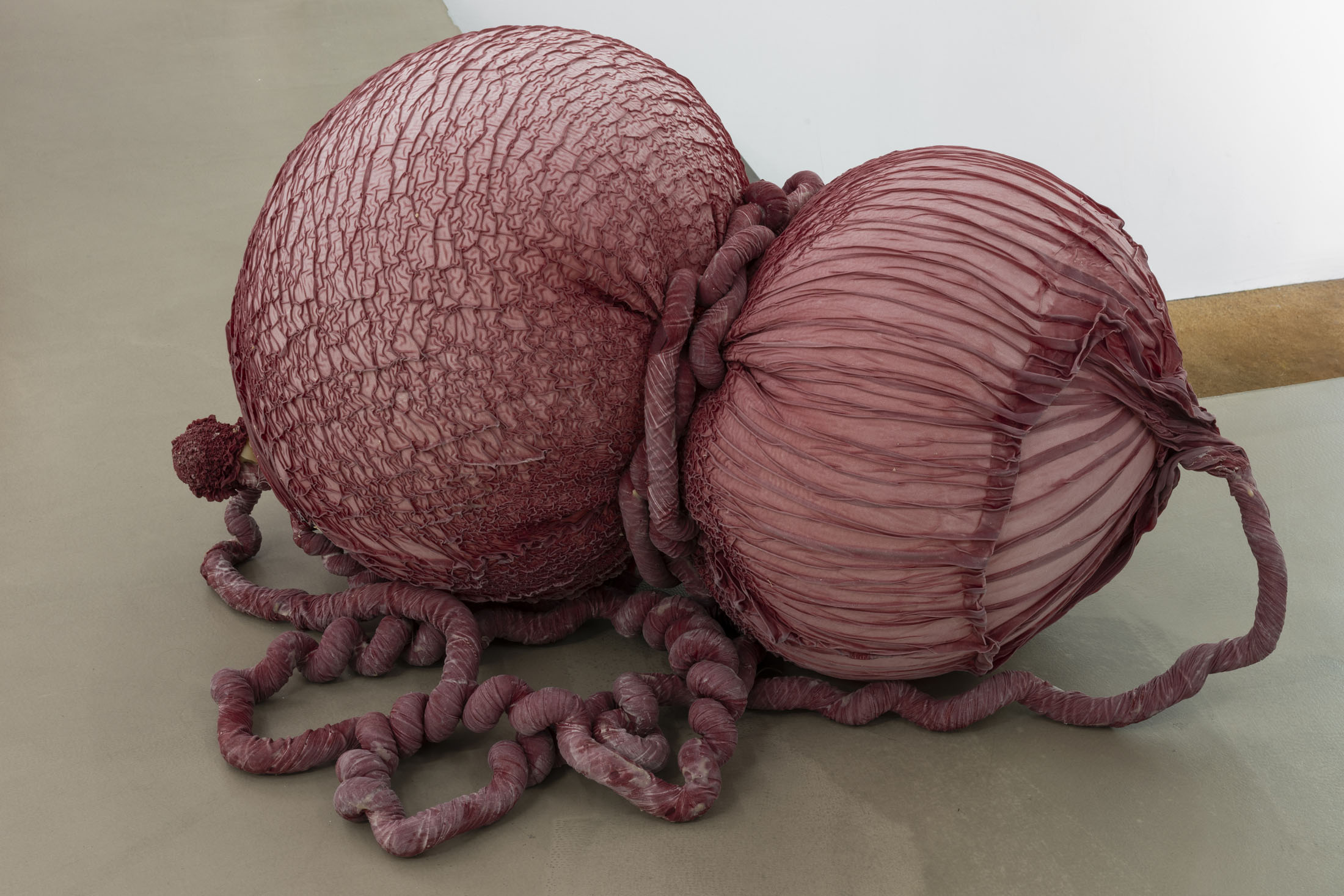
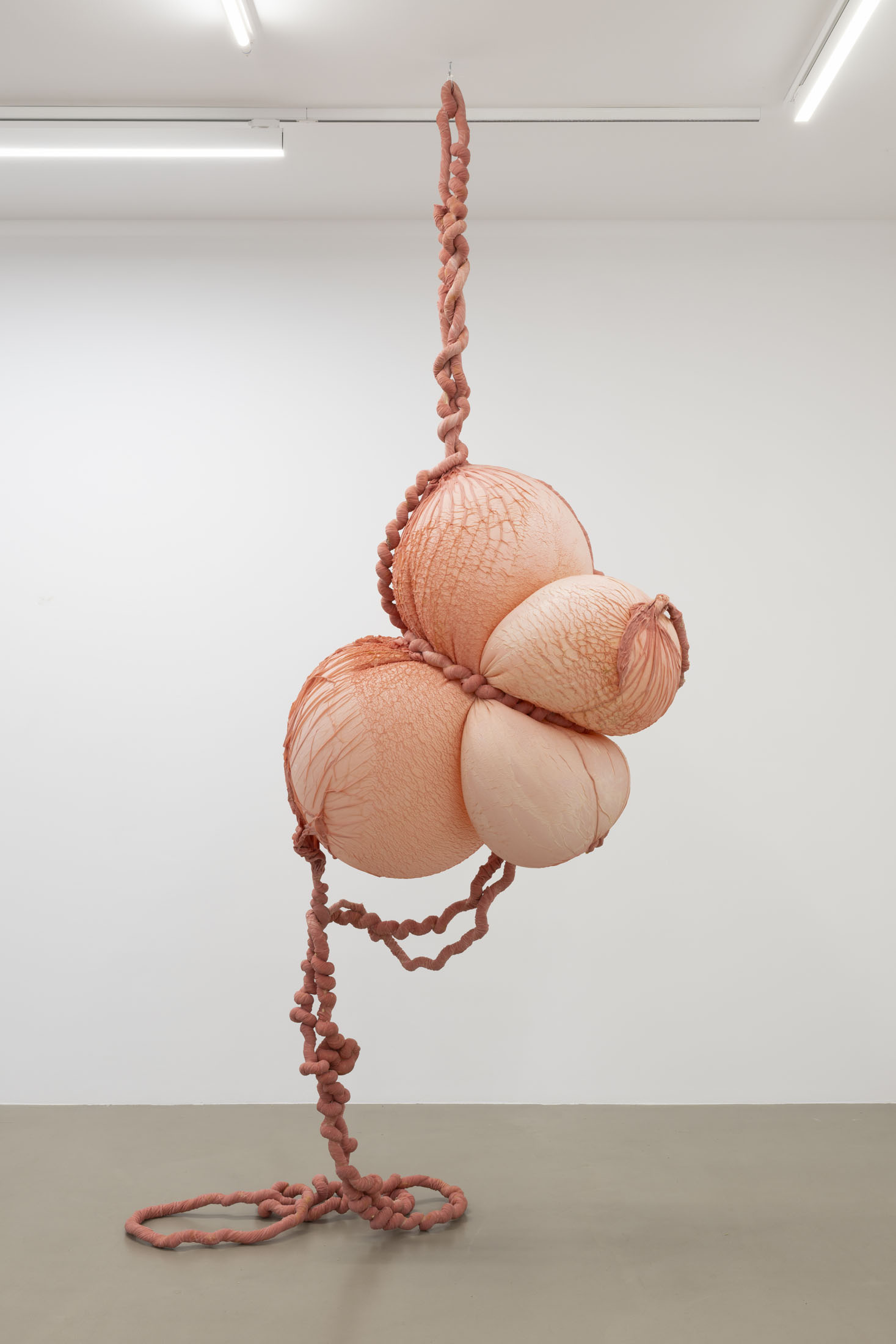
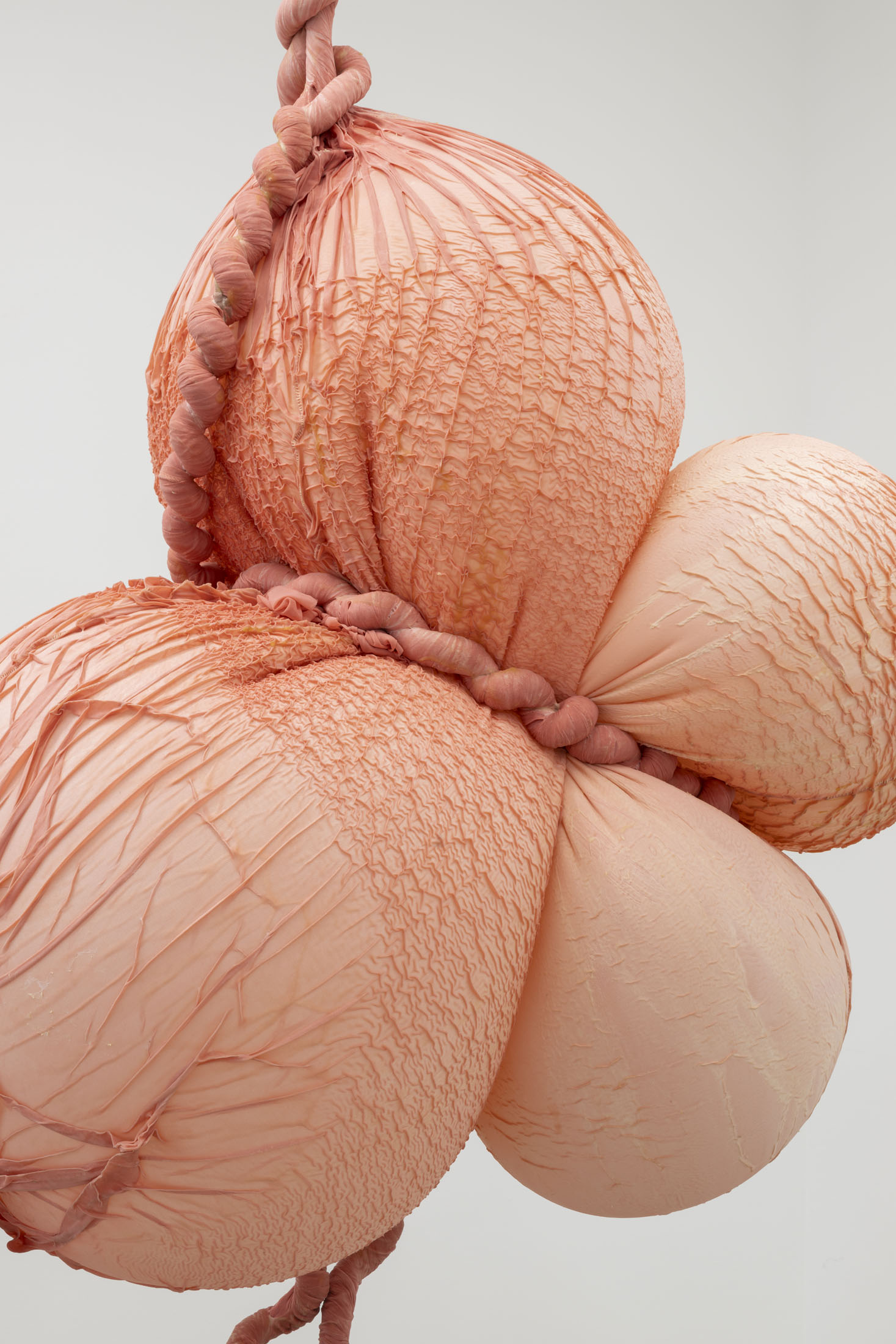
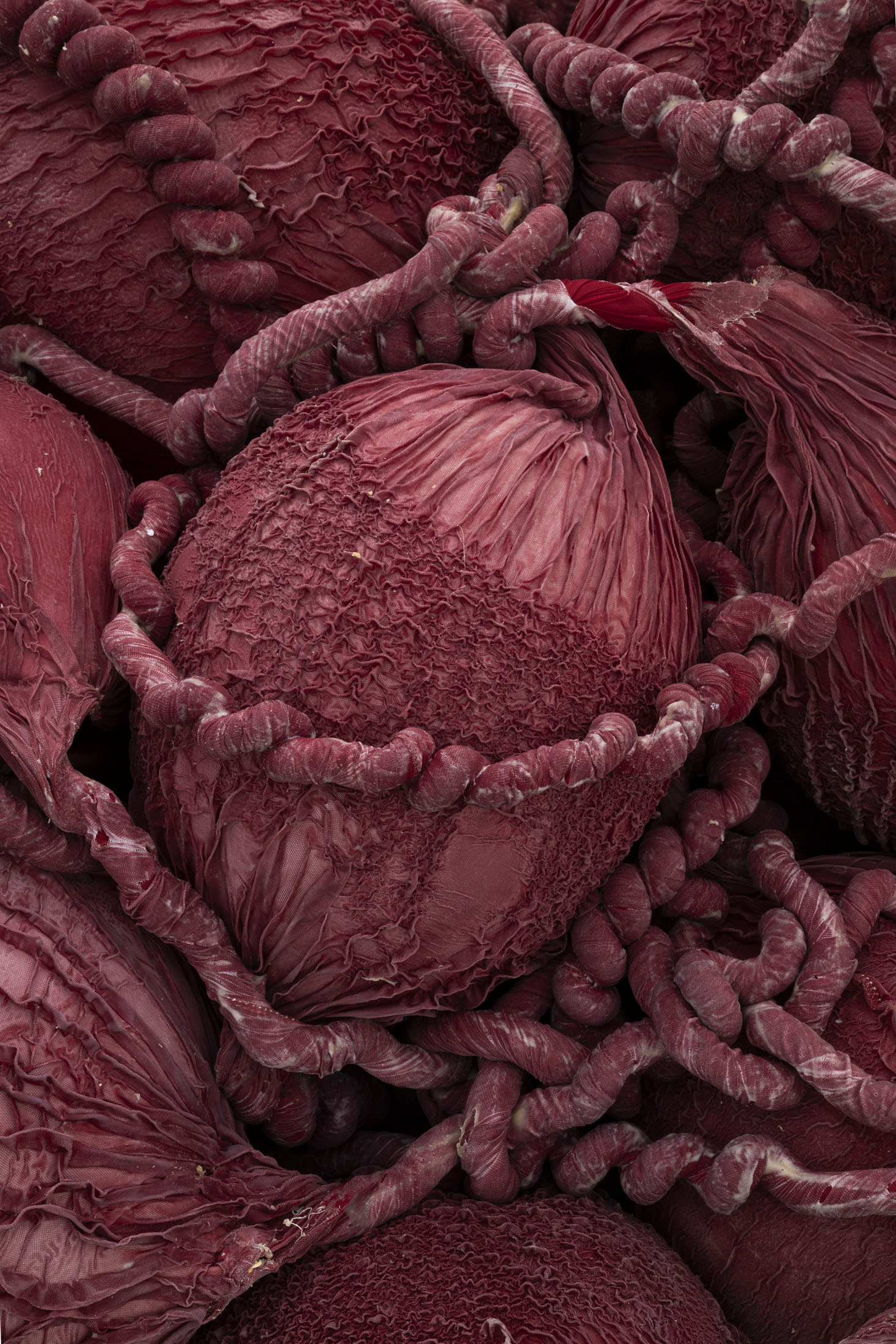
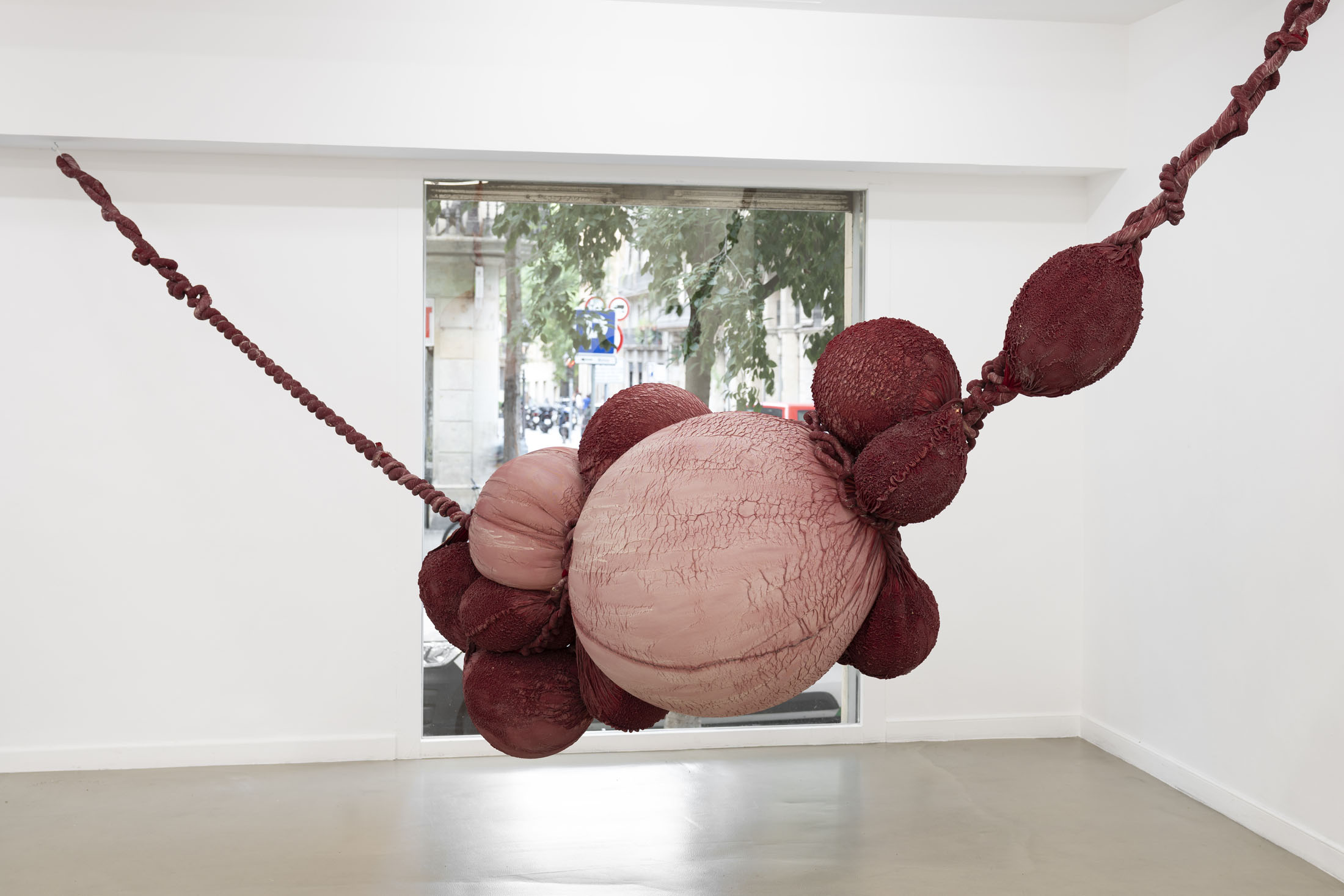
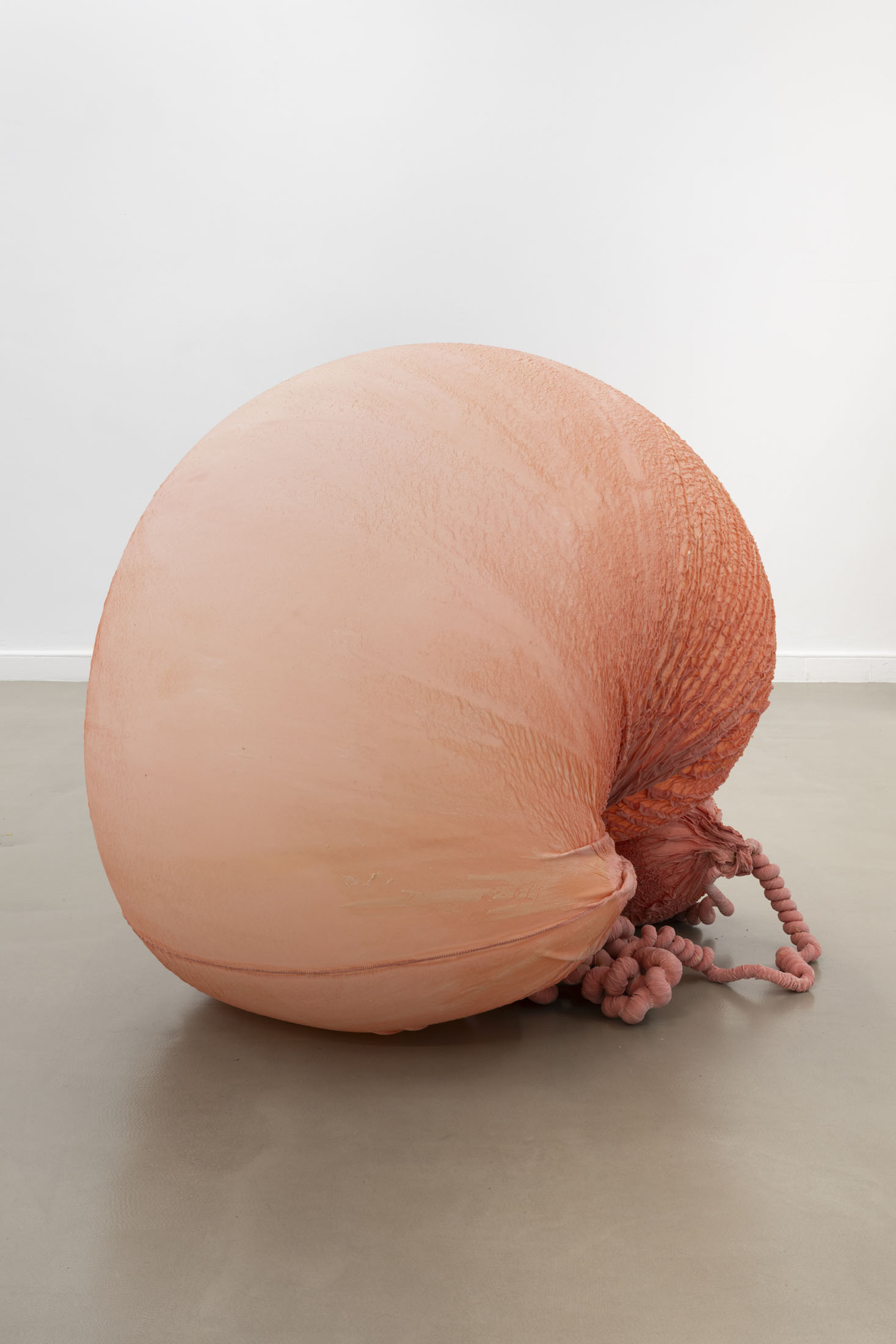
The materials used by Eva Fàbregas are mostly non-organic. But the reason is purely pragmatic: it is very difficult to achieve the level of dynamic relationships between all the elements at play using living materials. And yet, over time, her techniques and knowledge of flexible and elastic matter have almost invented a substance that allows her to create tension and volume in unprecedented ways.
The idea of tension is intensified by the texture of the sculptures: the skin of the works appears cracked, almost eroded, resembling a dense network of blood vessels, forming a surface akin to visceral tissue. For a moment, we wonder if they belong to the space they are in with us — or if they escaped a body and landed in the space after numerous adventures. Looking at them, we know we do not belong to the same realm. They belong “inside,” while the gallery space — and we — are in a dimension we can call “outside,” or public. If you look at them carefully, you can sense that they are forming groups — and that they seem to be protecting each other. At times, the pieces resemble spheroids or organoids, clusters of neural cells mimicking brain tissue. At times, they look like germinal centers, like the lymph nodes containing spherical clusters of immune cells. At times, they look like kidneys. They are connected by rope-like, bulging veins similar to the ones we sometimes see winding beneath the surface of the skin — coarse, tense, and serpentine.
Funny — in 1972, Gilles Deleuze and Félix Guattari published Anti-Oedipus: Capitalism and Schizophrenia. There, there’s a chapter entitled “The Body Without Organs.” What do they mean? The metaphor of a body (or self, or system) without organs expresses the need to imagine a body — a social body, a group, a society — capable of resisting being organized, coded, or stratified by particular social narratives, psychological guidelines, or biological structures.
This is a beautiful image. The body, as we know it, is conceived as an “organism,” a functioning unit shaped by external demands: each part having a function (the heart pumps but feels; the brain thinks, etc.). Imagining a body without organs means imagining the body before it is programmed with all the codes of capitalism and its psychological narratives (anxiety, exhaustion, guilt…). It is easy to see how the artistic practice of Eva Fàbregas has been going deeper and deeper into the political substance of producing works able to address this process of de-territorializing the body — unbinding it from imposed order. It is a process towards liberation, towards a personal — at first — and collective — later — inquiry into learning how a new structuring of those organs is possible, how to conceive ways of escaping the relapse into fixed roles, patterns, functions that limit how desire or life can flow.
It is simple: her work is all about the possibility of sculpture becoming the site for rethinking how we live, feel, and desire — outside conventional systems.
– Text by Chus Martínez
Eva Fàbregas (b. 1988, lives and works in Barcelona) Among her recent exhibitions are: Bio Morphe, Moody Center for the Arts (Houston, USA, 2025), 18th Istambul Biennial IKSV (Istambul, TR, 2025), Heavy Hitters, Tarmak22 (Saanen, CH, 2025), Respirar con la herida, Matadero (Madrid, ES, 2025); Exudates, MANIFESTA 15, MAC Mataró (Mataró, ES, 2024); Songs for the Changing Seasons, Klima Biennale (Vienna, AT, 2024); When Forms Come Alive, Hayward Gallery (London, UK, 2024); Devouring Lovers, Hamburger Bahnhof (Berlin, DE, 2023); Enredos, Centro Botín (Santander, ES, 2023); Growths, La Biennale de Lyon (Lyon, FR, 2022); London Open, Whitechapel Gallery (London, UK, 2022); Vessels, Bombon Projects (Barcelona, ES, 2022); Skin-like, Kunsthal (Ghent, BE, 2021); Gut Feeling, CentroCentro (Madrid, ES,2019); Those things that your fingers can tell, Kunstverein München (Munich, DE, 2019); Every object is a thing but not everything is an object, Hollybush Gardens (London, UK, 2018); Who cares? A radio tale, Gasworks / Resonance 104.4 FM (London, UK, 2018); First Act: Smooth Operations, Laure Genillard Gallery (London, UK, 2017–2018); Picture yourself as a block of melting butter, Fundació Miró (Barcelona, ES, 2017); Eyecatcher, Big Screen Southend, Focal Point Gallery (Southend-on-Sea, UK, 2017); Scissors cut paper wrap stone, Ormiston House (Limerick, IE, 2017), West Cork Centre (Cork, IE, 2017), and CCA Derry – Londonderry (Derry, IE, 2016); Systems for displaying matter, Enclave (London, UK, 2016); The Role of Unintended Consequences, Syndicate (Cologne, DE, 2016); Teesside World Expo of Art & Technology, MIMA (Middlesbrough, UK, 2016); Soft control, Embassy Gallery (Edinburgh, UK, 2016); How are you feeling today?, Window Space, Whitechapel Gallery (London, UK, 2015); Unforeseen changes, The Green Parrot (Barcelona, ES, 2014); and Eva Fàbregas & Andrew Lacon, Kunstraum (London, UK, 2014). Her work is included in collections such as La Caixa (Barcelona, ES), MACBA (Barcelona, ES), DKV Arteria (ES), Museo Nacional Centro de Arte Reina Sofía (Madrid, ES), Kunsthal Ghent (Ghent, BE), CA2M (Madrid, ES), Col·lecció Nacional de Catalunya (Barcelona, ES), macLYON (Lyon, FR), Centro Botín, Fundación Santander (Santander, ES), Colección Kells (Santander, ES), and Fundación Vila Casas (Barcelona, ES).