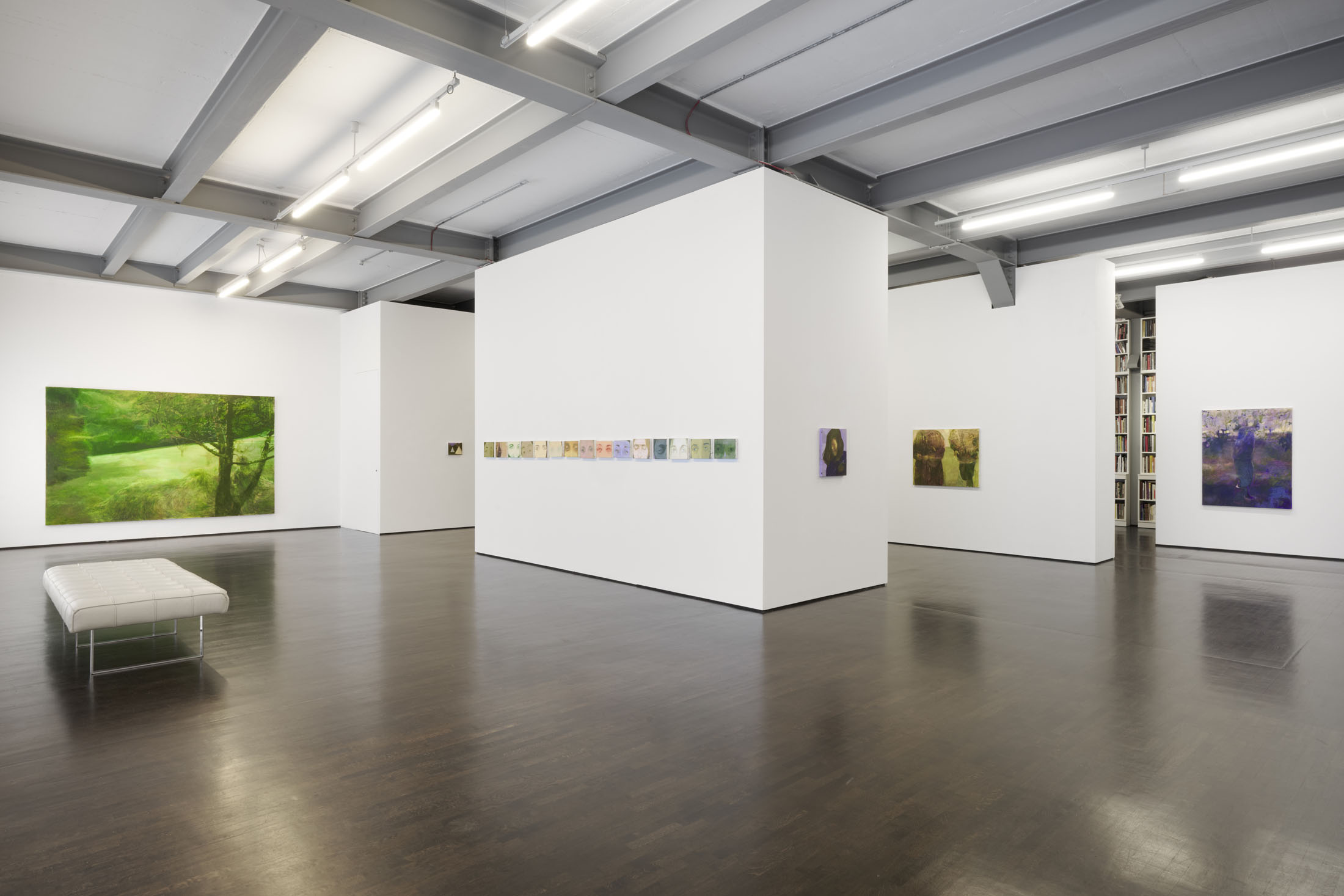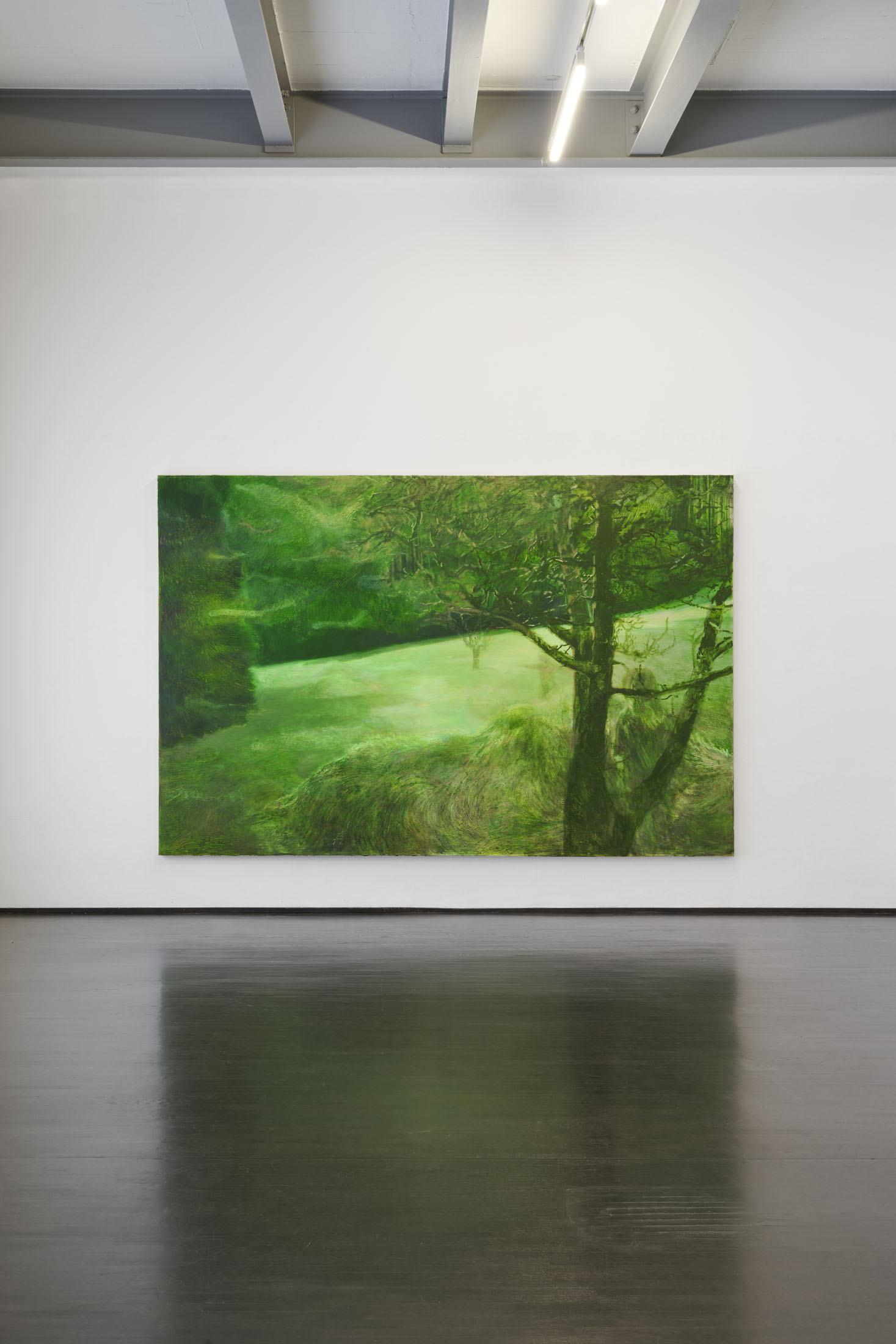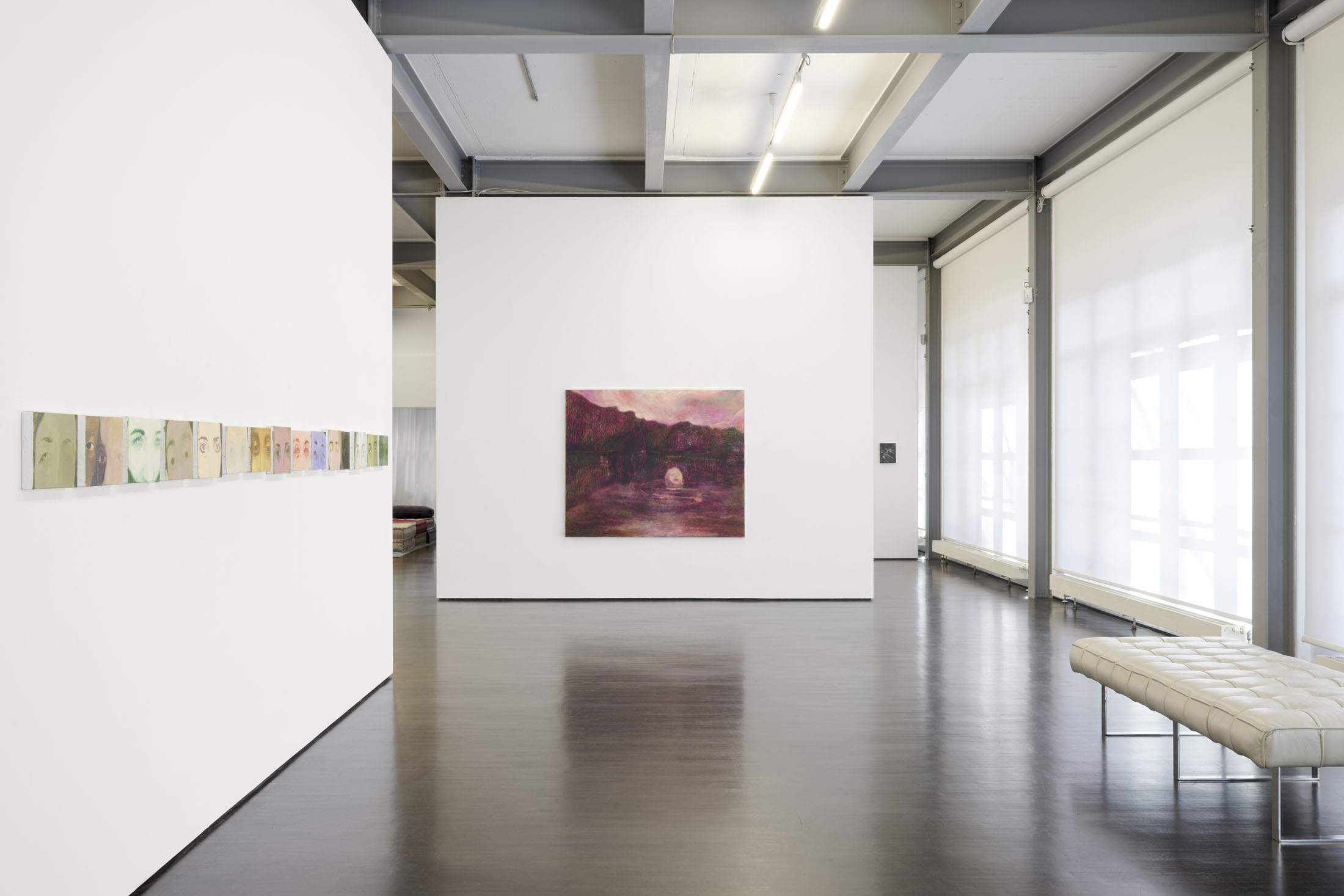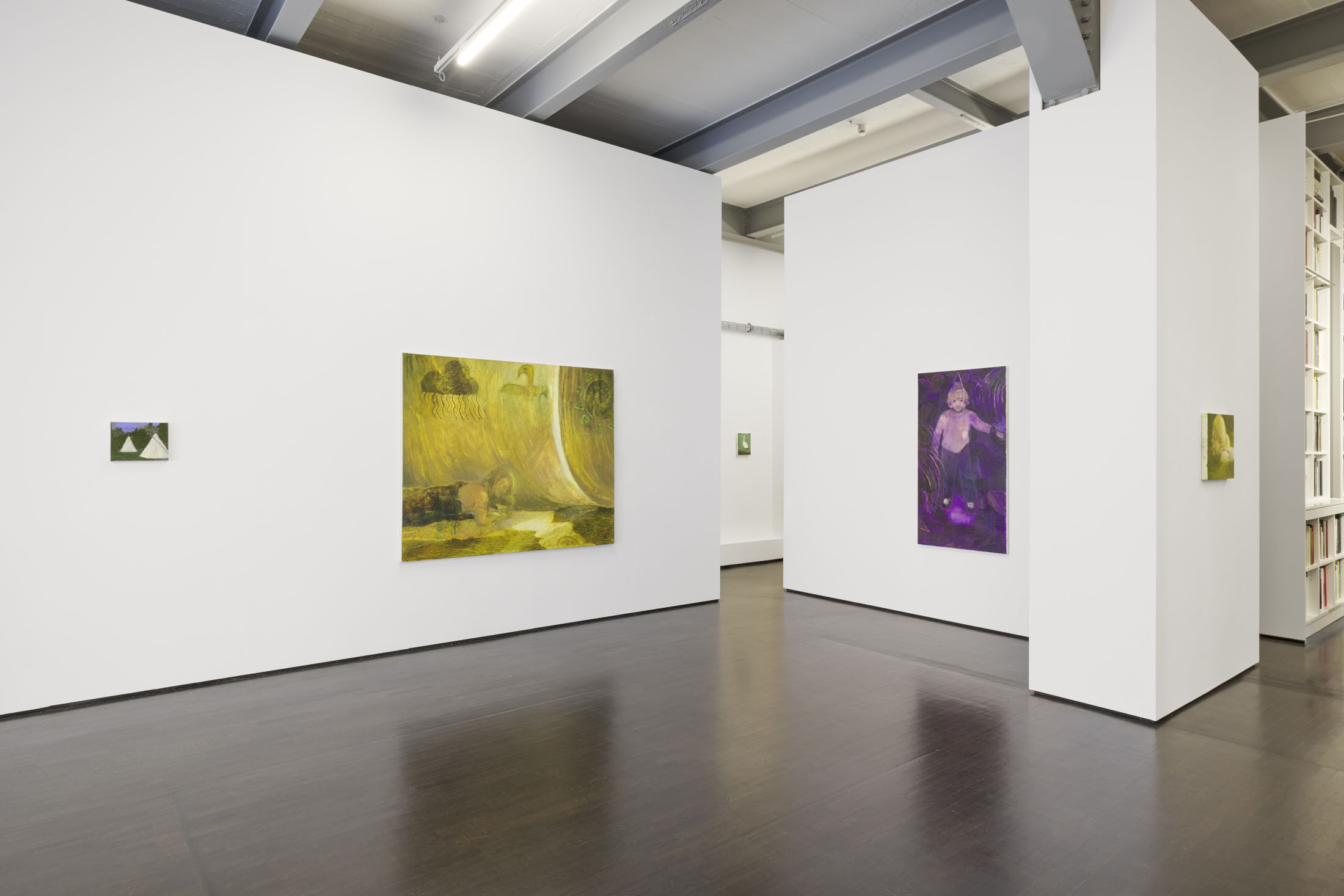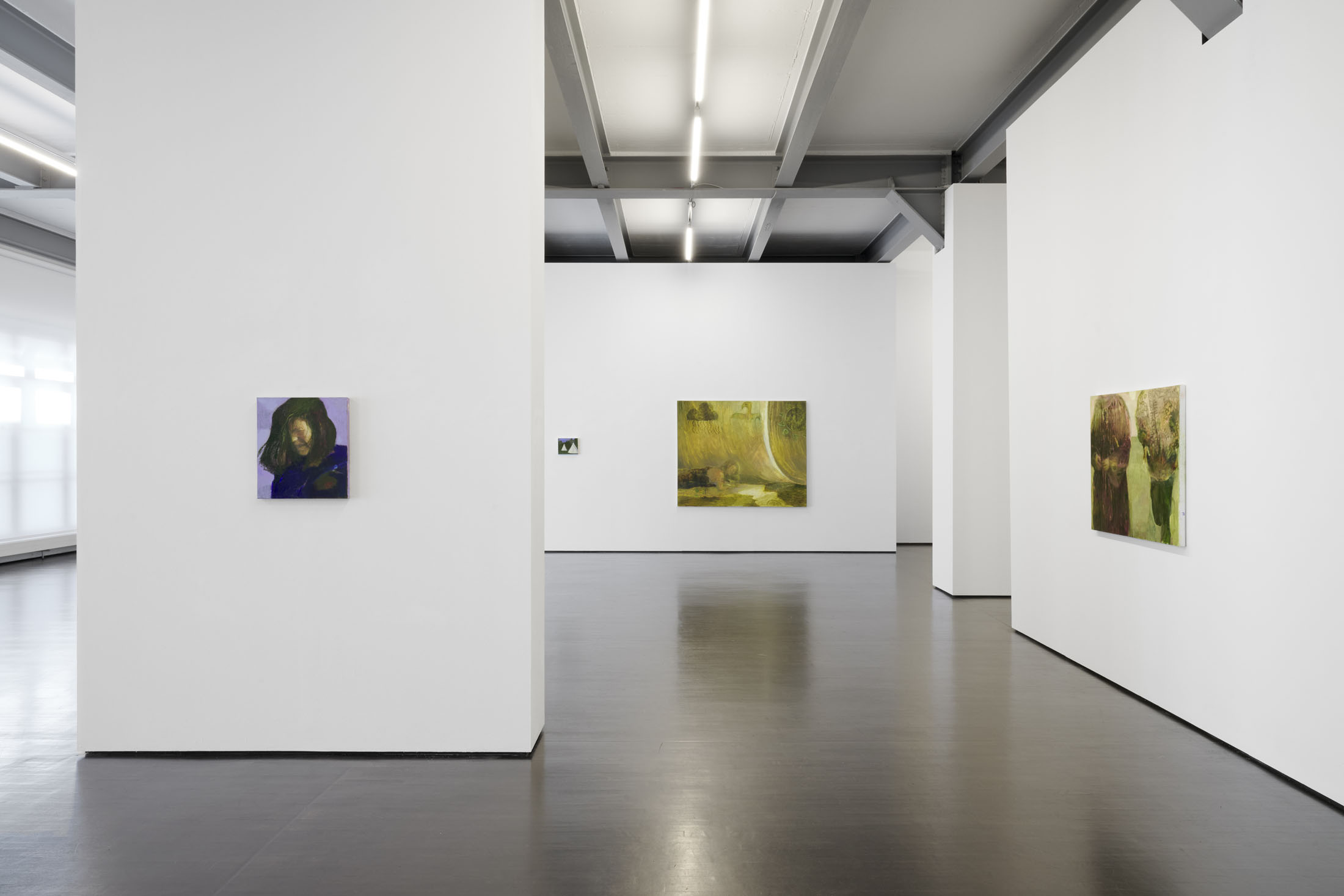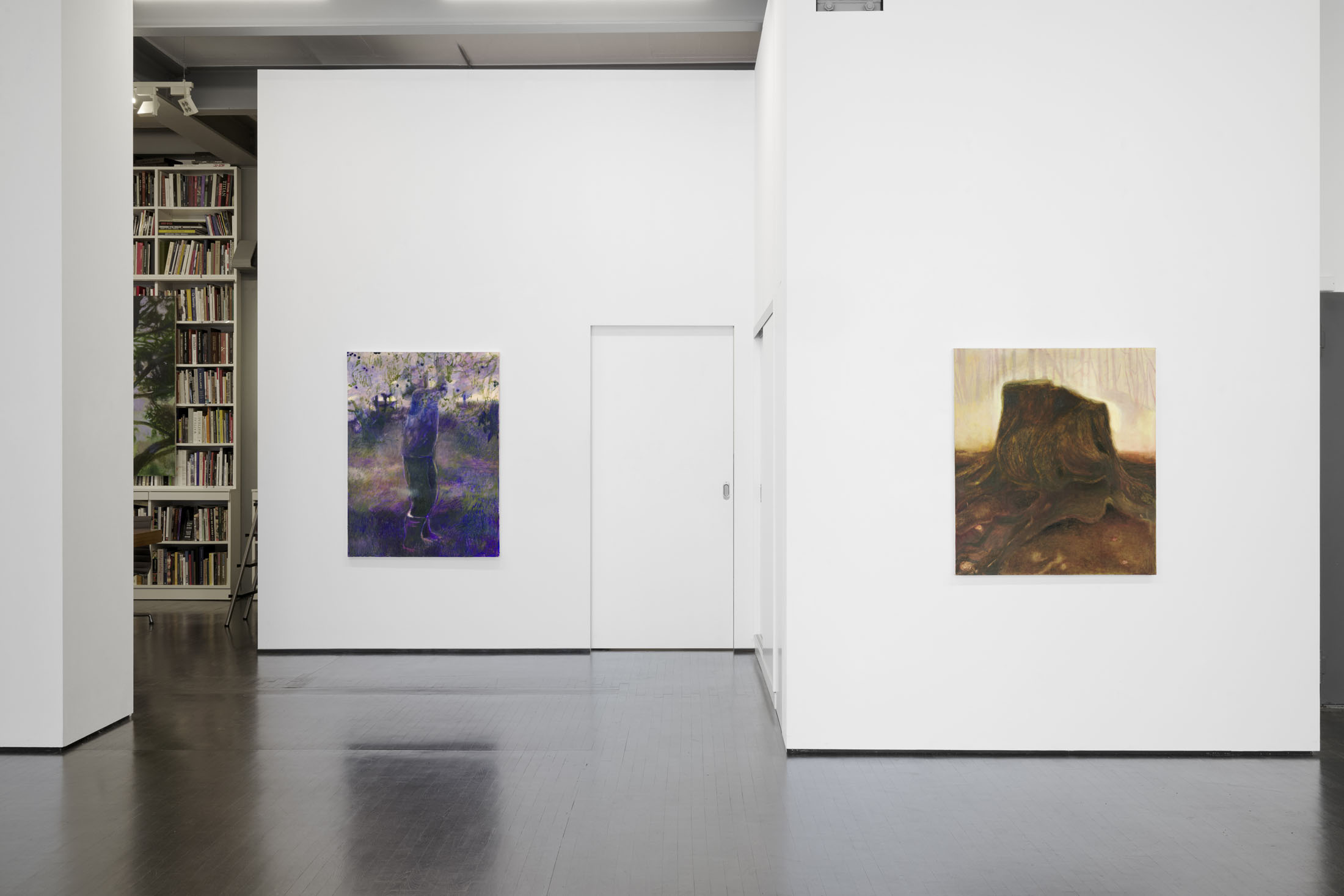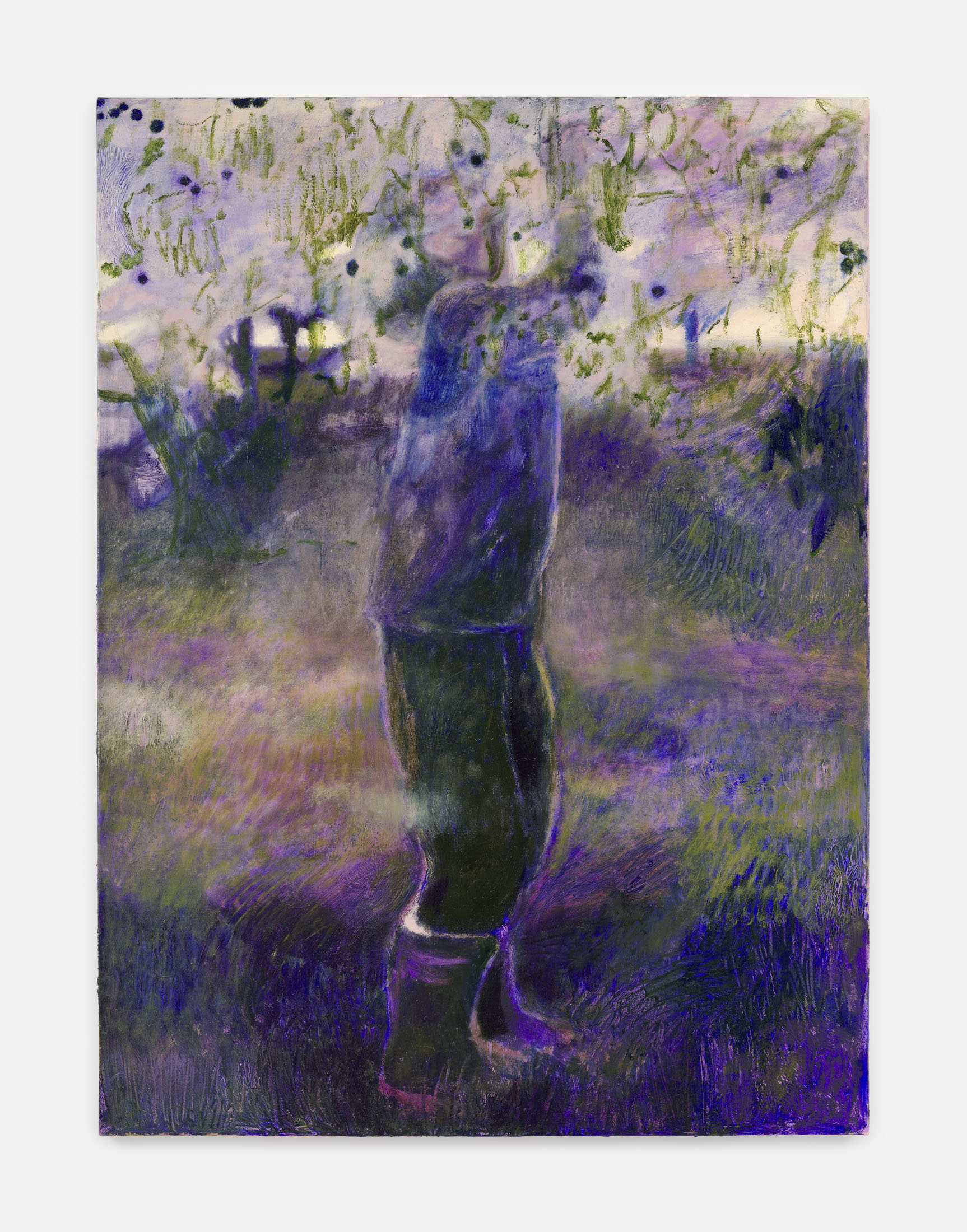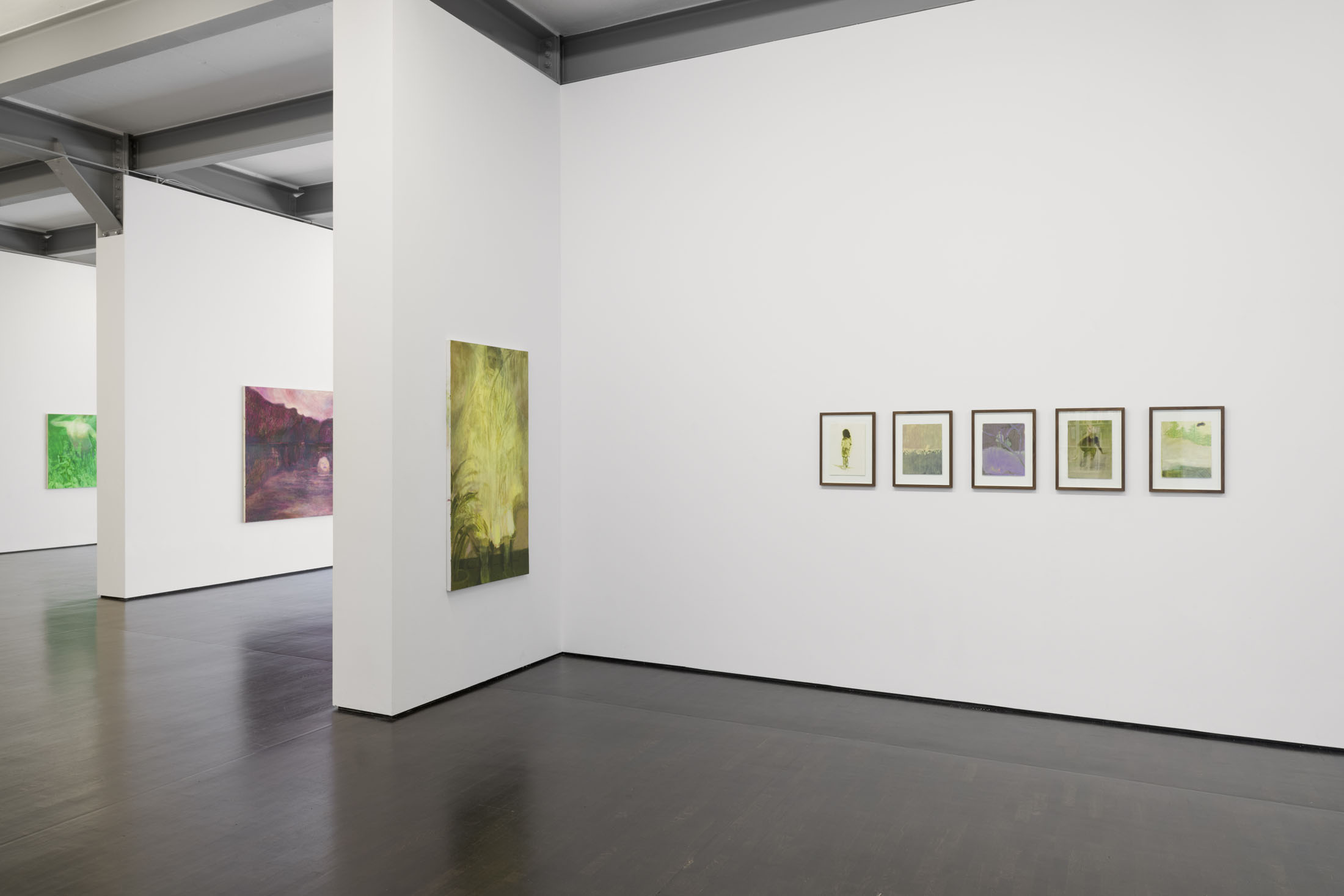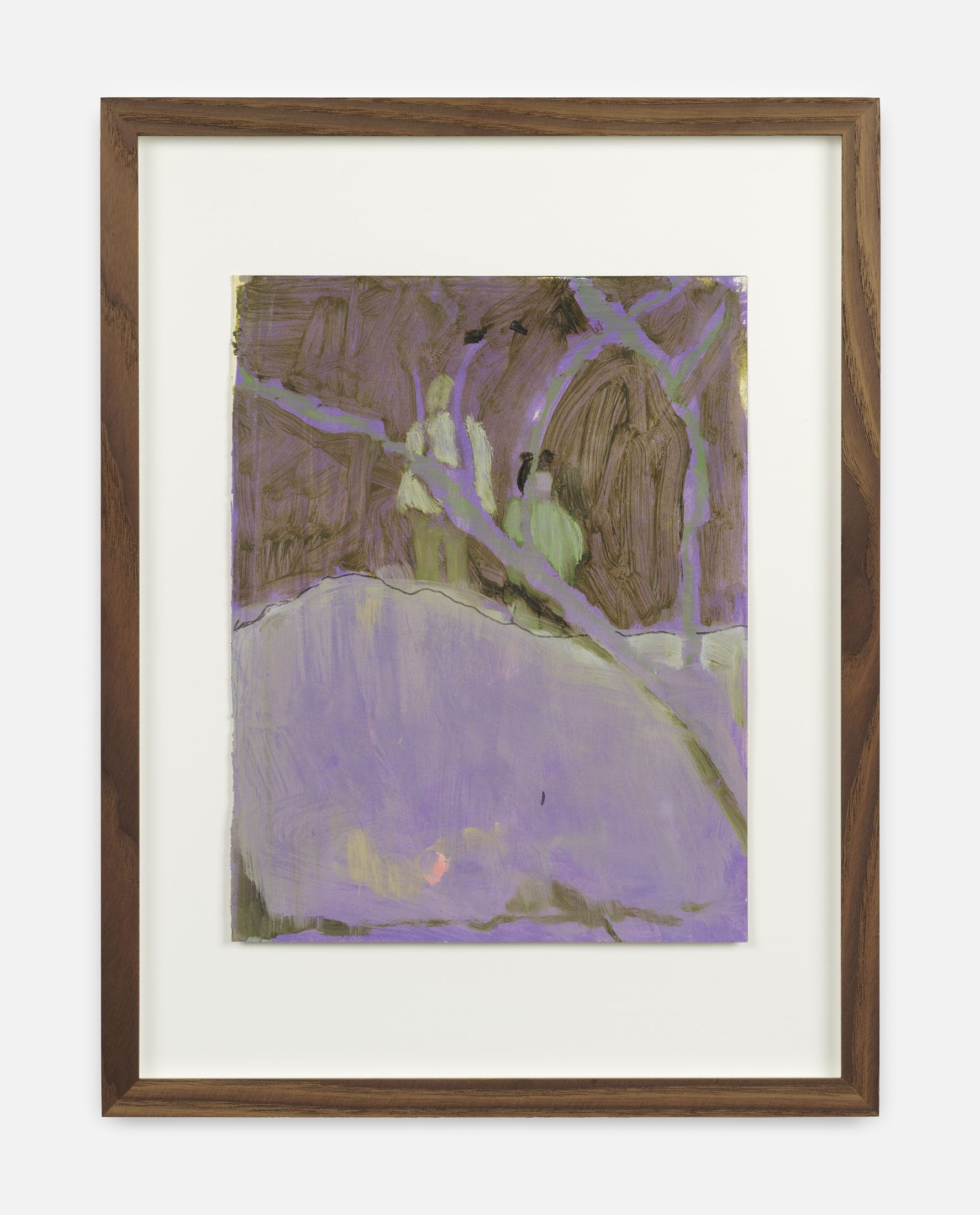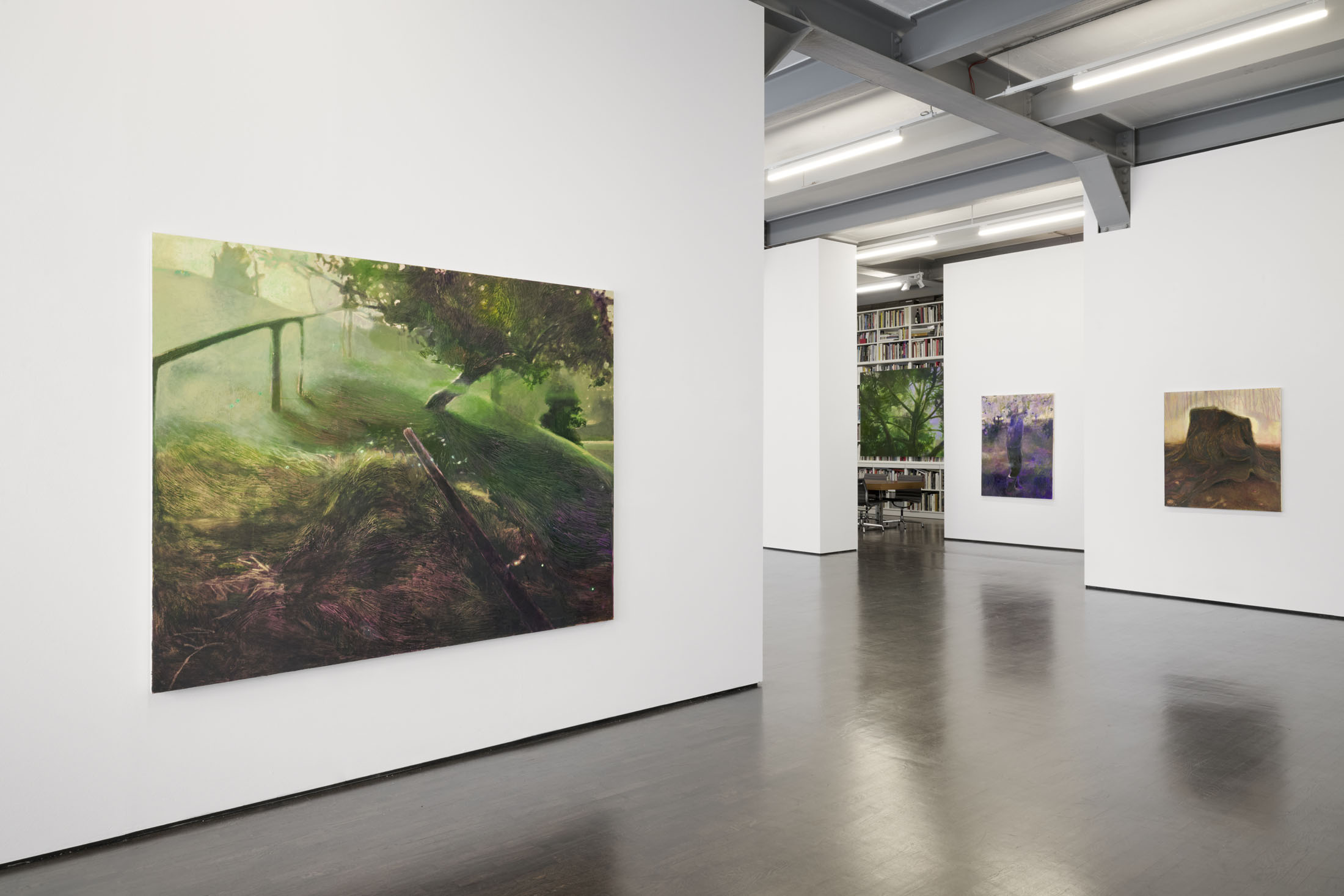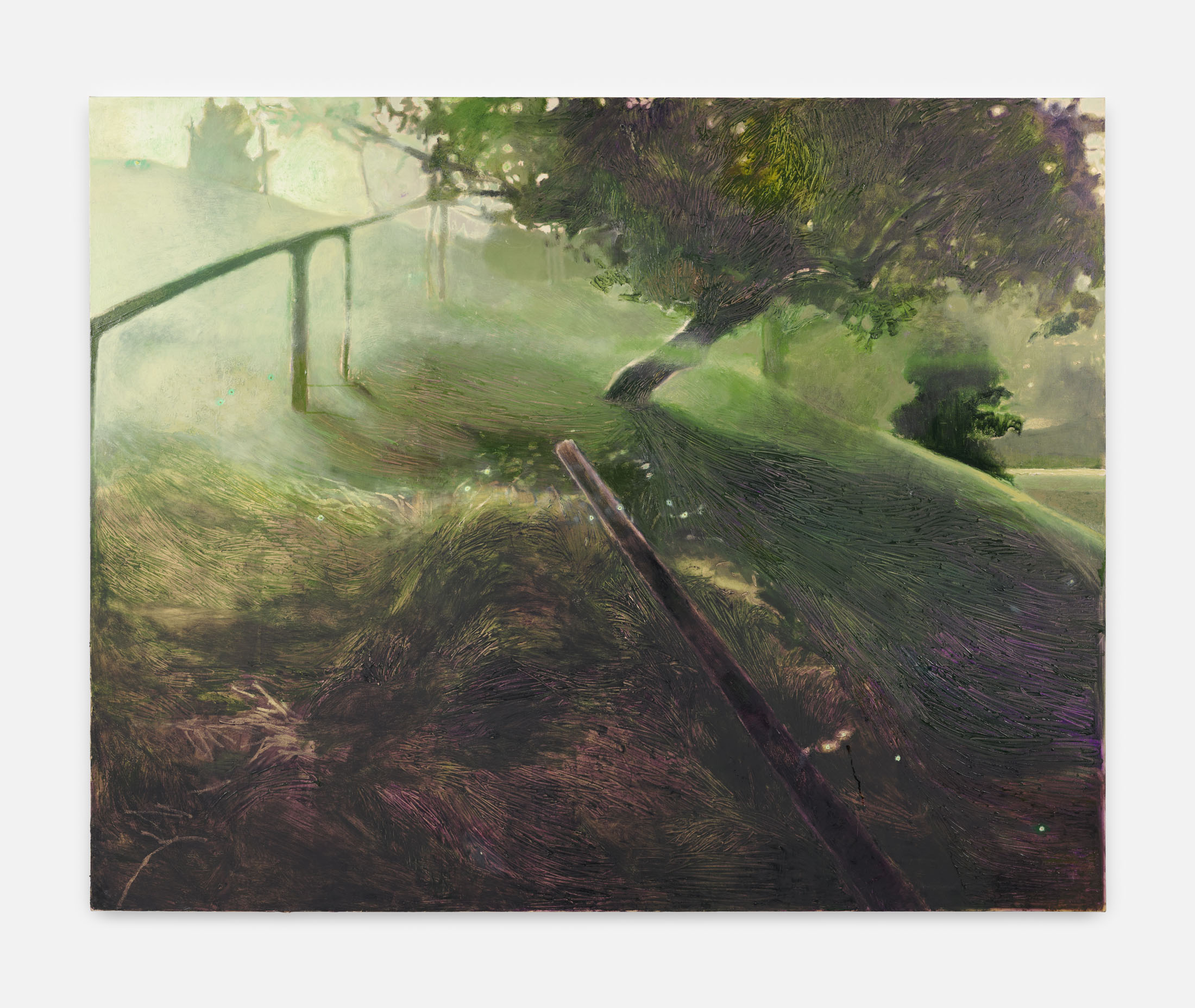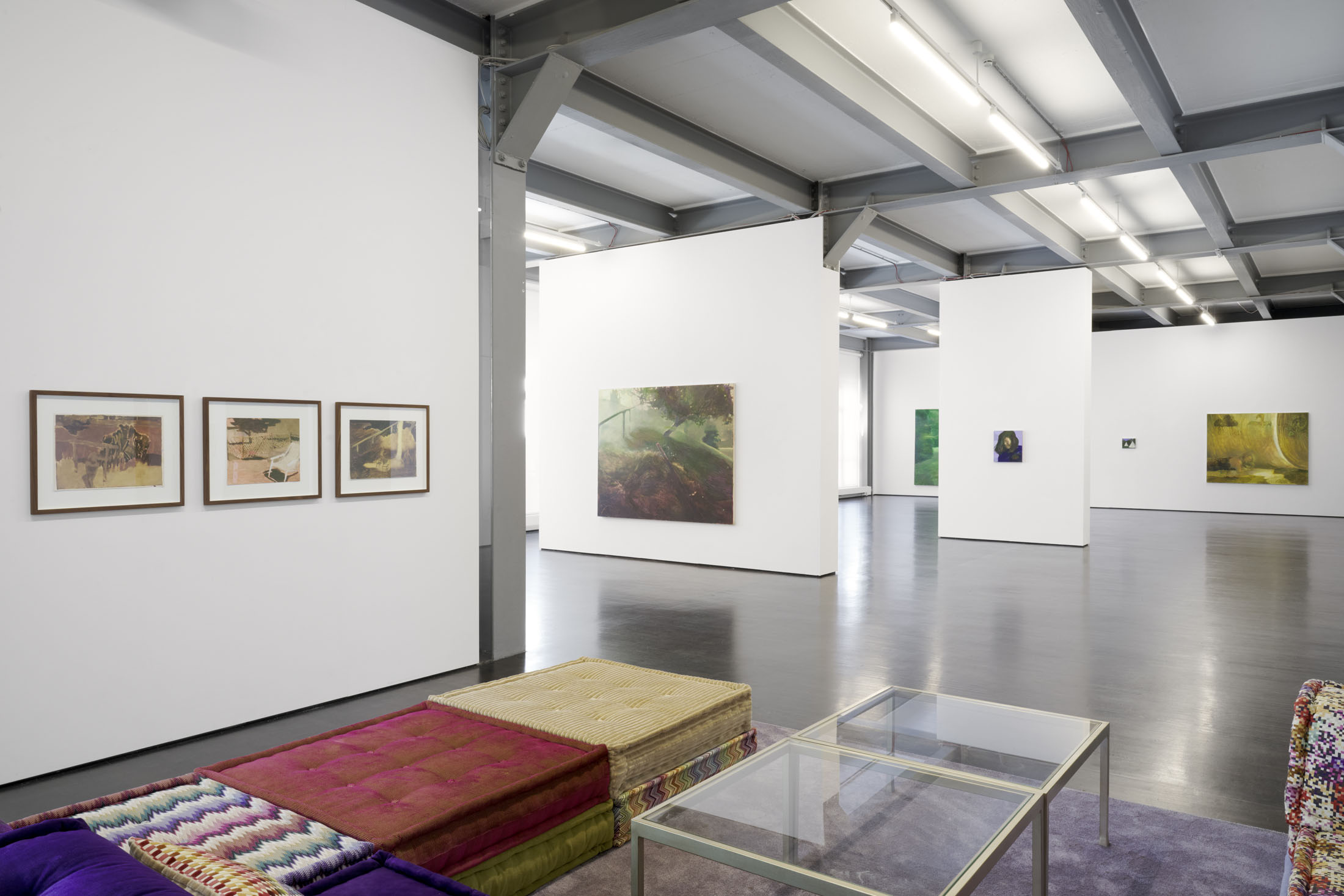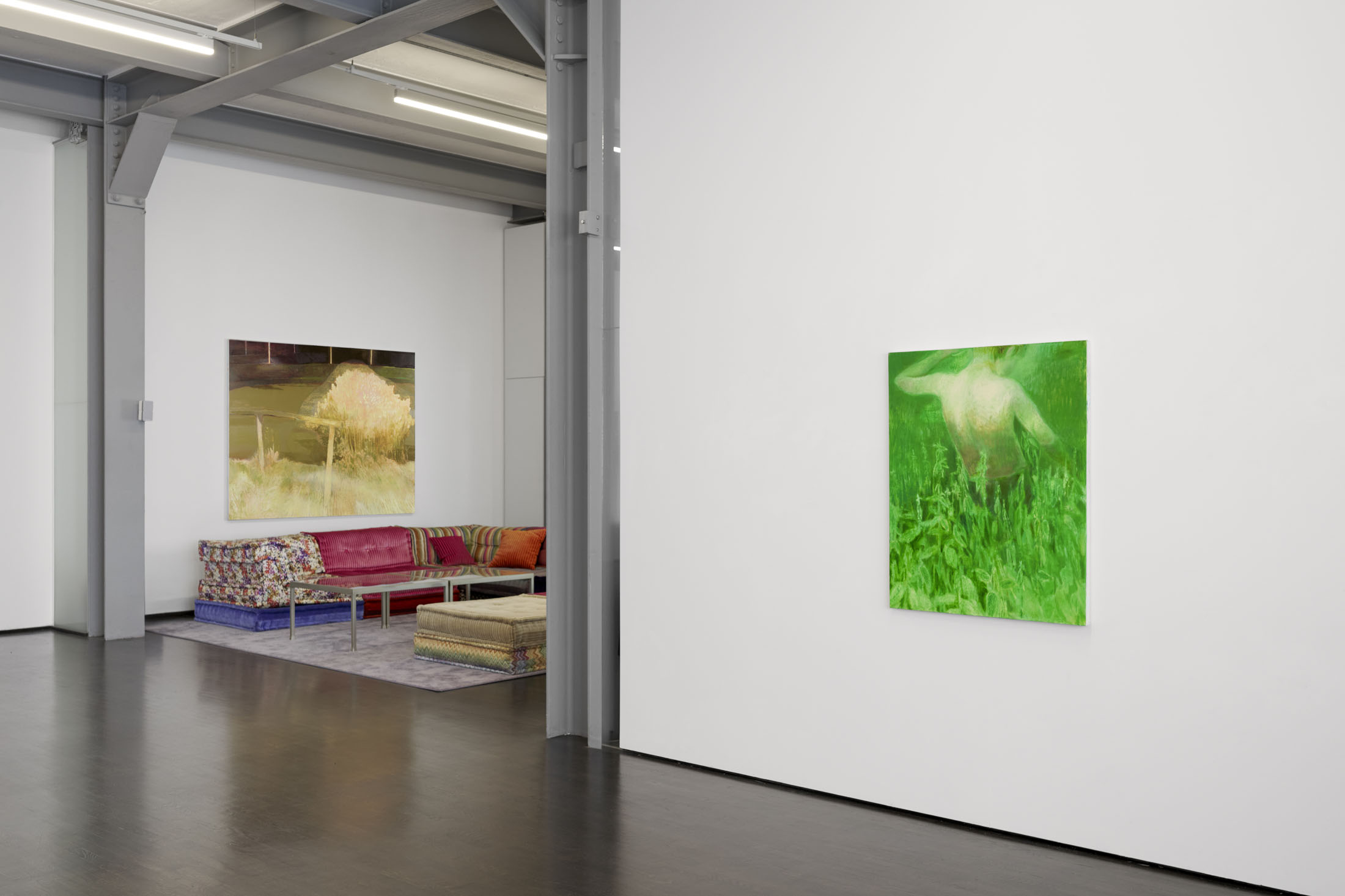
A girl, painted in silhouette, peers out over a haystack at a clearing in the forest. Depicted from behind and partially obscured by the branches of a tree, her exact appearance remains hidden. On the sunlit meadow, another child, only vaguely hinted at, takes a running start to jump. It blends in with its grass-colored surroundings. A dense forest borders the brightly lit plain, isolating it from the outside world. Following the girl’s gaze, we, the viewers, are drawn into the landscape’s unreal atmosphere.
Through her works, including Flying Dreams (2025) and other landscape paintings, nature depictions, and portraits of children, painter Ester Knapová, born in Prague in 1993, offers an intimate glimpse into her childhood. Having grown up in the city, the artist regularly spent her holidays at her parents’ cottage in the Náchod region in northeast Czechia until the age of 13. There she loved retreating alone into nature, experiencing the changing seasons, and creating her own inner worlds. Memories of her early childhood now form the cornerstone of Knapová’s artistic practice. In her deeply personal works she combines the present and the past, the real and the surreal, and the rational and the unconscious without over-psychologizing. It is the artist herself that we see as a young girl in Flying Dreams. Despite this biographical specificity, her paintings convey collective experiences of nature and emotions associated with childhood that are independent of time and place, ranging from light-heartedness to a sense of threat.
The title Flying Dreams is inspired by a pivotal scene in the film Cría cuervos (1976, English subtitled edition Raise Ravens) by Spanish filmmaker Carlos Saura. Ana, the orphaned protagonist of this allegorical drama set during the final years of Francisco Franco’s dictatorship, is at the centre of the action. From the garden of her family’s villa in Madrid, eight-year-old Ana looks at the high-rise building opposite. First, she sees herself standing on the edge of the roof, and then jumping into the depths. The camera angle changes with the jump, showing the girl’s perspective as she floats down over the green cityscape in slow motion. At that moment, her imagination seems so powerful that her experience is almost indistinguishable from physical reality.
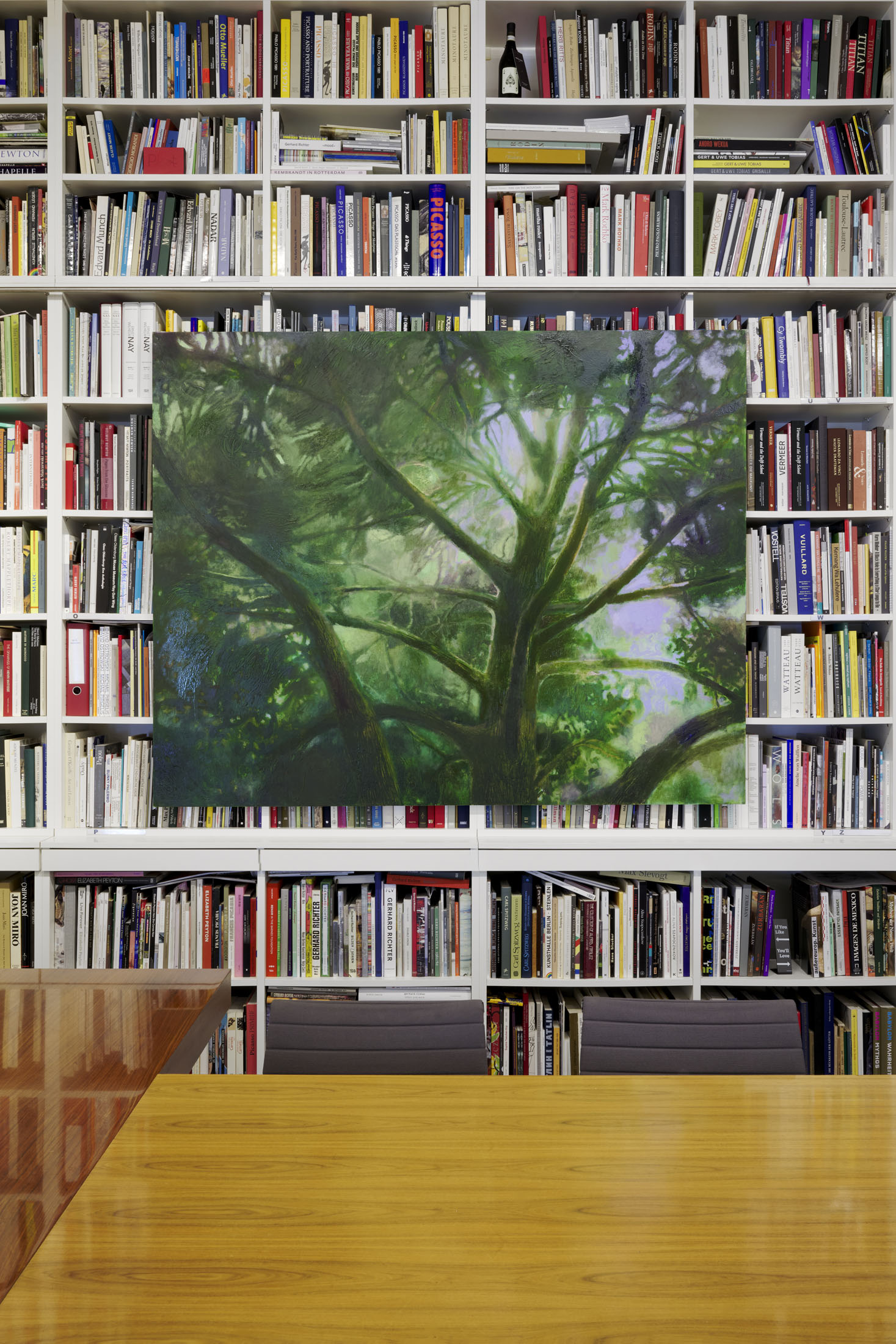
Likewise, Knapová draws on her imagination when she fills in the gaps in her memory and recalls the experiences and landscapes of her childhood. She observes the events with a detached gaze, like Ana gliding through the air. Her works vary between figuration and abstraction, employing means of alienation in unusually bright, dark, or contrasting lighting, as in Lost Moon (2025); visual elements that disrupt the composition, such as the railing that protrudes into the picture in Fireflies (2025); or an expressive yet monochromatic color scheme, as in In the Depths (2025). The multidimensionality of her paintings defies the illusion of an objective representation of reality, often rendering them mystical. Taken together, they form an incomplete whole: Across the temporal distance between her younger self and her present consciousness, Knapová’s childhood appears as a juxtaposition of subjective images, events, and emotional states.
Comparable explorations of identity in connection with the interference of time can be found in Marcel Proust’s multivolume novel À la recherche du temps perdu (1913–27, English translation now In Search of Lost Time) and in various works by the Czech novelist Milan Kundera. While Proust uses involuntary memories to recall his childhood as a condensation of emotionally charged events, Kundera deals with time in connection with a “lightness” based on forgetting and transience, as opposed to a “heaviness” determined by the eternal recurrence of events. Knapová’s works are bittersweetly nostalgic in the Proustian sense, but also reflect Kundera’s disillusioned, melancholic view.
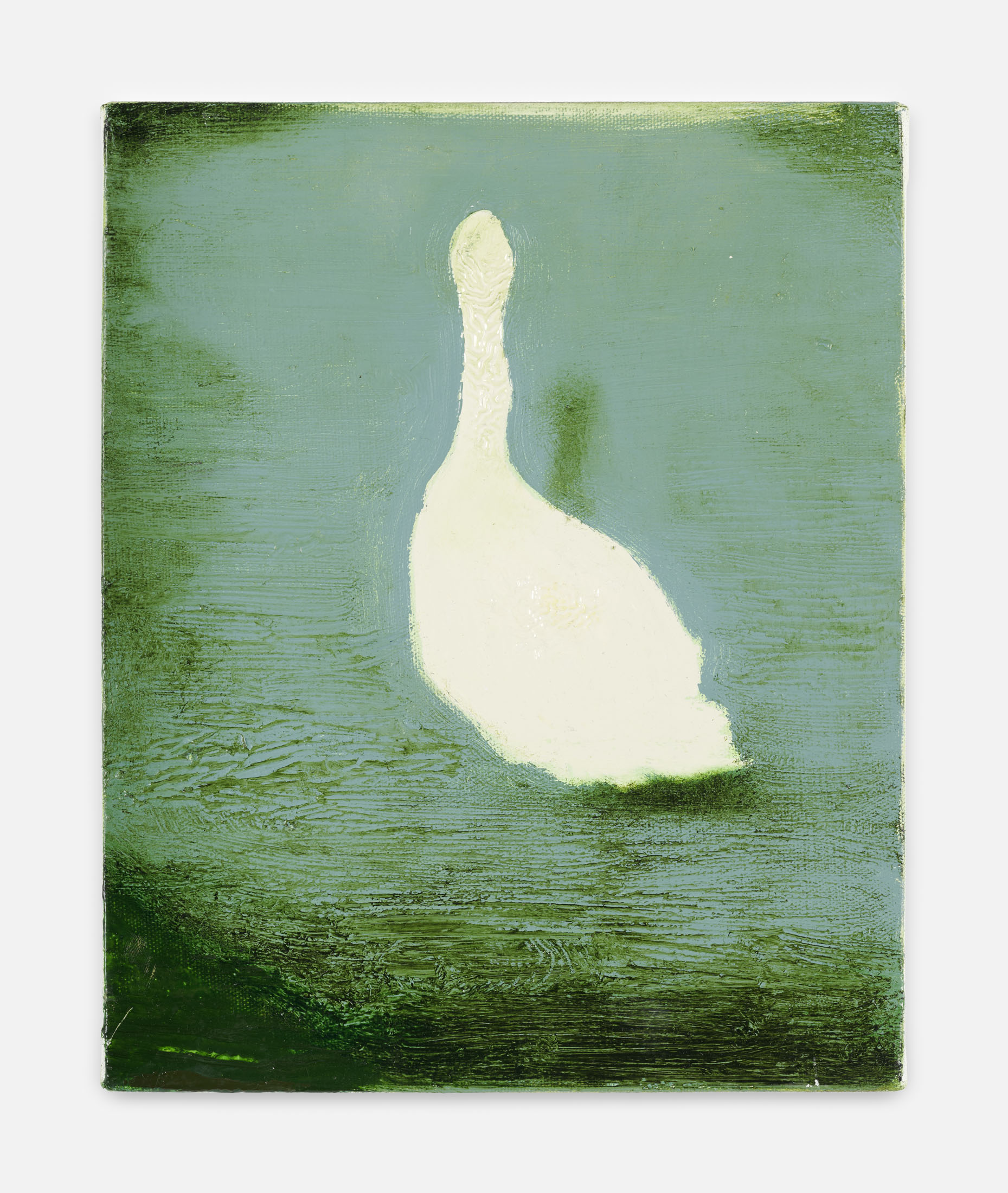
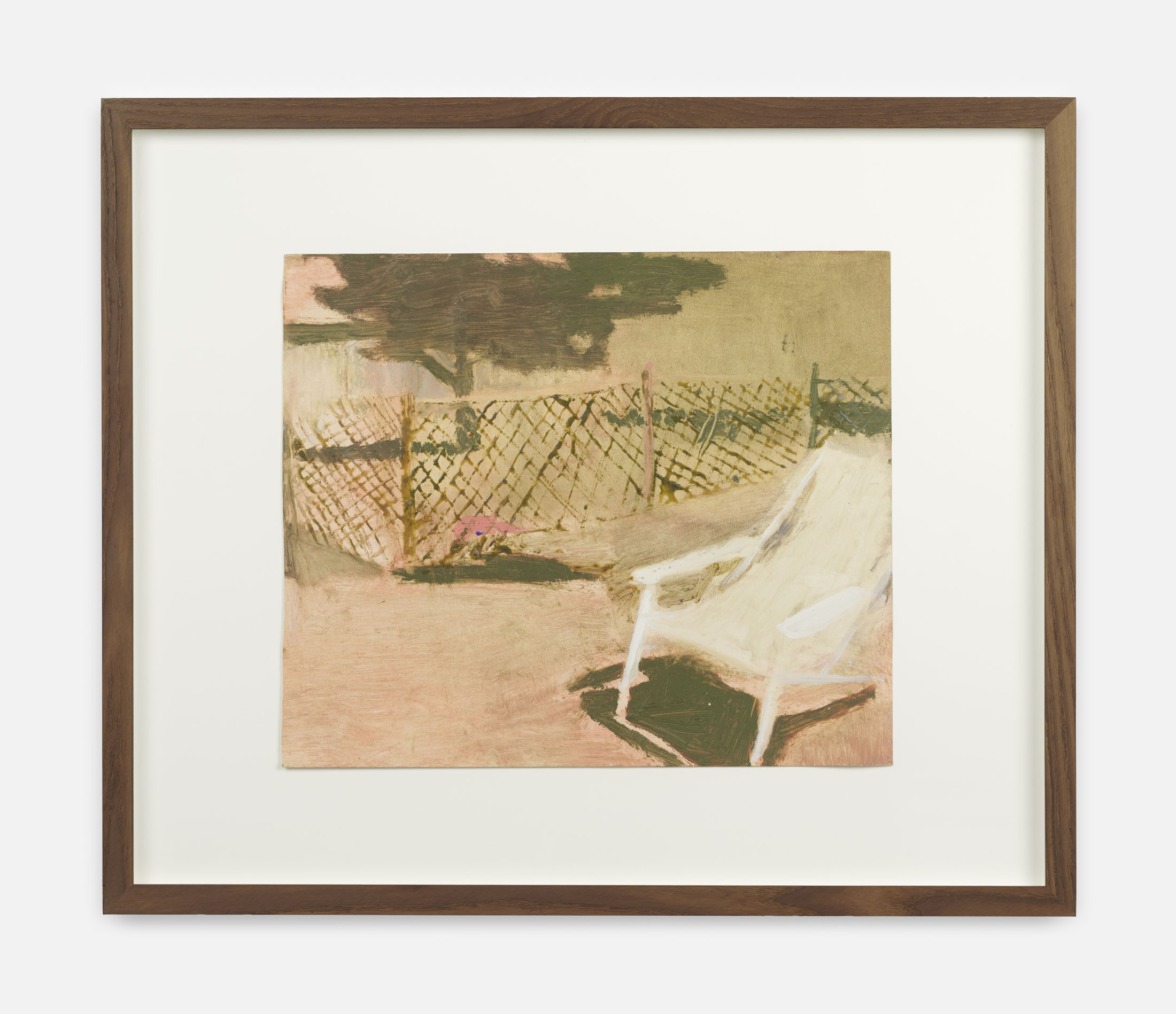
Knapová often uses photographs from her childhood as the basis for her work, as well as photographs by others, or recent ones by herself. However, the resulting works always deviate from the sources. Through the rearrangement, addition, or omission of pictorial elements; texture-creating paint; and the use of abstract color concepts, among other strategies, they represent entirely new constellations. Knapová’s paintings are usually created directly on the canvas without preliminary sketches and only loosely following previous construction and color studies on paper. They sometimes reveal a calculated fleetingness, sometimes display a deliberate rigidity, and mostly seem acoustically muted, like Giorgio Morandi’s sublime still lifes. Overpainting and extended periods of creation punctuated by breaks are characteristic of Knapová’s artistic process.
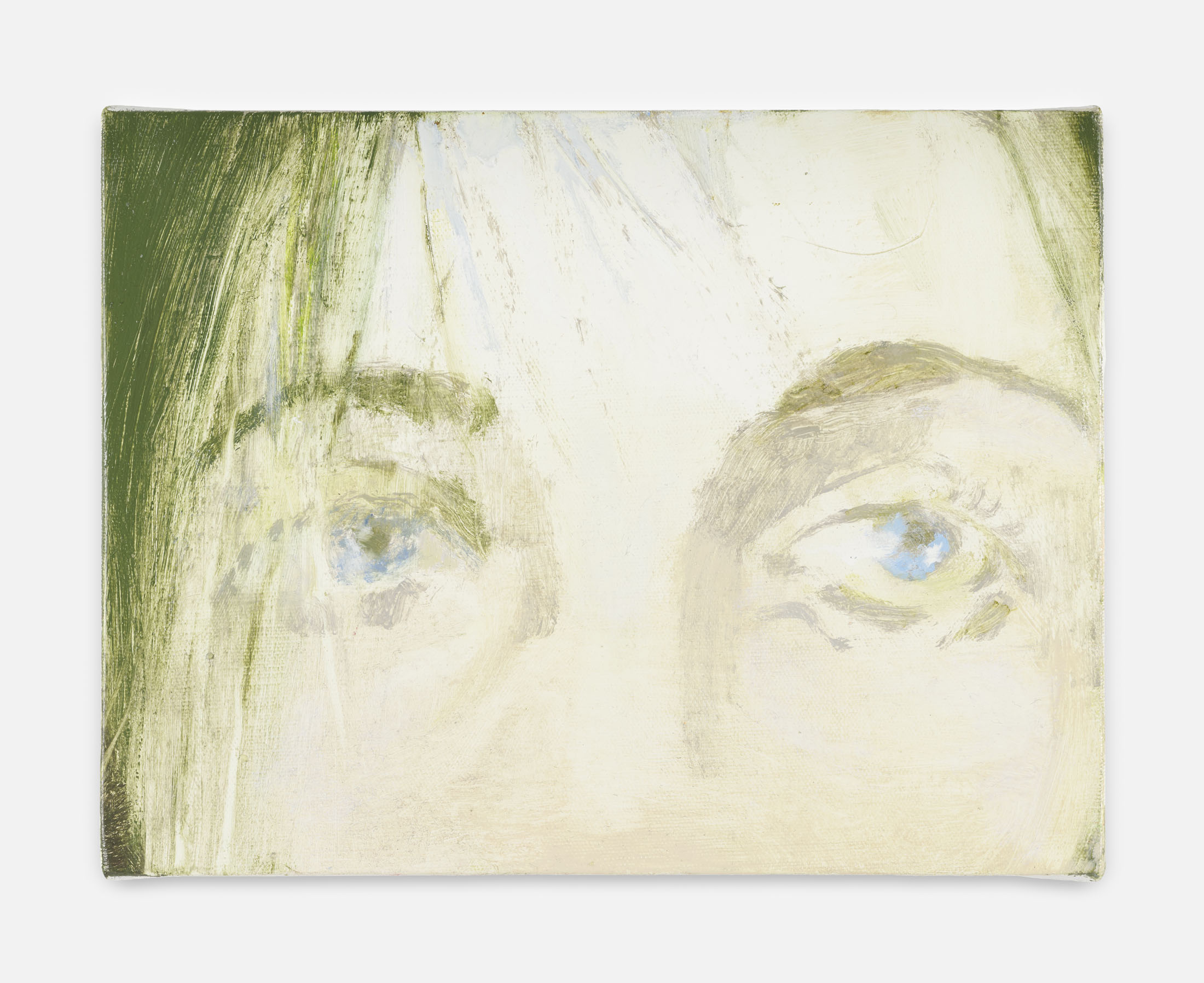
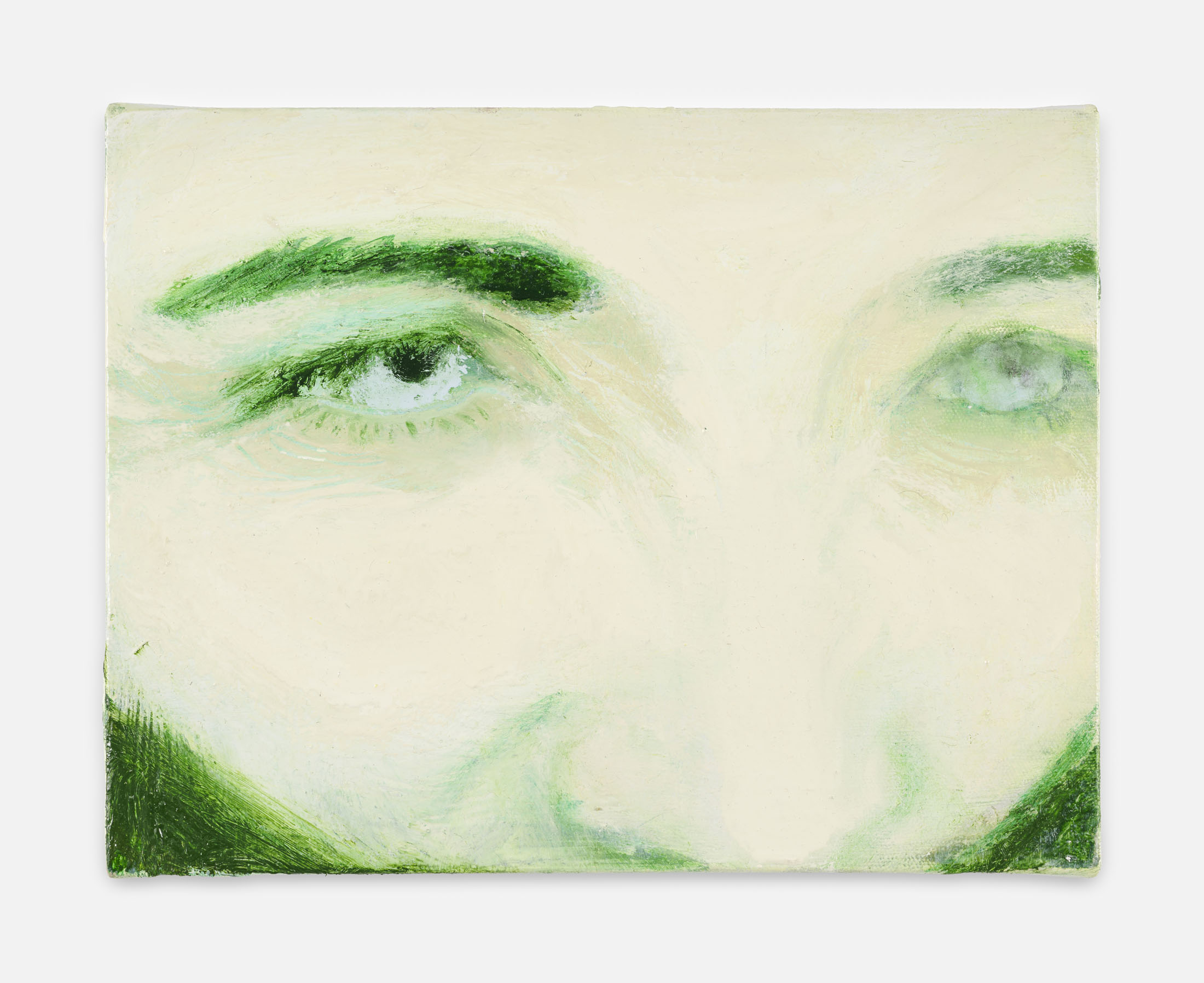
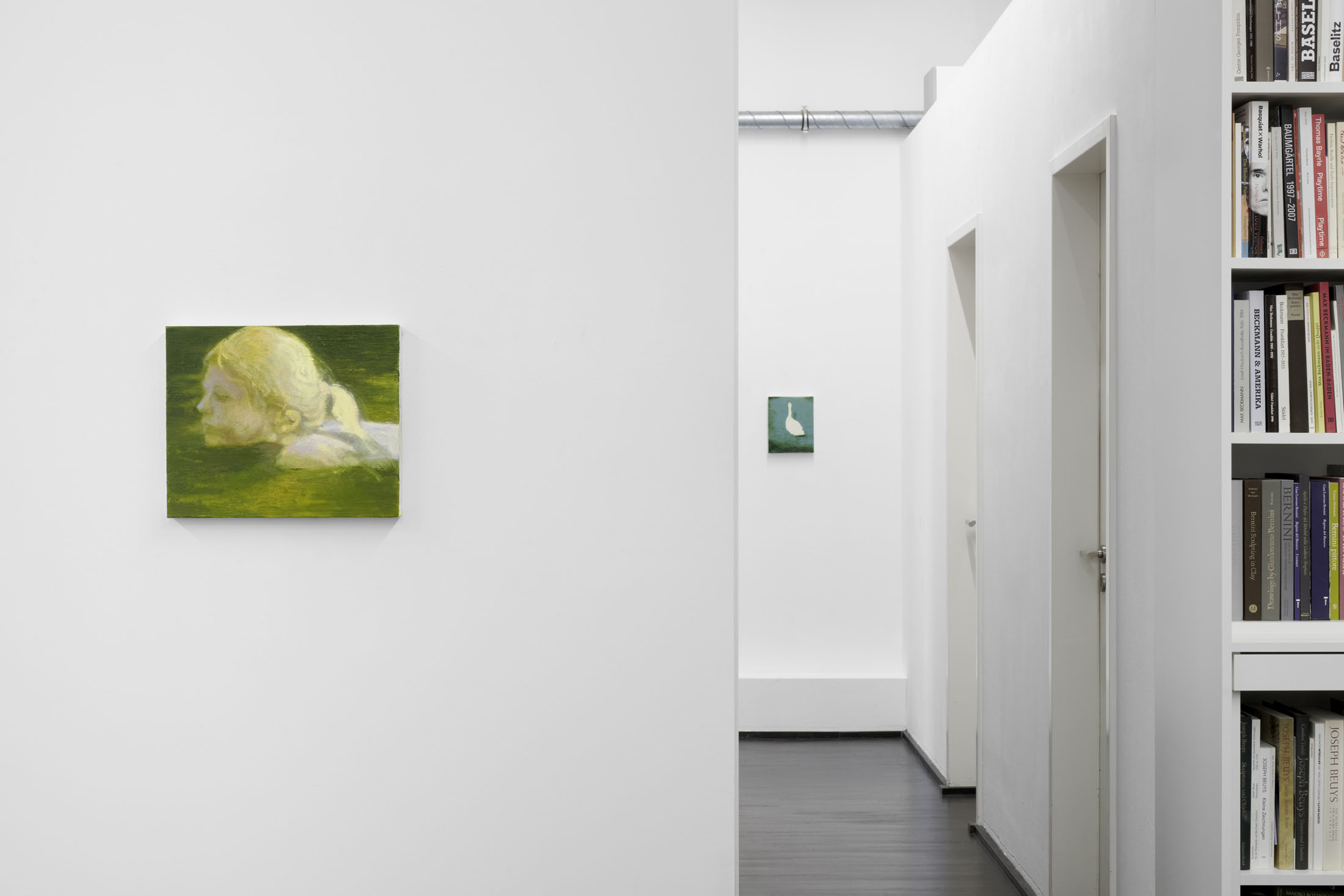
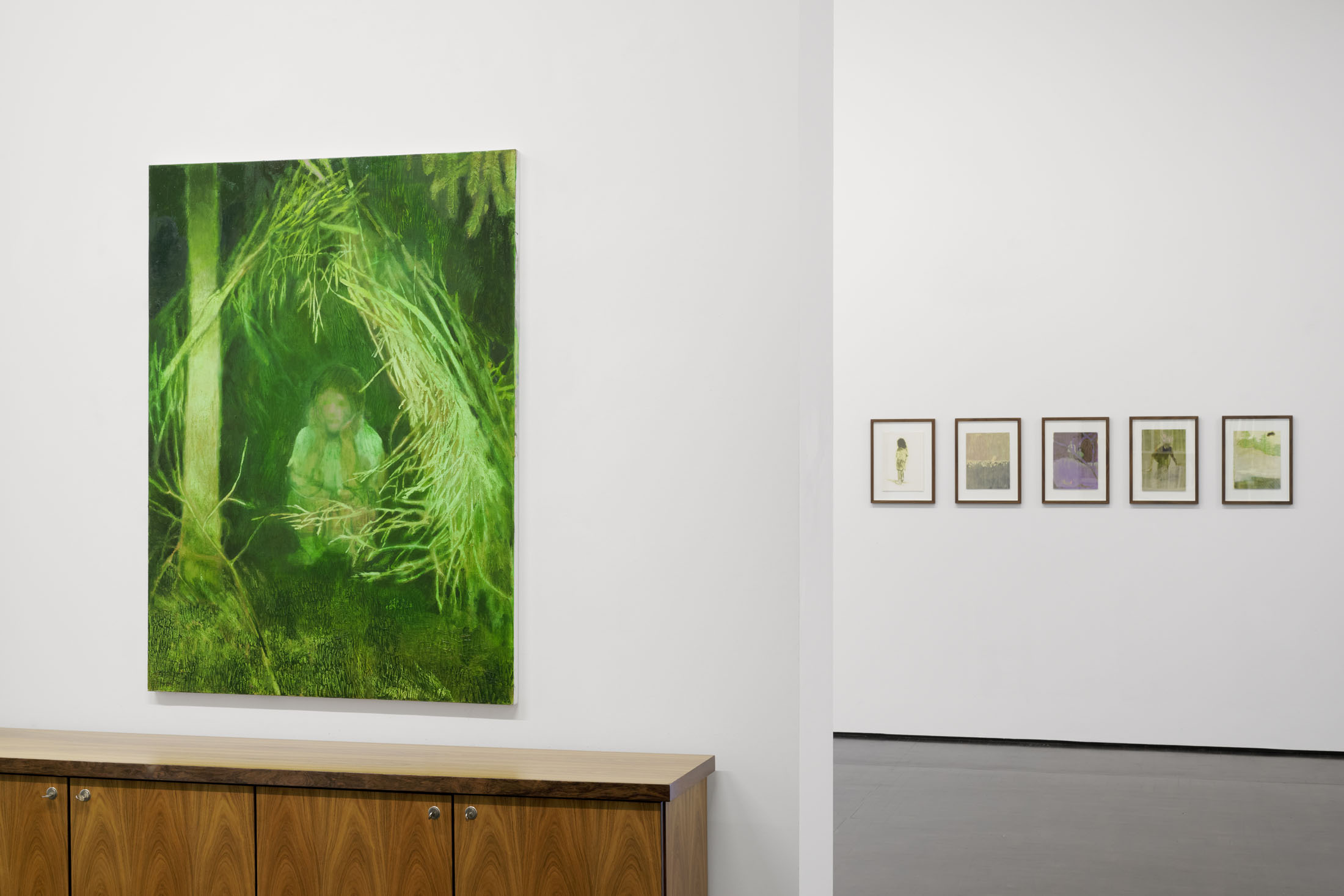
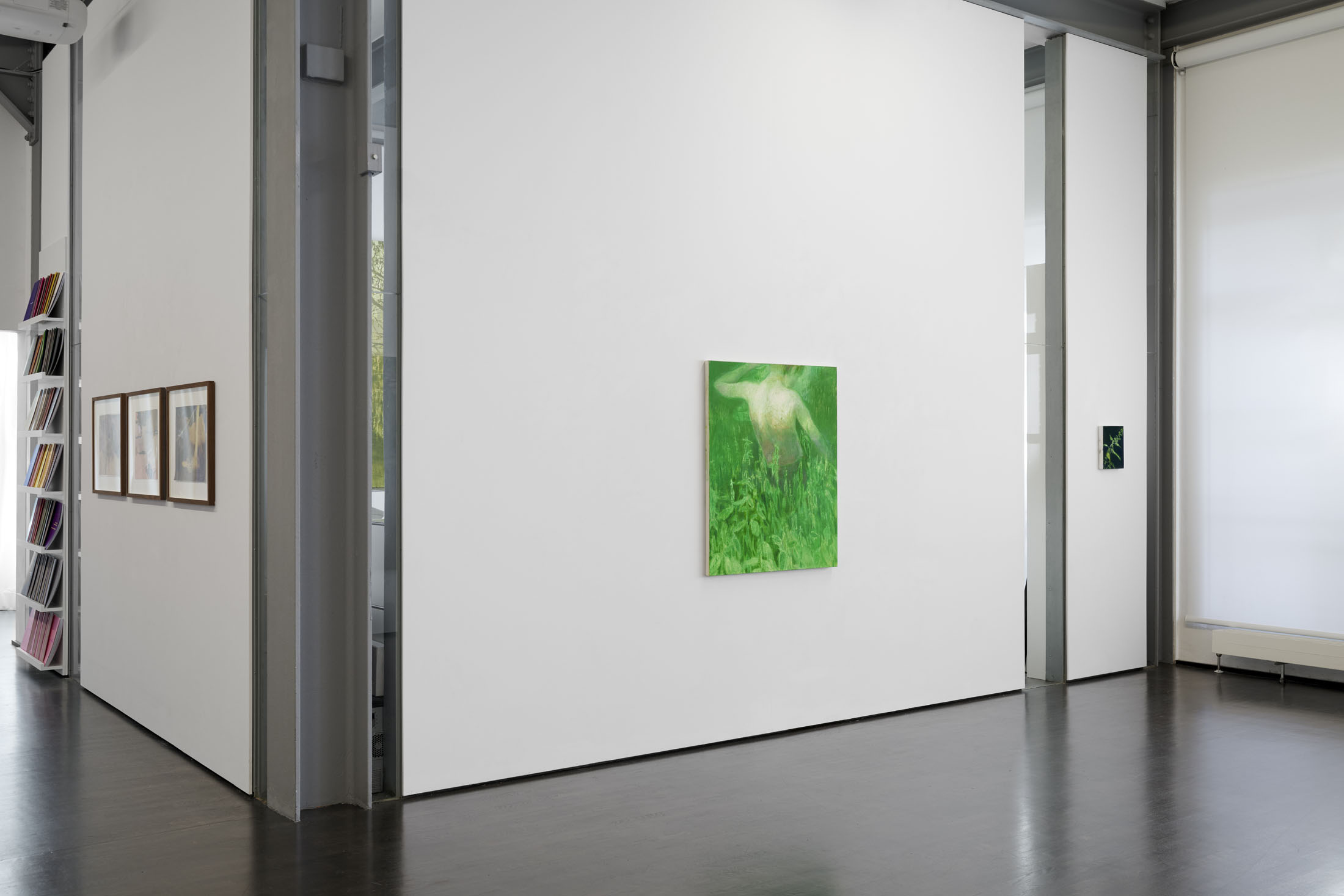
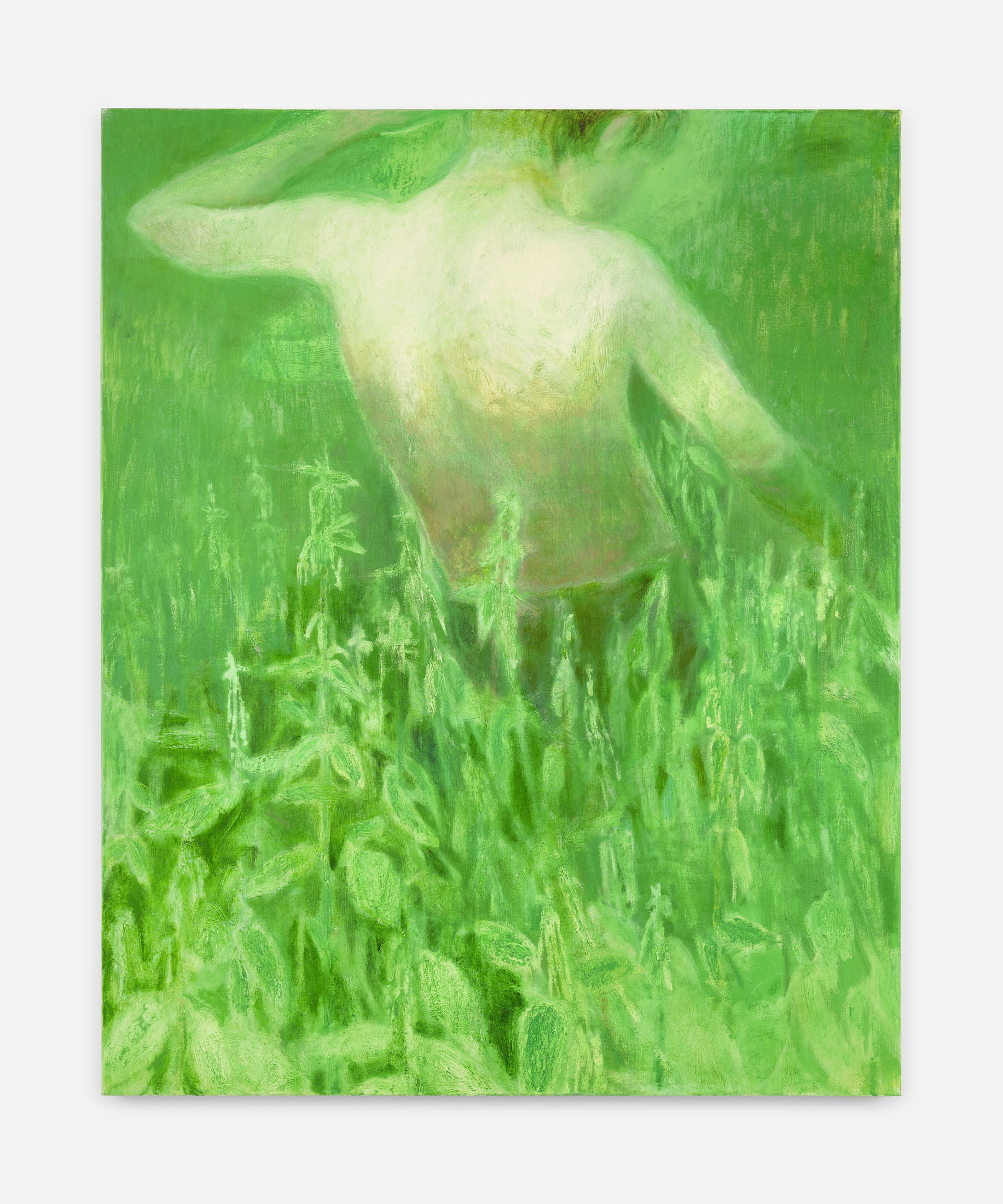
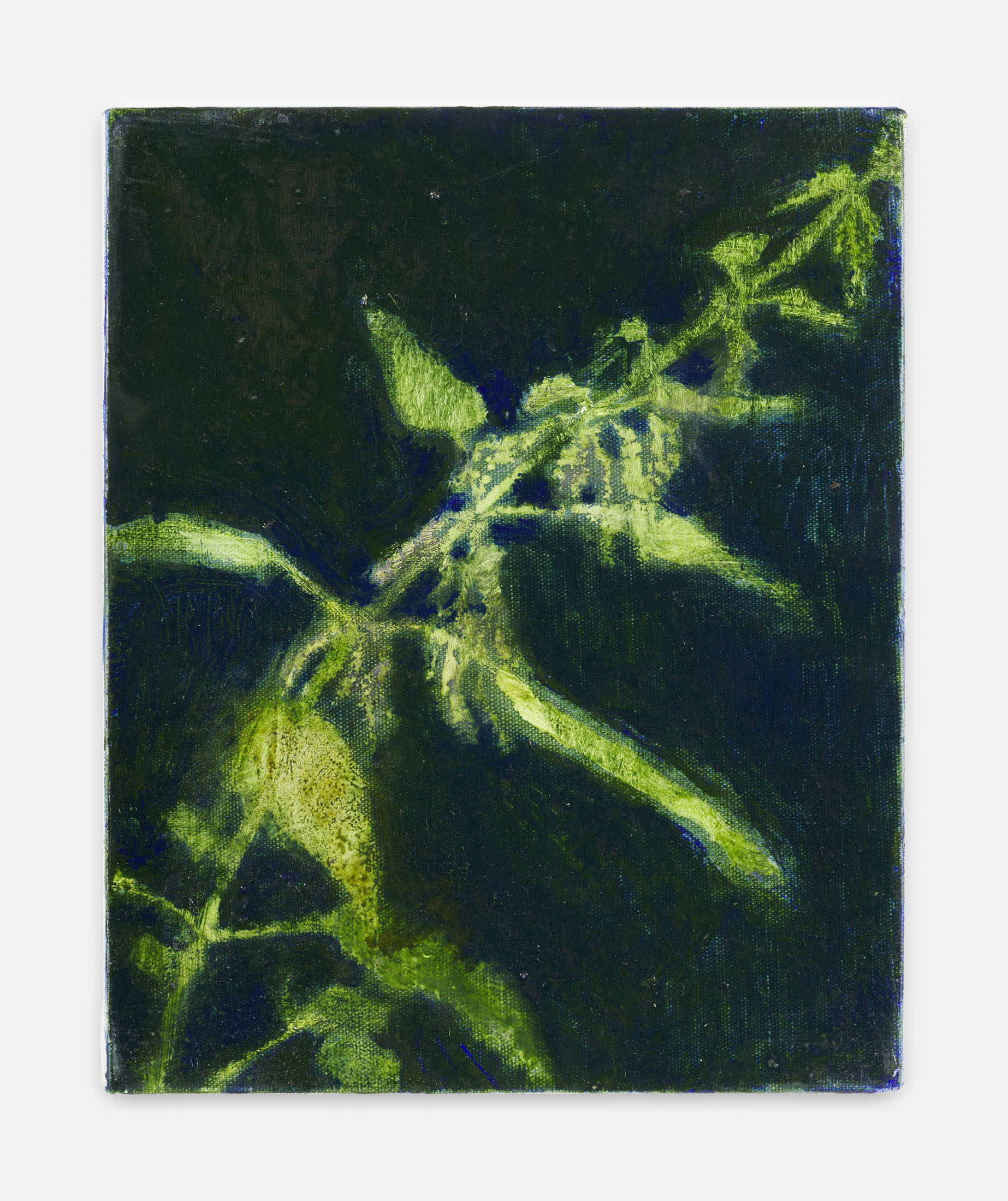
The format of each canvas is of particular importance to the painter. When interpreted as a frame, it defines the boundaries of what is depicted. Rather than adapting the image to the format, figures and other elements are cropped to fit the edges of the canvas. The remaining section of the image captures what Knapová considers essential. Sometimes this is an entire scene, as in Letters from Home (2025); at other times, it is a zoomed-in detail, as in Nettle V (2025). In this way, she draws a formal parallel with amateur photographs from family albums and their special authenticity. Knapová’s depictions of children, in particular, have something unposed and intimate about them. Feeling unobserved, in On the Surface (2025), a girl swims in a lake; in Hiding Place (2025), a toddler hides in a self-built hut made of branches in the forest; and in Black Cherries (2025), a boy tastes cherries from a tree. The children’s eyes often appear striking: as in Wind/Pain (2025), they are either unrecognizable or, as in Jester (2025), they look through us, the viewers, with great emptiness. In contrast, we can observe the children as if through a peephole.
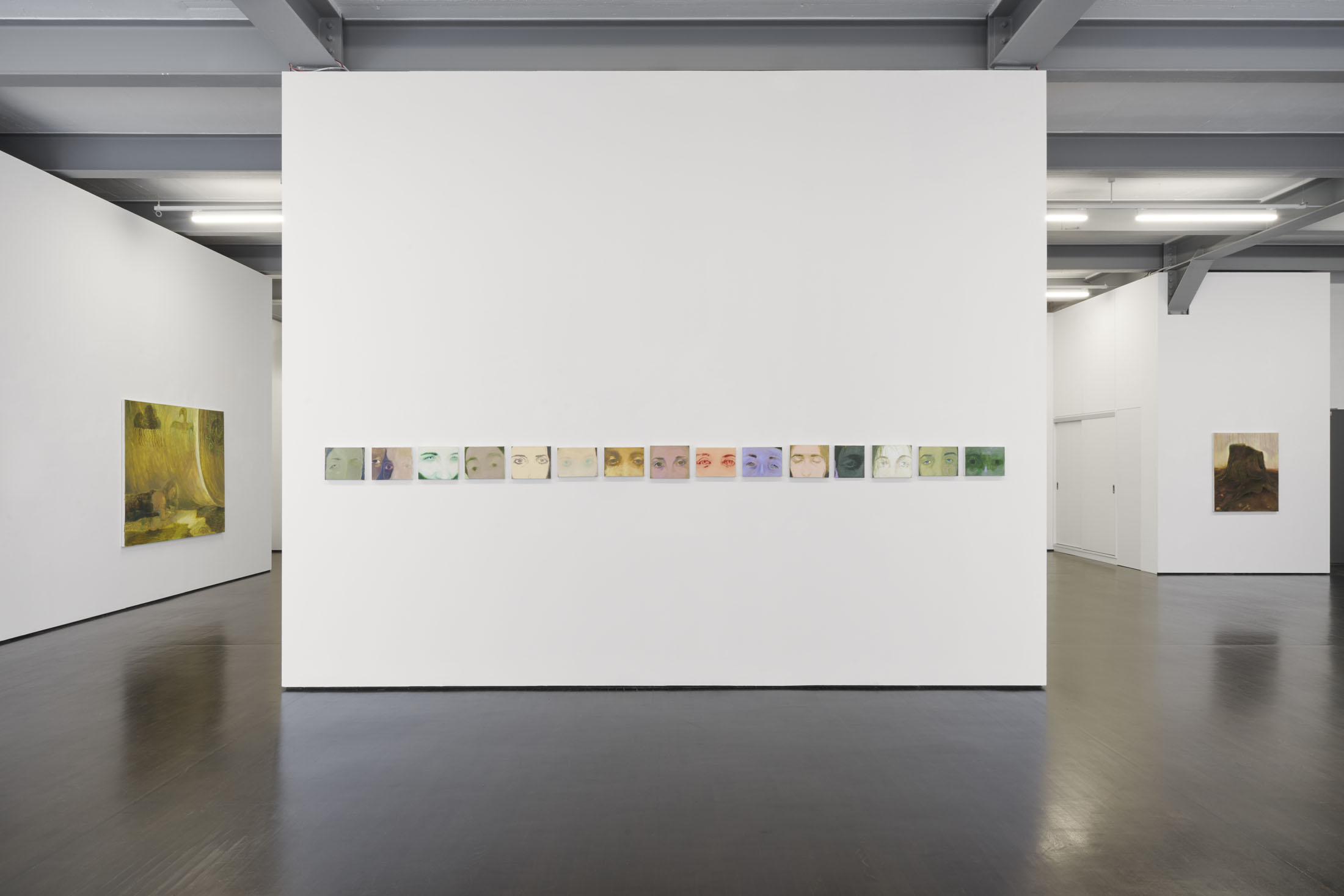
The works in the Lies and Truths series (2024–) are based on selfies that Knapová has taken of her own eyes with her mobile phone. She became self-conscious about them when viewers remarked that she looked sad and tired, even when she didn’t feel that way. Since the advent of the selfie function on smartphones, it has become commonplace to see ourselves through a camera lens. However, looking into our own eyes in an old painting or photograph can bring both current and forgotten feelings to our consciousness and can be particularly moving.
An enigmatic condensation of different perspectives and times runs through Knapová’s entire oeuvre. In her works, observation and projection overlap to create pictorial spaces that swing between the visible and hidden. The exhibition Flying Dreams invites us to understand these areas of tension as places of uncertainty and dreaming, rather than resolving them.
–Luise von Nobbe