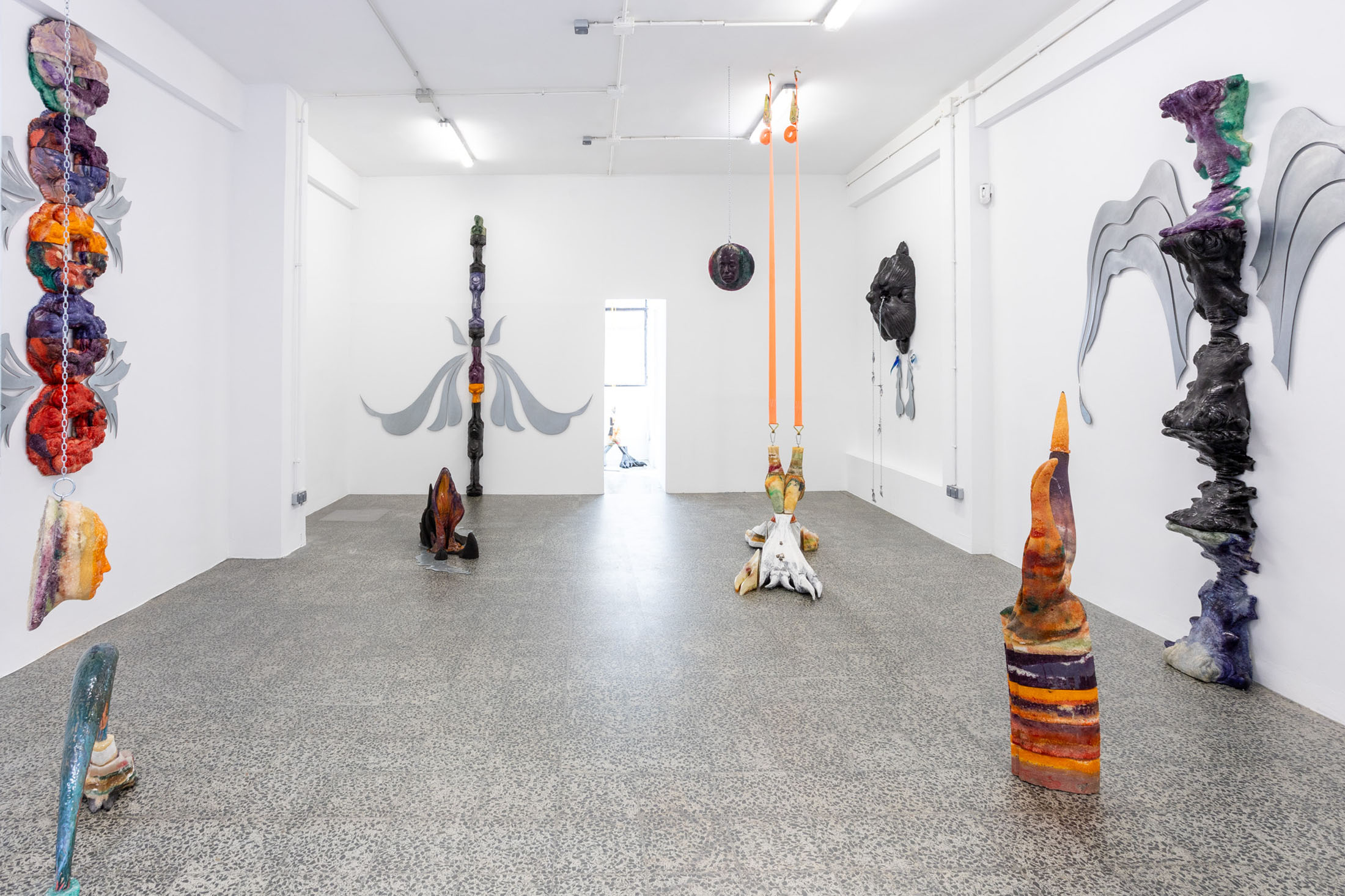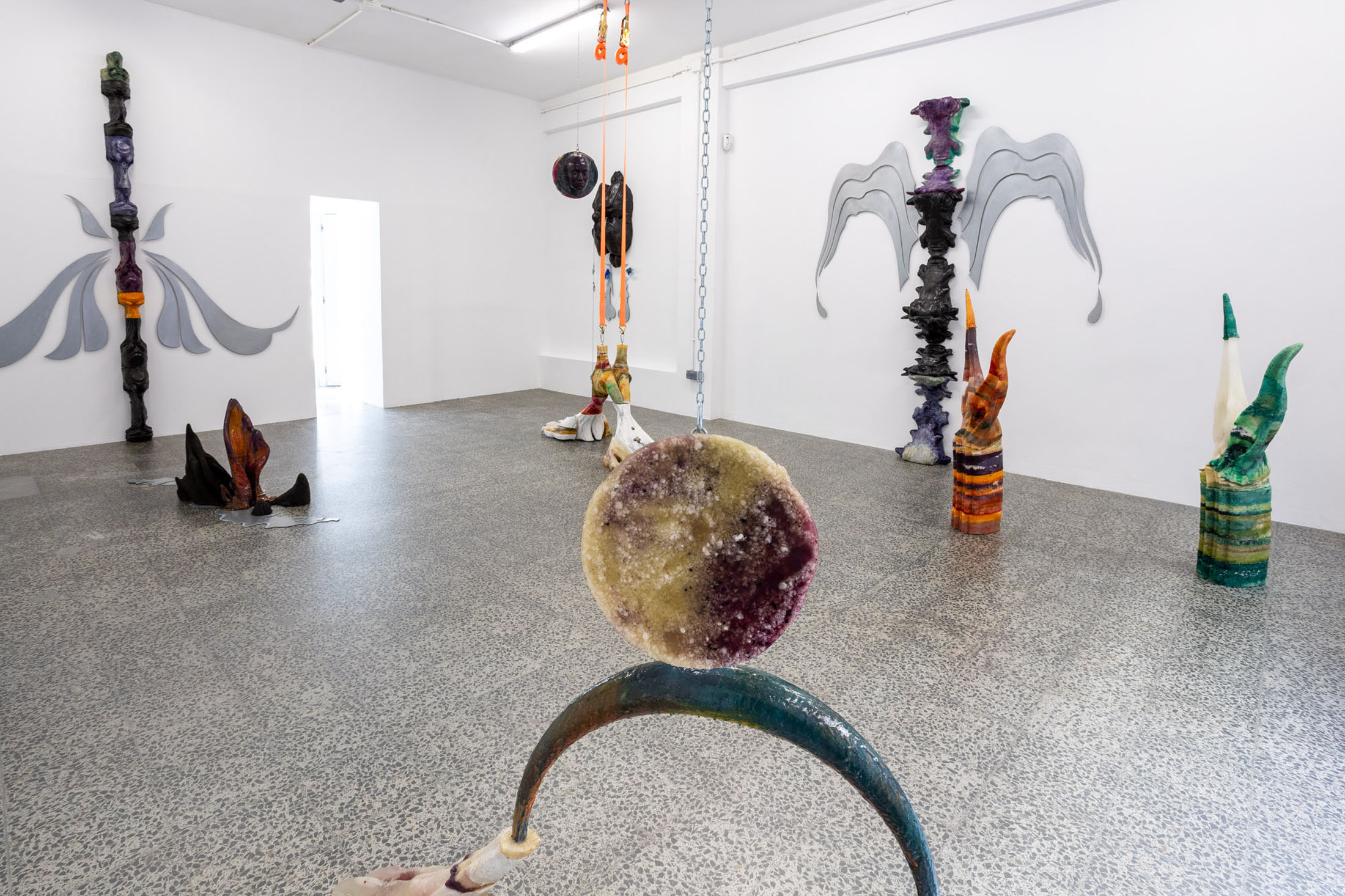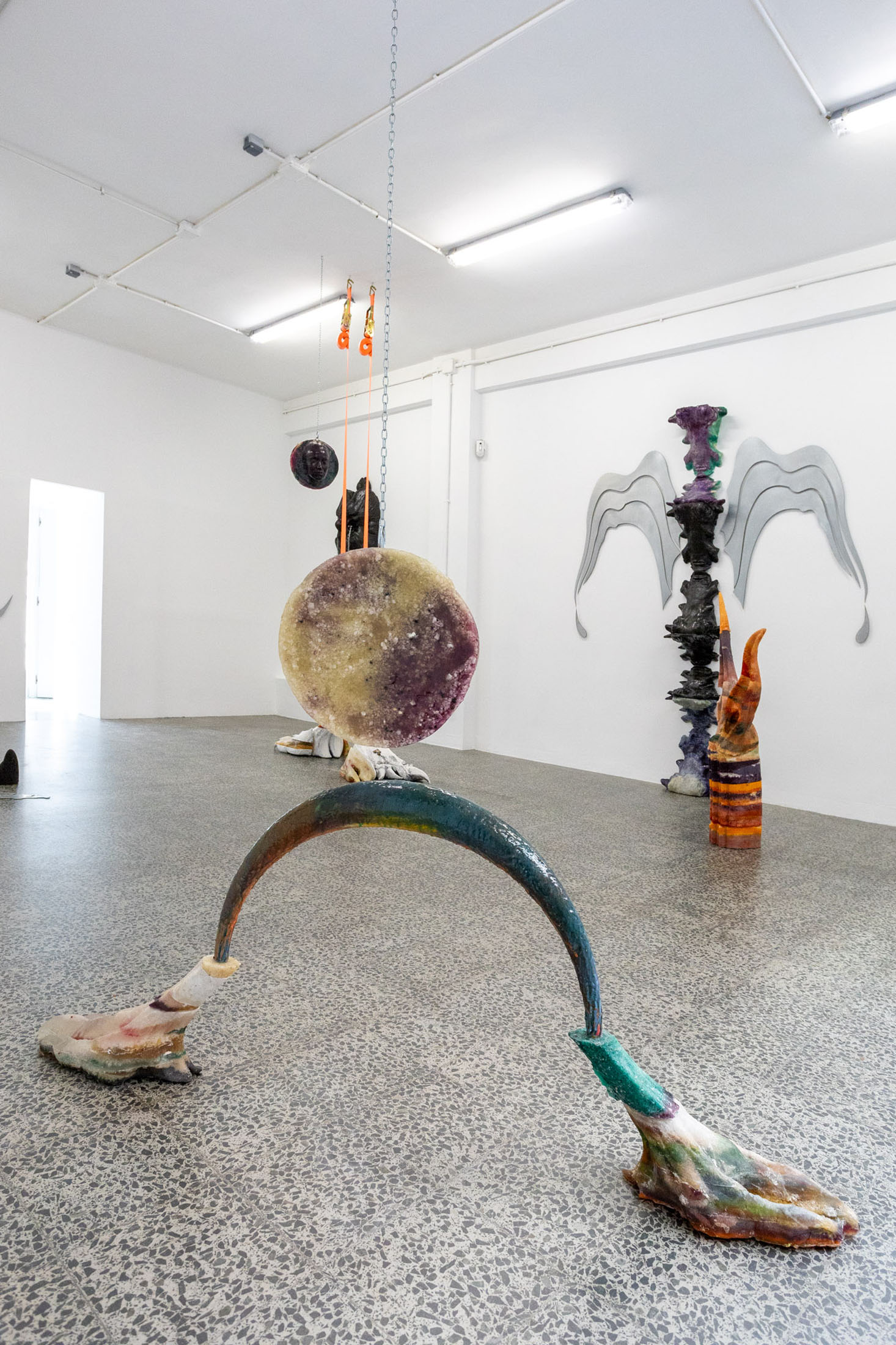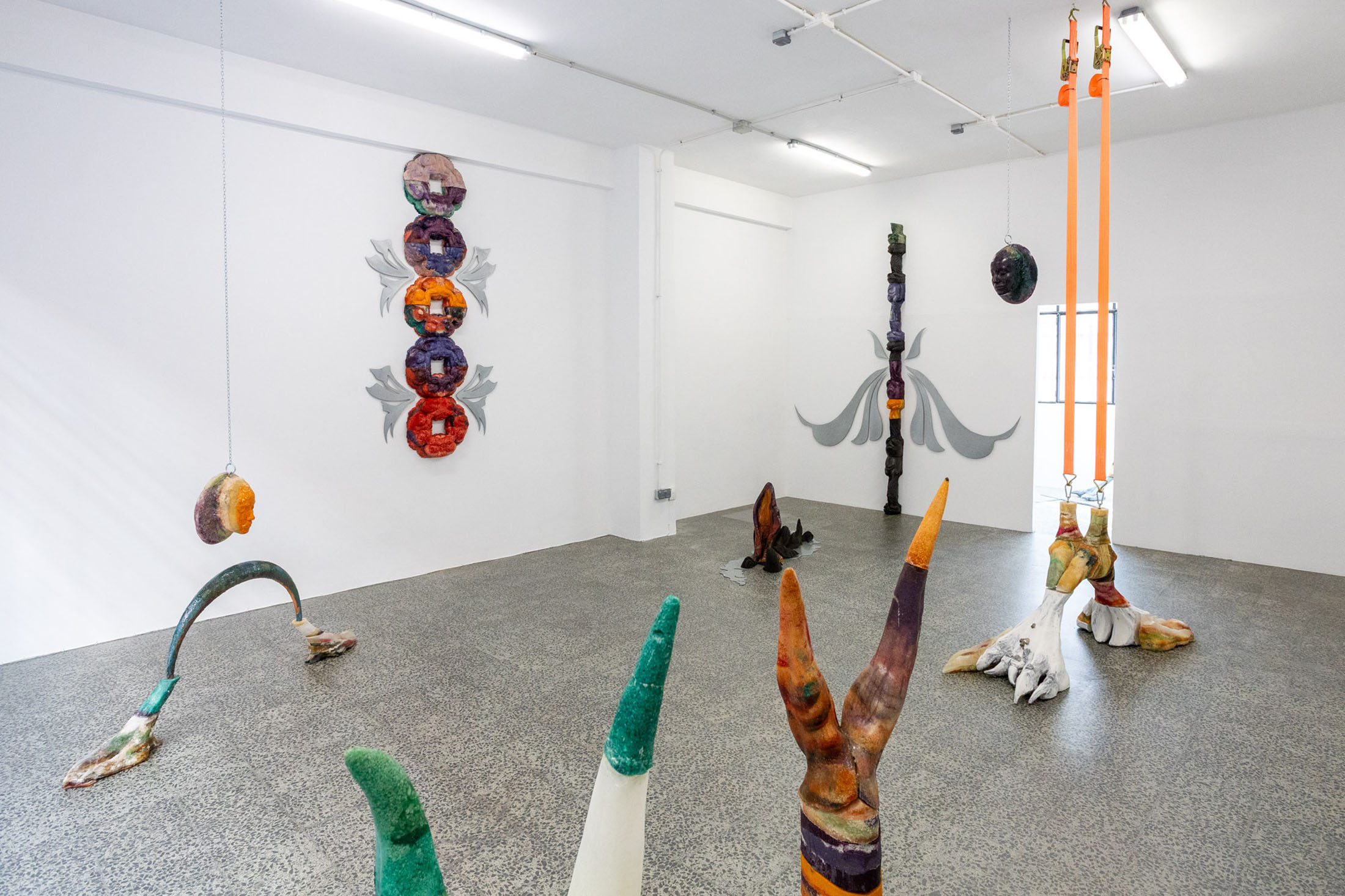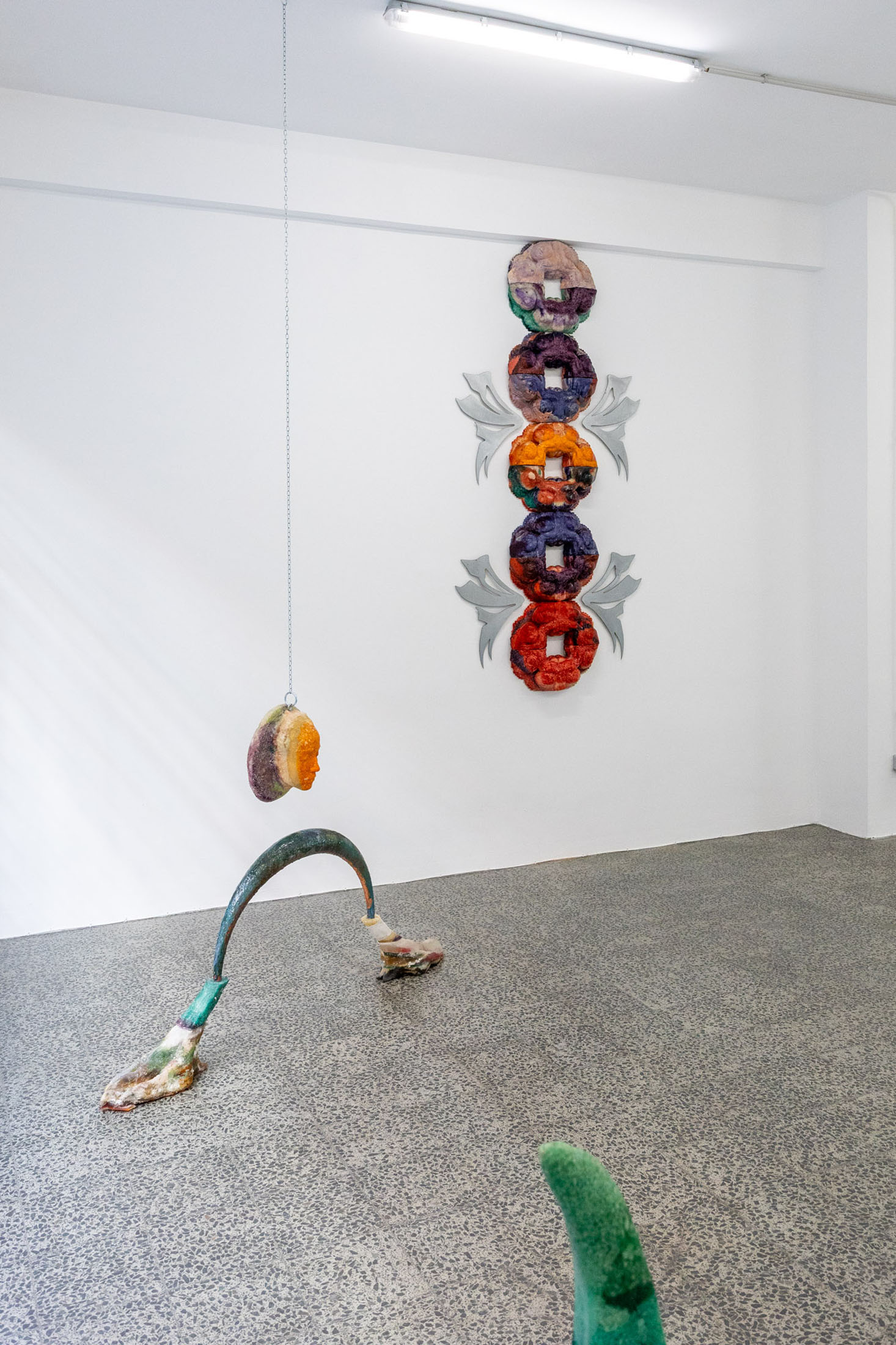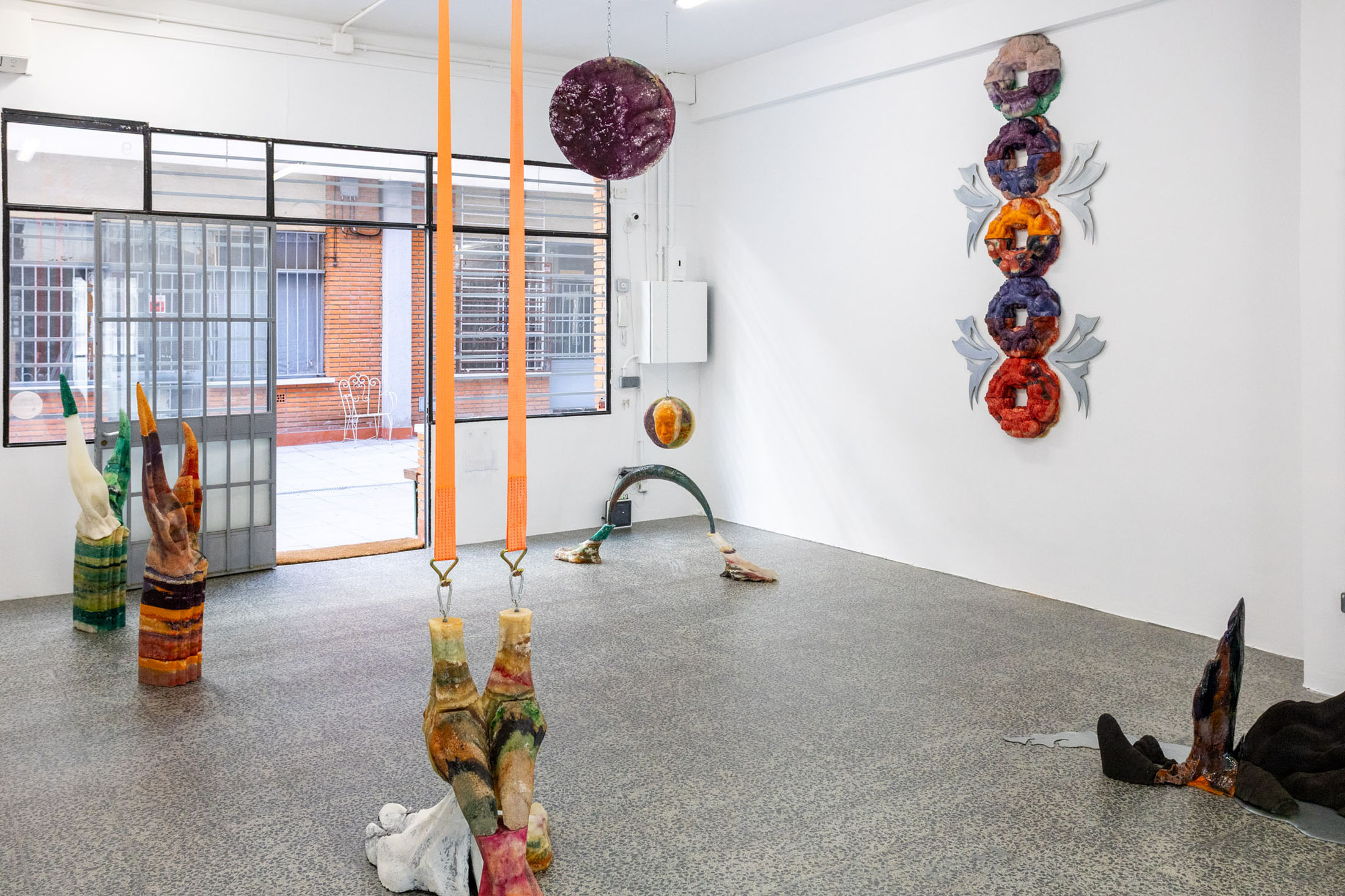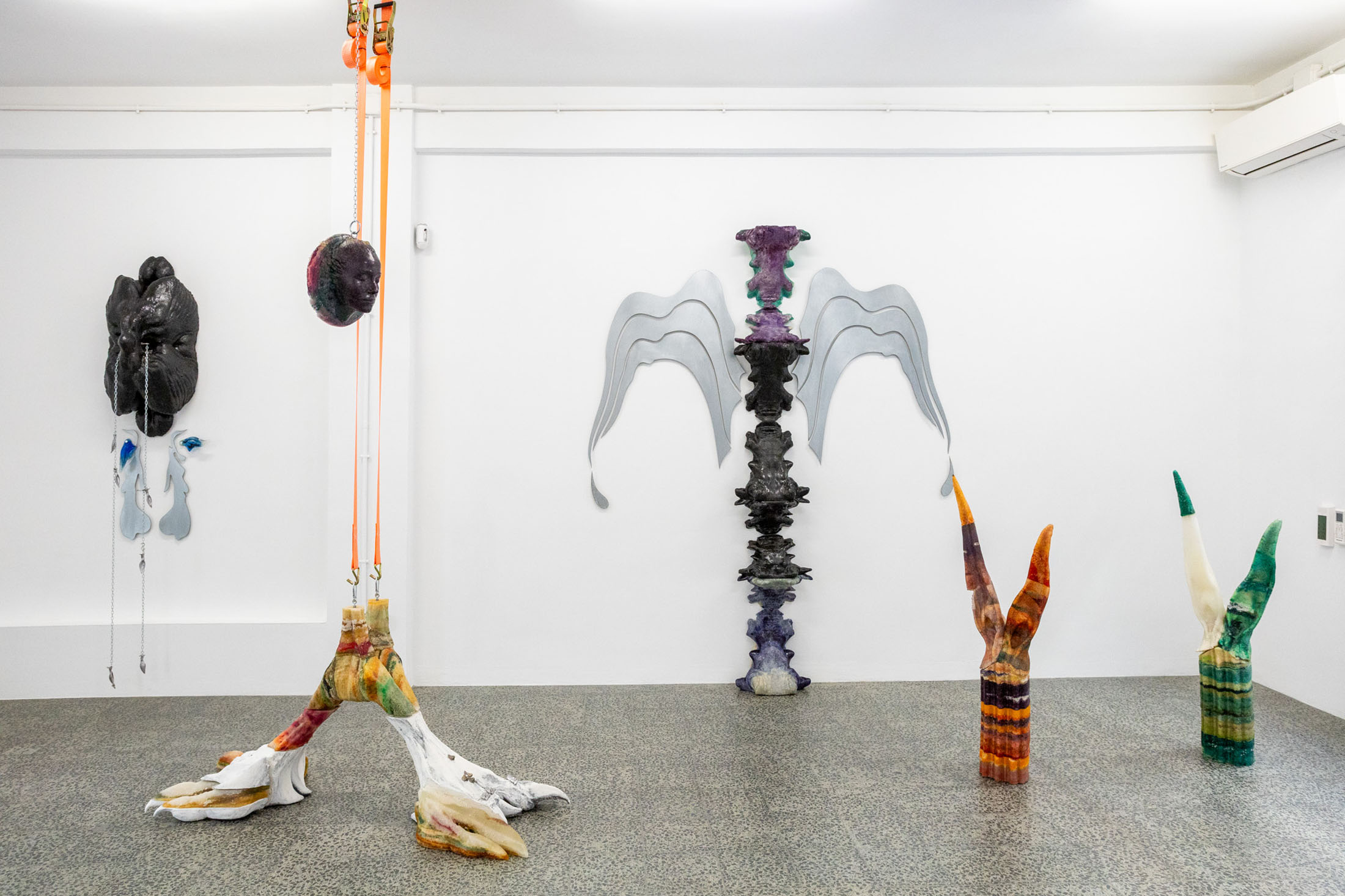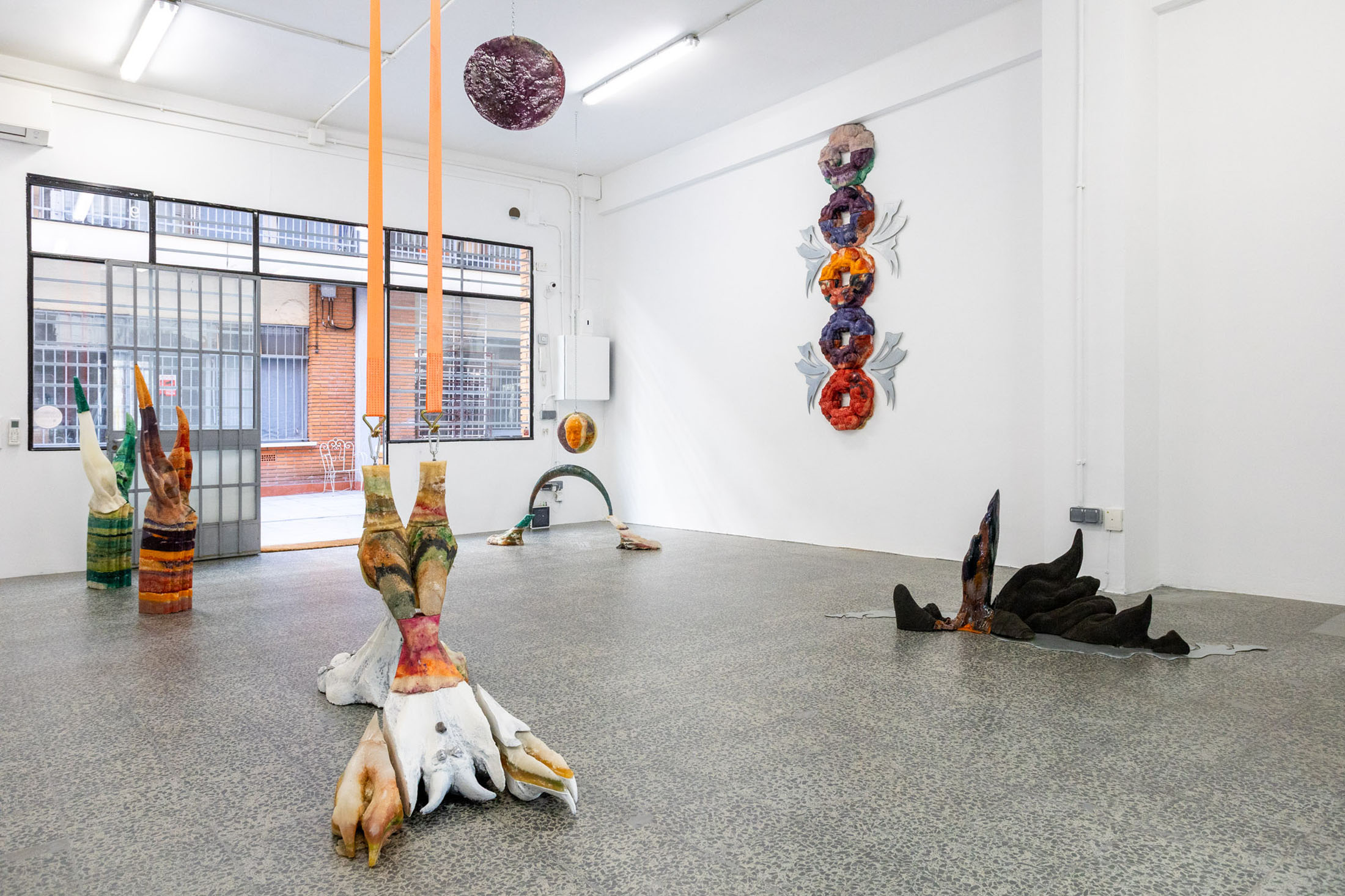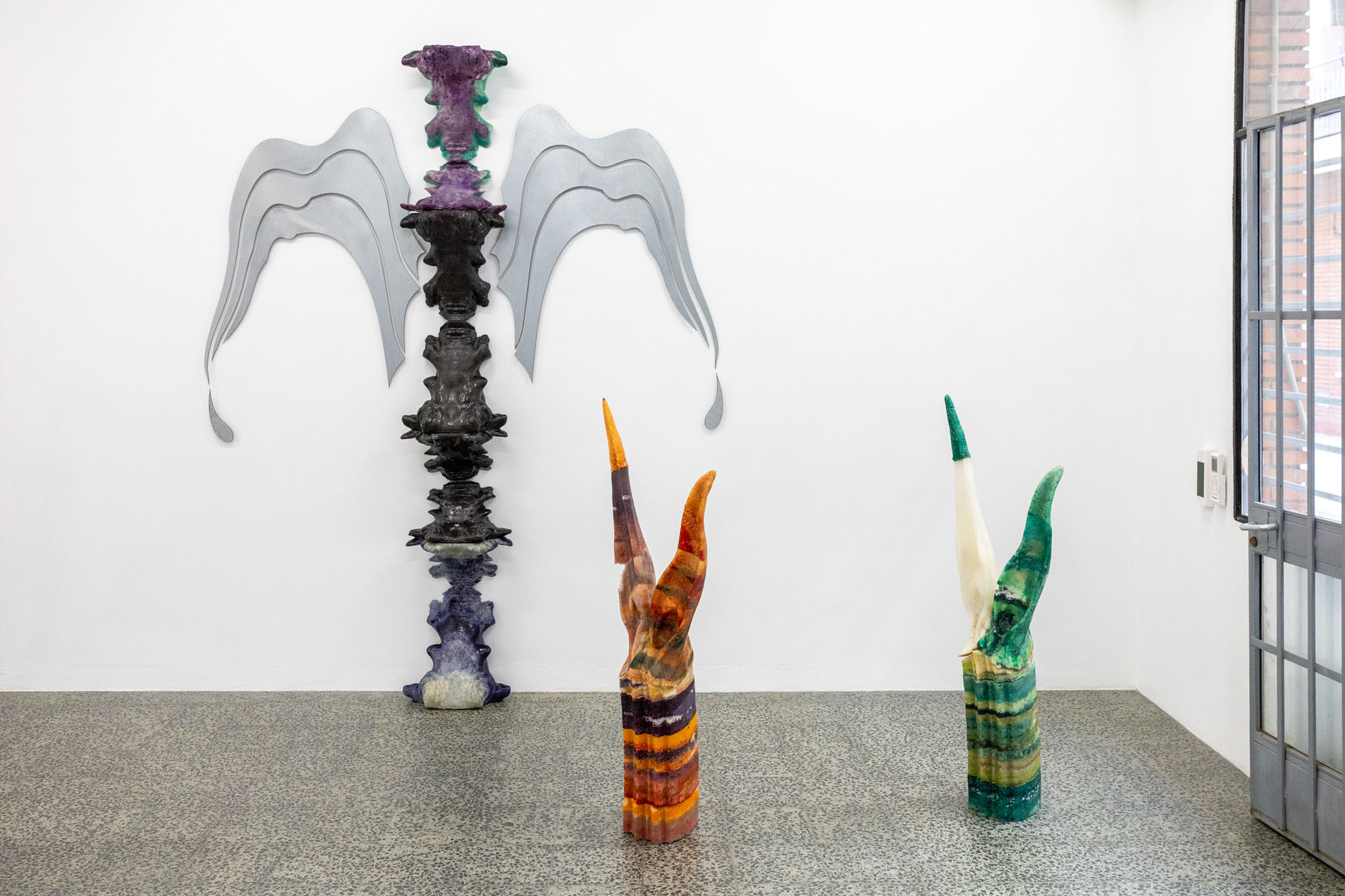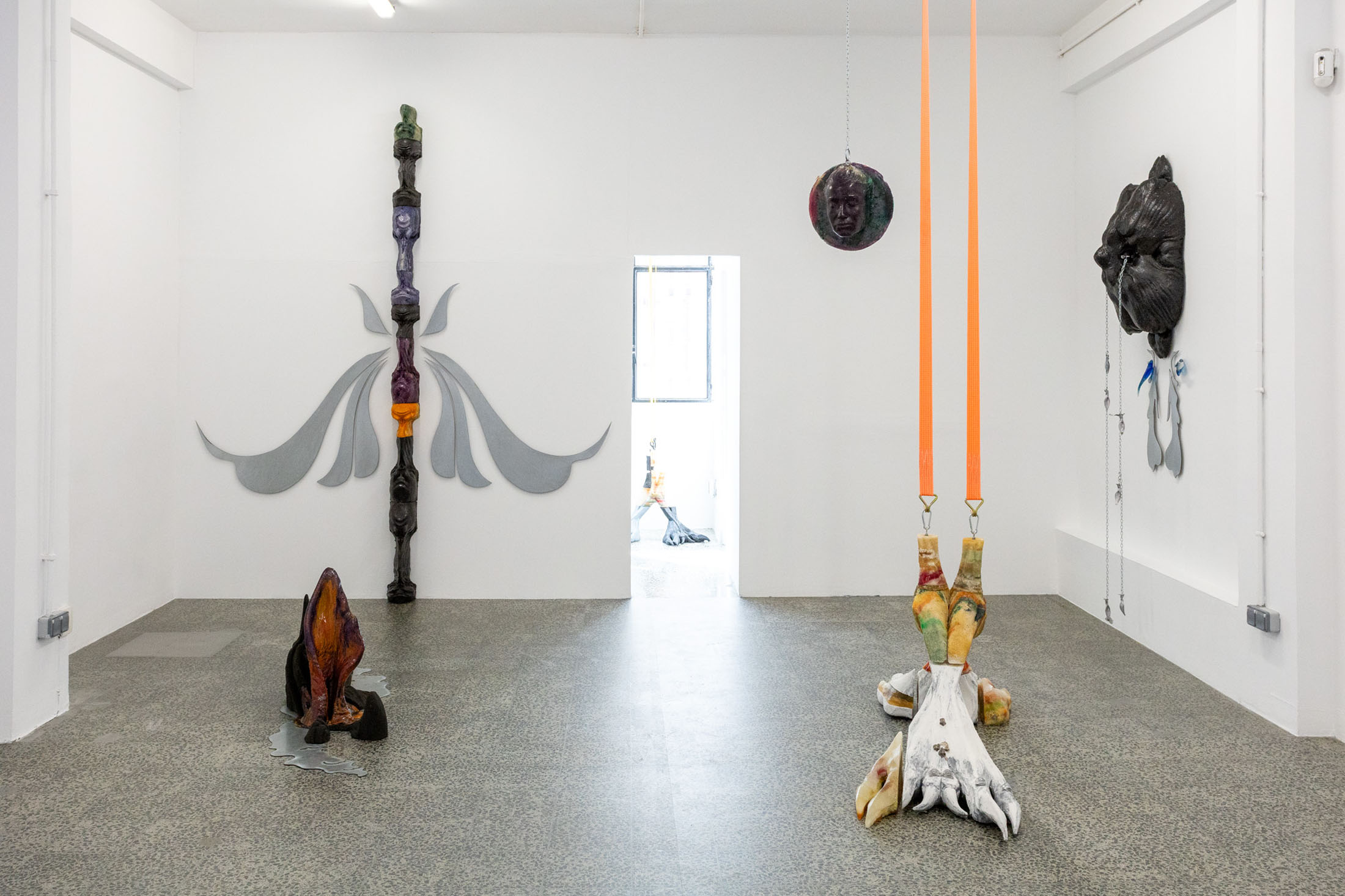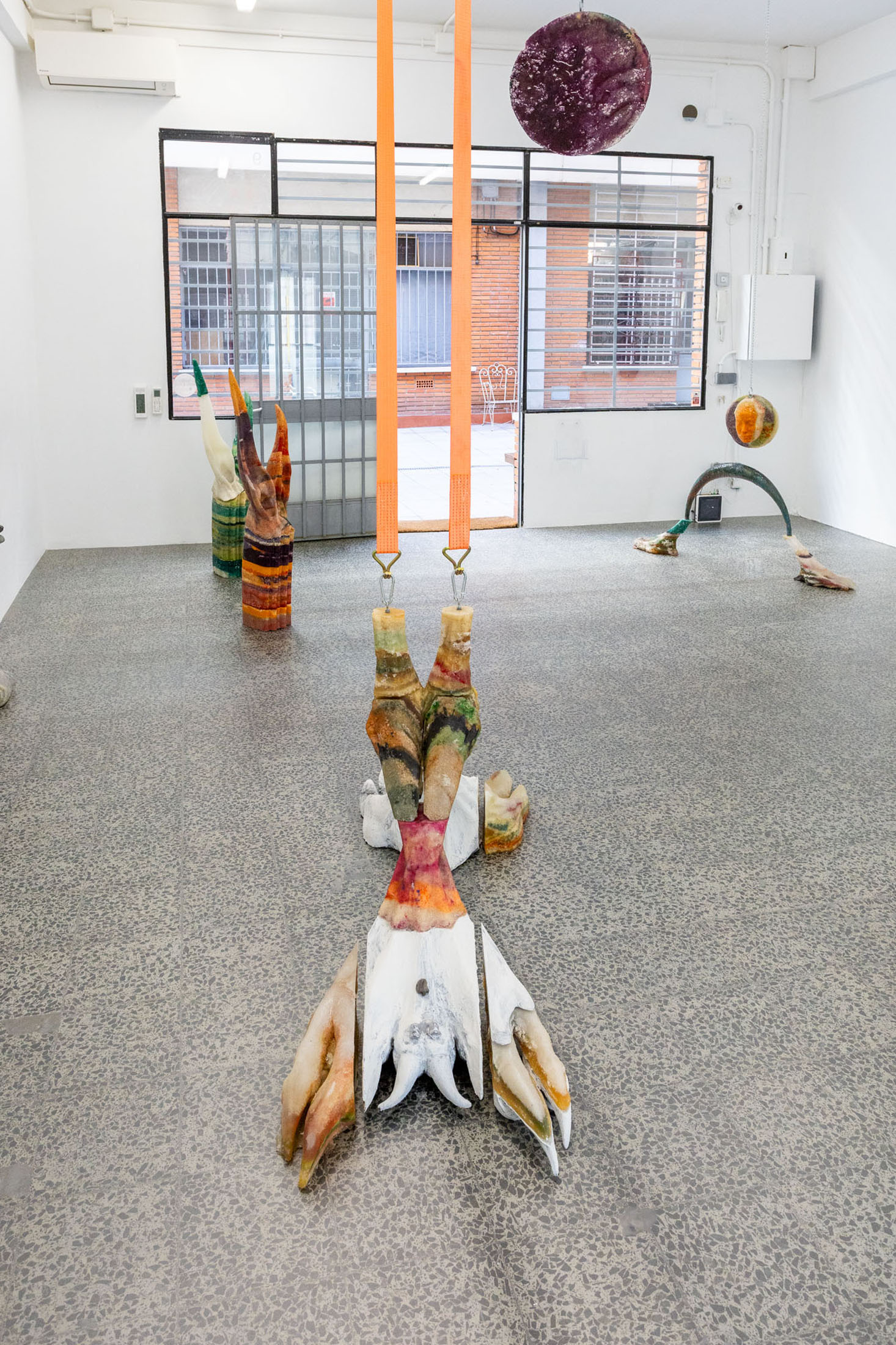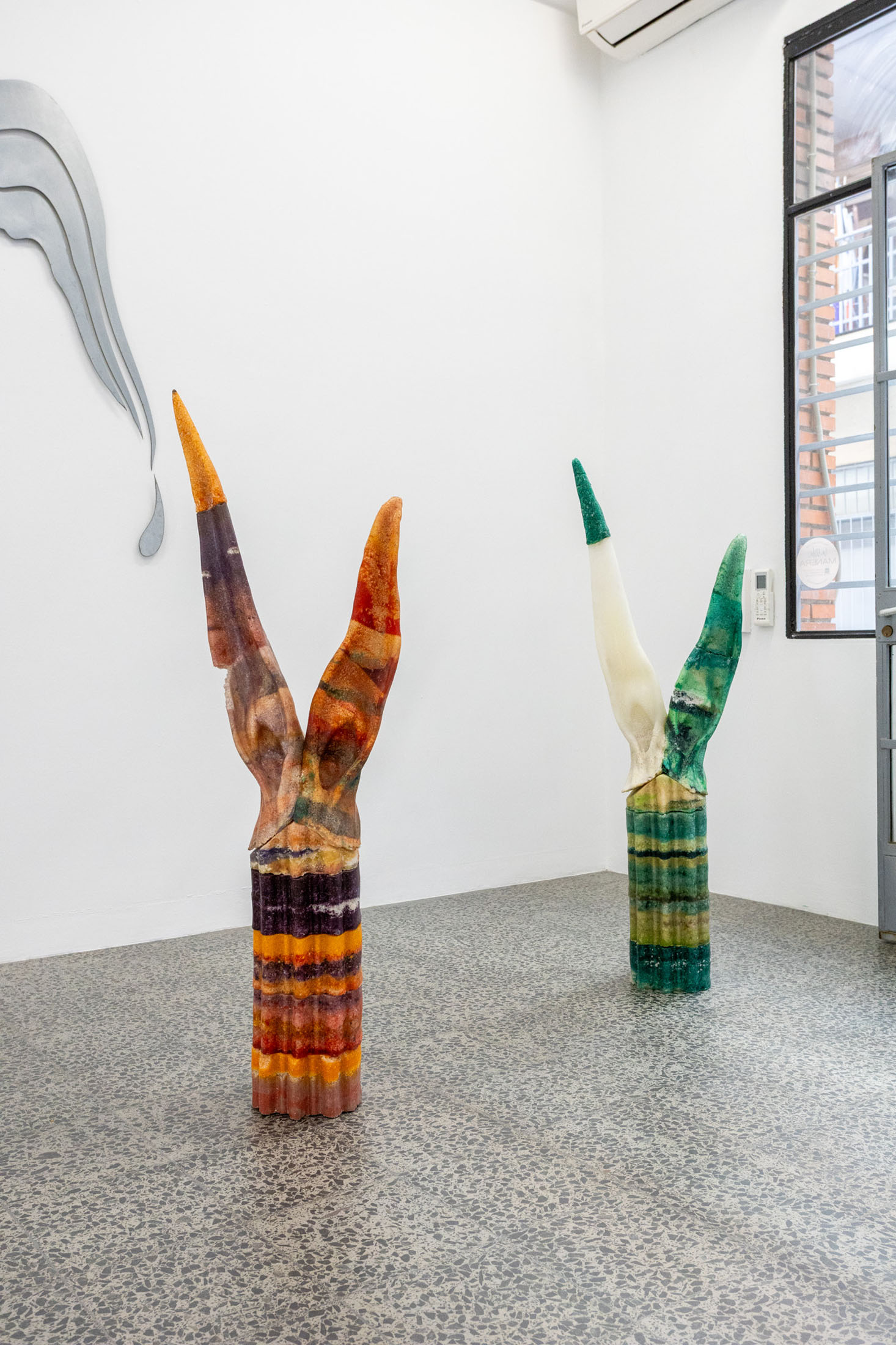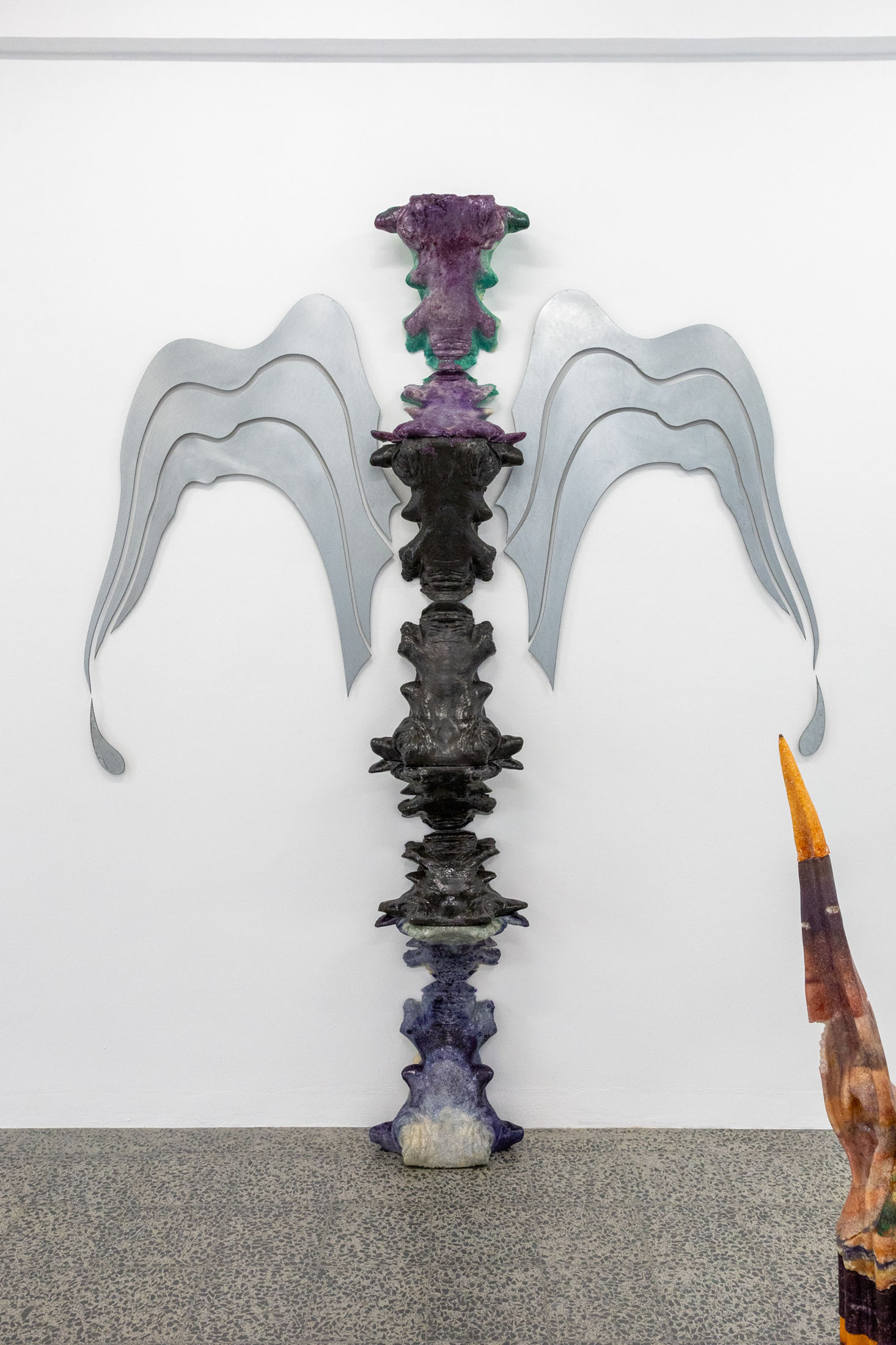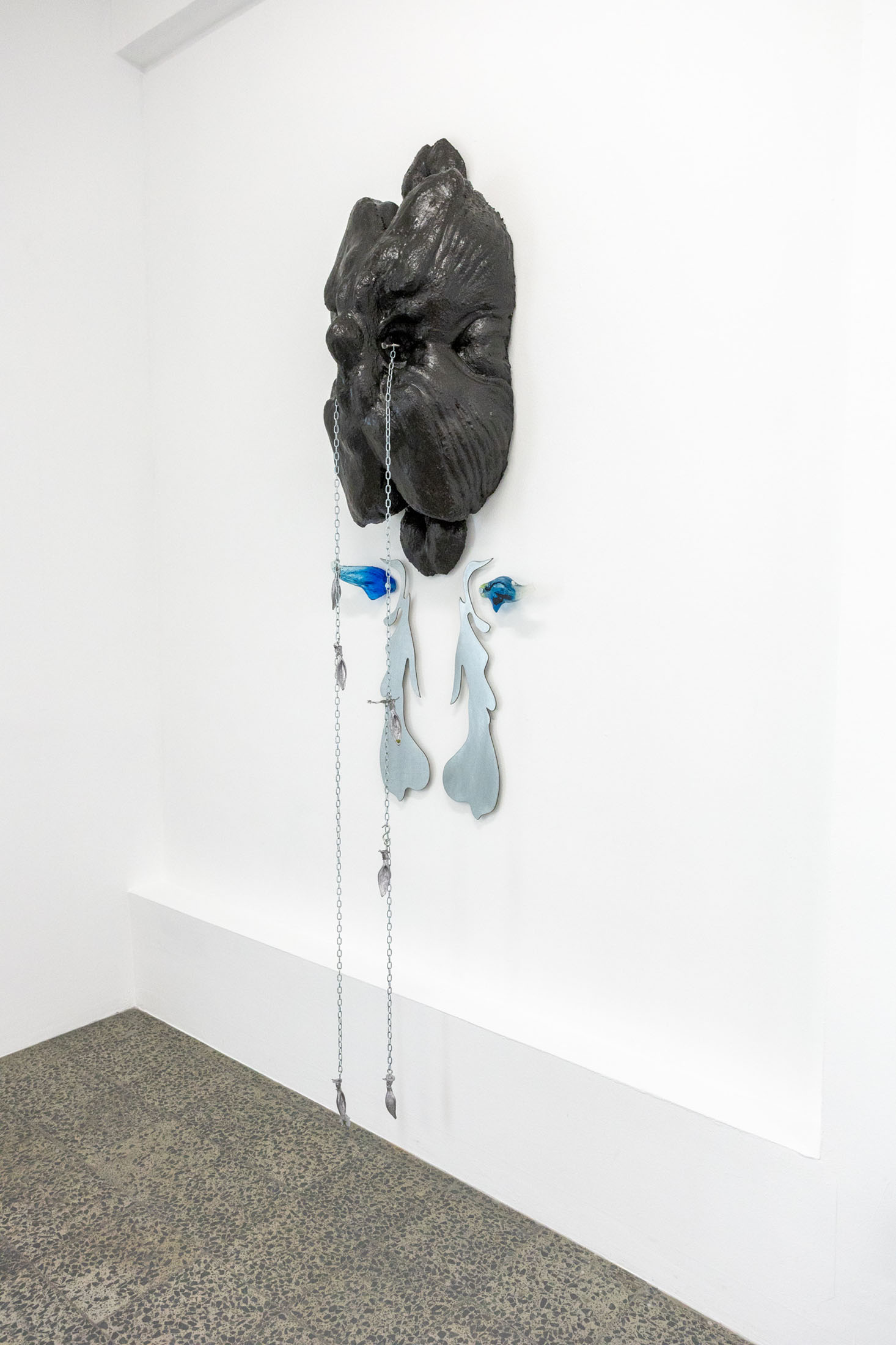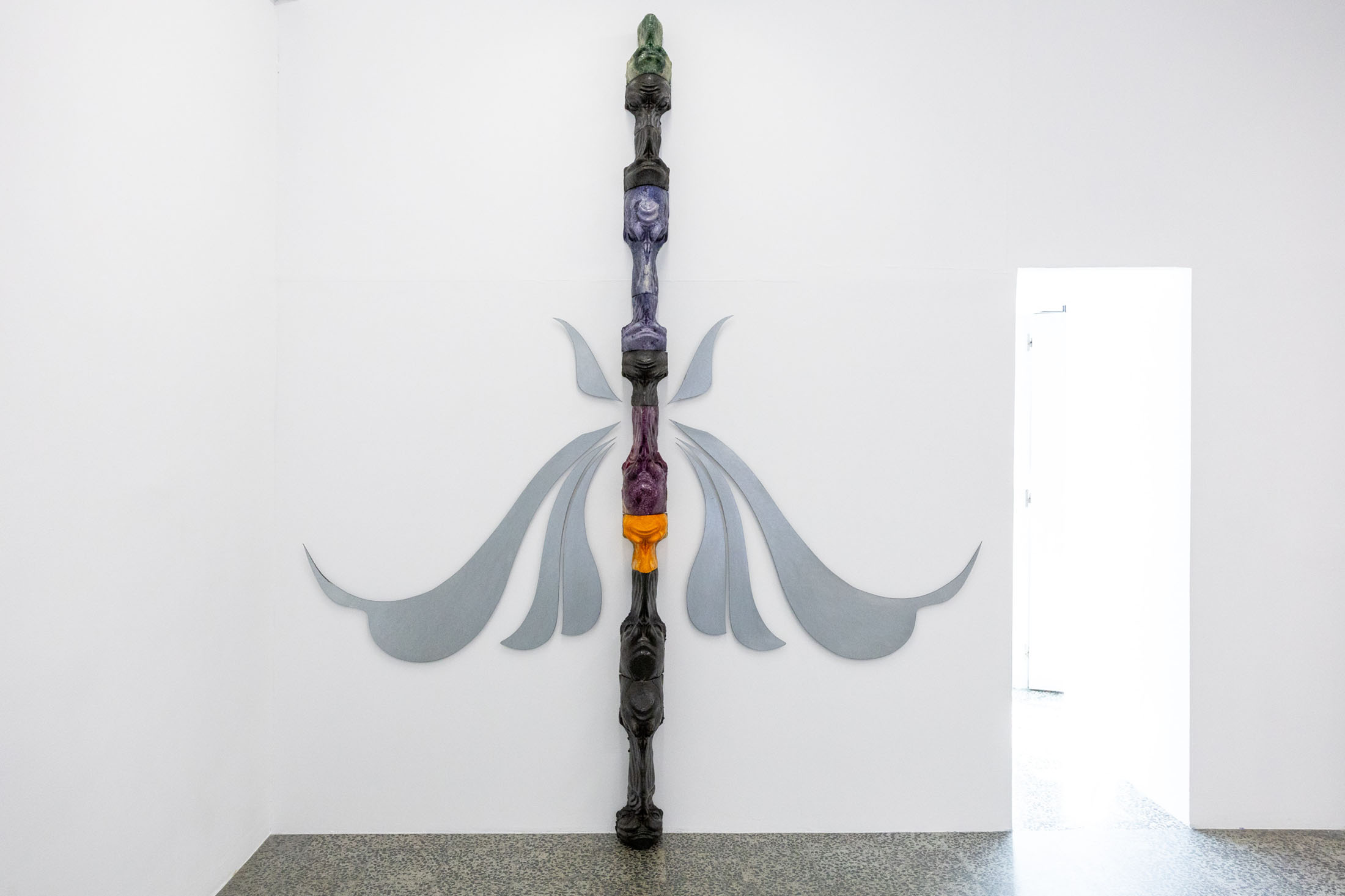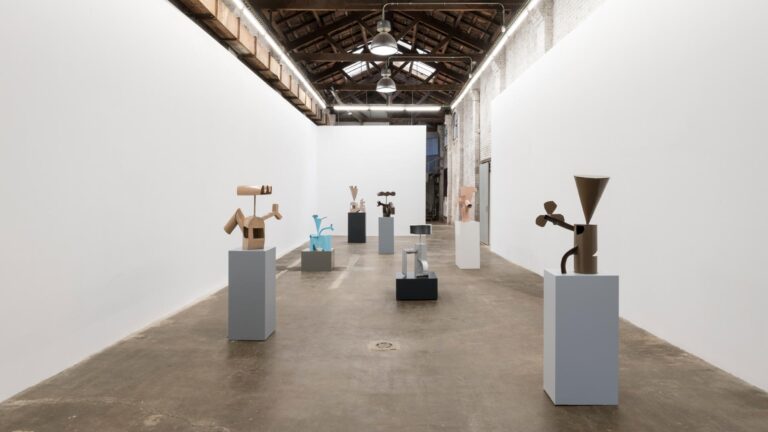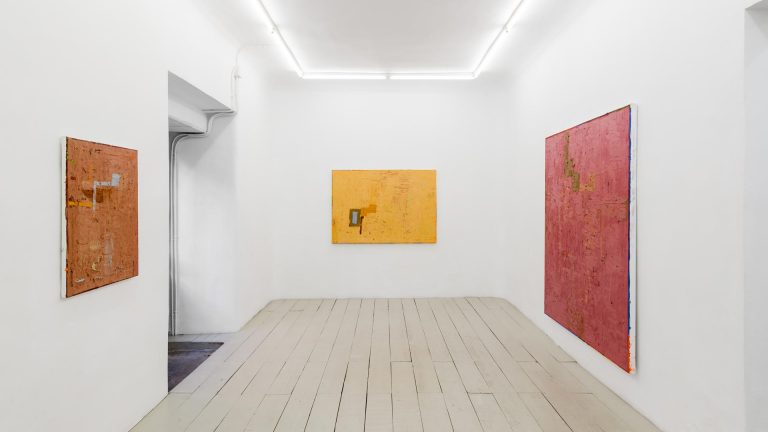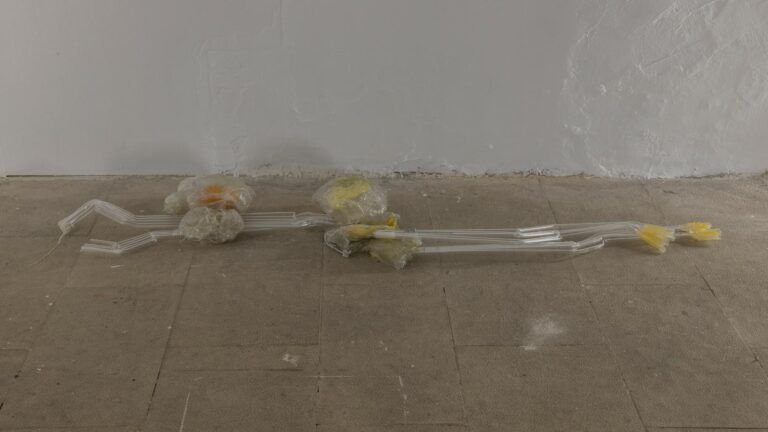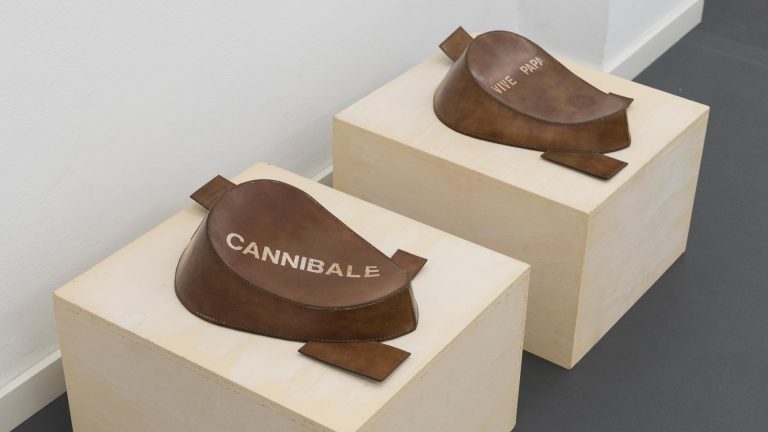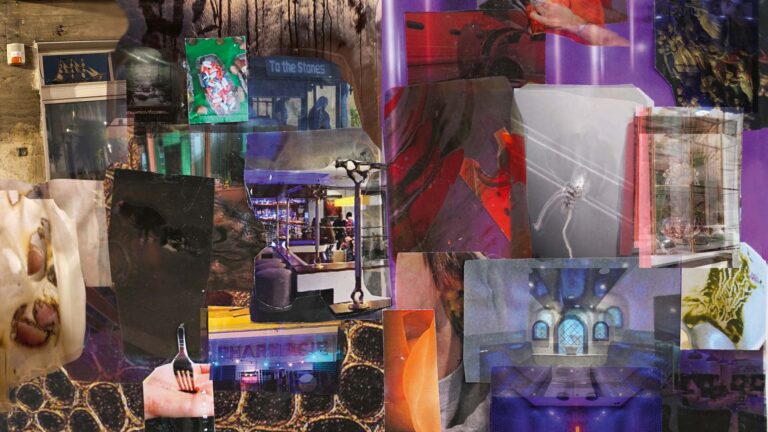
We present the first solo exhibition in Madrid and at El Chico of Estefanía B. Flores (Santa Cruz de Tenerife, 1989). Following her participation in “Dark Forest” at the gallery in November 2024, Estefanía now presents a new body of work that continues the research she has developed in recent years.
A graduate of the MFA program at Goldsmiths, University of London, Estefanía’s visual universe recalls the early days of the digital: those first environments generated by home consoles where, through rudimentary graphics and almost schematic structures, entertainment settings were not only constructed but also opened onto affective territories that were, at the time, still unnamed.
Her work can be understood as a system in constant displacement: a network of forms that, although appearing before us as static bodies, retain the potential for transformation. Each piece seems to hold the possibility of reconfiguring itself, connecting with others, and reappearing in a new guise each time they are summoned. Much like in the logic of video games, where the player collects“items”that enable them to persist and move across different levels, Estefanía’s sculptures expand —both literally and metaphorically—as her practice evolves. They grow, shift, incorporate variations and echoes of earlier works, activating a continuity that is not linear but mutable.
The scenarios she proposes are never entirely the same, nor are the works themselves; yet their genealogies can be traced. Recognizable traces remain in certain morphologies, in recurring details, or in bodily references that reappear as fragments of an anatomy in constant rearticulation. Thus, each work operates simultaneously as an autonomous entity and as part of a larger ecosystem always unstable, in a state of constant becoming.
The technical dimension of the work is equally decisive in shaping and transforming her practice. In these new sculptures, a greater sense of density and solidity emerges, operating both as a formal resource and as an allusion to weight, accumulation, and the sediment of what we see. Materiality is not merely a support but a language: Estefanía uses materials as connective threads between the different pieces she incorporates into her universe. They share substances, textures, and constructive solutions that allow their genealogy to be traced, revealing that, despite their apparent differences, they all originate from a common source.
This origin is not clearly defined, yet it feels strangely recognisable. As we approach, we may experience a slight unease before forms—claws, limbs, fragments of bodies—that refer both to our own anatomy and to the animal dimension that constitutes us, whether past or latent. The worlds that emerge are not mer fictions: they appear simultaneously as vestiges and as projections of possible futures.
The works do not function only as triggers for the imagination; they also act as repositories of memory, as evocations of images once seen or even sensations once experienced. In this sense, sculpture becomes a device of connection between those who observe it. Those of us who enter this exhibition—as with any proposal by the artist—tacitly accept the invitation to play: to move through uncertain territories and to inhabit, alongside the presences that surround us, scenarios that remain yet to be deciphered.