Elsa Fauconnet’s work is rooted in a cross-disciplinary approach that intersects fiction, historical research, scientific discovery, and critical observation. Her projects unfold like expanding worlds, blending humor and poetry to probe reality and reveal its flaws. Each film she creates serves as a starting point from which a constellation of objects, textiles, ceramics, and images unfolds, extending the reflection initiated on screen. Her projects are constructed as vast ramifications of thought, where unexpected connections are woven between seemingly unrelated ideas or images.
Inspired by the research of anthropologist Jean-Loïc Le Quellec, Elsa Fauconnet revisits the hypothesis that Paleolithic cave paintings are linked to a grand myth of Creation. In his book La Caverne originelle (2022), Le Quellec argues that prehistoric artists painted the deep, dark walls of caves to symbolically reenact the emergence of the world. According to this interpretation, the cave is not merely a shelter or a sanctuary but a matrix: the womb of the Earth from which life, animals, and stories arise. By creating these images, humans would have recalled and renewed, for millennia, the myth of humanity emerging from the bowels of the world.
This foundational narrative is so powerful, so structuring, that it has endured for tens of thousands of years, transforming and shifting, but never disappearing. For Le Quellec, one single myth could have persisted for so long, manifesting itself in countless forms across cultures: cave paintings, oral narratives, rituals, and beliefs. This interpretation shifts our perspective: cave art no longer appears as a collection of decorative images, but as a way of recounting origins and anchoring human thought in narrative. This power of myth, at the very origin of our capacity for storytelling, reminds us that humanity has been built through the stories it produces and transmits. We are, in Le Quellec’s words, homo narrans: beings shaped by the need to fictionalise the world in order to grasp its meaning.
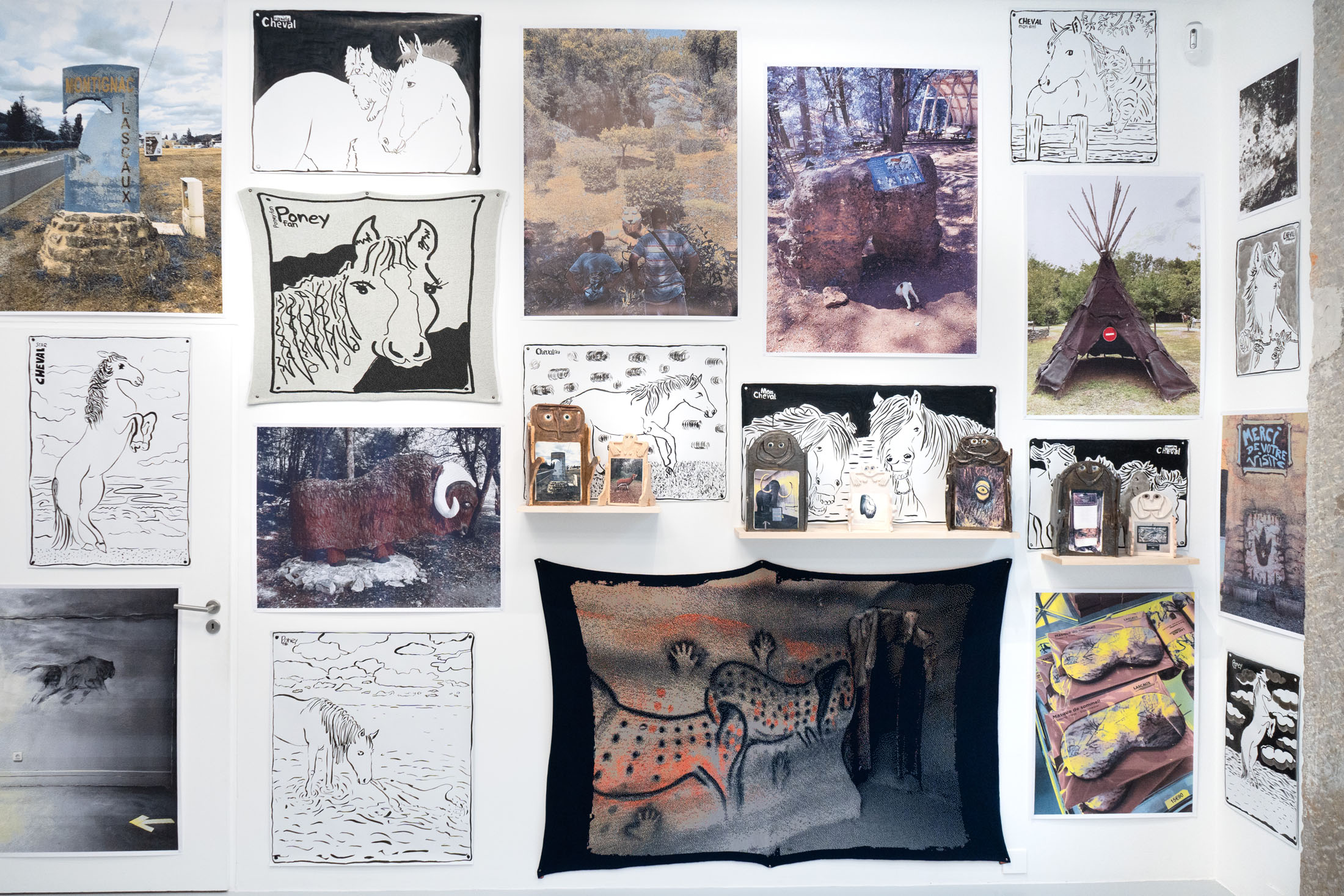
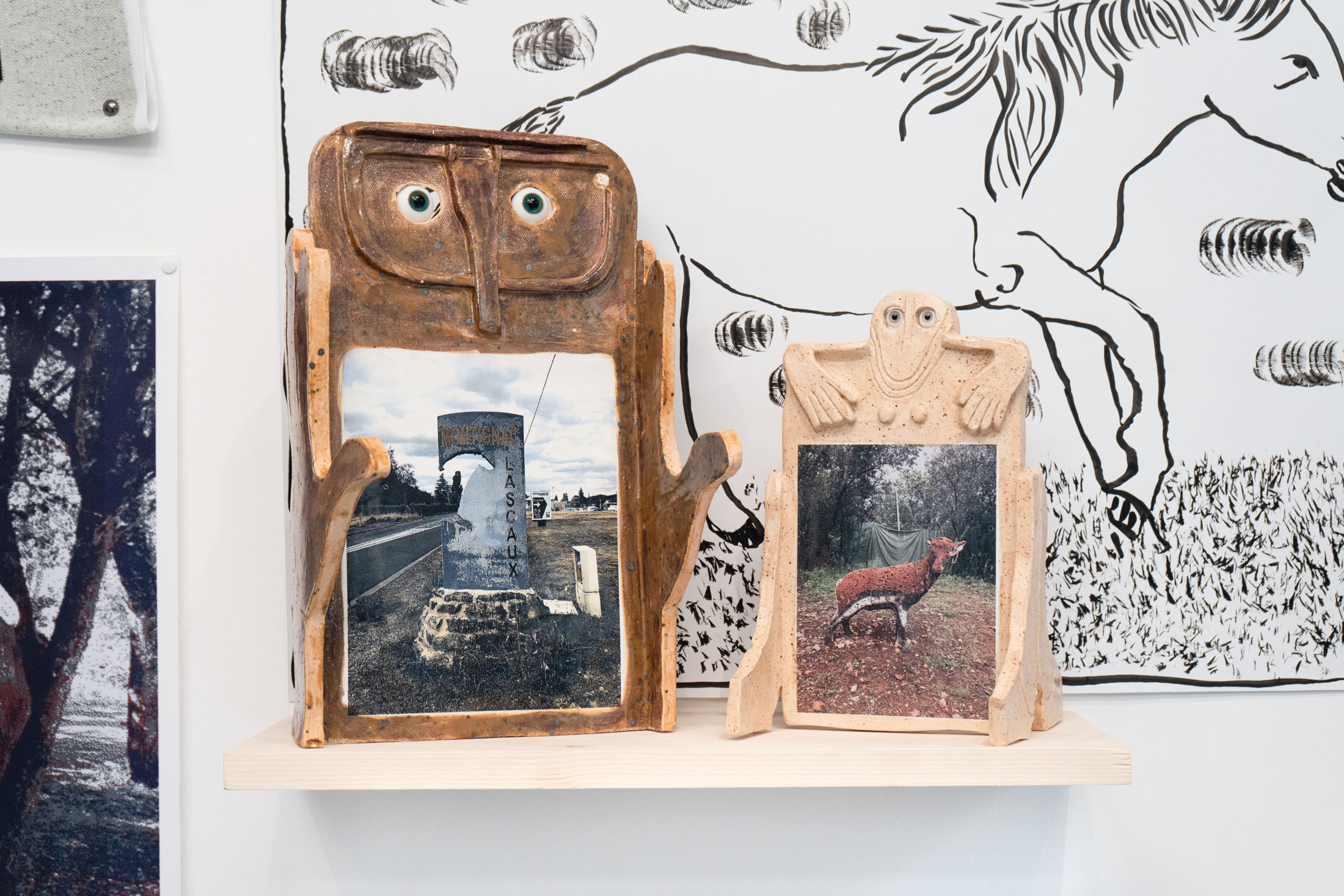
Based on this theory, Elsa Fauconnet began fieldwork in 2022, exploring caves and their reconstructions: Lascaux, Chauvet, Cosquer, Rouffignac, Cardoland… so many places where the encounter with our origins is reenacted, in more or less spectacular forms. From natural caverns to tourist facsimiles, from prehistory museums to theme parks, the artist observes how mediation and display mechanisms shape our perception. Visitors, often guided, constrained, or timed, no longer have the leisure for free exploration: they follow a scripted path where the copy becomes an experience and artifice replaces revelation. Everything is framed, orchestrated, domesticated. This observation informs Elsa Fauconnet’s project, which questions how myth, today, is transformed into a formatted experience, a cultural product, and a prefabricated narrative.
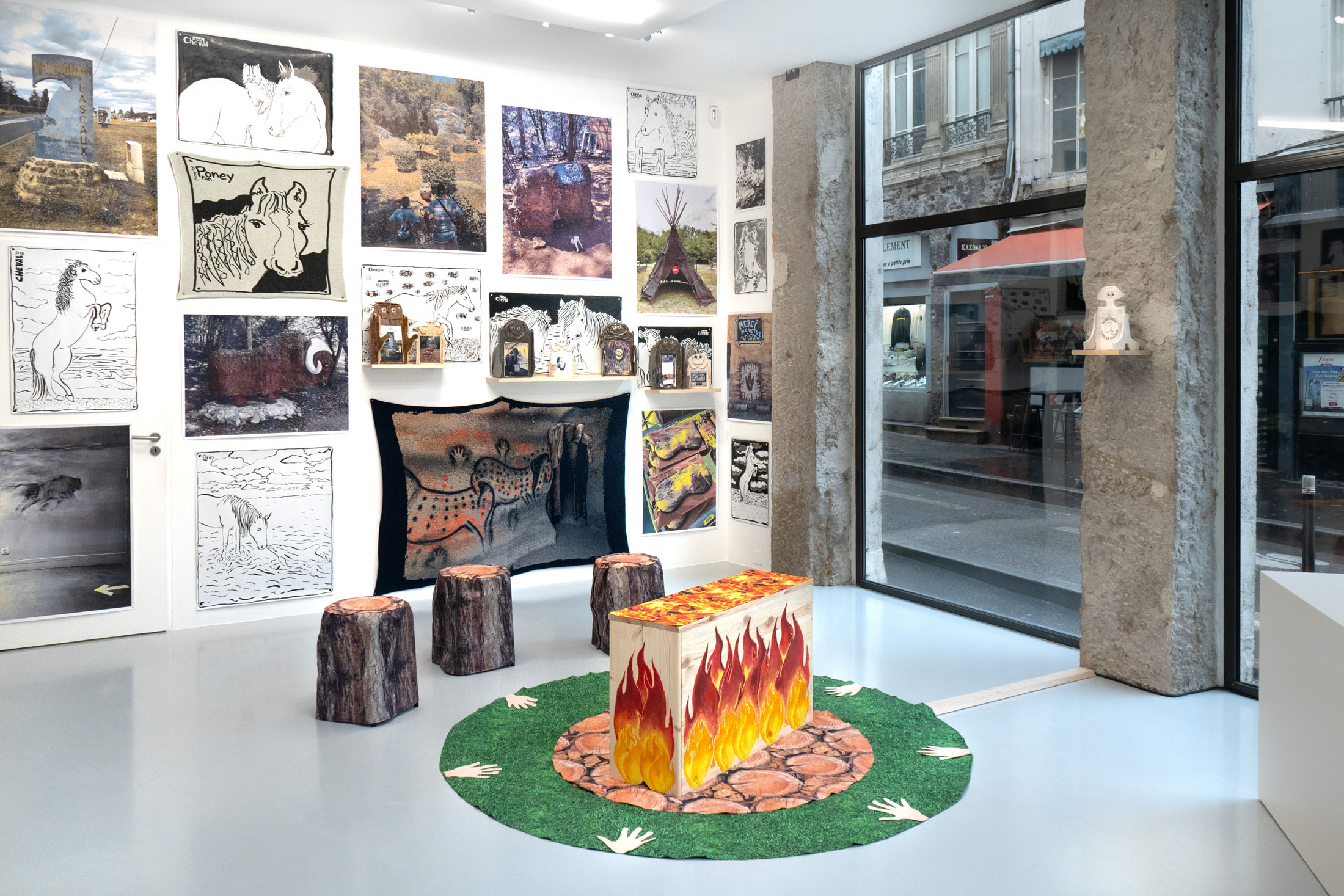
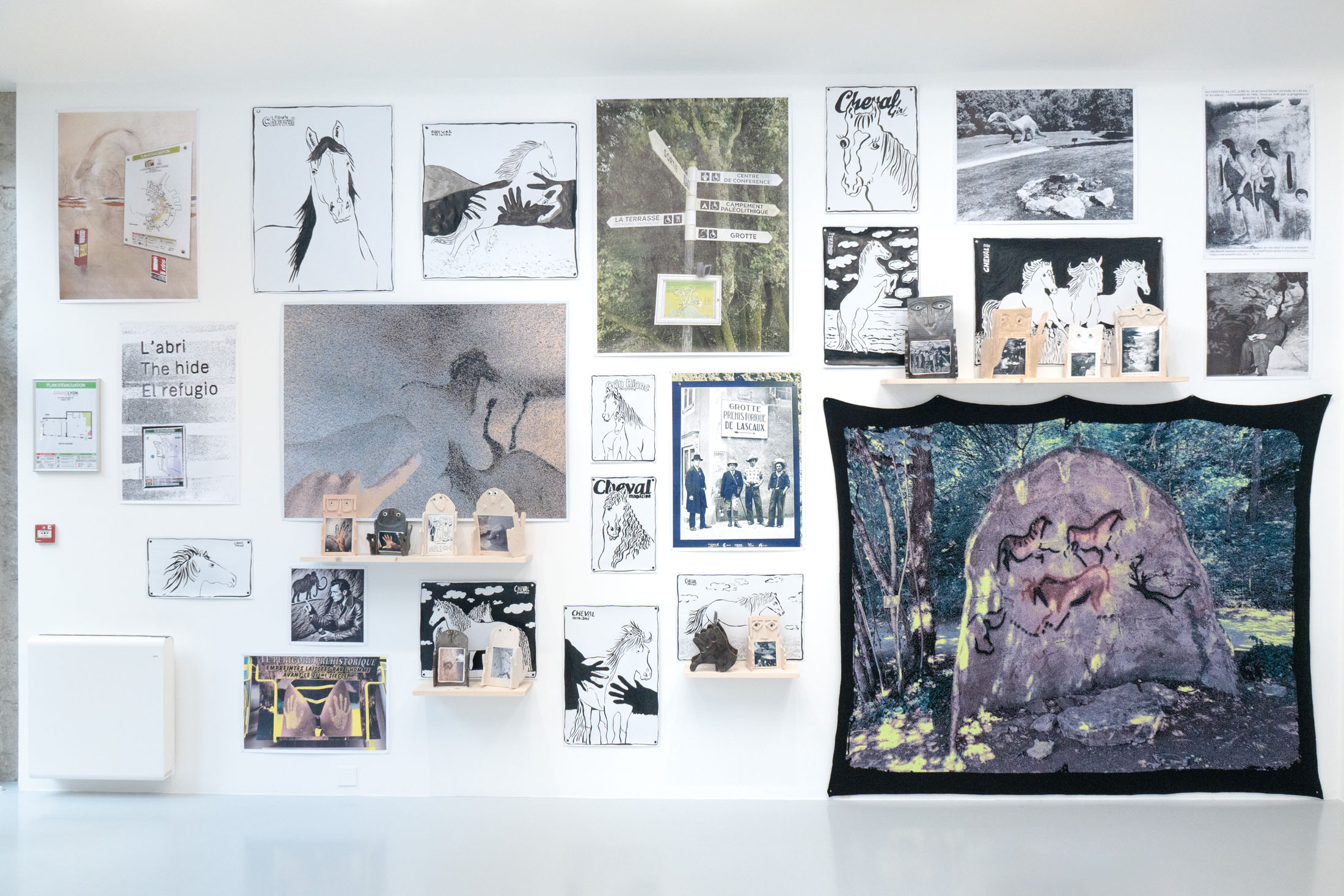
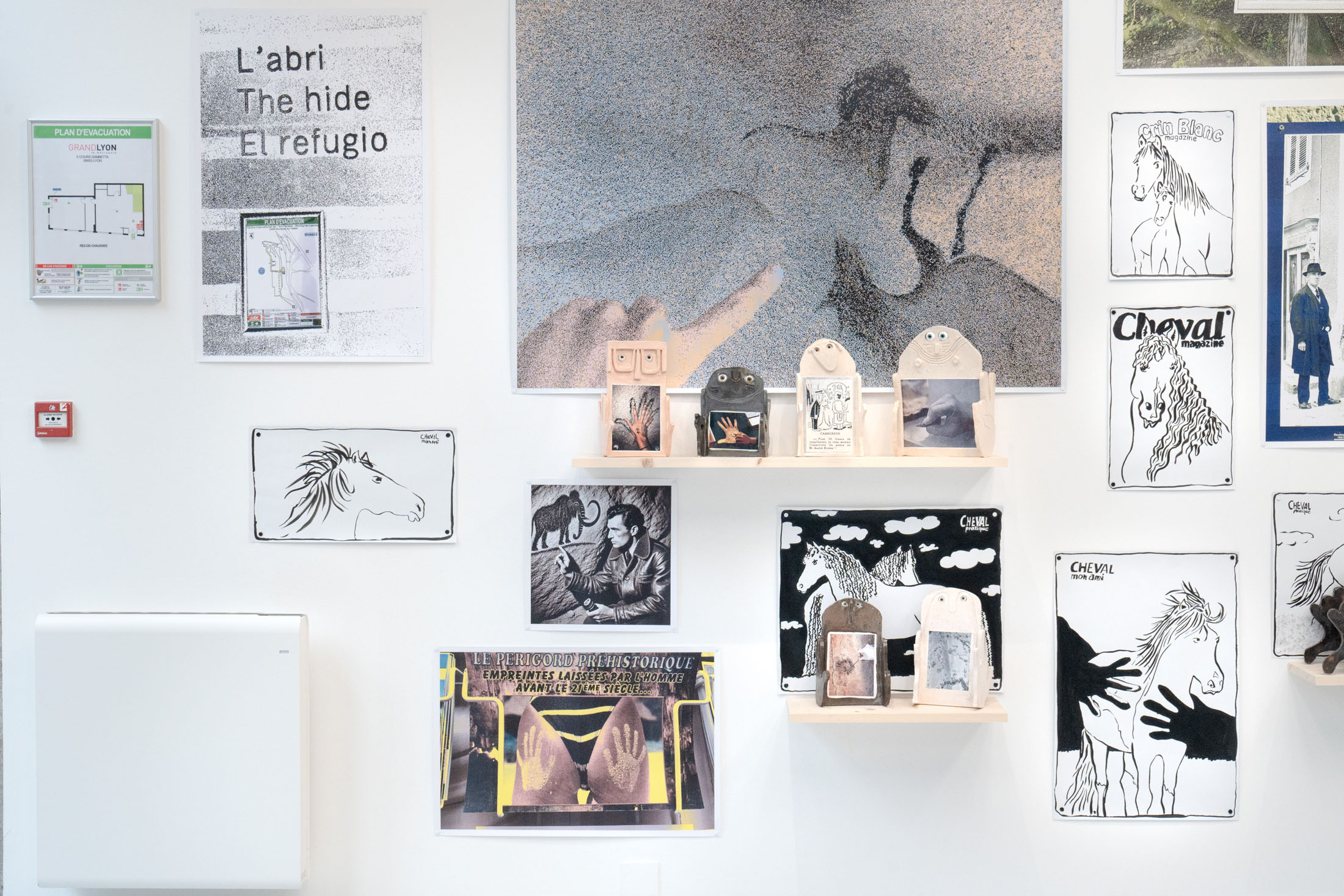
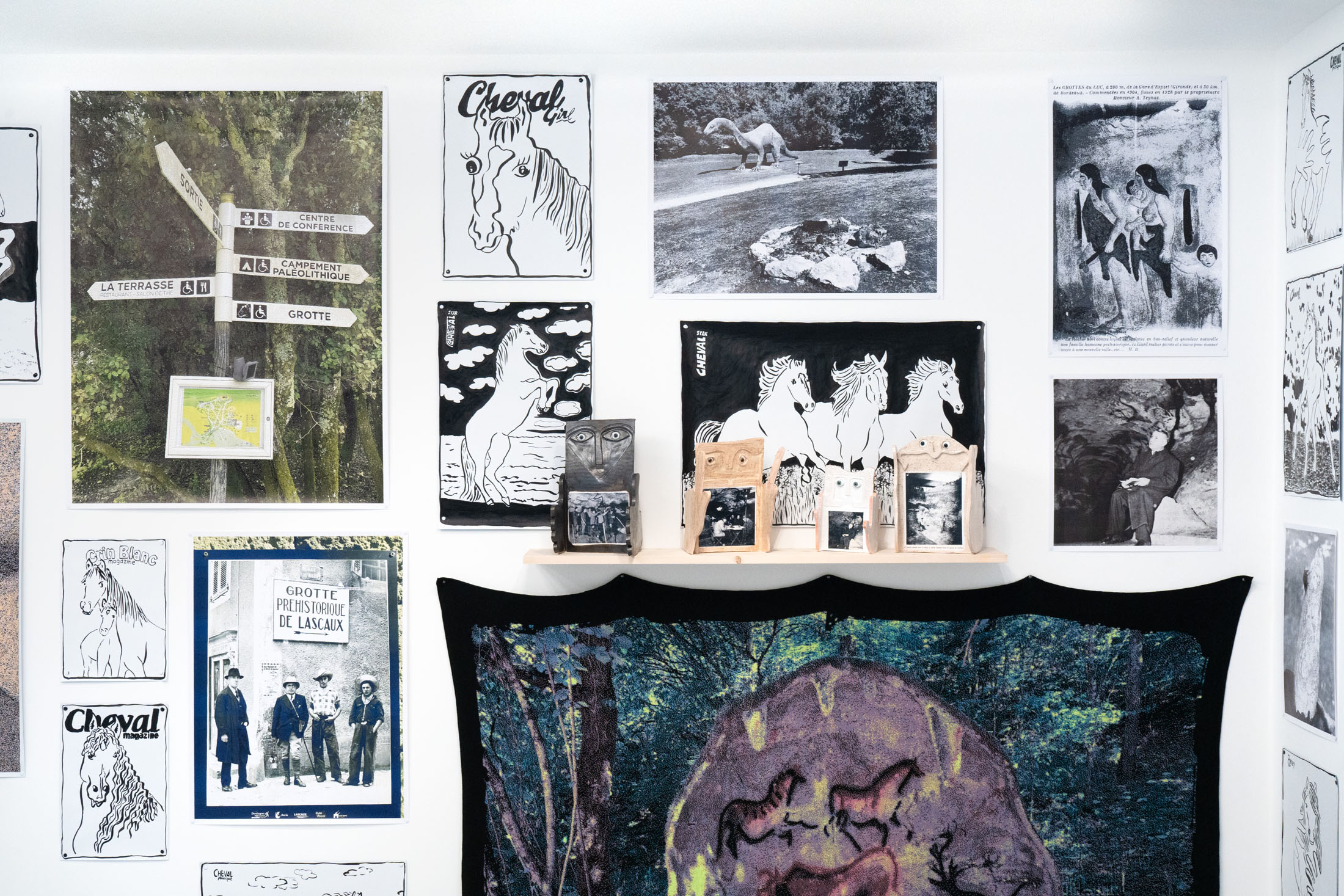
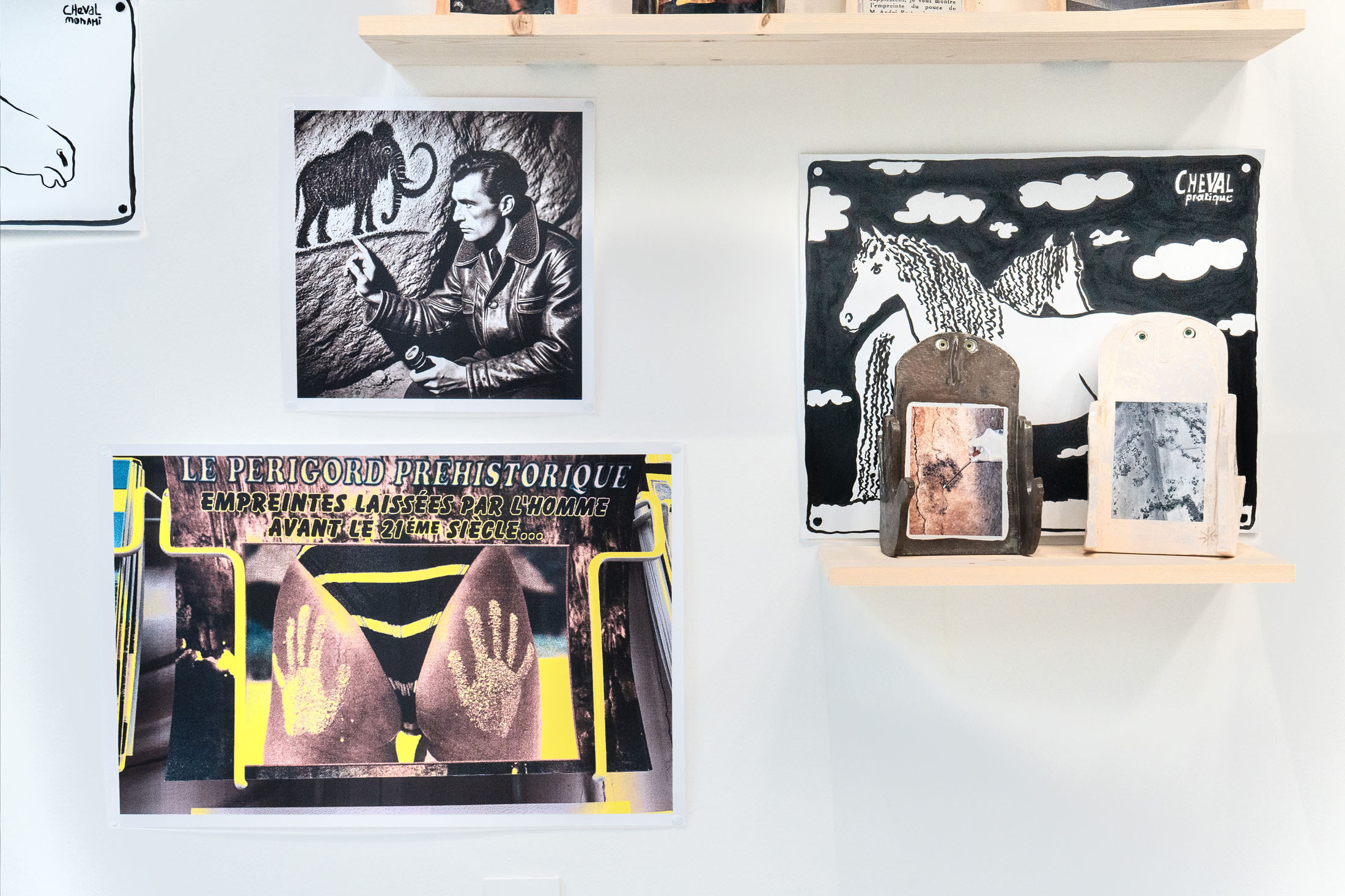
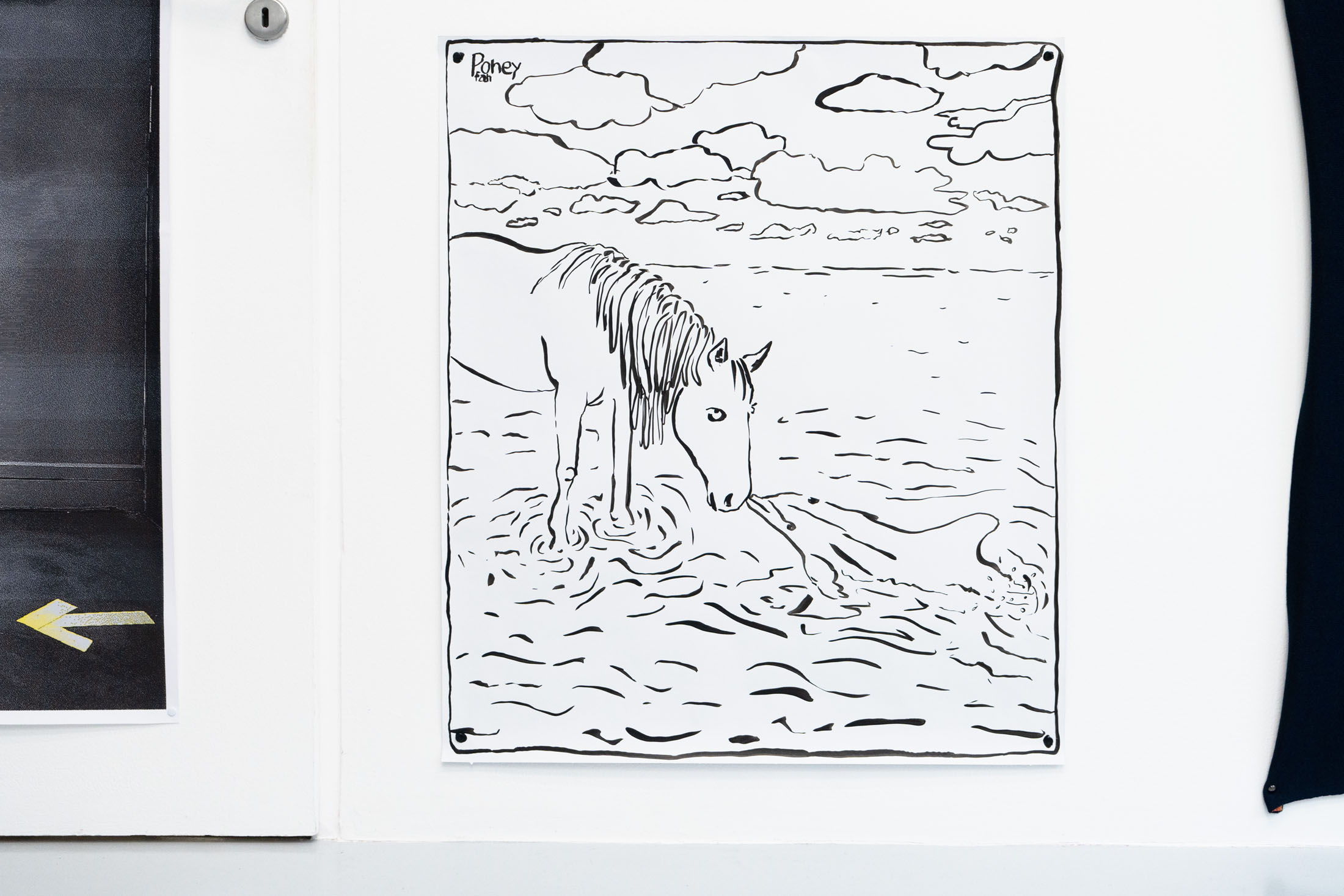
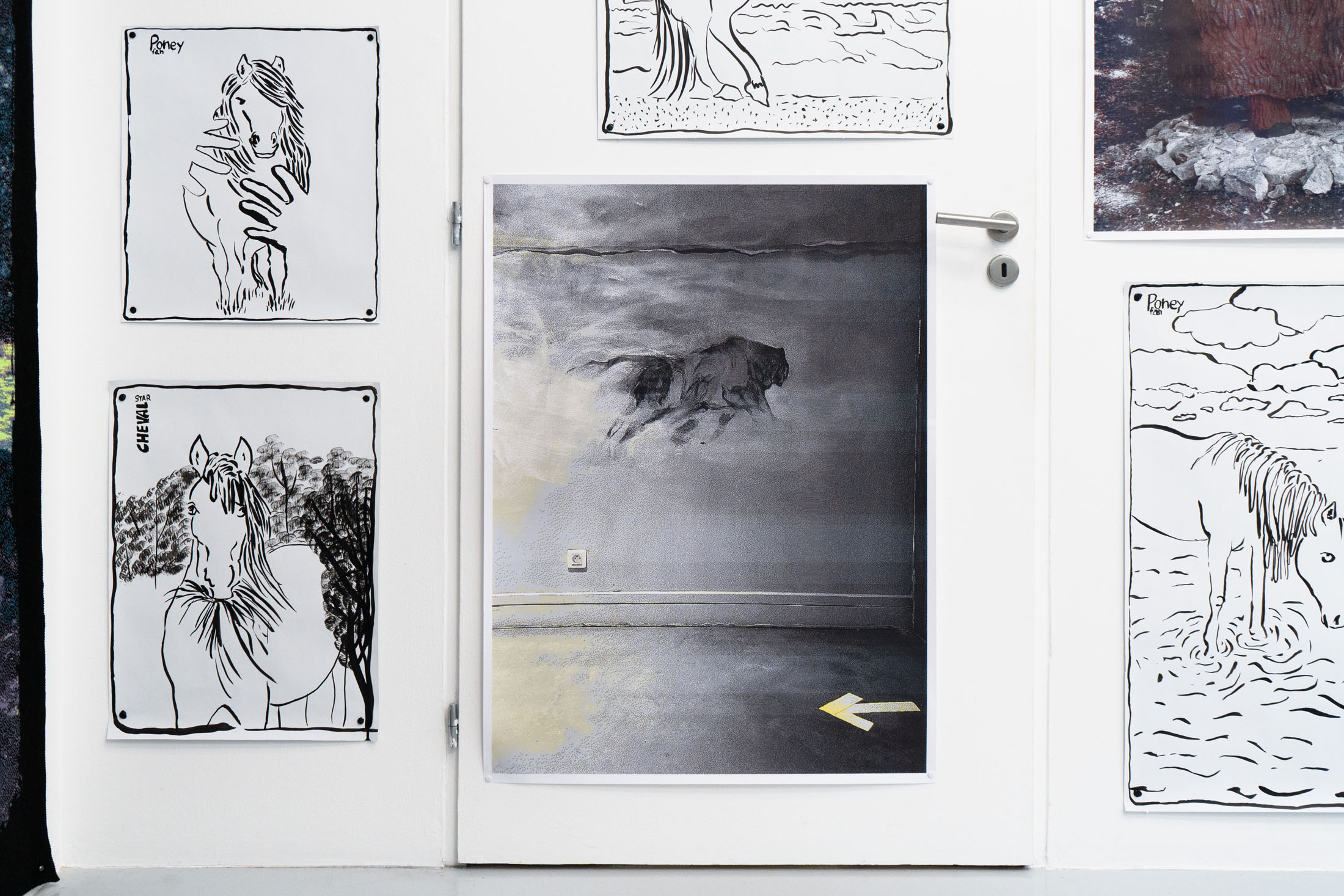
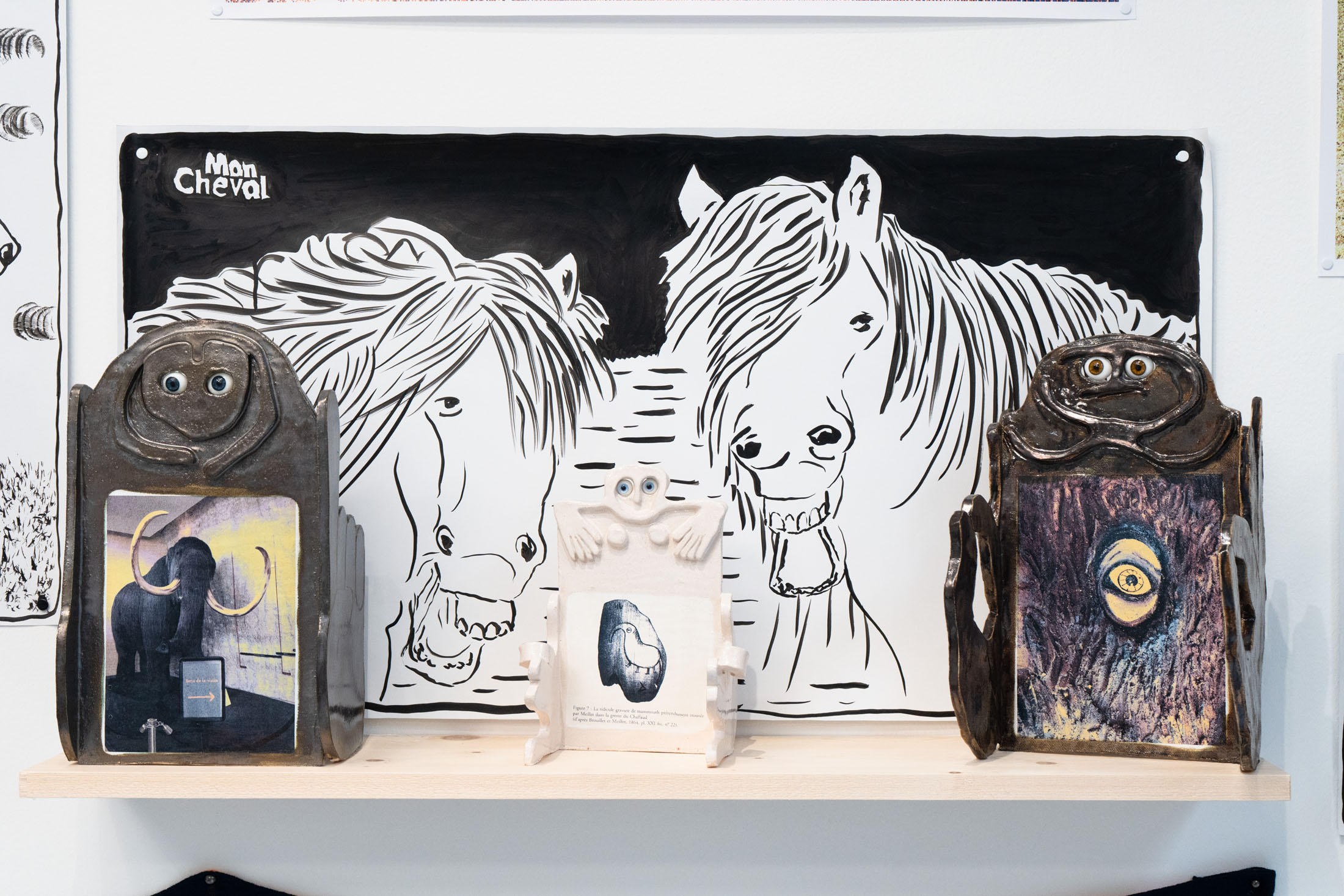
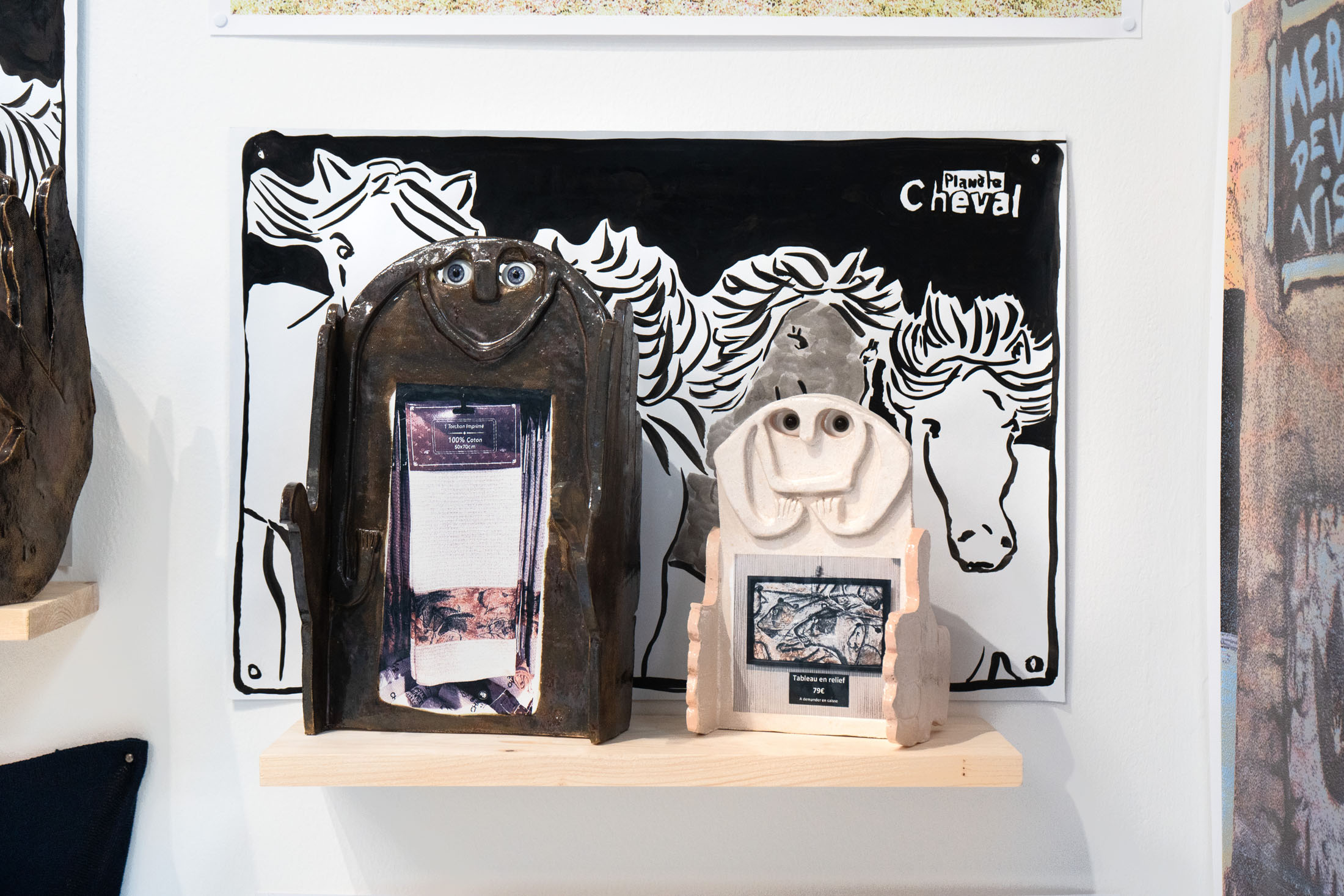
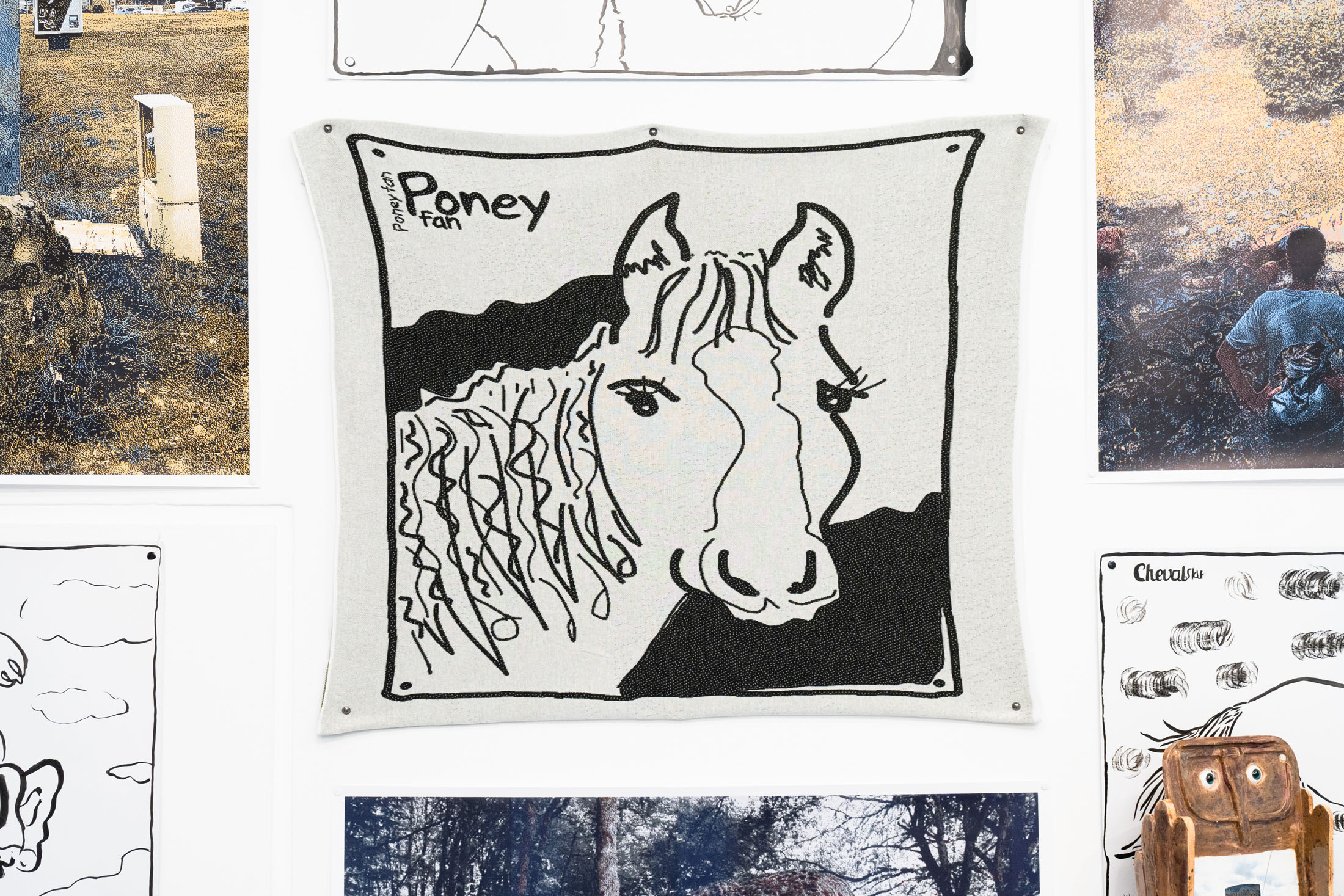
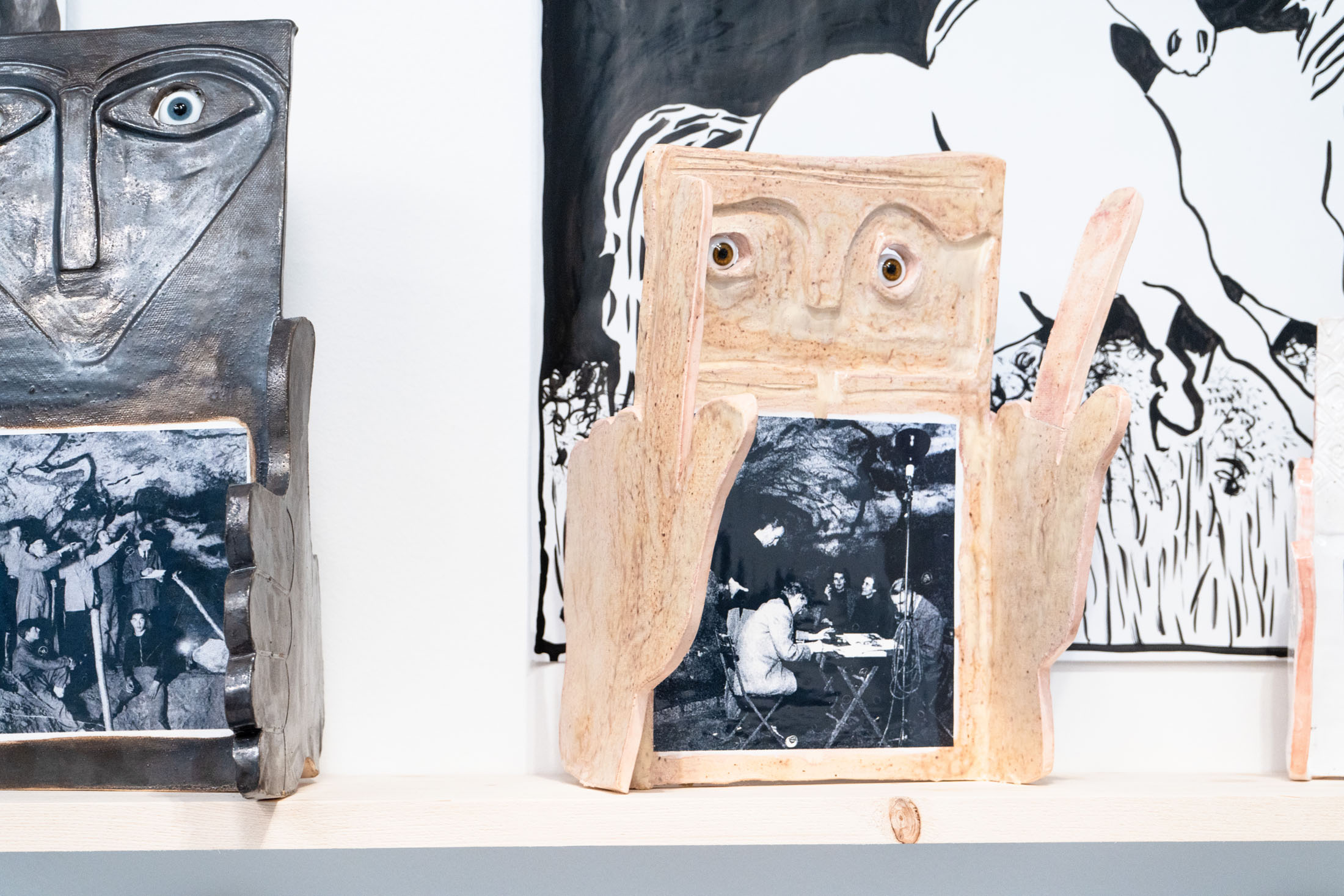
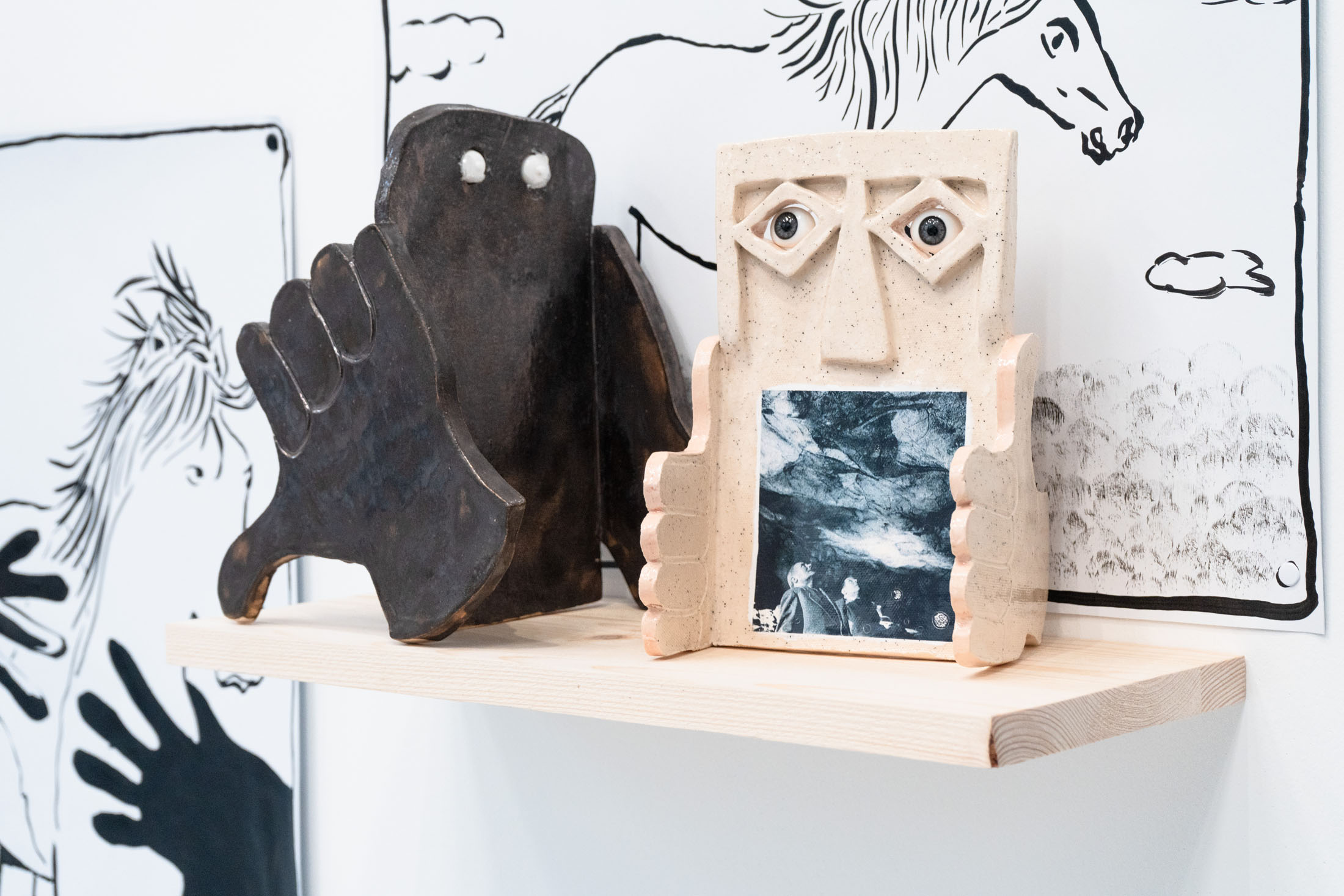
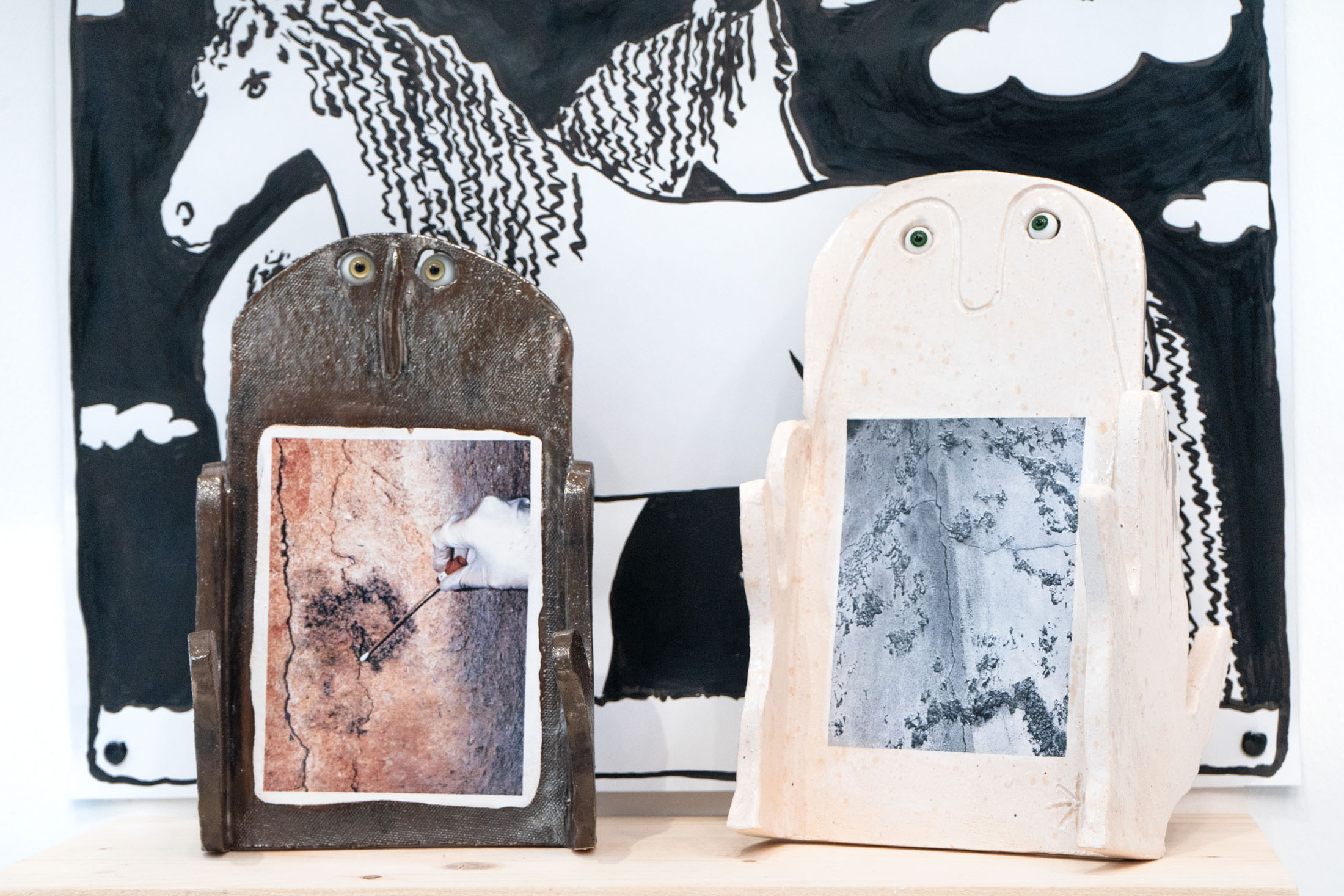
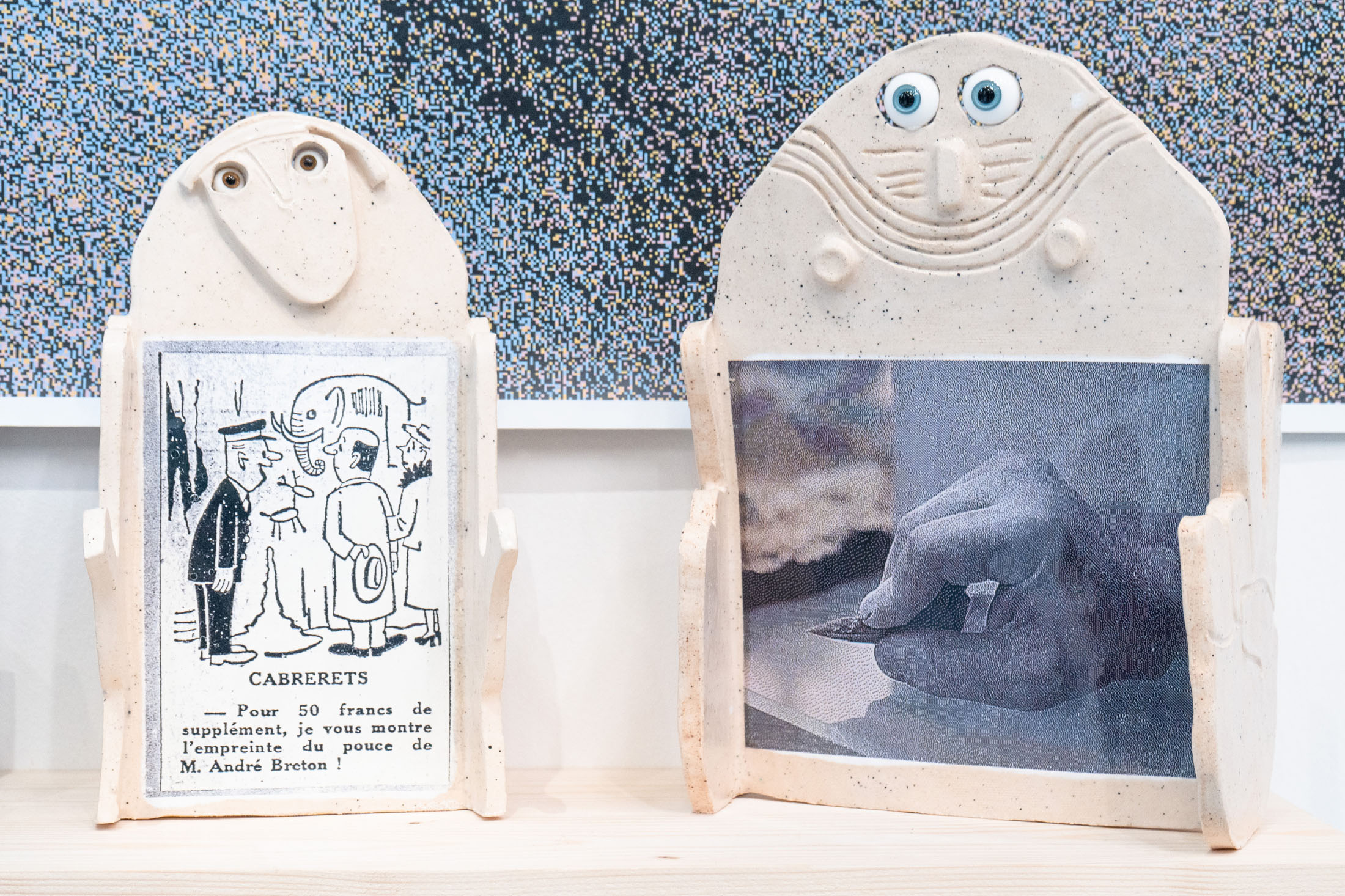
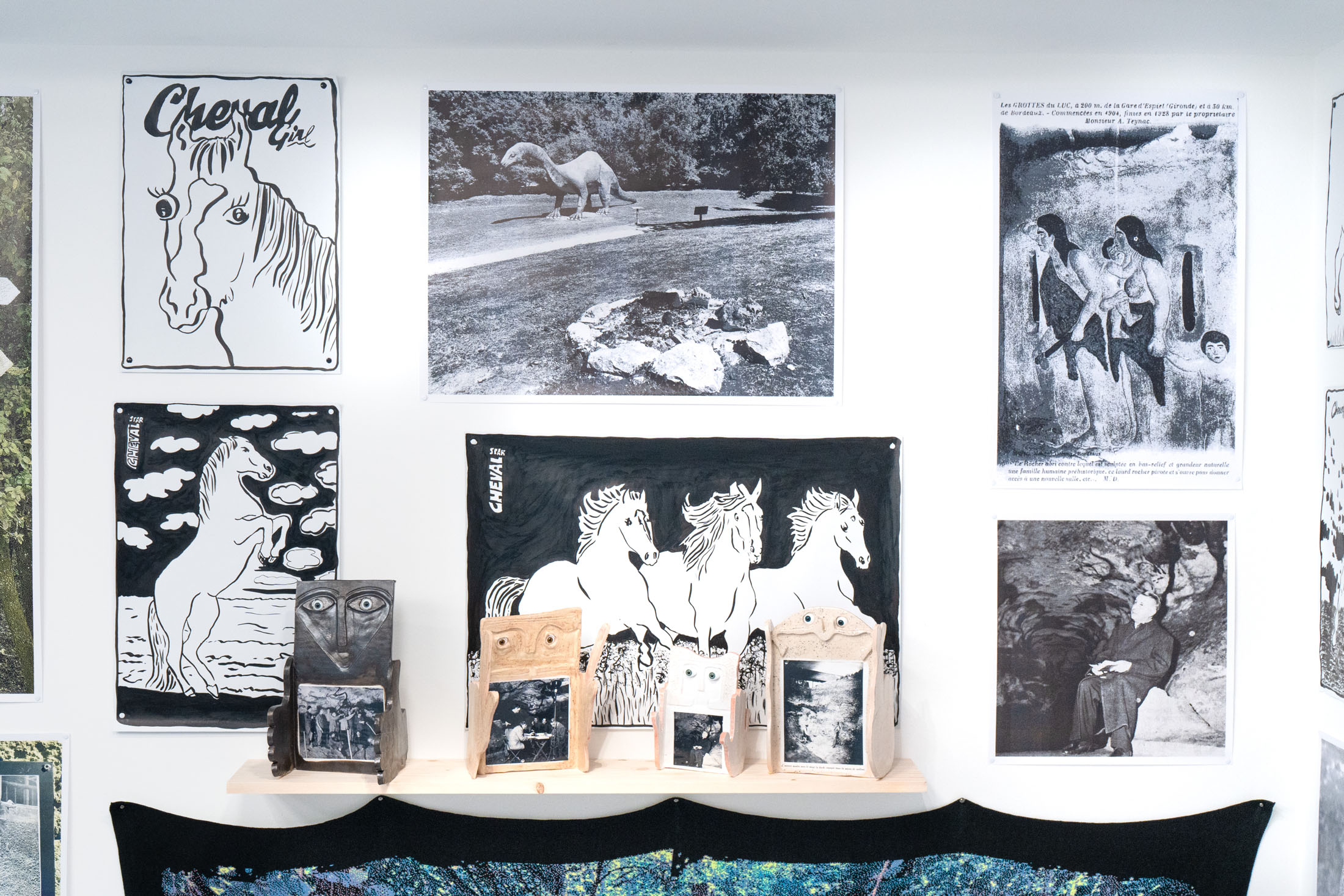
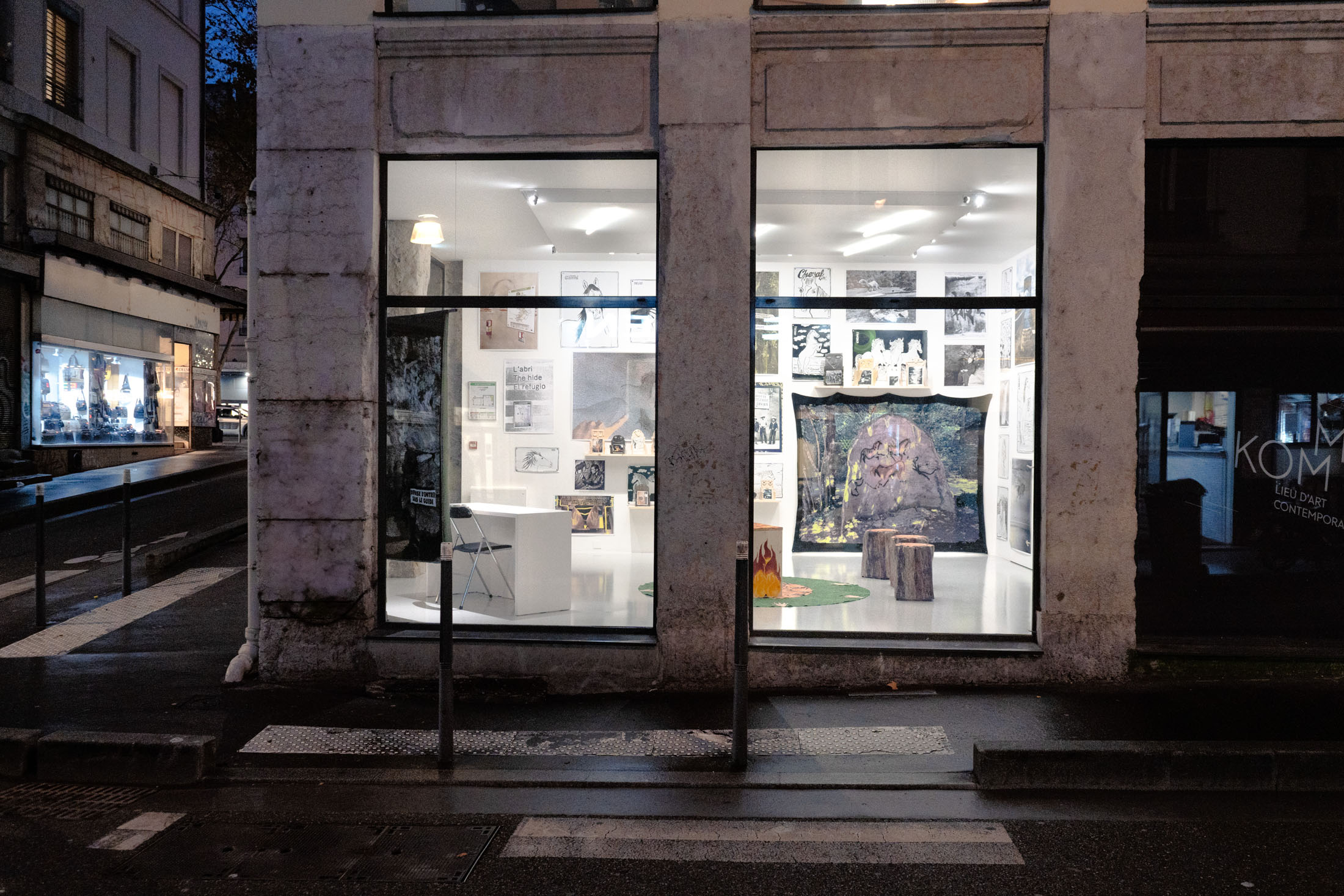
At KOMMET, Elsa Fauconnet presents a series of images and objects combining photographs, facsimiles, textiles, ceramics, drawings, personal archives, and documents gathered from her research. The installation unfolds across the walls of the art centre and is organised into several sections that form chapters of a single visual narrative. One section addresses the signage and entrance areas of prehistoric sites; another, entitled Je ne connais rien aux hommes de la préhistoire, groups images of intellectuals and visitors appropriating caves, posing in made up postures. Further on, a section focuses on the question of touch, this foundational gesture, both forbidden and essential, that connects the hand to the wall and the body to the trace. Other sections evoke animality, silhouettes, rituals, and even the gift shop, considered as the ultimate space for myth merchandising.
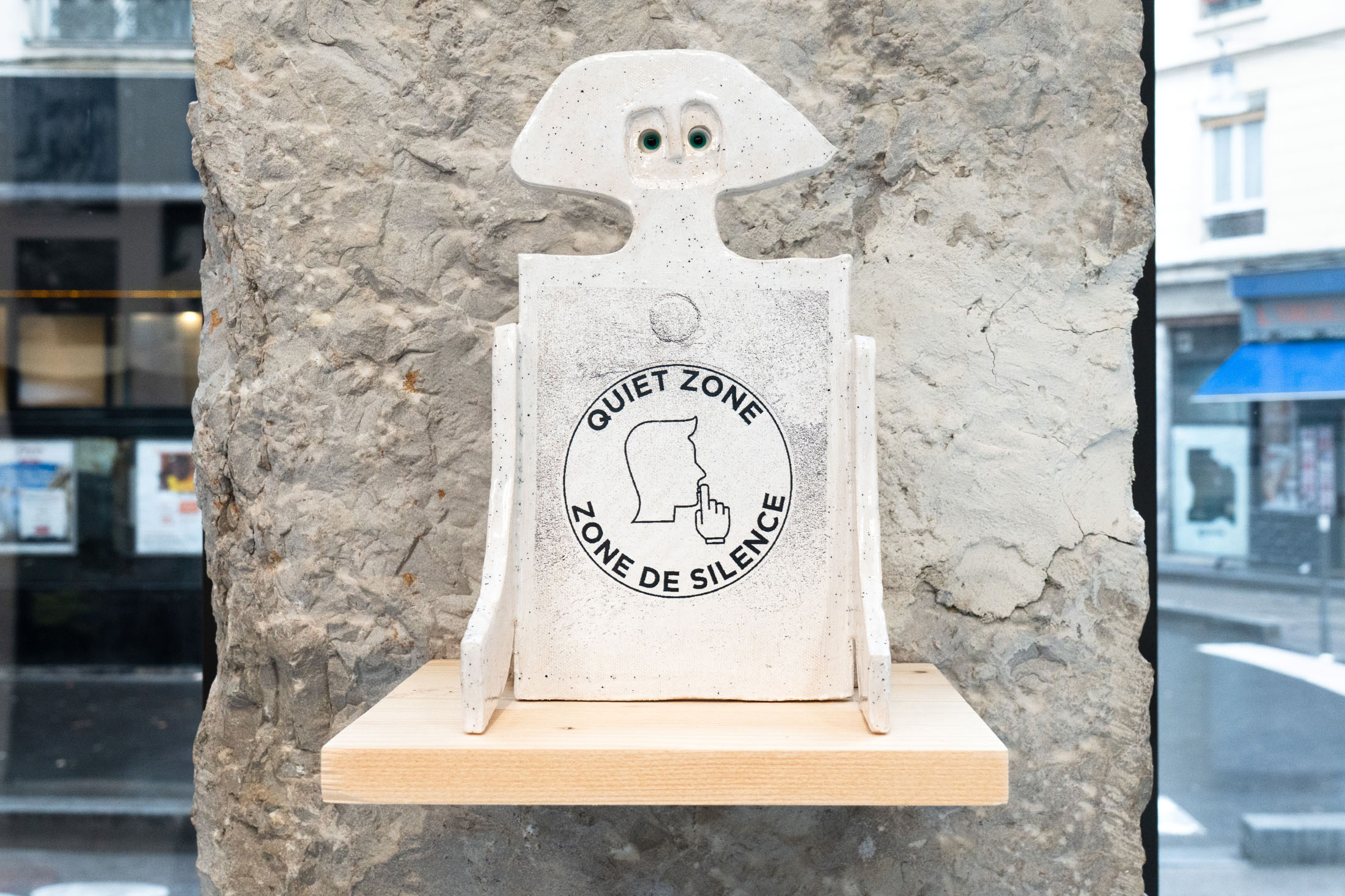
This accumulation is reminiscent of a teenager’s bedroom, with its walls saturated with images and domestic symbols. Like a contemporary decorated cave, the artist redraws, among other things, horses from Cheval Star magazine, a nod to the animal most frequently depicted in cave paintings. A series of ceramic stelae, inspired by early anthropomorphic figures, also punctuates the installation. Engraved with hands drawn from the repertoire of contemporary emoticons, they convey the continuity between primal gestures and our digital languages.
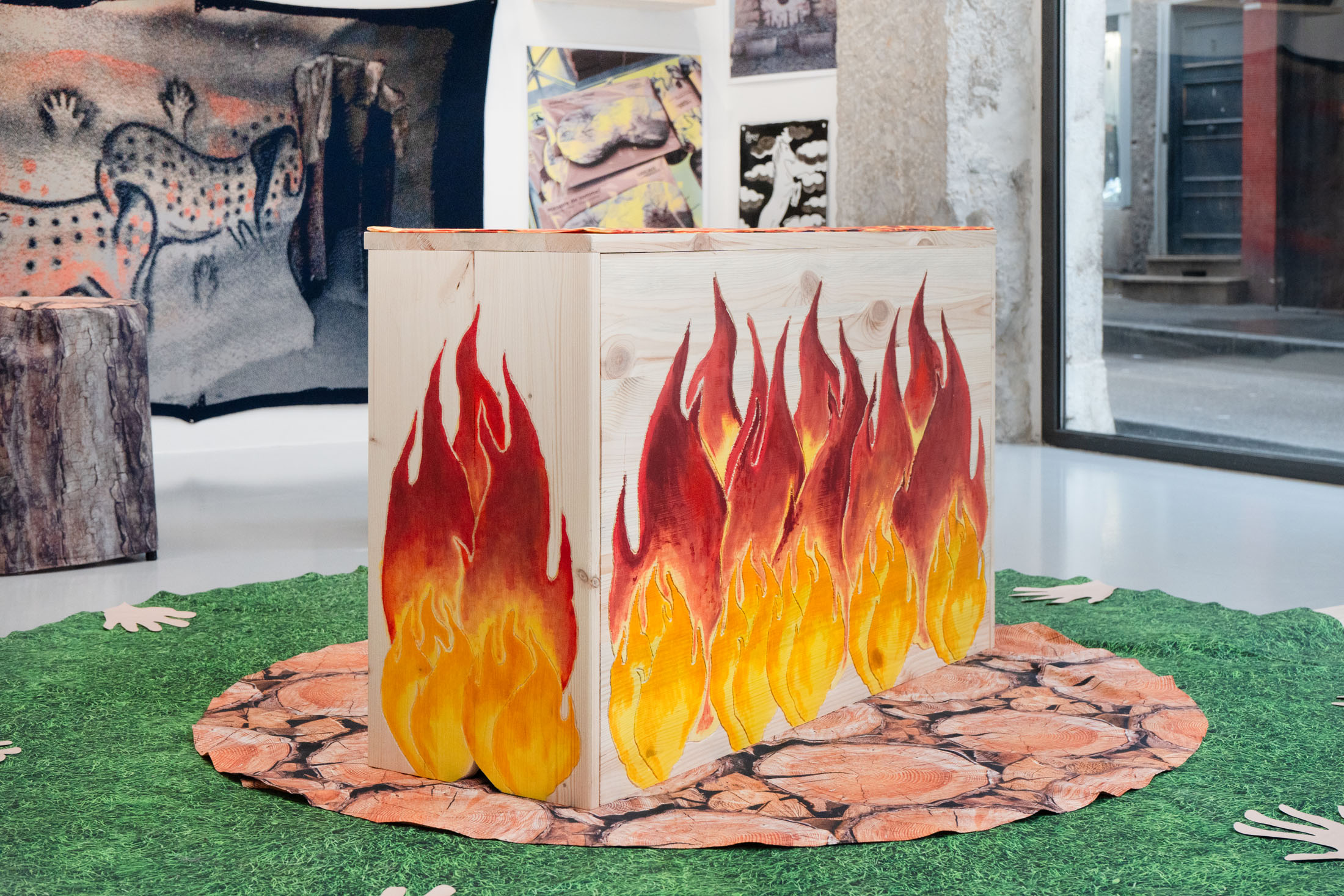
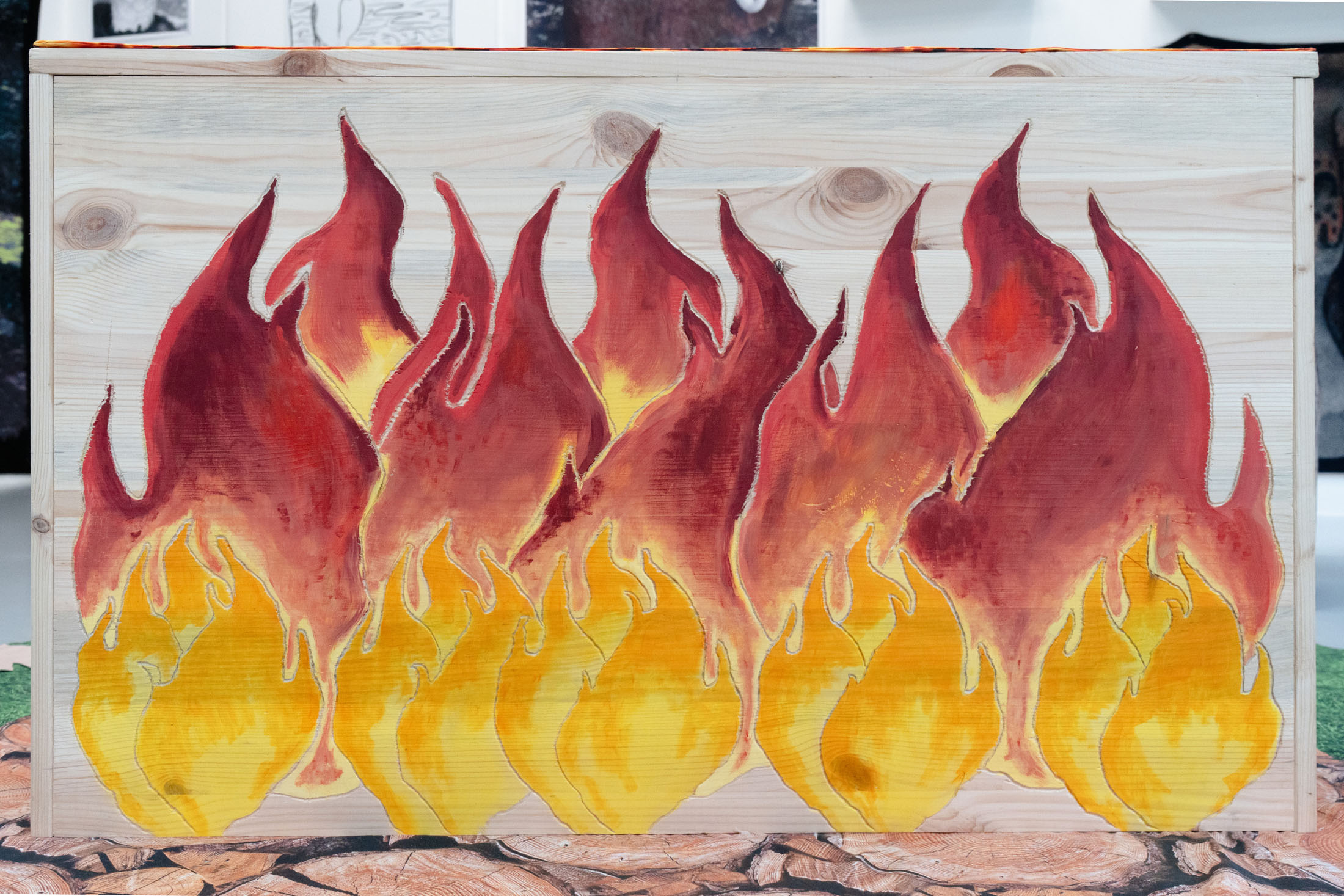
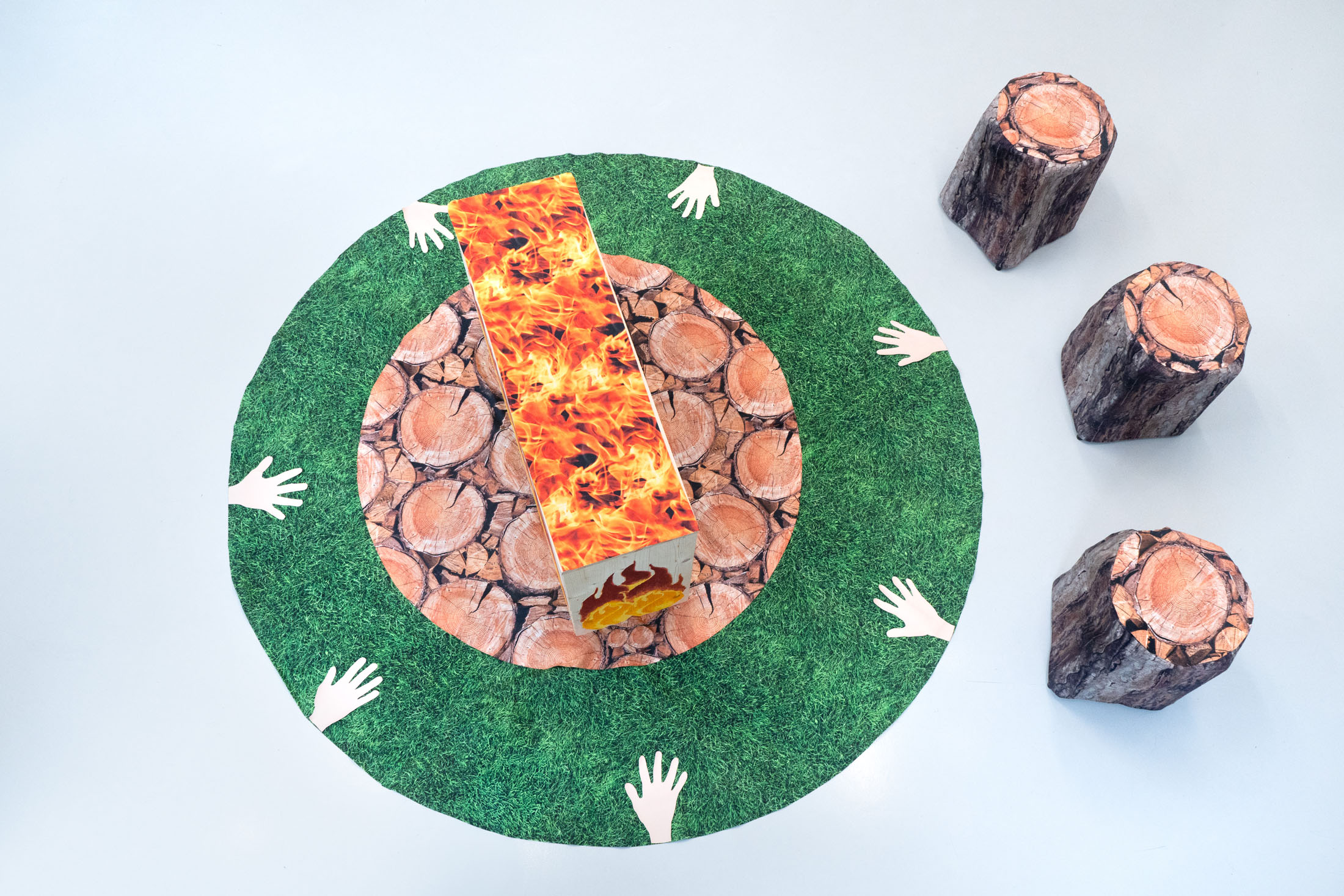
At the center of the exhibition space, a mock campfire echoes the reconstruction elements and becomes the focal point of the narrative. Seated on logs, visitors are invited to embark on a journey that is both ironic and poetic, notably through papier-mâché caves. Following the steps of a guide, the visit becomes a critical experience where the setting becomes a subject for reflection: what remains to be seen when the museum apparatus dictates what should be looked at?
Elsa Fauconnet subtly questions our way of consuming culture. From prehistoric parks to exhibitions, from facsimiles to souvenir shops, the various devices interact: marked trails, scripted experiences, and merchandise. The artist discerns a shared logic of staging knowledge and art. She explores the role of narrative in contemporary creation: what is left to tell when everything becomes an experience for sale? Through these reconstruction devices, Elsa Fauconnet unfolds a poetic reflection on how we look at images today, in a world where the apparatus dictates what we see and where art, at times, becomes indistinguishable from merchandise.
Exhibition supported by the DRAC Île-de-France
Biography
Born in 1984 in Paris, Elsa Fauconnet lives and works in Montreuil. After studying modern literature, she studied at La Cambre in Brussels (2008) then at the Ecole Nationale Supérieure d’Art of Paris where she graduated with a DNSAP (2011) and finished her course at the Fresnoy – Studio national des arts contemporains in Tourcoing (2012-2014). Her work has notably been shown at the Les Églises art centre (Chelles), at Safran (Amiens), at Palais de Tokyo (Paris), at the Nuit Blanche Montréal and at Salon de Montrouge. Her films have also been projected at numerous festivals like the Festival du Nouveau Cinéma (FNC) in Montréal or even at the European Media Art Festival (EMAF) in Osnabrück (Germany).