Search

Elisabeth Perrault and Marion Wagschal at Pangée, Montreal

Elisabeth perrault and marion wagschal at pangée, montreal 19

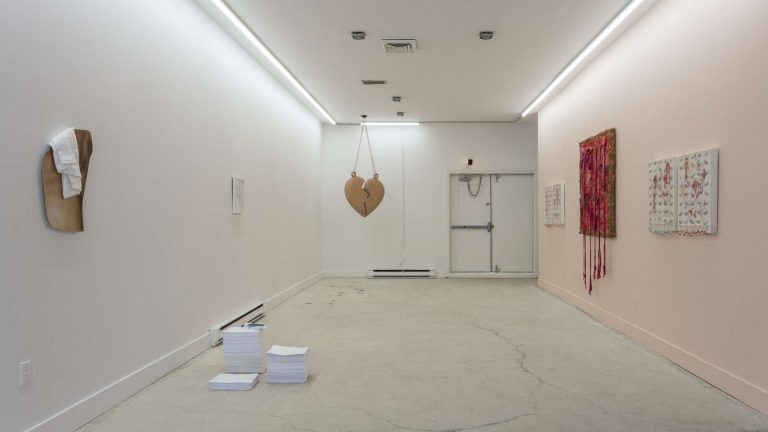
The body is a subject exhaustively traversed in art history. Idealized, objectified, and stripped of its vulnerabilities, it has often been neutralized and discharged of its complexity. In the work of Marion Wagschal and Elisabeth Perrault, however, the body reclaims its weight and fragility as a vessel of memory and as a site of inheritance where desire, the grotesque, and the sacred coalesce. Their works lean toward one another—Perrault’s tactile assem-blages and Wagschal’s painterly tableaux— each confronting intimacy and loss with disarming candor.

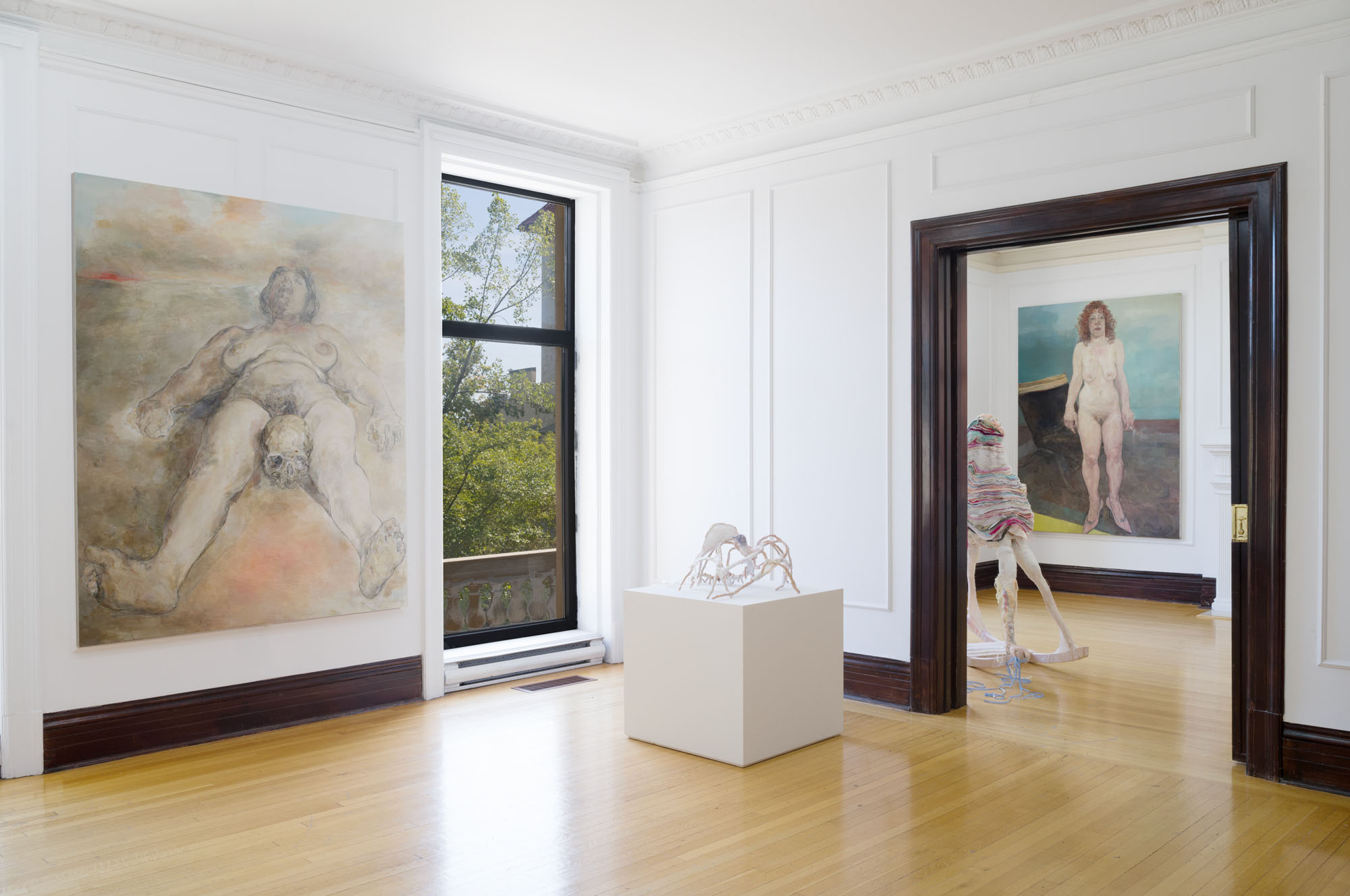
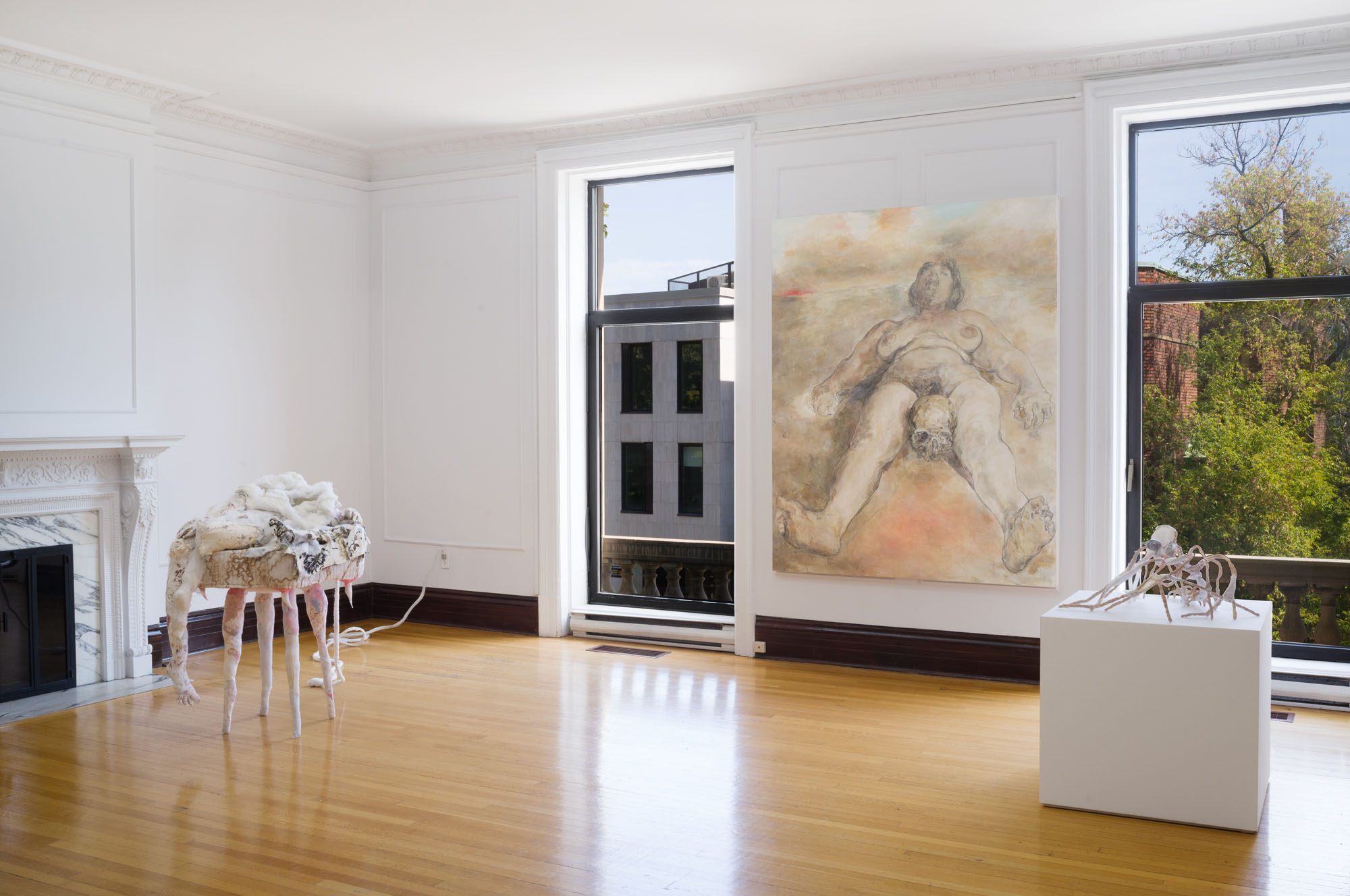
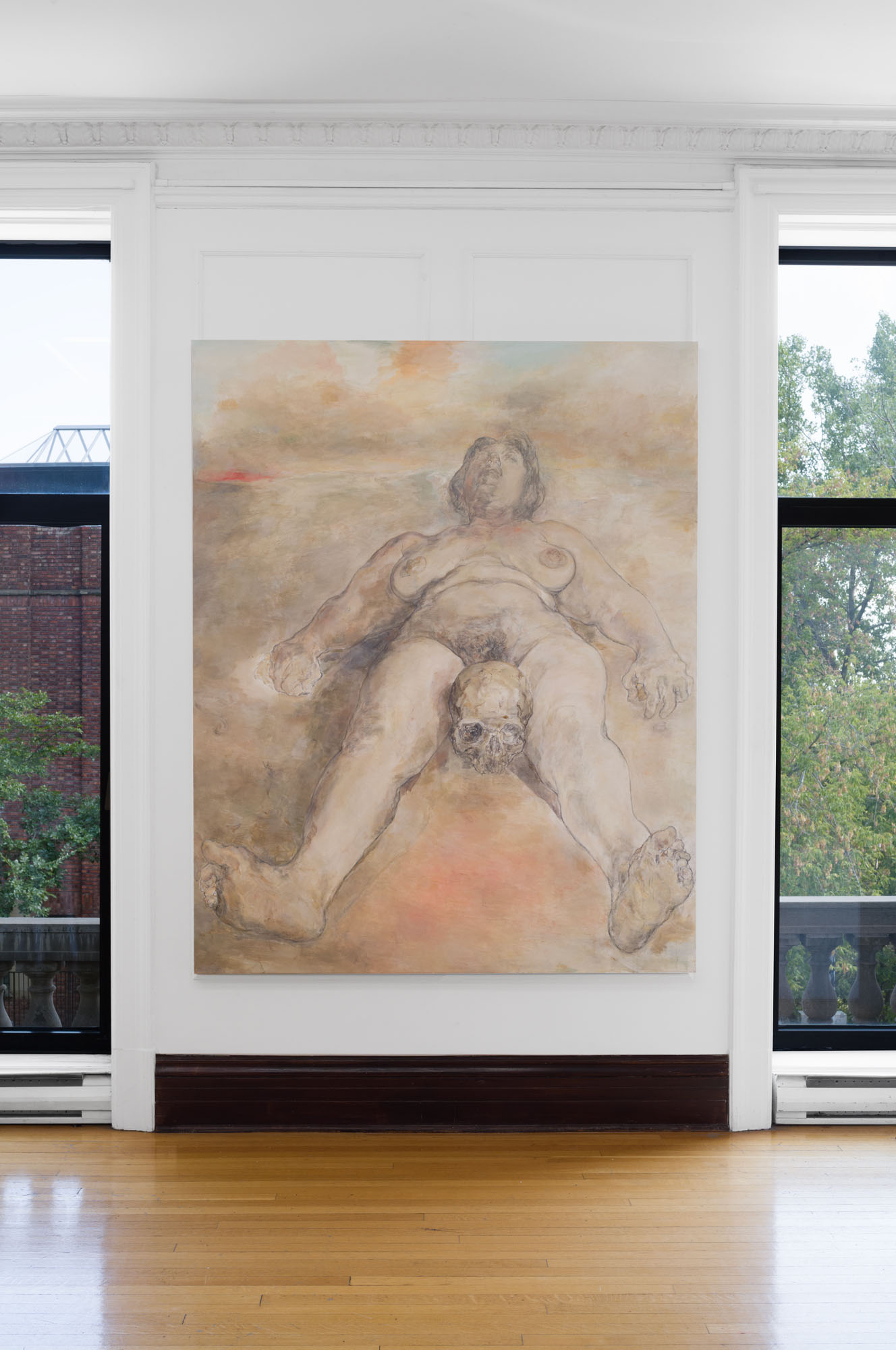
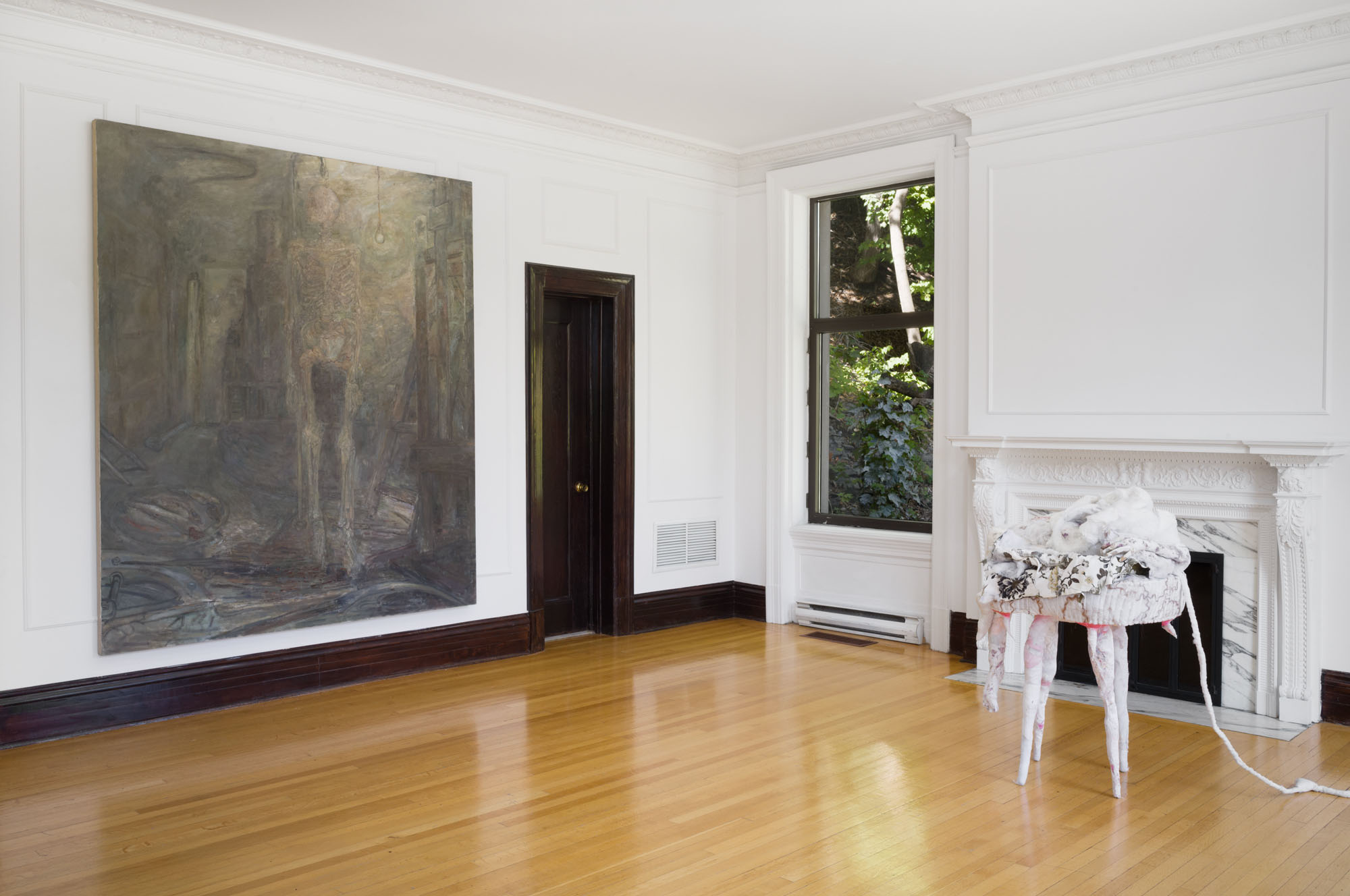
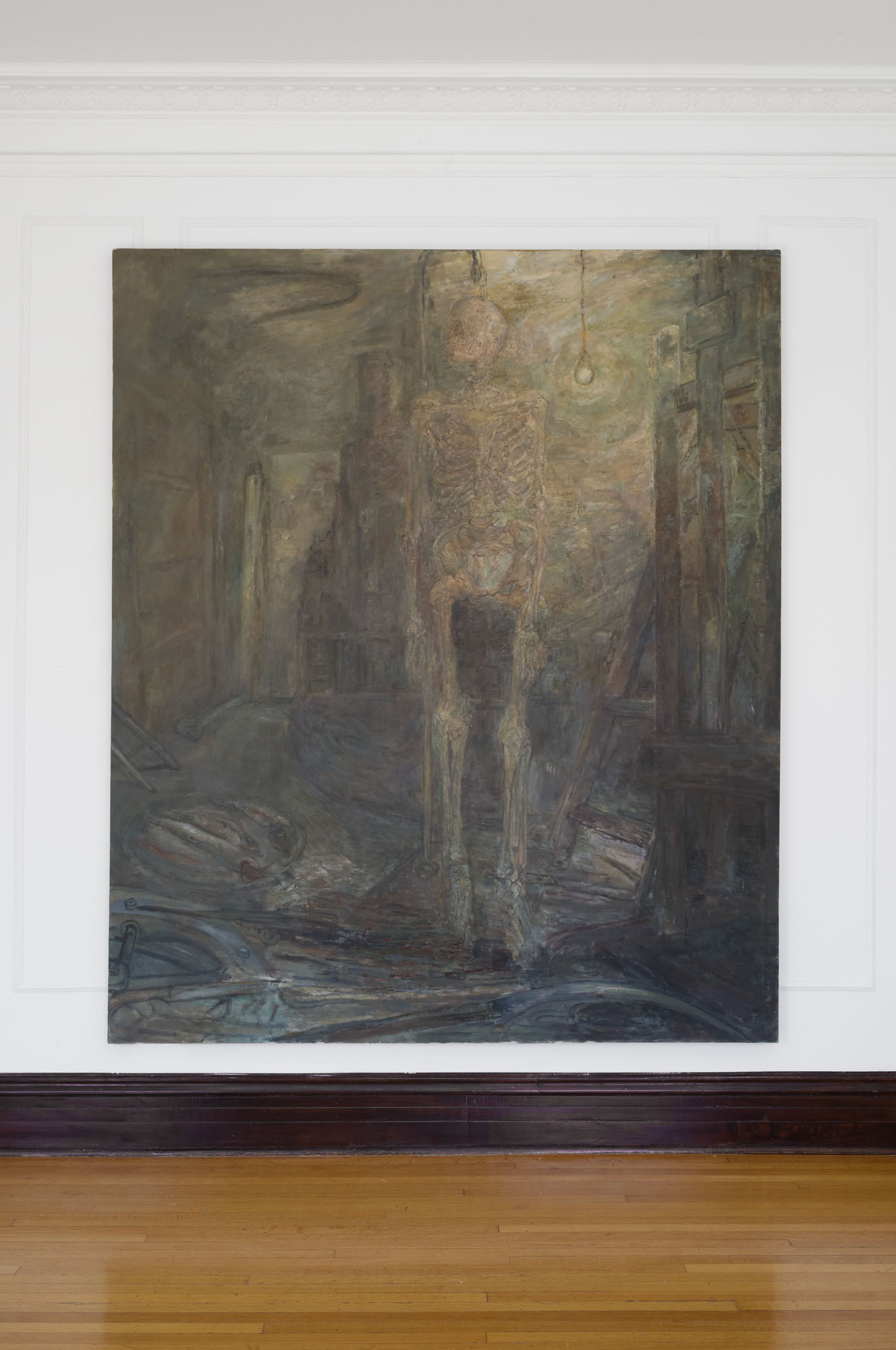
Wagschal’s paintings, monumental yet tender, stage a confrontation with the cycles of life and death. In Colossus (2016), she depicts her own nude body with a skull placed between her legs, a provocation that collapses the inevitabilities of birth and death into a single image. Mortality surfaces again in Atelier (1991), inspired by a real skeleton that once hung in Concordia University’s art department until the early 1990s. Wagschal’s practice oscillates between historical, fictional, and autobiographical, producing figures that loom larger than life yet remain anchored within resonant scenes that join recollection and fantasy.

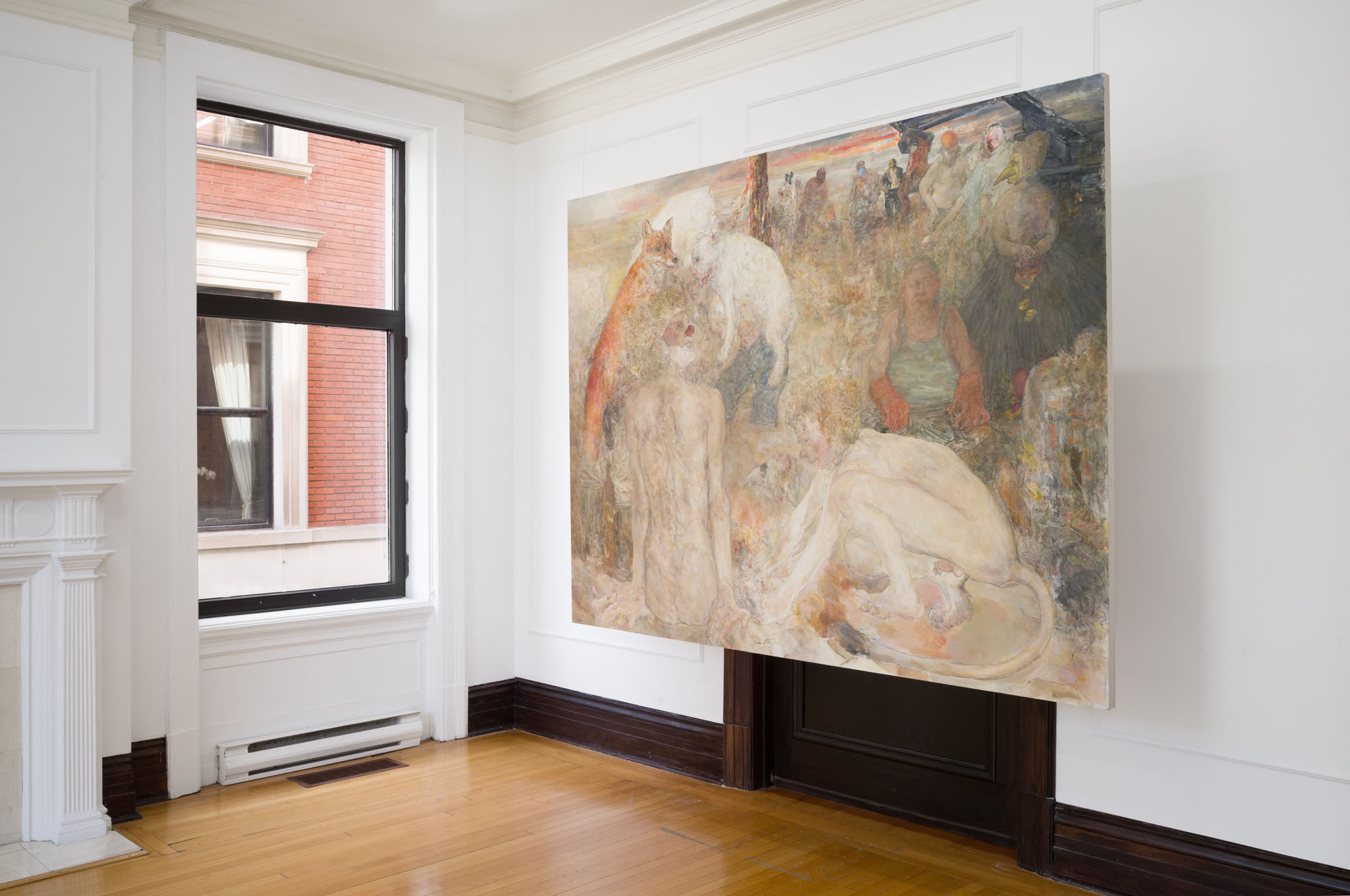
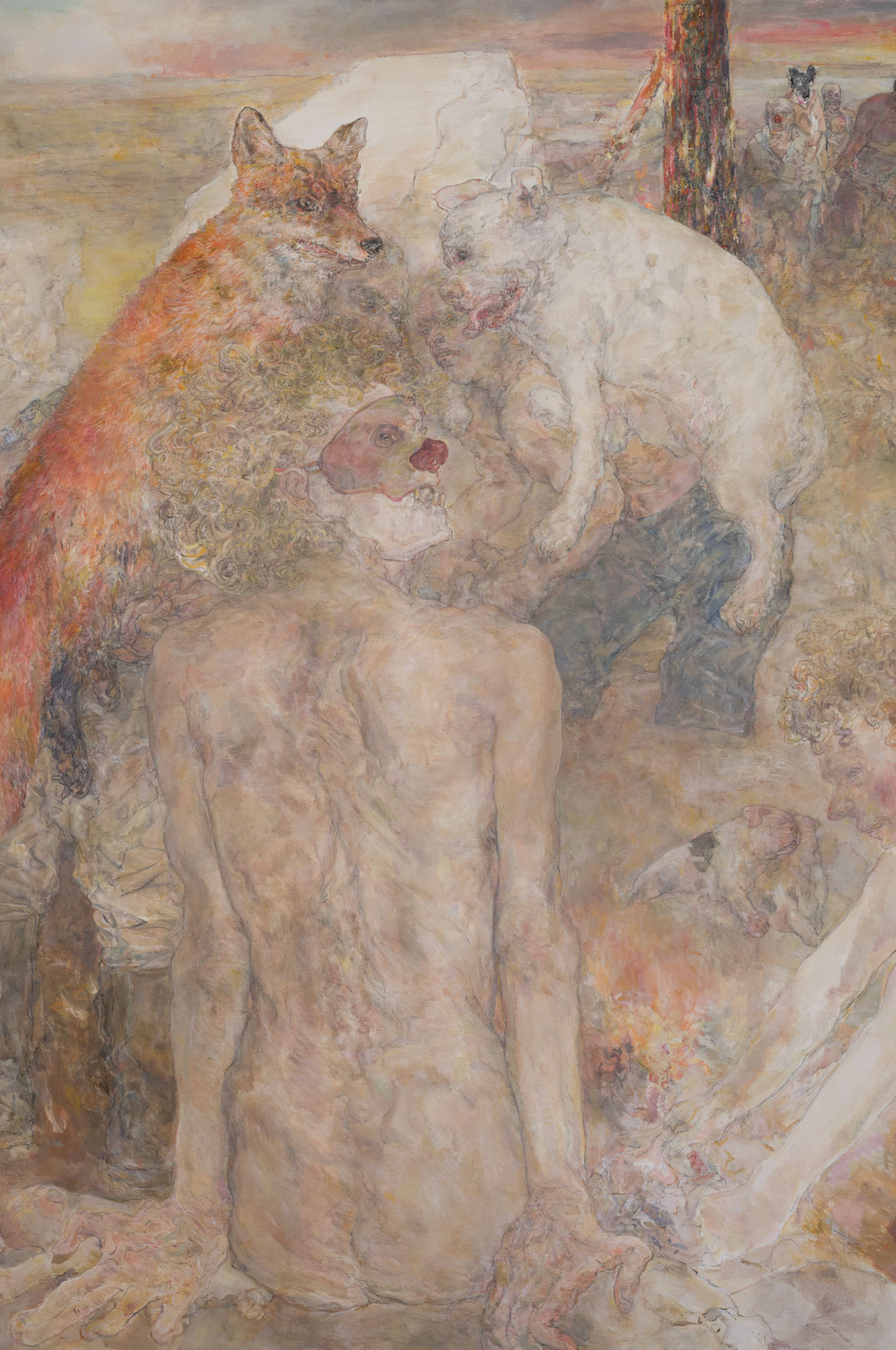
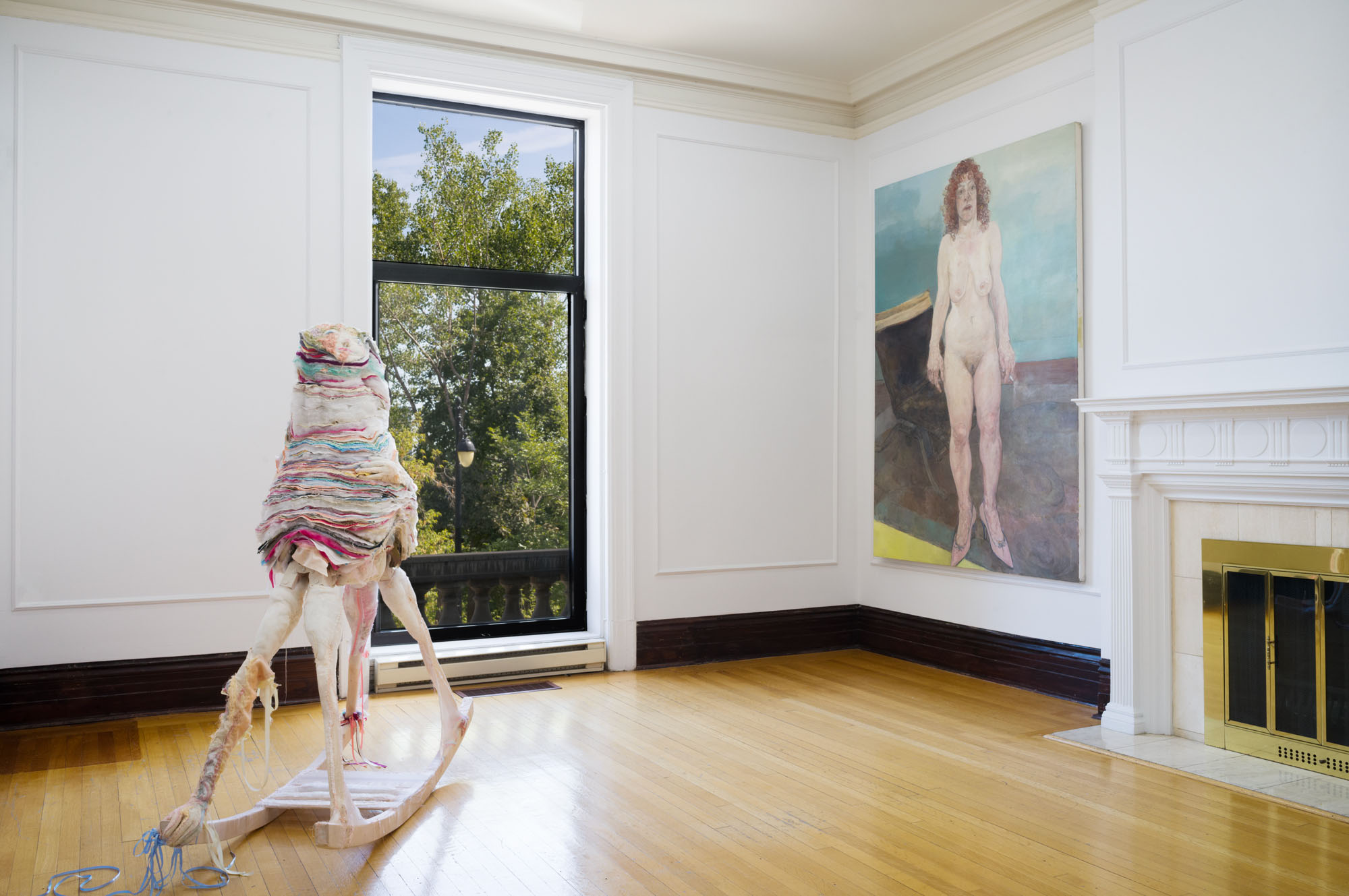
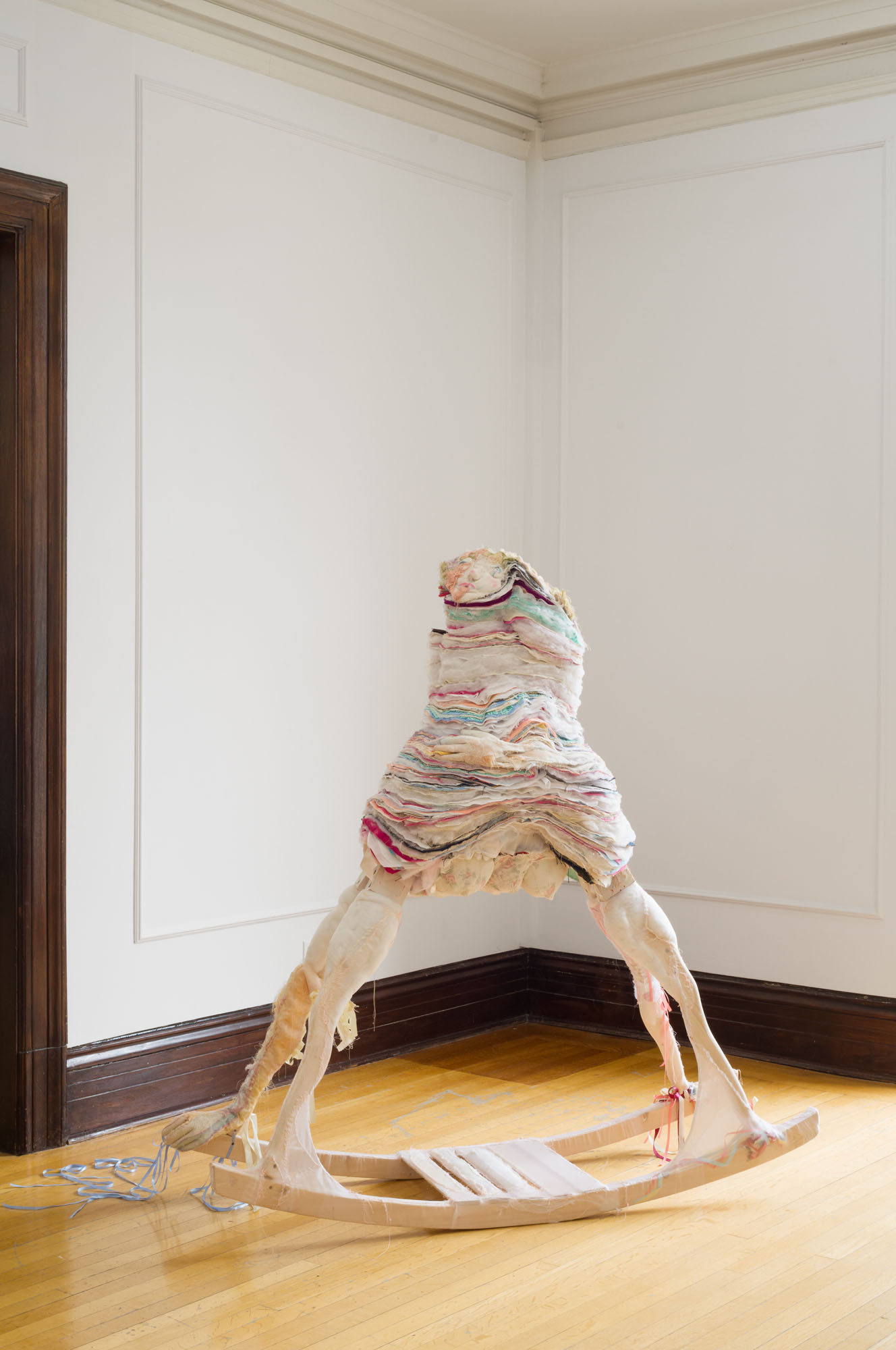
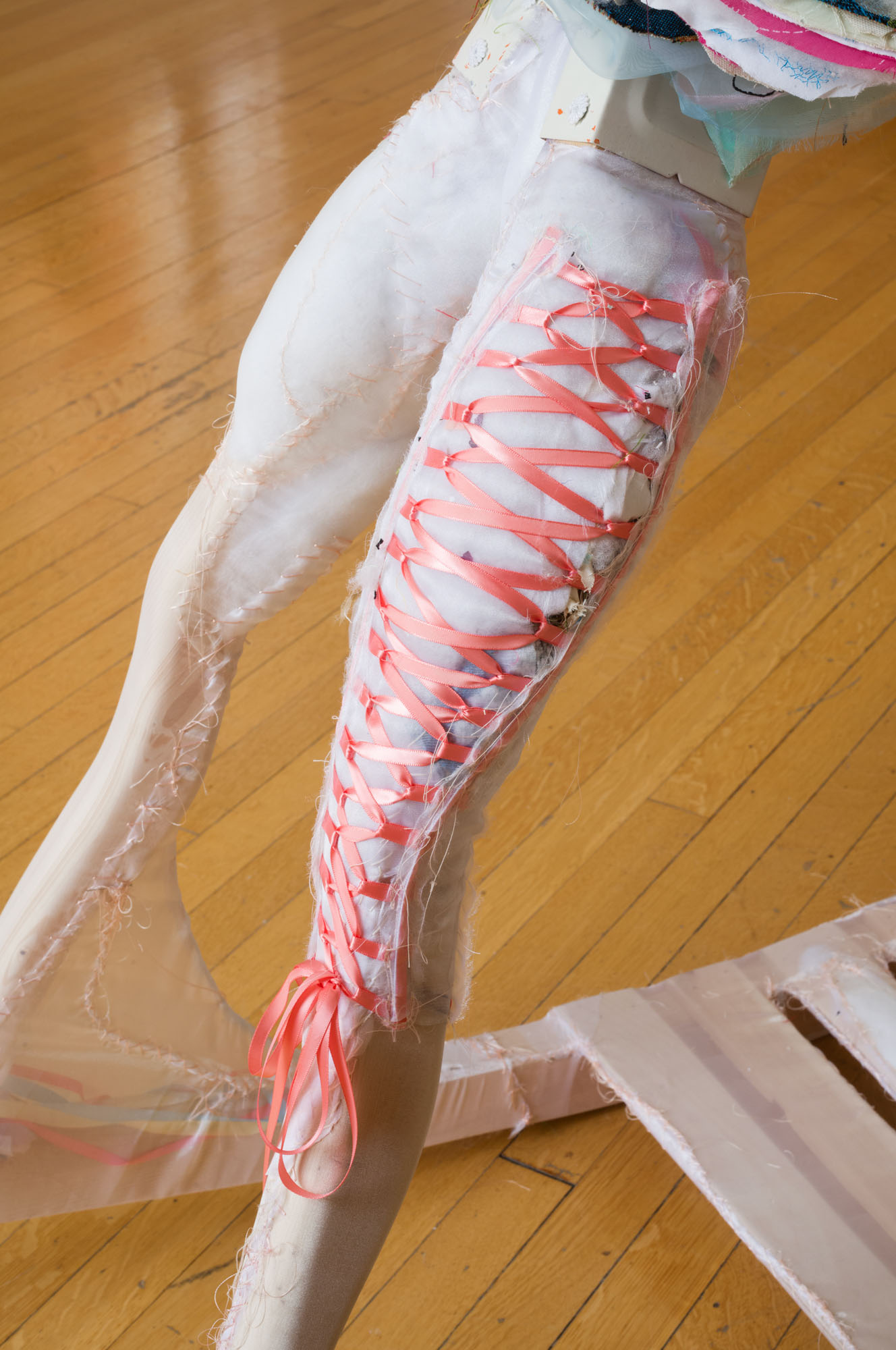
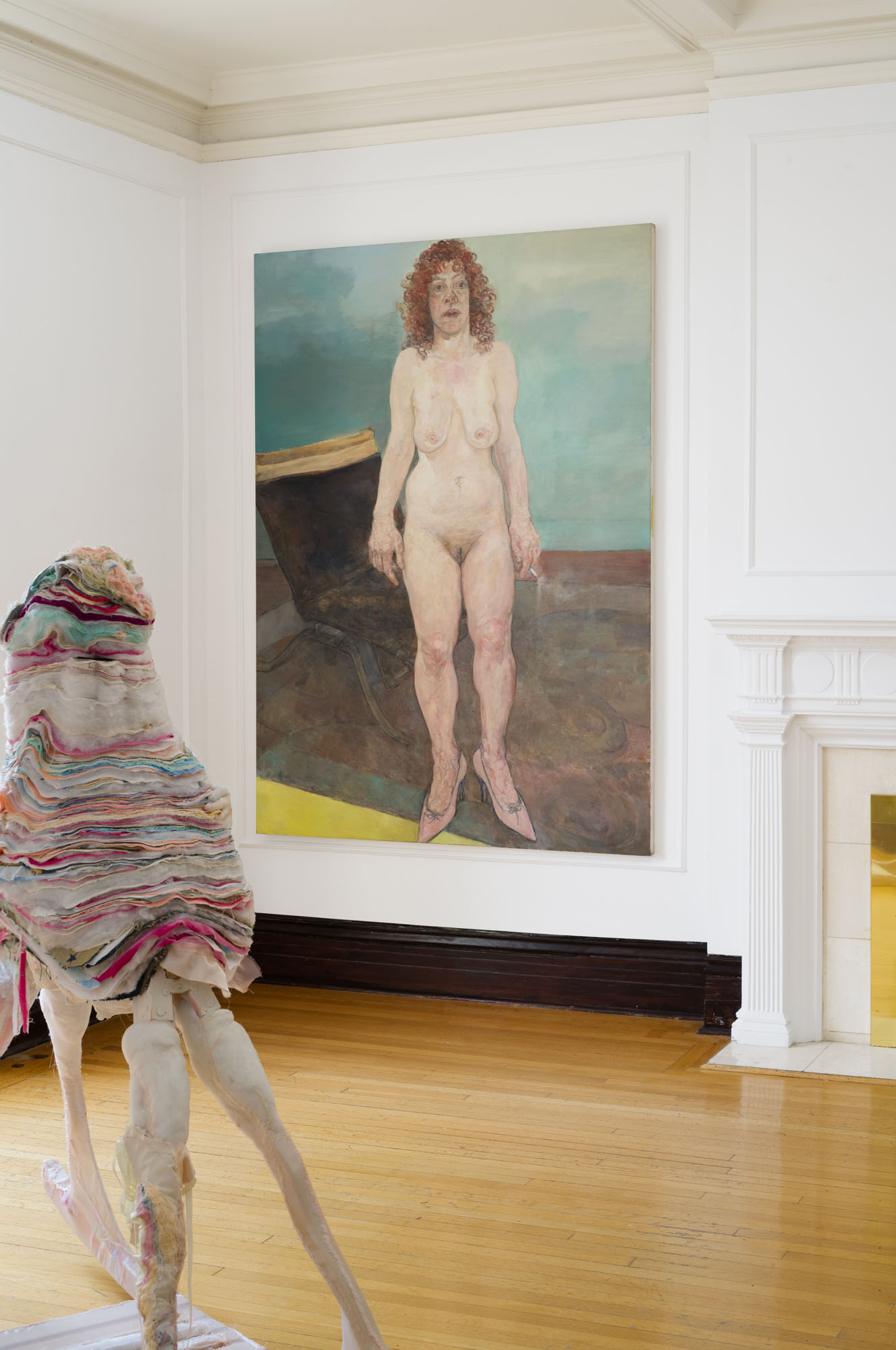
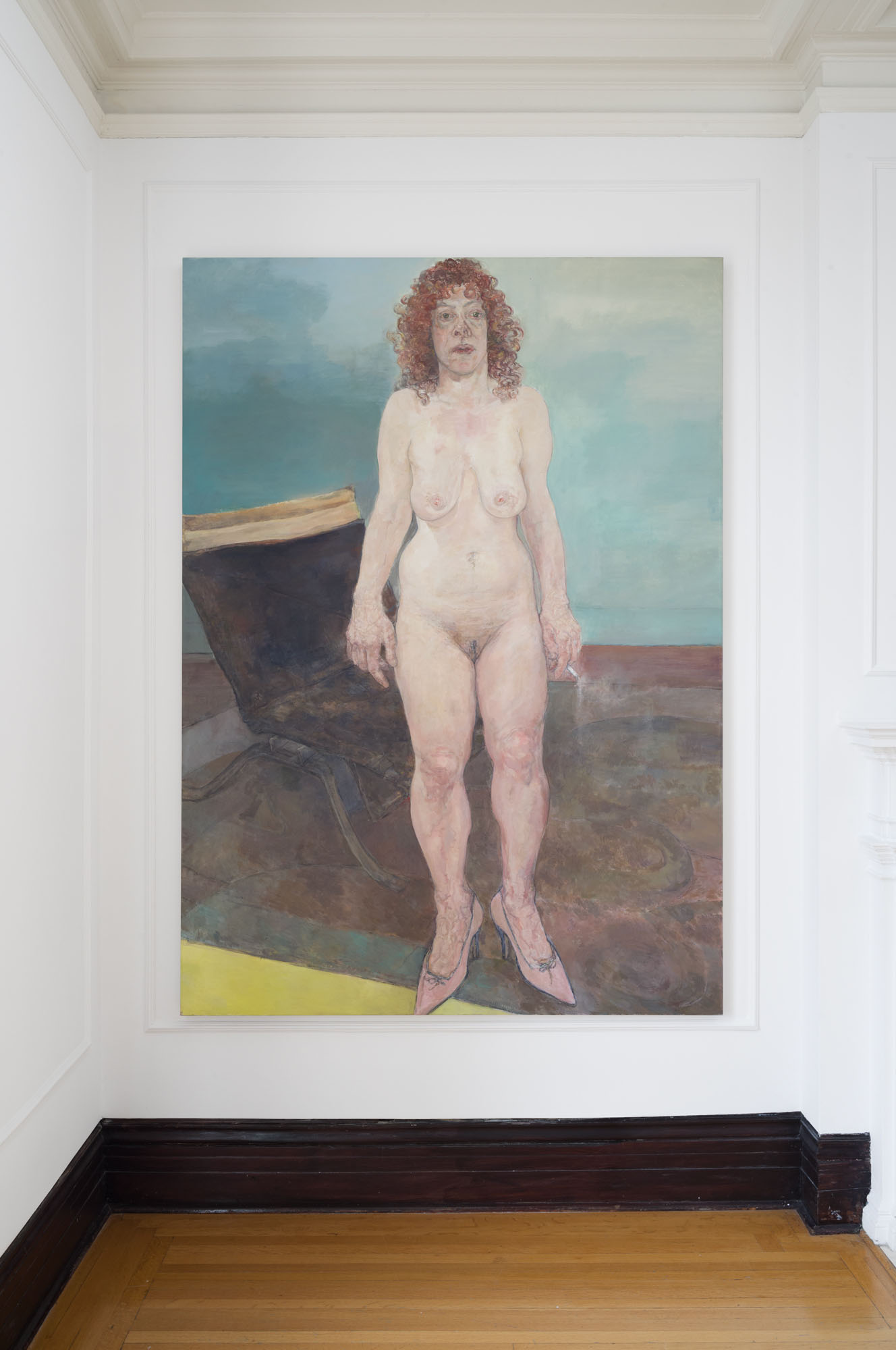
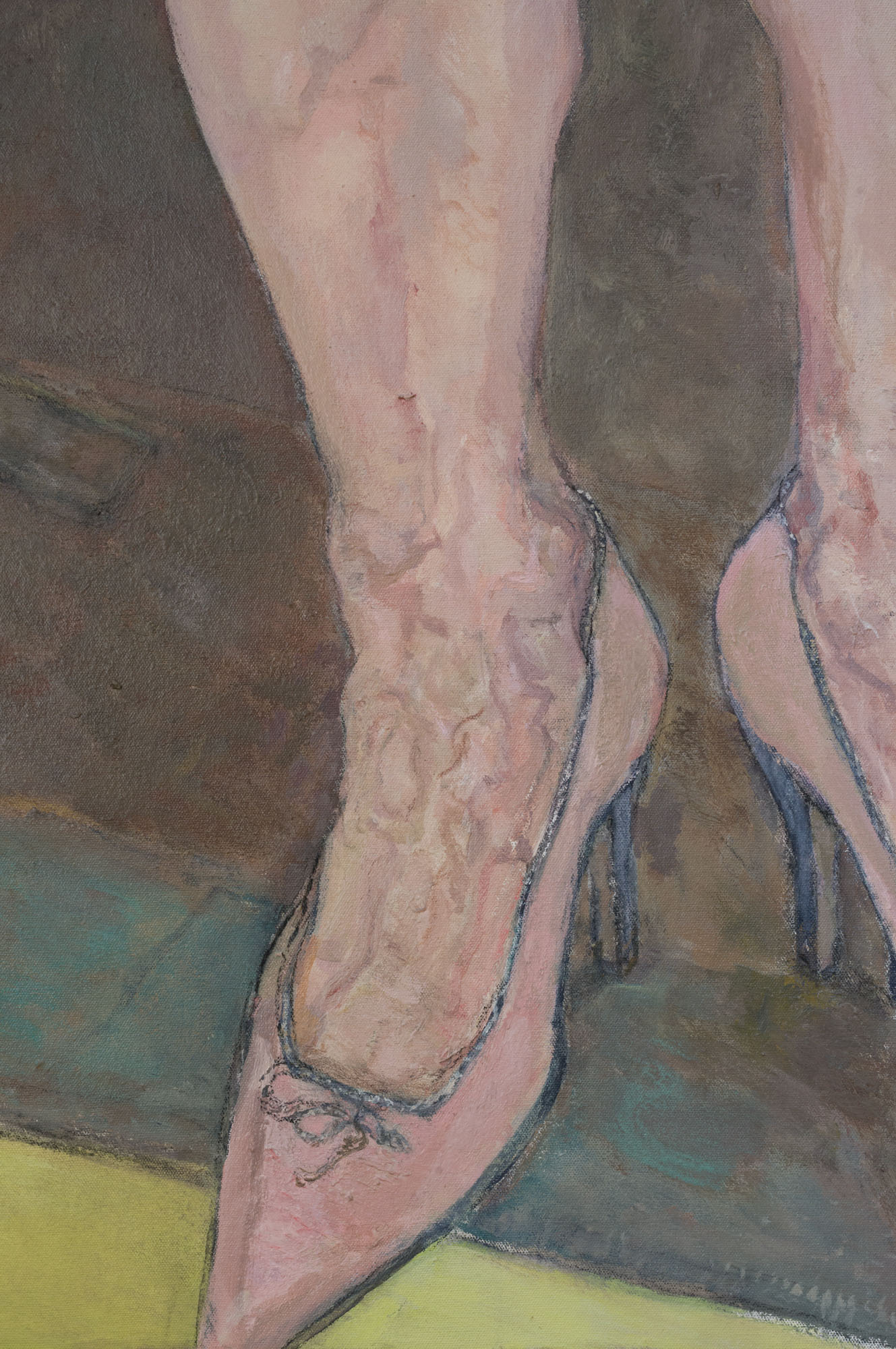
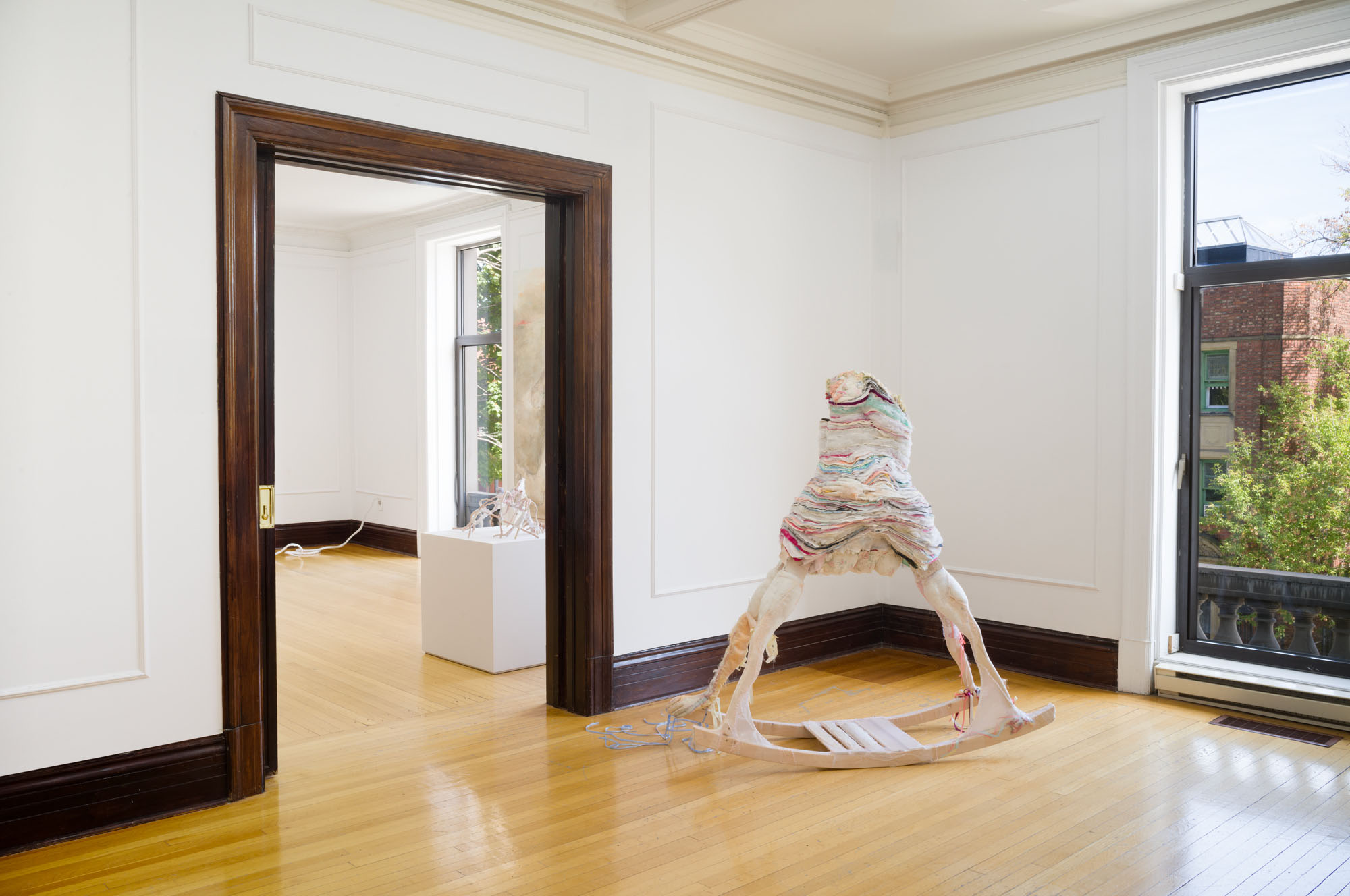
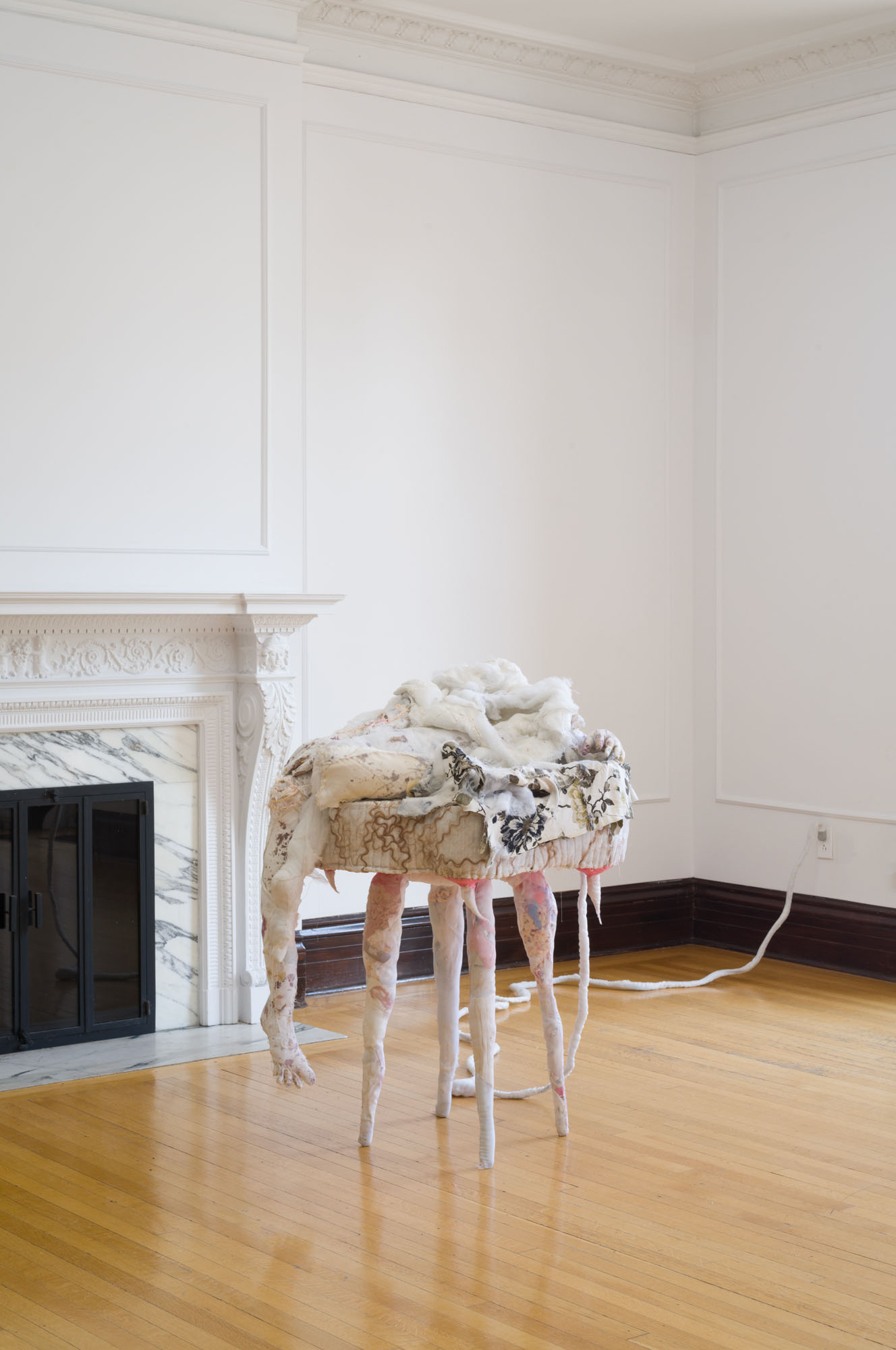
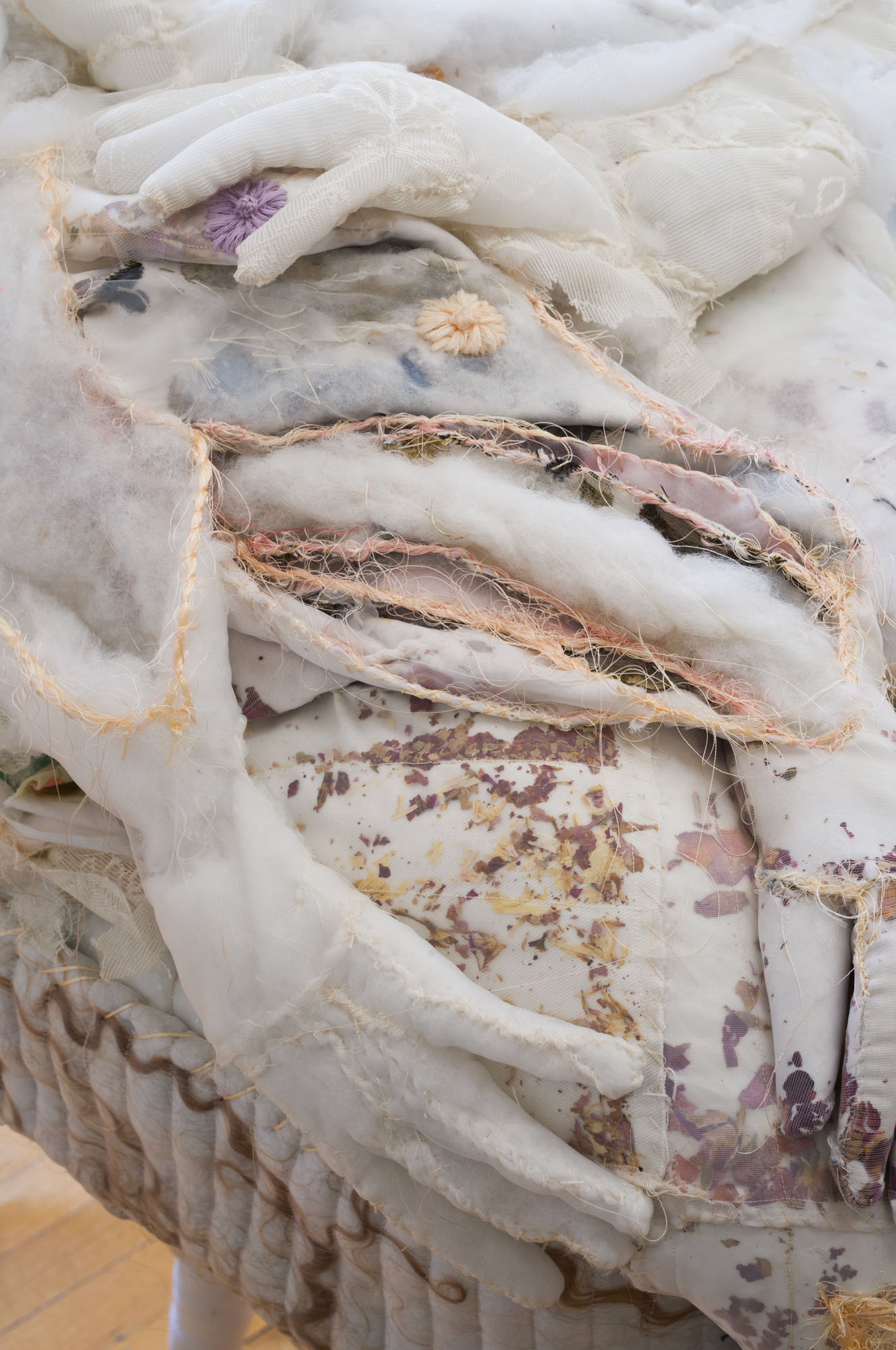
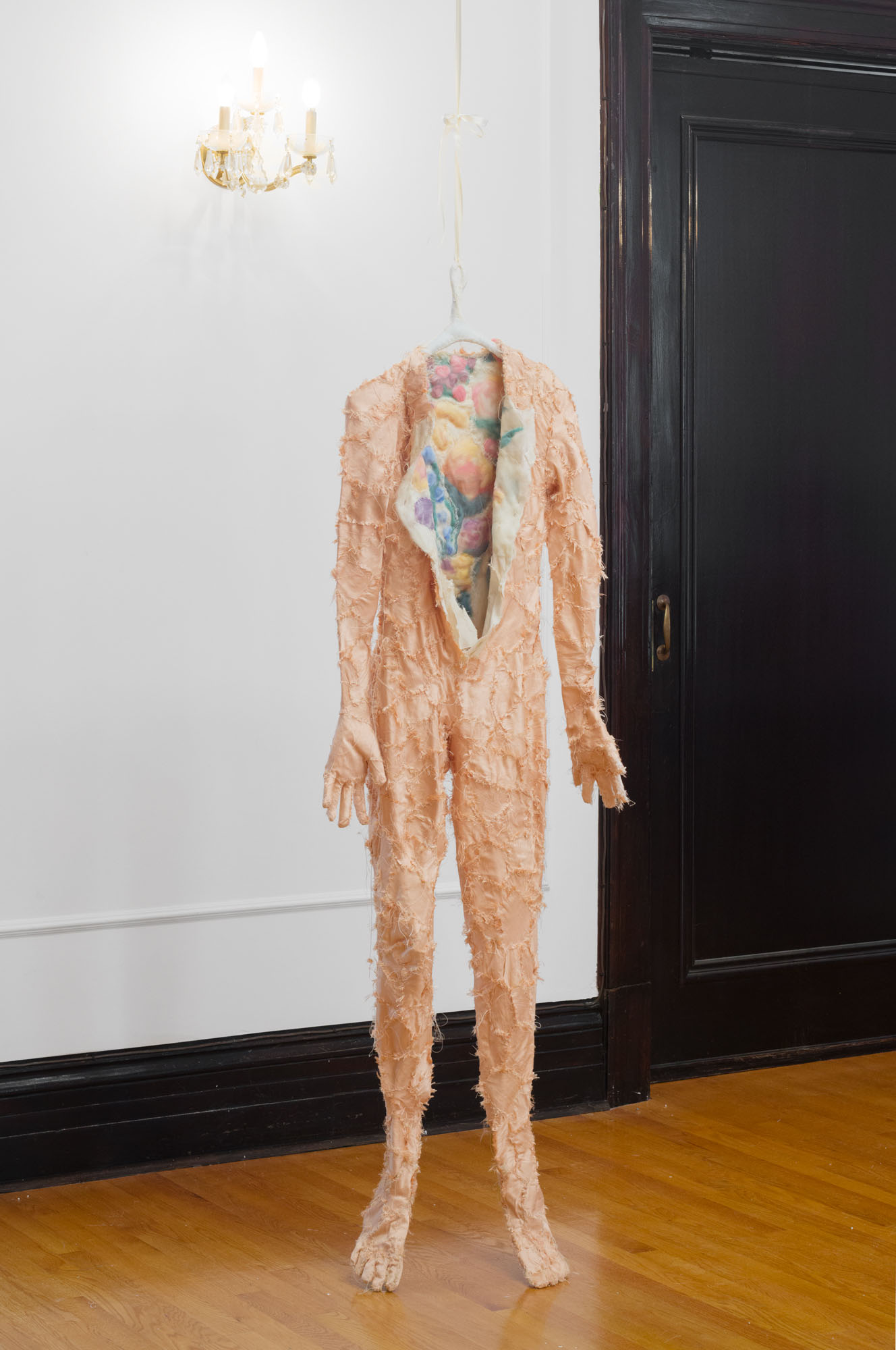
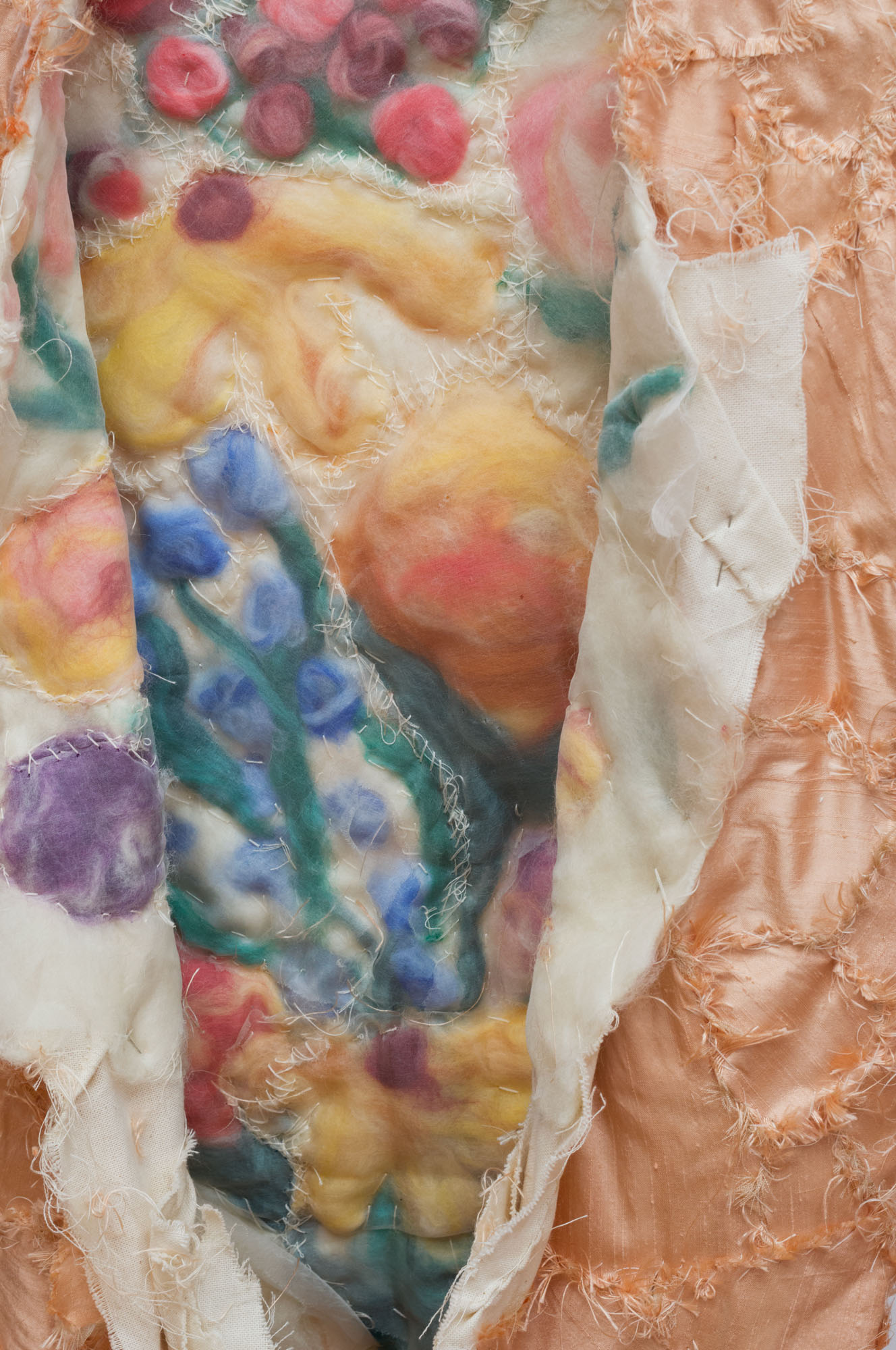
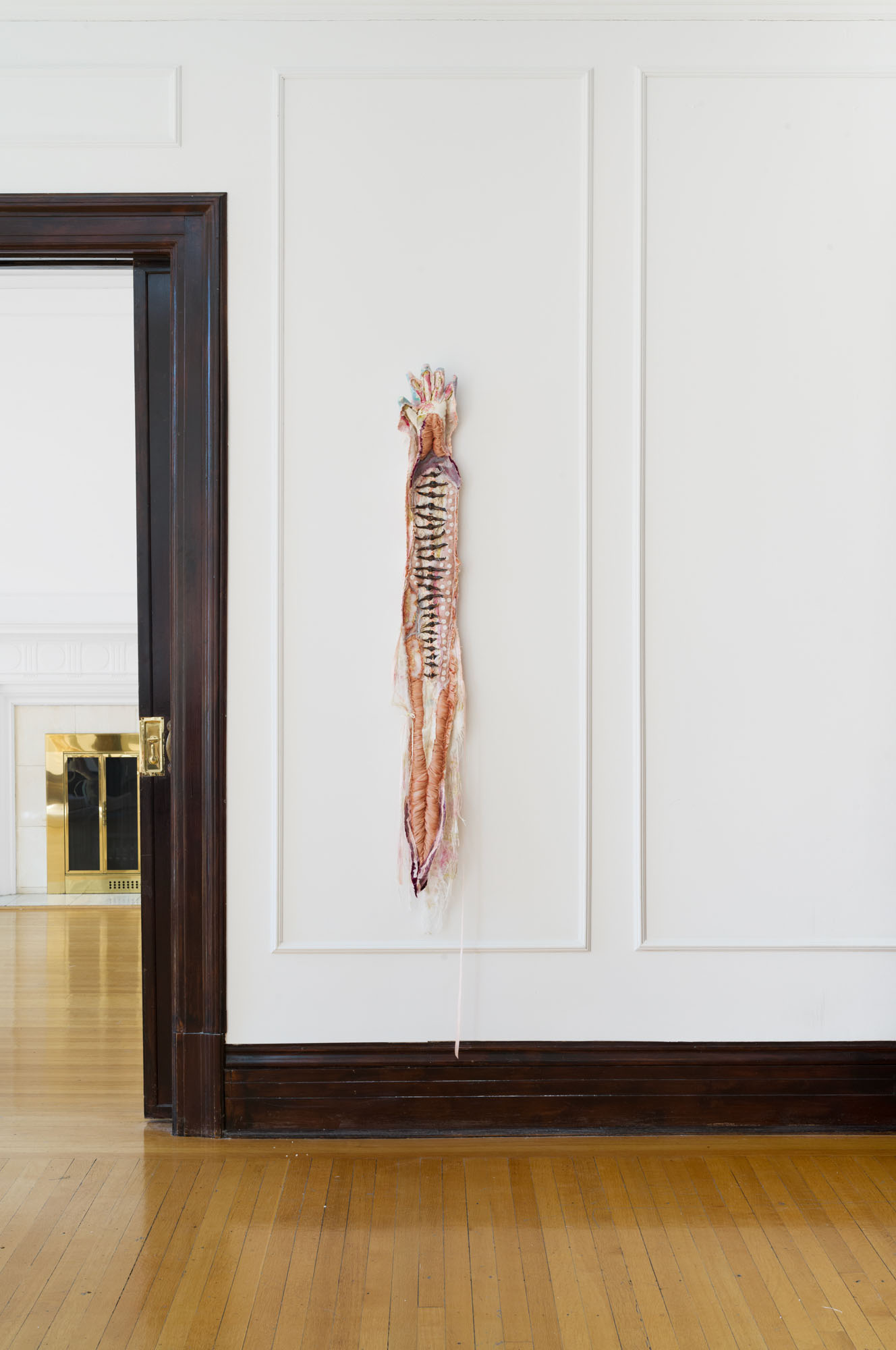
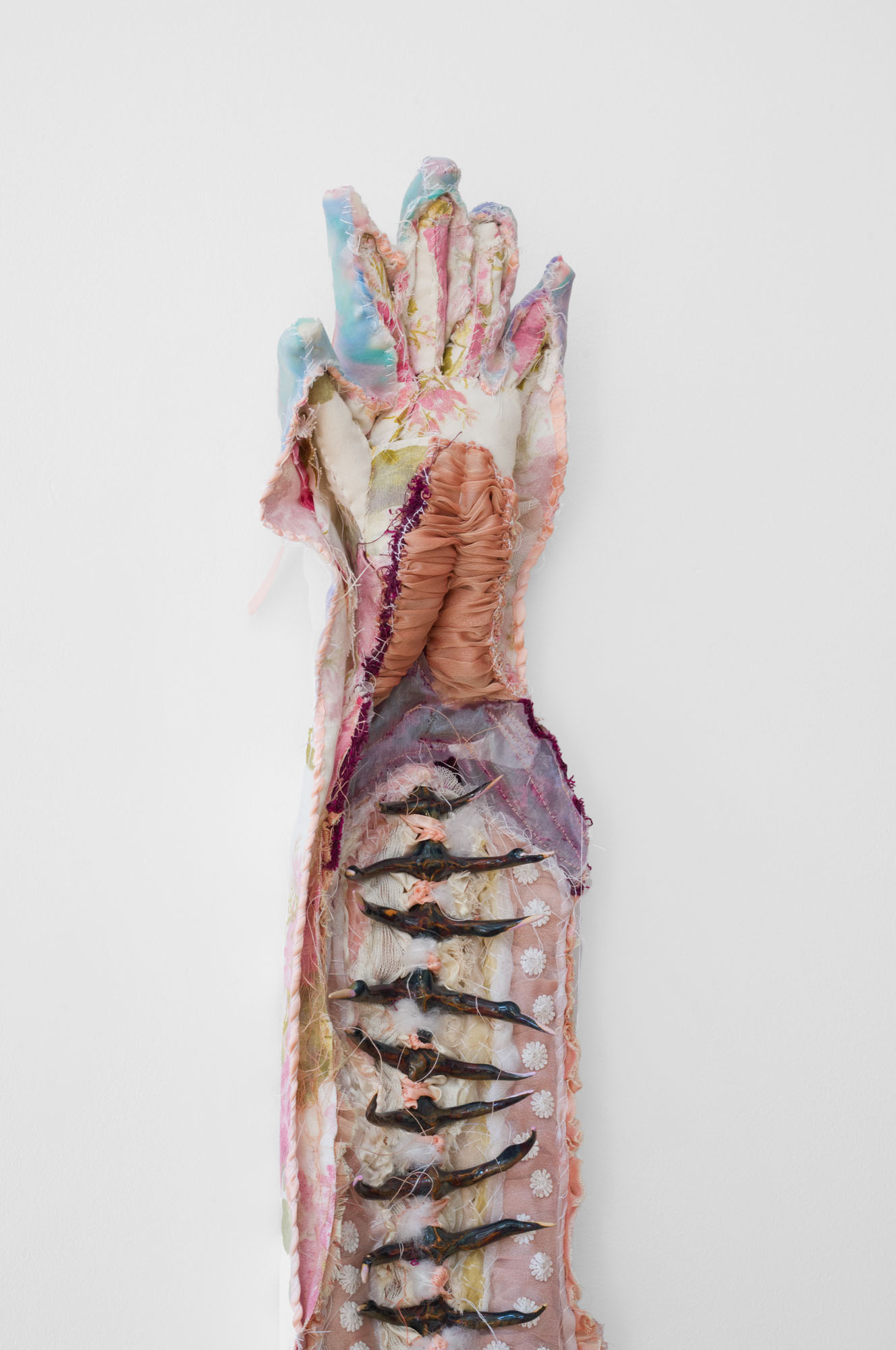
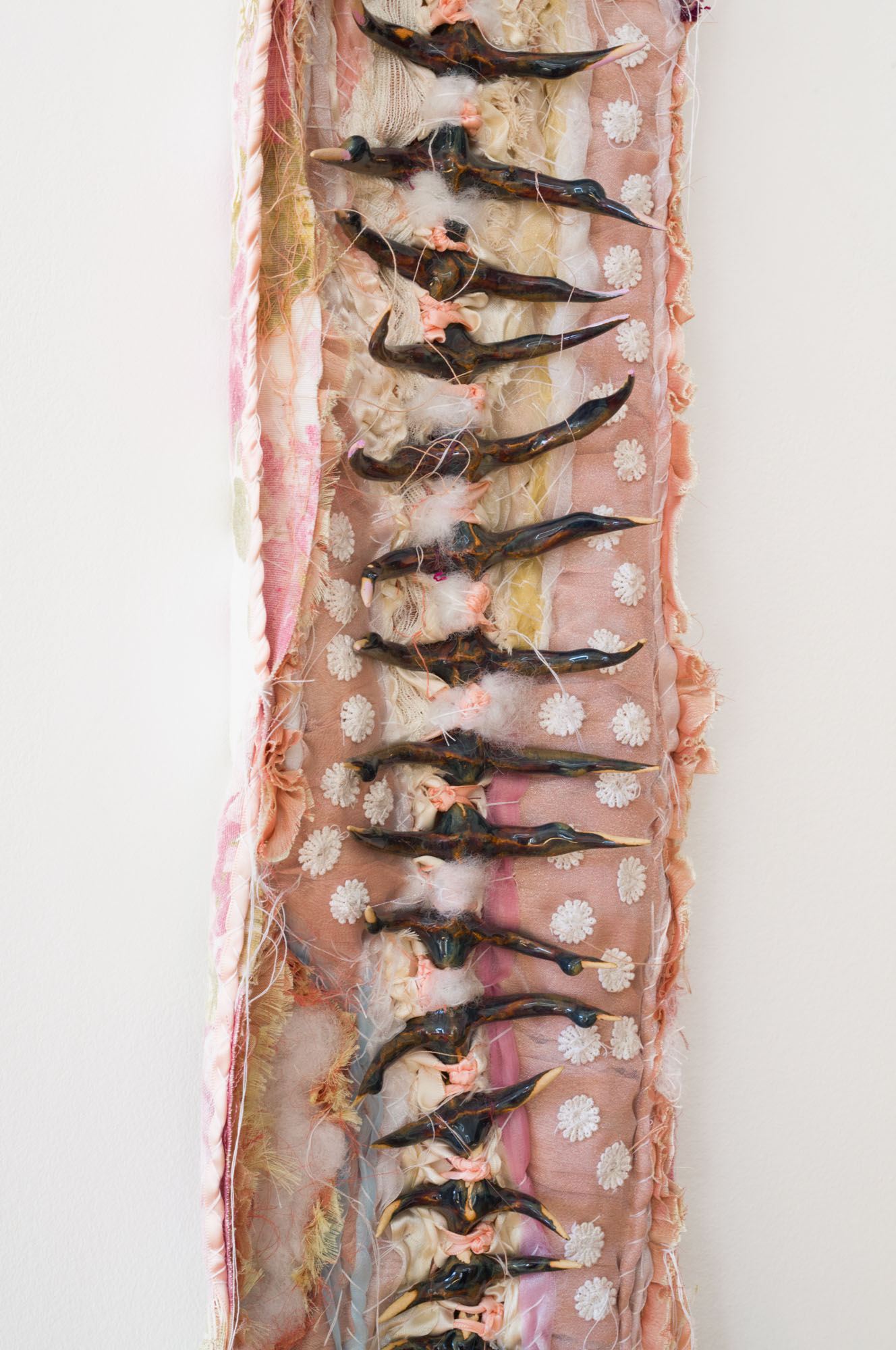
Among the exhibition’s most striking works, The Melancholy of Carnivores (2014) confronts the viewer with the ethics of consumption. The work, spurred by Wagschal’s conflicted relationship to eating meat to sustain the body, while grappling with the brutality it entails, opens the way for a broader meditation on complicity, appetite, and the violence inherent to our survival. In her portraits—whether of family members, friends, or models—inti-macy is framed as a space of both care and discomfort. With PK22 (2022), her brush lingers on the frailty of flesh, capturing the strange simultaneity of vulnerability and monumentality. Perrault’s works– partly created in dialogue with Wagschal’s selection–expand this reflection into sculptural form. La fontaine (2025) evokes the romanticized death of drowned women, bodies mythologized, eroticized, and erased by centuries of artistic and literary representation. Flowers, fabric, and hair intertwined with silicone and water, conjure a reliquary of loss that is at once devotional and unsettling. In Le clown (2025), a precarious figure stitched together from stacked textiles and found objects sits atop a rocking easel, teetering between humor and despair. The work considers consumption—of alcohol, drugs, sex, or objects—as both a coping mechanism and a form of escape and materializes the vertiginous instability it produces. Similar to Colossus, other works by Perrault turn toward self-portraiture and inheritance. Ma peau de 29 ans (2025) belongs to an ongoing series in which the artist molds fabric directly on her own body to create self-portraits, or “second skins” that captures to the continuity, transformation and regeneration of corporeal memory. De passage (2025) extends this inquiry further into maternal lineage, invoking the ways trauma and experience are transmitted across generations, carried in flesh, fabric, and bone.

What renders this encounter between Wagschal and Perrault significant is the continuity it reveals: across generations and across media, both artists use the body to probe how memory is inscribed, transmitted, and transformed. The body is rendered not only as a form but as a process that is constantly shedding, inherently fragile, and perpetually becoming. For Wagschal, flesh becomes an arena of vulnerability and existential truth; for Perrault, matter itself—textile, ceramic, hair, or dried flowers—takes on the role of skin, bone, and organ, preserving imprints of the self and of those who came before. Together, their works offer an unflinching meditation on what it means to inherit a body, to inhabit a body, and to witness its inevitable transformations.

— Text by Anais Castro
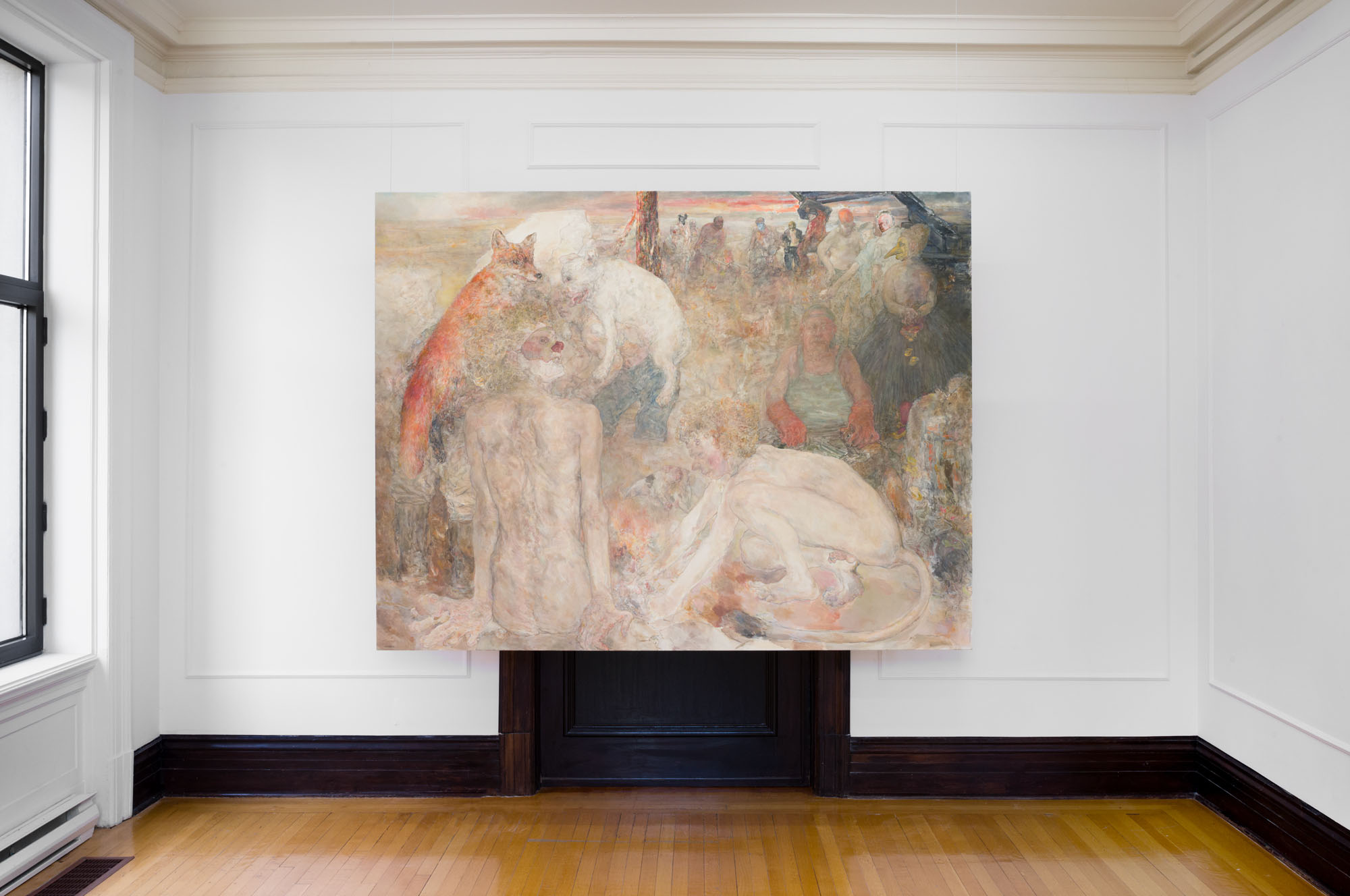
Elisabeth perrault and marion wagschal at pangée, montreal 1
Marion Wagschal, The Melancholy of Carnivores, 2014, Acrylic on canvas, 70″ x 92″
Elisabeth perrault and marion wagschal at pangée, montreal 2
Marion Wagschal, The Melancholy of Carnivores, 2014, Acrylic on canvas, 70″ x 92″
Elisabeth perrault and marion wagschal at pangée, montreal 3
Marion Wagschal, The Melancholy of Carnivores, 2014, Acrylic on canvas, 70″ x 92″
Elisabeth perrault and marion wagschal at pangée, montreal 4
Elisabeth Perrault and Marion Wagschal, constantly shedding, perpetually becoming, 2025, exhibition view, Pangée, Montreal
Elisabeth perrault and marion wagschal at pangée, montreal 5
Elisabeth Perrault, Le Clown , 2025, Fabric, wood, Styrofoam, butterfly, glass beads, 64″ x 61″ x 18″, Dimensions variables
Elisabeth perrault and marion wagschal at pangée, montreal 6
Elisabeth Perrault, Le Clown , 2025, Fabric, wood, Styrofoam, butterfly, glass beads, 64″ x 61″ x 18″, Dimensions variables
Elisabeth perrault and marion wagschal at pangée, montreal 7
Elisabeth Perrault and Marion Wagschal, constantly shedding, perpetually becoming, 2025, exhibition view, Pangée, Montreal
Elisabeth perrault and marion wagschal at pangée, montreal 8
Marion Wagschal, PK22, 2007, Oil on canvas, 84″ x 60″
Elisabeth perrault and marion wagschal at pangée, montreal 9
Marion Wagschal, PK22, 2007, Oil on canvas, 84″ x 60″
Elisabeth perrault and marion wagschal at pangée, montreal 10
Elisabeth Perrault and Marion Wagschal, constantly shedding, perpetually becoming, 2025, exhibition view, Pangée, Montreal
Elisabeth perrault and marion wagschal at pangée, montreal 11
Elisabeth Perrault and Marion Wagschal, constantly shedding, perpetually becoming, 2025, exhibition view, Pangée, Montreal
Elisabeth perrault and marion wagschal at pangée, montreal 12
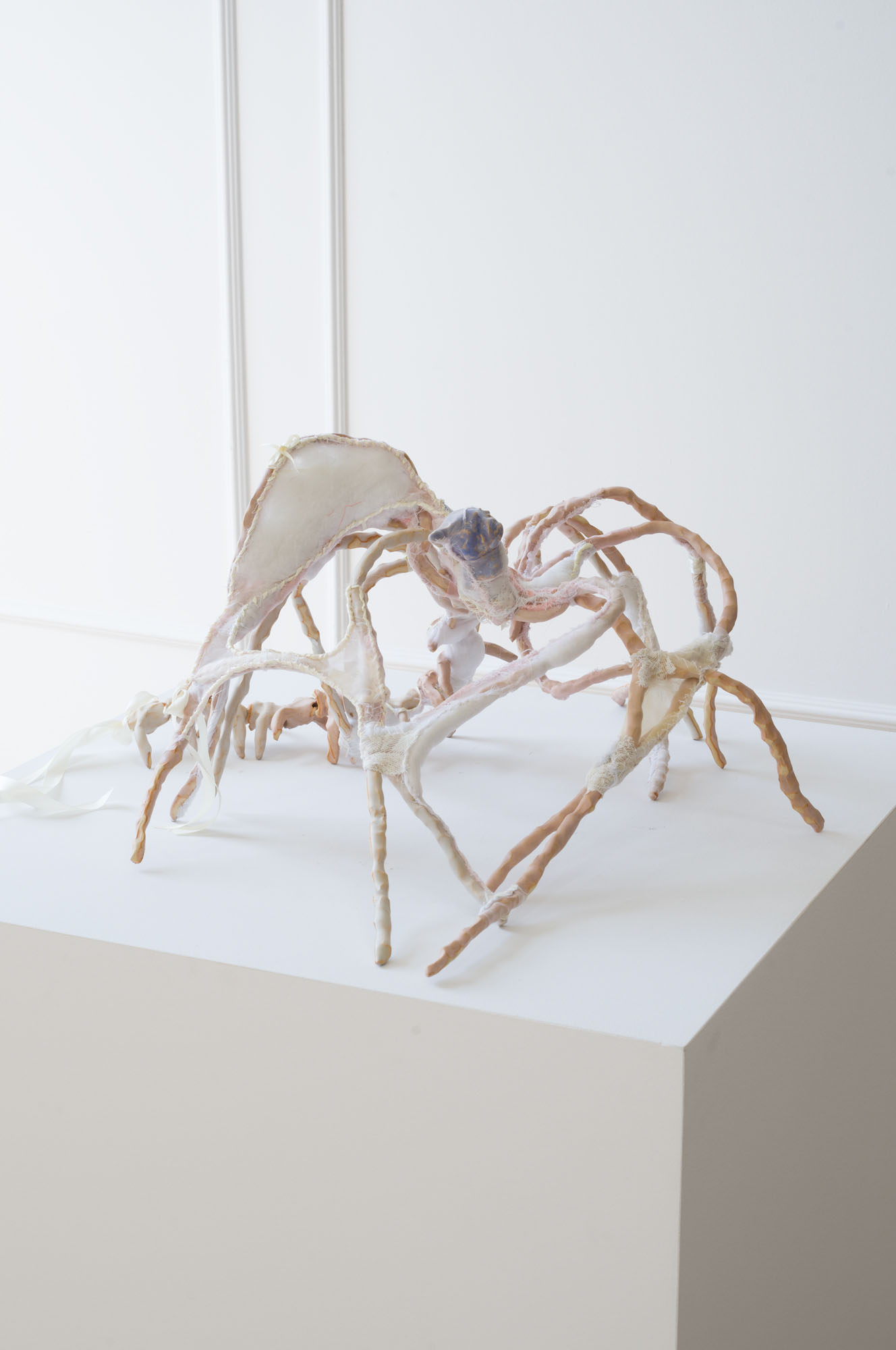
Elisabeth Perrault, Exosquelette, 2025, Ceramic and fabric, 23″ x 25″ x 12 ½”, Dimensions variables
Elisabeth perrault and marion wagschal at pangée, montreal 13
Elisabeth Perrault and Marion Wagschal, constantly shedding, perpetually becoming, 2025, exhibition view, Pangée, Montreal
Elisabeth perrault and marion wagschal at pangée, montreal 14
Marion Wagschal, Colossus, 2016, Oil on canvas, 81″ x 65″
Elisabeth perrault and marion wagschal at pangée, montreal 15
Elisabeth Perrault, La fontaine, 2025, Fabric, dried flowers, hair, silicone, electric motor, plastic, styrofoam, 47″ x 35″ x 25″, Dimensions variables
Elisabeth perrault and marion wagschal at pangée, montreal 16
Elisabeth Perrault, La fontaine, 2025, Fabric, dried flowers, hair, silicone, electric motor, plastic, styrofoam, 47″ x 35″ x 25″, Dimensions variables
Elisabeth perrault and marion wagschal at pangée, montreal 17
Elisabeth Perrault and Marion Wagschal, constantly shedding, perpetually becoming, 2025, exhibition view, Pangée, Montreal
Elisabeth perrault and marion wagschal at pangée, montreal 18
Marion Wagschal, Atelier, 1991, Oil on linen, 96″ x 81″
Elisabeth perrault and marion wagschal at pangée, montreal 19
Elisabeth Perrault, Ma peau de 29 ans, 2025, Fabric, wool, silk, and polyester, 71″ x 20″, Dimensions variables
Elisabeth perrault and marion wagschal at pangée, montreal 20
Elisabeth Perrault, Ma peau de 29 ans, 2025, Fabric, wool, silk, and polyester, 71″ x 20″, Dimensions variables
Elisabeth perrault and marion wagschal at pangée, montreal 21
Elisabeth Perrault, De passage, 2025, Ceramic and fabric, 60″ x 6″ x 2″, Dimensions variables
Elisabeth perrault and marion wagschal at pangée, montreal 22
Elisabeth Perrault, De passage, 2025, Ceramic and fabric, 60″ x 6″ x 2″, Dimensions variables
Elisabeth perrault and marion wagschal at pangée, montreal 23
Elisabeth Perrault, De passage, 2025, Ceramic and fabric, 60″ x 6″ x 2″, Dimensions variables

↳Related Posts

February 25, 2017

December 16, 2023