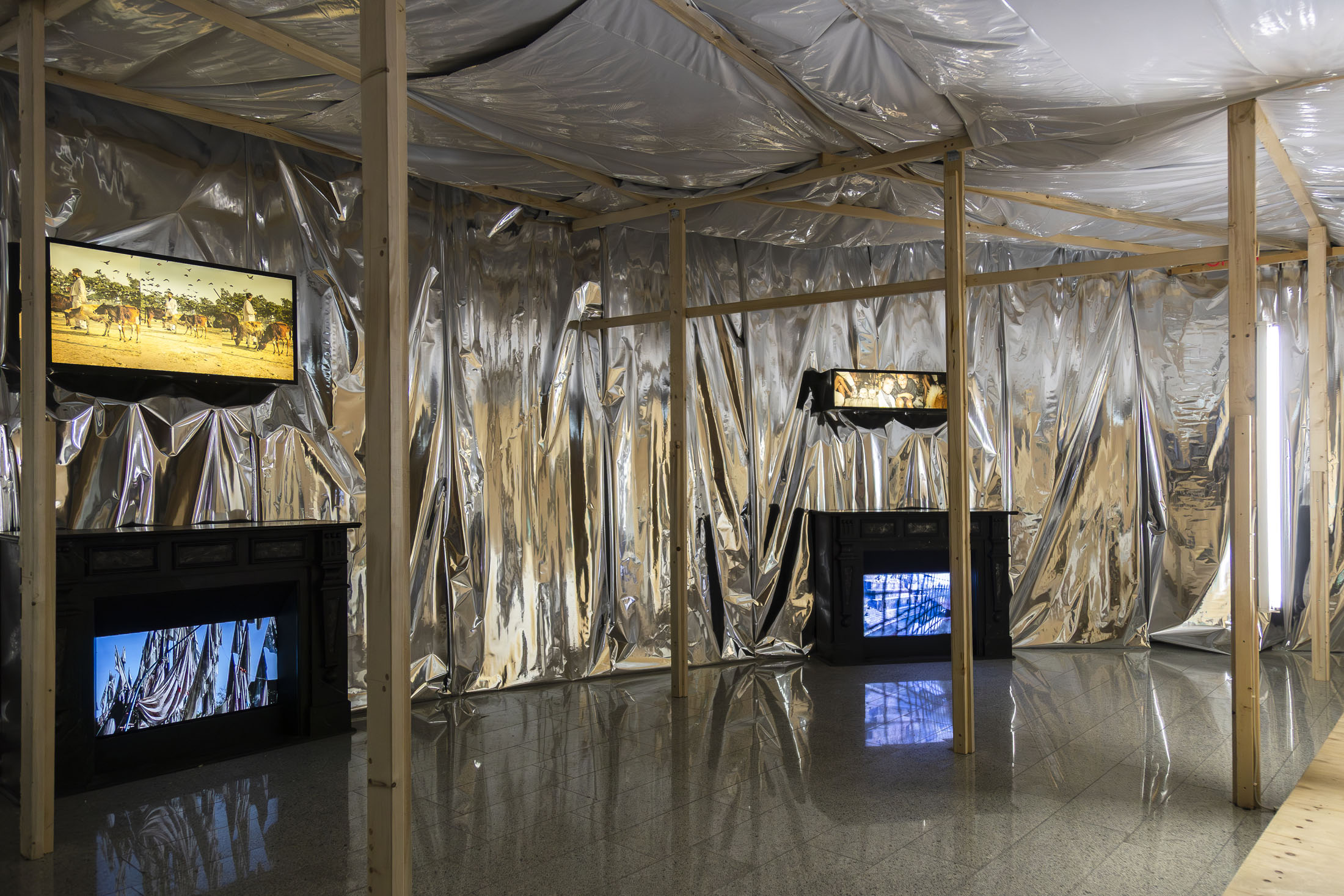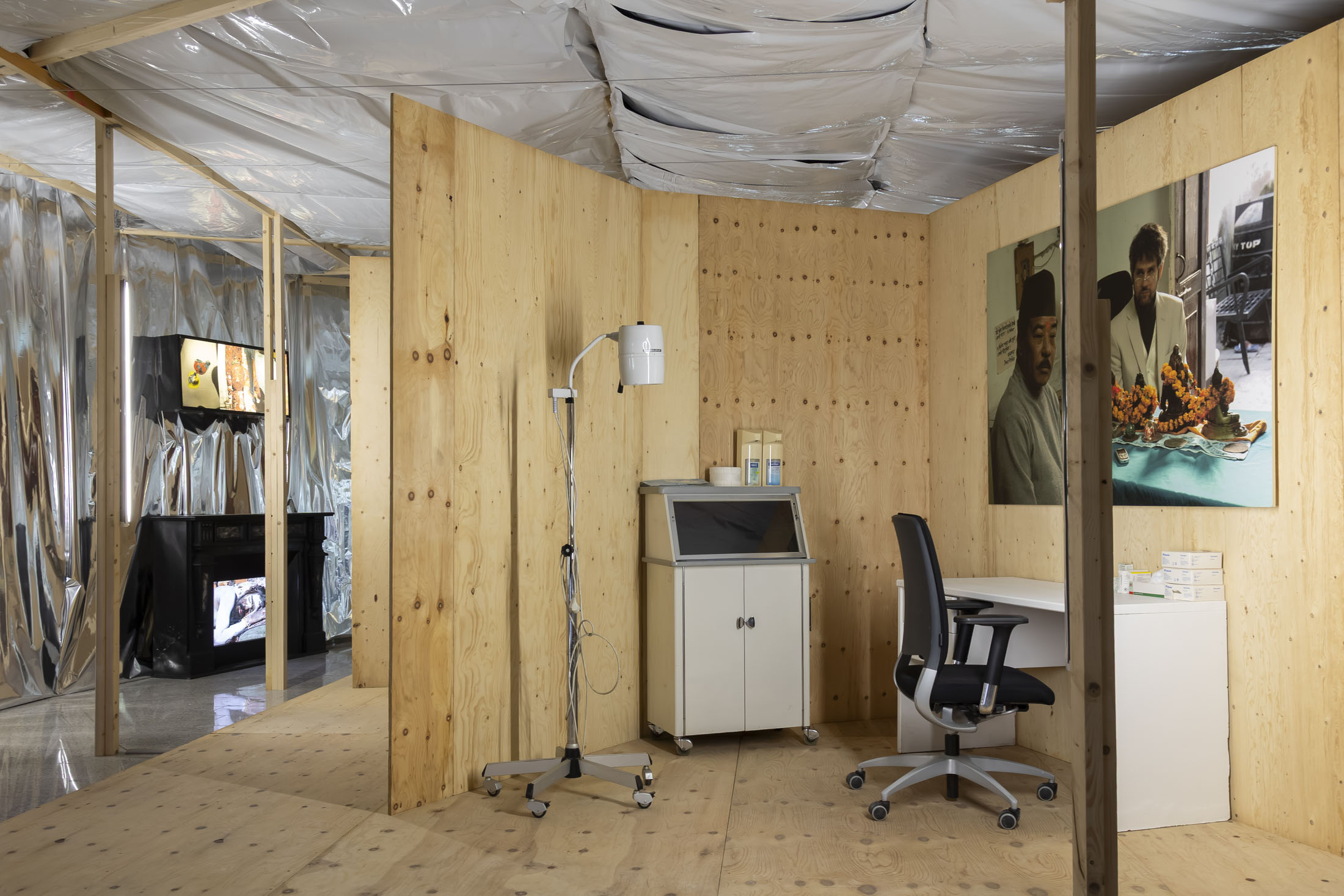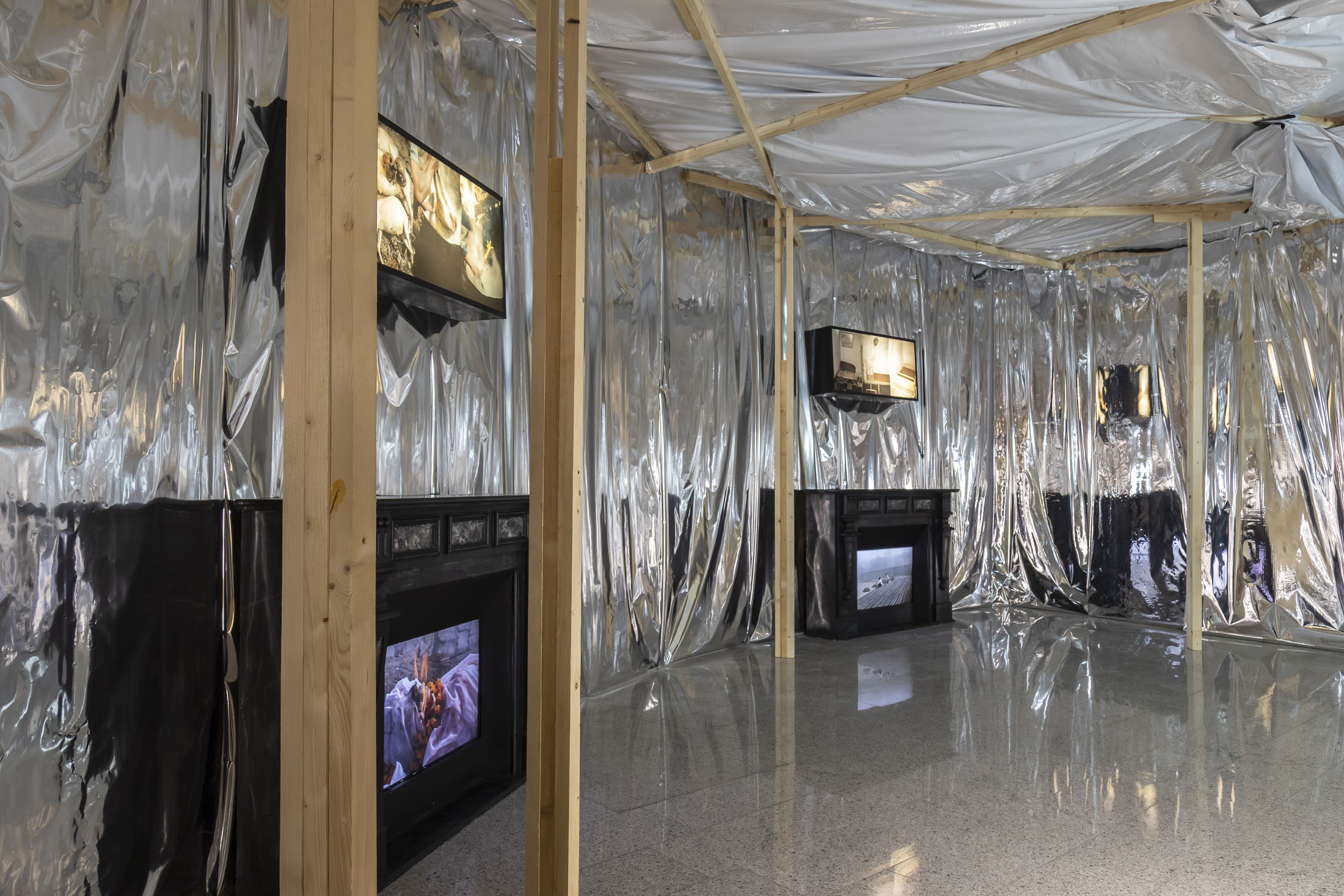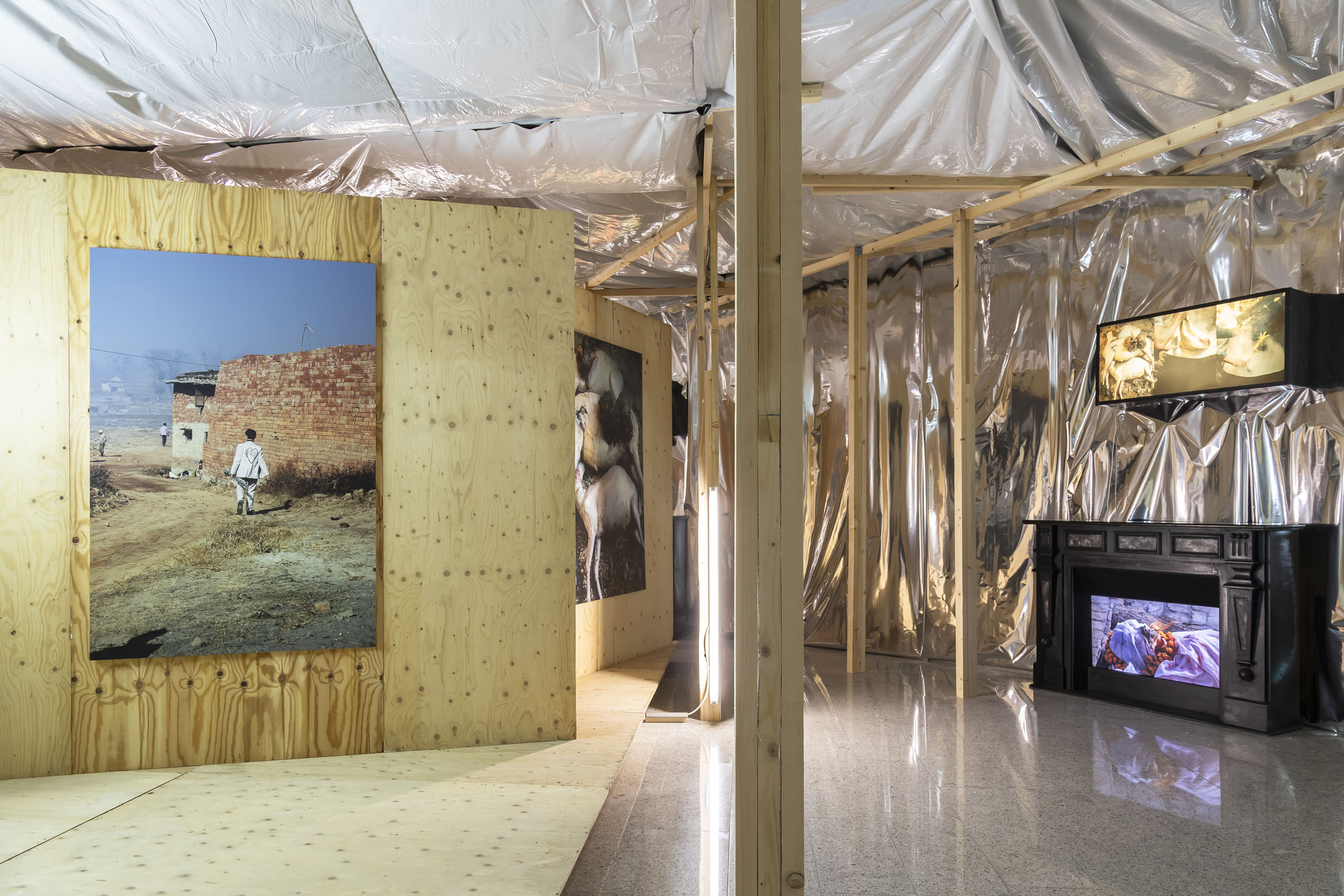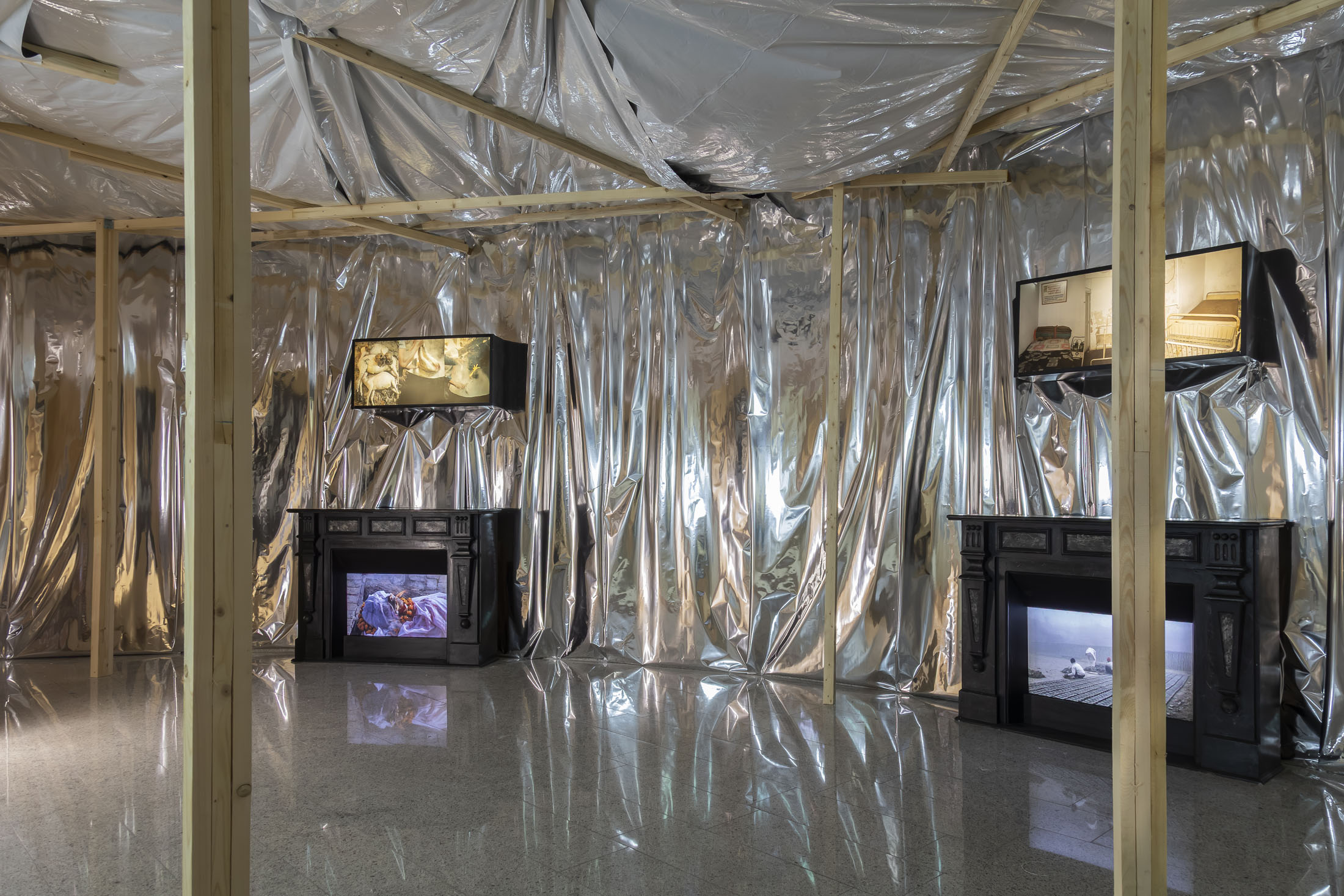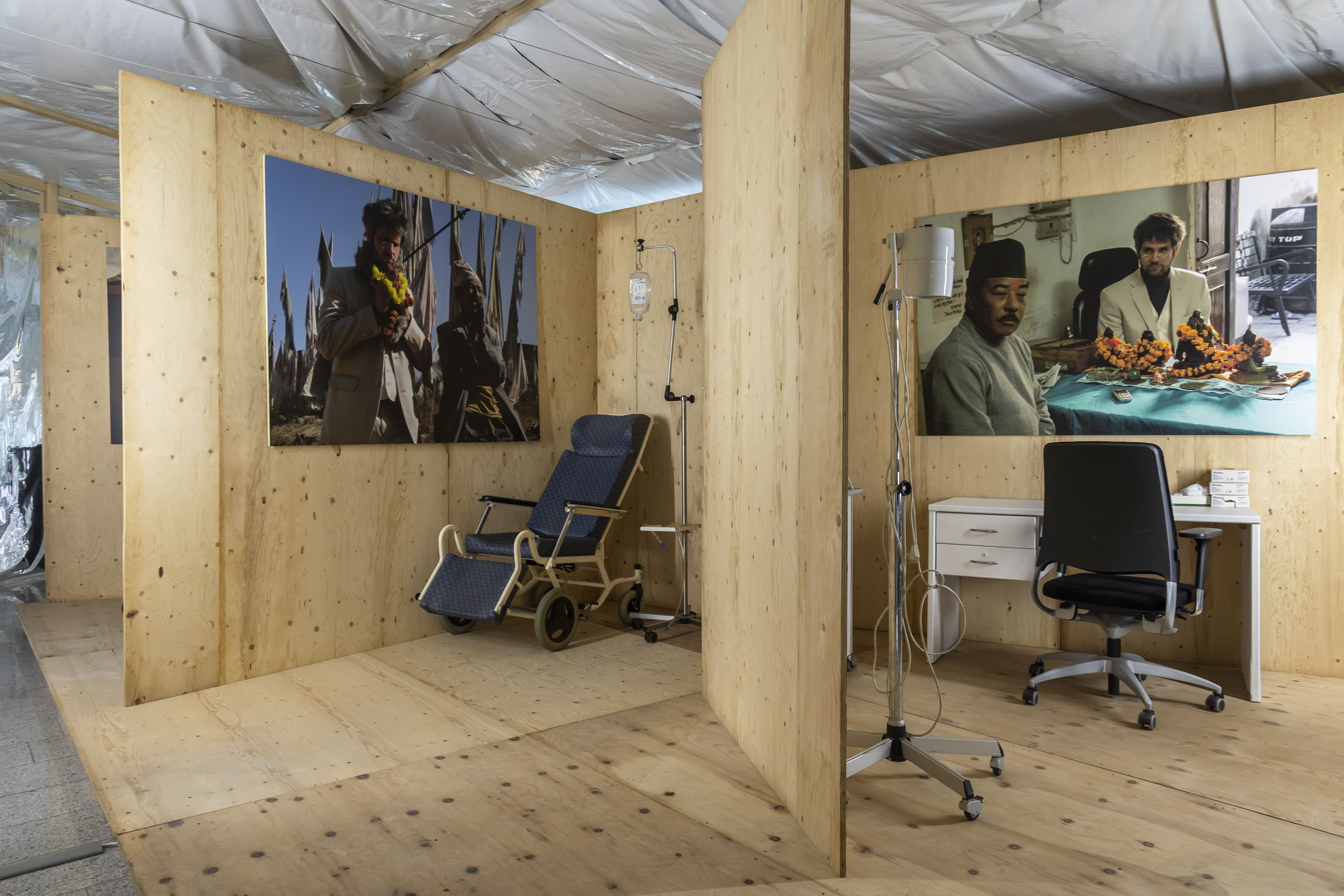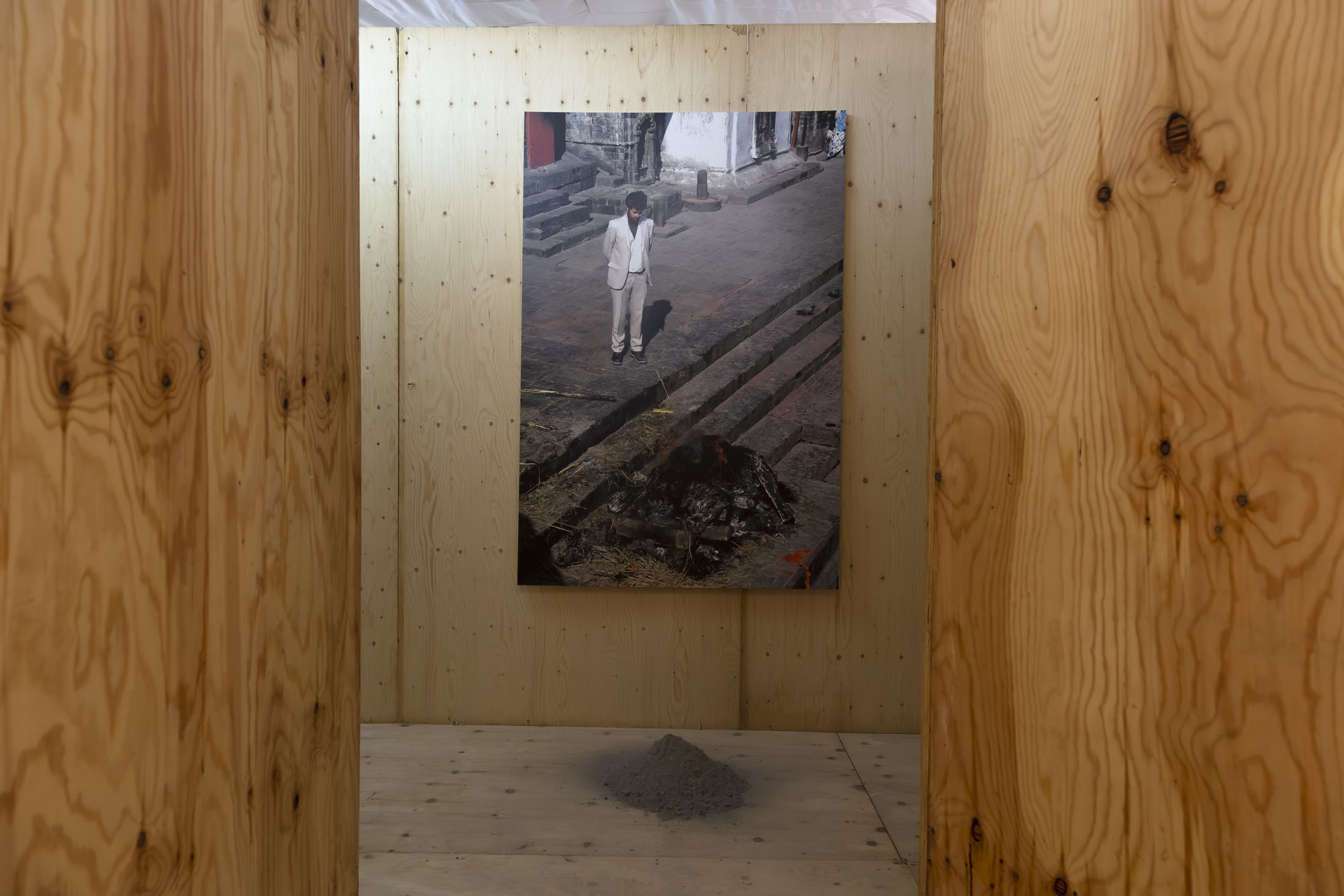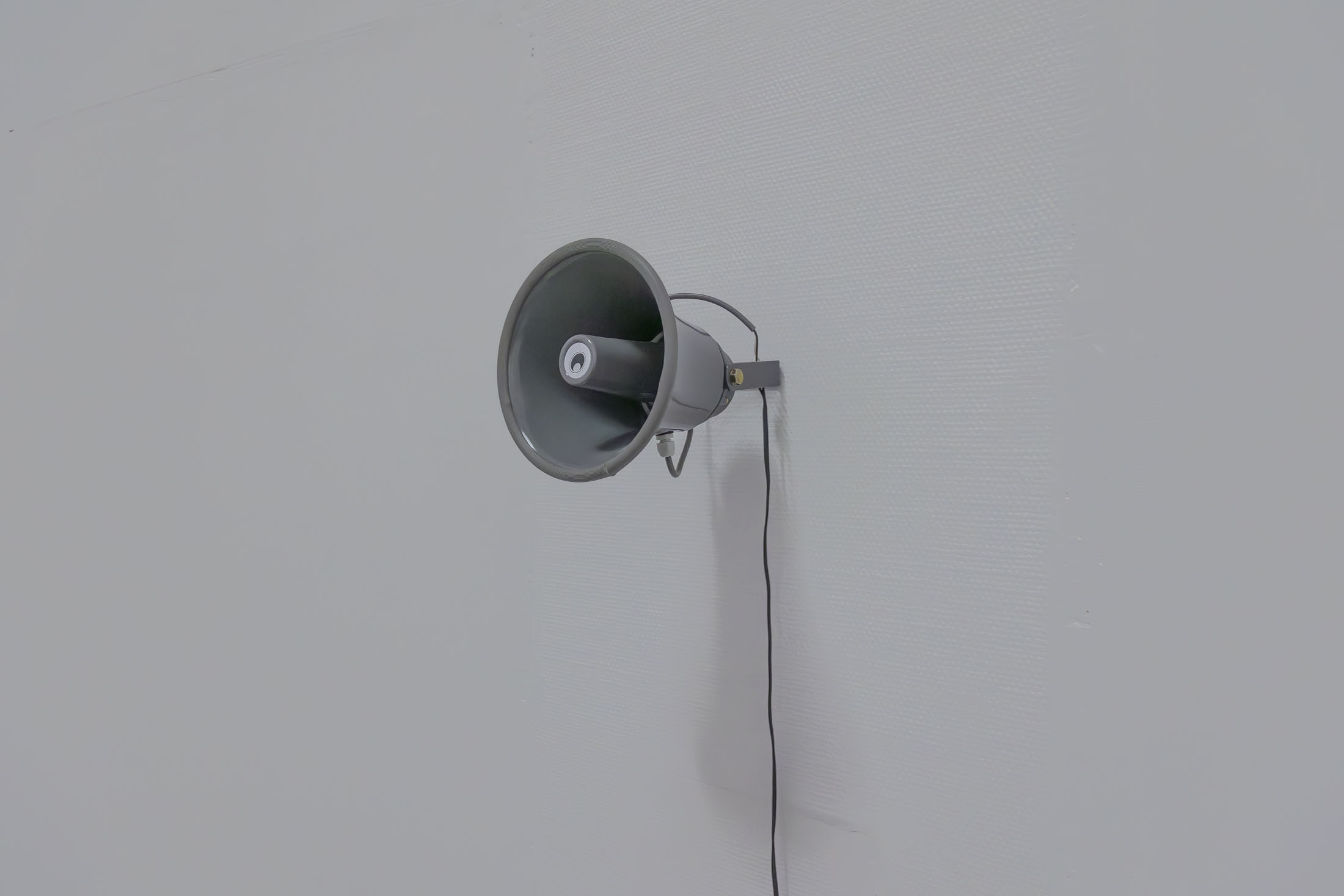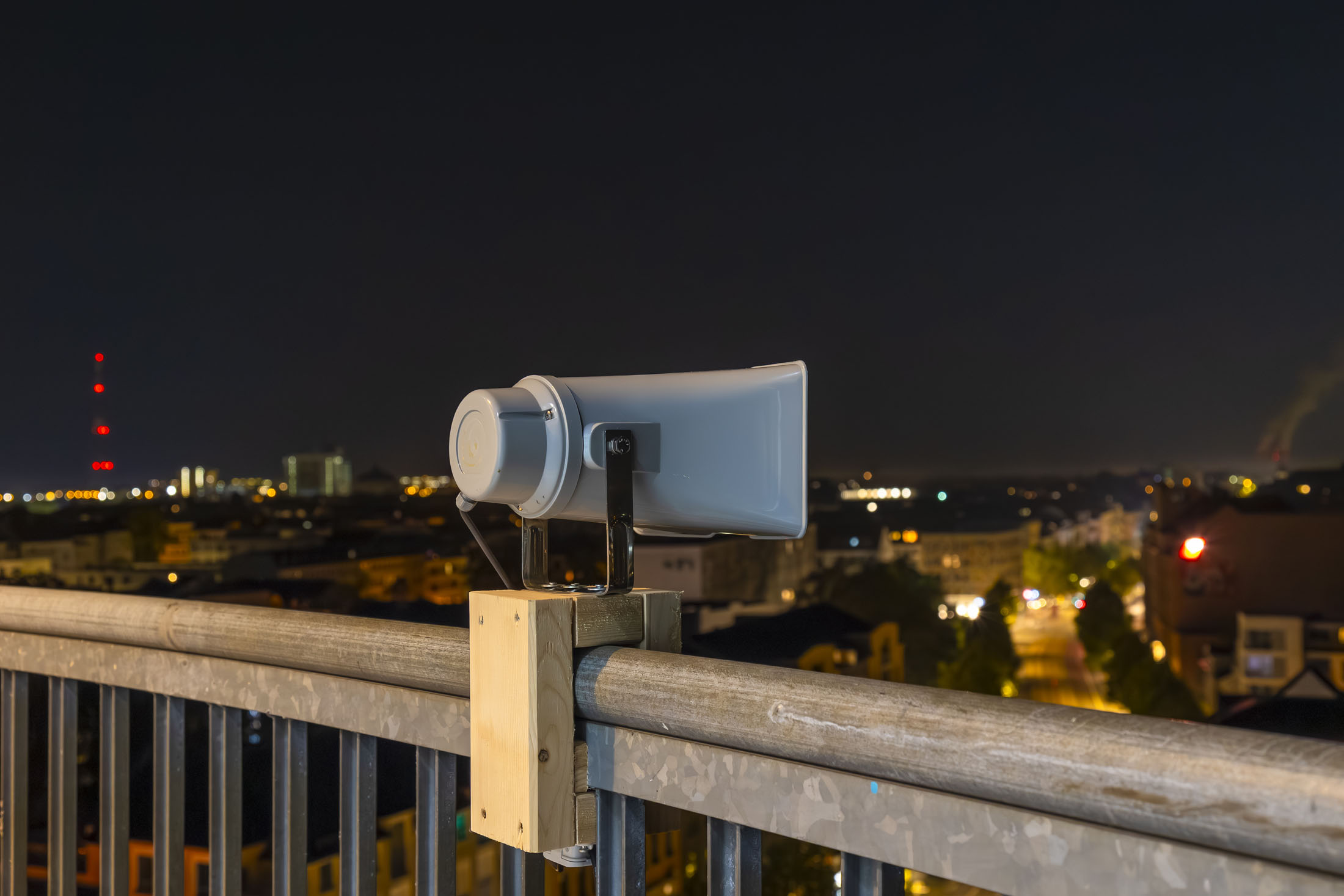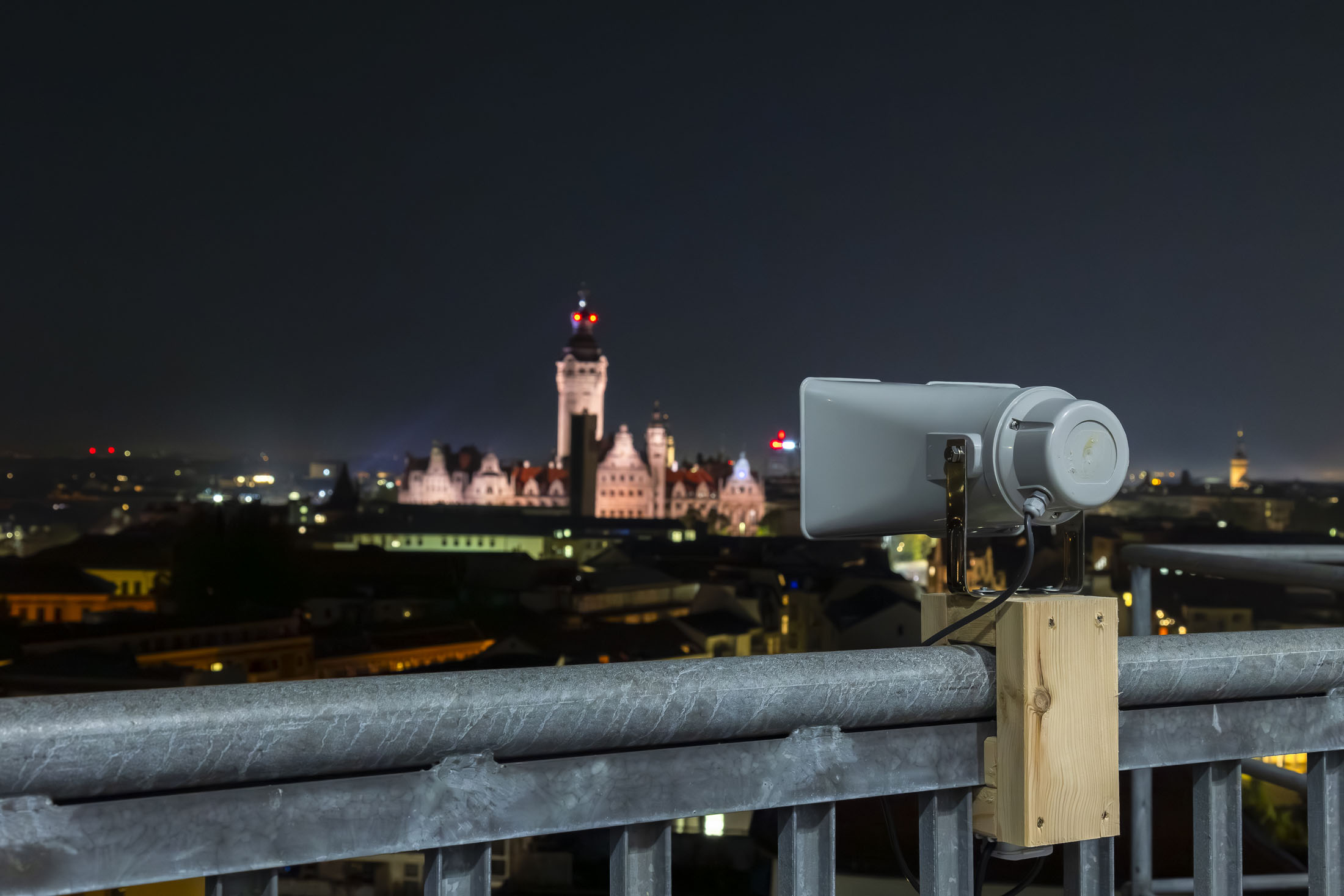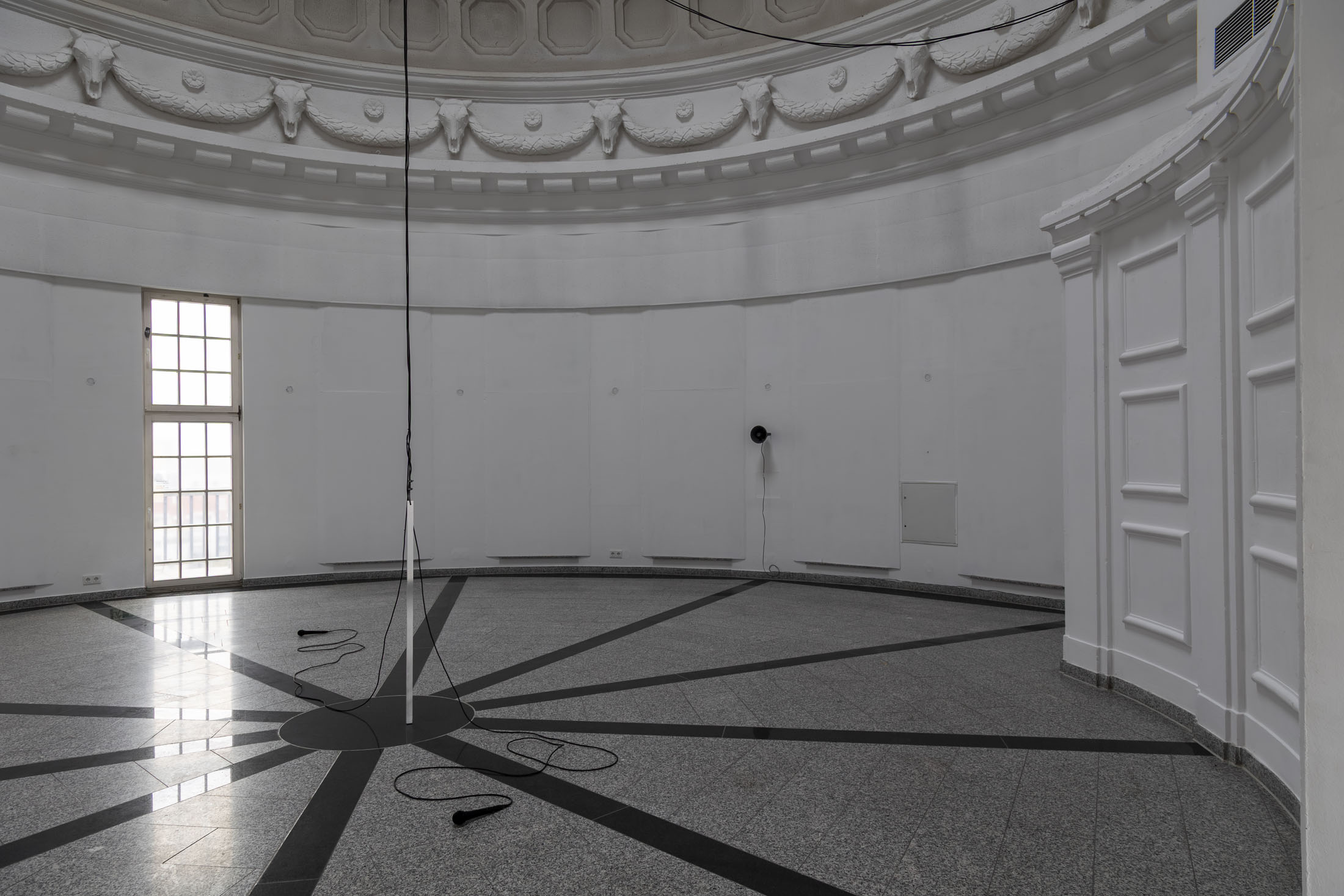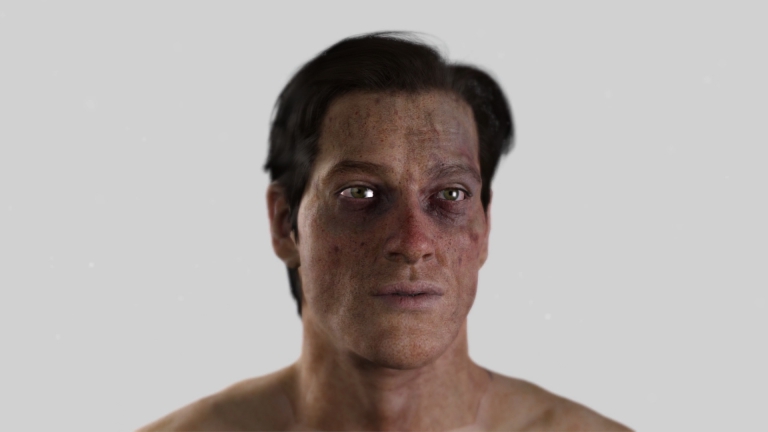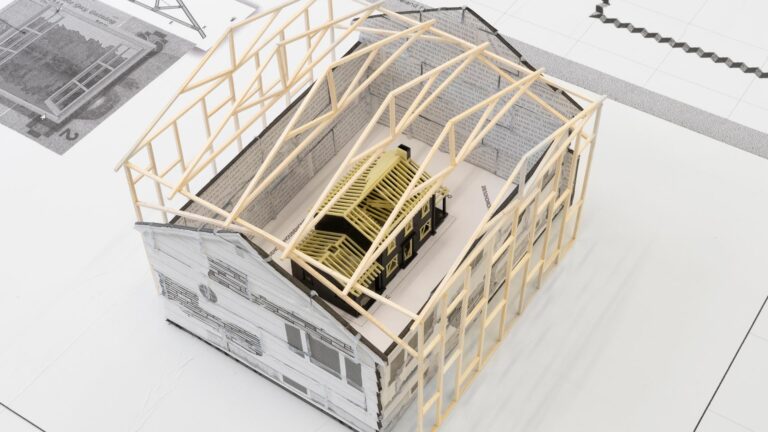
With the solo exhibition „NACH Christoph Schlingensief“, the Kunstverein 47m Contemporary presents works by Christoph Schlingensief (1960–2010). Through selected films and his final installation, the exhibition opens and interweaves various approaches to his artistic position. It shows how Schlingensief consistently used unfinished forms to activate the audience, an approach that continues to resonate today. Throughout his life, he crossed the boundaries of film, theatre, visual arts, and opera, combining calculated strategies with the spontaneity of the moment, which integrated the reactions of audiences and the public directly into the artistic process.
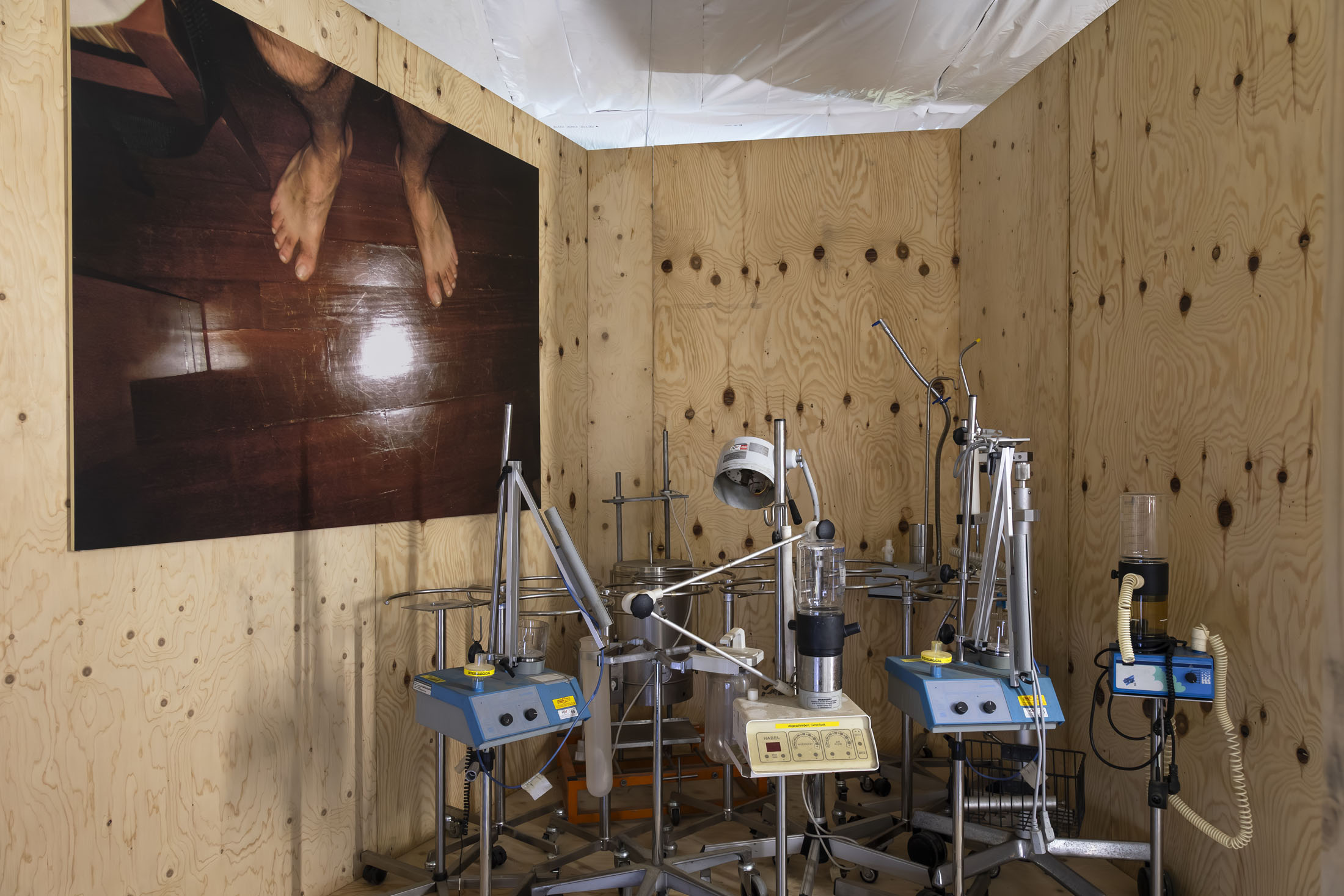
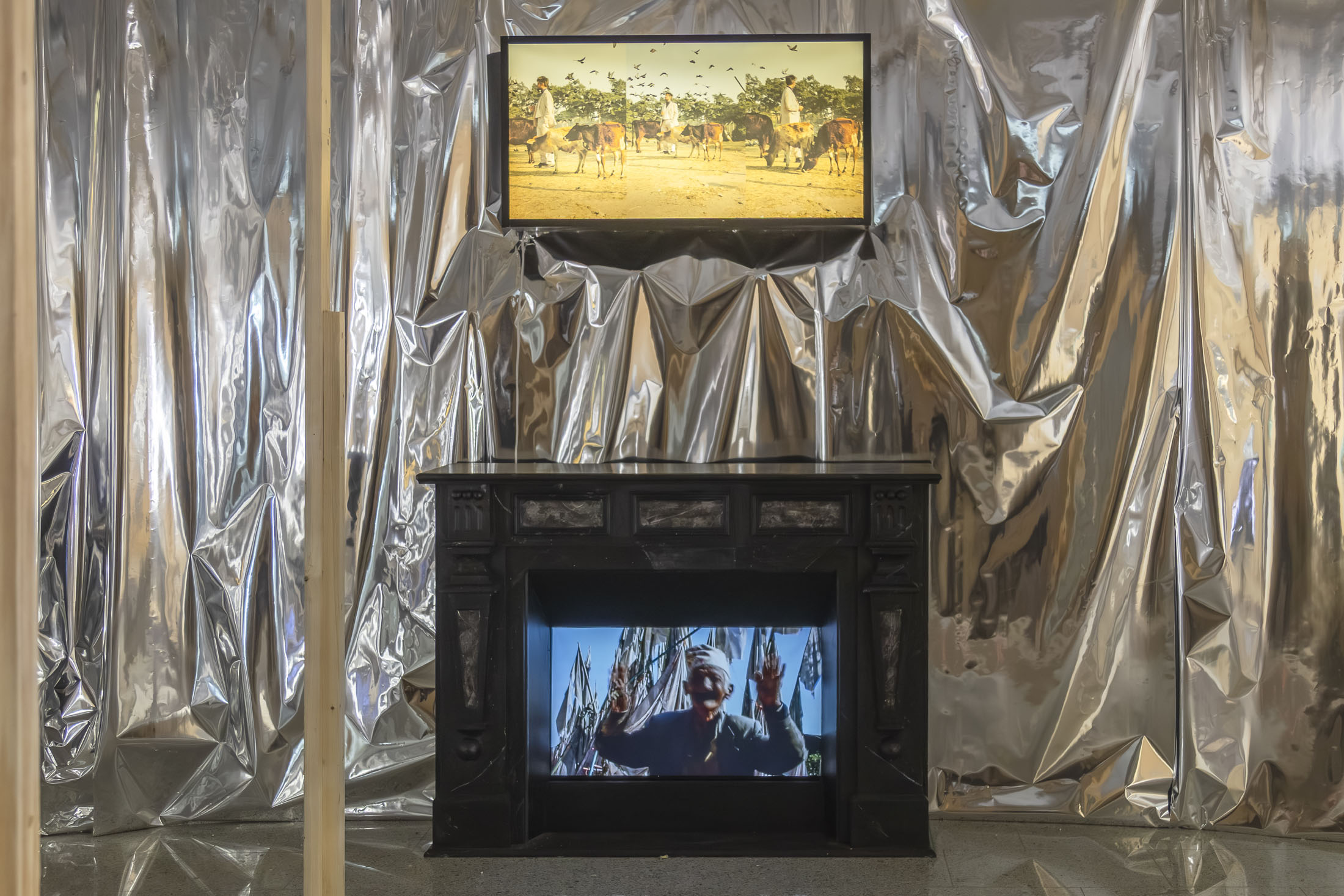
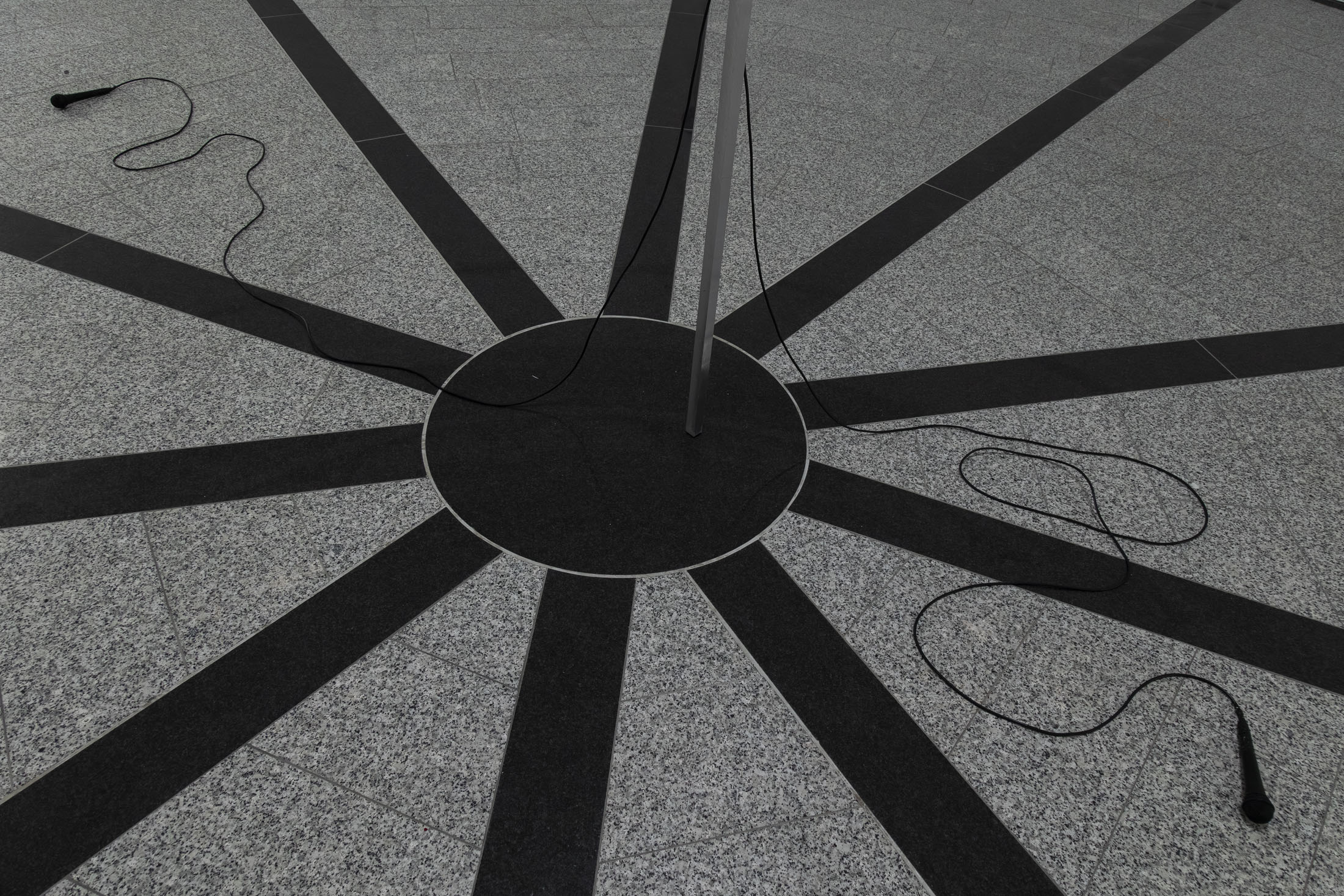
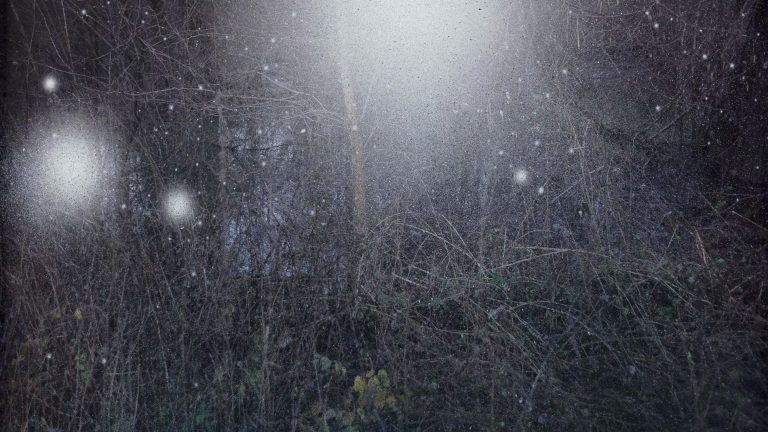
„NACH Christoph Schlingensief“ includes works from different creative periods. The installation „Der König wohnt in Mir“ (2008) incorporates six films and photographs from Kathmandu and Bhaktapur, taken in the winter of 2007/08, some during Hindu funeral rituals. In one of the films, the artist appears himself as part of the scene, highlighting the inseparability of observation and participation in the process of artistic intervention. The installation, designed as a treatment room, confronts visitors with themes of illness, mortality, and redemption.
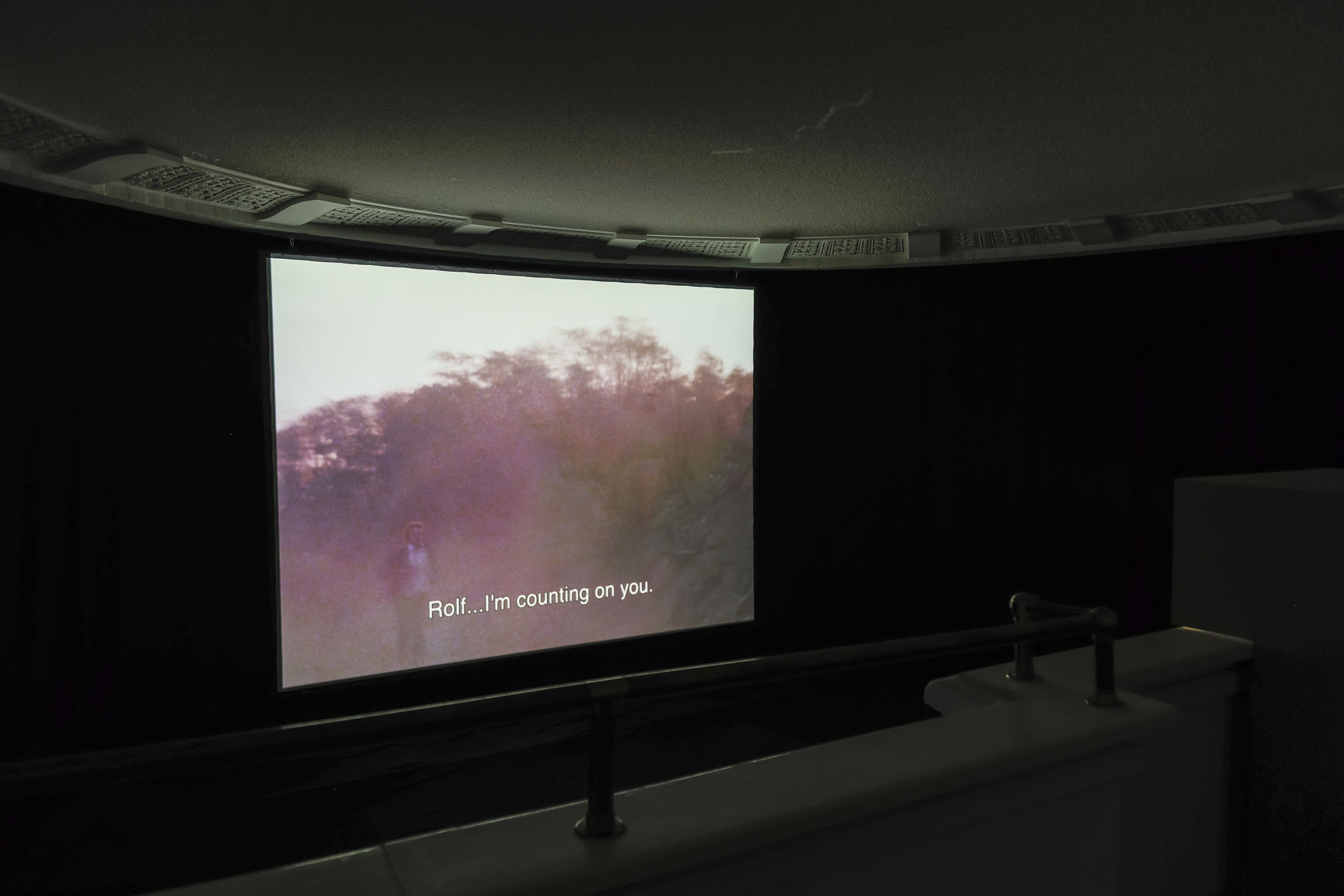
The short films „Phantasus muss anders werden“ (1983) and „What happened to Magdalena Jung?“ (1983) show Schlingensief’s early experiments with image and language. They reveal a challenge to conventional cinematic storytelling emerging through disruption. The feature film „Tunguska – Die Kisten sind da“ (1984) radicalizes this approach by making the medium of film itself the subject and exposing its boundaries.
Together, these works demonstrate Schlingensief’s consistent engagement at the thresholds of different artistic media and trace a trajectory from early experiments to his later existential self-inquiry. The exhibition is accompanied by an extensive supporting program including film screenings, talks, and participatory formats that enable a deeper engagement with Schlingensief’s work and carry its questions into current social realities.
Curated by Yana Kadykova and Erik Swars
Artistic consultation: Aino Laberenz / Christoph Schlingensief Estate
About Christoph Schlingensief:
Christoph Schlingensief (1960–2010) was a director, action artist, and theatre maker. Through his films, countless productions, art installations, actions, and exhibitions, Schlingensief persistently intervened in cultural and political discourse over several decades. In referencing various artists, he brought together opera, theatre, film, and actions and exerted influence far beyond the art world.
With the project „Operndorf Afrika“ in Burkina Faso, he created a lasting statement shortly before his death – for an art that shapes social reality. After his death, the German Pavilion at the 54th Venice Biennale (2011) presented Schlingensief’s work and was awarded the Golden Lion for Best National Participation.
Numerous exhibitions continue to reflect the ongoing relevance of his work, such as the retrospective at KW Berlin (2013) and MoMA PS1 (2014). In 2021, the Kunstsammlung Nordrhein-Westfalen exhibited the multimedia work „Kaprow City“, and since 2025, the Neue Nationalgalerie has dedicated a permanent space to Schlingensief, centred around his project „Deutschlandsuche ’99“, which became part of the permanent collection.
About 47m Contemporary:
Founded in 2024, the Kunstverein 47m Contemporary is a platform for exhibitions by both established and emerging national and international voices in contemporary art. Through exhibitions and engagement with critical artistic perspectives that address pressing issues of our time, the Kunstverein positions itself as a place for intergenerational and interdisciplinary dialogue.
Three solo and group exhibitions per year, accompanied by diverse public programs and collaborative formats, connect local and international perspectives. The focus lies on time-based media such as video, sound, installation, and performance, as well as the development of site-specific new productions.
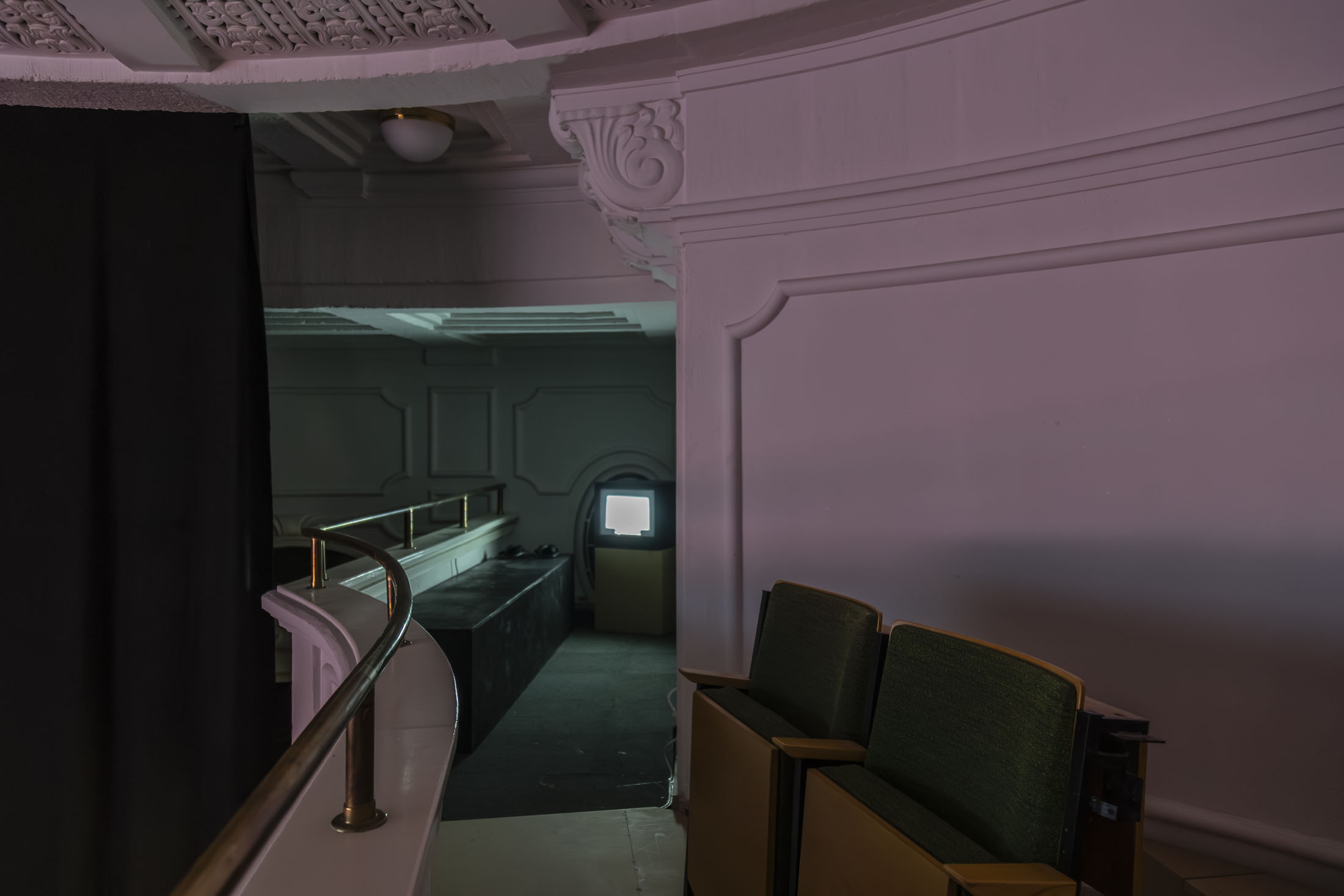
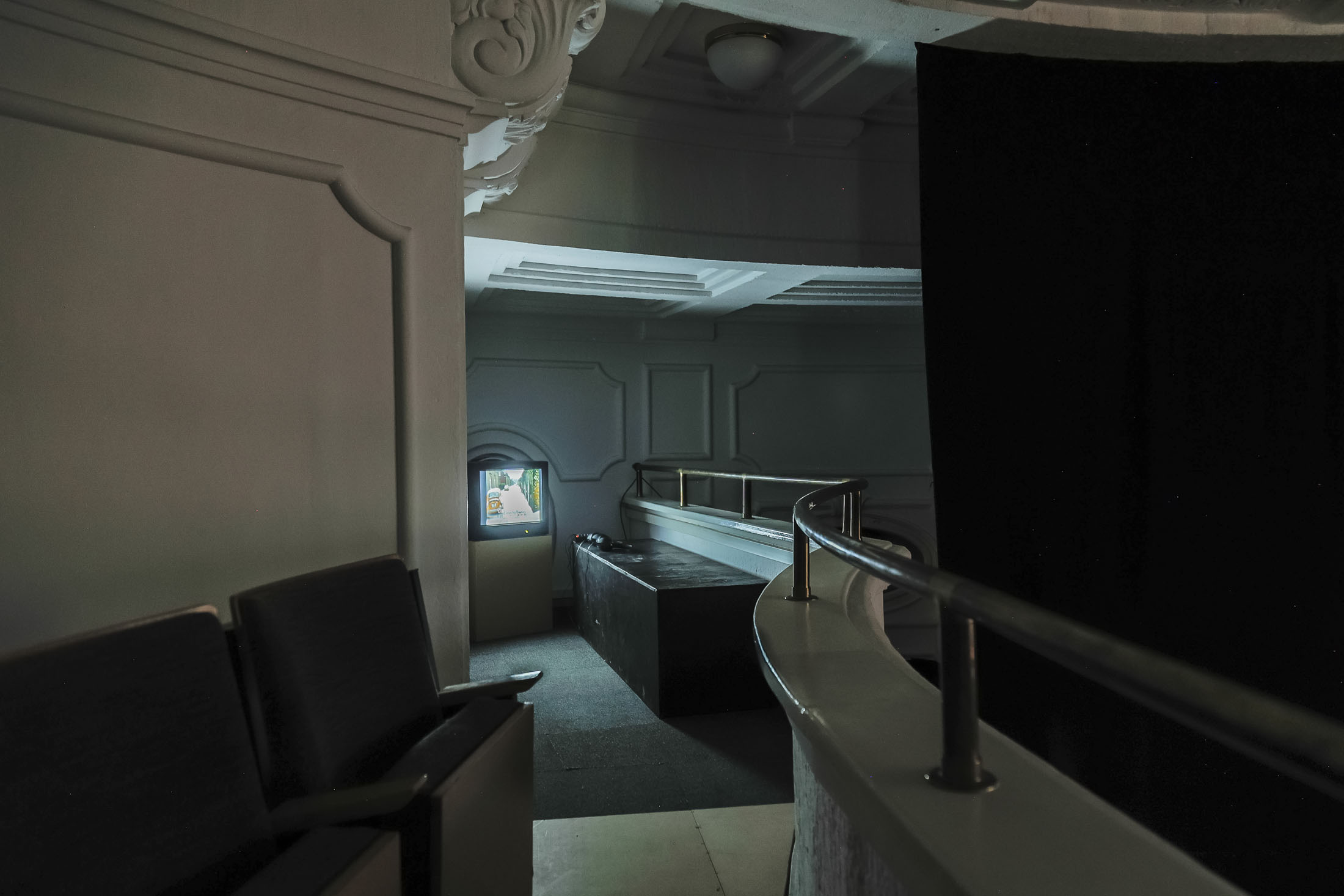
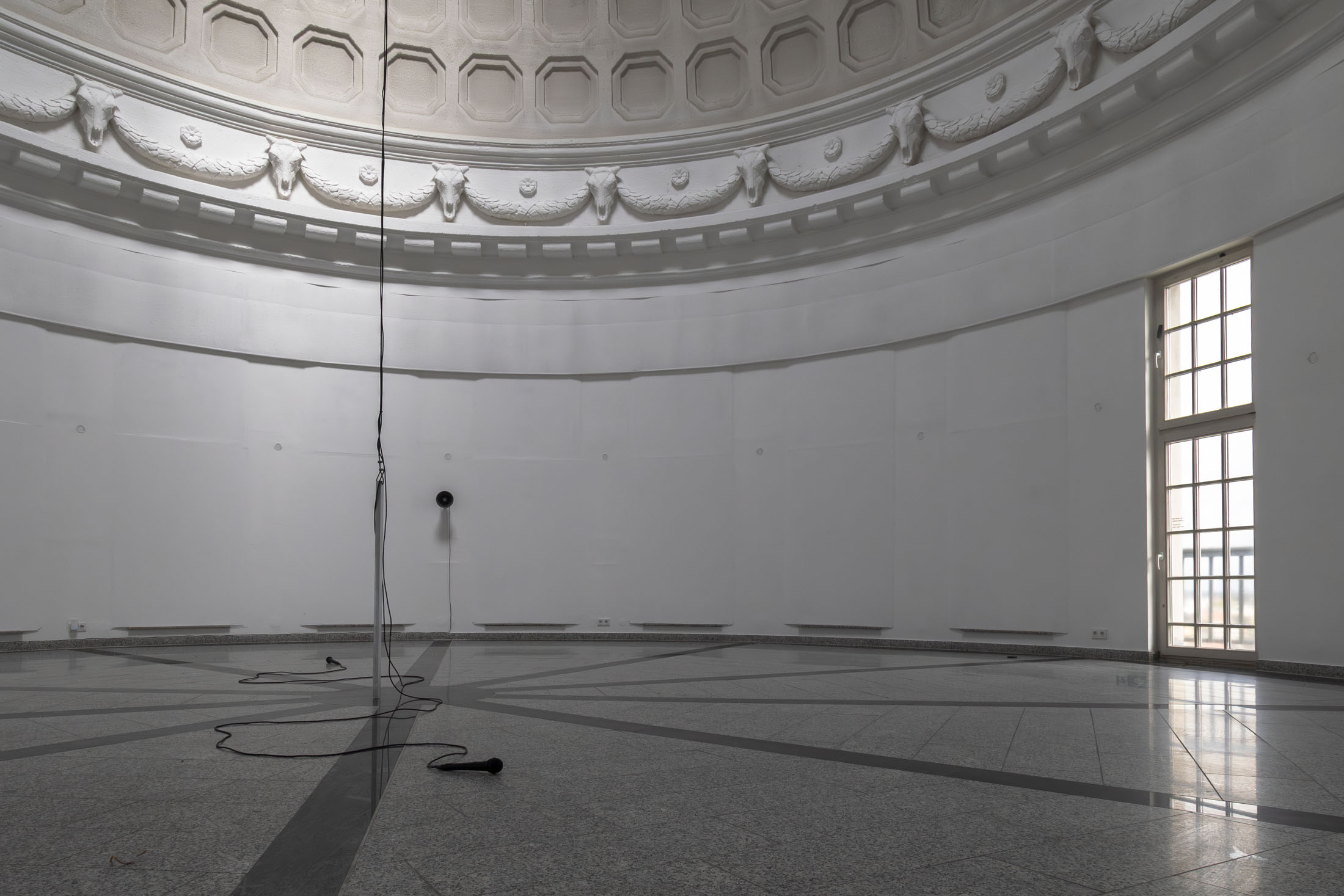
47m Contemporary is housed in the Wünschmann-Haus in Leipzig’s Südvorstadt. The building was constructed between 1914 and 1917 based on designs by Leipzig architect Georg Wünschmann. The exhibition spaces span the top two floors and extend into the domed hall located 47 meters above street level. This creates a 360-degree panorama and an aesthetic of confrontation between historicist architecture and contemporary art, as well as between interior and exterior space.