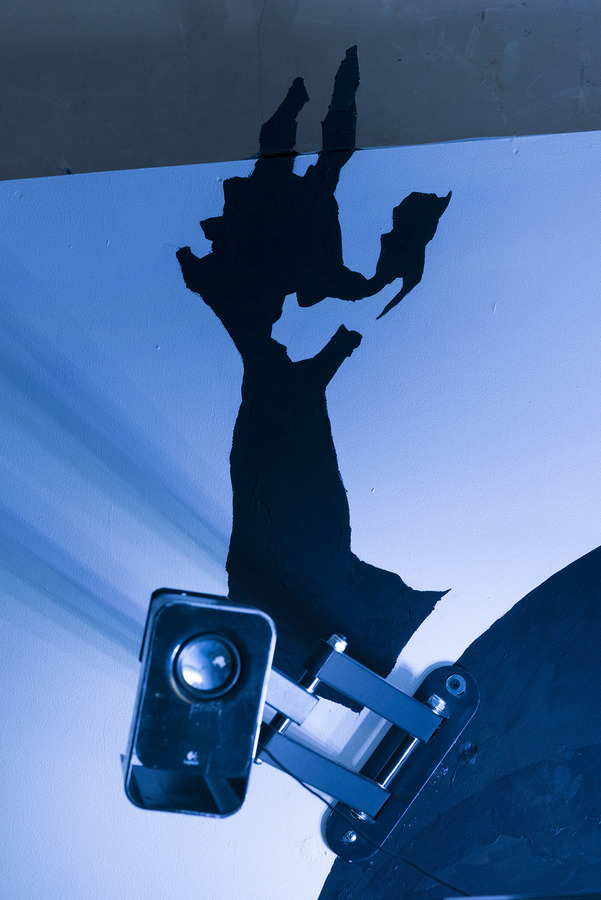
When you turn the final corner
And you run into yourself
Then you know that you have turned
All the corners that are left
– Final Curve by Langston Hughes
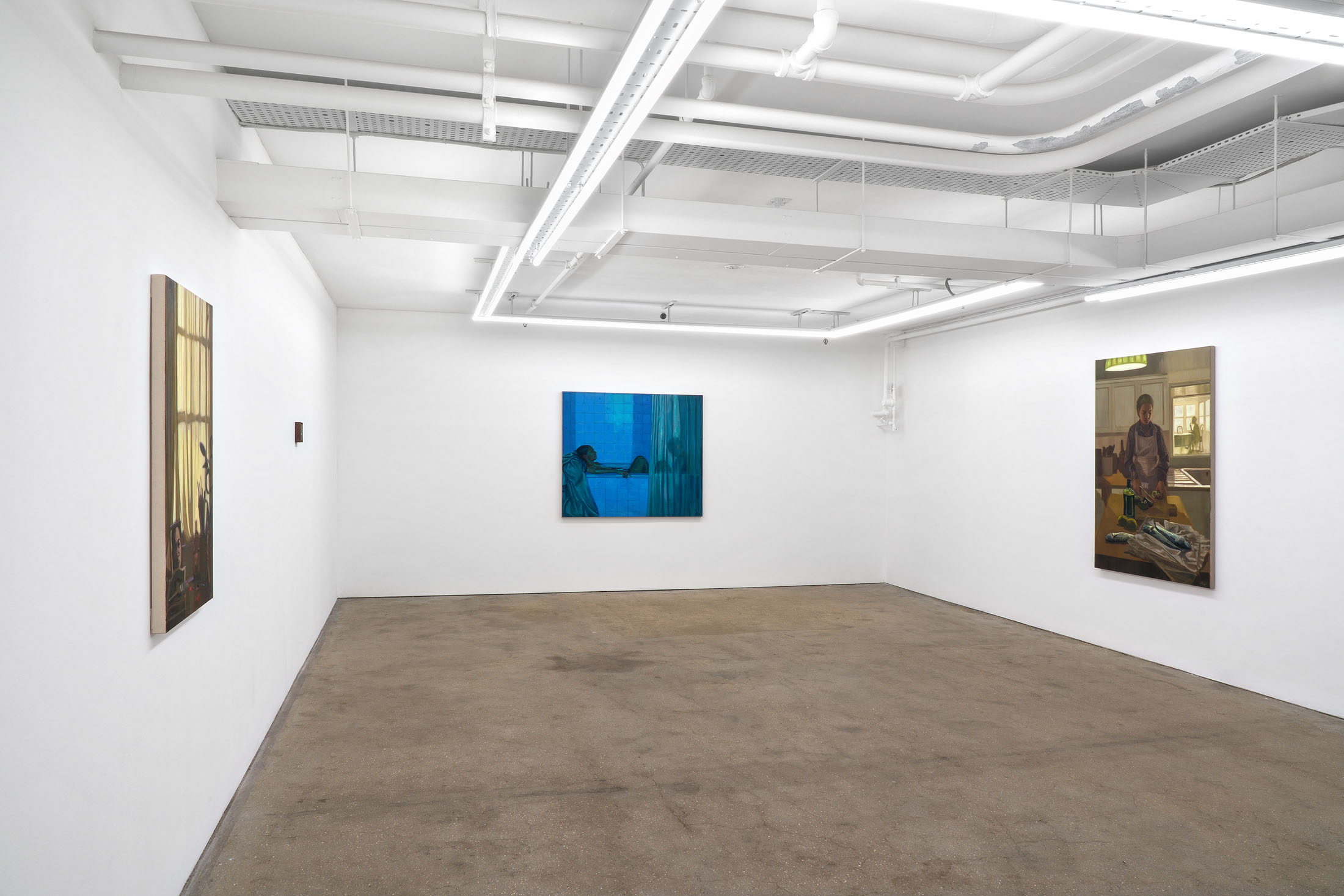
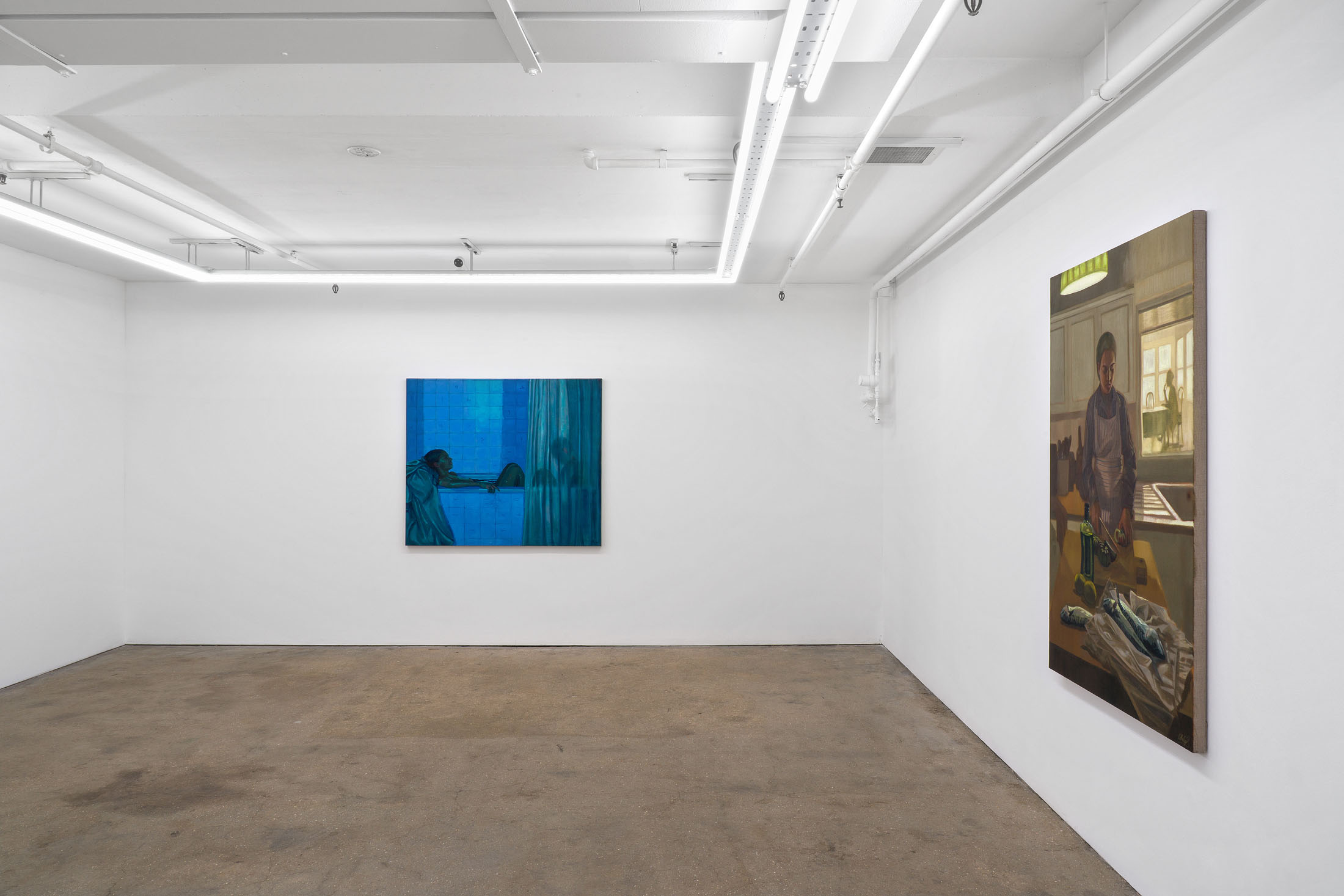
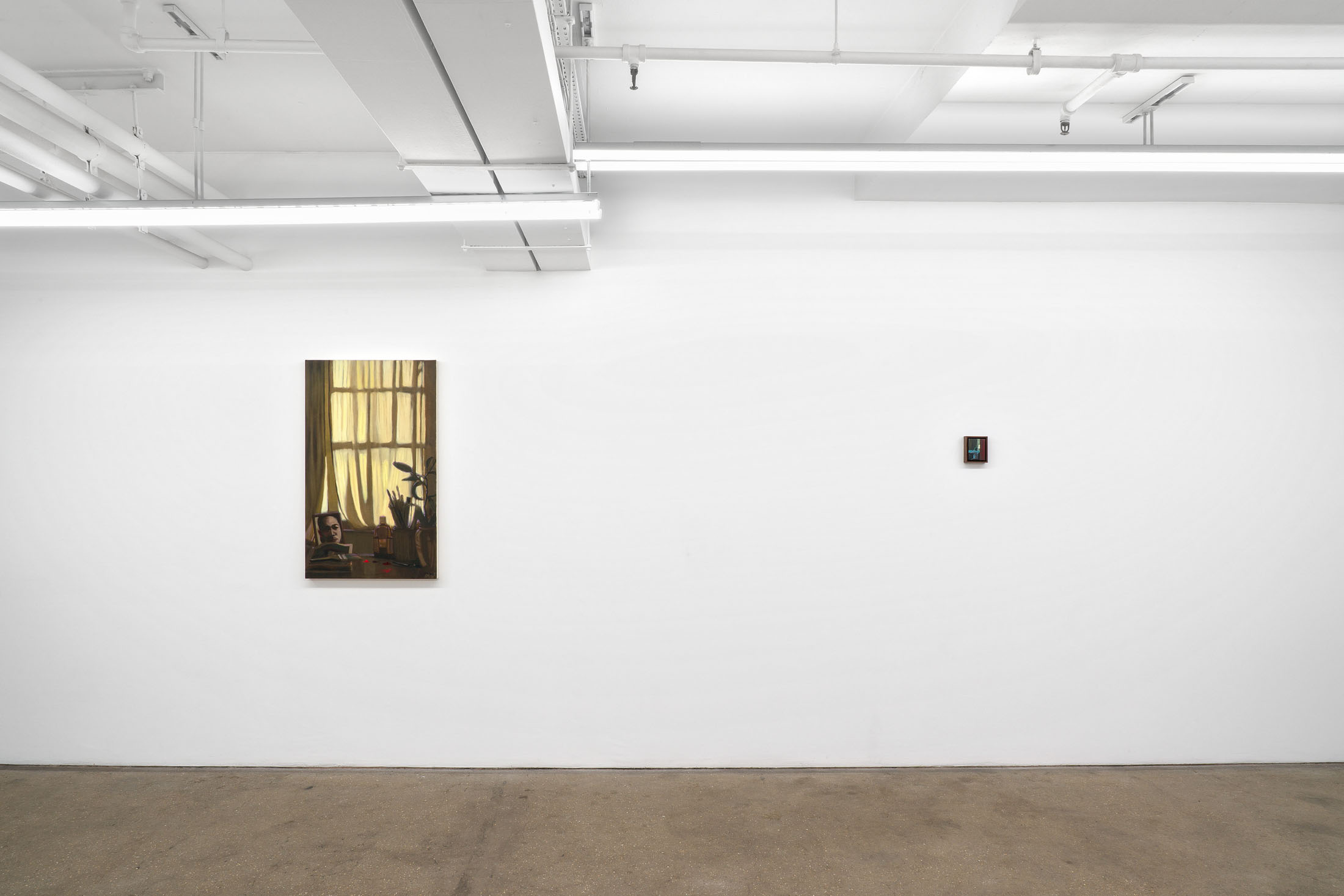
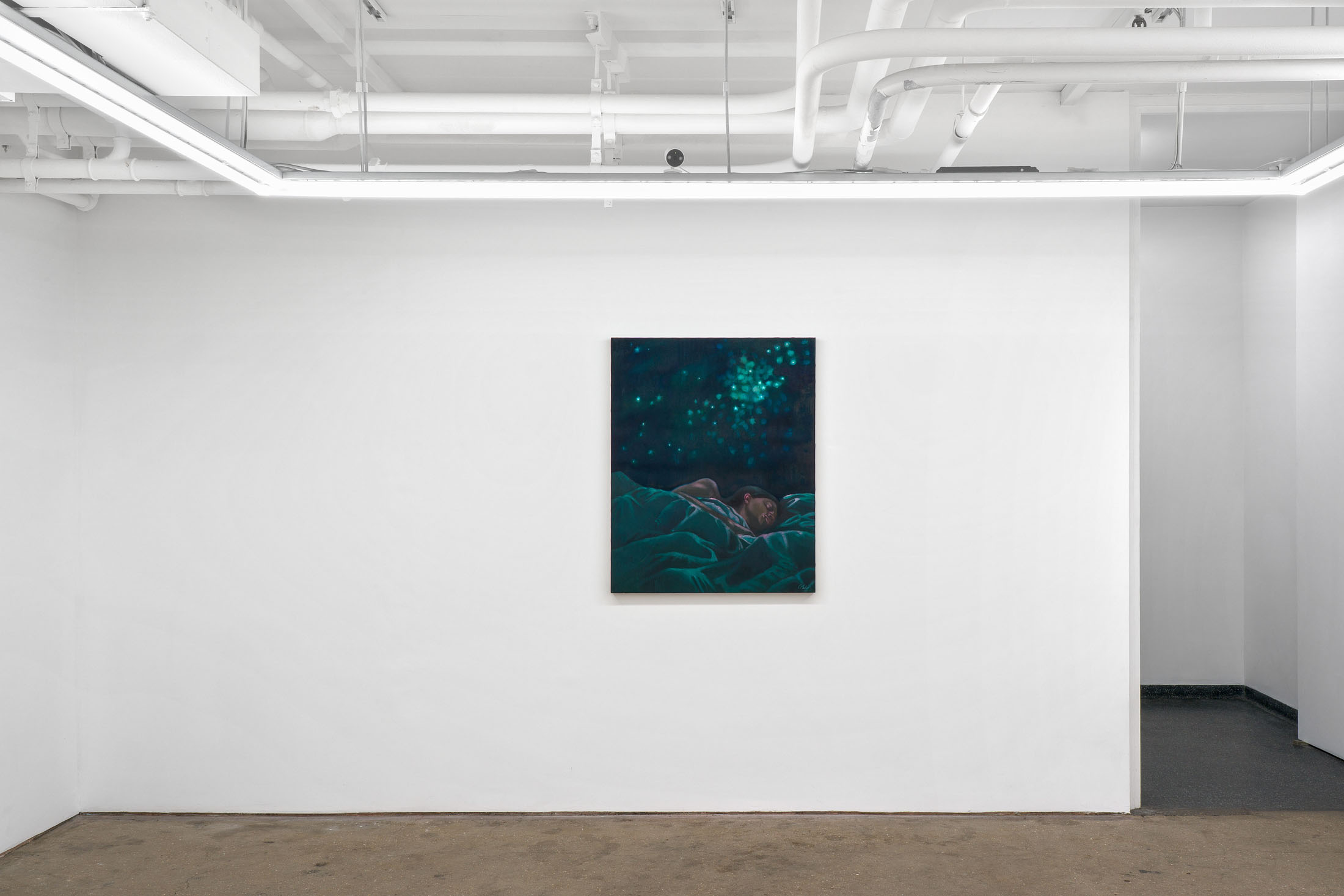
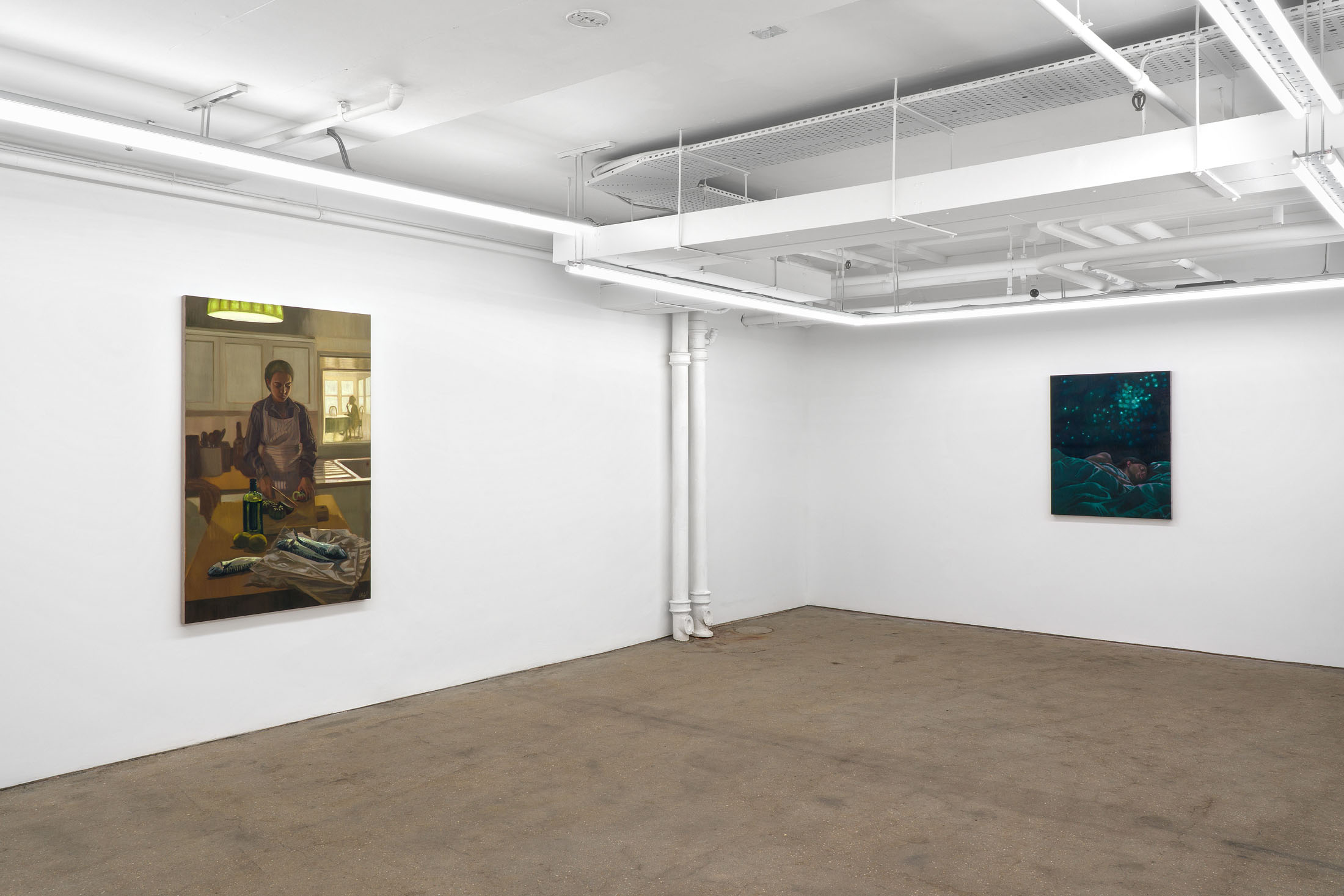
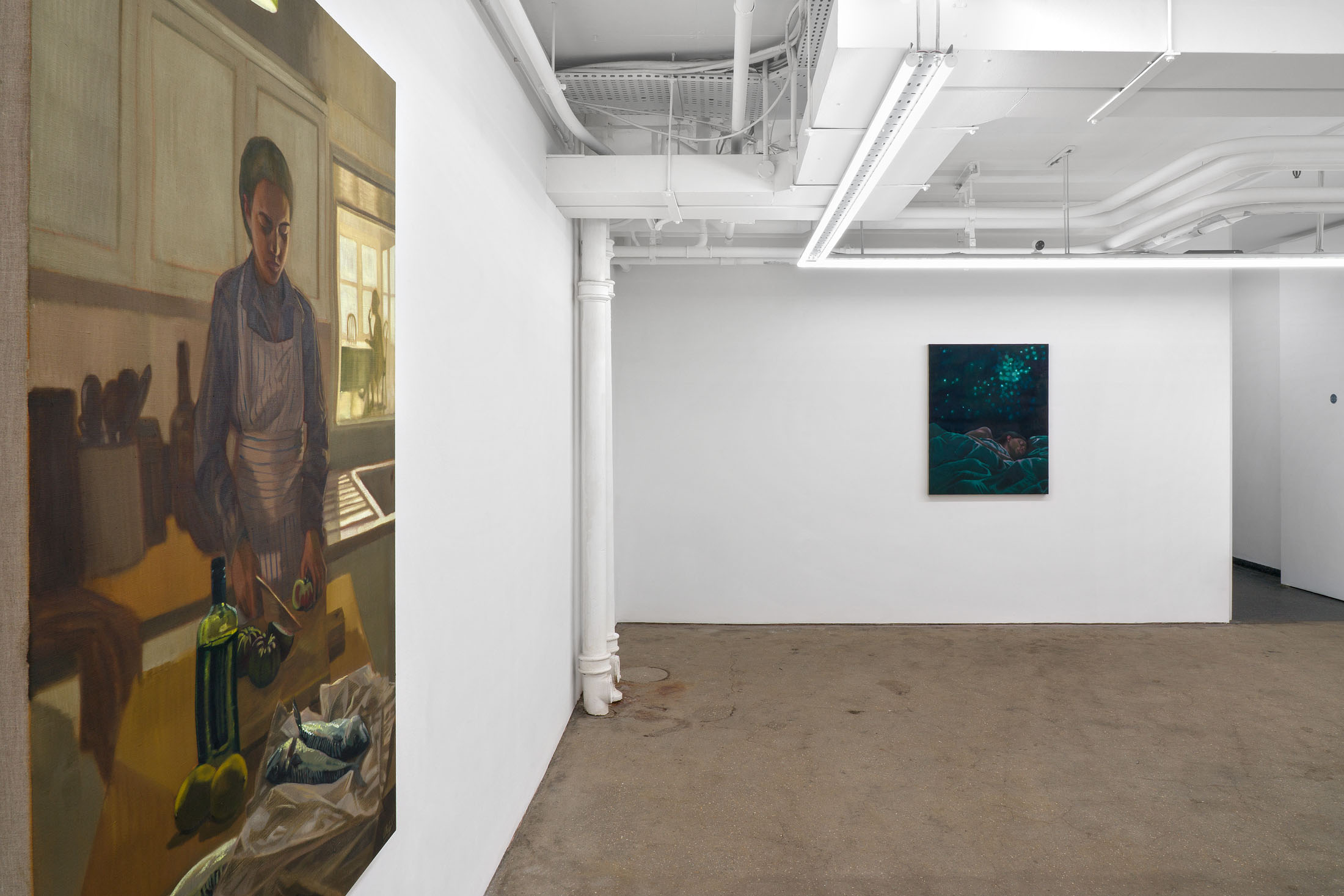
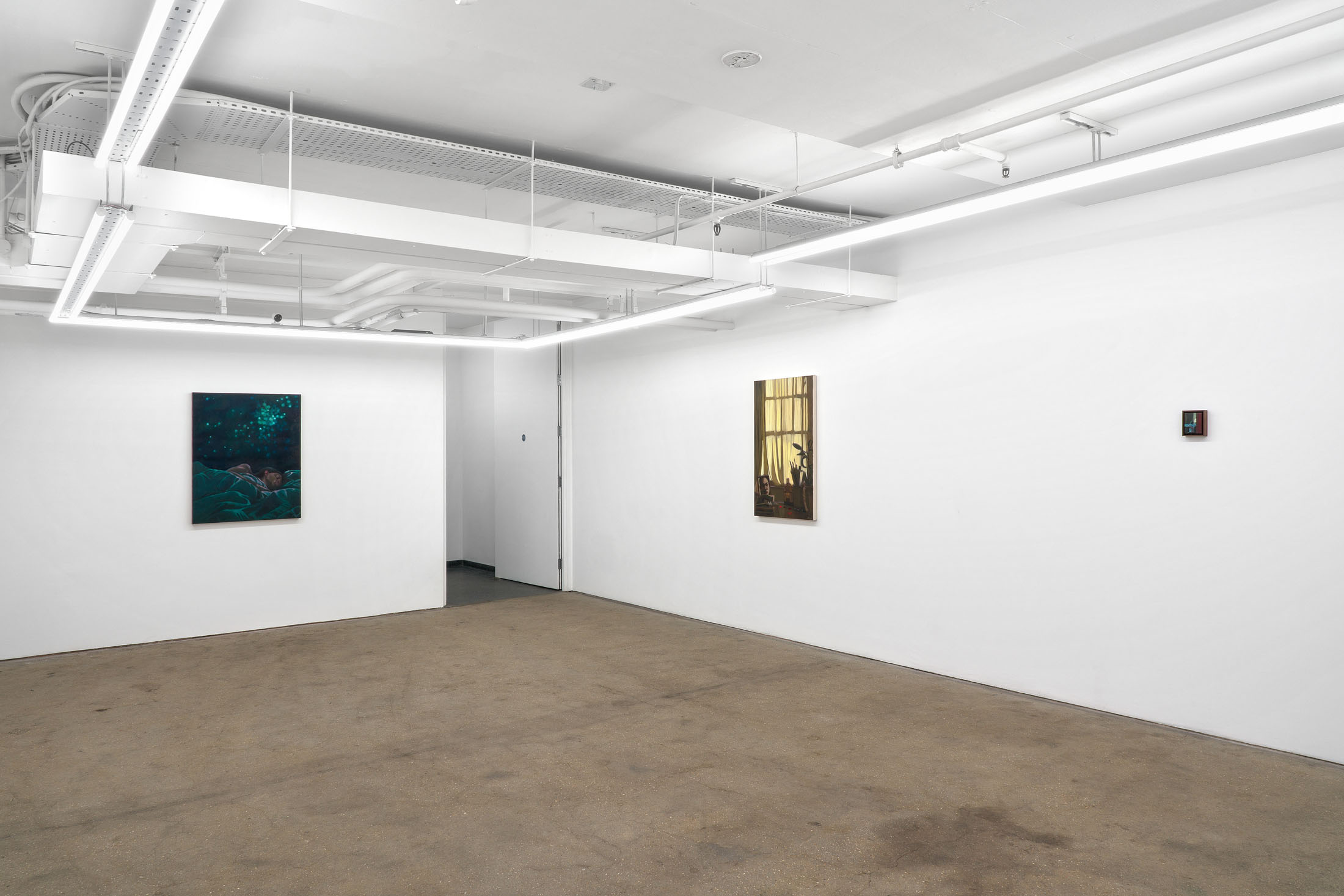
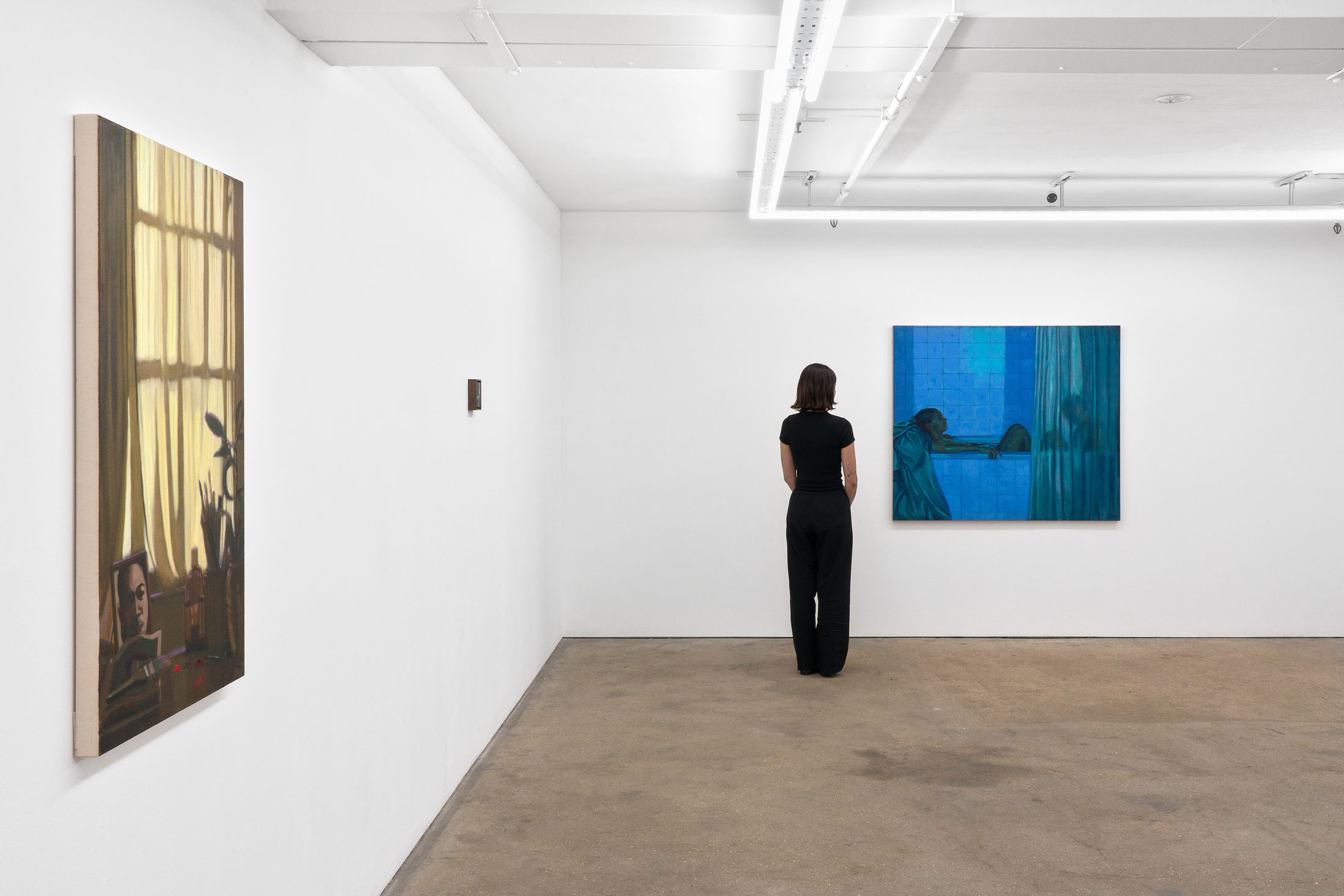
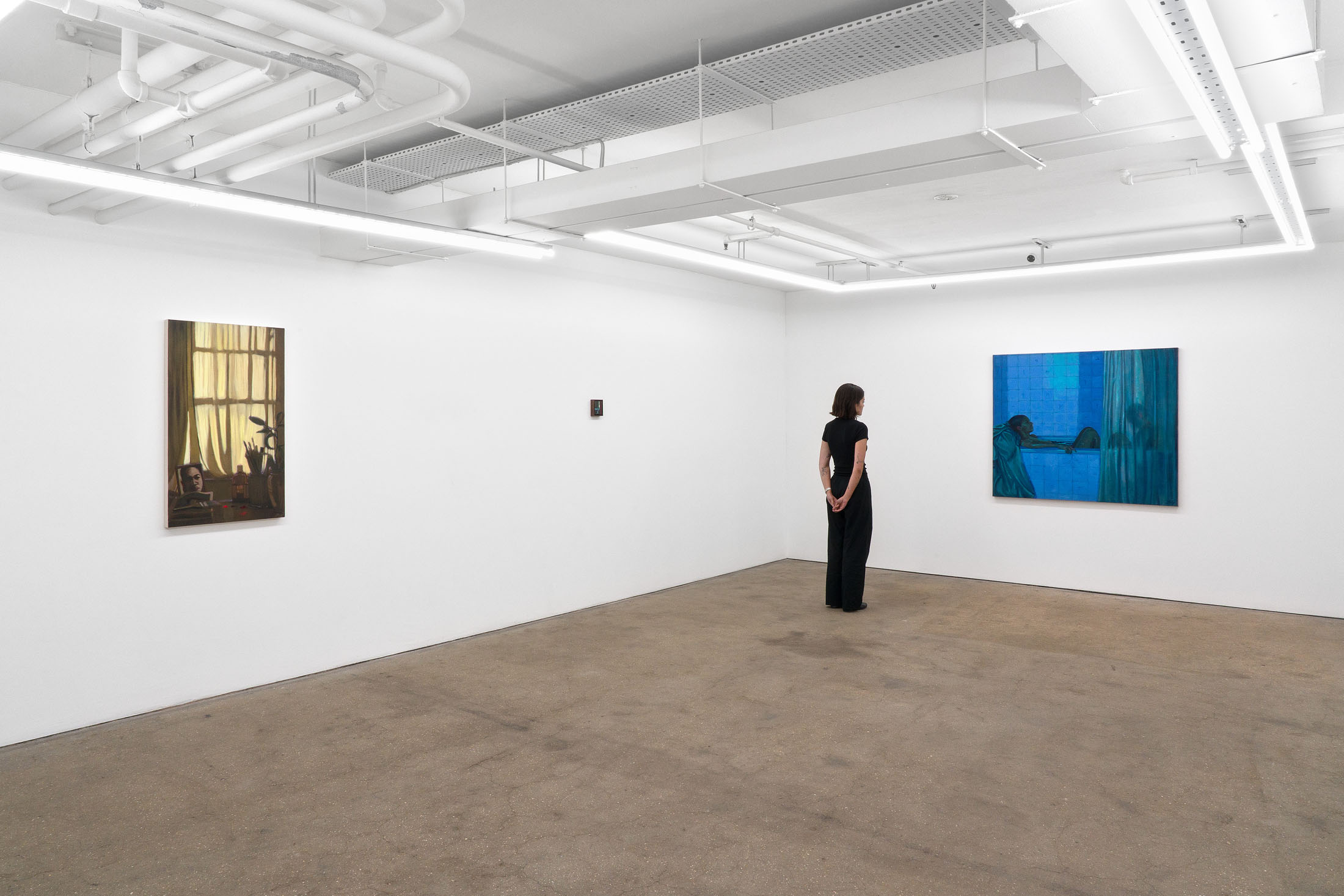
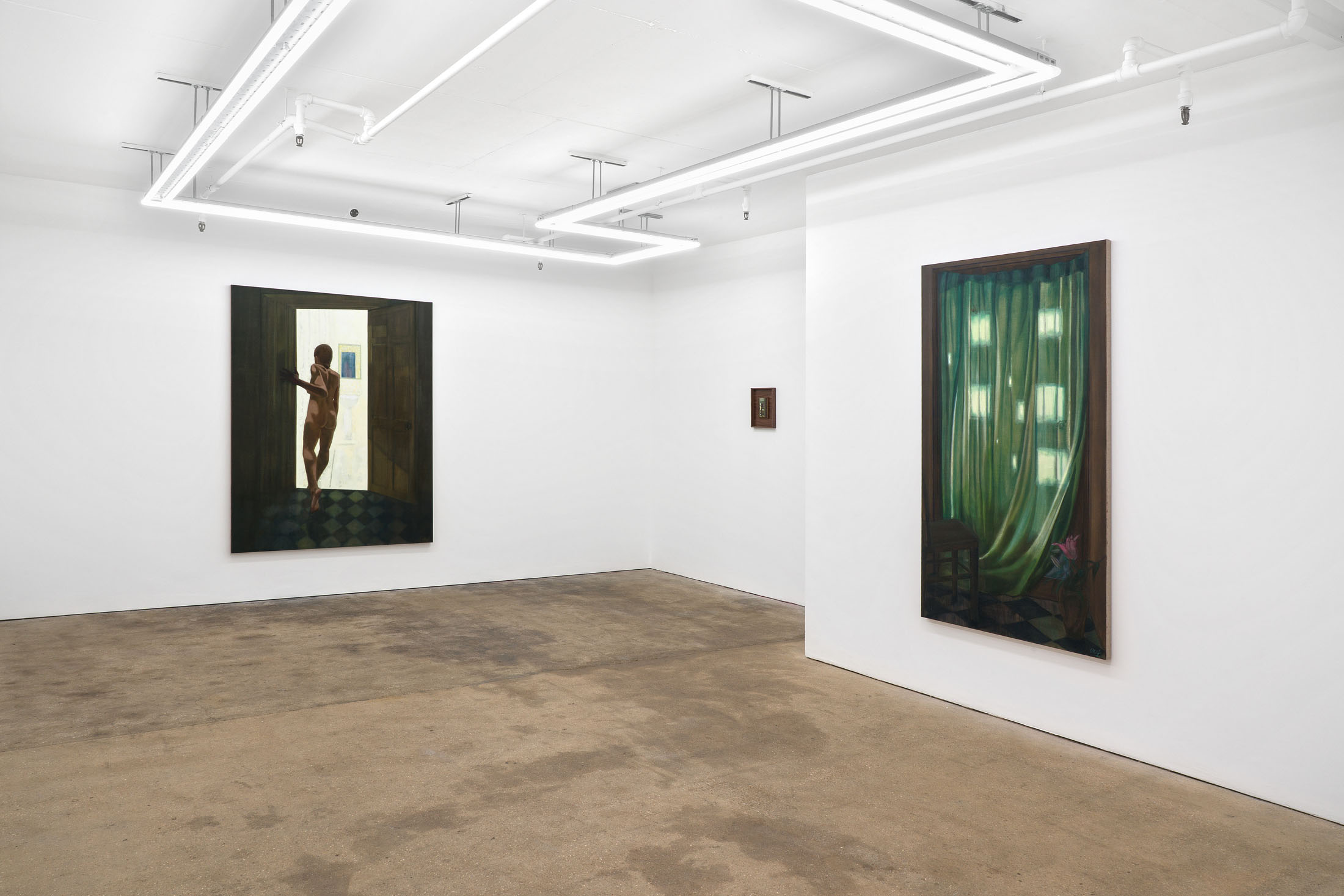
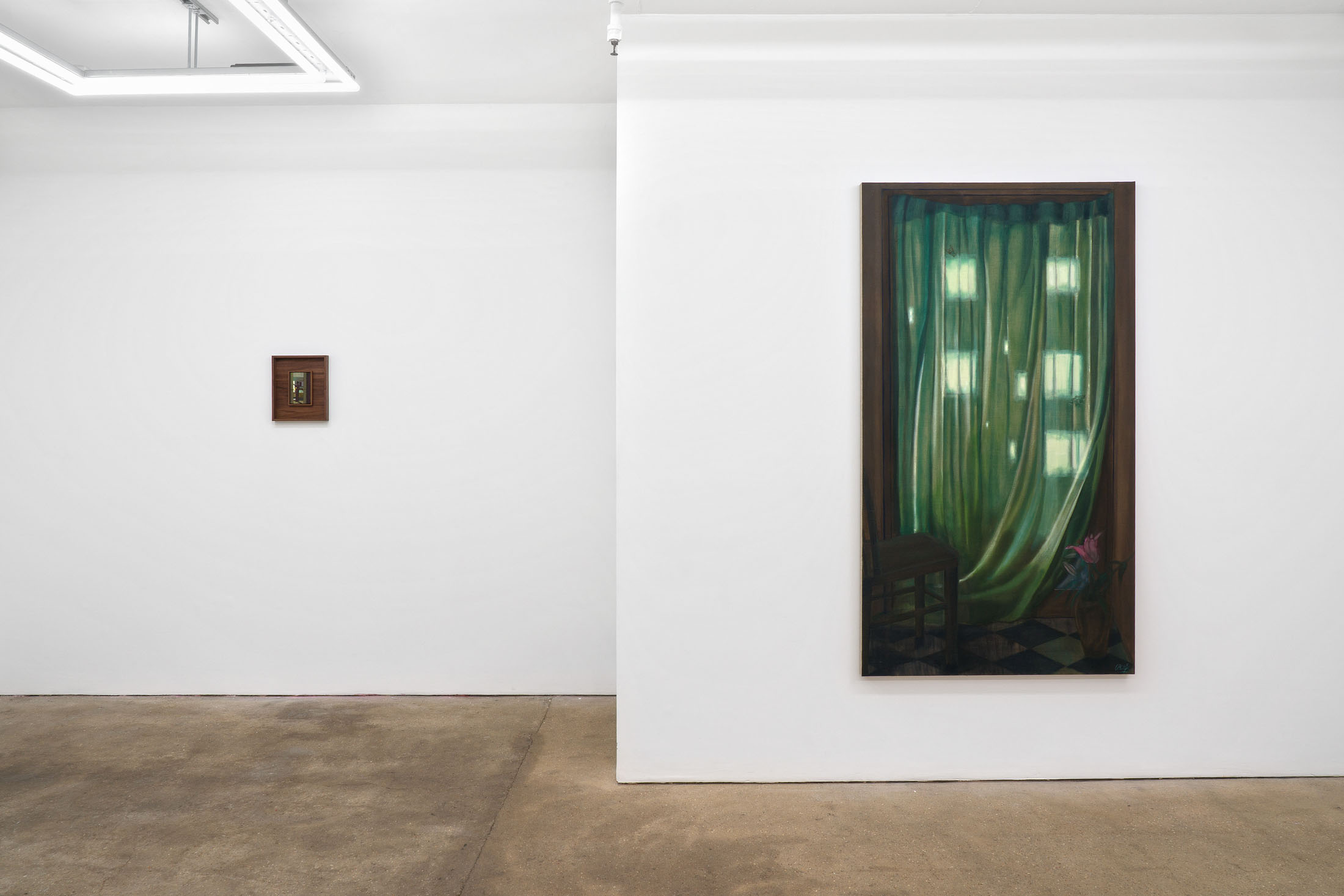
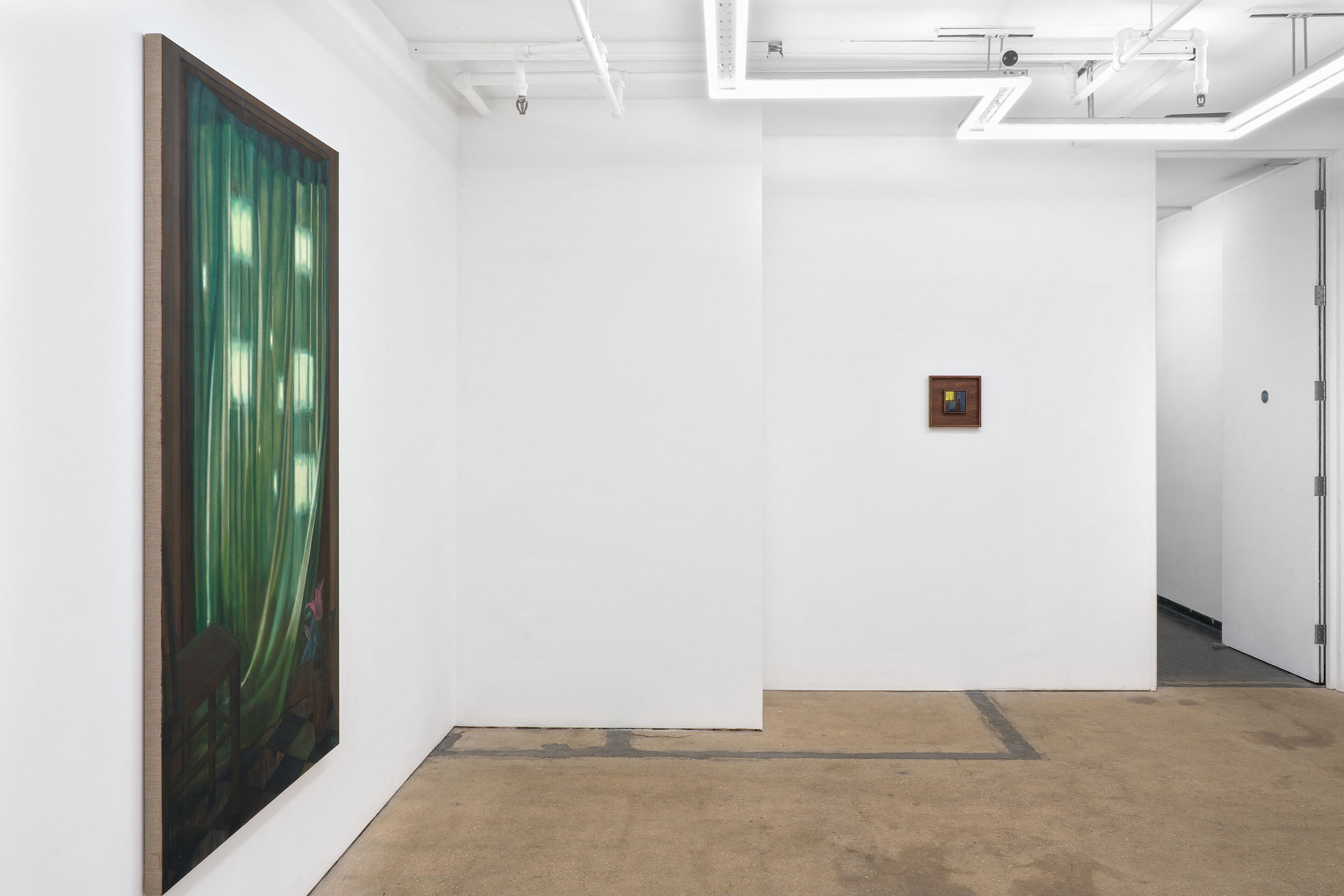
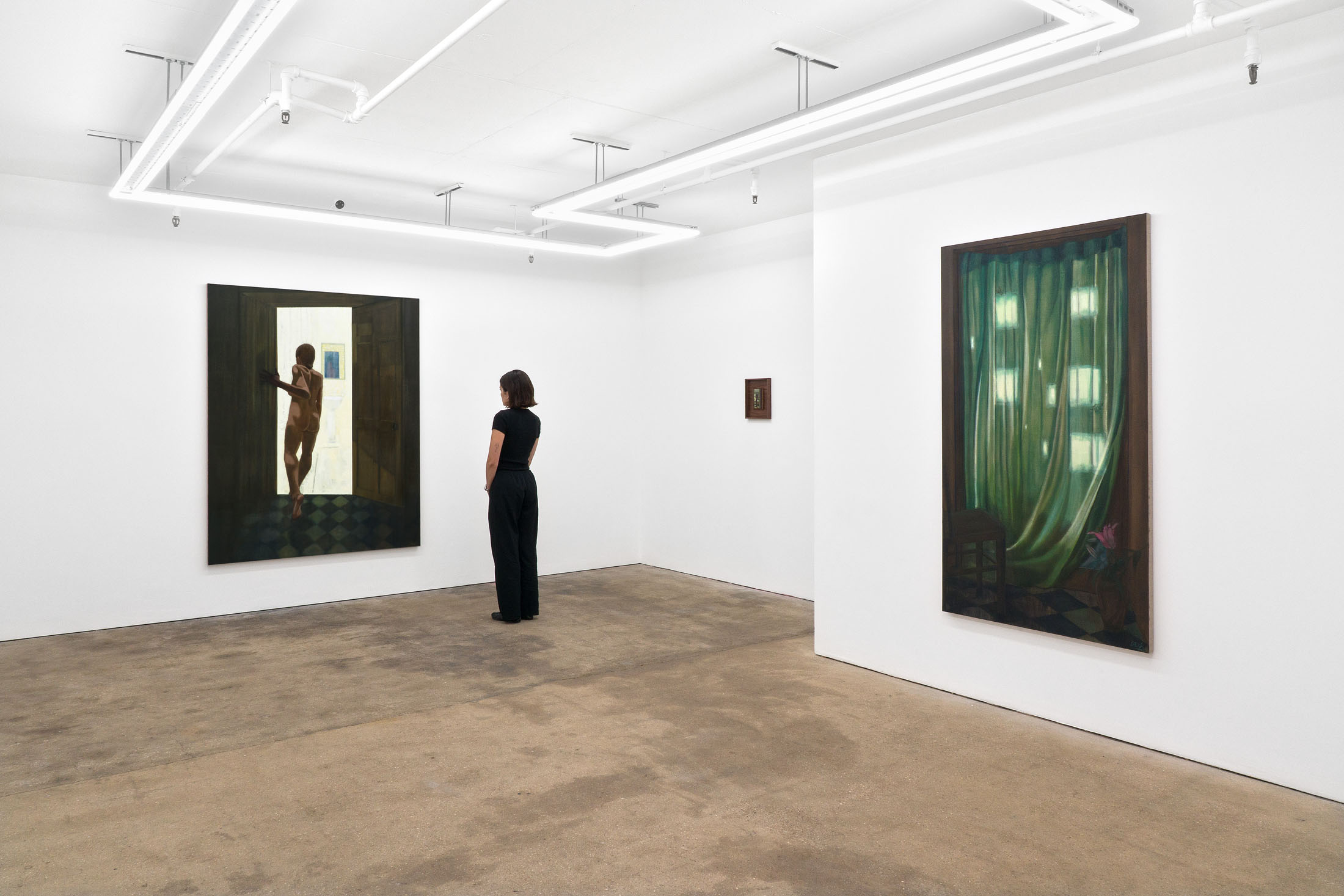
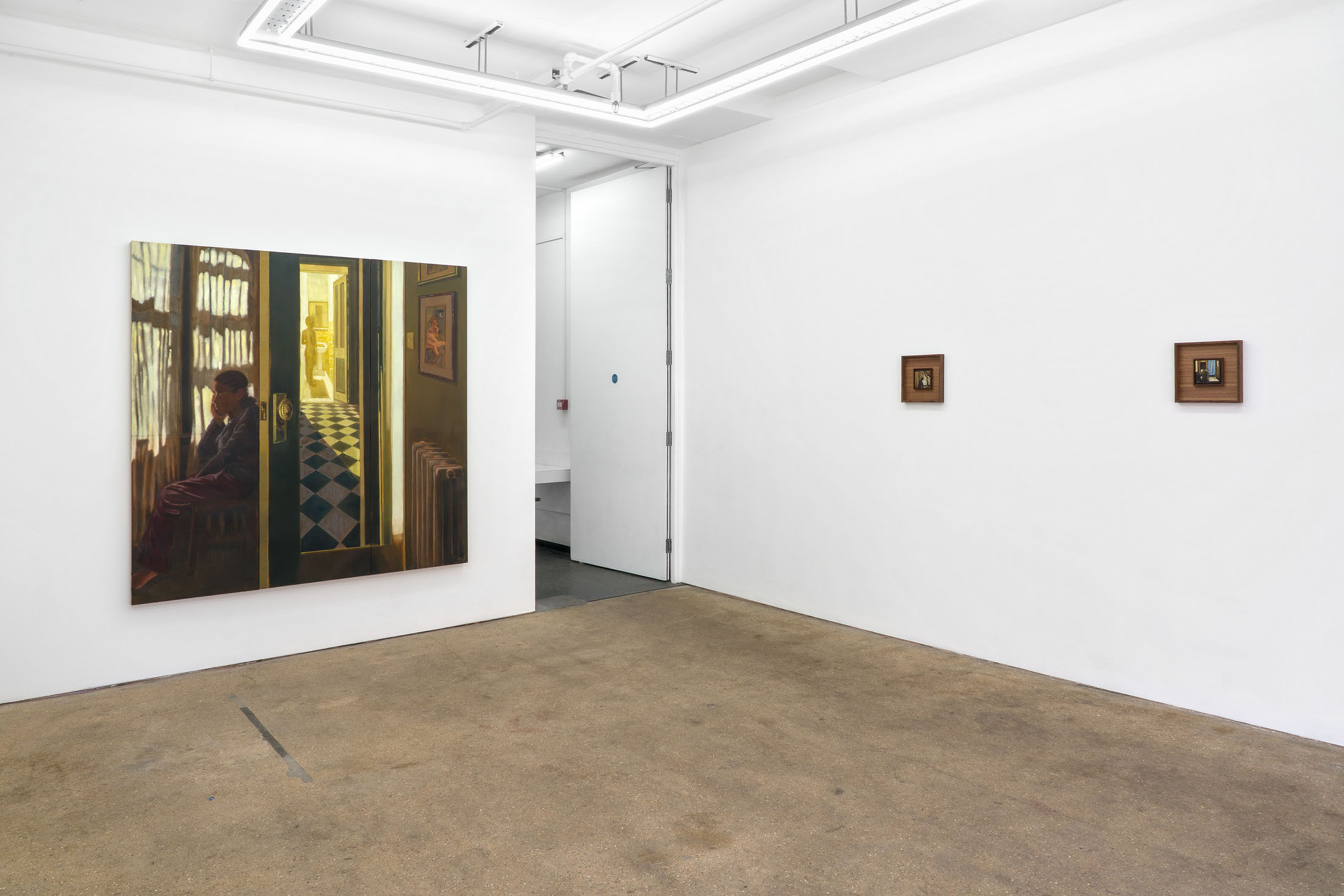
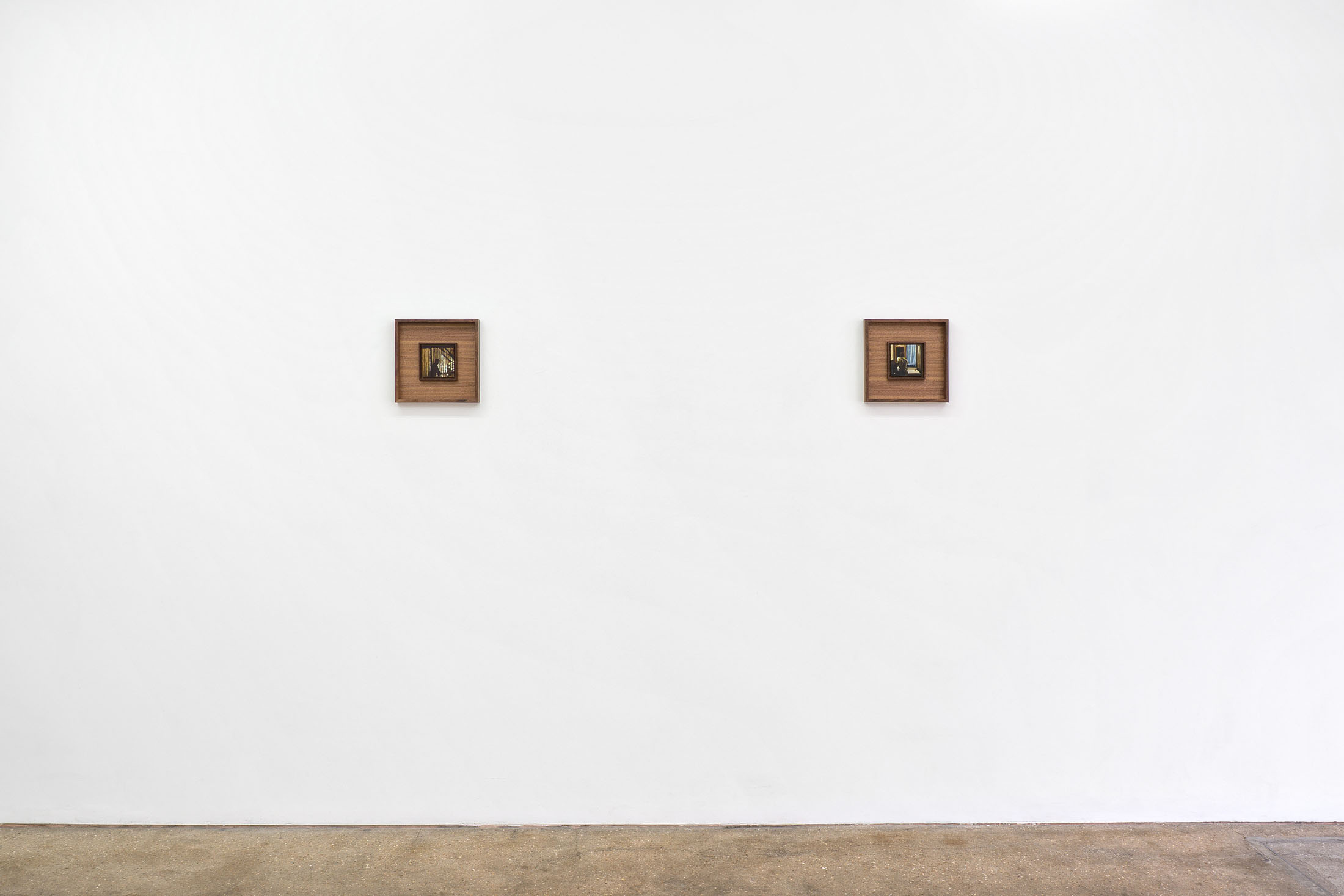
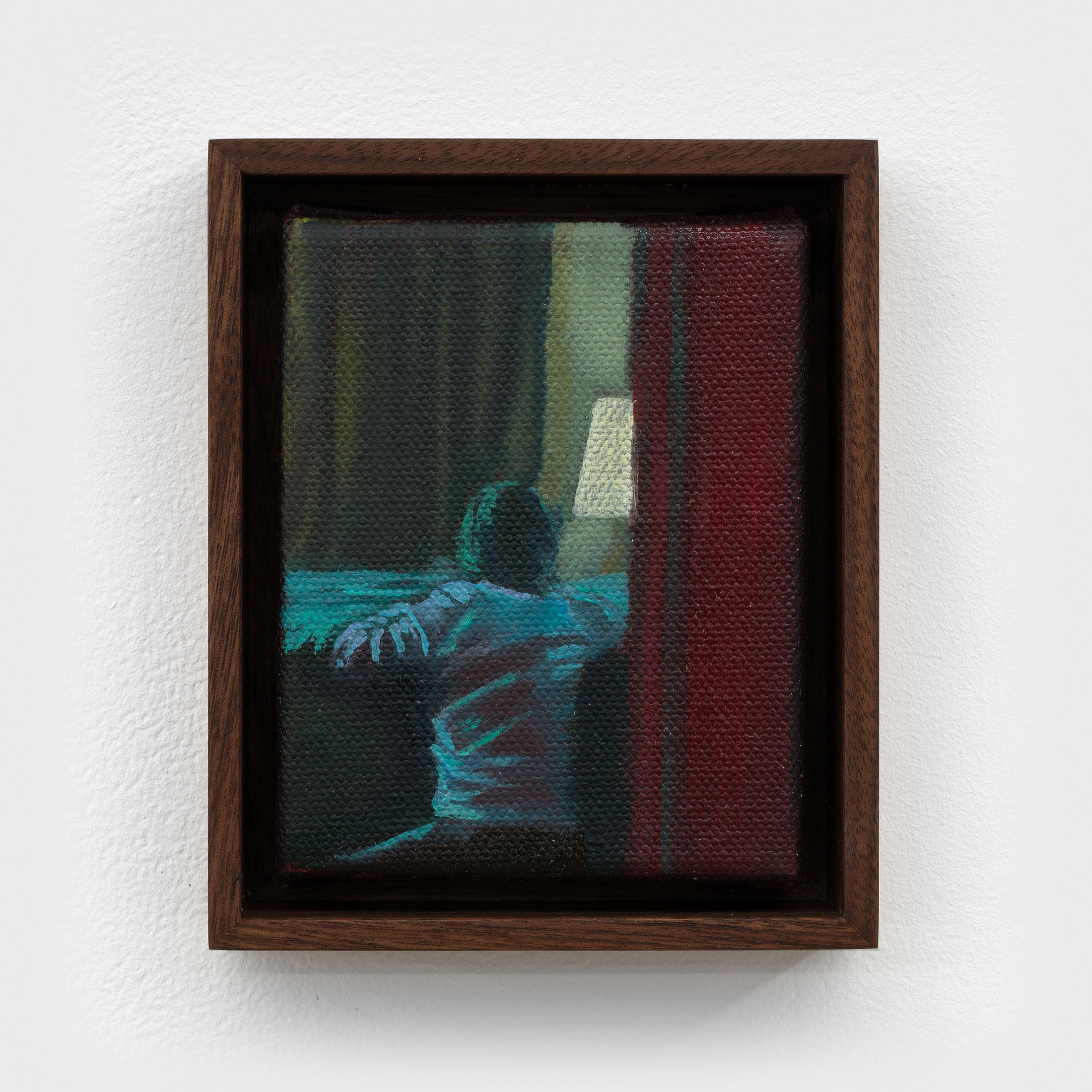
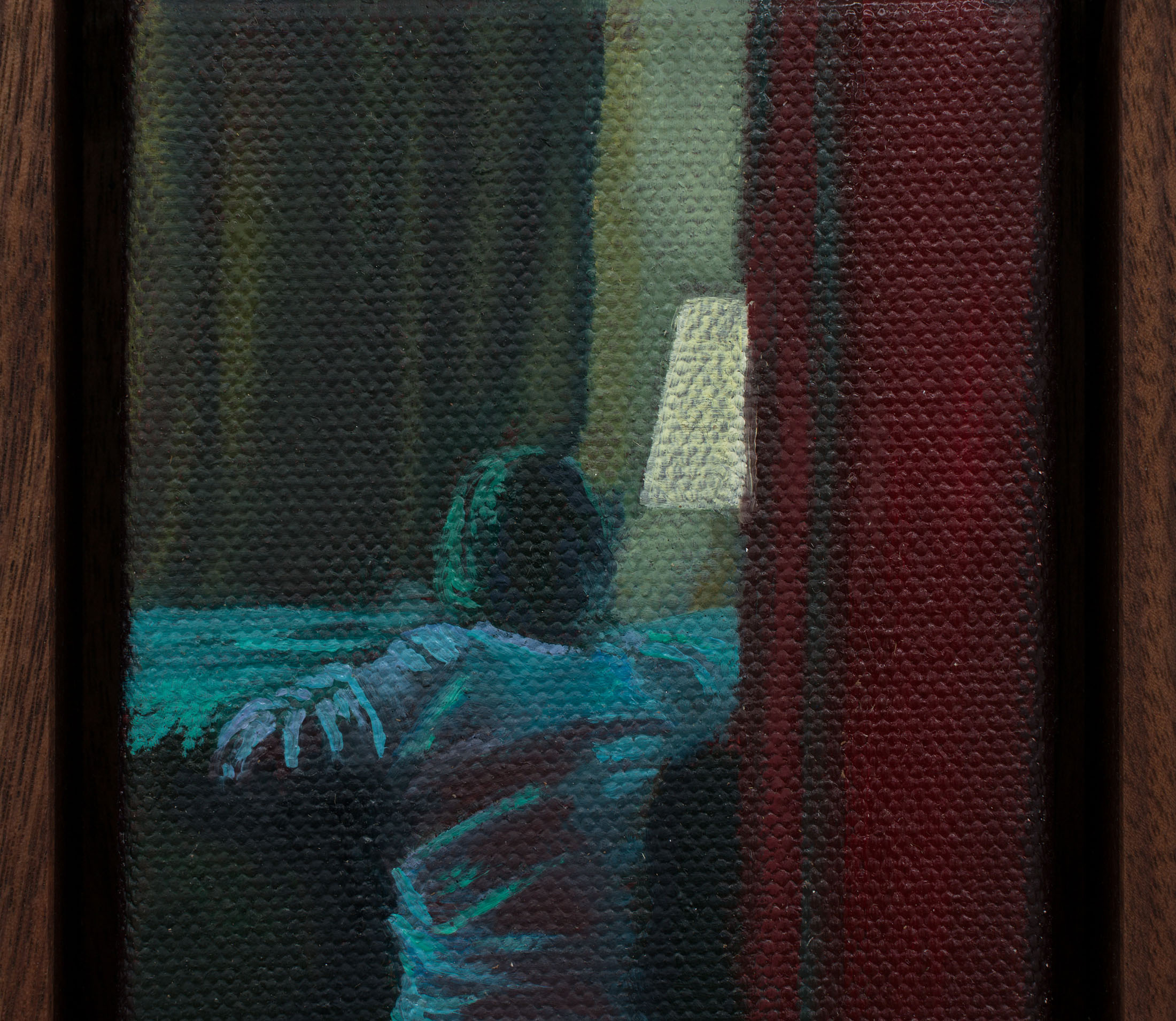
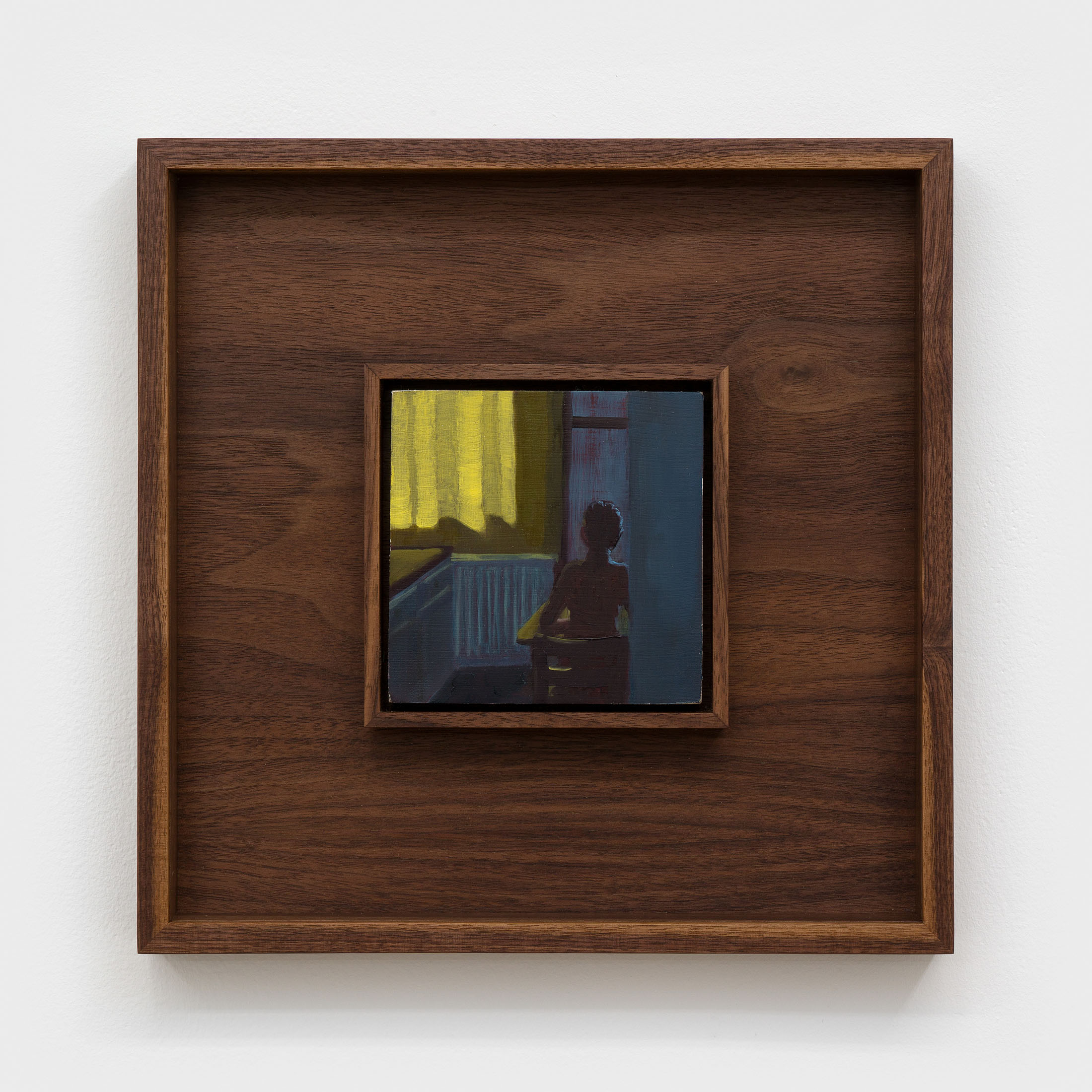
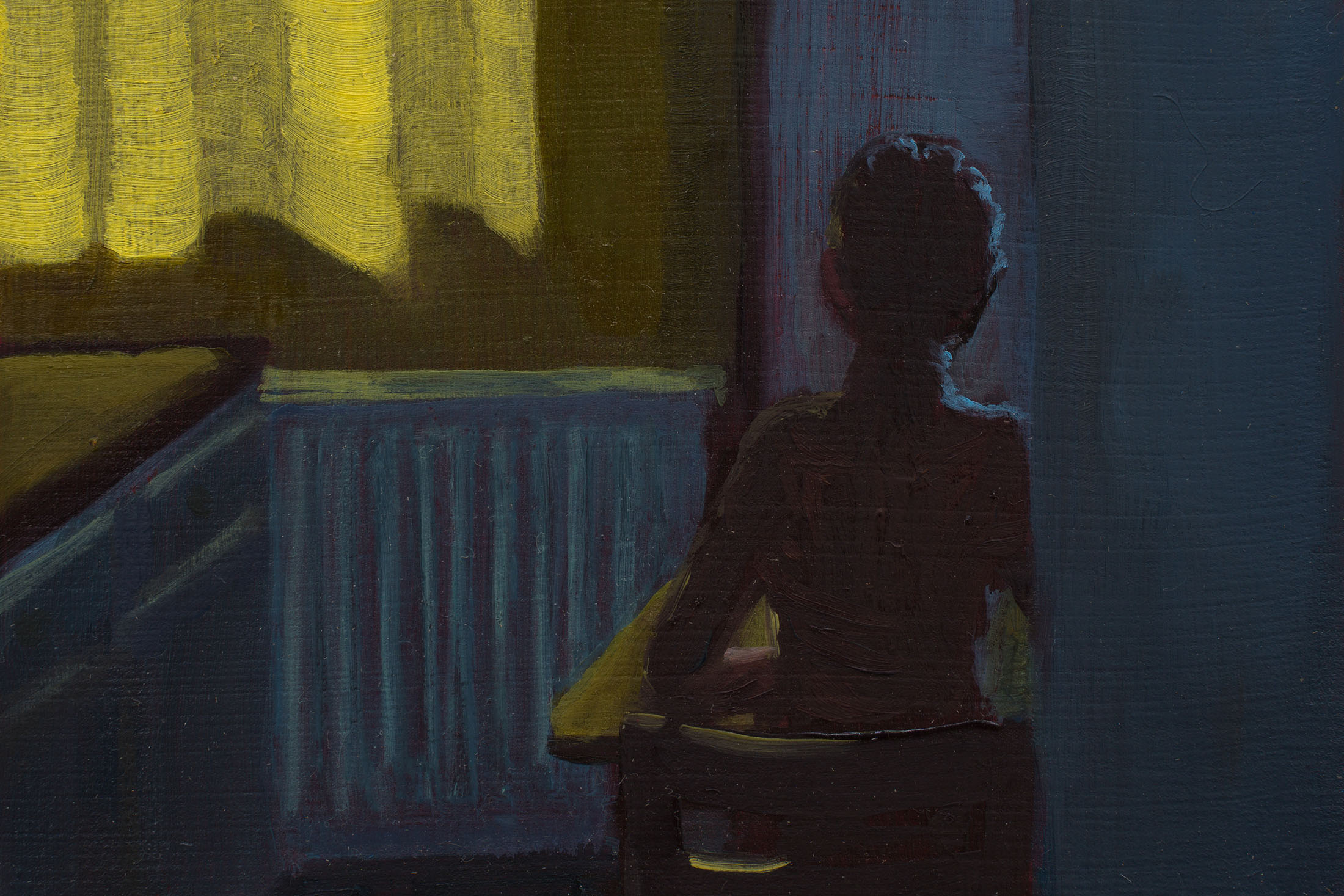
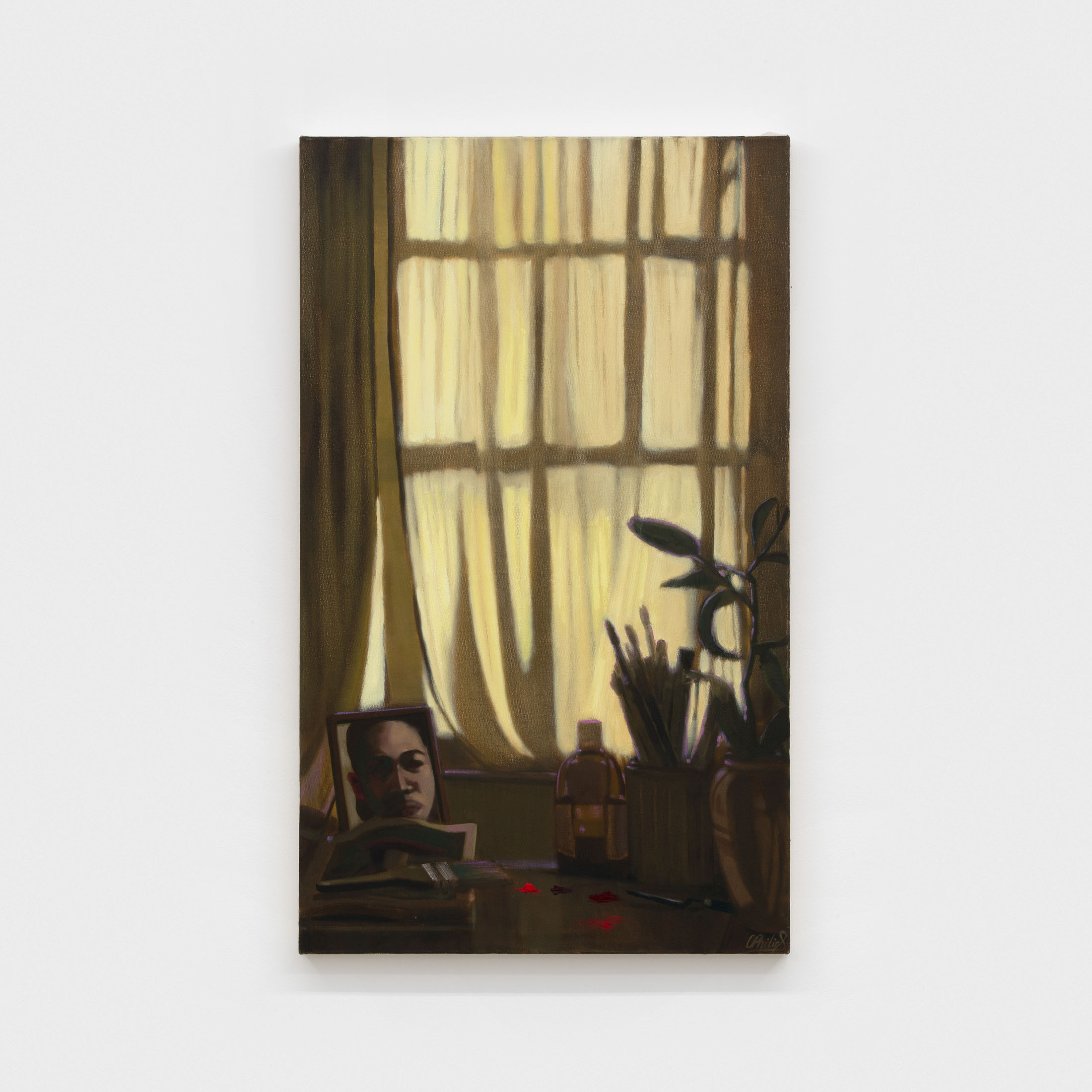
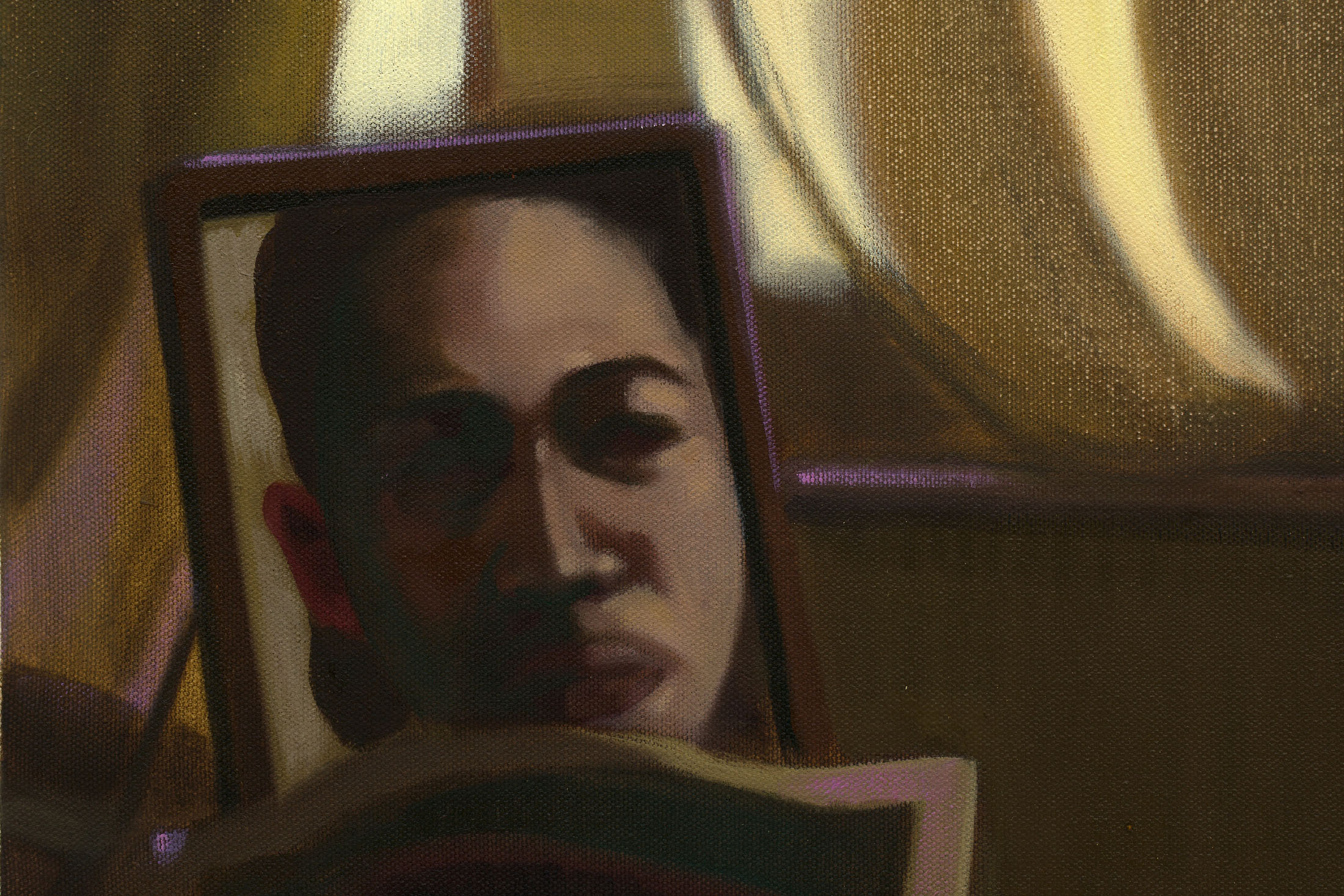
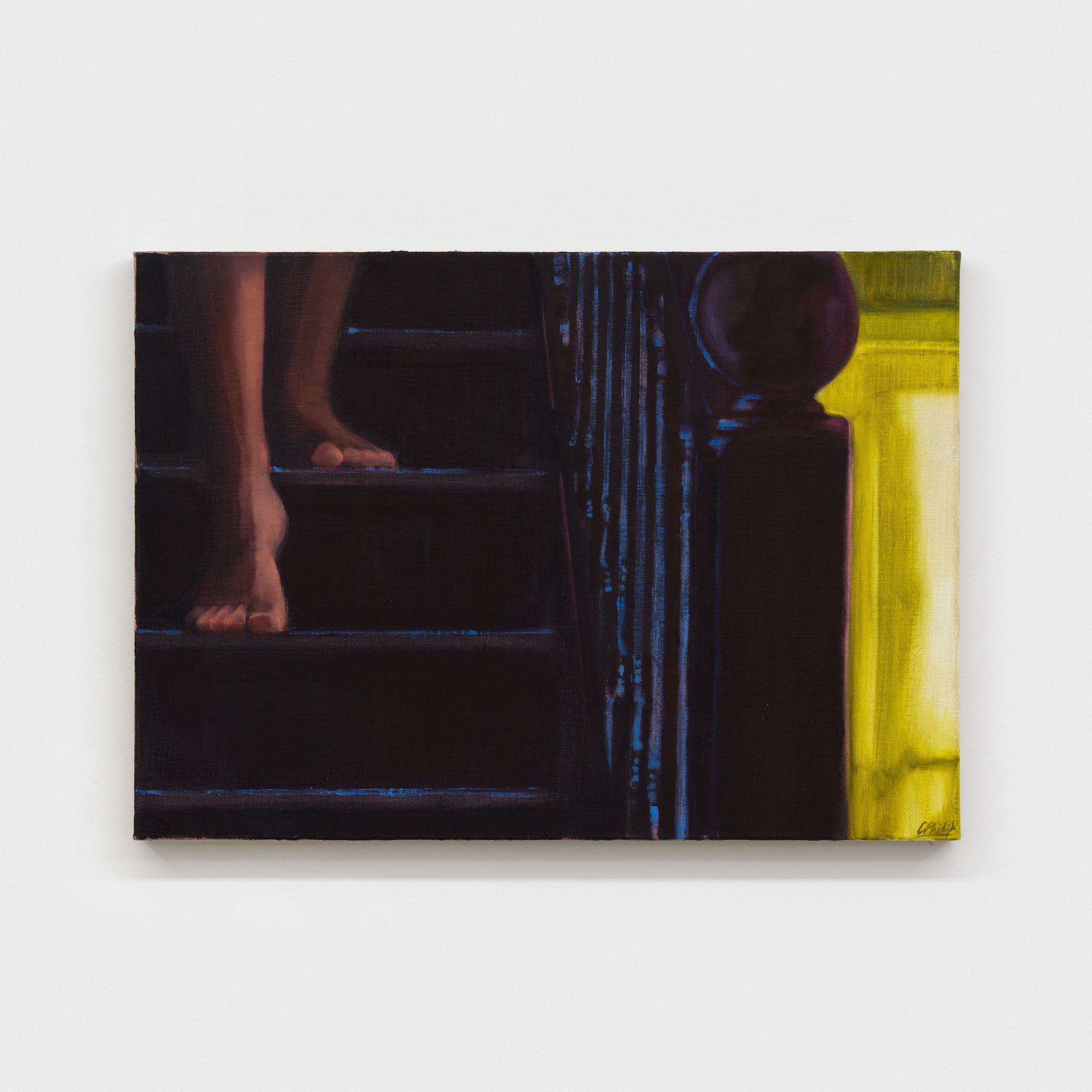
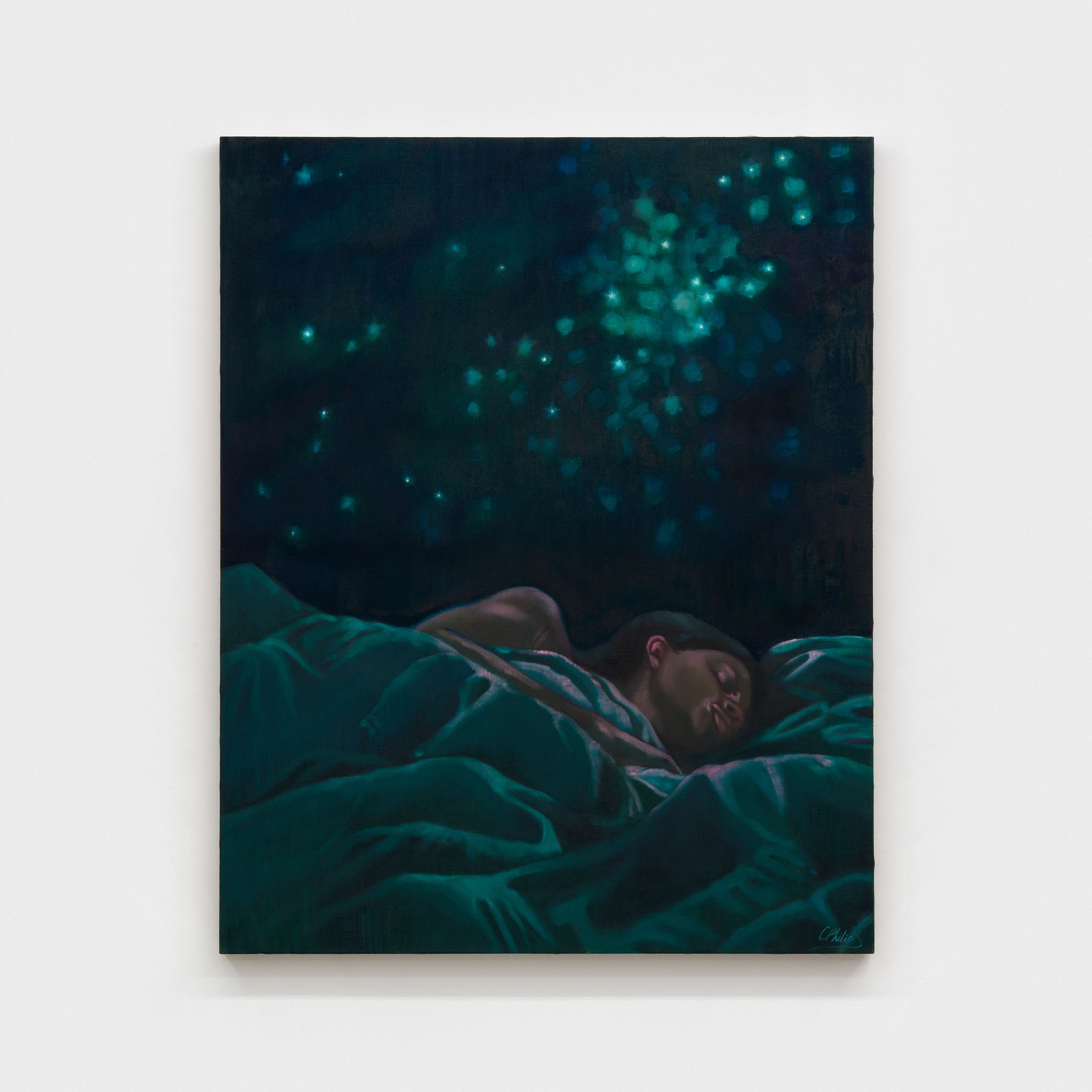
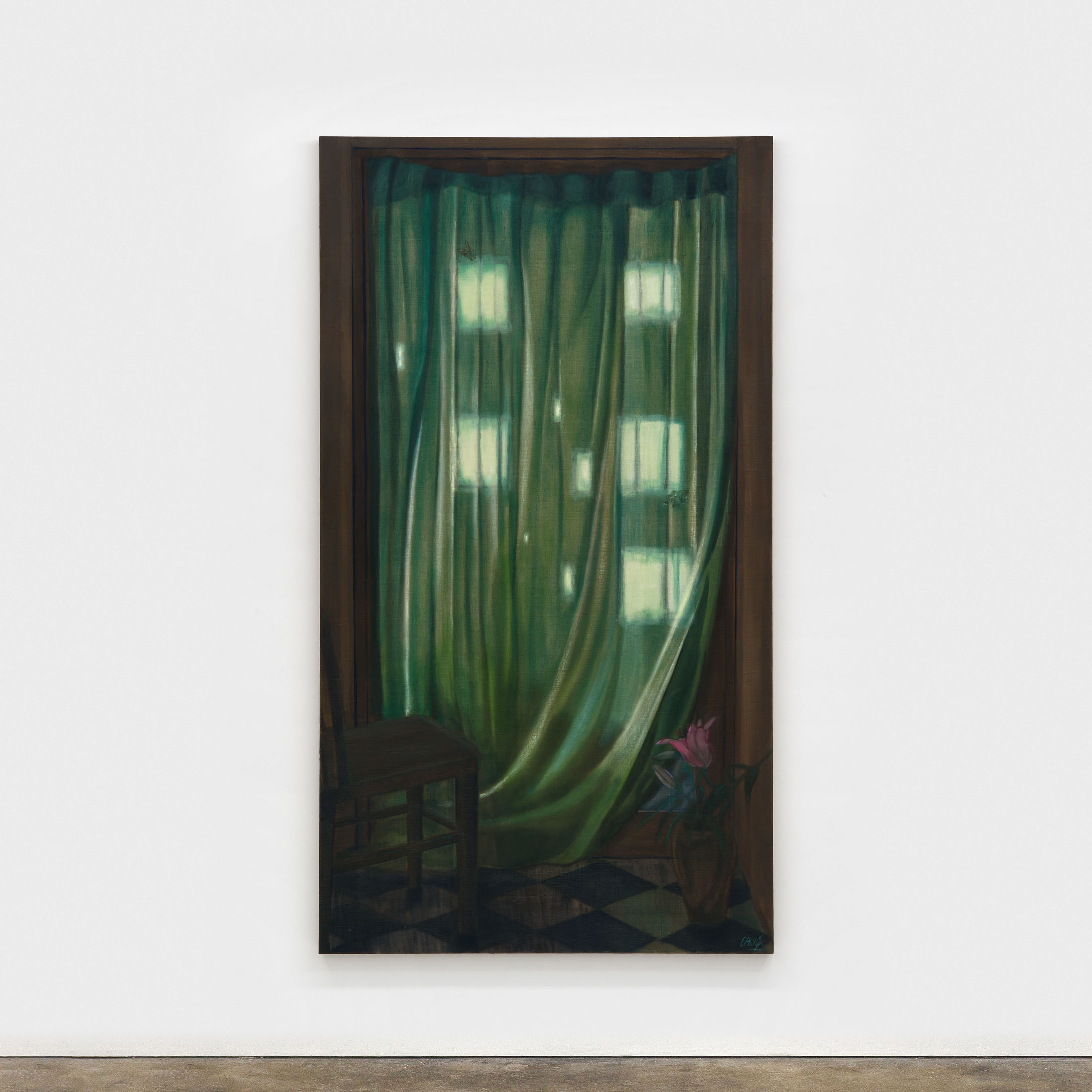
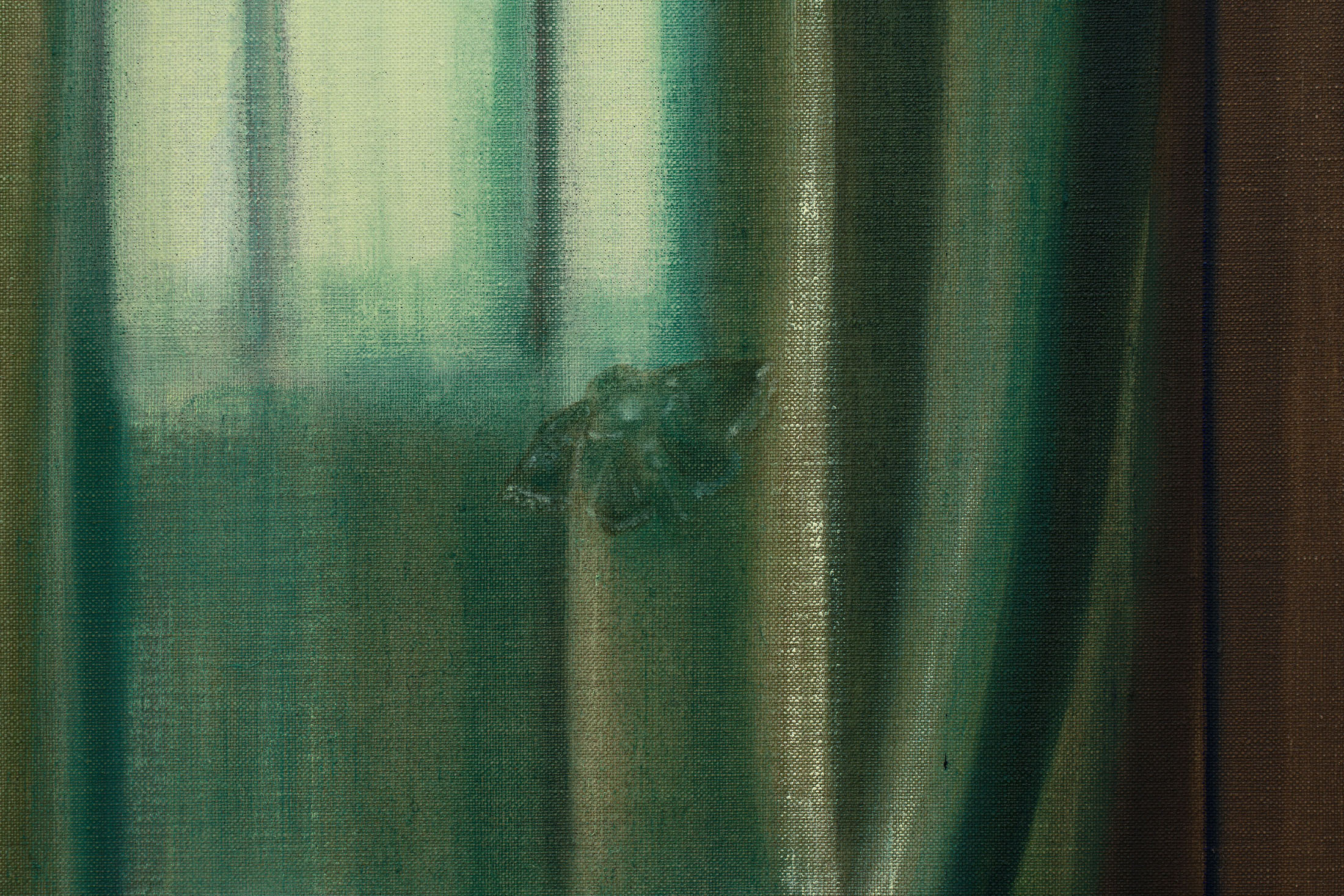
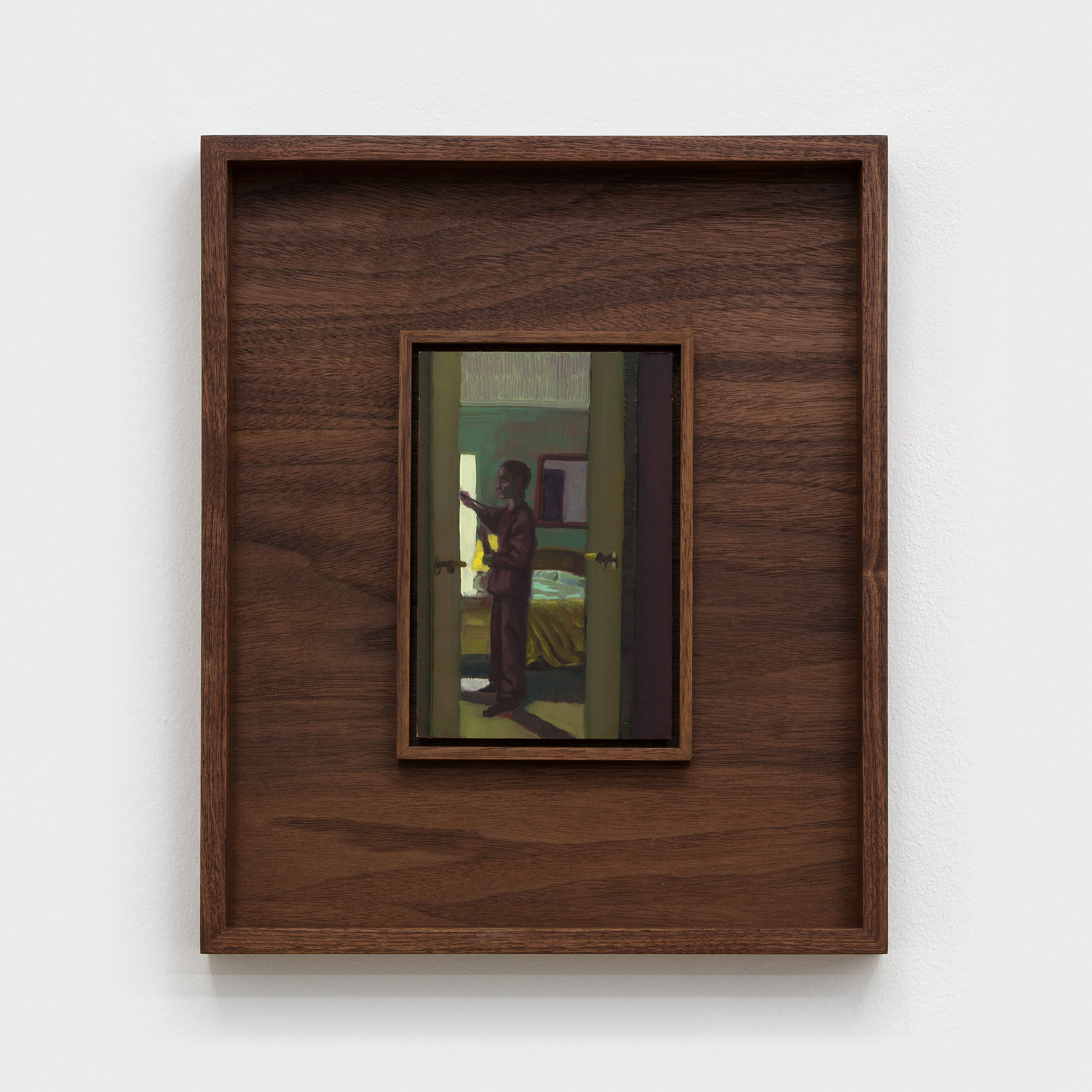
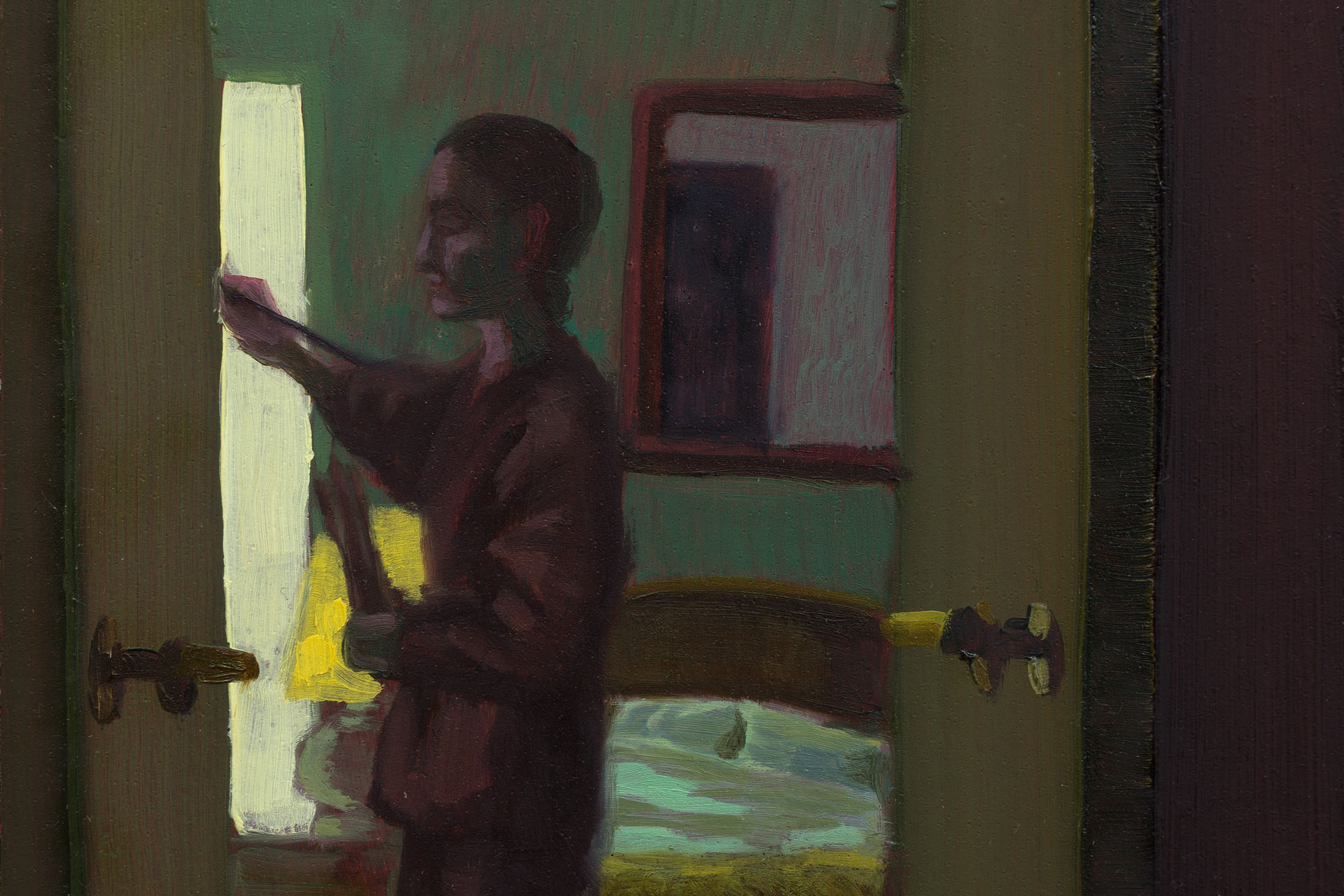
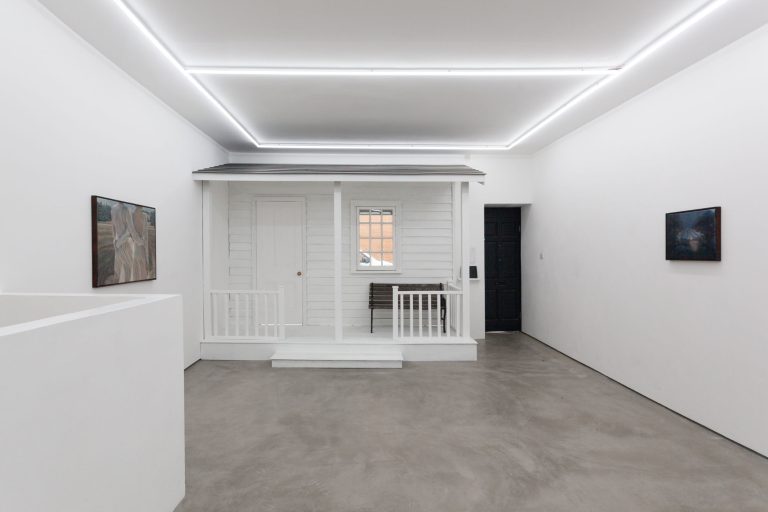
Public Gallery is pleased to present All the corners that are left, a solo exhibition by London-based artist Cece Philips. Across twelve paintings, Philips considers the home as an expanded portrait of the self, grappling with the discomfort of desire, visibility and voyeurism through an informed art-historical lens. Against the backdrop of Langston Hughes’ poem, Philips explores moments of self-discovery, mapping this process across domestic spaces. Her imagined interiors operate as both stage and subject, holding fractured reflections, moments of solitude, and portals through which different versions of the self might be accessed, comprising a formal study of the complexity of self-fashioning.
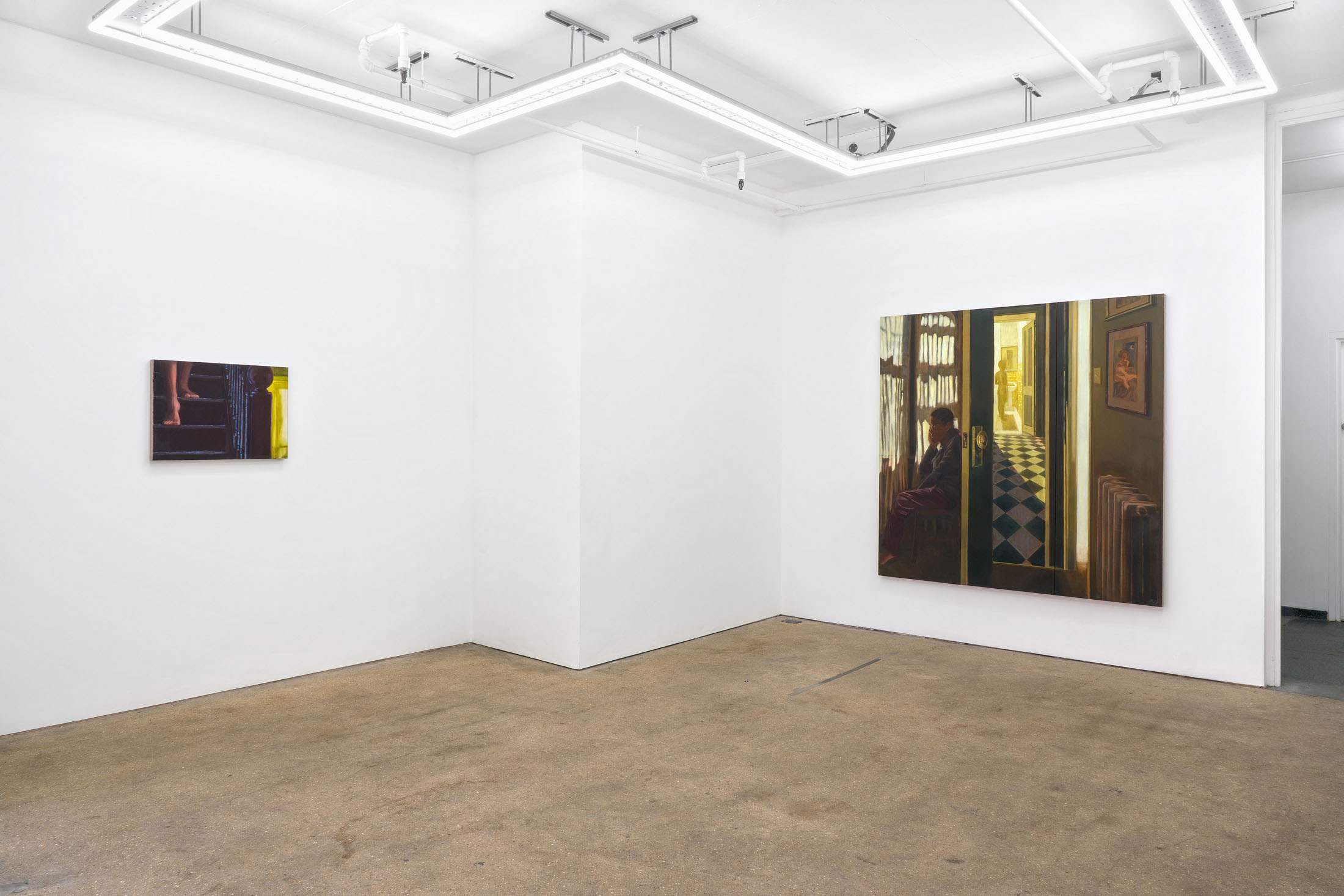
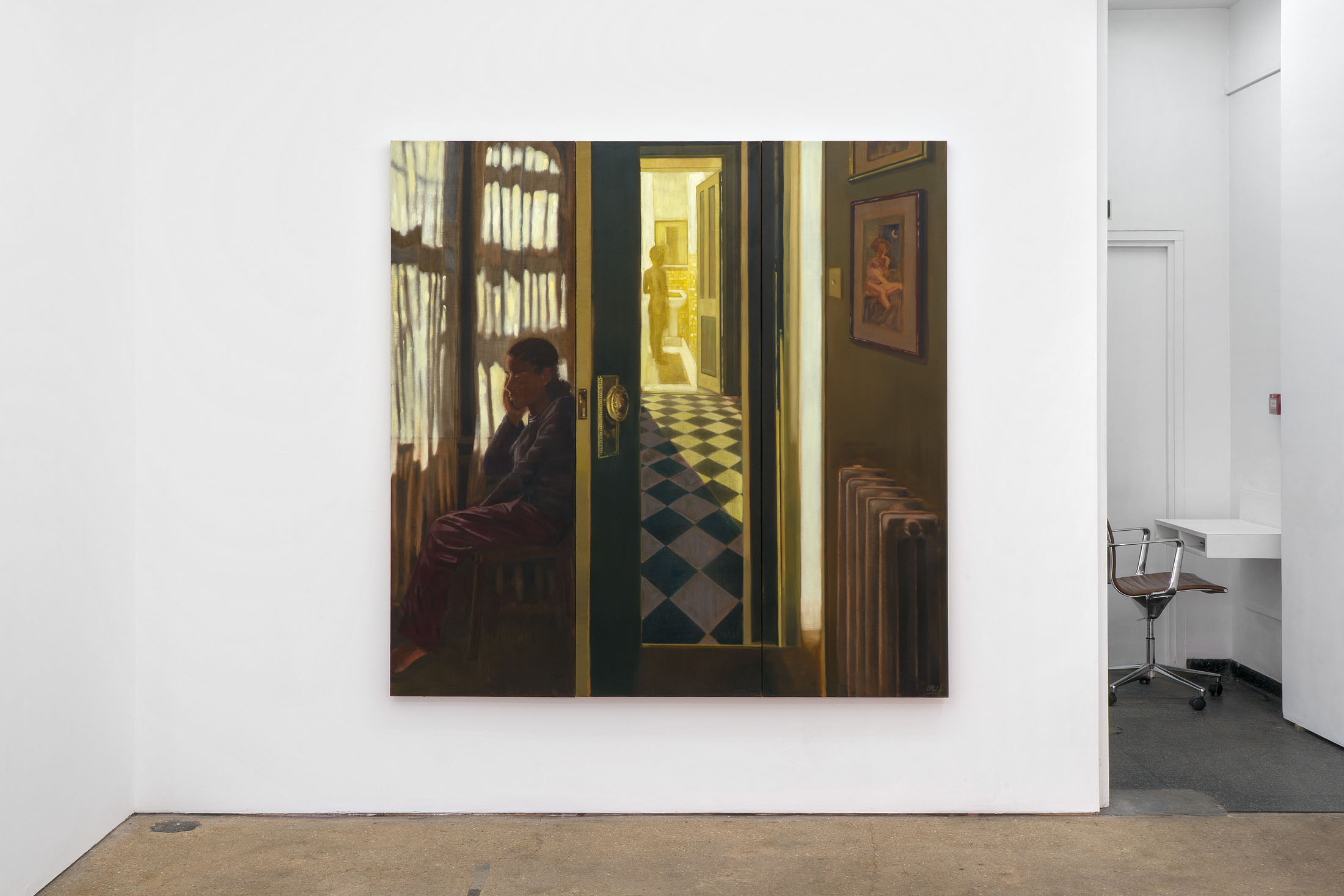
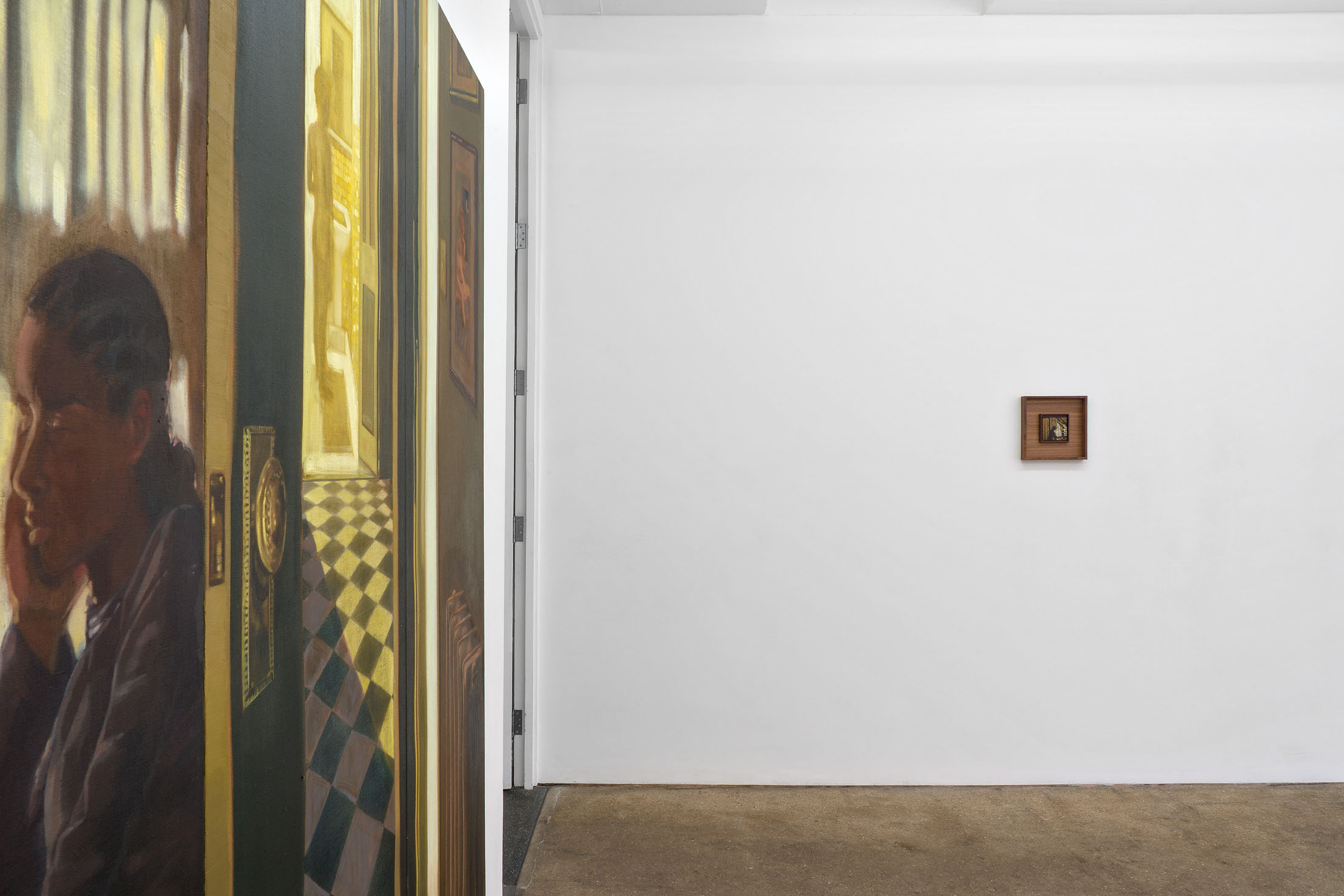
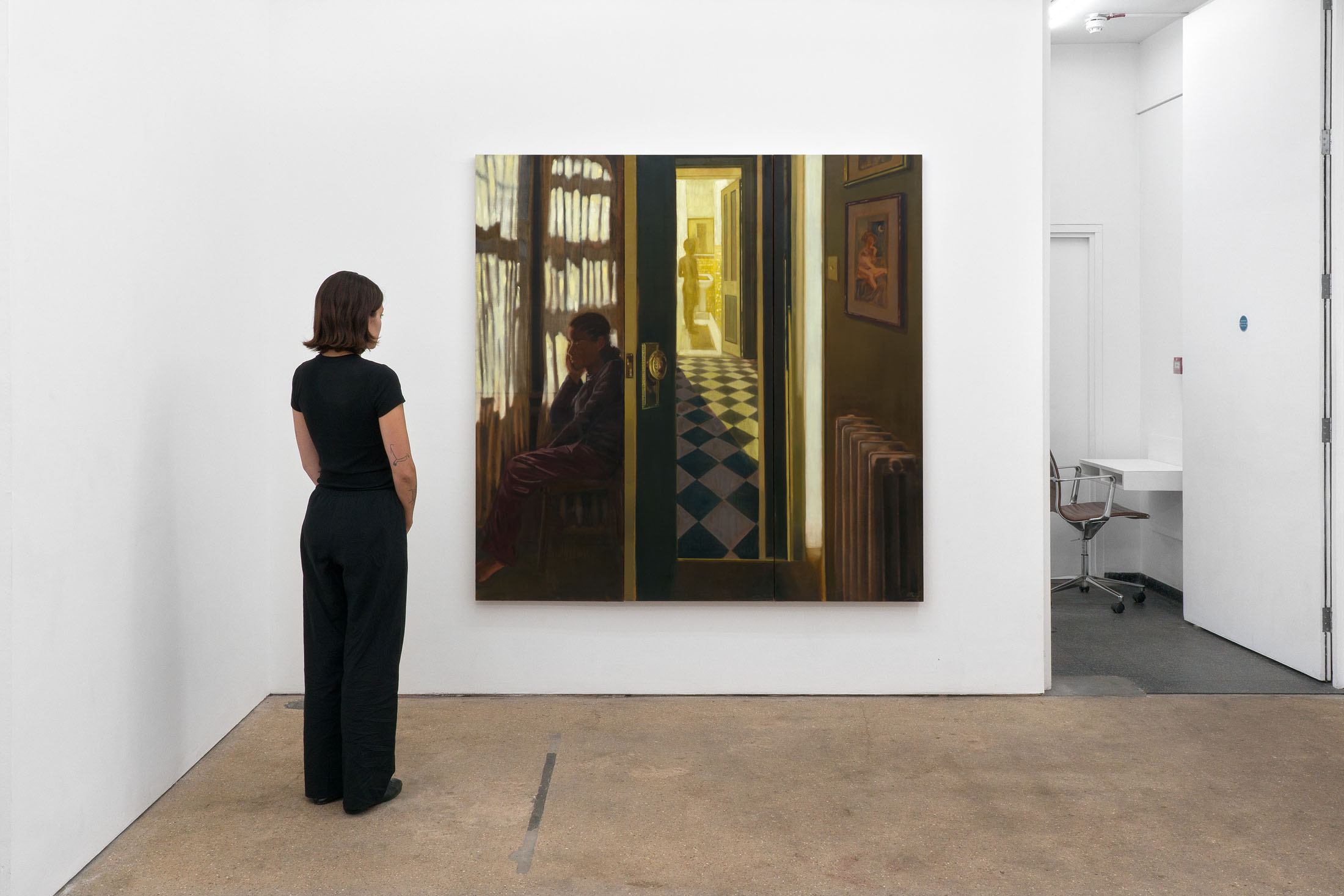
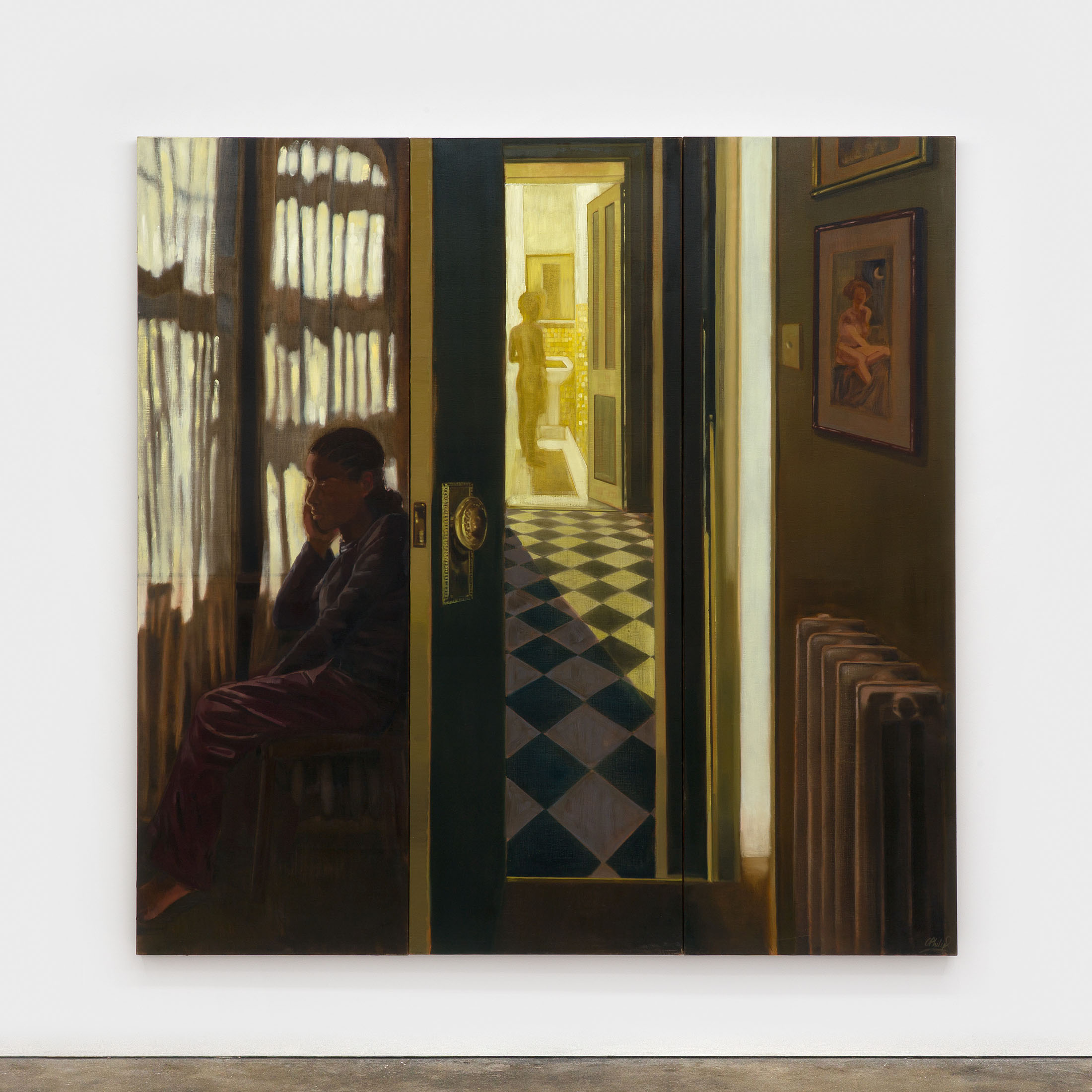
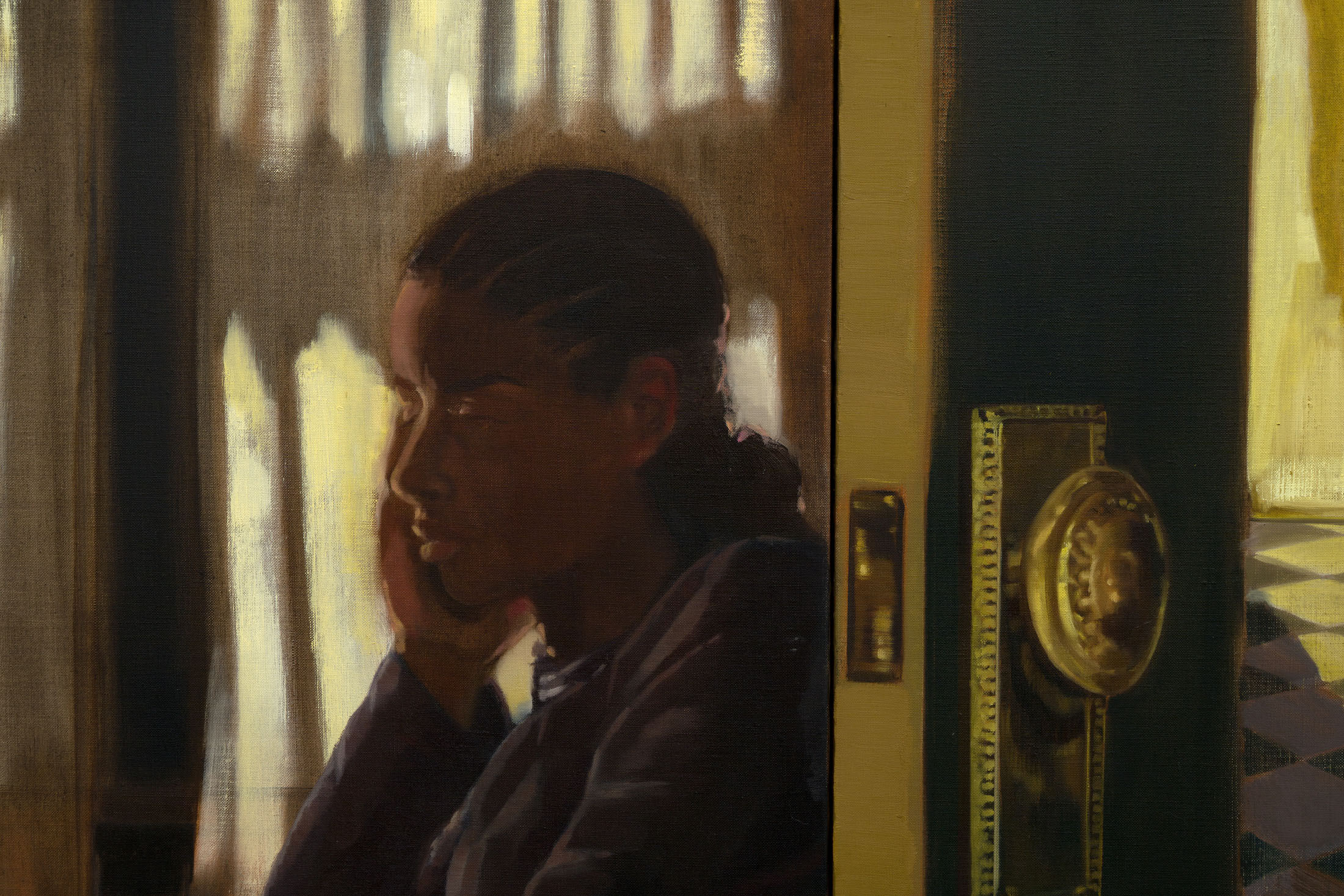
A three-panel painting titled Three women (2026) articulates the triangulation of gazes recurring throughout Philips’ work, framed by doorways, windows, curtains and mirrors. In the first panel, a figure meditates in partial darkness, illuminated by a curtained window. The second panel depicts a figure cast in shadow by a blinding yellow glow as she examines herself in the mirror, externalizing the act of self-reflection to a physical interrogation of the mirror’s image. The final panel depicts a seated figure, a painting within the image itself, a doubling of representation that collapses the space between the real and depicted.
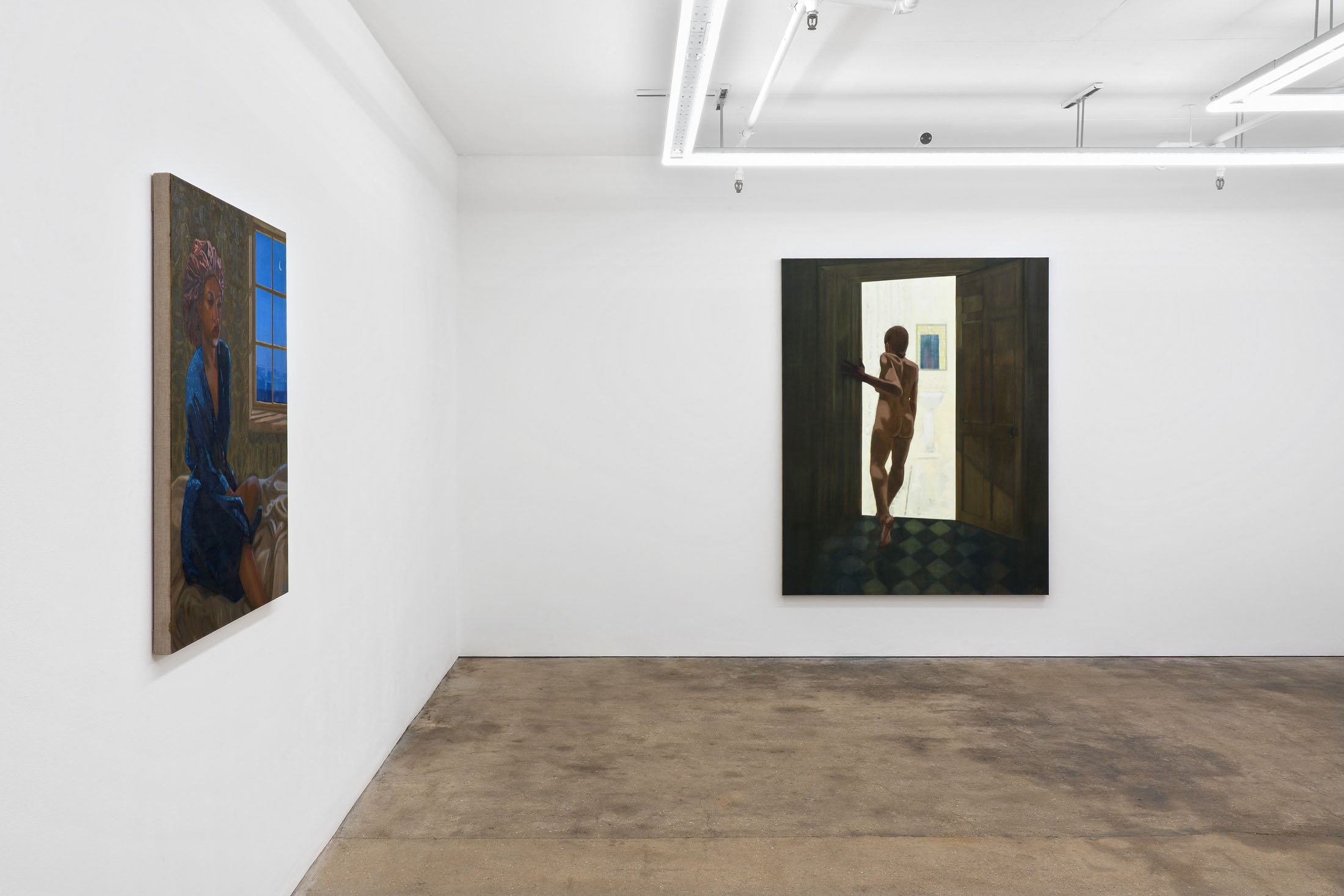
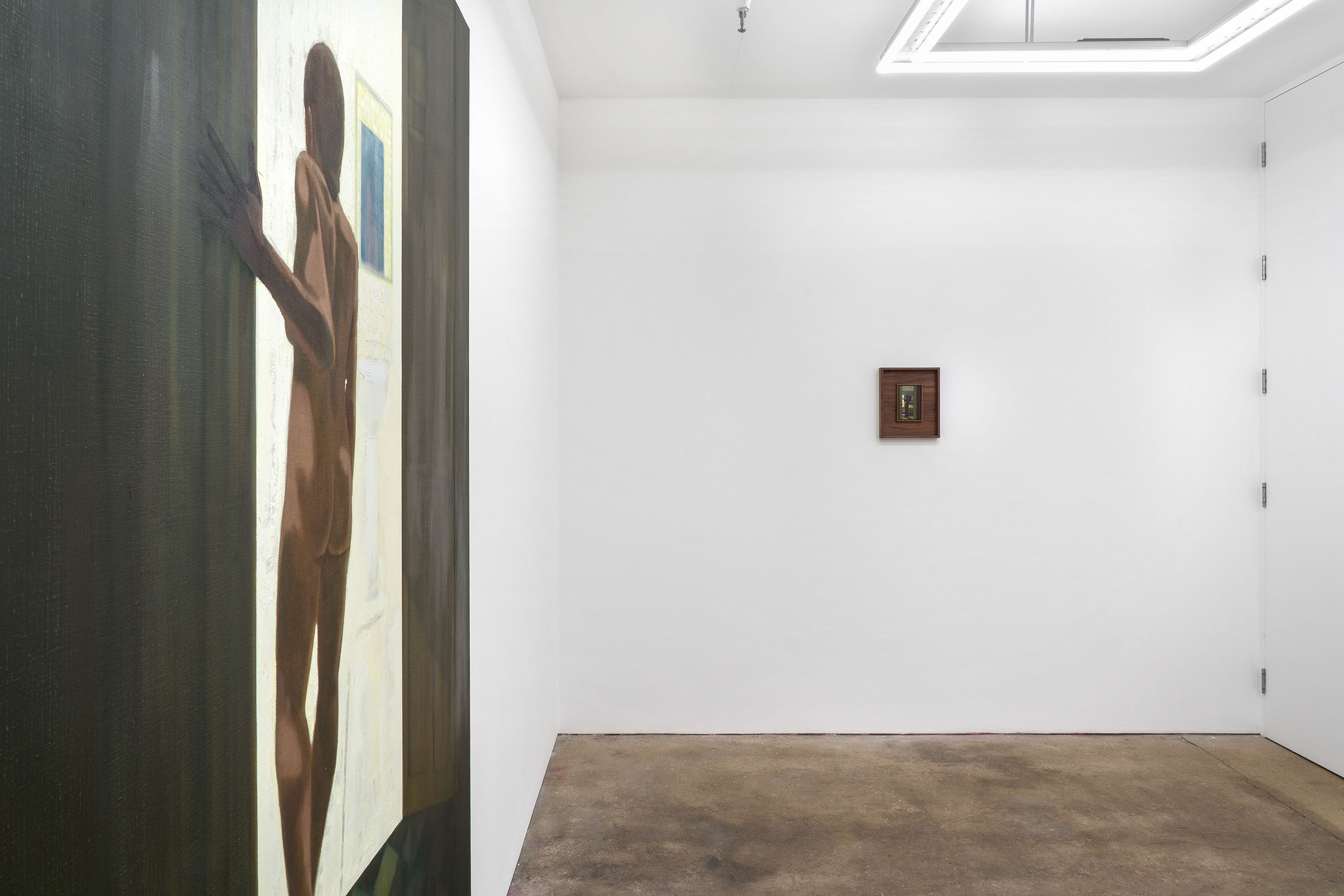
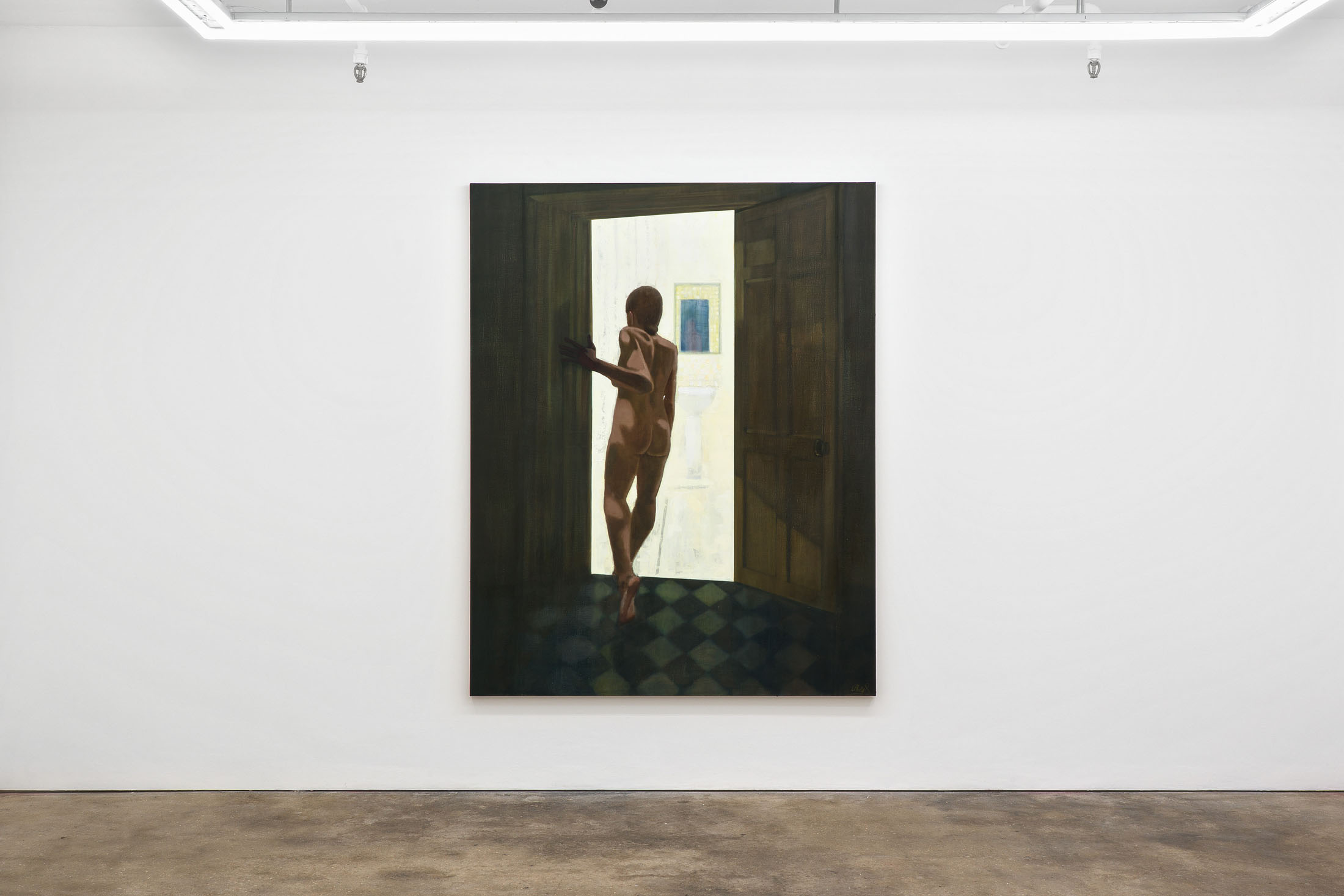
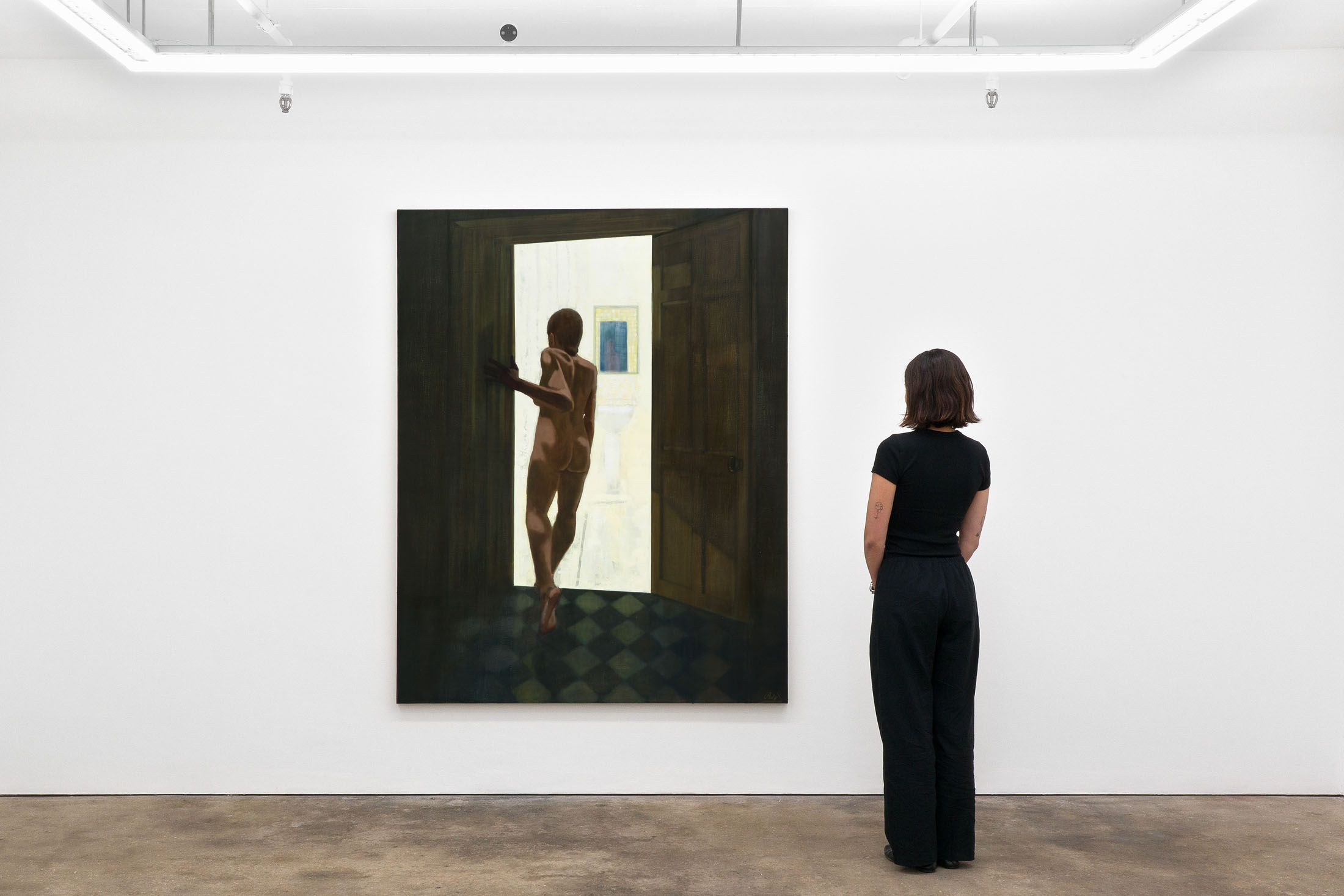
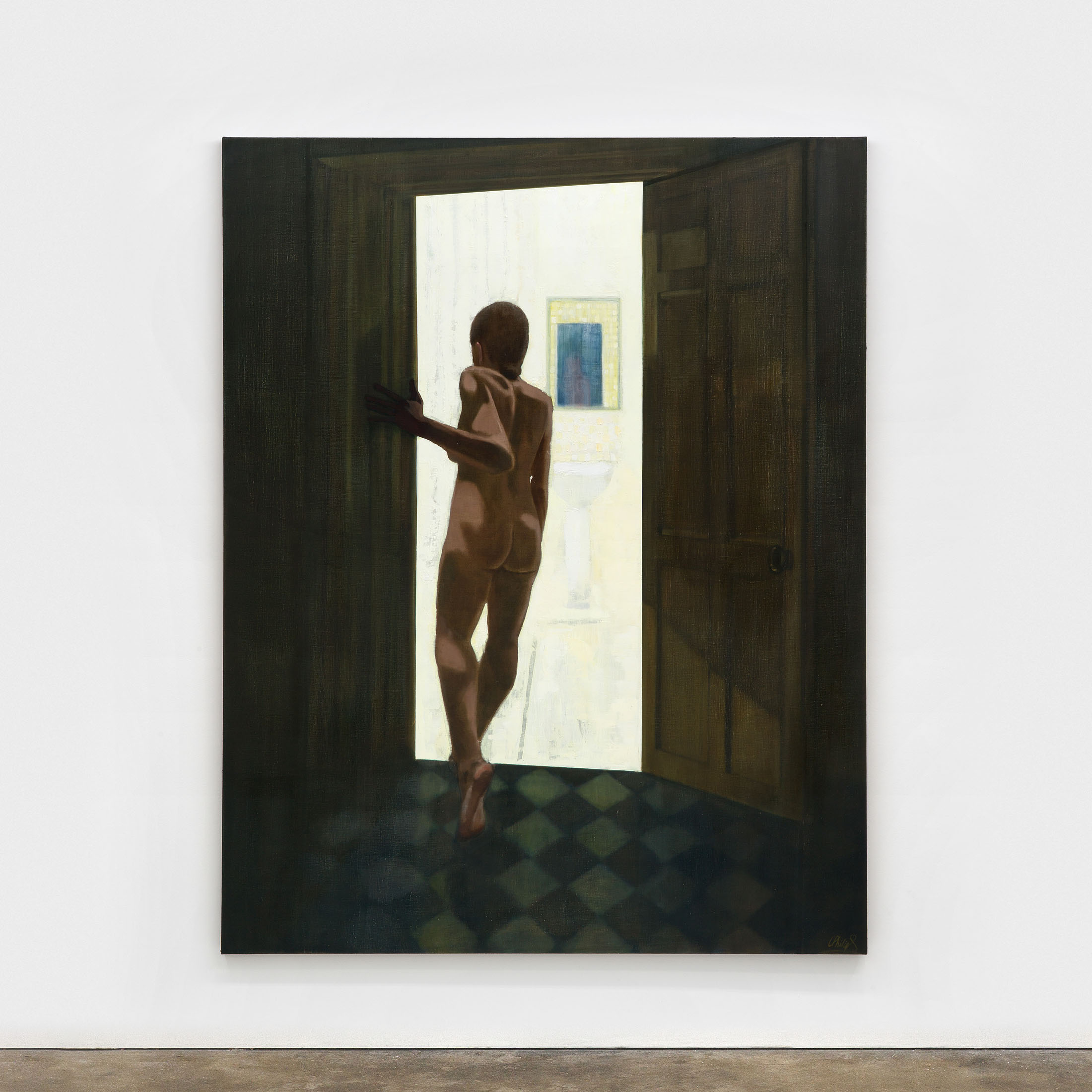
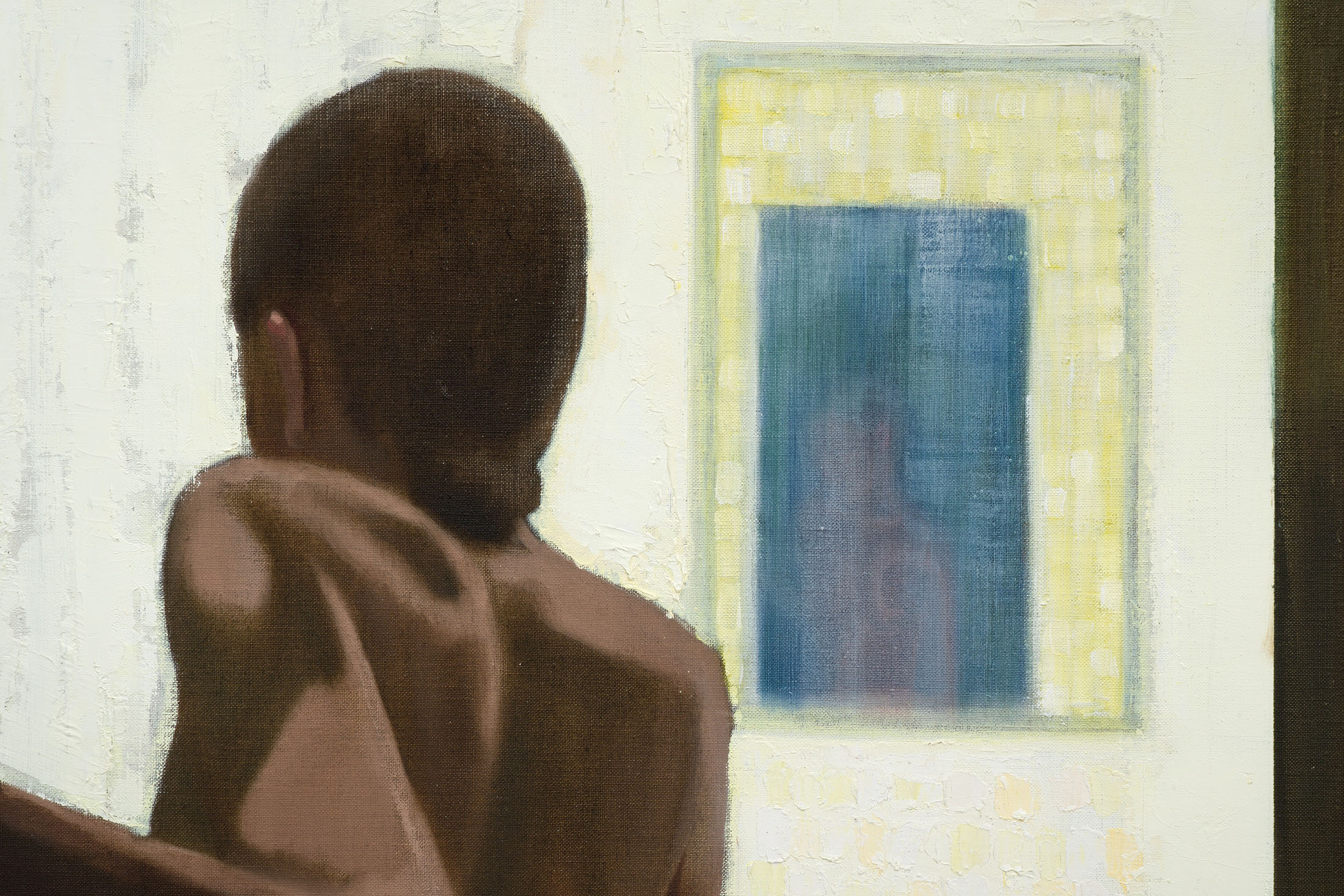
Across the exhibition, Philips examines the relationship between concealment and physical exposure. In The place where there is no darkness (2026), a nude figure steps towards an illuminated bathroom doorway, her silhouette hyper-exposed while the space itself remains withheld beneath layers of thick impasto. For Philips, nude figures are often the least psychologically revealing.
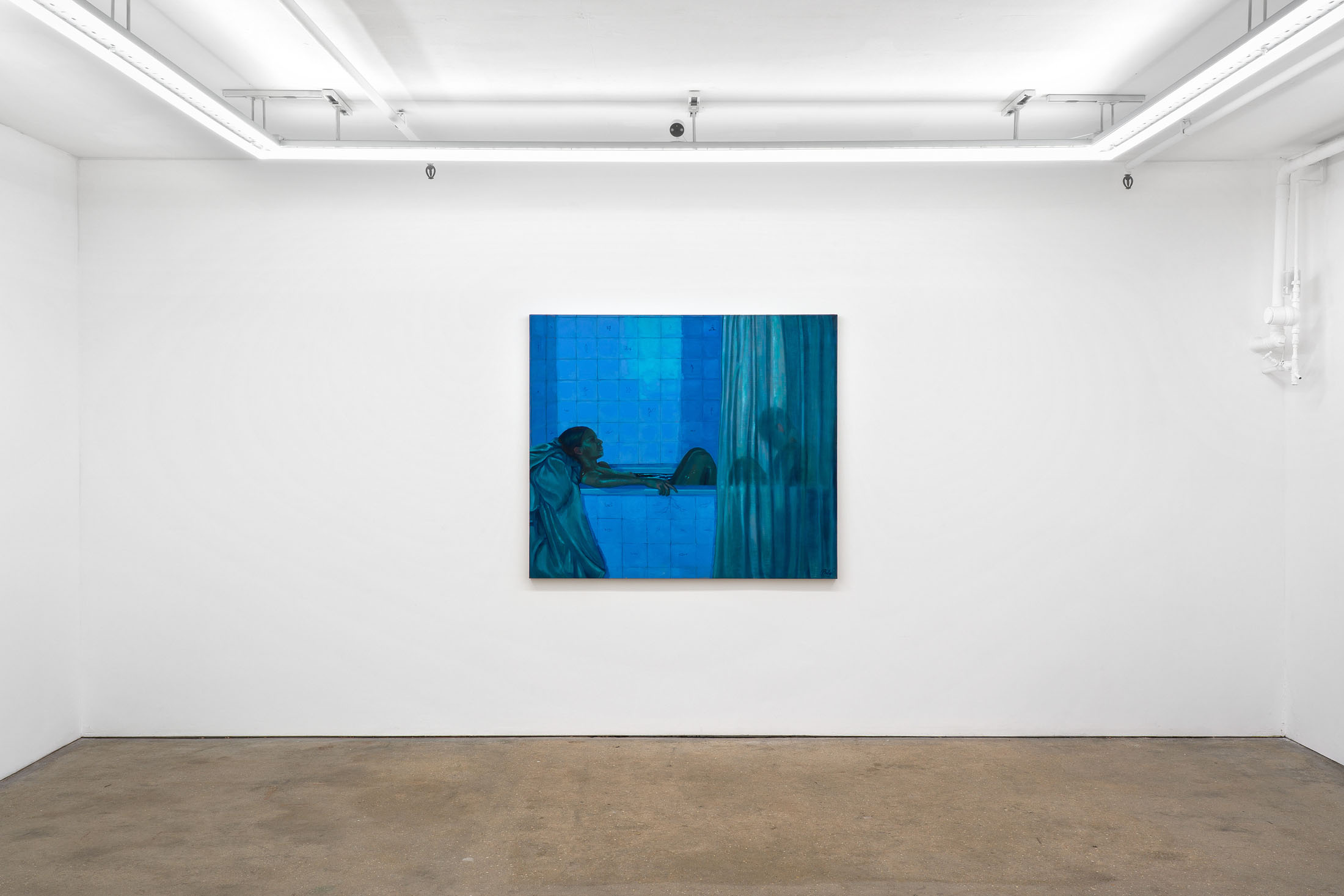
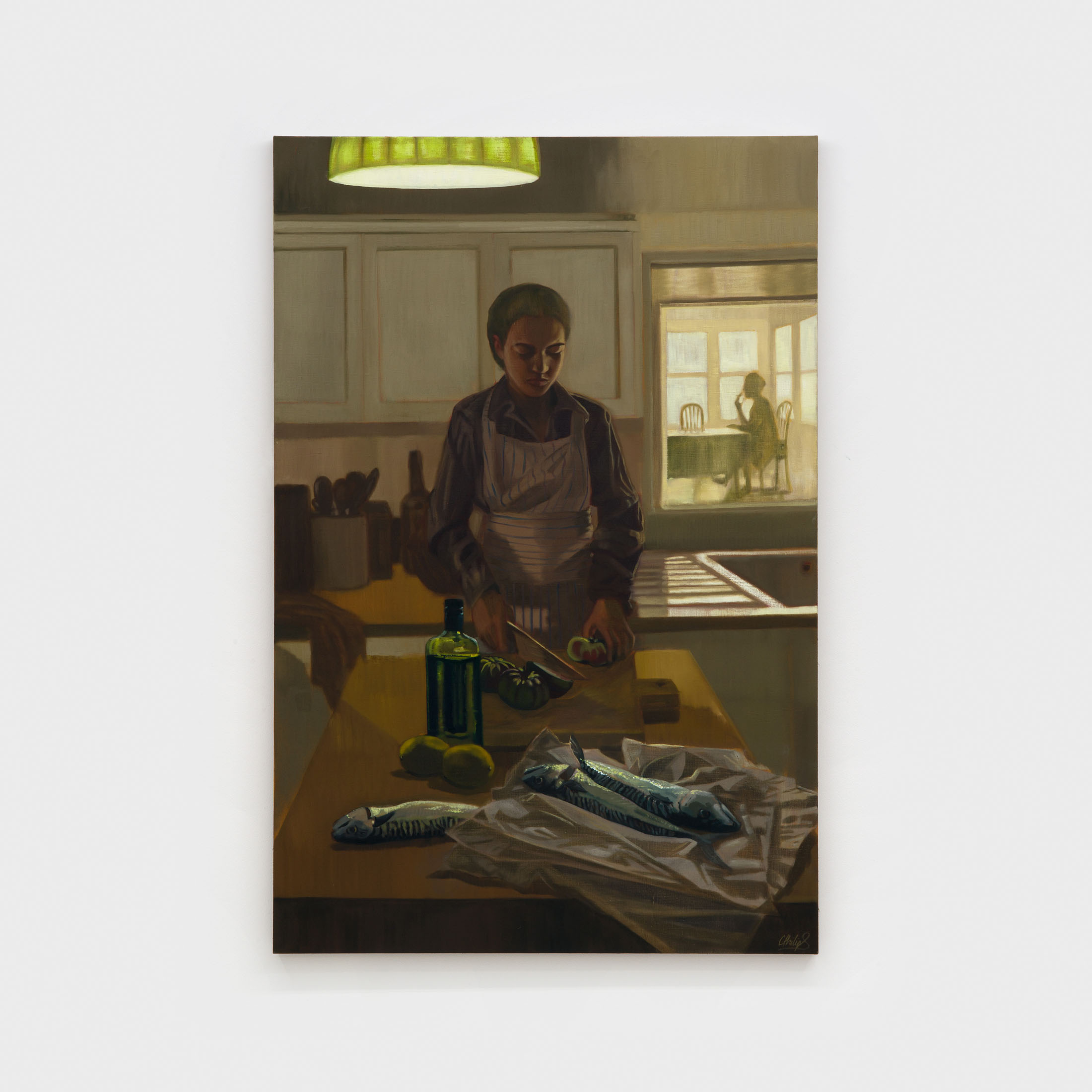
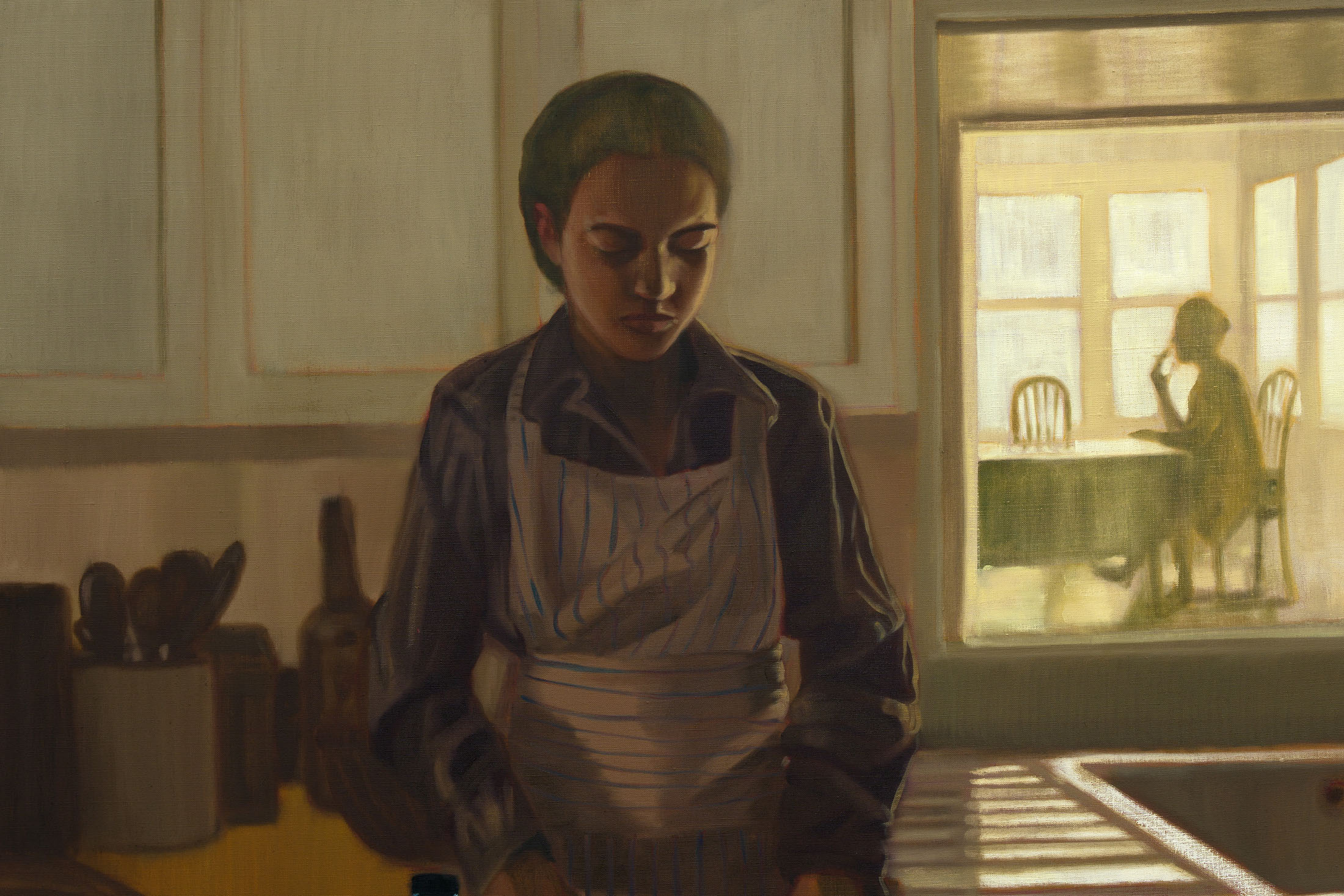
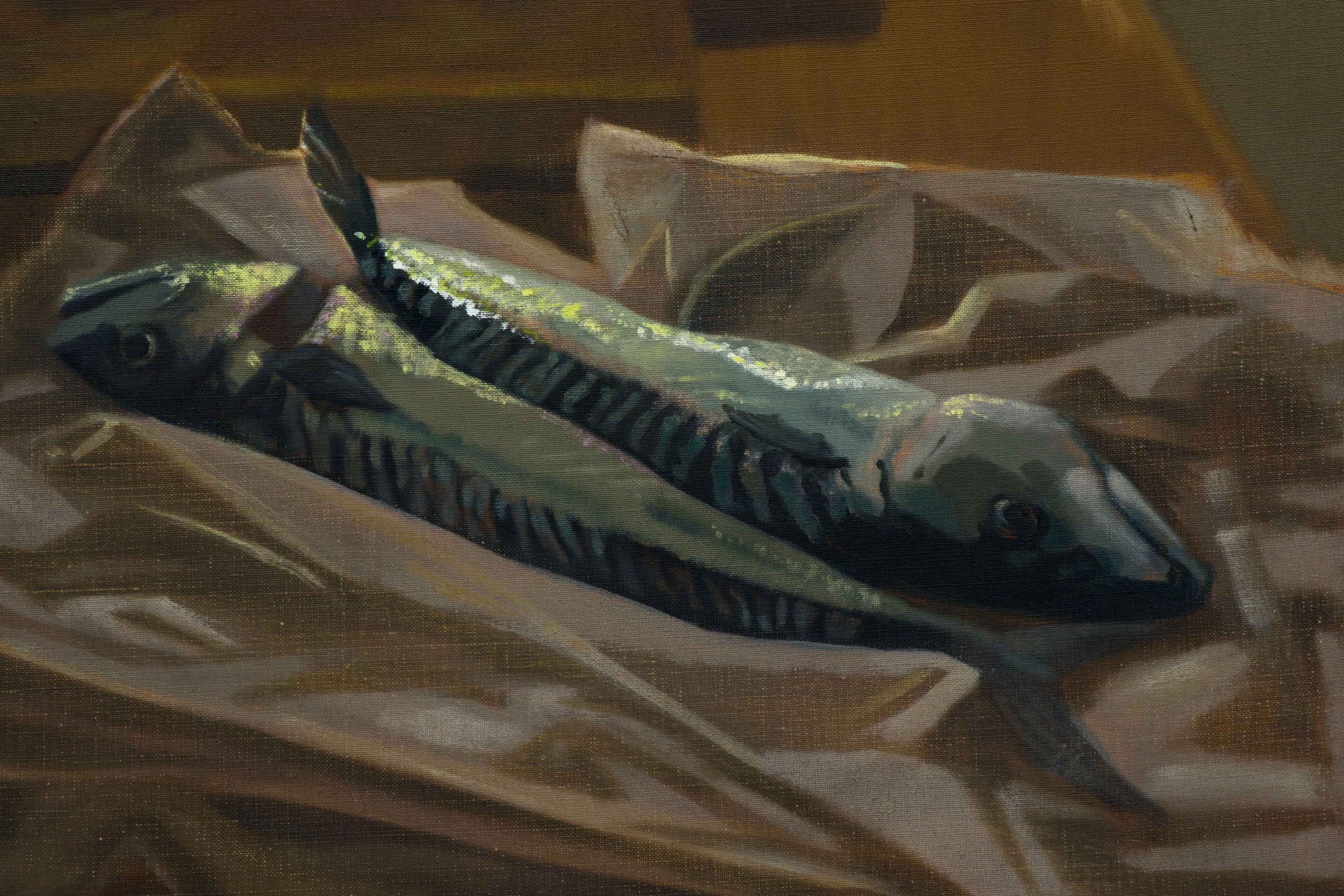
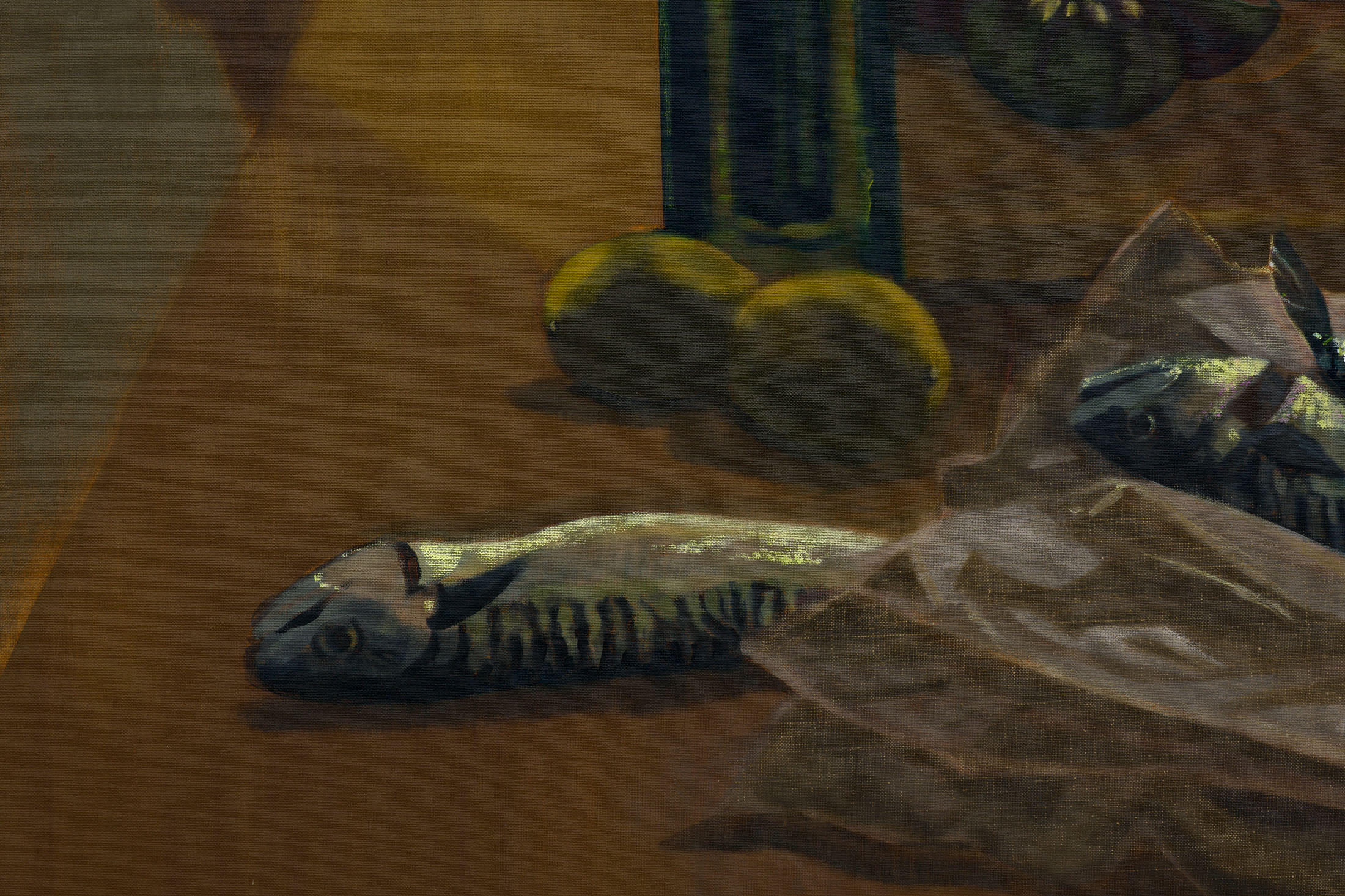
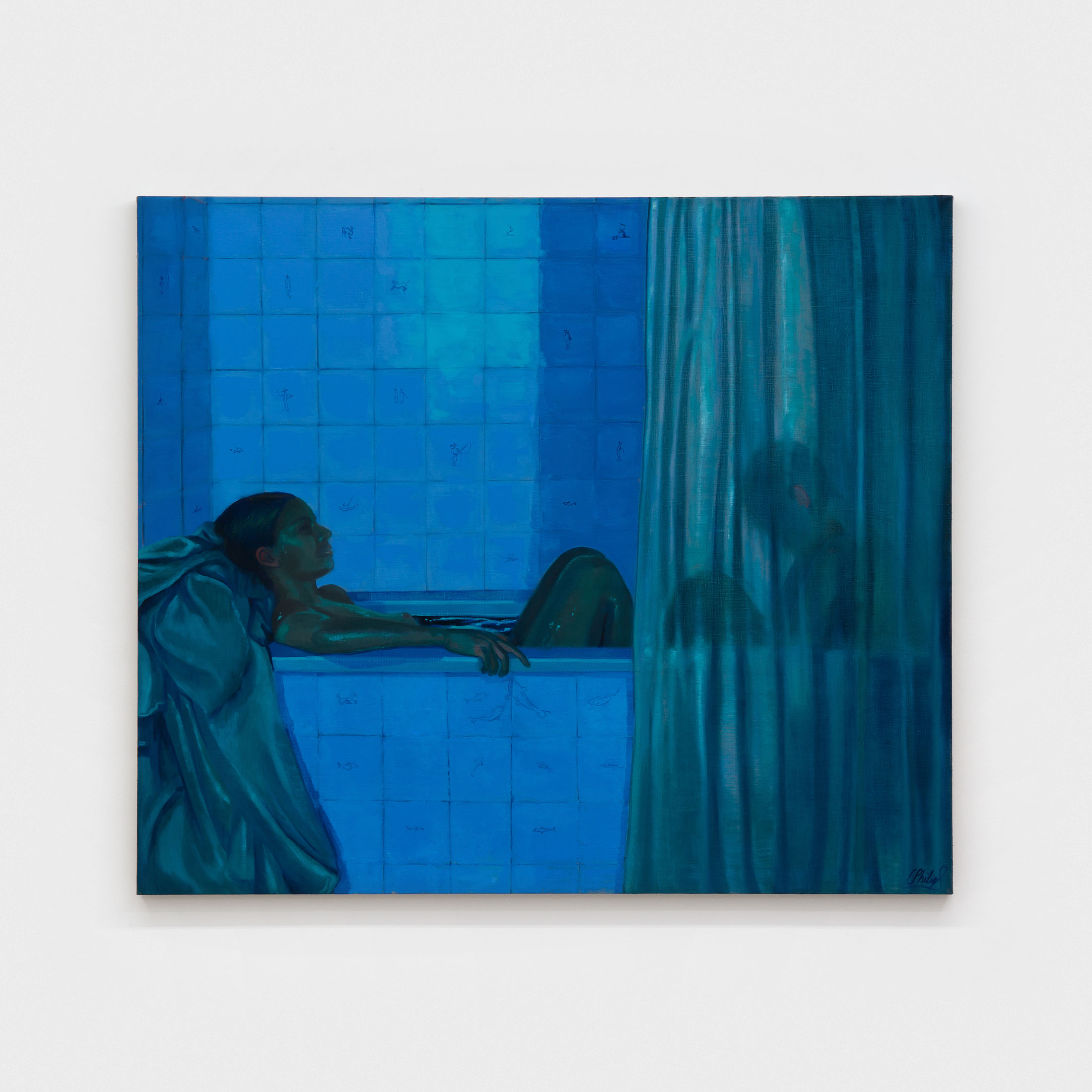
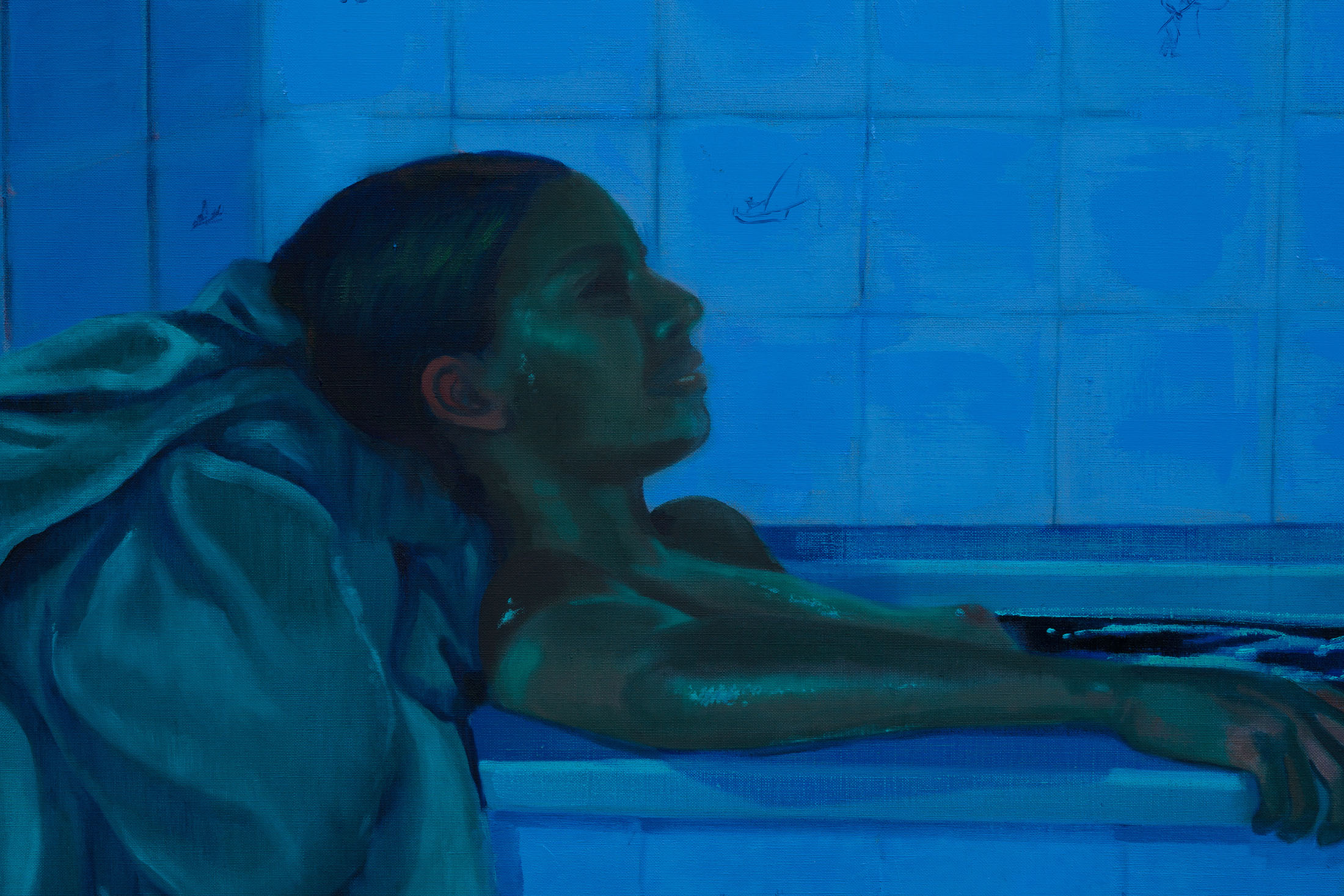
In To Catch a Fish (2026), a reclining female figure lounges in a bathtub, her legs speckled with neon-blue drops of water. The outline of a second figure, partially concealed behind a shower curtain, articulates Philips’ idea of the shadow: an intimate, though perhaps imagined, meeting with a companion or alter-ego. Fish swim across the Delft tiles towards the woman’s gripped hand, further disrupting the distinction between physical space and imagined encounter. In Hungry Shadows (after Velázquez) (2026) the shadow appears seated and smoking in the sunroom; the fish on the kitchen counter face opposite directions, a motif that gestures to an internal duel.
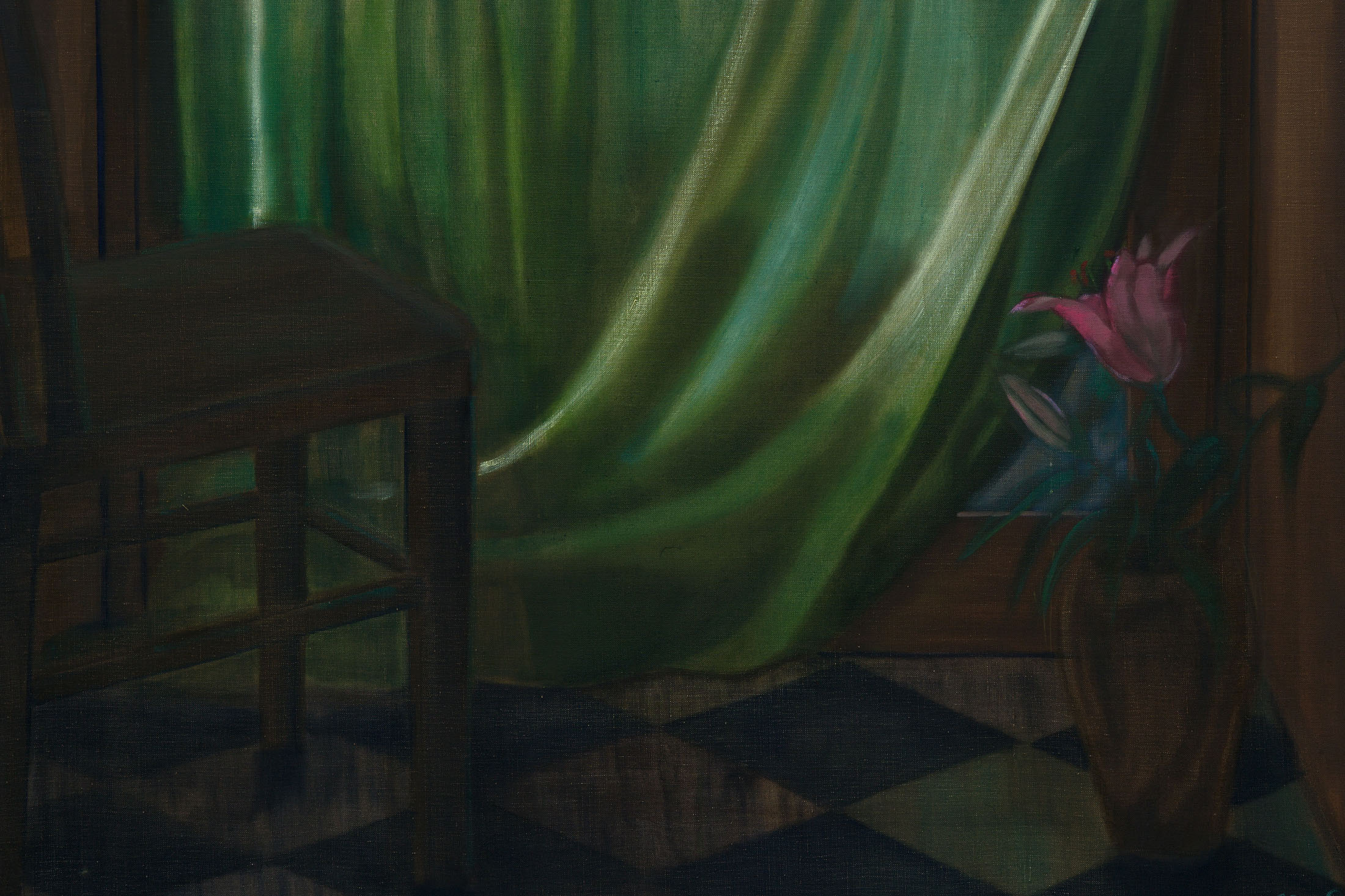
Gaston Bachelard describes ‘the corner’ as a site of solitude, refuge, and imaginative withdrawal. In Philips’ paintings, interior spaces are considered as both physical environments and projections of those who inhabit them. Works such as These Unhomely Walls (2026), referencing The Yellow Wallpaper by Charlotte Perkins Gilman, demonstrate how the boundaries of the real are repeatedly disrupted by animated spaces that operate more like dreamscapes than real spaces, as if responding to the psychological state of the depicted subject.
Philips’ work equally interrogates the construction of the gaze and historical representations of women, drawing deliberately on depictions that generate unease. Her appreciation of Paul Gauguin, entangled with histories of colonial and imperial violence, is filtered through the
critical lens of Griselda Pollock, while her references to Johannes Vermeer inform her attention to technical details as well as the use of light as an affective or psychological agent.
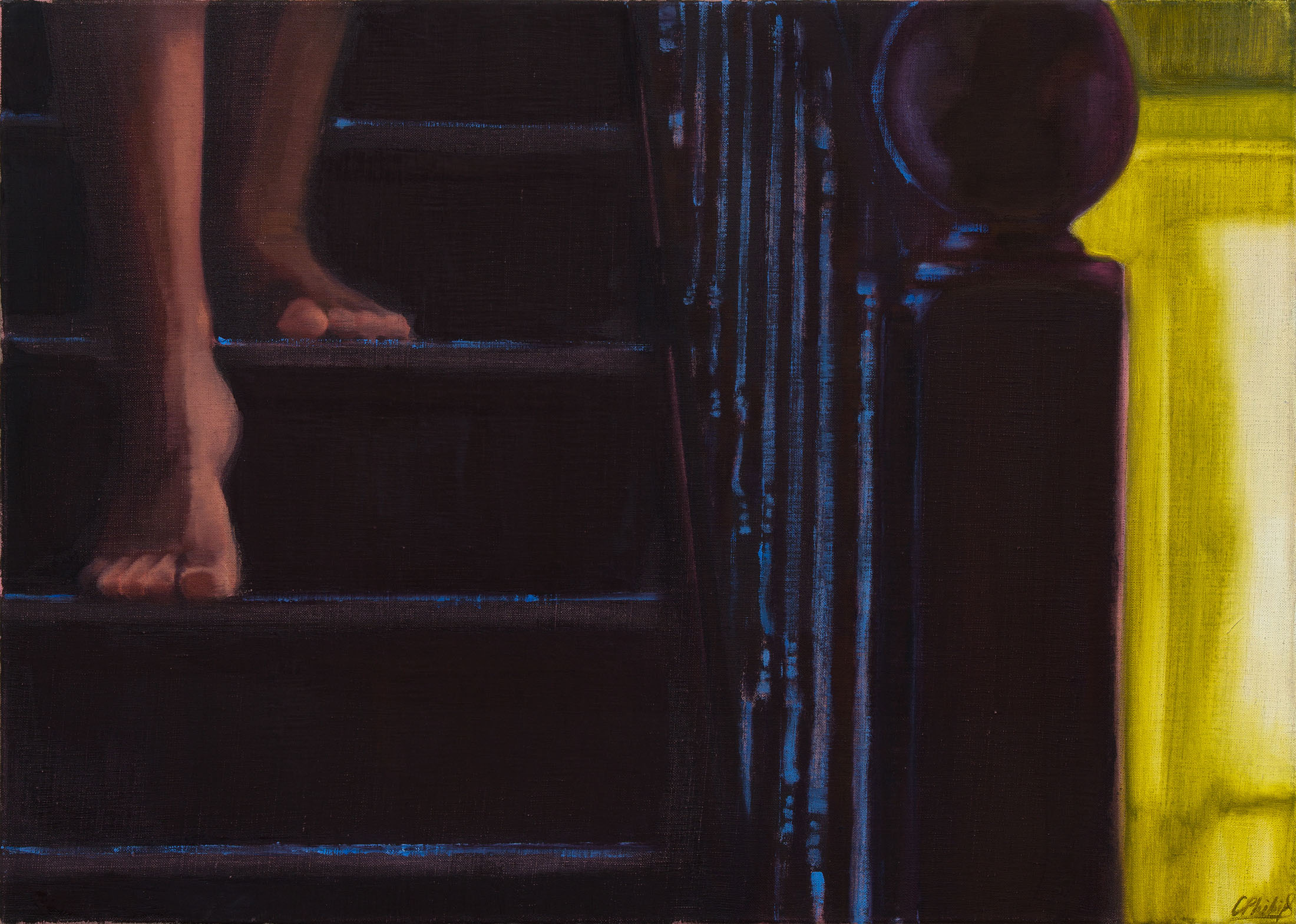
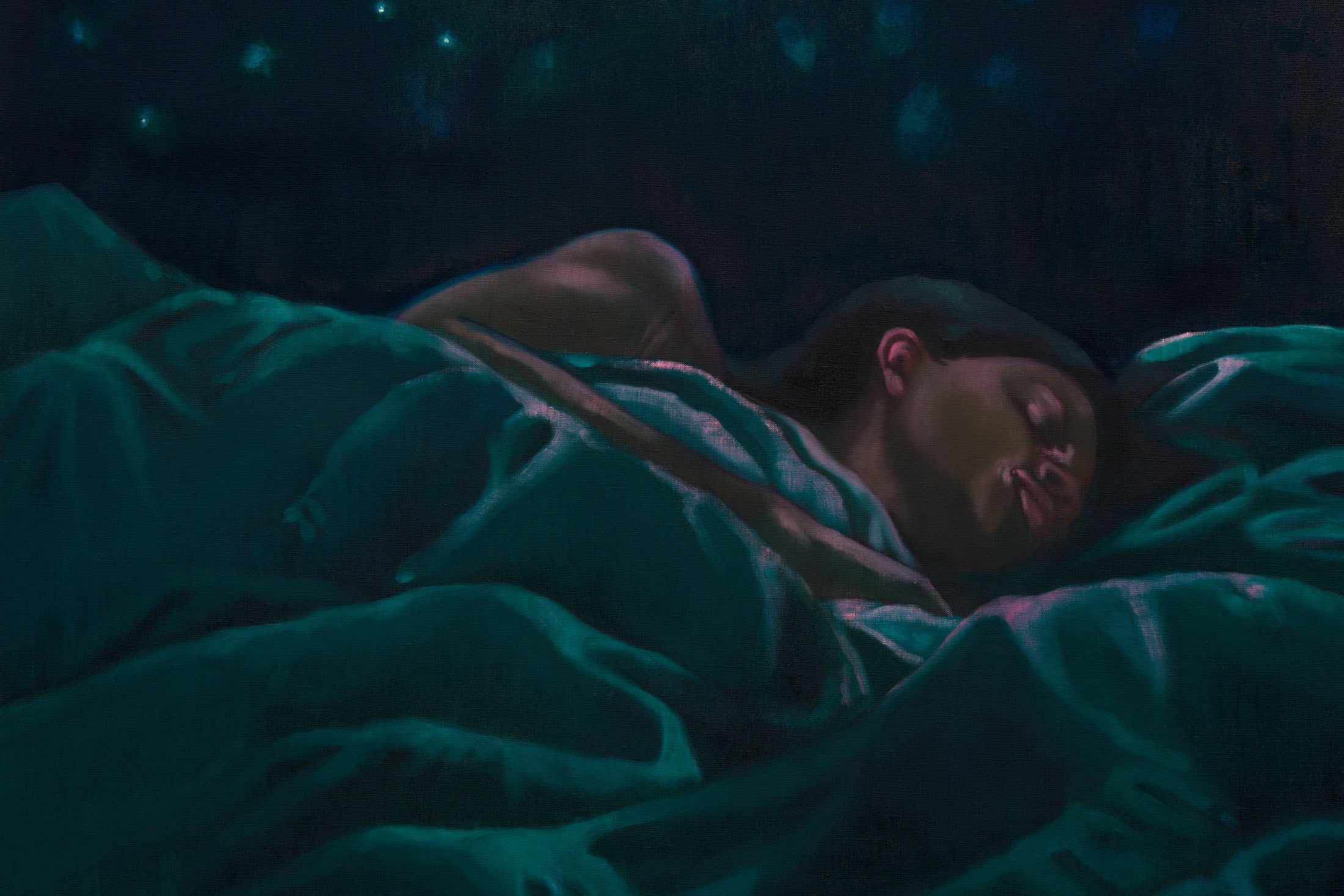
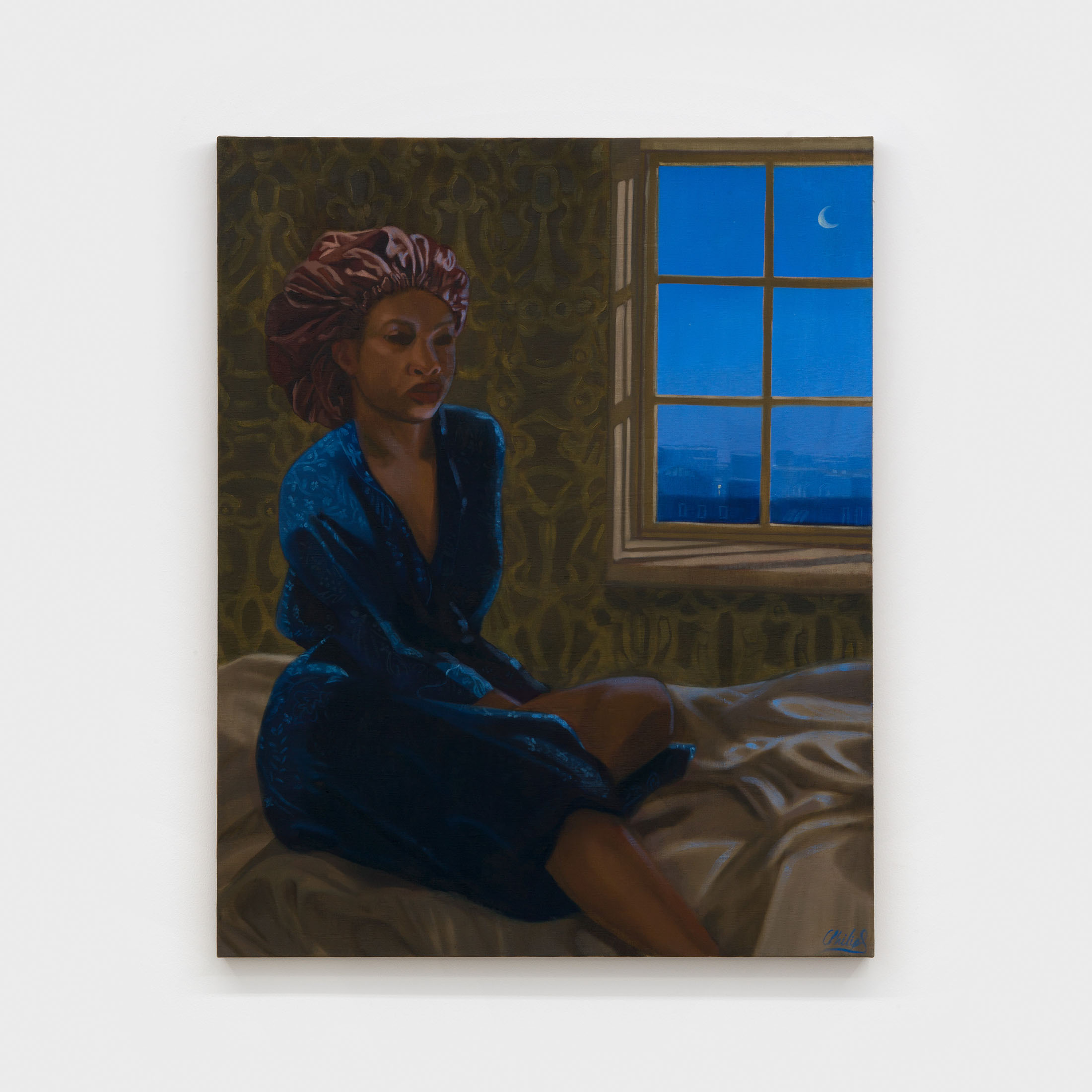
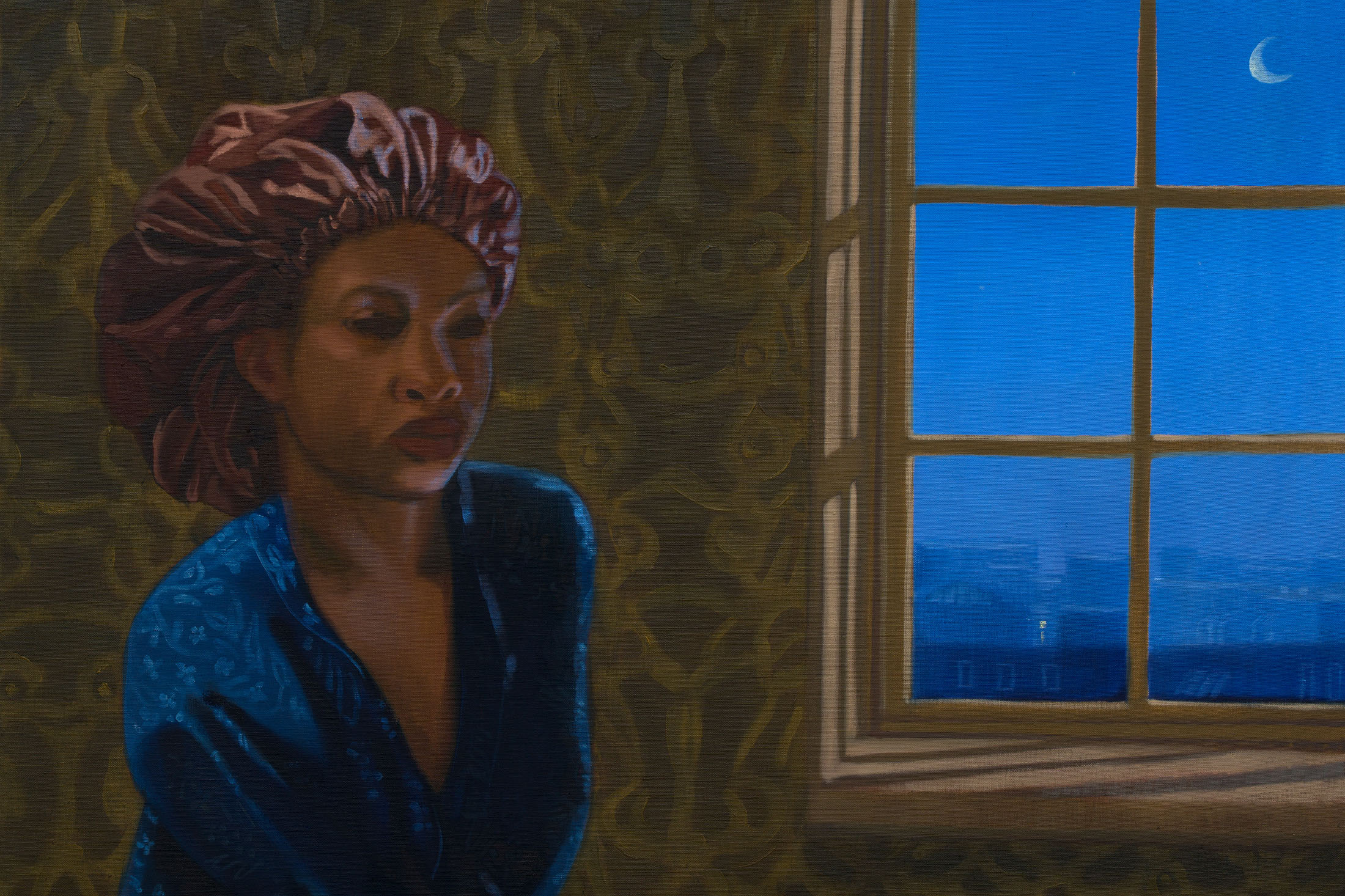
The exhibition follows the structure of a circadian rhythm, the body’s internal master clock often influenced by environmental light. Moving between dark and lit spaces, the works linger in the twilight hours of a circadian cycle, mapping the contours of a house and containing within it the performance of domestic life: hallways glimpsed beyond doors, bathrooms in the evening, a kitchen counter at dinnertime, a creaky wooden staircase, or an unmade bed at night. By likening the house to the inner workings of the self, she constructs spaces in which light and darkness compete and coexist, where spaces become no more real than the lives of those who inhabit them. Sharing sentiment with Audre Lorde, darkness is invited as a welcome friend, a protective cover who cloaks her figures against the violence of visibility.
Cece Philips (b. 1996, London, UK) lives and works in London, UK. Recent solo and two person exhibitions include The Wall, Almine Rech, Brussels (2025); Conversations Between Two, Peres Projects, Milan (2024); Opening of Digestif (with Hettie Inniss), Palazzo Monti, Brescia (2024); Walking the in Between, Peres Projects, Seoul (2023); The Night Has A Thousand Eyes, Peres Projects, Berlin (2022); Between the Dog and the Wolf, ADA Contemporary, Accra (2022); and
I See in Colour, HOME by Ronan McKenzie, London (2021). She has participated in group exhibitions at Hauser & Wirth, London; GRIMM, Amsterdam; Harper’s, East Hampton; Cob Gallery, London; and Soho Revue, London. Recent residencies include TaC, Torre al Cerro (2025) and Palazzo Monti, Brescia (2024). Permanent collections include Rudin DeWoody Collection, West Palm Beach, USA; AMOCA, Cardiff, Wales, UK; Kistefos Museum, Jevnaker, Norway; Sveaas Art Foundation, Oslo, Norway; Sixi Museum, Nanjing, China; Palazzo Monti Collection, Brescia, Italy; Fournier Collection, Paris, France; and Arriola Foundation, Madrid, Spain.