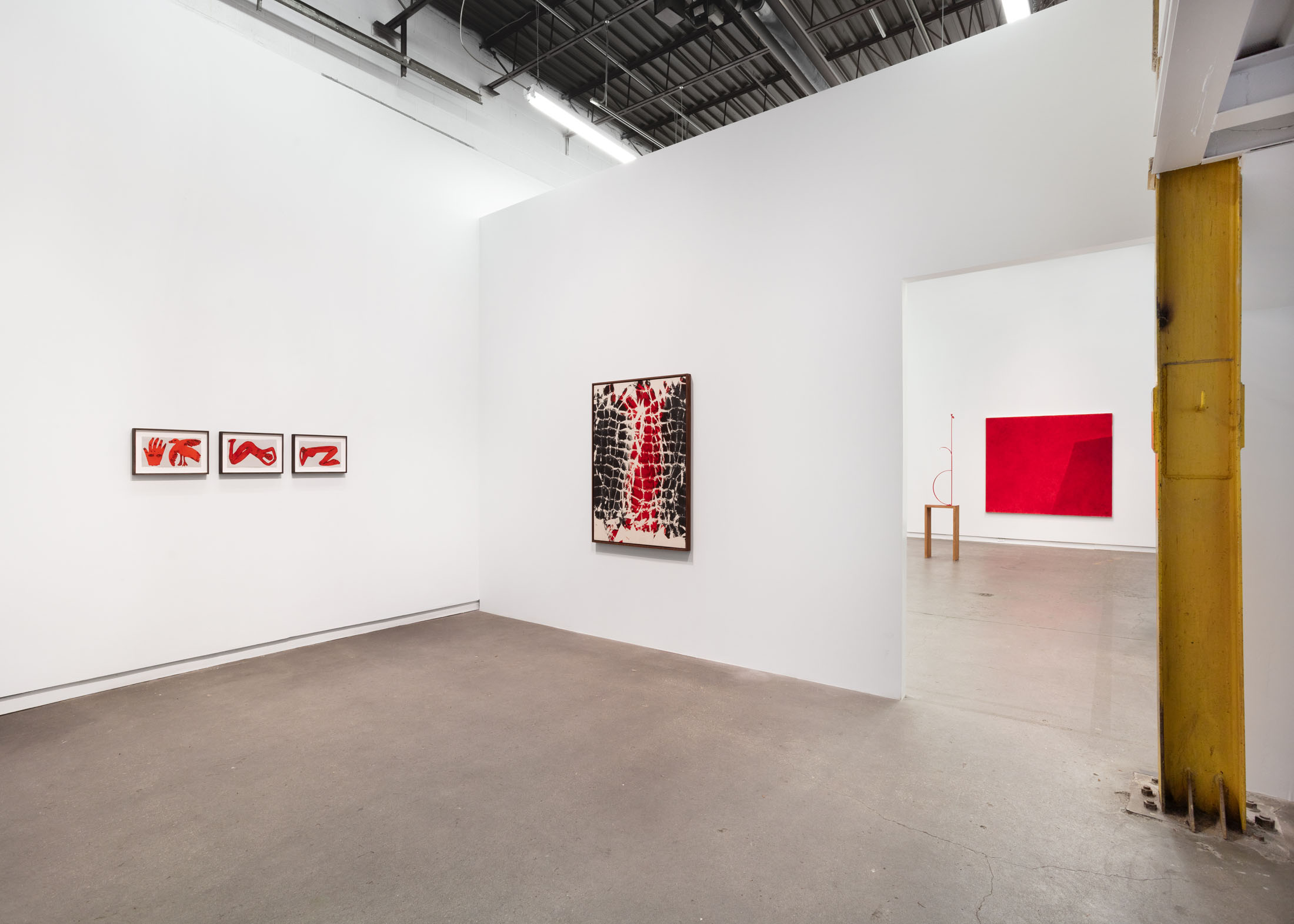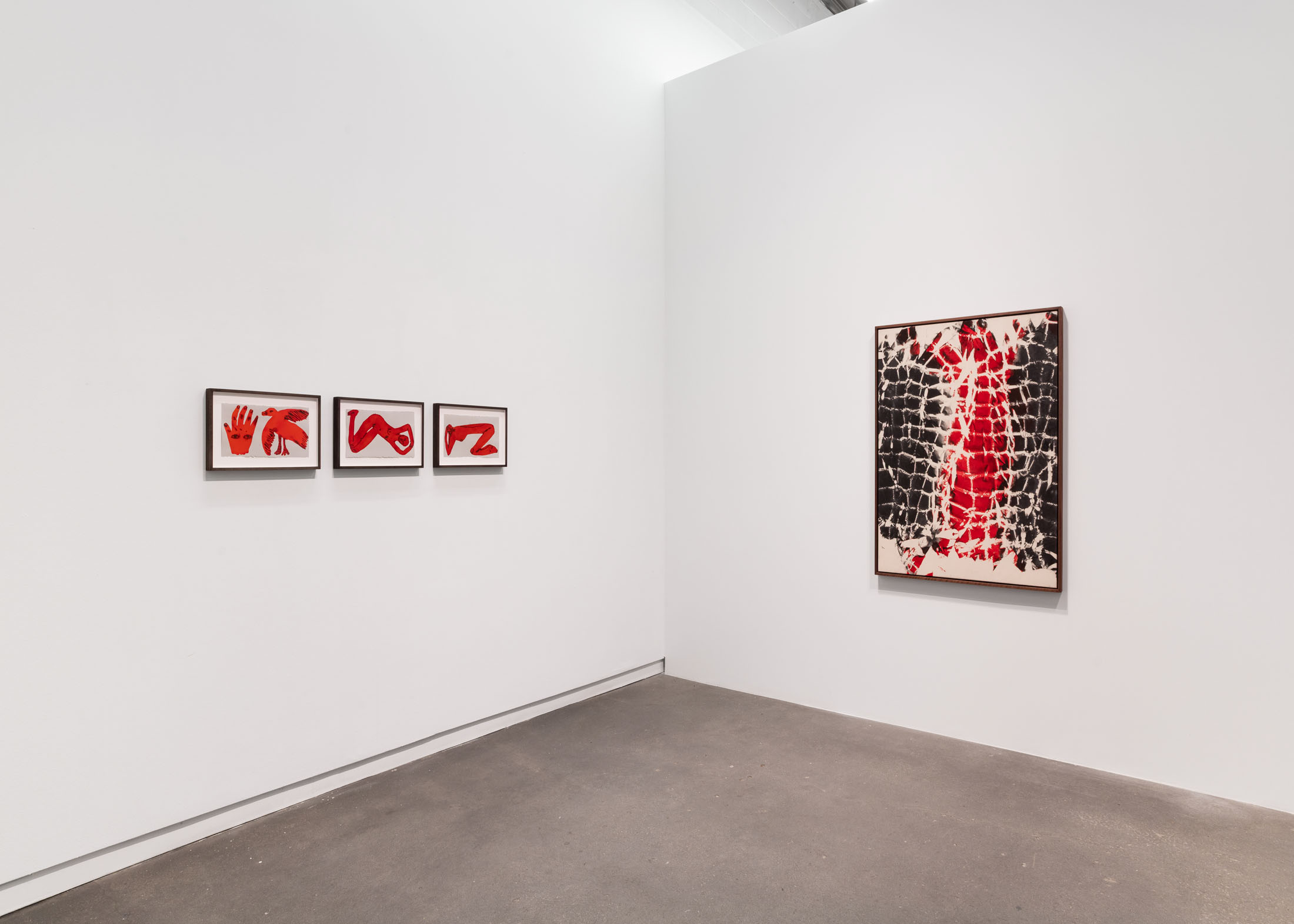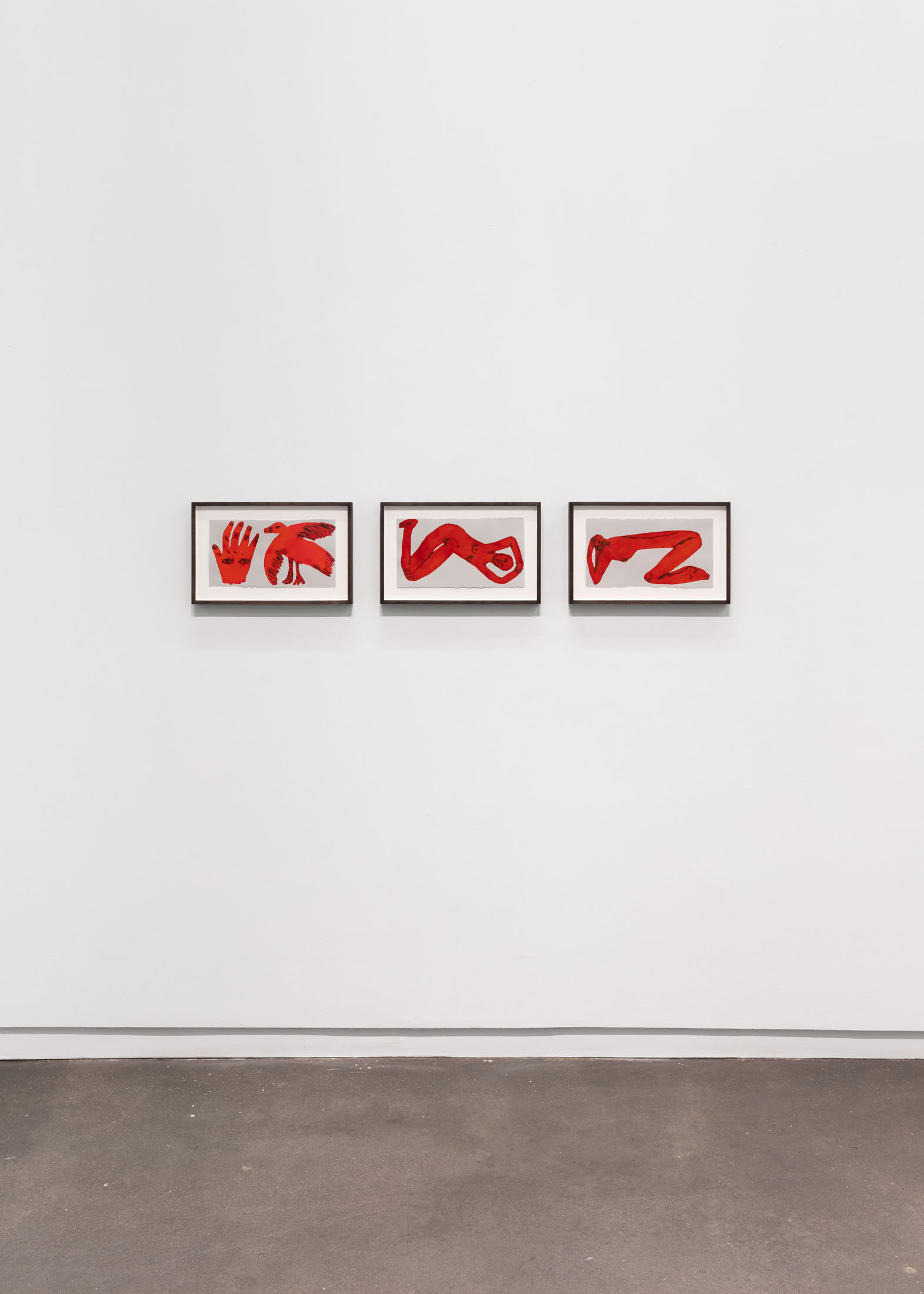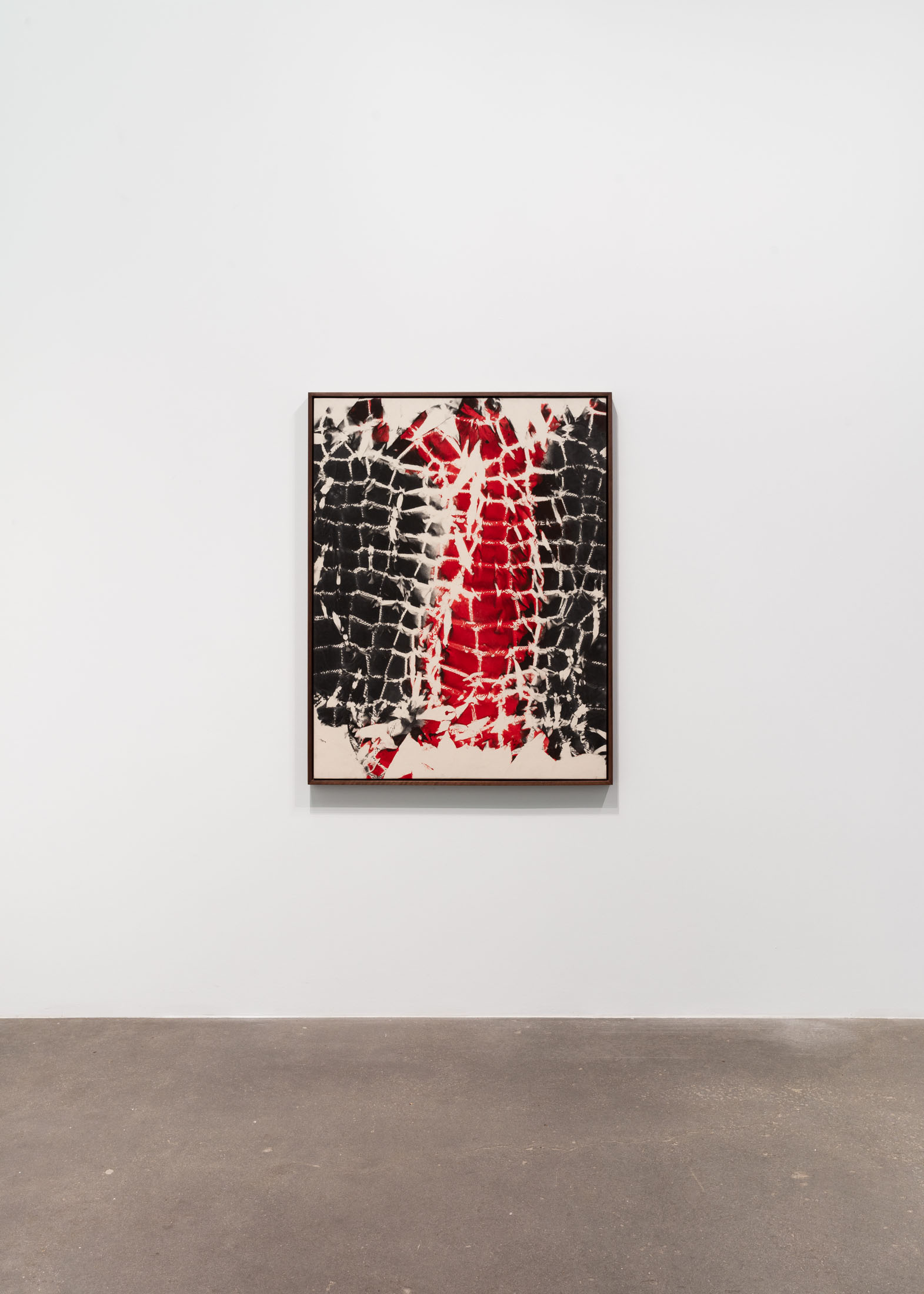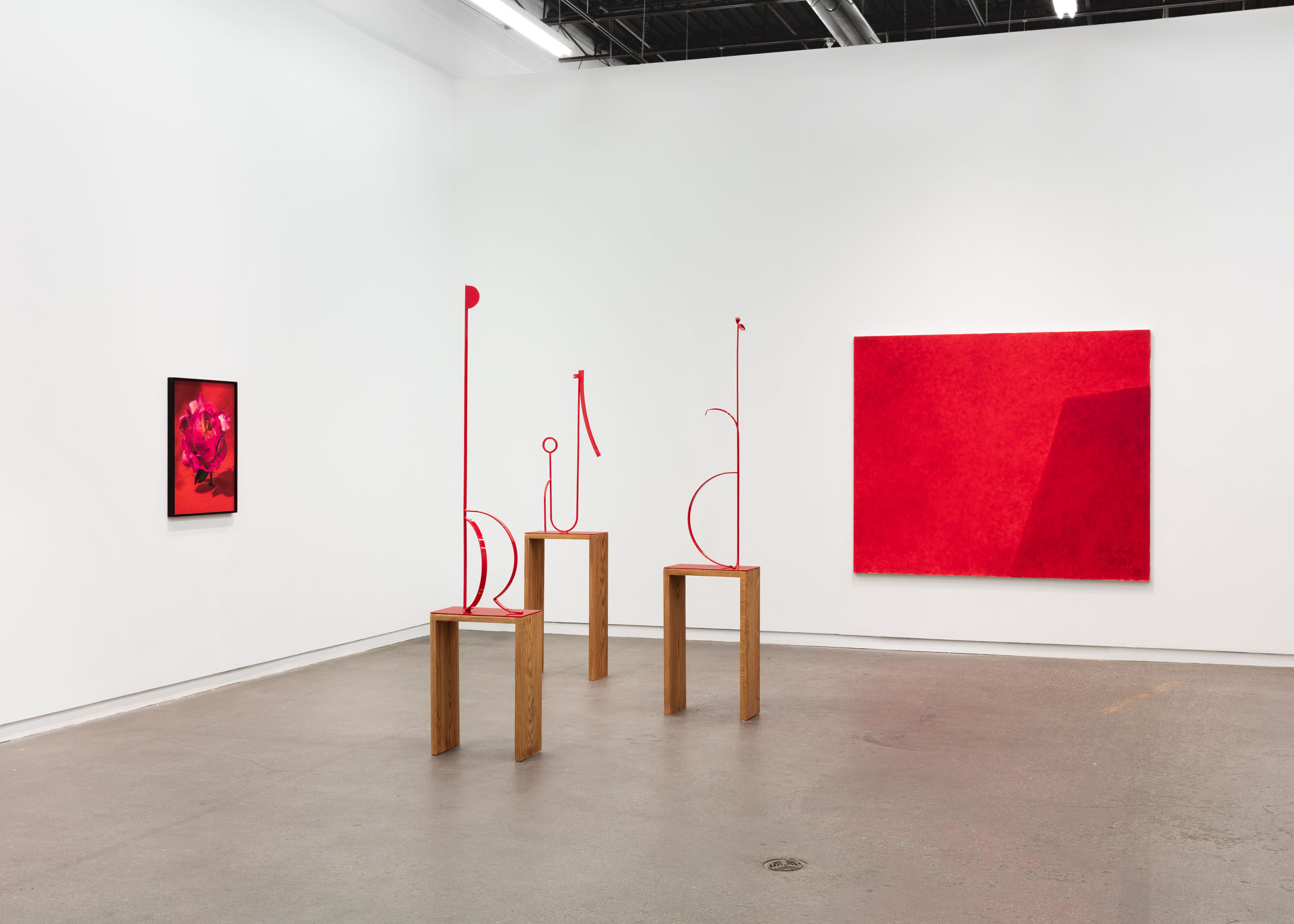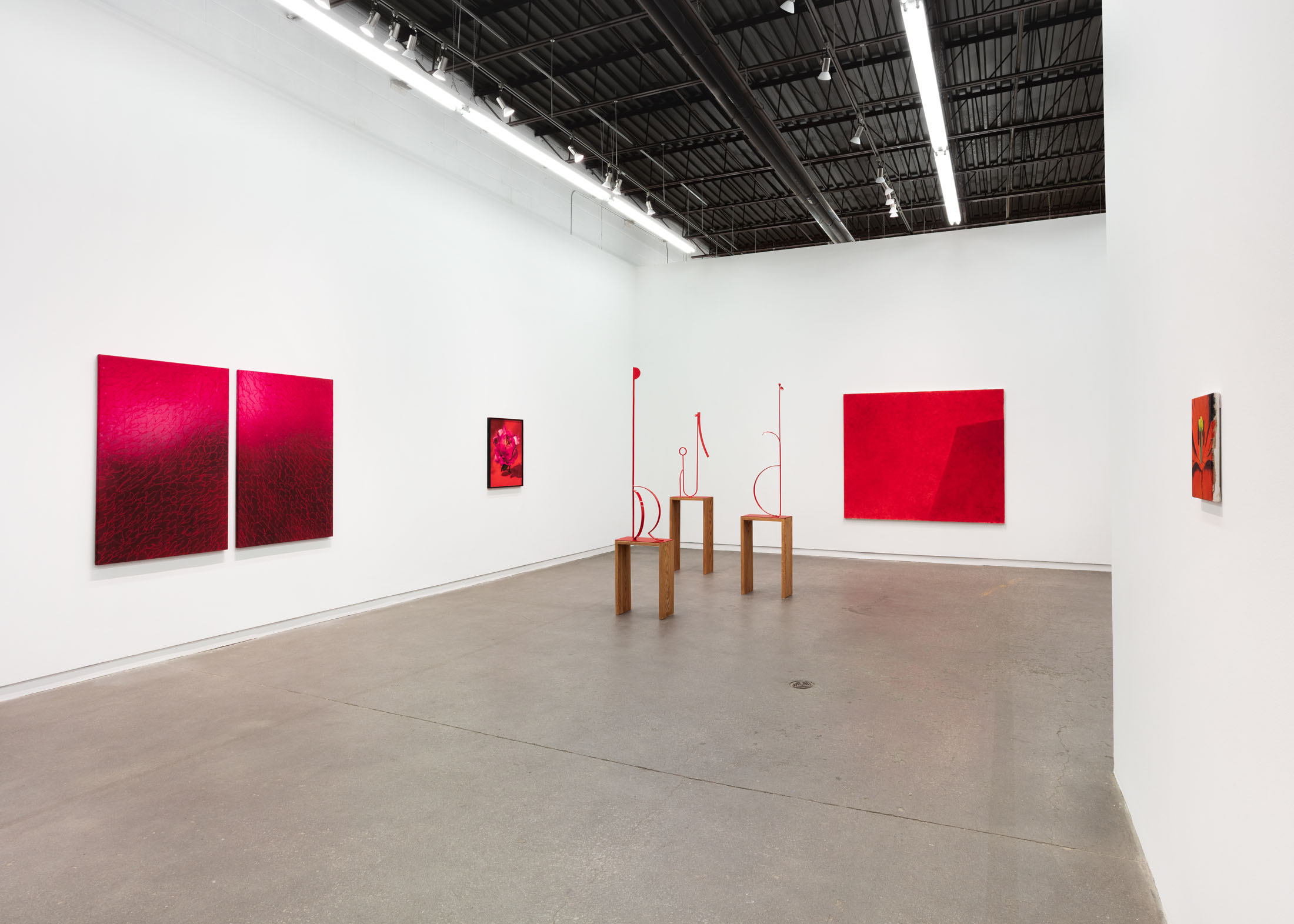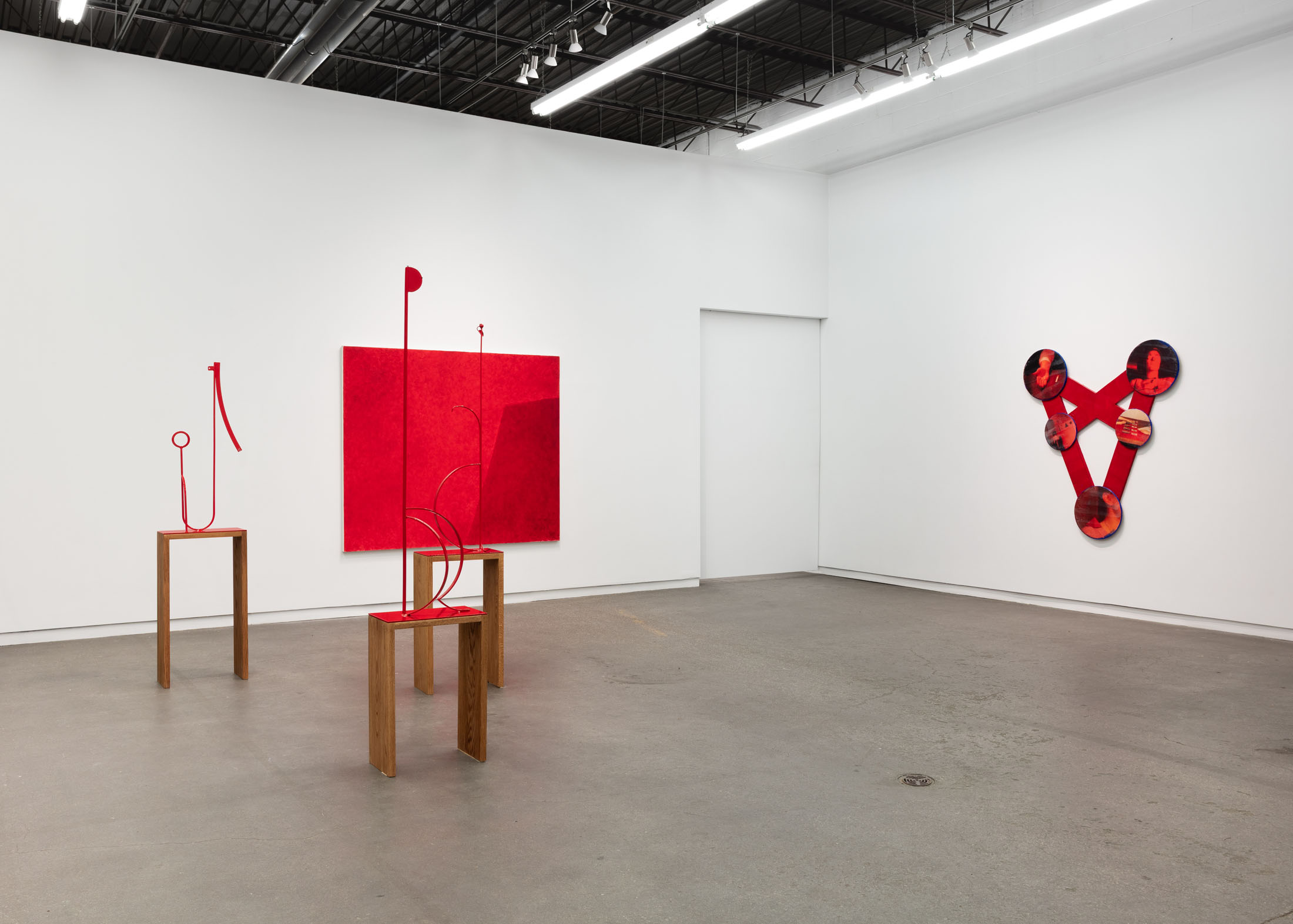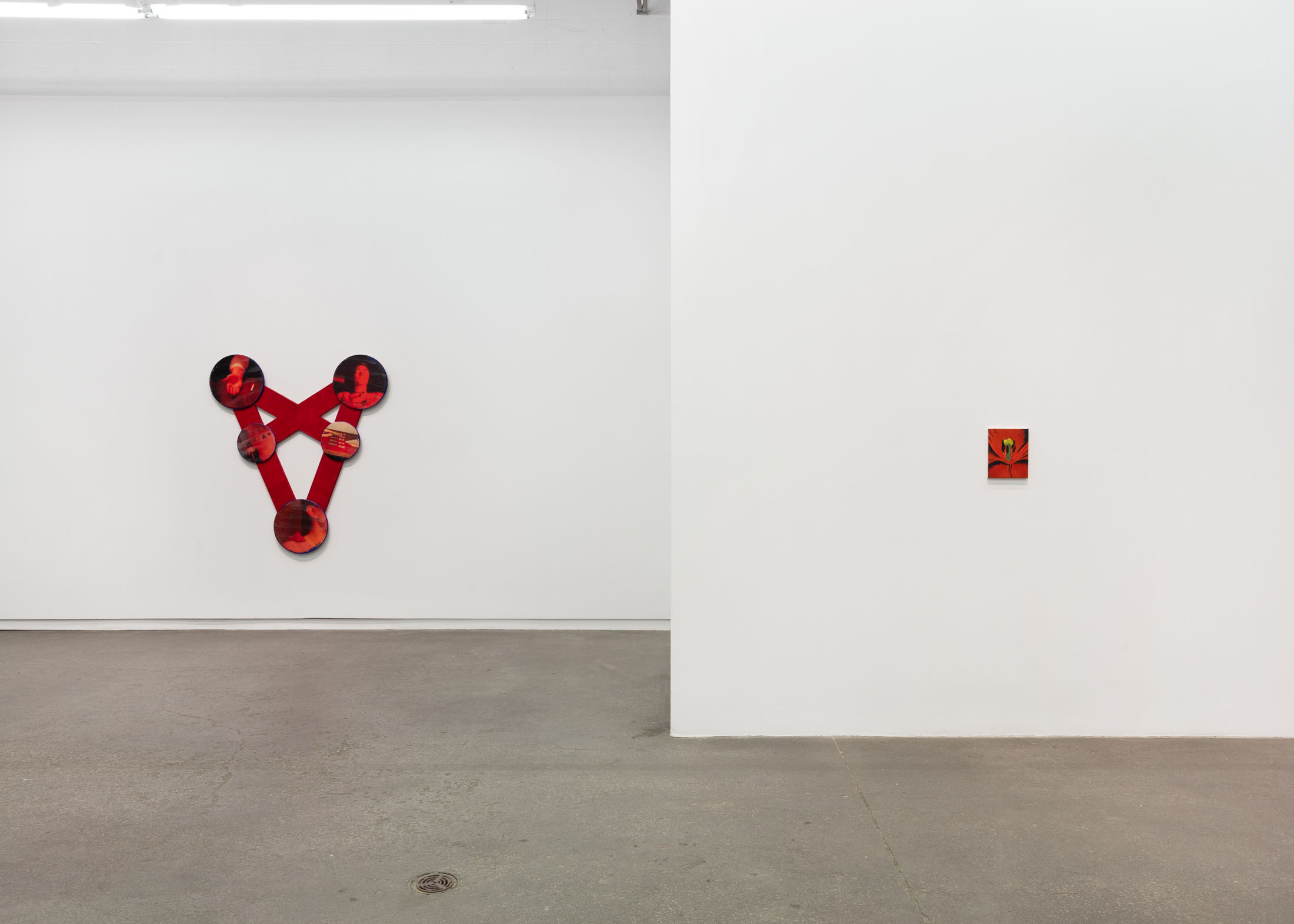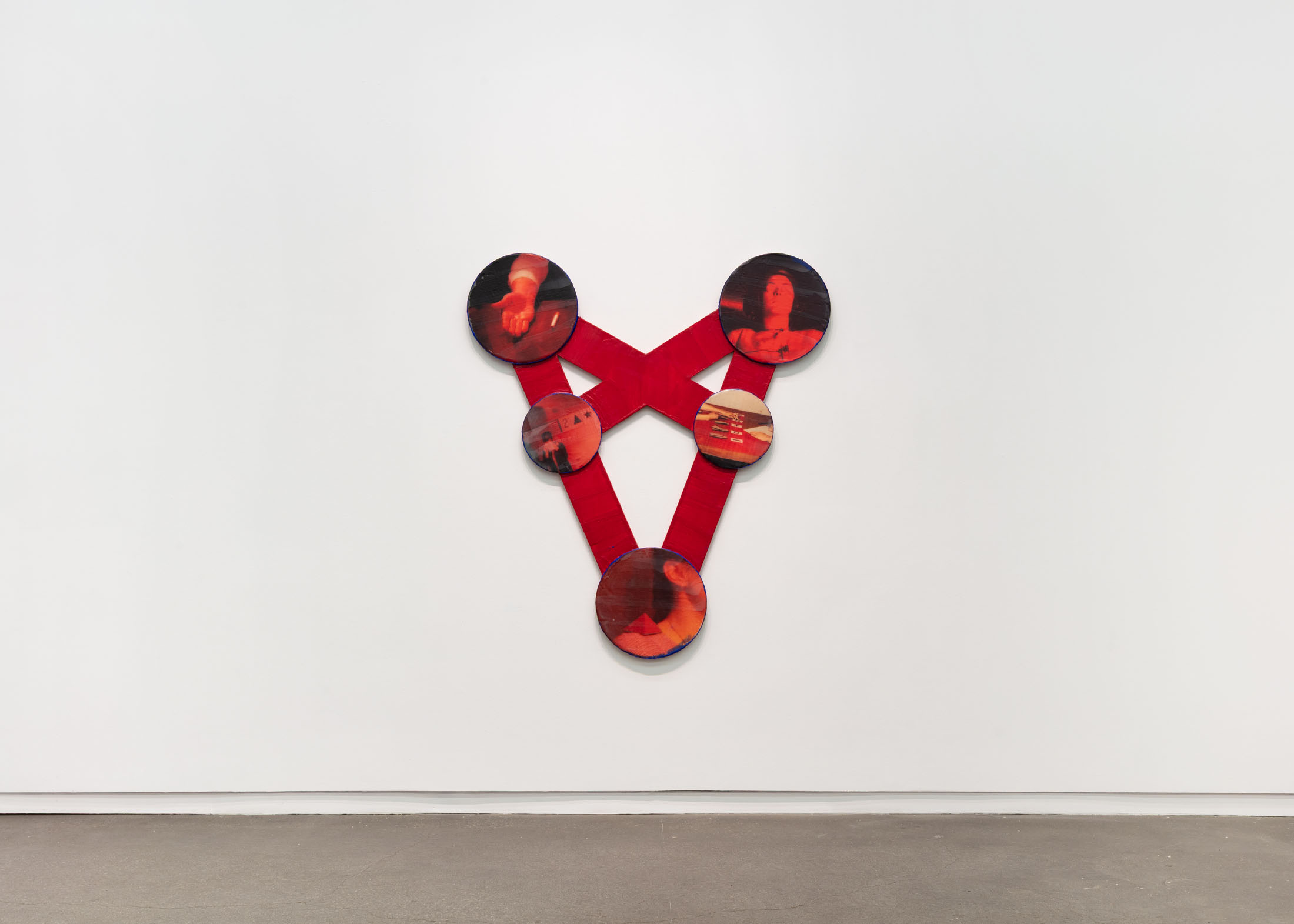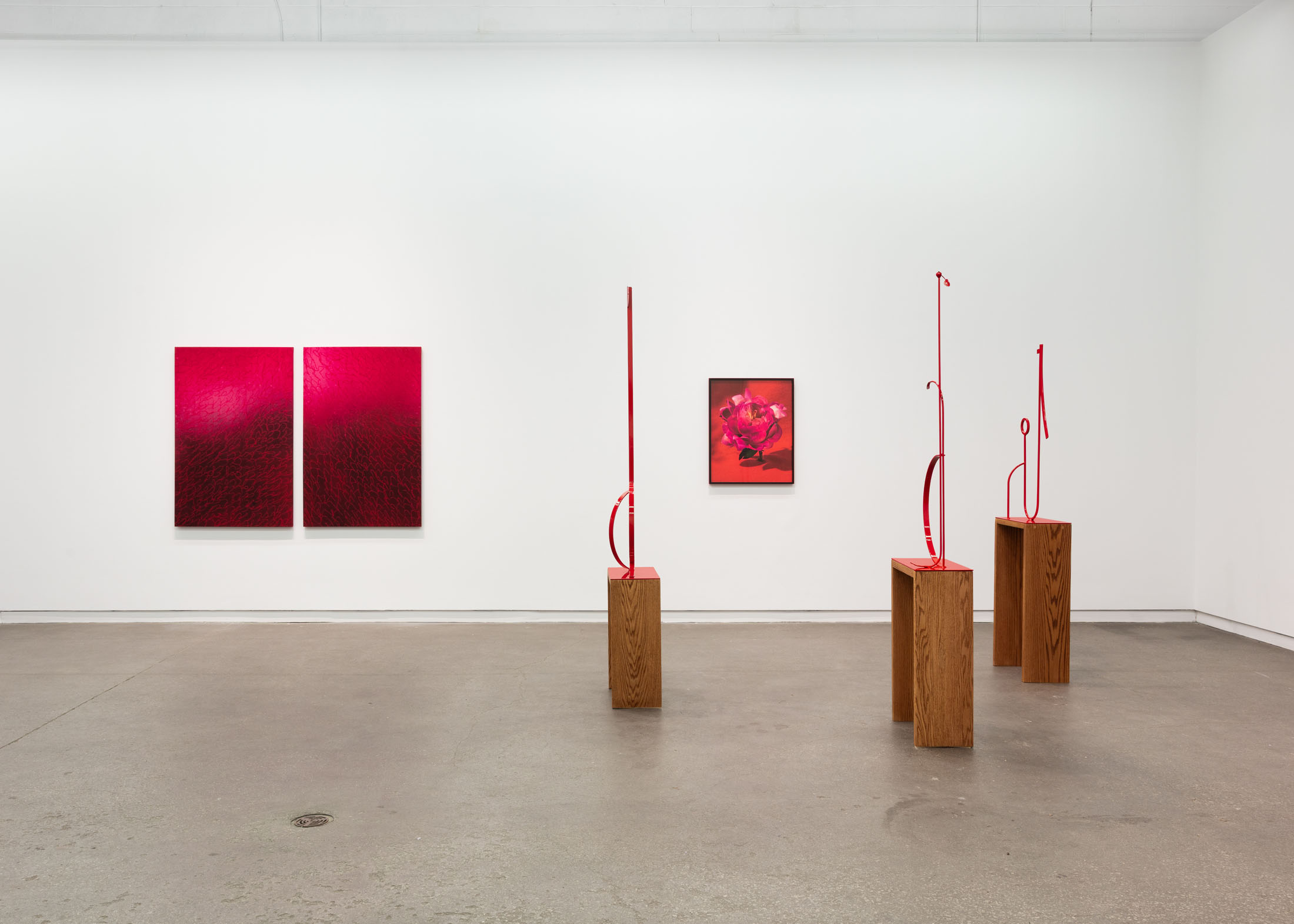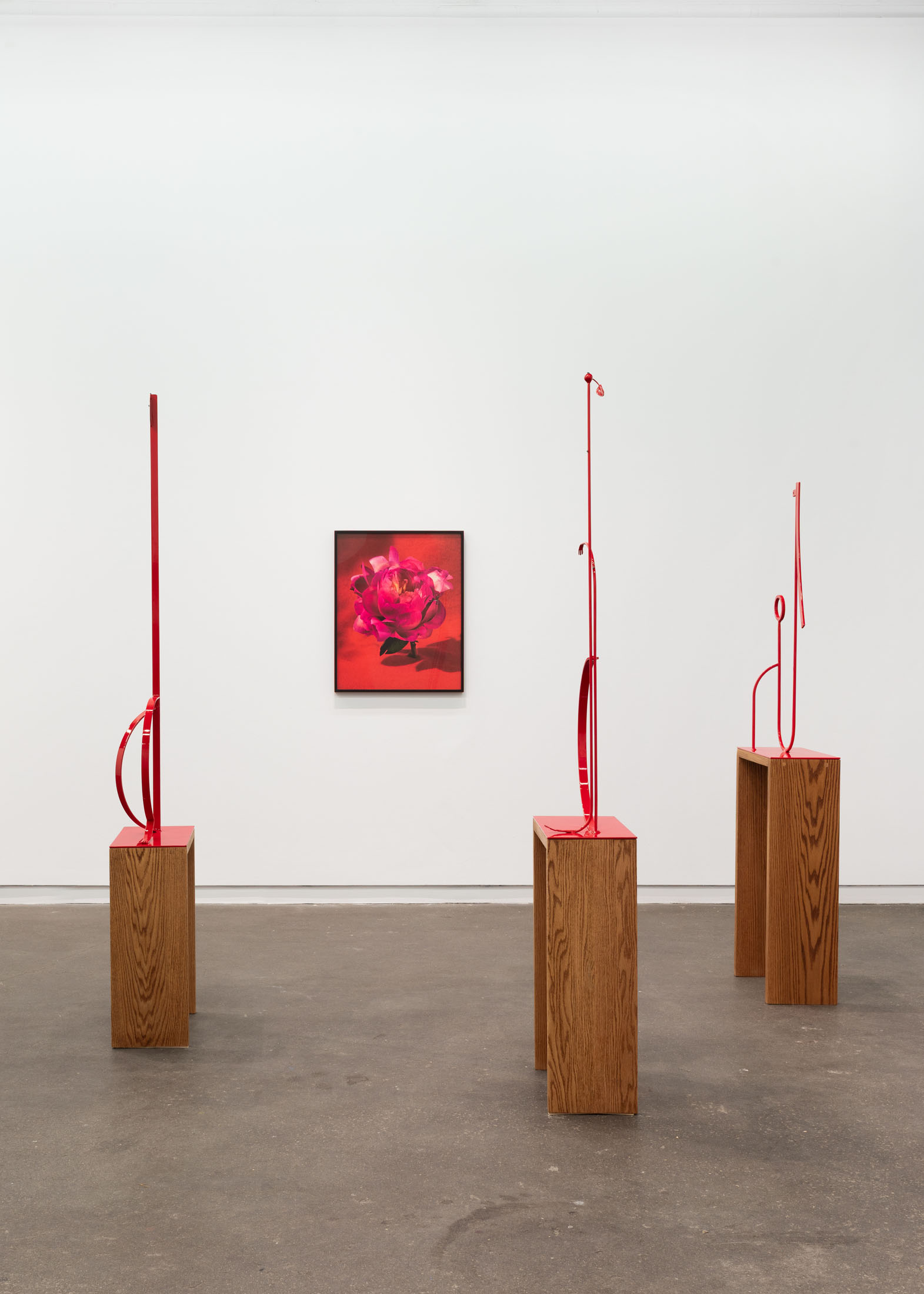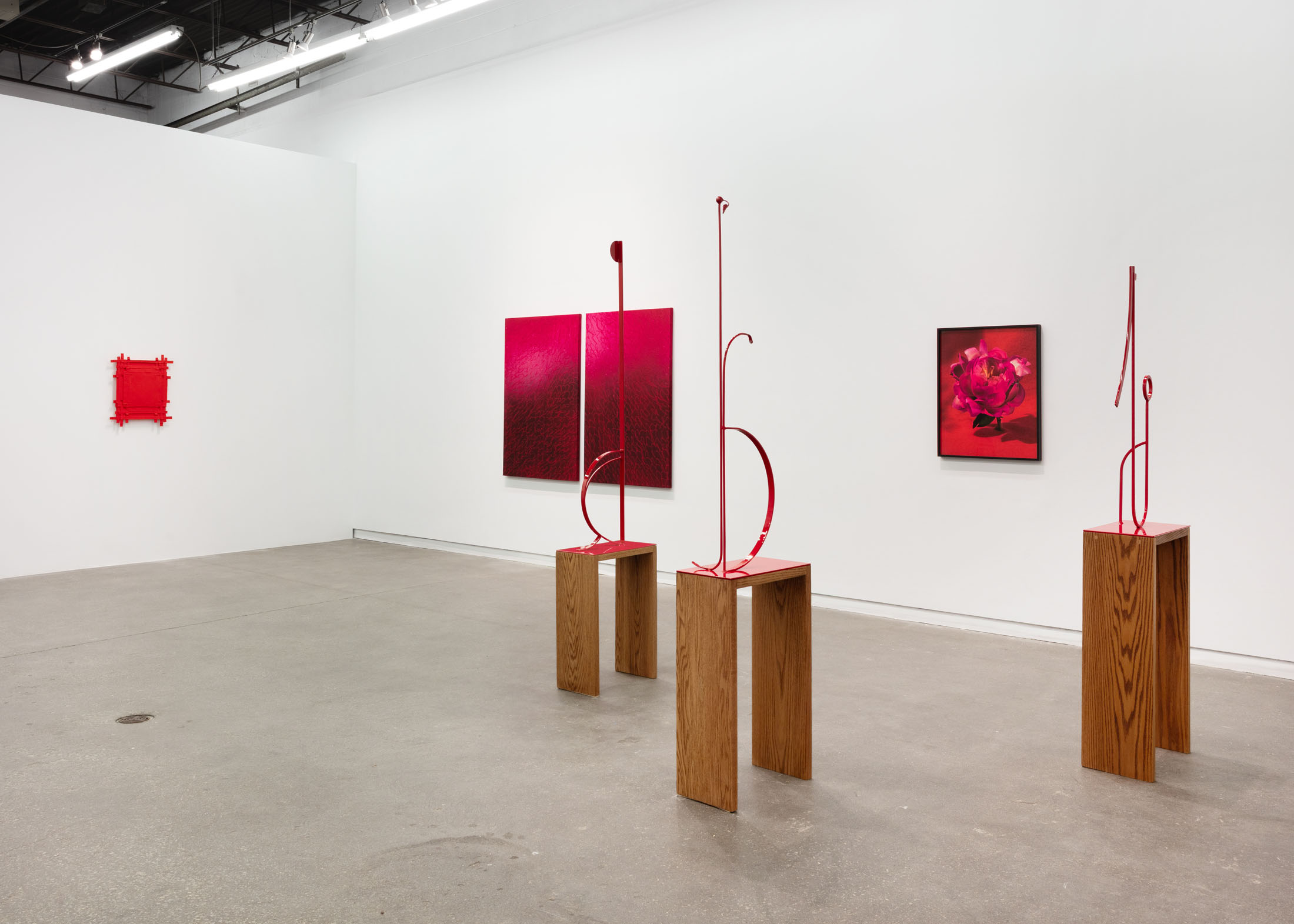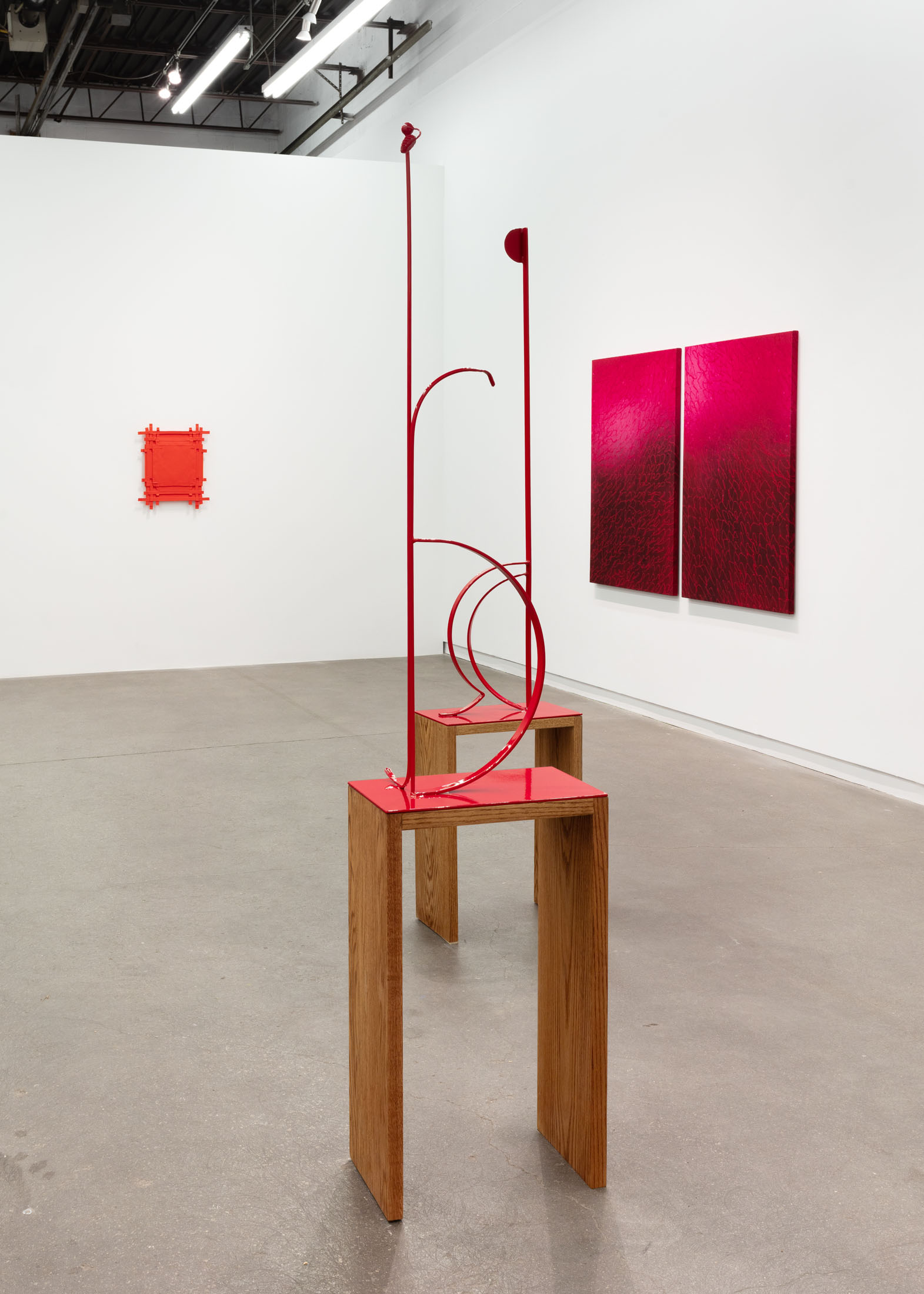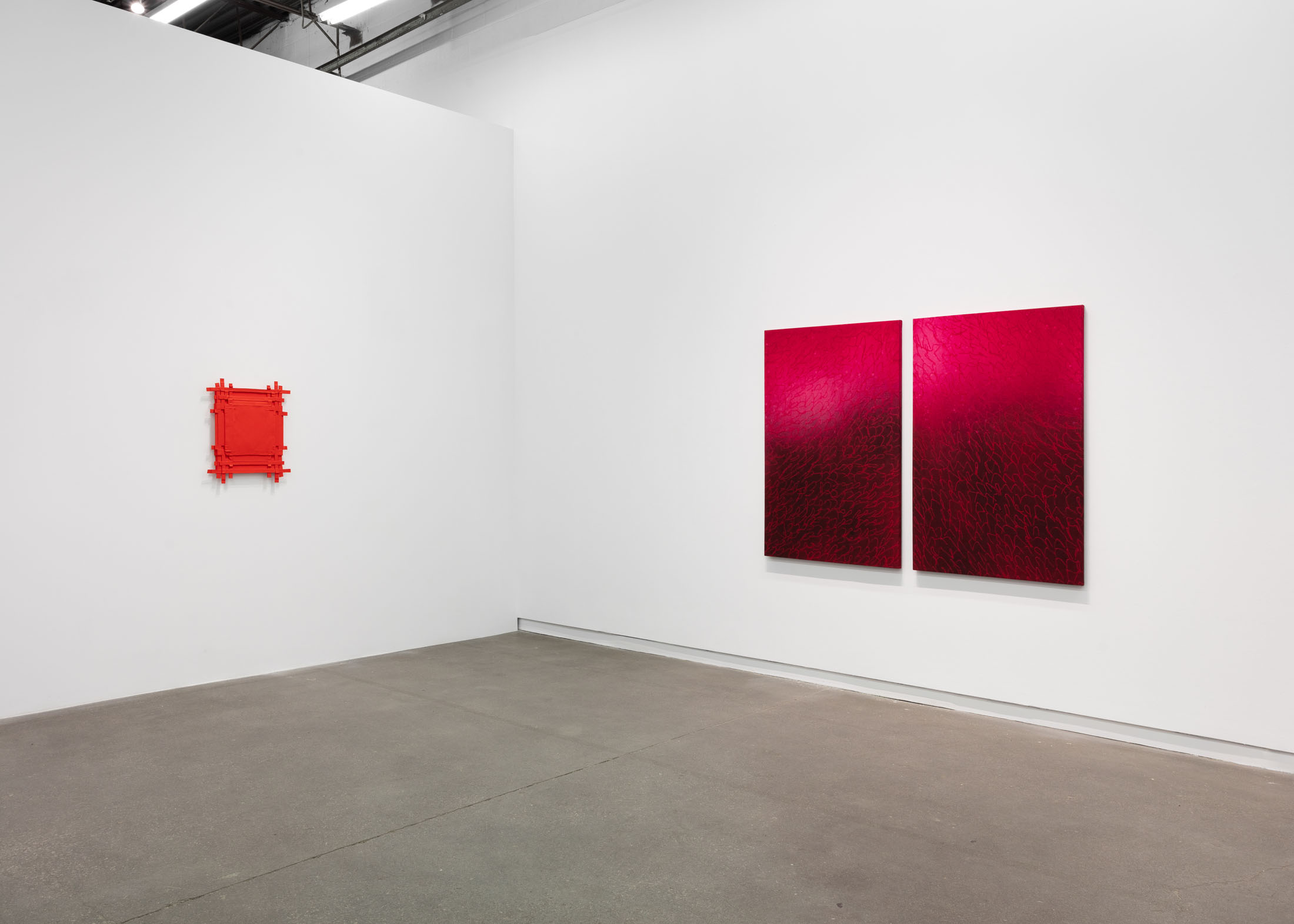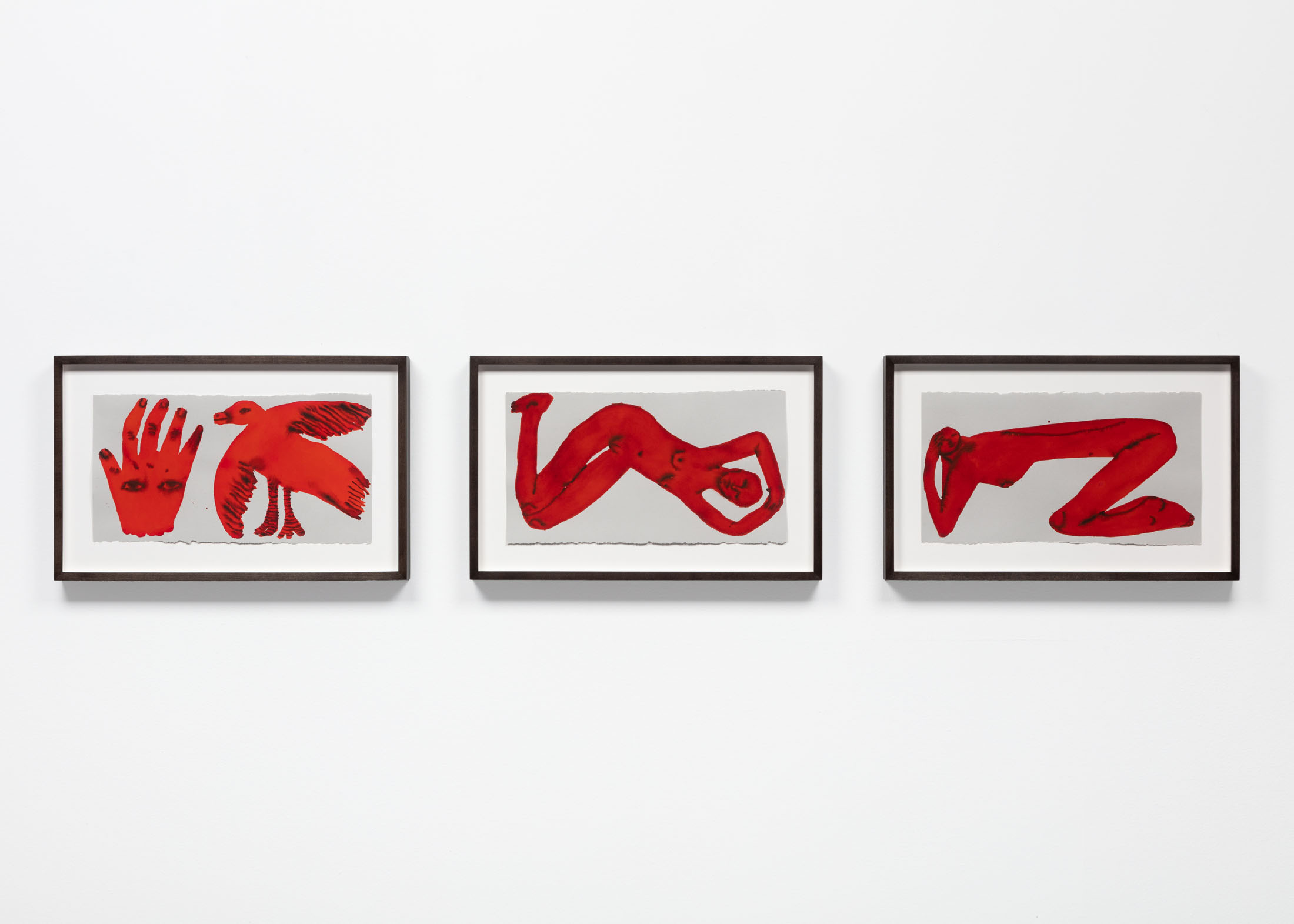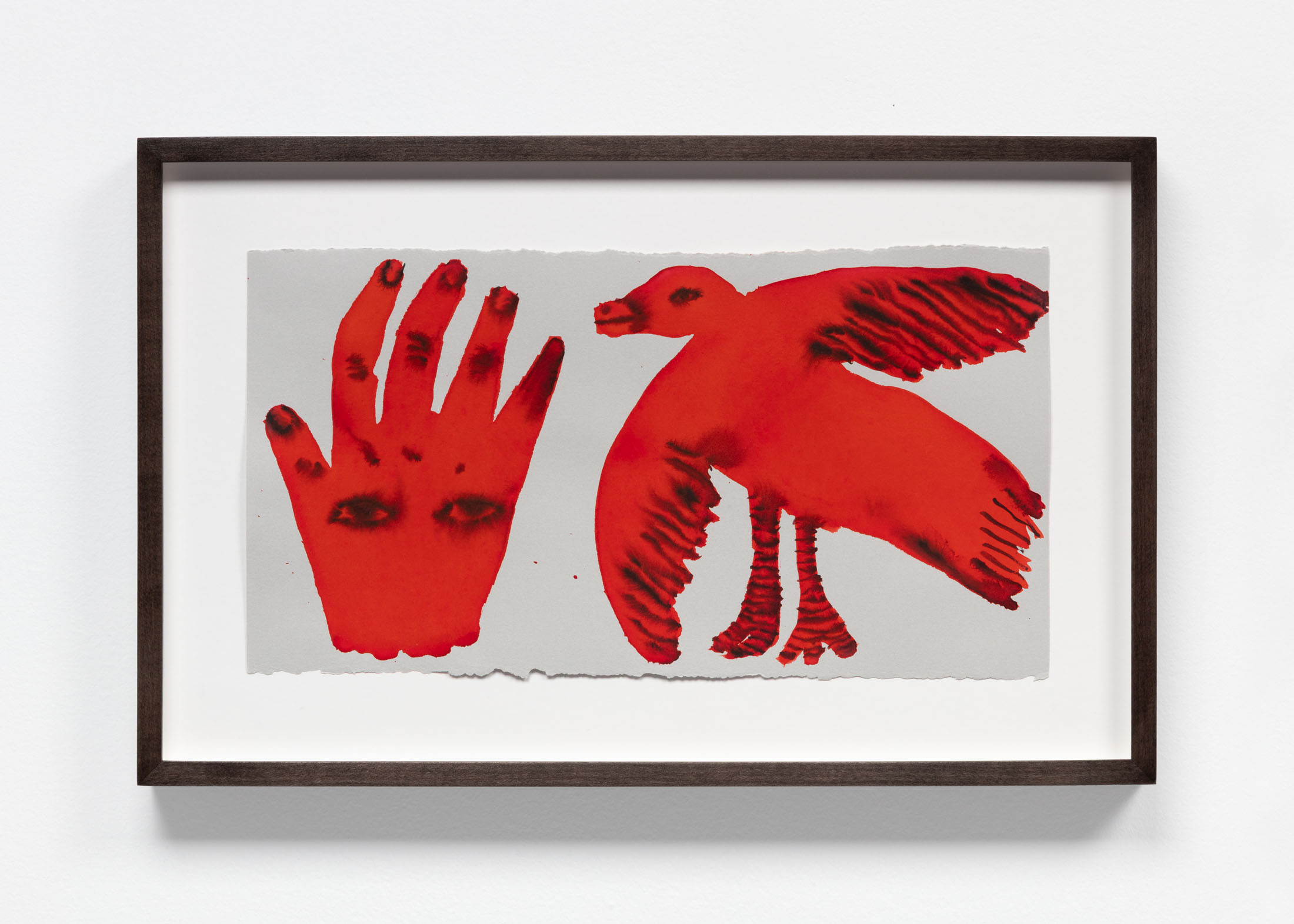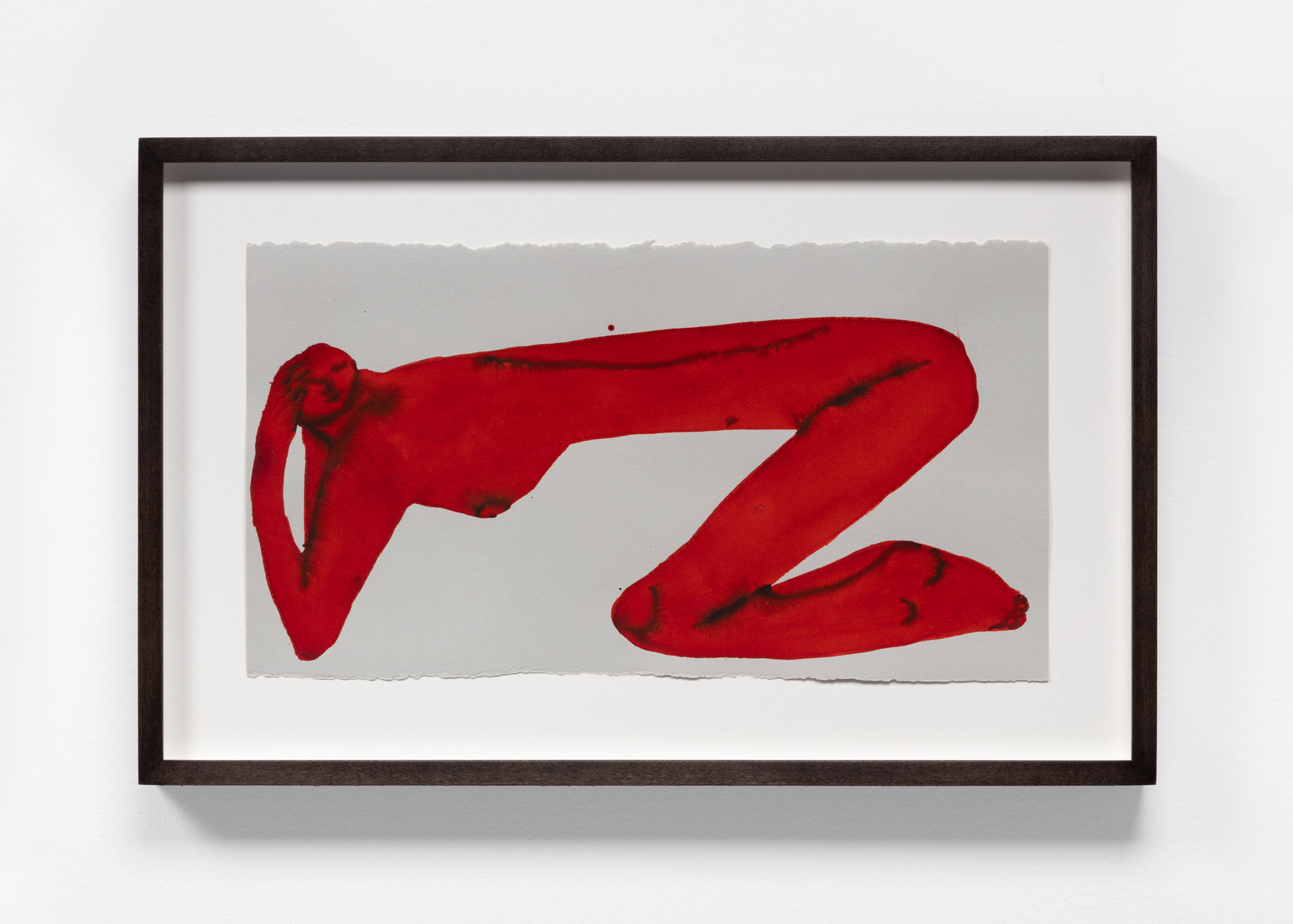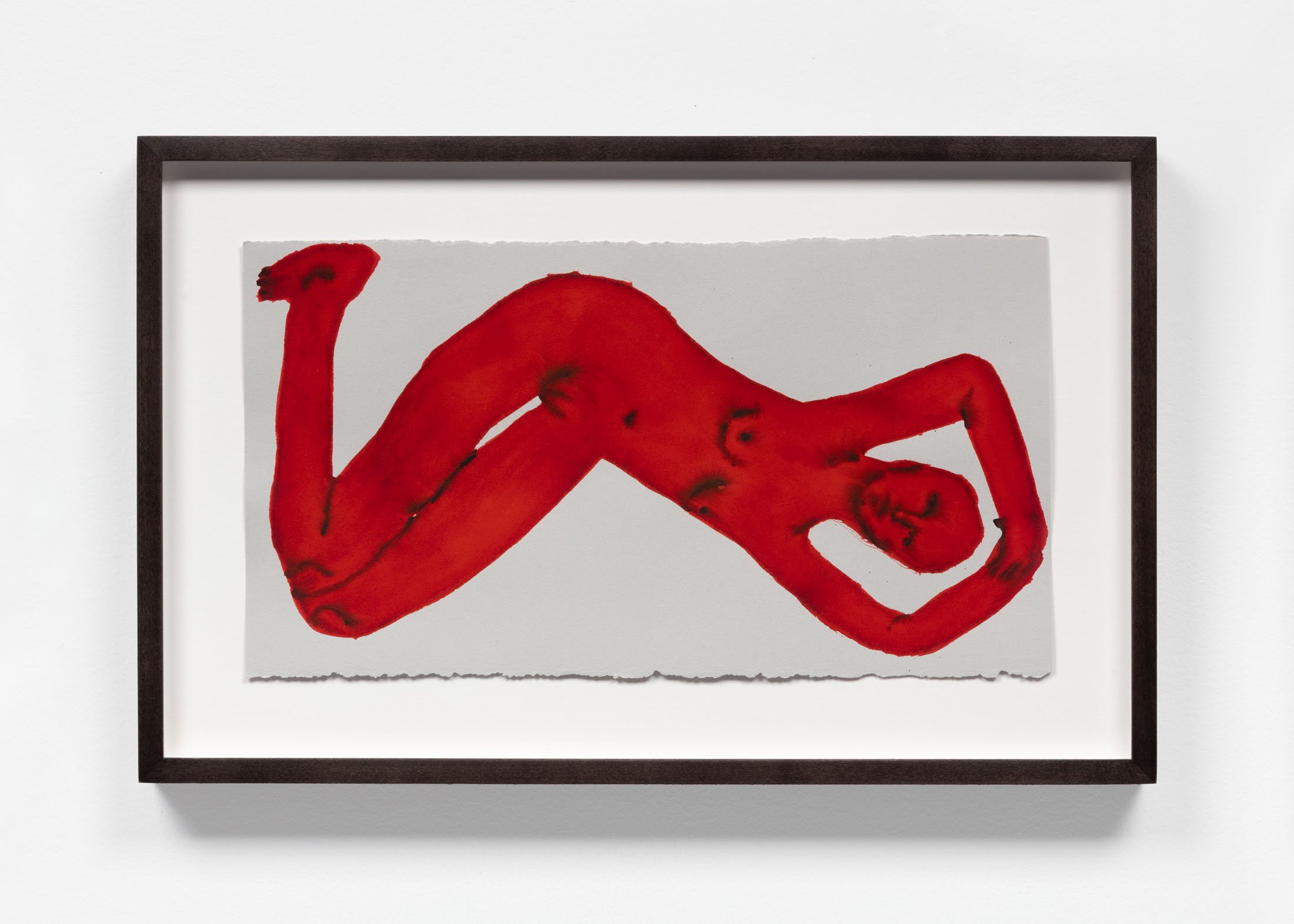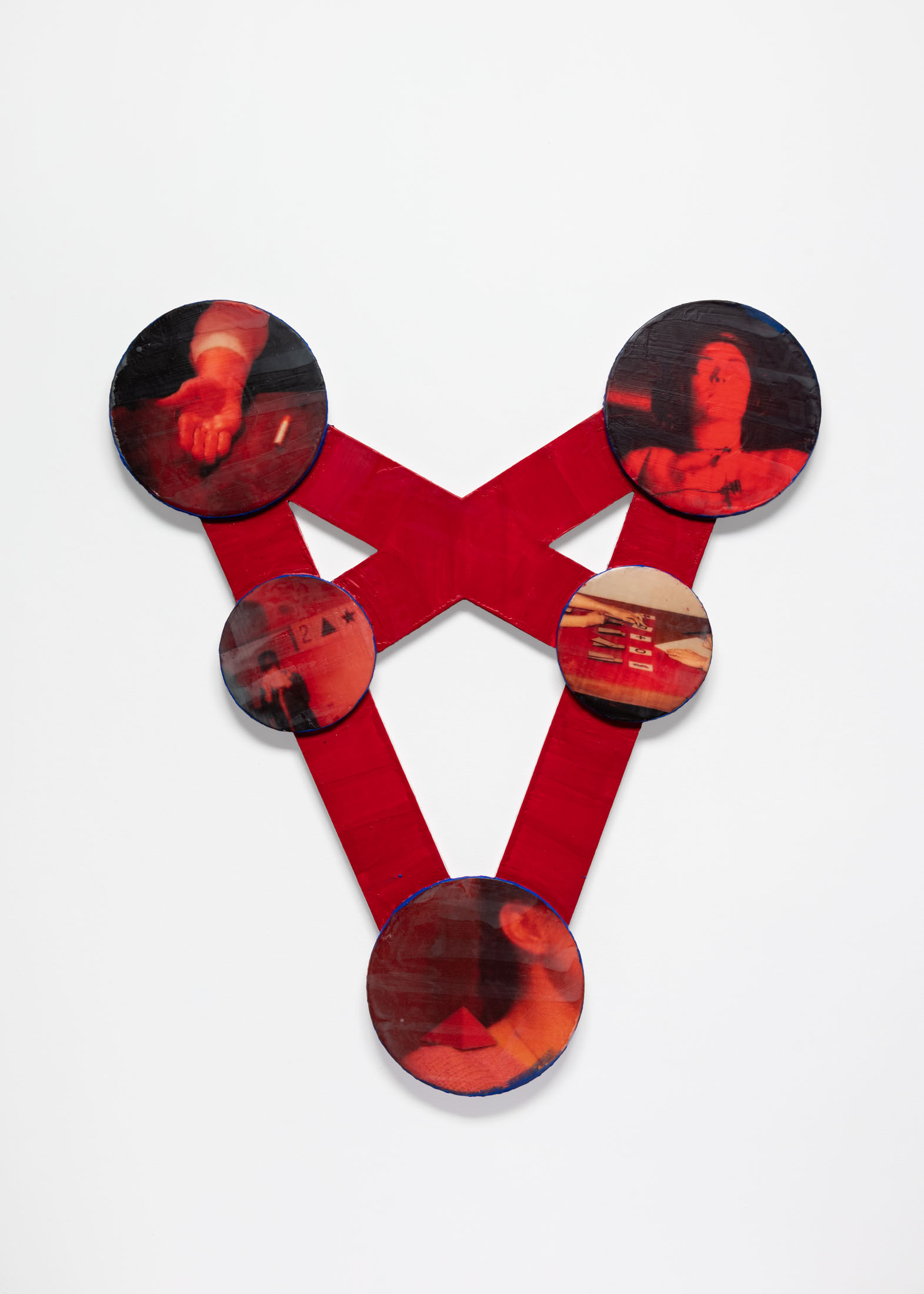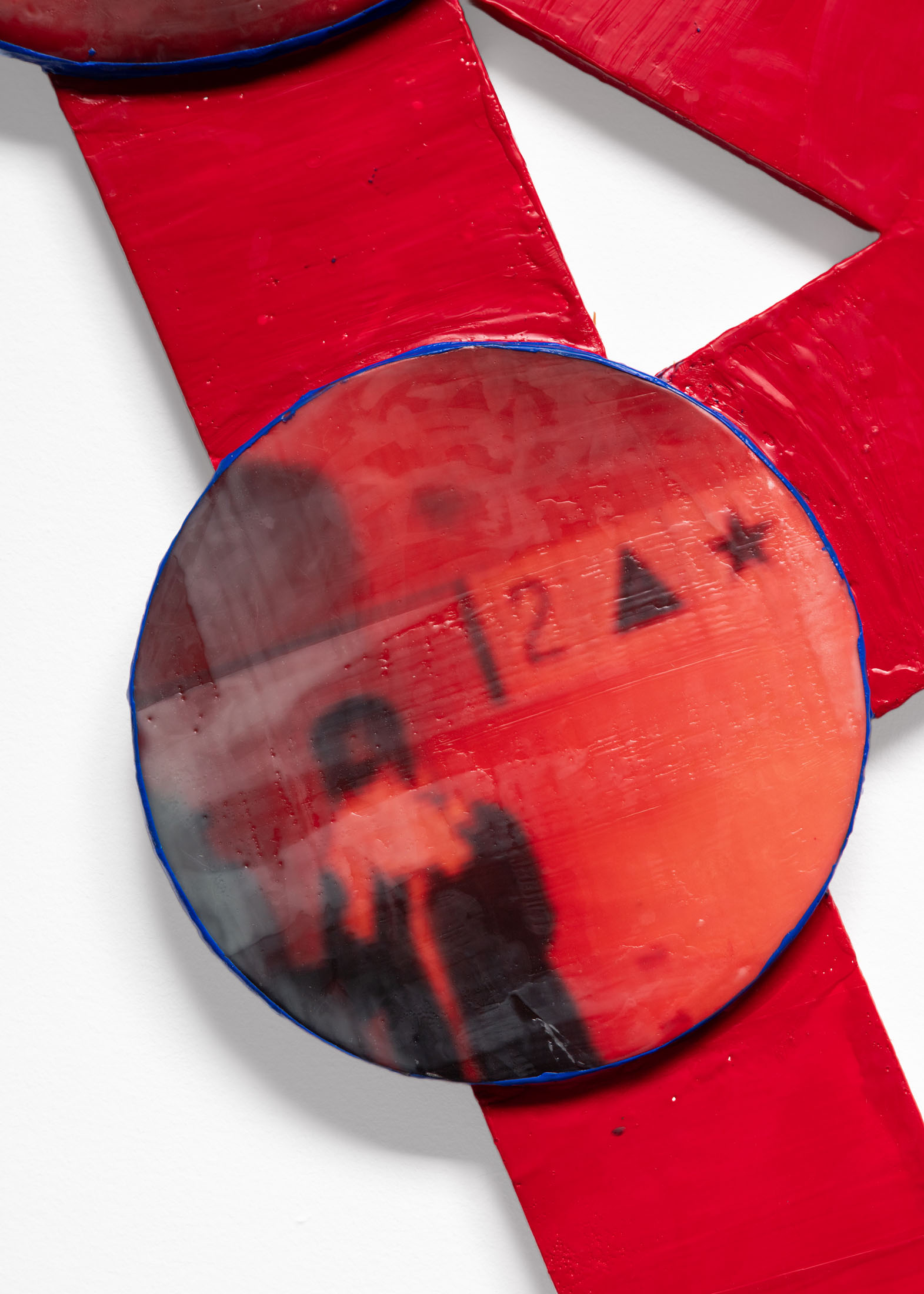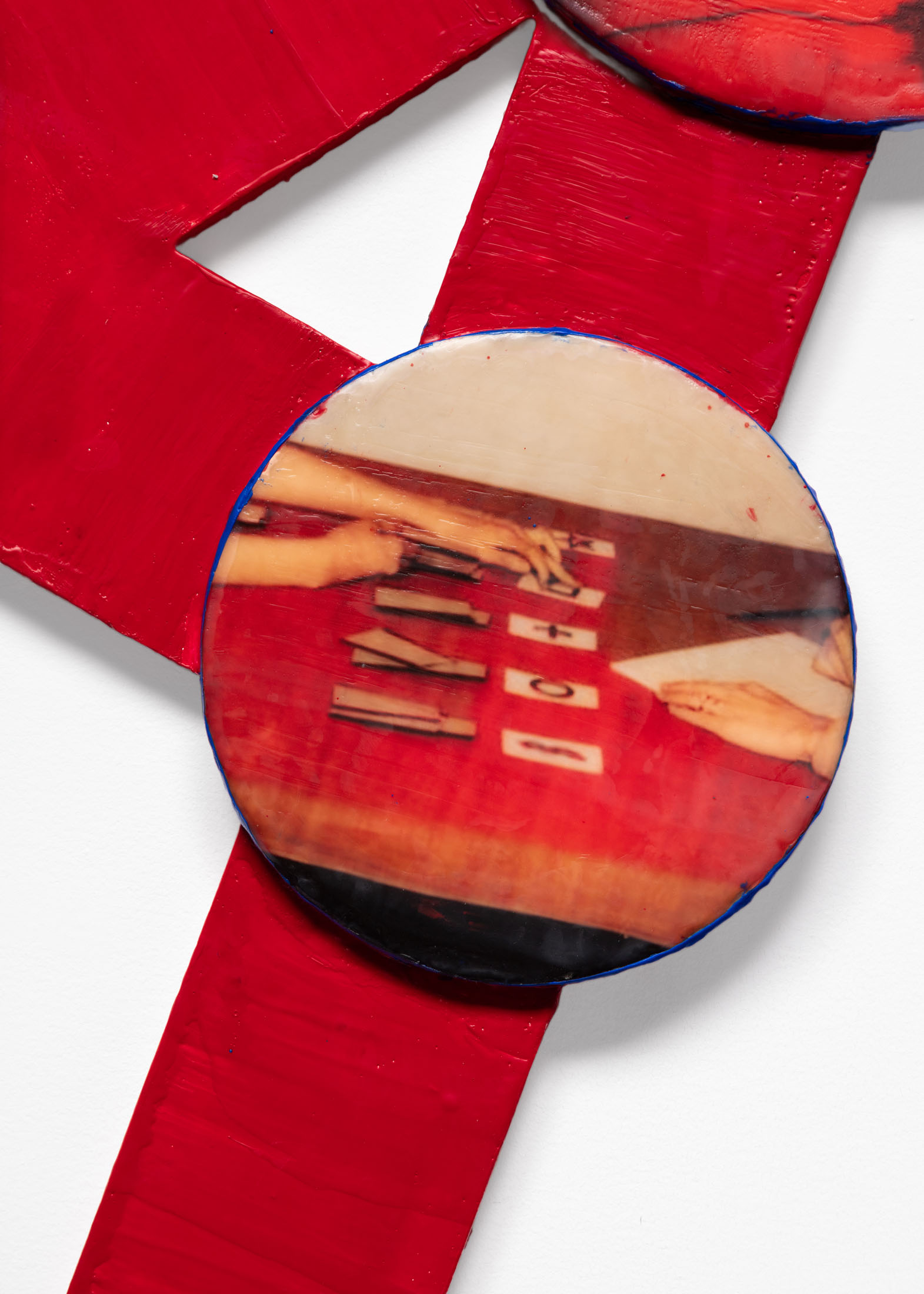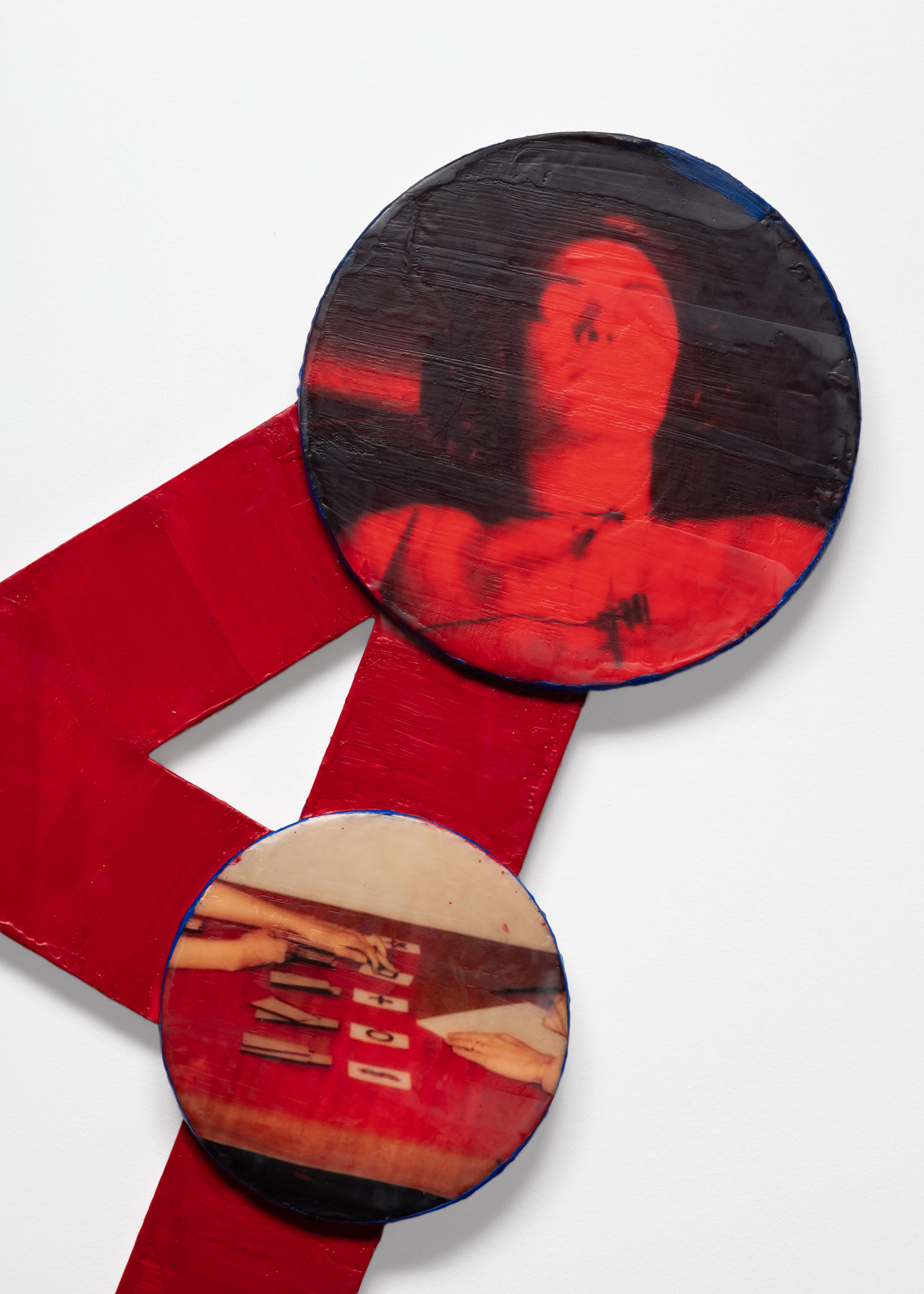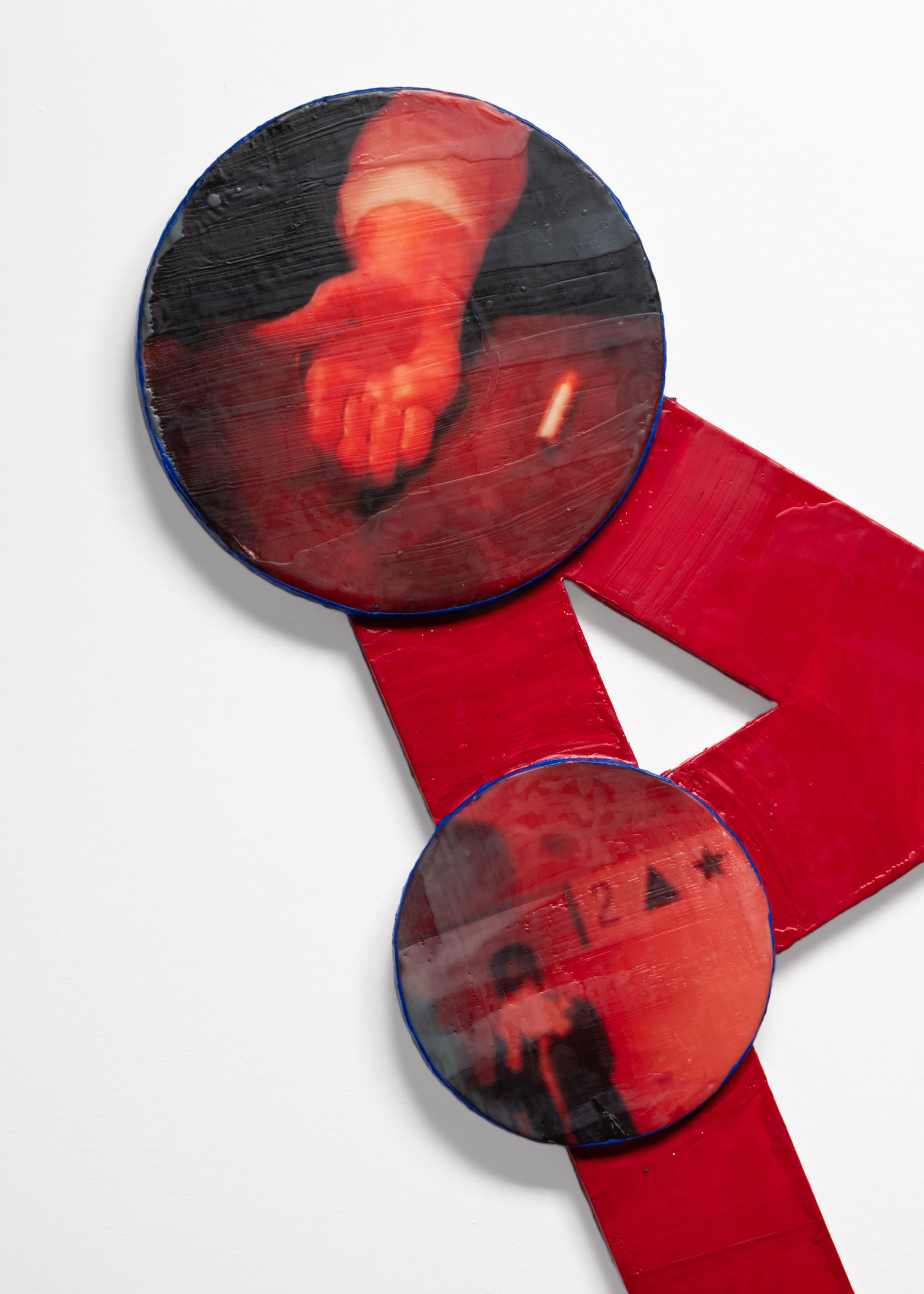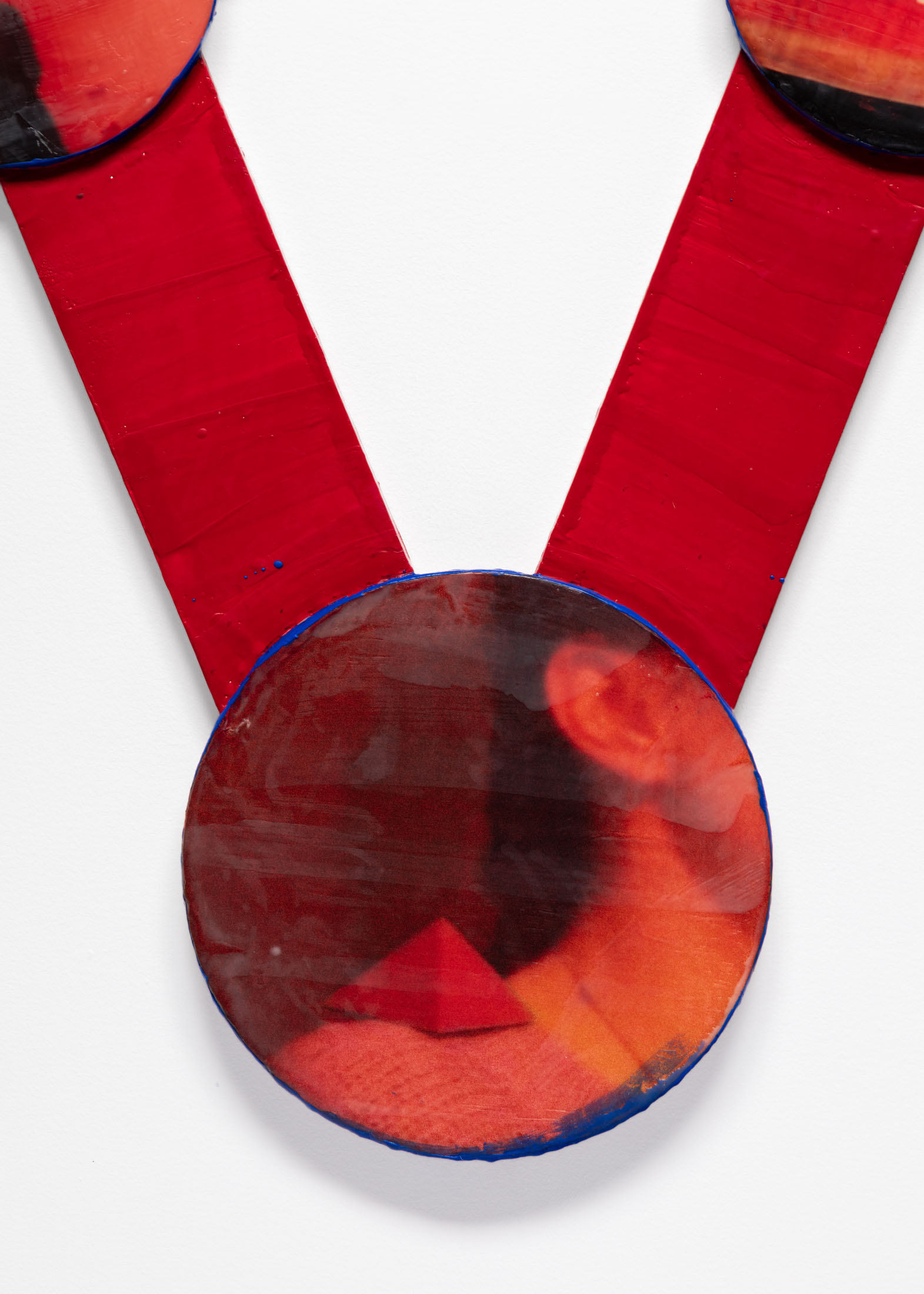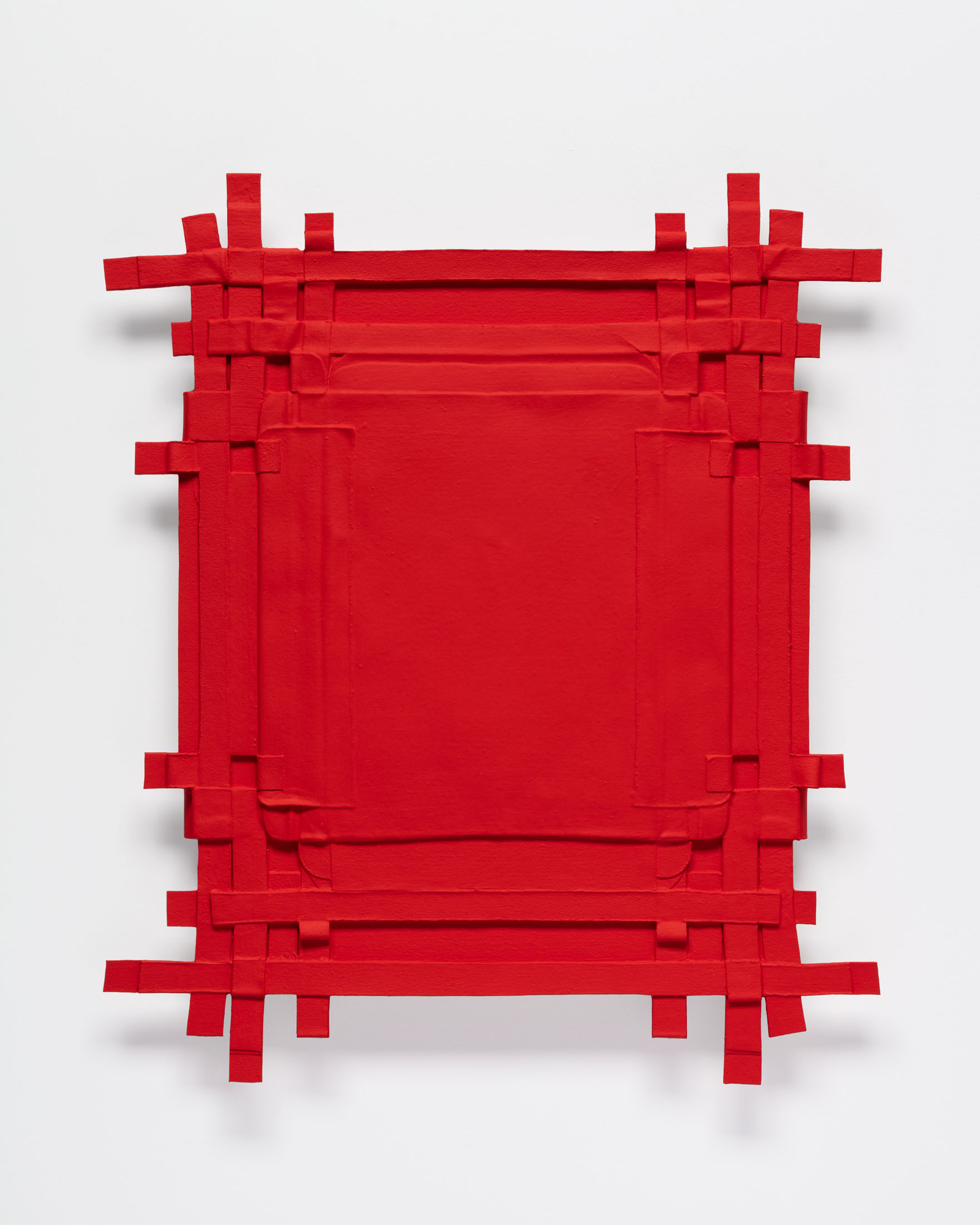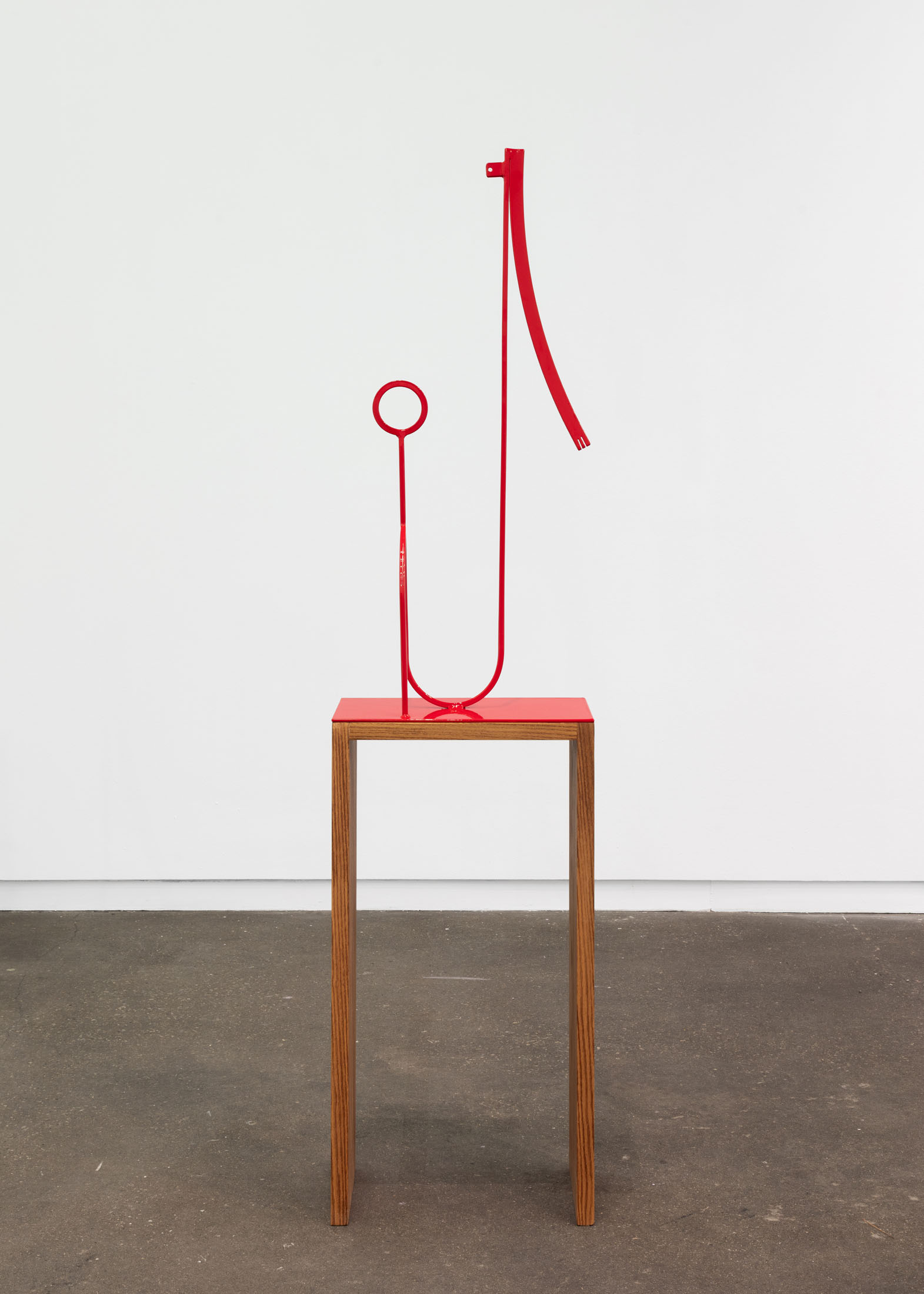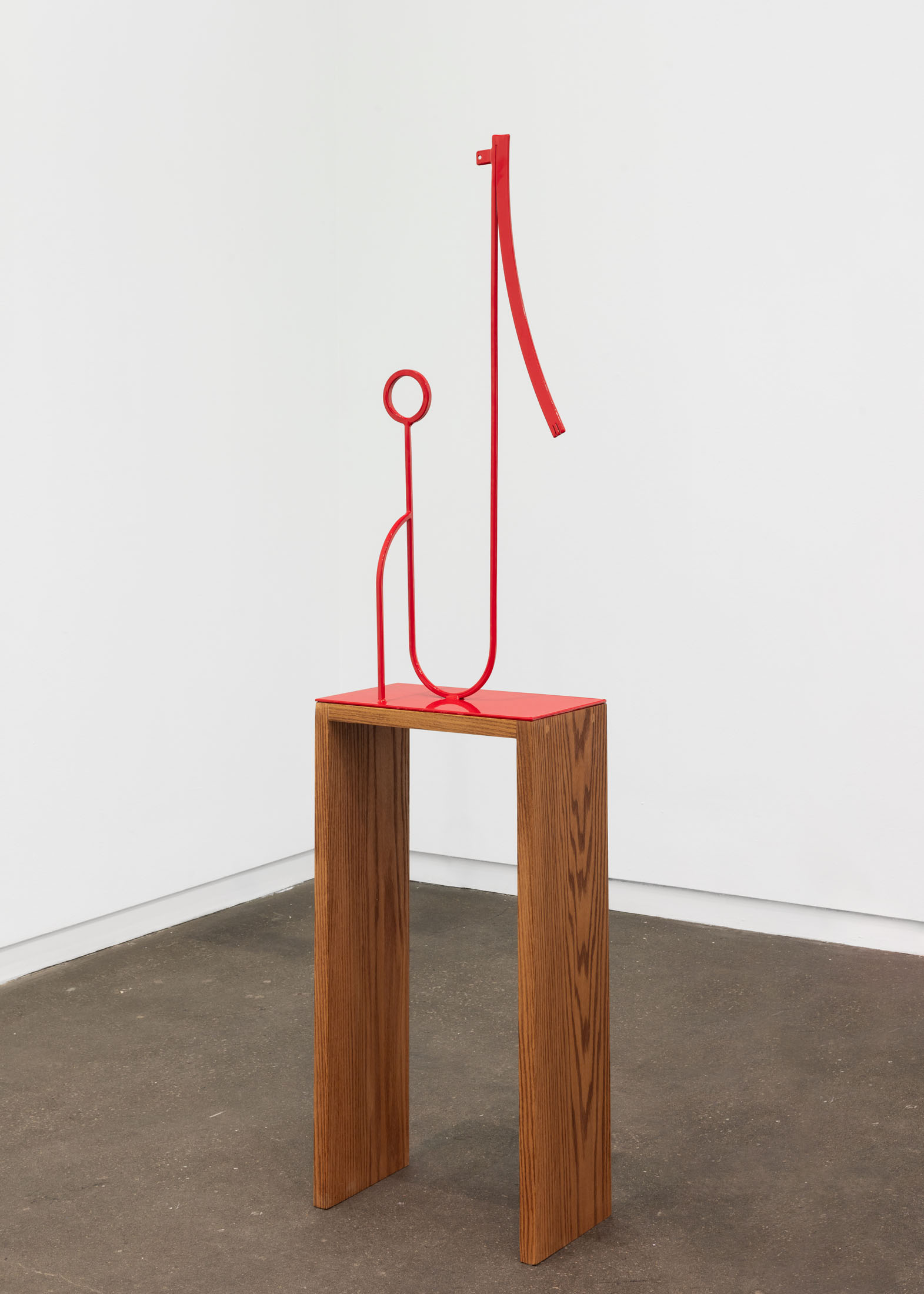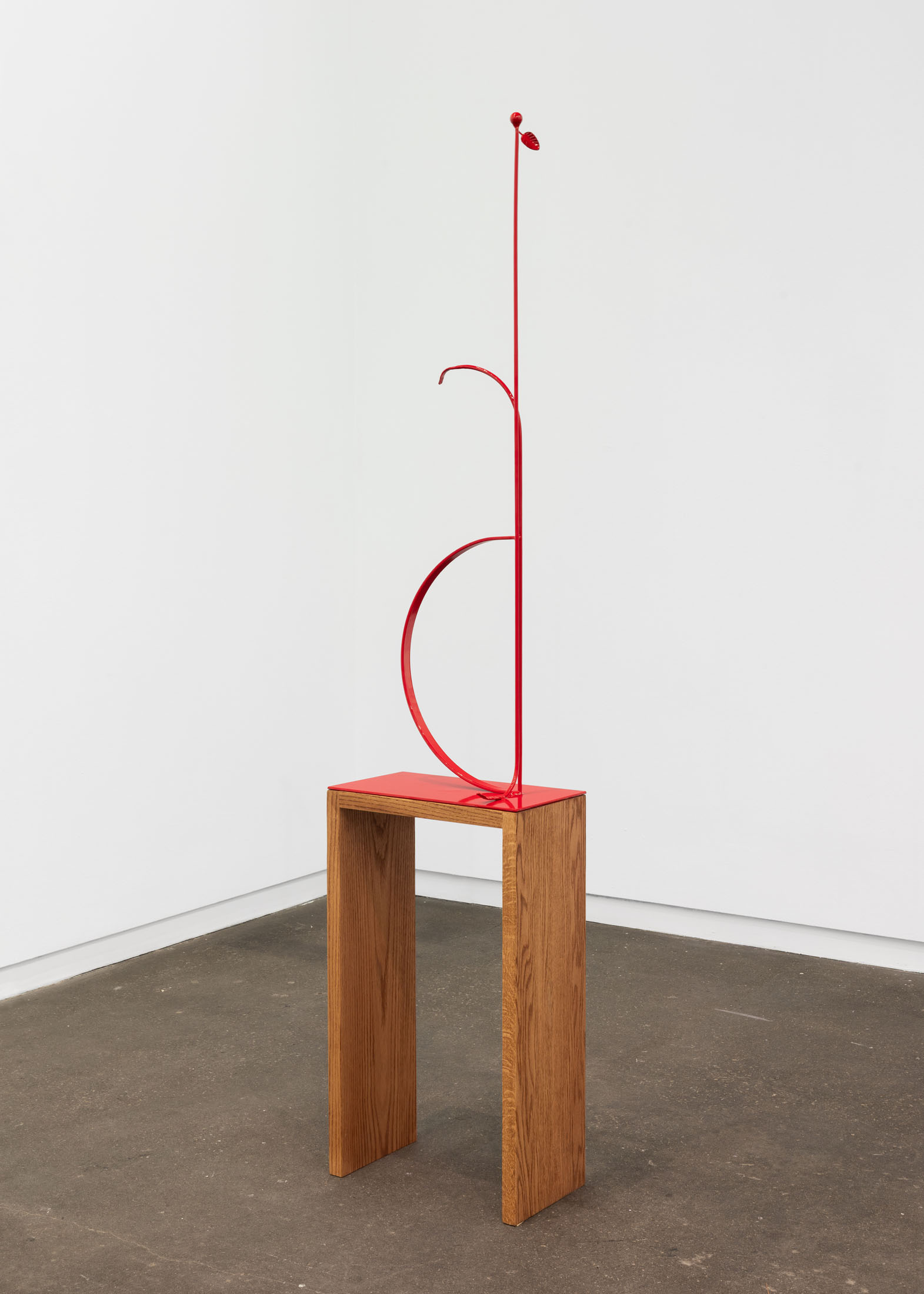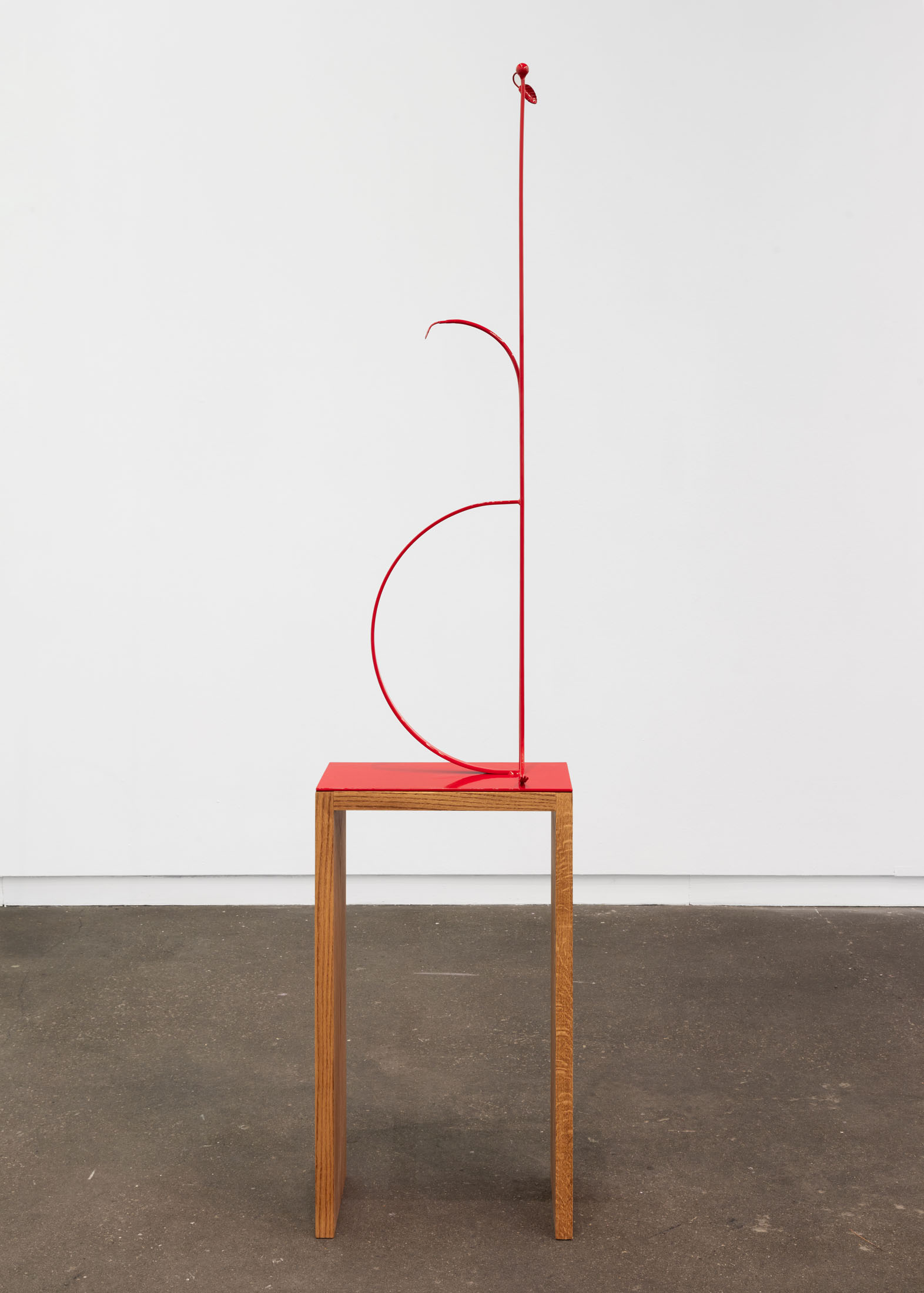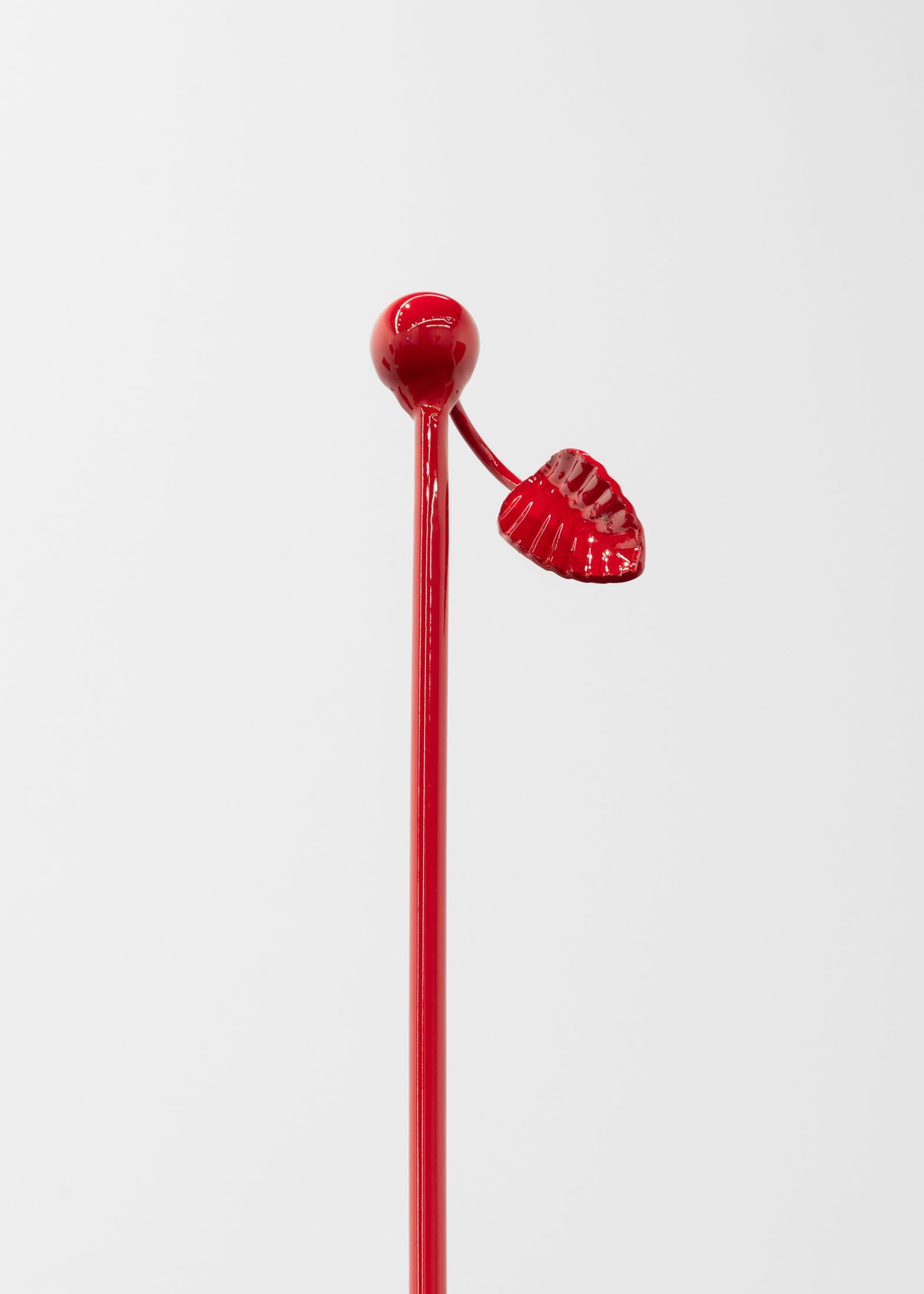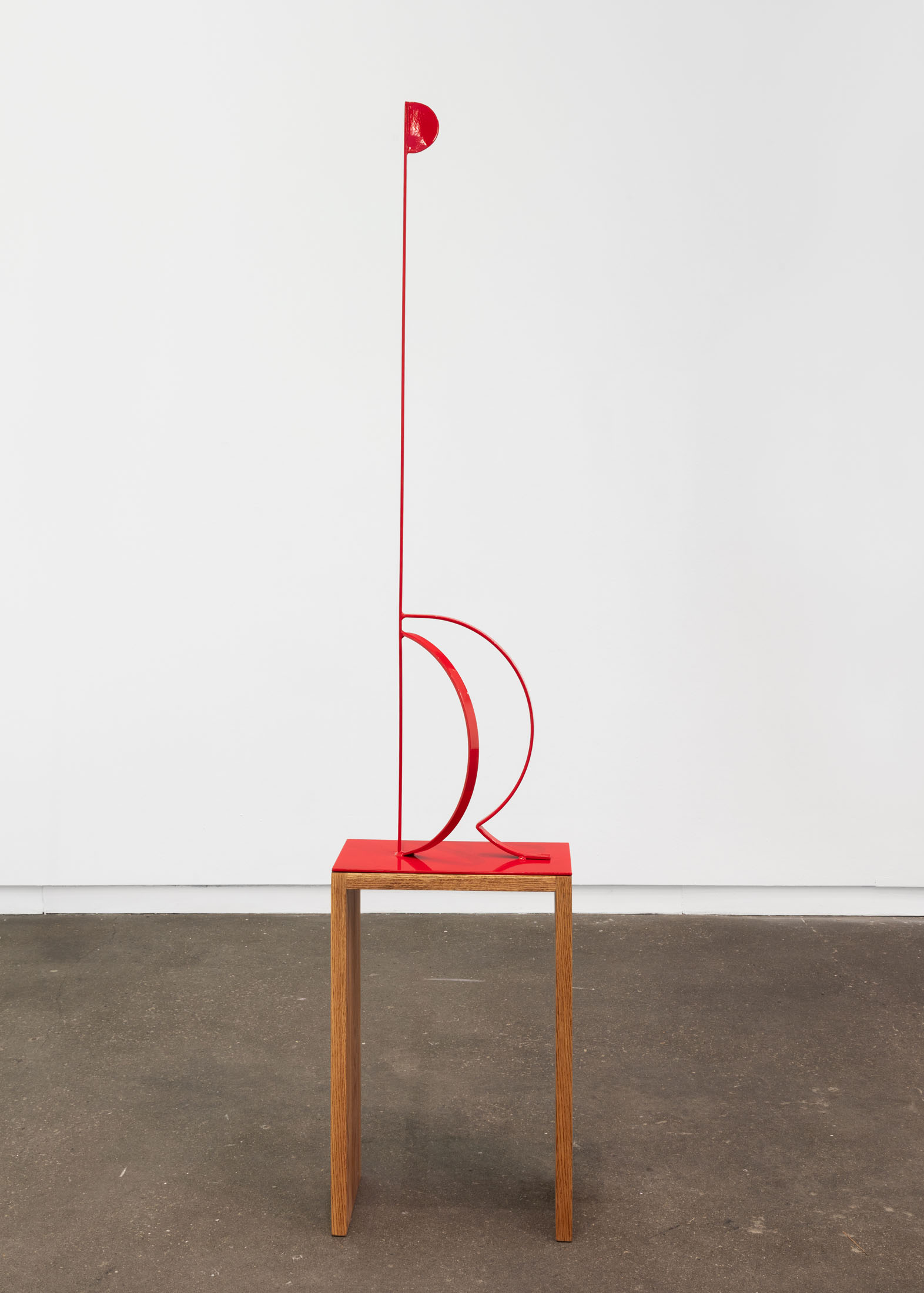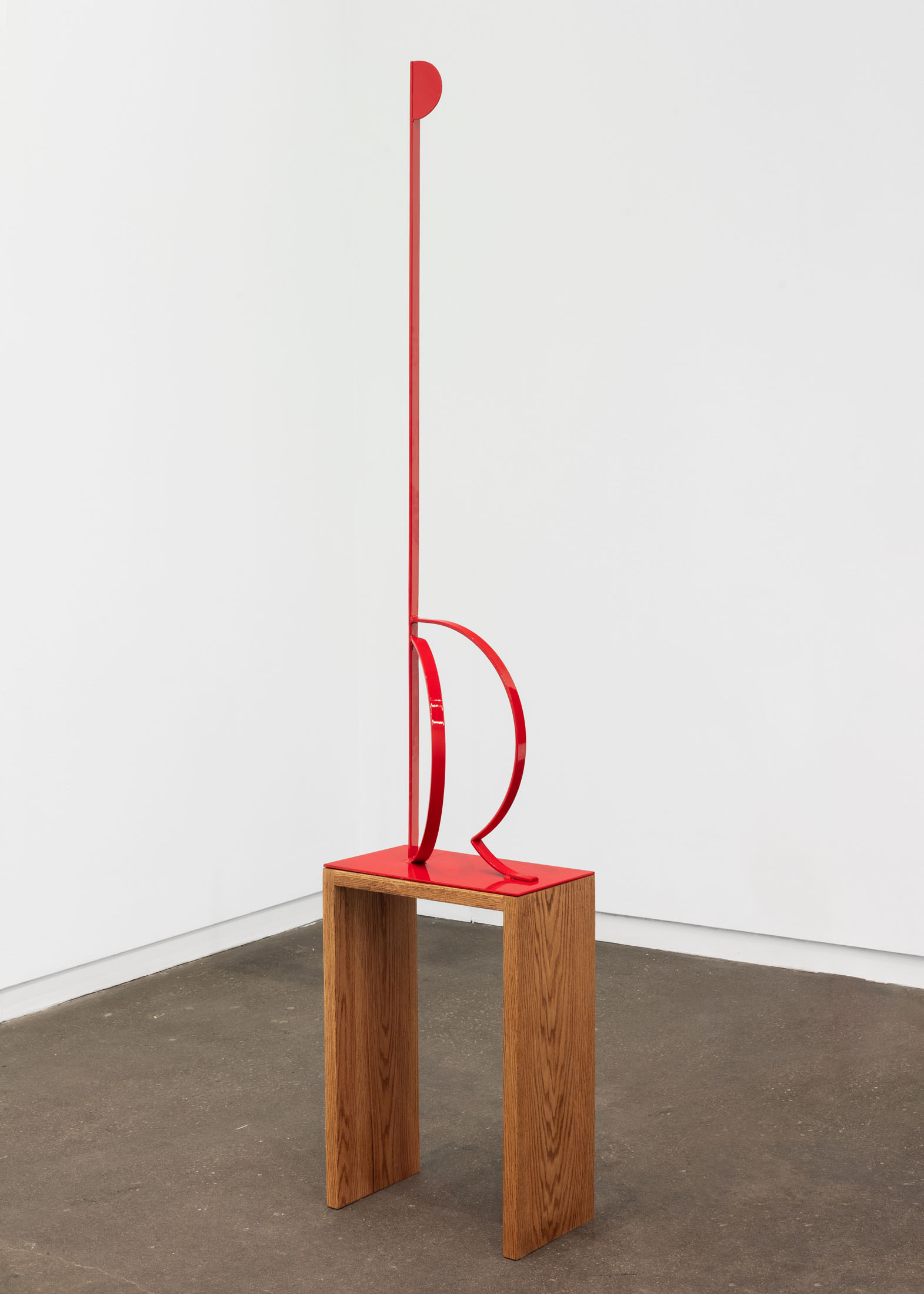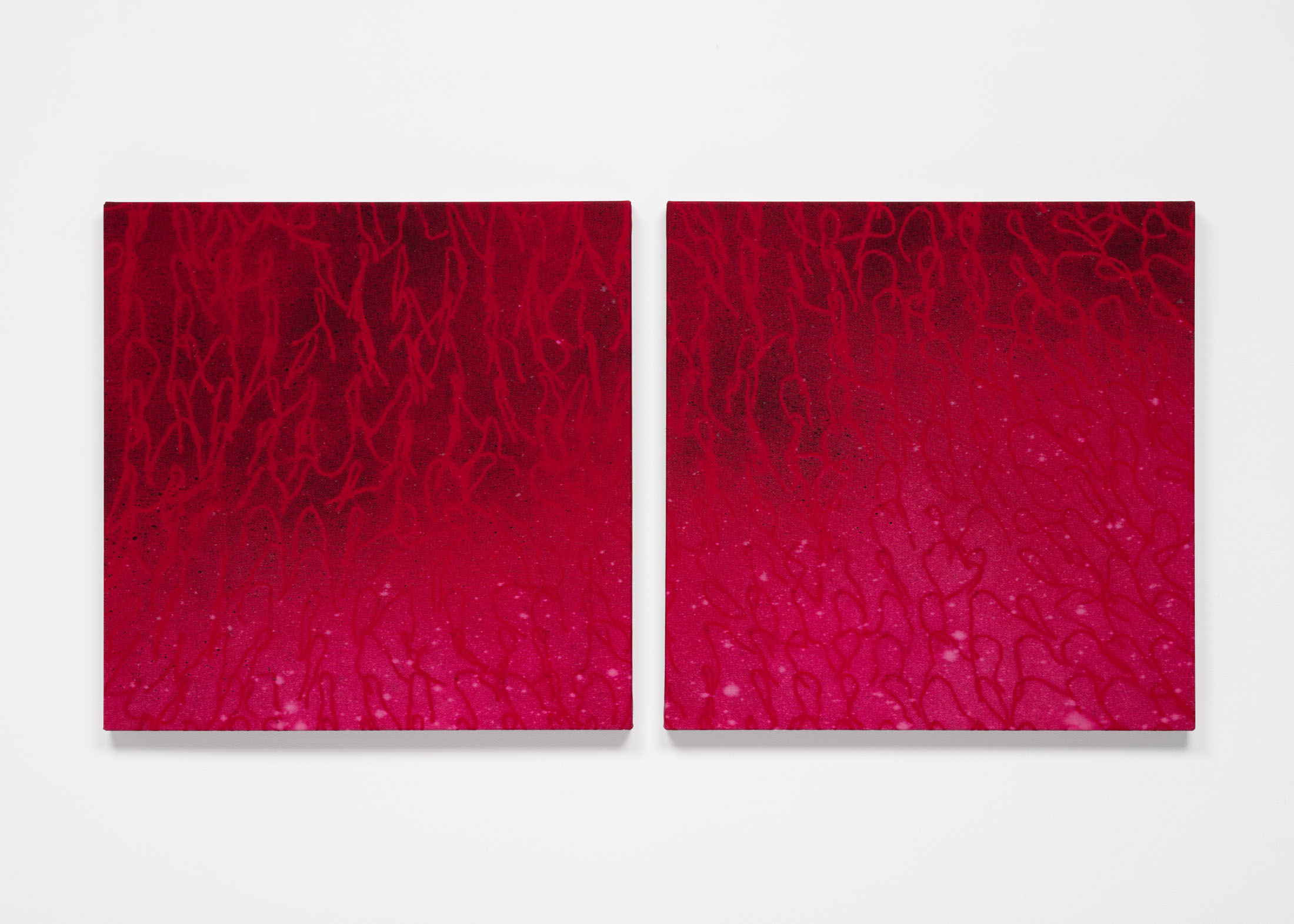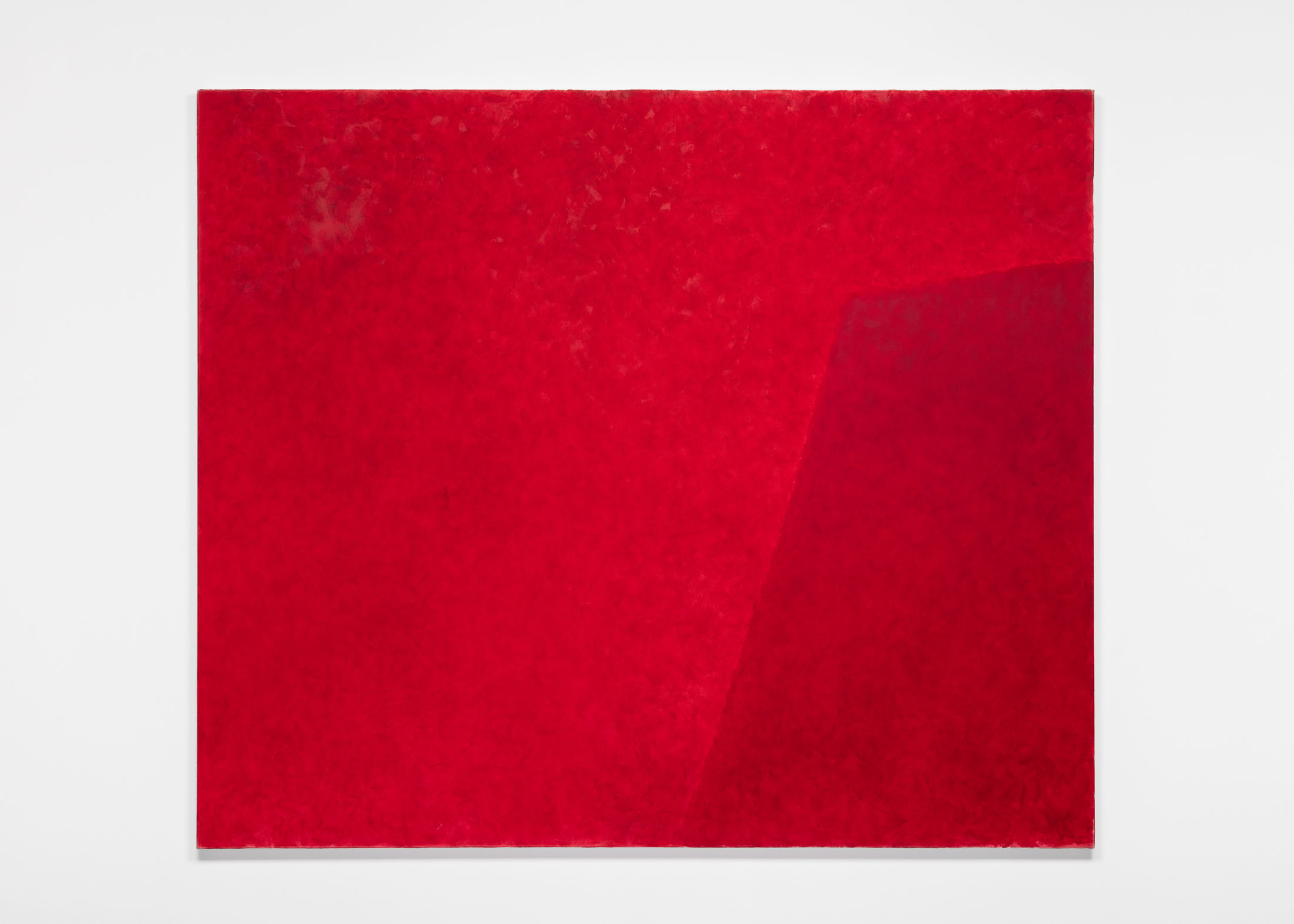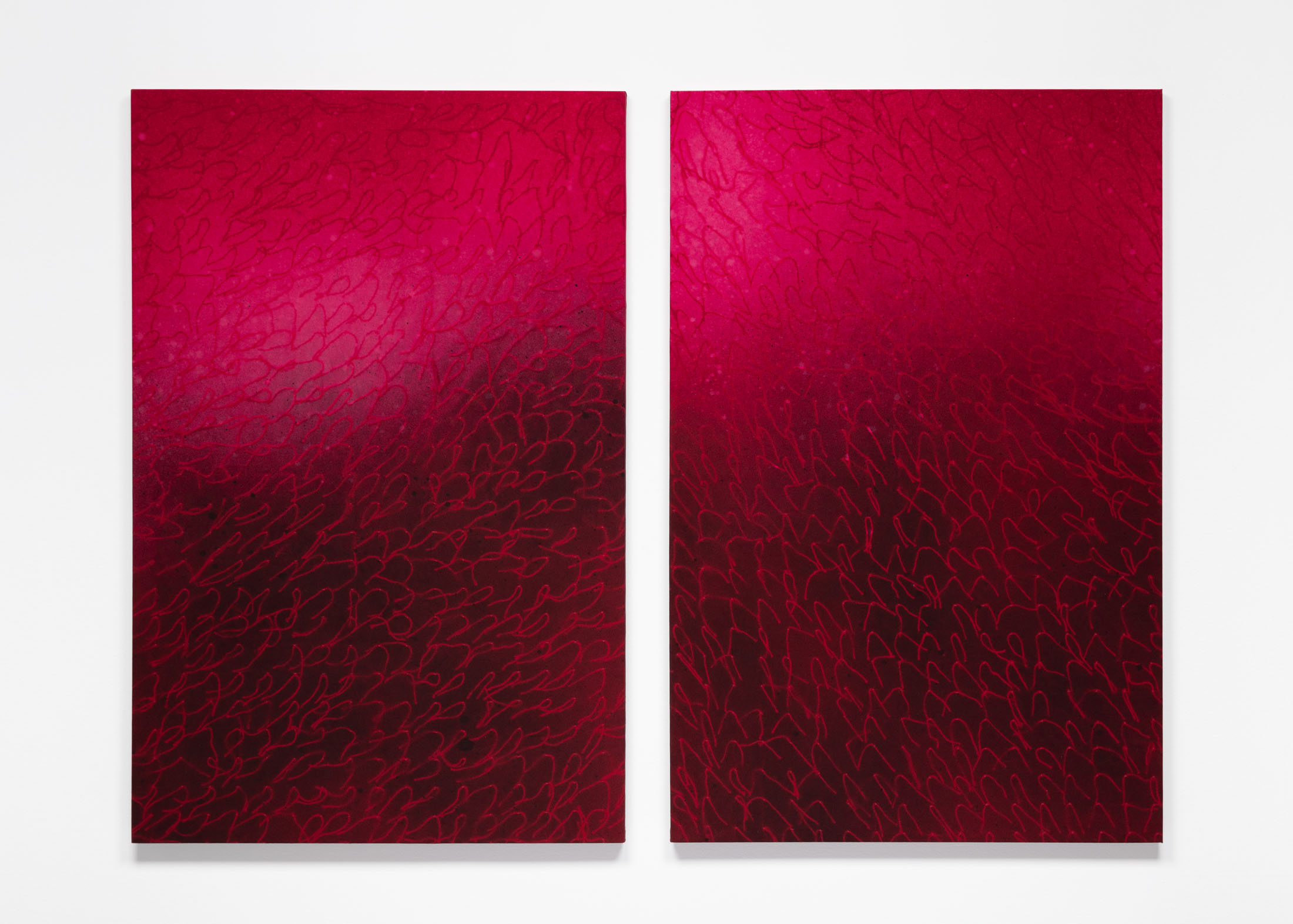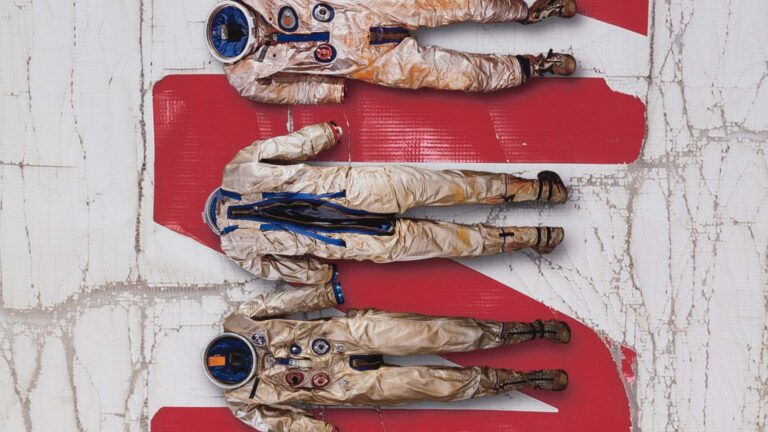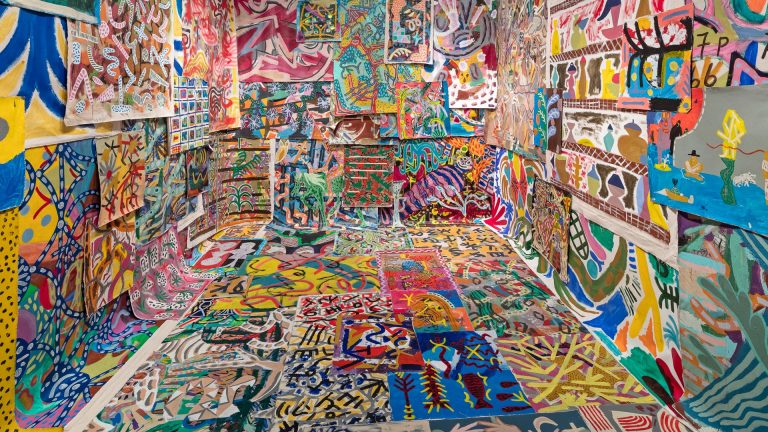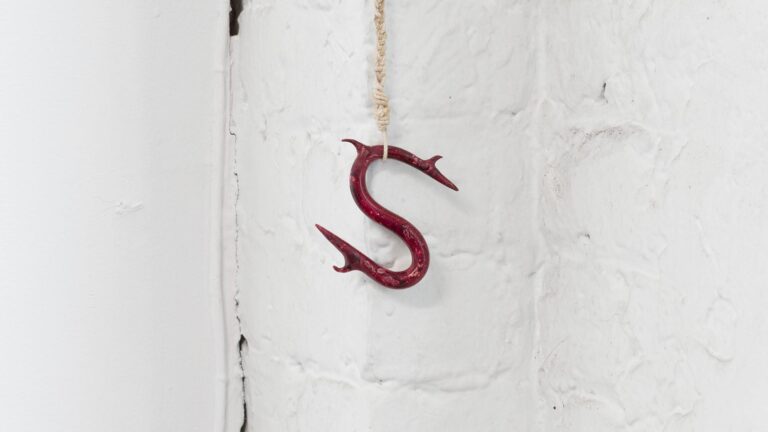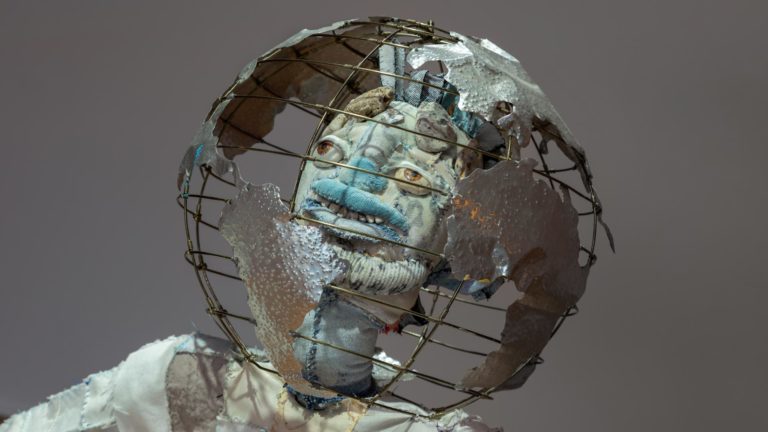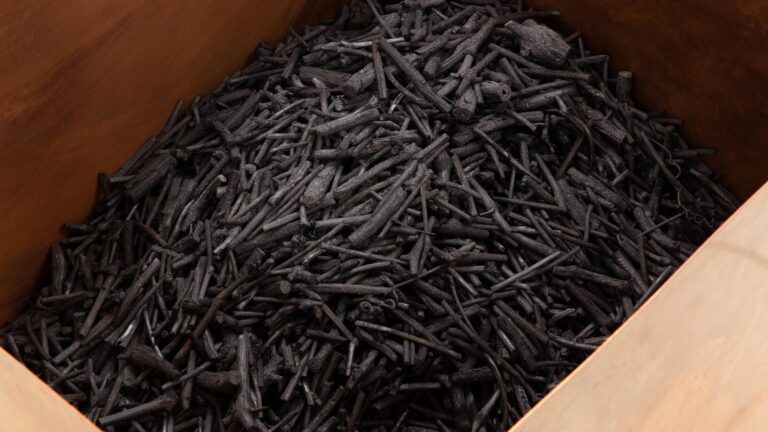
Daniel Faria Gallery is pleased to present Caught between the tongue and the taste, a group exhibition featuring works by Annabeth Marks, Claire Milbrath, Emma Kohlmann, Françoise Sullivan, Justin Ming Yong, Maia Ruth Lee, Nina Hartmann, Tony Romano and Sara Cwynar.
Red protects itself. No colour is as territorial. It stakes a claim, is on the alert against the spectrum.[1] Red is the evidence, the marker of what’s inside. It’s almost always a surprise, even when you expect it, even when it’s what you’re going for.[2]
The engulfing red is overwhelming: one cannot dodge its blow.[3] For instance, this: red. Deep deep beautiful red. Albany slip.[4]
Red is lovers separating
Red is a succubus
Red enjoys itself. It is pleased by its own power
Red is physical
Red is earthbound
Red laughs at the ethereal
Red is all heart, no head
Red does not think
Red is a horse rearing
Red is a sun, burning[5]
The red bird you wait for falls with giant wings[6] where, silted red, sometimes the sun sets facing a red sea.[7]
Red is the colour of shame. Red is the colour of jealousy. Red is the colour of resentment. Red is the colour of reproach.[8] The red heart in my chest is squinting like a fist.[9]
Red Sadness is the secret one. Red sadness never appears sad, it appears as Nijinsky bolting across the stage in mid-air.[10] A live red line.[11]
To deny the existence of red is to deny the existence of mystery.[12]
I send you this cadmium red.[13] One ounce of cadmium red light costs the same as an ounce of the best caviar. The same red costs as much as an ounce of cold-packed human red blood cells.[14]
Red betrays.[15]
The Pacific at night is red and gives off a soot of desire.[16] At earth level pulsing half maroon, half crimson.[17]
Red is the color of the single catastrophe that keeps piling wreckage and is hurled at the feet of the Angel of History
Red is the storm in the wings of the Angel of History that irresistibly propels him into the future
Red destroys
Pulling the Tower brings red
Red is the inferno
Red is volcanic
Everything below surfaces in time[18]
How red the Fire rocks below.[19]
A red that leaps from green and holds it there[20] Bury — me, in such a shroud of red![21]
[1] Derek Jarman, Chroma, Woodstock, NY: The Overlook Press, 1994, p. 31.
[2] Maggie Nelson, “Something Dipped” Cabinet Magazine Issue 38, Summer 2010.
[3] Yve-Alain Bois on Barnett Newman’s Who’s Afraid of Red, Yellow, and Blue III (1967-68), in Hal Foster, Rosalind Krauss, Yve-Alain Bois, and Benjamin H. D. Buchloh, Art Since 1900: Modernism, Antimodernism, Postmodernism, London: Thames & Hudson Ltd., 2004, p. 366.
[4] Eileen Myles,The Importance of Being Iceland: Travel Essays in Art, South Pasadena: Semiotext(e), 2009, p. 323.
[5] Hanna Hur, “Miyoko Ito: Heart of Hearts”, Book Talk, April 17, 2024, Institute of Contemporary Art, Los Angeles in partnership with Ooga Booga and Pre-Echo Press.
[6] Gwendolyn MacEwen “The Red Bird You Wait For” from The Selected Gwendolyn MacEwen, Holstein, ON: Exile Editions, 2007, p. 89.
[7] Elizabeth Bishop “The Moose” from Elizabeth Bishop: The Complete Poems 1927-1979, New York: Farrar, Straus and Giroux, 1983, p. 169.
[8] Louise Bourgeois, as quoted by Elena Schmidt in “Seeing Red,” Schirn Mag, Frankfurt: Schirn Kunstalle, August 30, 2021.
[9] Myles, 241.
[10] Mary Ruefle, My Private Property, Seattle, WA: Wave Books, 2016, p. 41.
[11] Anne Carson, Autobiography of Red, New York: Alfred A. Knopf Inc., 1998, 79.
[12] Carson, 105.
[13] From the title of John Berger’s correspondence with John Christie, published in 2000 by Actar Publishing.
[14] Amy Sillman, “On Color” in Painting beyond Itself: The Medium in the Post-medium Condition, London: Sternberg Press, 2016, p. 108.
[15] Jarman, 43.
[16] Carson, 130.
[17] Louise Glück, “Song” from Louise Glück: Poems 1962-2012, New York: Farrar, Straus and Giroux, 2012, p. 269.
[18] Hanna Hur, “Miyoko Ito: Heart of Hearts”, Book Talk, April 17, 2024, Institute of Contemporary Art, Los Angeles in partnership with Ooga Booga and Pre-Echo Press.
[19] Emily Dickinson, “On my volcano grows the Grass” from The Complete Poems of Emily Dickinson, Toronto: Little, Brown and Company, 1976, p. 685.
[20] James Schuyler, “Hymn to Life” from Collected Poems, New York: Farrar, Straus & Giroux, 1993, p. 215.
[21] Emily Dickinson, “If this is ‘fading’” from The Complete Poems of Emily Dickinson, Toronto: Little, Brown and Company, 1976, p. 56.