Search

OUTSIDE LINEAGE

Curated by Raisa Maudit

“A ideia de progresso é a que sustenta a destruição de tudo em nome do futuro.”
Ailton Krenak, Ideias para adiar o fim do mundo

Broken lines that pretend to be straight. To think from the idea of lineage is to confront a promise of continuity, of orderly passage, of an inheritance that flows without resistance. It tells us that we come from a clear, universal place from which we move toward another equally legible one. Beneath its soft appearance, lineage draws a straight path and demands fidelity: to origin, to form, to rhythm. Everything that does not conform to that line—what deviates, fragments, bifurcates, or is interrupted—falls outside the narrative, suspended in a time that does not progress and cannot become genealogy. To name lineage is also to decide which memories may be inherited and which must disappear. For this reason, to speak of what exists outside lineage is not to deny the past, but to listen to what insists when the line breaks. When linear temporality becomes a tool of hegemonic power, resisting definition, classification, and inheritance turns into a device for survival.

In a context of intensified neo-imperialism, where old logics of domination reappear under renewed technological, economic, and cultural languages, Outside Lineage emerges as a space of friction: a series of twelve videos that think and practice resistance from the margins of inheritance and outside the temporality that sustains it.

Imperialism—yesterday and today—does not only occupy territories; it administers time. It decides which temporalities are valid, which are relegated to backwardness, and which are declared obsolete. As Ngũgĩ wa Thiong’o has noted, colonial violence also acts upon the imagination, breaking the relationship between language, memory, and history. Added to this rupture is another: the imposition of a single time that invalidates rhythms, cycles, and durations not aligned with the logic of power. In response, many contemporary practices operate from bastard genealogies that cannot be cleanly inherited, and from presents that refuse to be read as a transition toward a predetermined future.

In dialogue with this condition, the notion of ch’ixi memories developed by Silvia Rivera Cusicanqui allows us to think overlapping temporalities that neither merge nor reconcile—layers of time that coexist without integrating into a single narrative, without obeying the imperial chronology of progress. Outside Lineage situates itself precisely there: in the friction between times, in the refusal to order the present as a promise of the future, and in resistance to the dominant languages that organize thought—toward a rebellion against the end of the idea of the world… of “one world.”

The twelve episodes of the program bring together artists who work from visions historically linked to resistance against hegemonic power— orality, opacity, myth, linguistic disobedience, the body, the night, fragmentation—activated as contemporary strategies that disrupt the linearity of time. Languages that do not move toward synthesis, but insist, reappear, fold back on themselves, and refuse closure.

Outside Lineage does not propose a new canon or an alternative genealogy. Nor does it propose a new chronology. It proposes something else: breaking with the idea of an inheritance without fissures. To think and create outside lineage also means to think and create outside imperial time, where history is not inherited or advanced, but contested, interrupted, and reactivated.

At a moment when neo-imperialism flourishes massively and at speed, this program affirms that resistance cannot be limited to a single language, a single era, or a single tool. It must be activated from all the times power has tried to erase, and from all the forms of knowledge it has never fully managed to domesticate.

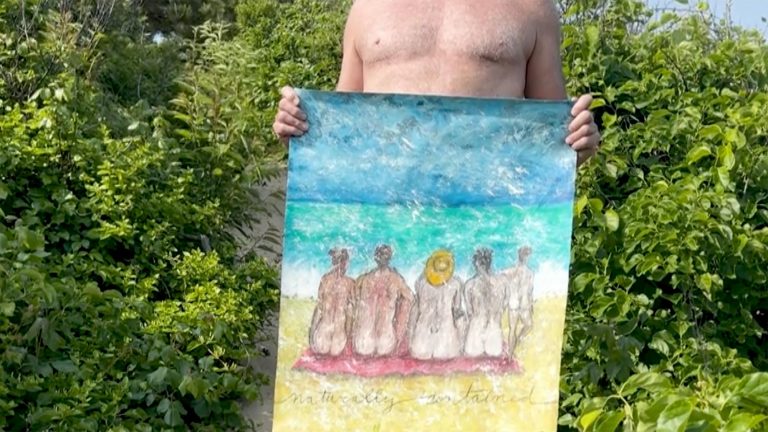
Screenshot

April 7 – 30, 2026

Andrés Senra

Safe Space

2025, Video HD, 07:05 min

 CHAPTER 6: SAFE SPACE: A QUEER SPELL-MANIFESTO

When we think of lineage, we almost automatically associate it with the concept of the individual (the biological or genealogical). However, the question of lineage is clearly applicable to the communal; it may be a shared descent, a political and ideological construction or—as I will argue in this text—a cultural or symbolic continuity. In contemporary communities, the idea of lineage can be applied to metaphorical dimensions that do not speak of blood but of the transmission of ideas, practices, aesthetics, and forms of knowledge.

In the work of Andrés Senra, we find a dichotomy between legacy and the practices and knowledges of communities that we can name, but which are associated with an idea that today feels utopian: the safe space.

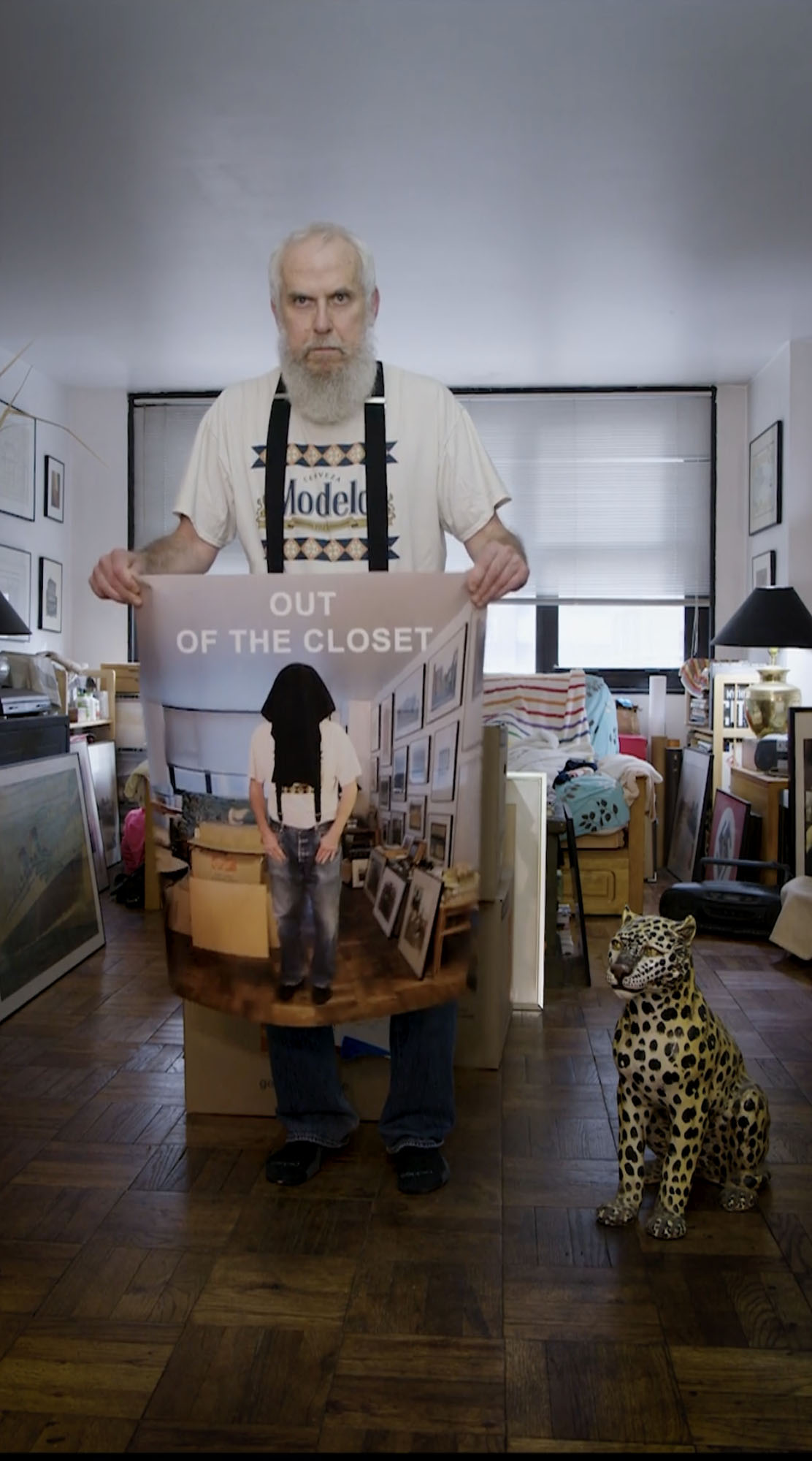
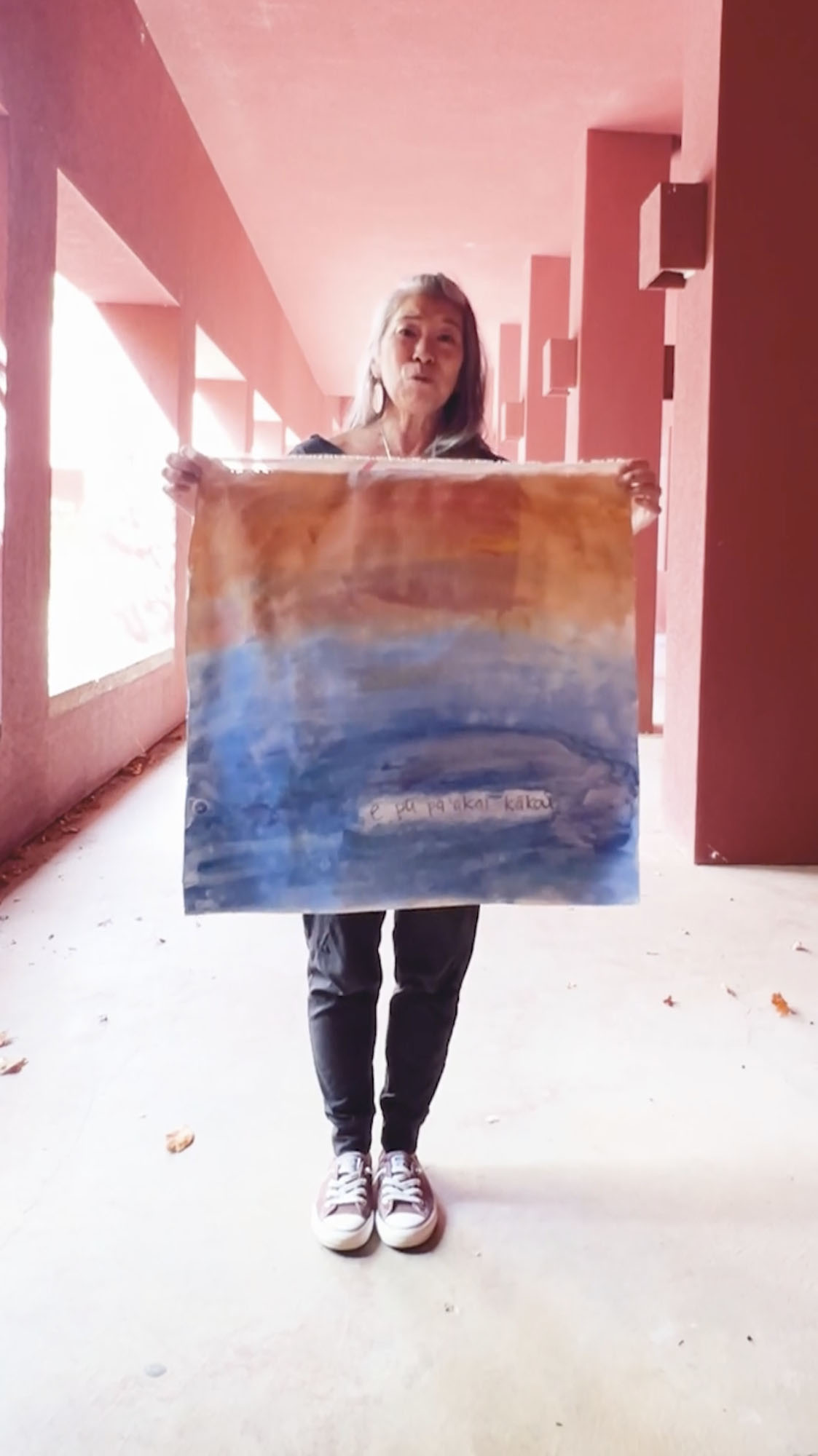
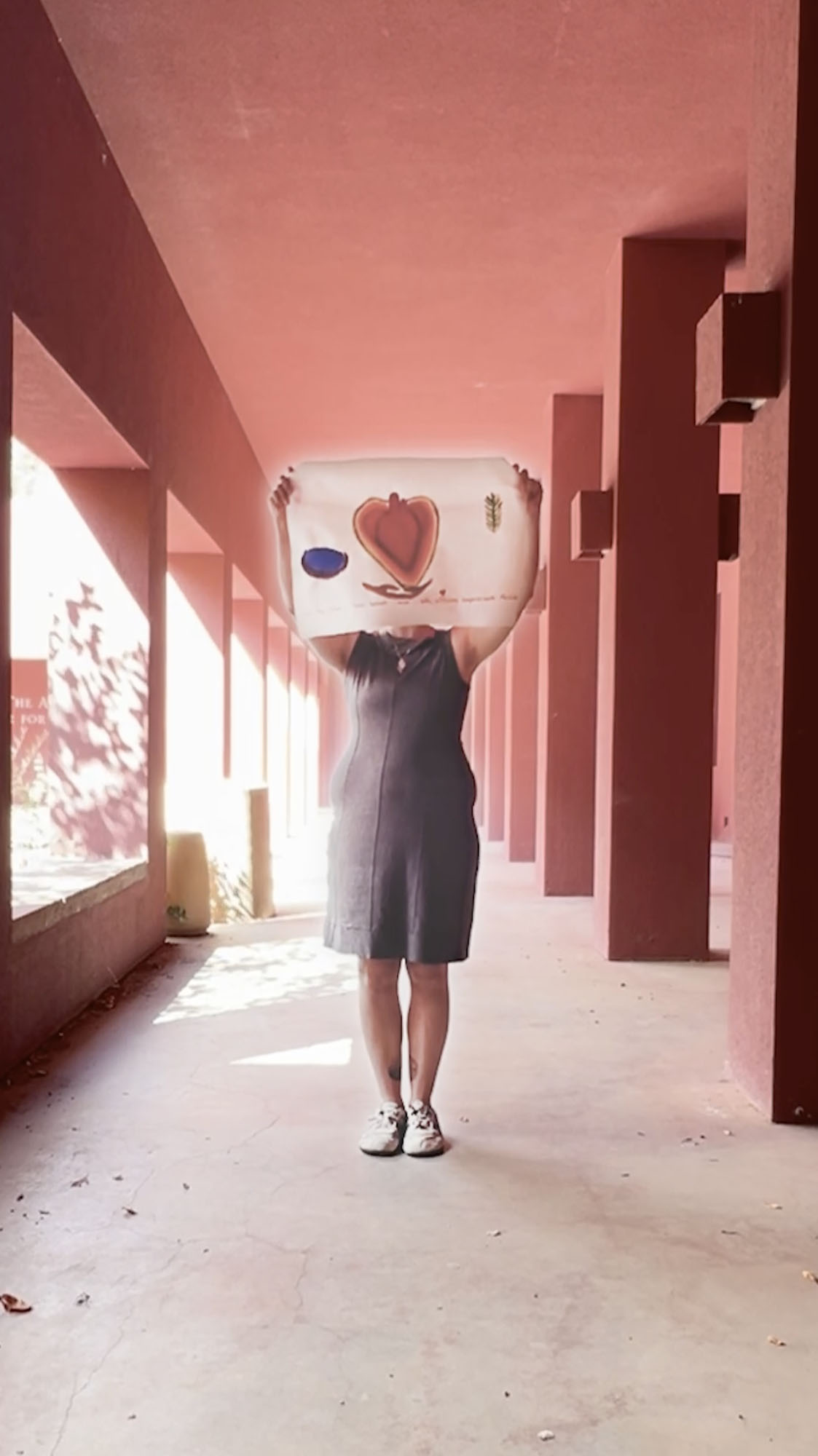
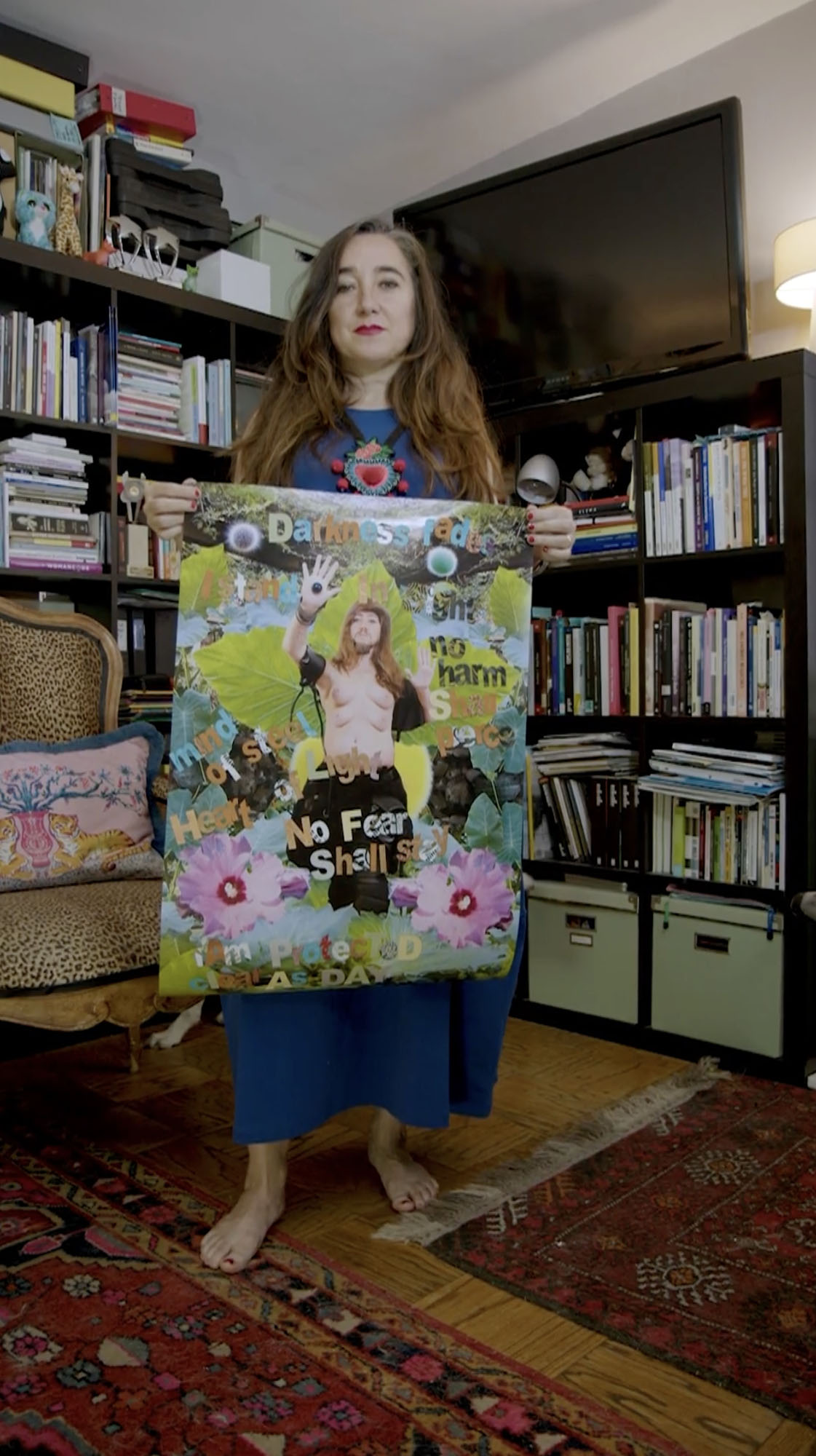
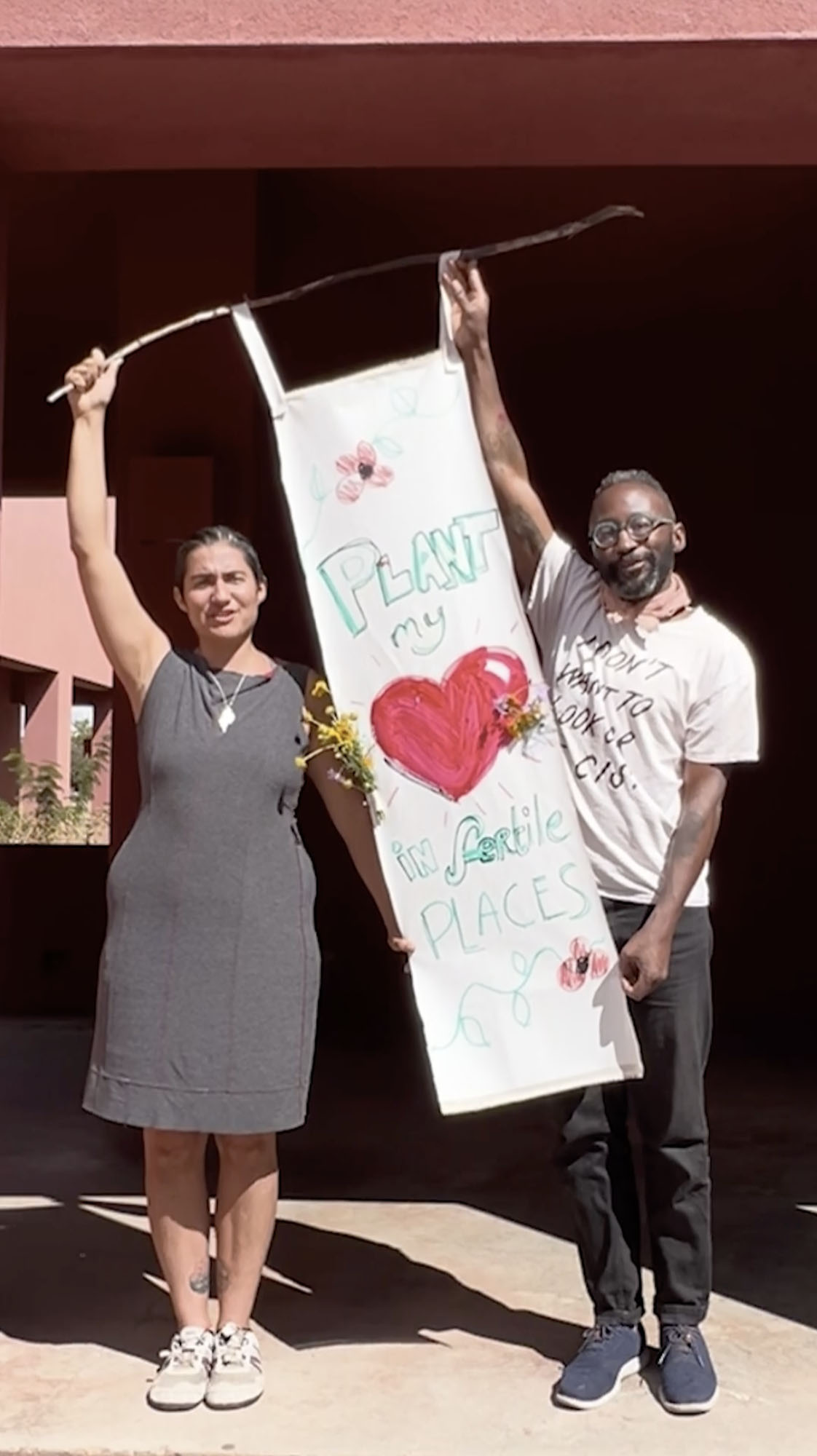
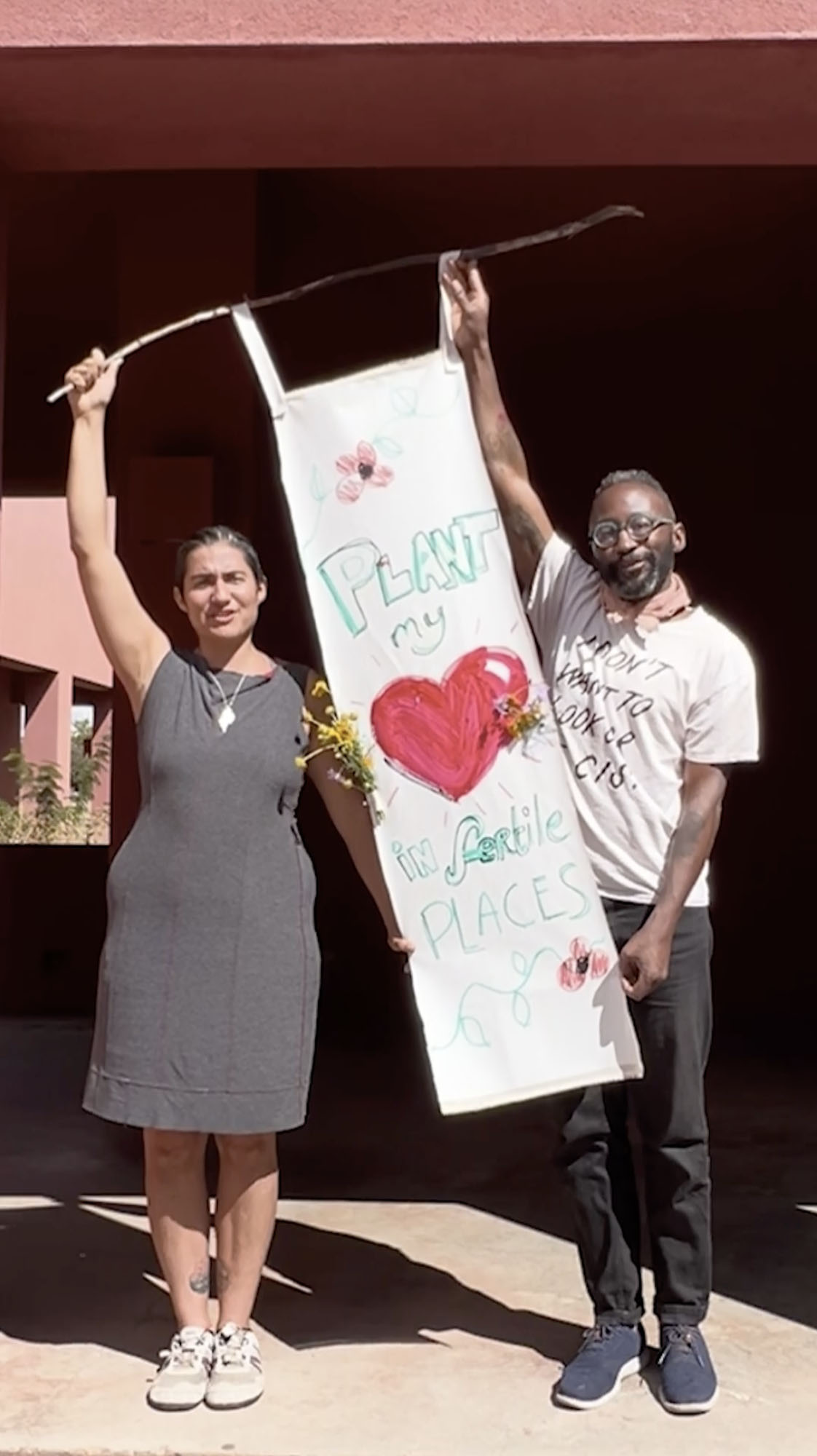
The video piece, part of a larger installation, was situated in a gay cruising area in New York, in a hidden park recognizable through the word-of-mouth of a dissident community. There, practitioners of cruising find themselves surrounded by figures that evoke the sacred (in terms of Catholic sainthood), which the artist transforms into heretical images of protection. The video, composed as a blasphemous hagiography, becomes a spell following J. L. Austin’s idea of the performative utterance: those statements which, when spoken, bring into being what they declare. It functions as an invocation of a space that may not exist, yet can operate beyond the physical. The video therefore acts as a series of rituals of word and body, activating desires for protection, collective care, and resistance in real time—creating a space within a site of delocalized communal performativity. A lineage yet to begin, emerging from desire.

Saint Non-binary, protect me from workplace discrimination. (2025)
Saint Fluid, bless me—starfish—guide and protect LGBTIQ+ refugees crossing the waters. (2025)
Saint Trans Wolf, make my transition safe. (2025)
Saint IVF, protect my reproductive rights and help me build my queer family. (2025)
Saint Marica, help me heal from oppression and transform my pain into power. (2025)
Saint Cure, keep me undetectable. (2025)
Saint Luminaria, illuminate my path toward a queer safe refuge. (2025)
Saint Babalu-Ayé, protect me from ableism. (2025)
Saint Mars, shield me from violence, harassment, and bullying. (2025)
Saint Aletheia, protect me from being forced out of the closet. (2025)
Saint Bacchus, grant me pleasures. (2025)

Andrés Senra (1968, Spain) is a transdisciplinary artist, educator, and curator. His recent work explores identity as a fluid and ongoing process, presenting queer, non-binary, and gender-fluid utopian communities through visual science fiction narratives. These identities are imagined as political and ecological assemblages, intertwining human and non-human beings, as well as human- technological entanglements. Through speculative fiction, he critically examines contemporary society from the perspective of sexual dissidence, promoting figures of monstrosity, hybridity, and post-gender politics.

In his earlier projects, Senra has addressed issues such as homelessness among LGBTIQ+ people, the impact of climate change on our lives, the creation of a queer archive, and a public memorial installation honoring LGBTIQ+ victims throughout history. He has also developed socially engaged art projects in public spaces aimed at empowering different communities, including work related to migration.

He is currently developing a body of work around the concept of the safe space, reflecting on its vital importance for queer communities. Through this exploration, he creates works that take the form of banners, talismans, and invocations—objects activated by the body and language through rituals and spells, transforming them into living desires for protection and collective care.

His work has been exhibited in major international museums and art centers, including Museo Nacional Centro de Arte Reina Sofía (Spain), Amelie-Wallace Gallery (New York), CA2M (Madrid), Centro Cultural Recoleta (Argentina), Hosek Contemporary (Berlin), Art Center Nabi (Seoul), Contemporary Art Center Matadero (Madrid), Interior Beauty Salon (New York), Culture Lab LIC (New York), and BAAD–Bronx (New York).
Screenshot
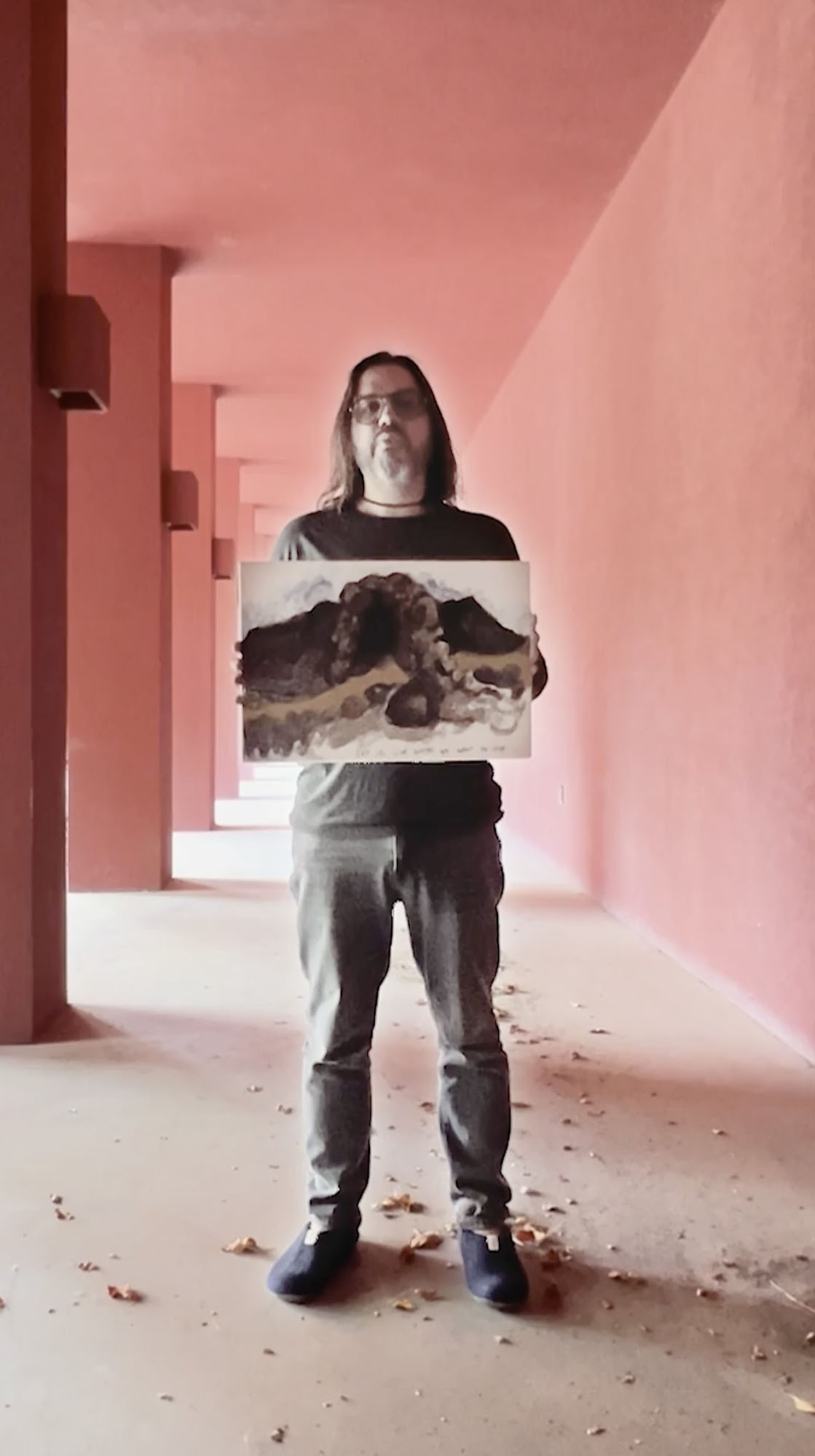
Andrés Senra, es Safe Space, 2025, Video HD, 07:05 min
Screenshot
Andrés Senra, es Safe Space, 2025, Video HD, 07:05 min
Screenshot
Andrés Senra, es Safe Space, 2025, Video HD, 07:05 min
Screenshot
Andrés Senra, es Safe Space, 2025, Video HD, 07:05 min
Screenshot
Andrés Senra, es Safe Space, 2025, Video HD, 07:05 min
Screenshot
Andrés Senra, es Safe Space, 2025, Video HD, 07:05 min

↳ Screen Archives