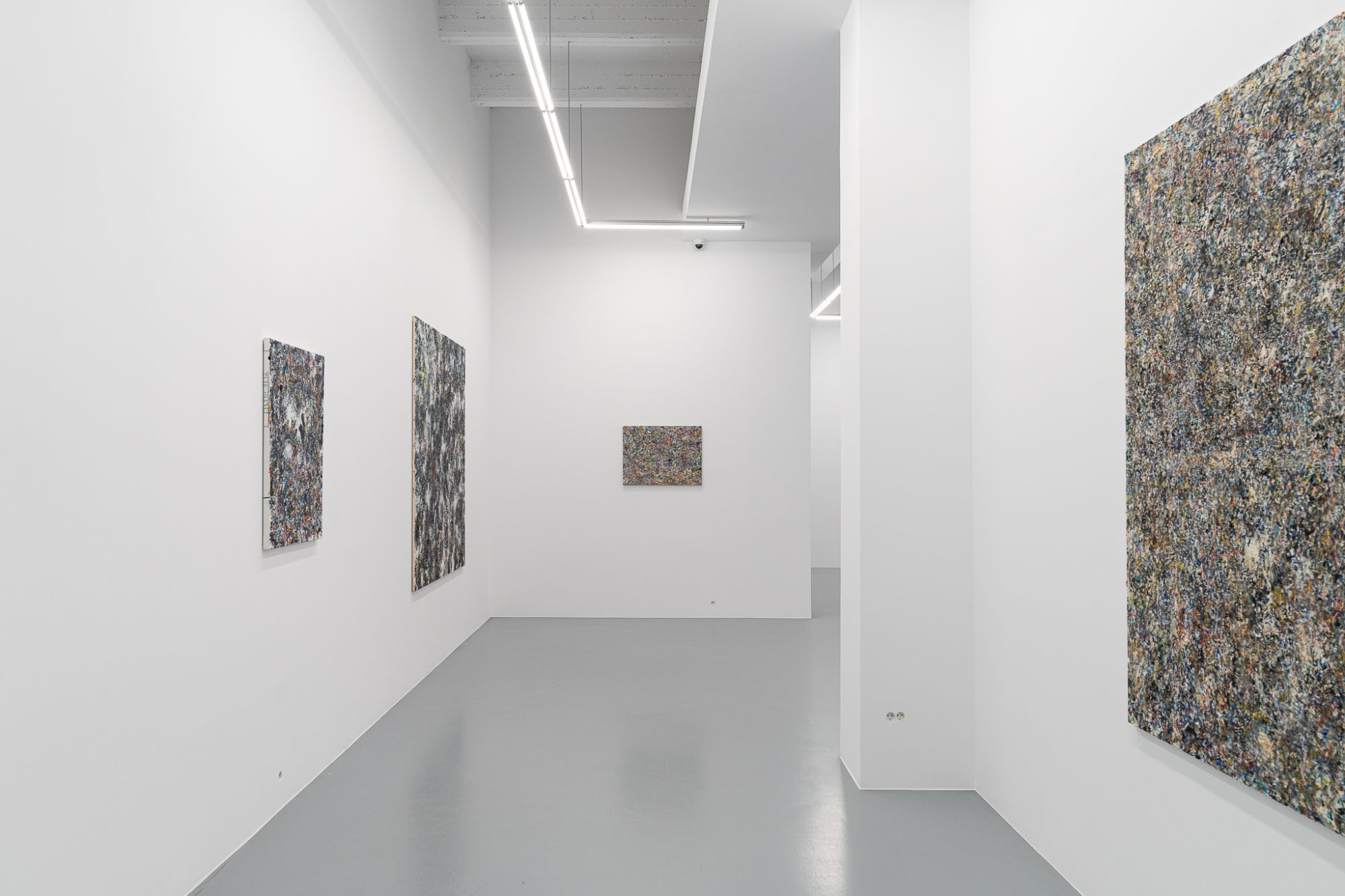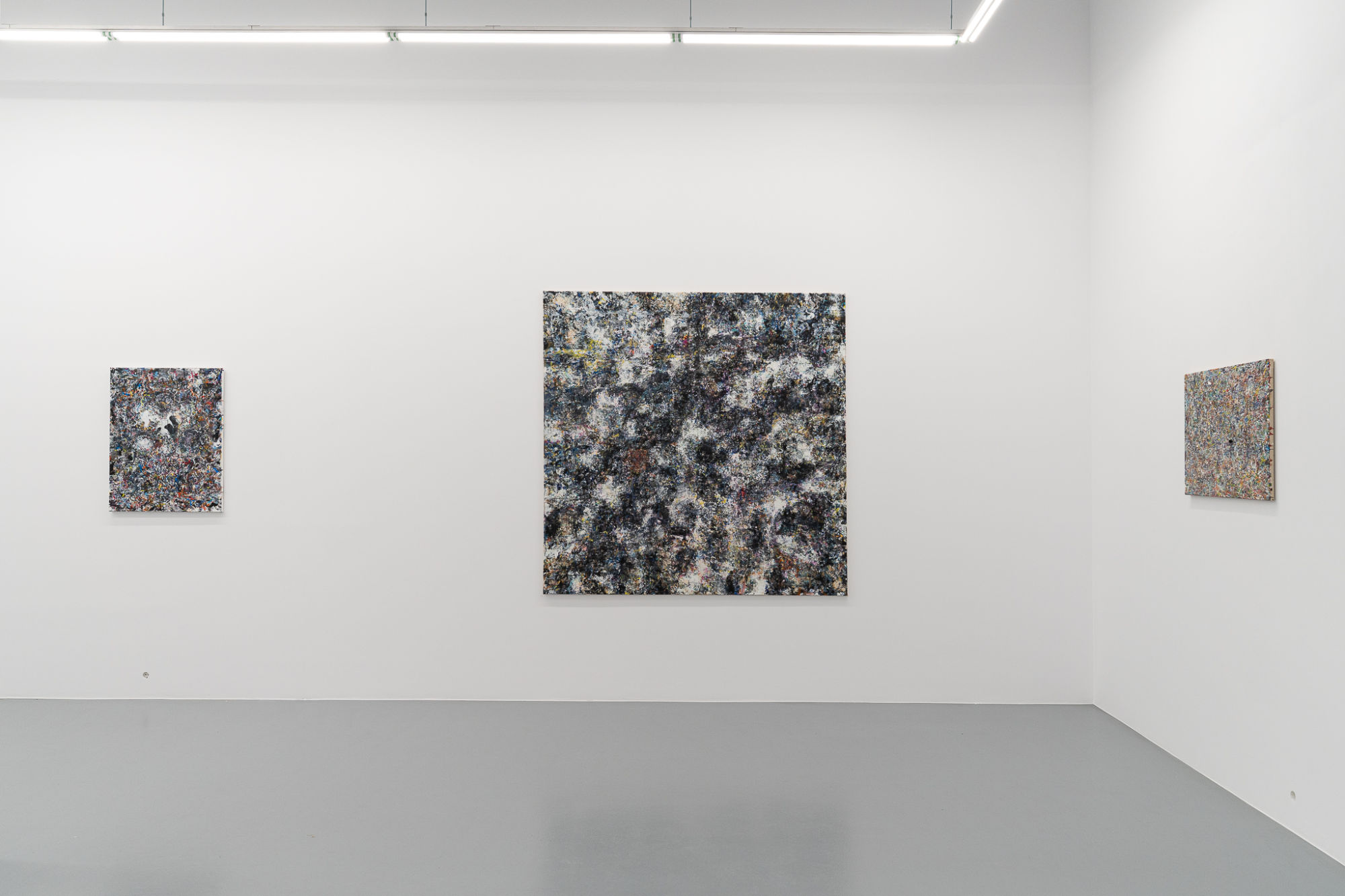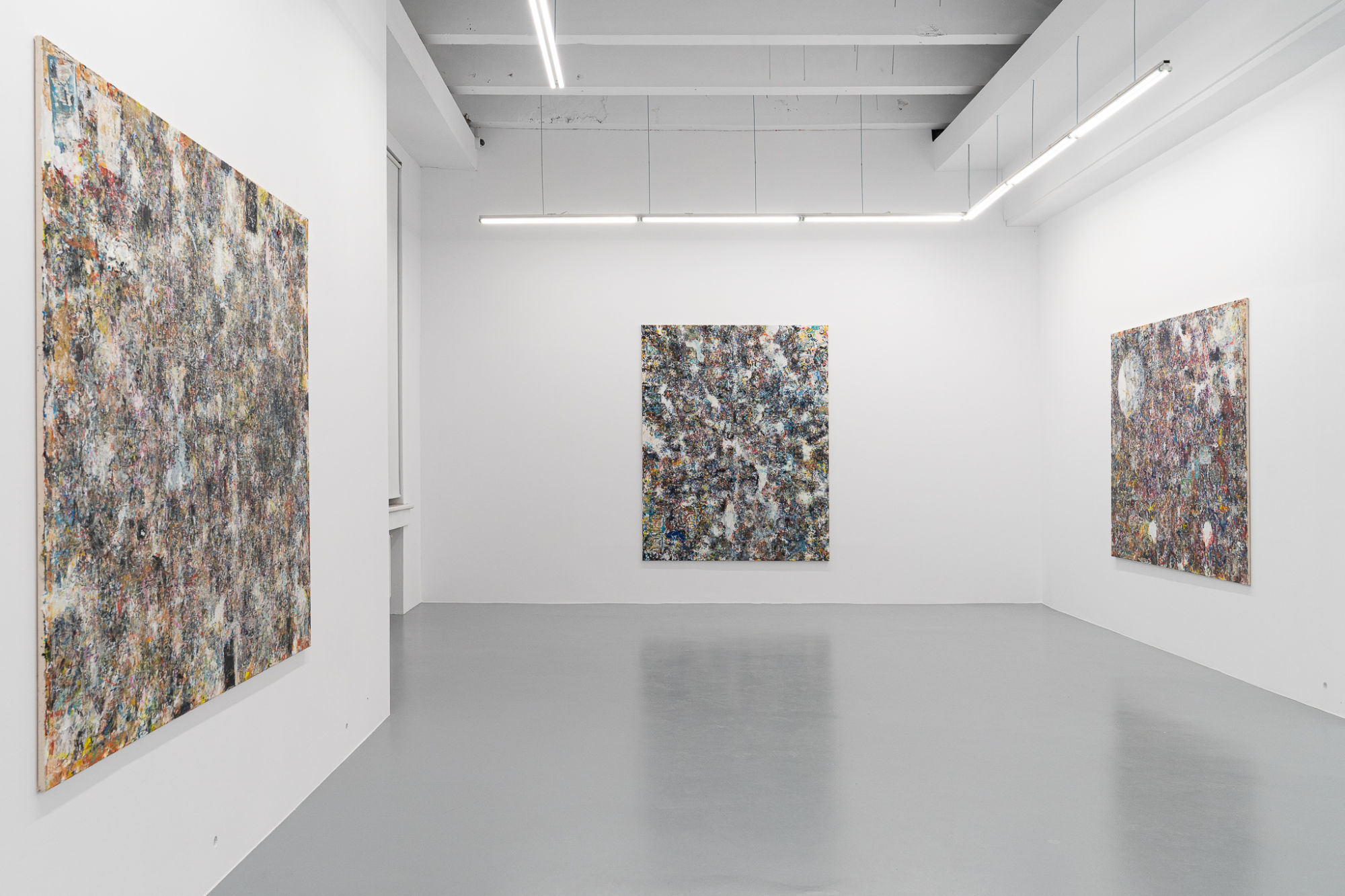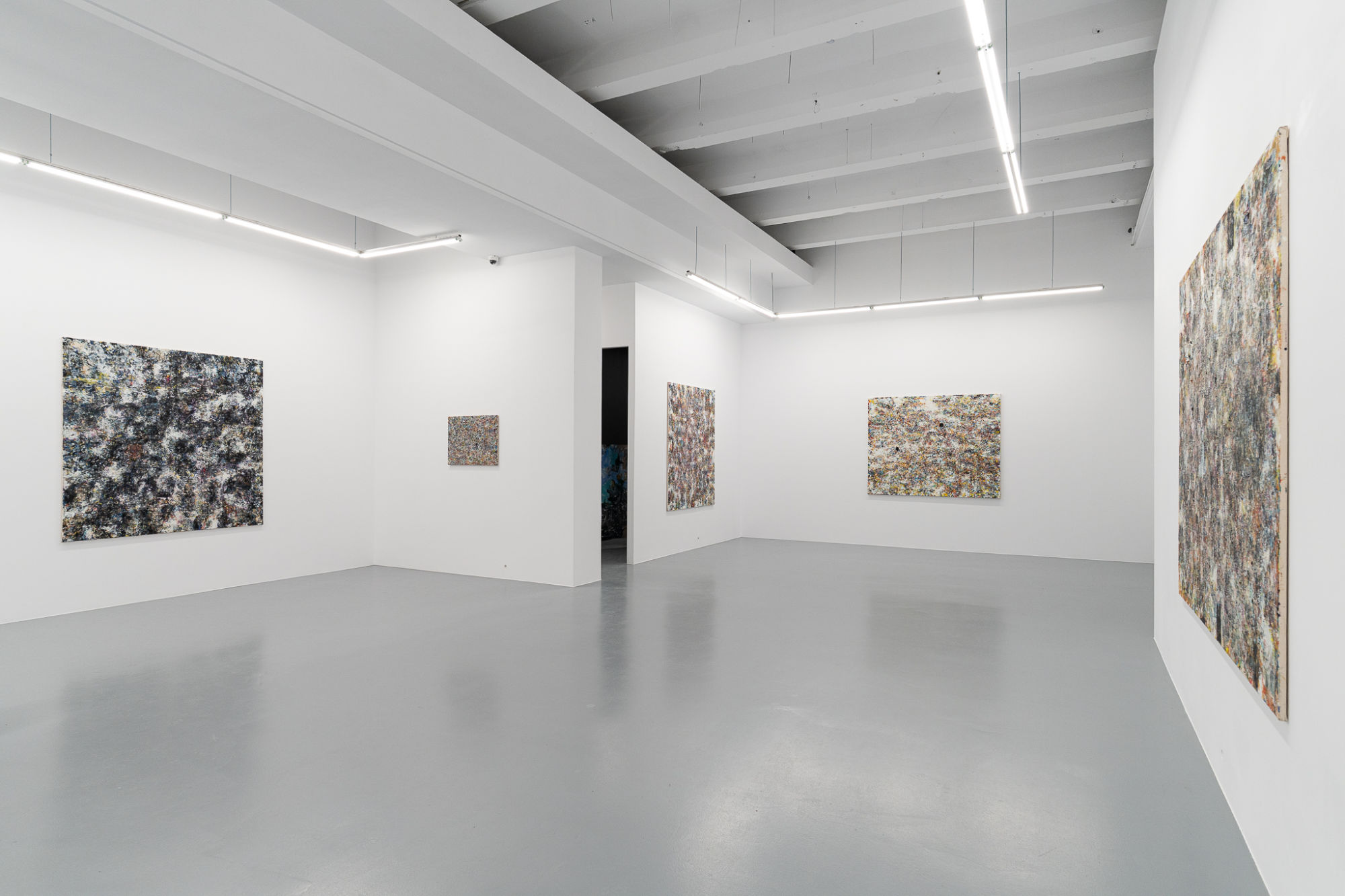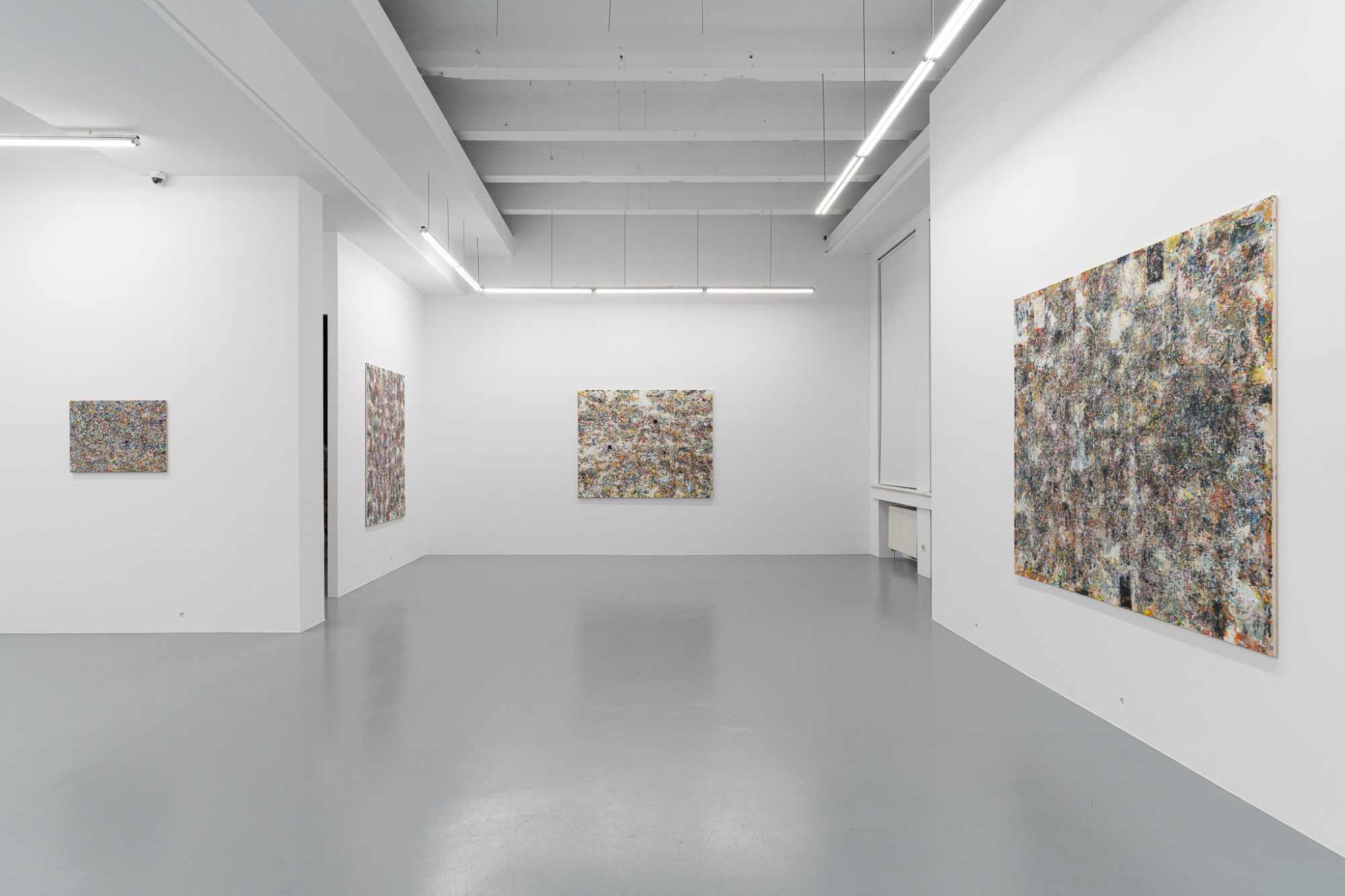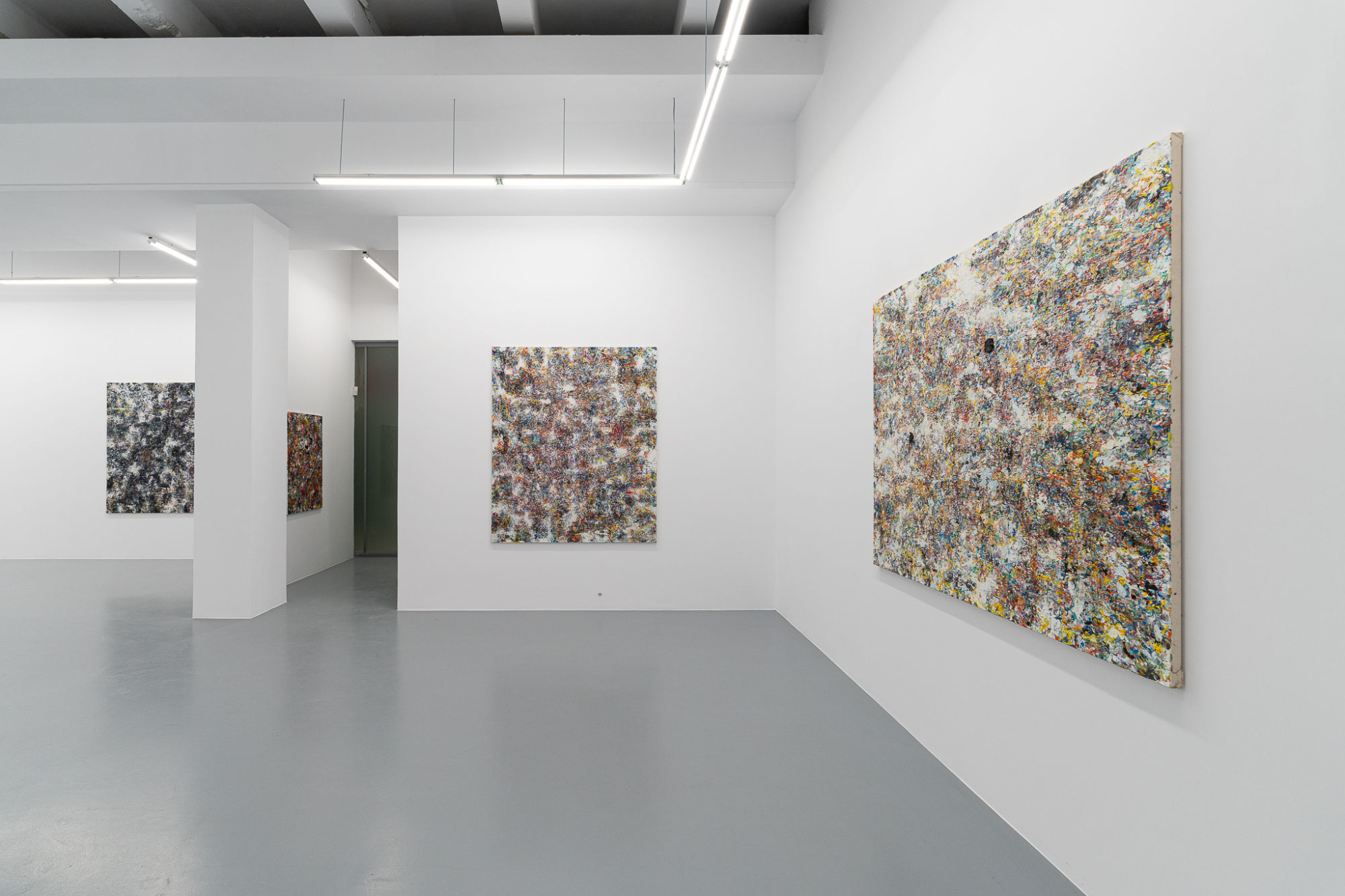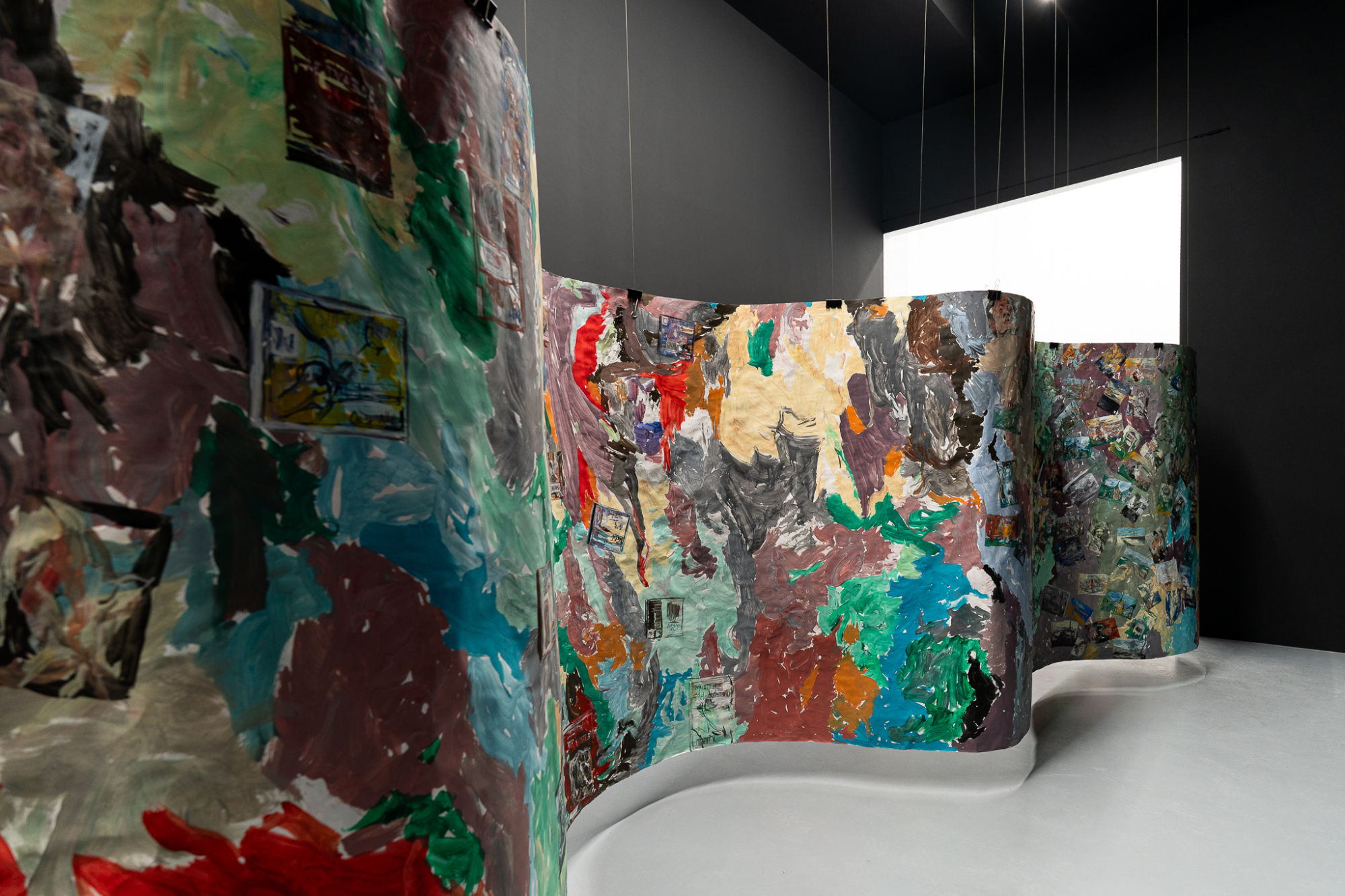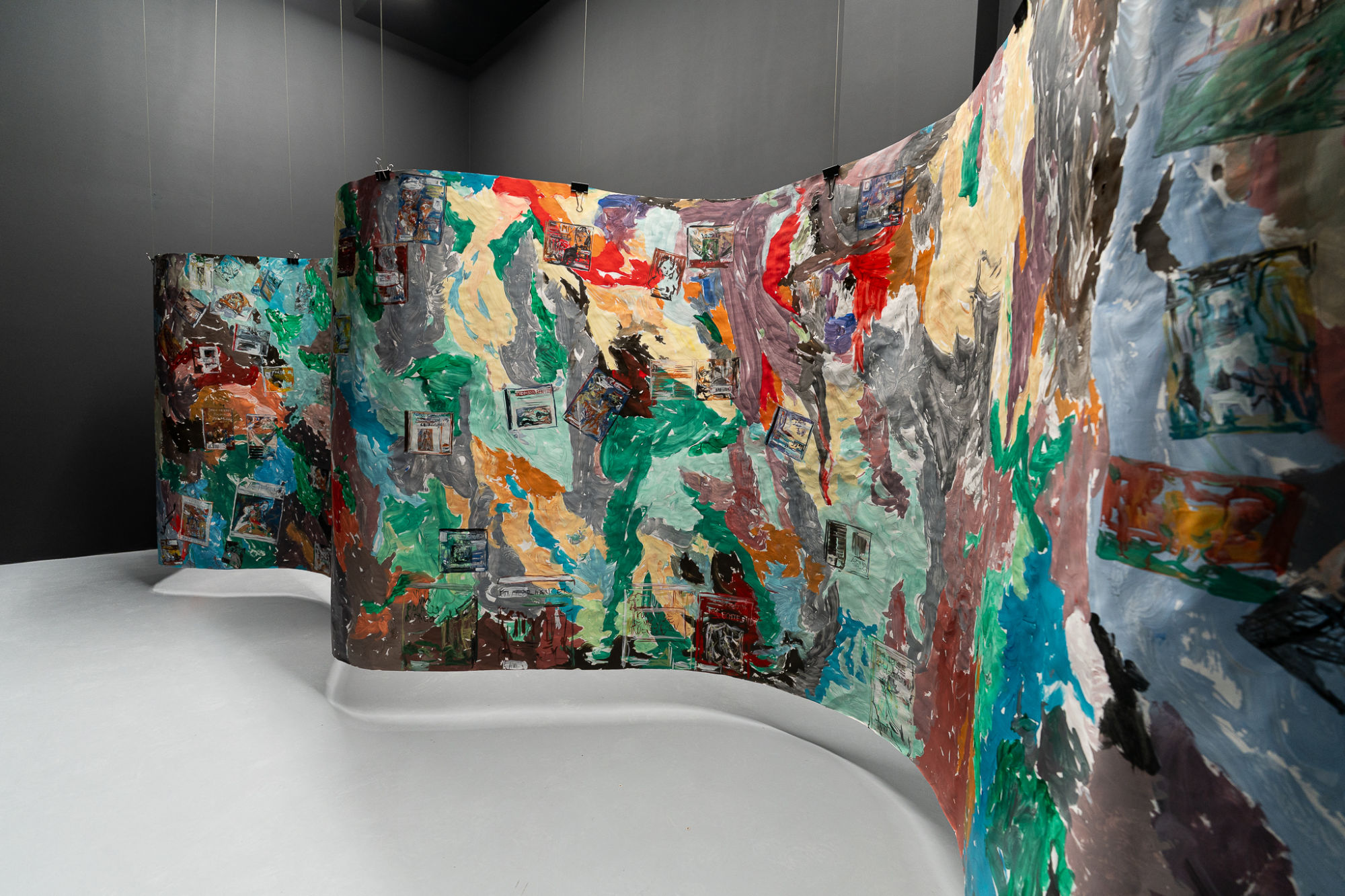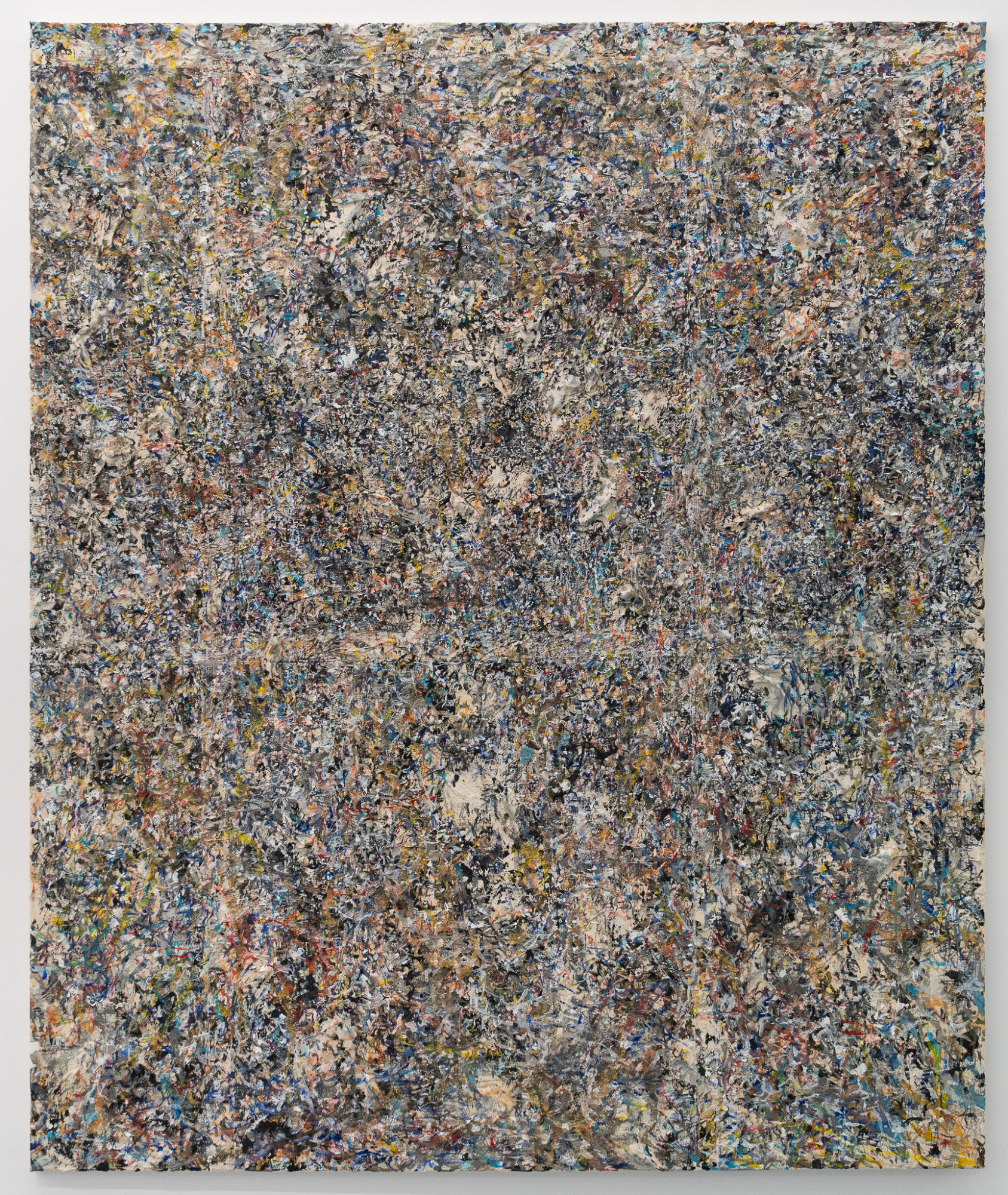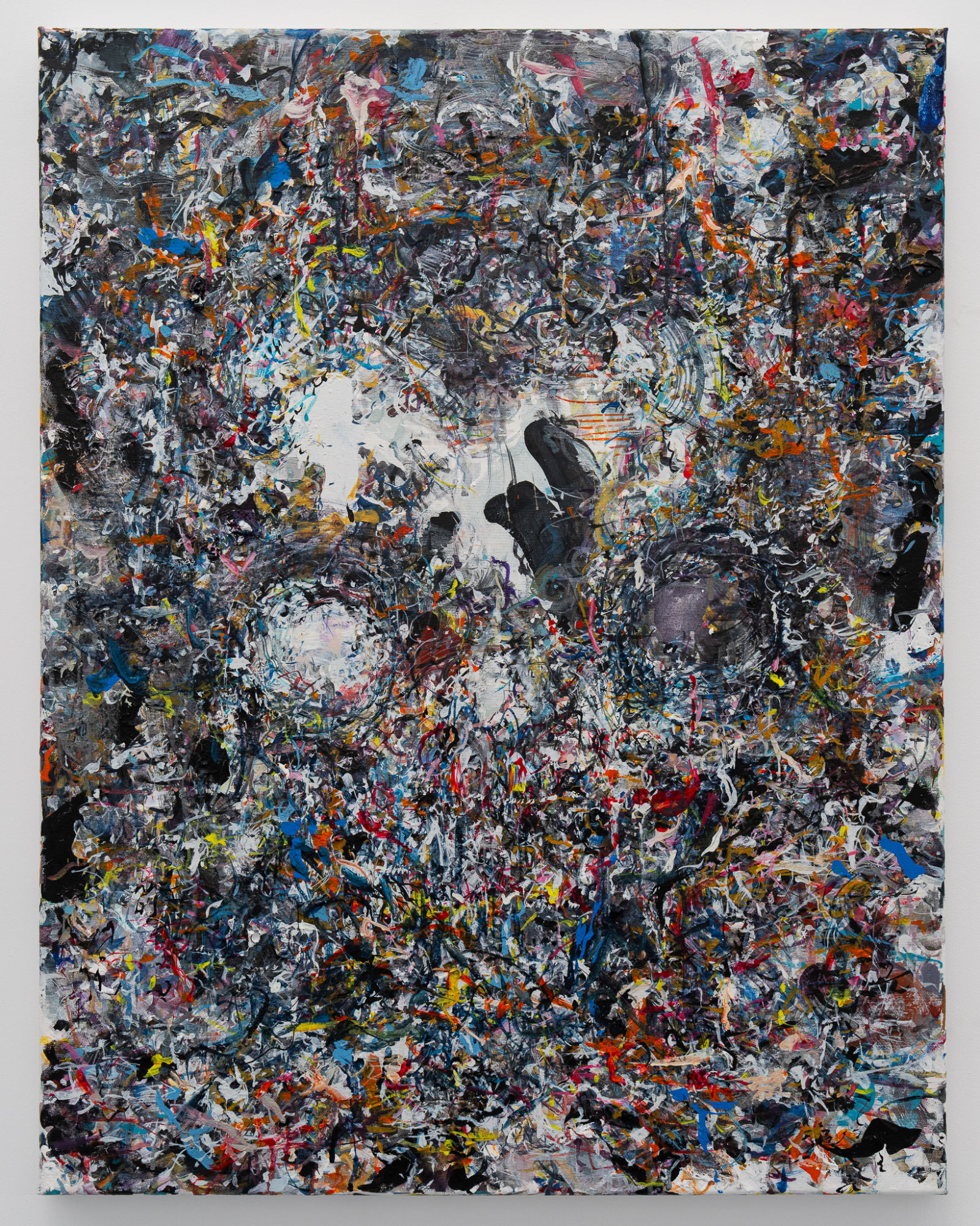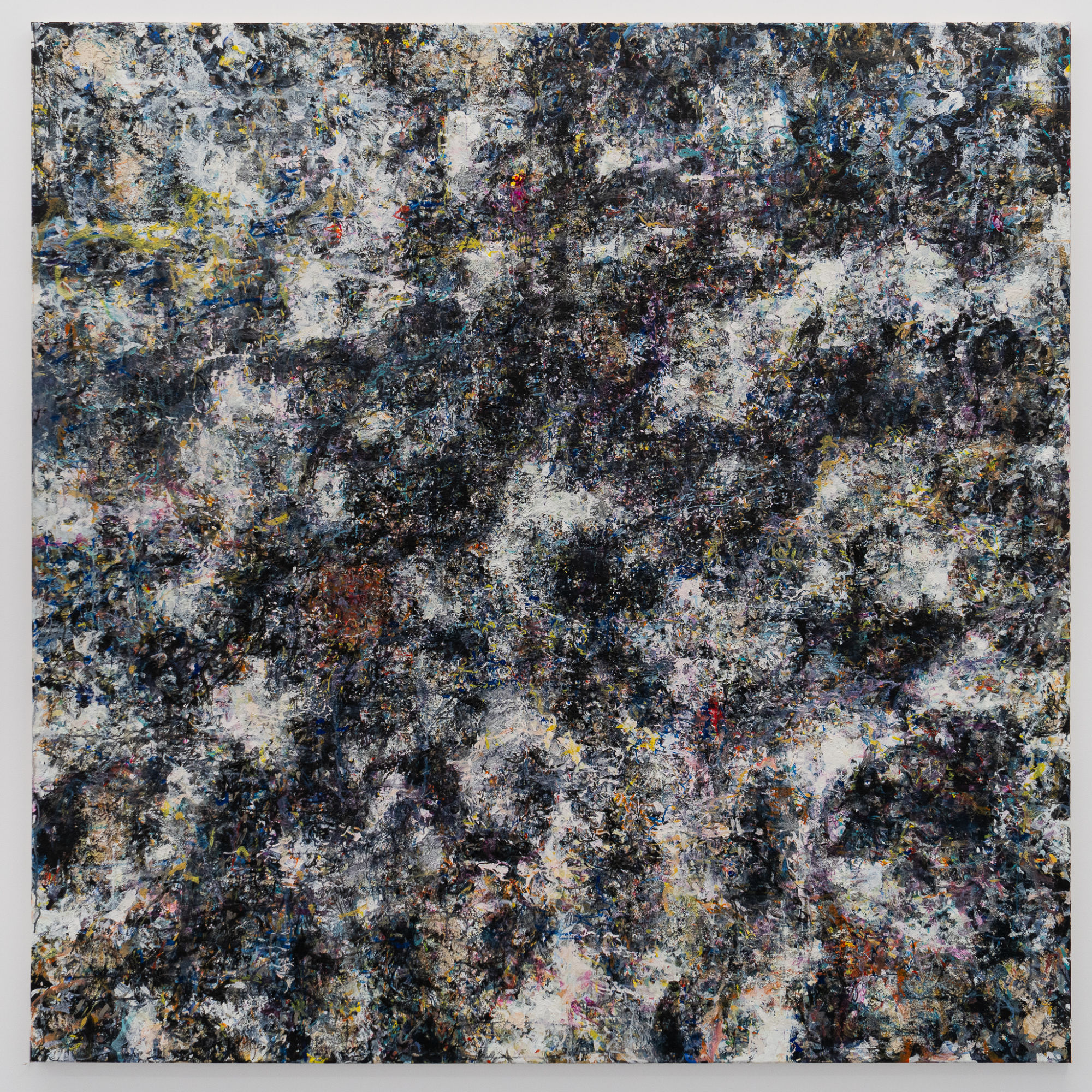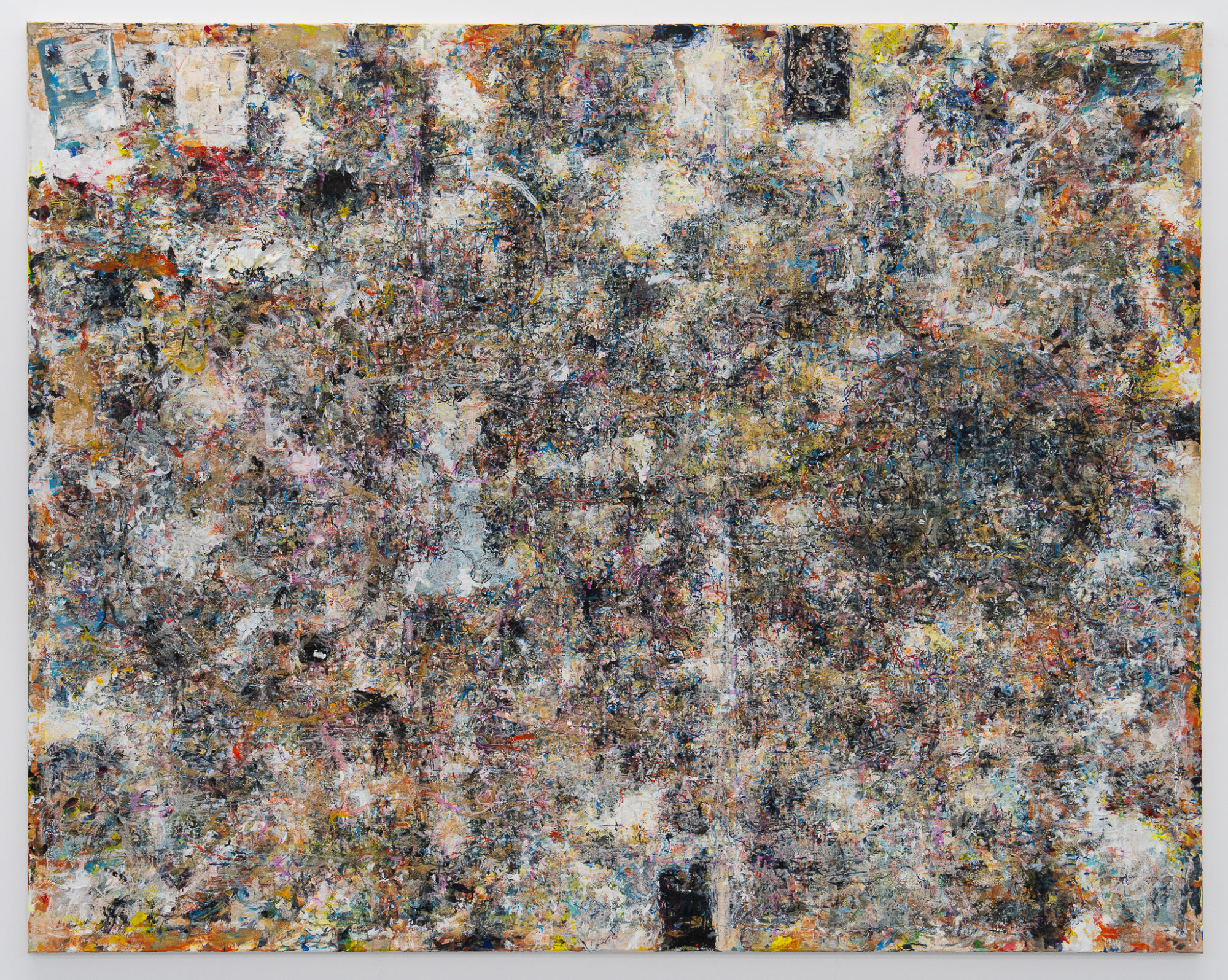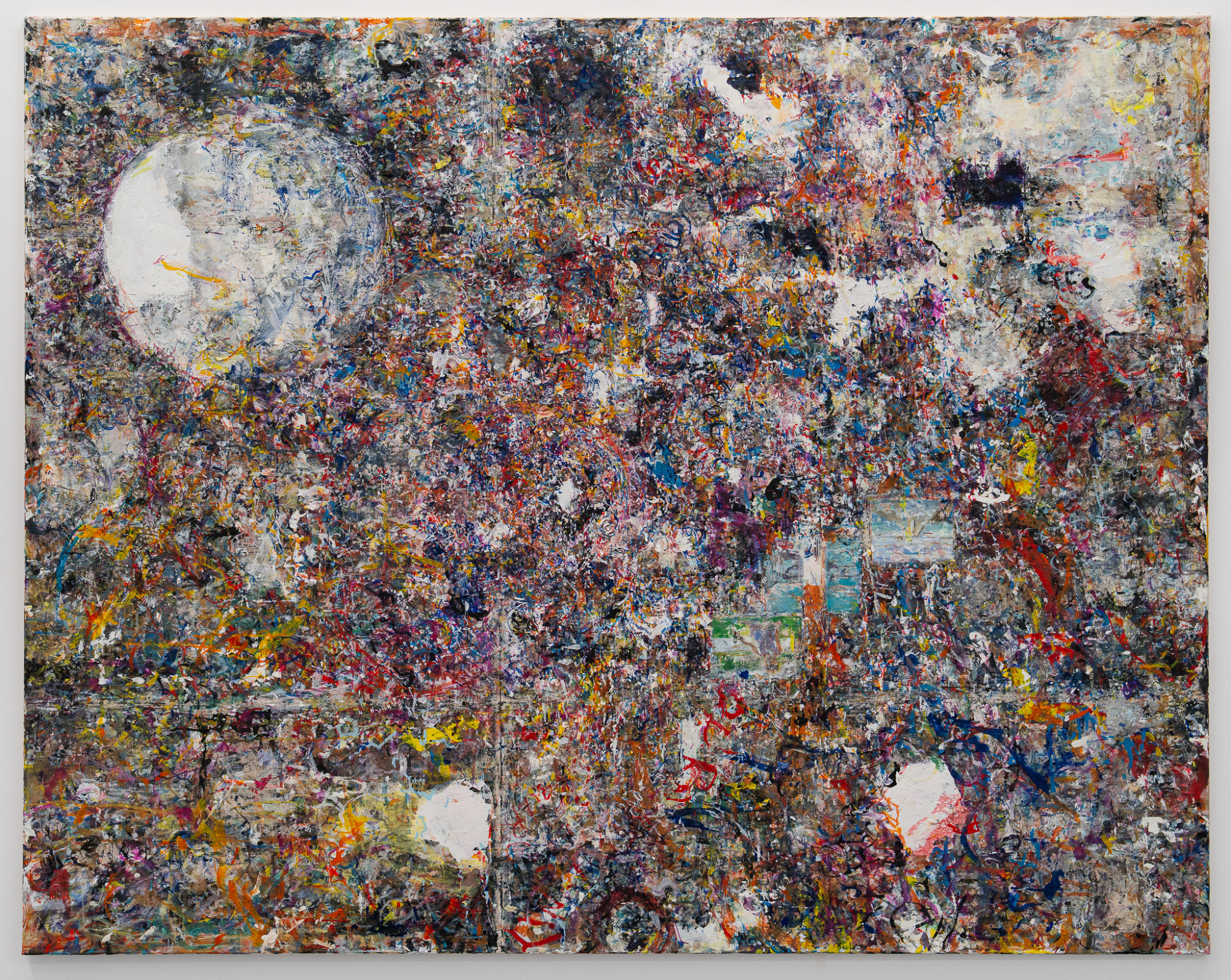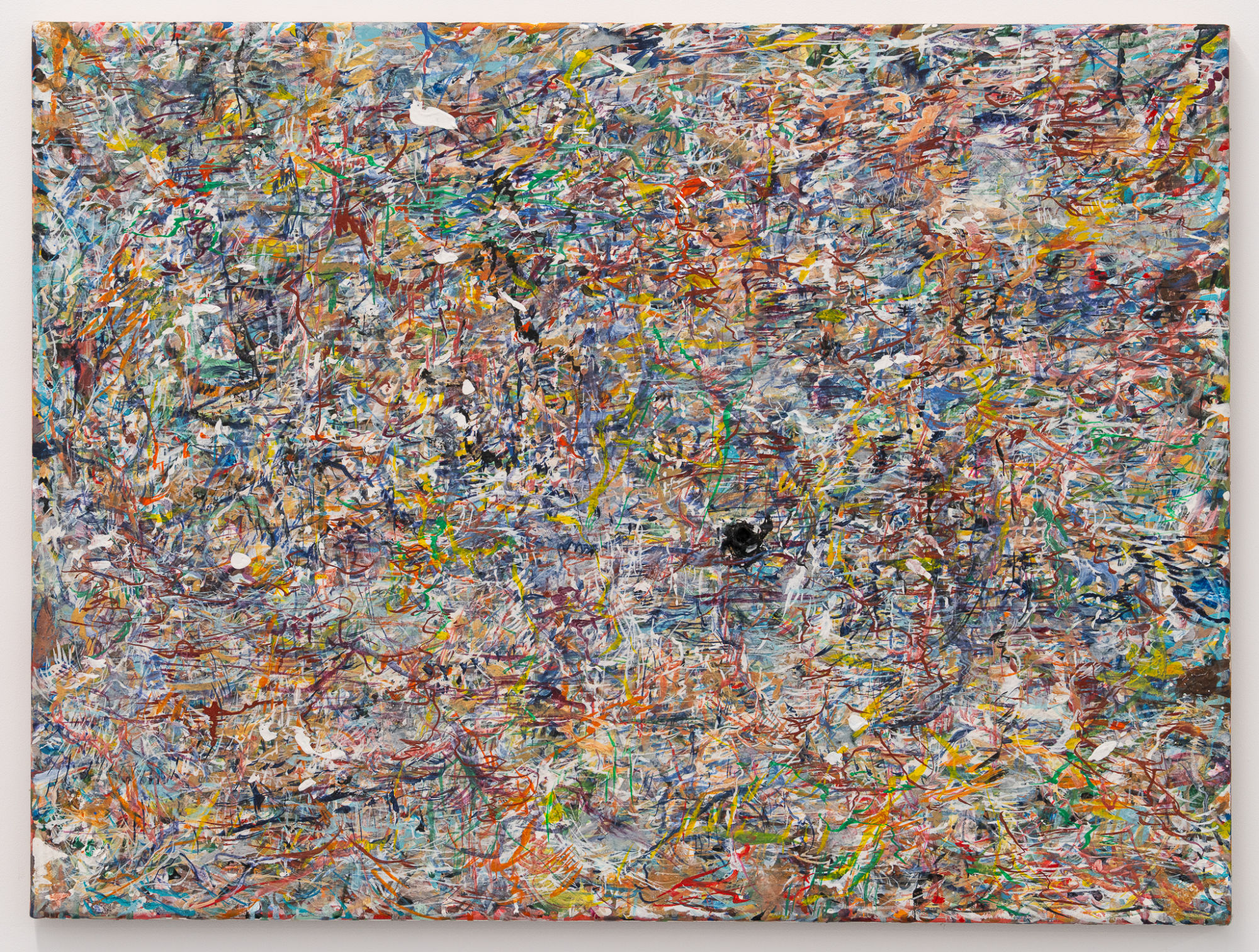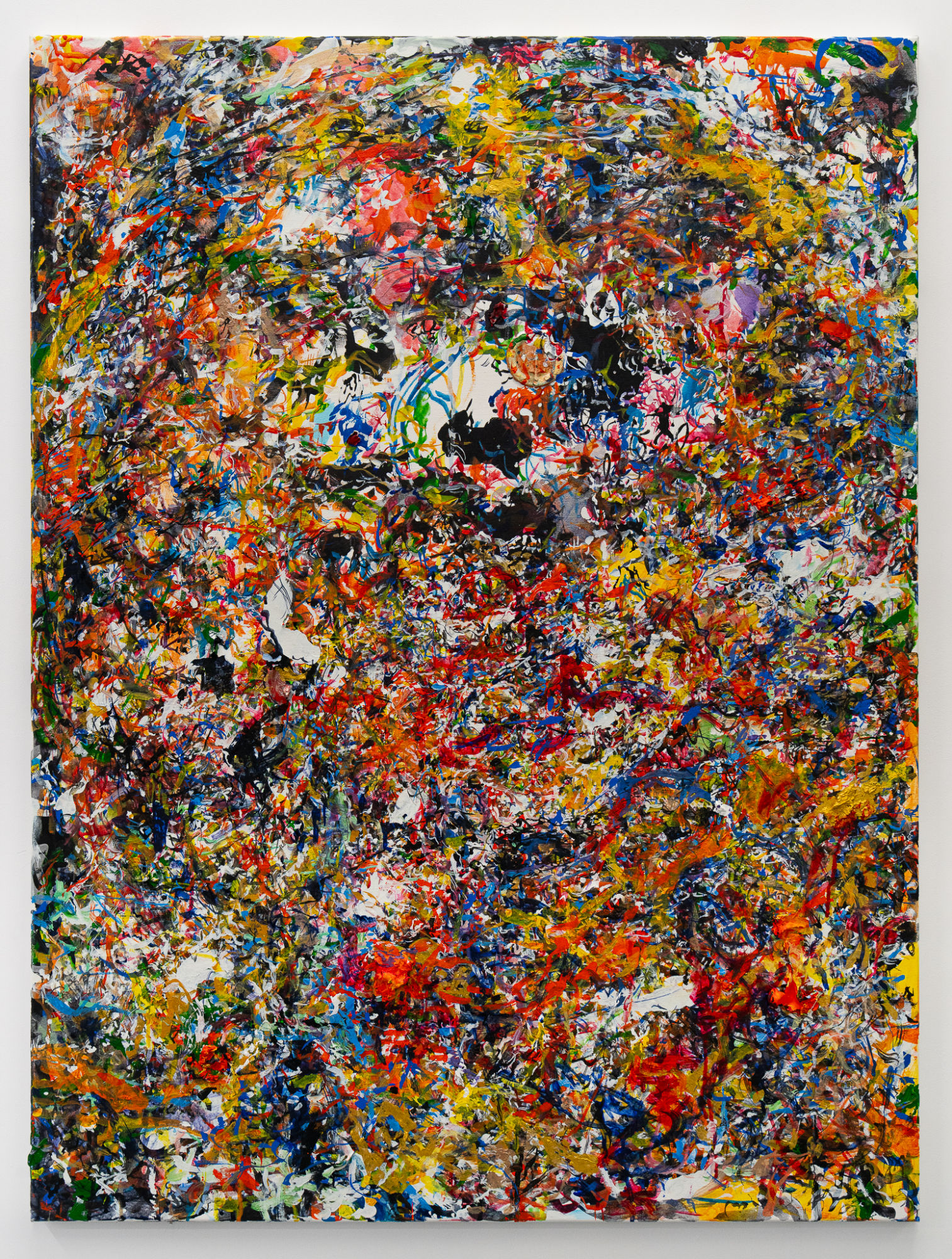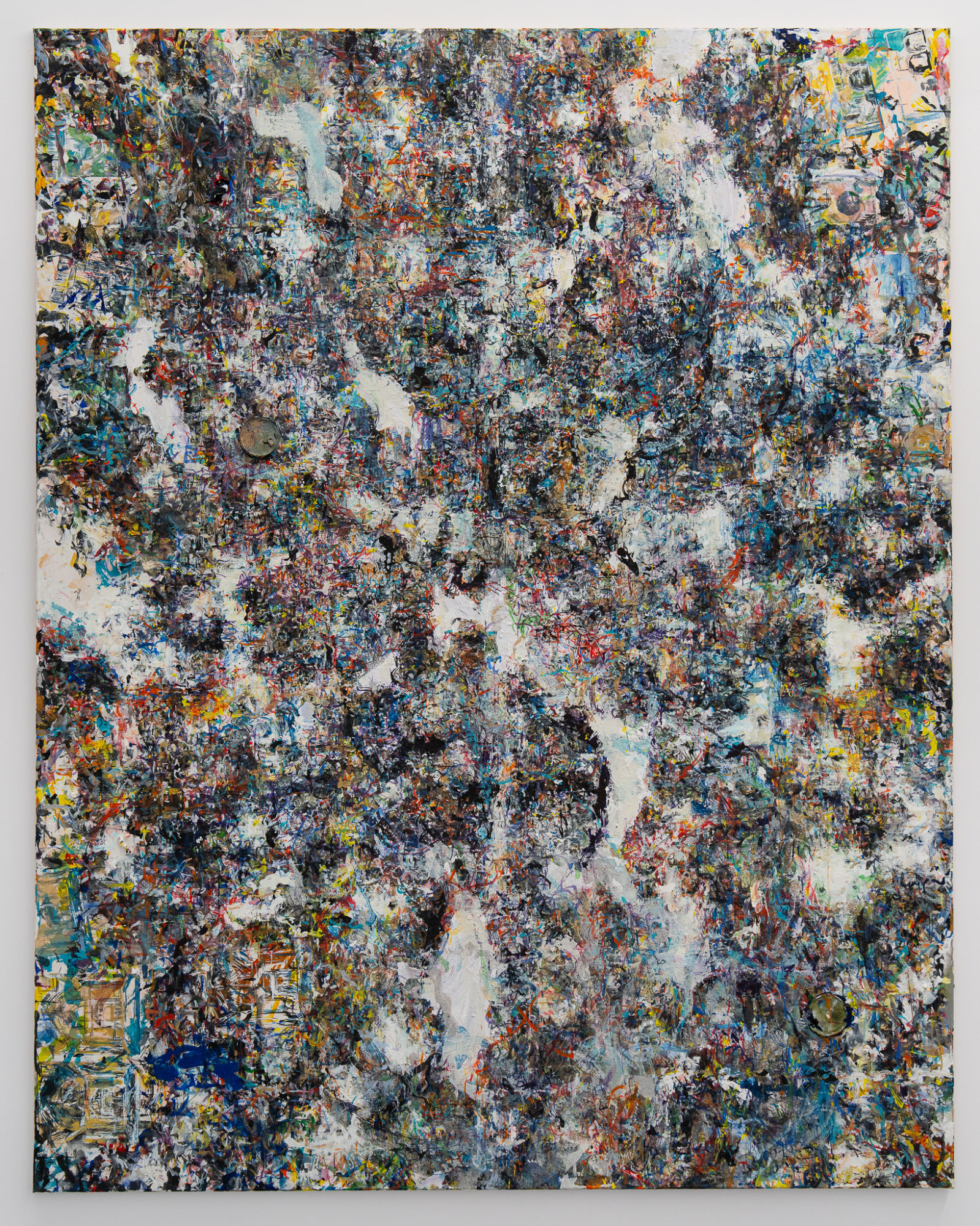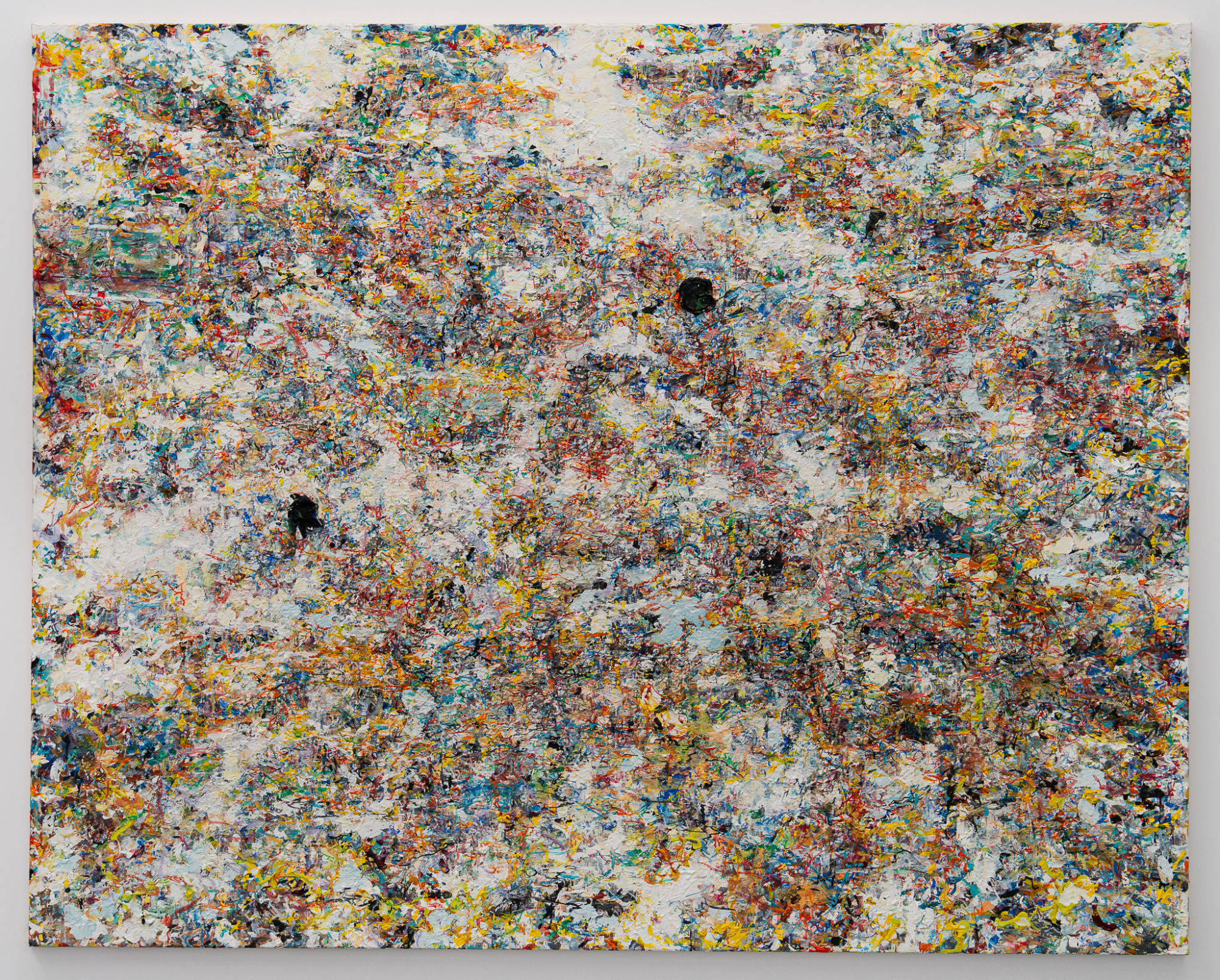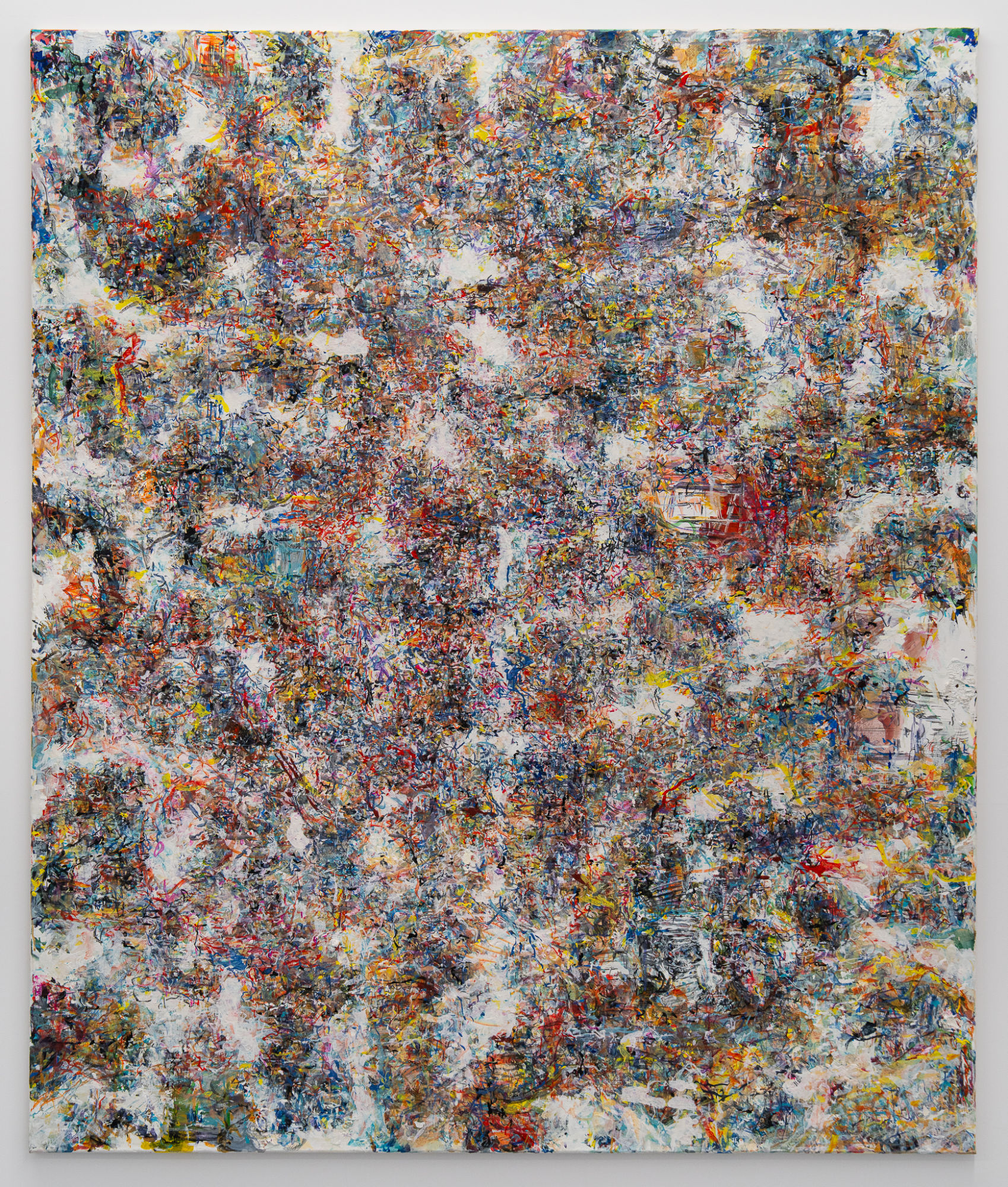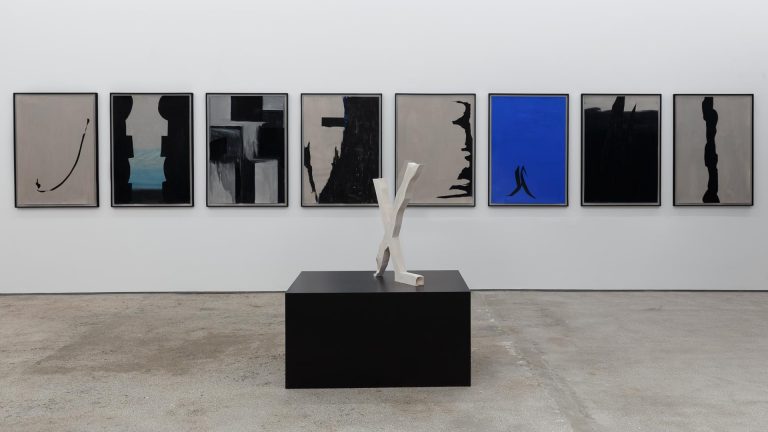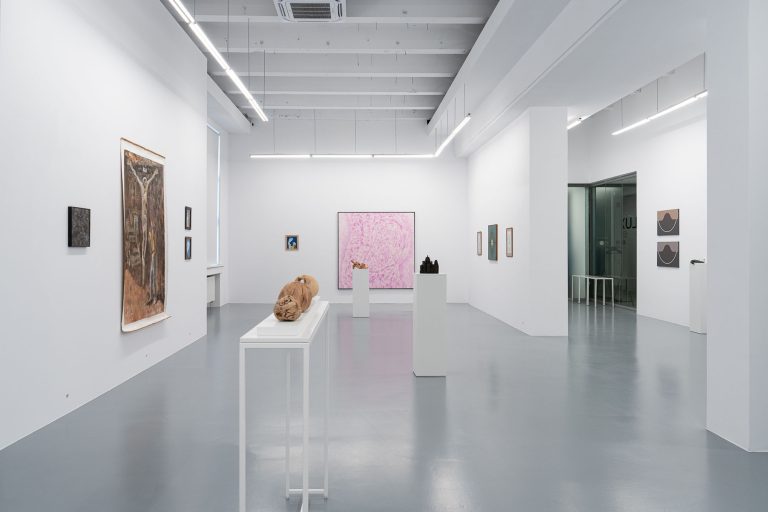
Like a personal journal, in which mnemonic games and recurring emotional shifts are recorded over spans of time covering inhumanly long periods, Anca Mureșan’s art takes shape in a way entirely different from the idea of painting as we traditionally know it. What becomes visible does not stem from representation or fantasy, but from an accumulation of layers and sediments crystallized over time, the result being closer to the emergence of a palimpsest. The boundary between image, in the sense of the iconic, and writing, in the sense of the symbolic, has perhaps never been so relativized and, ultimately, annulled through fusion. The image loses its index in a radical iconoclastic gesture, while the text loses its meaning in an act of subversion and self-sabotage.
Against the background of these speculations, the idea of “Open Painting” and the exhibition title emerged as a possible point of reference that might contextualize, at least temporarily, Anca Mureșan’s art. Drawing on Georges Didi-Huberman’s notion of the “open image,” this openness is at once physical, in the temporal sense of sedimentation and in the spatial sense of leaving the medium behind, as well as psychic, from the perspective of the viewer, who is invited to open up and abandon the grid of prejudices. Each instance, as Anca Mureșan calls her works, stands as a witness to openings onto a concrete and tumultuous inner world.