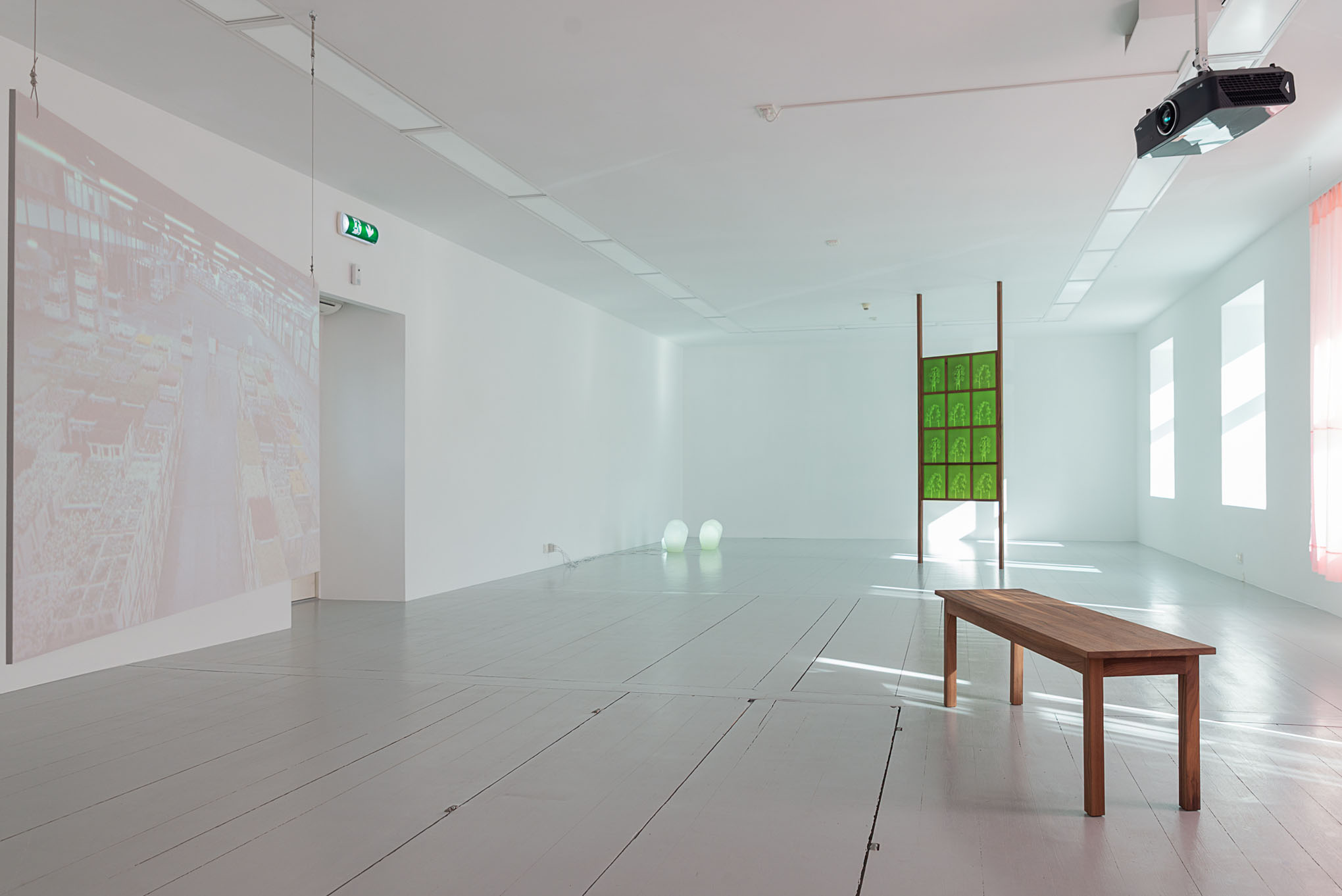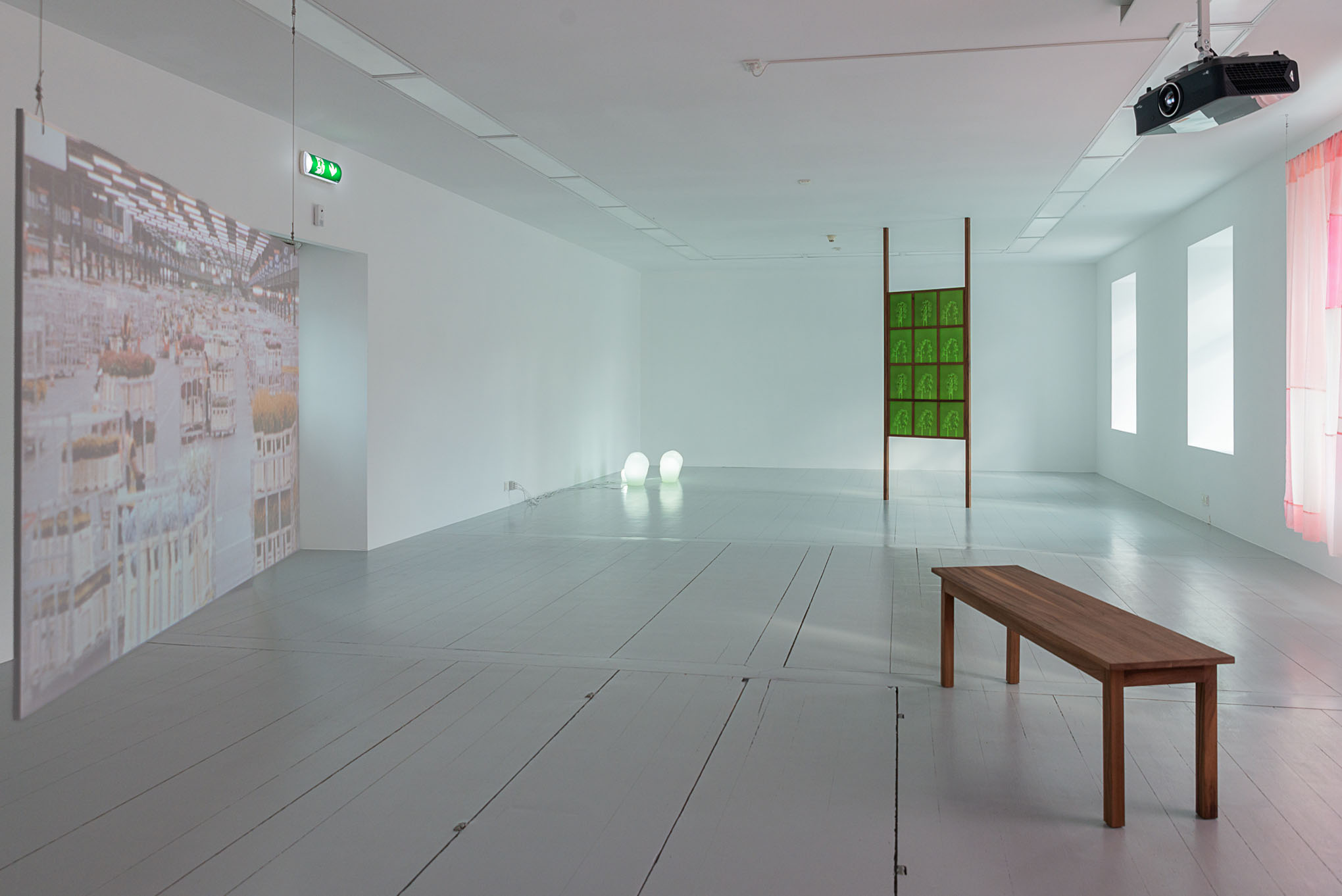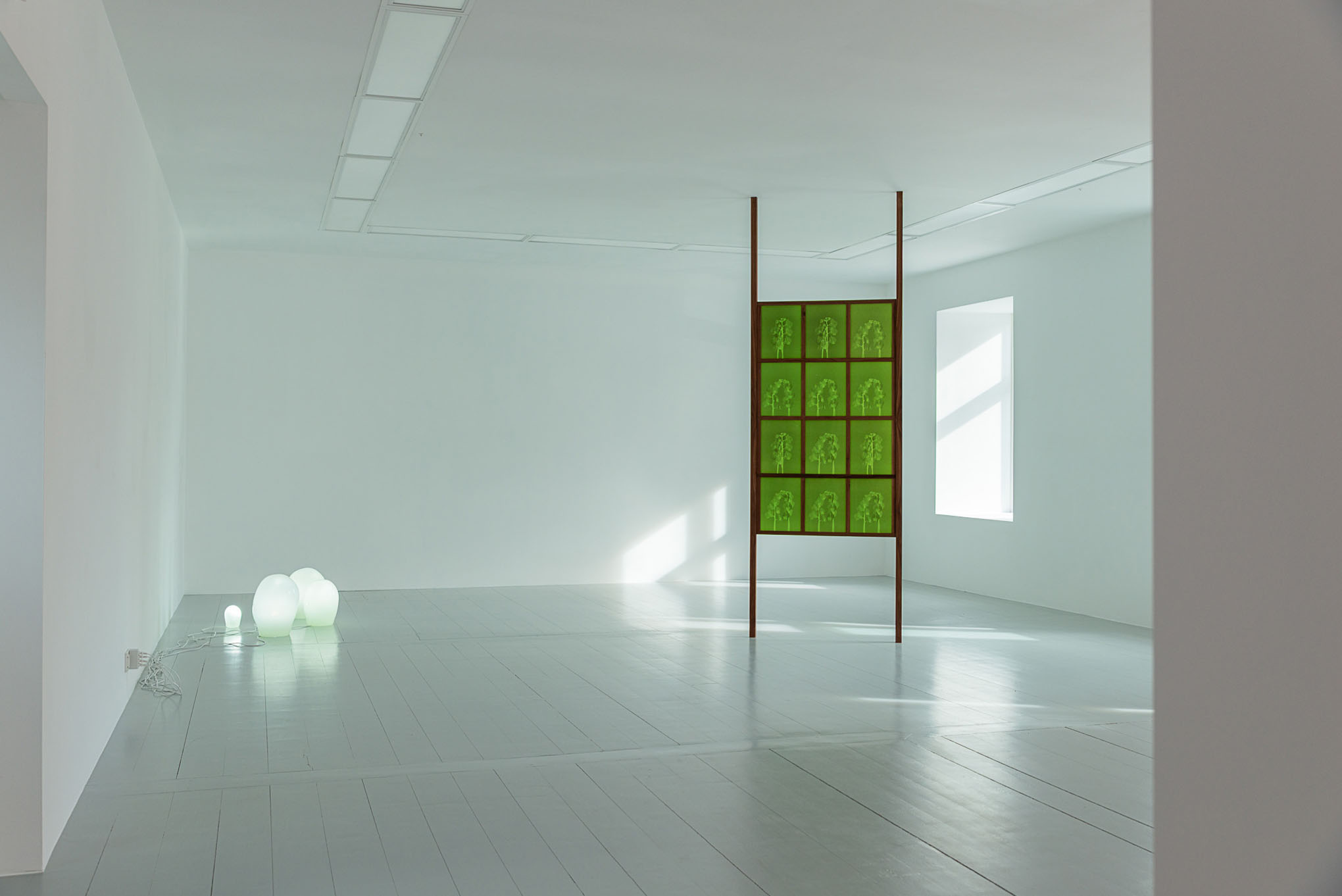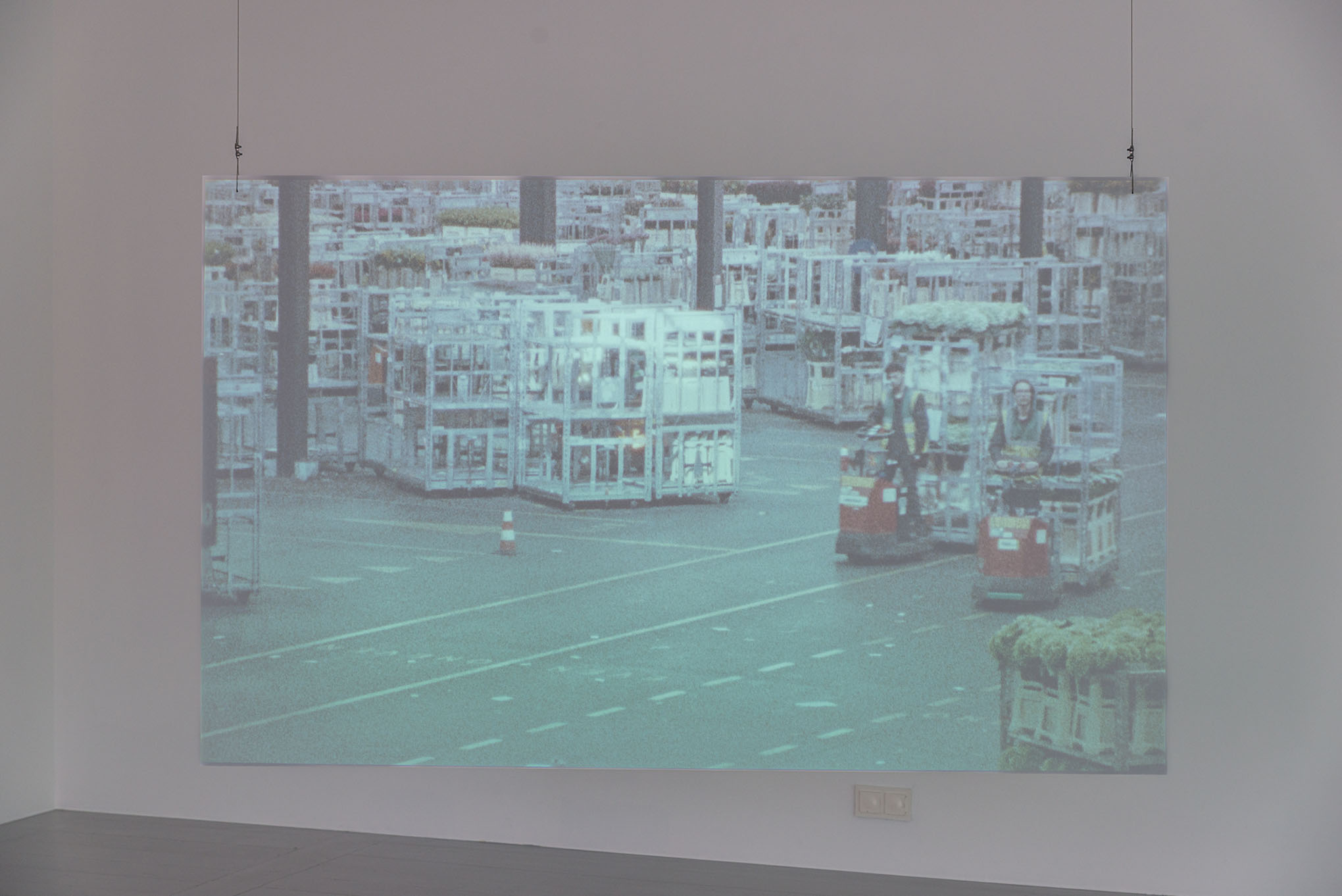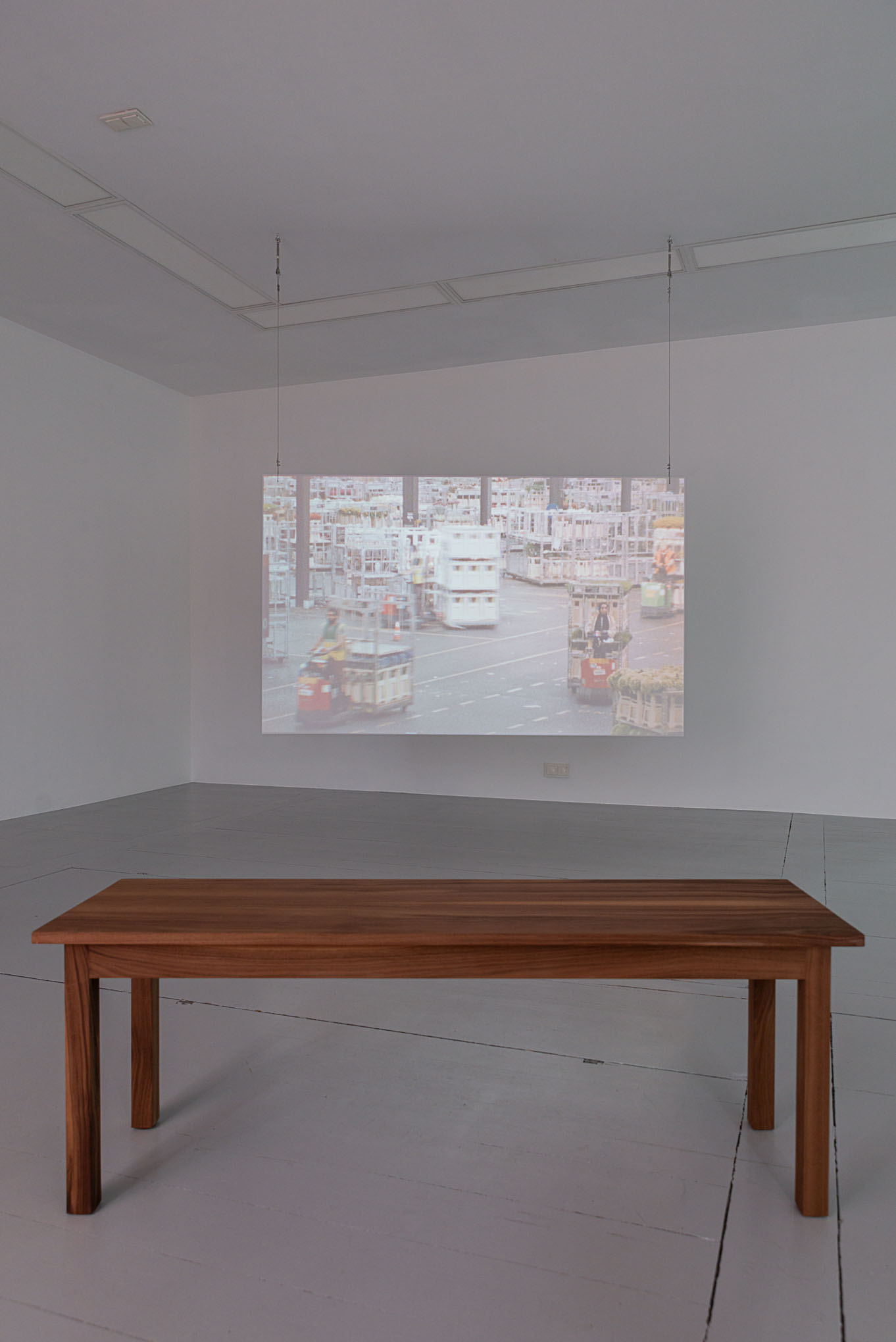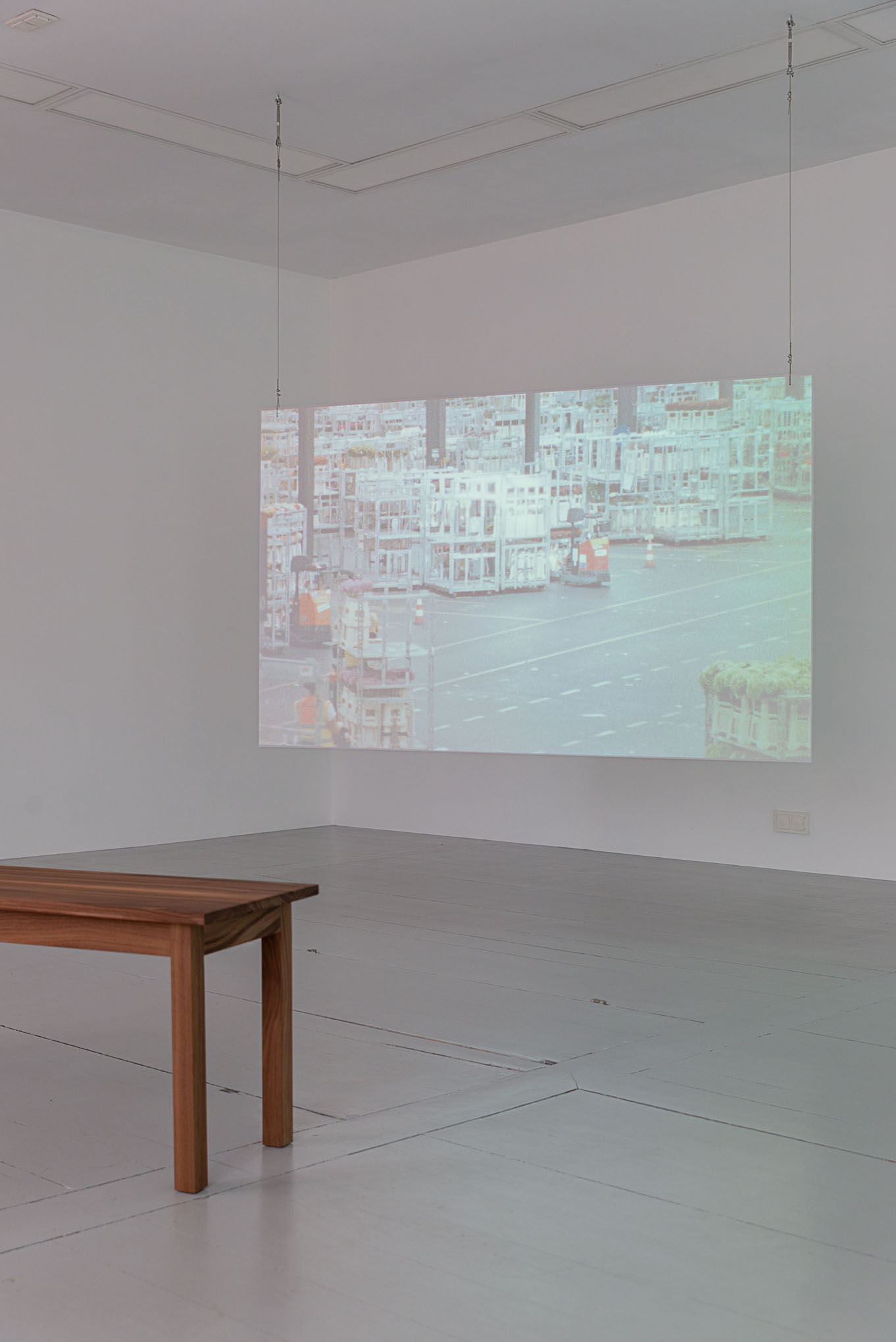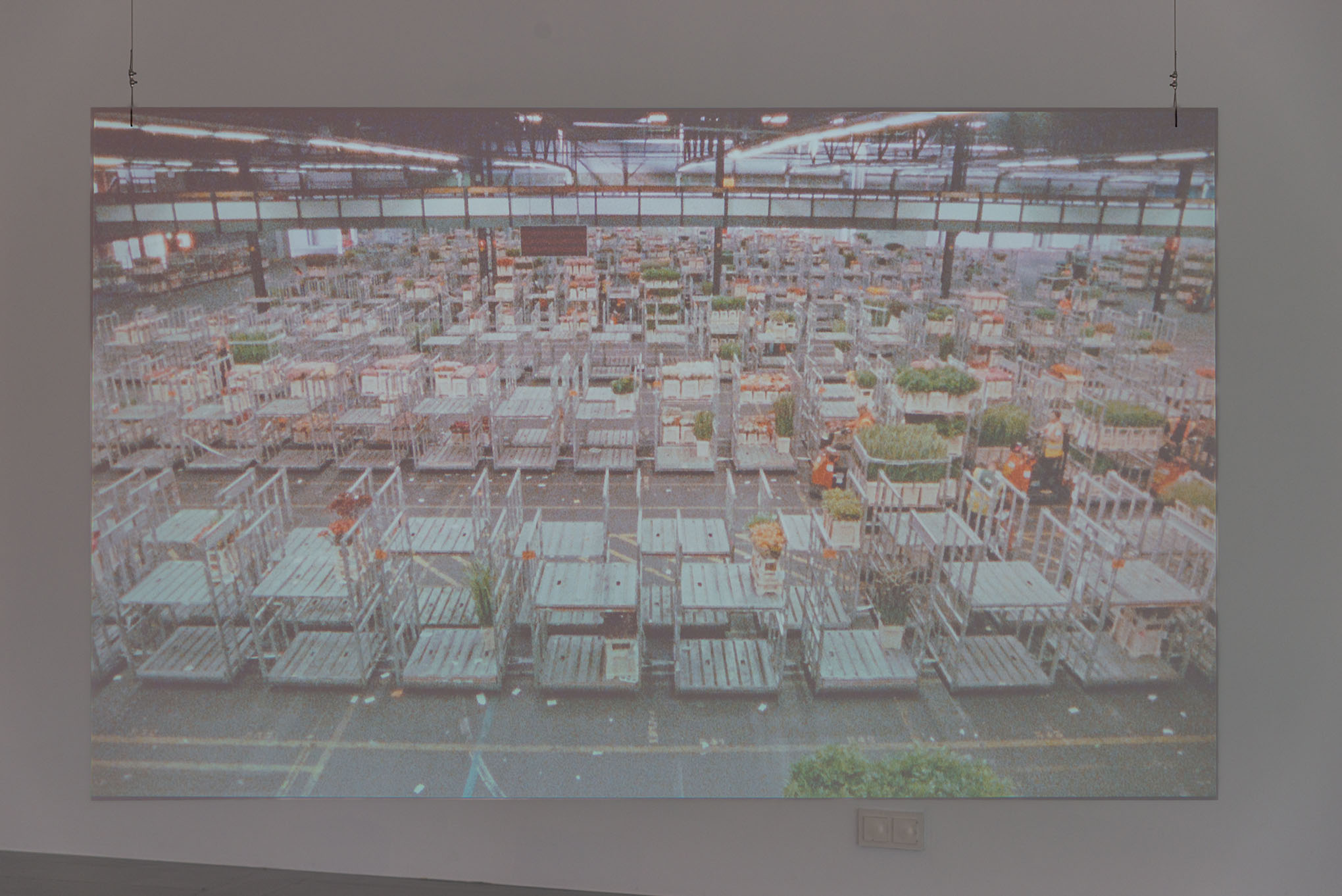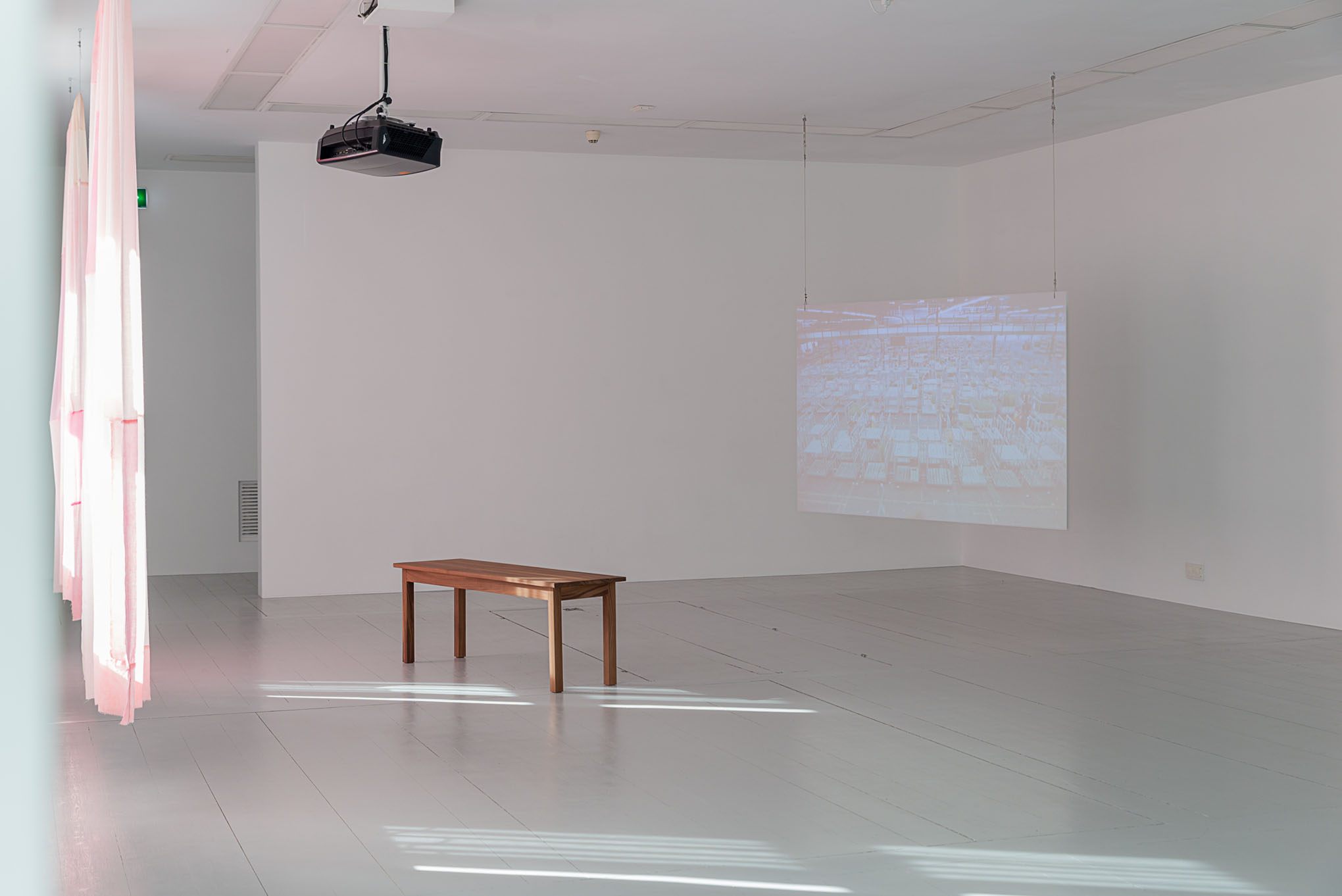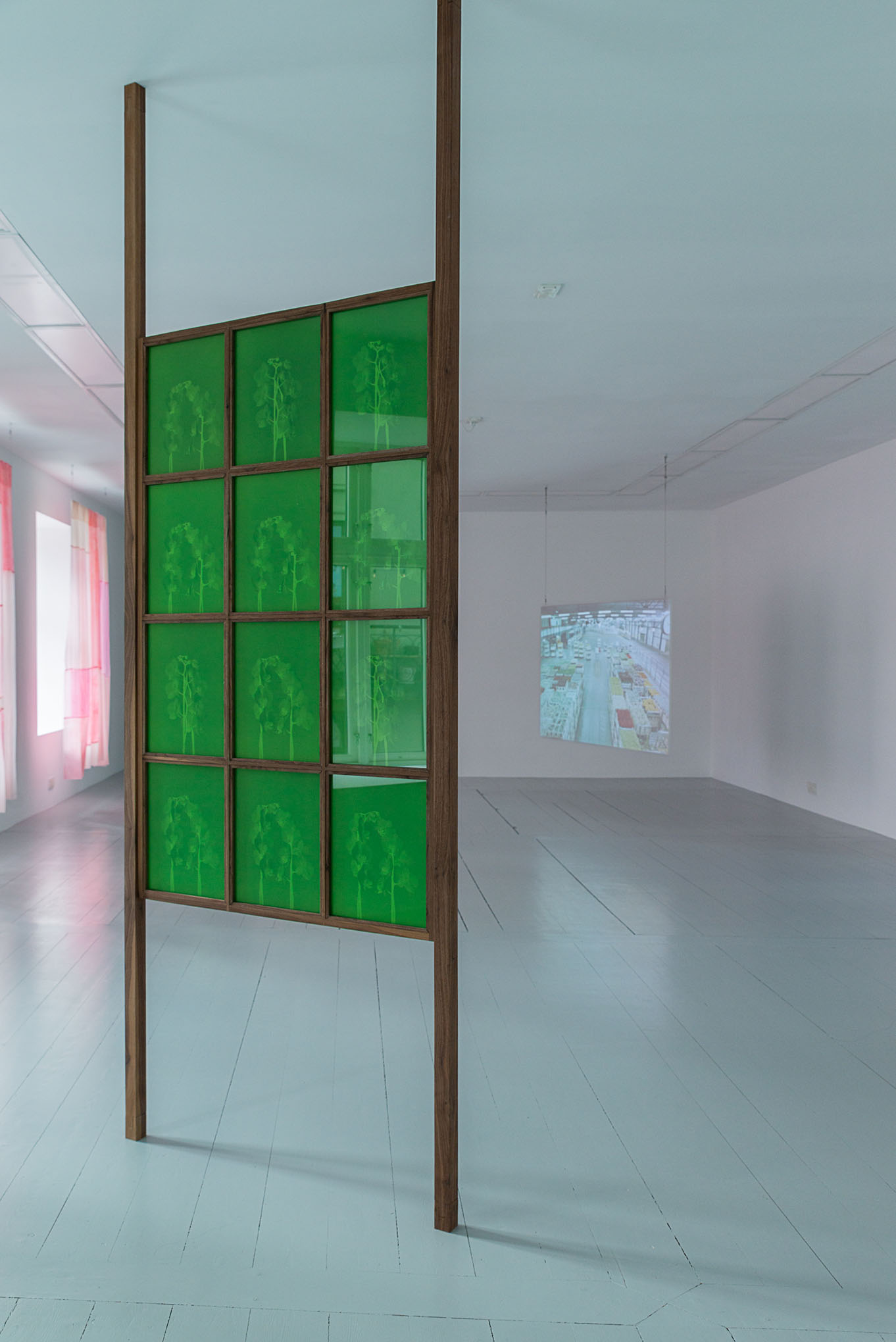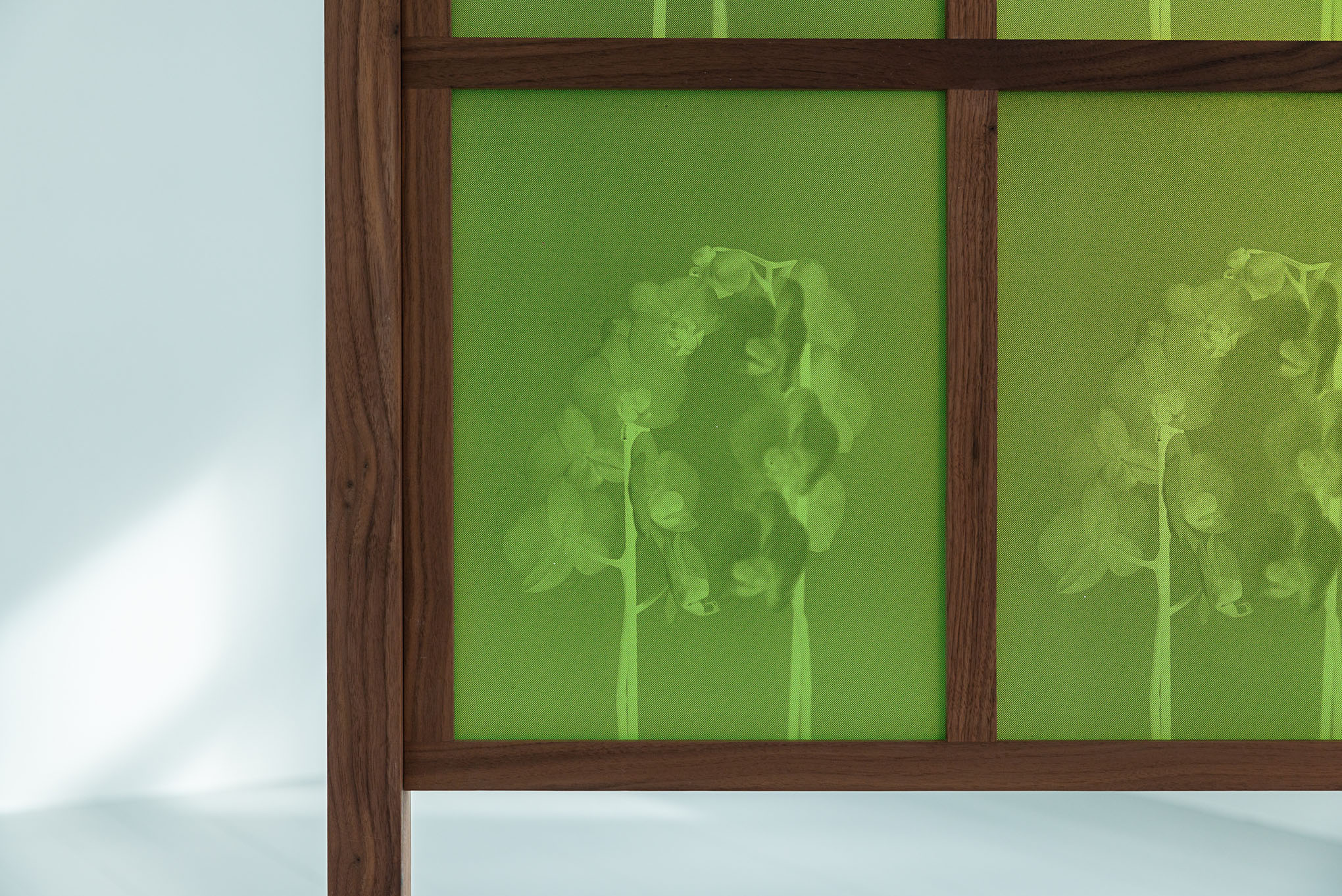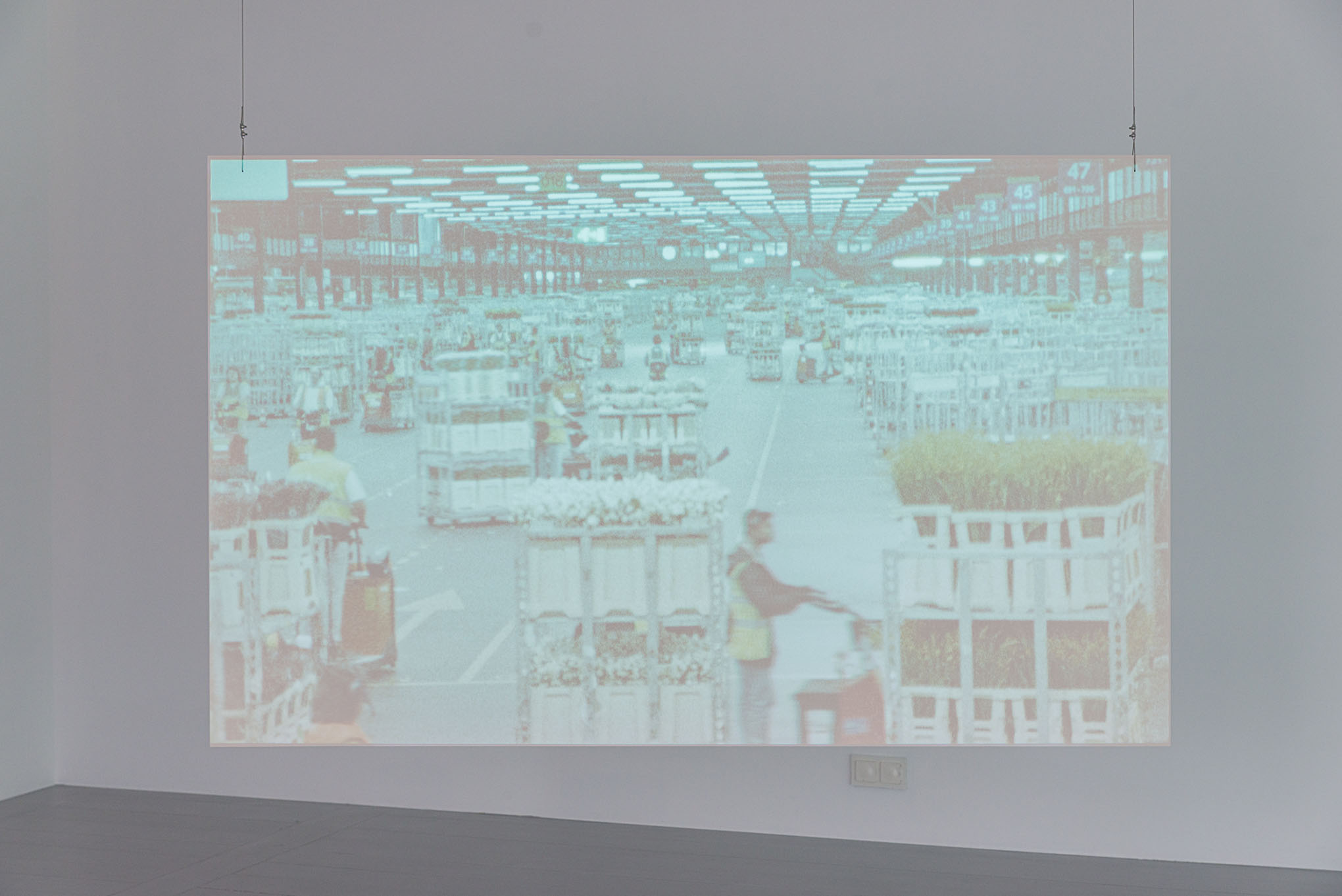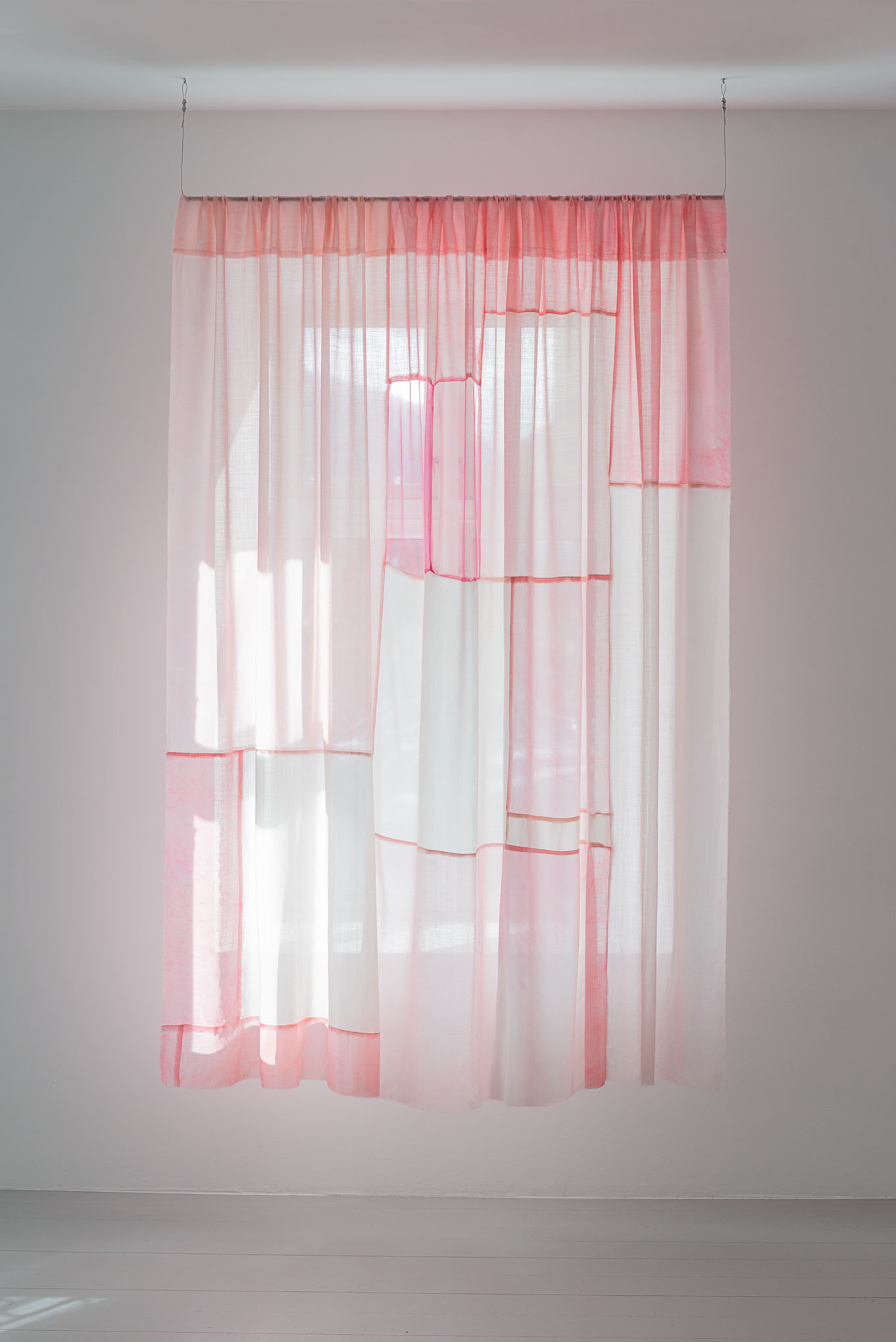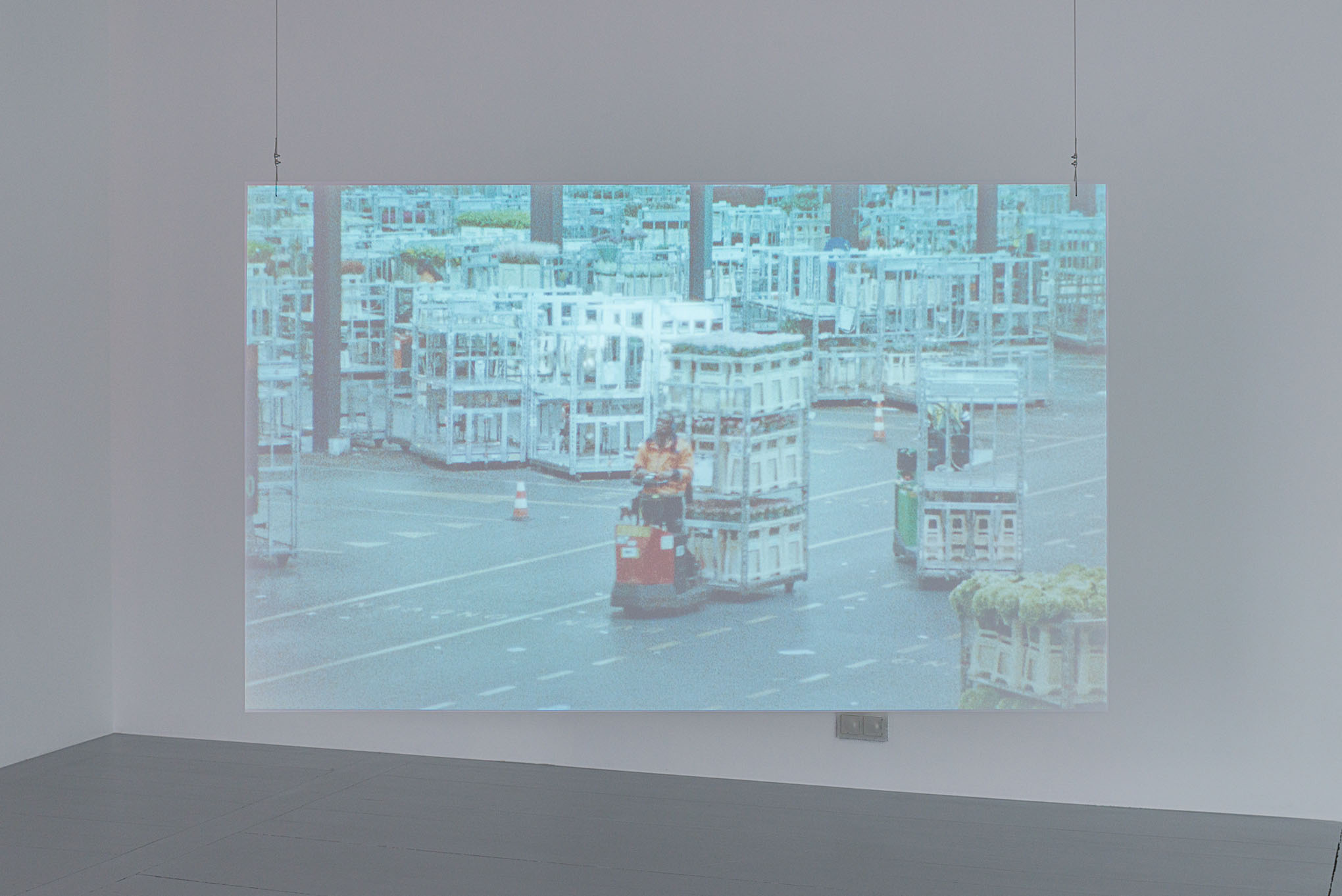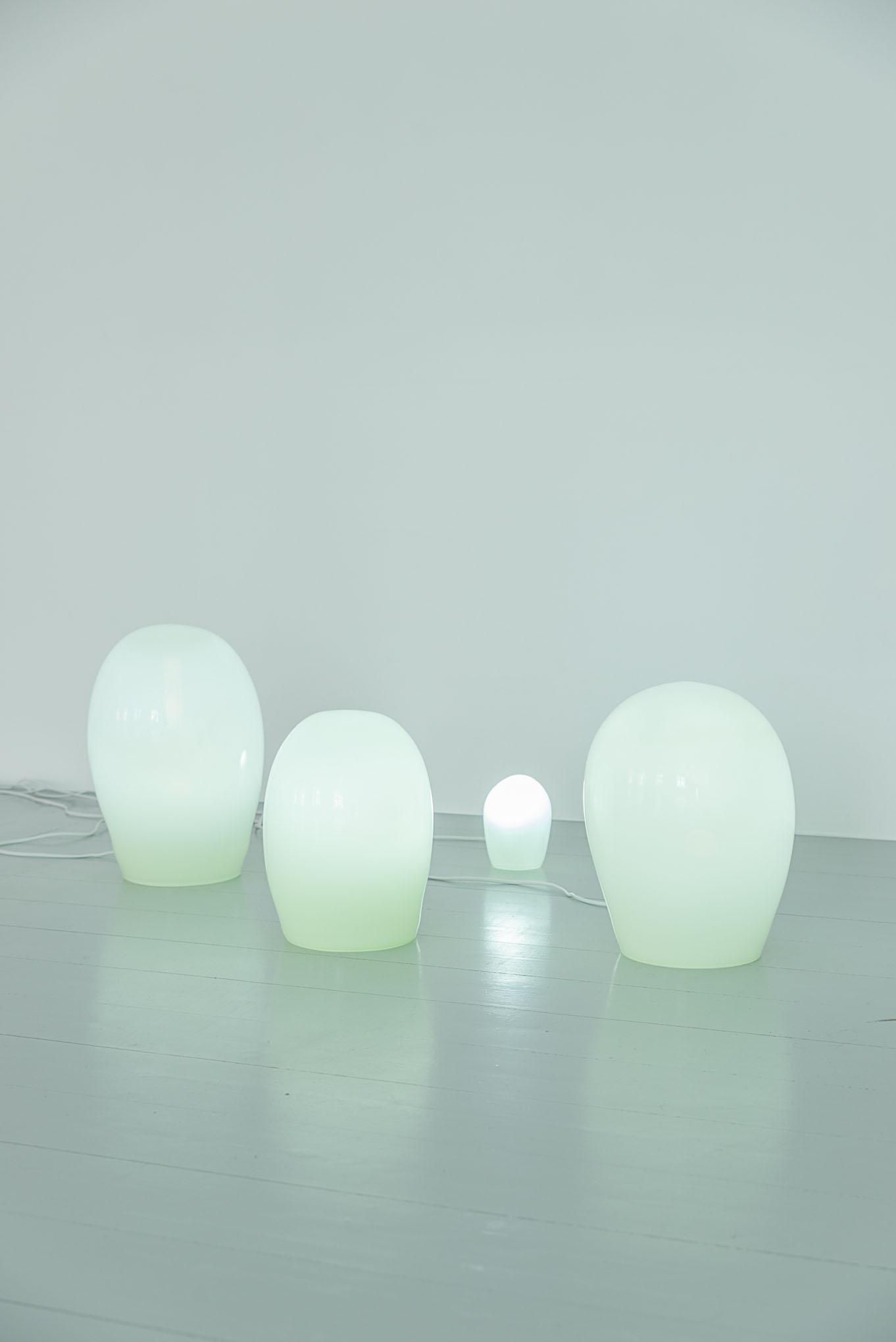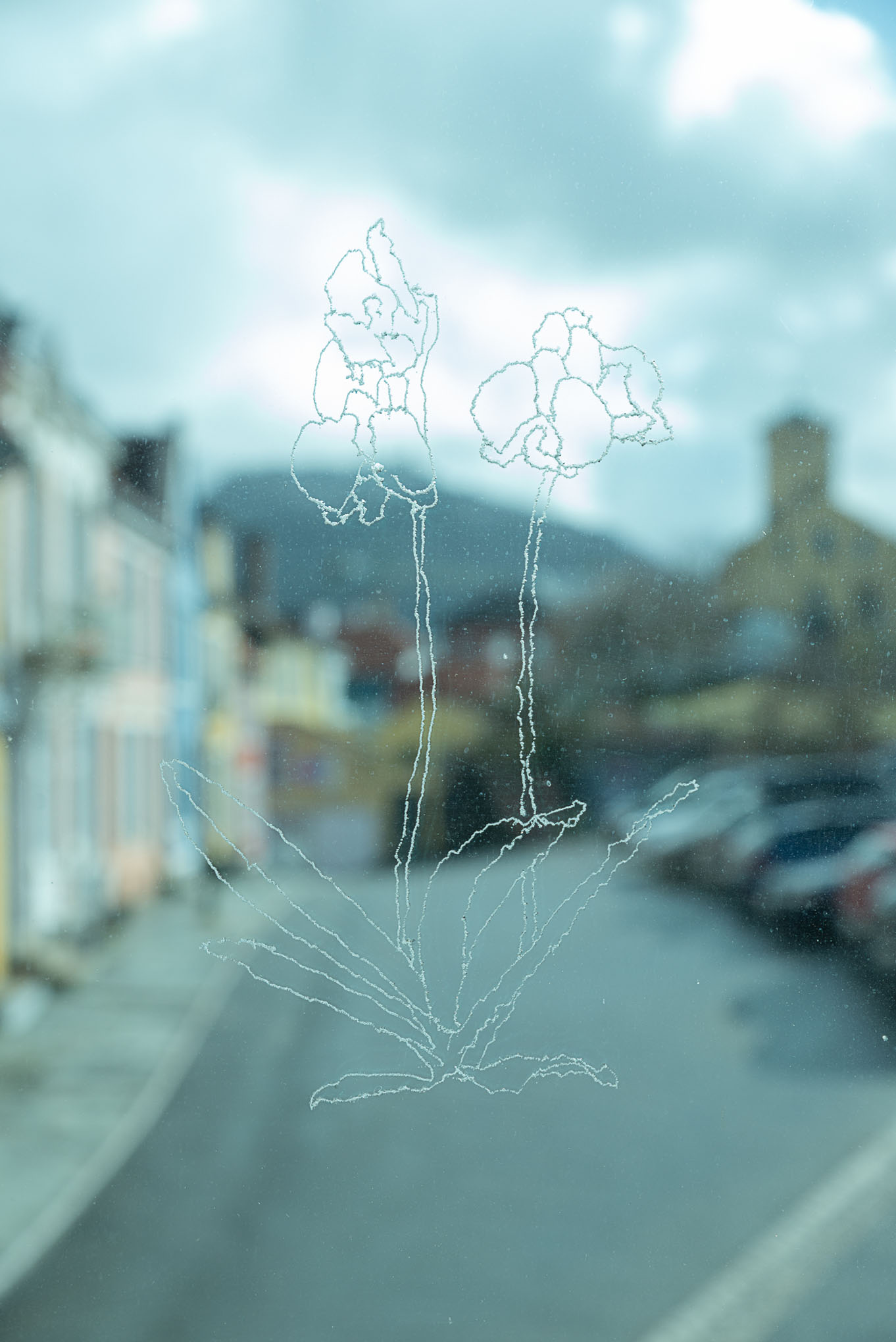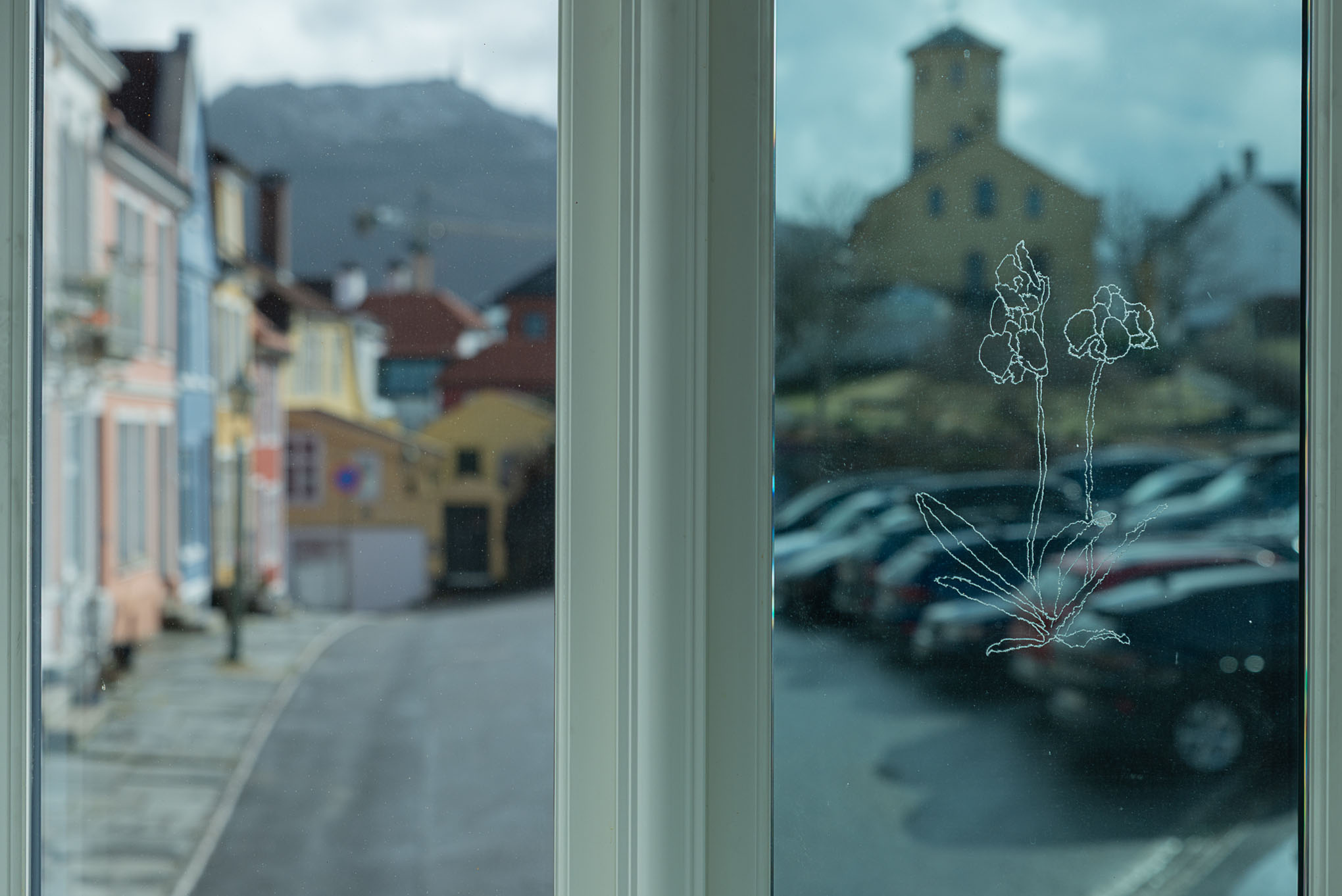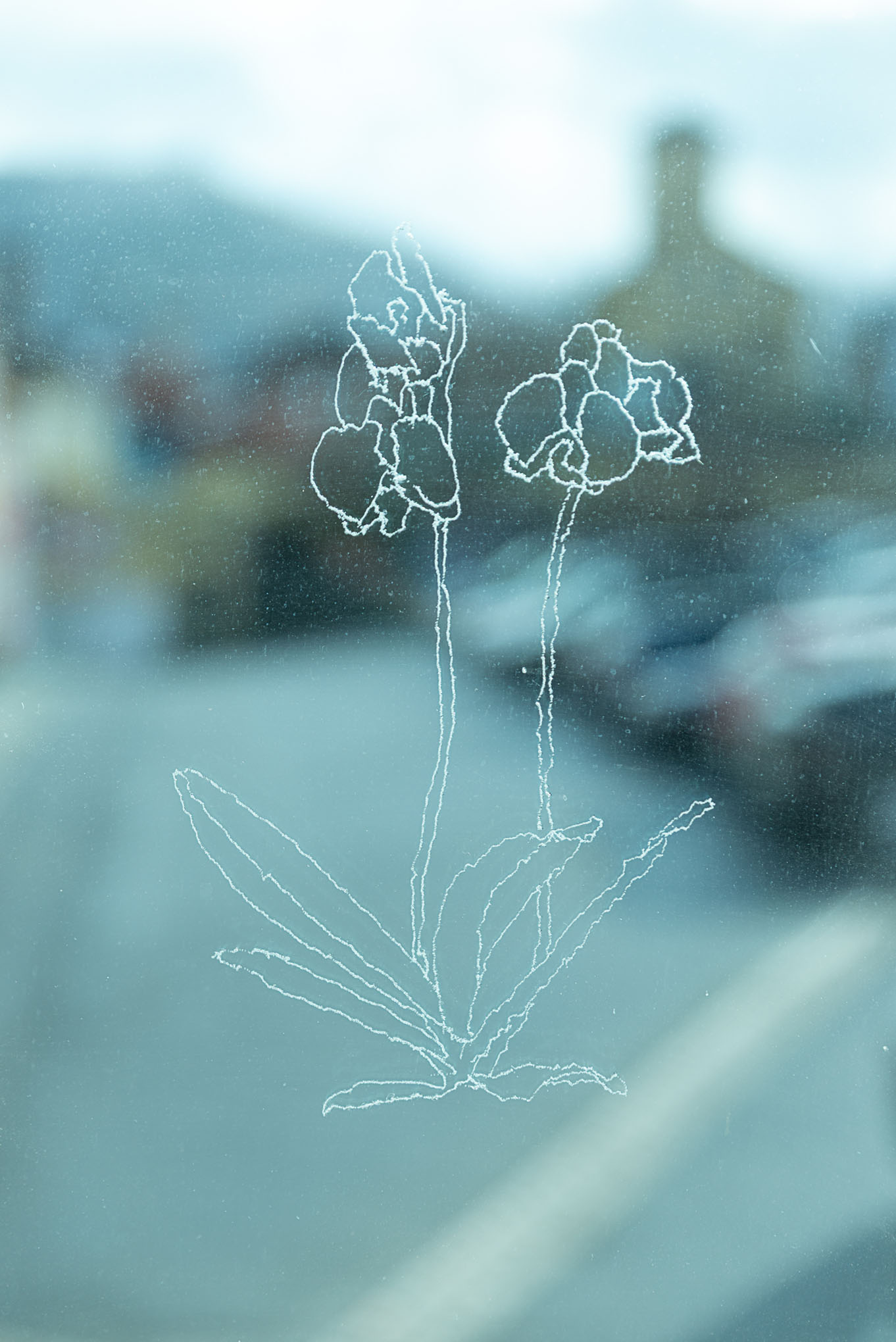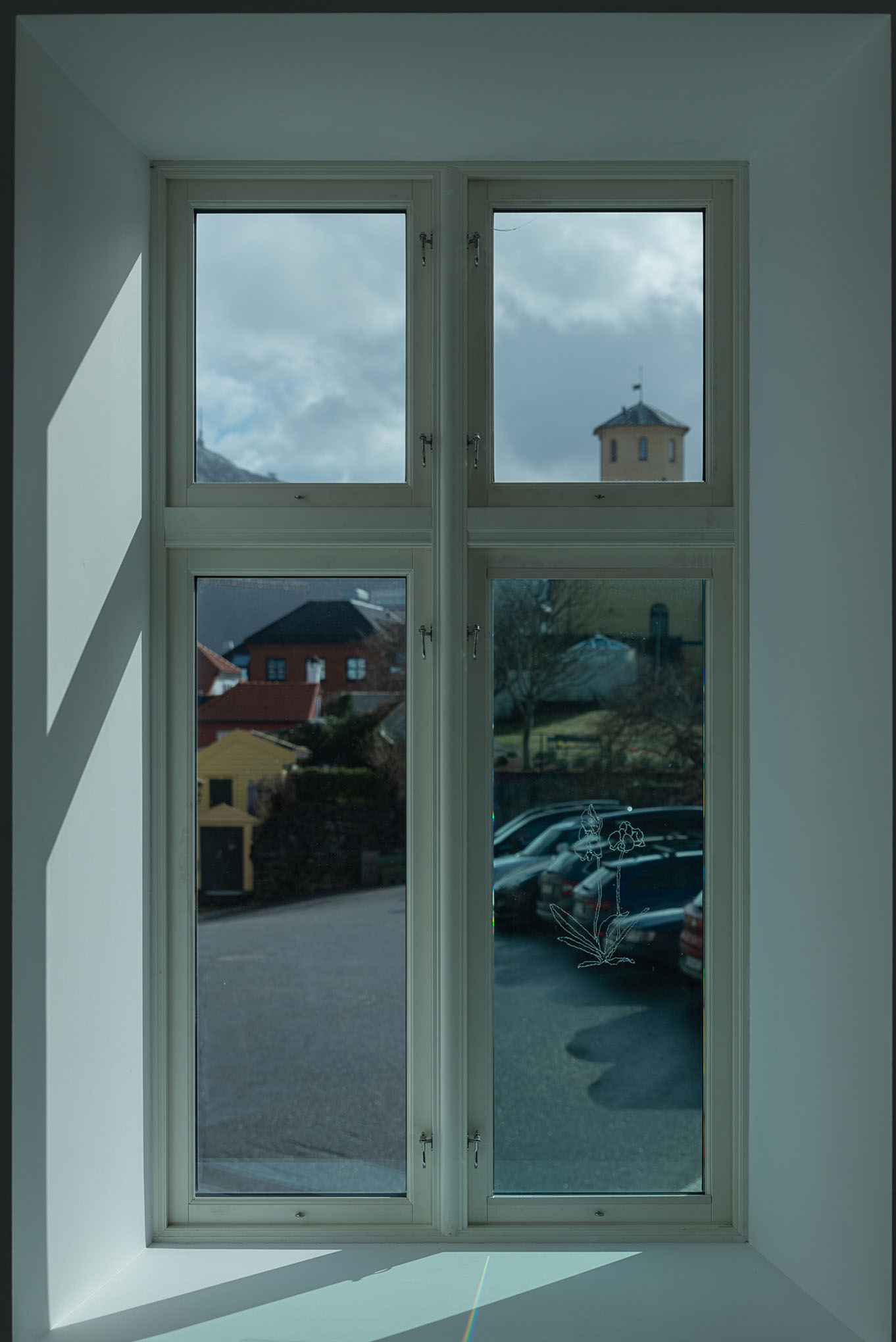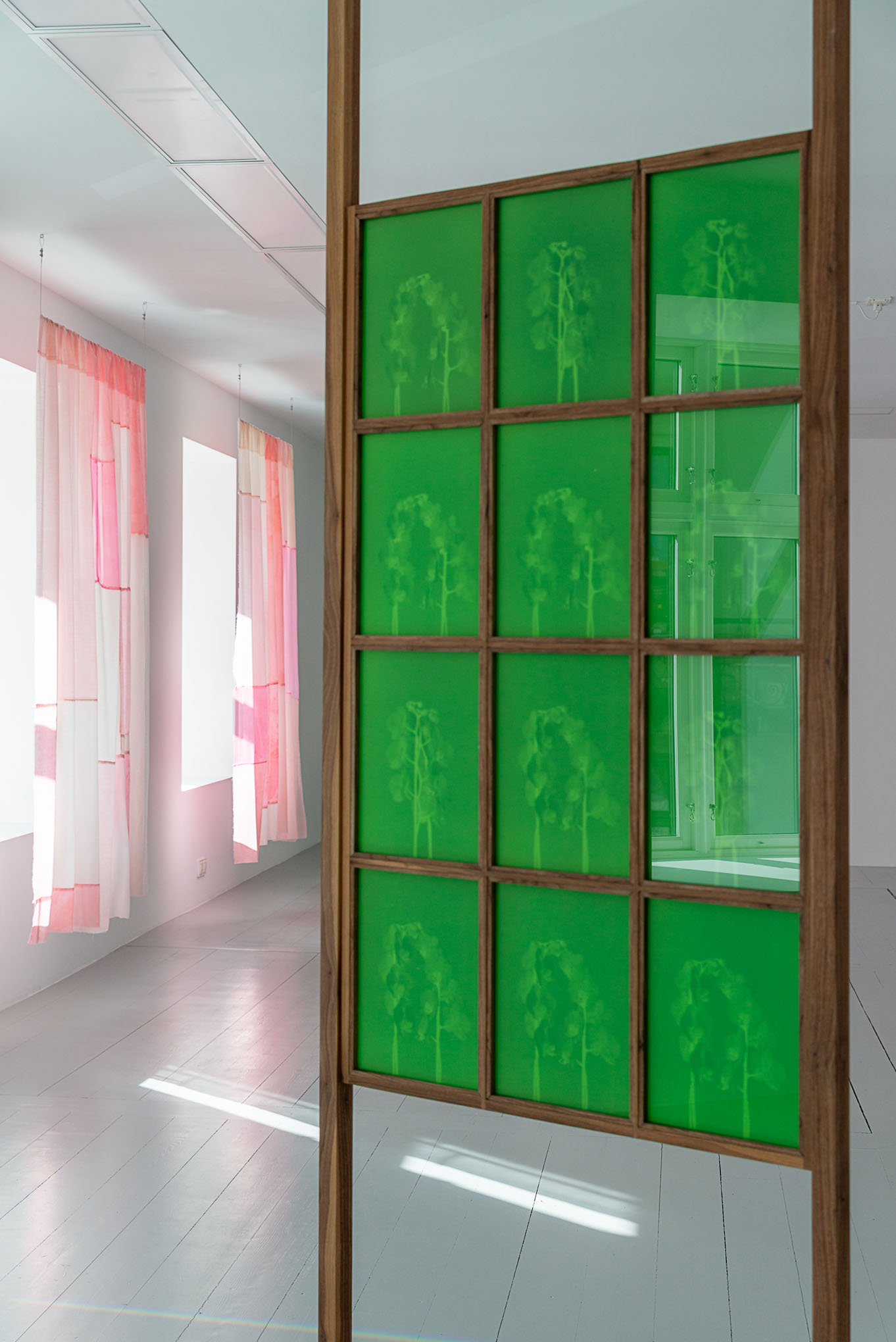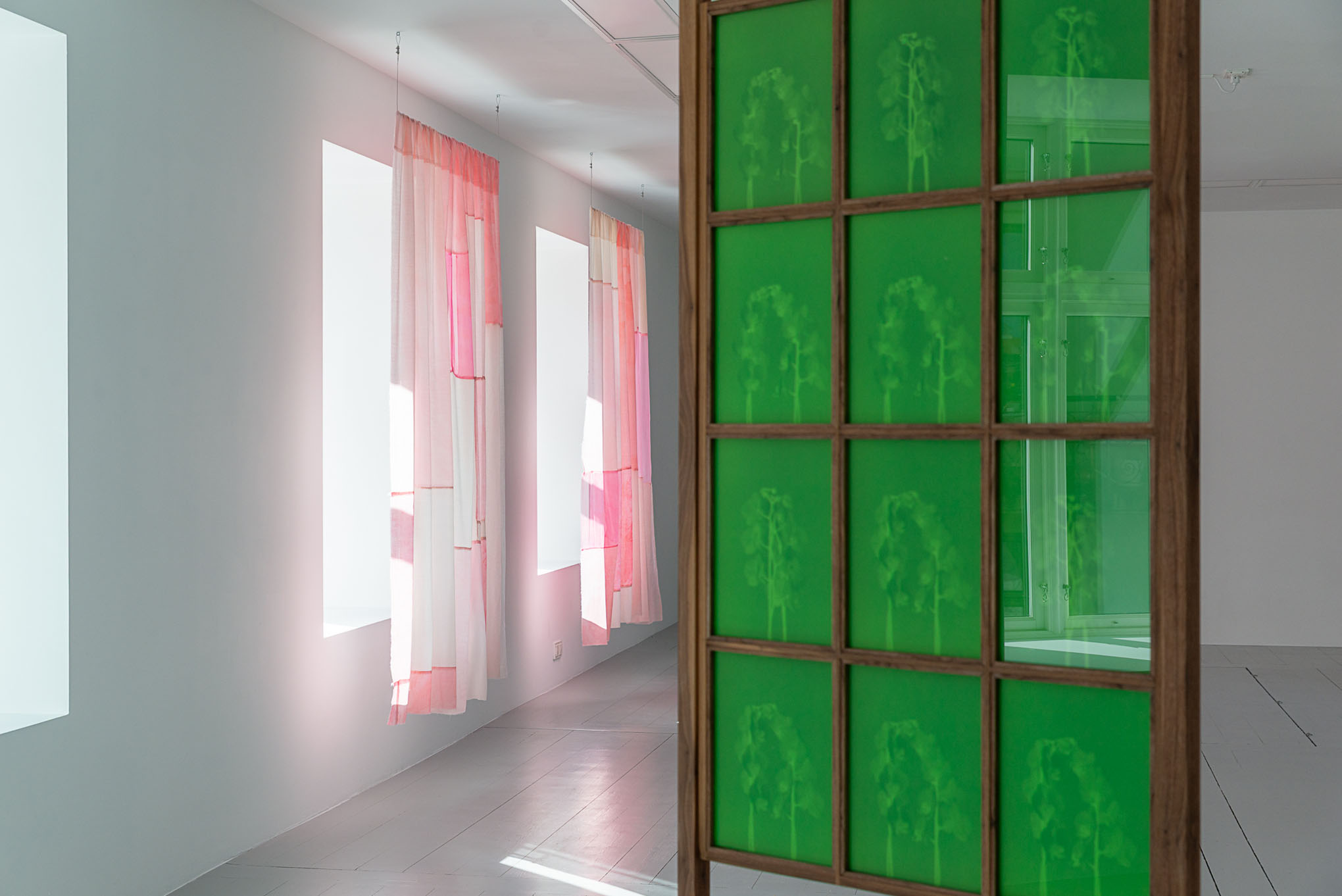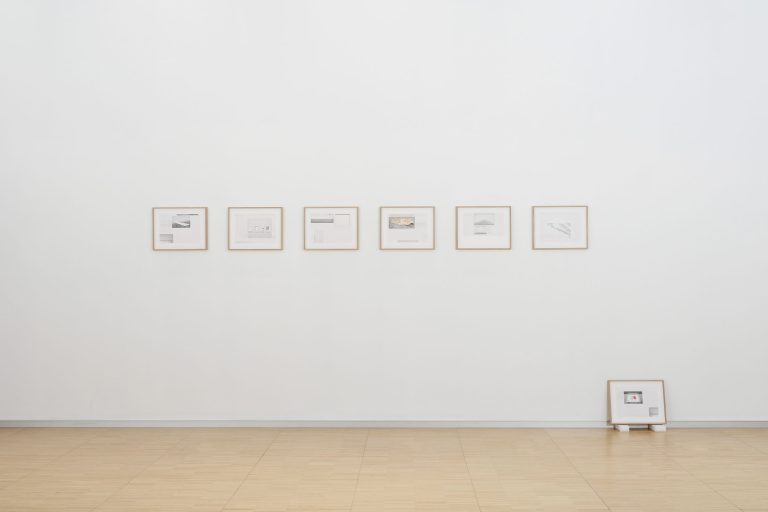
The exhibition Nightblooming by Ananda Serné has grown out of the artist’s visit to an orchid nursery in Taiwan. Orchid seedlings cultivated at this nursery are sent to the world’s largest flower auction, near Amsterdam. From there, they find their way to windowsills across Europe. At the orchid nursery, the plants are exposed to artificial daylight so they can take root and develop. In the auction warehouse and transport vehicles, they may go without sunlight for several days.
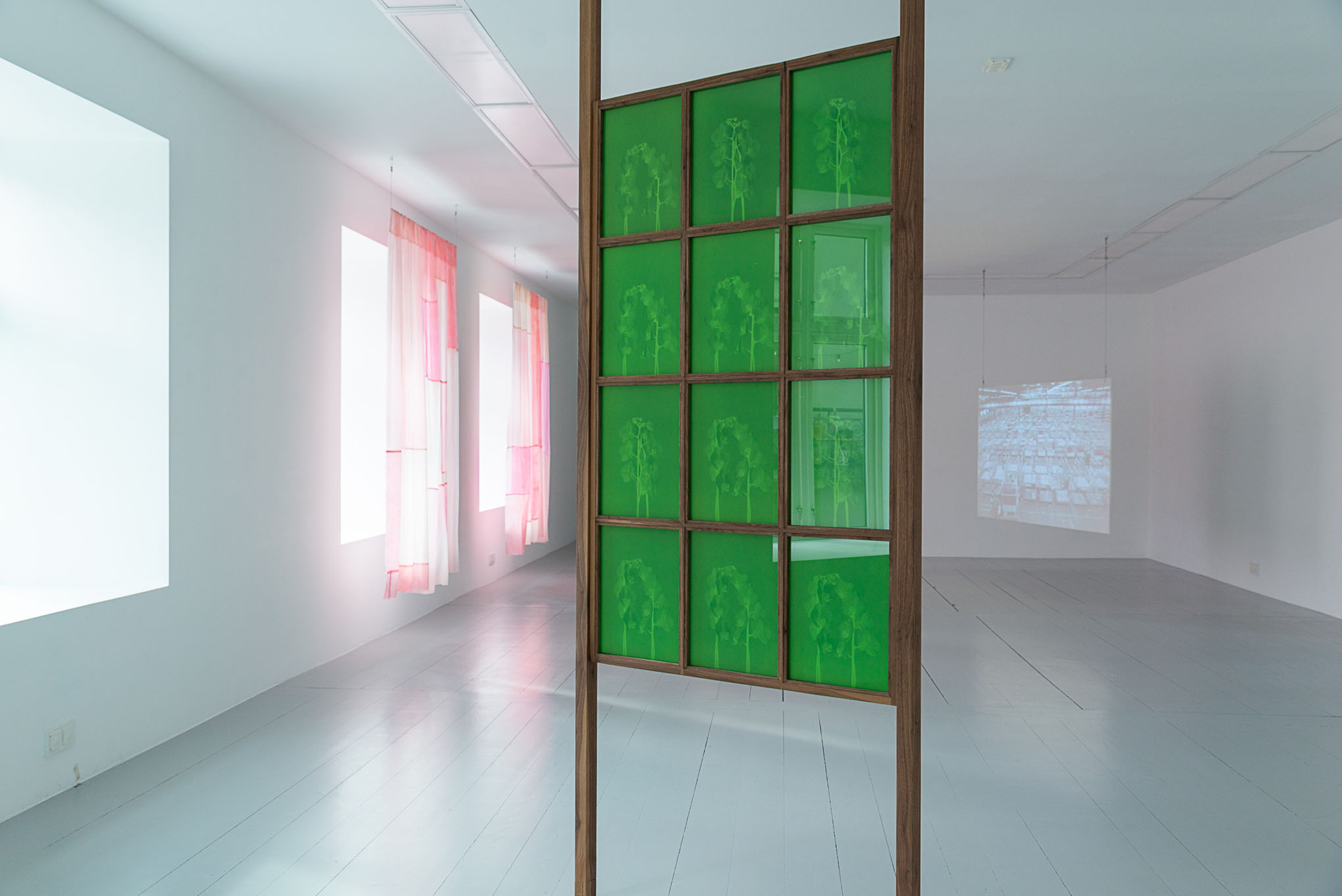
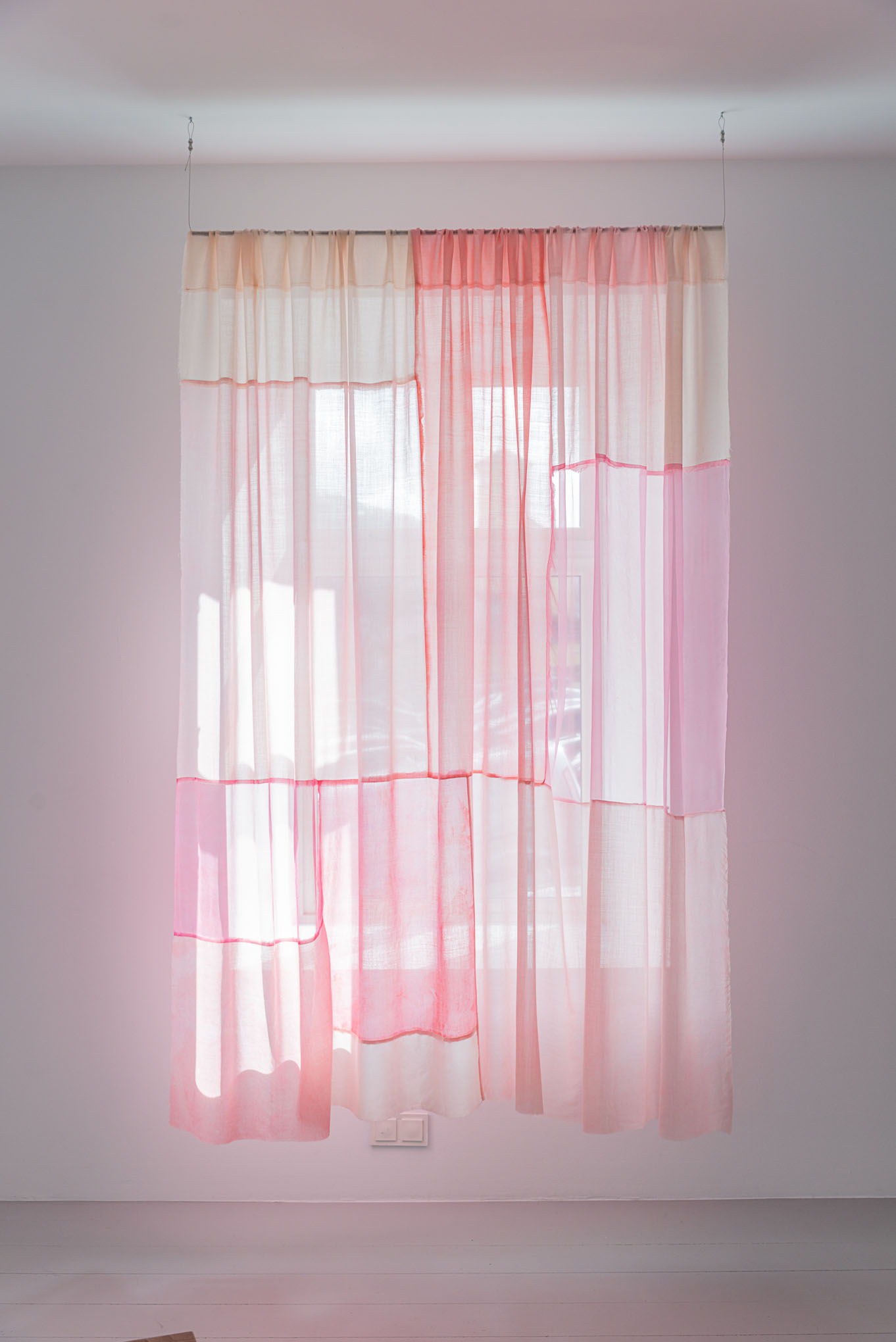
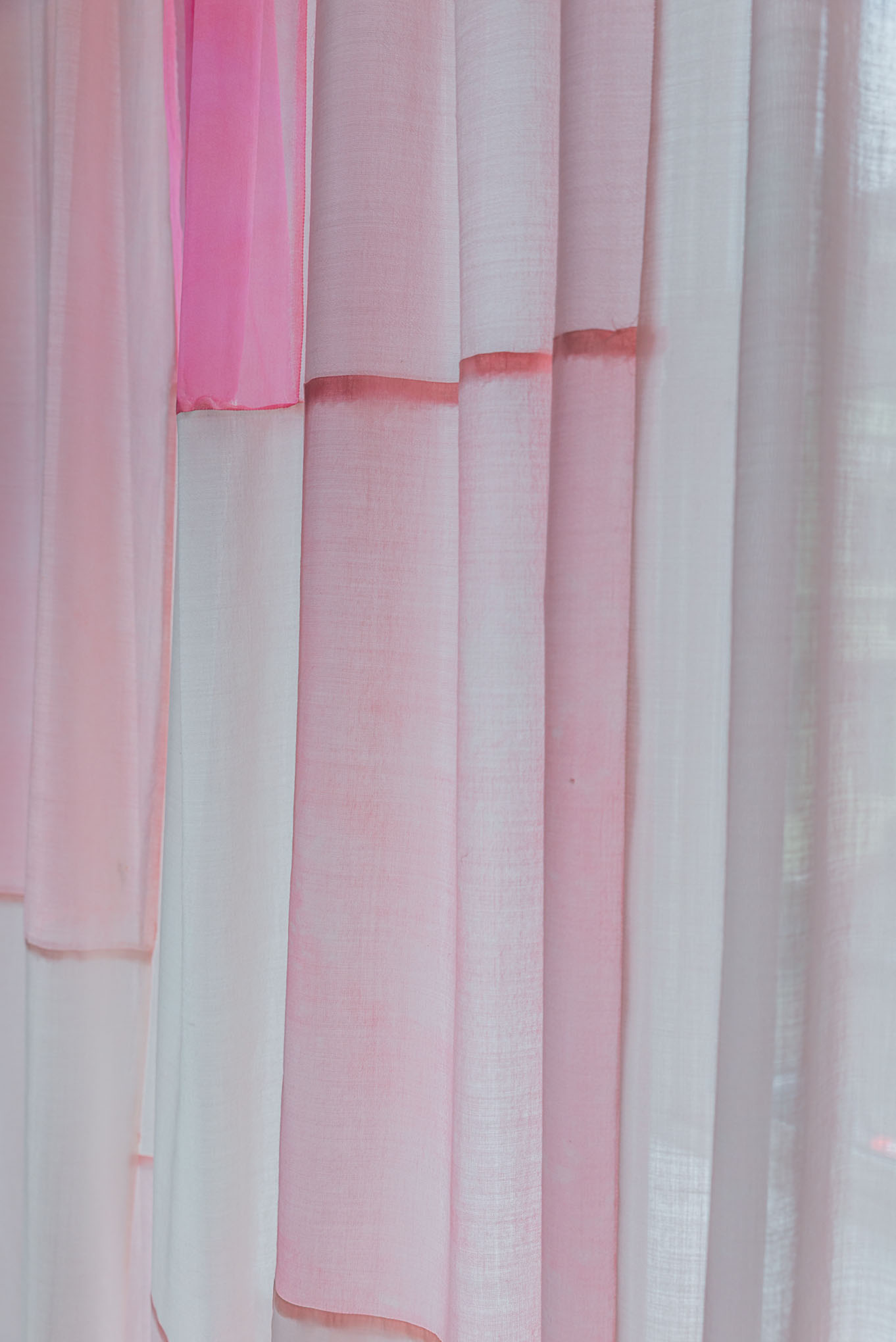
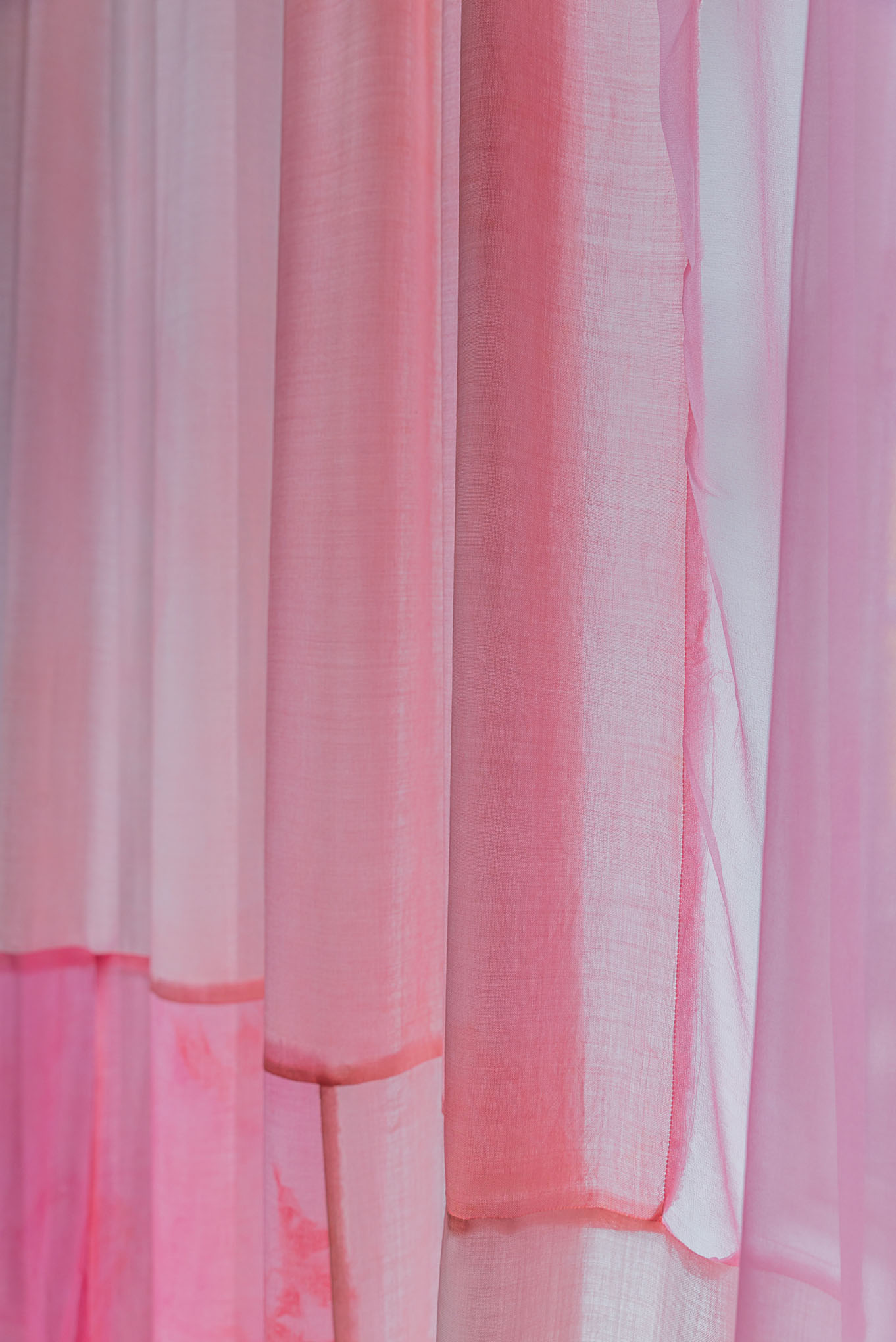
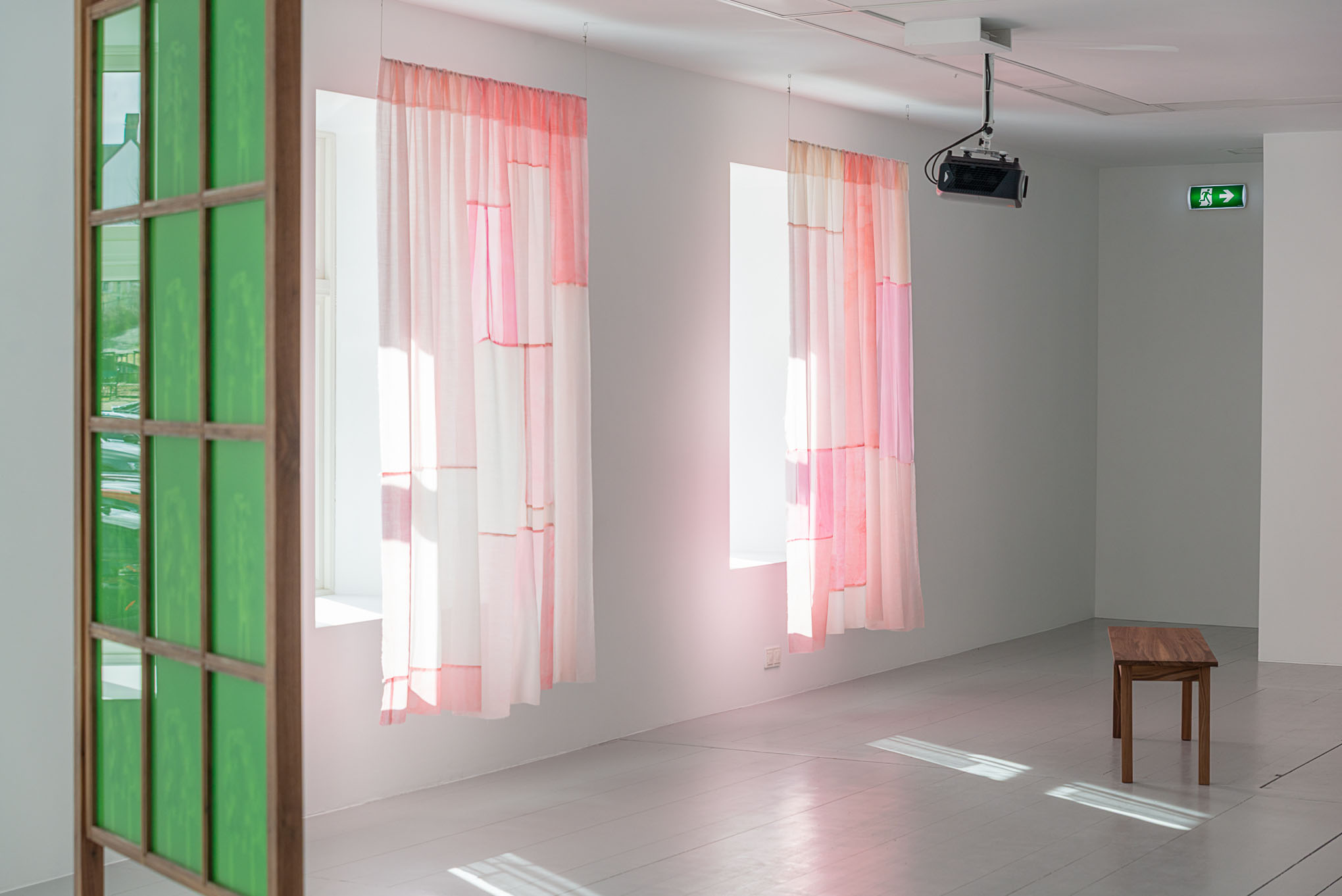
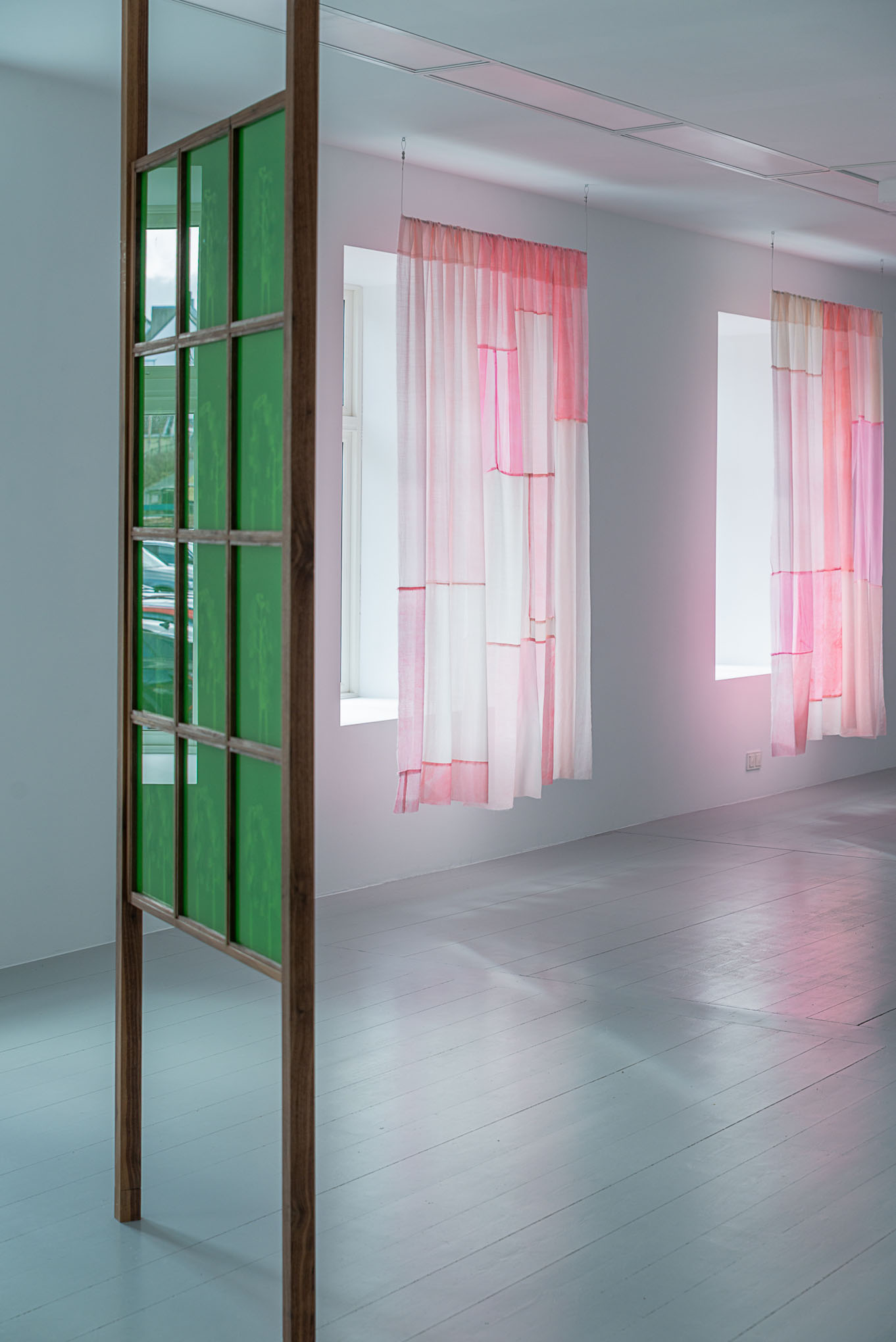
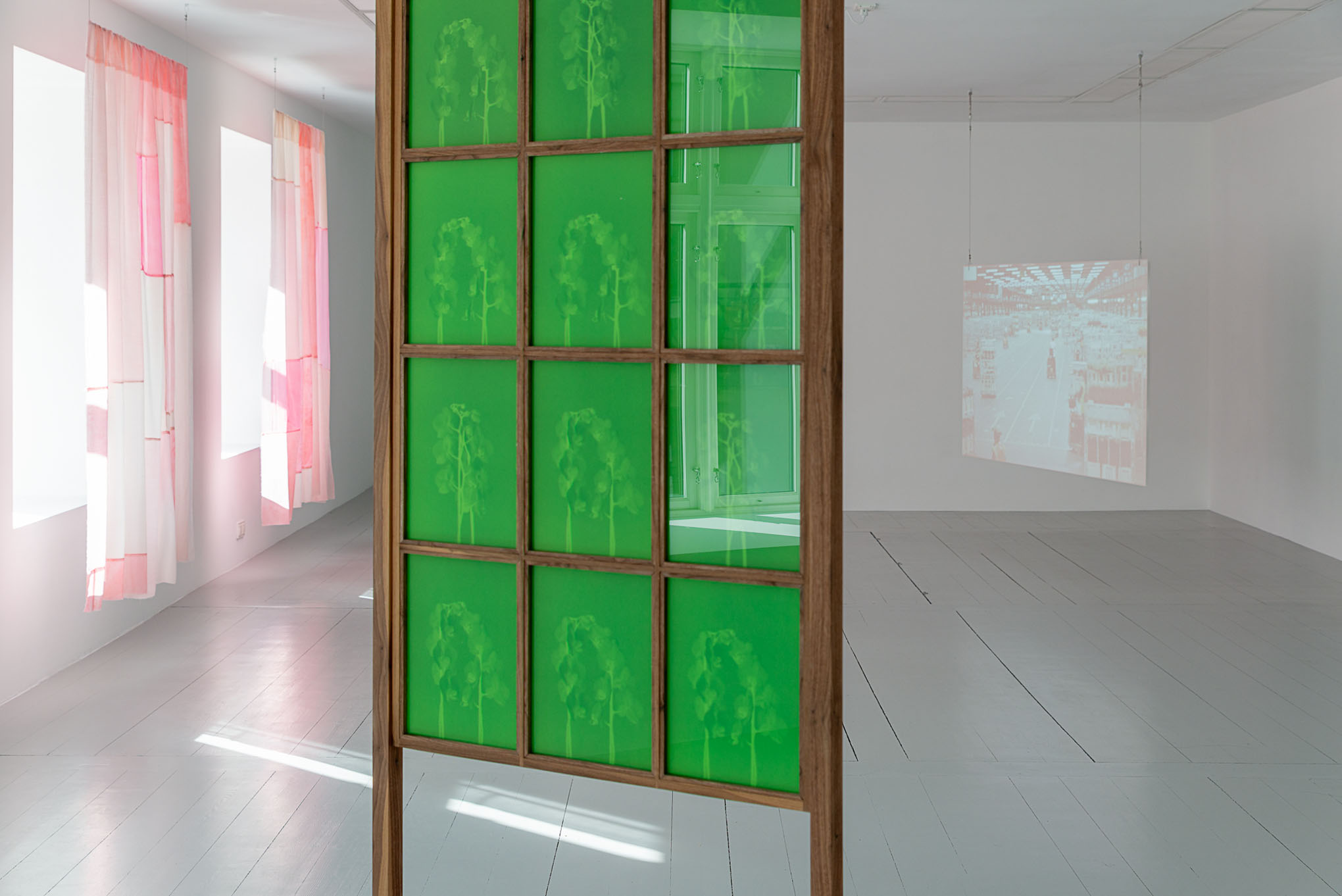
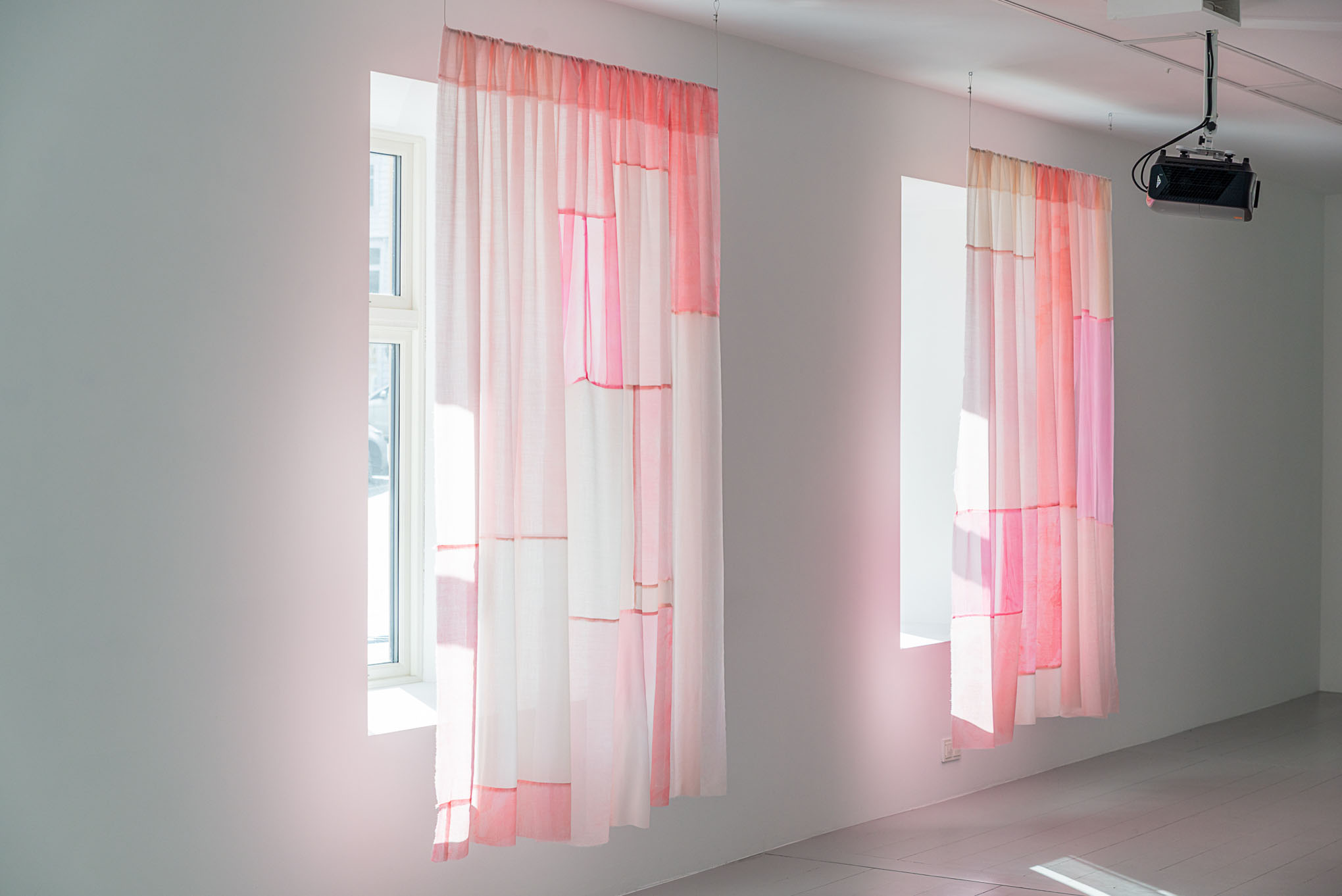
Light, and how it affects not only people but also other creatures and materials, is a central component in many of Serné’s works, both thematically and formally. Several of the works she shows in Nightblooming are created using light: footage shot on 16mm film show the warehouses in the Netherlands, where forklifts loaded with flowers drive in seemingly endless, hypnotic circuits. Textile works in wool and silk, hung in front of the windows of the gallery space, carry the imprint of the morning sun. The materials were treated with a substance that made them light-sensitive, before being exposed at sunrise.
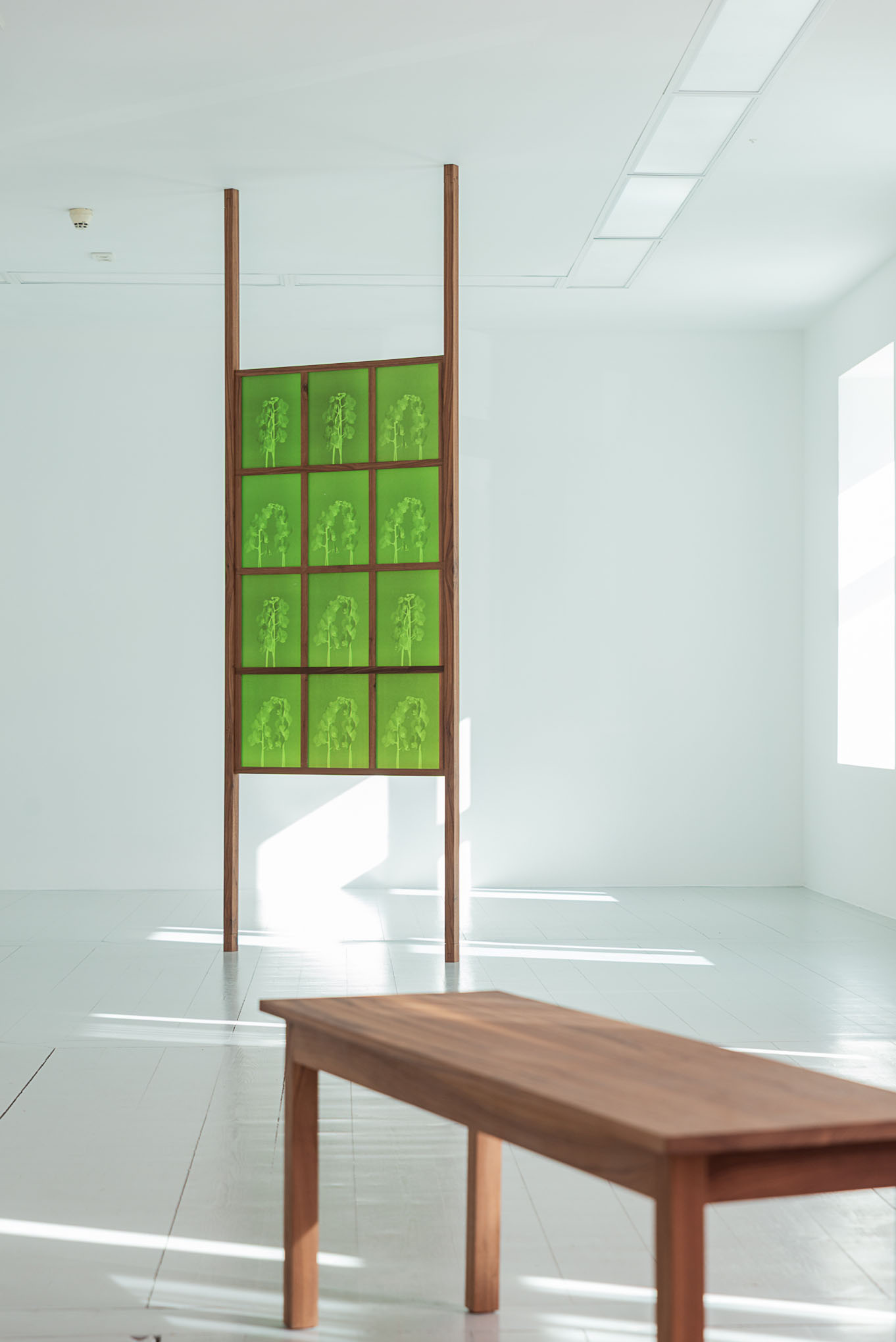
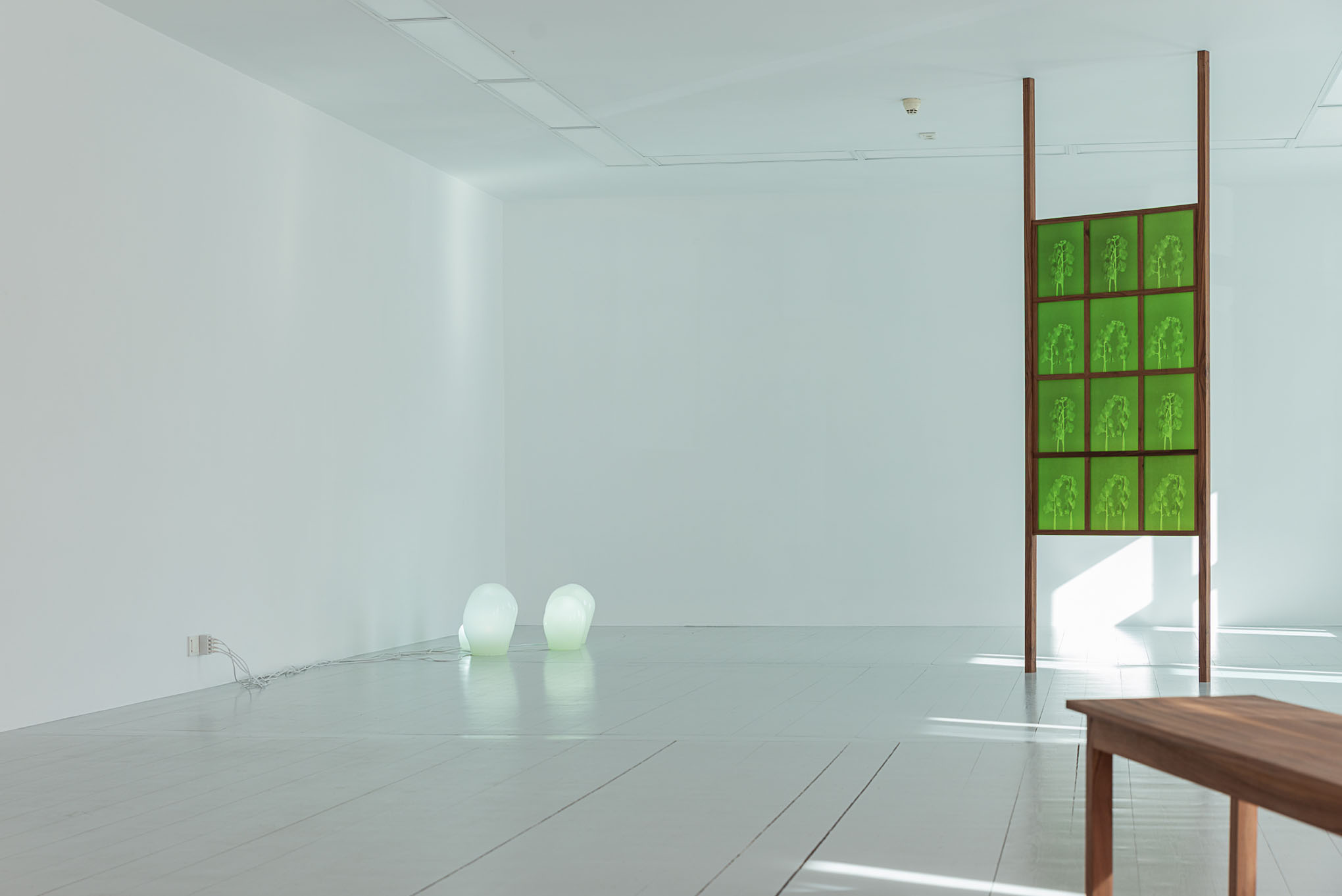
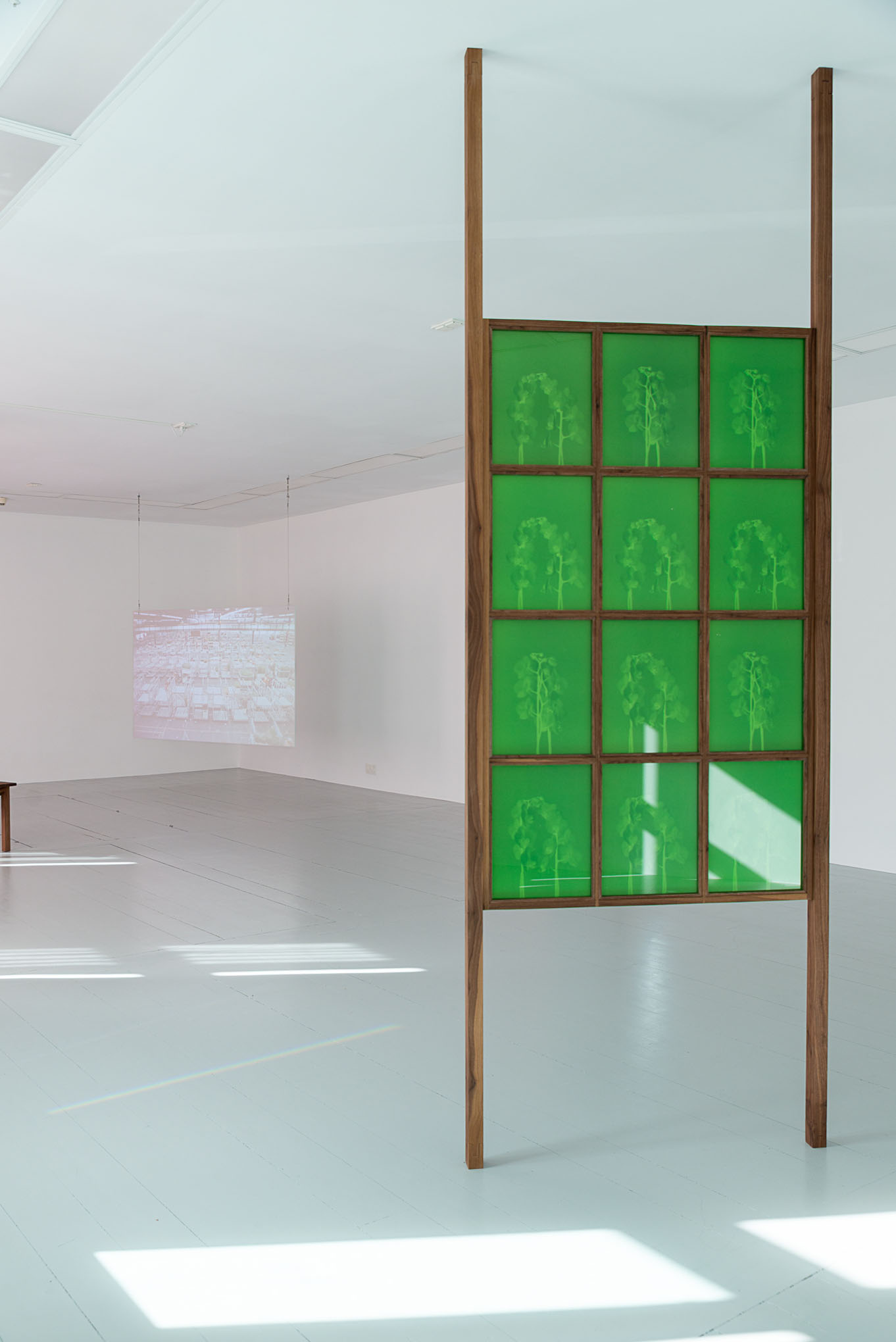
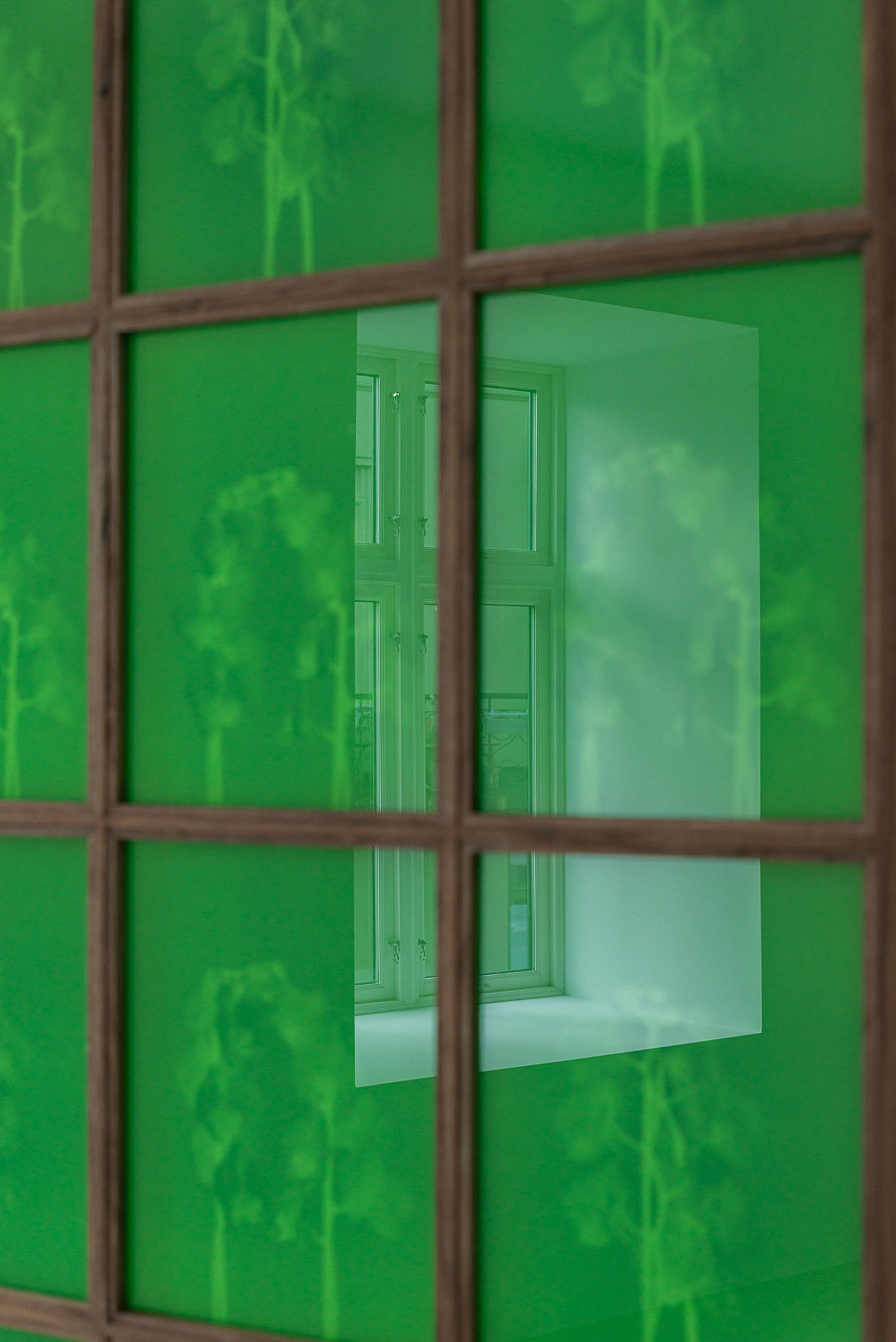
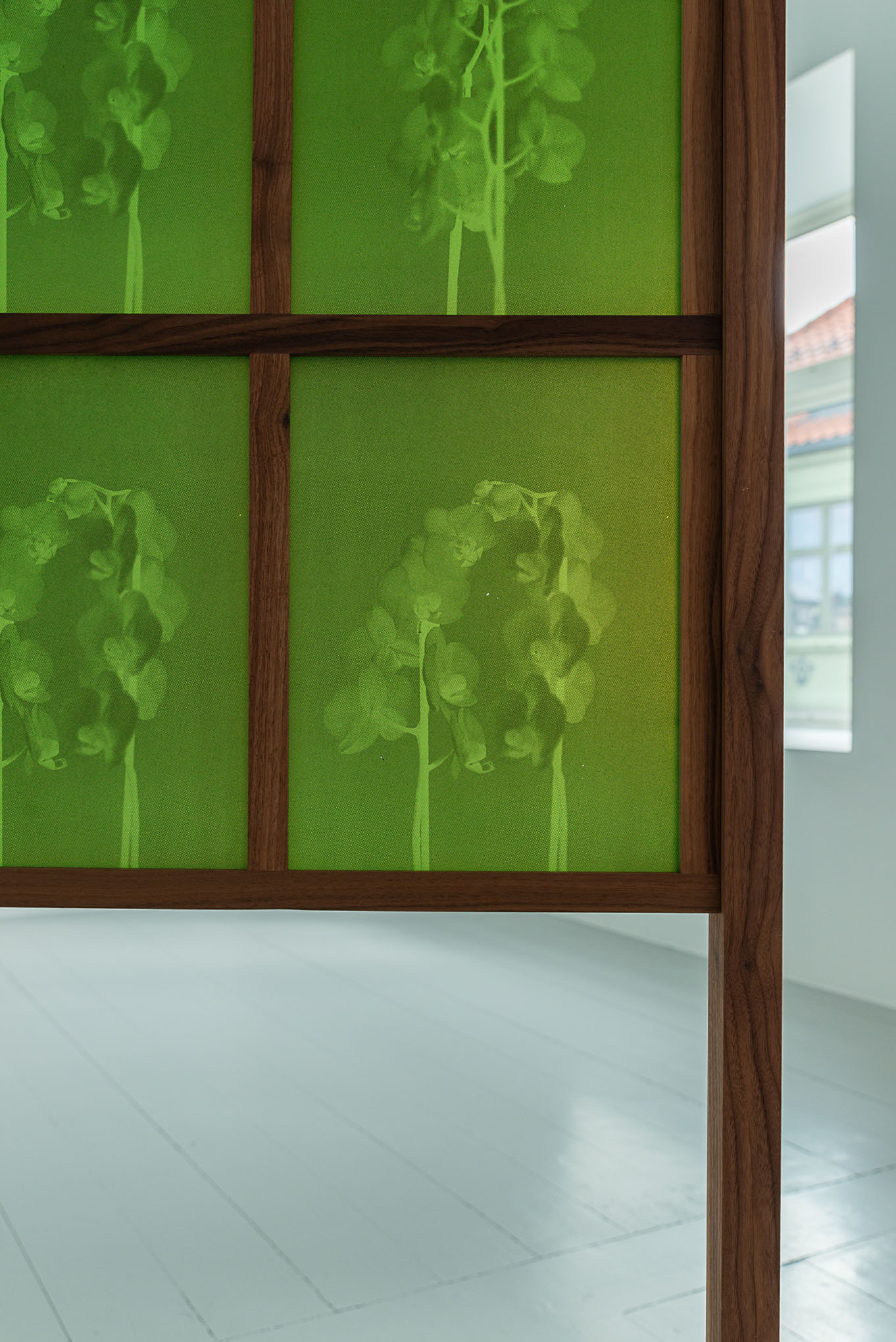
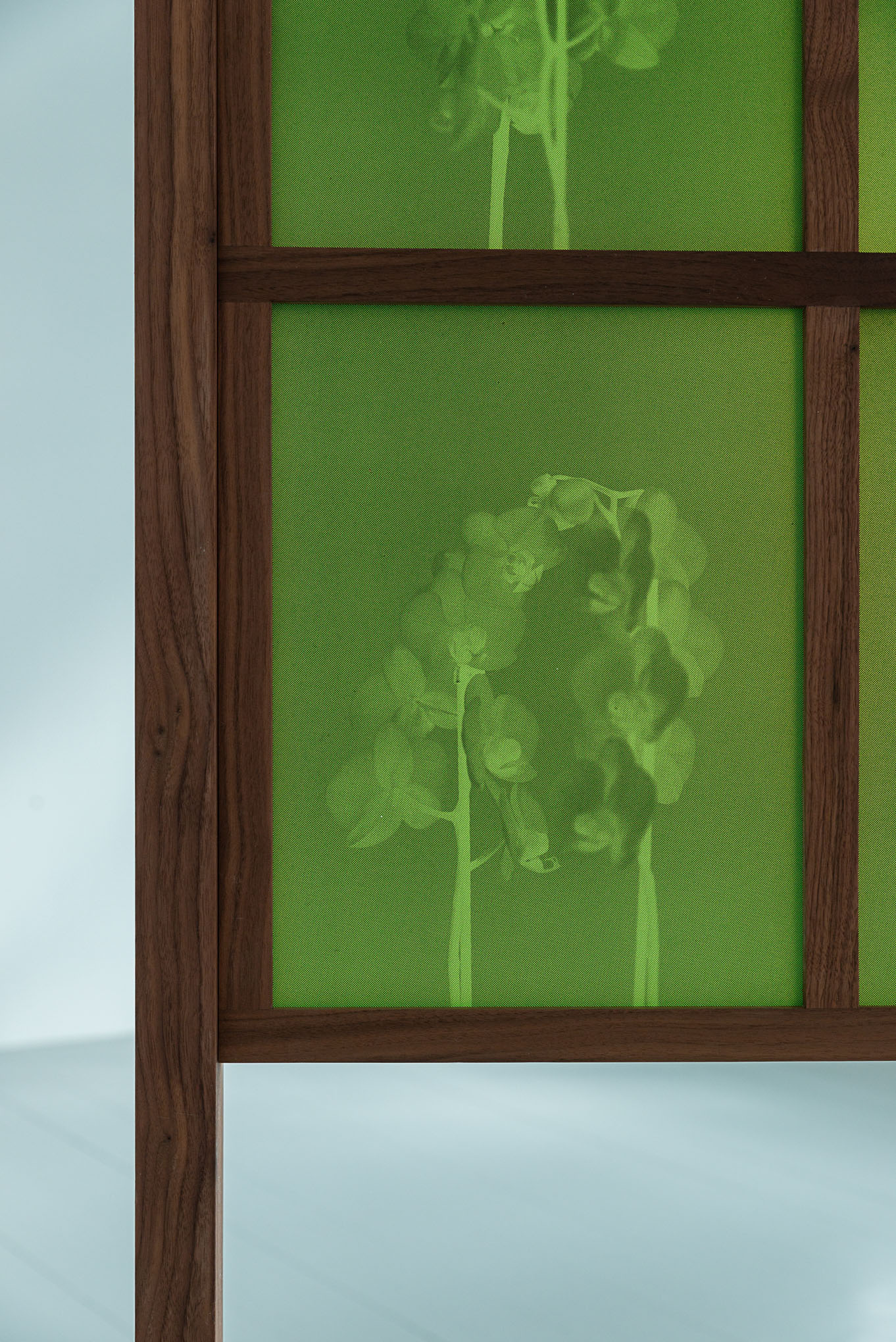
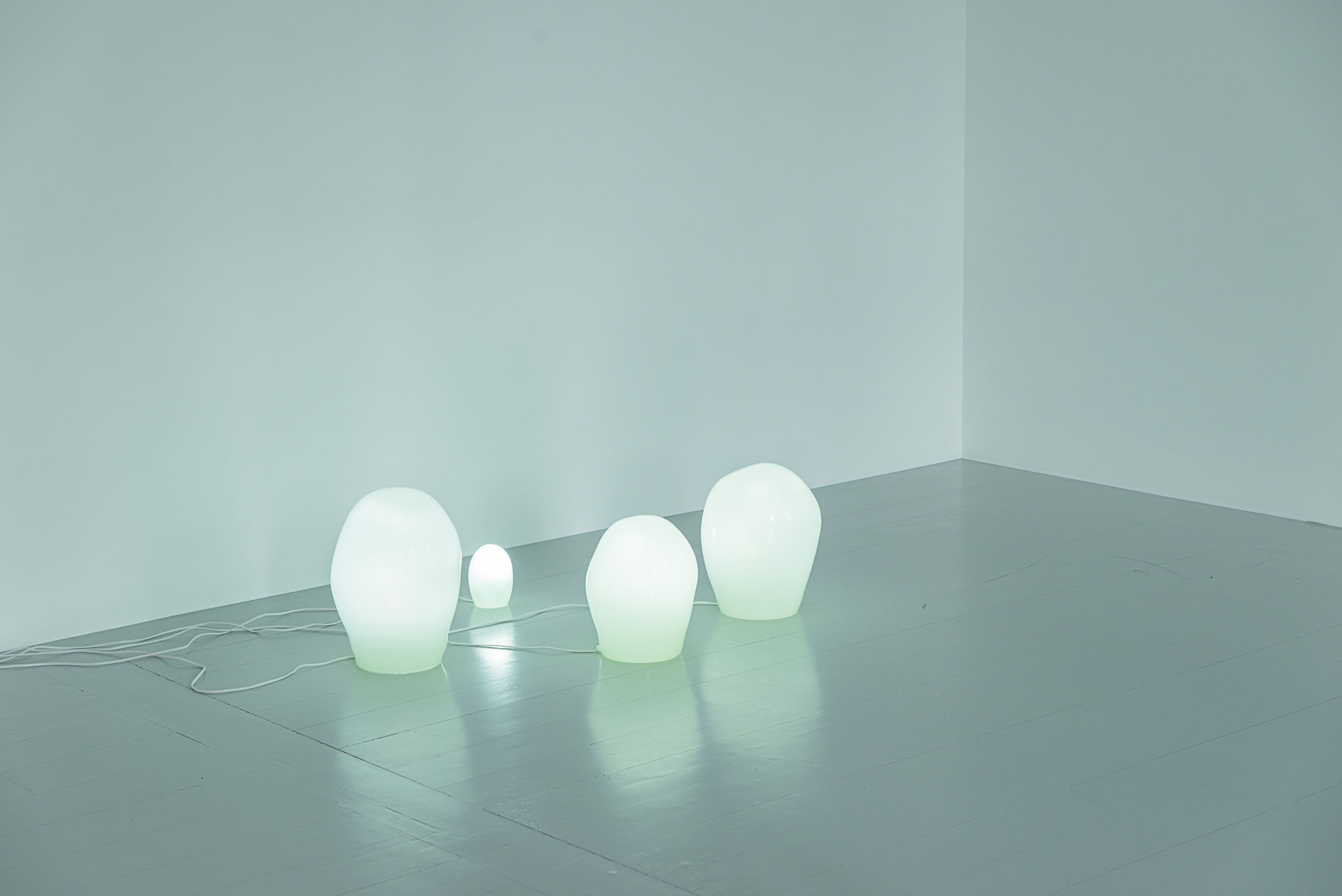
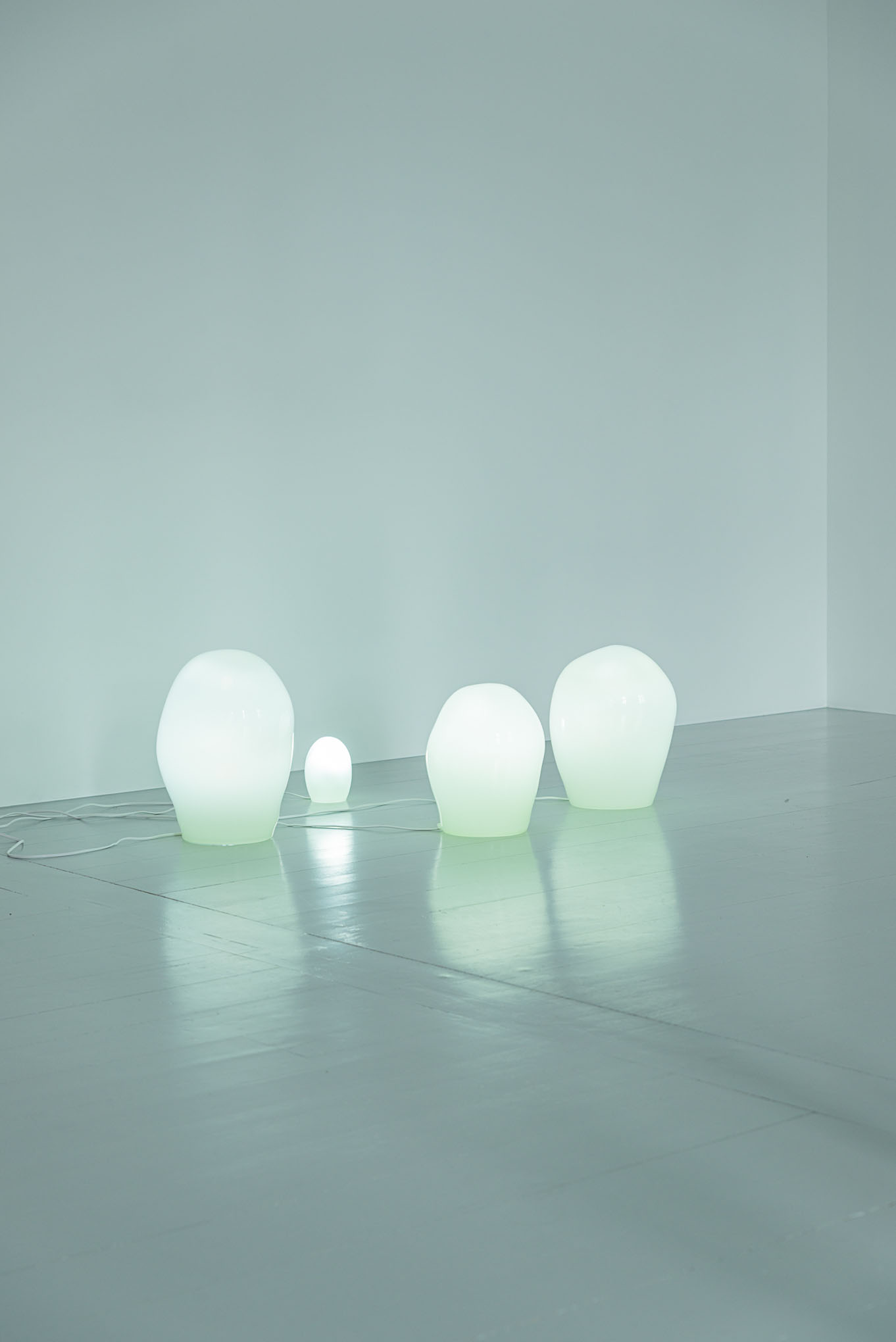
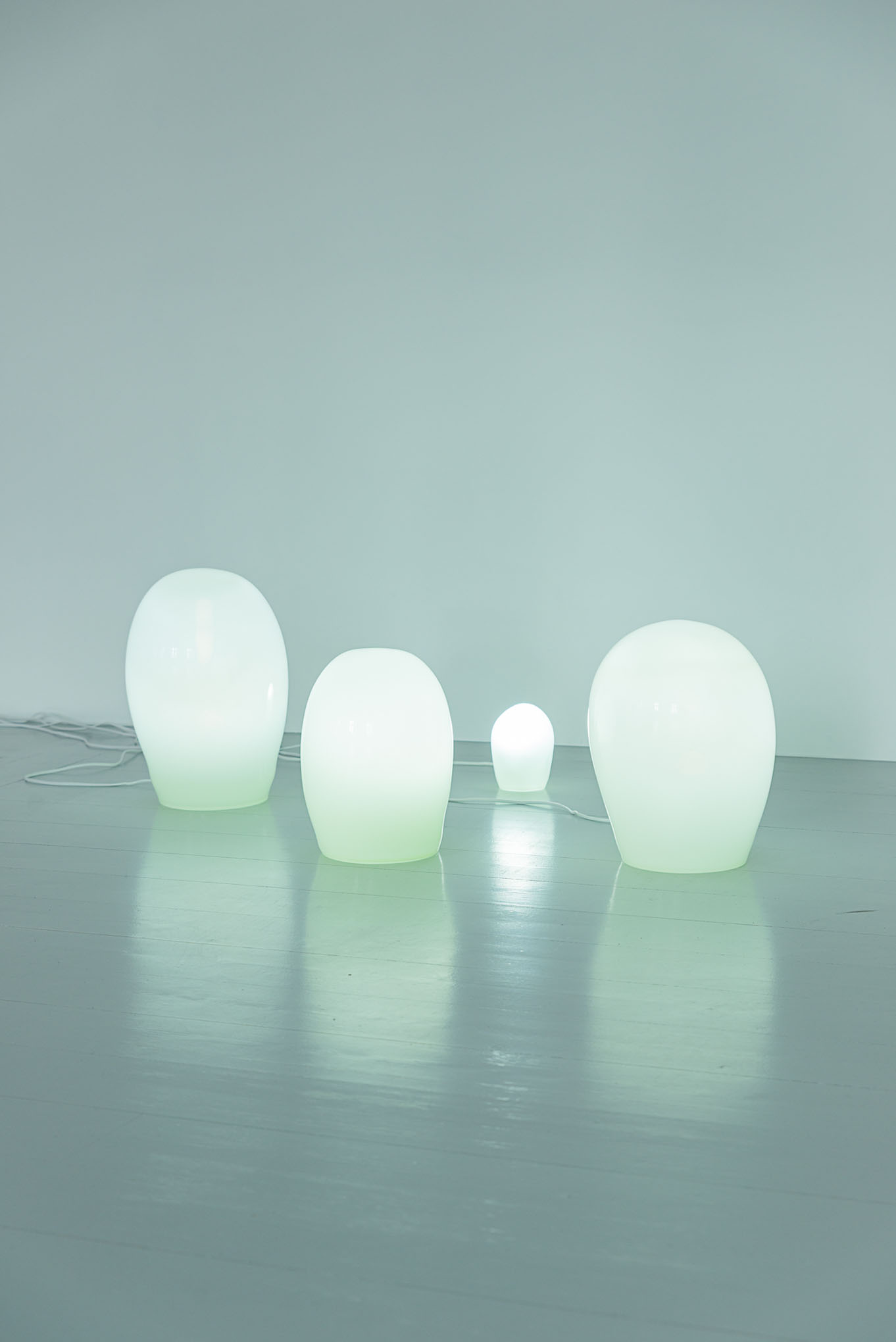
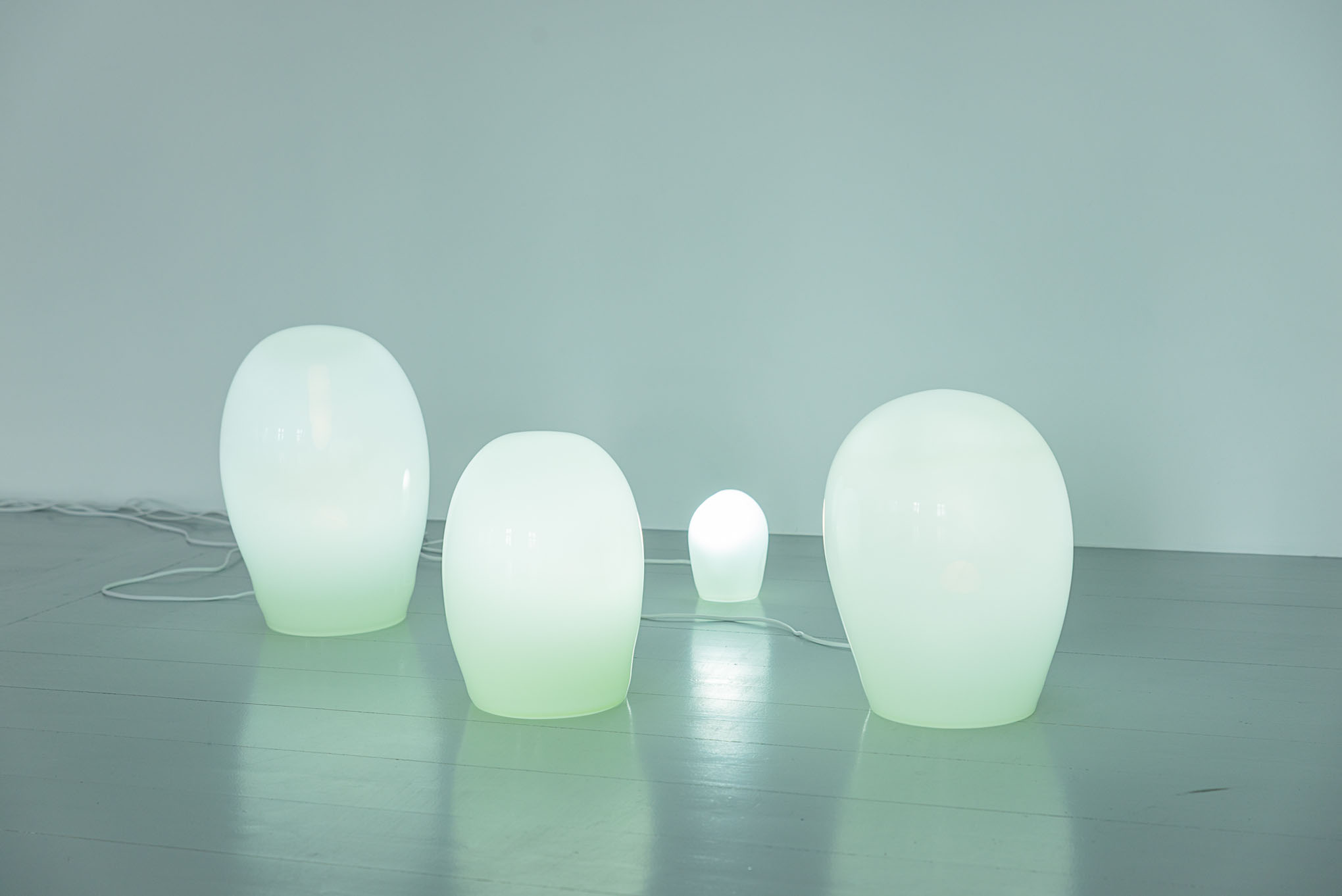
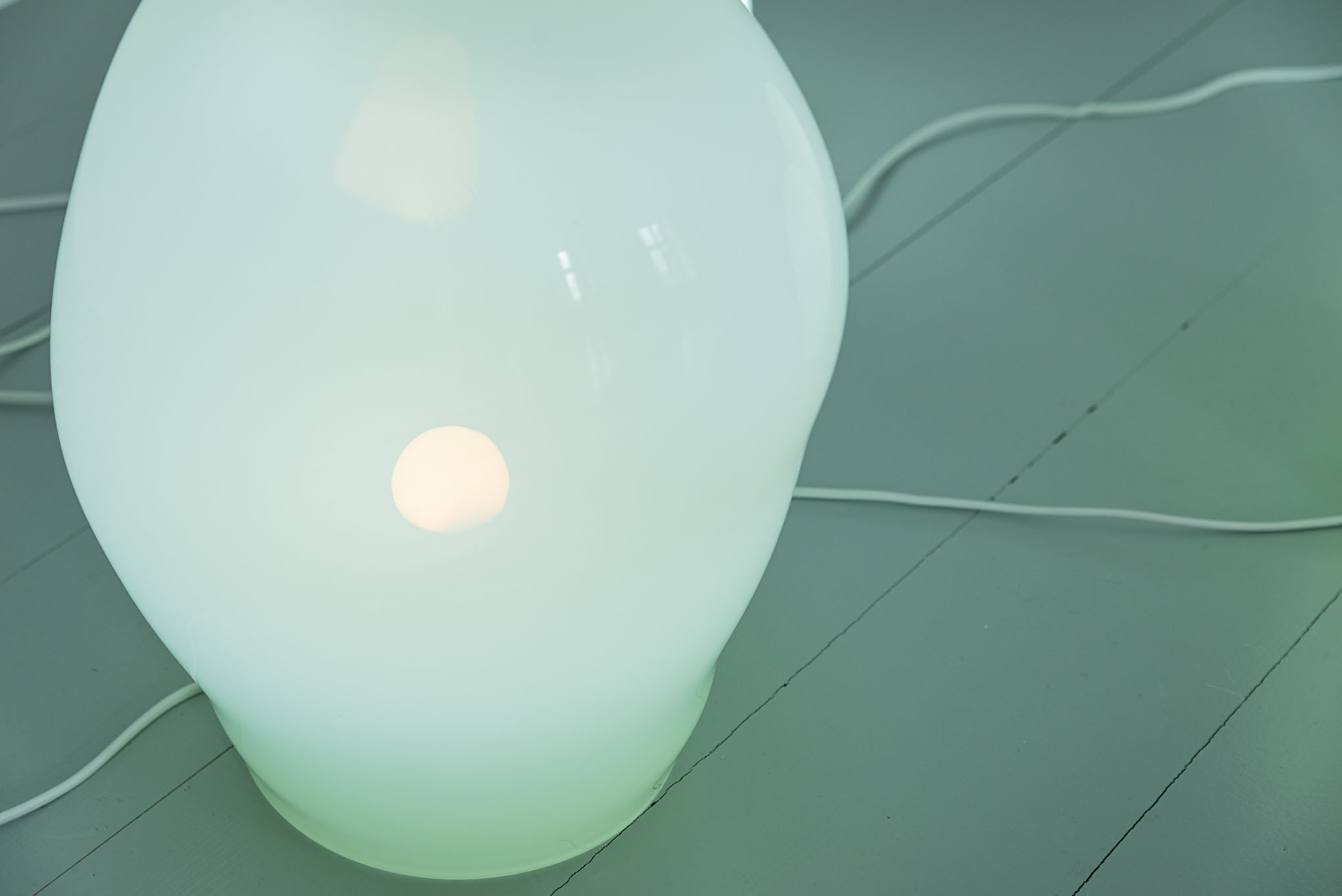
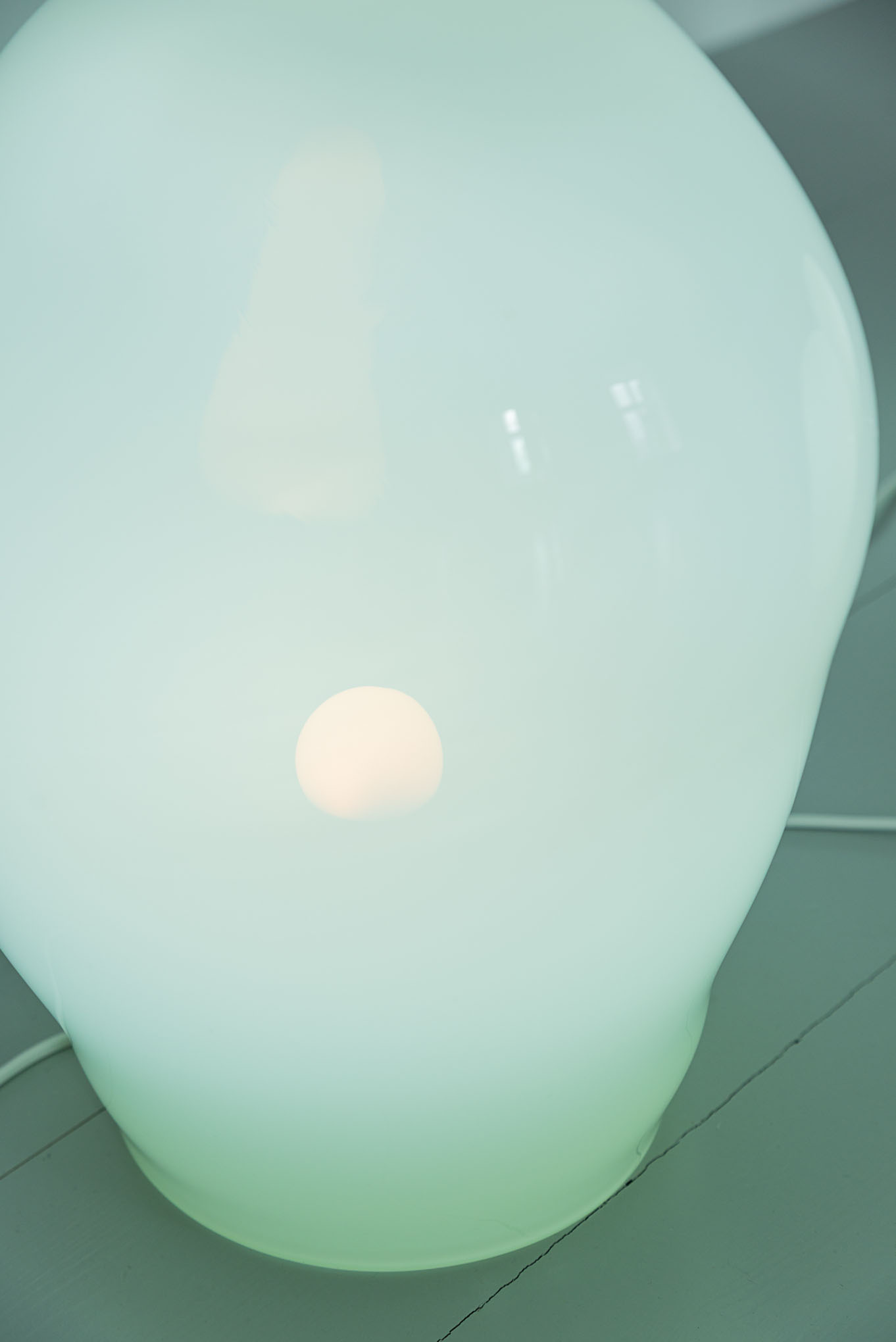
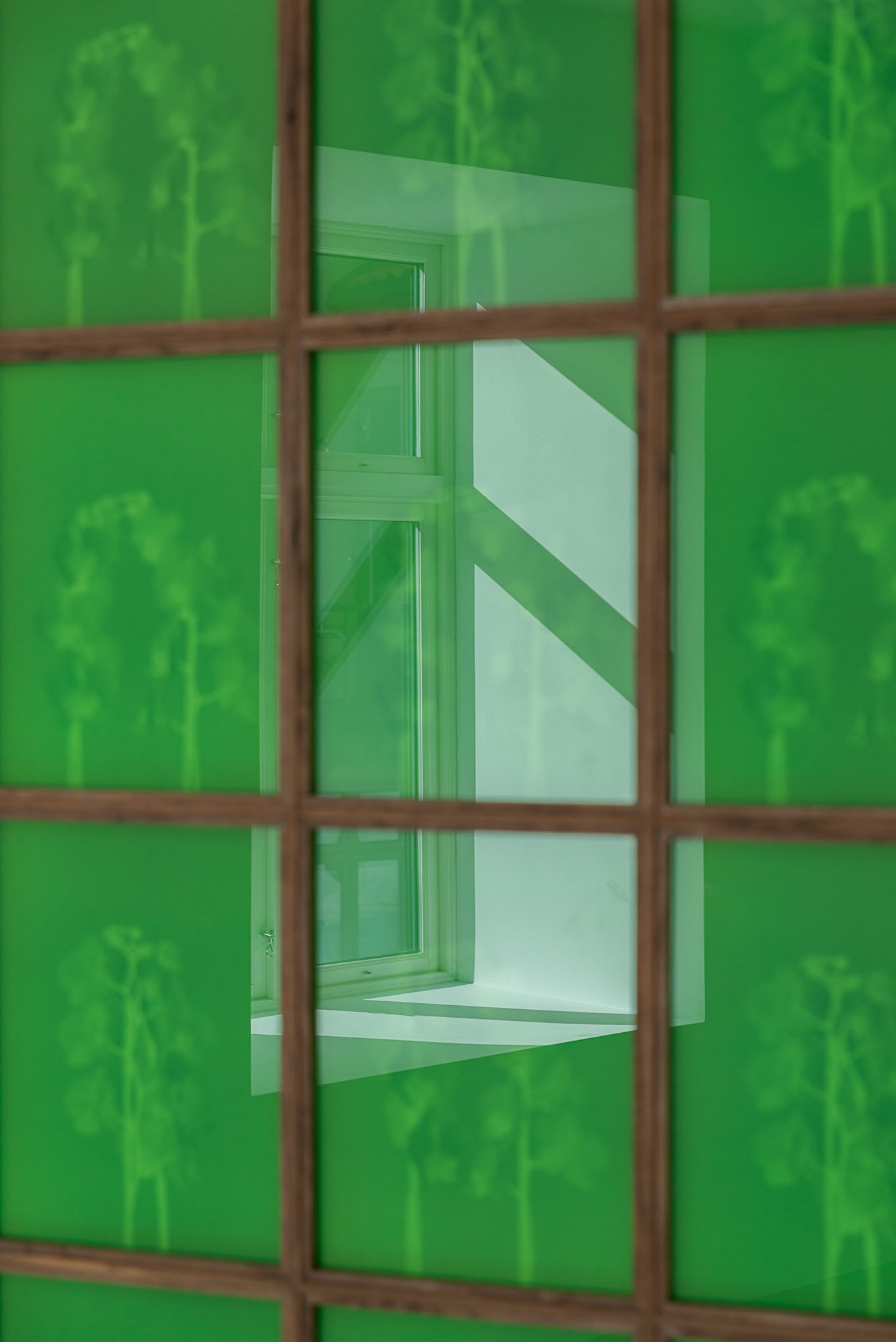
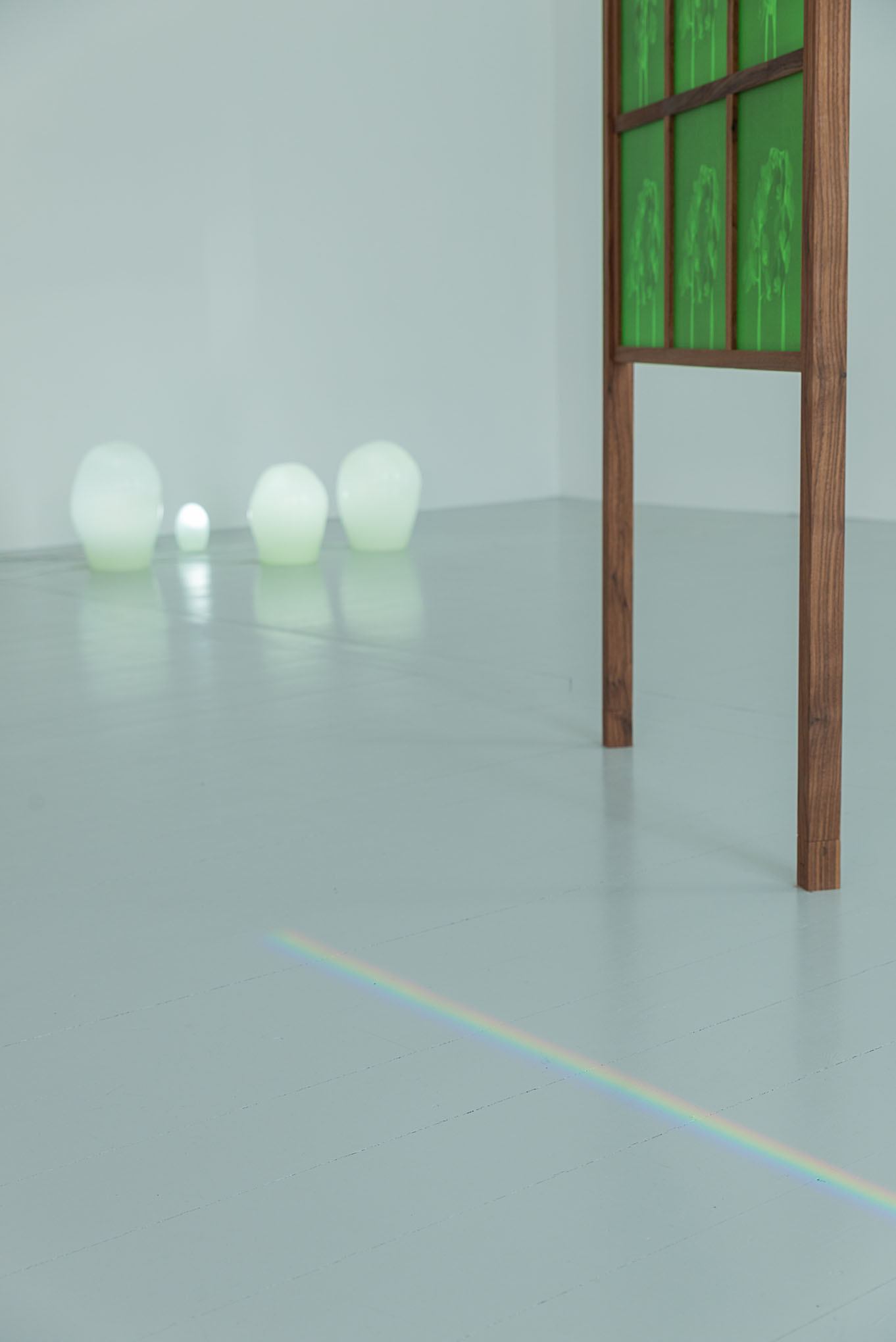
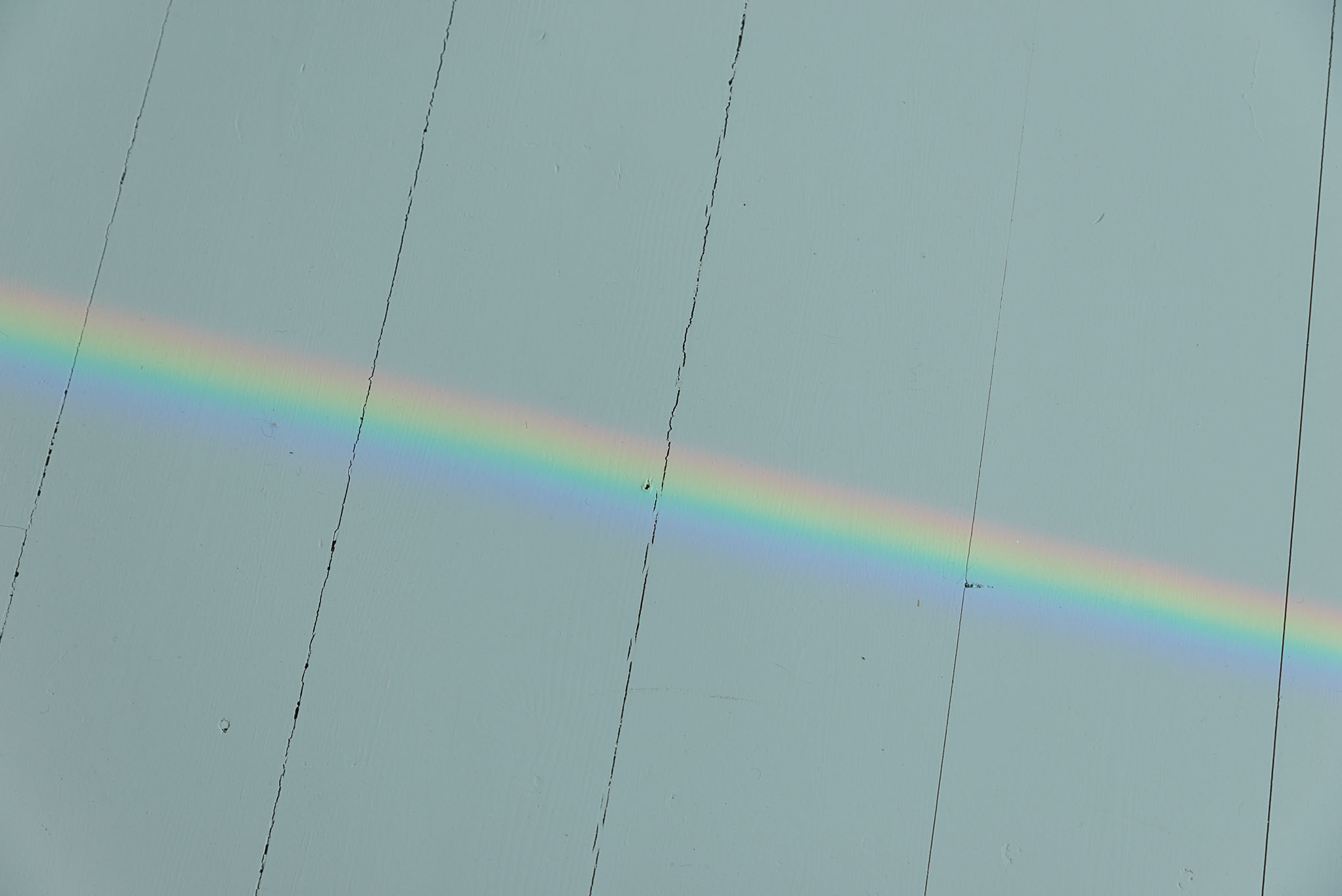
Serné often works with textiles and photographic media. In the exhibition at Hordaland Kunstsenter, glass is also an important material. Silk-screen prints on glass in shades of green are illuminated by daylight and wash colour across the gallery space. Handblown green glass sculptures are lit from within by light bulbs.
In recent years, insomnia has been a recurring thematic thread in Serné’s practice, and her explorations of light and circadian rhythm could be seen as a continuation of this. At the same time, the images from the flower market invite reflection on humanity’s commercialisation of and scientific intervention in nature, and the contrasts in scale and pace that arise between the orchid as a commodity and the orchid in itself.
Ananda Serné is a Dutch writer and visual artist based in Bergen. She holds an MA in Fine Arts from the Iceland University of the Arts, and has been awarded several research and studio residencies, such as the Jan van Eyck Academie in Maastricht. Past projects took place at Billedhoggerforeningen, Oslo; Museum of Contemporary Art Skopje; puntWG, Amsterdam; Bergen Kunsthall’s Live Studio; Fotogalleriet, Oslo; Stavanger Kunstmuseum; Bamboo Curtain Studio, Taipei; Pier-2 Art Center, Kaohsiung; Rogaland Kunstsenter, Stavanger; Art Rotterdam.
Parallel to her visual practice, she works as a writer. Her debut novel, Nachtbloeiers (2022), depicts a near future marked by insomnia, possibly caused by flowers, and was nominated for the Libris Literature Prize in the Netherlands. Her second novel will be published in 2026.