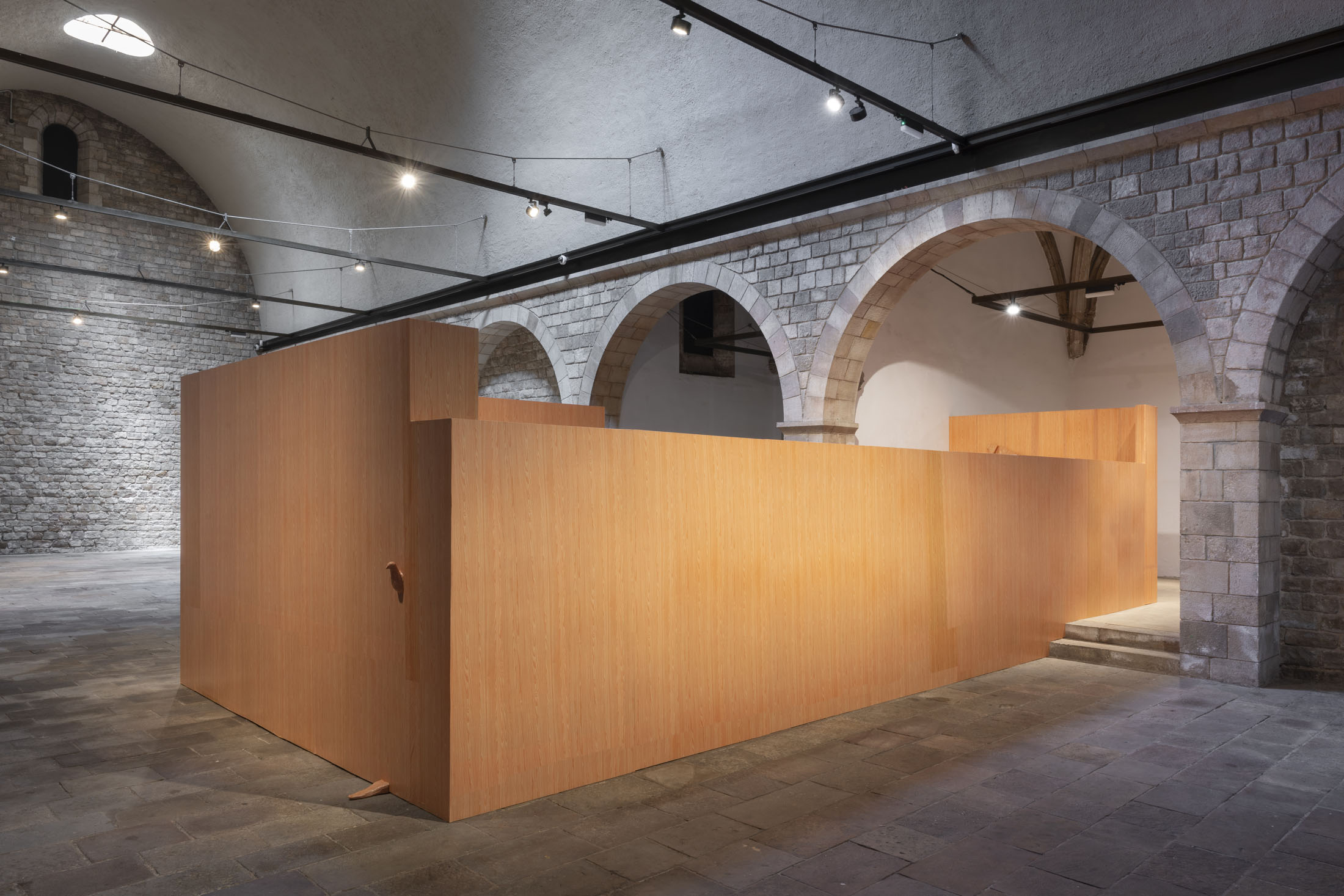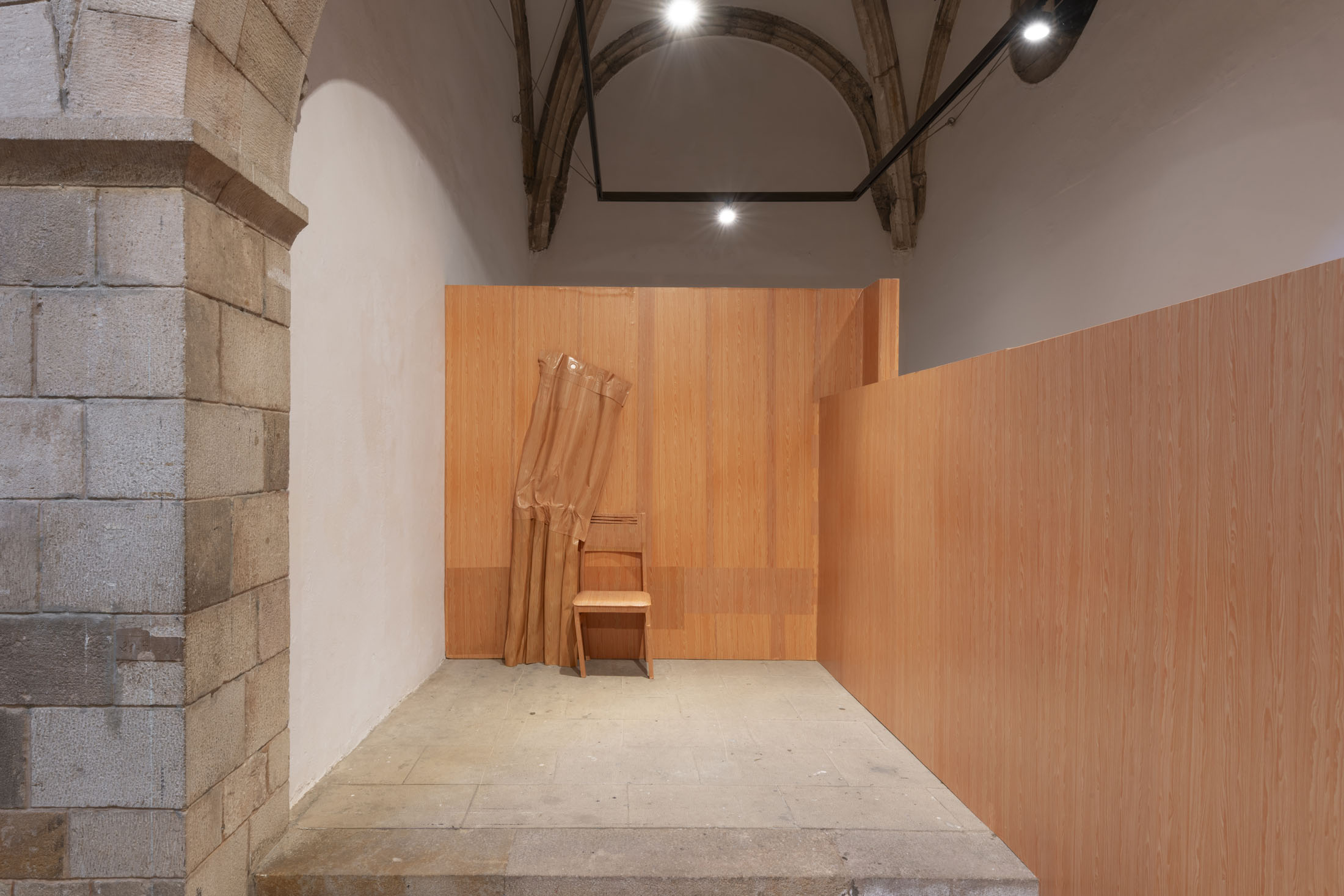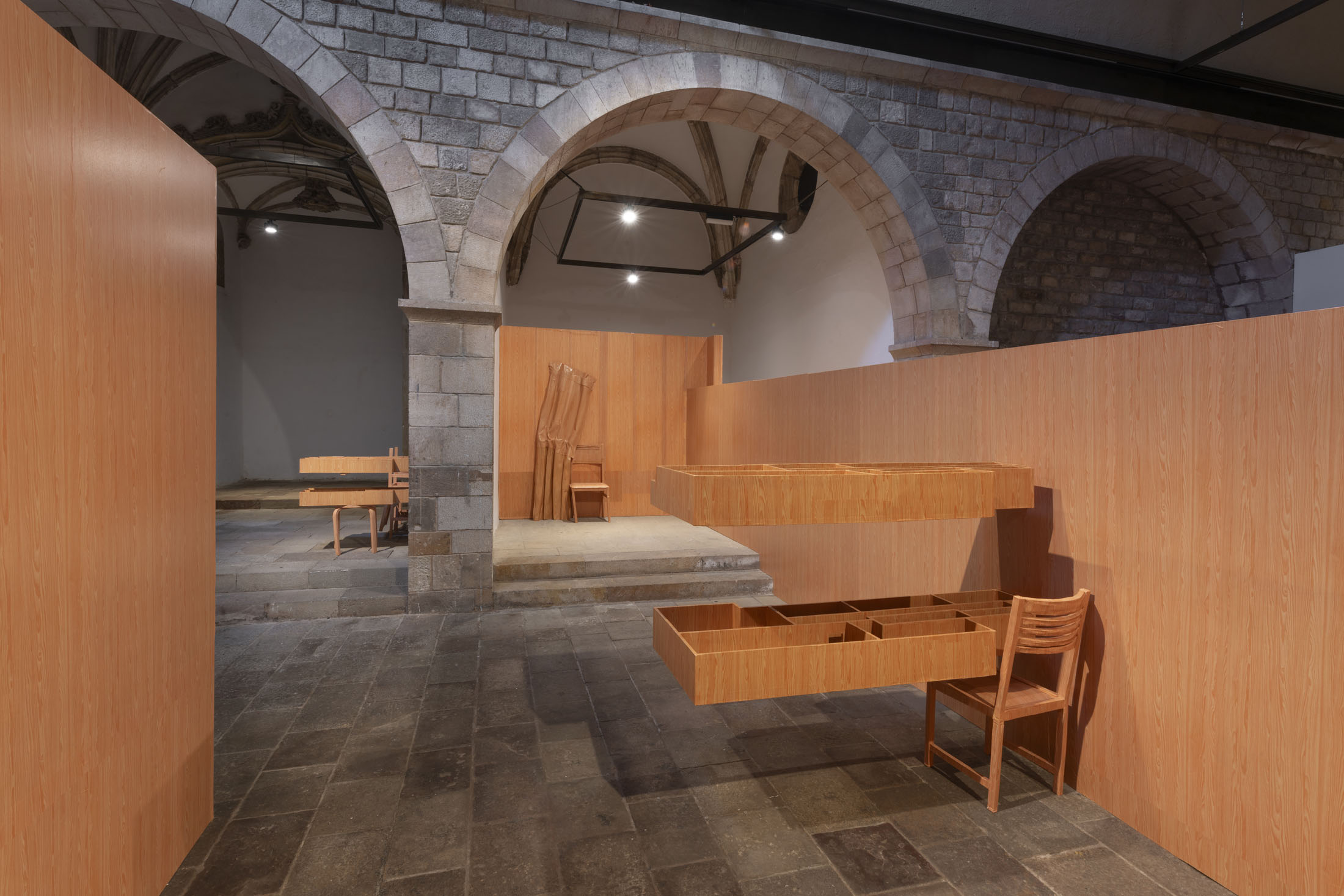
In her recent projects, Ana Martínez Fernández (Cantabria, 1982) has conducted research into the expansive quality of sculpture. Her pieces cover pavement and obstruct passage; in other cases, they are built clinging to the wall, enveloping it, or arranged as if they were curtains, dividing the space into sections. As sculptures, they act as architectural supplements with which the artist tests out new layouts of the exhibition space, aware of the artificiality of these modifications and their set design nature.
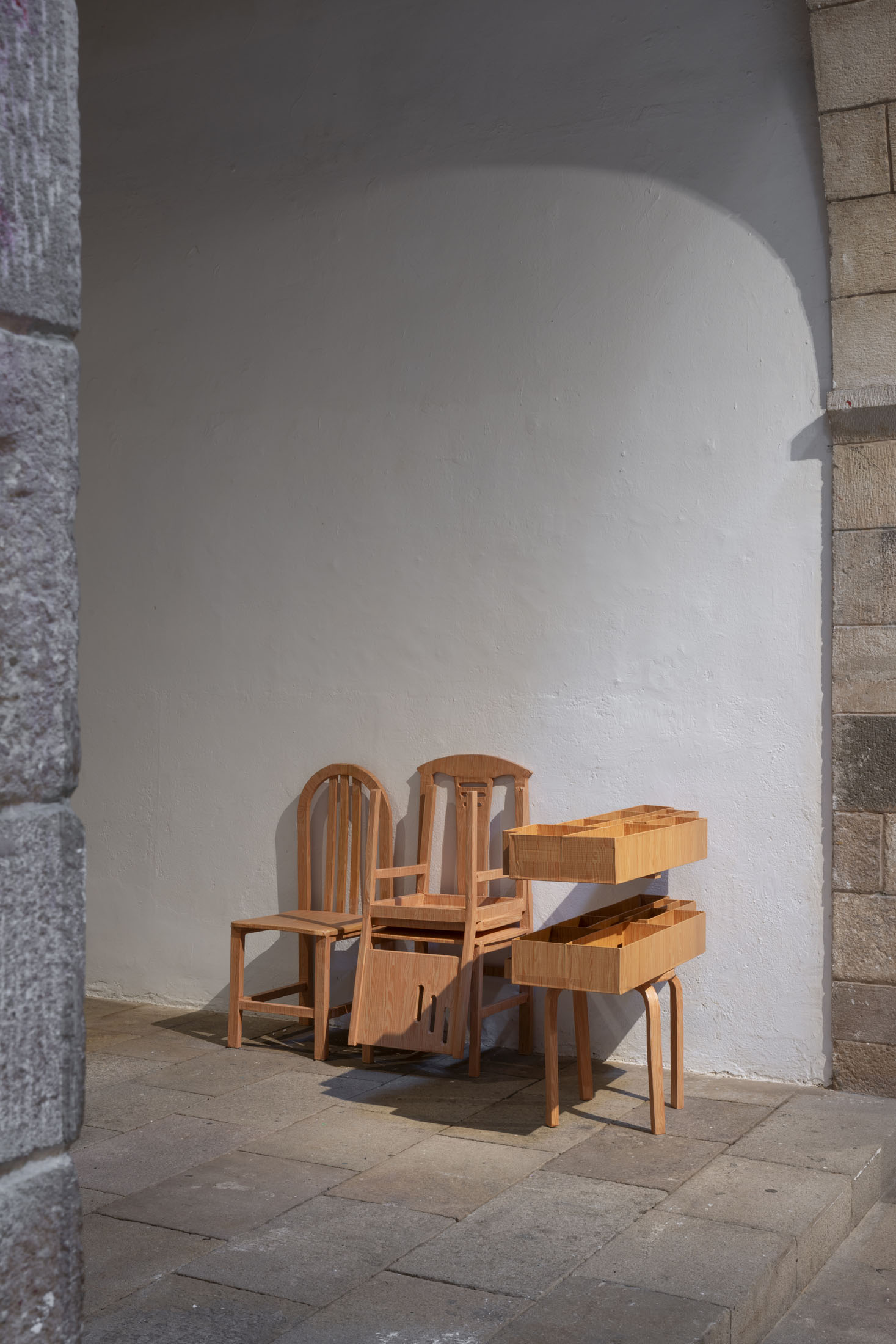
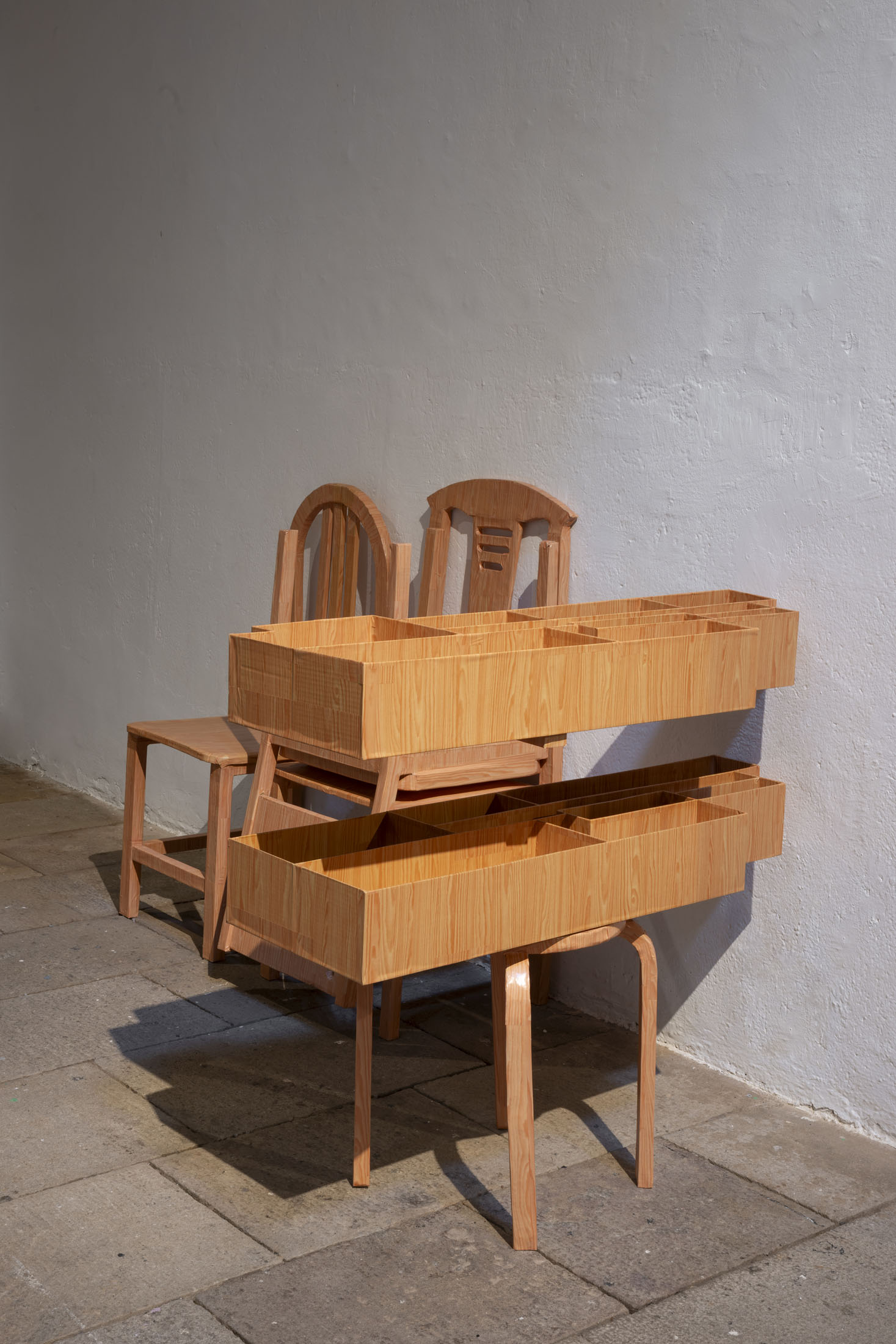
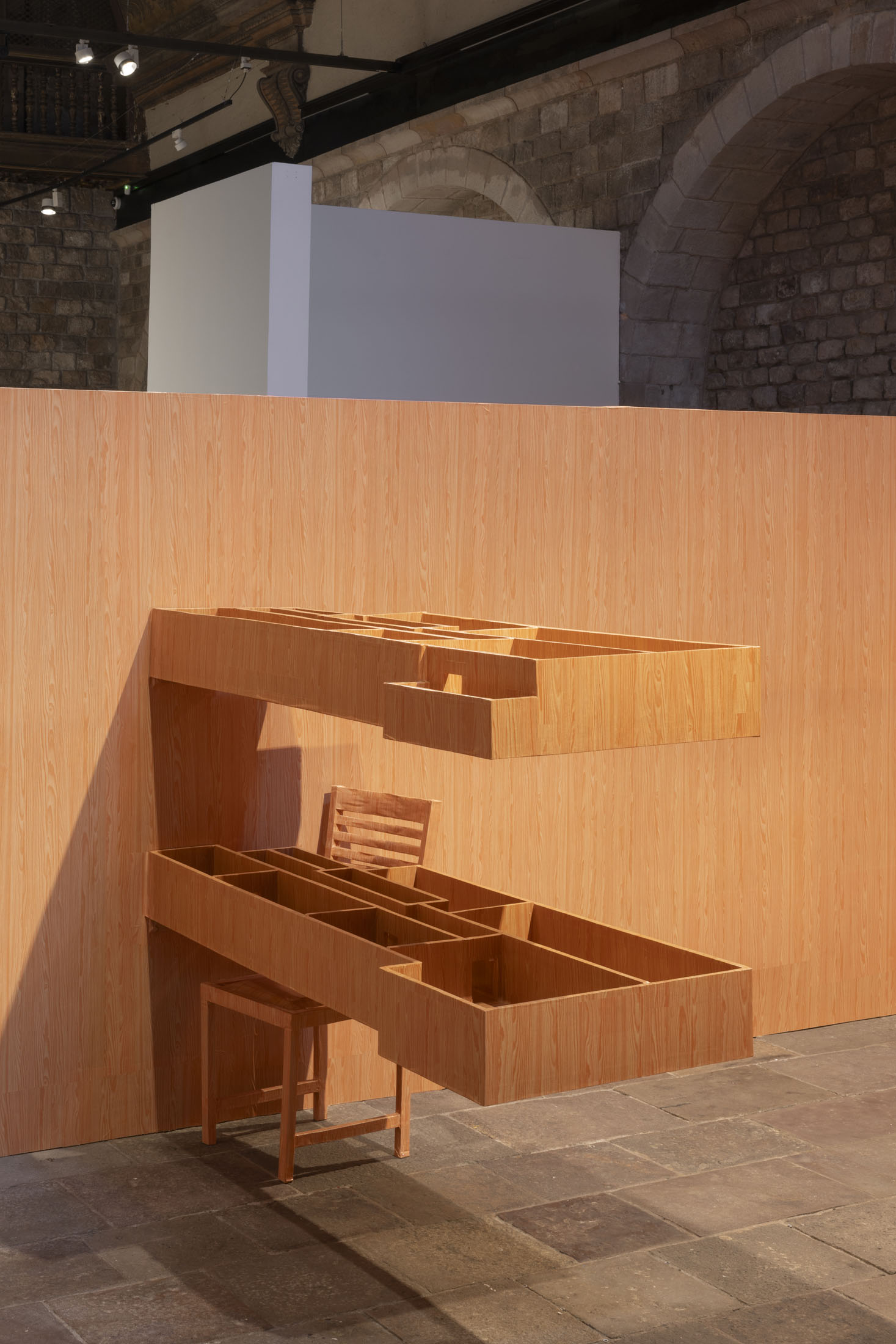
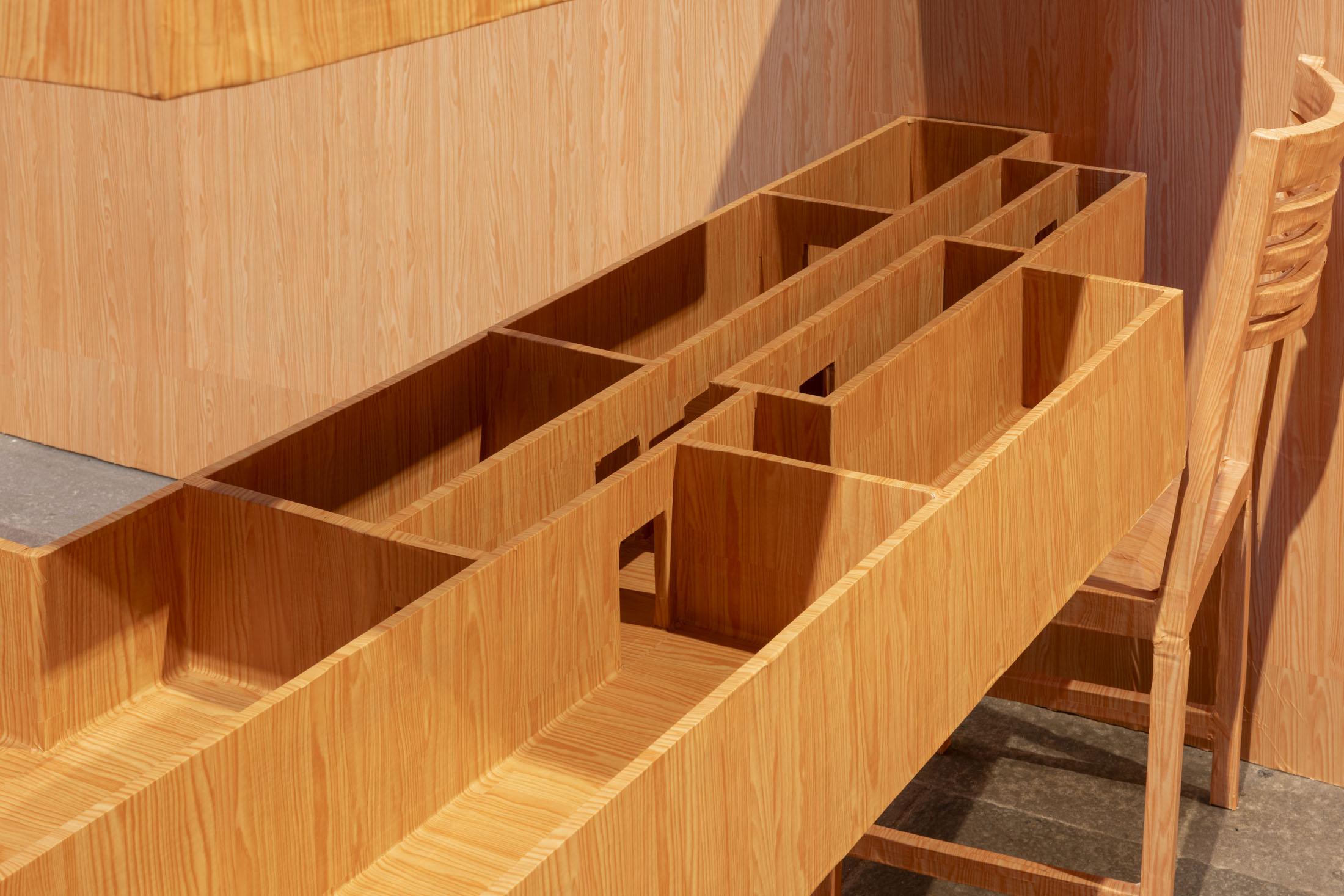
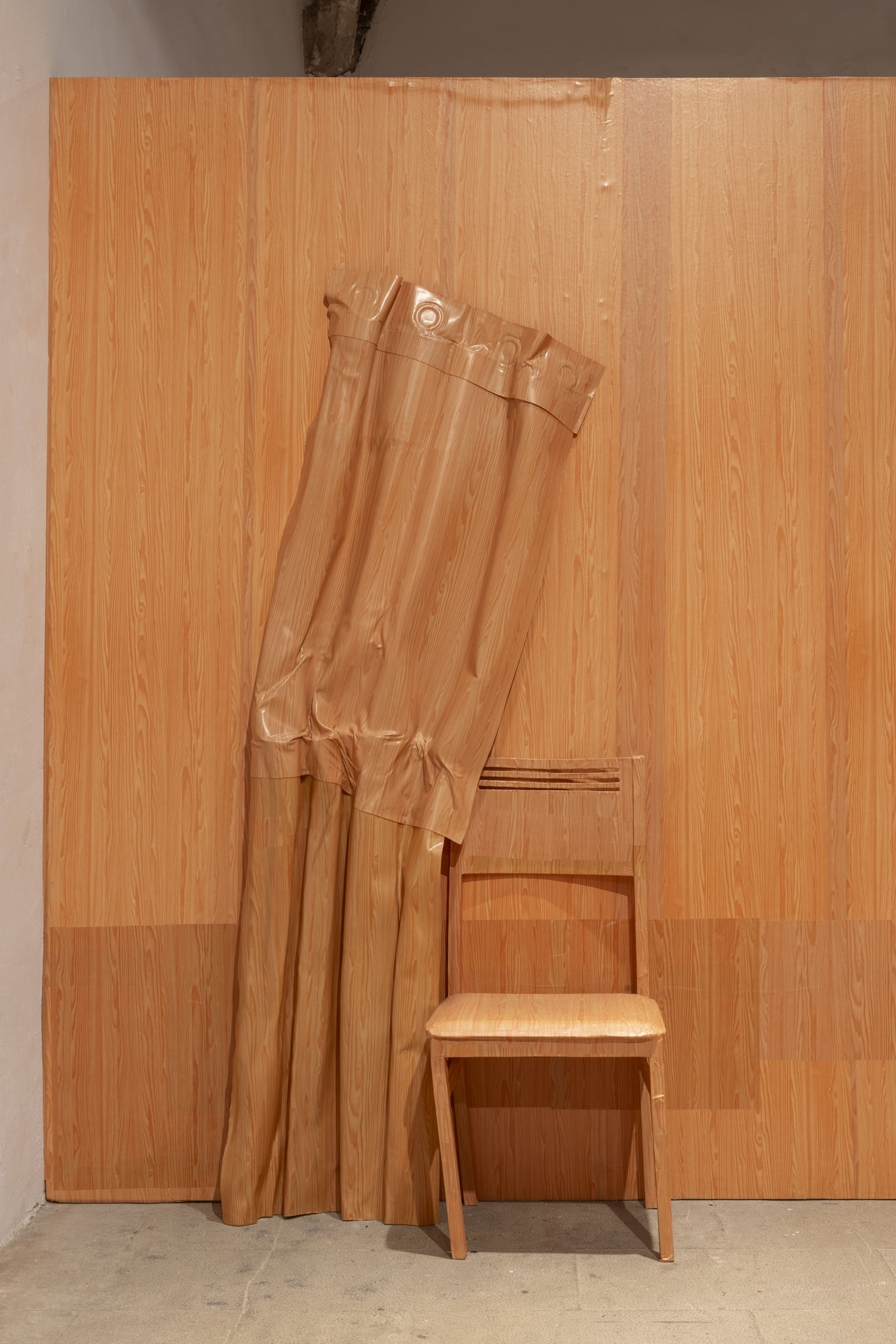
La Mancha más ciega (The Blindest Spoti) builds on this line of research based on a single material: industrial-grade self-adhesive vinyl printed with a photographic pattern that reproduces wooden planks. Although this vinyl is typically used to standardise, protect or enhance surfaces damaged by use and wear, by adopting it as if it were a modelling and architectural composition material, the artist emphasises the material’s illusory quality and the failure of the decorative effect for which it was produced.
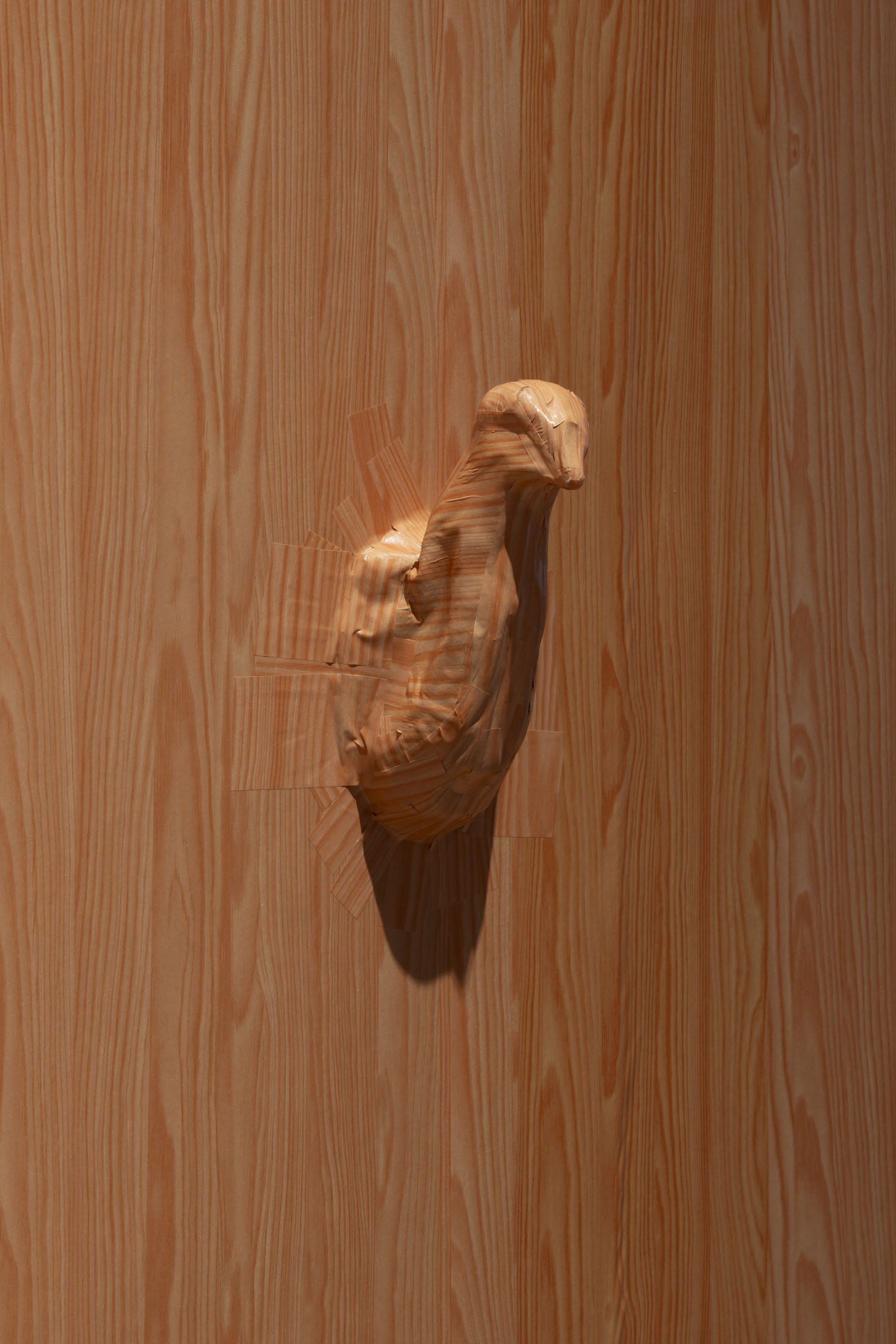
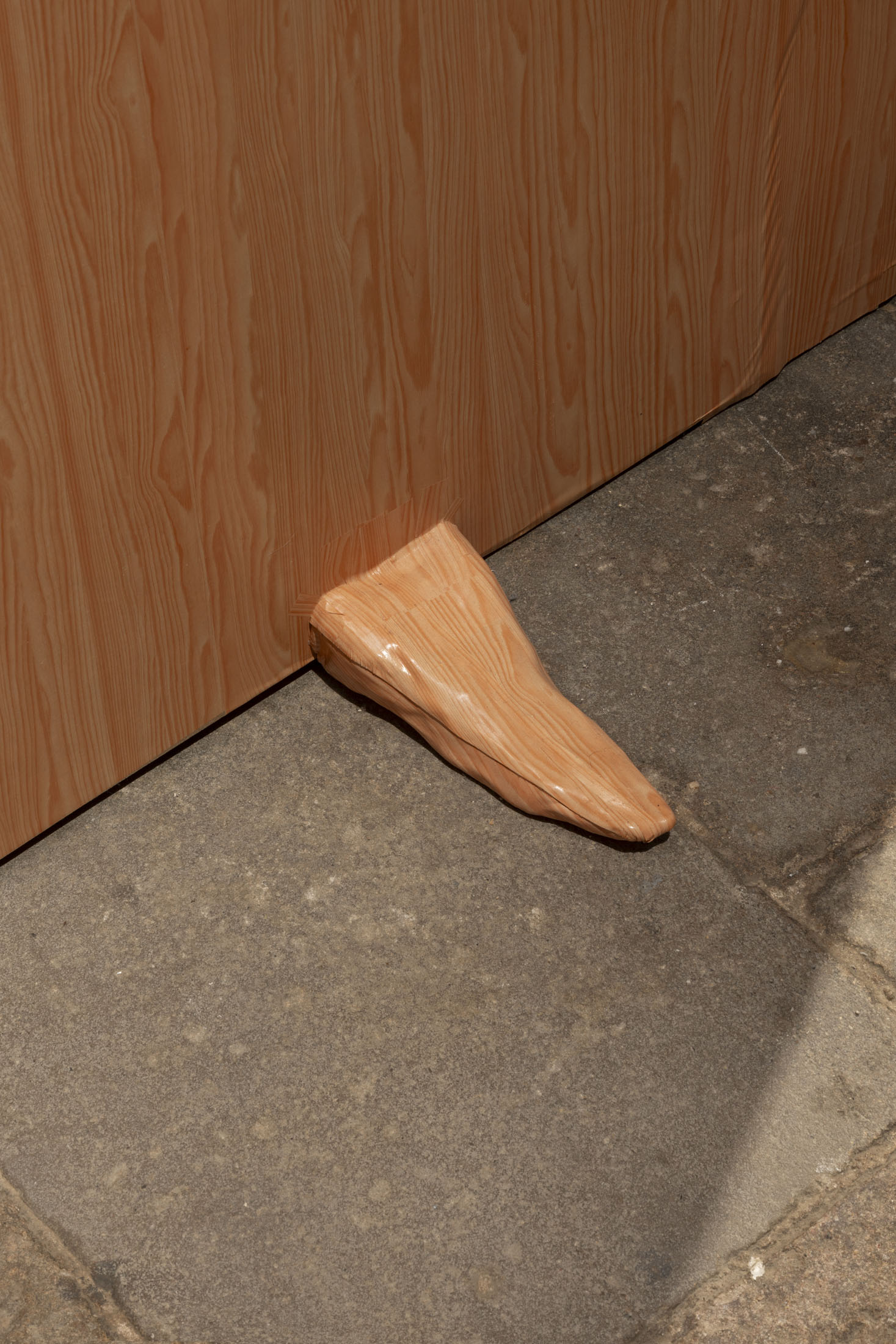
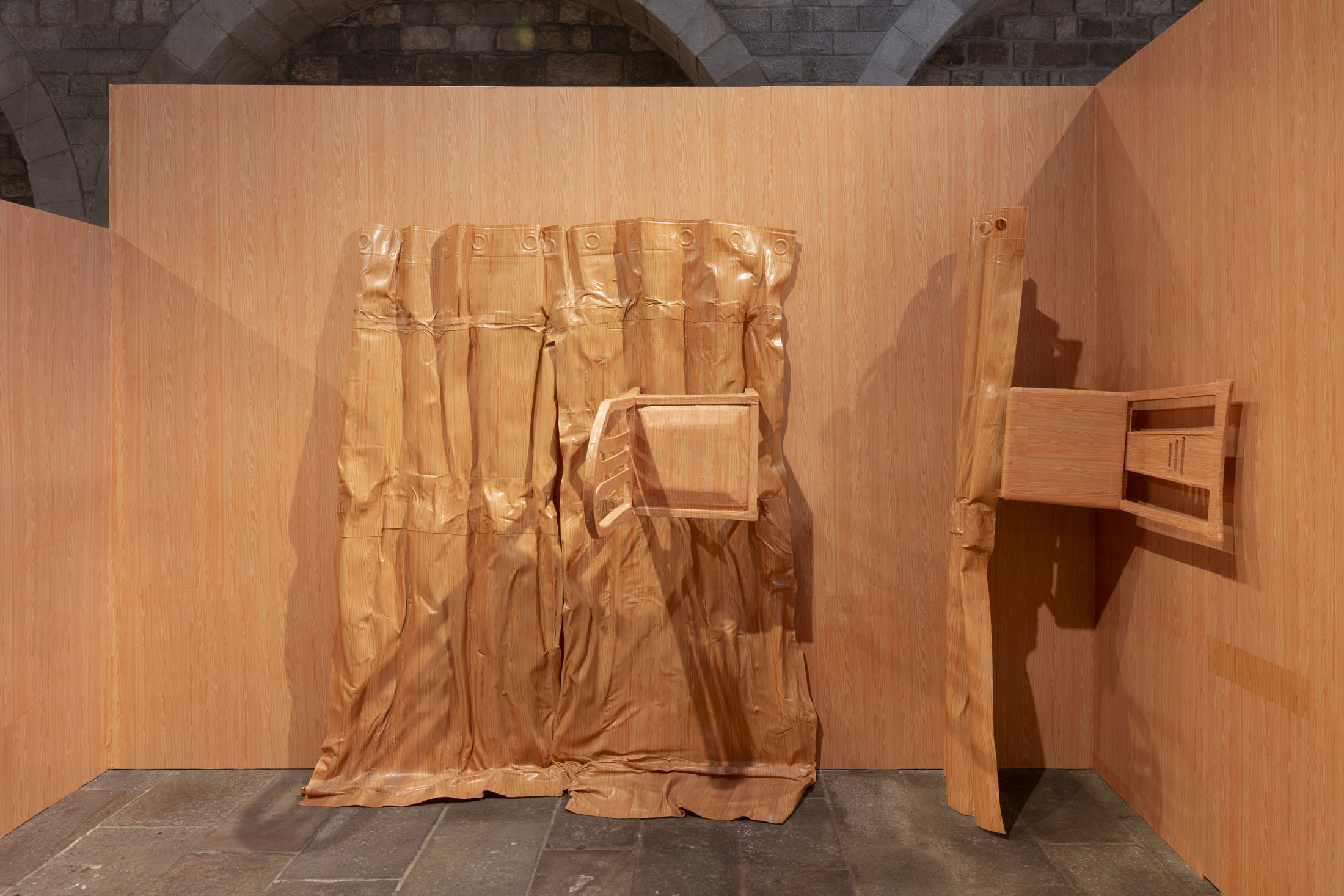
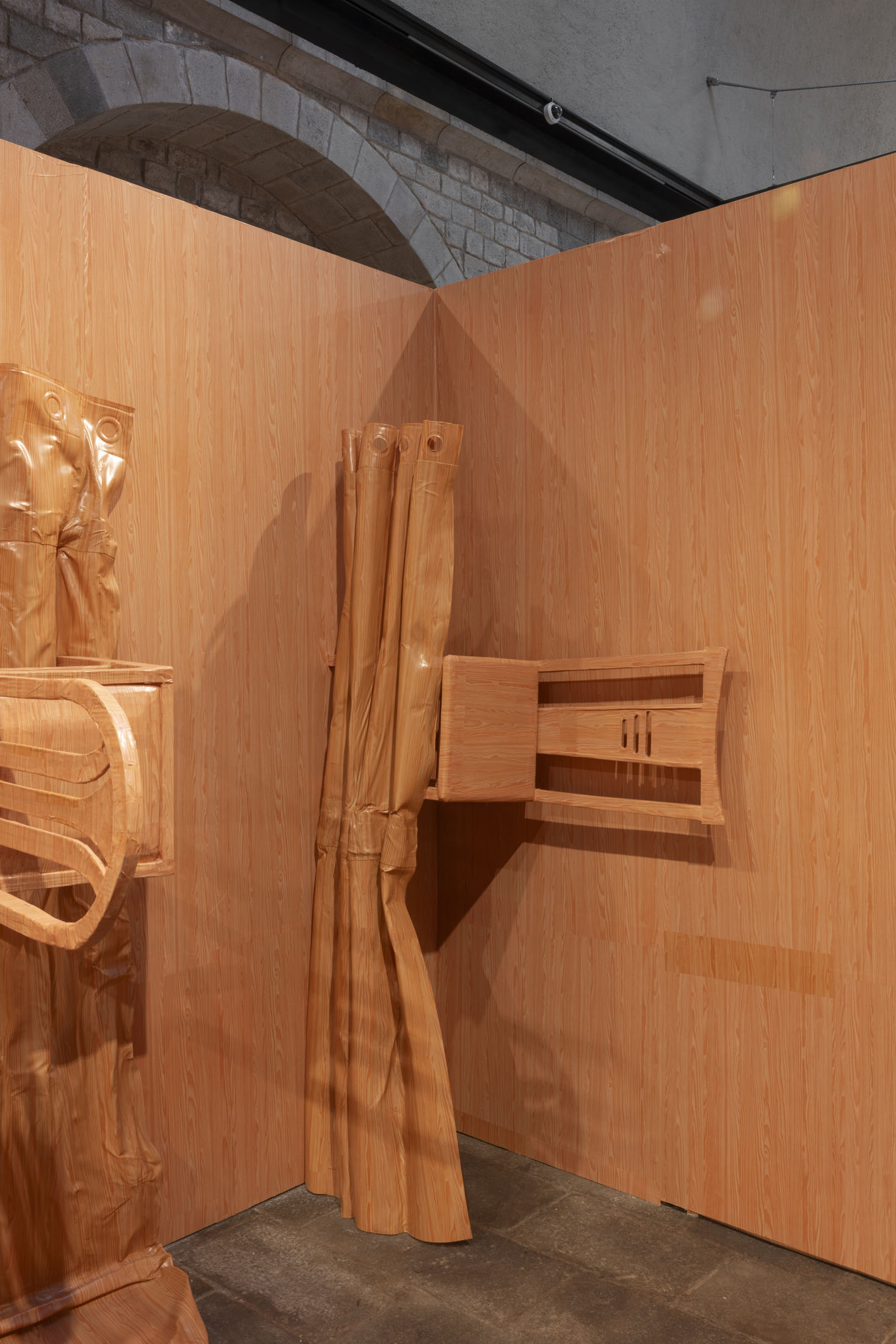
In order to stress this concept, Ana Martínez Fernández makes extensive use of it, even to the point of redundancy. By adhering it to walls, as well as the contours of objects, the vinyl transcends mere functionality – to cover – and reveals its expressive dimension: a language of its own with limitations and particularities. At the same time, repeating the same motif – natural wood – leads to a visual excess that calls into question the attributes of warmth and comfort that have made vinyl quite a popular material when it comes to enhancing interior spaces.
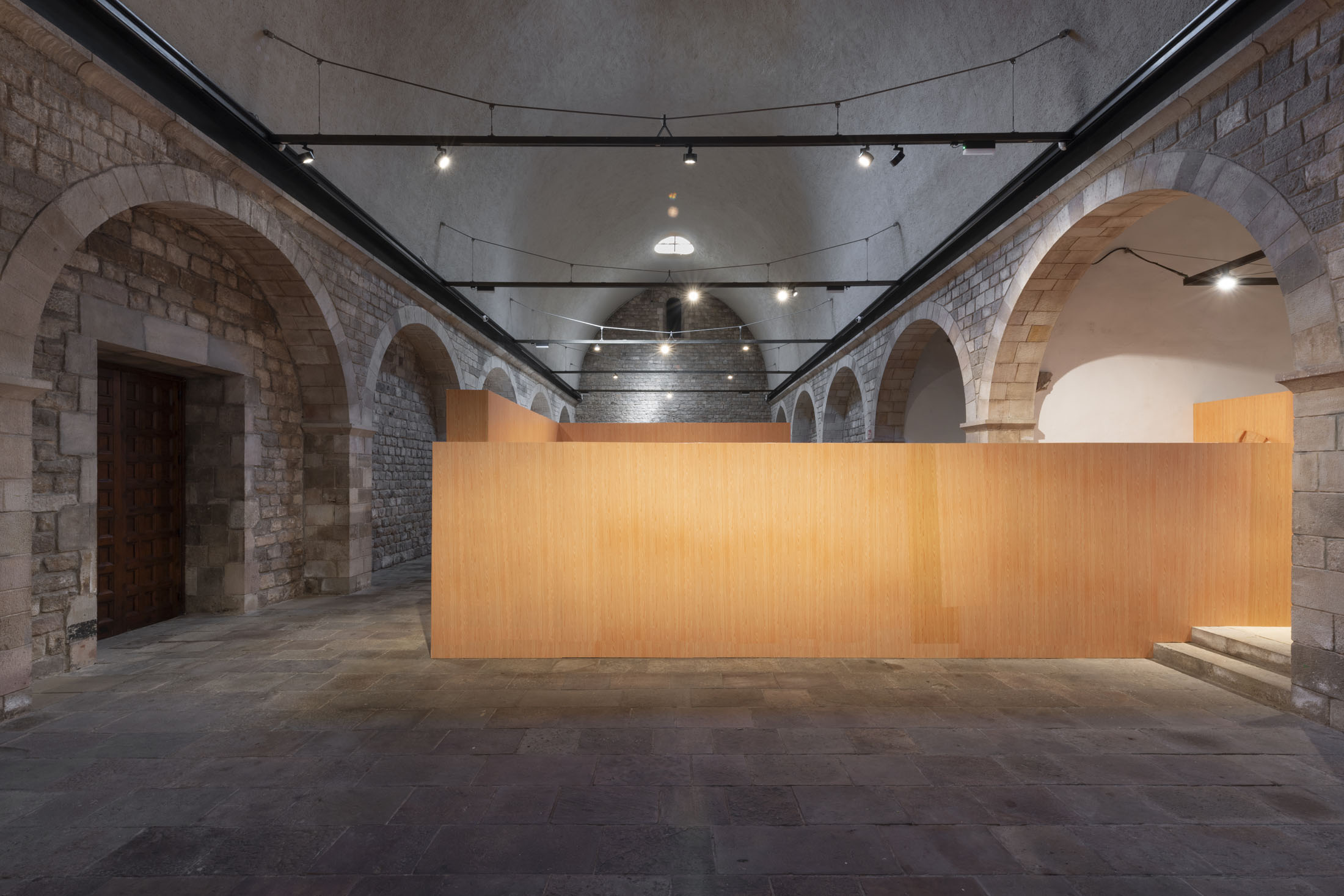
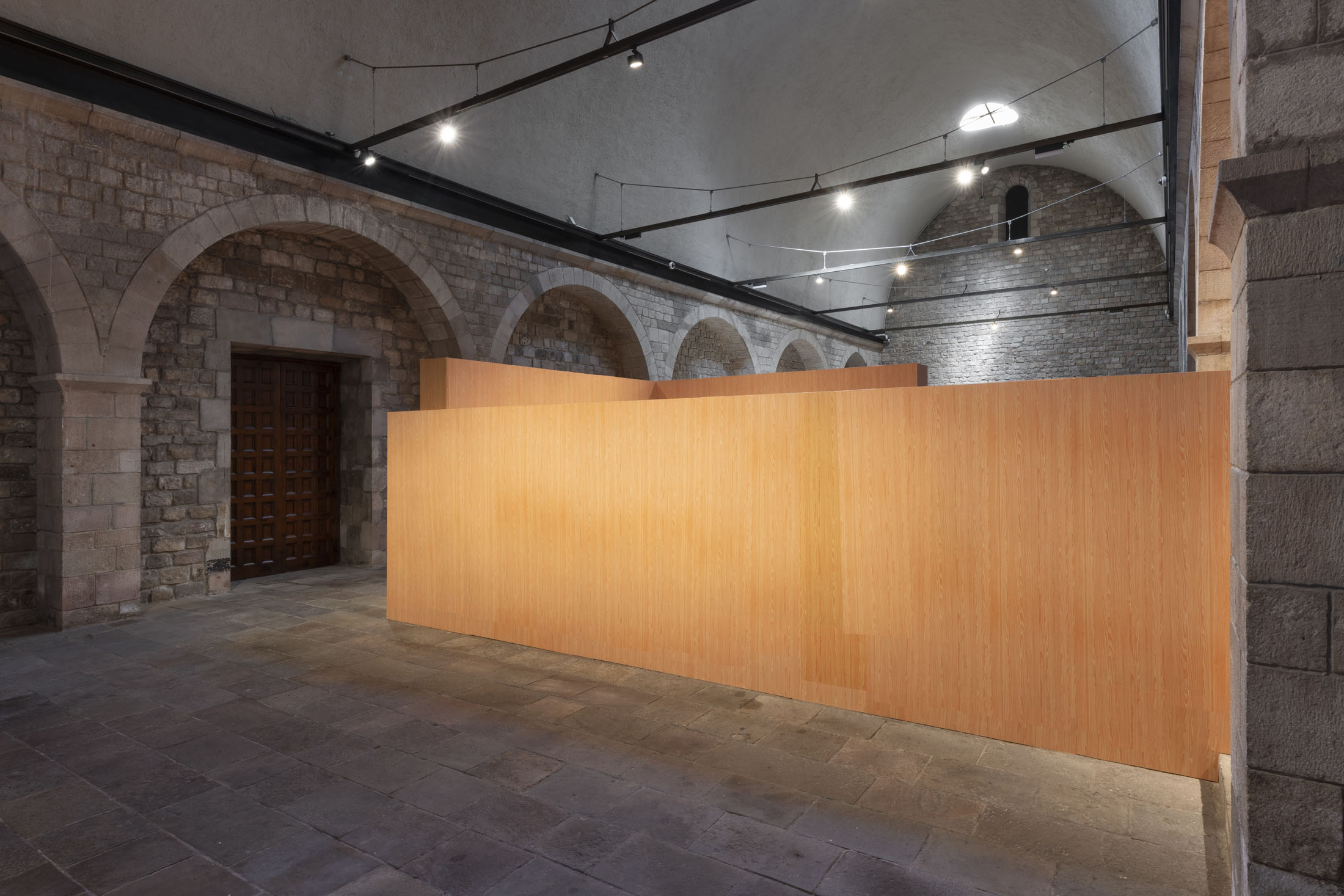
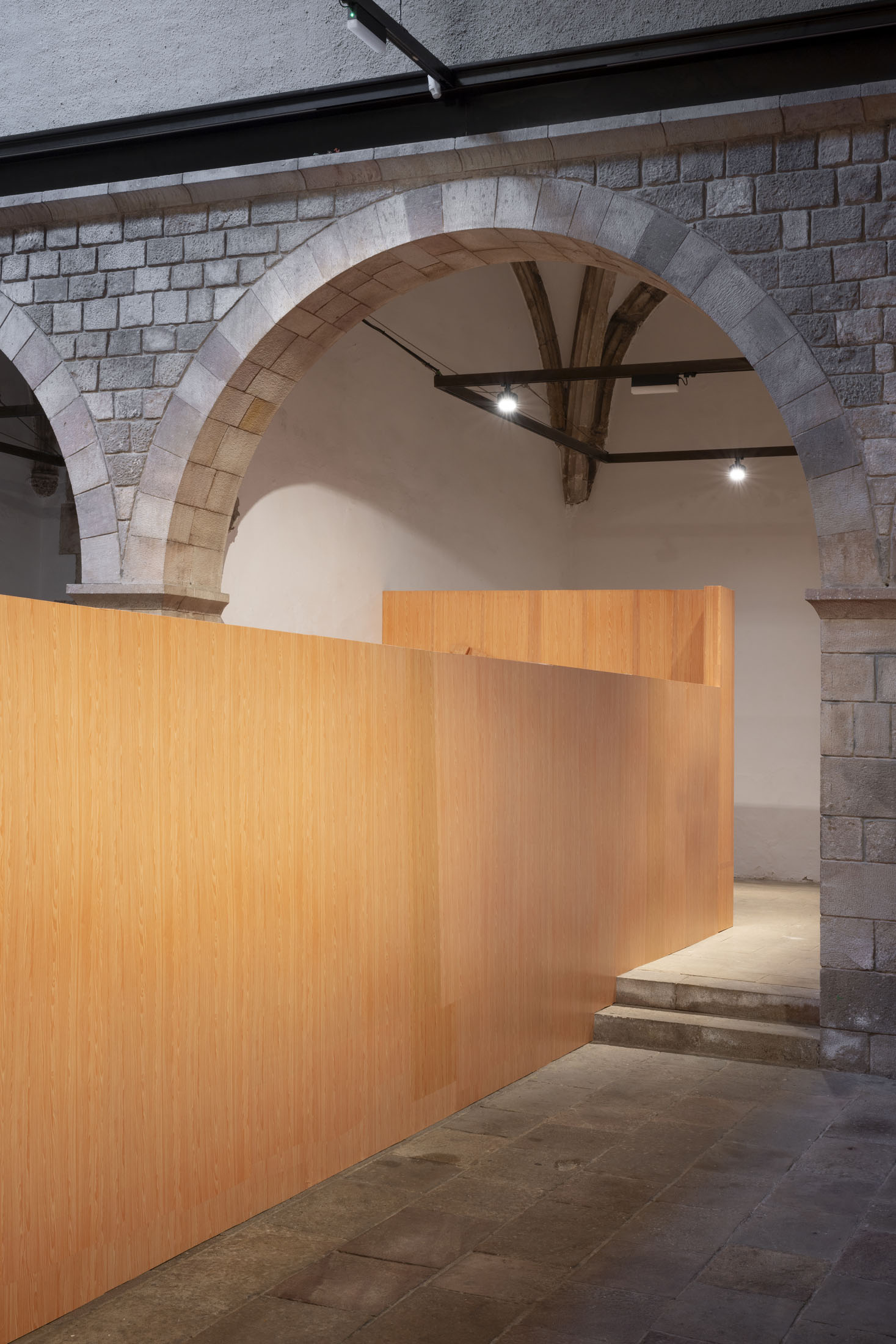
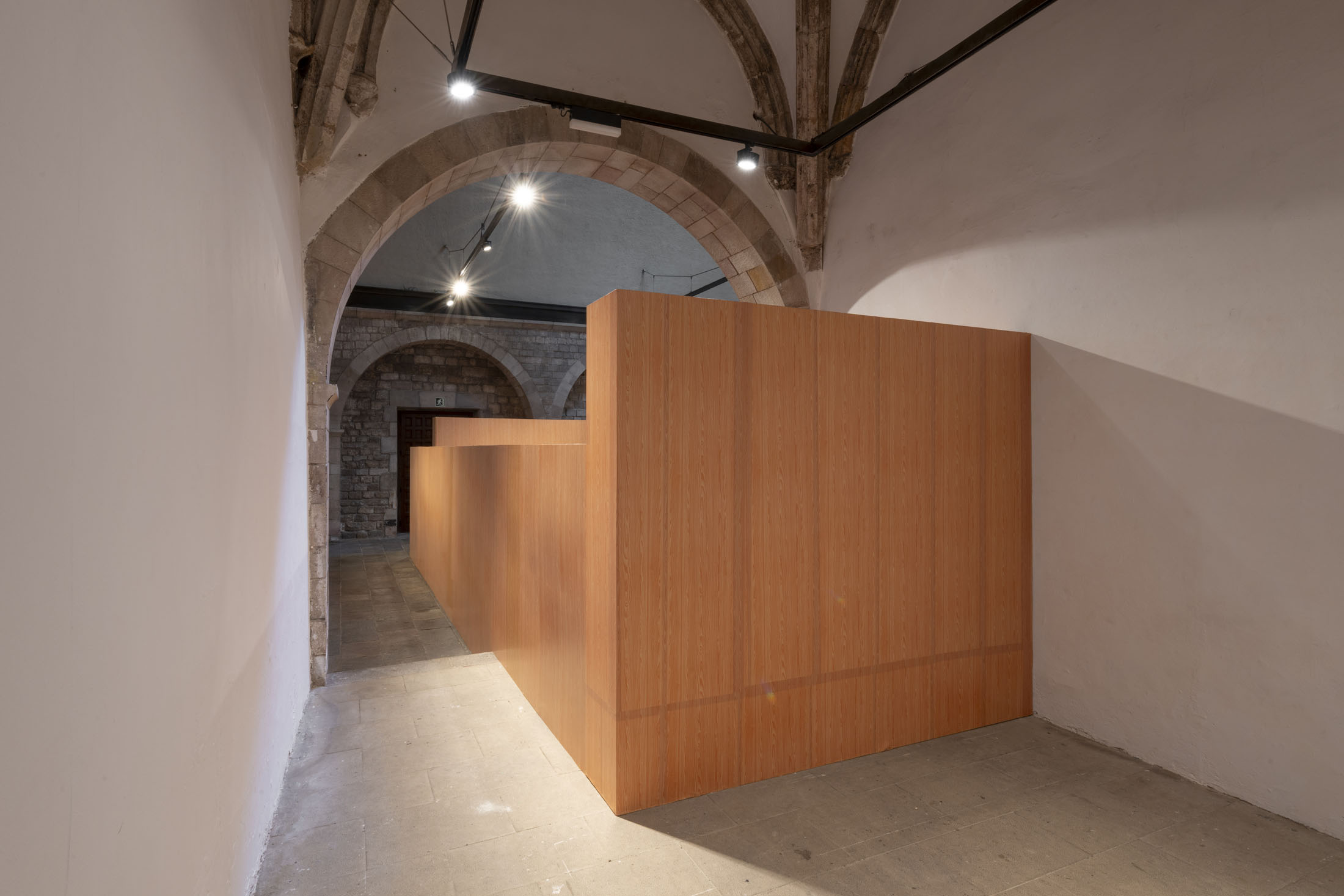
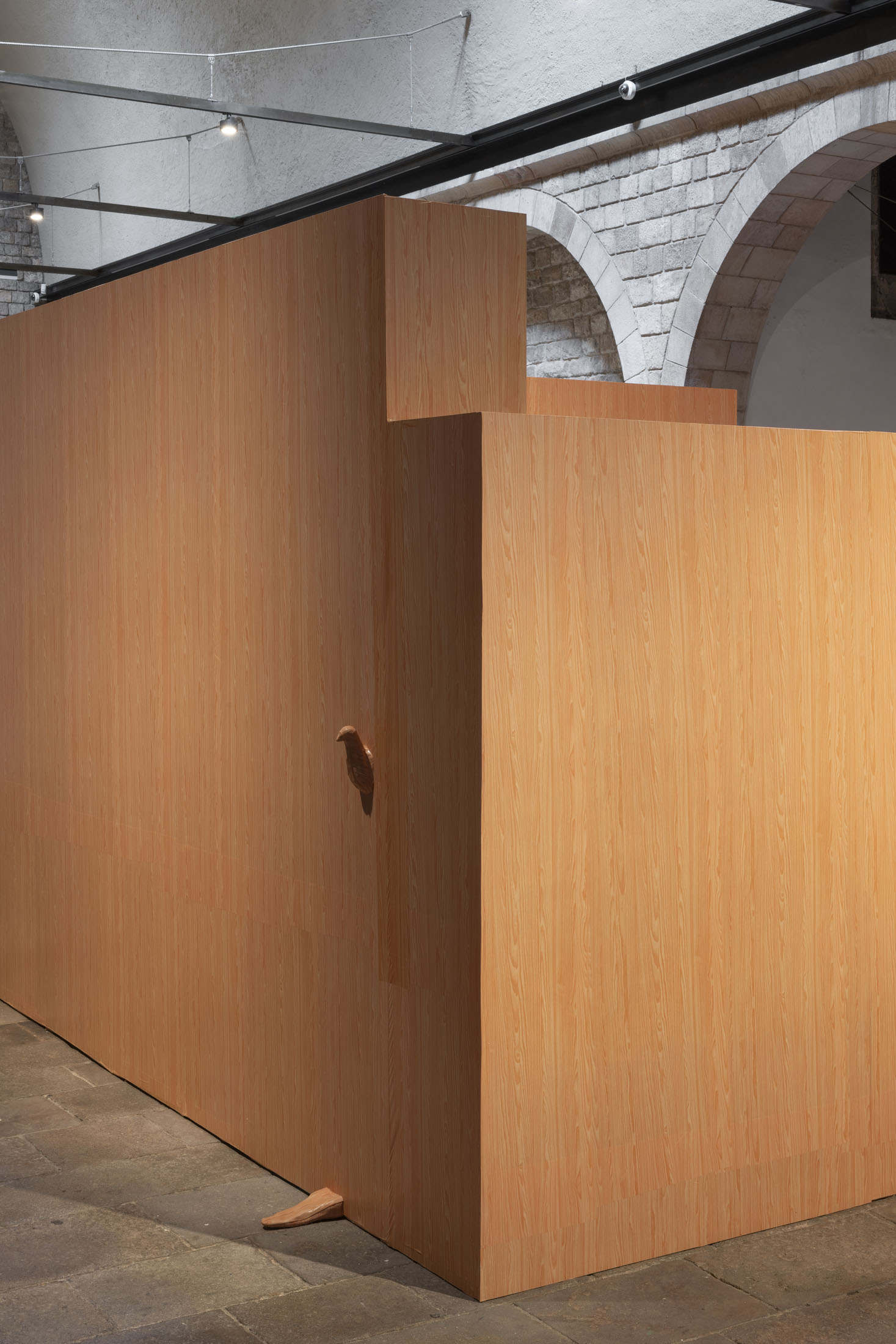
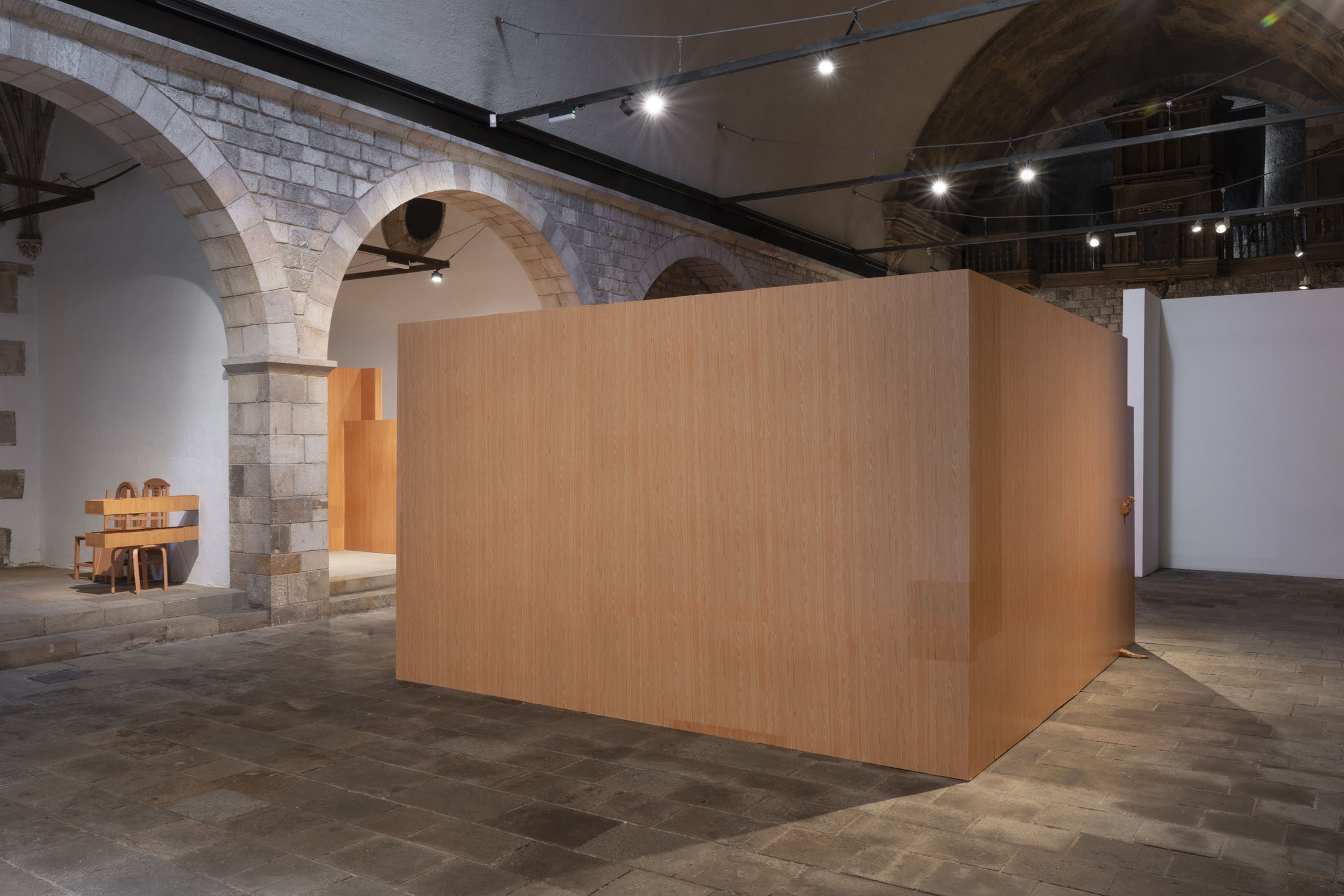
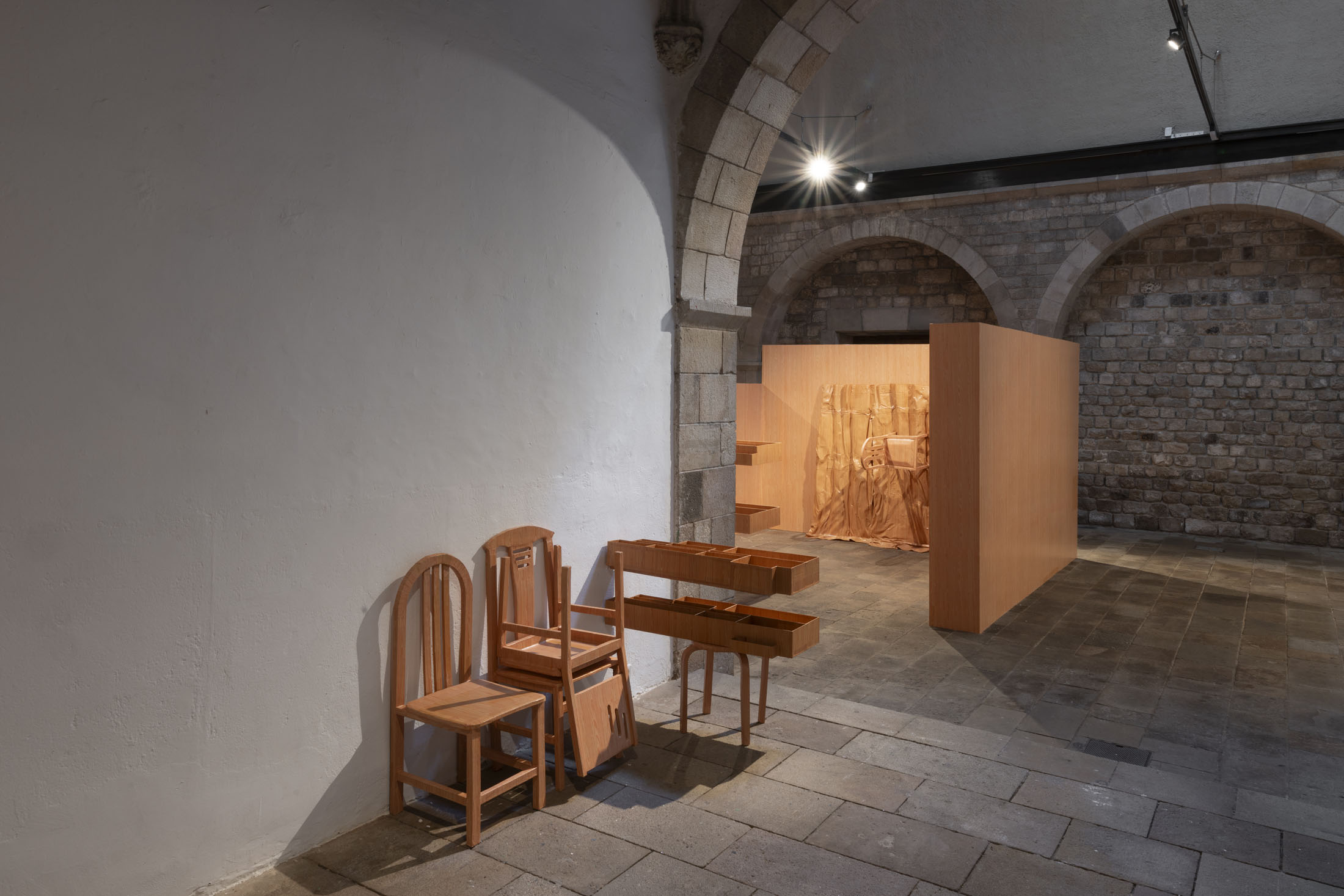
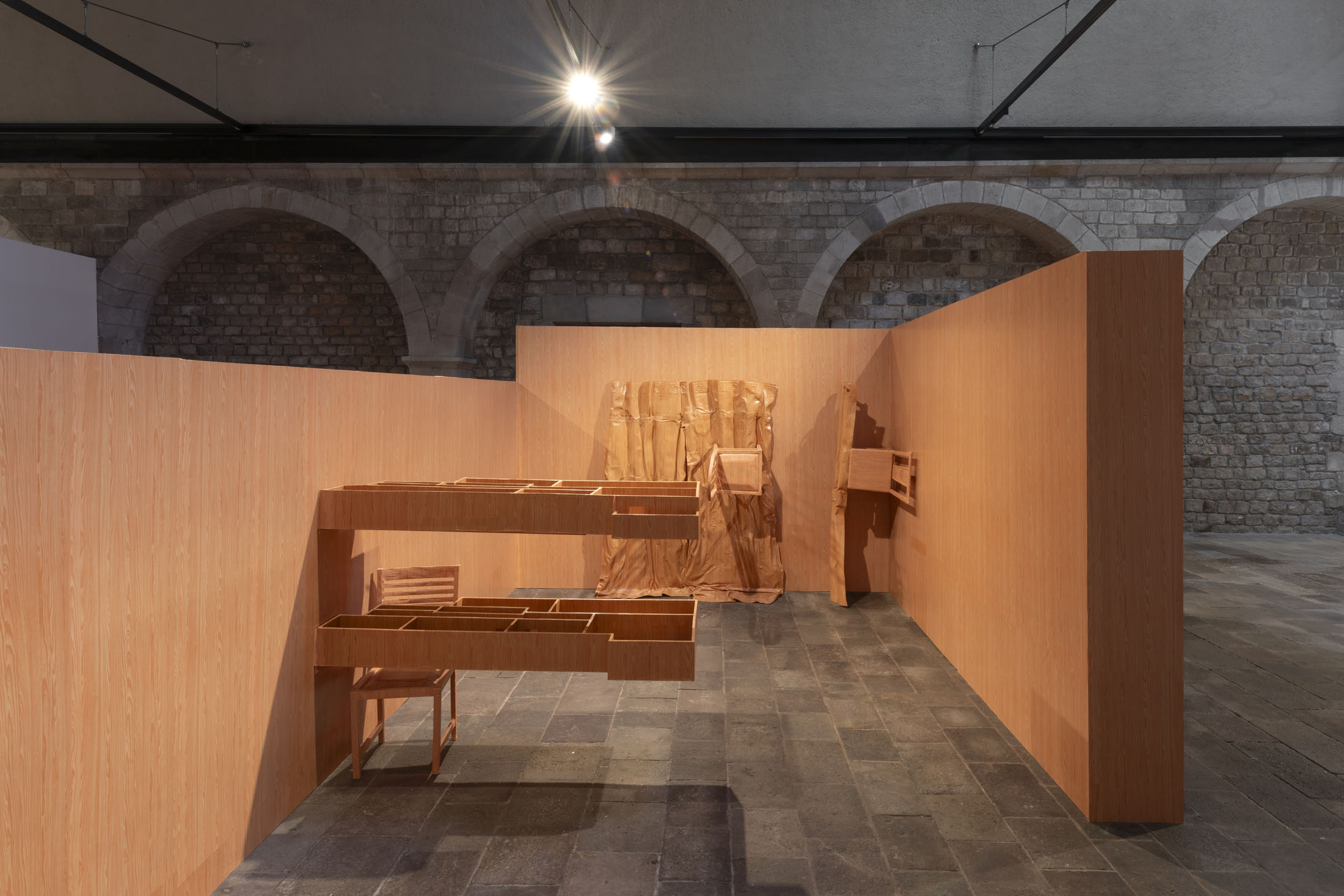
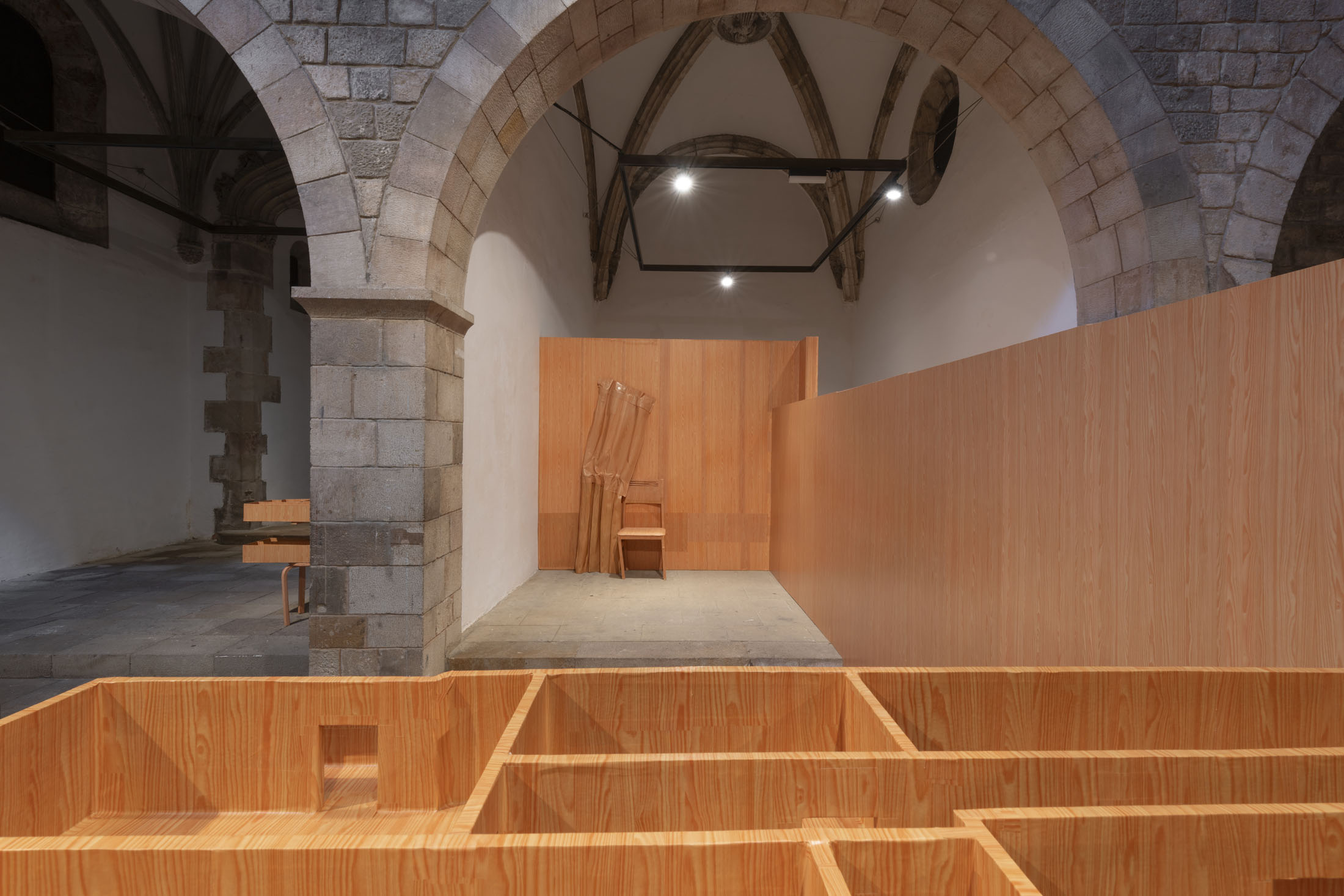
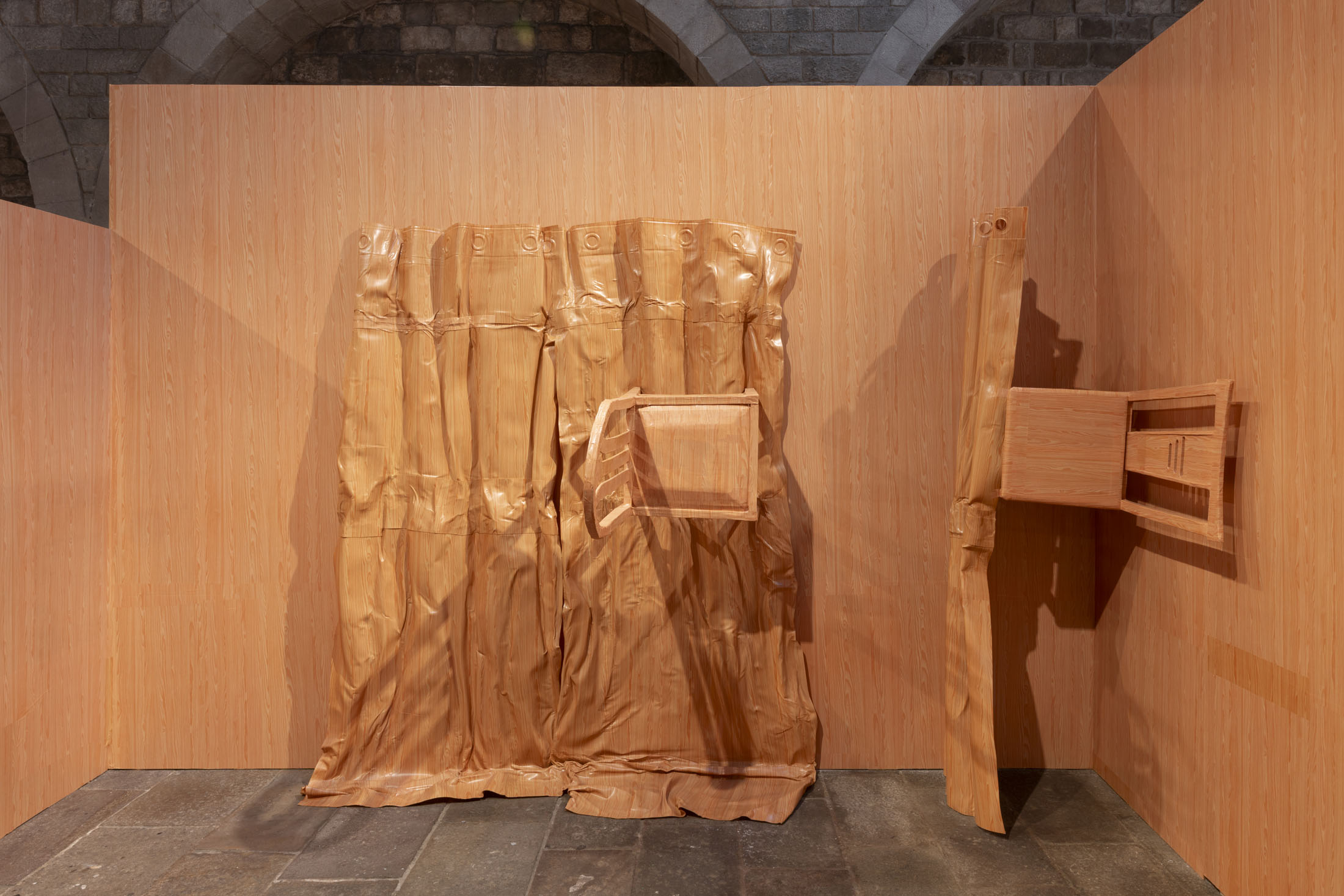
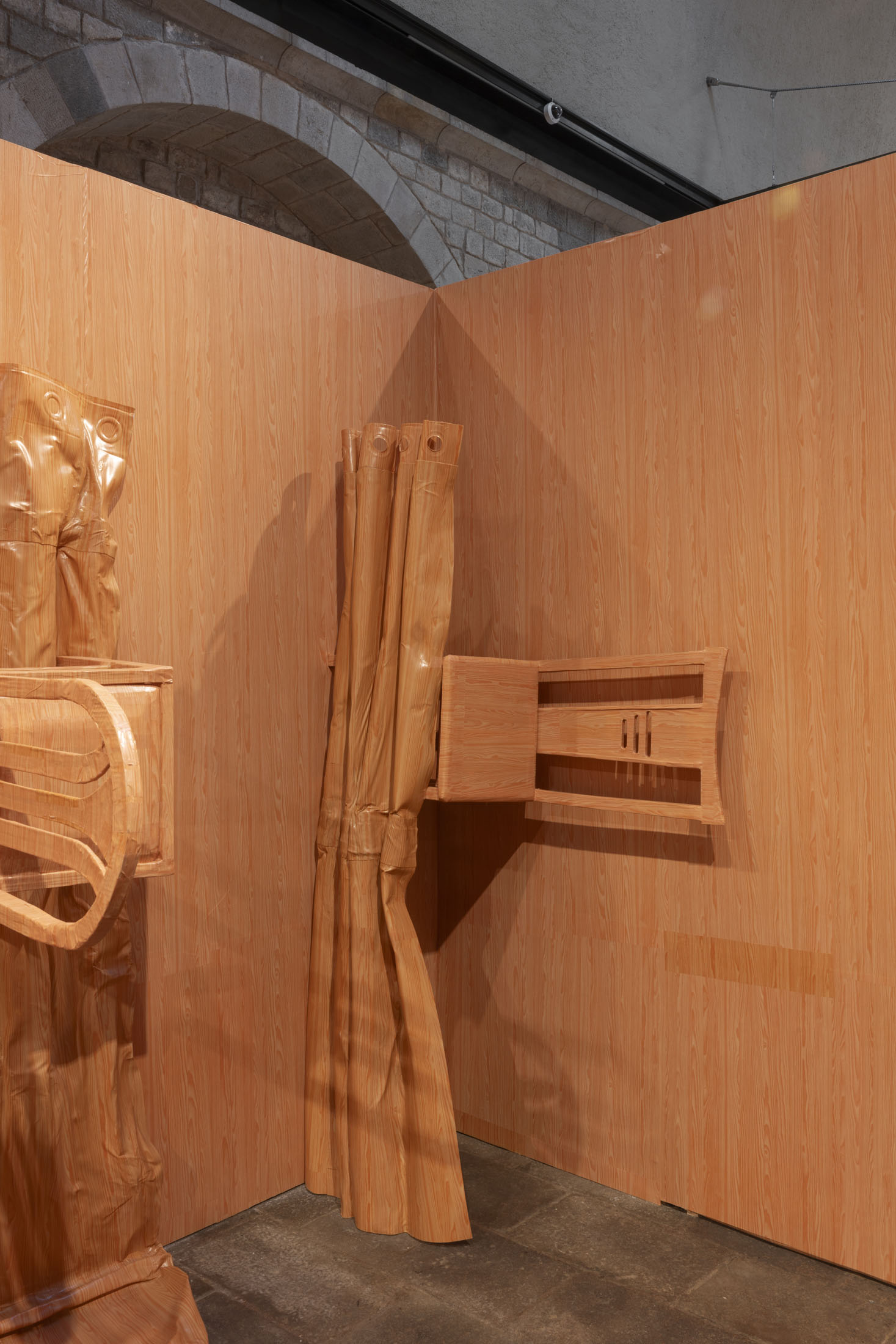
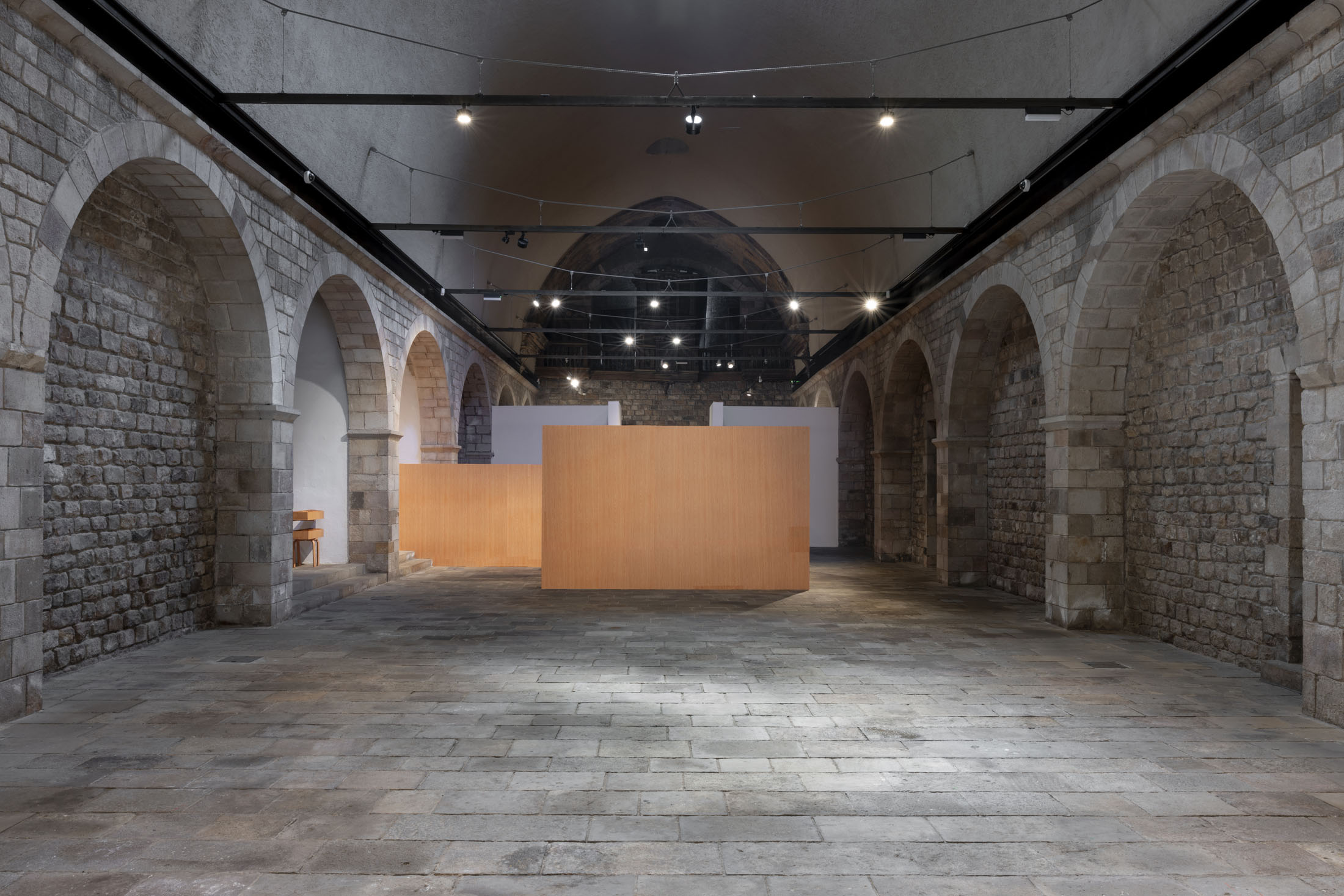
Martínez Fernández places particular emphasis on the spatial deployment of her proposal. Thus, when we enter La Capella, we notice a wall that has been constructed in such a way as to divide the nave and cut off the central perspective. Impelled to go around it, we soon discover that the wall actually corresponds to a passable quadrangular structure designed by the artist to function as if it were simultaneously an interior and a habitable sculpture. By fitting one space into another, the notion of ‘mismatch’ seems most appropriate to describe the perceptual game that guides the artist’s research. It is primarily an architectural mismatch: the structure lined with wooden vinyl seems to have been built in opposition to the space’s own architecture. But it is also a material and visual mismatch. Consider the contrast between the stone blocks that characterise the construction of the former chapel and the lightness of vinyl, with its synthetic, artificial origin. Beyond their respective qualities – tectonic in the case of the former and amorphous in the case of the latter – both materials embody contrasting temporalities in their construction and use. On the one hand, there is the historicity of stone, worked block by block and patiently made into a wall to guarantee its durability. On the other hand, the plasticity of the vinyl, which despite imitating a wooden surface is actually a material designed to be applied without responding to structural logic, but rather to a visual logic of standardising.
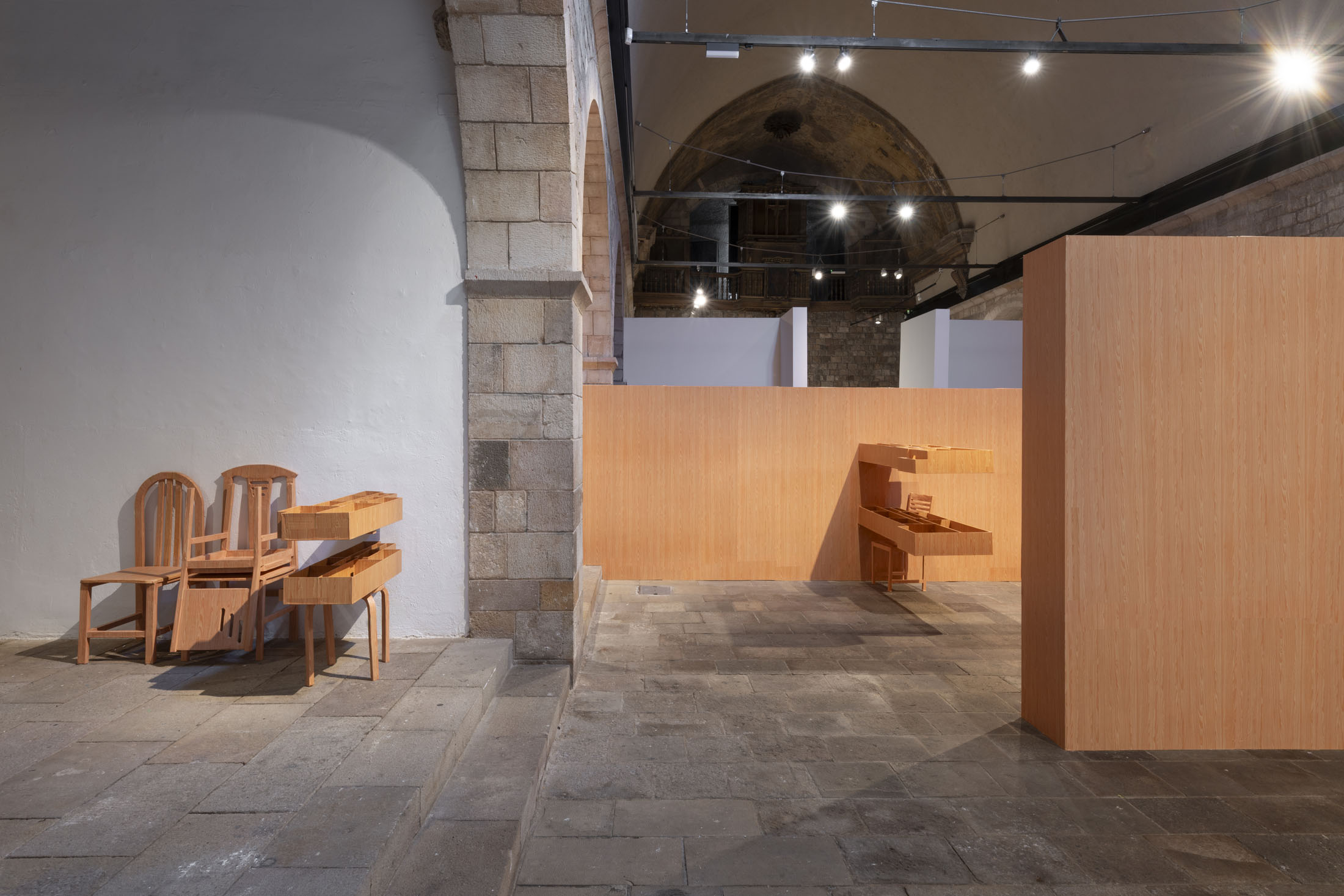
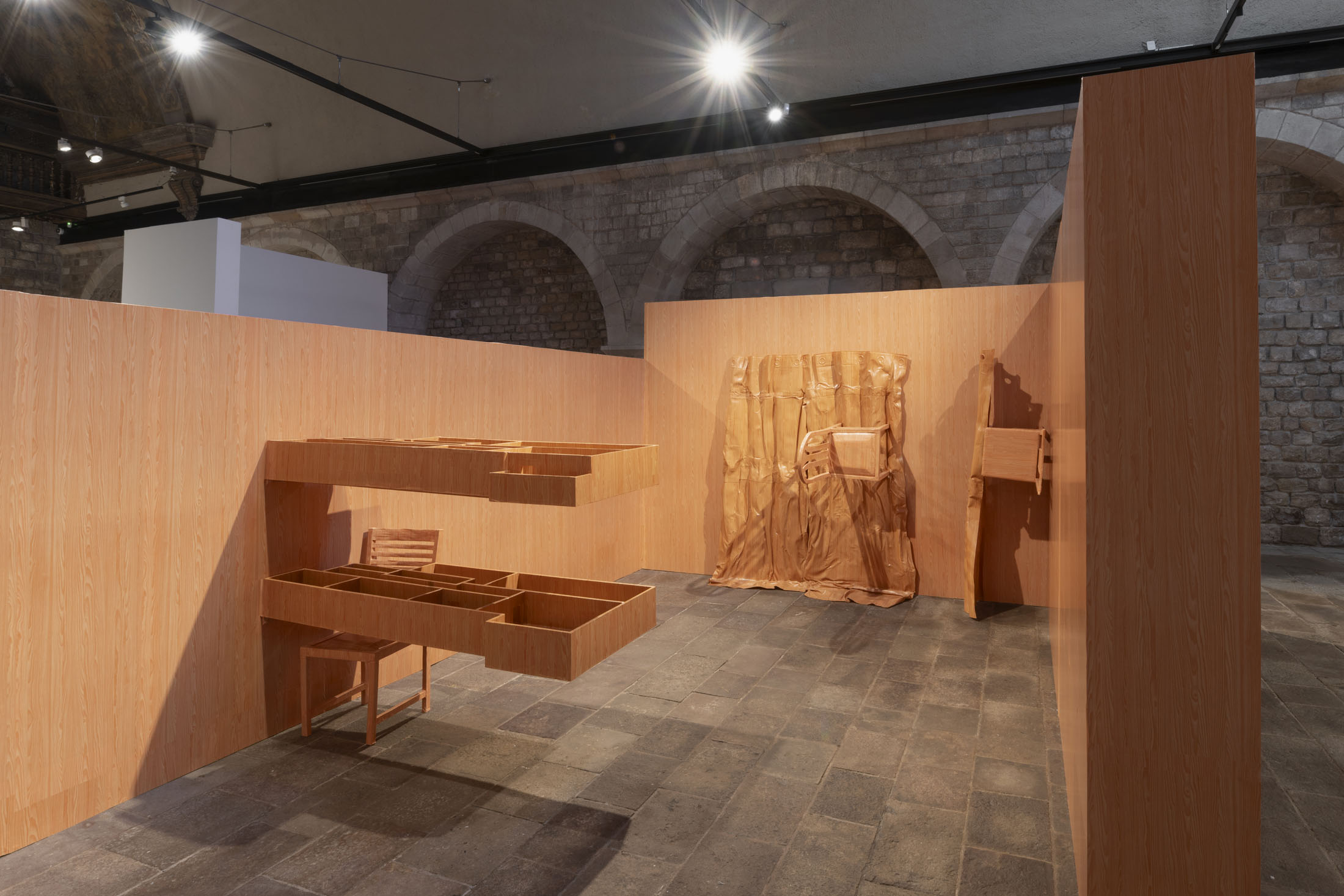
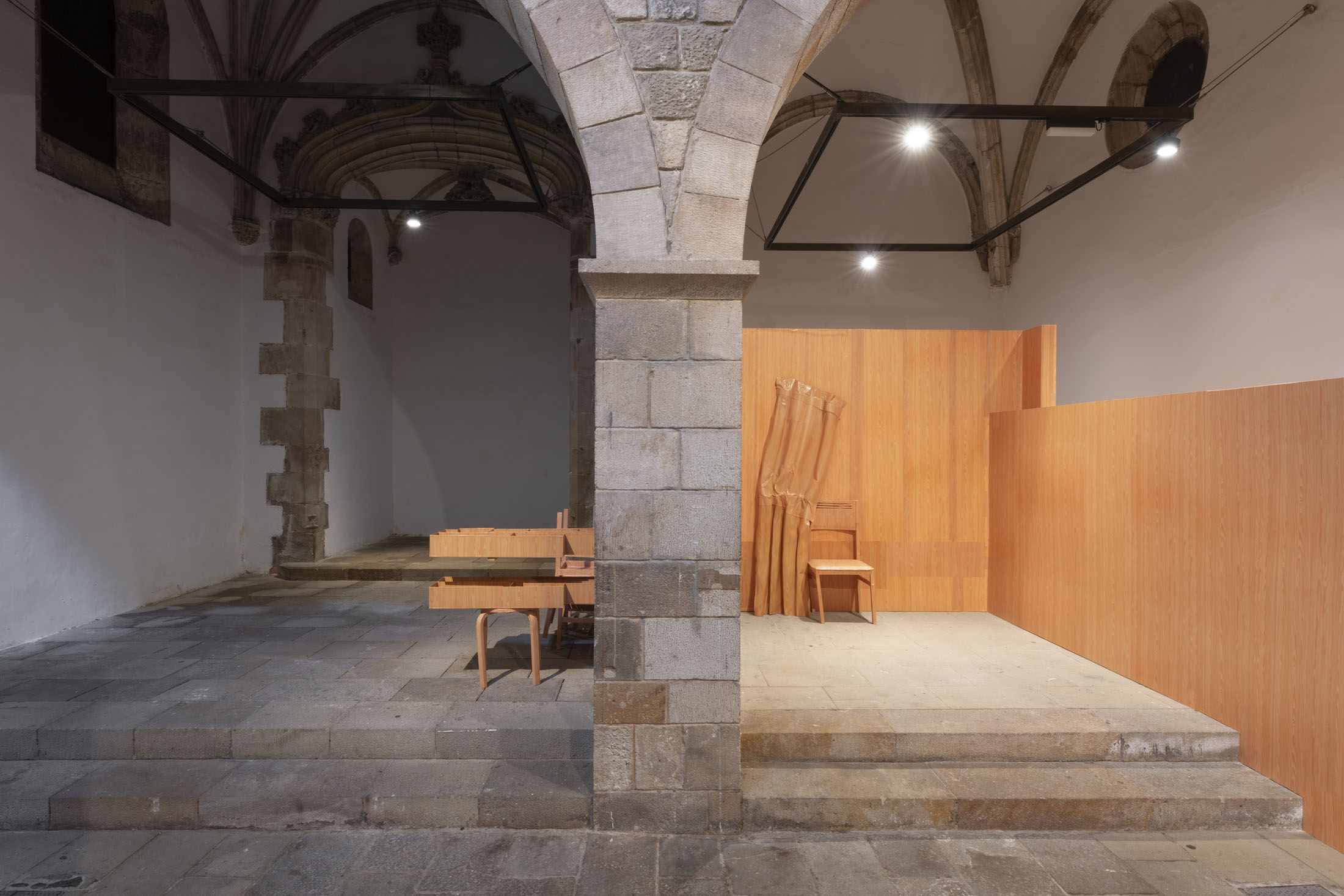
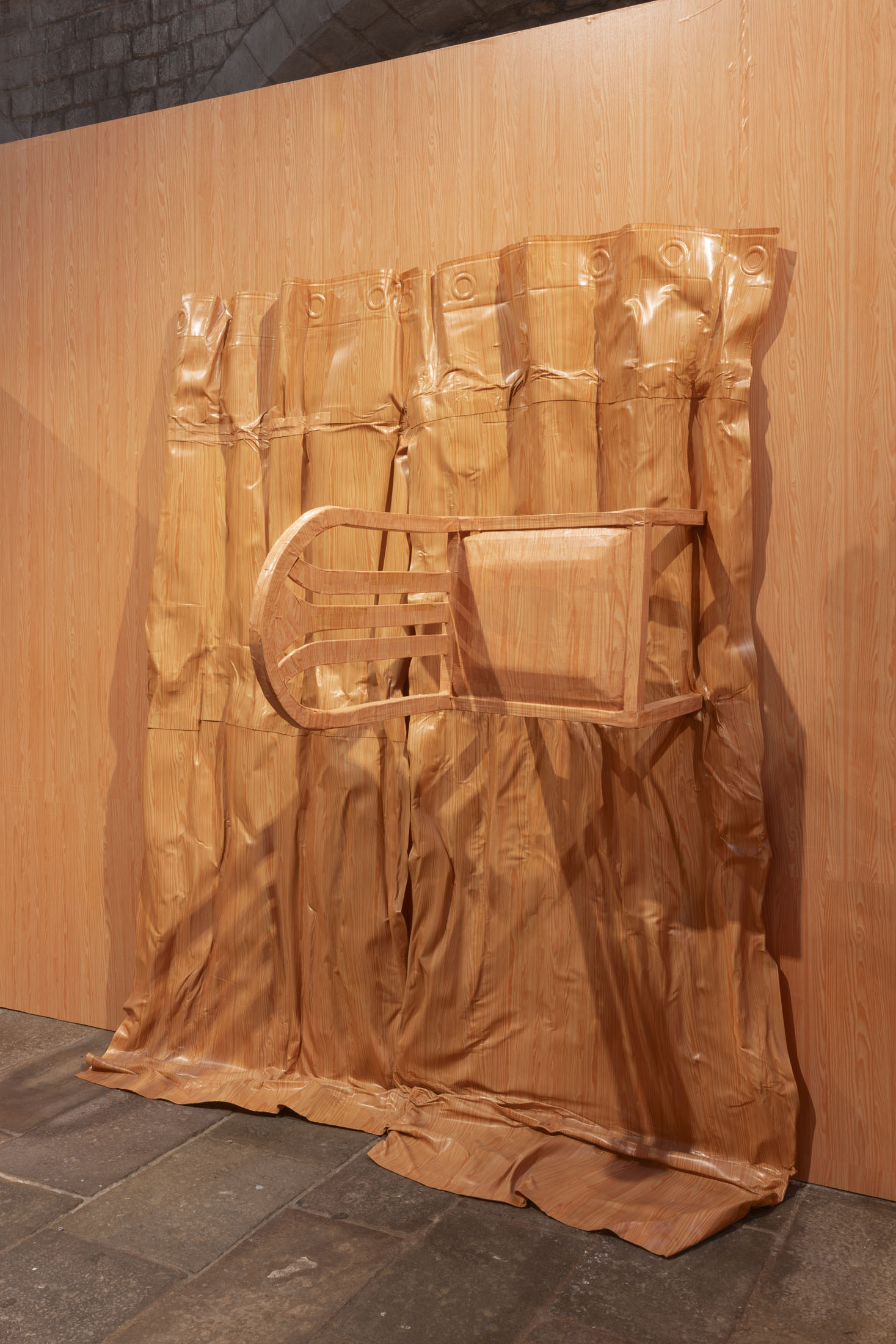
In the same way that vinyl is applied to surfaces with the aim of hiding traces of use, Martinez Fernandez lines a series of objects inside the structure to omit its trajectory in time. In doing so, she prioritises form over weight and texture, ignoring the attributes that would help to make her representations realistic, whether a chair, a dovecote or some curtains. Yet we recognise them. Once these are covered, however, they lose their uniqueness and can only be distinguished by the volume they occupy and their position.
It is worth noting there is no desire at all for irony in this exercise of concealment, but rather an interest in ‘giving voice’ to a material that lacks its own structure and fulfils an essentially cosmetic function. The choice of material also responds to economic considerations, and it goes without saying that its use raises questions about scarcity and availability as value criteria affecting our perception of an object, a room or a building.
Ana Martínez Fernández’s research is therefore aimed at creating a sculptural lexicon that has the desire to transcend the sense of urgency and provisionality we perceive in the use of certain materials. Designed in the manner of a stage set reproducing an interior room, the artist bestows emulation – natural wood vs. imitation wood – with the ability to compromise our gaze. As we approach and move our eyes patiently over the enveloped surfaces, we discover breaks in the pattern, folds and overlaps. As if dealing with the failure of an image, La Mancha más ciega reveals the assumptions that determine our passage through. It would therefore not be wrong to claim that the exhibition opens up a space for that which is so anodyne that it simply goes unnoticed and so neutral that it runs the risk of appearing aesthetically irrelevant.
—Marc Navarro
i The title is a play on words in the Spanish version that is difficult to translate, because the word ‘Mancha’ has a double meaning when written with a capital M.